Spring 2021: How It Happened

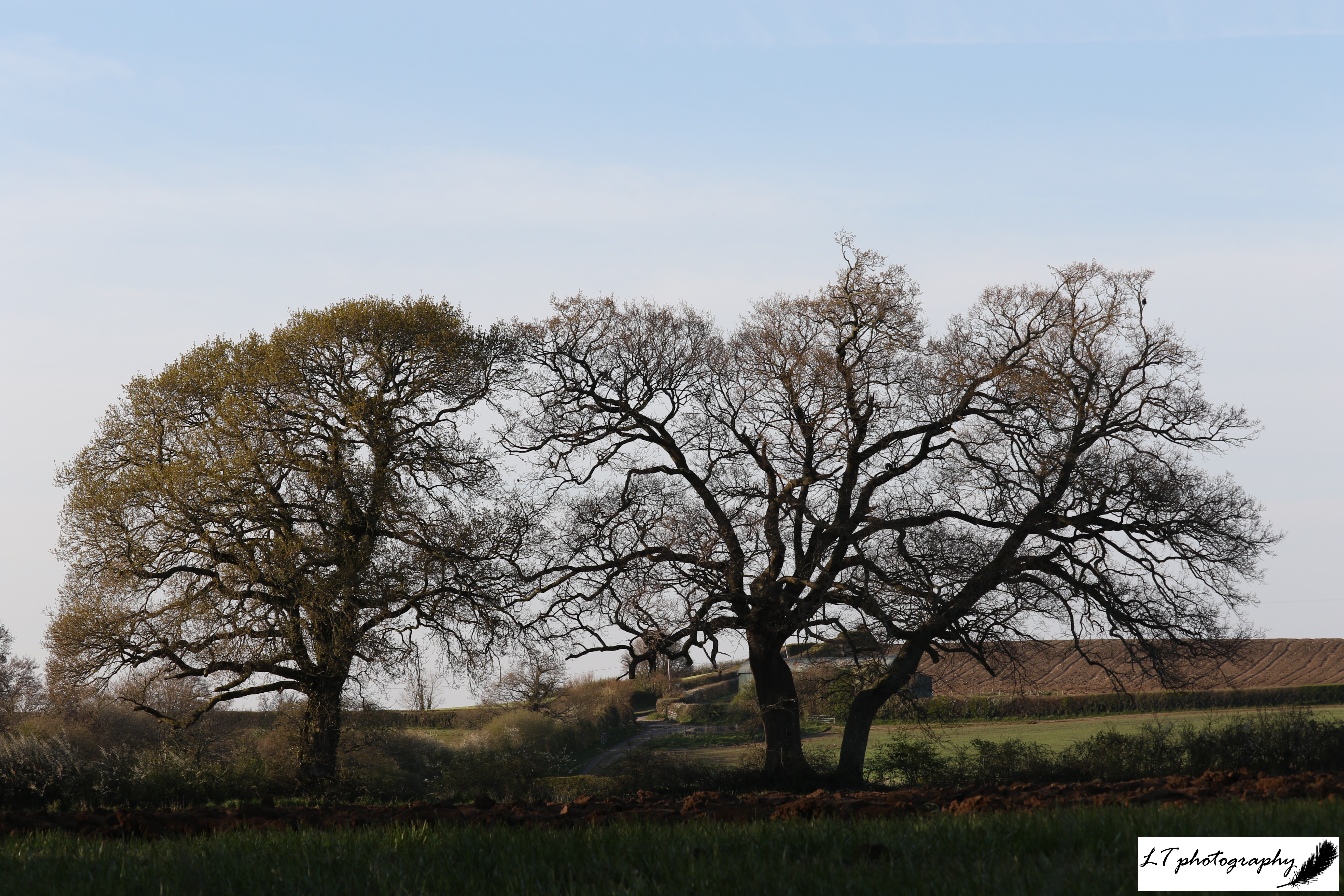
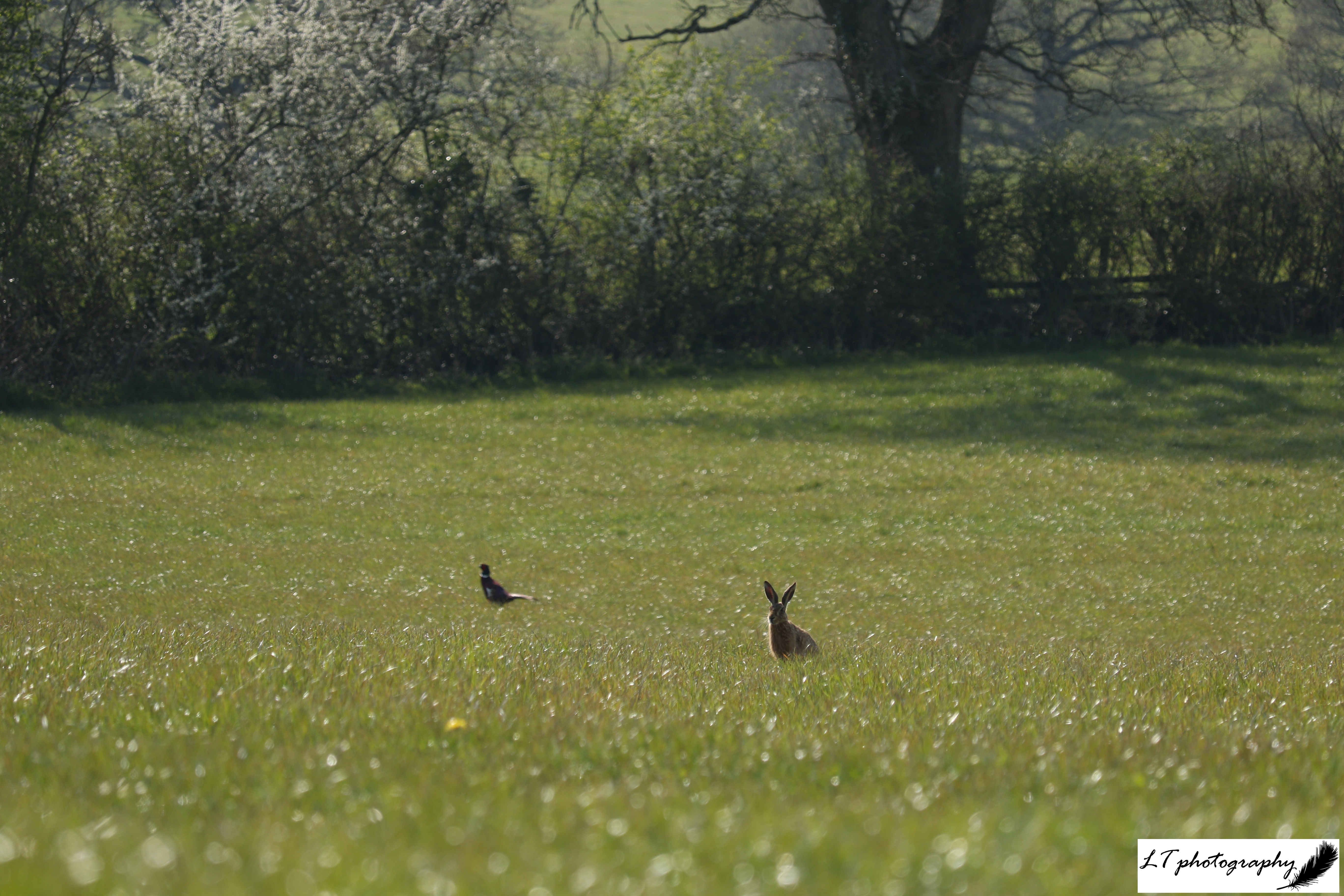
This spring has been an unexpected, unpredictable and turbulent season, that has taken its time to unfurl. Traditionally spring is a season that is characterised as calm and dry, with days getting longer and warmer, and the potential for cooler nights. As lighter evenings returned this year though, spring was far from traditional, with a stormy then hot March, cold and frosty April, and a wash out of a May.

Since 2017, I have recorded the dates of the events of spring every year, and with the start of my blog, every year since I have analysed and compared spring events to see how the season took form. Last year I showed that the timing of spring events is heavily linked to spring weather, resulting in either earlier or later occurrence accordingly. Over the last couple of years this has varied alot, so it will be interesting to see what has gone on this year.

This spring a lot has been going on for me, but I have still found time to be out in nature as much as possible and to enjoy the time when one season slips into another. It has felt that spring has dragged on longer this year, with the potential effects of spring starting warm and progressing to cold, then wet. So as this spring comes to a gradual close and the heat sets in, it is time to find out what actually went on during spring 2021.

Trees

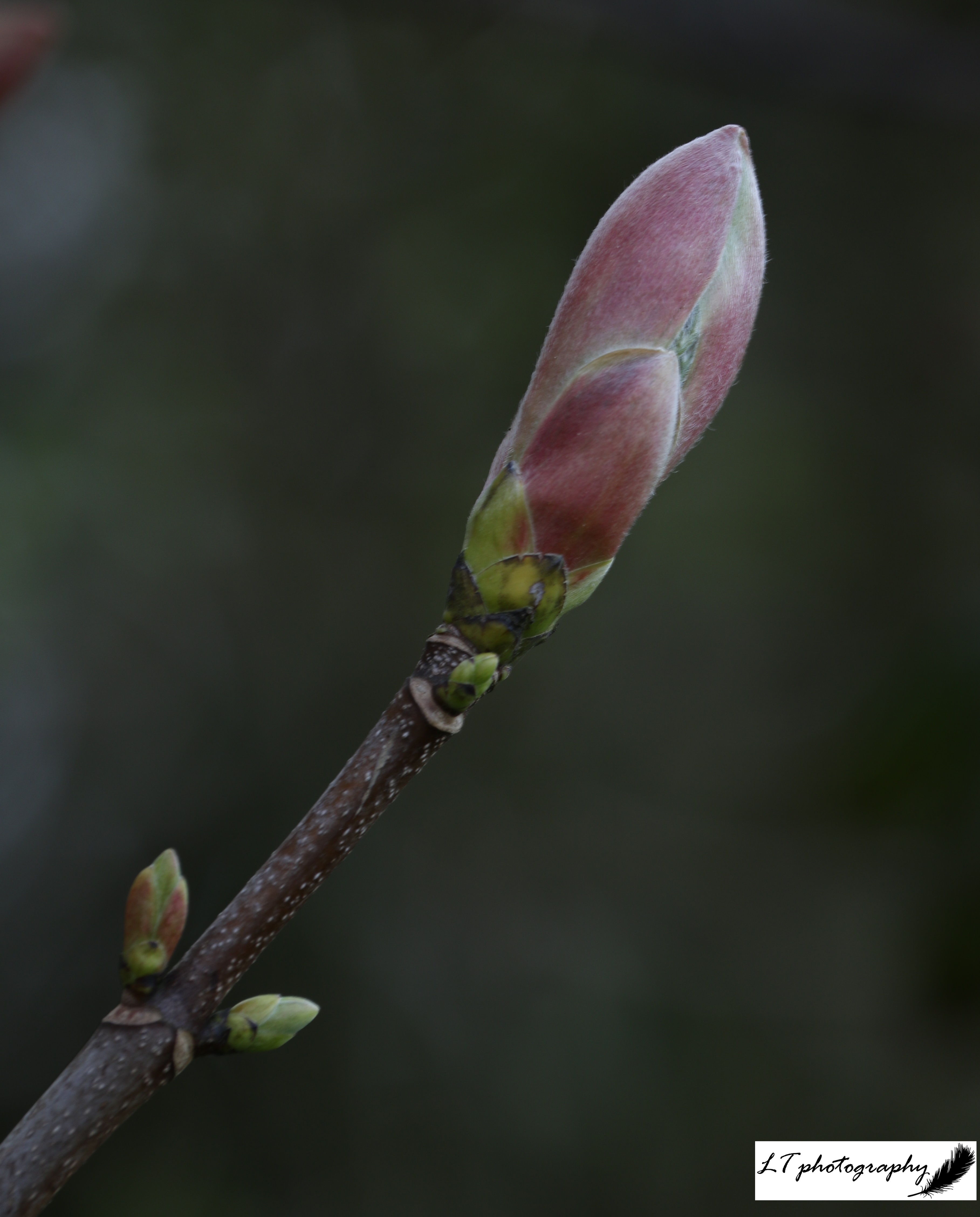
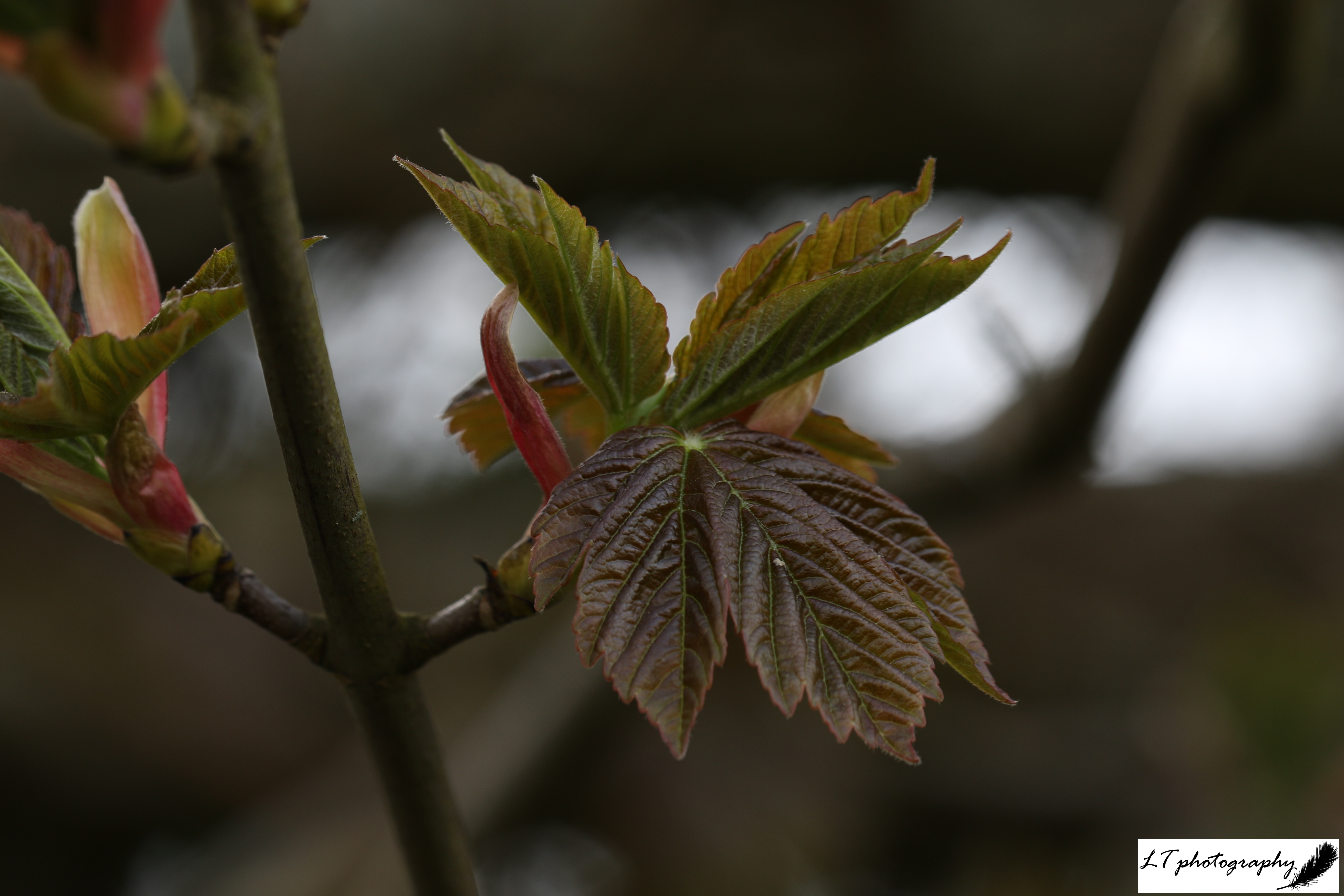
This year there was a general trend for trees being later in their bud burst, leaves unfurling, and flowering compared to 2020. Even before the frosty nights of April, silver birch (Betula pendula) buds burst 14 days later on 26th March, Norway maple (Acer platanoides) first flowered 5 days later on 26th March, and beech (Fagus sylvatica) buds burst 14 days later on 27th March.

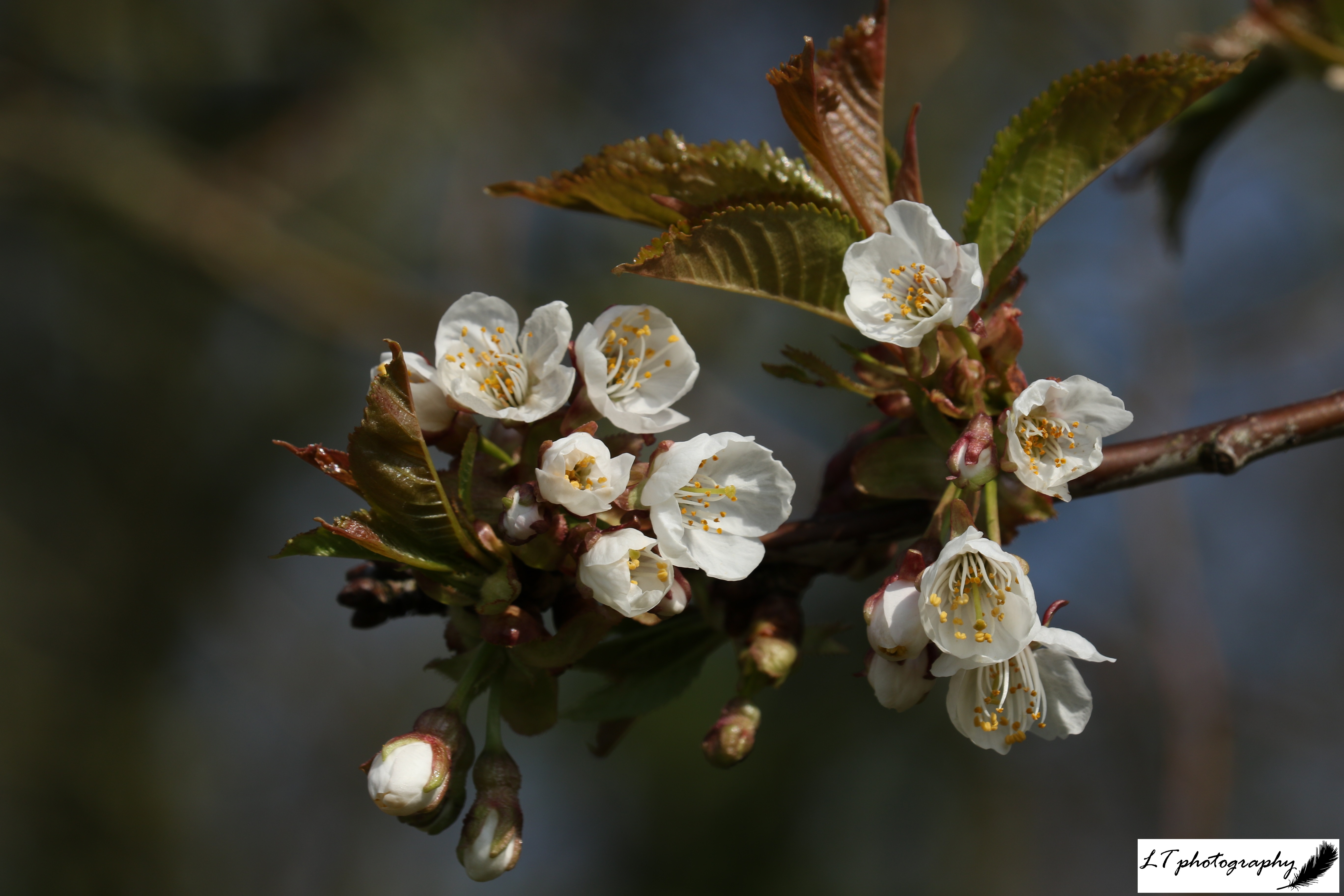
As we moved through April and into May, spring events began to stretch even further in their lateness. For example, wild cherry (Prunus avium) buds burst 35 days later on 8th April, horse chestnut (Aesculus hippocastanum) first flowered 18 days later on 20th April, alder (Alnus glutinosa) buds burst 15 days later on 21st April, the first lime (Tilia x europaea) leaves unfurled 23 days later on 26th April, pedunculate/english oak (Quercus robur) leaves first unfurled 31 days later on 5th May, and ash (Fraxinus excelsior) flowered 37 days later on 9th May.

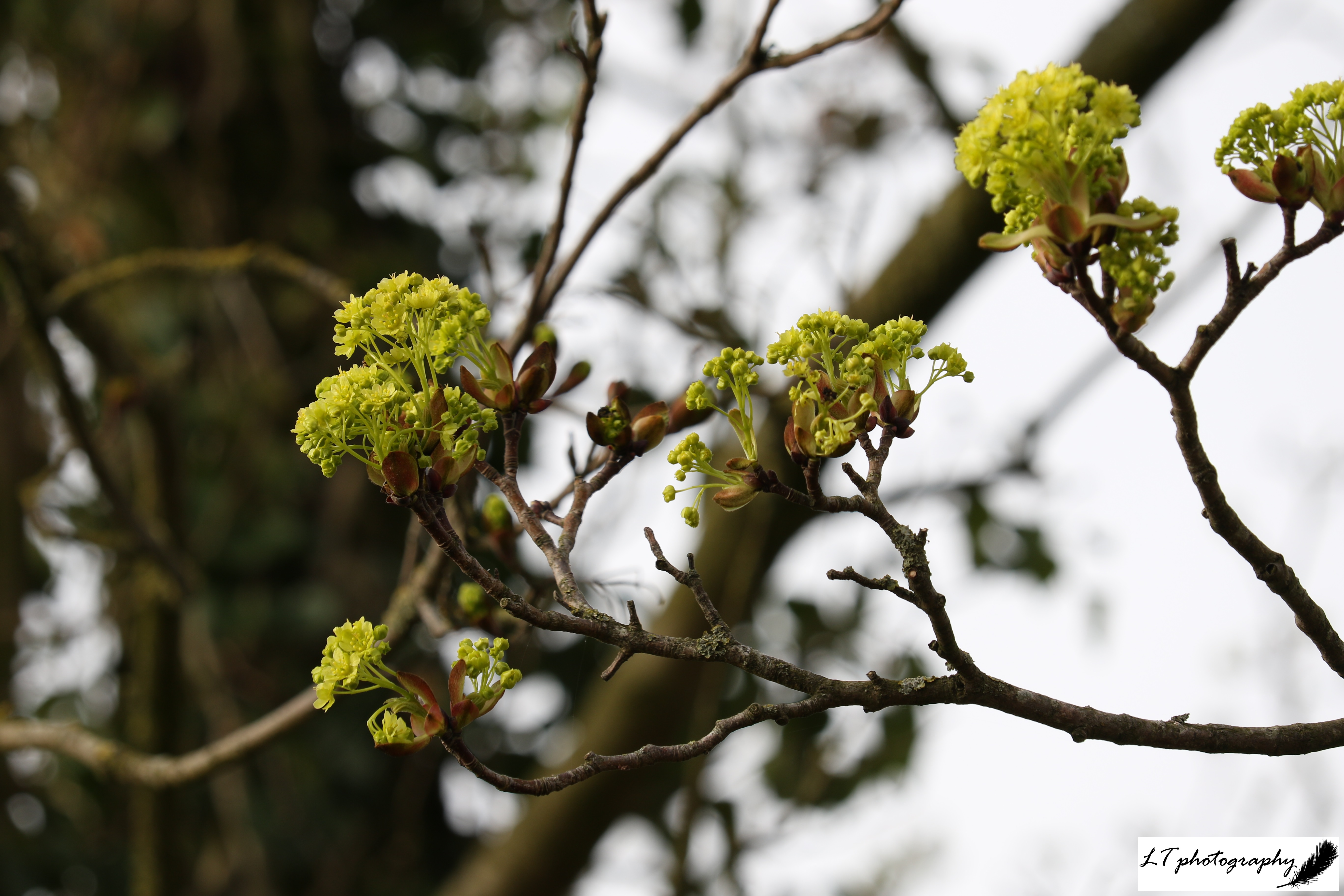
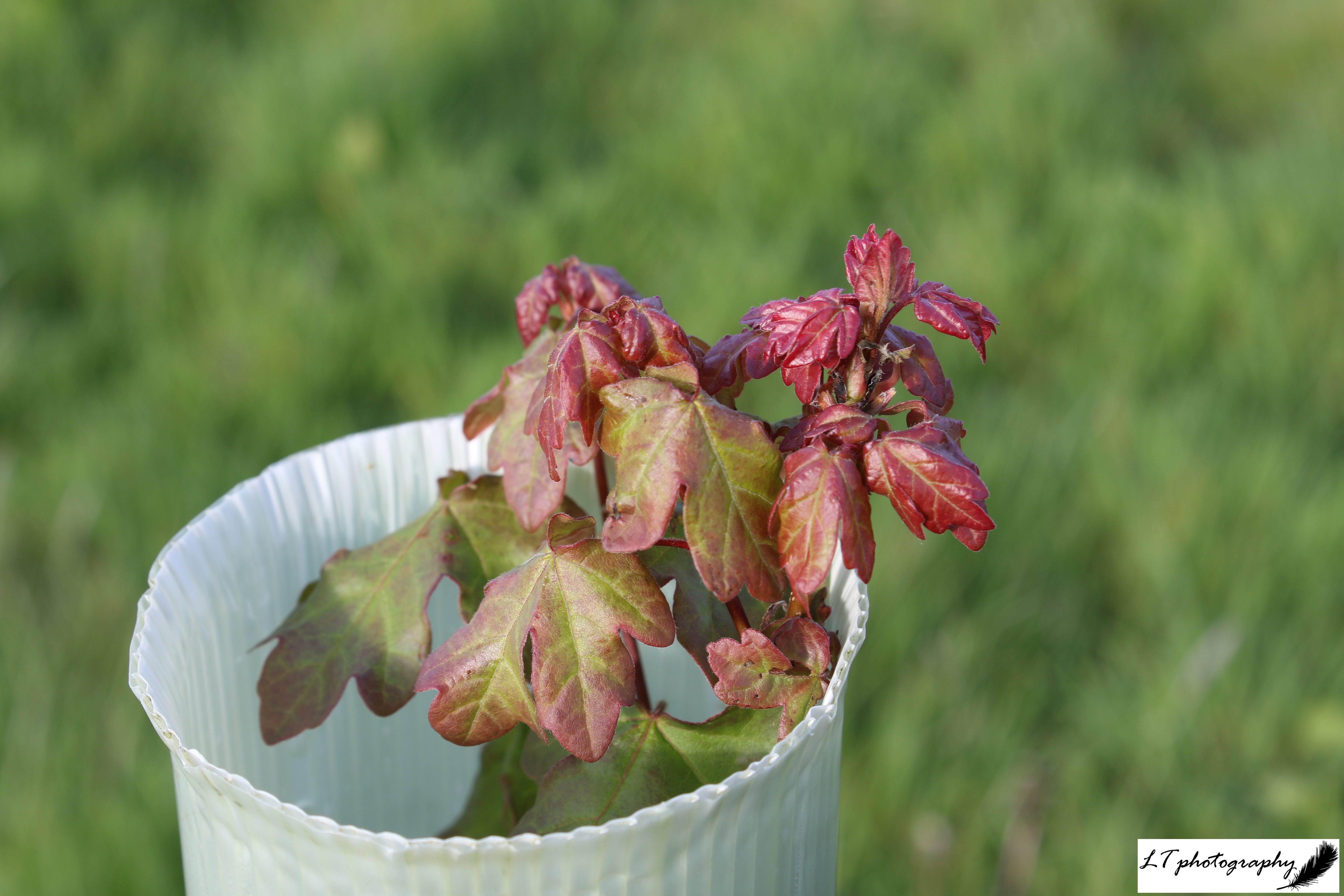
Field maple (Acer campestre) did not follow this trend though, with bud burst being 10 days earlier on 26th March, and first leaves unfurling 5 days earlier on 1st April. This may be as these trees missed the worst of the spring weather, but for the other trees spring events ranged from being 1 to 37 days late!

Shrubs

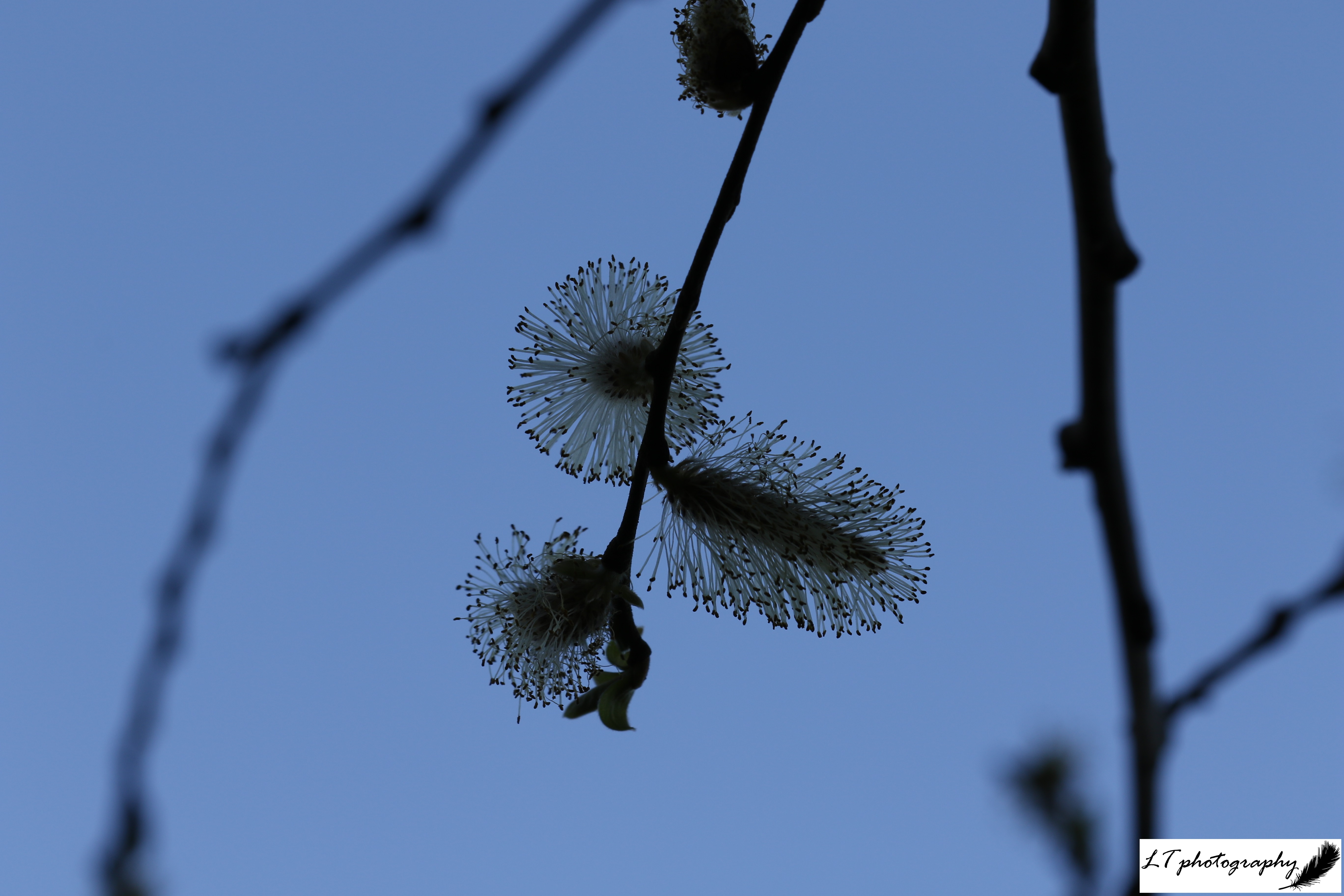
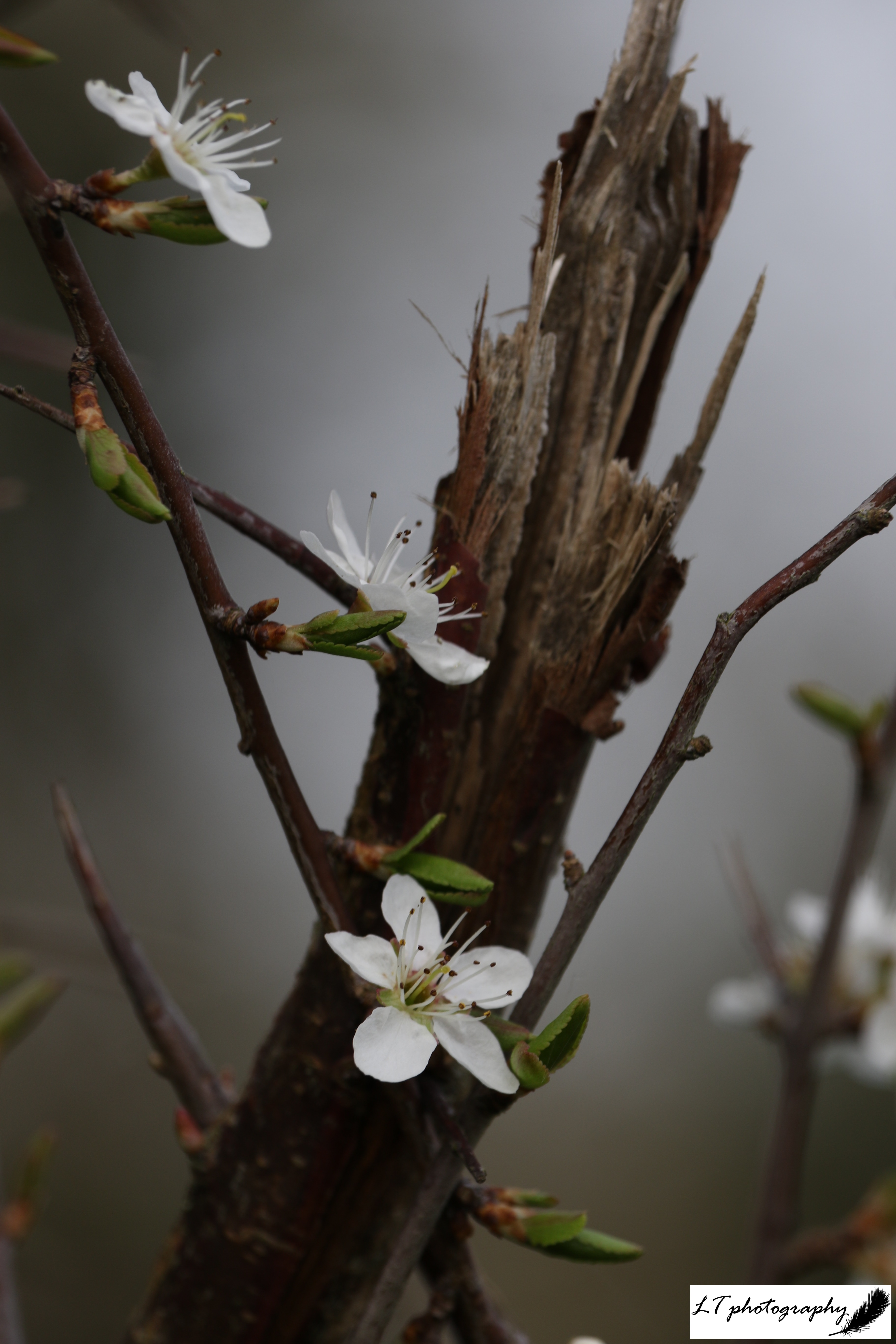
For a lot of the shrub species I monitored a similar trend was shown as with tree species, being later compared to 2020. For example, elder (Sambucus nigra) leaves first unfurled 34 days later on 18th March, blackthorn (Prunus spinosa) first flowered 17 days later on 23rd March, and hawthorn (Crataegus monogyna) first flowered 23 days later on 11th May.

Though half of the shrubs I monitored were later in their spring events, ranging anywhere from 2-34 days later, two species did not completely fit this trend. For lilac (Syringa vulgaris) bud burst occurred 12 days earlier on 24th February, but flowered 17 days later on 2nd May. This was the same for dog rose (Rosa canina), where buds burst 12 days earlier on 22nd February, but first flowered 22 days later on 8th June. For both of these species though, it is the spring events occurring before April that are earlier, as the ones occurring in April and May were not immune to the frosts and heavy rainfall like the other shrubs.

Flowers

For many of our commonly associated spring flower species, there was a little more of a split between appearing earlier or later, but on average they flowered later compared to 2020. Snowdrops (Galanthus spp.) first flowered 15 days later on 18th January, wood anemones (Anemone nemorosa) 8 days later on 30th March, bluebells (Hyacinthoides non-scripta) and greater stitchwort (Stellaria holostea) both 4 days later on 1st April, cowslips (Primula veris) 12 days later on 2nd April, early purple orchid (Orchis mascula) 12 days later on 18th April, wild garlic (Allium ursinum) 14 days later on 20th April, and oxeye daisy (Leucanthemum vulgare) 16 days later on 3rd June.

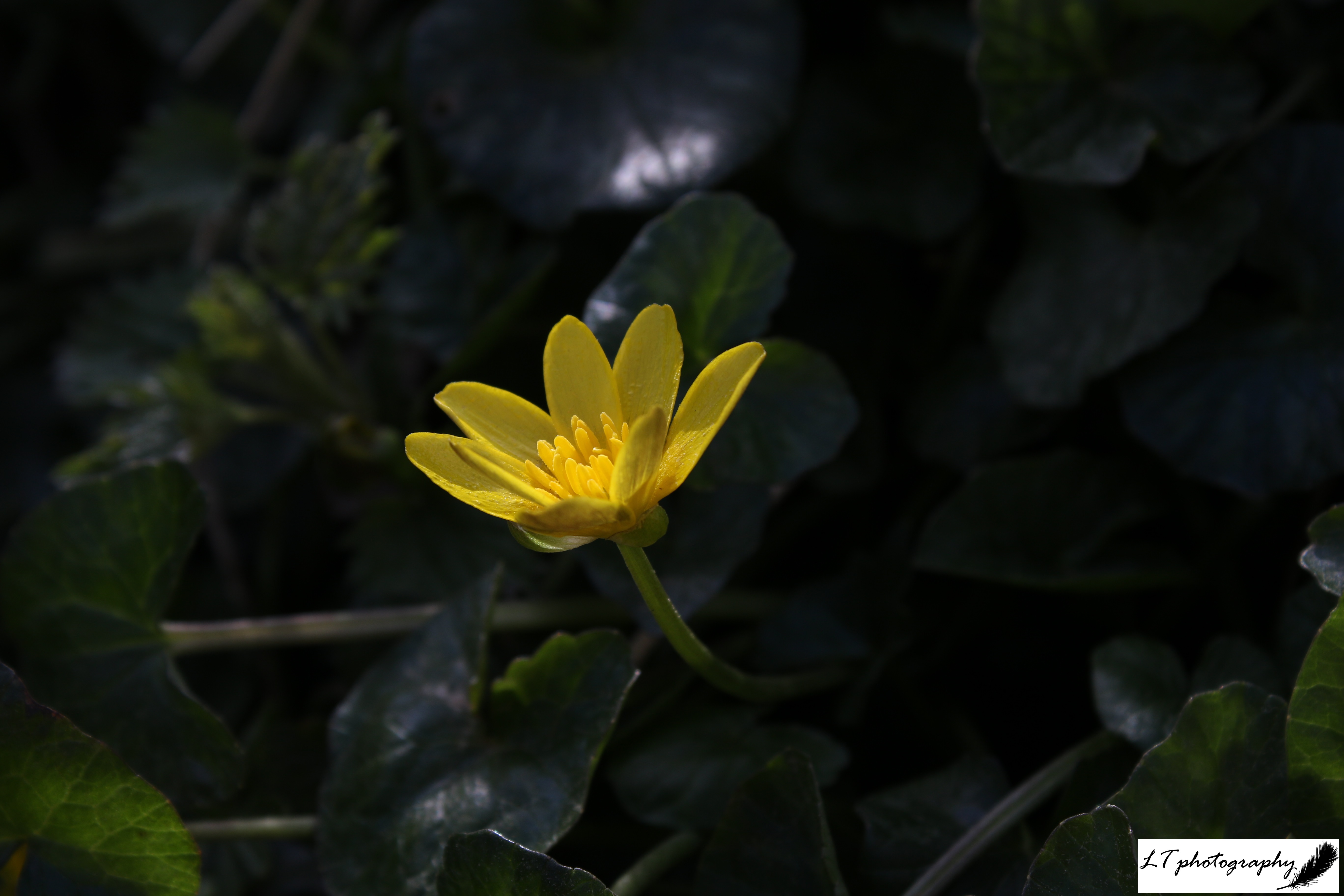
The exceptions were a section of earlier flowering species, including primrose (Primula vulgaris) first flowering 27 days earlier on 31st December, lesser celandine (Ficaria verna) 3 days earlier on 15th January, daffodil (Narcissus spp.) 22 days earlier on 19th January, and cuckooflower (Cardamine pratensis) 10 days earlier on 8th April. These flowers would have been influenced by a warmer winter and start to spring, generally flowering before the cold spell in April.

Birds

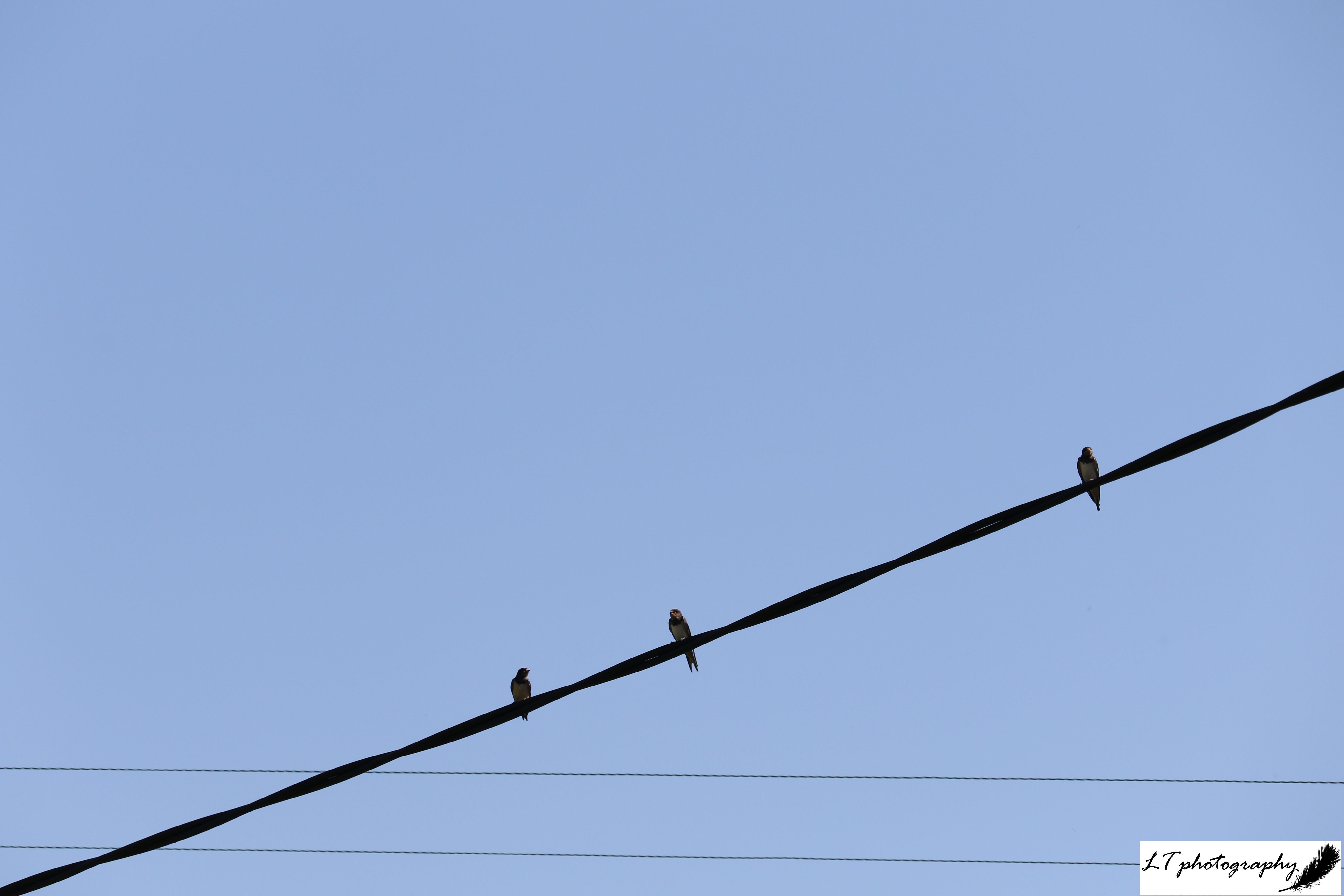
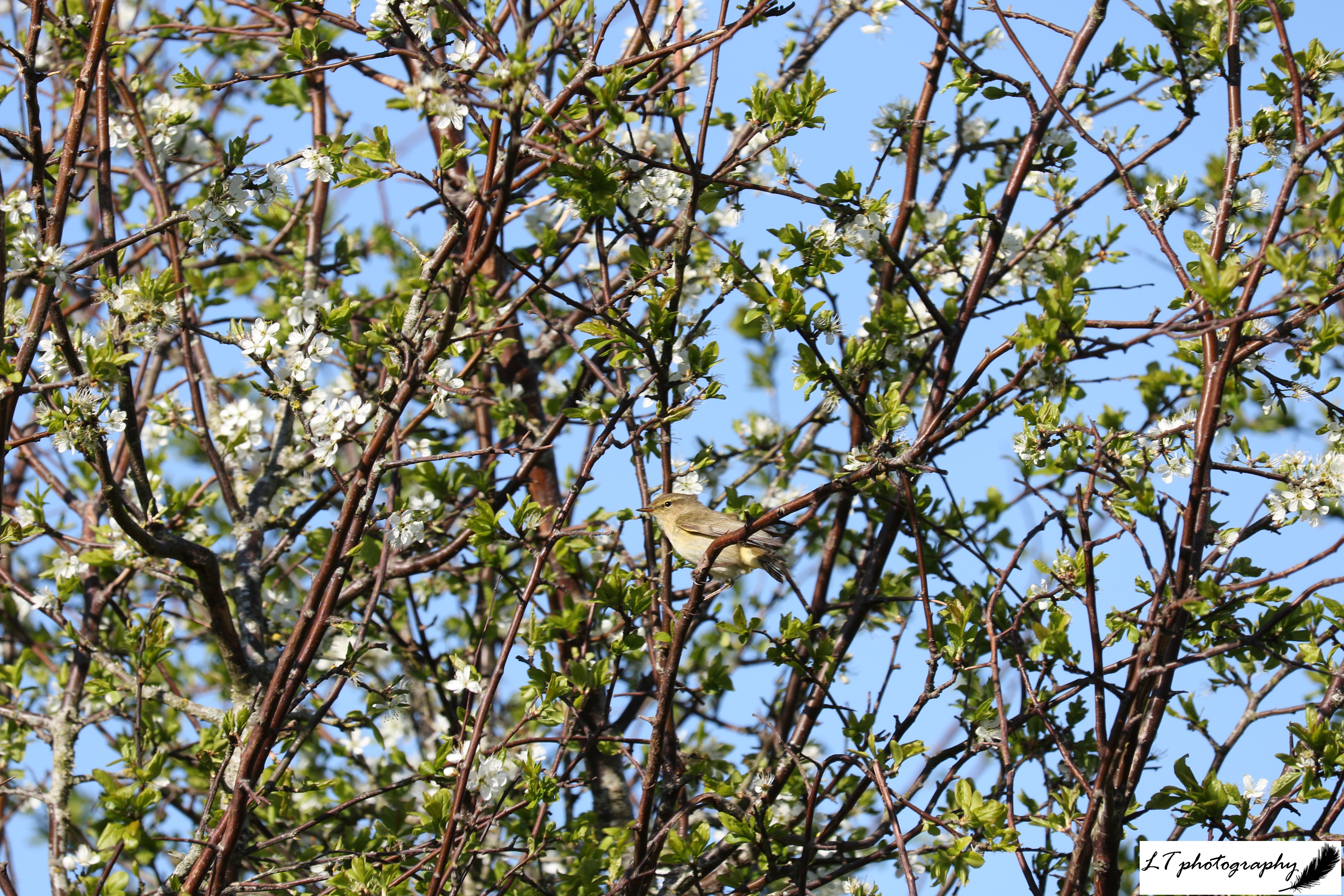
On average, bird species spring events have also become later this year compared to 2020. I heard my first song thrush (Turdus philomelos) singing 17 days later on 1st January, I saw my first rook (Corvus frugilegus) nests being built 10 days later on 25th February, and I heard my first chiffchaff (Phylloscopus collybita) on 16th March. April and May events were again influenced, for example I saw my first swallow (Hirundo rustica) 5 days later on 10th April, saw my first house martin (Delichon urbicum) 9 days later on 21st April, heard my first cuckoo (Cuculus canorus) 3 days later on 1st May, and saw my first swift (Apus apus) 10 days later on 16th May.

There were two exceptions though, where I recorded hearing my first blackbird (Turdus merula) singing 13 days earlier on 10th February, and saw my first blackcap (Sylvia atricapilla) 8 days earlier on 14th April. These would most likely relate to other influencing factors, such as overwintering in the UK or habitat requirements.

Insects

Compared to previous years, I have still yet to see some species of butterfly that would typically be on the wing by now, such as gatekeeper butterflies (Pyronia tithonus). For the insects I have seen though, again there was a split in event occurrence compared to 2020. For example, I saw my first small tortoiseshell butterfly (Aglais urticae) 2 days later on 7th April, red admiral butterfly (Vanessa atalanta) 26 days later on 7th April, brimstone butterfly (Gonepteryx rhamni) 26 days later on 18th April, and speckled wood butterfly (Pararge aegeria) 52 days later on 13th June.

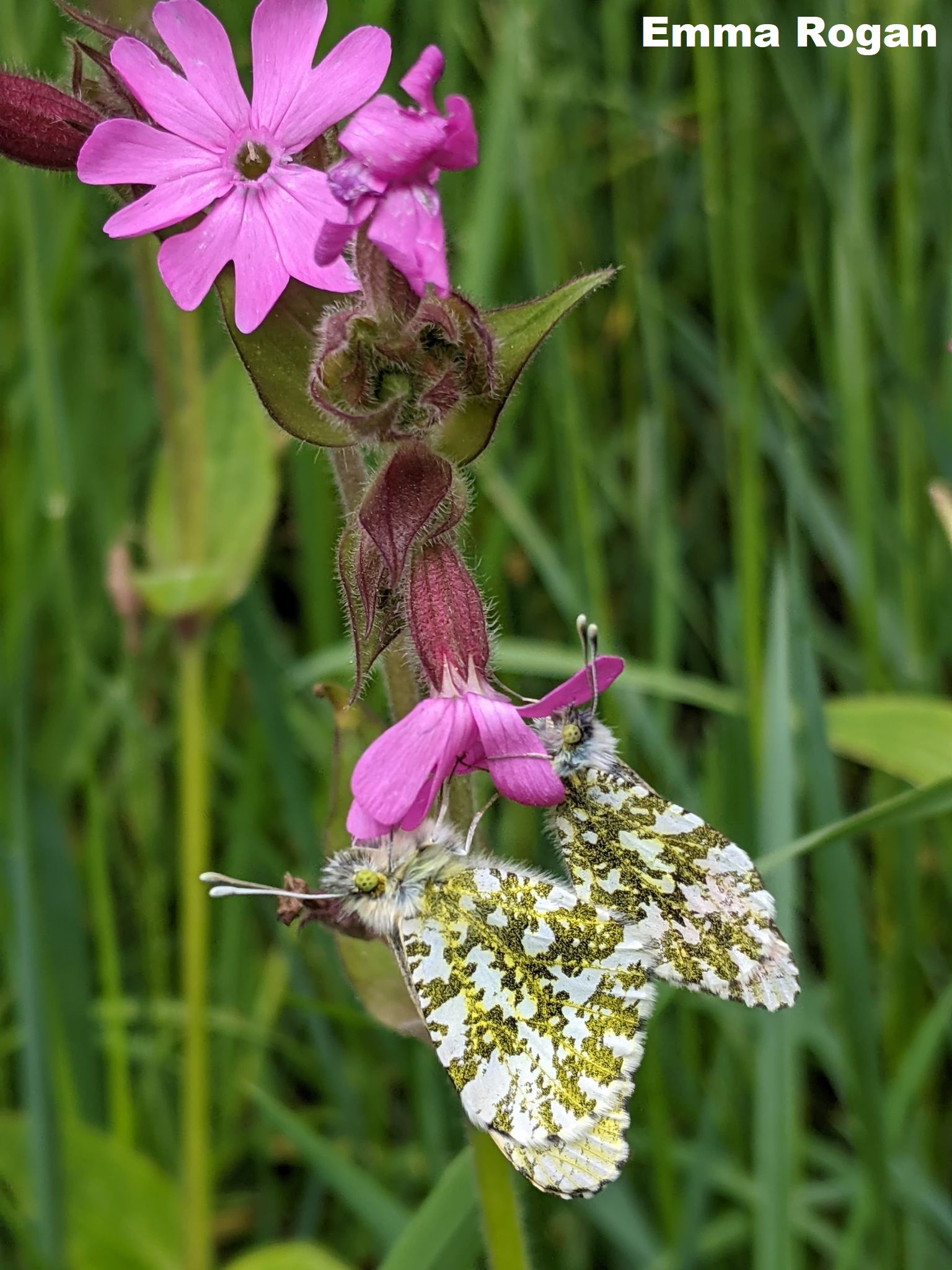
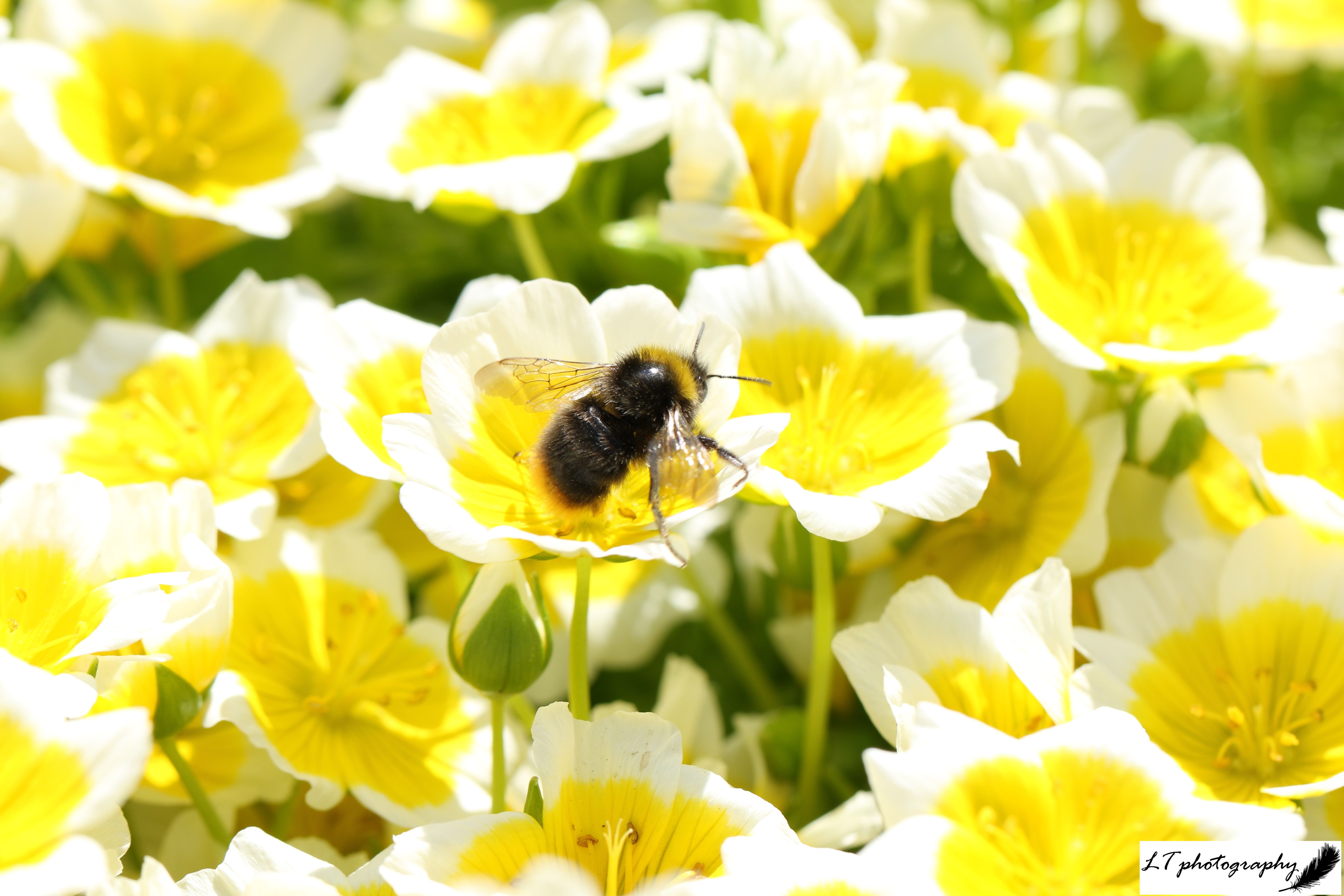
The early emergers came in the form of my first buff-tailed bumblebee (Bombus terrestris) 14 days earlier on 27th February, peacock butterfly (Aglais io) 5 days earlier on 30th March, orange-tip butterfly (Anthocharis cardamines) 13 days earlier on 31st March, and red-tailed bumblebee (Bombus lapidarius) 12 days earlier on 19th April. Despite these species appearing earlier in spring, later flowering plants will have had a knock-on effect for them due to a mismatch in timing for food. Only further down the line will we be able to see the extent of this impact.

Summary

This year I have recorded more spring dates than I have done so before, such as alder trees flowering, first yellowhammer singing, and first green-veined white butterfly, which will be useful information during the years to come. This reflects how I have felt more in touch with nature this year even with the unusual weather patterns, such as alot of rain! It became clear as we went through May though, that there was a trend for events happening later and later. This is why I was so interested to see how far this trend actually extended amongst species.

Last year I wrote that spring events are ‘in fact getting later, which will be related to… weather and environmental factors here and further afield’. This year this has turned out to be the case, which shows how climate change is having more of an impact through changes in weather patterns rather than just warmer temperatures. Earlier spring events have been getting earlier with warmer winters, but heavy rainfall and colder starts to spring have been affecting late March to May events most. I wonder now what impact this might have as we move forward, for example greater mismatches in ecological timings.

Walking through the Bluebells

The Bluebell is the sweetest flower
That waves in summer air
Its blossoms have the mightiest power
To soothe my spirit’s care
– Emily Brontë (The Bluebell)

That moment I stop, take a breath, and take in this spring spectacle for the first time each year, always fills me with joy each and every time. There is nothing quite like the rich violet-blue carpeting a woodland floor as far as the eye can see, brightening even an overcast day. This incredible event also bombards the rest of the senses at the same time, from the heady scent of millions of nodding heads to birds layering their songs to create the perfect soundtrack. A walk amongst the trees allows you to escape for a while and to forget the wider world.

The beautiful bluebell is one of the most iconic native flower species in the UK, and a favourite for many. They have captured imaginations for centuries from art to literature, and have garnered the name ‘Fairy Flower’ from the rich folklore that surrounds this dainty flower. Putting much fantasy aside, bluebells have also been a useful flower to humans throughout the ages, with purposes including preventing nightmares, bookbinding, and even clothes starching.

This year my spring has been a lively one, but I have still tried to experience as much of the season as possible, bluebells included. A big part of this for me was adventuring to my local woods to take in the changing of the seasons, and to take in this fantastic habitat. For me, Dorset is one of the best places to see bluebells, as is the south west, due to many remaining areas of ancient woodland and a slightly milder climate. With this in mind, during the first week of May, I ventured out to 3 stunning woodlands close to my home in Dorset for some adventures.

Bluebell Wood Number 1 – Horse Close Wood (Wednesday 5th May)

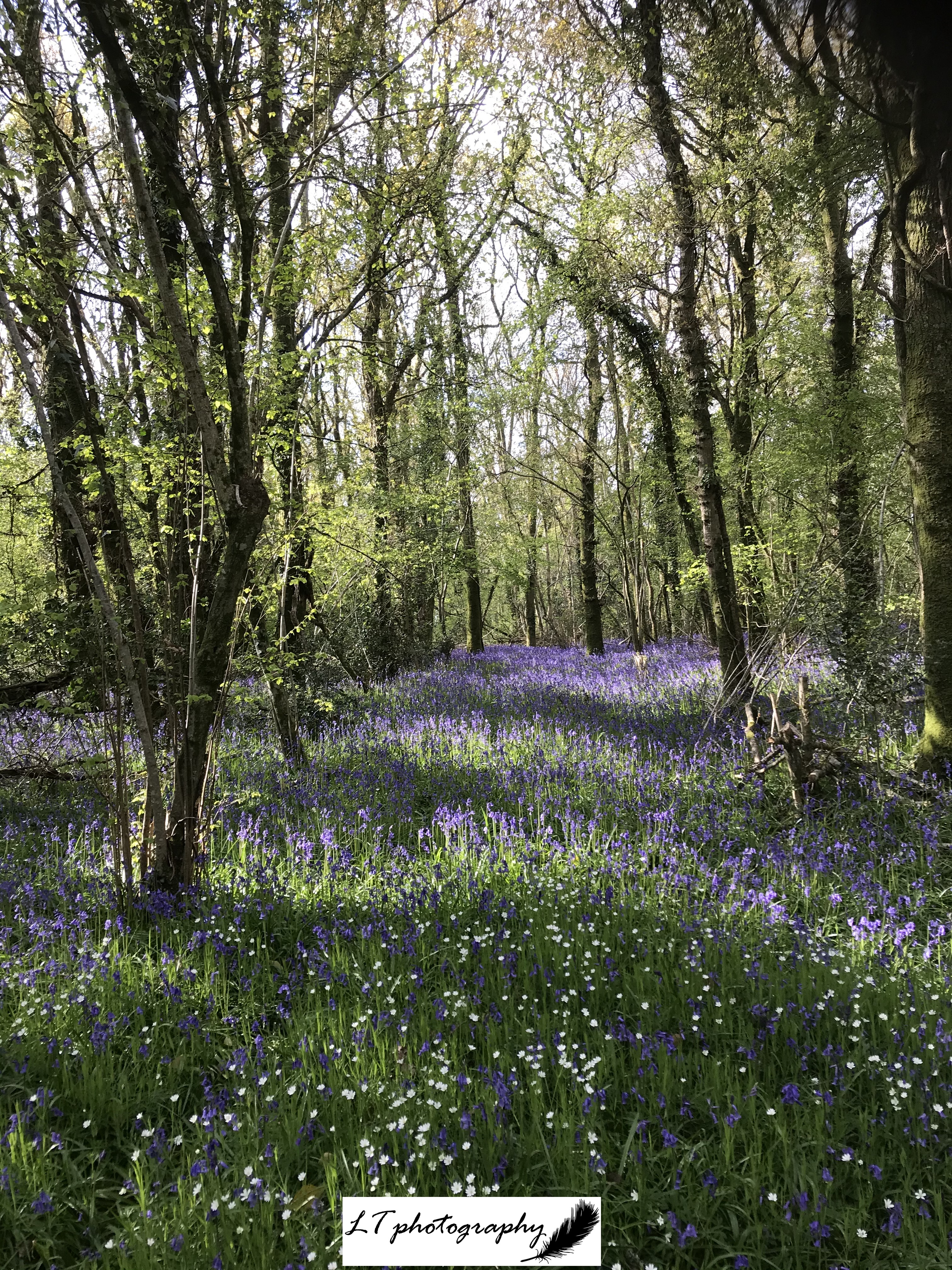
This year in my favourite local woods, I spotted my first bluebell on the 7th of April. It then took until May for the bluebells to finally come into their own, thanks to the cold and frosty mornings at the start of spring. So on the afternoon of Wednesday the 5th of May I headed to Horse Close Wood for my first walk of the year through the bluebells. I could not help but be a little excited on my walk there, as there is something truly special about seeing this iconic spring scene for the first time each year.

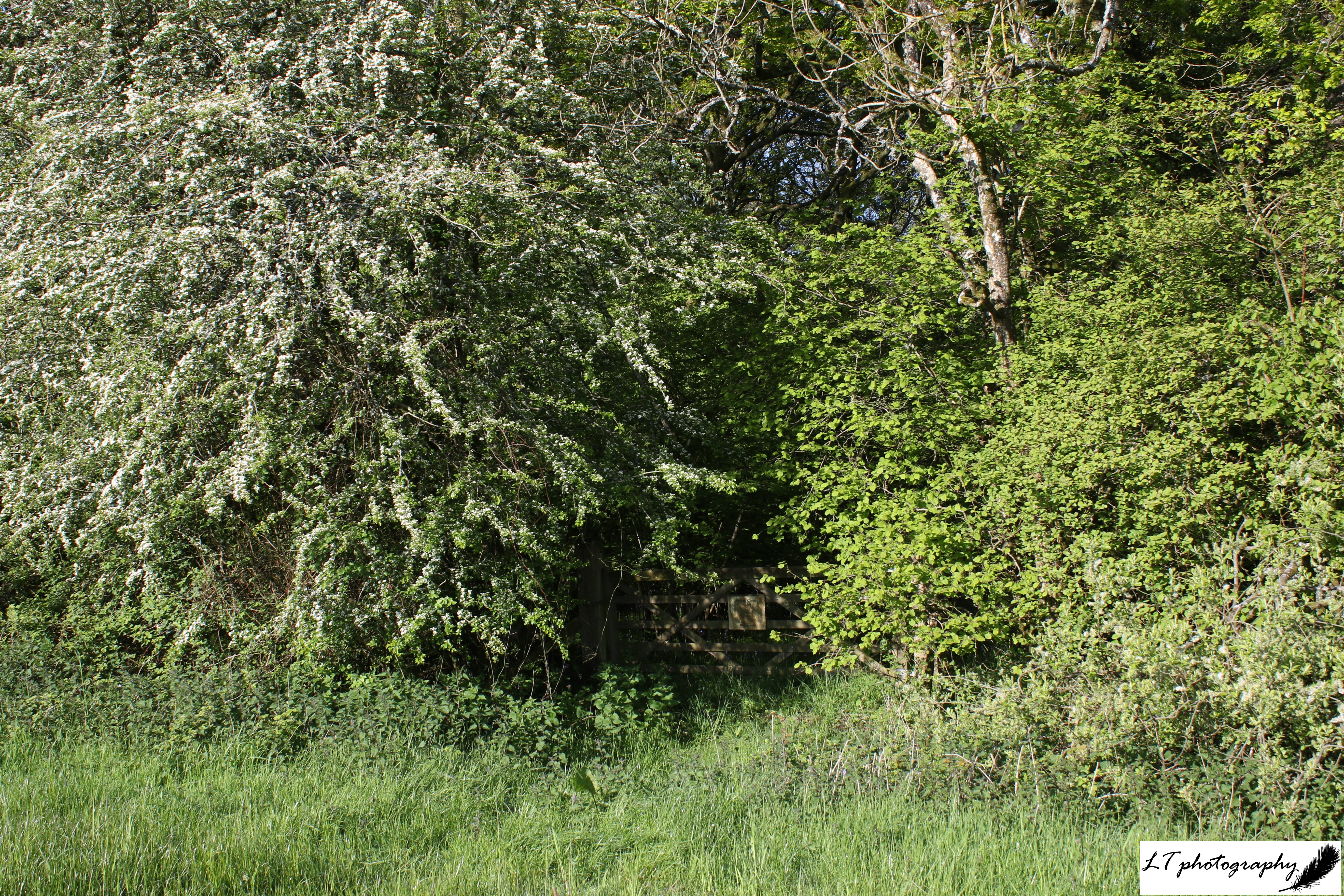
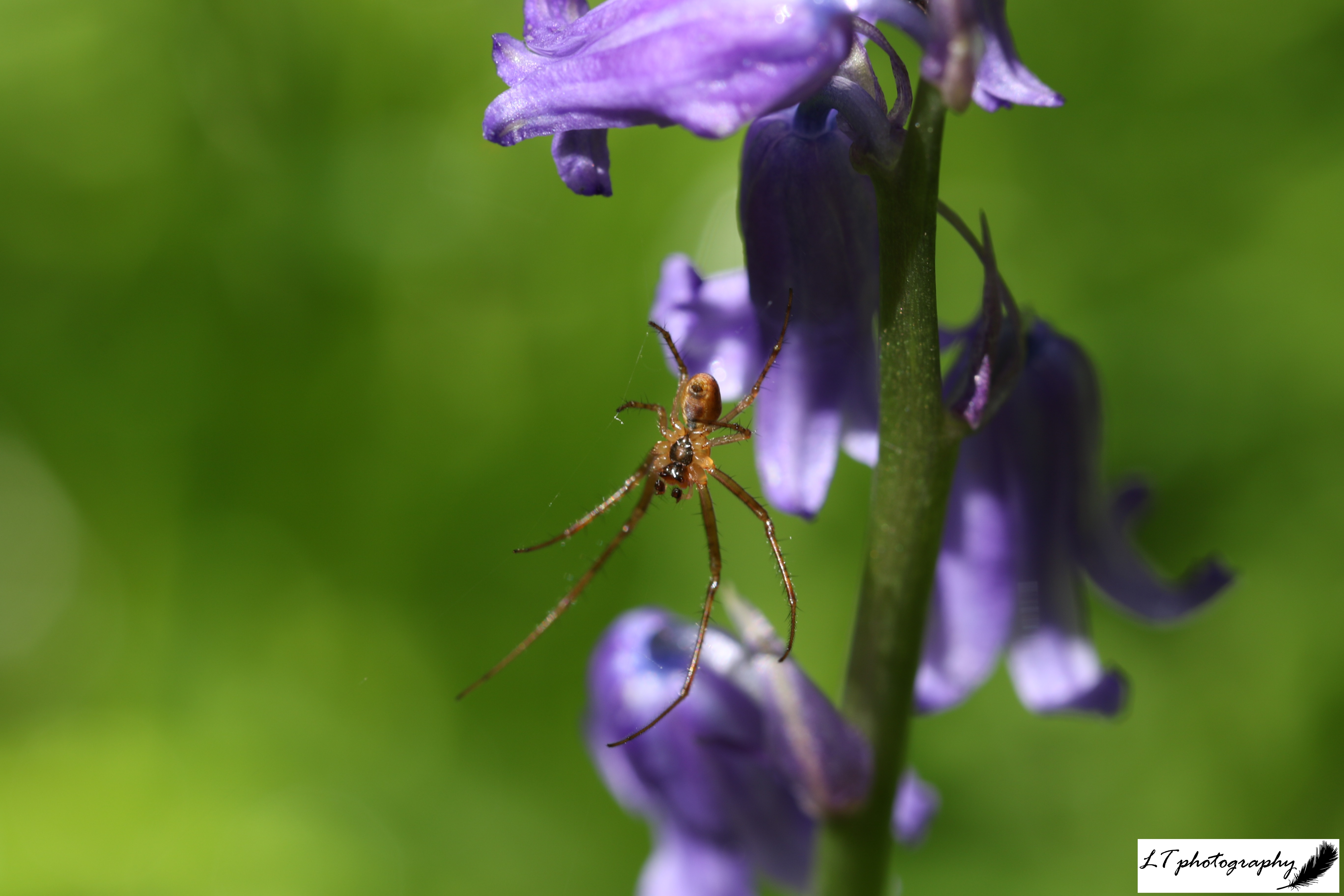
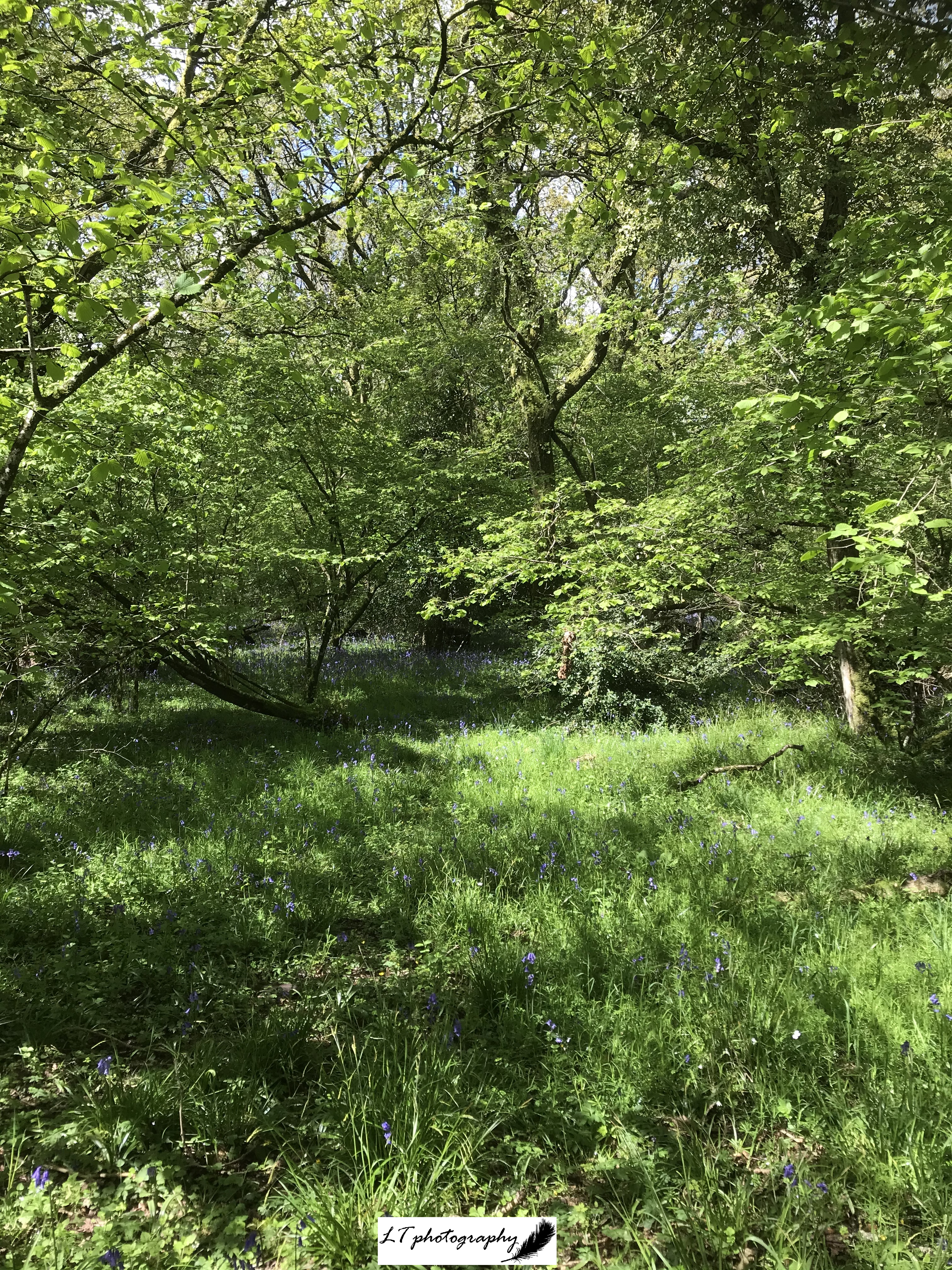
As always this woodland did not disappoint. When you arrive at the gate you cannot at first see very far, but as you move on and round the first corner the wood hits you. You are suddenly met with a resplendent deep blue carpet, dotted with the whites, pinks and yellows, of early purple orchid, stitchwort, yellow archangel and more. You are also bombarded with a symphony of song, with birds including chiffchaffs, song thrush, blackbirds, robins, and nuthatches. With seclusion and a diversity of plant life, this wood is a great home for wildlife, from the small, such as spiders and butterflies, to the larger, such as roe deer and badgers.

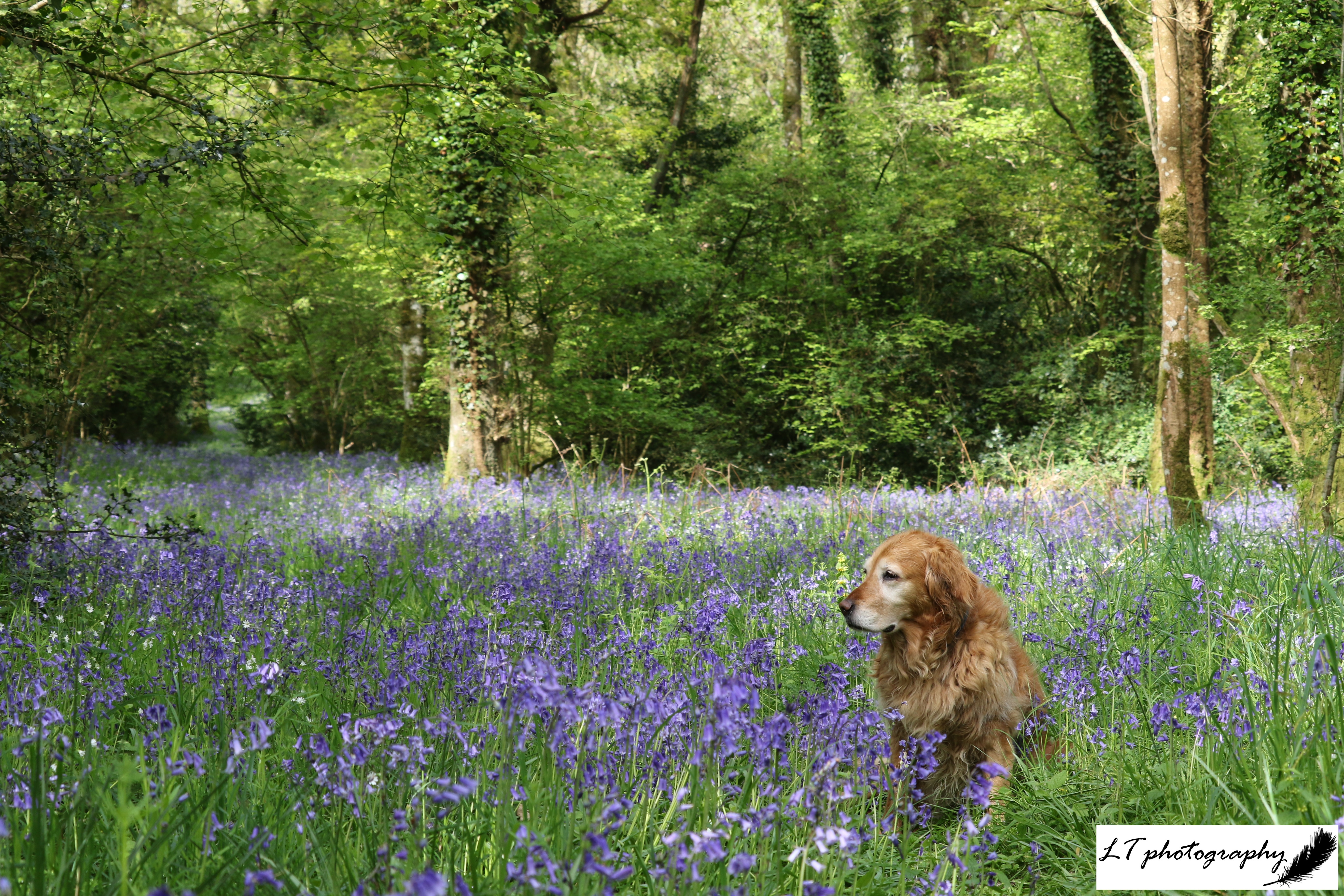
Walking through the bluebells in Horse Close Wood holds many happy memories for me, including walking our family dog through the wood during her very last year with us. It is a place that brings me comfort and new experiences, helping me through happy and tougher times, such as university exams and lockdowns. It will be a place that keeps me coming back for years to come.

Bluebell Wood Number 2 – Cockroad Copse (Thursday 6th May)

After a successful walk in the woods the day before, on my second day off I decided to head to another of my local woods to see some more bluebells. I held off going until later in the day, as the weather had been a bit off, but I was rewarded with some warm and calm weather for my adventure.

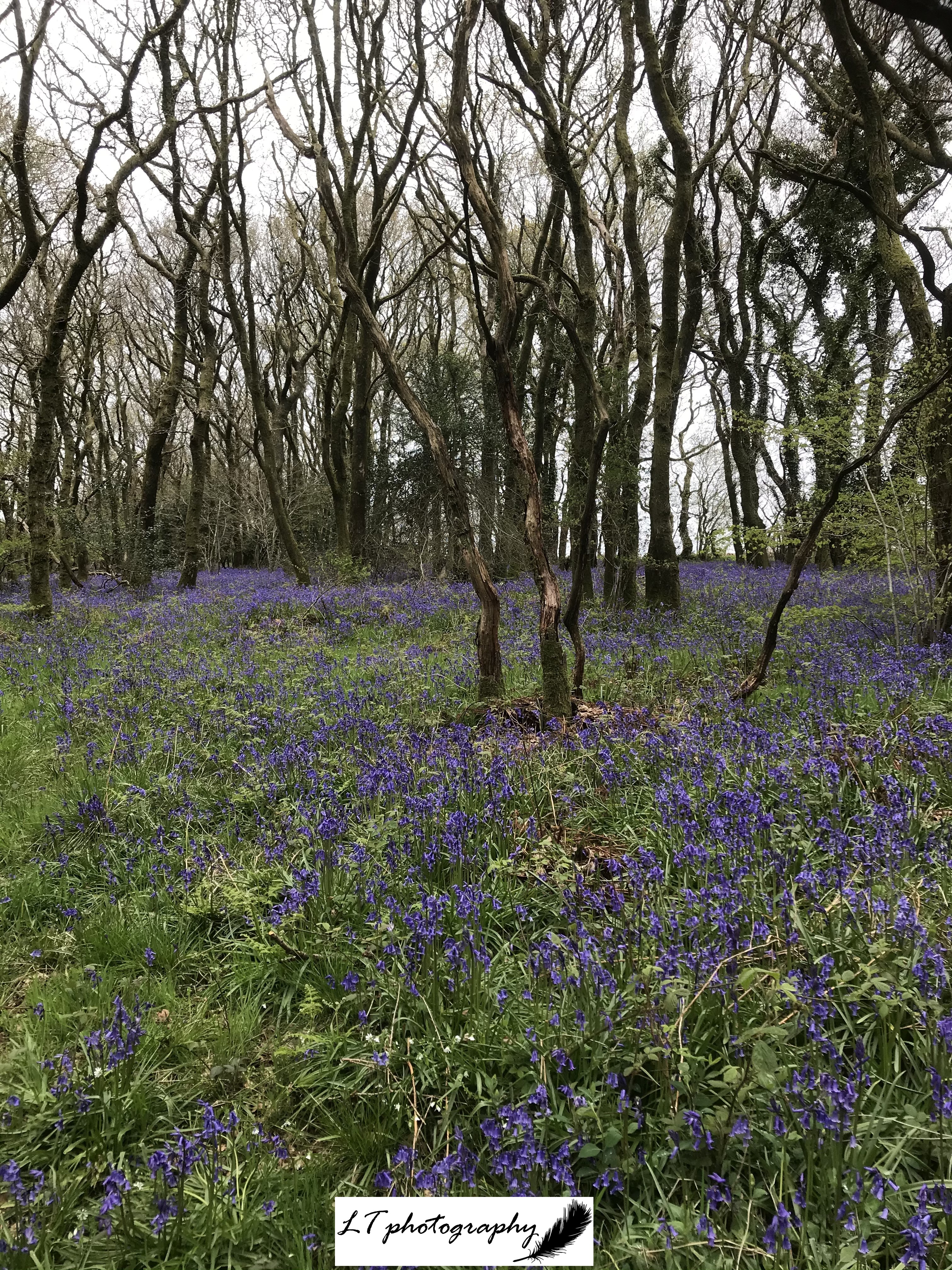
Named Cockroad Copse for its smaller size, it is made up of similar tree species to the Horse Close Wood, such as oak and hazel, but lacks some of the habitat variation of the larger wood, for example small holly trees and streams. It is also less secluded, being close to a road and gasworks, and not far from a nearby village. As a result the Copse sees more human visitors and is a little less wildlife-rich than my larger favourite.

Despite some limitations, the Copse on this day was still spectacular in its spring finery, with native bluebells dotted with some ancient wood indicators, such as wood anemone and wild garlic. The woods was also enriching for the rest of my senses with the fresh, green smell of new life, the heady scent of bluebells at their peak, a fresh, cool taste on the tongue, a gentle breeze on my skin, and the brush of undergrowth. The evening sun was the icing on the cake, cutting through holes in the canopy and creating a rather magical atmosphere. When a setting plays with your senses, it is refreshing and allows you to forget yourself for a little while.

Bluebell Wood Number 3 – Ochill Woods (Sunday 9th May)

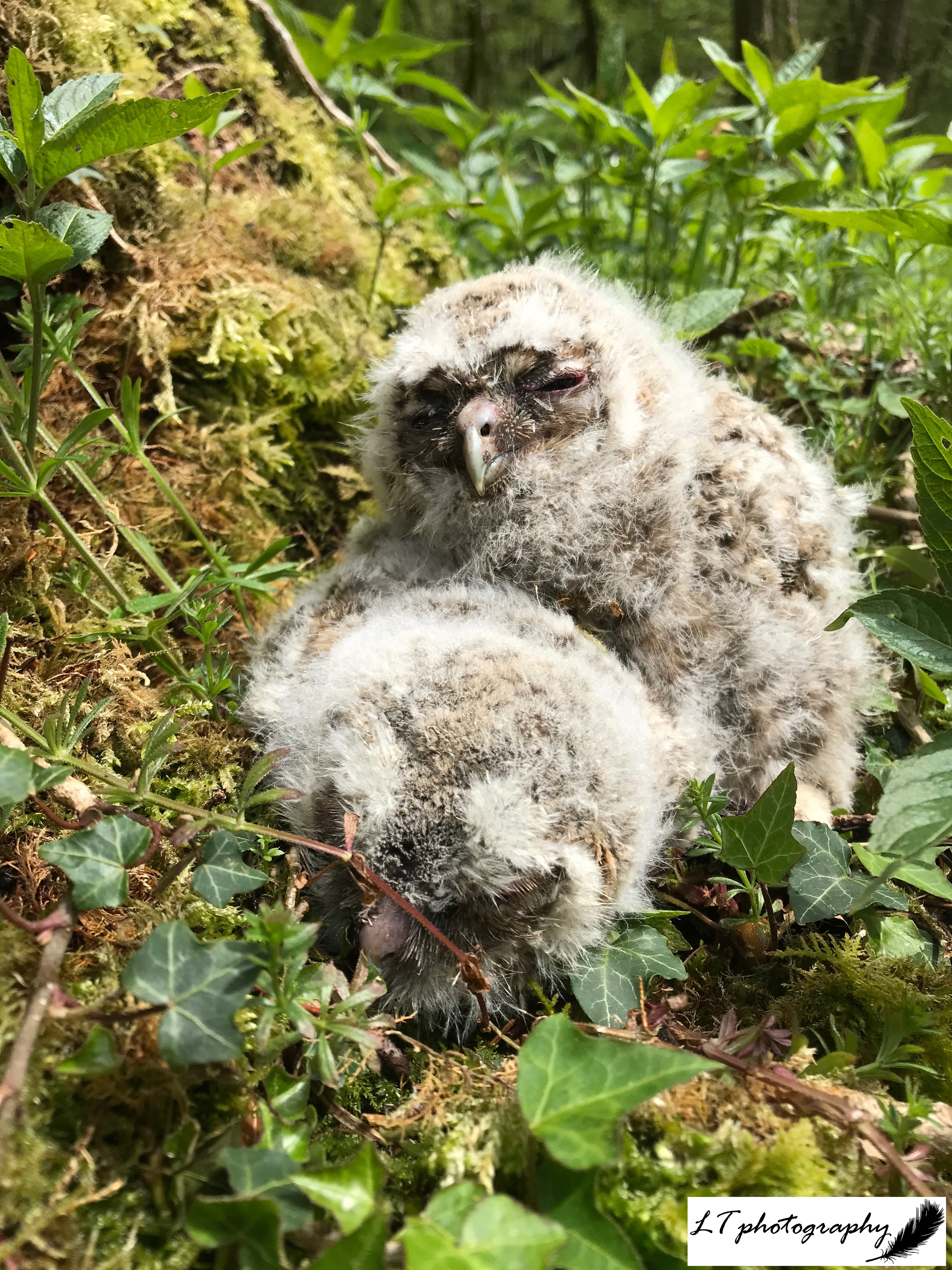
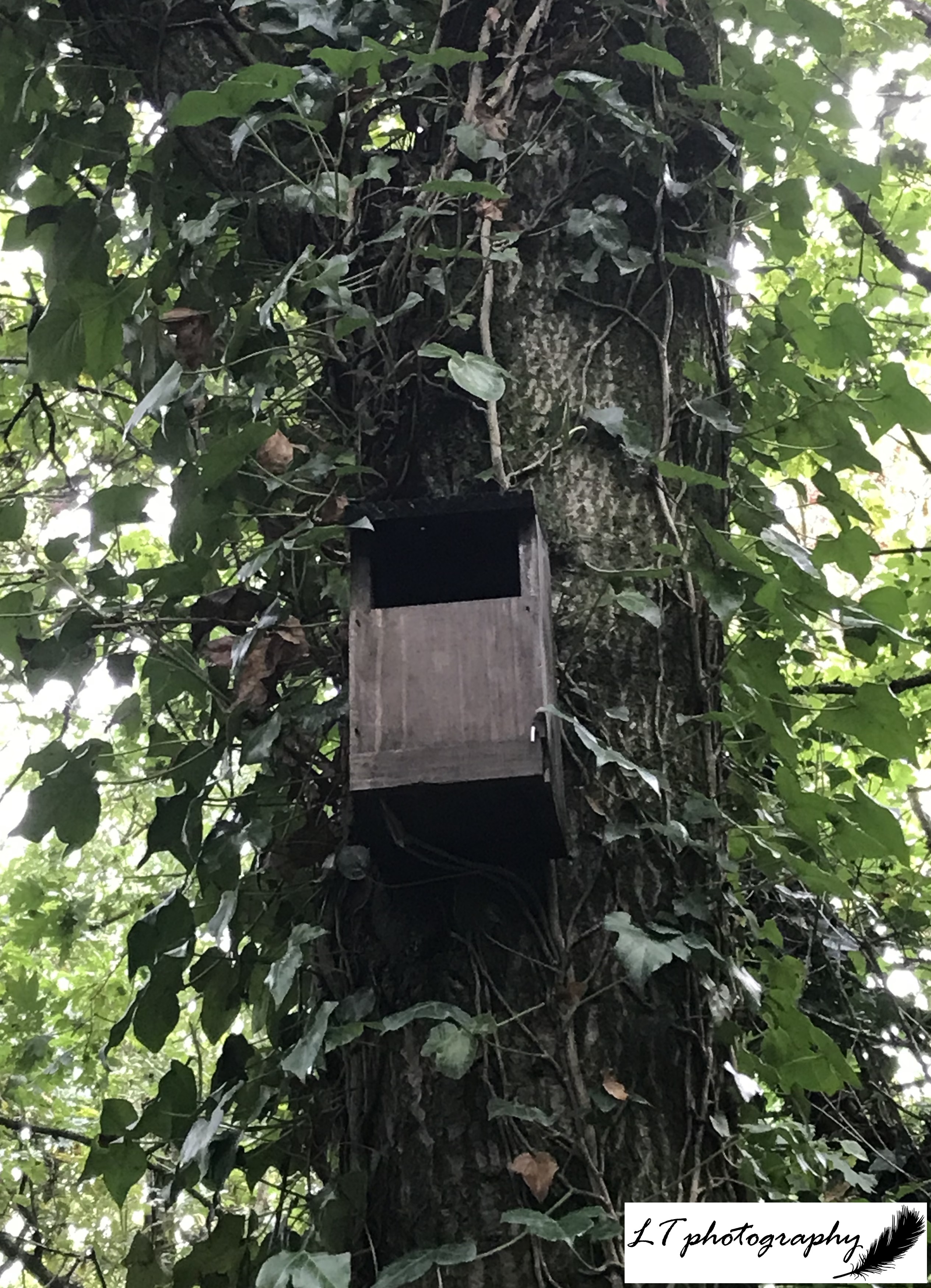
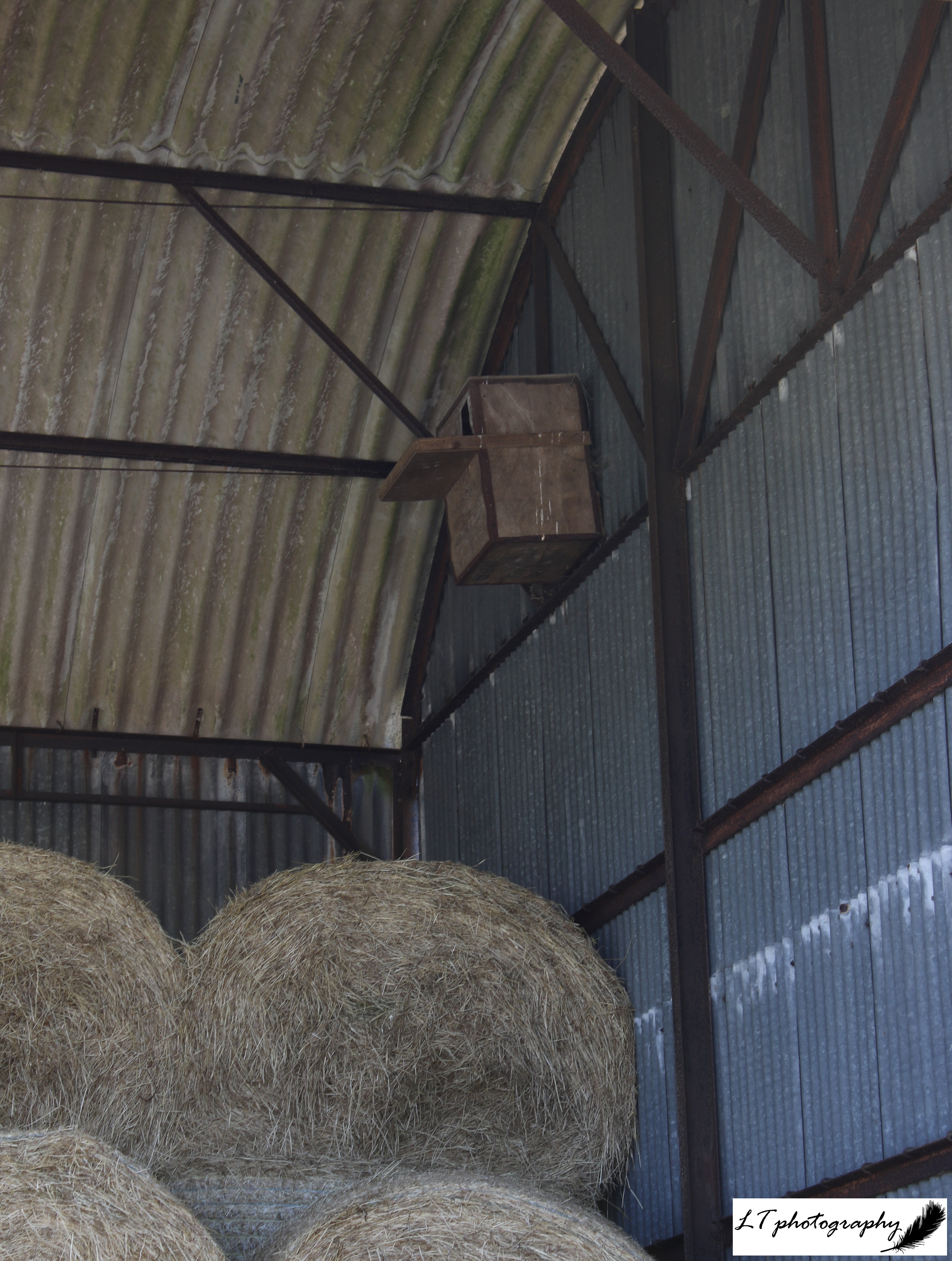
To finish my week of bluebell adventures, I made a spontaneous trip to another local woodland. I had taken time off to join tawny owl nest box checking at Duncliffe woods for the morning, but I decided to continue my nature adventures into the afternoon, and head off for another walk. My spur of the moment trip led me to a layby on top of Bulbarrow hill, 10 minutes from my home, and to a footpath on a map heading to what I hoped would be a bluebell wood.

Thankfully my map reading paid off, as I discovered a stunning little woodland called Ochill Woods. The first moment I saw its interior took my breath away, as I did not quite believe I would stumble into such a promising area of bluebells. The open woodland was picturesque in the overcast afternoon sun, with the blue woodland floor set against lime-green beech trees.

Compared to the previous woodlands that I had visited, the area of Ochill I walked was a very different habitat. This woodland was more of a plantation, with less undergrowth, fewer flower species, and a stillness to it. Still the woodland had an effect on me, with vibrant colours and a calming power, typical of a walk amongst the trees. It was lovely to just walk, take photos, and unwind. The trip was made even better by missing out on the afternoon’s rain showers!

Celebrating the Spring Season

Spring is by far my most favourite time of the year. It is a time of warmer weather, lighter evenings, buds bursting, animal travellers returning, new life, and new beginnings. It is a time to refresh and revive, gain new strength to move forward, and celebrate what spring means for us and our wild world.

For me the first snowdrops whisper of spring coming, and blooming yellow flowers sing of new starts, but for me spring truly begins with the return of the chiffchaff. The song of the chiffchaff epitomises the feeling that spring is here, and that the season now has hold of the landscape. It is much harder though for me to sum up just one or two favourite spring moments, as I love all that spring has to offer. I gain joy in moments ranging from bursting cherry blossom and the first oak leaves to fox cubs and the return of swallows. However, a star of spring for me has to be when our woodlands become carpeted with the brilliant blues and heady scent of native bluebells. Walking amongst these sensational flowers has given me many happy memories growing up and moving into my adult years.

Spring 2021 has been a tumultuous spring to say the least. Despite this, I have tried to make the most of the season and all it has to offer, rain or shine. Many of you too will have done the same, even though many people I know do not share their spring moments with others. With this in mind, when celebrating spring this year on my blog, I wanted to focus on more than what spring means to me and to include some of my friends and family in my celebration. So, I asked them the questions: What signs make you think that spring has arrived? And what is your favourite thing about the spring season (out in nature)? Here’s what they had to offer:

Nick Tuke, my Dad and farmer, Dorset

The signs that make me think that spring has arrived come in the form of spring flowers, such as daffodils, primroses and bluebells, or seeing the first swallows. My favourite part of spring has to be being out first thing in the morning, when the sense of bright, fresh, greenness, and new life, fills you with a sense of optimism for the year ahead, before the summer heat dulls everything.

Amanda Tuke, my Aunt and London-based naturalist

I always feel that spring has arrived when I see my first hairy-footed flower bee in the garden. The females have gorgeous black furry bodies and they have a very distinctive and energetic way of flying.

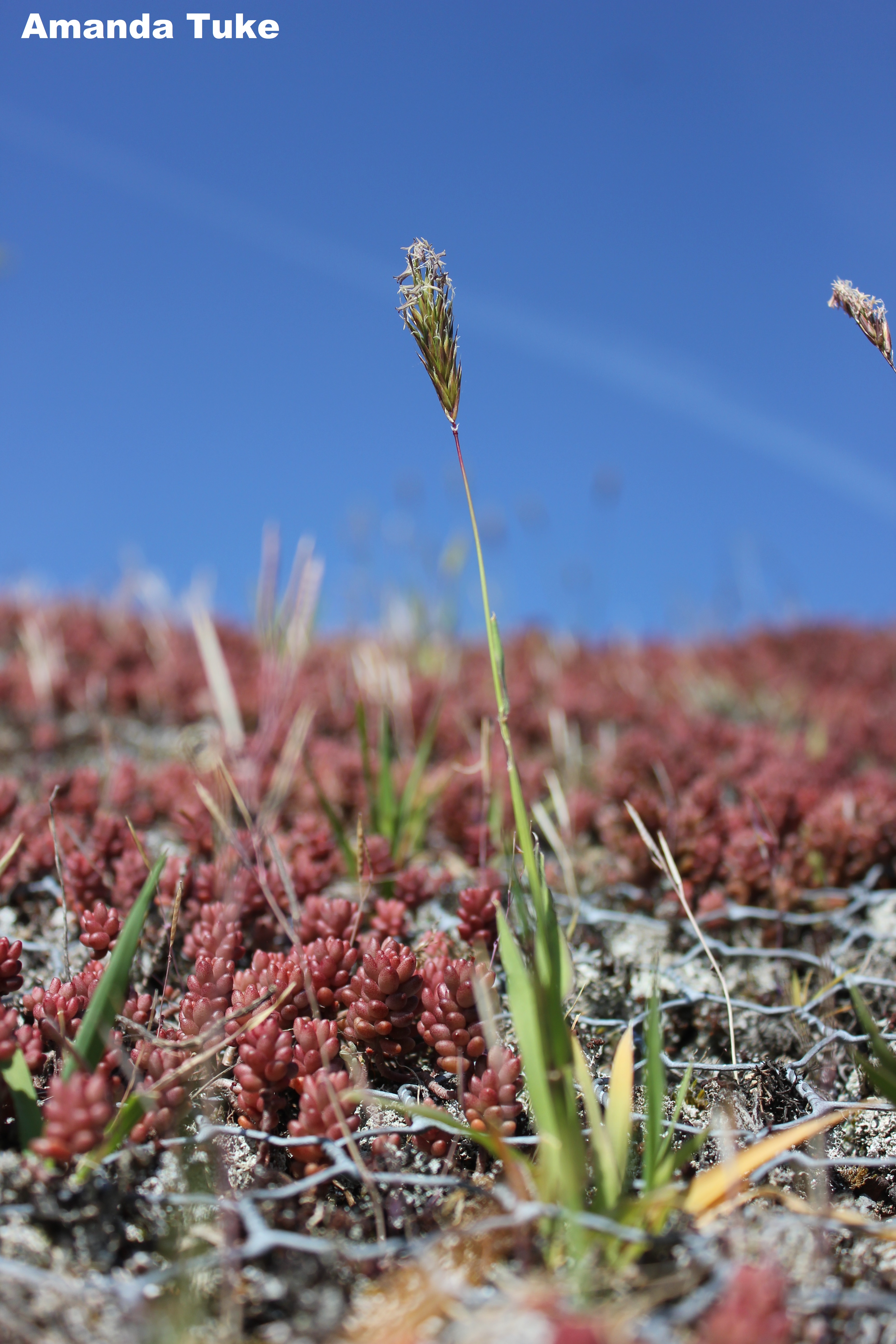
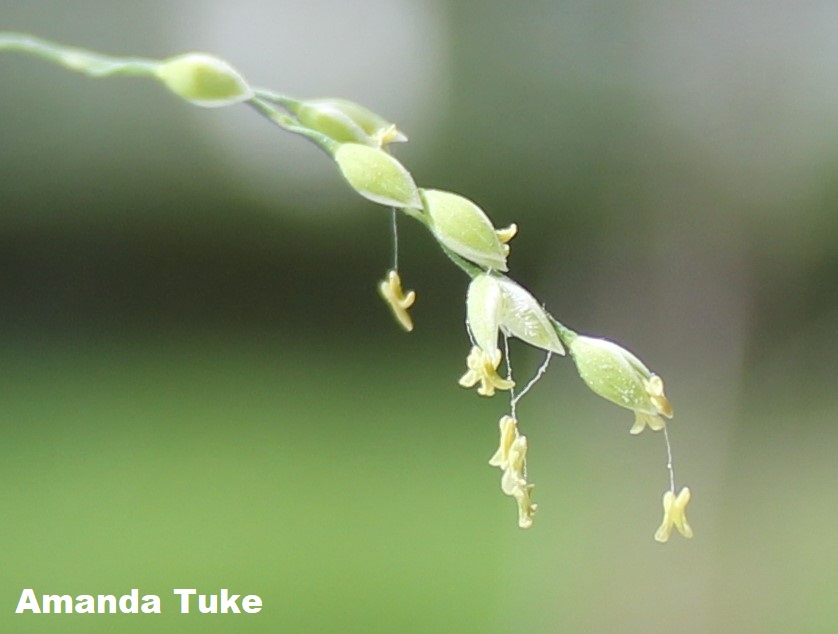
There’s a point in spring when a number of my favourite grasses are all finally in flower and looking particularly pretty, in particular Sweet Vernal Grass, Meadow Foxtail, Wood Melick and Wood Millet.

Kasia Starosta, my friend and member of Conservation Action, Dorset

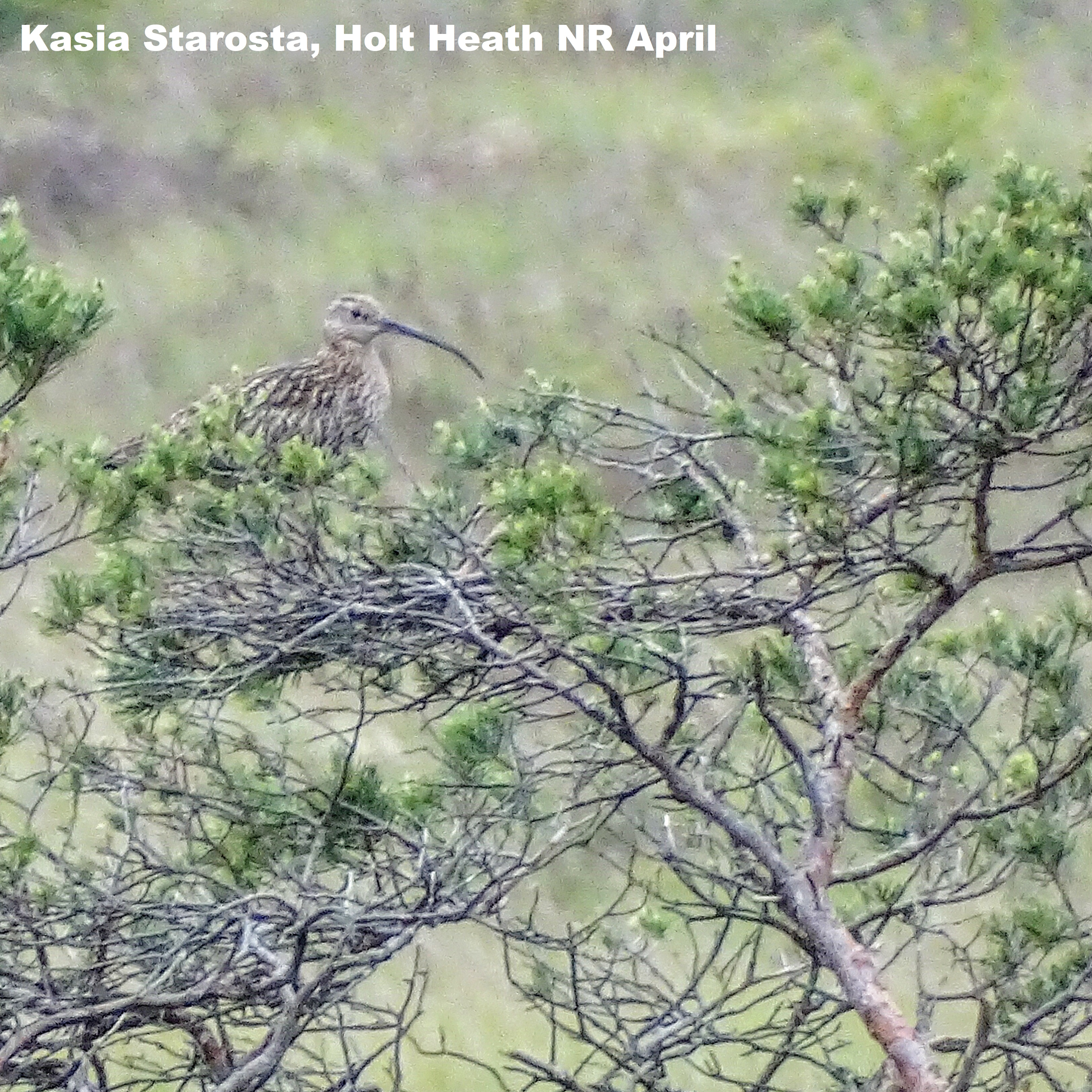
Springtime starts for me with the first glimpse of the curlews flying inland to breed. It’s all about magic “curleee” in the air and familiar shape cutting across the sky. Looking at them I remember some of the names people were giving them. Old French ‘corliu’ the messenger, latin ‘Numenius arquata’ – new moon, bow shaped bill bird… There comes the reflection how far we have travelled from nature, not knowing what species are living around us now, not mentioning naming them after changing seasons and planets.

Judyth Tuke, my Granny, Dorset

For me the first sign that spring has arrived is seeing the first swallow over the garden. This year though, they did not arrive until the end of April.

The things I enjoy most in spring are watching the first flowers opening in the wild or in my garden.

Emily White, my friend, software engineer and writer, Winchester

I know Spring has arrived when it is announced by the smell of grass in the air, flooding my mind with memories of Spring Term lunchtimes spent sat outside on my school’s field. The coming of Spring is further confirmed by birds having conversations ever later into the evenings.

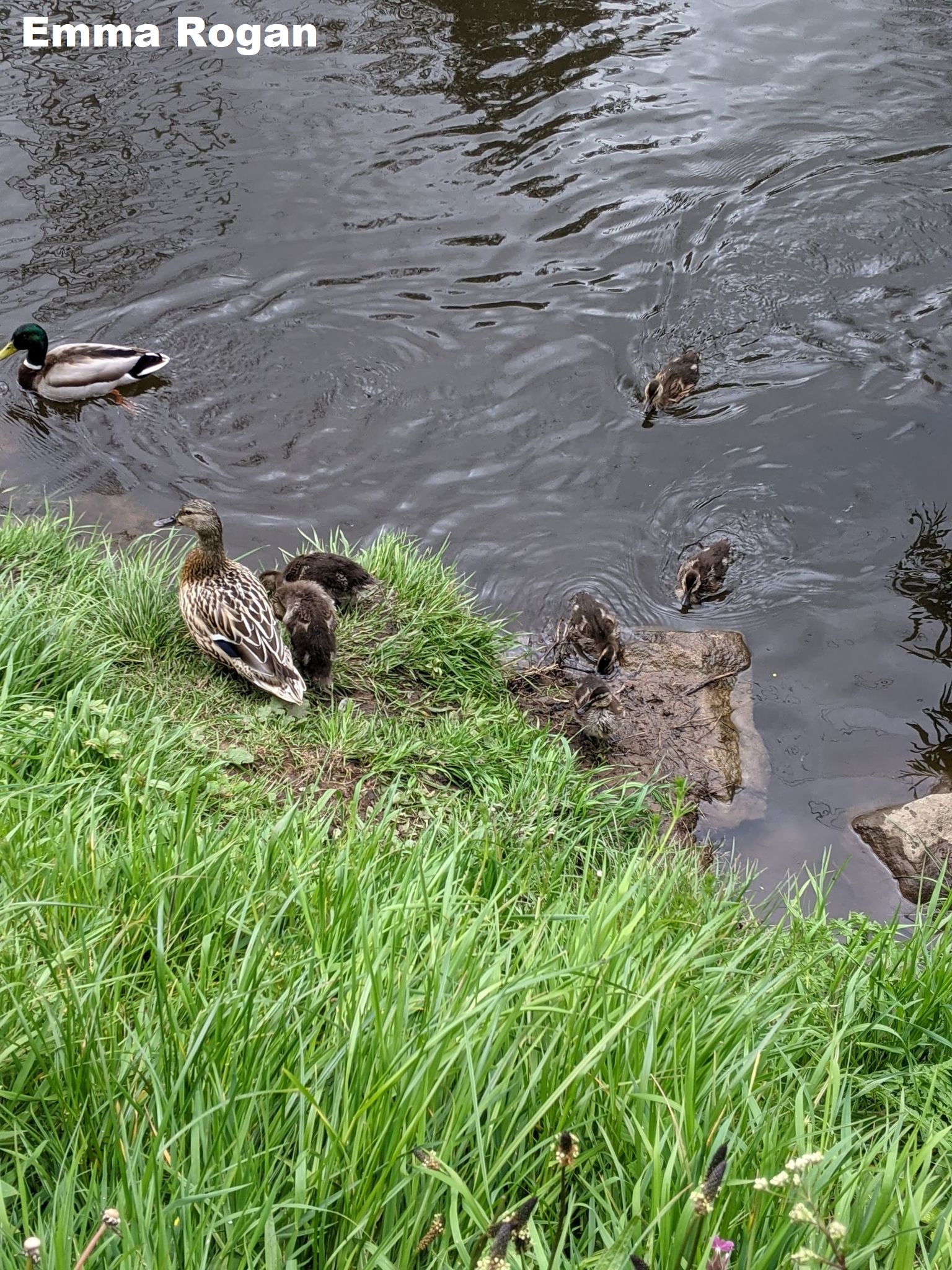
My favourite thing about Springtime out in nature is not actually something the landscape does itself but the way the Springtime sun presents it, showcasing the vivid colours of the fields. This is much unlike the Summer sun which makes everything far too yellow. However, if I had to pick something that happened within nature it would certainly be the sudden appearance of hoards of ducklings.

Marilyn Tuke, my Mum and my nature guru, Dorset

I feel like spring has arrived when I see the first yellows of primroses, celandines, daffodils, and cowslips when walking through the countryside. My favourite part of the season though, is when on early morning walks in spring, I hear the birds singing, such as chiffchaffs, chaffinches, great tits, blue tits, and many more, and I am able to pick out and know each of these individual species. A special spring favourite too is seeing barn owls hunting close to home at this time of year.

Ellie McNeall, my friend and geography teacher, Hampshire

I think that spring has arrived with the signs of life which start to come, such as the daffodils and the buds on the trees, which symbolise new beginnings. My favourite parts of spring are the daffodils and bluebells which come out at this time of year, and start to show that new life is coming after the cold winter. Also, I enjoy seeing lots of baby animals everywhere, especially little baby lambs jumping and little ducklings.

Andy Dell, my uncle, Northamptonshire

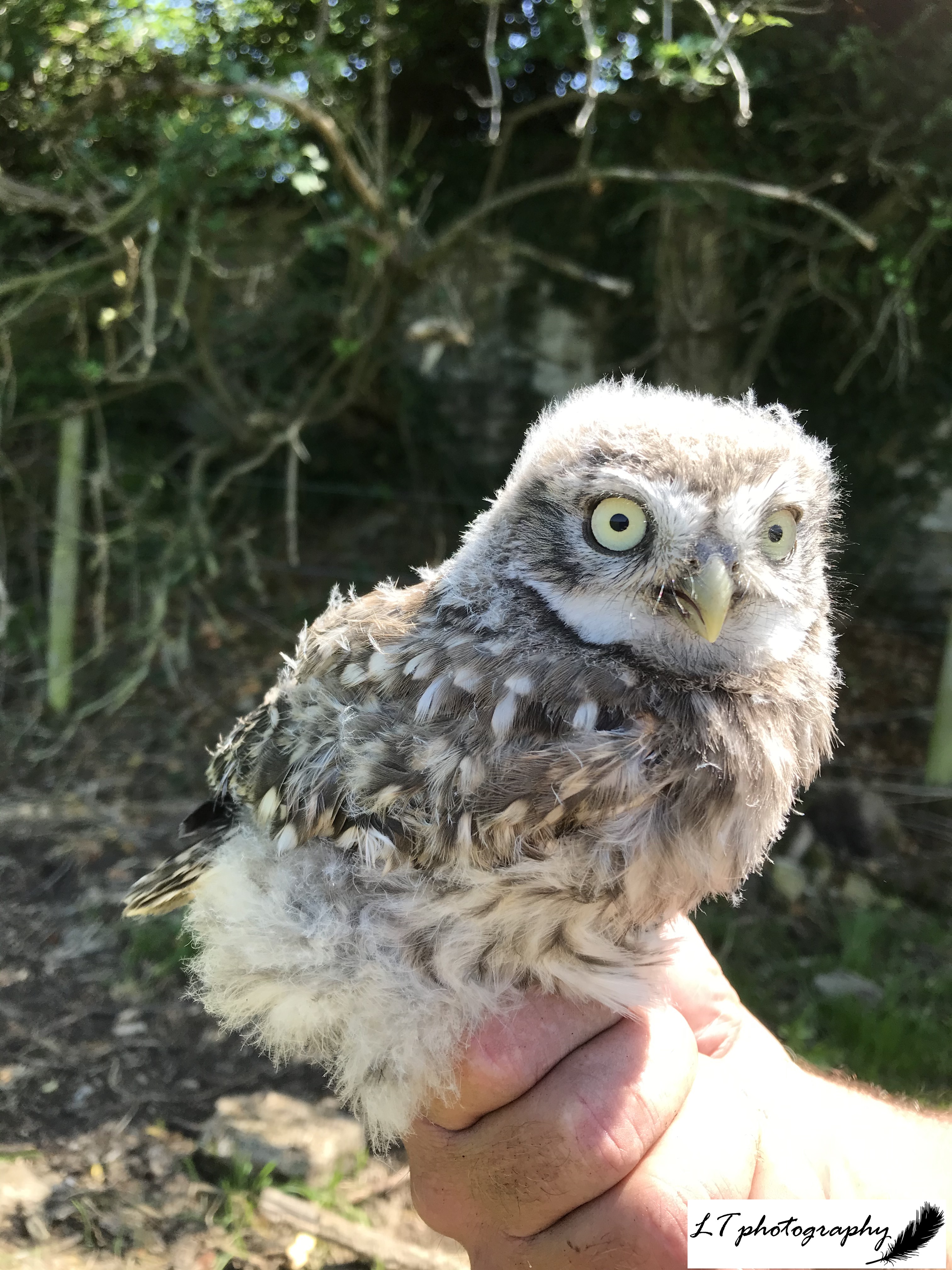
Spring is usually close when you see the first sign of the brimstone butterfly. They manage to find the first spot of warm sunshine, but in the changing climate other butterflies are now earlier visitors to the garden especially the purple emperor in this area. Also, the horse chestnut is probably the earliest tree, the big sticky buds the first to show. As the seasons change and merge in to each other it is becoming more difficult to define the start of spring. My favourite part of spring though, is when the sap starts to rise and you start to see the first bright vibrant greens in the trees and hedgerows, the more insistent bird song as the birds seem to reawaken to the prospect of better times, and the little owls are on the wing.

Emma Rogan, my friend, IT auditor and nature enthusiast, Manchester

Spring is in the air when the first bees start to appear in the garden, and when my favourite walk by the river becomes completely carpeted with wild garlic!

There are so many things I love about the spring season! I love being able to sit outside in the fresh air and read my book with a cup of tea, and this year I’ve found so much happiness in getting to know the wild residents of our garden. Mr and Mrs Blackbird visit daily for their plate of mealworms, and our friendly neighborhood fox is a regular nighttime visitor. I also have a special place in my heart for bees (Manchester girl!), so seeing big fluffy bees out on their travels is always lovely. I like going on walks along our local river with my mum and seeing how many different birds we can spot, particularly when we spot proud mum ducks with their ducklings.

Thank you to my friends and family that took part and have helped me out with this spring celebration!

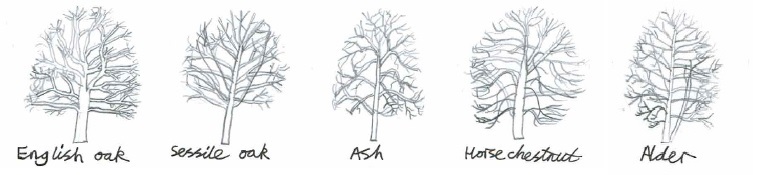
How to… Identify British Tree Species

A majestic oak standing tall in the landscape, watching as centuries pass it by. A silver birch with drooping branches, embellished with leaves, slowly blowing in the breeze. An alder leaning over the edge of a river, spreading its branches to shade the bank beneath it. From capturing the imaginations of children to symbolising strength and life for adults, trees in all their forms are an important part of the landscape and culture within Britain.

With over 70 species in the UK alone, trees come in all shapes and sizes, and can be found anywhere from our highlands to our cities. Trees colonised Britain following the last glaciation, and have since become intertwined with our very own history. They provide us with so much, including resources, such as medicines and building materials, improved air quality, homes for wildlife, and even cultural services, such as therapy through forest bathing. Thus, they are a very important part of our environment!

Now, as our reliance on trees grows and the threats to them increase, it is surprising how little people know about trees in general. For example, the average Brit is unable to name more than five tree species, and a third even believe a money tree is a real species! With two thirds of the public now wanting to learn a little more about the trees in their area, here’s my handy guide to help you identify 10 common tree species that can be found in the UK.

Tree Species

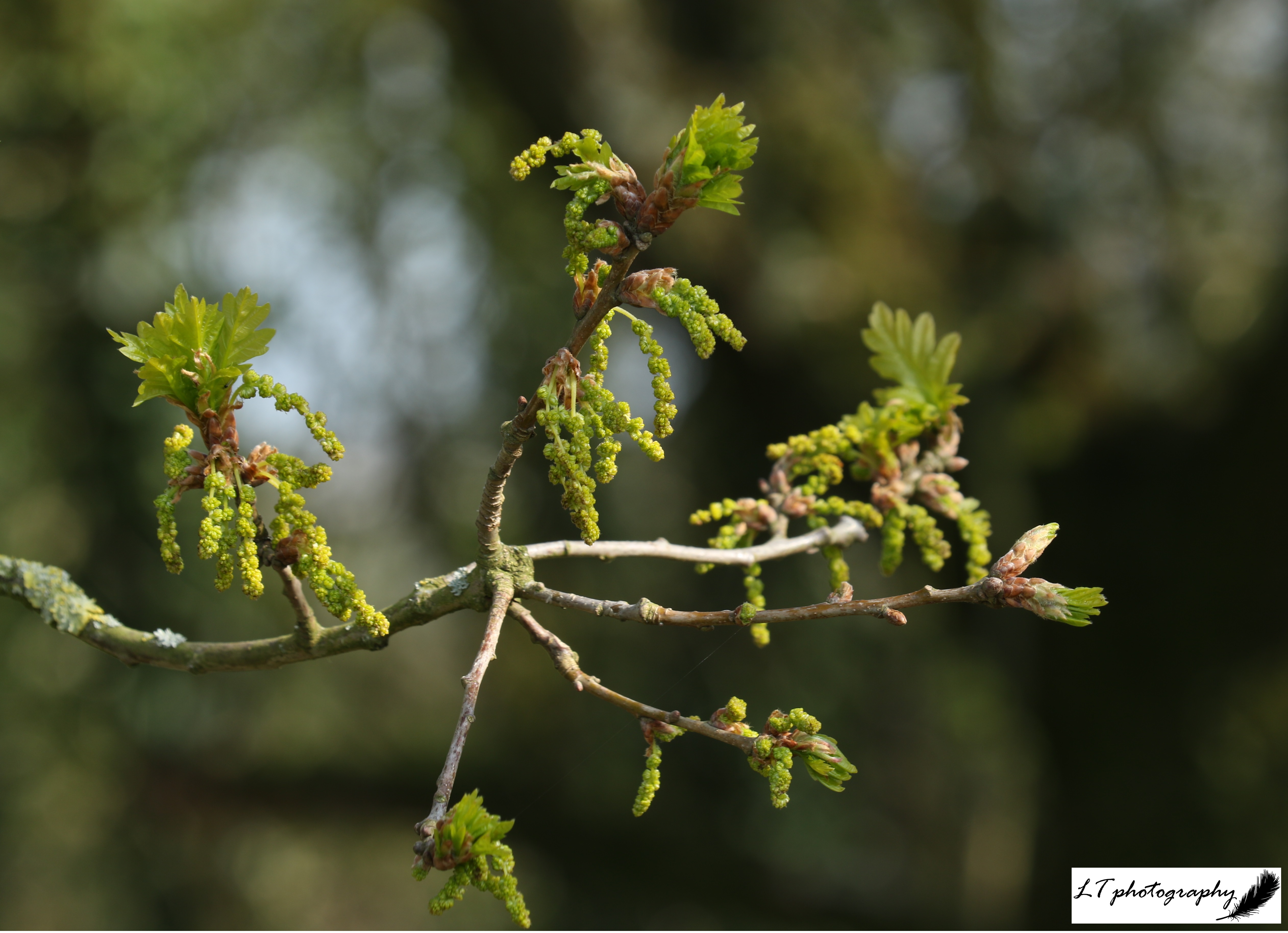
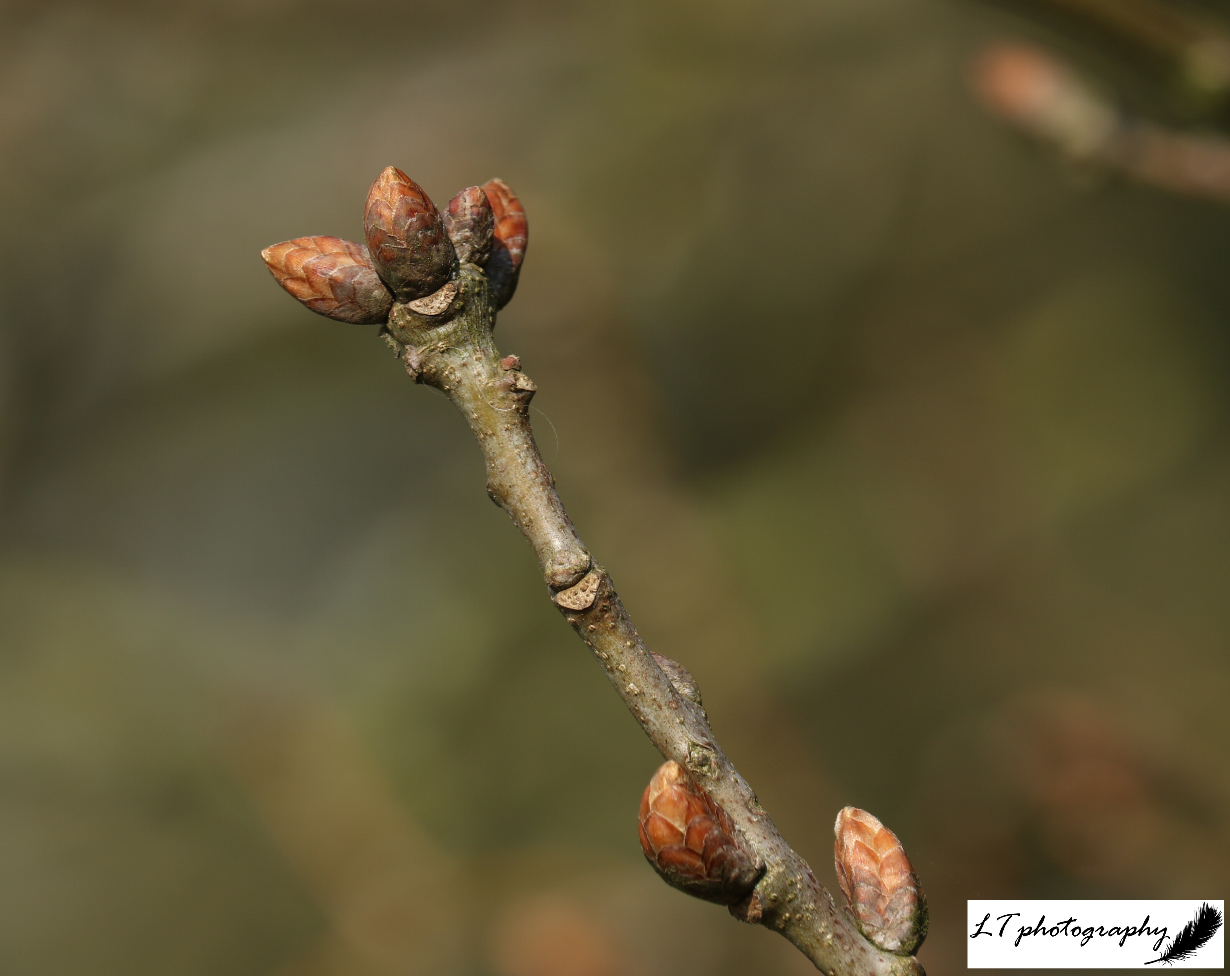
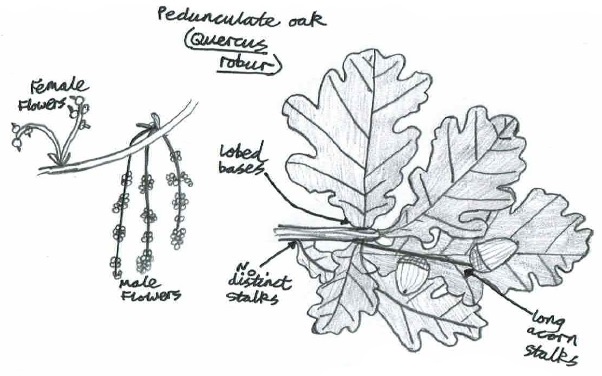
1. Pedunculate or English Oak (Quercus robur)

  • Family: Fagaceae – related to species such as beech and sweet chestnut
  • Origin: Native
  • Shape and size: Up to 40m tall, upward-reaching and broad crown
  • Stems and twigs: Massive rugged grey-brown trunk
  • Leaves: 10-12cm long, oblong, and lobed, turning brown in autumn
  • Flowers: On the same tree and flowering April-June. Male flowers= yellow-green catkins; female flowers= pinkish and on short stalks
  • Seeds: Produces the familiar acorn, with scaly cups and clusters carried on long stalks
  • Range & habitat: Widespread and common throughout Britain, found in habitats ranging from deciduous and mixed woodlands to open grassland and hedgerows

In Winter: Look for rounded buds that have overlapping scales and are found in clusters at the end of each shoot

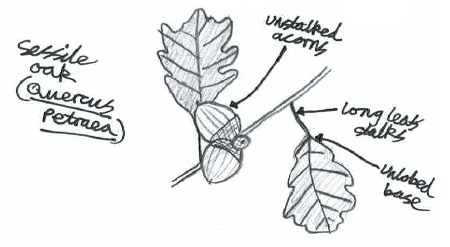
2. Sessile oak (Quercus petraea)

  • Differs to Pedunculate Oak in that the leaves taper to an unlobed base and have long stalks.
  • Buds in winter have more scales (more than 20).
  • Also, the clustered acorns are almost stalk-less with downy cups.
  • Narrower in shape, prefers more acid soils, and is more common in the West of Britain.

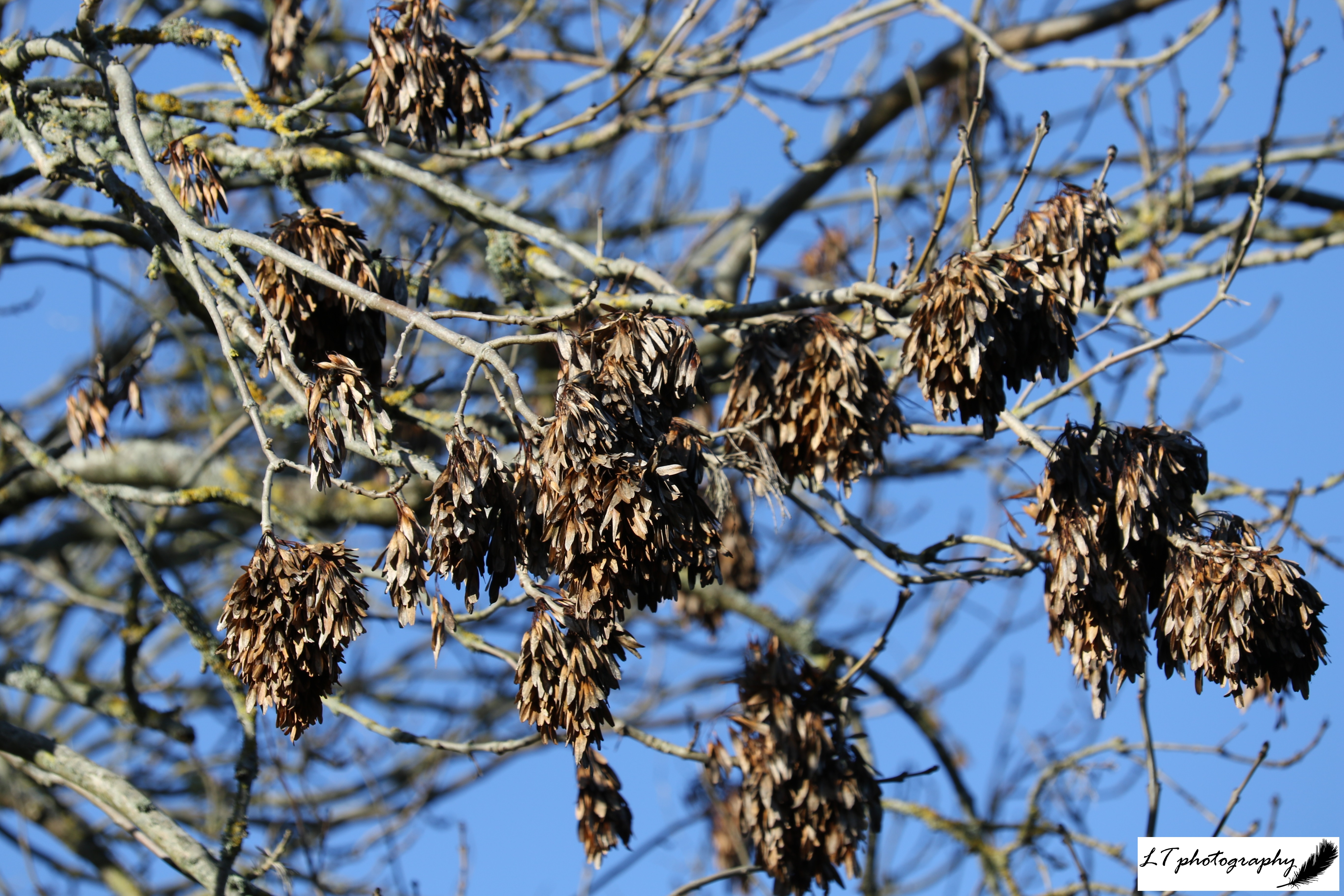
3. Common Ash (Fraxinus excelsior)

  • Family: Oleaceae – related to olive trees and lilac
  • Origin: Native
  • Shape and size: Tall and domed with widely spaced branches, growing up to 35m
  • Stems and twigs: Bark is pale brown to grey, becoming rugged with age
  • Leaves: Opposite and toothed, with 9-13 stalked leaflets that have long tips
  • Flowers: Male and female flowers typically grow on different trees, but both have purple flowers growing in clusters before the leaves
  • Seeds: Single seeds with a long wing (known as keys)
  • Range & habitat: Woods and hedges, in particular flourishing on a lime-rich/well-drained soil

In Winter: Smooth twigs with distinctive hairless black buds, and ridged bark on adult trees that resembles a diamond pattern

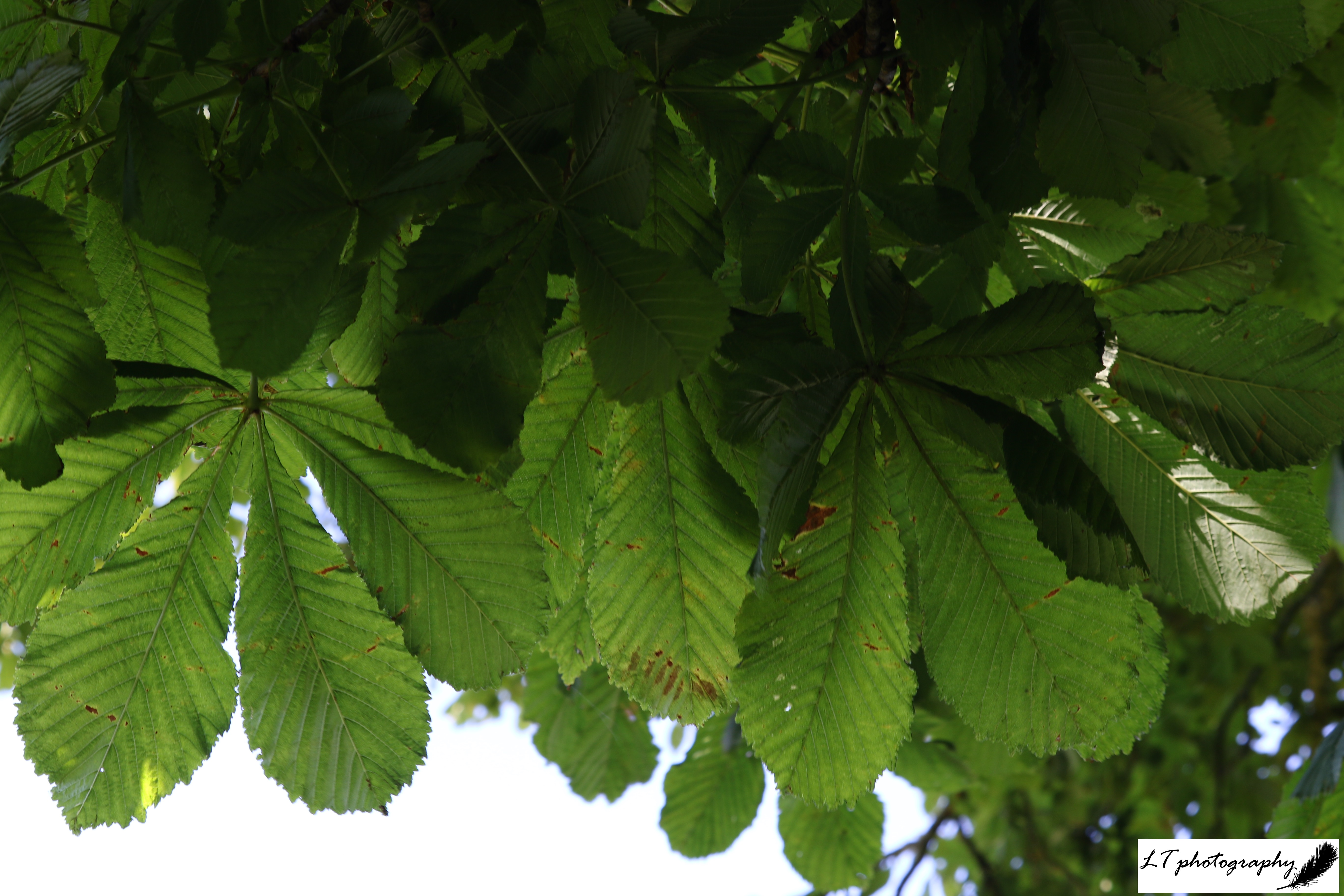
4. Horse Chestnut (Aesculus hippocastanum)

  • Family: Sapindaceae – related to lychee and maples
  • Origin: Non-native (introduced in the 1500s from the Balkan peninsula in southeastern Europe)
  • Shape and size: Arching branches, usually turned up at the ends, growing up to 35m tall
  • Stems and twigs: Bark is scaly and red-brown or dark grey-brown
  • Leaves: Five to seven large, thick, stalkless leaflets with pronounced veins and a long, tapering base
  • Flowers: Showy spike (candle) of white flowers with a yellow to pink spot
  • Seeds: Spiny fruit contains one or more shiny conkers
  • Range & habitat: It has now become a widespread and common sight across Britain, tolerating a wide range of soils

In Winter: Smooth bark and sticky buds

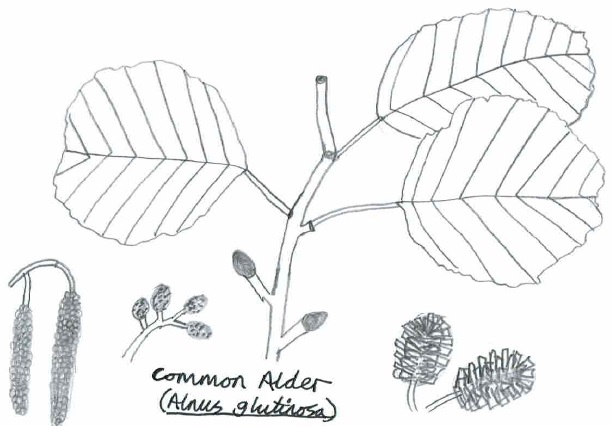
5. Common Alder (Alnus glutinosa)

  • Family: Betulaceae – related to hazel and birches
  • Origin: Native
  • Shape and size: Regular branching and conical shape, growing up to 25m
  • Stems and twigs: Dark brown bark that is often rough and sprouts young shoots
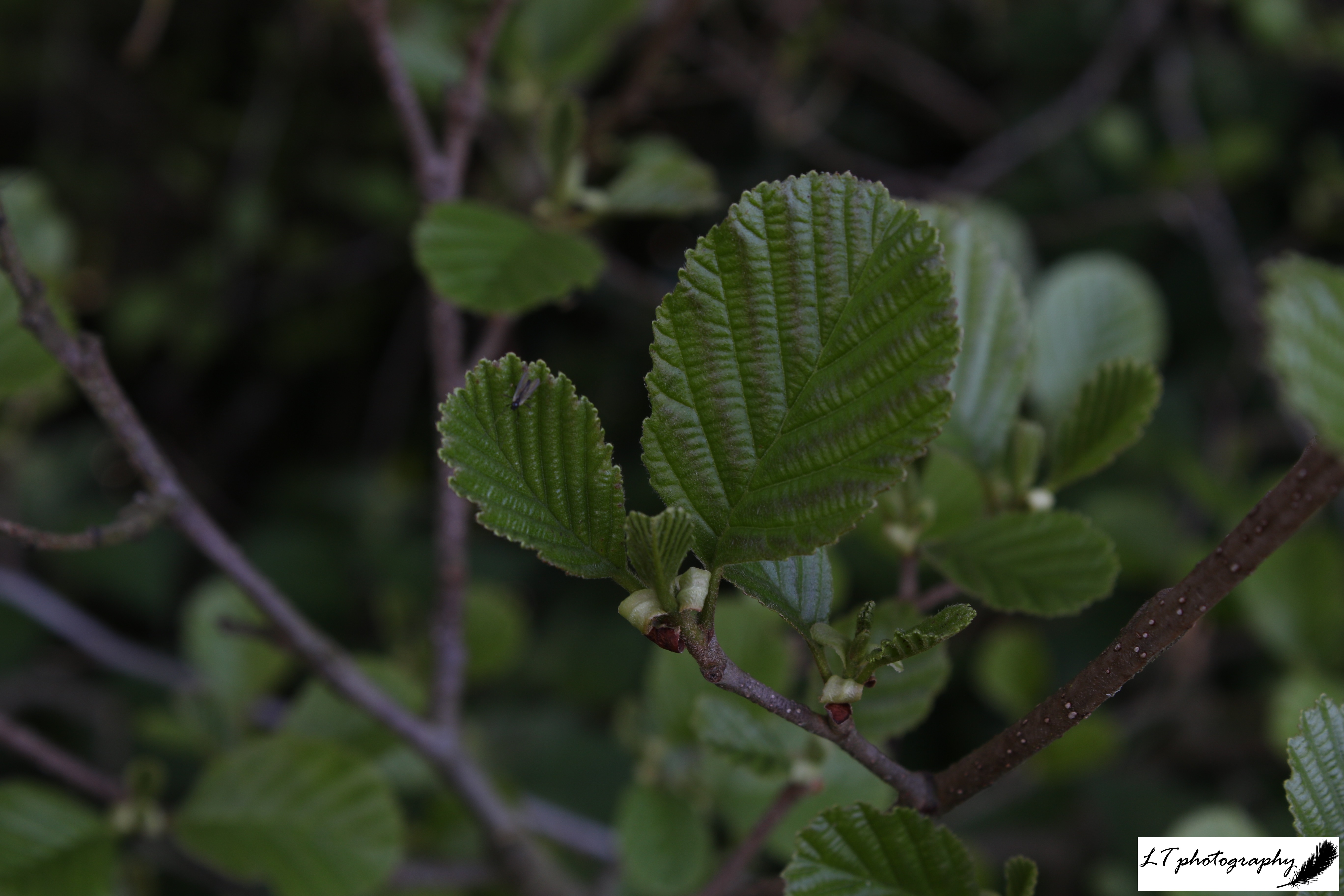
  • Leaves: Alternate, rounded, sometimes notched at the tip, and dark green
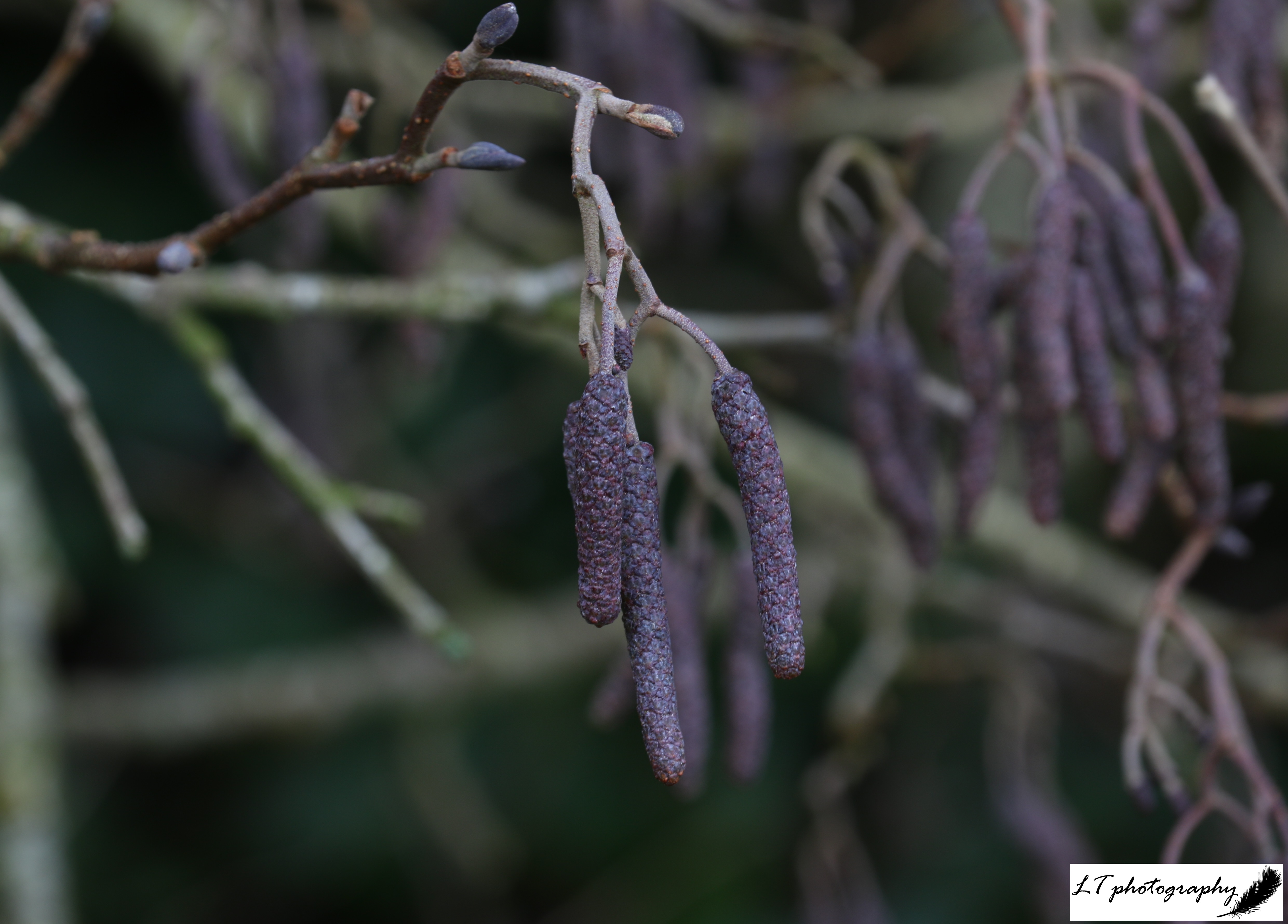
  • Flowers: Male and female catkins grow on the same tree, before the leaves. Male catkins= lambs’ tails; female catkins= small and egg-shaped
  • Seeds: Female catkins turn into a small cone, drying from green to brown, releasing the seeds. The seeds have corky outgrowths that keep them afloat on water
  • Range & habitat: Thrives in wet ground and is often seen lining the banks of rivers and streams across Britain

In Winter: Appears dull purplish due to purplish buds

6. Silver Birch (Betula pendula)

  • Family: Betulaceae – related to alders, hazels and hornbeams
  • Origin: Native
  • Shape and size: Erect with pointed crown and drooping branches, reaching up to 30m
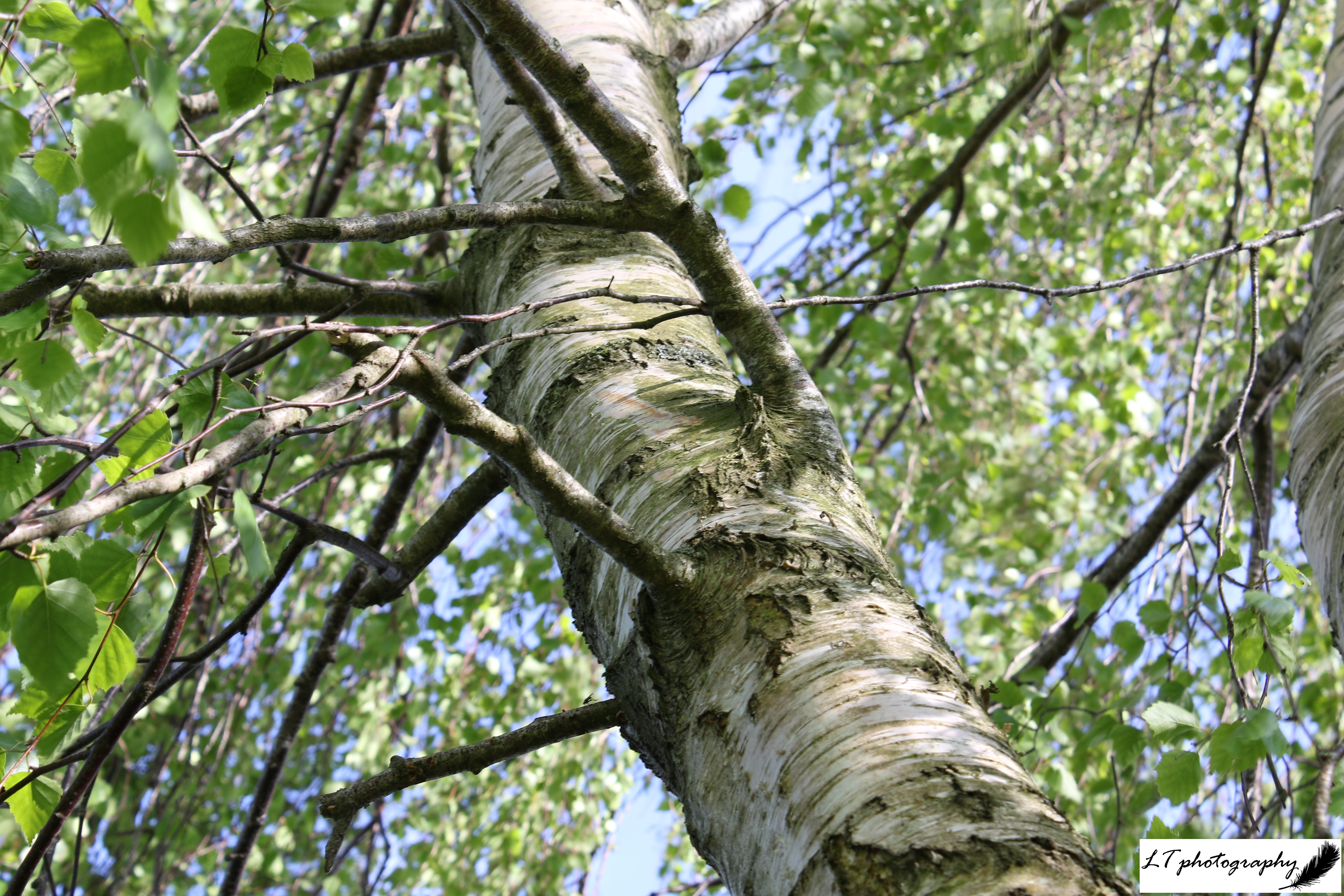
  • Stems and twigs: Young bark reddish, maturing to black and papery-white bark. Twigs smooth with small dark bumps
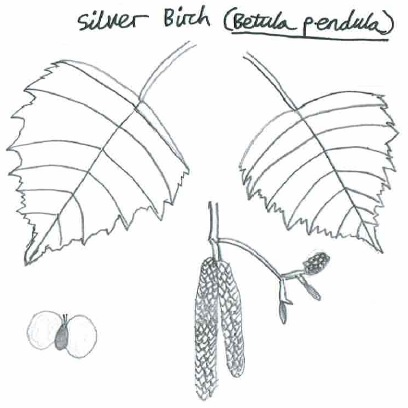
  • Leaves: Alternate, triangular and shiny, on slender stalks. Edges are ragged, with smaller teeth between larger main teeth
  • Flowers: Male catkins= purply-brown; female catkins= smaller and pale green
  • Seeds: Two winged and wind-borne, released in winter
  • Range & habitat: Form natural woodlands on light, dry soils throughout Britain

In Winter: Distinctive shape and bark

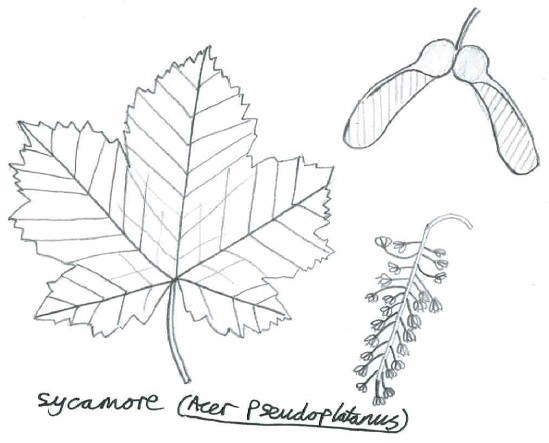
7. Sycamore (Acer pseudoplatanus)

  • Family: Sapindaceae – related to maples and horse chestnut
  • Origin: Non-native (introduced from Europe either in the 1500s or by the Romans)
  • Shape and size: Massive domed outline, with dense foliage and heavy lower branches, growing up to 35m
  • Stems and twigs: Grey fissured bark ages to pinkish-brown
  • Leaves: Opposite, five-lobed, and upper side dark green
  • Flowers: Greeny-yellow flowers in hanging clusters appear with the leaves
  • Seeds: Hairless keys in right-angled pairs
  • Range & habitat: Grow vigorously in all parts of Britain, being widely planted on their own for shelter or in woodlands and hedgerows

In Winter: Distinctive shape and bark

8. Wild Cherry (Prunus avium)

  • Family: Rosaceae – related to roses
  • Origin: Native
  • Shape and size: Pyramidal shape, reaching up to 30m
  • Stems and twigs: Shiny, red-brown bark peels in horizontal strips
  • Leaves: Alternate and oval with long points and regular, forward-pointing teeth, and two conspicuous red glands at the top of the stalk
  • Flowers: White flowers (blossom) appear before the leaves in small, loose clusters
  • Seeds: Produces round, red cherries
  • Range & habitat: Native throughout the UK, being found in woodlands and hedgerows

In Winter: Distinctive bark

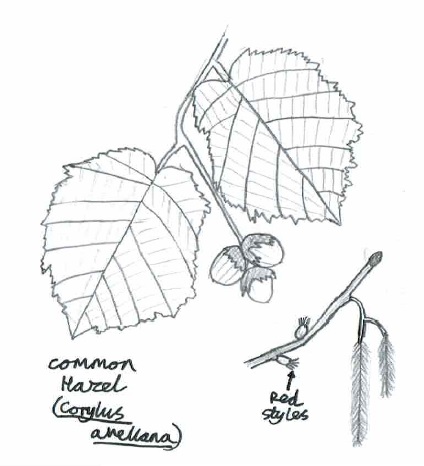
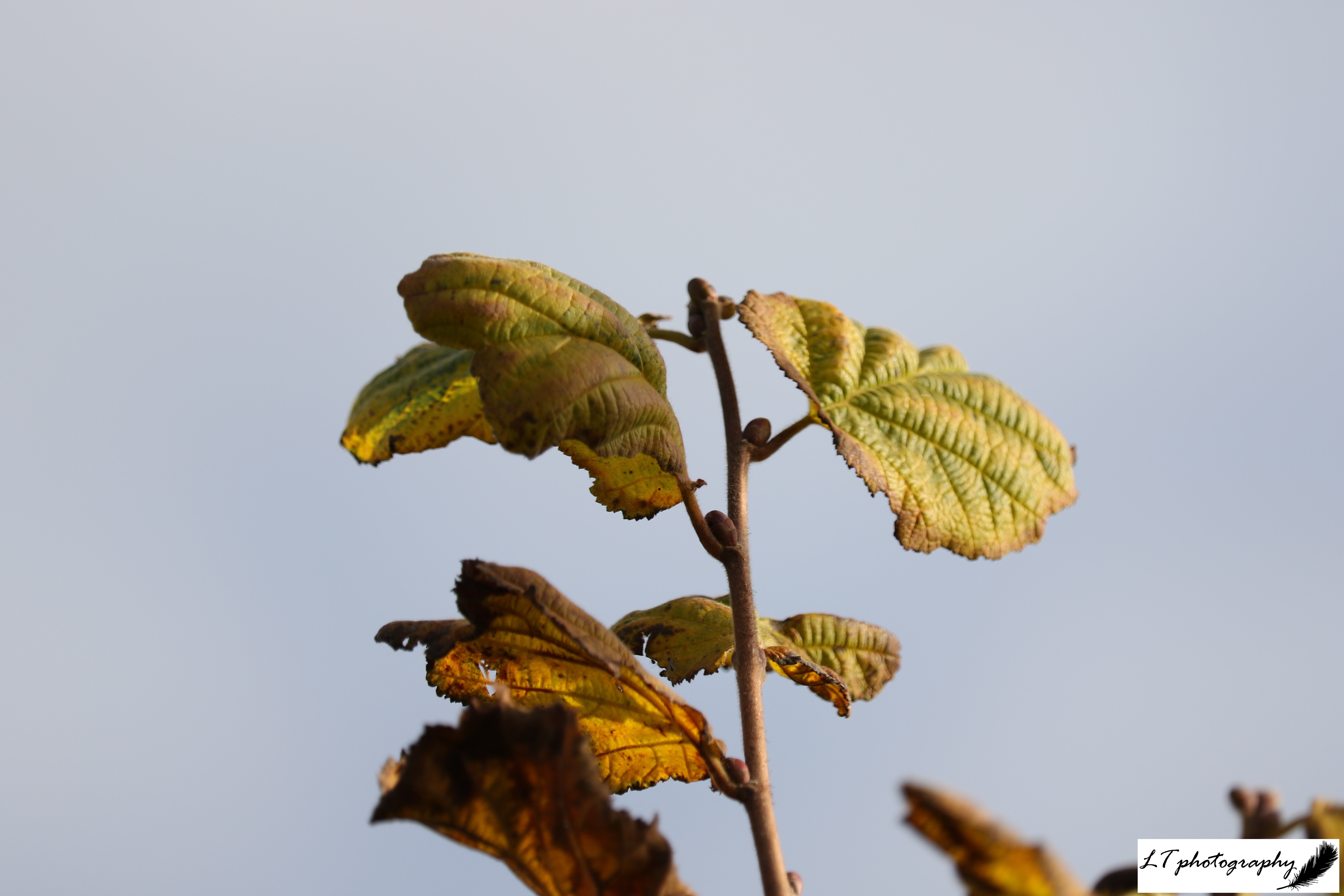
9. Common Hazel (Corylus avellana)

  • Family: Betulaceae – related to birches, alders and hornbeams
  • Origin: Native
  • Shape and size: Many stems rise from the ‘stool’, which if left uncut can reach 9m
  • Stems and twigs: Bark coppery brown, smooth and tending to peel
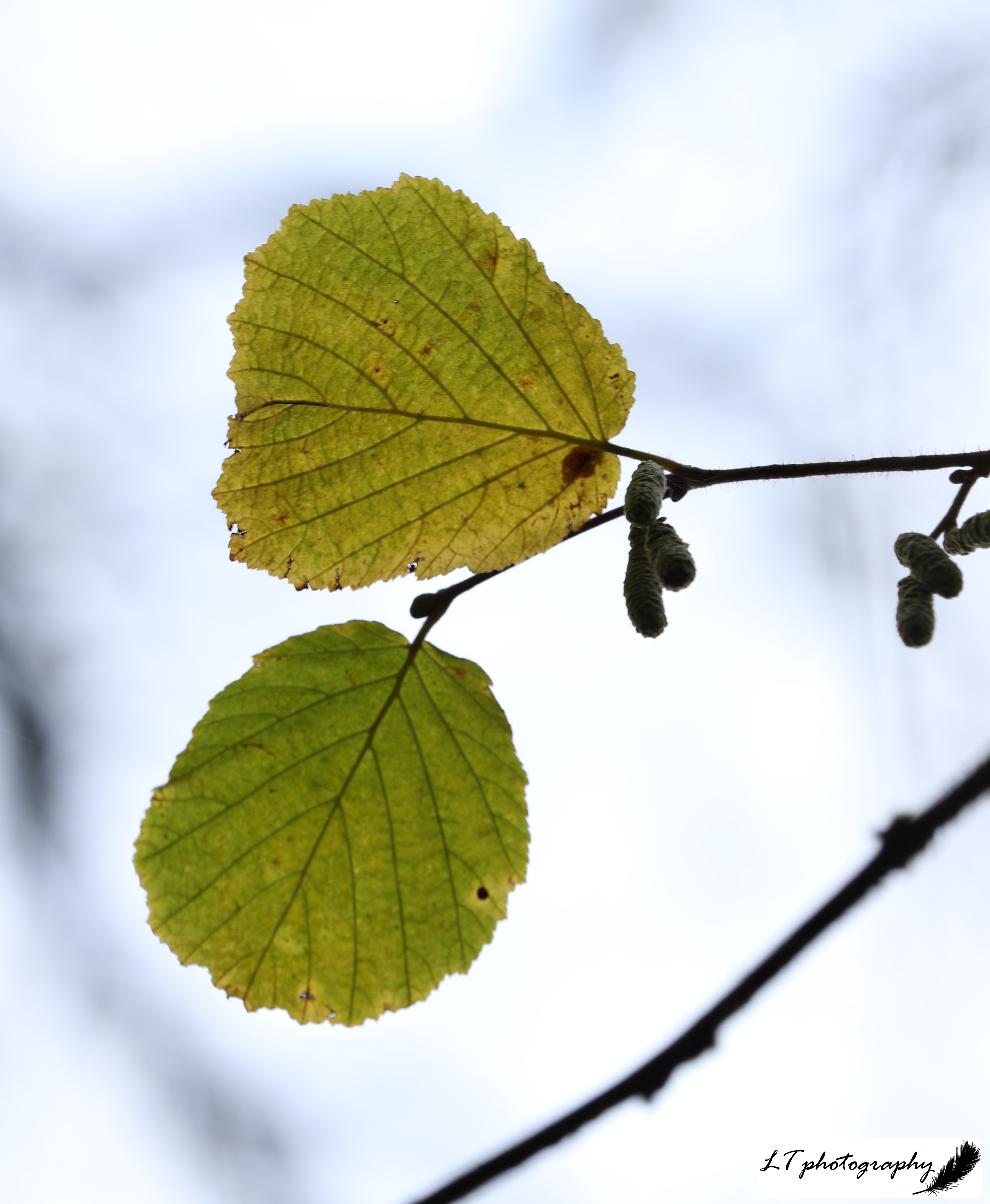
  • Leaves: Alternate, almost circular with sawtooth edges, hairy, and soft to the touch
  • Flowers: Male and female flowers found on the same tree. Male= lemon-yellow lambstail catkins; Female= tiny buds with red tassels
  • Seeds: An edible nut encased in a thick-green husk, ripening in autumn
  • Range & habitat: Grows throughout Britain, often found in woods, scrub areas, and hedges

In Winter: Distinctive shape and bark, accompanied by the male catkins from December

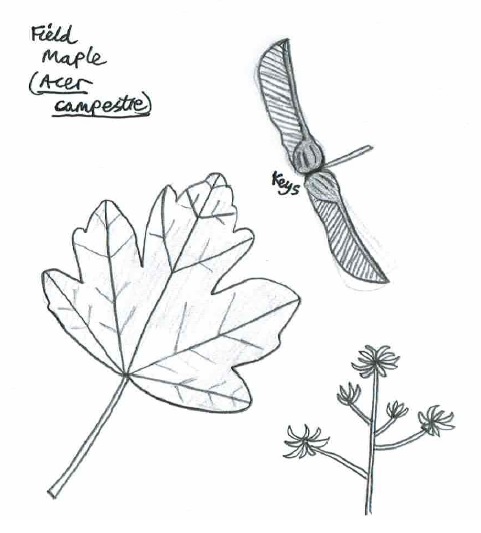
10. Field Maple (Acer campestre)

  • Family: Sapindaceae – related to lychee and horse chestnut
  • Origin: Native
  • Shape and size: Round-shaped tree with branches that droop at the end, growing up to 26m
  • Stems and twigs: Bark is grey or light brown and twigs downy, later corky
  • Leaves: Emerging leaves have a pinkish tinge, turning dull-green, and are opposite and small, with three main, round-tipped lobes and two smaller basal lobes
  • Flowers: Small yellow-green flowers form erect clusters
  • Seeds: Each pair of seed wings lie in an almost straight line, are often tinged with pink
  • Range & habitat: Frequent in England and East Wales in woods and hedgerows

In Winter: Sinuous trunk and distinctive shape

Drawings and photos all my own

How to… Bring Nature Into Your Home This Christmas

Christmas for me, alongside being all about family, friendship and feeling grateful, is deep rooted in nature. This is not unusual though, as people have been taking direction from nature during mid-winter celebrations for thousands of years. From the Romans decorating their homes with greenery to the Victorian Christmas tree, from pagans to Christians, the inspiration for how Christmas looks today has often come from the world outside our doors. For me, every year during December, I also bring nature into my home in the form of plant life. But why and how?

Plants and Christmas

During the winter and Christmas period, it’s popular for evergreens to be brought into our homes to be used as decorations. This practice has been observed for thousands of years, evolving but often holding the same symbolism and meaning. Evergreens are a traditional symbol of everlasting life due to their longevity, and were worshipped by pagans as symbols of immortality and everlasting light, being used to ward off illness and evil spirits. The bright natural colours of evergreens have also long provided inspiration for many, and still do during the cold, dark days of winter. They are a symbol of celebration and remind us that the days of spring will return in time.

Some Christmas examples include:

Mistletoe – A long history in Britain from being sacred to the druids and warding off evil spirits during the Middle Ages to symbolising healing, shelter and fertility. It was once banned from Christian churches due to its pagan links. The Victorians gave the plant its modern tradition of being hung in a doorway to kiss under, though the exact reason why we do this is still unknown.

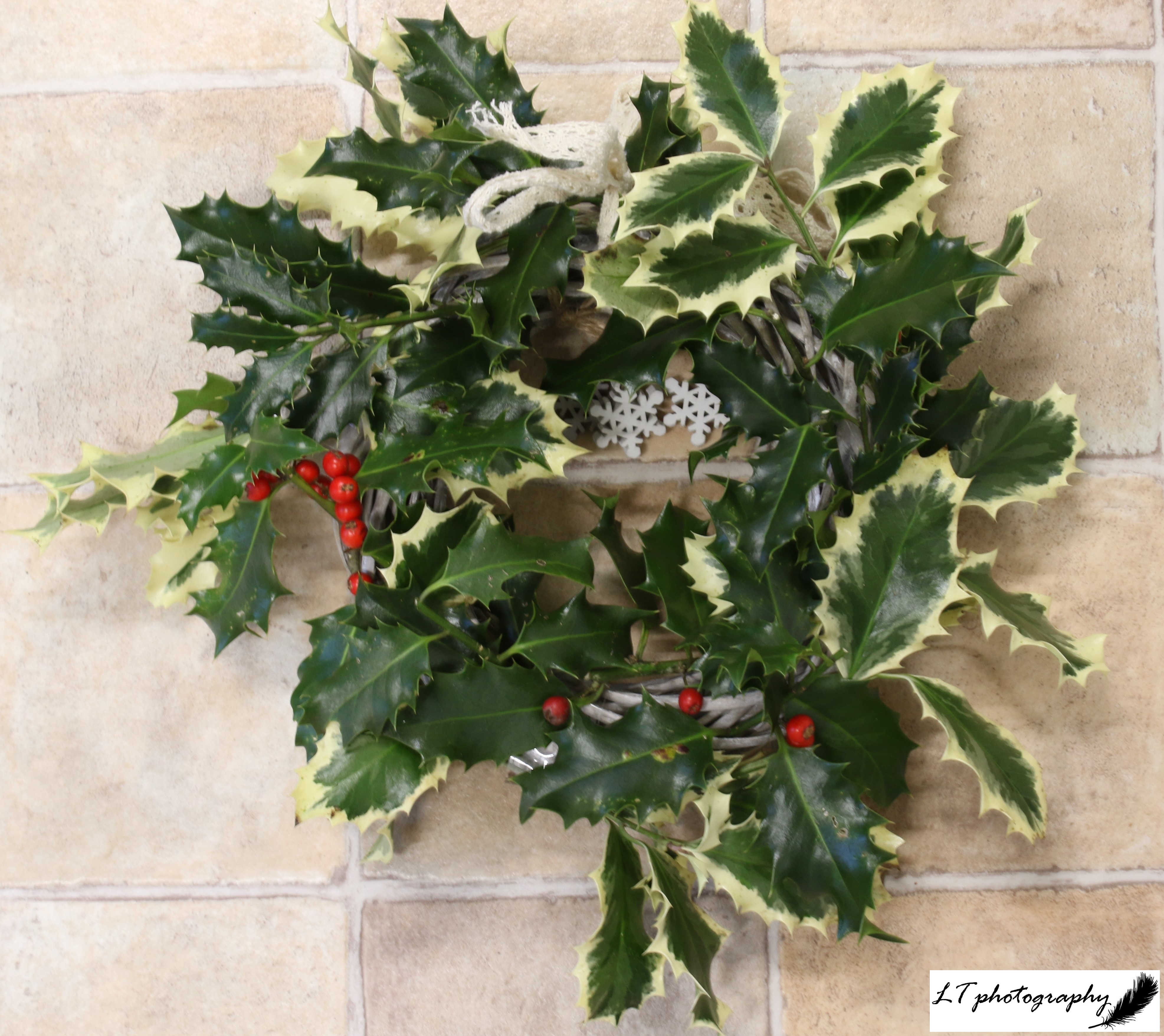
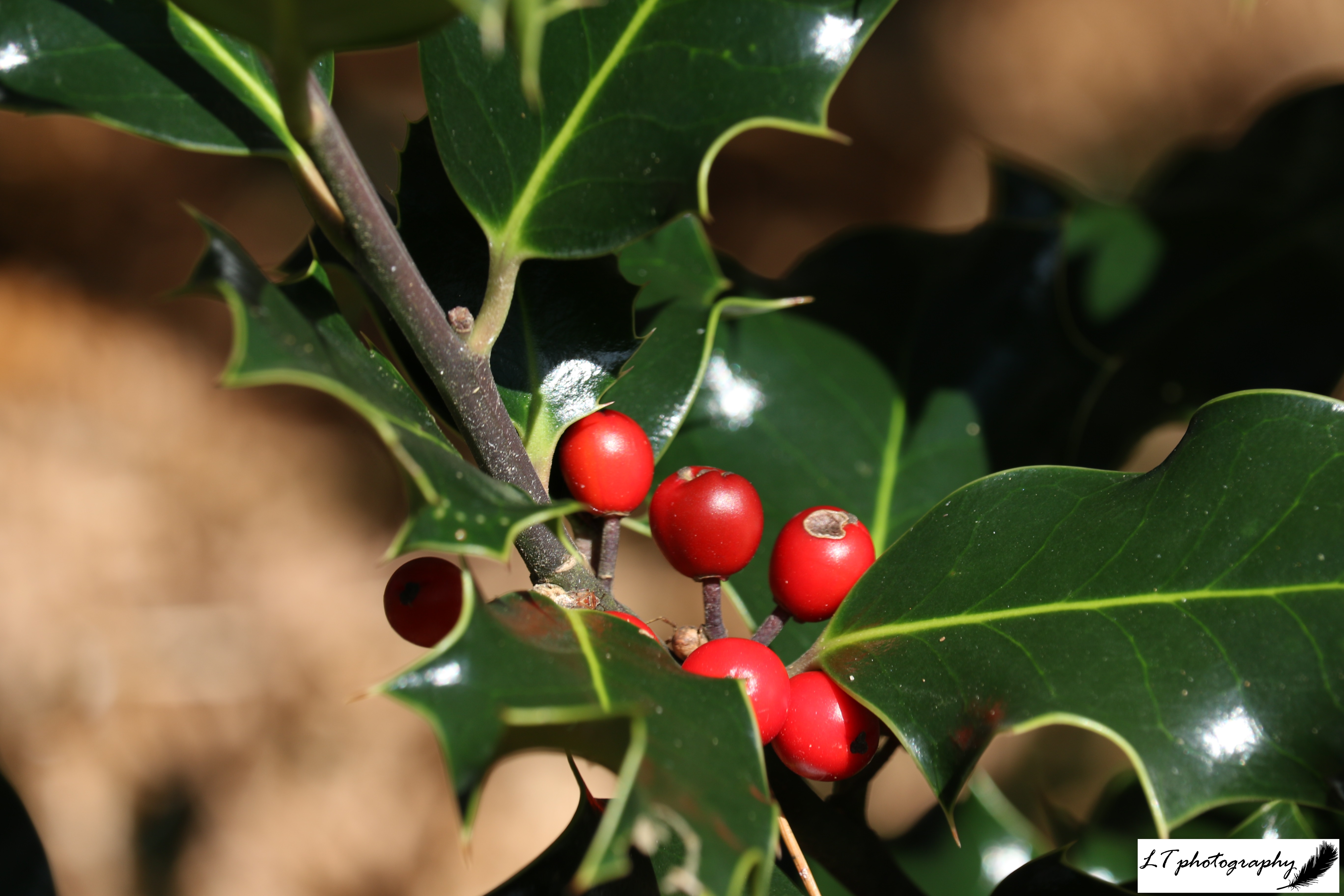
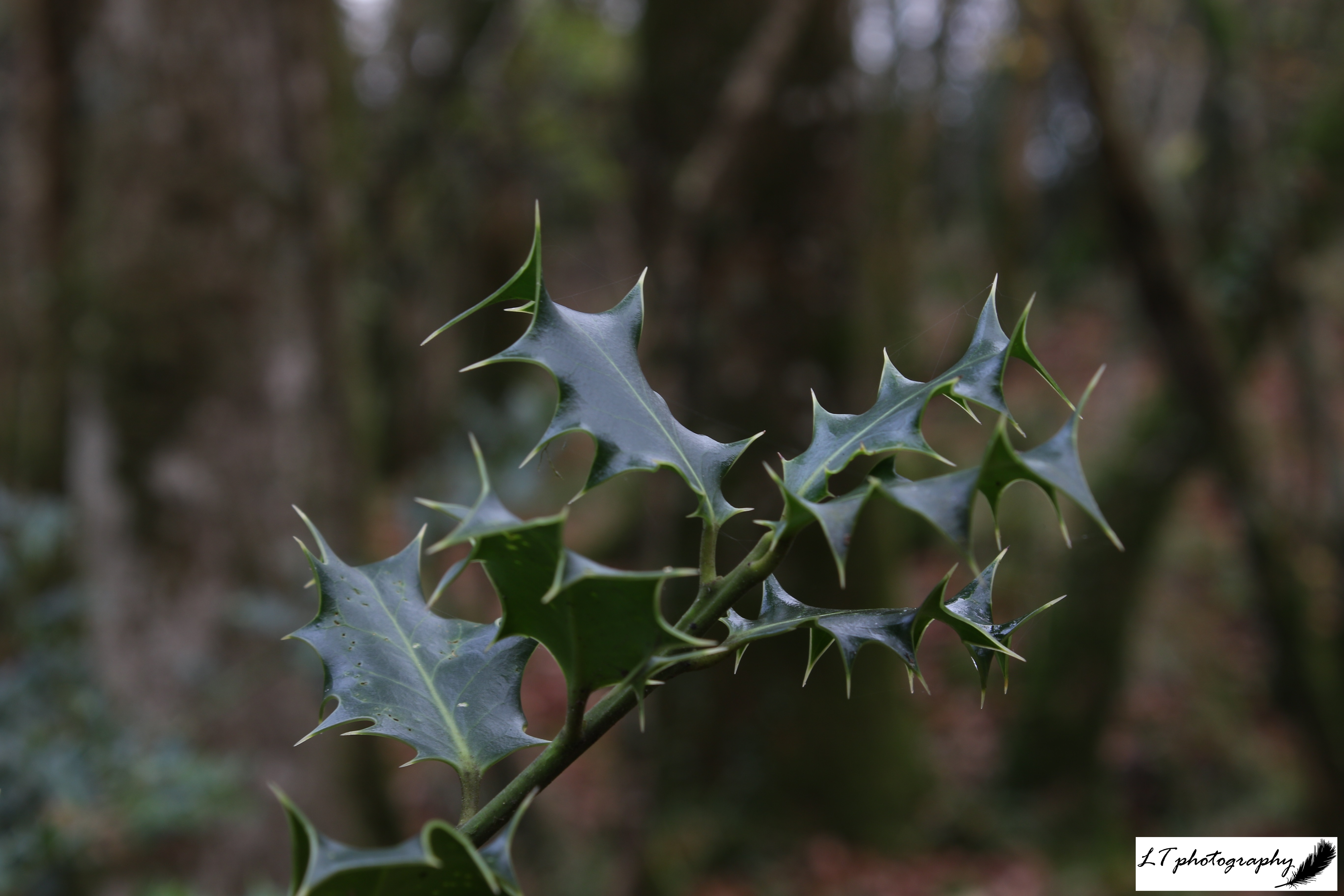
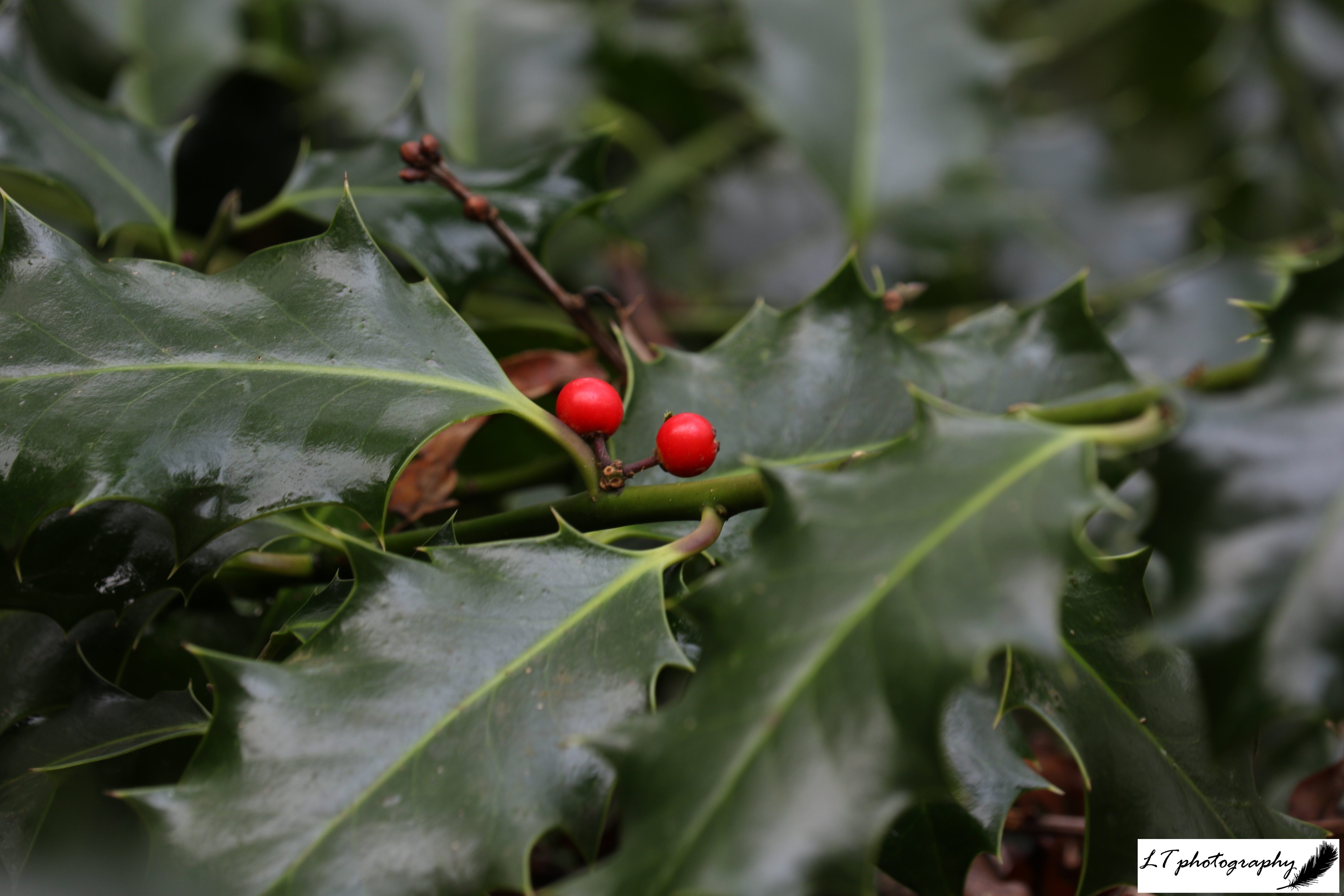
Holly – Long associated with fertility, protection and eternal life in Britain, due to being able to withstand harsh conditions. It was originally brought into people’s homes to ward off witches and malevolent spirits during the dark months, before being adopted by the Church to symbolise Jesus’ sacrifice (prickles= thorns and berries= spilt blood).

Poinsettas – Native to Mexico and brought over from America, the flowers have become a meaningful symbol of Christmas. Their star shape is thought to symbolise the Star of Bethlehem, and the colours either purity or the spilt blood of Christ. For some, Poinsettas also symbolise new life.

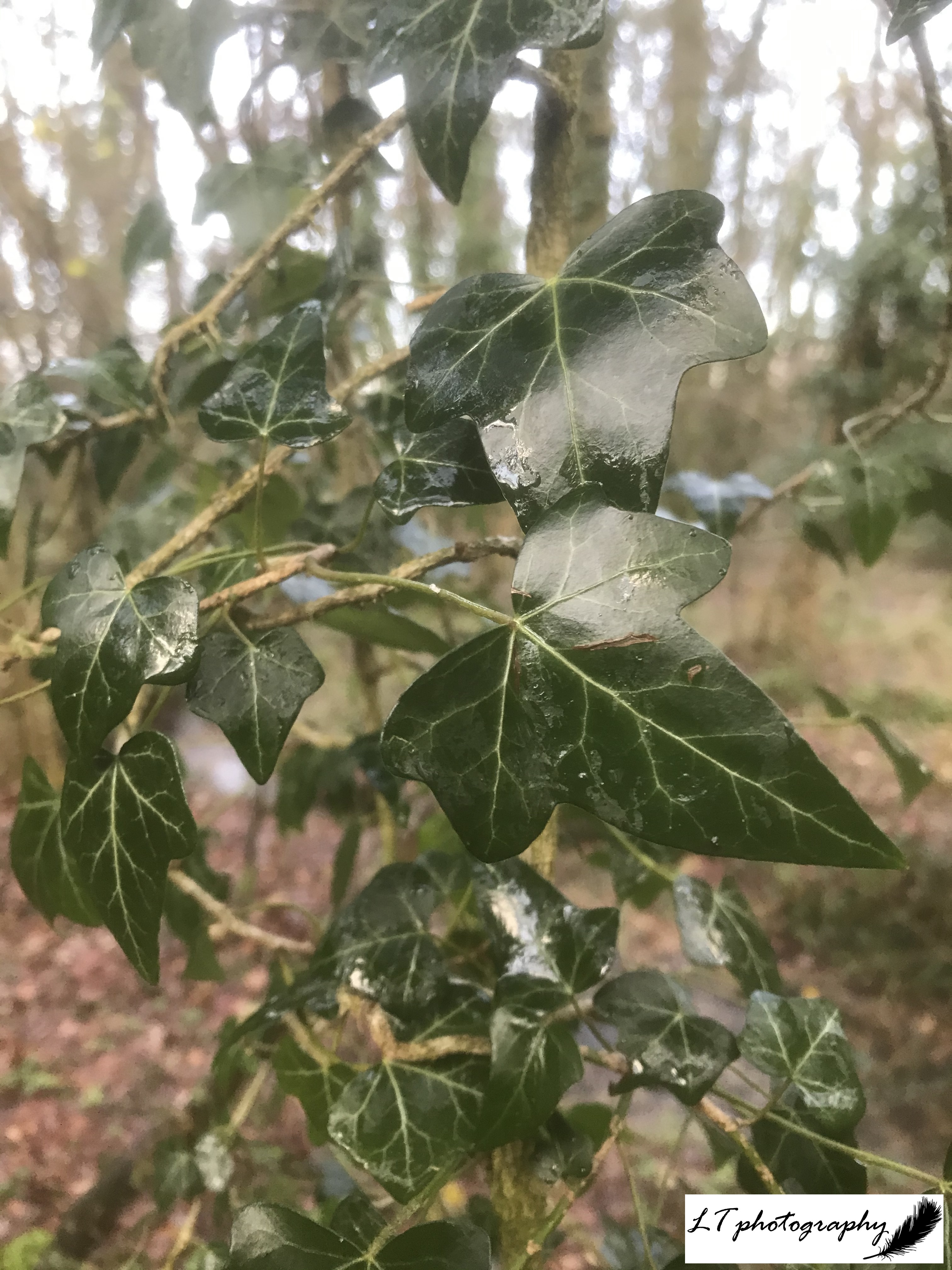
Ivy – Symbolises everlasting life, resurrection, rebirth, and the coming of spring. During Christmas time, Ivy is closely associated with Holly, being once considered a female plant whereas Holly was the matching male plant. It was said that whichever of these two species was brought into the house first during the winter, would predict whether a man or woman would be in charge of the house for the next year. Now popular at Christmas, Ivy was once banished from homes by the Christian church due to its ability to grow in the shade, giving it associations with secrecy and debauchery.

How to make your own Christmas decorations

Bringing nature into your home is a great way to brighten things up and add a bit of colour to your Christmas festivities. Though it is understandable if you feel daunted by the prospect of turning your hand to making your very own decorations for the first time, such as a wreath or centrepiece, it is actually a simple and a great way to create decorations personal to you. Using natural materials can be a fun and easy way to do this, so why not try something new and have a go! For a little inspiration and some tips, here are some of the decorations that I put together for my family home each year, including this year.
Popularly Used Species

  • Holly – With and without berries
  • Ivy
  • Rose hips
  • Teasels – Some sprayed with non-toxic paint

Centrepiece and Mantlepiece Decorations

For my centrepiece and mantelpiece decorations, every year I simply use a couple of small metal buckets with a bit of oasis in them. My squares of oasis are reused again and again each year, so if you are starting out it is better to use a non-toxic, biodegradable alternative that will not harm the environment.

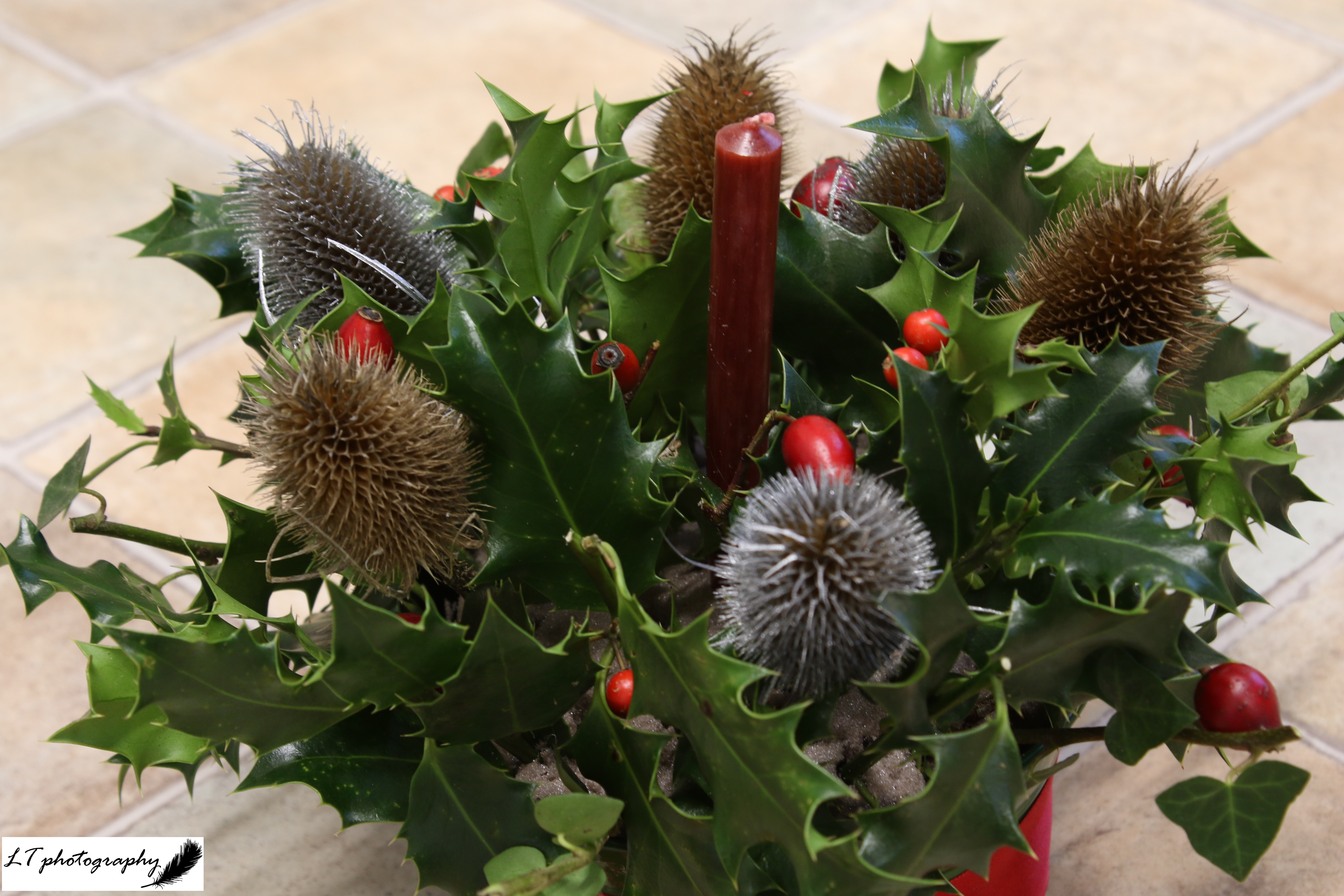
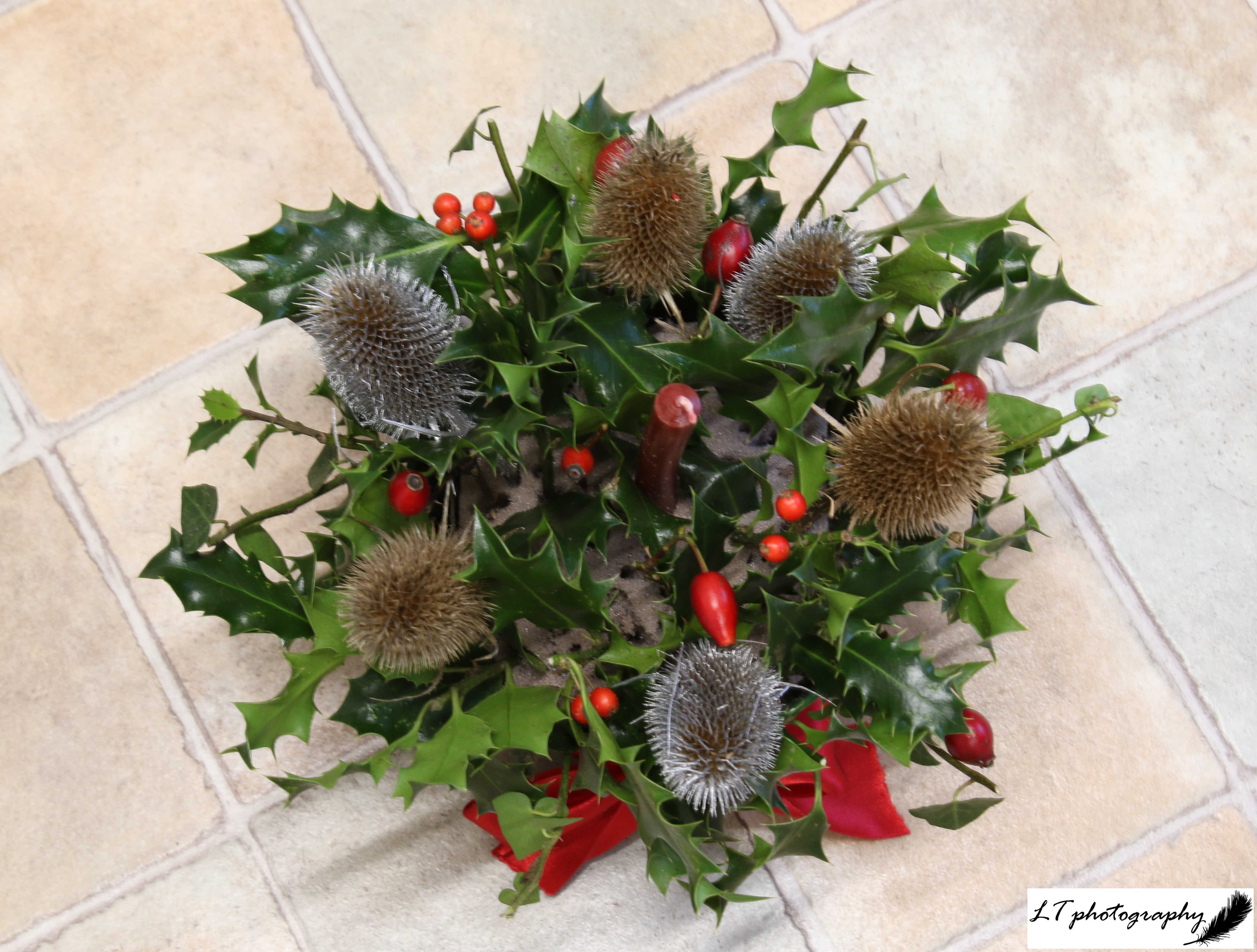
To begin putting together one of my Christmas arrangements, I start with placing a candle at the centre (though it is simply for decoration). I then build up from there, beginning with a few Teasels around or behind the candle, then adding Holly with and without berries, Rose hips, and Ivy. You can arrange the greenery however you want and add what you like. It is a bit of fun of course!

Basic Wreath

A wreath’s circular shape has long been seen as a symbol of eternal love and rebirth. They can first be traced back to early Roman times, where wreaths were made and given during the festival of Saturnalia each year (check out my blog post: The Twists of Christmas Traditions for more information).

To begin my wreath, I use a basic wooden wreath as my base and work from there. I usually start by wrapping Holly around the base and adding extra Holly with and without berries. This year I was happy with just Holly, but other years I have added Ivy and other greenery, and decorations such as ribbon. Less is more though, and watch out for the Holly’s spiky prickles!

Vase Arrangements

To finish my Christmas decorations, I like to use whatever greenery I have left to create some simple vase arrangements in fun vases. Teasels and Ivy are a great mix for this, adding a little colour and decoration to any room.

Warning

When collecting your greenery, pick only what you need, especially when picking plants with berries, such as Holly. These berries are a source of food for animals during the winter, so it is important that we leave some for them too.

Stay safe and Merry Christmas!

The Twists of Christmas Traditions

December is a time for magic and the sparking of our imaginations to bring us warmth through bleak days and long cold nights. As the end of the month draws near, our worlds are filling with images of twinkling lights, decadent festive food, and idyllic Christmas card scenes. We welcome Christmas traditions back into our homes, spend time being thankful for what we have, and spend time with family. For how Christmas is shaped today we have the Victorians to thank, but for many of our modern day traditions their origins lay even further back, from times when celebrations were deep rooted in our wild landscapes. As Christmas creeps closer, let’s take a look back at the origins of a few popular traditions, and get in touch with our wild and remarkable past.

The celebration of mid-winter can be traced as far back as the Roman times. Even before the birth of Jesus, the Romans celebrated this time of year with a festival called Saturnalia, a pagan festival honouring Saturn the Roman god of agriculture and fertility. It was a celebration of the year’s harvest, whilst looking forward to the spring and return of the sun, and trying to ensure a successful next harvest. Starting around the 17th of December, the Romans would offer gifts and sacrifices, decorate their houses with wreaths and greenery, wear colourful clothing, light candles, hold feasts, and be merry. Today’s paper crowns and festive hats can also be traced back to the Romans and Saturnalia. Thus, it is not a new thing to honour the end of the year and welcome the next with colourful celebrations and festivities!

One part of the magic of Christmas for me is the making of sweet treats that are only associated with this time of year. For example, sweet biscuits have long been made to mark Christmas festivities, gaining their spiced flavour, reminiscent of winter, during the Middle Ages. This evolved into gingerbread men, first appearing in 16th century England when Queen Elizabeth I had them made to impress foreign dignitaries and subjects in court. A century later, gingerbread houses joined Christmas traditions, becoming popular in Germany in 1812 following the publication of the Brothers Grimm story, Hansel and Gretel. For many years now I have continued the tradition of making both gingerbread men and houses as part of my Christmas celebrations!

Though the first sweet mince pie is a more recent creation, the first genuine mince pie was enjoyed during the Middle Ages, hundreds of years ago. These mince pies were instead filled with savoury minced meat, chopped fruit, and a preserving liquid, and were larger than those we know today. Traditionally people would eat one of these mince pies every day from Christmas to Twelfth Night (5th January), otherwise it was said that they would suffer misfortune for the whole of the next year. Since then the mince pie has undergone its evolution, becoming the mince pie many of us know and love today.

From the Yule log to stollen, many Christmas sweet treats have been around for hundreds of years. One such is the iconic candy cane that originated in 1670’s Germany. It was said that they were first made as white candy sticks by the choirmaster of Cologne cathedral to give to young singers to keep them still during the long Christmas Eve church services each year. If this is true or not, by 1900 they had taken on their curved shape, red stripes and peppermint flavouring reminiscent of Christmas.

Many of our Christmas traditions and symbols are rooted in nature, for example one popular symbol of Christmas close to nature is the Robin. It is unknown exactly why this is so, but there are lots of interesting legends and reasons associated. For example:

  • A Robin was at the birth of Jesus, and fanned the flames of the dying fire to keep Mary and Jesus warm. The Robin’s breast was scorched by a stray ember though, and so for the bird’s kindness, Mary declared that this badge of kindness would in memory pass on to the Robin’s descendants
  • In the UK, Robins are seen in increased numbers in our gardens during the winter months
  • Royal Mail postmen were nicknamed Robins during the Victorian times due to their bright red uniforms

Whatever the true reason, they are a colourful addition to Christmas celebrations!

Even the origins of Father Christmas can be connected to nature. Though the image of Santa Claus and his reindeer sleigh first came to our shores from America in the 1870s, the idea of Father Christmas has been around for a very long time. Father Christmas was once associated with pagan winter festivals in the 17th century and represented the coming of spring. He was dressed all in green with a wreath of Holly, Mistletoe, or Ivy and was a symbol of happy times, and those to come, brightening winter celebrations.

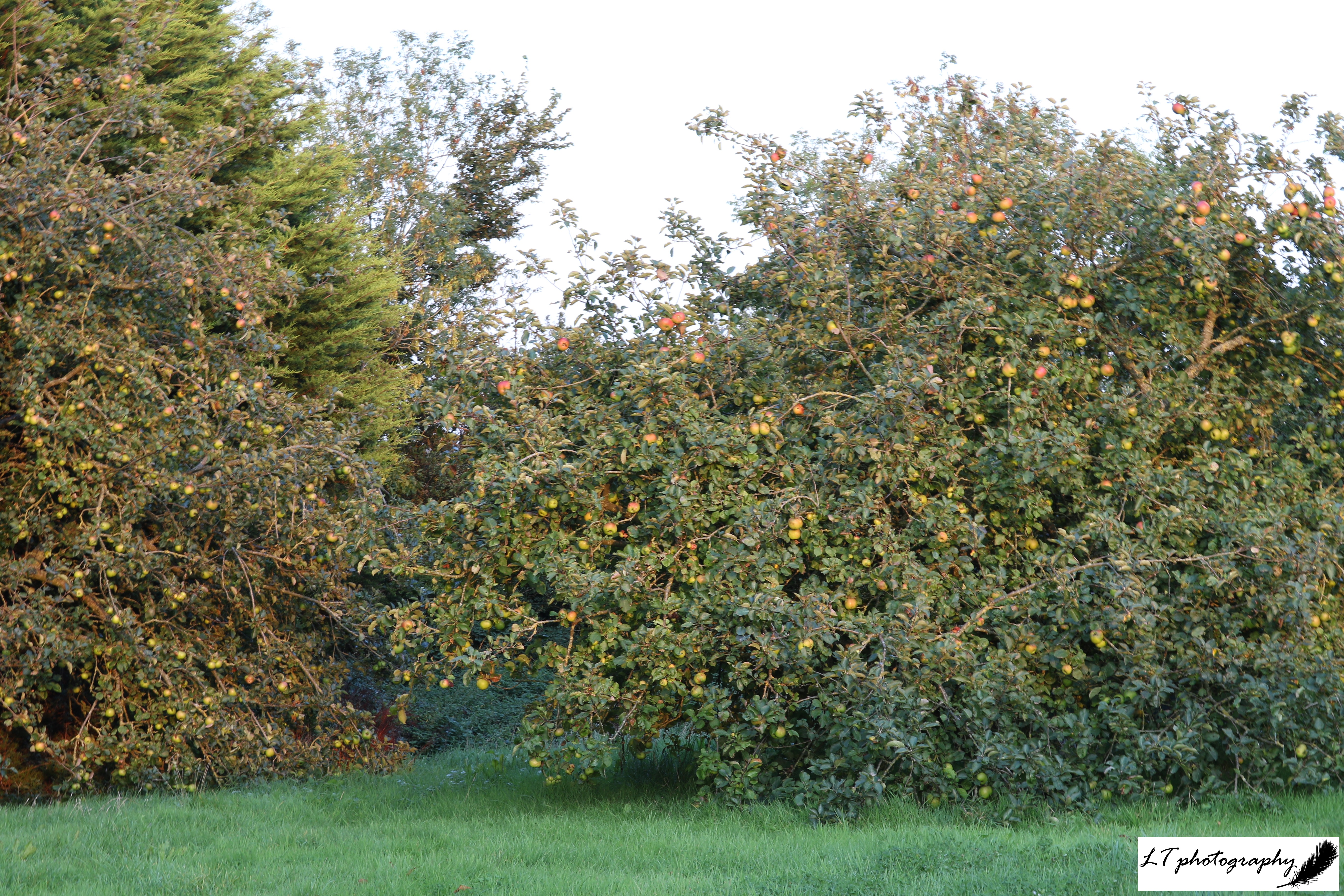
During the festive period, one ancient custom is still being practised in orchards across the country. Traditionally held on Twelfth Night (5th January), this 400 year old tradition is called Apple Wassailing, where wassail comes from the Anglo-Saxon for whole or healthy. During these celebrations, a wassail king and queen would lead a group of revellers to an orchard, where cider would be poured over the roots of the largest and most prolific apple tree, known as the Apple Tree Man, cider-soaked toast would be hung in its branches, and a toast would be made to the health of the tree. This tradition aimed to scare away bad spirits in the orchard and wake up the trees in the hope of a bountiful harvest next autumn!

One of the most popular modern Christmas traditions still celebrated across the UK is putting up a Christmas tree. Last year alone, ninety per cent of families in the UK put up a Christmas tree in their home. This tradition first became popular during the Victorian era, when Queen Victoria’s husband Prince Albert brought trees over from Germany for his family in 1840. Despite this, the first Christmas tree was actually brought to England in 1800, by Queen Charlotte, the wife of King George III.

Greenery has long been used to decorate homes during the winter, with trees even being used during the Roman times. In some countries, evergreen boughs were believed to keep evil spirits and illness away, but most importantly they were a reminder that abundance would once again return. Check out my next Christmas-themed blog post out on Monday 21st to take a look at the history of natural decorations, and how you can bring some natural colour into your own home this Christmas.

However you celebrate Christmas time, it is important to stop and think about where our traditions come from. They are rich in history and meaning and can allow us to anchor ourselves during a turbulent season. My favourite parts of Christmas often relate to nature and baking, which have long been a part of celebrating this time of year. Why not join me in honouring our history and start a new Christmas tradition this year!

26 Years of the BTO’s Garden BirdWatch: Getting Involved During Lockdown

As winter creeps into the landscape and a second lockdown keeps us close to home, our gardens are once again coming alive. Wrens creep through the undergrowth catching insects, Robins sing to defend small territories, and Long-Tailed Tits flit between hedgerows foraging in family groups. It’s not just the birds though, other species are settling down to see out the winter in our gardens too, from butterflies and toads to hedgehogs and ladybirds.

With this year being a bit different, I have found it a great time to take part in the BTO’s Garden BirdWatch, to further connect with nature, boost my mental health, and do my bit. Gardens are very important homes for wildlife, not just at this time of year, so now is an important time for us to understand how we can better help the wildlife that share our gardens with us. If you have a bit of time on your hands, want to do something a bit different, or are interested in the wildlife on your doorstep, then this survey could be just what you need!

The BTO and the Garden BirdWatch

So, what is the BTO? Well, the BTO stands for the British Trust for Ornithology, where ornithology refers to the study of birds. Started in Oxford in 1933, this now Norfolk-based charity aims to engage people with science whilst advancing the understanding of birds and now other wildlife species. With over 60,000 dedicated volunteers, and projects ranging from bird ringing and Cuckoo tracking to urban gull and bat surveys, the BTO has gone from strength-to-strength.

Set up in 1995, one popular BTO project has been the Garden Birdwatch, a project aiming to understand the relationship between wildlife species and our gardens, and how and why some of these species populations may be undergoing change. In a nutshell, the Garden BirdWatch is about participants recording the birds they see in their garden, along with mammals, amphibians, reptiles, butterflies, bumblebees, and dragonflies. As vital habitat for wildlife continues to decrease, whilst the importance of gardens as substitute habitat increases, the information we can provide now can be used to better tailor help to support wildlife in the future.

So why should you take part? Well, the Garden BirdWatch is a great way to enjoy the wildlife in your garden, improve your knowledge, and allow you to follow the annual cycle of life. Taking part is also easy! All you need is a garden, a minimum of 20 minutes a week, and a way to identify the species you see. You do not need to have a big or elaborate garden, put food out, or be an expert. With the Garden BirdWatch currently being free for a year, signing up is easy. Provide a few details about your garden, and get started recording the garden birds and other wildlife that visit you.

Why not join thousands of other volunteers today, and do something new from the comfort of your own home!

Examples of Results

Last year marked the 25th year of the Garden BirdWatch, and so the BTO have now been able to use 25 years of weekly garden observations to begin analysing the relationship between our gardens and wildlife. For example:

  • Goldfinches, Woodpigeons, Nuthatches, and Jackdaws have become an increasingly common sight in our gardens, relying on our gardens for vital foraging habitat
  • Song Thrushes, Greenfinches, Starlings, and House Sparrows have become a less common sight in our gardens since 1995, due to a range of factors from disease to loss of habitat

I have now been taking part in the BTO’s Garden BirdWatch for the last 21 weeks. This time has gone past so fast, but has opened my mind to the diversity and abundance of species that visit my garden through the seasons. To sum up my time so far, here are some of my results:

  • I have observed 26 different bird species in my garden, with the most abundant species being Starlings (50 on 28th July) and House Sparrows (40 on 28th July), followed by Goldfinches (30 on 1st October)
  • Every week Blue Tits, Great Tits, Collared Doves, Pheasants, Goldfinches, and House Sparrows have been consistently recorded
  • As summer has moved into autumn and winter, Coal Tits, Jackdaws, and flocks of Goldfinches have become newly reliant on my garden, whereas Great-Spotted Woodpeckers, flocks of House Sparrows, Pheasants, flocks of Starlings, and Sparrowhawks have decreased their visits
  • No week or month has been the same, with summer highlights including Greenfinches, Siskins, Chiffchaffs, and Garden Warblers!

So, why not see what wildlife you can encounter this winter?

Spring Countryside Camera Trapping 2020

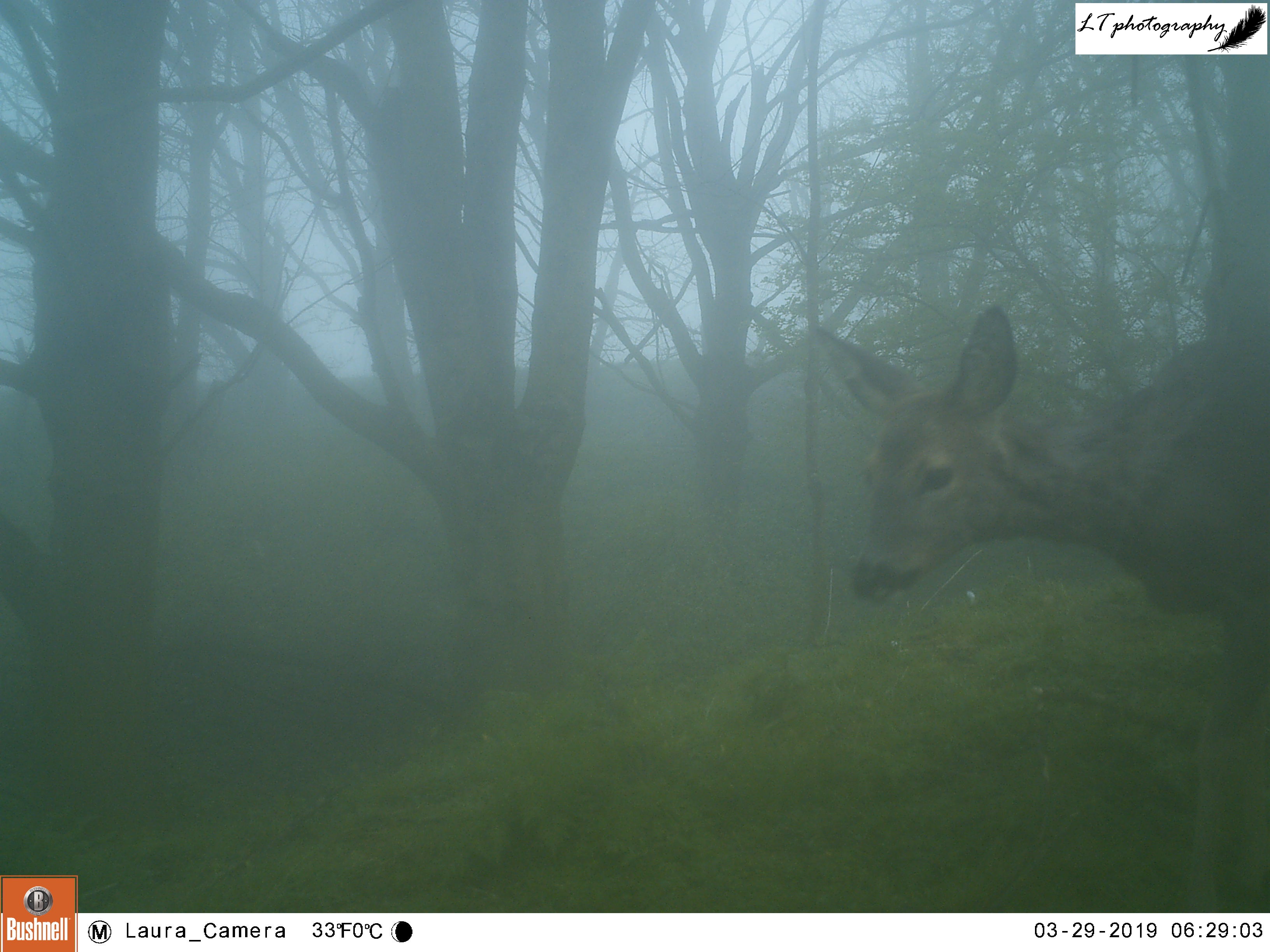
Through the stillness of an early morning mist, a shape appears, carefully stepping through the short undergrowth. She weaves through the trees, stopping to pick and browse as she goes. Then she stops, motionless. Ears pricked she listens out into the gloom, something catching her attention. Magnificent silhouette, the more impressive for her swollen belly, a sign of new life to come. Here she is captured, a glimpse of a world unknown, forever immortalised in a frame.

Camera traps provide a window into another world, one that is often unseen and unknown. As technology improves and efforts increase, humans are now capturing the natural world in increasing detail, observing new behaviours, and keeping track of wildlife that would otherwise be difficult to monitor. Camera traps also provide us as individuals with the opportunity to open our eyes to the world that lies outside our doors. To find out more about camera traps, how to use them, and for some inspiration, check out my ‘How to… Use and Make the Most of a Camera Trap’ post.
Since I got my camera trap a few years ago, it has become an important way for me to explore the hidden world around me. In particular, during spring 2019, I spent 10 weeks conducting camera trap surveys across 5 sites on my family’s land in Dorset. It was a lot of fun to see what species I could detect and in what numbers, whilst seeing how things changed over a period of time. For my results, check out my ‘Spring Countryside Camera Trap Surveys’ post on my blog.

Camera Trapping 2020

This year, despite COVID-19 leading to a national lockdown, I tried to utilise the time I got to spend outside to get my camera trap out as much as possible. The result was some successful and really enjoyable camera trap experiences throughout the spring, which helped to keep me going. On my adventures, I chose to focus on a mixture of 5 new and old sites, including Badger setts, a footpath, a Sycamore copse and a meadow. It was great to once again monitor the animal populations on our farm, experience new life, and to see if something interesting might turn up!

Highlights

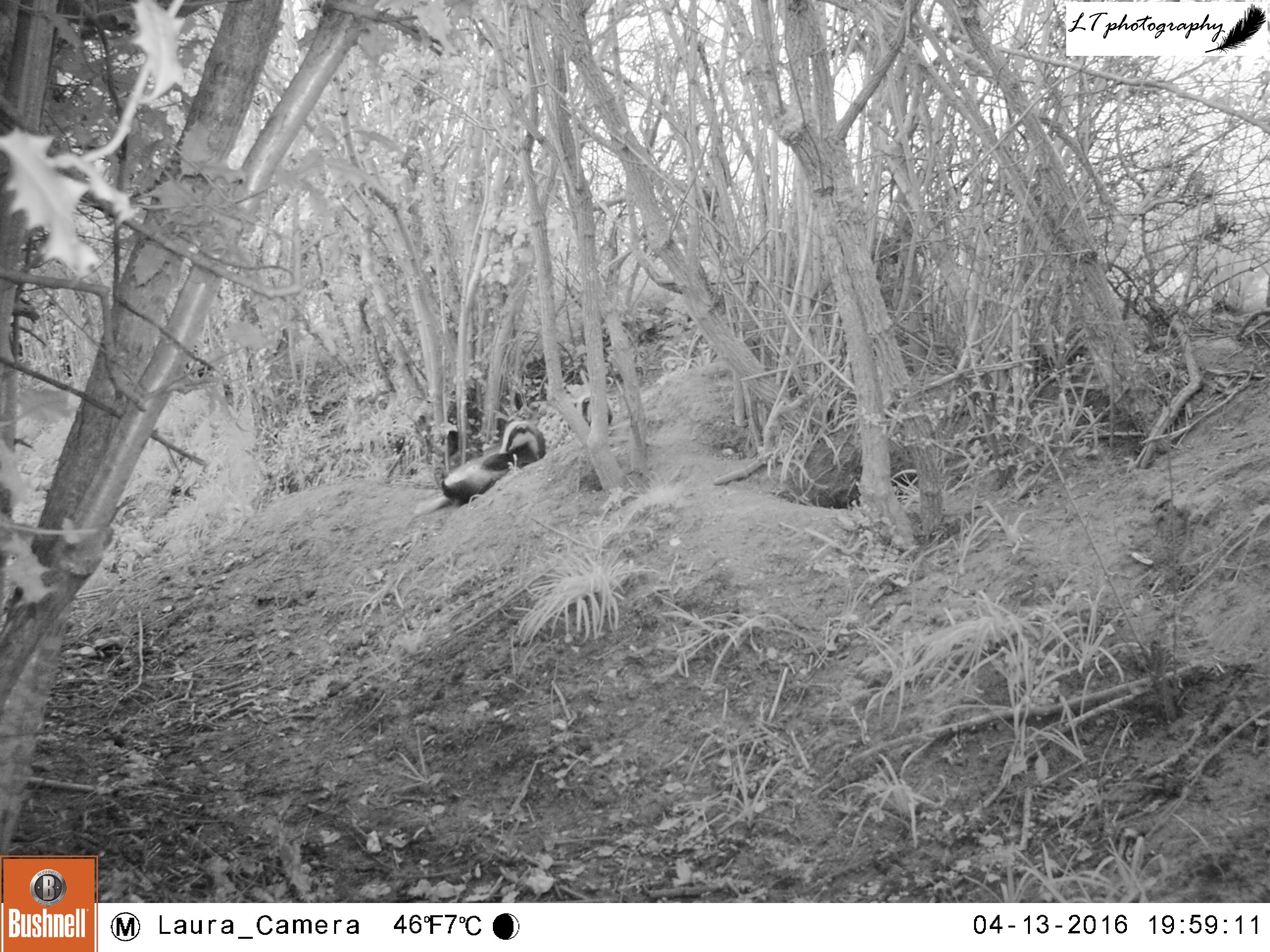
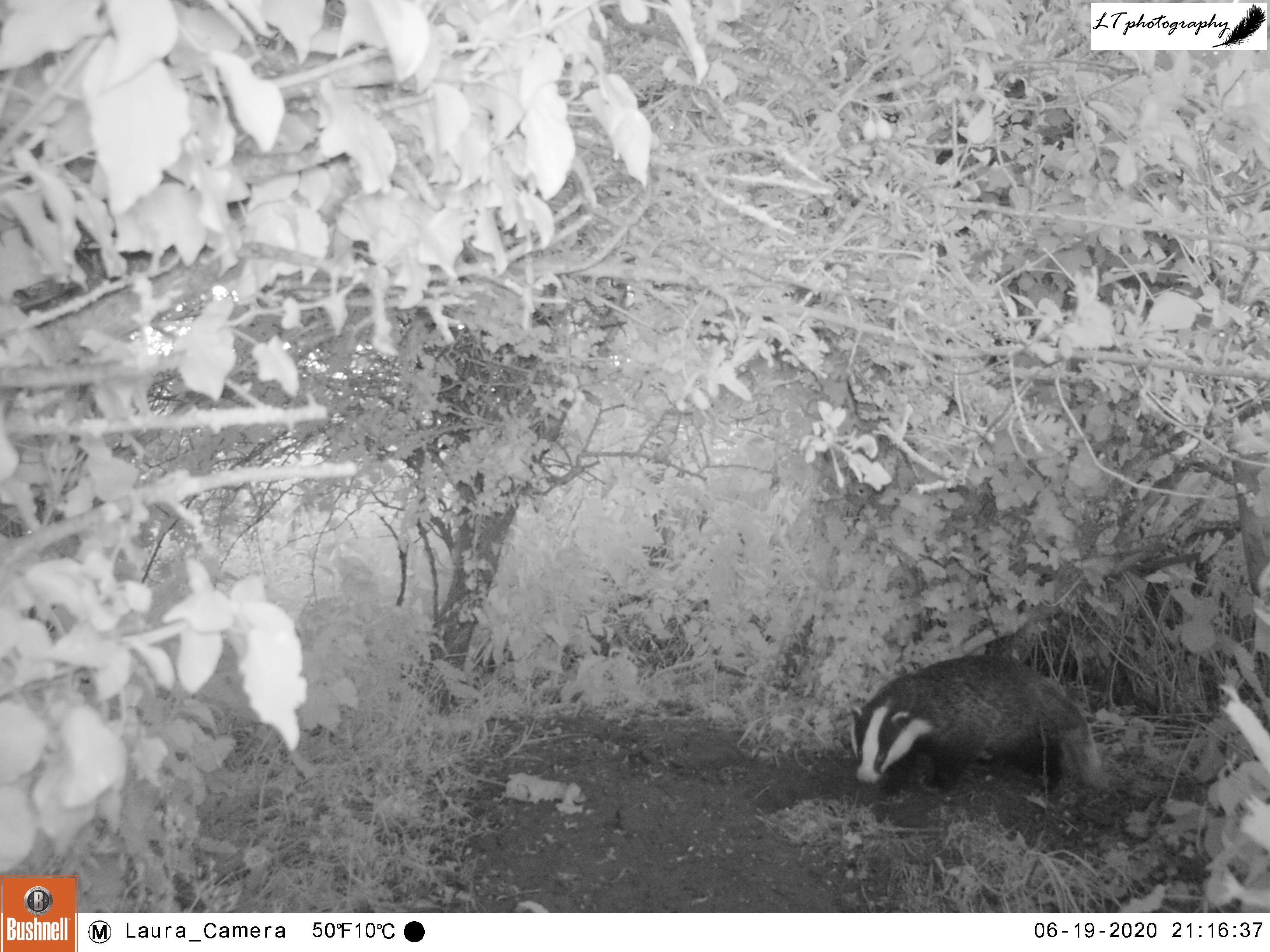
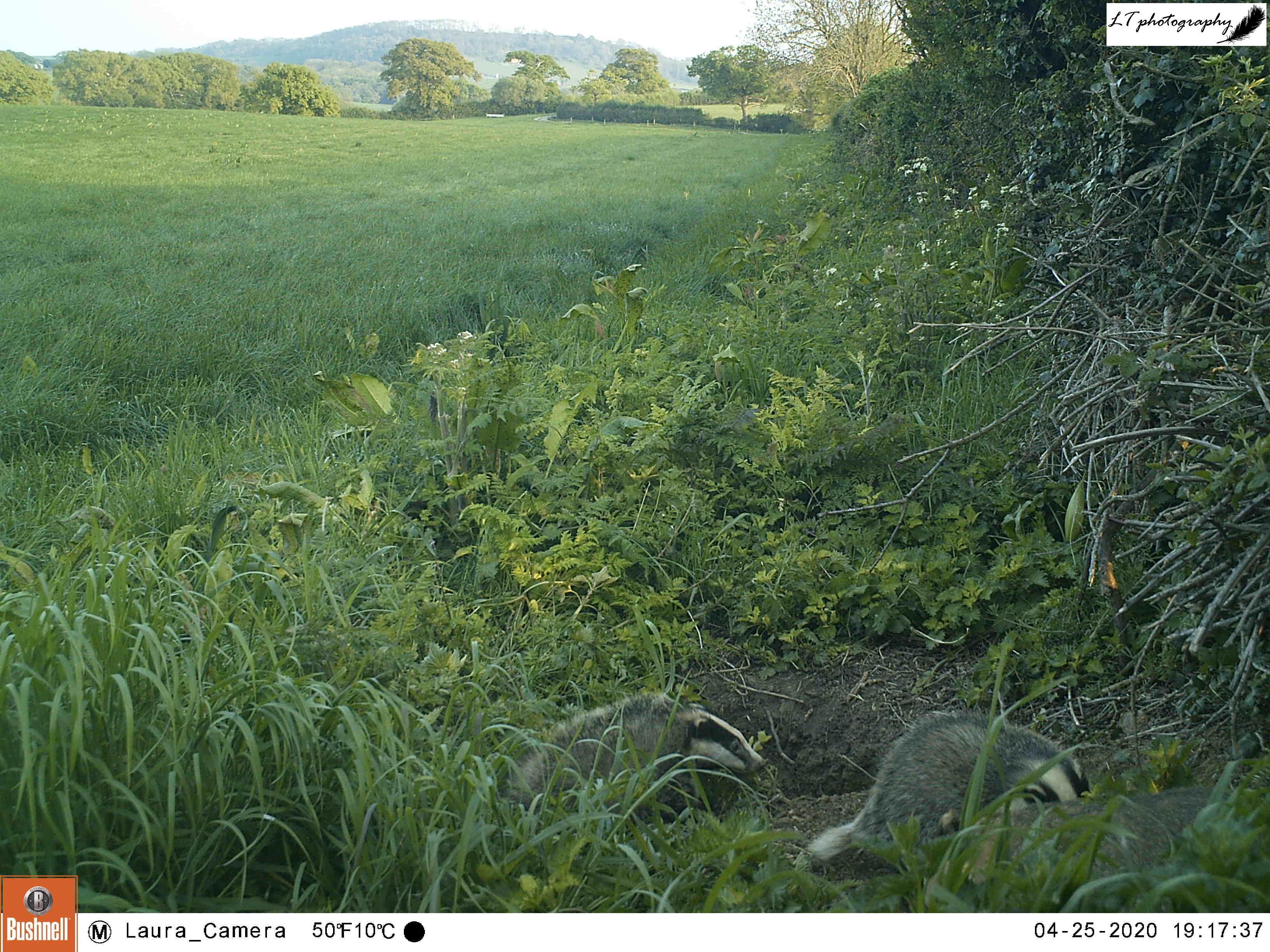
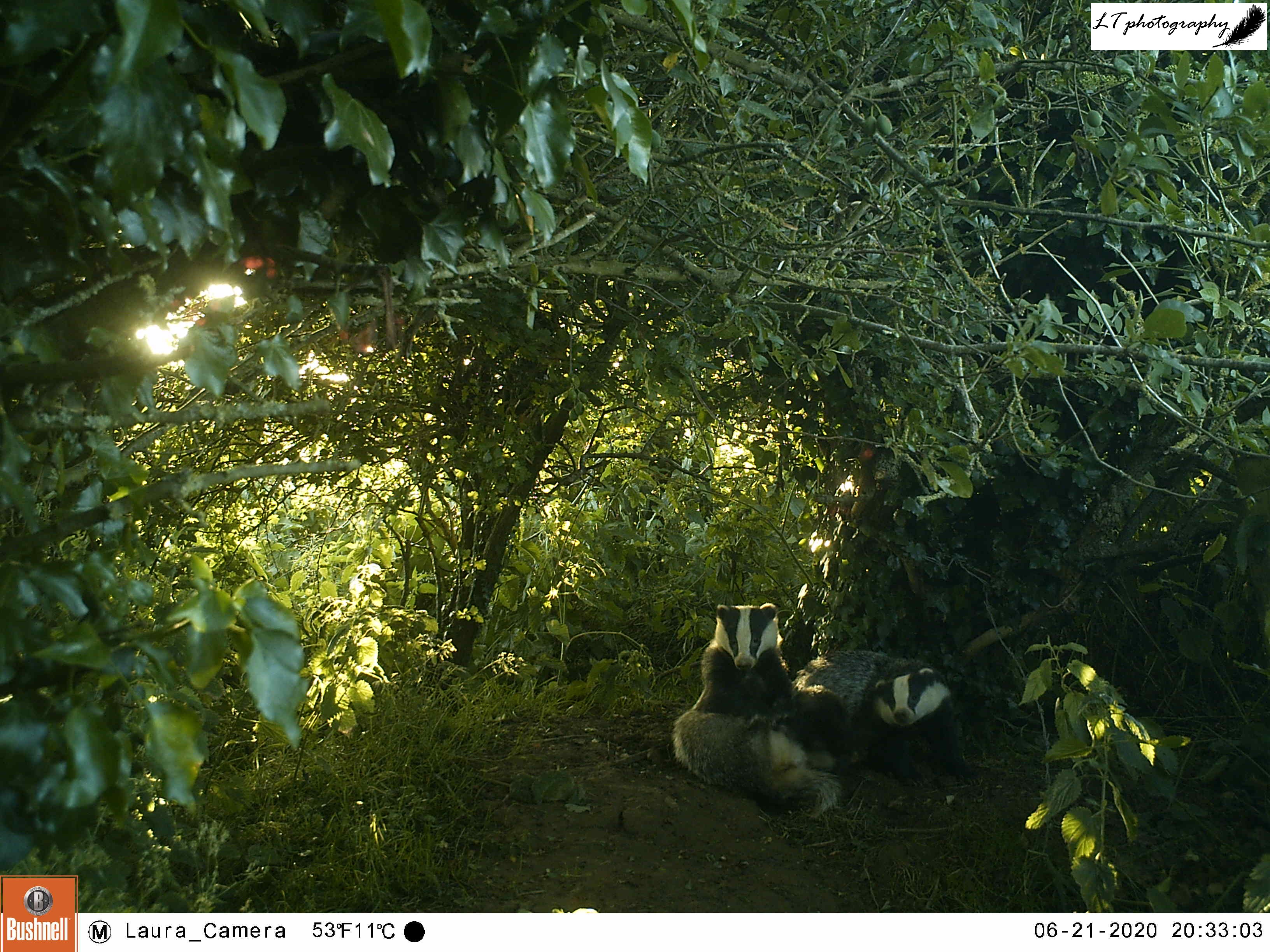
The real stars of my camera trapping this spring just happened to be our British large mammals. In particular some of my highlights involved fantastic sightings of charismatic Badgers. One of my favourites was capturing 2 cubs playing and fighting outside the entrance of a sett at all times of day in April, with a parent often popping in to check on them. I also had some great luck at another sett in June, where my camera trap captured 2 Badger cubs interacting with each other in their natural habitat, in an open area within a hedge. It was really great to see!

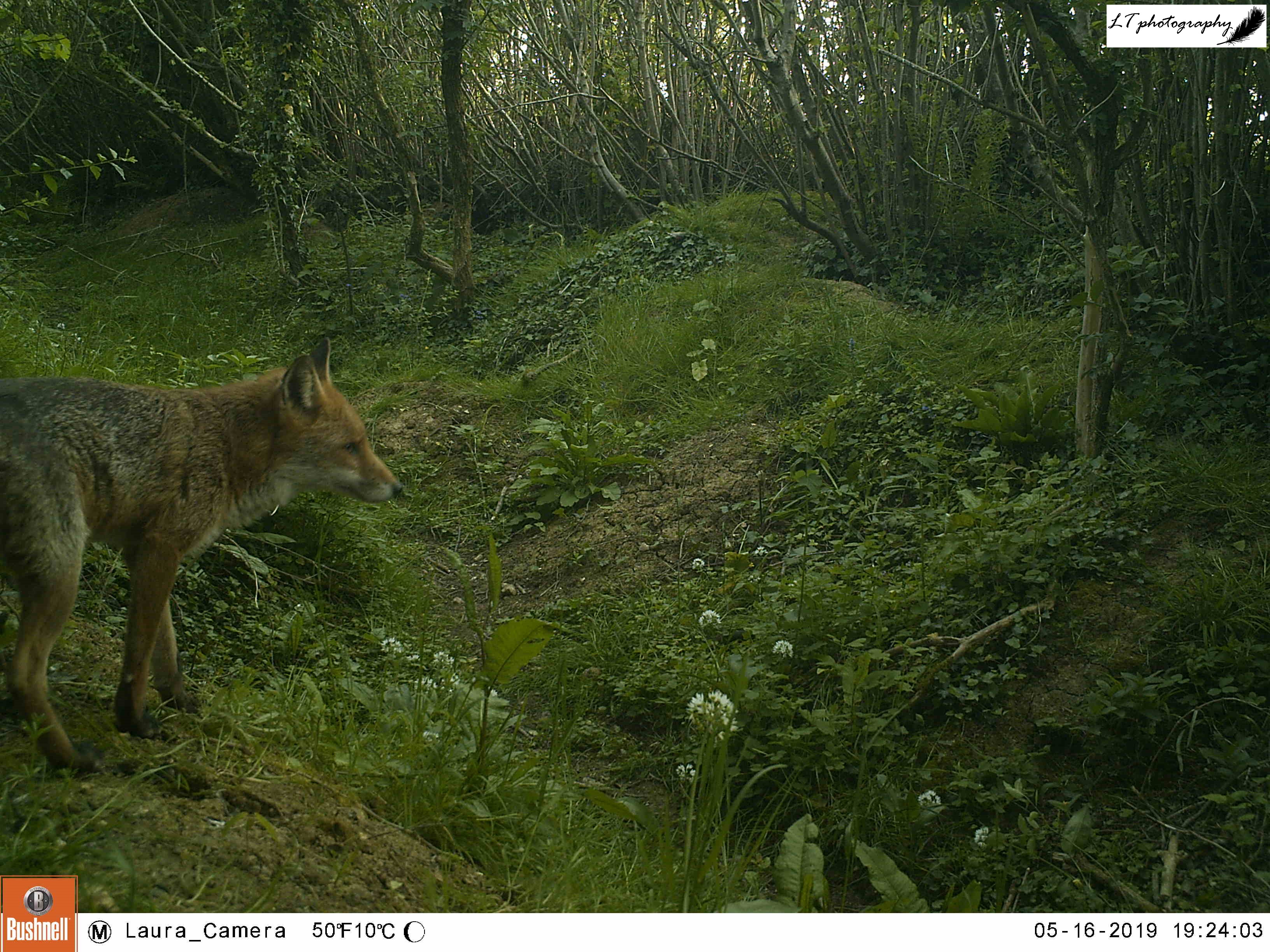
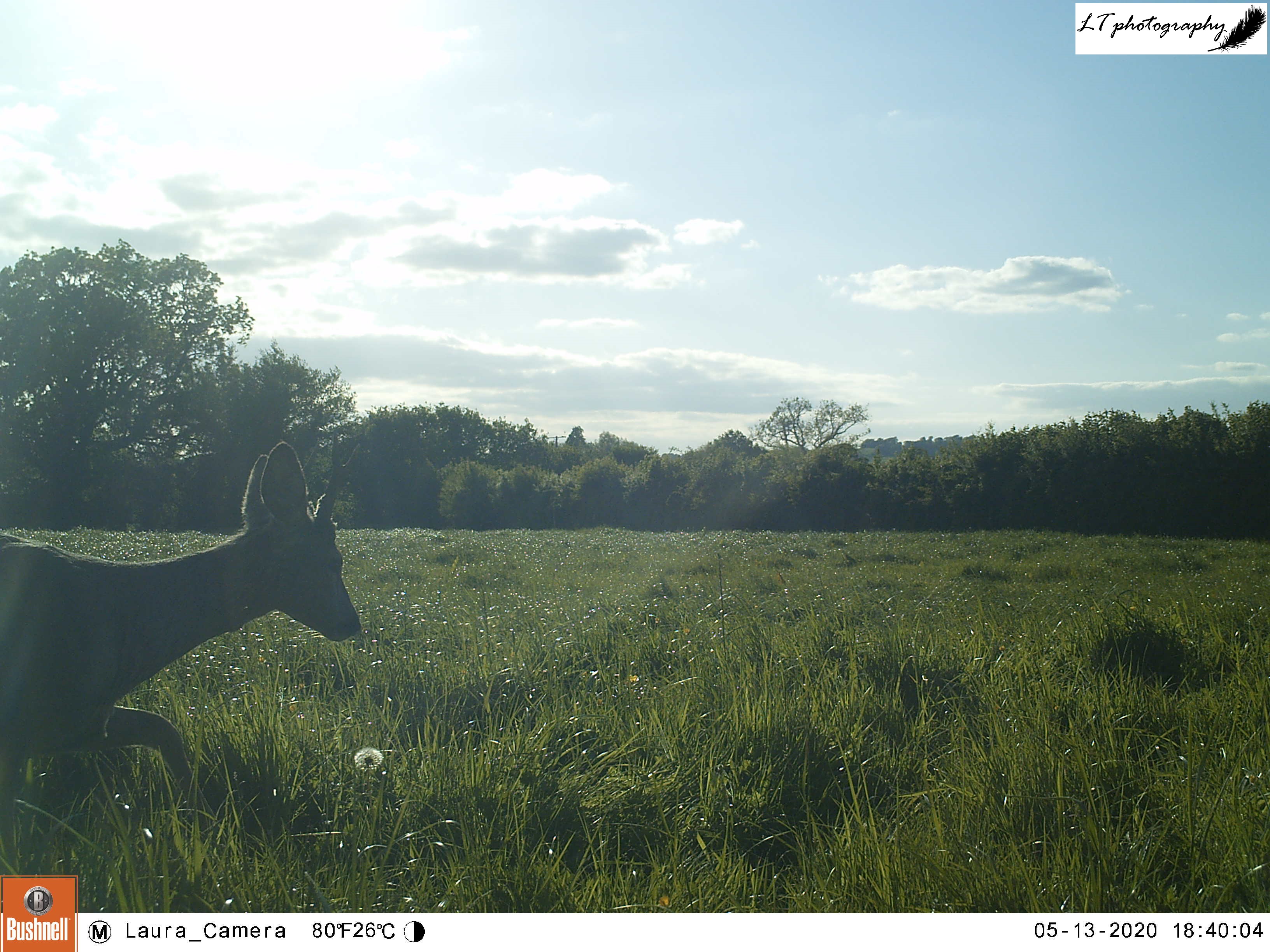
This year Foxes were also popular sights on my camera trap. These ranged from adults and cubs at their dens to being captured on the move, giving me a new insight into their lives and interactions. Roe Deer were also a popular sight on my camera trap as they moved through their habitat and spent time foraging, with does and bucks often being seen separately at these same locations. All wildlife are fantastic to be able to experience in this way though!

When Things Go Wrong!

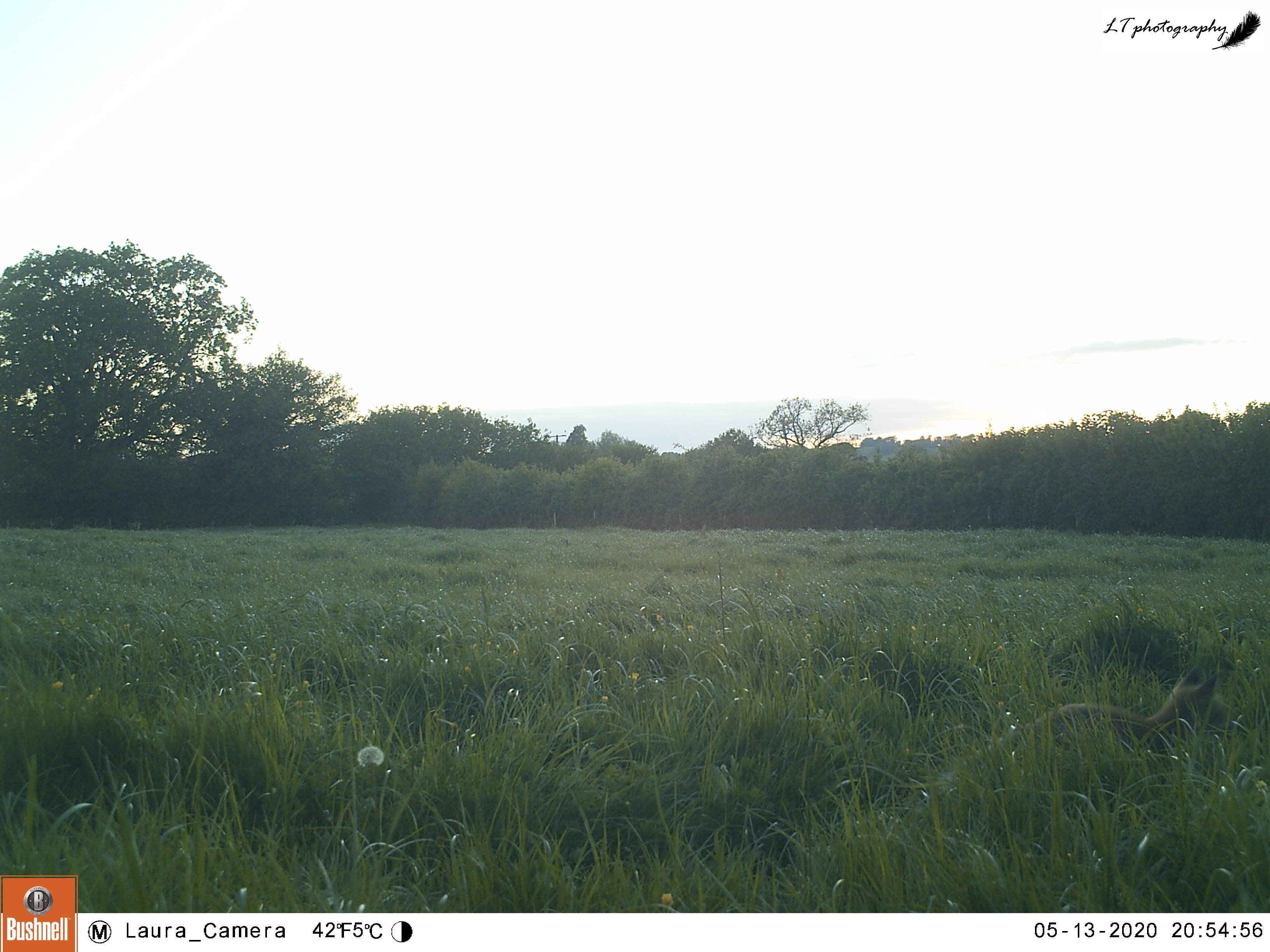
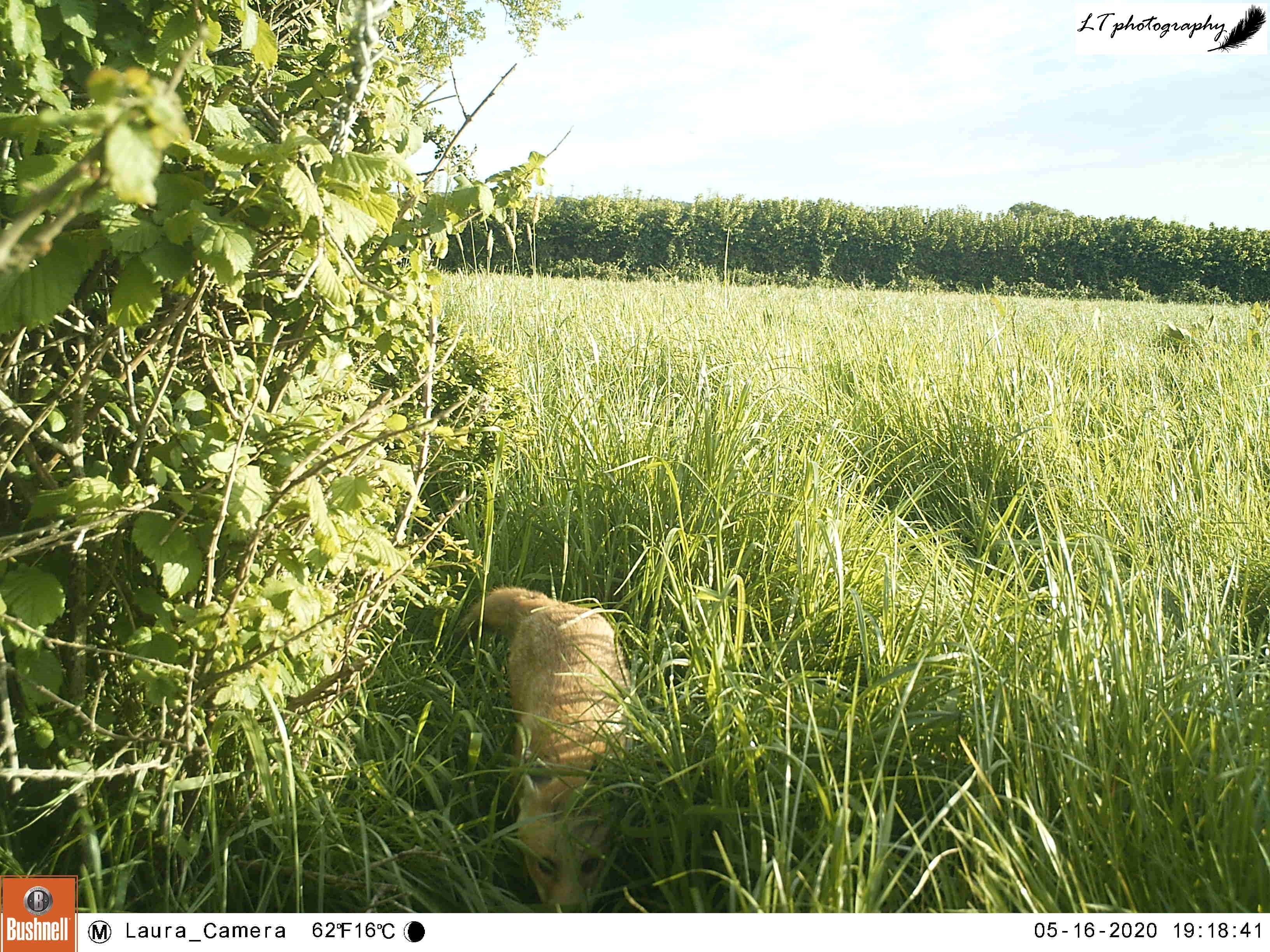
With the highs of camera trapping, there are always bound to be some lows. With many successful days camera trapping this year, my low came in the form of one project not quite going to plan! After sightings of a new fox den at the border of a hay meadow, I set out to try and get photos of this family. Over the course of two weeks I threw all my ideas and efforts at achieving my goal, but over and over again the cubs alluded me. Instead my camera seemed to spend more time capturing the local Roe deer population in this particular location! Here though are some of the glimpses I did catch of this elusive family:

The Best Bit!

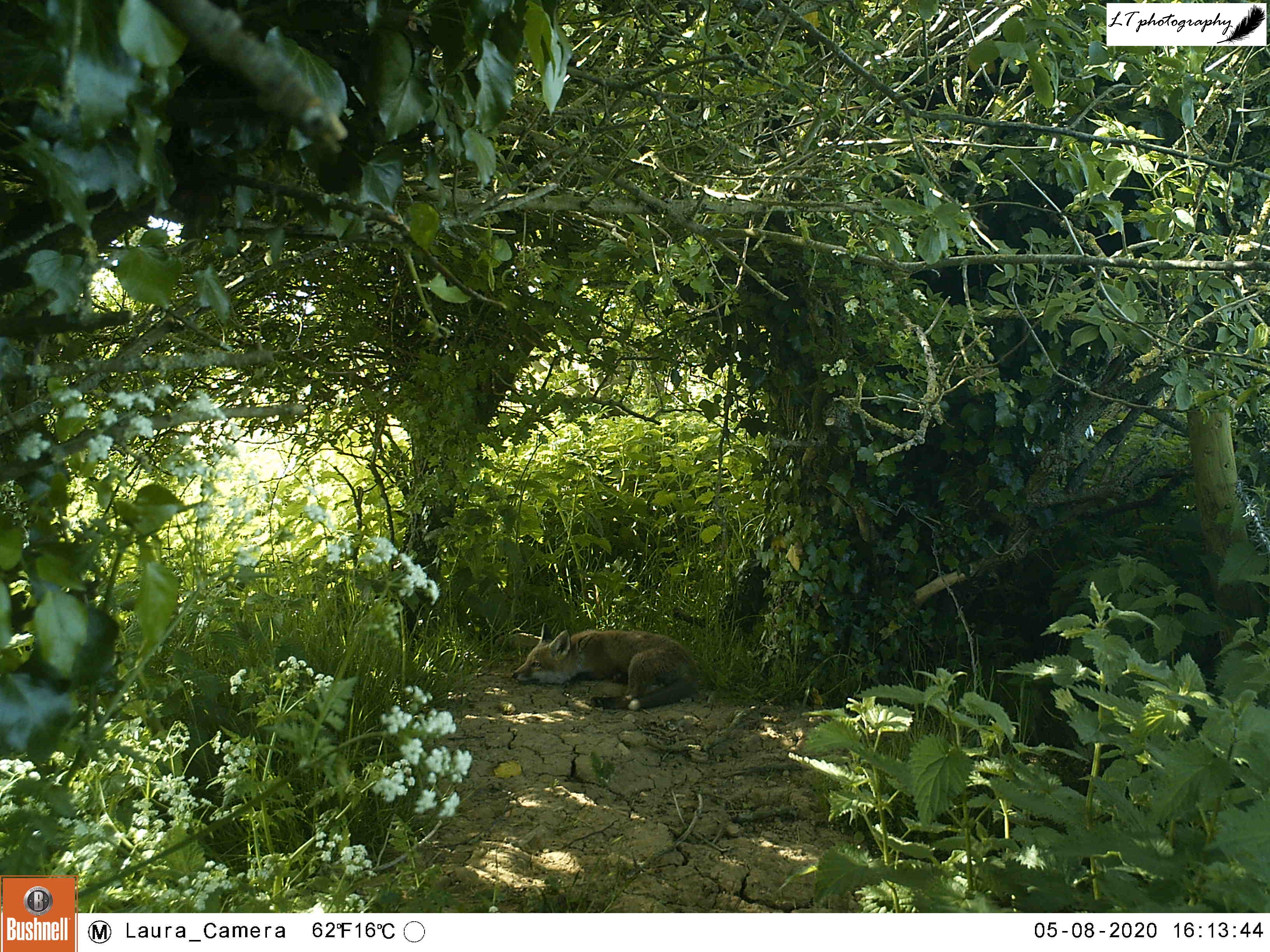
There is always going to be one highlight that stands out from a season camera trapping. For me this year my best bit came in the form of a surprise. Whilst having my camera trap out on an active Badger sett for a week in May and then in June, my camera, amongst many photos of Badgers and their cubs, caught some unexpected shots of a lone Fox cub. In my photos, most days the cub would spend its time sleeping and playing alone in the central area of a hedge above a Badger sett. Sometimes it also made an entrance at night, but it was always seen alone. It was an interesting insight into this cub’s more unusual world.

As the natural world now begins to descend into a deep slumber, get out there now and explore, allowing your surroundings to give you strength, whilst leaving nothing but footprints.

How to… Make Your Own Bird Nest Box

As our summer visitors, such as Swallows and Willow Warblers, leave us for sunnier shores, and we wait for our winter returnees, such as Redwings, the world outside our doors is slowing down and wildlife is preparing for the colder times to come. Autumn is a time for extraordinary spectacles, storing up food and changing colours, but also a time for us to do our bit, to help our wild neighbours with their preparations, and to prepare for a new year to come. This can range from cleaning ponds and putting out food, to planting trees and creating wood piles. It is also importantly a time to provide new homes for nature.

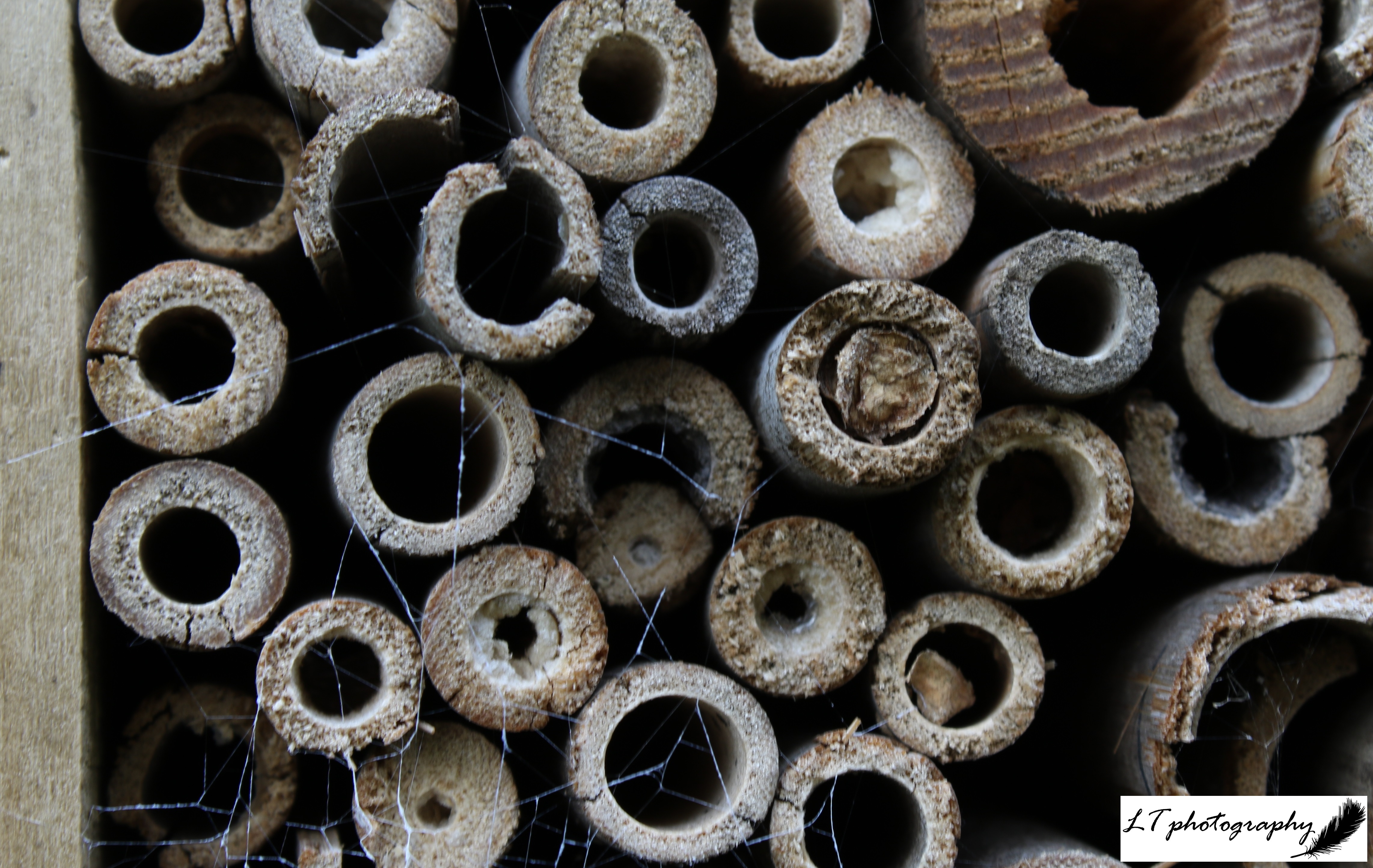
Previously, in spring/summer I posted on my blog about how to make a home for nature in the form of a bee hotel (see How to… Make Your Own Bee Hotel). A bee hotel is aimed at providing solitary bees (90% of UK bee species) with a place to nest, and for my blog I made a bee hotel that has now had some success. There are other forms of homes that we can make for wildlife though, for example for different species of bird.

In the UK, more than a quarter of all bird species are of the highest conservation concern, with a decline in breeding birds (44 million) between 1967 and 2009. This means that conserving and creating habitat for birds is an important issue, and something we can all get involved in. One example of an easy way is to put up nest boxes, which mimic natural habitat. They create an effective artificial cavity for birds, providing an accessible alternative for species that are currently experiencing the loss of breeding habitat and winter roosting sites.

Nest boxes come in a variety of shapes, sizes and designs, which will depend on the species of choice and the purpose they need to fulfill. Though you can put up a nest box at any time of year, the best time is right now, ready to be used as a roosting site throughout winter and for breeding in the spring. This way you can increase the chance of your nest box being a success next year. There are no set rules though, so why not try making your own today!
How to Make a Bird Nest Box

What you need:

  • A plank or offcuts of untreated wood, about 15mm thick for insulation
  • Tape measure & pencil
  • Hand or power saw
  • Drill & different sized drill bits
  • Sand paper
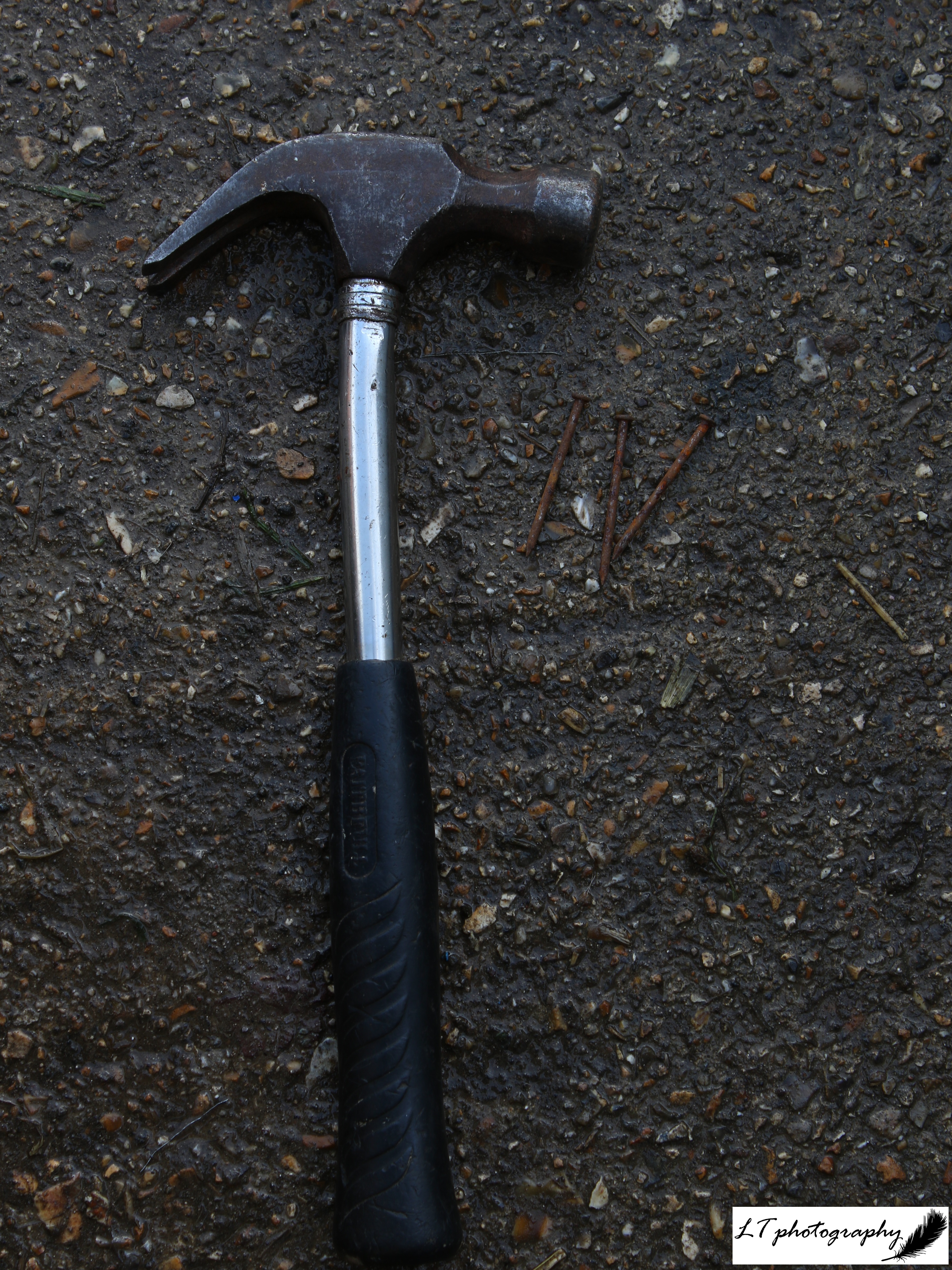
  • Hammer & nails
  • Screws
  • Sealant, a piece of rubber or something similar
  • Optional: Hole plate

Step by Step Guide:

  1. Decide on your nest box design. Your nest box will most likely be aimed at a certain species, such as Robins or House Sparrows. You can also choose particular design features, such as a flat or apex roof. For the purpose of this guide though, I will provide instructions to make a standard Tit nest box.
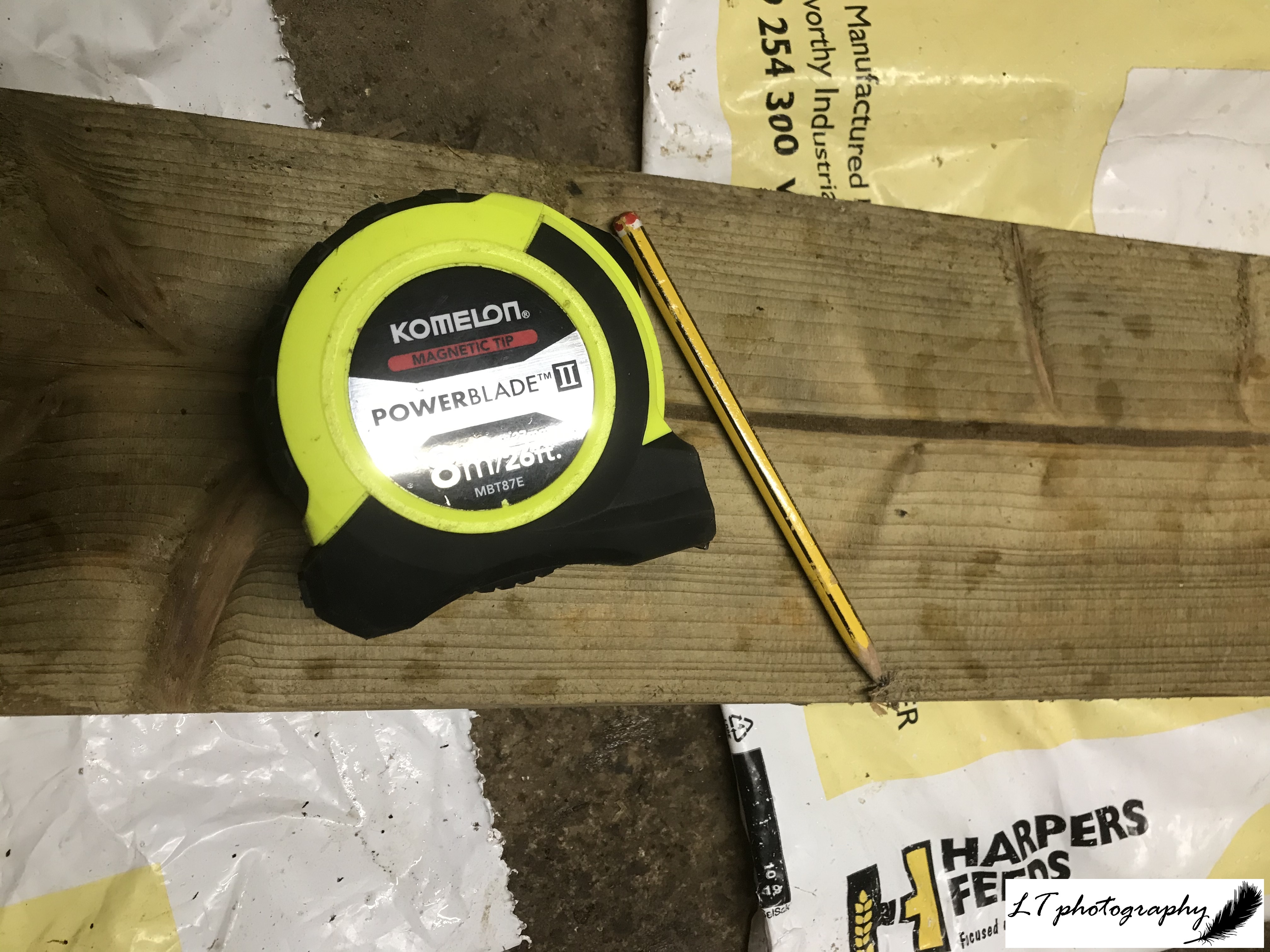
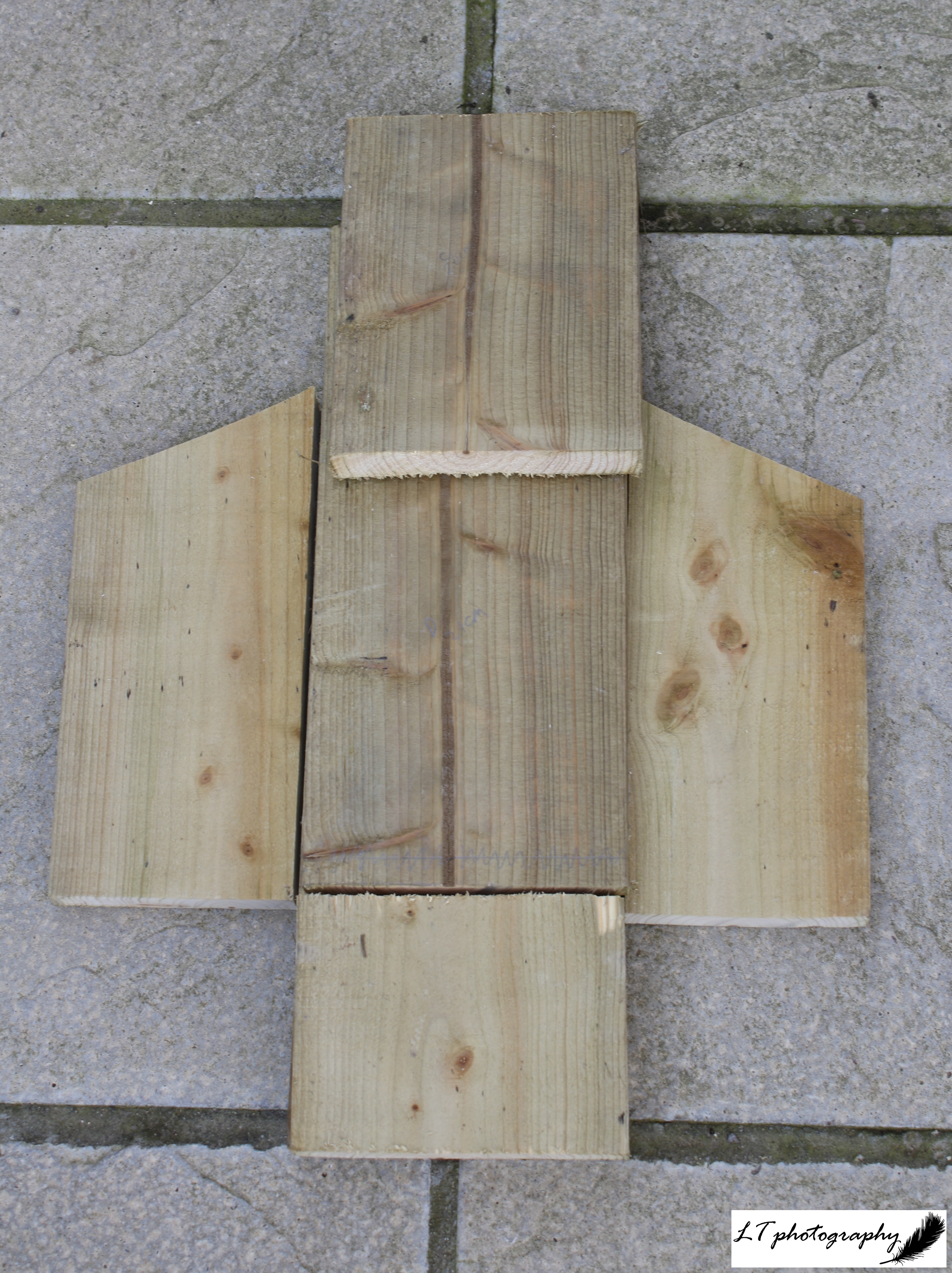
  1. Use a tape measure and pencil to mark out the wood you need, either by creating templates out of paper or cardboard, or by drawing straight onto the wood. For this design you will need 6 pieces: a back (45cm x 15cm); a base (11cm x 15cm); a front (21cm x 15cm); a roof (20cm x 15cm); and 2 side panels (25cm high at the back, 20cm high at the front, and 11cm wide). Use a hand or power saw to cut the wood into the 6 pieces needed.
  1. Next, take the front panel and use a wide drill bit to make a hole towards the top of the panel, at least 125mm up, which the birds will use to enter the nest box. The size of the hole will vary between different species, but for my nest box I made a 25mm hole, aimed at Blue Tits and similar Tit species.
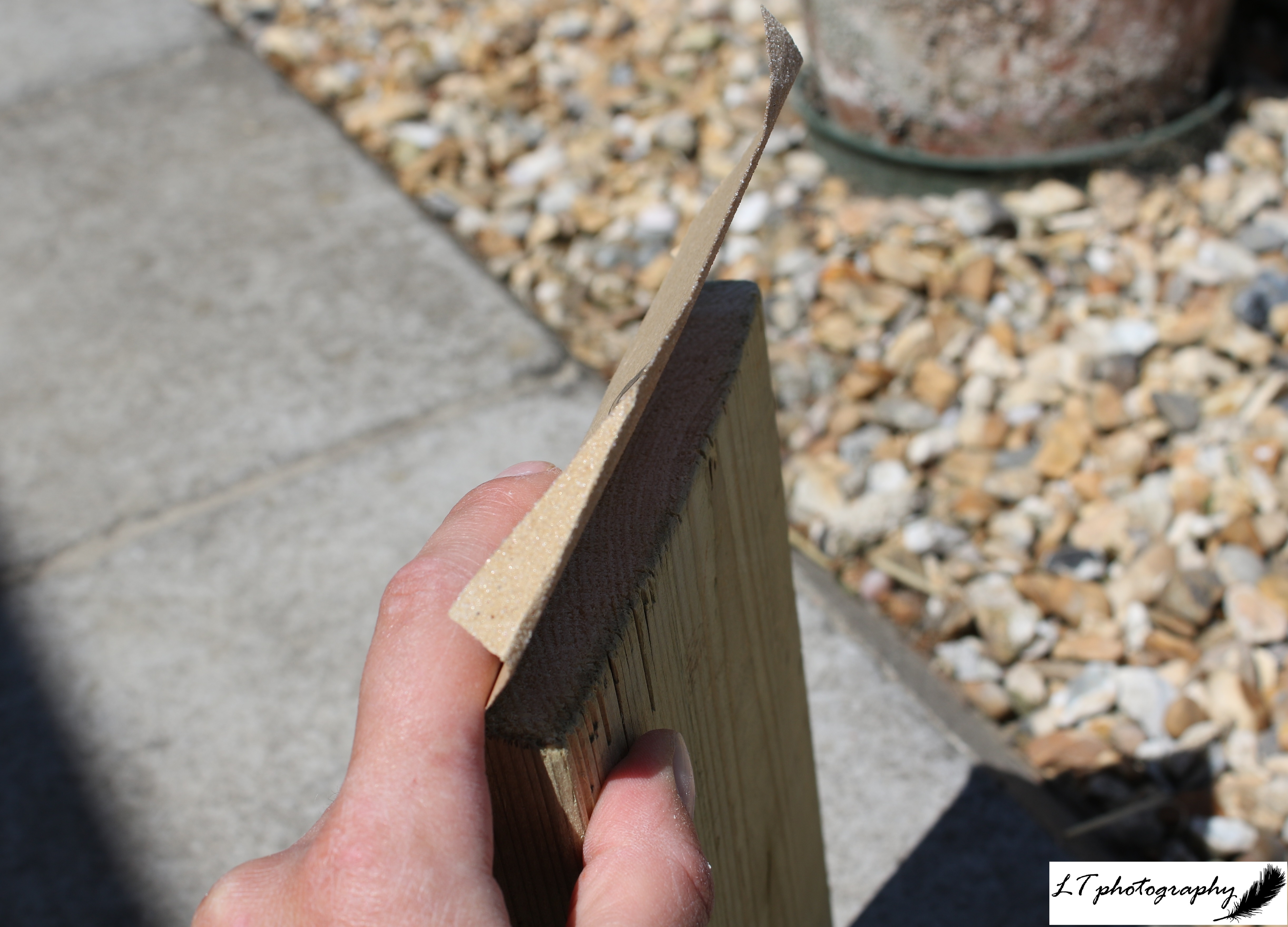
  1. Use sand paper to sand down any rough or uneven edges of the wood, that otherwise could cause problems for birds using the box.
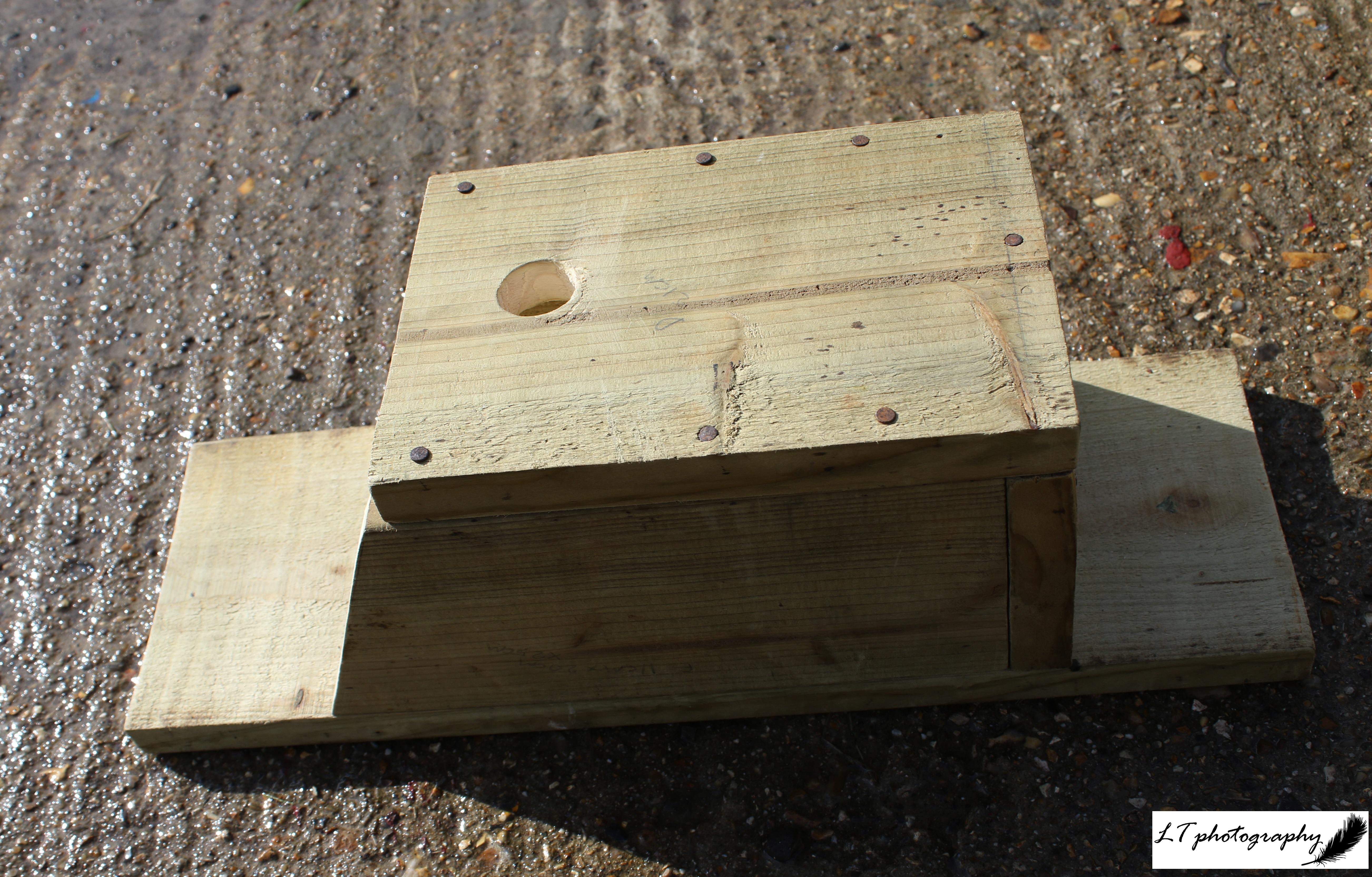
  1. Use a hammer and as many nails as you need to make the back, base, sides and front fit together forming the main body of the nest box. It is often best to mark where the nails will go first and partially drive each nail through the first piece of wood first (e.g. the back), which will make nailing the pieces together easier and help avoid splitting the wood.
  1. Attach the roof to the box using screws that you can later remove when needing to clean the nest box out. Seal the gap between the roof and the back of the nest box with either flexible sealant or an attached flap of recycled rubber.

Optional editions: Add a nest box hole plate to the front of the box to prevent predators from enlarging the nest box hole and larger bird species using the box. Also, you could apply a water-based wood preservative product to the outside of the box to prolong its life and help to repel water.

Tips on putting your nest box up

  • Unless there is shade during the day, position the nest box facing between north and east to avoid strong sunlight.
  • Choose a location which is 2-4 metres above ground level, out of reach of predators, and away from constant disturbance.
  • Make sure there is a clear flight path to the entrance of the nest box and that there is shelter from bad weather.
  • Place your box away from the location of any other nest boxes to reduce the chances of competition.
  • Avoid using nails to attach the box to a tree, as they may cause harm. Instead try to tie the box to the trunk or hang it, or otherwise use stainless steel screws or nails that do not rust.

Enjoy!

How to… Make the Most of Autumn’s Bounty

Leaves rustling beneath my feet, golden, russet, auburn. Crisp, dewy mornings, adorned with misty tendrils and spider’s webs. Hedgerows hung with bright berries, and woodlands dotted with fantastical fungi. Cosy nights in, whilst the night comes alive with Tawnys and foraging mammals. Lazily buzzing insects, murmurations, Red Kites soaring, waders and wildfowl, and endless wonder.

Autumn means different things to different people, but it is deep rooted in the natural world around us. A season of reflection and change, it is the favourite season of many. Some people celebrate turning a new leaf, some the drop in temperature and cosiness that comes with it, some the festivities, and others celebrate the little things, from migrating birds to reconnecting with nature. To all though, it is a bountiful season, marked with plentiful food and the first whispers of winter.

Historically, autumn is associated with harvest time and bringing in the food of the land before winter. From corn dolls to harvest festivals, autumn is symbolic in British tradition and culture. It has been inspiration for poets and writers alike including Keats (‘Season of mists and mellow fruitfulness’) and Jane Austen (‘the thousand poetical descriptions extant of autumn’). It is an important time of year to check in with the status of wildlife, whilst also being a time of spiritual significance for many.

As temperatures begin to drop and the leaves begin to change, it is time for us all to get out there, watch amazing sunrises and sunsets, forage for food, and stay connected with mother nature. With autumn being deep rooted in what lays outside our doors, here’s a guide to just some of the important species flourishing in autumn.

Autumn Species

Unless you are 100% sure of what something is and if it is edible, then do not eat it! Also, harvest only what you need and leave the rest for wildlife!

Hazel (Corylus avellana)

  • Fruit: The popular hazelnut, an edible nut that begins with a thick-green husk, before ripening to a brown in autumn
  • For Wildlife: A favourite food of Grey Squirrels, Dormice and Wood Mice, amongst other species, often being cached for winter
  • How to Identify: Circular-shaped leaves with toothed edges and tapering to a point; coppery brown smooth to peeling bark; lemon-yellow catkins and tiny red bud-like flowers in spring
  • Autumn Facts: Until the First World War, Holy Cross Day on the 14th September was traditionally a school holiday, where children would go nut gathering

Bramble (Rubus fruticosus)

  • Fruit: The familiar edible blackberry that begins green, then turns red, before ripening to purple-black in autumn. Blackberry picking is a favourite part of autumn for many!
  • For Wildlife: The berries are a valuable food source for mammals, such as badgers, and small birds, such as Blackcaps
  • How to Identify: Oval-shaped leaves with toothed edges and tapering to a point; prickly and half-evergreen stems; white or pink flowers from spring onwards
  • Autumn Facts: Folklore in Britain dictates that blackberries should not be picked after Old Michaelmas Day (11th October), as the Devil has by then made them unfit to eat

Recipe:

Hawthorn (Crataegus monogyna)

  • Fruit: Hawthorn berries, sometimes known as haws, are edible but their single seed is toxic to humans. They ripen to a bright red, is likened to over-ripe apples in taste, and are used to make jams, jellies and wines
  • For Wildlife: Important source of food during autumn and winter for small mammals and birds, including Blackbirds and Redwings
  • How to Identify: Shiny leaves that are oval-shaped with deeply cut lobes; thorny stems and twigs; white fragant flowers with 5 petals fading to pink
  • Autumn Facts: One of the main uses of Hawthorn is to treat high blood pressure, widening blood vessels and increasing blood flow 

Blackthorn (Prunus spinosa)

  • Fruit: Produces edible, but tongue-numbing, sloes which are small blackish plums with a bluish powdery surface. Popular to flavour gin!
  • For Wildlife: A feast for birds in autumn and winter that help to disperse the plant’s seeds
  • How to identify: Oval-shaped leaves with toothed edges and tapering to a point; blackish, thorny stems and twigs; snow-white and 5-petalled flowers with red-tipped anthers in the centre
  • Autumn Facts: Sloes are rich in vitamin C and have been used to treat stomach disorders, blood purification, teeth whitening, and even gum problems

Recipe:

Pedunculate Oak (Quercus robur)

  • Fruit: Produces the familiar acorn, with scaly cups and clusters carried on long stalks. Contain tannins that are toxic and bitter to humans, but can be leached out to make edible
  • For Wildlife: An important rich source of food for species such as Jays, Mice, Squirrels and Badgers, often being cached for winter
  • How to Identify: Large, oblong leaves, broader at the base and lobed, turning brown in autumn; massive rugged grey-brown trunk and broad crown; yellow-green catkins in spring
  • Autumn Facts: The most important texts in British history, such as the Magna Carta, were written in Oak gall ink

Apple (Malus domestica)

  • Fruit: Though not native to the UK, domestic Apple trees produce the popular apple which is now cultivated across the globe
  • For Wildlife: Apples are not just for humans, being a popular food source for wildlife too. Birds, such as Thrushes, and mammals, such as Badgers, feast on the fallen and ripening fruit
  • How to Identify: Dark green and typically oval-shaped leaves with toothed edges, and hair underneath; flowers are five-petalled and pink to white in colour
  • Autumn Facts: Most apples are still picked by hand and the world’s top apple producers are China, United States, Turkey, Poland and Italy

Recipe:

Dog Rose (Rosa canina)

  • Fruit: Berries known as hips, that are edible, egg-shaped and bright red. Popularly used for a wide range of food and drink
  • For Wildlife: The hips are eaten by fruit-eating birds, such as Fieldfare and Waxwings, and small mammals, such as Bank Voles
  • How to identify: Dark green and oval-shaped with toothed edges and tapering to a point; arching stems with broad-based strongly hooked prickles; flat and fragrant white or pale pink flowers with large petals and hairless stalks
  • Autumn Facts: It is a valuable medicinal plant, with the hips being made into a vitamin C rich syrup for children (20 times the amount that is in orange juice)

Elder (Sambucus nigra)

  • Fruit: Juicy edible purplish-black berries, known as elderberries, that are used to make a variety of wines, juices, jams and jellies
  • For Wildlife: The berries are eaten by both birds and small mammals, from Whitethroats to Dormice
  • How to identify: Long, dark green oval-shaped leaves with finely toothed edges and tapering to a point; strong smelling bark that is corky and fissured; white, small and fragrant flowers in flat-topped clusters
  • Autumn Facts: One of the most commonly used medicinal plants across the world, from Native Americans using it to treat infections to the Egyptians using it to improve their complexions and heal burns

Recipe:

Spindle (Euonymus europaeus)

  • Fruit: Spindle berries are toxic to humans, with a laxative effect. They are highly distinctive, with 4-lobes and being bright coral-pink
  • For Wildlife: Provide food for a variety of species including mice, birds and even Foxes
  • How to Identify: Shiny oval-shaped leaves with finely toothed edges and tapering to a point that turn distinctively pinkish-red in autumn; deep green 4-sided twigs darkening with age; greenish-white 4-petalled flowers in clusters
  • Autumn Facts: Spindle is at its best and most colourful during autumn with warm leaves and berries