How to…Use and Make the Most of a Camera Trap

There is nothing like the exhilaration of camera trapping. Setting up the camera trap/trail camera in a golden location, waiting with anticipation for the camera check day, and riding a rollercoaster when capturing something totally unexpected. Camera trapping is one highly addictive activity!

M2E31L53-53R392B293

So why is camera trapping so popular? Well, camera traps allow us to non-invasively open up a normally unseen world. This is a thrilling thing to be able to do, giving us the addictive ability to observe wildlife up close and personal without disturbance. In this way, camera traps can be used as an important tool to identify the presence or absence of species, monitor animal populations and record interesting behaviour.

M2E1L0-13R350B300

At home on my family’s farm, I use my camera trap to carry out surveys across our land, to find out what wildlife is present, how abundant these species are, and to experience new life in spring in all its glory. However you choose to use your camera trap, I can only say for you to have lots of fun and adventures whilst doing it!

M2E45L145-145R394B315

Buying a camera trap

So where do you start if you do not already own a camera trap? Well all off-the-shelf camera traps have similar components and operate on the same principles: a digital camera connected to an infrared sensor that “sees” warm moving objects. Camera traps typically range from £30 to £1000, meaning there is a lot of choice out there. To find the camera trap that is right for you though, you should consider these key questions:

  • How much are you willing to spend?
  • What are you going to be wanting to use it for?
  • Where are you going to be using it?
  • Do you want to use it during the daytime, night-time (black and white or colour) or both?
  • Do you want to take photos, videos or both?
  • Will you want increased capabilities, such as wireless, geo-tagging or higher detection capabilities?

The camera trap I use is a simple Bushnell model that I bought many years ago now for about £120.

How to use a camera trap to get the best from it

Camera traps have a lot of potential as they can remain operational 24/7 and can be left in the field for long periods of time. To increase your chance of camera trap success though, you need to set it up properly to maximise animal detection. Here are some handy tips to get you started:

  1. Visit your chosen site before setting up your camera trap to make sure it is the best site possible.16_04_20_Farm_Badger_Alley_5
  2. Do not forget to make sure your camera has another battery life and SD card room each time you set it up.
  3. Carefully select where to mount your camera trap, such as a sturdy tree or post, to make sure your camera will be supported and  positioned to take in your chosen field of view.Detection zone
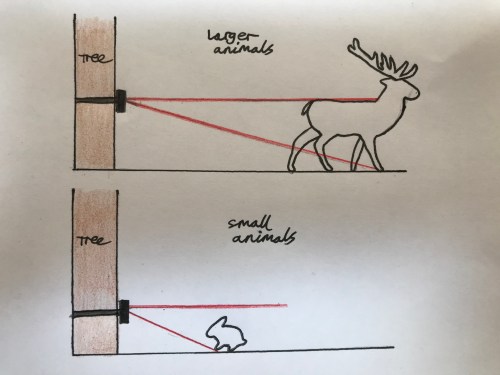
  4. Consider the height of the animal(s) you are trying to capture to increase detection and inclusion in the frame. For the best result, position your camera trap so it sits just below the target’s shoulder height.Camera Height
  5. Camera angle is as important as height when positioning the camera trap. For best result and to increase the detection range, you want the camera trap to aim horizontally at the subject. A stick is a great way to get a better angle for your camera. Camera angle
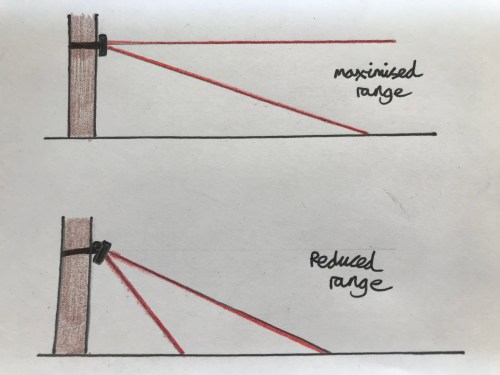
  6. Think about where you want the animal to be positioned in the frame. Larger animals are easier to detect so will be detected at longer ranges compared to smaller ones, and animals walking across the camera trap’s field of view will be more easily detected compared to walking towards it.Animal Position
  7. Try to reduce the number of false triggers by trimming back vegetation that could trigger the camera if moving in the wind. Do not remove enough to disturb your intended subjects though!
  8. And always do your research! The more you know about a site or species, the more likely you will get results.

Inspiration for camera trap sites and uses

Over the few years I have owned my own camera trap, I have used it for a number of different purposes and in a variety of locations. Here are some examples of my own work to help inspire you:

  • Abroad – In 2017, I was lucky enough to spend 2 weeks in Costa Rica on a field course for my Bachelor’s degree, and so I decided to take my camera trap along with me. This allowed me to get some cool sightings of some interesting wildlife

M2E43L24-32R350B300

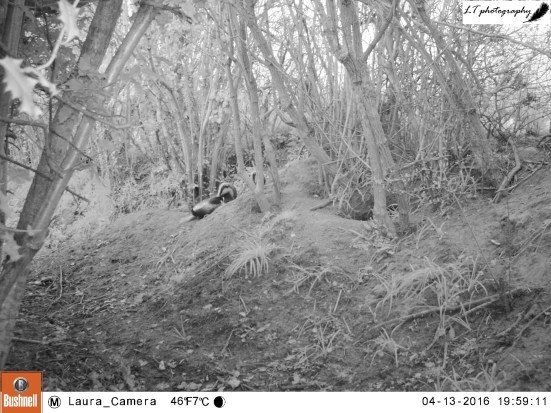
  • Badger setts – A popular choice for a camera trap site is at a badger sett. With 3 established badger setts on my family’s land, I have previously had all sorts of interesting results by observing setts in this way. In particular, it has always been great to see how different species cohabit such locations.
M2E40L17-25R350B300

M2E54L167-167R388B312

M2E54L172-172R388B317

  • Paths – A great place I have found to put my camera trap is on an enclosed footpath on our land. This is because the path, fondly known as Badger Alley, is bordered either side by hedges, is in the vicinity of used and disused badger setts, and is frequently used by wildlife but infrequently by humans. Always be aware of how safe a camera trap may be on footpaths though!

M2E43L126-126R396B311

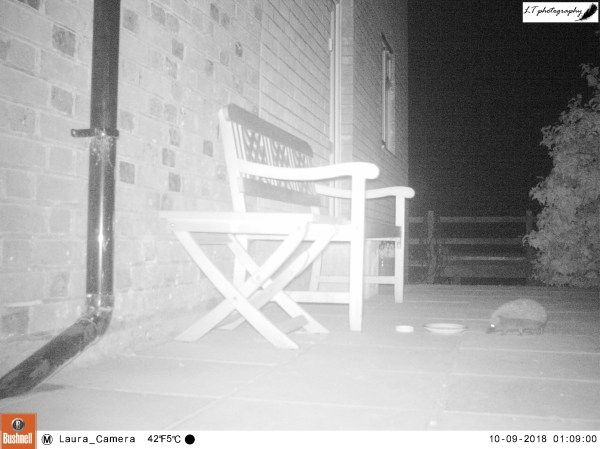
Garden – One of my all time favourite projects I used my camera trap for, was to get photos of our own special garden visitor in October 2018. I love getting to see the wildlife that is truly on our doorstep!
M2E1L0-8R350B300

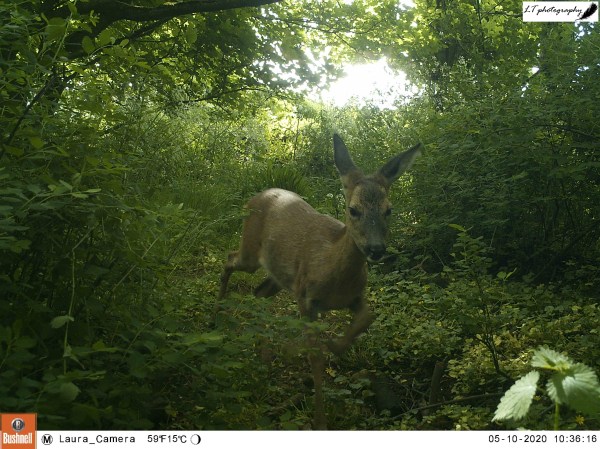
  • Woodland – I have previously found that a woodland can be an interesting place to capture wildlife. The result can often be unexpected or interesting, with less of an idea of what might turn up.
M2E51L160-159R390B314

Animal trail – Another great way to try and capture the wildlife that is in your local area is to find and set up your camera trap on a well used animal trail. It is interesting to find out what animals are actually making those tracks!

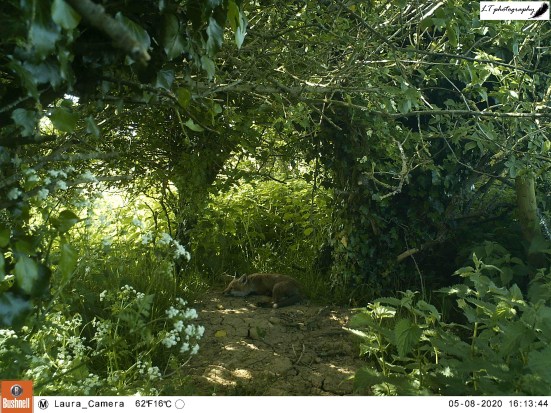
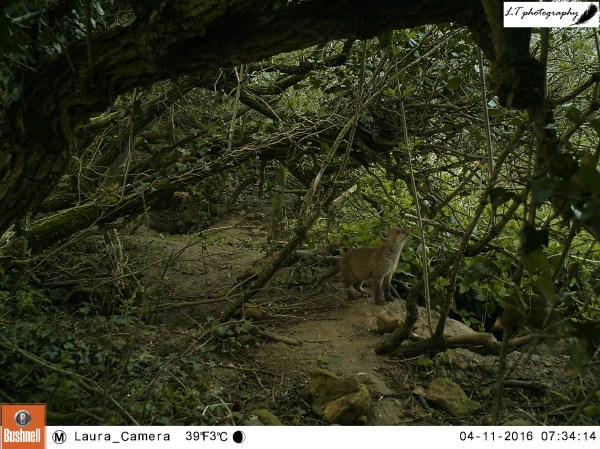
Specific animals – Often when camera trapping, you want to capture a specific animal, which leads to research and setting up the camera trap in a position where this animal has been sighted. Relating to this, my other favourite camera trap project has been to capture fox cubs above ground and to observe their behaviour. This has resulted in many cute photos over the years!
M2E31L60-60R392B300

Now it’s your turn! Even if you do not own/want to own a camera trap, there are always ways around it, for example why don’t you see if you can borrow one from somewhere or someone.

Though camera trapping does not always go to plan, the results can be truly satisfying. Time to see what you can find!

For more camera trap action, check out my blog post from last year called: Spring Countryside Camera Trap Surveys
Kingston Lacy’s Spectacular Snowdrops

‘We all want quiet. We all want beauty… We all need space. Unless we have it, we cannot reach that sense of quiet in which whispers of better things come to us gently’ (Octavia Hill, 1883, Co-founder of the National Trust)

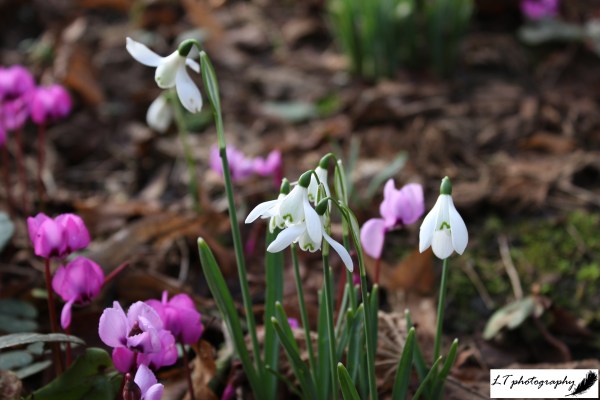
One brisk, but sunny day at the beginning of February, I found myself surrounded by carpets of brilliant white. Looking closer, I could see thousands of delicate flowers, nodding in the breeze like flurries of snow, shaped like bells or little fairy skirts. Here the effervescent snowdrops become a real spectacle at this time of year, shouting loud that the brighter days of spring are on their way.

086A2805

With my parents by my side, I had decided to spend my day off exploring Kingston Lacy, a beautiful National Trust estate famous for its incredible annual snowdrop displays. I was really looking forward to this trip, after a long spell of being very busy with work and other projects. It was a time for me to just pause and take a breather in a really breathtaking location.

086A2847

We began our day out by passing through the heart of Kingston Lacy, passing by the old stable block, and heading out onto the estate’s approximately 4.7 kilometre woodland trail, made up of established footpaths and historic carriageways. Our start wound us first through a stretch of native deciduous woodland, an area of currently skeletal trees alive with early birdsong.

Habituated to the presence of visitors walking through, we got some really great close-up views of the residents, including red-breasted robins and serenading song thrushes.

The woodland was also sprinkled with human touches here and there, from benches made from old tree trunks to archways of woven hazel. A lovely stretch to hide away from the world, at least for a little while!

086A2764

We did not just pass through woodland though. Our journey also took us past Blandford lodge near the entrance to Kingston Lacy, across boardwalks over marshland, and through rolling parkland, dotted with trees varying magnificently in size, species, age and skeletal form. It is quite incredible to think what some of those trees will have lived through in the history of this estate!

086A2777

As well, our path took us past the magnificent Kingston Lacy house, a ‘family home reimagined as a Venetian palace’. Though the estate dates back to the medieval times, the first form of the current house was completed in 1667. It went on to be the home of the Bankes family for over 300 years, before being bequeathed to the National Trust in 1981. Though on this February day we did not venture into the house, it is well worth a visit, with the rooms decorated like pieces of art and treasures ranging from ancient Egypt to the Spanish Peninsular War.

As the hours drew on and the sun made its way across the winter sky, our path took us back past the old stables and in the direction of Kingston Lacy’s gradens. Here today’s real magic was to be found. We finally made our way into a world where snowdrops created carpets of snow around us. Stretching along avenues of pollarded trees, across woodland glades, around winding bends, and even nestled within the impressive Japanese gardens.

The pearly white of snowdrops was made bolder by the pinks of cyclamens, purples of irises and crocuses, and cream and maroon of helibores.  Seeing something small on such a scale, over 6 million to be precise, is a sight to behold. First planted in the early 1900s, with now over 40 different species, Kingston Lacy’s snowdrops will be a legacy for future generations to come.

Kingston Lacy is such a lovely place to escape for those of us who like history, nature or just getting outdoors. Throughout the year they have a range of different events, from their snowdrop walks and Easter egg hunts to summer outdoor yoga and outdoor theatre/cinema that will keep you coming back time and time again, as i have over the last couple of months. For now here’s to the snowdrops, the promising pioneers of the new season to come. Pure, hopeful and the symbol of rebirth, snowdrops are the delicate, effervescent heralds of spring.

A Wild Adventure to Richmond Park

In a green oasis surrounded by urban jungle, ancient trees stand as sentinels. They have watched over this space for centuries, watching as time and history passes by. Some have even stood in this spot for over 800 years, growing taller whilst a wall was raised, royals hunted deer, and a city grew up around its edges. As a busy metropolis hums and pulses at its borders, this park rolling on for 2,500 acres, has lain timeless for centuries. It now continues to capture the hearts and minds of the millions of visitors that step through its walls every year.

IMG_0033

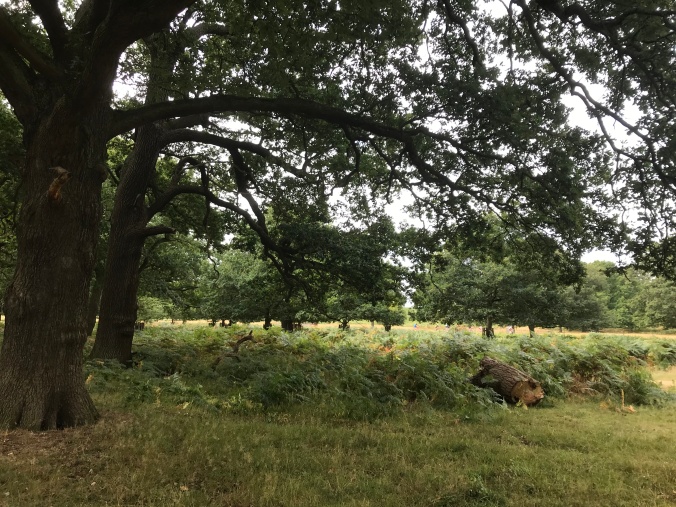
Nestled in the south-west of London, Richmond Park stands as London’s largest Site of Special Scientific Interest and a Grade One Heritage Landscape, with even the Royal Ballet School and a royal residence within its walls. This impressive park first came to my attention last year when I was given the book ‘Park Life: The Memoirs of a Royal Parks Gamekeeper’ written by John Bartram. This book recounts the author’s 30 years working and living within the bubble of Richmond Park. Sparking my imagination, it was his story that inspired in me the desire to make my day trip to his beloved Richmond.

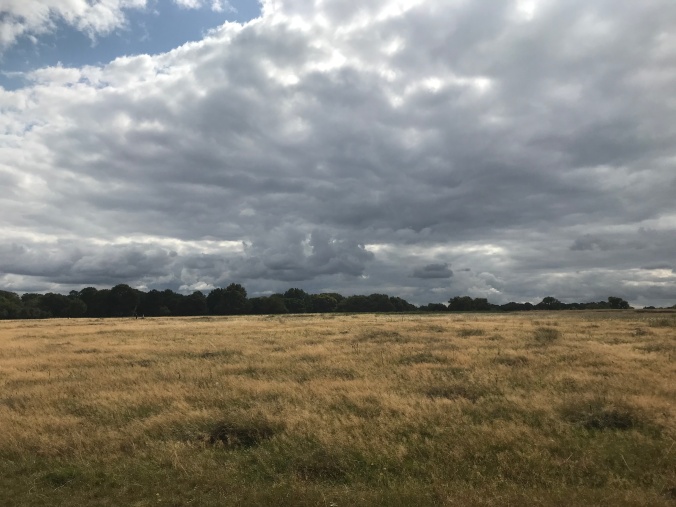
On a hot, but grey autumn day in early September, I made my trek to Richmond Park, with the company of my aunt by my side to guide my path. Starting at the Roehampton Gate in the north-east of the upside-down pentagon-shaped park, we set a route to allow us to take in a range of beautiful habitats, incredible wildlife and the character of this impressive landscape.

IMG_0035

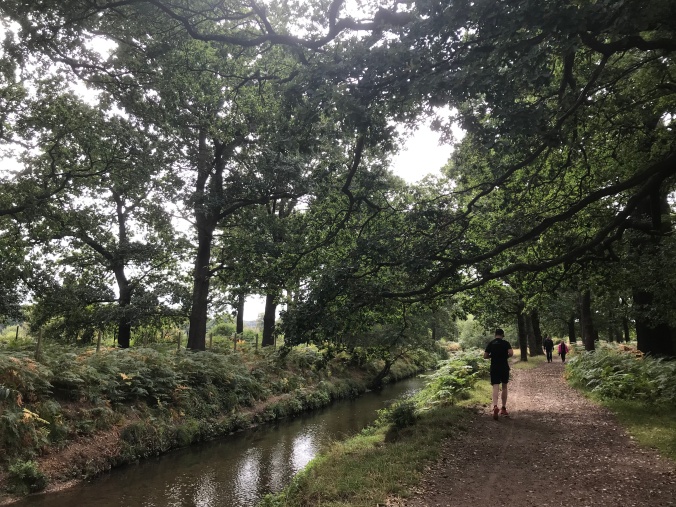
Our first steps took us south, hugging the 2km of river that winds down the east side of the park, known as the Beverley Brook. This river for a time became our birdwatching paradise, filling us with excitement with every stretch. We saw everything from a family of long-tailed tits feeding, fish swimming in the shallows, a spotted flycatcher doing its iconic hunting routine, and a bedraggled juvenile kestrel, to a pair of resting mandarin ducks, a tree creeping tree creeper, the flash of yellow of a chiffchaff, and a grey wagtail wagging. With around 100 bird species having been recorded in the park, we could not wish for more fantastic species to start our walk.

IMG_0045

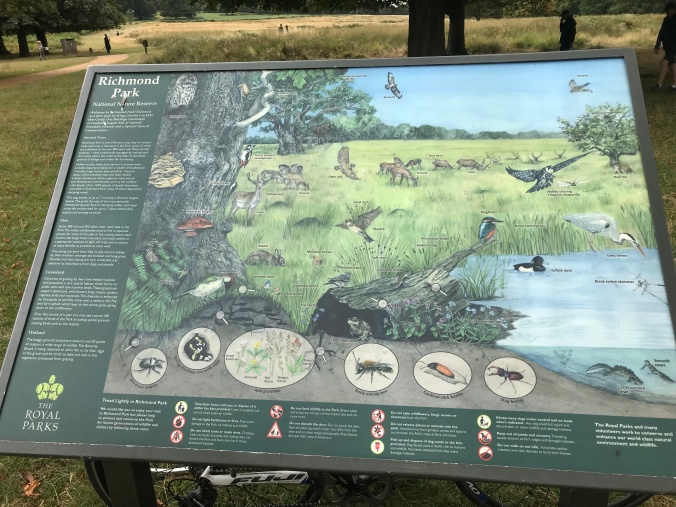
Moving on from the river, we then headed into the heart of the parkland. With Richmond also being a Special Area of Conservation, the park is home to over a thousand ancient trees; over 1300 species of beetle including iconic stag beetles; at least 9 species of bat; and a range of habitat types including acid grassland, bogs, and 30 ponds. It is truly an incredible space that feels isolated from the rest of the outside world. With every step you can spot another butterfly species, discover a whole host of plants, spot a range of bird species from green woodpeckers to wheatears, and simply escape everyday life.

IMG_0054

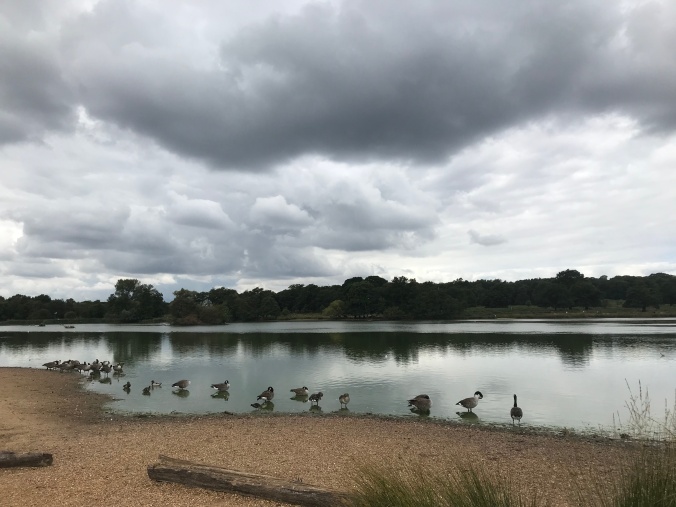
Our journey through the park also took us through the middle of the Pen Ponds which were filled with a myriad of bird species. This ranged from coots to black-headed gulls, tufted ducks to greylag geese, and moorhens to little egrets. With drama unfolding in front of us with every sight, we got to see gulls mobbing late nesting grebes, ducks competing for food, and birds flying low overhead, whilst getting the closest views of great-crested grebes that I have ever had!

IMG_0047

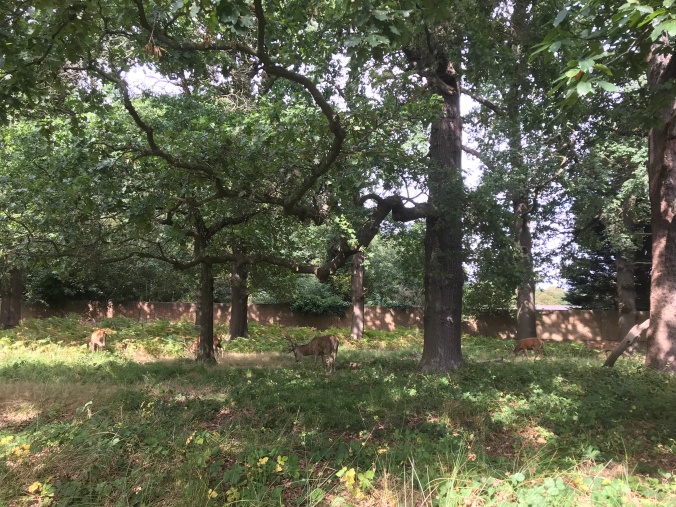
Though Richmond Park is home to many amazing species, it is the majestic beasts with sleek coats and antlers standing heavy on their heads, that are the star attraction for millions of visitors each year. The Park is home to about 300 red and 300 fallow deer, and these deer are most popular during their impressive autumn spectacle of rutting. Of course during my journey through the park, my aunt and I came across many of the red deer impressive with their bare antlers, and watched them in awe from a far. These deer were very much a main part of John Bartram’s 30 years in Richmond Park as a Park ranger.

IMG_0056

As I neared the end of my adventures in Richmond Park for one day, it was evident that though my few hours of escapism were great, you could also easily lose yourself in Richmond Park for days, or in the case of John Bartram, years. It was easy to understand how he spent 4 decades hidden away working and living within this park. Its a place which has something for everyone, with everything from open space and incredible landscapes to amazing wildlife and cafes! For me, seeing 44 species of bird in a short space of time was my highlight. When beautiful places such as this can be found on your doorstep, what more could you want?

Spring woodland walking: My Local Woods

19_04_19_Horseshoe_Wood_Bluebells_26As the weather gets warmer and drier during spring and the countryside begins to bloom, I always like to set myself the goal of getting out into it as much as possible. I like to use these countryside walks as a way to calm my own mind and escape the stresses of modern day-to-day life. In particular, I am always drawn back to the woodlands and forests, with the tranquillity they breath to me. Growing up in Dorset I have always been able to disappear into the trees and appreciate such a habitat at any time of year.

19_04_19_LogIn celebration of my love of the woods, especially during springtime, over April and May this year, I made 4 visits to one of my local ones to observe it as the season changed. On these trips I sat and wrote down my experience on my favourite log (see photo above), and took lots of photos with my new DSLR camera whilst walking through the woods. Check out below to see my diary entries and the photos that accompany them:

1: Signs of spring

  • Date: Friday 12th April
  • Time of day: Mid-morning
  • Highlight: Seeing the first bluebells emerging in the woods

Today I made my first trip of the year to my local woods, walking across the countryside to get there. The sun is shining down upon me in its glorious spring style, but it has to be said that there is still a chill on the breeze.

12_04_19_Horseshoe_Wood_Bluebells_21

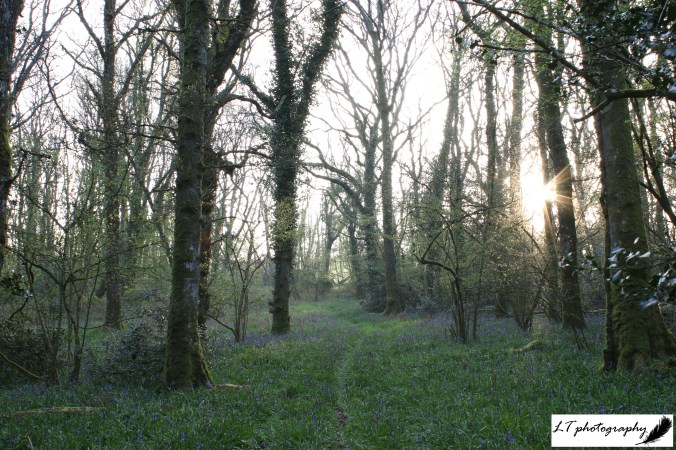
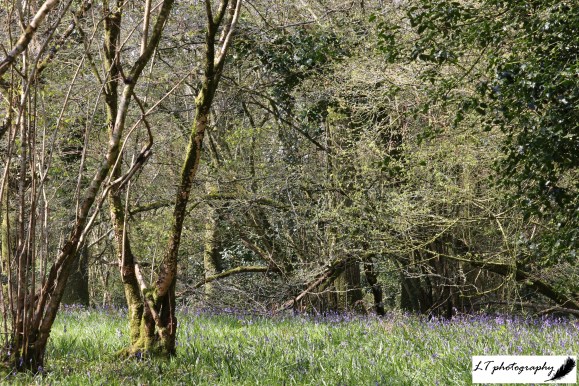
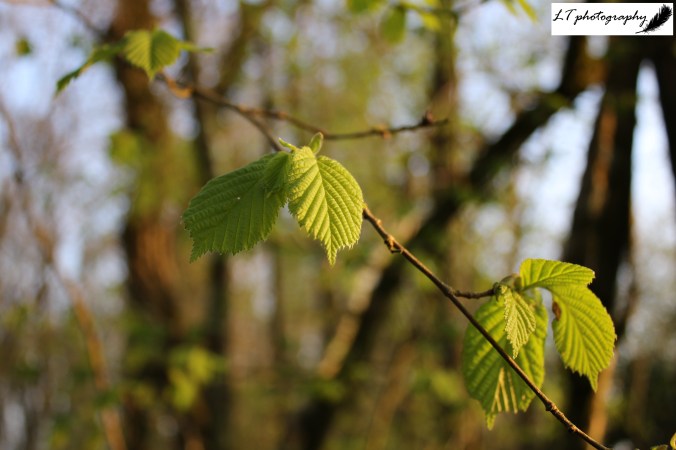
The woods are noticeably just beginning to take on their spring splendour with the woodland floor coming to life. Bluebells are starting to flower, wood anemones are dotted here and there, and celandines, primroses and stitchwort are spreading through the undergrowth. The hazel trees are coming into leaf, as are the oak trees, with small soft bunches of leaves hanging above my head. Everything is now lush and green, with winter now being fully forgotten.

12_04_19_Horseshoe_Wood_Hazel_5Spring bird calls and song provides the soundtrack to my trip, including everything from groups of foraging long-tailed tits to angry blue tits and charismatic chiff chaffs. I also hear the reminiscent winter squabbling of jays, and on a stop to my favourite log in the middle of the wood, I can hear the coarser call of a raven and the calls of male pheasants.

When turning my eyes to the ground around me, it becomes apparent that the undergrowth is full of bees and flies buzzing between the flowers, the most notable being furry bee flies. Looking at the undergrowth around me, it does make me think how if you just stop for one moment and take in your surroundings, you will always find that everything is alive around you.

12_04_19_Horseshoe_Wood_Bee_Fly_6

When sat in this wood, I feel away from all the hub bub and stress of everyday life. It gives me the opportunity to see this world through the glass of a lens, whilst still getting excited about everything new I see. Thus, I believe everyone should have the opportunity to have their own escape into nature, such as amongst the trees, flowers and wildlife, to be able to recharge and refresh.

2: Sunrise start

  • Date: Friday 19th April
  • Time of day: Early morning
  • Highlight: Sunrise

19_04_19_Farm_Sunrise_9This morning I chose to get up at 5am to meet a 6.08am sunrise, and to make the most of the dawn light. At this time of day, on my walk to the woods, I had great sightings of roe deer and brown hare, and got to see a beautiful pink sunrise. The dewy grass added to my photos in this glorious light.

The wood definitely did not disappoint, blanketed in the warm golden tones of dawn. The sunlight falling through the trees was spectacular, especially at this time of year when a mix of well known flower species carpet the woodland floor. I was also greeted by the dawn chorus in full swing, with great tits, robins, blackbirds and lots more adding their voices to the mix.

19_04_19_Horseshoe_Wood_Hazel_819_04_19_Horseshoe_Wood_Stitchwort_4Snow white garlic flowers are now emerging in the wood, whilst early purple orchids are also beginning to sprout here and there. The bluebells are now starting to create a sea of blue, with their white counterparts dotted here and there amongst them. Soon the woods will be fully awash with purply-blue and patches of white.

19_04_19_Horseshoe_Wood_Bluebells_White_2You can definitely forget yourself among these trees, flowers and wildlife, which this morning included the bark of grey squirrels up in the tree canopy. Today, I have stayed awhile sat in the morning light of the woods, but I now know to make my way home from  here, as the sun begins to burn through the trees a little too hot, and the midges begin to bite my neck more noticeably. This signals ‘the best part of the day has thus moved on’, as i must.

3: Walking with a four-legged friend

  • Date: Friday 10th May
  • Time of day: Morning
  • Highlight: The company of my dog Cassie

10_05_19_Horseshoe_Woods_Cassie_2On my trip this time to the woods, I took my four-legged friend Cassie. At the ripe old age of 13, she is becoming weary on her legs, but is still up for an adventure. This is great as there is nothing better than sharing the wonder of the outdoors with another being, even if they are no more than 3 feet tall.

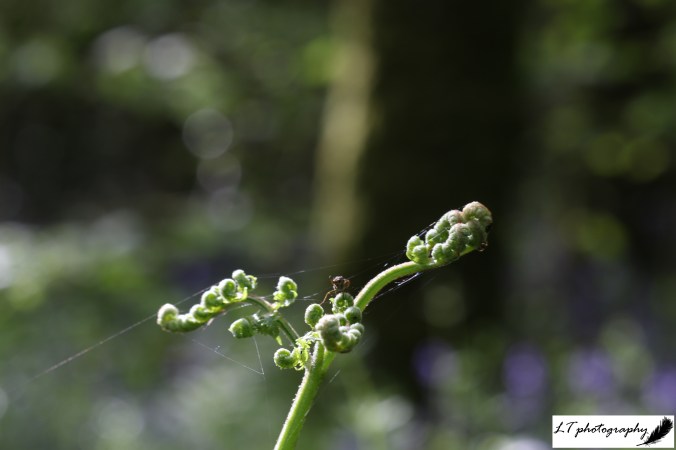
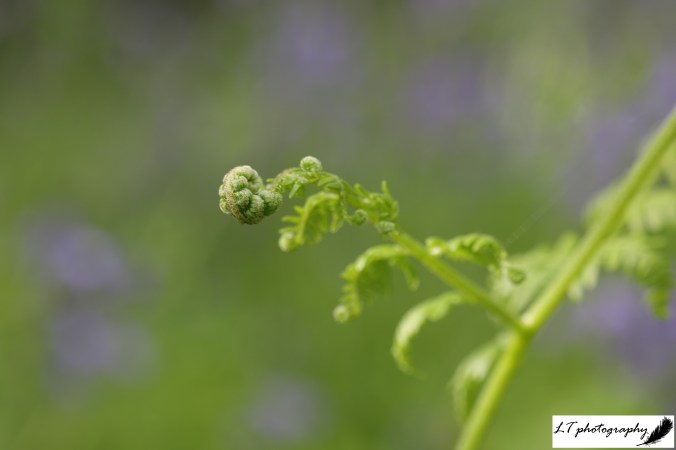
By this time, the woods are now dressed in light green leaves of varying shapes and sizes. The woodland floor is also becoming rich with vegetation. My favourites, the bluebells, are now beginning to go over, with their best time being a week ago. Though the thought of the end of this year’s bluebells makes me sad, I also find that there is something beautiful in seeing their fading colour and shrivelling bell-shaped flowers. Instead they are being replaced by the unfurling of fern fronds and a carpet of green. Now the orchids are out in full force , as are the flowers of wild garlic, yellow archangel, and dainty pink herb robert.

10_05_19_Horseshoe_Woods_Fern_4

10_05_19_Horseshoe_Woods_Fern_5

The birds still sing in full force, with the usual suspects in place, but now they are joined by the caws of rooks and chatter of jackdaws. The woodland floor is now also full with the noise of flying insects buzzing between the flowers in all their shapes and sizes. For my canine friend and myself, the woods are still giving us endless pleasure as the season rolls on.

10_05_19_Horseshoe_Woods_Dandelion_Seeds_4

4: The death of spring

  • Date: Saturday 25th May
  • Time of day: Afternoon
  • Highlight: The changing of the season

25_05_19_Outside25_05_19_Horseshoe_Wood_Roe_DeerThe days are getting hotter and the sun higher in the May sky. In the depths of the wood though, the canopy keeps me cool. The woodland floor is now a tangle of unruly vegetation. The dying bluebells, orchids, and spring flowers jostle with unfurling ferns, sticky goose grass and flowers that persist. These include stitchwort, herb Robert, and red campion, which are gems of colour in a sea of green.

25_05_19_Horseshoe_Wood_Common_Spotted_Orchid_3

Looking up, hazel leaves make a blanket of lace above my head as the work of busy invertebrates is now noticeable by this point. On the ground, brown speckled wood butterflies flit, flies still buzz, and bejewelled light green beetles fall on me as they dive bomb from the trees.

25_05_19_Horseshoe_Wood_Speckled_Wood_Butterfly_7Ash trees are finally fully in leaf and roe deer ramble lazily between the trees around me. Though this transition period may be more subtle than others, it truly signifies the changing of the seasons, as the important time for some species is replaced by the next. Thus, summer has now crept up on us!

How the woodland made its transition


25_05_19_No.1


25th May

Spring at RSPB Radipole Lake and RSPB Lodmoor

When asking people what they like to do most during spring, answers range from watching Springwatch and doing wildlife gardening to listening to the dawn chorus and taking in wildflowers in our local green spaces. Though I do like doing all these things too, one of my favourite things to do during the spring season is to visit two of my favourite nature reserves in search of some of my top bird species.

Radipole lake nesting mallards

By getting out to local reserves, we are supporting the work of organisations such as the RSPB, immersing ourselves in the wildlife that call these reserves their home, and improving our own health and wellbeing at the same time. Take a look at my recent adventure and see if you may be inspired to visit one of your local nature reserves as spring rolls into summer!
Saturday 11th May 2019

I was first introduced to Dorset’s RSPB Radipole Lake and Lodmoor 5 years ago by my Granddad whilst on a birdwatching trip, and since I have visited many times and have even completed an internship at the reserves with the RSPB. This means I am well acquainted with Radipole and Lodmoor (2 of the 5 RSPB nature reserves found in Dorset) and they hold a special place in my heart.

For those of you who will not have heard of these nature reserves before, I will just start with a few facts about the two:

Radipole Lake

  • 21.3 miles from my homeRadipole lake urban swan
  • 83-hectares in area
  • Designated SSSI (Site of Special Scientific Interest)
  • Managed by the RSPB since 1976
  • Habitats: wetland, hedgerow, scrub, reedbeds, saline lagoons
  • Star species: kingfisher, marsh harrier, bearded tit, Cetti’s warbler

Lodmoor

  • 21.5 miles from my homeLodmoor reedbed
  • 76-hectares in area
  • Designated SSSI
  • 1.5 miles east of Radipole
  • Connected to the sea under a sea wall at the southern end
  • Habitats: freshwater reedbed, scrub, saline marsh
  • Star species: marsh harrier, bearded tit, Cetti’s warbler, common tern

What makes these two reserves extra special for me though, can be split into two parts. Firstly, they are both situated in less conventional locations than many other nature reserves, being found at the centre of the busy seaside town of Weymouth. Thus, when you step into these reserves and surround yourself with the reeds and wildlife, you would not believe that you are situated within the heart of an urban area. In this way, they are both oases for a range of wildlife and for the naturalists that visit them.

Secondly, they are both year-round homes for one of my favourite species of bird of prey, the majestic marsh harrier. I did not know that they could be found on my doorstep until my first visit to the reserves, so their discovery for me a few years back brought with it lots of excitement. Consequently, it is one of the greatest draws for me when visiting these reserves at any time of the year.

Discovery centre marsh harrier mural

So, on a sunny day in May this spring, I headed to the reserves alongside my birdwatching partner in crime, my mum, to hunt down marsh harriers during their breeding season, whilst taking in other species and a range of habitats.

Adventure with my mum


RSPB Radipole Lake Nature Reserve

Discovery centre radipole lake map

Most trips to the reserves start in the public car park outside the RSPB’s Weymouth Discovery Centre and next to the bridge into Radipole Lake Reserve. This setting feels a lot more like an urban area than a home to wildlife.

Radipole lake pigeons

Once you cross the wooden bridge from the car park into the reserve though, you are suddenly transported into a world of water, reeds, sky and trees. You are also hit by a cacophony of bird sounds ranging from species commonly heard in our gardens to water birds and warbler species, such as the sound of the noisy and distinct Cetti’s warbler. If it was not for the houses that can be seen above the reeds in the distance though, you could probably forget the reserve’s urban setting all together!

Radipole lake reeds

When my mum and I crossed the bridge we also found ourselves on a hard surface trail that gives easy access around the reserve. Starting at the discovery centre, we then followed it round the main circular discovery walk, stopping to spot birds in the trees along the sides of the trail, to identify plant species, and to look out across the reeds and open water from the main viewing platforms and spots around the reserve. In this way, we were able to pretty quickly rack up our species list and to get some great views of wildlife.

Radipole lake long-tailed tit
Radipole lake female mallard

Radipole lake dunnock

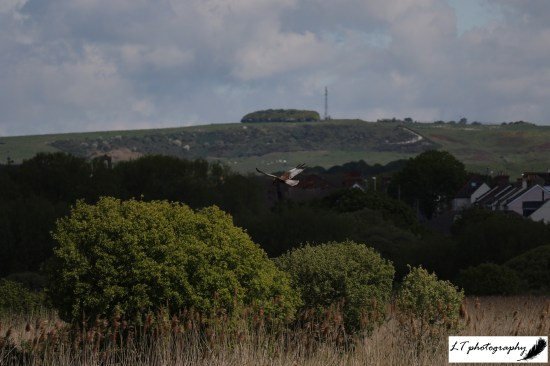
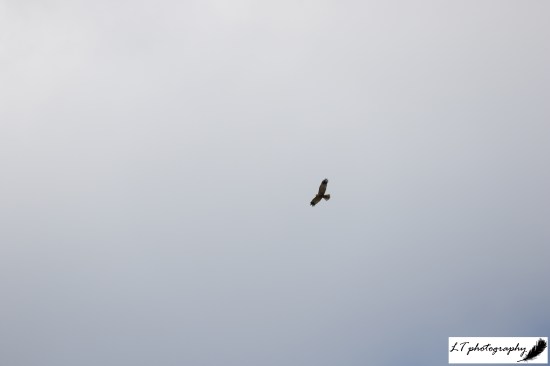
My highlight of the trip to Radipole though, unsurprisingly included my star species, the marsh harrier. This began earlier on in our walk around the reserve, when my mum and I first caught a tantalising view of a male marsh harrier flying above the reeds, hunting in the distance. This made us then even more motivated to try and get a closer view of marsh harriers on this day, by heading off the main discovery trail and on to the north trail, to visit one of the best spots to watch these birds. Sat at a viewing screen in the sunshine, hot drinks and biscuits in hand, our luck paid off and we had the pleasure of enjoying one of our best ever hours watching marsh harriers at the reserve.

Following a short wait, the hour started with my mum spotting our earlier male marsh harrier hunting above the reeds, though still a good distance away from where we sat. We watched him through binoculars for a little while, before he disappeared from our view.

This sighting from the viewing screen was not our last though. After a longer wait, our viewing experience was suddenly taken up a notch. The same male that we had been watching previously suddenly popped up within 15 metres of the viewing screen, giving us amazing views of him. He then gave us a real show hunting and flying backwards and forwards in front of us before flying higher and higher till he was directly above our heads. This allowed us to really experience this bird in action and gave me the opportunity to at least try and photograph him in his natural habitat. We only made our own departure from the reserve once the male had finally moved off once again.

Radipole lake marsh harrier

Radipole lake marsh harrier 2

Radipole lake marsh harrier 3

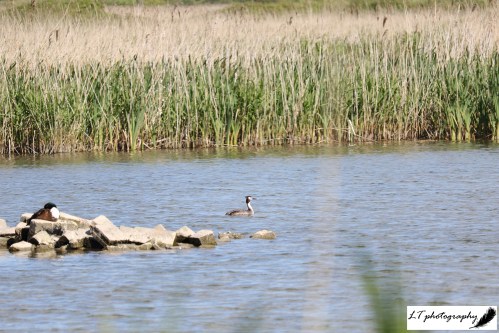
From our couple of delightful hours on this reserve, we counted 30+ bird species, with our top 6 being:

  1. Cetti’s warbler
  2.  Swift (first swifts of the year)Radipole lake swifts
  3. Great-crested grebe
    Radipole lake great-crested grebe
  4. Marsh harrier 
  5. Little grebe
  6. Sedge warbler

Other photos:

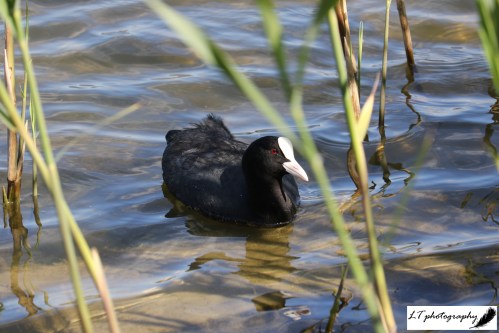
Radipole lake coot

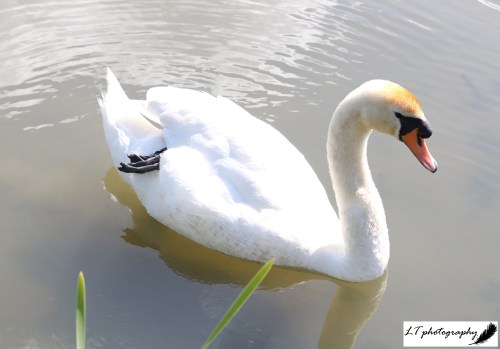
Radipole lake mute swan


RSPB Lodmoor Nature Reserve 

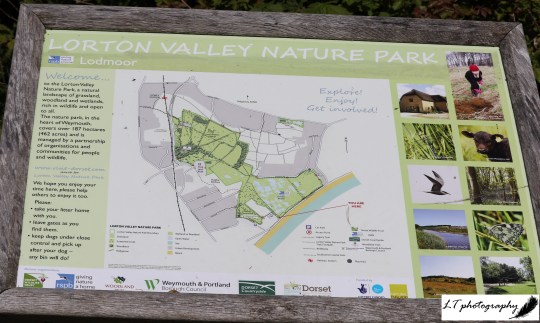
Lodmoor map

On this day in spring, following a stop for lunch sat on the seafront in the glorious sunshine, my mum and I chose to park at Weymouth’s public Overcombe car park on the eastern side of Lodmoor nature reserve. From here we planned to walk a clockwise loop around the reserve’s main trail and see what species we could see that call the reserve their home.

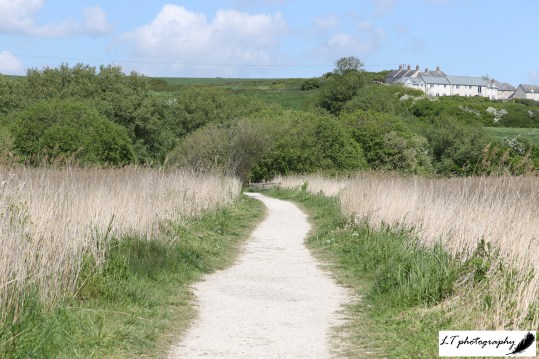
Lodmoor reed trail

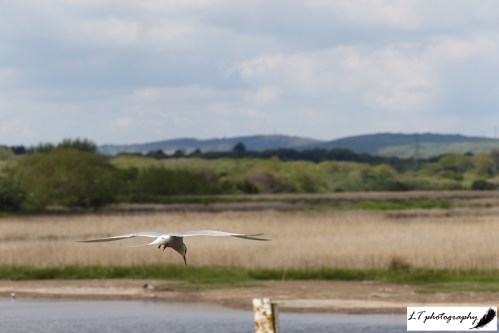
In this way we first walked along the main road that borders the southern side of the reserve and splits Lodmoor from the seafront, stopping at breaks in the reeds and hedges to see what birds we could see on the marsh area. On one of these stops, we finally got to take in one of Lodmoor’s star species, breeding common terns. At the reserve, islands in the lagoons/marsh are managed each year to provide areas for the terns to breed safely away from many predator species. In sight of these islands, we got some really fantastic views of the terns hunting over the water.

Lodmoor commen tern nesting islands

Lodmoor Common tern 2

Though most of the best areas for birdwatching are situated along the side of the main road and near the tern nesting islands, my mum and I of course continued our walk on the main trail around the reserve, taking in as many species as we could. Unfortunately, this year we did not catch any sightings of the marsh harriers that can be found breeding at this site, but the reserve still did not disappoint us. In particular, we spotted 24+ bird species, with our top 6 sightings being:

  1. Oystercatcher Lodmoor oystercatcher and shelducks
  2. Shelduck Lodmoor shelduck
  3. Bar-tailed godwit
  4. Black-tailed godwit
  5. Common ternLodmoor Common ternLodmoor Common tern 3
  6. Gadwall

Other photos:

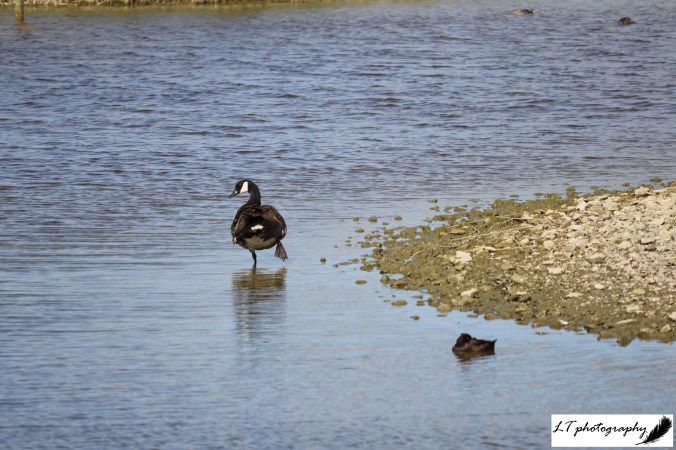
Lodmoor canada geese

Summary

My trip to the reserves may not be everyone’s cup of tea for a day out, but I had a thoroughly enjoyable day in the sunshine, spending time with my mum and being completely distracted from work and day-to-day life. I also got to take in some incredible flora and fauna, as well as a tranquil and vivid environment.

So how was my hunt for the marsh harriers? Though I did not get the pleasure of seeing marsh harriers at both reserves, watching the male at Radipole Lake for a long period of time felt like a real success. They are a striking species that I can easily pick out from others, and with birds of prey being my favourites, it is easy to see why I enjoy watching them so much.

The highlight of my trip obviously was the marsh harriers, but also was being able to spend the day doing something I love with one of my favourite people. We all should take a little time out of our busy lives to do things we enjoy and that uplift us, allowing us to take care of ourselves in the right way. Anything to do with enjoying spring outdoors does this for me and allows me to de-stress.

As I come to the end of this blog post, with the end of my trip, I do hope that I may have inspired you to take a trip to your local nature reserve, even if it is just to take a walk, see something new, have an adventure or appreciate your local plants and animals. Nature reserves are a free and easy form of entertainment for all, so why don’t you escape to one today?

Radipole Lake Canada Goose