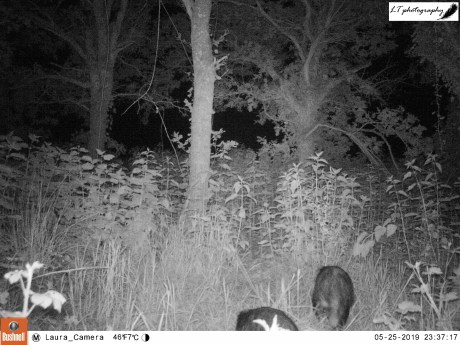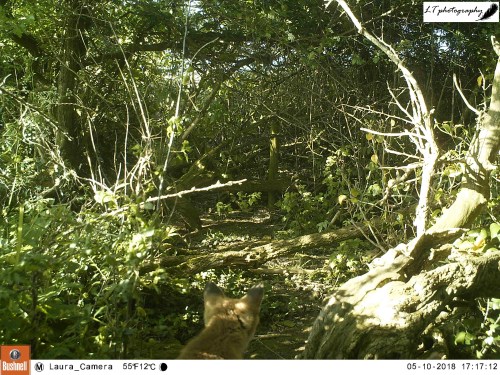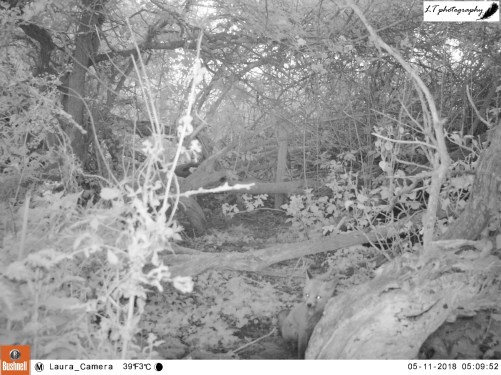
Barn Owls in the depths of Dorset

Floating above the ground on silent wings. A white ghost standing out against the murky dark of dusk. Swooping to a stop on a standing post. Watching, waiting, listening for a rustle in the grass, before moving on. The reticent guardian of twilight. – Original piece

A graceful and beautiful bird, the barn owl is one species that captures the hearts and the imaginations of people across Britain. Over the last century, barn owls have been on a rocky journey, showing a decline in numbers in line with agricultural improvement, before reaching stabilisation during the more recent decades. Though they are showing signs of adapting to our changing landscape, this iconic species still needs our help and protection.

The start of my very own relationship with barn owls began with the creation of this Wild World blog. During summer 2015, my earliest posts trace my first up close and personal experiences with barn owls, which at the time were breeding on my family’s land in Dorset. The two owls that feature in these posts met with tragedy though; a failed breeding attempt and mysterious disappearance. Despite a not quite expected outcome, summer 2015 was just the start of an ever growing love affair for my family and these majestic birds.

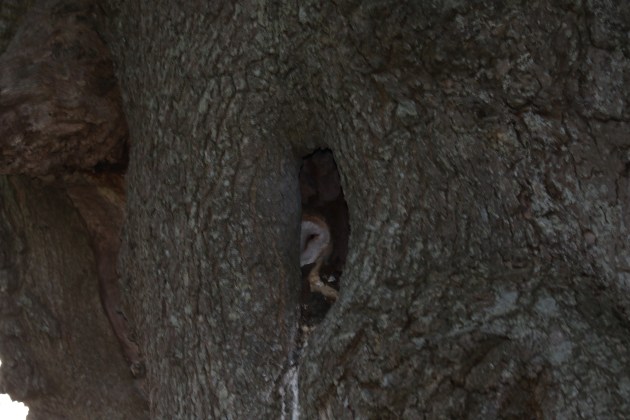
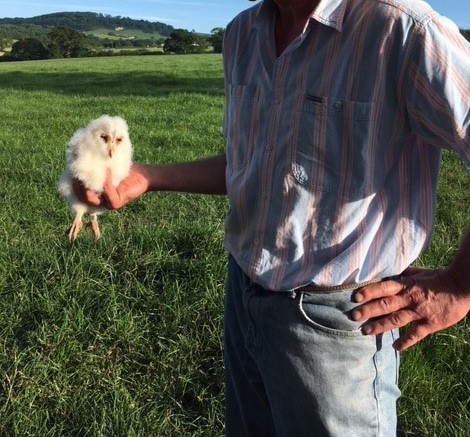
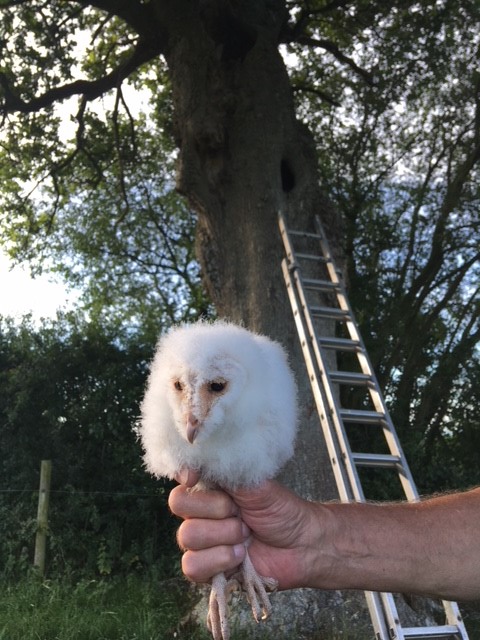
With my dad incorporating wildlife into his land management plans over the last decade, his work has now culminated in 2019 being the best year yet for barn owls on our land. We had not one, but two successful breeding pairs this year, with both fledging two chicks each, at about 2 weeks apart. One pair nested in our own barn owl box, whilst the other made their home in a hollow of a tree at the heart of our land.

086A2018

Excitingly, these breeding attempts also coincided with the Dorset County Council’s Barn Owl project. As a result fully licensed ringers approached us with the request of checking any barn owl nests on our land, which led to all four chicks produced this year being ringed. They can now importantly be a part of the conservation efforts for monitoring this species in the wild.

Barn Owl Chick

Owl chick from tree roost

Reflecting on this year with this incredible species, it is exciting to be able to now see how successful they have been in our area during 2019, gradually increasing in number. It is interesting to think now that maybe one day one of the ringed chicks could go on to nest on our land or in our area in the future, or even venture further afield. Here’s to the hope that our barn owl population will continue to thrive and be even more successful next year, and give us more heartstopping experiences! What will another 4 years bring?

Spring woodland walking: My Local Woods

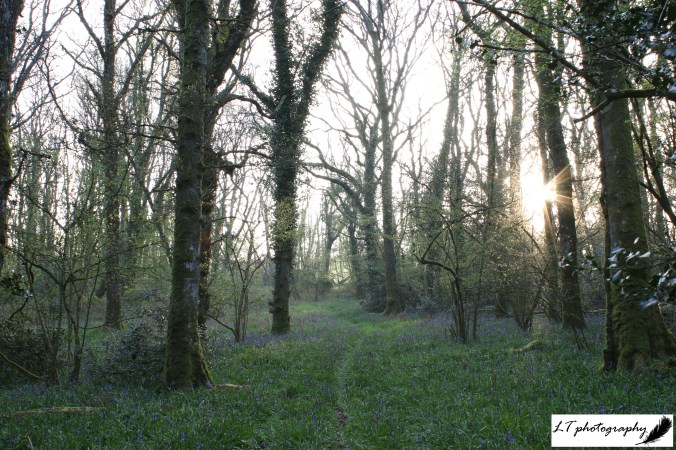
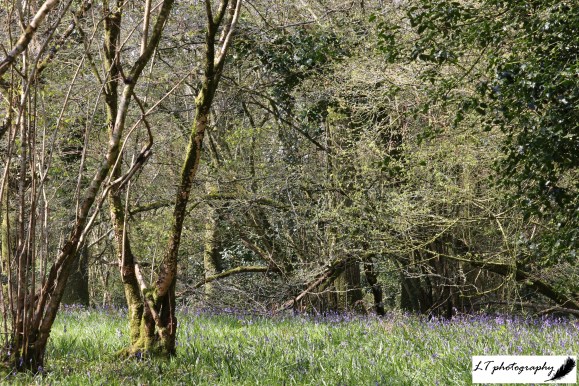
19_04_19_Horseshoe_Wood_Bluebells_26As the weather gets warmer and drier during spring and the countryside begins to bloom, I always like to set myself the goal of getting out into it as much as possible. I like to use these countryside walks as a way to calm my own mind and escape the stresses of modern day-to-day life. In particular, I am always drawn back to the woodlands and forests, with the tranquillity they breath to me. Growing up in Dorset I have always been able to disappear into the trees and appreciate such a habitat at any time of year.

19_04_19_LogIn celebration of my love of the woods, especially during springtime, over April and May this year, I made 4 visits to one of my local ones to observe it as the season changed. On these trips I sat and wrote down my experience on my favourite log (see photo above), and took lots of photos with my new DSLR camera whilst walking through the woods. Check out below to see my diary entries and the photos that accompany them:

1: Signs of spring

  • Date: Friday 12th April
  • Time of day: Mid-morning
  • Highlight: Seeing the first bluebells emerging in the woods

Today I made my first trip of the year to my local woods, walking across the countryside to get there. The sun is shining down upon me in its glorious spring style, but it has to be said that there is still a chill on the breeze.

12_04_19_Horseshoe_Wood_Bluebells_21

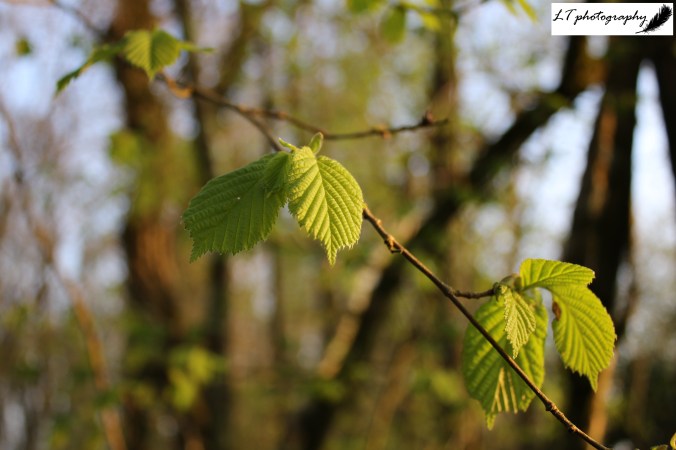
The woods are noticeably just beginning to take on their spring splendour with the woodland floor coming to life. Bluebells are starting to flower, wood anemones are dotted here and there, and celandines, primroses and stitchwort are spreading through the undergrowth. The hazel trees are coming into leaf, as are the oak trees, with small soft bunches of leaves hanging above my head. Everything is now lush and green, with winter now being fully forgotten.

12_04_19_Horseshoe_Wood_Hazel_5Spring bird calls and song provides the soundtrack to my trip, including everything from groups of foraging long-tailed tits to angry blue tits and charismatic chiff chaffs. I also hear the reminiscent winter squabbling of jays, and on a stop to my favourite log in the middle of the wood, I can hear the coarser call of a raven and the calls of male pheasants.

When turning my eyes to the ground around me, it becomes apparent that the undergrowth is full of bees and flies buzzing between the flowers, the most notable being furry bee flies. Looking at the undergrowth around me, it does make me think how if you just stop for one moment and take in your surroundings, you will always find that everything is alive around you.

12_04_19_Horseshoe_Wood_Bee_Fly_6

When sat in this wood, I feel away from all the hub bub and stress of everyday life. It gives me the opportunity to see this world through the glass of a lens, whilst still getting excited about everything new I see. Thus, I believe everyone should have the opportunity to have their own escape into nature, such as amongst the trees, flowers and wildlife, to be able to recharge and refresh.

2: Sunrise start

  • Date: Friday 19th April
  • Time of day: Early morning
  • Highlight: Sunrise

19_04_19_Farm_Sunrise_9This morning I chose to get up at 5am to meet a 6.08am sunrise, and to make the most of the dawn light. At this time of day, on my walk to the woods, I had great sightings of roe deer and brown hare, and got to see a beautiful pink sunrise. The dewy grass added to my photos in this glorious light.

The wood definitely did not disappoint, blanketed in the warm golden tones of dawn. The sunlight falling through the trees was spectacular, especially at this time of year when a mix of well known flower species carpet the woodland floor. I was also greeted by the dawn chorus in full swing, with great tits, robins, blackbirds and lots more adding their voices to the mix.

19_04_19_Horseshoe_Wood_Hazel_819_04_19_Horseshoe_Wood_Stitchwort_4Snow white garlic flowers are now emerging in the wood, whilst early purple orchids are also beginning to sprout here and there. The bluebells are now starting to create a sea of blue, with their white counterparts dotted here and there amongst them. Soon the woods will be fully awash with purply-blue and patches of white.

19_04_19_Horseshoe_Wood_Bluebells_White_2You can definitely forget yourself among these trees, flowers and wildlife, which this morning included the bark of grey squirrels up in the tree canopy. Today, I have stayed awhile sat in the morning light of the woods, but I now know to make my way home from  here, as the sun begins to burn through the trees a little too hot, and the midges begin to bite my neck more noticeably. This signals ‘the best part of the day has thus moved on’, as i must.

3: Walking with a four-legged friend

  • Date: Friday 10th May
  • Time of day: Morning
  • Highlight: The company of my dog Cassie

10_05_19_Horseshoe_Woods_Cassie_2On my trip this time to the woods, I took my four-legged friend Cassie. At the ripe old age of 13, she is becoming weary on her legs, but is still up for an adventure. This is great as there is nothing better than sharing the wonder of the outdoors with another being, even if they are no more than 3 feet tall.

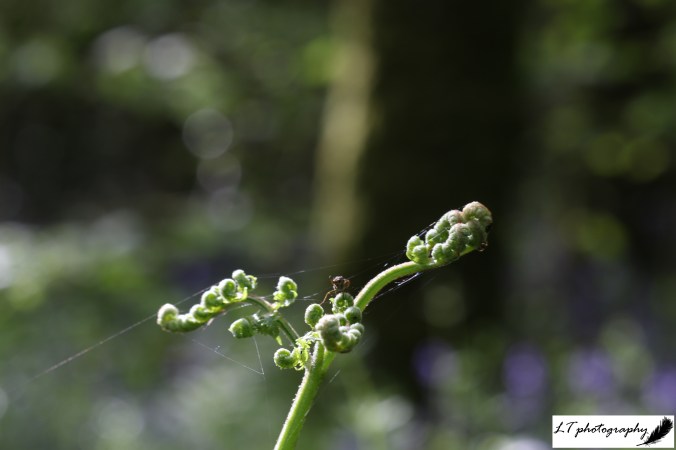
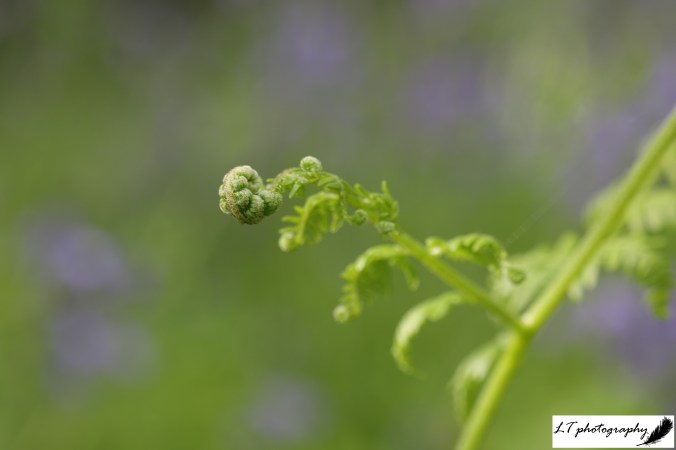
By this time, the woods are now dressed in light green leaves of varying shapes and sizes. The woodland floor is also becoming rich with vegetation. My favourites, the bluebells, are now beginning to go over, with their best time being a week ago. Though the thought of the end of this year’s bluebells makes me sad, I also find that there is something beautiful in seeing their fading colour and shrivelling bell-shaped flowers. Instead they are being replaced by the unfurling of fern fronds and a carpet of green. Now the orchids are out in full force , as are the flowers of wild garlic, yellow archangel, and dainty pink herb robert.

10_05_19_Horseshoe_Woods_Fern_4

10_05_19_Horseshoe_Woods_Fern_5

The birds still sing in full force, with the usual suspects in place, but now they are joined by the caws of rooks and chatter of jackdaws. The woodland floor is now also full with the noise of flying insects buzzing between the flowers in all their shapes and sizes. For my canine friend and myself, the woods are still giving us endless pleasure as the season rolls on.

10_05_19_Horseshoe_Woods_Dandelion_Seeds_4

4: The death of spring

  • Date: Saturday 25th May
  • Time of day: Afternoon
  • Highlight: The changing of the season

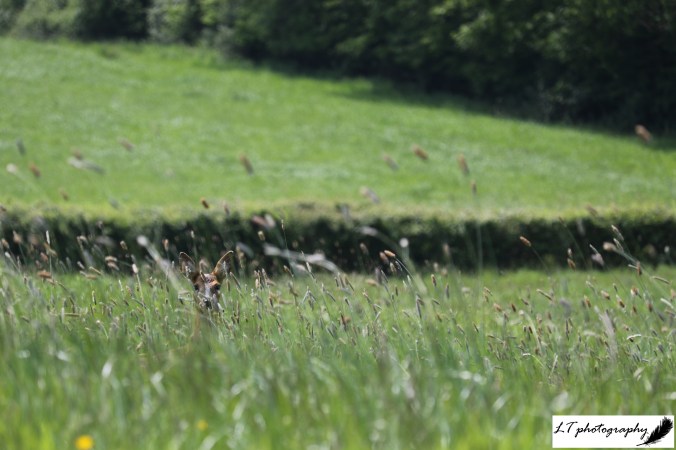
25_05_19_Outside25_05_19_Horseshoe_Wood_Roe_DeerThe days are getting hotter and the sun higher in the May sky. In the depths of the wood though, the canopy keeps me cool. The woodland floor is now a tangle of unruly vegetation. The dying bluebells, orchids, and spring flowers jostle with unfurling ferns, sticky goose grass and flowers that persist. These include stitchwort, herb Robert, and red campion, which are gems of colour in a sea of green.

25_05_19_Horseshoe_Wood_Common_Spotted_Orchid_3

Looking up, hazel leaves make a blanket of lace above my head as the work of busy invertebrates is now noticeable by this point. On the ground, brown speckled wood butterflies flit, flies still buzz, and bejewelled light green beetles fall on me as they dive bomb from the trees.

25_05_19_Horseshoe_Wood_Speckled_Wood_Butterfly_7Ash trees are finally fully in leaf and roe deer ramble lazily between the trees around me. Though this transition period may be more subtle than others, it truly signifies the changing of the seasons, as the important time for some species is replaced by the next. Thus, summer has now crept up on us!

How the woodland made its transition


25_05_19_No.1


25th May

Spring Countryside Camera Trap Surveys

M2E43L126-126R396B311

A few years ago, my passion for wildlife led me to save up to buy a Bushnell Trophy camera trap, to be able to explore the wildlife that can be found in my local area. Since then I have embarked on many adventures and had many hours of fun with it, as it allows you to get an amazing undisturbed insight into the lives of more elusive wildlife.

If you are unsure what a camera trap is, it is a digital camera connected to a sensor that is activated/triggered when movement is detected in front of it. It then takes one or a series of photos, a video of select length or a hybrid of the two, that are recorded on to a memory card for later viewing. They are easy to use and can be left out in the elements for long periods of time. My camera trap was a great investment and has now given me years of pleasure at home and further afield, such as in Costa Rica.

This year, as I have been even more inspired by the coming spring, I decided to spend 10 weeks across the season (21st March to 26th May), completing camera trap surveys on my family’s land, which is set in the beautiful Dorset countryside.

For my surveys, over the 10 weeks, I chose a total of 5 camera locations which were used for varying periods of time. These locations I fondly named: copse cam, sett cam, woodland cam, alley cam and fox cam. I left the camera in each location for between 14 to 42 hours across 1-2 nights depending on my intentions at the time. Now spring has seemed to have come to an end, it is now the time for me to take a look back at a fun, exploratory 10 weeks and reflect on some of the wildlife I got the pleasure of recording.

Copse cam
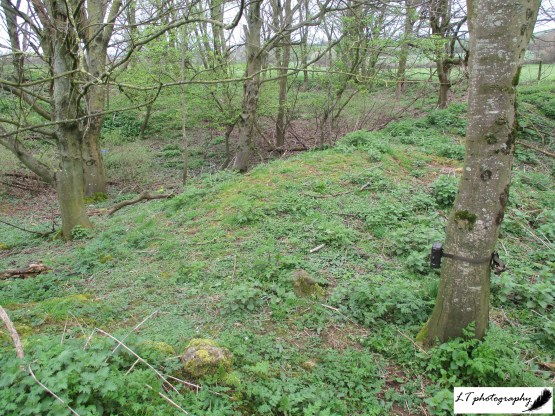
March 2019

For my first camera location, I chose a small copse situated in a dip within a wheat field that has borders including hedges, trees, a river and a large badger sett. The copse shows signs of use from rabbits and species passing through. The camera was attached to the same tree each time at the centre of the copse, and was either pointed to the west or east to try and capture an idea of activity within the whole area. This location was used for 6 weeks (till 26th April) before the wheat became too long around the copse.

Copse from outside

Over the 6 weeks I used this location, 1 week the camera was not set due to bad weather, and another 2 weeks the camera was not triggered at all. Across the 3 weeks that had some success, 5 species were recorded (all singular individuals) that were:

  • Male and female roe deer

Male roe deer

  • Badger

Badger

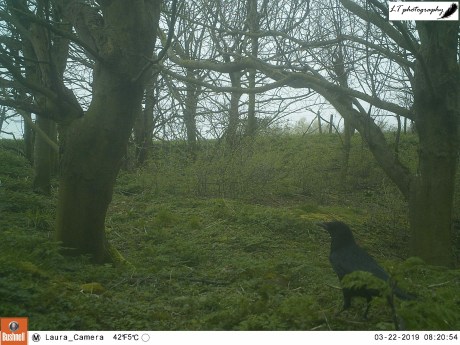
  • Carrion crow

Carrion crow

  • Woodpigeon

Woodpigeon

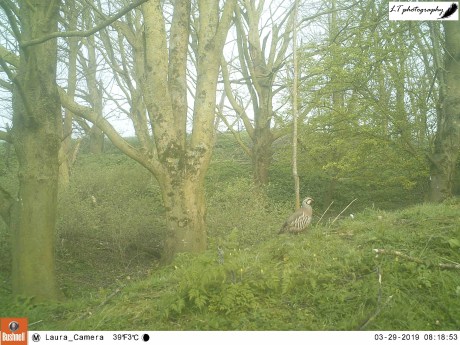
  • Red-legged partridge

Red-legged partridge

A range of animal behaviour was seen on the copse cam, including foraging, resting and fleeing behaviour. Unfortunately due to the growing wheat increasingly isolating the copse, the number of camera triggers, and thus survey success, dropped by 80% over the 3 weeks wildlife was seen. Despite this, I did enjoy the wildlife the camera did capture, as it gave an idea of the wildlife passing through this spot at the beginning of spring.

Favourite photo: an up-close and personal shot of a female roe deer. Other photos captured show that this particular female was possibly pregnant during my surveys.
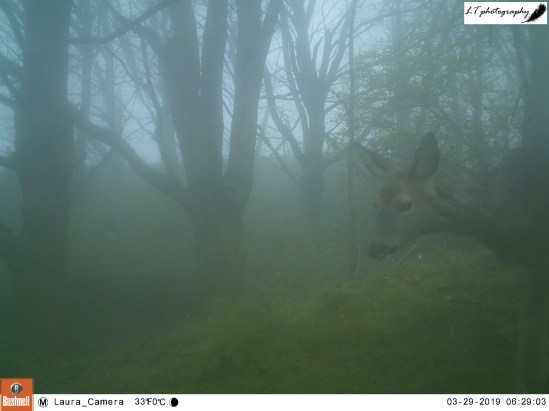
Doe-eyed (female roe deer in the mist)

Sett cam

For my second camera location, I chose a large fenced off badger sett towards the east of my family’s land. The sett is on the border of agricultural grassland backed by a hedge made up of traditionally known hedge species, including blackthorn and hawthorn. The camera was attached to one of two fence posts spaced approximately a metre apart and facing into the main area of the sett in various directions. This location was used for 5 weeks (till 19th April) until the vegetation within the sett area grew to a height that obscured the view of the camera trap.

Sett in daytime

Over the 5 weeks, one week the camera was not set due to bad weather, leaving 4 weeks in which this location was used. In this time the species seen were (all singular individuals):

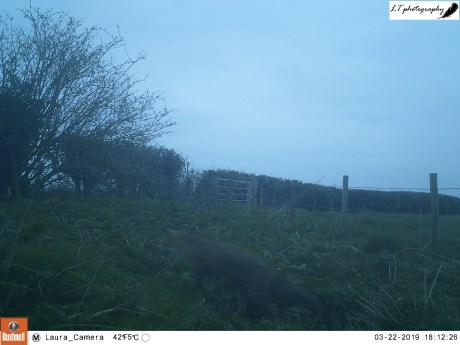
  • Badger

Badger

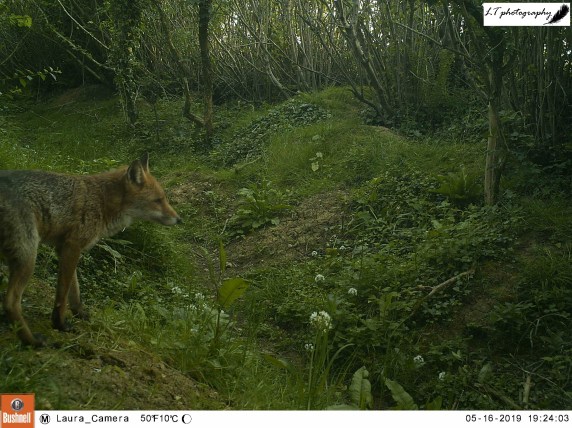
  • Fox

Fox

  • Pheasant

Male pheasant

  • Rook

Rook

The number of times the camera trap was triggered was random in relation to length of time set and survey week. Behaviours recorded included foraging and fleeing behaviour. Again, though this camera location was only used for a few weeks, it was great to see the wildlife there, in particular finally seeing badgers actively living in this sett.

Favourite photo: Though the subject of this shot is less noticeable, I love seeing in this photo the shape of a fox disappearing off along the hedge and field line in the background.

Cunning fox

Woodland cam

For my third location, I chose a small area of secondary woodland not far from my house, bordered on its edges by a private lane, meadows and more woodland. The woodland consists of wild cherry trees and predominantly oak trees. For the entire period of 10 weeks, the camera trap was moved between different trees and aimed in different directions to cover a variety of areas within the woodland.

Over the 10 weeks, the lives of 4 common species within this woodland were recorded. These were:

  • Badger (1-2 individuals in a photo)

2 badgers

  • Fox
  • Rabbit (included alongside a pheasant in a couple of shots)
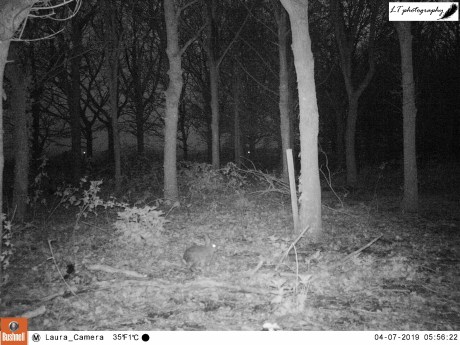
Rabbit

  • Pheasant (1-2 individuals in a photo)

The number of times the camera trap was triggered was random in relation to length of time set and survey week. What is interesting though, is that foxes were seen passing through the wood over the first 5 weeks (March into April), but not in the last 5 (April into May). This differs to what was seen for badgers, where compared to the first few weeks, badgers were seen mainly in the last 4 weeks (May) and in increasing numbers, which would correspond with breeding stage and foraging tactics. It was great to see the badgers in this way.

Favourite photo: My favourite photo has to be from when I increasingly caught sight of the badgers in the woodland, as it filled me with excitement every time I saw these photos.
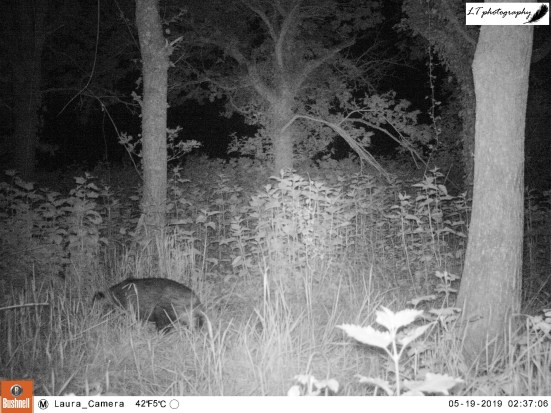
Badgered

Alley cam

For my fourth location, following week 6 (27th April), I chose one of my favourite sites on my family’s land, fondly known as Badger Alley. I refer to a 1-3m wide, rarely used bridle/footpath that is enclosed overhead by the tall hedges growing on either side (creating a tunnel effect). Along this path, an active badger sett and a deserted sett can be found, which are shared by other species, such as rabbits and foxes. The path is also rich along its length with a variety of plant species. In the end, I chose to position my camera trap to be able to take in part of the active sett as well as the path along side it to see what I could see.

Alley cam

Over the 5 weeks from 27th April to 25th May, the camera trap recorded a total of 6 different species, which were:
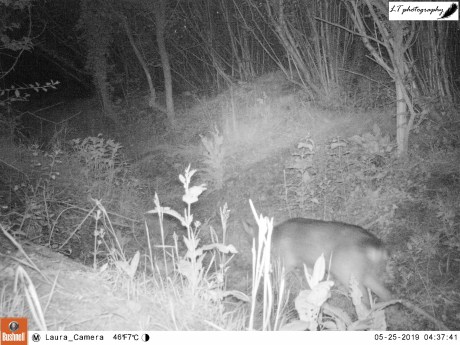
  • Roe deer

Female roe deer

  • Fox
  • Badger (1-3 individuals in a photo)
  • Rabbit (1-2 individuals in a photo)
  • Woodpigeon

Woodpigeon

  • Grey squirrel

Grey squirrel

The number of times the camera trap was triggered was random in relation to length of time set and survey week. A range of behaviours were observed in the photos, my favourite being grooming, bonding/socialising, hunting and play behaviour. It has to be sad that I particularly enjoyed using this location for my camera trap surveys!

Rabbit grooming

Favourite photos: When the badgers joined in with showing why Badger Alley was given its name!

M2E1L0-3R350B300

Fox cam (Note: date of photos are incorrect= 2019 not 2018)

For my final camera location, as a one-off (week 8: 10th May), I chose to investigate a potential fox den within the badger sett that borders the wheat field where the copse mentioned is found. This sett is fairly large, is fenced off from the adjacent wheat field whilst being backed by a wide, traditional hedgerow. In particular, a large part of the sett runs within the hedgerow itself, and in places there are open cavities at the centre of the hedge which are popularly used by wildlife.

Sett= location of fox cam

Before I chose this location, my mum had mentioned to me that she thought that she had seen signs of a female fox feeding cubs in this location, and so I decided to set up my camera with the purpose of investigating if this was true. Read on to find out the result!

I can now reveal that this camera trap set up was a complete success! I caught a vixen and her 3 cubs on camera, as well as a cheeky magpie and an unexpected great tit. The foxes triggered the camera 127 times over 27 hrs, making for a greater insight into their behaviour, social relationships and private interactions. Very exciting!

Favourite photos: The fox cubs!

Fox cub

Sleepy cub


M2E52L162-162R389B314

Playful cubs

Summary

This spring I really enjoyed embarking on the completion of camera trap surveys and being able to analyse what species can less obviously be seen around me. In total, my camera trap caught sight of 12 different species of birds and mammals, with lots of different individuals being recorded within this.

I hope you enjoyed a small sight into my camera trapping fun and may be inspired to take exploring your local area to the next level. Camera trapping may not be for you but there are lots of other things out there waiting for you.


Spring at RSPB Radipole Lake and RSPB Lodmoor

When asking people what they like to do most during spring, answers range from watching Springwatch and doing wildlife gardening to listening to the dawn chorus and taking in wildflowers in our local green spaces. Though I do like doing all these things too, one of my favourite things to do during the spring season is to visit two of my favourite nature reserves in search of some of my top bird species.

Radipole lake nesting mallards

By getting out to local reserves, we are supporting the work of organisations such as the RSPB, immersing ourselves in the wildlife that call these reserves their home, and improving our own health and wellbeing at the same time. Take a look at my recent adventure and see if you may be inspired to visit one of your local nature reserves as spring rolls into summer!

Saturday 11th May 2019

I was first introduced to Dorset’s RSPB Radipole Lake and Lodmoor 5 years ago by my Granddad whilst on a birdwatching trip, and since I have visited many times and have even completed an internship at the reserves with the RSPB. This means I am well acquainted with Radipole and Lodmoor (2 of the 5 RSPB nature reserves found in Dorset) and they hold a special place in my heart.

For those of you who will not have heard of these nature reserves before, I will just start with a few facts about the two:

Radipole Lake

  • 21.3 miles from my homeRadipole lake urban swan
  • 83-hectares in area
  • Designated SSSI (Site of Special Scientific Interest)
  • Managed by the RSPB since 1976
  • Habitats: wetland, hedgerow, scrub, reedbeds, saline lagoons
  • Star species: kingfisher, marsh harrier, bearded tit, Cetti’s warbler

Lodmoor

  • 21.5 miles from my homeLodmoor reedbed
  • 76-hectares in area
  • Designated SSSI
  • 1.5 miles east of Radipole
  • Connected to the sea under a sea wall at the southern end
  • Habitats: freshwater reedbed, scrub, saline marsh
  • Star species: marsh harrier, bearded tit, Cetti’s warbler, common tern

What makes these two reserves extra special for me though, can be split into two parts. Firstly, they are both situated in less conventional locations than many other nature reserves, being found at the centre of the busy seaside town of Weymouth. Thus, when you step into these reserves and surround yourself with the reeds and wildlife, you would not believe that you are situated within the heart of an urban area. In this way, they are both oases for a range of wildlife and for the naturalists that visit them.

Secondly, they are both year-round homes for one of my favourite species of bird of prey, the majestic marsh harrier. I did not know that they could be found on my doorstep until my first visit to the reserves, so their discovery for me a few years back brought with it lots of excitement. Consequently, it is one of the greatest draws for me when visiting these reserves at any time of the year.

Discovery centre marsh harrier mural

So, on a sunny day in May this spring, I headed to the reserves alongside my birdwatching partner in crime, my mum, to hunt down marsh harriers during their breeding season, whilst taking in other species and a range of habitats.

Adventure with my mum


RSPB Radipole Lake Nature Reserve

Discovery centre radipole lake map

Most trips to the reserves start in the public car park outside the RSPB’s Weymouth Discovery Centre and next to the bridge into Radipole Lake Reserve. This setting feels a lot more like an urban area than a home to wildlife.

Radipole lake pigeons

Once you cross the wooden bridge from the car park into the reserve though, you are suddenly transported into a world of water, reeds, sky and trees. You are also hit by a cacophony of bird sounds ranging from species commonly heard in our gardens to water birds and warbler species, such as the sound of the noisy and distinct Cetti’s warbler. If it was not for the houses that can be seen above the reeds in the distance though, you could probably forget the reserve’s urban setting all together!

Radipole lake reeds

When my mum and I crossed the bridge we also found ourselves on a hard surface trail that gives easy access around the reserve. Starting at the discovery centre, we then followed it round the main circular discovery walk, stopping to spot birds in the trees along the sides of the trail, to identify plant species, and to look out across the reeds and open water from the main viewing platforms and spots around the reserve. In this way, we were able to pretty quickly rack up our species list and to get some great views of wildlife.

Radipole lake long-tailed tit
Radipole lake female mallard

Radipole lake dunnock

My highlight of the trip to Radipole though, unsurprisingly included my star species, the marsh harrier. This began earlier on in our walk around the reserve, when my mum and I first caught a tantalising view of a male marsh harrier flying above the reeds, hunting in the distance. This made us then even more motivated to try and get a closer view of marsh harriers on this day, by heading off the main discovery trail and on to the north trail, to visit one of the best spots to watch these birds. Sat at a viewing screen in the sunshine, hot drinks and biscuits in hand, our luck paid off and we had the pleasure of enjoying one of our best ever hours watching marsh harriers at the reserve.

Following a short wait, the hour started with my mum spotting our earlier male marsh harrier hunting above the reeds, though still a good distance away from where we sat. We watched him through binoculars for a little while, before he disappeared from our view.

This sighting from the viewing screen was not our last though. After a longer wait, our viewing experience was suddenly taken up a notch. The same male that we had been watching previously suddenly popped up within 15 metres of the viewing screen, giving us amazing views of him. He then gave us a real show hunting and flying backwards and forwards in front of us before flying higher and higher till he was directly above our heads. This allowed us to really experience this bird in action and gave me the opportunity to at least try and photograph him in his natural habitat. We only made our own departure from the reserve once the male had finally moved off once again.

Radipole lake marsh harrier

Radipole lake marsh harrier 2

Radipole lake marsh harrier 3

From our couple of delightful hours on this reserve, we counted 30+ bird species, with our top 6 being:

  1. Cetti’s warbler
  2.  Swift (first swifts of the year)Radipole lake swifts
  3. Great-crested grebe
    Radipole lake great-crested grebe
  4. Marsh harrier 
  5. Little grebe
  6. Sedge warbler

Other photos:

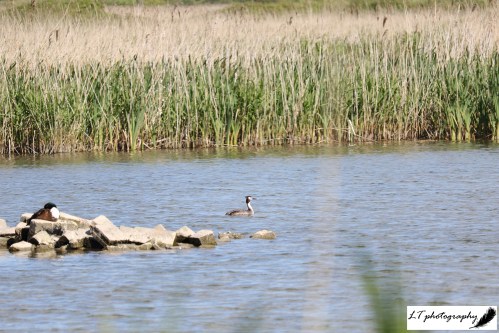
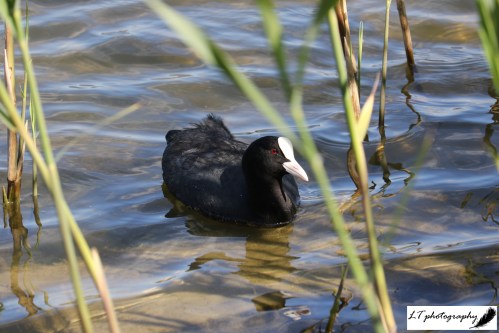
Radipole lake coot

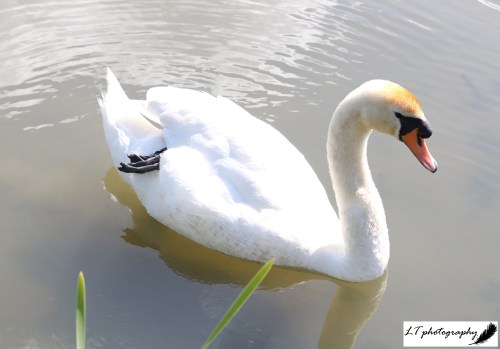
Radipole lake mute swan


RSPB Lodmoor Nature Reserve 

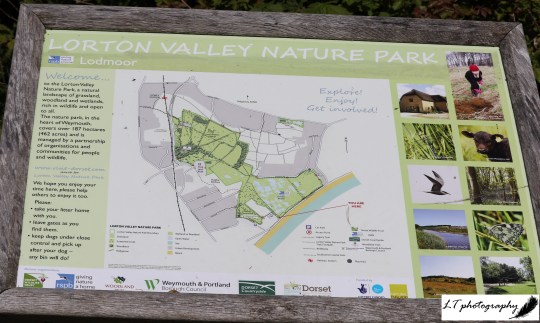
Lodmoor map

On this day in spring, following a stop for lunch sat on the seafront in the glorious sunshine, my mum and I chose to park at Weymouth’s public Overcombe car park on the eastern side of Lodmoor nature reserve. From here we planned to walk a clockwise loop around the reserve’s main trail and see what species we could see that call the reserve their home.

Lodmoor reed trail

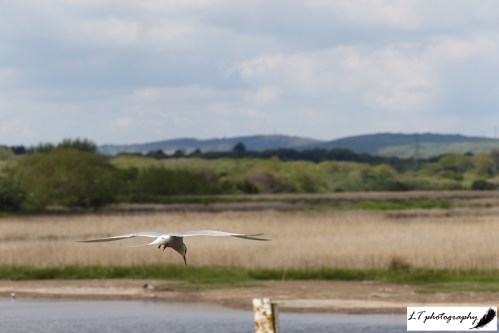
In this way we first walked along the main road that borders the southern side of the reserve and splits Lodmoor from the seafront, stopping at breaks in the reeds and hedges to see what birds we could see on the marsh area. On one of these stops, we finally got to take in one of Lodmoor’s star species, breeding common terns. At the reserve, islands in the lagoons/marsh are managed each year to provide areas for the terns to breed safely away from many predator species. In sight of these islands, we got some really fantastic views of the terns hunting over the water.

Lodmoor commen tern nesting islands

Lodmoor Common tern 2

Though most of the best areas for birdwatching are situated along the side of the main road and near the tern nesting islands, my mum and I of course continued our walk on the main trail around the reserve, taking in as many species as we could. Unfortunately, this year we did not catch any sightings of the marsh harriers that can be found breeding at this site, but the reserve still did not disappoint us. In particular, we spotted 24+ bird species, with our top 6 sightings being:

  1. Oystercatcher Lodmoor oystercatcher and shelducks
  2. Shelduck Lodmoor shelduck
  3. Bar-tailed godwit
  4. Black-tailed godwit
  5. Common ternLodmoor Common ternLodmoor Common tern 3
  6. Gadwall

Other photos:

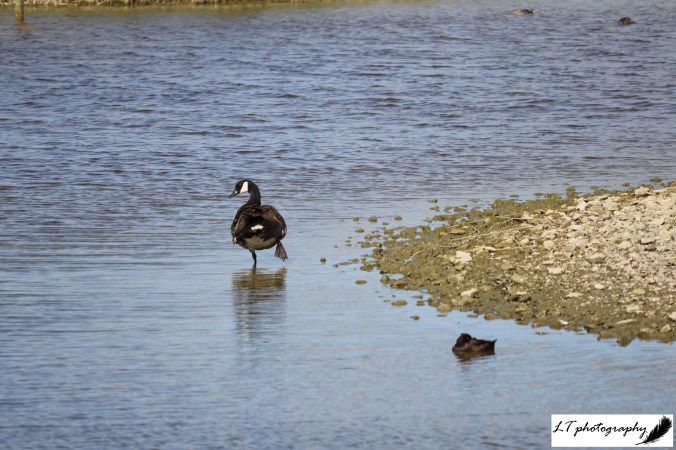
Lodmoor canada geese

Summary

My trip to the reserves may not be everyone’s cup of tea for a day out, but I had a thoroughly enjoyable day in the sunshine, spending time with my mum and being completely distracted from work and day-to-day life. I also got to take in some incredible flora and fauna, as well as a tranquil and vivid environment.

So how was my hunt for the marsh harriers? Though I did not get the pleasure of seeing marsh harriers at both reserves, watching the male at Radipole Lake for a long period of time felt like a real success. They are a striking species that I can easily pick out from others, and with birds of prey being my favourites, it is easy to see why I enjoy watching them so much.

The highlight of my trip obviously was the marsh harriers, but also was being able to spend the day doing something I love with one of my favourite people. We all should take a little time out of our busy lives to do things we enjoy and that uplift us, allowing us to take care of ourselves in the right way. Anything to do with enjoying spring outdoors does this for me and allows me to de-stress.

As I come to the end of this blog post, with the end of my trip, I do hope that I may have inspired you to take a trip to your local nature reserve, even if it is just to take a walk, see something new, have an adventure or appreciate your local plants and animals. Nature reserves are a free and easy form of entertainment for all, so why don’t you escape to one today?

Radipole Lake Canada Goose

Looking back at my highlights of spring 2019

Spring

Though I love the sunshine of summer, changing colours of autumn, and crisp days of winter, spring is by far my most favourite of seasons. Spring each year brings with it new life and a vibrancy that always lifts my spirits and makes me look forward to the rest of the year ahead.

Unfortunately for the last few years, I have felt like I have missed out on being able to fully appreciate this time of year, due to concentrating on my degrees. This year though, working in a seasonal outdoors job, things have been very different. In fact, I have been privileged enough to be able to fully immerse myself in the changing of seasons and blazing emergence of spring. Thus, I now want to take a moment to look back and reflect on my favourite moments of the amazing spring that is now slipping us by.

  1. Winter warmers

Spring began for me even before the season had started this year. With a cold winter in Dorset being experienced, my spirits were lifted at the beginning of the year with the first sprouting of snowdrops in my garden and surrounding countryside. These little white beauties reminded me that winter would not last for forever.

Snowdrops

I was then given similar reminders with the arrival of sunshine yellow hazel catkins in February, brightening a grey and imposing landscape, and the melodic songs of male song thrushes and blackbirds, especially singing to me at dusk each day. The increasing activity of plants and animals were comfortingly hinting at what was to come.

OLYMPUS DIGITAL CAMERA

2. Signals of spring

Following winter reminders of spring, there was nothing better than the arrival of the first real signals of its arrival. Three of my favourite standouts this year began with the blooming of vivid white and yellow flowers across the countryside, the most notable being daffodils, primroses, lesser celandines, pussy willow and sycamore. This was accompanied by the emergence of yellow-green male brimstone butterflies fluttering across the fields and along the hedgerows.

One of my most anticipated first signs of returning spring though, was the onomatopoeic call of returning chiffchaffs. These incredible small migrants, and now a resident British species, have such an iconic song that just sings that ‘spring is here’ for me. Thus, nothing brightens my days more than seeing these small birds flitting between trees and shrubs and hearing ‘chiff chaff, chiff chaff’ wherever go.

Sycamore leaves

3. A new favourite

Often from year to year I have very similar favourite moments of spring, such as the bud burst of oak and horse chestnut trees or the return of nesting barn swallows. This year for me though I got to add a new one to my highlights.

Blackthorn 5

When the first signs of spring began to creep back in this year, our hedgerows looked rather bare and empty in their skeletal form. This made it all the more noticeable when in March the hedgerows around me became awash with white, like rolling waves. Some years the flowering blackthorn does not make a full show, but this year it was rather spectacular, bringing fresh colour to the countryside around me. It even became a favourite for me to dabble with up close plant photography with my brand-new camera. Here are some of my very first photos!

4. Something special

Another of my favourite moments this spring included an additional first for me. Where many naturalists in the UK may have had spring encounters with this bird species before, previously my experience has been limited to hearing one call a year if I am lucky. This year though, I had the pleasure of being able to get well acquainted with this parasitic migrant, the common cuckoo (red-listed in the UK).

It has to be said that the male cuckoo has a song that is traditionally iconic of spring time, but as the years have been rolling on, this is has become a scarcer occurrence for many. That is why this spring I was overjoyed when most days the song of a number of male cuckoos became the soundtrack of my work life. It has been really special to become so used to this sound, and it has filled me with such pleasure on a day-to-day basis. So all I can say is that I hope I get this privilege again in the future!
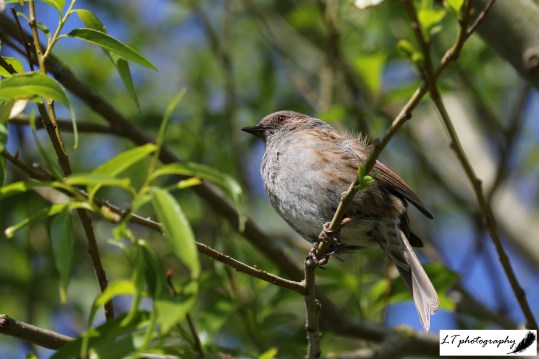
Woodland

5. The best of all

For me, though I love all that spring has to hold, I cannot help but have the same favourite highlight each year. With the beginning of new life during spring, one of my favourite parts of this is our woodlands becoming lush with an assortment of plant species. The one species that stands out during this time though, is characterised by its colourful purple flowers carpeting woodland floors.

The sight of flowering bluebells at their peak is an incredible one, which is a feeling shared by many people. It is hard to pinpoint why this is so, but it may be due to how the deep purple carpet totally contrasts with its bright green surroundings, or for the sweet heady scent of native bluebells. Whatever the reason though, they always fill me with joy with every sight, along with the other flowers that are dotted amongst them, such as stitchwort and wood anemone.

With the return of the bluebells this year, it can be said that they really did not disappoint me. Many a day I took a turn through my local woods and took a moment to look back at all the memories past walks amongst the purple flowers hold for me. For example, I have always enjoyed taking a four-legged furry friend to the woods with me to responsibly enjoy this setting too.

Bluebells 2

So, as quick as the bluebells came and put on their show this year, they also died away. I cannot help but feel a little bit sad when this happens every year, but with their exit, this signals the start of the next season and that one has to offer.

Bluebells 4

40 years of the RSPB’s Big Garden Birdwatch: How can you get involved?

Next weekend the RSPB is holding its annual Big Garden Birdwatch. Many people may have heard of this event before and may have even participated in it (if so thank you), but many people may have never heard of it before though. Either way, with the event celebrating its 40th anniversary this year, I wanted to take a moment to look back at the Birdwatch’s interesting history, wide-ranging impact and more importantly how you could get involved this year to help make it the biggest year yet!

For those of you who may not know, the RSPB (standing for the Royal Society for the Protection of Birds) was founded in 1889 by ornithologist Emily Williamson with the aim of stopping birds being exploited for fashion. Over the following 130 years, the RSPB has grown in size and popularity, and among other things, has acquired at least 209 nature reserves, raised lots of money for conservation projects and created many popular events such as the annual Big Garden Birdwatch. Following its start as an event aimed at children in 1979 in collaboration with Blue Peter, the Birdwatch has now been running for an amazing 40 years, with the hope of many more years to come.

With over half a million people taking part each year now, the Big Garden Birdwatch has officially become the world’s largest wildlife survey. Clocking up over 8 million watch hours and more than 130 million bird sightings, the survey has amassed four decades worth of valuable results for the RSPB. What happens each year to these results though? Well once collated into one big data set they are analysed to monitor trends, and allow us to understand the state of British wildlife such as to identify species declines, and to help protect and conserve it.

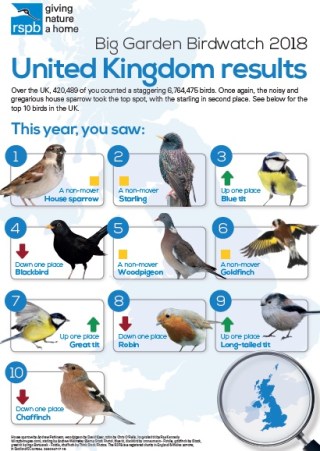
To give you an idea of some of the basic results the Birdwatch can provide, lets take a look back at some of last year’s results published by the RSPB. To start, the top 10 garden birds in the UK and Northern Ireland in 2018 were found to be:

2018 big garden birdwatch results

(c) RSPB

  1. House sparrow
  2. Starling
  3. Blue tit
  4. Blackbird
  5. Woodpigeon
  6. Goldfinch (11% rise from 2017)
  7. Great tit
  8. Robin
  9. Long-tailed tit
  10. Chaffinch

The 2018 survey also showed big increases from the past year in the number of sightings of winter visitors, such as siskins and bramblings, and a 5% increase in greenfinch sightings. Despite house sparrows being the most commonly seen species in our gardens in 2018, since its beginning, the Big Garden Birdwatch has seen house sparrow sightings drop year on year, with a 57% decline over 40 years.

In relation to the survey itself though, since 1979 participants have increased in number from approximately 34,000 children to more than half a million individuals of all ages. Whatever your experience or knowledge of birds and wildlife, this is one event where anyone can now get involved. In addition to helping out the RSPB, this survey could also have wide ranging benefits for yourself too. For example it could:

  • Allow you to take a moment to appreciate what is in your garden or local green space
  • Aid your mental health by spending time out in nature and/or being mindful of your local wildlife
  • Allow you to get involved in citizen science where your involvement could have a big difference for scientific knowledge and species conservation
  • It is a bit of fun!

So, if you are interested in the world’s largest wildlife survey, how could you get involved? First, go to the ‘Bird Garden Birdwatch 2019’ section of the RSPB website and either request a free postal pack, download a counting form and bird ID guide or decide to complete the Birdwatch online. Then pick a day between 26th-28th January to sit and watch the birds in your garden or local green space. Follow the rules for counting the birds, and when your hour is complete either send your results to the RSPB by post or online. How you do your Birdwatch though is entirely up to you. It’s simple!


img_0749

As a result, the Big Garden Birdwatch has now helped to inspire many new generations of birdwatchers and I can say that I am included among them. This was evident at the age of 12, when I decided to write a piece for my local magazine trying to get more people (even then) involved in the Birdwatch. Though my knowledge, writing and understanding of the world has come a long way over the last 11 years, my passion for wildlife, its conservation and its communication have remained the same. So why not listen to 12 year old Laura, do the same as me, and take part in this year’s Big Garden Birdwatch!

big garden birdwatch article

This blog post has been written independently from the RSPB, but all RSPB Big Garden Birdwatch resources and facts used in this blog post, such as seen in the photos of the resources included in the postal pack I received, are entirely the property of the RSPB


A different kind of Christmas: December trip to RSPB Arne

For most people Christmas outings may involve activities such as shopping, ice-skating, visiting Santa or taking in Christmas light displays. This year to get into the festive spirit though, I decided to do something a little bit different. Why? Well this month is a great time to get outside in the cold (and the wet!) and take in some of the winter residents and migrants that can currently be found in the UK. What better way to escape at this time of year than to get out in nature!

My choice of destination was simple: RSPB Arne nature reserve in Dorset. This reserve covers more than 565 hectares, has many designations such as being a Site of Special Scientific Interest and is home to a mosaic of habitat types ranging from heath to ancient oak woodland. As a result RSPB Arne is famous to British naturalists for its rich biodiversity and spectacles of nature, which include the colourful ladybird spider (as featured on Autumnwatch in 2016) and all 6 UK species of native reptile. Situated approximately 25 miles away from my home, this gem for the wildlife enthusiast is becoming a firm favourite of mine.

Well what was the real aim of my visit this Christmas? Though birds of prey such as marsh and hen harriers are always at the top of my ‘must-see’ list, I have to admit that December is THE time to see waders at Arne. In fact, neighbouring Poole Harbour hosts one of the largest flocks of wintering avocet in the UK, which is a real spectacle to see.

So, with the weather on my side for one day in mid-December, I made the journey over to the the isle of Purbeck for a day of no pressure bird watching and walks with spectacular views. Having visited Arne a handful of times before, I started my day by setting out on Arne’s seasonal raptor walk in the slim hope that I might catch sight of a wintering harrier or falcon. Though it did result in a kestrel being added to the day’s species list, it was my only raptor sighting of the day in the end.

OLYMPUS DIGITAL CAMERA

The seasonal raptor walk was not fruitless though, as sitting in the reed bed hide at the end of the walk I was treated to my very first sighting of a highly charismatic bird. Despite having seen flashes of this bird in the past, I had never seen it up close and perched before. So it took me by surprise when I caught sight of the shape of this small bird with its distinctive short tail, large head, and long bill only a couple of metres in front of me in the hide. To my excitement it was a kingfisher and following this sighting I had the pleasure of watching it hunt in the pools of the reed bed for quite awhile longer!

OLYMPUS DIGITAL CAMERA

Following seeing my kingfisher, the rest of the day was spent walking the Coombe Heath trail and yellow Shipstal trail to catch sightings of waders around Middlebere Lake and Arne bay.

To highlight some of the species I ended up seeing on my walks, here’s a little ’12 waders and waterfowl of Christmas’:

  1. Mallard
  2. Little egret
  3. Common shelduck
  4. Eurasian oystercatcher
  5. Brent geese
  6. Common redshank
  7. Lapwing
  8. Eurasian wigeon
  9. Pied avocet
  10. Common greenshank
  11. Eurasian curlew
  12. Eurasian spoonbill

OLYMPUS DIGITAL CAMERA

At the end of my day exploring Arne in the dry and escaping a busy life, I have to admit that it was just what I needed during the festive period. Filled with wintering wildlife and tranquil landscapes, ‘traditional Christmas’ only permeated my outing through visits to the reserve’s cafe and shop, which were both fully embracing the festive season.

Though my day at Arne may not characterise most people’s festive period, it fitted with the meaning of my own Christmas, made up of things that I cherish such as family, nature and focussing on my own mental wellbeing. Taking an opportunity to concentrate on and celebrate such things is what defines Christmas to me, amongst modern traditions. So all I can say now is remember what means most to you at this time of year and have a very MERRY CHRISTMAS!

Sable Island’s Birds vs. Invertebrates

The wonders of nature are endless – Walt Disney

When people think of Sable Island, they may think of a windswept island of sand, the island’s famous feral horses, or its involvement in maritime stories. More overlooked is Sable’s vibrant collection of fauna and flora, the latter having previously been touched upon in my ‘Guide to Sable Island’s habitats and plants’. When considering Sable’s fauna though, the most abundant can be split into its birds and its invertebrates.

Birds

Juvenile gull

Over Sable’s recorded history, at least 340 bird species have been observed on the island. These species span from American kestrel (Falco sparverius) to ruby-throated hummingbird (Archilochus colubris) to red-breasted nuthatch (Sitta canadensis), the last being one species I got to see myself this summer on Sable.

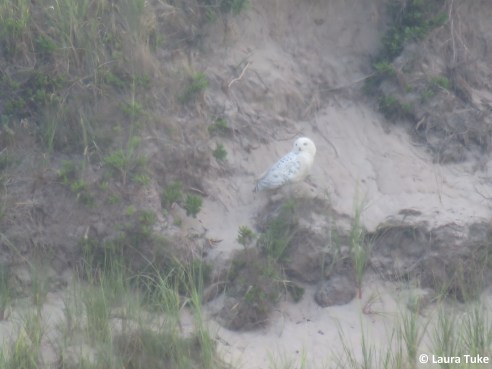
More than 45% of bird species that have been observed on Sable though, are termed as vagrants. This means that they have strayed from their usual range, for example arriving on the island due to being blown off course by strong winds during migration. As a result, I had the pleasure of seeing one iconic species during my stay this summer; a snowy owl (Nyctea scandiaca), floating like a ghost between the island’s dunes.

Snowy owl 3

Snowy Owl

Many species also use the island as a stopover site during their migration, for example waders, raptors and warblers. Regular migrant species include willet (Catoptrophorus semipalmatus), sooty shearwater (Puffinus griseus), grey-cheeked thrush (Catharus minimus) and:

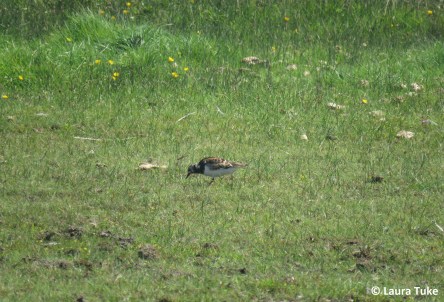
Yellowlegs

Yellowlegs

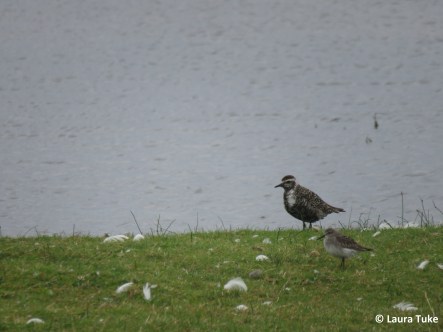
Female American Golden Plover and sandpiper

Female American golden plover (Pluvialis dominica) (sandpiper in foreground)

Ruddy turnstone

Ruddy turnstone (Arenaria interpres)

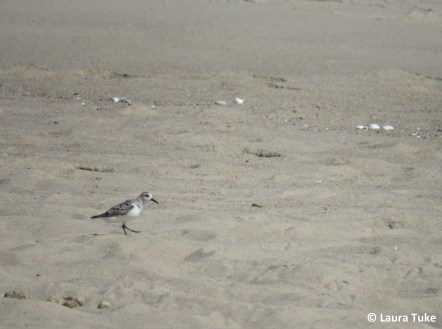
Sanderling

Sanderling (Calidris alba)

Whimbrel

Whimbrel (Numenius phaeopus)

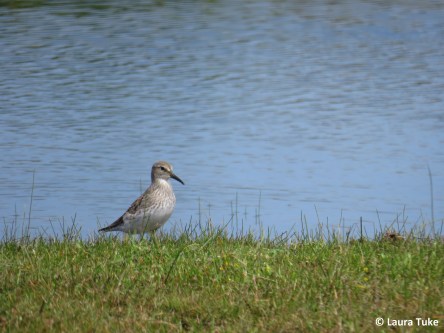
White-rumped sandpiper

White-rumped sandpiper (Calidris fuscicollis)

Of the 340+ species seen on Sable though, more than 30 have been recorded as breeding on the island. Regular breeders include:

  • Arctic tern (Sterna paradisaea)
  • Common tern (Sterna hirundo)
  • Roseate tern (Sterna dougallii)
  • Herring gull (Larus argentatus)
  • Great black-backed gull (Larus marinus)
  • Ipswich sparrow (Passerculus sandwichensis princeps)= endemic
    • Subspecies of Savannah sparrow and of conservation concern

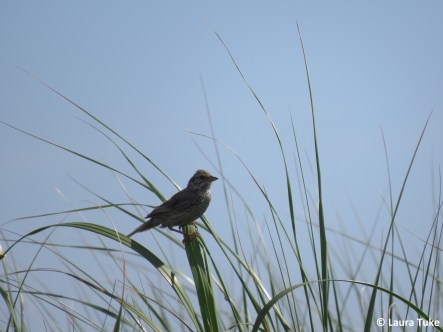
Ipswich sparrow

  • Leach’s storm-petrel (Oceanodroma leucorhoa)
  • American black duck (Anas rubripes)
  • Mallard (Anas platyrhynchos)
  • Red-breasted merganser (Mergus serrator)
  • Northern pintail (Anas acuta)
  • Least sandpiper (Calidris minutilla)
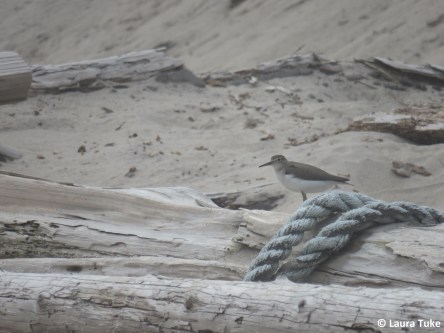
  • Spotted sandpiper (Actitis macularia)

Juvenile spotted sandpiper

Invertebrates

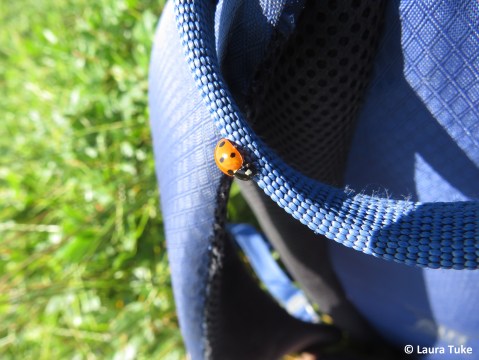
In comparison to the 340+ bird species that have been recorded on Sable Island, 875+ invertebrate species have been identified on and in its marine proximity. Species include the monarch butterfly (Danaus plexippus), painted lady (Vanessa cardui), seven-spot ladybird (Coccinella septempunctata), and round-tipped cone-headed grasshopper (Neoconocephalus retusus).

Six spot ladybird

Seven-spot ladybird (Coccinella septempunctata)

Six spot ladybird larvae

Seven-spot ladybird larvae

Sable Island also has some endemic invertebrate species. These include the Sable Island leaf beetle (Pyrrhalta sablensis), the Sable Island sweat bee (Lasioglossum sablense)and three moth species (Agrotis arenariusOrgyia leucostigma sablensis and a Papaipema species).

Though I did not get enough time on Sable Island to delve too deeply into the world of the invertebrates, I did enjoy seeing new species and identifying the many caterpillars I saw, such as:

Apple sphinx moth caterpillar

Apple sphinx moth caterpillar (Sphinx gordius)

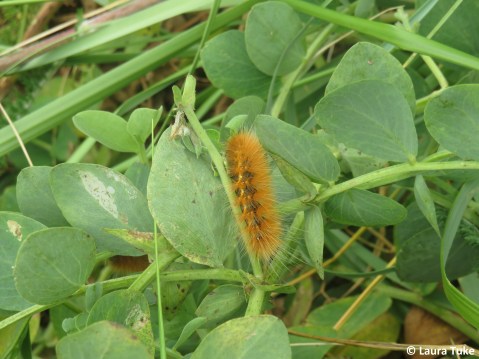
Virginian tiger moth caterpillar

Virginian tiger moth caterpillar 2

Two variants of Virginian tiger moth caterpillars (Spilosoma virginica)

Barmy about barn owls: Owl pellets

Currently we have at least one pair of resident barn owls on our 250 acre Dairy Farm, with one notable pair being seen amongst our farm buildings and fields closest to the centre of the farm.

On 26/05/16, I found a barn owl pellet within our straw barn, which was at least 1 month old. Through my interest in barn owls and the other species living on our farm, I then soaked the pellet and teased it apart to find the small mammal bones within.

The pellet was filled with lots of bones, such as shoulder blades, hipbones, femurs and humeri.

From the skulls and jaw bones found in the pellet, I was able to identify the four skulls to species level. Two skulls were from common shrews…

…and two skulls were from field voles.

It was really interesting to be able to get closer to the small mammals that can be found on our farm, whatever the level of species abundance. It also gave me the opportunity to brush up on my skull and bone identification skills with the help of an RSPB owl pellet identification guide, which can highly recommend to others

(https://www.rspb.org.uk/Images/Owlpellets_tcm9-133500.pdf). 

I also recommend to others to get out at this time of year and to find your own owl pellets to learn more about the owls and prey species in your local area.

Winter into spring: April on the farm

April is one of my favourite months of the year on the farm. During April, the Dorset countryside begins to burst into new life. Newborn lambs bounce in the fields, newborn calves snooze in the fields in the spring sunshine, birds begin to nest and raise a new generation, and flowers carpet the woodlands.

Plants this April still followed a trend of being late, with some woodlands not becoming decked out in their full splendour during this month like in past years. Still Bluebells, wild garlic, early purple orchids and late wood anemones began to coat the woodland floor. Also, the woodland ferns began to unfurl in the woods later than usual.

During this April, trees were very much still late, with sycamore and silver birch finally bursting into leaf. Oaks were noticeably asynchronous in their bud burst, with some trees on there way to being in full leaf and others yet to start.

April saw the main crop of migrants arriving on warm winds. This year our barn swallows returned on April 6th, exactly the same date as in 2015! By the time we were fully into April, bird breeding pairs had been firmly established, and the nesting season for many bird species was fully under way. During April, more birds can be heard singing at dawn than any other time of year, which is quite magical to hear.

This year the tawny owls are breeding later than last year, but by the end of April the first hissing calls of tawny owl fledglings could be heard resonating through Dorset woodlands.

Life could be seen blooming everywhere throughout April. Dog violets and cowslips, among other species, were seen flowering along roadside banks.

WP_20160427_002

27/04/16

Brimstone butterflies, orange tip butterflies, and peacock butterflies all began to emerge during the first half of April.

Throughout April, I made myself busy amongst the mounds university revision, by setting up my camera trap at different popular sites around our farmland. It was amazing to see the first badger cubs emerge from their den, and even more special to me, was being able to watch fox cubs beginning to explore above ground with their siblings, during the second half of the month. Fox cubs have to be my highlight of beautiful April!