Journey to Sable Island: The city of Halifax

With research trips to remote and out of the way locations, this can often give the opportunity to experience other destinations along the way. Whether this be other remote locations, diverse habitats or even big cities, these stops can be as exciting as reaching the final destination. For many years now I have enjoyed travelling in groups and on my own to many locations around the world, and love to experience new, diverse and exciting places.

Though this summer the majority of my trip to Canada was spent on vibrant Sable Island (see other blog posts for more details), I did spend a couple of days either end in Halifax, Nova Scotia. Despite being lesser-known, the city of Halifax had a lot to offer the eager traveller and topped off my 5 week stay in Canada. In commemoration, here’s some of my Halifax highlights and memorable moments:

Staying in a Canadian university dorm room

For the first three nights I spent in Canada, before heading over to Sable Island, I stayed in Gerard Hall, a hall of residence for students at Dalhousie University in Halifax. Though it was the summer, meaning no students were currently in residence, I still got to experience the feel of a film cliché North American dormitory, with shared rooms and large mixed-sex bathrooms. This was very different to my university experience as a fresher back in England.

Dormitory room

Food

During my time in Halifax, before and after staying on Sable, I got to try lots of different food, which is often one of my favourite parts of travelling. This included Tim Hortons in the airport, breakfast at a Canadian breakfast bar,

vegan food from the Heartwood stall on Halifax waterfront, food from local restaurants, such as piatto pizzeria + enoteca (Italian), and Man Bean (Vietnamese),

Man Bean restaurant

and my favourite, city style cheesecake from the Sweet Hereafter Cheesecakery (a place that also has dairy-free and gluten-free options).

City style cheesecake

Though I did not necessarily try traditional Canadian food whilst in Halifax itself, I did thoroughly enjoy myself!

Halifax tourist spots

Two of the tourist attractions I visited whilst in Halifax were the Public Gardens and the Citadel fort.

Halifax Public Gardens were a lovely spot to escape from the hustle and bustle of the city. I spent some time there walking in the gardens and sitting and reading a book by the lake.

Halifax Public Gardens Bridge

On the same day in August that I visited the Halifax Public Gardens, I also made a trip to Citadel Hill to explore the Halifax Citadel fort and its current First World War commemorations. I always enjoy learning a bit about the history of the places I visit and Halifax was no different.
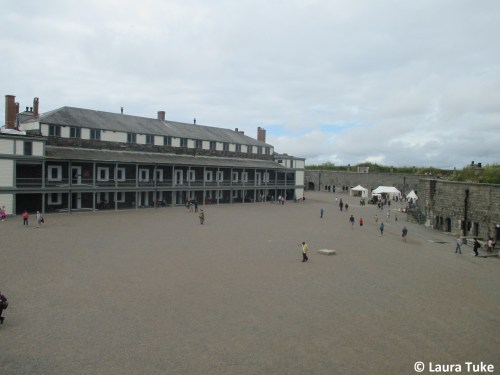
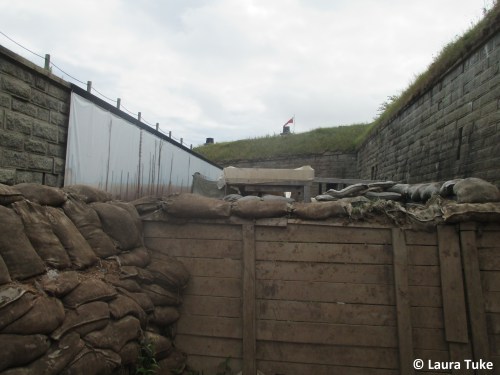
Halifax citadel fort

Halifax citadel fort trenches

Halifax 2018 Buskers Festival 

One of my favourite finds from my time in Halifax, was the 2018 Halifax Buskers Festival that was going on during the weekend I first arrived. This festival celebrates the best professional street performers from around the world, who are invited specially to perform at this annual event situated along the Halifax Waterfront.

During this weekend I got to watch shows from a range of acts, including Hannah Cryle (circus acrobatic street show), Nigel Blackstorm (the heavy metal magician), The Flyin’ Hawaiian Show (circus acrobat), Break City All Stars (street dance group), Incendia Motus (acrobatics with fire) and Jack Wise (magician). My favourite show of them all by far though was ‘Her Majesty’s’ Secret Circus show, which was a clever mix of action-packed stunt-comedy performed by two talented individuals. Definitely brightened my day!

Hannah Cryle
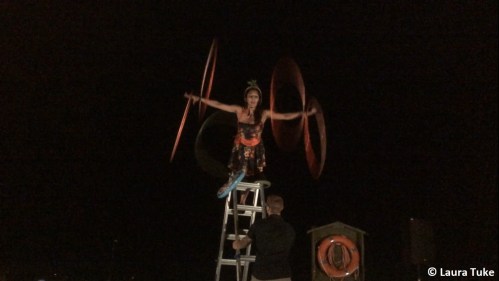
Hannah Cryle

The Flyin' Hawaiian Show

The Flyin’ Hawaiian Show

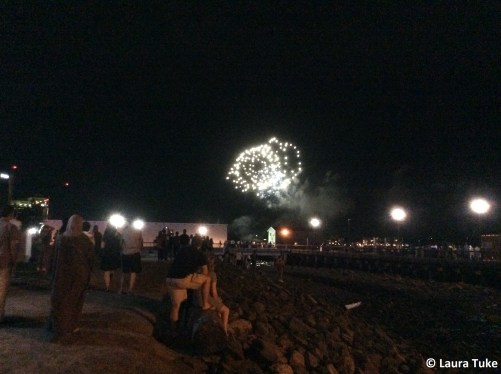
Natal Day fireworks

Halifax Waterfront

One of my favourite parts of Halifax was the Waterfront. Along this stretch you can take a walk, look out across the harbour and explore the shops, restaurants and attractions along the way. It is one part of Halifax that allows you to escape from the main part of the city and take in some of the best views Halifax has to offer.

Halifax harbour sunset

The little things

I have many many more highlights of mine that I could share from my time in Halifax, but in that way I could go on forever. Other highlights include everything from a ‘play me’ piano in the street, rainbow zebra crossings, the ‘horses of Halifax’, harbour hopper tour vehicles driving around, maple ice-cream, souvenir shopping, and long walks around Downtown Halifax.
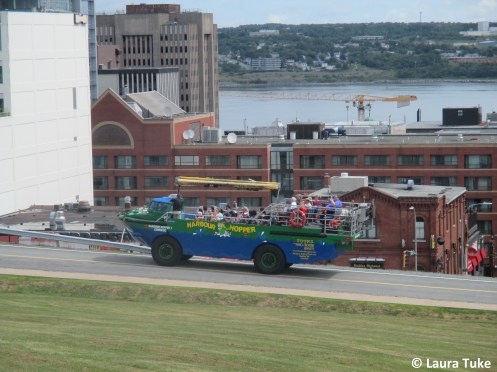
Harbour hopper

11 things you need to know about the Sable Island Horse


IMG_8130

In all things of nature there is something of the marvelous – Aristotle

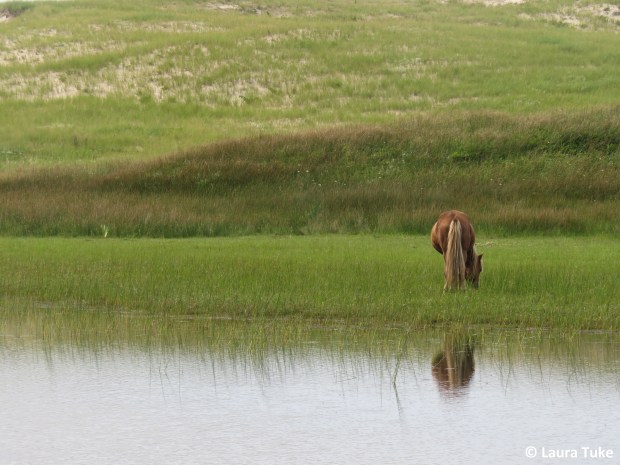
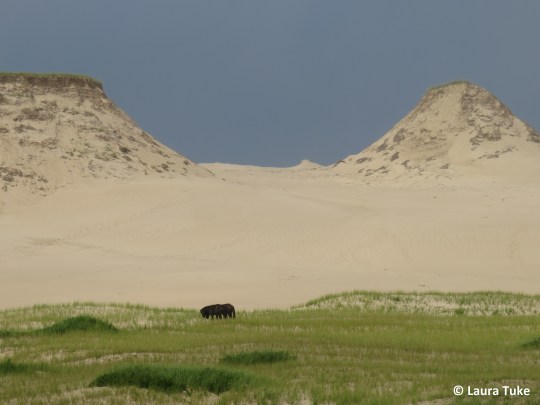
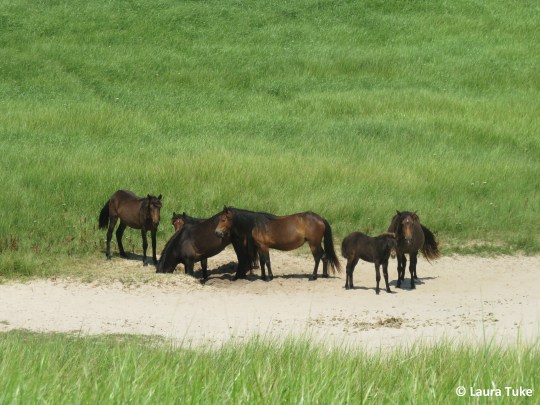
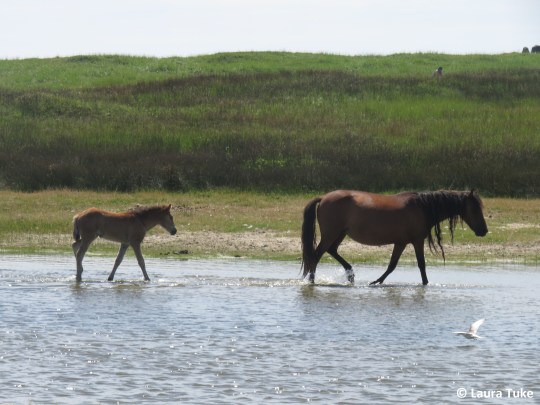
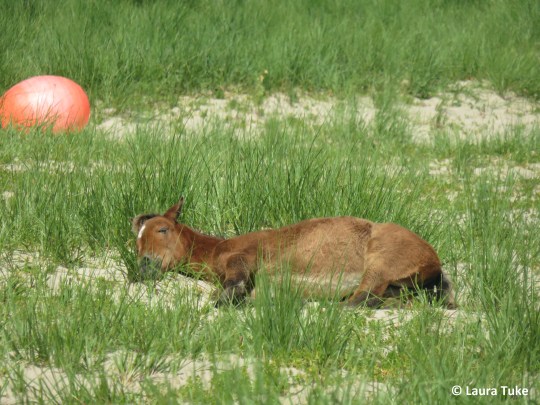
As part of my Master’s degree, from the other side of the North Atlantic, I have had the pleasure of studying a renowned animal population situated on Sable Island, Canada. Though this species is not the first that comes to mind when you think of an island made of sand, within the last few centuries Sable Island has become home to a population of feral horses (Equus ferus ssp. caballus). These horses vary in shape, colour and size, and have now captured the minds of the public and scientists alike, as well as my own.

IMG_4444

For those of you who have never heard of the Sable Island horse, or even for those who have, I have put together a helpful ’11 interesting facts’, so you can learn everything you need to know about these compelling creatures:

  1. Today’s population of Sable Island horses originate from horses first released on the island by European travellers during the mid-1700s, and though genetically distinct as a subspecies, are most closely related to Nordic breeds.

IMG_9271

2. Previously, the horses have been used for a range of purposes on the island, including use as breeding stock for sale on the mainland, hauling lifeboats for the past lifesaving crews, and exportation for the meat trade (mainly dog food).

IMG_9589

3. During the 1950s, scientists said the horses were damaging the sensitive ecology of the island, and proposed their removal. Following a strong public campaign, the Canadian government gave the Sable Island horses legal protection in the 1961 Canadian Shipping Act, protecting them from all human use and interference in the future.

IMG_7413

4. Due to their protected status, the horses are now treated as a wild and naturalised population. As a result, all people visiting and living on the island have to maintain a distance of at least 20m away from the horses at all time.

5. Currently, there are approximately 550 horses living on Sable Island.

IMG_3587

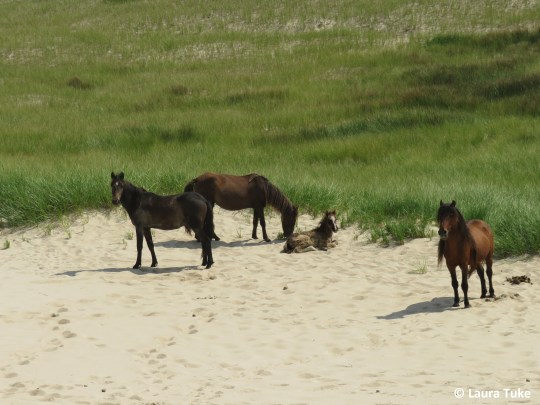
6. Sable Island horses live in all year-round social groups, called bands, which either contain bachelor, unmated males or typically consist of anywhere up to 15 individuals, with 1-3 dominant males (stallions), adult females (mares) and young offspring (typically foals and yearlings).

7. In the Sable Island population, the sex ratio is heavily male-biased. This is because a lower number of females are surviving on the island, due to the different, more extreme conditions they experience in comparison to males, such as with breeding.

IMG_7005

8. The Sable Island horse’s diet is composed mainly of tough American marram grass, other grass species and beach pea, though they will feed opportunistically on a range of other species.

9. The horses are found in a range of colours, but there are none that are spotted, grey, white, or coloured on Sable Island. It is suspected that this is because these colours were kept out of the population previously.

IMG_9103

10. The Sable Island horses have been part of an ongoing long-term individual-based study since 2007, meaning every individual is surveyed between July to early-September each year. As a result, every individual is followed from birth to death, can be individually identified, and have their very own name, such as Orbit, Ripley or Maria.

Orbit and house

Orbit

11. Alongside the Sable Island Horse Project (a collaboration between the University of Saskatchewan and University of Calgary), my research has focused on investigating the genetic basis of foal body size and the potential for it to evolve in the Sable Island horse. Data collection for this research involved a special piece of equipment consisting of two lasers and a camera attached to a frame. This allows for photos to be taken from a distance that were then used to calculate reliable body size measurements.

Laser standard

IMG_7872

Disclaimer: All horse photos (from wide shots to zoomed in) were taken from at least the minimum of 20m away from the subject(s)

Sable Island’s Birds vs. Invertebrates

The wonders of nature are endless – Walt Disney

When people think of Sable Island, they may think of a windswept island of sand, the island’s famous feral horses, or its involvement in maritime stories. More overlooked is Sable’s vibrant collection of fauna and flora, the latter having previously been touched upon in my ‘Guide to Sable Island’s habitats and plants’. When considering Sable’s fauna though, the most abundant can be split into its birds and its invertebrates.

Birds

Juvenile gull

Over Sable’s recorded history, at least 340 bird species have been observed on the island. These species span from American kestrel (Falco sparverius) to ruby-throated hummingbird (Archilochus colubris) to red-breasted nuthatch (Sitta canadensis), the last being one species I got to see myself this summer on Sable.

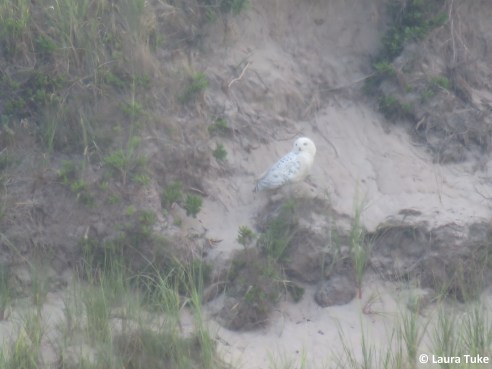
More than 45% of bird species that have been observed on Sable though, are termed as vagrants. This means that they have strayed from their usual range, for example arriving on the island due to being blown off course by strong winds during migration. As a result, I had the pleasure of seeing one iconic species during my stay this summer; a snowy owl (Nyctea scandiaca), floating like a ghost between the island’s dunes.

Snowy owl 3

Snowy Owl

Many species also use the island as a stopover site during their migration, for example waders, raptors and warblers. Regular migrant species include willet (Catoptrophorus semipalmatus), sooty shearwater (Puffinus griseus), grey-cheeked thrush (Catharus minimus) and:

Yellowlegs

Yellowlegs

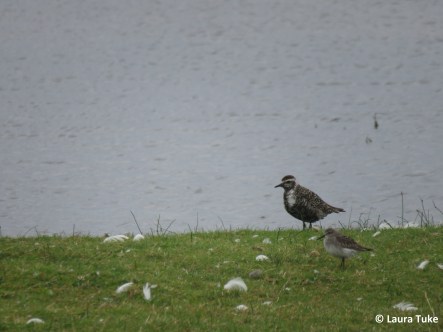
Female American Golden Plover and sandpiper

Female American golden plover (Pluvialis dominica) (sandpiper in foreground)

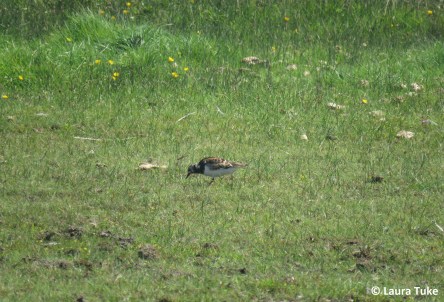
Ruddy turnstone

Ruddy turnstone (Arenaria interpres)

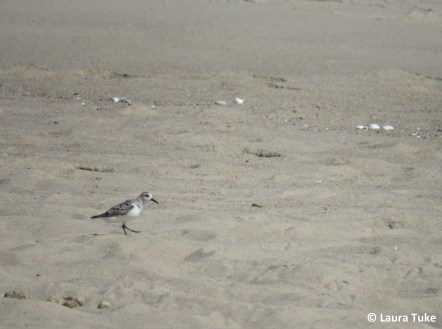
Sanderling

Sanderling (Calidris alba)

Whimbrel

Whimbrel (Numenius phaeopus)

White-rumped sandpiper

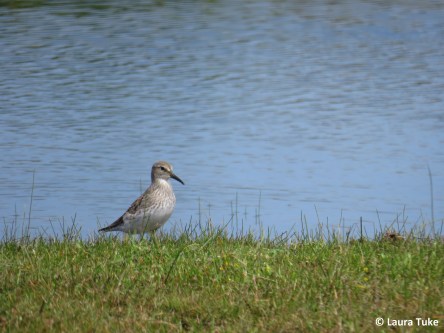
White-rumped sandpiper (Calidris fuscicollis)

Of the 340+ species seen on Sable though, more than 30 have been recorded as breeding on the island. Regular breeders include:

  • Arctic tern (Sterna paradisaea)
  • Common tern (Sterna hirundo)
  • Roseate tern (Sterna dougallii)
  • Herring gull (Larus argentatus)
  • Great black-backed gull (Larus marinus)
  • Ipswich sparrow (Passerculus sandwichensis princeps)= endemic
    • Subspecies of Savannah sparrow and of conservation concern

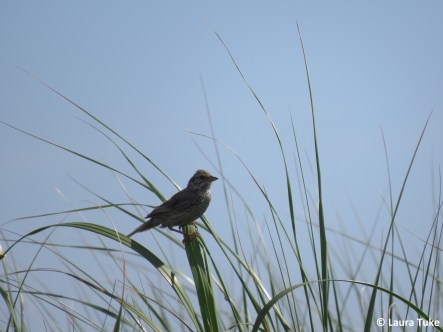
Ipswich sparrow

  • Leach’s storm-petrel (Oceanodroma leucorhoa)
  • American black duck (Anas rubripes)
  • Mallard (Anas platyrhynchos)
  • Red-breasted merganser (Mergus serrator)
  • Northern pintail (Anas acuta)
  • Least sandpiper (Calidris minutilla)
  • Spotted sandpiper (Actitis macularia)

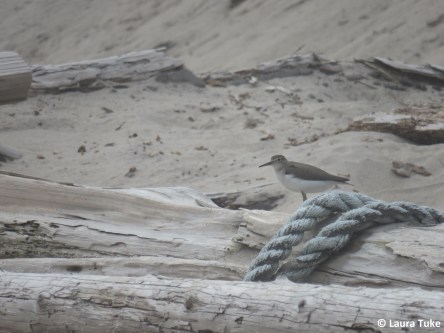
Juvenile spotted sandpiper

Invertebrates

In comparison to the 340+ bird species that have been recorded on Sable Island, 875+ invertebrate species have been identified on and in its marine proximity. Species include the monarch butterfly (Danaus plexippus), painted lady (Vanessa cardui), seven-spot ladybird (Coccinella septempunctata), and round-tipped cone-headed grasshopper (Neoconocephalus retusus).

Six spot ladybird

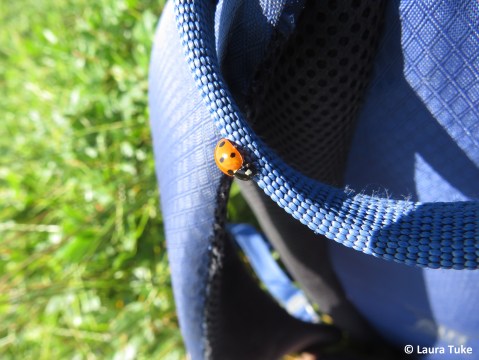
Seven-spot ladybird (Coccinella septempunctata)

Six spot ladybird larvae

Seven-spot ladybird larvae

Sable Island also has some endemic invertebrate species. These include the Sable Island leaf beetle (Pyrrhalta sablensis), the Sable Island sweat bee (Lasioglossum sablense)and three moth species (Agrotis arenariusOrgyia leucostigma sablensis and a Papaipema species).

Though I did not get enough time on Sable Island to delve too deeply into the world of the invertebrates, I did enjoy seeing new species and identifying the many caterpillars I saw, such as:

Apple sphinx moth caterpillar

Apple sphinx moth caterpillar (Sphinx gordius)

Virginian tiger moth caterpillar

Virginian tiger moth caterpillar 2

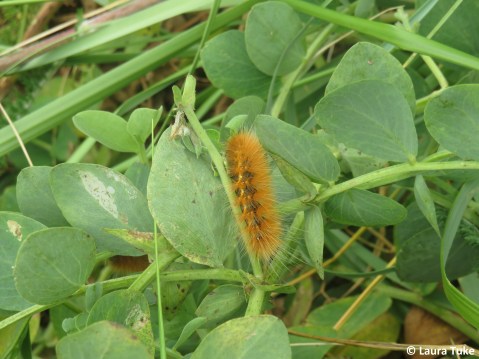
Two variants of Virginian tiger moth caterpillars (Spilosoma virginica)

Guide to Sable Island’s habitats and plants

Look deep into nature, and then you will understand everything better – Albert Einstein

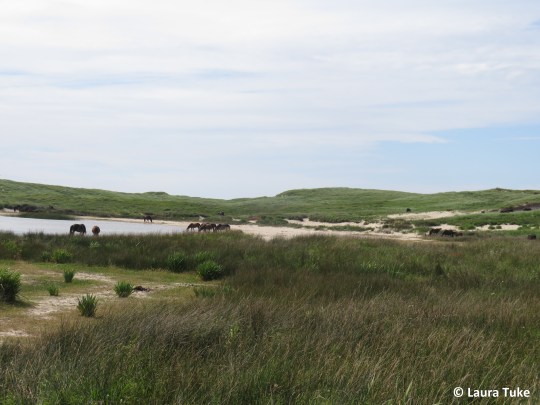
Sable Island, 250km from Halifax, Nova Scotia, Canada, is an island made entirely of sand. For approximately two thirds of the island runs a series of high dunes, flanked by two long sandy beaches, and are considered one of the largest dune systems in Eastern Canada. With the island experiencing a maritime temperate climate, the island sustains a range of habitat types, which include grassland, heath, sandwort, freshwater ponds, brackish ponds, and non-vegetated terrain.

Due to strong winds and a lack of soil, the island is treeless (apart from one) and is dominated by low-growing plant species. When on the island myself, one thing i loved, other than the vast variety of plant species, was the strong smell of lush green vegetation that would bombard my sense of smell everytime i was out and about walking.

Plant Species

In 2016, 183 vascular plant species were recorded on Sable Island, in which 34% were considered alien species.

Here’s a selection of different, more notable species that can be found on Sable Island:

Common species

Marram grasslandAmerican marram grass (Ammophila breviligulata)= Most common species

Beach peaBeach pea (Lathyrus japonicas var. maritimus)
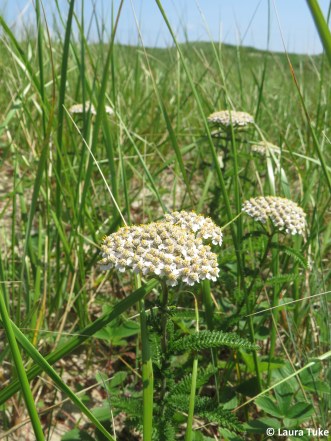
Common yarrowCommon yarrow (Achillea millefolium var. occidentalis)

SandwortSea sandwort (Honckenya peploides sp. robusta)
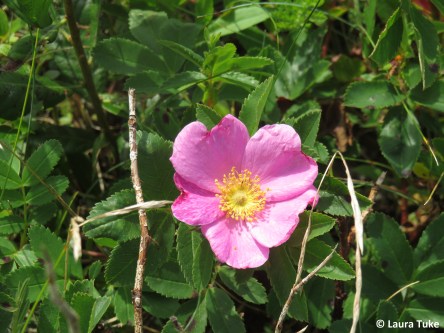
Common wild roseCommon wild rose (Rosa virginiana)
Edible fruit and fragrant flowers

Lowbush blueberryLowbush blueberry (Vaccinium angustifolium)
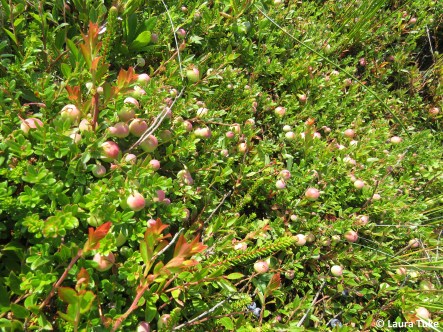
Edible fruit

Large cranberryLarge cranberry (Vaccinium macrocarpon)
Edible fruit

New york asterNew York aster (Symphyotrichum novi-belgii)

Swamp smartweed

Stretch of swamp smartweedSwamp smartweed (Polygonum hydropiperoides)

Wild strawberryWild strawberry (Fragaria virginiana sp. glauca)
Edible fruit

Small flowered evening primroseSmall flowered evening primrose (Oenothera parviflora)
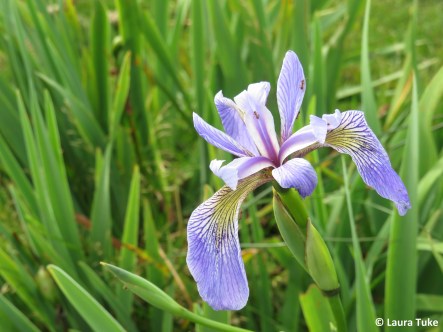
Blue flag irisBlue flag iris (Iris versicolor)

Hooded Ladies' tressesHooded ladies’ tresses (Spiranthes romanzoffiana)

Blue eyed grassBlue-eyed grass (Sisyrinchium angustifolium)

Hedge bindweedHedge bindweed (Calystegia sepium)

Seaside goldenrodSeaside goldenrod (Solidago sempervirens)
Also:
Pearly everlasting (Anaphalis margaritacea)
Creeping juniper (Juniperus horizontalis)
Common juniper (Juniperus communis var. megistocarpa)
Star-flowered false solomon’s seal (Maianthemum stellatum)
Black crowberry (Empetrum nigrum)= Edible fruit
Bayberry (Morella pensylvanica)= Edible fruit and aromatic leaves
Wand dewberry (Rubus arcuans)= Edible fruit
Threepetal bedstraw (Galium trifidum)

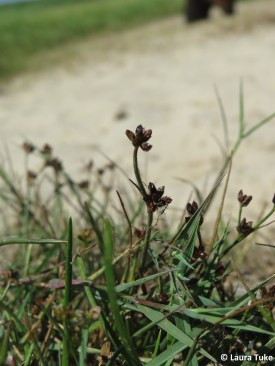
Juncus


Rushes and sedges

Baltic rush (Juncus balticus var. littoralis)
Canada rush (Juncus canadensis)
Slender rush (Juncus tenuis)
Jointleaf rush (Juncus articulatus)

Star sedge (Carex echinata)
Soft-stemmed bulrush (Schoenoplectus tabernaemontani)


Other grass species (Poa and fescue)

Red fescue (Festuca rubra)
Annual meadow grass (Poa annua)
Kentucky bluegrass (Poa pratensis)
Bentgrass (Agrostis scabra)

Introduced species

Curled dockCurled dock (Rumex crispus)

Black knapweedBlack knapweed (Centaurea nigra)

Also:
White clover (Trifolium repens)
Common heather (Calluna vulgaris)
Red clover (Trifolium pratense)
Common plantain (Plantago major)
English plantain (Plantago lanceolata)

Sable Island’s Only Tree

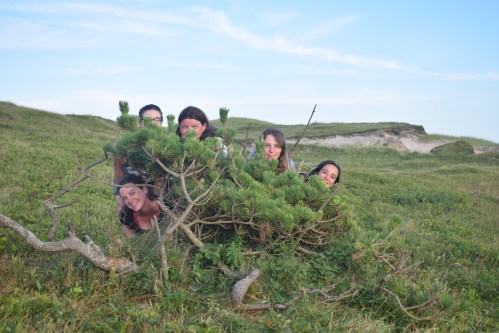
On Sable Island, due to the extreme conditions, there is only one living tree. This tree is a Scot’s pine, standing at a few feet tall. It was planted 50 years ago and can be found at the ‘Pine Tree Pond’ near Main Station on the island.

Here’s a couple of photos of the tree with the Sable Island Horse Project’s crew for the second half of this year’s summer field season:

DSC_0419DSC_0424

Introducing Sable

We had been flying nearly an hour when a smudge first appeared on the horizon of the ocean stretching before us. Though shrouded in fog, it was clear that we were finally nearing  our destination, the remote island that would be my home for the next 4 weeks, Sable Island.


Flying

First recorded by European explorers during the early 1500s, Sable Island is a large crescent-shaped sandbar situated approximately 156km from the nearest landmass (Nova Scotia, Canada). Sitting on the edge of the eastern North American continental shelf, the island was probably formed from deposits left by retreating glaciers at the end of the last ice age. Currently at about 49km in length, 1.25km in width and up to 30m in height above sea level, the island is experiencing decreases in size over time and shifting eastwards.

Sable Island

Map images from Google Maps

Though fabled by many, Sable Island is known for its abundance of wildlife and colourful history. In particular, the island is famous for being the ‘Graveyard of the Atlantic’, with 350+ shipwrecks resting off its shores, the latest originating from 1999 (the Merrimac). Despite people living on Sable from time to time since its discovery, during the 19th century it was these shipwrecks and the establishment of lighthouses and lifesaving stations that led to the start of continuous human presence on the island. The lifesaving stations persisted till they were decommissioned in 1958, but a meteorological station was set up at the start of the 20th century that is still functioning on the island today.

Sable shipwreck map

Map from the NS Department of Education

Today Sable Island is now under the management of Parks Canada, following its designation as a National Park Reserve in 2013. This designation recognises Sable for its impressive dune system and rich biodiversity, including endemic species and the world’s largest grey seal breeding colony. Despite this and the island’s many bird, invertebrate and plant species, you will find that the island’s population of feral horses is what captures most the public’s imagination. These horses were what I first saw when the green strip of Sable flanked by sandy beaches first came fully into view from the plane and its these horses that I was here to visit.

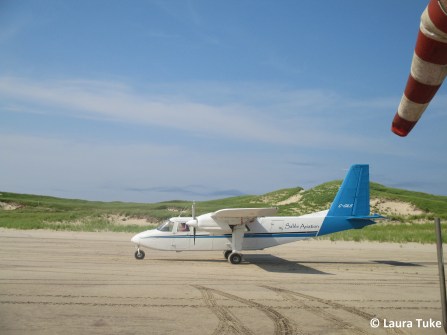
Following my first sight of the island, we were soon bumping down on to the landing strip on the island’s sandy south beach. After months of planning and much hard work, I had finally arrived!

Sable Aviation Plane


For Further Reading:

  • Sable Island: Explorations in Ecology and Biodiversity – Edited by Bill Freedman