Last year was a very unpredictable year for all walks of life, but for me it was another fantastic year for wildlife, with some wild firsts and much inspiration to be taken from nature. With each new year, I take it as a fresh opportunity to enhance my skill as a wildlife photographer and to also immerse myself in the wildlife that can be found all around me. There is so much to celebrate in nature and so much beauty to be found, and 2022 did not disappoint in this. So to look back on the year, here’s a collection of photos spanning 2022, from my photographic adventures through to simply finding inspiration from nature in my life. Enjoy!
2022
January
The start to the year felt a little grey and bleak, but adventuring out with my camera I was able to find some life and activity in the landscape, which can always be found if you look closely enough. In this photo, this little blue tit looks so small, as they are, but I love how its bright colours pop out from its surroundings.
February
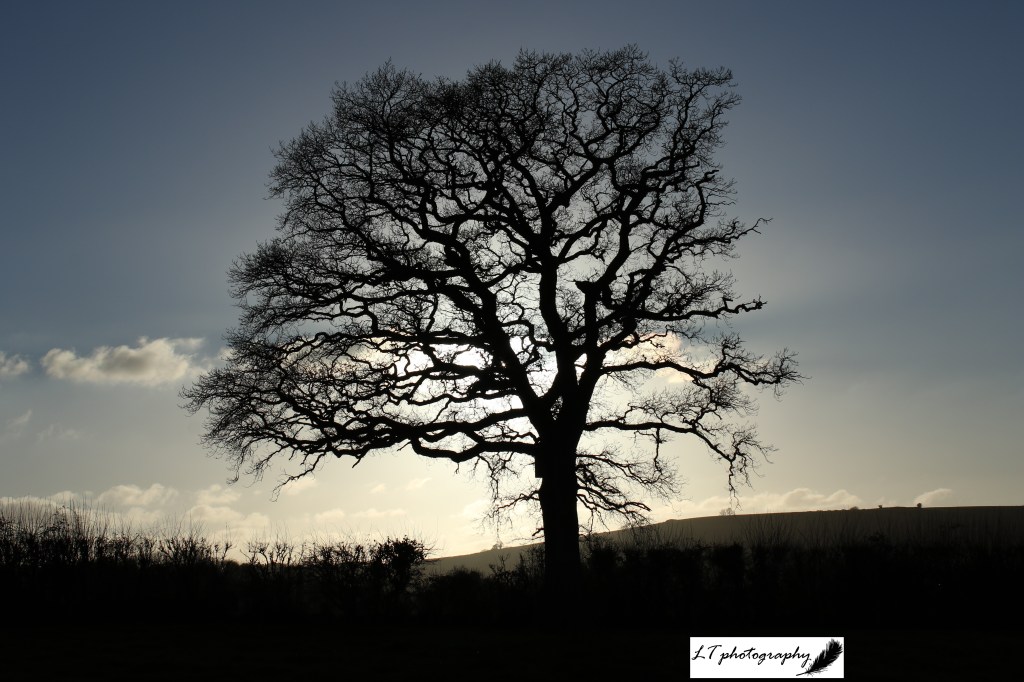
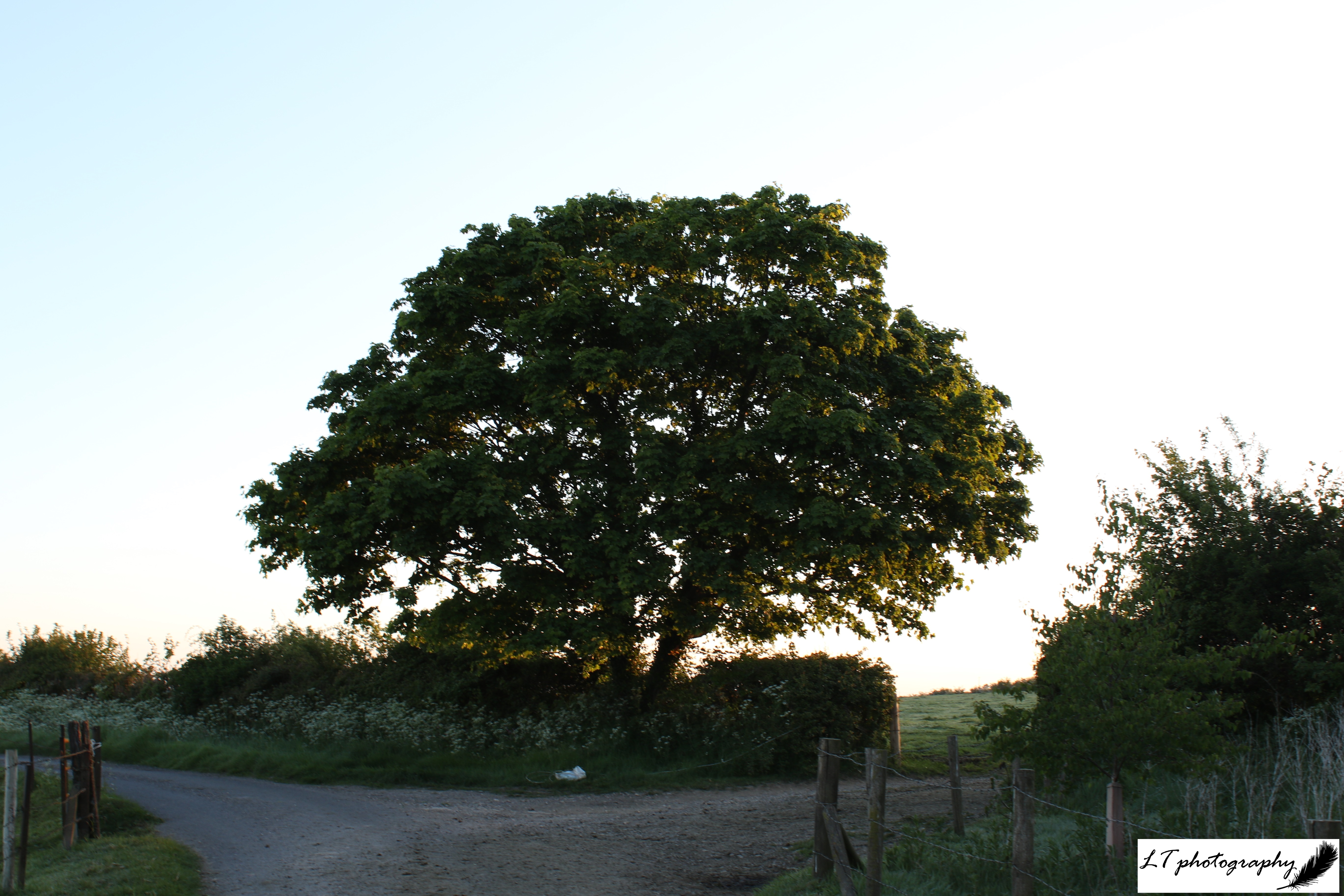
For me one of the joys of my year in 2022 was following the life of one particular oak tree and visiting it regularly to experience its annual cycle and those of the wildlife living within its close surroundings (check out my A Year In The Life Of An Oak Tree blog post).
March
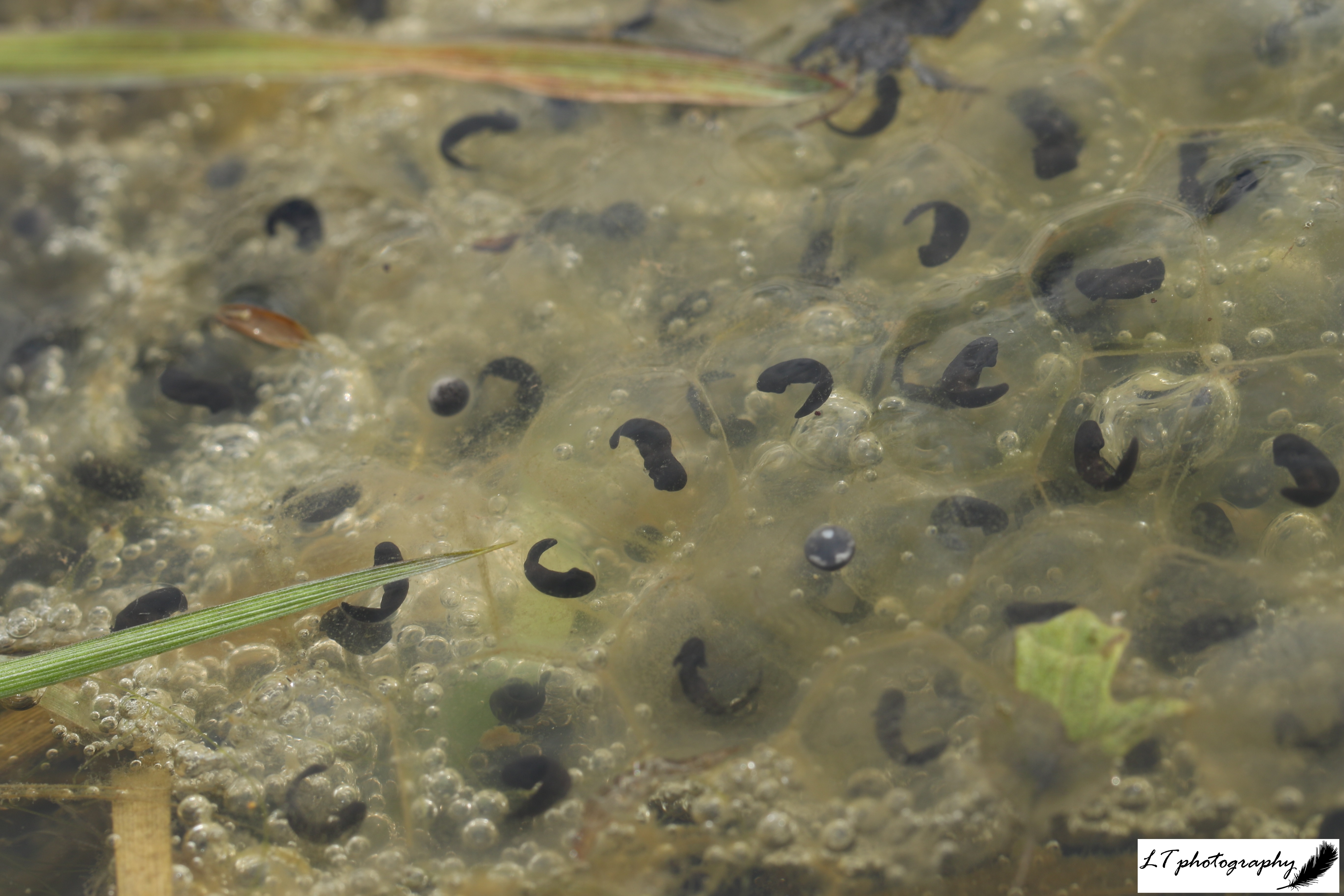
One wildlife first for me in 2022 was discovering frog spawn for the first time in my family’s new pond in our conservation field. I enjoyed making multiple trips to this site at the beginning of spring to enjoy, explore the development of tadpoles and all its intricacies, and to take some cool photos.
April
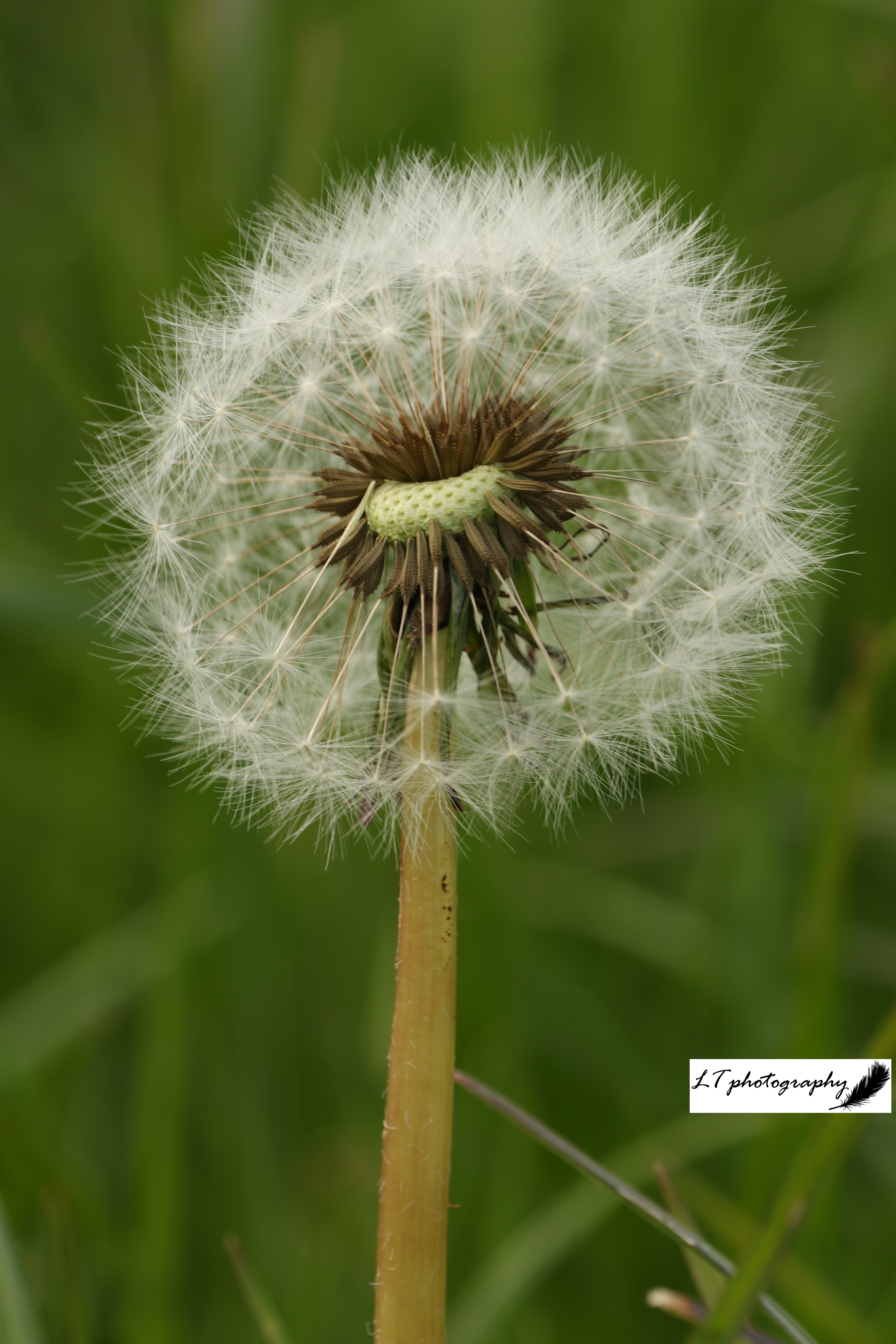
Sometimes the most simple of subjects can be the most satisfying to photograph, showing a different side to their shape and form. Dandelions such as this one are a favourite of mine as they are a common sight, but have a hint of the magical when you look a little closer. This particular photo has also become a favourite with some of my friends and family.
May
This beautiful boy was a spontaneous joy to photograph and has inspired me to see the beauty in even the more common of inhabitants to be found in nature. All can inspire!
June
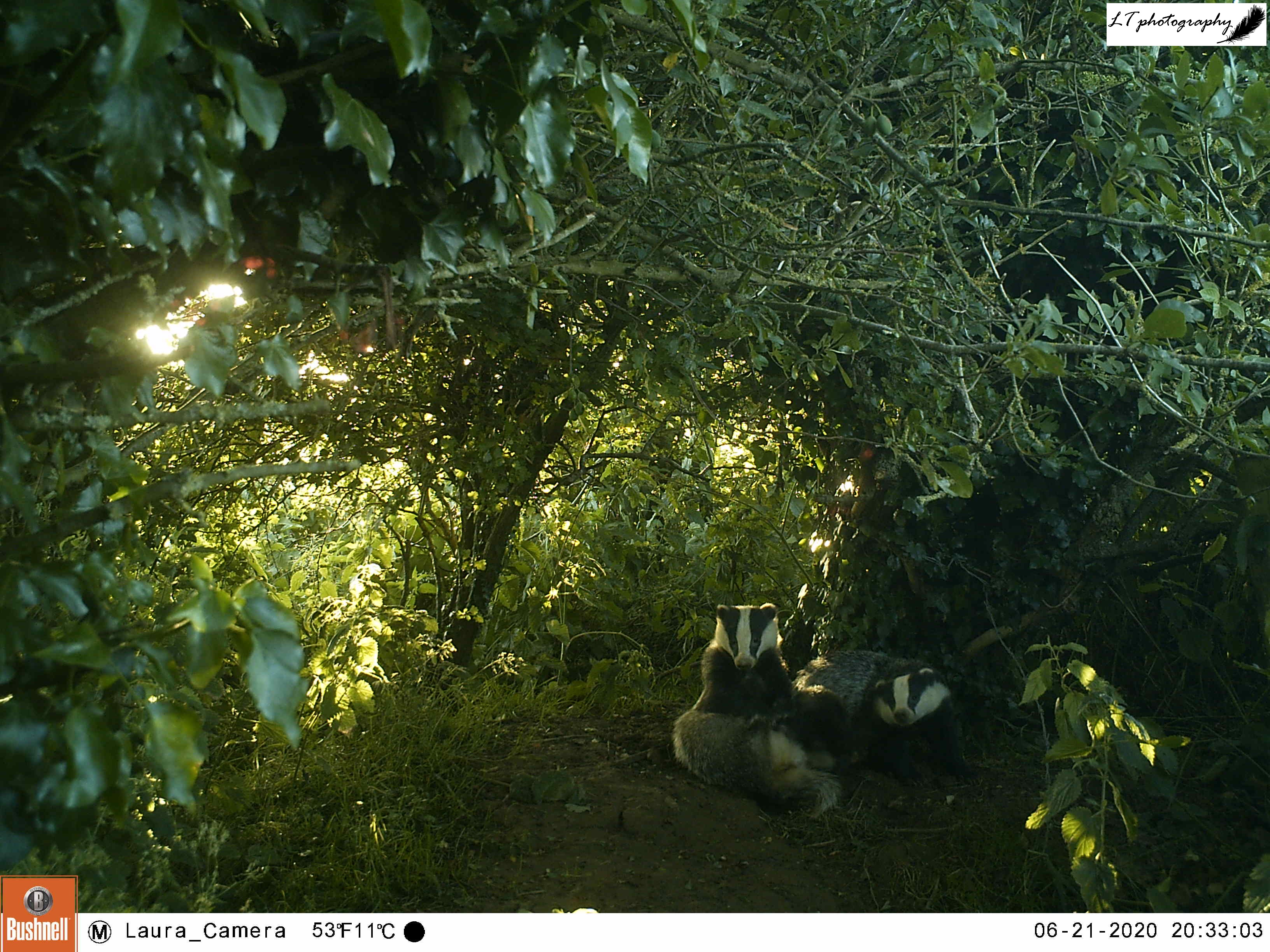
Last year was another fantastic year for camera trapping in my local area. From roe deer to fox cubs, I got to record some magical sights, including this wonderfully patterned British mammal and the antics of one particular family.
July
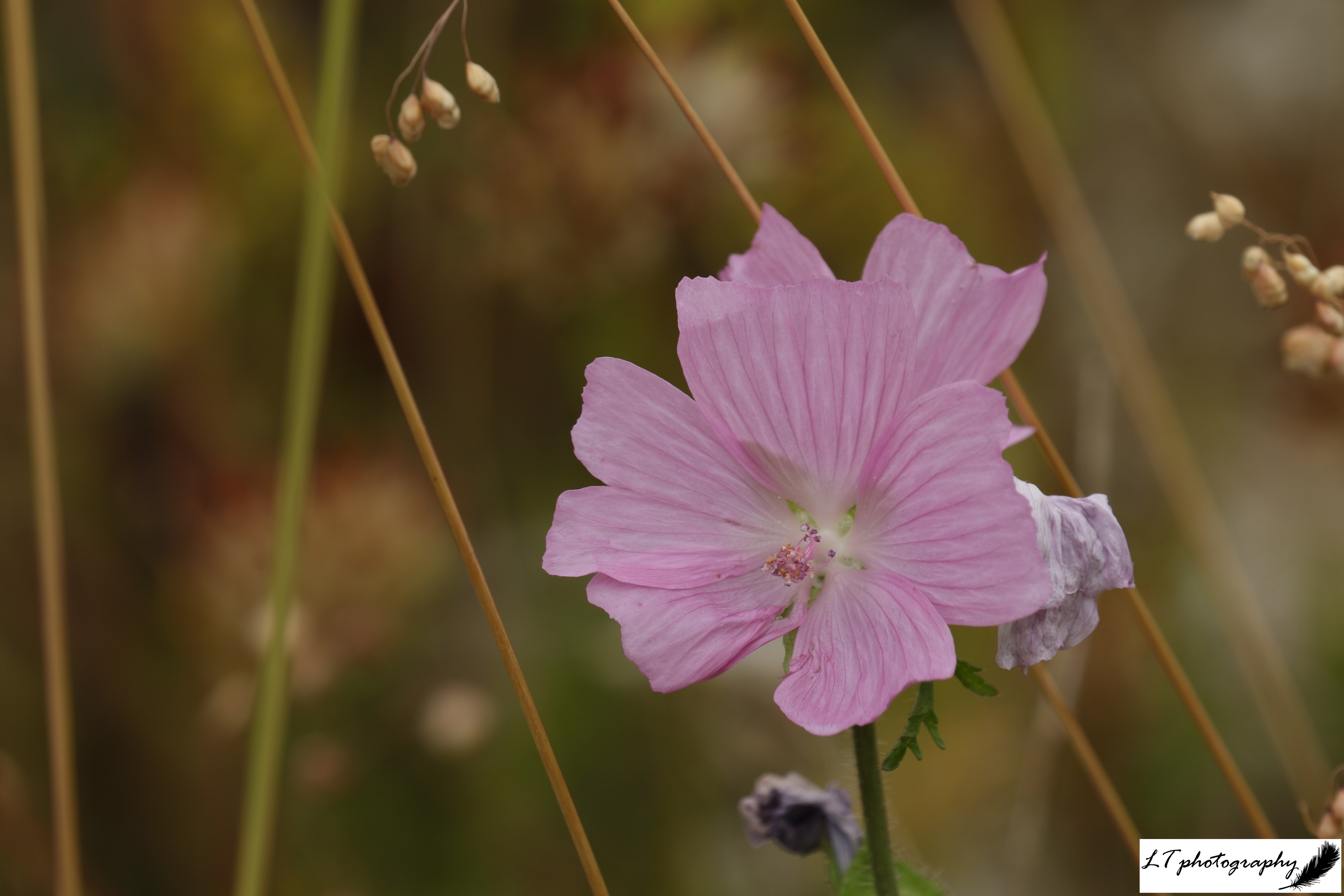
In summer, the countryside around my home in Dorset is alive with the scent and colour of many different species of wildflower, from meadowsweet and dog roses to bird’s-foot-trefoil and wild marjoram. Pictured here is the flower of the common mallow which can be found in a variety of habitats, in this case on a wild chalk mound.
August
Summer is a great time to see lots of weird and wonderful moths, including this red underwing, that will even venture into your garden and home at this time. With over 2500 species of moths in the UK alone, there are lots to discover!
September
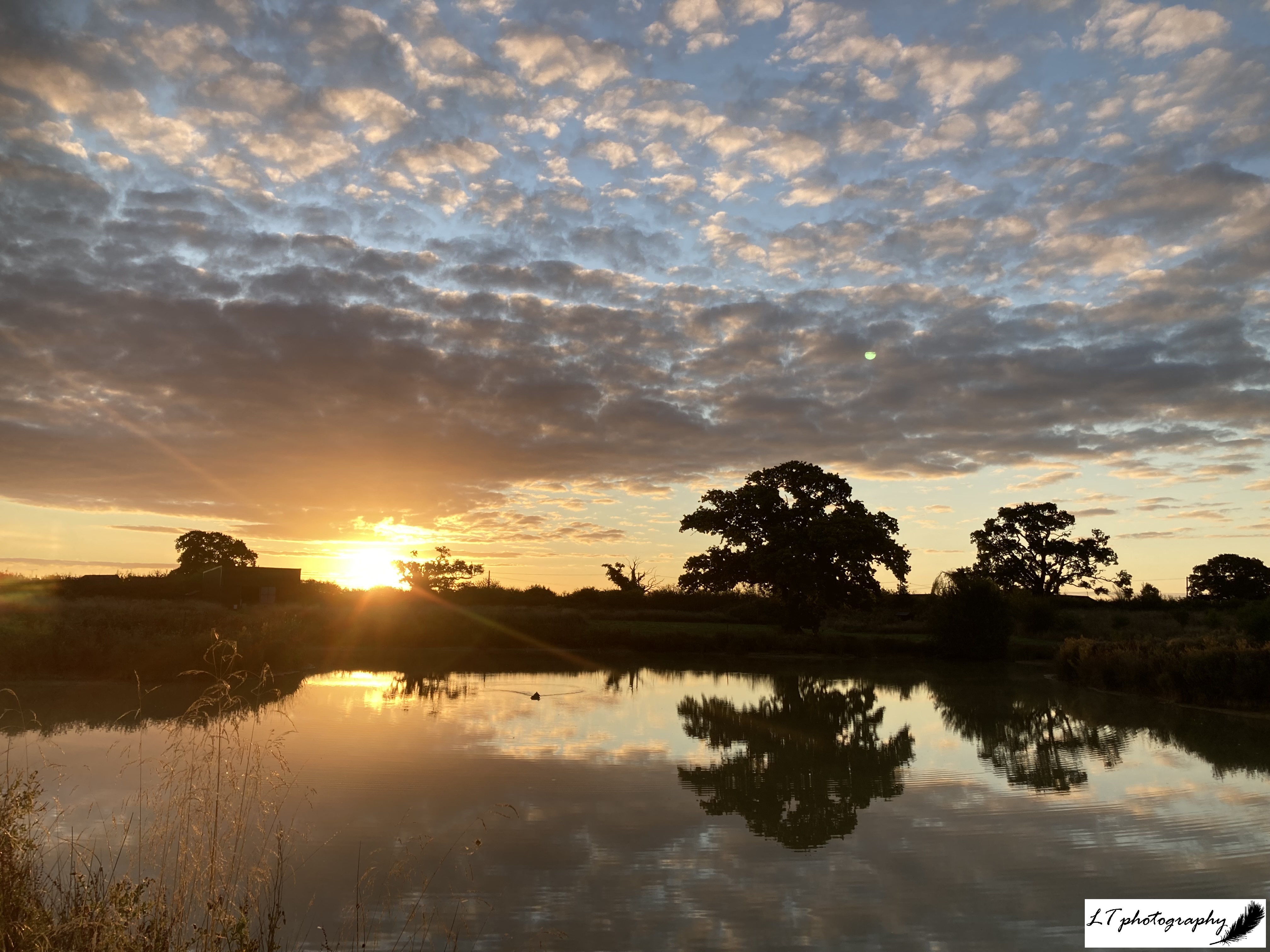
Summer mornings waking up very early to go and take part in autumn migration bird ringing is made all the more better by fantastic sunrises, such as this one from September. That golden light over water is simply magical!
October
Though I do not celebrate Halloween myself, I have made it my annual tradition at the end of October to carve a pumpkin with a nature-themed design. The design for my 2022 pumpkin was the shapes of leaves of 5 different tree species, including oak, field maple and hazel.
November
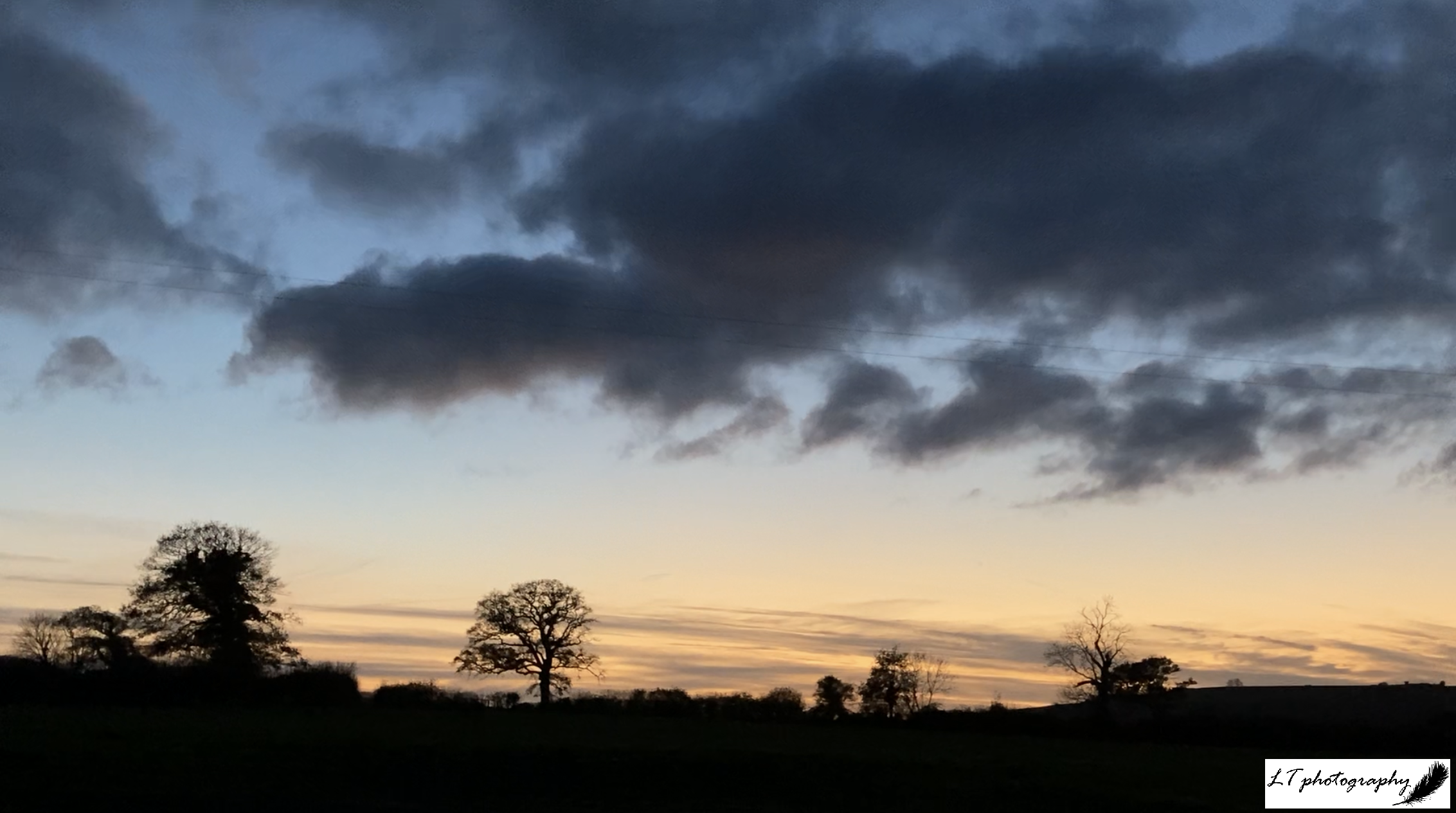
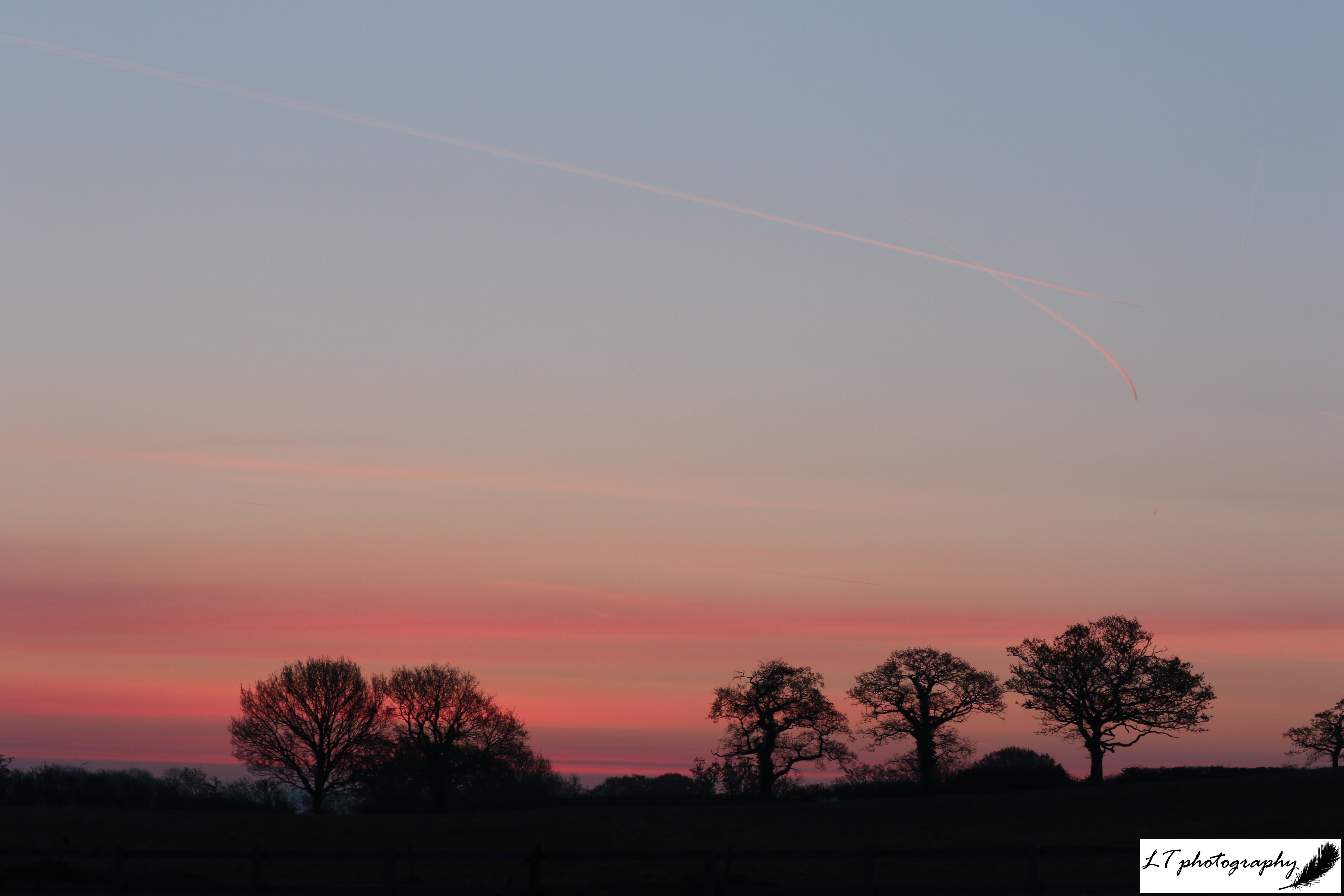
November is a month that observes the end of autumn and the start of winter in Dorset, with greyer skies, shorter days, and the landscape falling into a slumbering state. As a result, a colourful sunset can really brighten up a less spectacular day at this time of year.
December
Though my family and I only have a small Christmas celebration each year, part of advent for me is making Christmas decorations using greenery and natural colourful plants (check out my How to… Bring Nature into Your Home at Christmas blog post for more). Here pictured are some of 2022’s Christmas decorations.
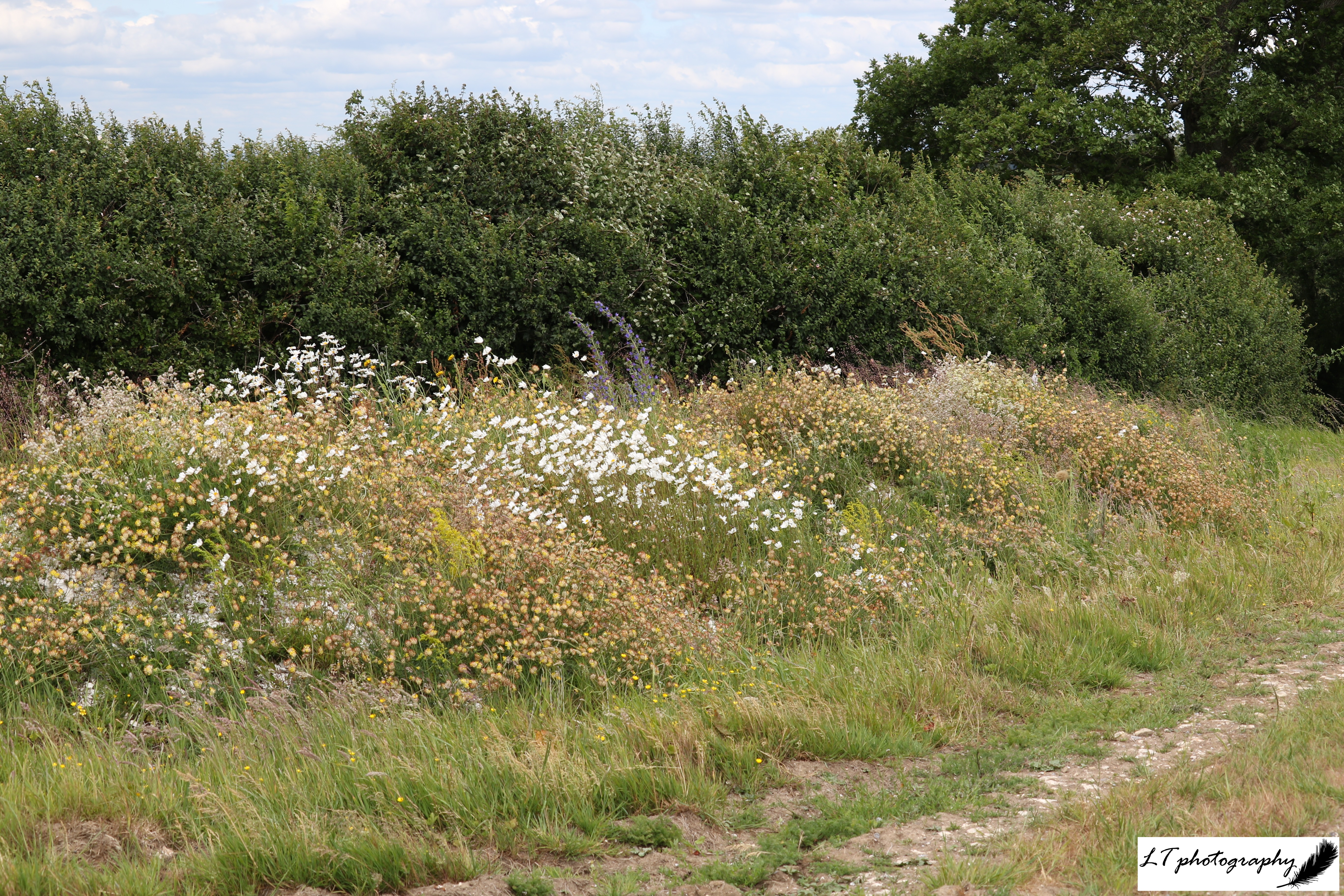
Colourful, radiant, buzzing with life, a piece of paradise in the summer sunshine. All words to describe a small piece of chalk habitat nestled within the heart of my family’s farm in Dorset. Amidst a clay-dominated landscape, this small creation aims to emulate the approximately 41,000 hectares of lowland chalk grassland that can still be found across the UK. This super rich habitat contains over 40 species of flowering plants in every one square metre, giving chalk grassland its reputation as the tropical rainforest of Europe! Sadly though, 50% of chalk grassland has already been lost in Dorset alone since the 1950s.
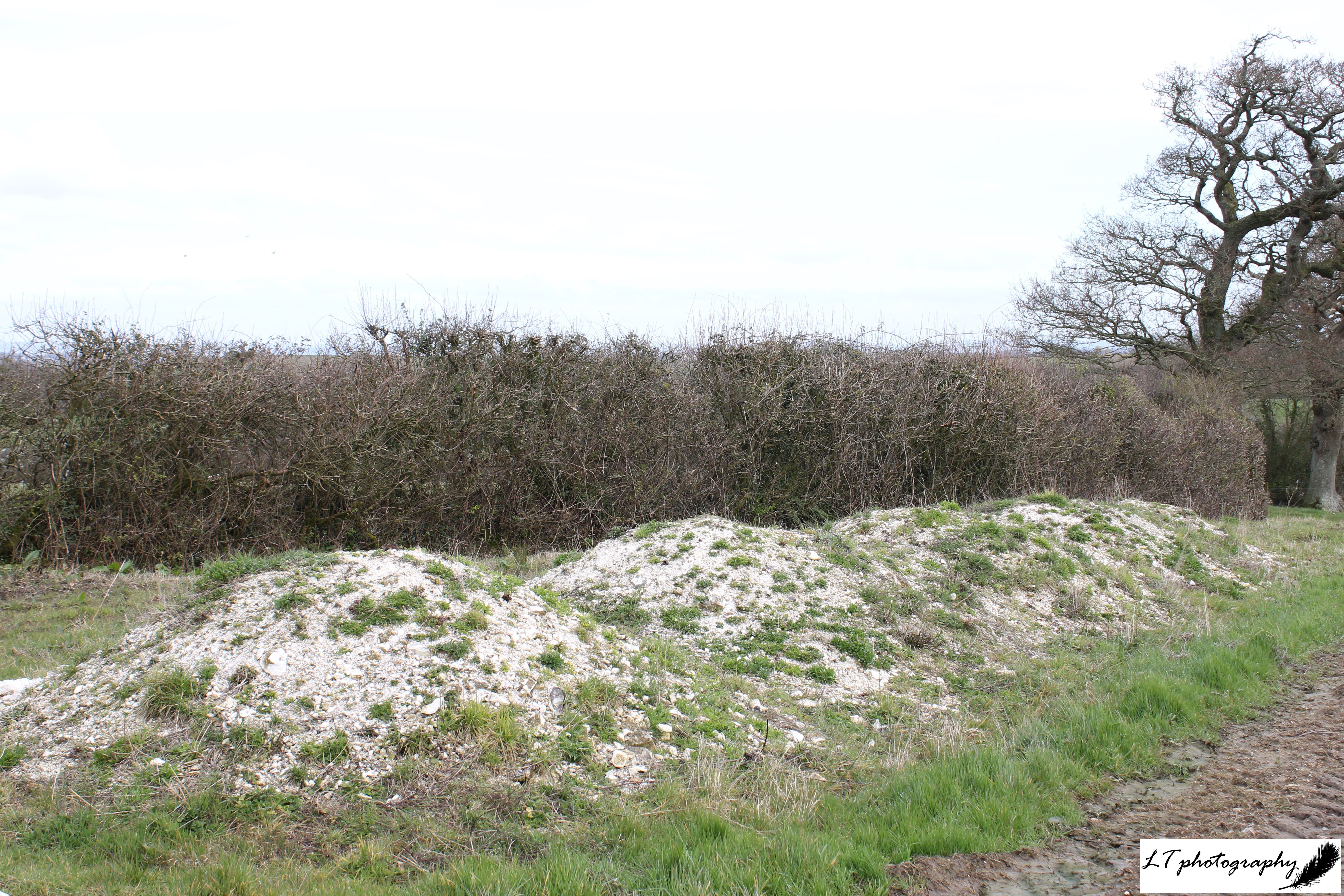
In 2017, my Dad made the decision to transform a small triangular area of land on our farm into our very own chalk paradise. Though we do not live immediately on chalk downland, it can be found to the North and South of us. This makes our location ideal to create stopover habitat or a wildlife corridor, for the myriad of species that rely on these diverse plant communities. Following bringing in 40 tonnes of quarried chalk and lots of wildflower plugs and seeds, we now have a thriving 10m by 3m and 2m in height chalk mound.
Though my family’s chalk habitat is still in its relative infancy, over time it is transforming into a wildlife haven. From Grasshoppers and Marbled White Butterflies to blue Butterflies and Carder Bees, new species are popping up each and every year. This mini habitat has also been a great place for my mum to teach me all about the plant species that call chalkland grassland home. With her inspiration, I have put together a simple guide to identifying just some of the many wildflower species that are appearing on our mound.
Chalkland Wildflowers
Wild Marjoram (Origanum vulgare)
Family: Mint
Lifespan: Perennial (lives for several years)
Size: Short to medium height (30-60cm)
Stems: Erect, dark-red, downy and either round or square
Leaves: Oval, often slightly toothed, stalked, and 1.5-4.5cm in length
Flowers: Dark purple buds in loose clustered heads, opening to pale purple 6-8mm long flowers. Strongly aromatic. Flowers July-September
Range: Found throughout the UK (particularly in the South), but scarcer in Scotland
Fun Facts: This culinary herb is a symbol of happiness descended from Roman legend, with Origanum meaning ‘mountain joy’
Kidney Vetch (Anthyllis vulneraria)
Family: Legume
Lifespan: Annual (lives for one year) or perennial
Size: Sprawling and medium in height (up to 60cm), but very variable
Stems: Silkily hairy, round, and often greyish
Leaves: In pairs, they are silky white below and green above, and are 30-60mm in length
Flowers: Yellow, orange or a fiery red, and downy-white below. They are found in single heads (12-15mm across) or sometimes pairs. Flowers April-September
Range: Found throughout the UK, especially around the coast
Fun Facts: In the Middle Ages, it was known for speeding up wound healing, with vulneraria meaning ‘wound healer’. It was also once used to commonly treat kidney disorders
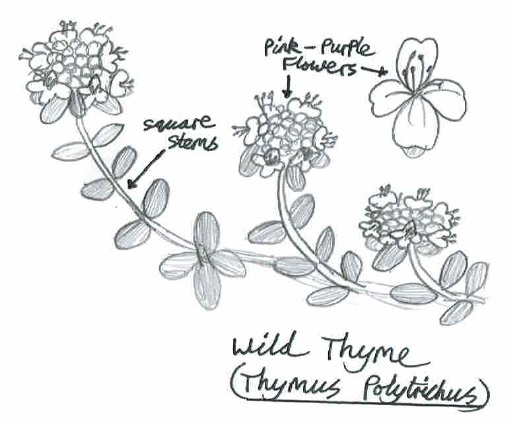
Wild Thyme (Thymus polytrichus)
Family: Mint
Lifespan: Perennial
Size: Low to the ground, forming a mat of non-flowering rooting stems (up to 10cm in height)
Stems: Square with erect flowering stems
Leaves: Evergreen, short stalked, very small oval 4-8mm leaves in opposite pairs
Flowers: Faintly aromatic with pink-purple flowers in round and dense heads. Flowers May-September
Range: Widespread in South East England, but scattered distribution elsewhere
Fun Facts: Long regarded as the favourite flower of fairies, and associated with love. The Greek thumon though means ‘that which is included in a sacrifice’
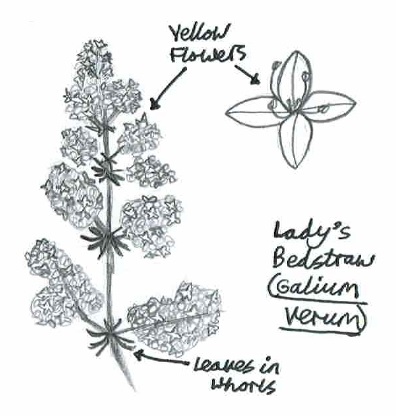
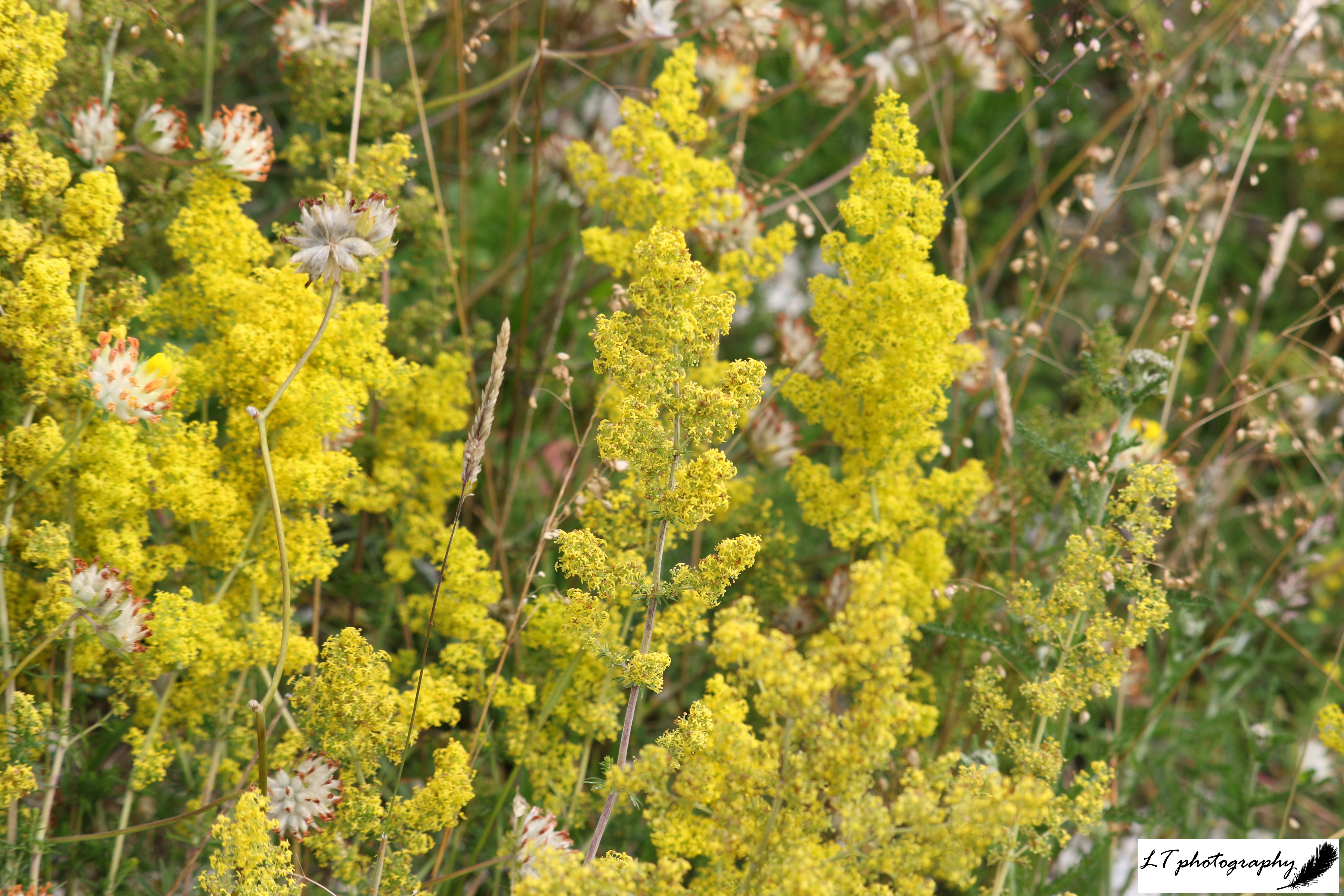
Lady’s Bedstraw (Galium verum)
Family: Madder/Bedstraw
Lifespan: Perennial
Size: Short to medium in height, often sprawling (up to 100cm)
Stems: Four-angled, almost hairless stems
Leaves: Dark green, long, narrow, shiny leaves in whorls of 8-12. Said to smell of new-mown hay
Flowers: Bright golden yellow, 2-4mm wide, in clusters, with a sweet honey-like scent. Only Bedstraw species in the UK with yellow flowers. Flowers June-September
Range: Widespread
Fun Facts: Associated with the story of the Virgin Mary giving birth to the baby Jesus, leading to the belief that a woman lying on a mattress of Lady’s Bedstraw would have a safe and easy childbirth
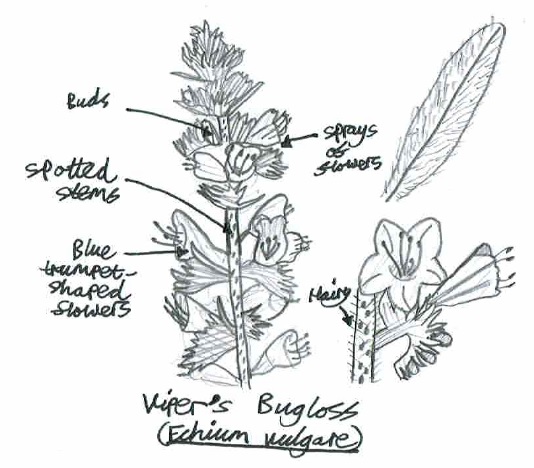
Viper’s Bugloss (Echium vulgare)
Family: Borage/Forget-Me-Not
Lifespan: Biennial (flowers in its second year before dying) or perennial
Size: Medium to tall in height (up to 100cm)
Stems: Roughly hairy and spotted (red-based bristles)
Leaves: Narrow, oval-shaped lower leaves
Flowers: Flowers in drooping clusters of pink buds that open to become erect, blue, trumpet-shaped, open-mouthed flowers, 10-20mm long, in branched spikes. Flowers May-September
Range: Scattered distribution across the UK, being most common in the South
Fun Facts: The plant’s name comes from a time when it was believed to be a cure for snake-bites, reinforced by the dead flower-heads resembling a viper’s head
Rough Hawkbit (Leontodon hispidus)
Family: Daisy
Lifespan: Perennial
Size: Short to medium in height (up to 60cm)
Stems: Very hairy, unbranched, leafless, and slightly swollen at the top
Leaves: Form a rosette of bluntly lobed leaves at the base of the flowering stem
Flowers: Golden-yellow, though often orange or reddish beneath, solitary and 20-40mm wide. Forms seed heads that look like dandelion clocks. Flowers late May-October
Range: Widespread and fairly abundant across the UK, apart from in the far North
Fun Facts: In Greek, Leontodon means ‘Lion’s tooth’, referring to the toothed leaves. The flowers are also rich in nectar and smell sweetly of honey
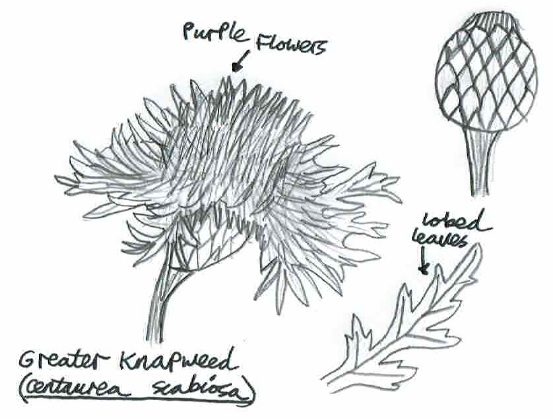
Greater Knapweed (Centaurea scabiosa)
Family: Daisy
Lifespan: Perennial
Size: Medium to tall in height (30-120cm)
Stems: Erect and grooved
Leaves: Lobed, where the lobes are positioned in pairs either side of the leaf centre. The leaves are 100-250mm long
Flowers: Purple, solitary and 30-60mm across. Flowers July-September
Range: Scattered across the UK, but predominantly grows in England
Fun Facts: Commonly used to treat wounds, bruises, sores and similar conditions
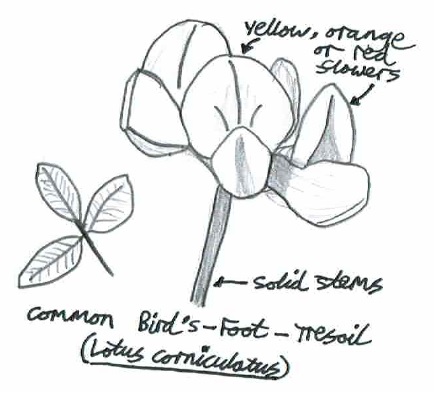
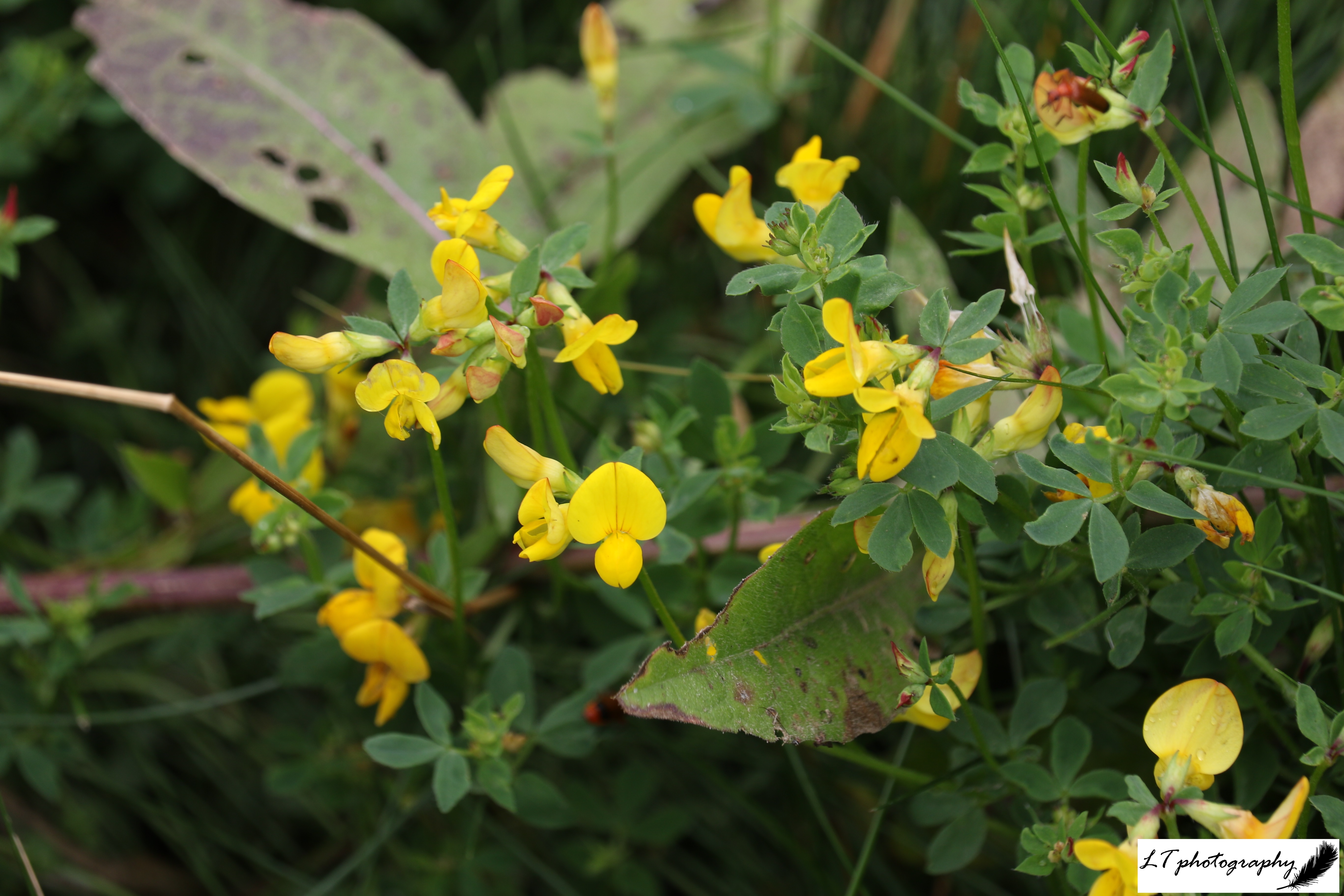
Common Bird’s-Foot-Trefoil (Lotus corniculatus)
Family: Legume
Lifespan: Perennial
Size: Short or medium in height and sprawling (up to 50cm)
Stems: Solid not hollow, and trailing
Leaves: Greyish-green, downy or hairless, and oval-shaped tapering to a point
Flowers: Deep yellow or orange, often partly red, and 10-16mm long, often 2-7 per flower head. Flowers May-September
Range: Widespread
Fun Facts: It has more than 70 common folk names including Eggs and Bacon. The name Bird’s-Foot-Trefoil reflects the resemblance to a bird’s foot, and is a larval food plant of Green Hairstreak and Dingy Skipper Butterflies
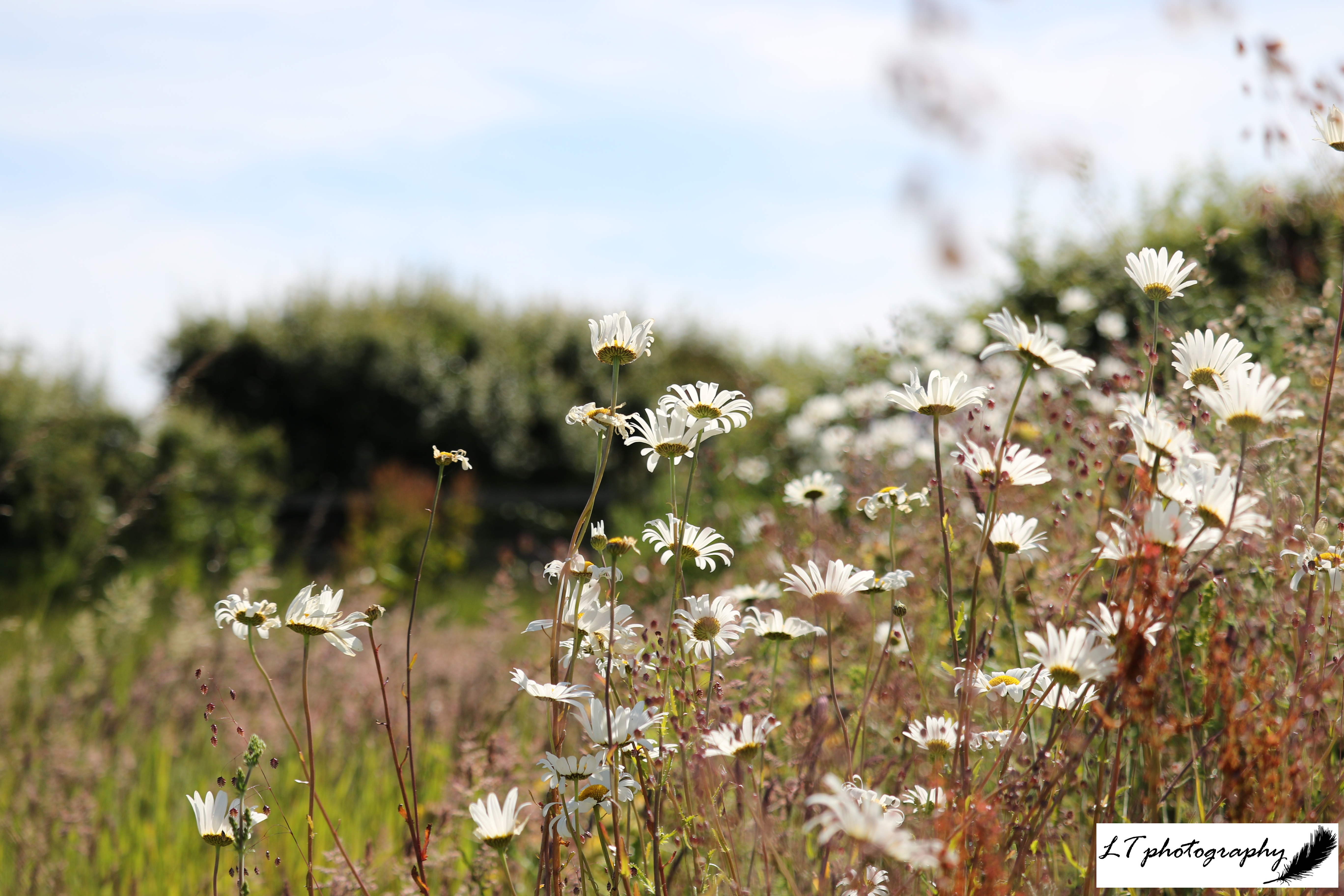
Ox-eye Daisy (Leucanthemum vulgare)
Family: Daisy
Lifespan: Perennial
Size: Medium in height (20-75cm)
Stems: Round, angled or square, erect, and slightly hairy
Leaves: Long-stalked, dark green, spoon-shaped, toothed and in a rosette around the base of the flowering stem
Flowers: White, 20-60mm across, solitary and on sparsely leafy stalks. Flowers May-September
Range: Widespread
Fun Facts: In past times, an extract was obtained by boiling the plant down, that was used in salves and medicines to cure a variety of ailments from liver disease to runny eyes. Largest native daisy species
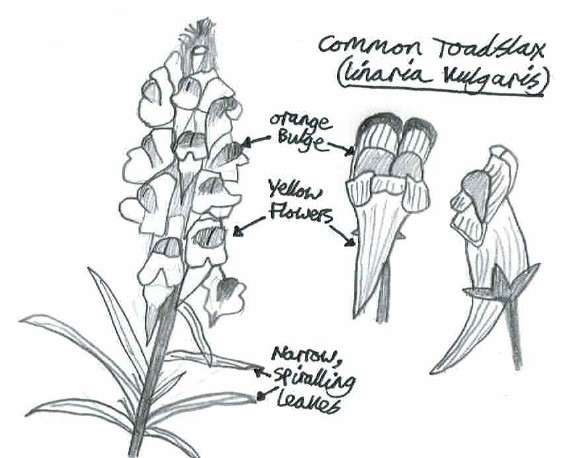
Common Toadflax (Linaria vulgaris)
Family: Plantain
Lifespan: Perennial
Size: Short to medium in height (30-80cm)
Stems: Erect, grey-green, and hairless
Leaves: 30-80mm long, very narrow, untoothed, and spirally arranged up the stems
Flowers: 15-35mm long, yellow with an orange bulge and long straight spur, forming stalked spikes. Flowers June-October
Range: Widespread
Fun Facts: Most common Toadflax species in the UK, getting its name from previously being considered as useless, fit only for toads
Range: Found throughout the UK, but rarer in South West England and East Anglia
Fact: With lesser known names such as ‘Jingling Johnny’ or Loving Andrews, it is a horticultural favourite dating back to before the Elizabethan times
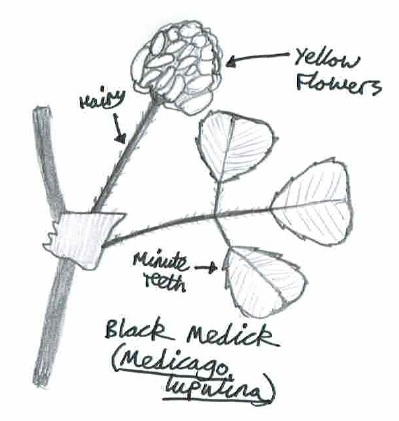
Black Medick (Medicago lupulina)
Family: Legume
Lifespan: Annual or short-lived perennial
Size: Low in height (up to 60cm), and sprawling or erect
Stem: Round or square and hairy
Leaves: Trefoil, downy, and 5-20mm in length, with minute teeth
Flowers: Bright yellow and small, with 10-50 to one short-stalked rounded head (3-8mm wide). Flowers April-October
Range: Widespread across the UK, but sparser in Scotland
Facts: Name means ‘plant of the Medes’, referring to an ancient Middle Eastern people, whilst lupulina means ‘hop-like’, due to similarities with Hop Trefoil
‘Give fools their gold, and knaves their power; let fortune’s bubbles rise and fall; who sows a field, or trains a flower, or plants a tree, is more than all’ – John Greenleaf Whittier
‘Your deepest roots are in nature. No matter who you are, where you live, or what kind of life you lead, you remain irrevocably linked with the rest of creation’ – Charles Cook
My family and I live on a 250 acre mixed dairy farm in the heart of beautiful Dorset, complete with sheep and beef cows. My parents took the farm on from Dorset County Council in 1995, at a time when it was only 50 acres, and have now expanded it to the 250 acres it is today. As long as I can remember, the farm has been my home. It is a part of who I am, providing the backdrop for me to learn about the natural world, to make informed decisions about how I live my life, and to become passionate about conservation. I have my parents to thank for this.
In 2019, the latest State of Nature report showed that agricultural change has been the largest driver of biodiversity loss over the last 45 years in the UK. With 72% of UK land area being used for agriculture and food production, land management changes have had a significant impact on the wildlife that call these areas home. As we now move forward, we need to focus on agriculture, not with contempt and negativity, but with optimism. If we are to continue to produce food in the UK, we need to focus on working with farmers to make farming sustainable, cost-effective, and most importantly with wildlife in mind.
Growing up on a farm, I have always been aware of how agriculture is heavily intertwined with the environment. My Mum and Dad have always believed in their roles as guardians for the wildlife and natural habitats that call our land home, and are dedicated to conserving and increasing biodiversity. Though it can be tough to create a balance, my Dad believes that farming, through careful management, can produce food in an economically sustainable way, whilst supporting and enhancing the natural environment. Here are some of the examples of how my family are successfully working to give nature a home on our farm.
(1) The Bridge Field
Project:
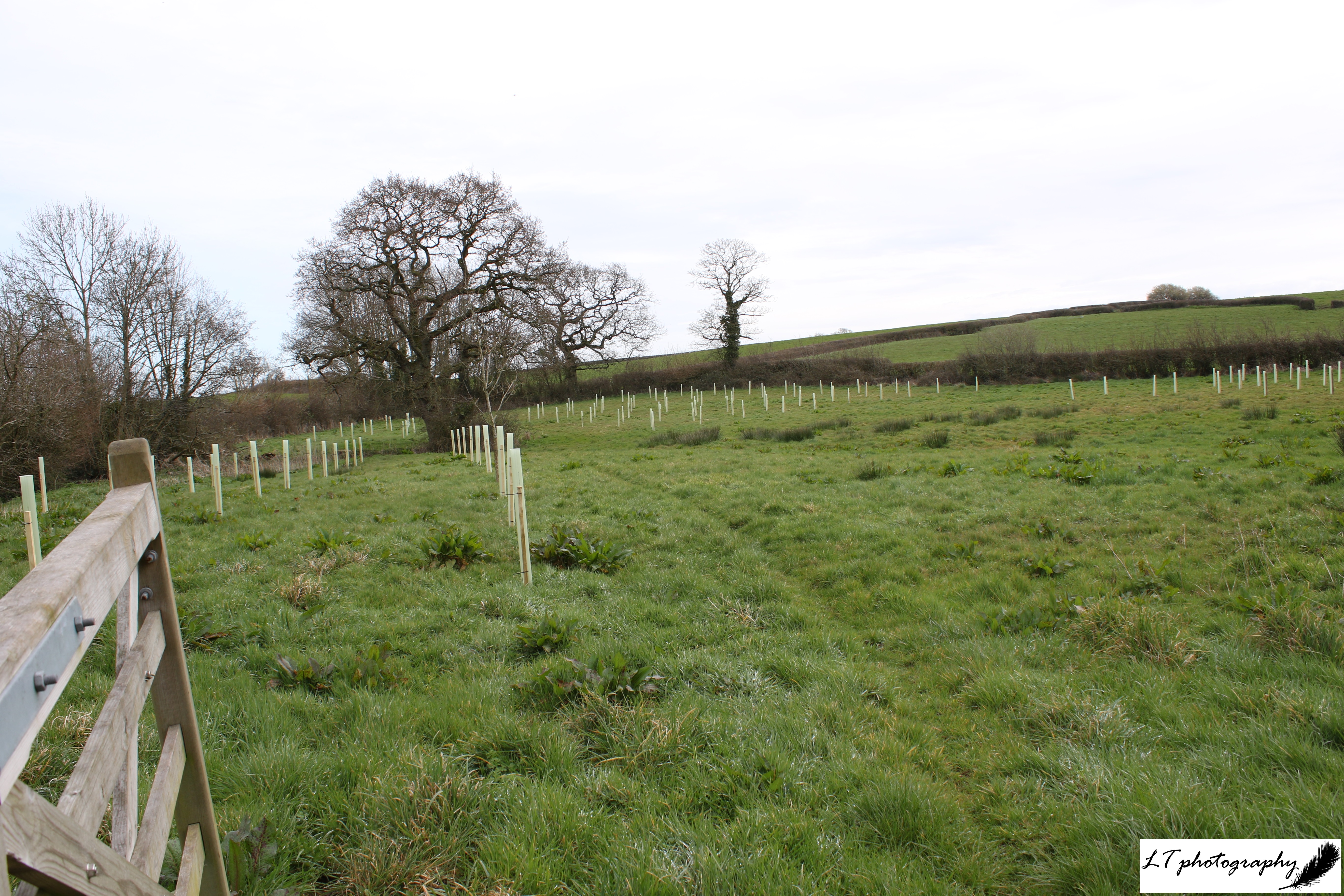
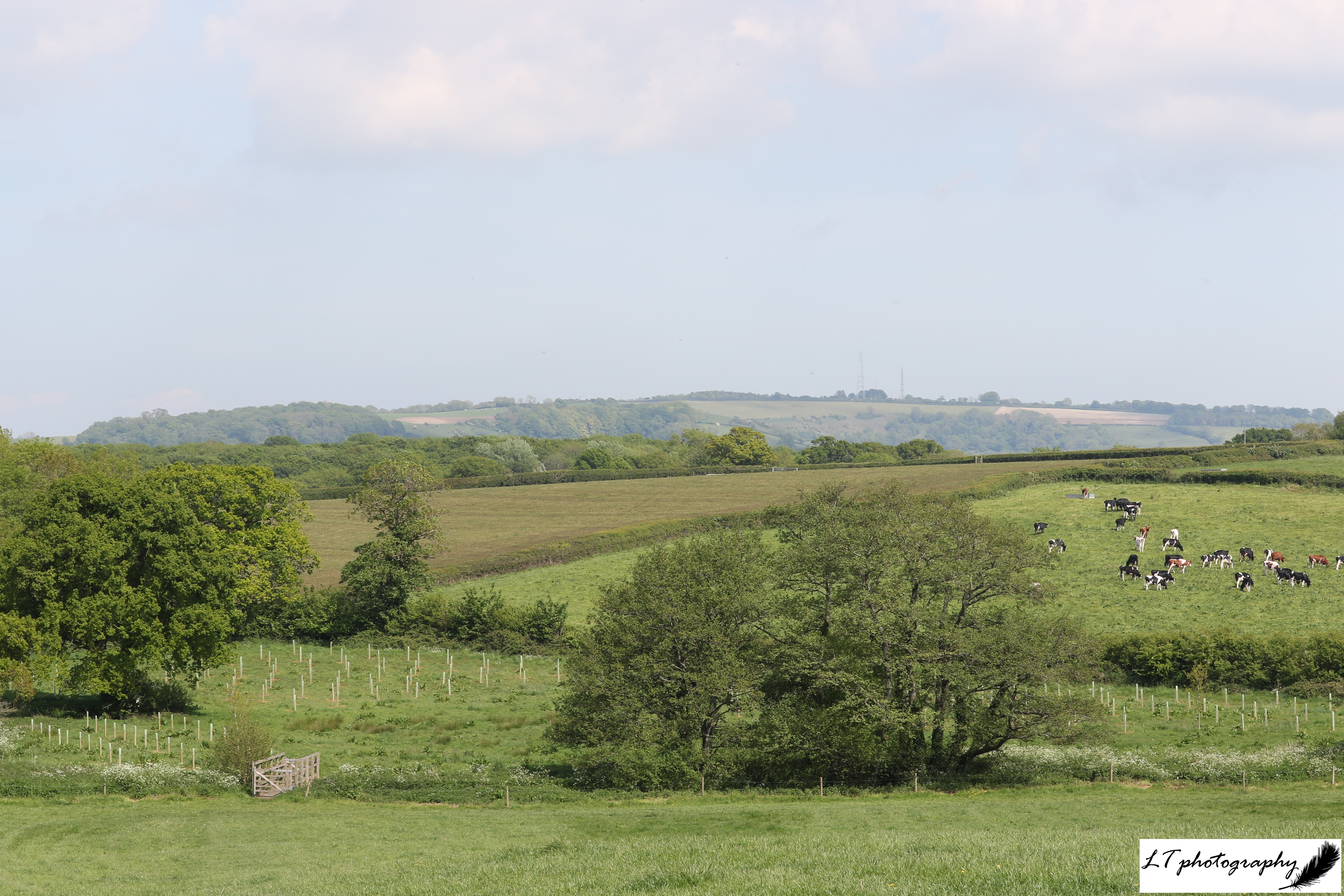
The field is a small, triangular-shaped, 3 acre field, bordered by hedges and a river. It was taken on in 2014 with some other land, and is less ideal for agricultural use due to its shape and often being wet. Hence, it has been left untouched, apart from one late cut of haylage each year and dock management. This year my parents decided to begin the process of restoring the land, with the aim of giving it back to nature.
So far:
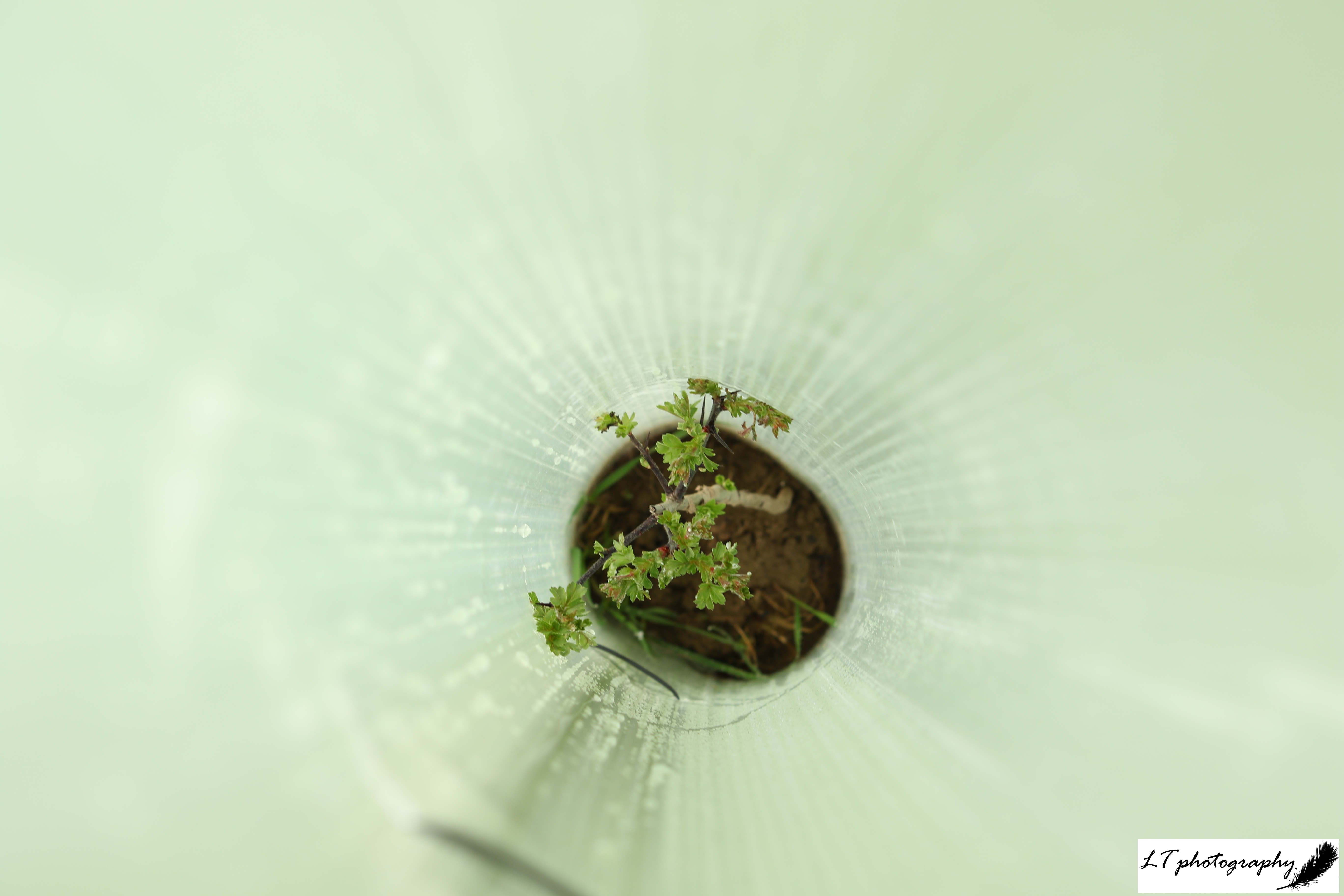
At the beginning of the year, we bought in and planted 219 native tree and shrub saplings of 9 species, including Goat Willow and Rowan. The hope is to create a rich and valuable habitat for wildlife.
We began managing the grass in the field, which is mainly Yorkshire Fog, to increase species composition. The grass has formed a dense stand across the field and is currently excluding nearly all other species.
Next aims:
See how the trees and shrubs grow on
Plant natural wildflower species using plugs, bulbs and seeds
Create a water source, such as a pond
(2) The Chalk Mound
Project:
Towards the centre of our land you can find a small triangular area of land that is bordered by hedges and a track. My parents took on this area with some other land in 2014, but it was not anything special. In 2017, my Dad decided to use it to make a small piece of chalk habitat, in our clay area, acting as a perfect stopover location between chalk downland to the north and south of us.
So far:
We bought in 40 tonnes of quarried chalk and shaped it into a mound which is 10m by 3m, and 2m in height.
We planted a selection of plant plugs and seeds gifted to us, ranging from Quaking Grass and Kidney Vetch to Rough Hawkbit and Lady’s Bedstraw.
For the first year, the mound was regularly watered as the plant plugs and seeds became established, but after that they were left to grow on, with minimal management.
Next aims:
Continue to enjoy the now thriving habitat that is attracting lots of insects, from butterflies to bees
Boost numbers of certain species such as Wild Thyme
Complete autumn management of the encroaching Yorkshire Fog grass at the mound’s edges
(3) Wildflower Verges and Rough Areas
Project:
As part of managing our land, my Dad leaves areas and verges uncut and able to thrive, providing valuable habitat for wildlife. One of my Dad’s inspirations for doing this is to provide rough grassland habitat for his favourite bird, the Barn Owl. Barn Owls use such areas to hunt, as it provides cover for their rodent prey. It is also great habitat for other species, such as the majestic Brown Hare.
Different forms so far:
Fenced off areas to keep livestock out but allow wildlife in.
Verges and strips left to grow up and increase in species diversity.
Wildflower verges planted to provide food for different species at different times of year.
Field margins created, maintained and protected, meaning a field is never worked up to the hedgerows.
Next aims:
Allow areas to continue to increase in diversity and composition
Continue to create a mosaic of habitats on the land
(4) Trees and Woodlands
Project:
I am a huge fan of trees, and my family are no different. Throughout our land you will find lots of different species, such as Ash, Alder, Wild Cherry and Oaks, varying in size, shape, and age. They play very important and varying roles in the landscape, from singular trees in fields and hedgerows, to the many growing in copses and woodlands around the farm. We now want to continue to preserve them and increase their numbers.
So far:
Over many years, we have been planting more trees wherever we can, with this year’s main project being the Bridge Field.
We continue to look after and manage the small woodland areas on our land.
We are putting up lots of different nest boxes around the farm, from small Tit boxes to larger Owl boxes.
Next aims:
Put up more nest boxes, including Little Owl and Kestrel
Monitor nest box use each year
Allow trees, such as mature Oaks, to naturally age and return to the ground
(5) Hedgerows
Project:
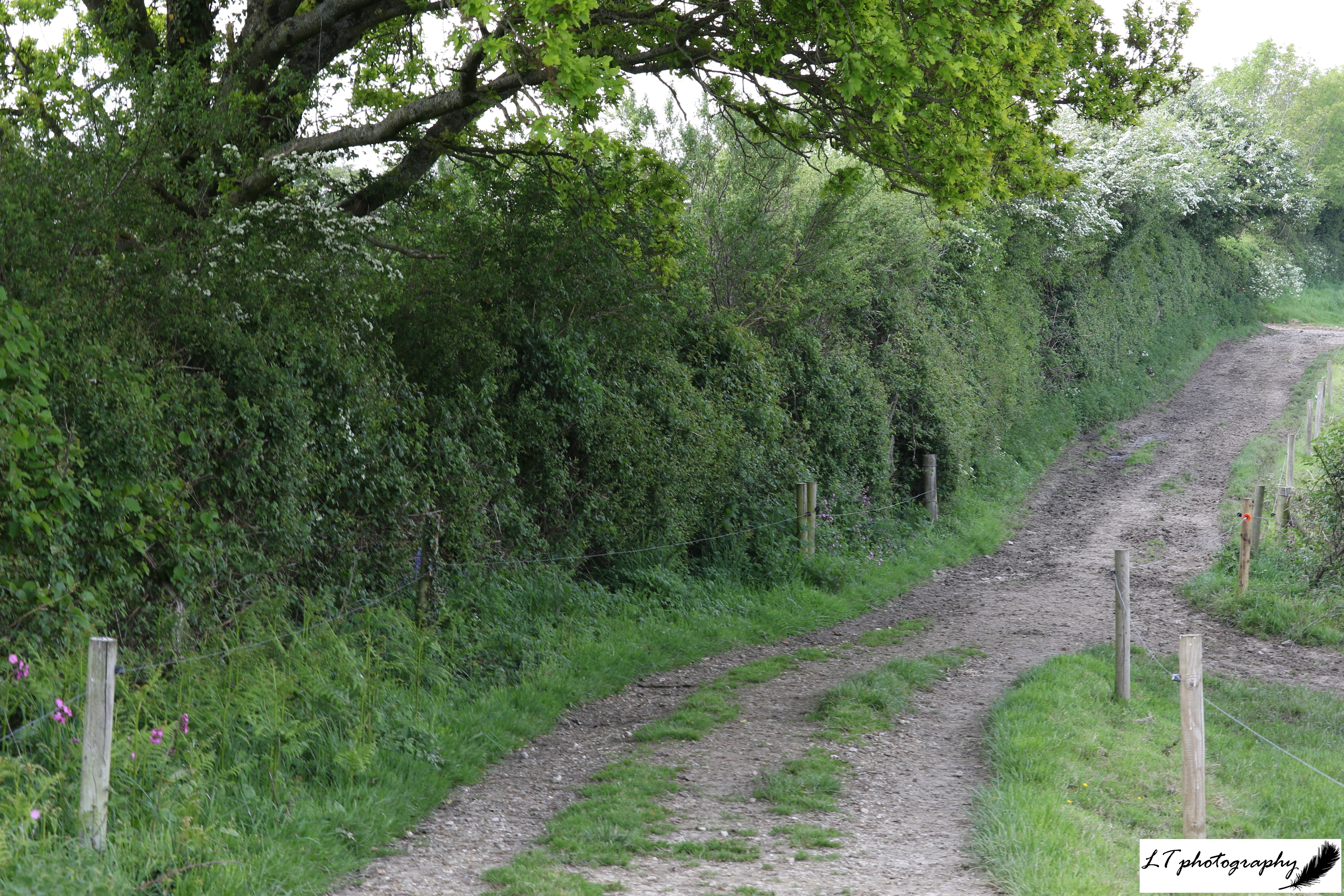
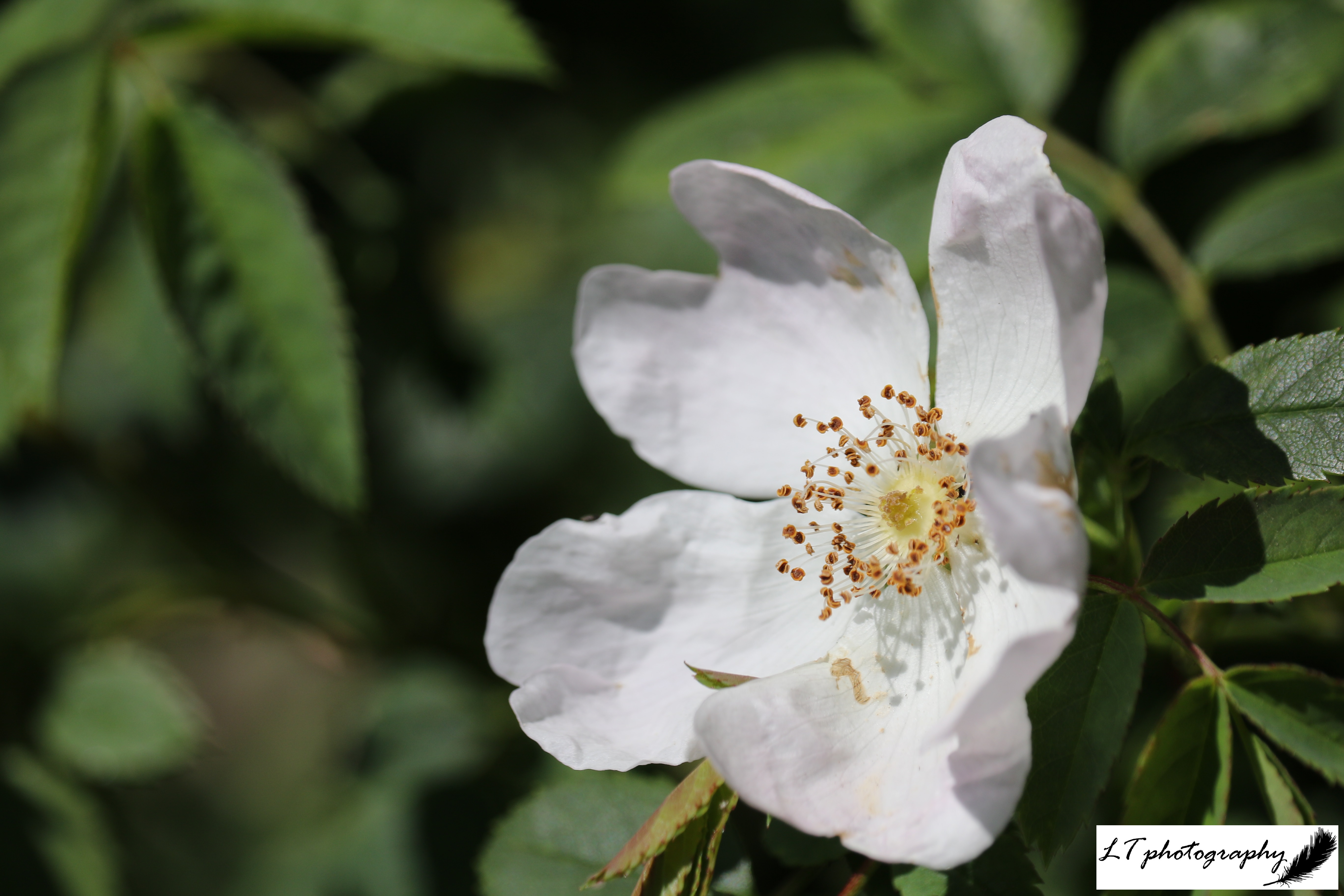
On my family’s land there are a lot of hedgerows, which are a hugely important habitat for a whole host of wildlife. They range in age and composition, including species such as Spindle, Blackthorn, Ash and Dog Rose. They also provide different services, such as food and shelter, throughout the course of a year, for lots of different species.
So far:
We carefully manage hedgerows with wildlife in mind each year.
Hedgecutting is practiced on a rotational basis and in late winter if the ground holds up. They are only cut by my Dad or brother who are skilled at cutting the hedges correctly and with care.
We annually manage and maintain field margins and ditches.
Hedgelaying has been used in the past but only when a hedge is in need of restoration.
Next Aims:
Maintain the high standard of hedgerows
Allow diversity to continue to increase
Future Aims
With 41% of species in decline since 1970, biodiversity loss and the latest State of Nature report cannot be overlooked. Whilst there is still hope that we can bring things back from the brink, and reverse the decline, to do so we need to act now. We need to create more homes for wildlife, protect what is left of our natural environment, and manage land with wildlife in mind.
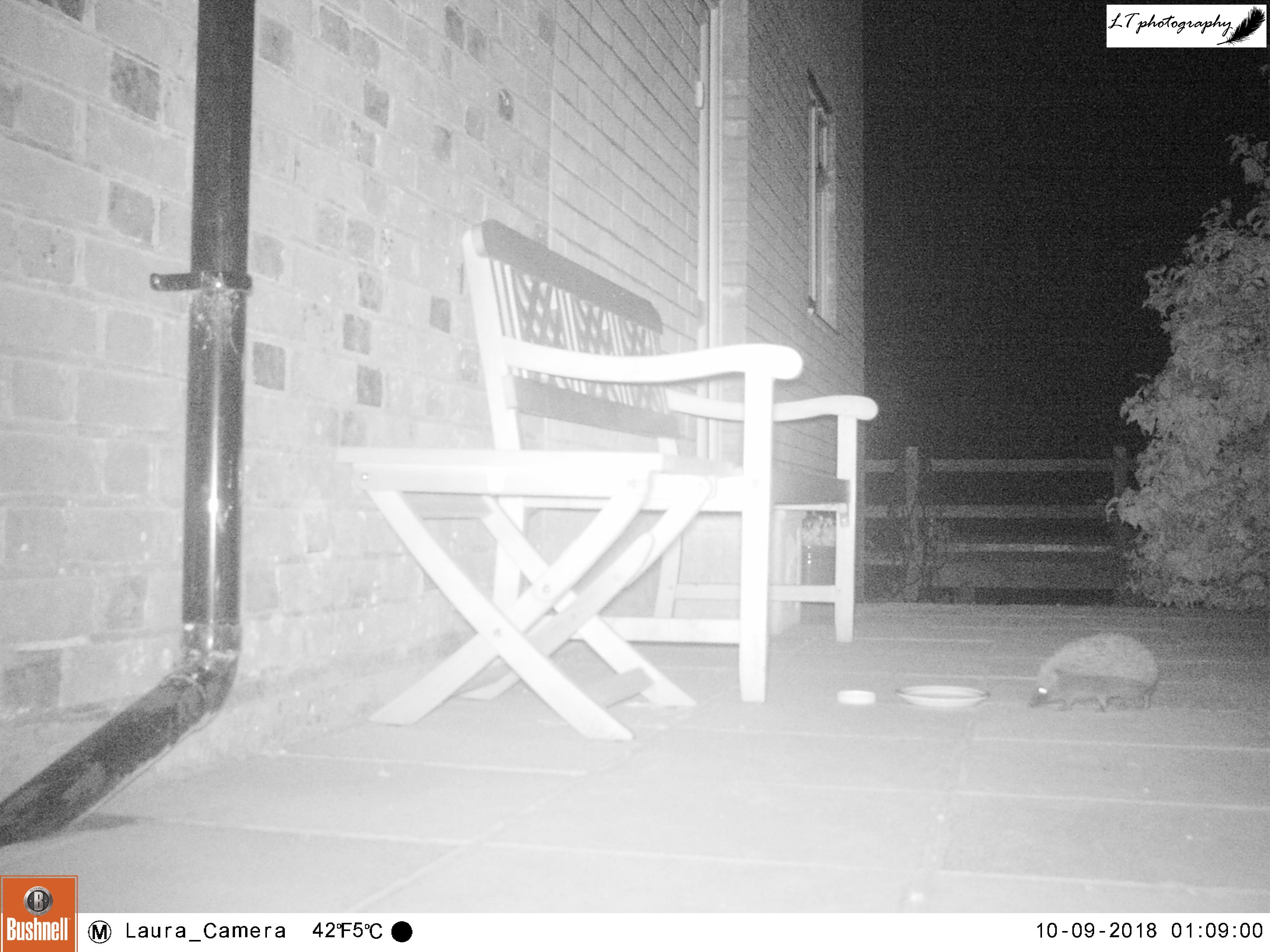
On the farm this process is in full swing and gaining momentum each year. In this way, we are trying to make our land more wildlife friendly, managing and creating habitats for wildlife. Now, Skylarks can be heard singing all around the farm each morning, Brown Hares are increasing in number, Butterfly and Moths are becoming more species diverse, and Yellowhammers are becoming increasingly common. There are so many more examples from the big to the small, from Hedgehogs to Newts, but my Dad’s favourite has to be his Barn Owls. Over the last few years Barn Owls have made our land their regular home, with 2 Barn Owl pairs successfully breeding last year!
My Dad now wants to continue my Mum’s and his work dedicated to the environment, from helping farmland birds to reducing our carbon footprint. He wants to continue to show how conservation and increasing biodiversity can go hand in hand with conventional farming, allowing food to be produced whilst looking after the environment. A great example of this is the RSPB’s Hope Farm in Cambridgeshire, an arable farm where careful and targeted management is now having results. It makes me optimistic that if we now focus on working with farmers to give nature a home on their farms in the right way, then this could make a real difference to reversing species decline in the future.








































 Laura's Wild World