How to… Identify Animal Footprints

Often it can be difficult to catch a proper glimpse of the animals around us, especially those that are more active at night. Just because you may not be able to see them though, does not mean that they are not there. Instead, a great way to find out what is living near you is to play detective and look for the signs they leave behind, such as fur, burrows or droppings.

Here we take a look at a great sign of animals being present, animal tracks/footprints. Though they are best found in snow or wet mud, at this time of year the best way to look for tracks is after rain, hardened in drying mud, or by creating your own tracker. So why not have a go playing detective and see what you can find in your garden or wider countryside whilst getting out for exercise. To help you out, here’s my guide to animal footprints!

Guide to animal footprints

Badger

Footprint Size: 5-6cm long & 5-6.5cm wide

Badger

A badger’s footprint is large, broad and robust with 5 toe pads pointing forwards in front of a broad rear pad. They also may show long claw marks that are well in front of the toes. Claw marks are shorter and closer to the toe pads for the hind feet.
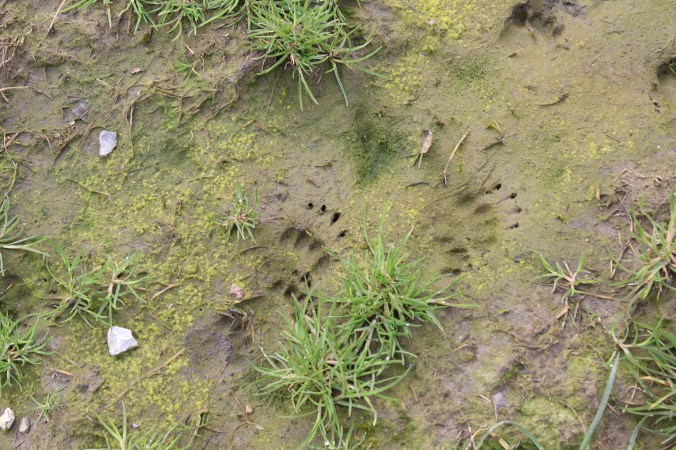
Badger

Fox

Footprint Size: 5-7cm long & 3.5-4.5cm wide

Fox, Cat, Dog

A fox’s footprint is a bit like a dog’s, but appear more narrow in shape with toes closer together, making a diamond shape. There are 4 distinctly oval toes, 2 at the front and 1 towards each side, and a roughly oval rear pad. Foxes do leave claw prints, unlike cats, but do not have the elongated claws that are visible in badger prints. Sometimes impressions of hairs between pads may be visible.

Rat

Footprint Size: Front= 1.8-2.5cm long; Hind= 3-4.5cm long
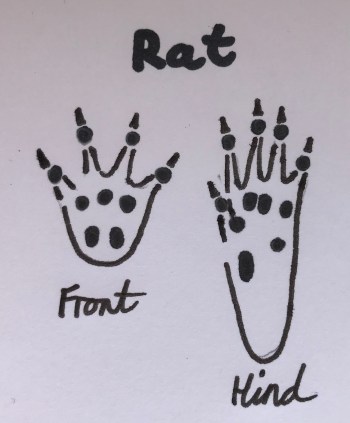
Rat

A rat’s footprints vary between the front and hind feet. On the fore, they have 4 toes, whereas on the hind, they have 5 toes and a long heel. Their footprints can be mistaken with a water vole’s, but a water vole’s tends to show more splayed toes and a shorter heel.

Rabbit

Footprint Size: Front= 4cm long; Hind= 7.5-9.5cm long

Rabbit

The hind feet of a rabbit are much larger than their fore feet. This means that their footprints will be grouped into a pair of long and a pair of shorter prints. Often you will also see lots of footprints crossing each other and signs of multiple rabbits together.

Hedgehog

Footprint Size: ~2.8cm wide & ~2.5cm long

Hedgehog

A hedgehog’s footprint is long and narrow in shape with 3 toes pointing forward and 2 pointing out to the sides, making a star shape.

Deer

Footprint Size: Vary from muntjac deer at ~3cm long to red deer at ~9cm long

Deer

All deer species have cloven hooves (2 toes), the same as a sheep or a cow. A deer’s toes are more slender and pointed though, looking like 2 teardrops or an upside-down heart. Toes may appear splayed in soft ground.

It tends to be difficult though to tell apart the footprints of different deer species, as they tend to be similar, only differing in size and subtly in shape. A muntjac’s footprint though, for example, will be alot smaller than a red deer’s.
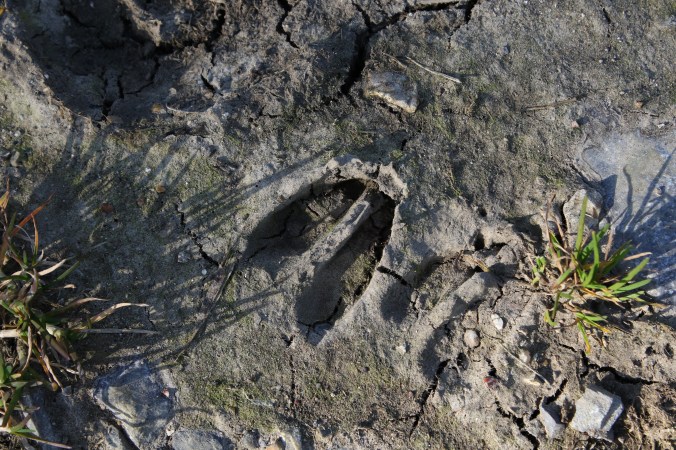
Deer

Otter

Footprint Size: 6-9cm long & up to 6cm wide

Otter

An otter’s feet are webbed due to their semi-aquatic lifestyle, which can make their prints easy to spot if visible. Their fooprints are also round with 5 toes in front of a large rear pad. Short claw marks projecting from the toes may also be visible.

Small mammals e.g. Mink, weasel, stoat, pine marten, polecat

Footprint Size: Varies with species and sex

Small Mammals

Five toes splayed in a star shape

Birds

Footprint Size: Varies with species

Most bird species have four toes, with typically 3 facing forward and 1 backwards. Depending on the species, footprints on the ground will vary in size, shape and form. A common footprint seen in the english countryside is that of the non-native pheasant. Their footprint is fairly distinct due to their large size and looks like an arrow in shape (Footprint Size: 6-8cm long).

All photos and drawings are my own 
A Wild Adventure to Richmond Park

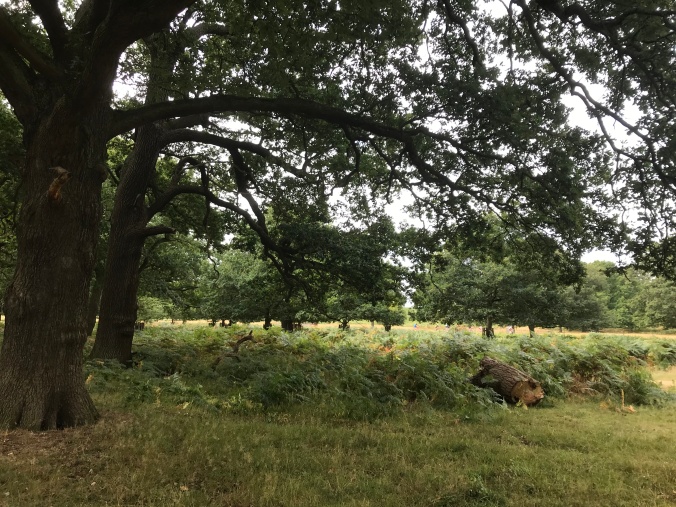
In a green oasis surrounded by urban jungle, ancient trees stand as sentinels. They have watched over this space for centuries, watching as time and history passes by. Some have even stood in this spot for over 800 years, growing taller whilst a wall was raised, royals hunted deer, and a city grew up around its edges. As a busy metropolis hums and pulses at its borders, this park rolling on for 2,500 acres, has lain timeless for centuries. It now continues to capture the hearts and minds of the millions of visitors that step through its walls every year.

IMG_0033

Nestled in the south-west of London, Richmond Park stands as London’s largest Site of Special Scientific Interest and a Grade One Heritage Landscape, with even the Royal Ballet School and a royal residence within its walls. This impressive park first came to my attention last year when I was given the book ‘Park Life: The Memoirs of a Royal Parks Gamekeeper’ written by John Bartram. This book recounts the author’s 30 years working and living within the bubble of Richmond Park. Sparking my imagination, it was his story that inspired in me the desire to make my day trip to his beloved Richmond.

On a hot, but grey autumn day in early September, I made my trek to Richmond Park, with the company of my aunt by my side to guide my path. Starting at the Roehampton Gate in the north-east of the upside-down pentagon-shaped park, we set a route to allow us to take in a range of beautiful habitats, incredible wildlife and the character of this impressive landscape.

IMG_0035

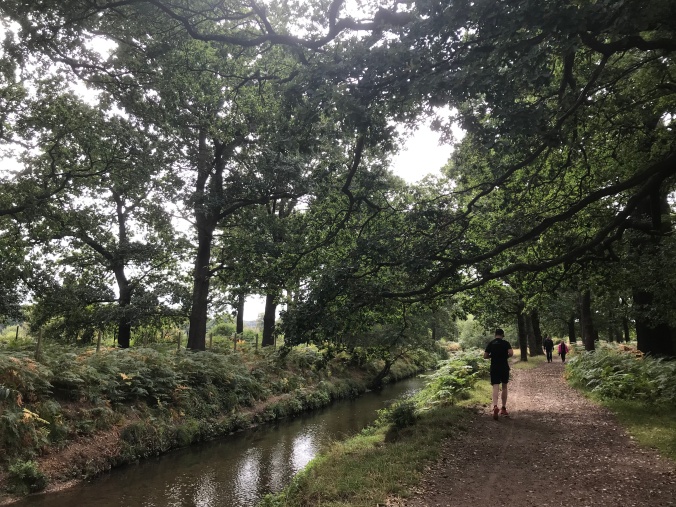
Our first steps took us south, hugging the 2km of river that winds down the east side of the park, known as the Beverley Brook. This river for a time became our birdwatching paradise, filling us with excitement with every stretch. We saw everything from a family of long-tailed tits feeding, fish swimming in the shallows, a spotted flycatcher doing its iconic hunting routine, and a bedraggled juvenile kestrel, to a pair of resting mandarin ducks, a tree creeping tree creeper, the flash of yellow of a chiffchaff, and a grey wagtail wagging. With around 100 bird species having been recorded in the park, we could not wish for more fantastic species to start our walk.

IMG_0045

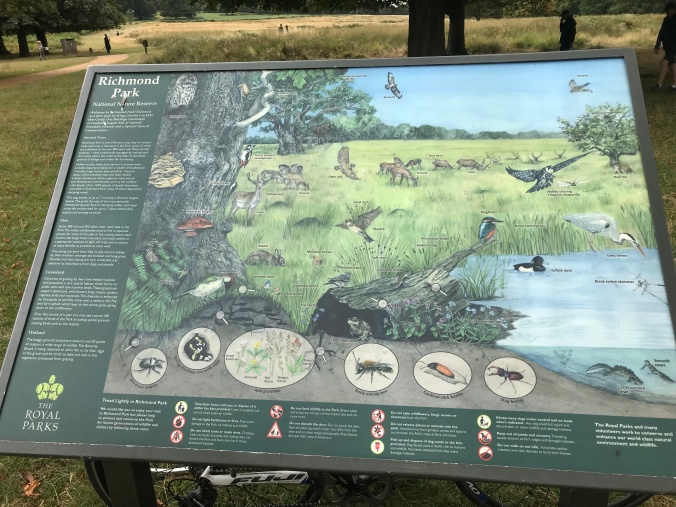
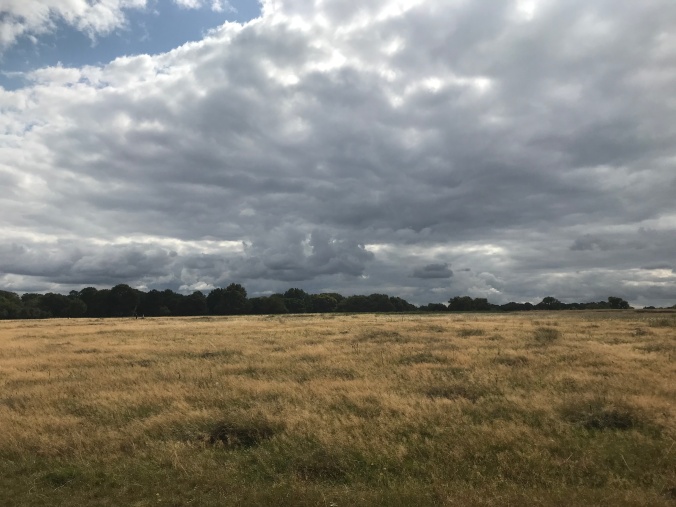
Moving on from the river, we then headed into the heart of the parkland. With Richmond also being a Special Area of Conservation, the park is home to over a thousand ancient trees; over 1300 species of beetle including iconic stag beetles; at least 9 species of bat; and a range of habitat types including acid grassland, bogs, and 30 ponds. It is truly an incredible space that feels isolated from the rest of the outside world. With every step you can spot another butterfly species, discover a whole host of plants, spot a range of bird species from green woodpeckers to wheatears, and simply escape everyday life.

IMG_0054

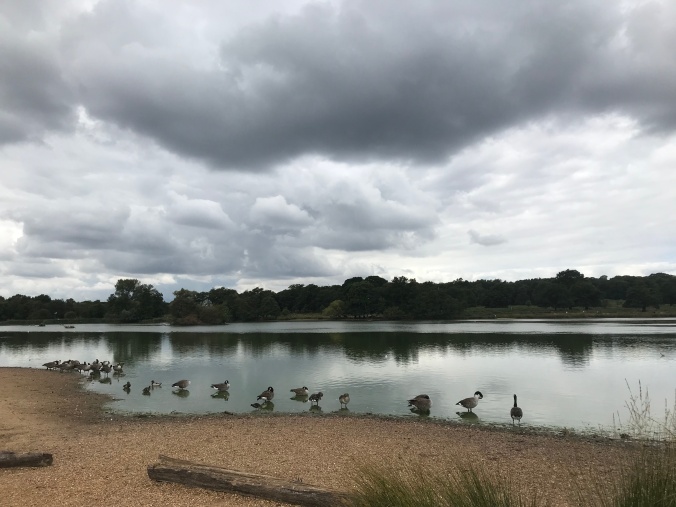
Our journey through the park also took us through the middle of the Pen Ponds which were filled with a myriad of bird species. This ranged from coots to black-headed gulls, tufted ducks to greylag geese, and moorhens to little egrets. With drama unfolding in front of us with every sight, we got to see gulls mobbing late nesting grebes, ducks competing for food, and birds flying low overhead, whilst getting the closest views of great-crested grebes that I have ever had!

IMG_0047

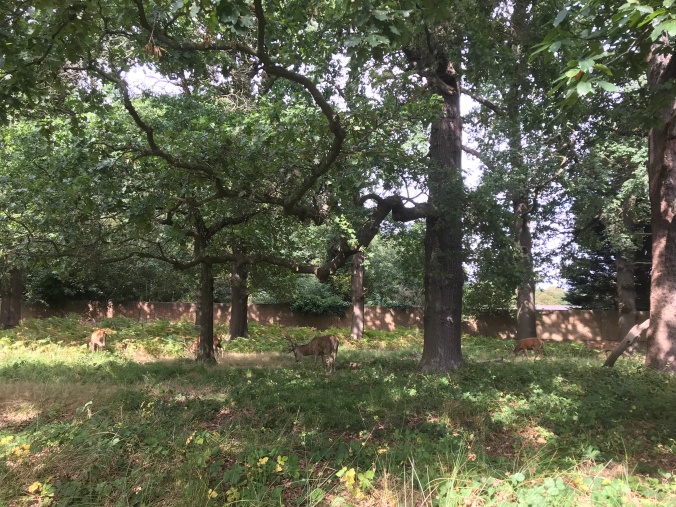
Though Richmond Park is home to many amazing species, it is the majestic beasts with sleek coats and antlers standing heavy on their heads, that are the star attraction for millions of visitors each year. The Park is home to about 300 red and 300 fallow deer, and these deer are most popular during their impressive autumn spectacle of rutting. Of course during my journey through the park, my aunt and I came across many of the red deer impressive with their bare antlers, and watched them in awe from a far. These deer were very much a main part of John Bartram’s 30 years in Richmond Park as a Park ranger.

IMG_0056

As I neared the end of my adventures in Richmond Park for one day, it was evident that though my few hours of escapism were great, you could also easily lose yourself in Richmond Park for days, or in the case of John Bartram, years. It was easy to understand how he spent 4 decades hidden away working and living within this park. Its a place which has something for everyone, with everything from open space and incredible landscapes to amazing wildlife and cafes! For me, seeing 44 species of bird in a short space of time was my highlight. When beautiful places such as this can be found on your doorstep, what more could you want?