Rural Dorset vs. Urban Manchester: Magical Minibeasts

Series in collaboration with guest writer Emma Rogan

Rolling green hills, trees sprawling across the landscape, hedgerows thick with plant and animal life, flowers growing up here and there, and rivers flowing through it all. The light of an orange sunset cast out over the city by a soaring glass tower block, the lonely lights of a crane against an evening sky, busy streets lit up for Christmas filled with music and laughter. Everyone’s idea of idyll varies, but for nature any landscape could provide a home. Let us explore.

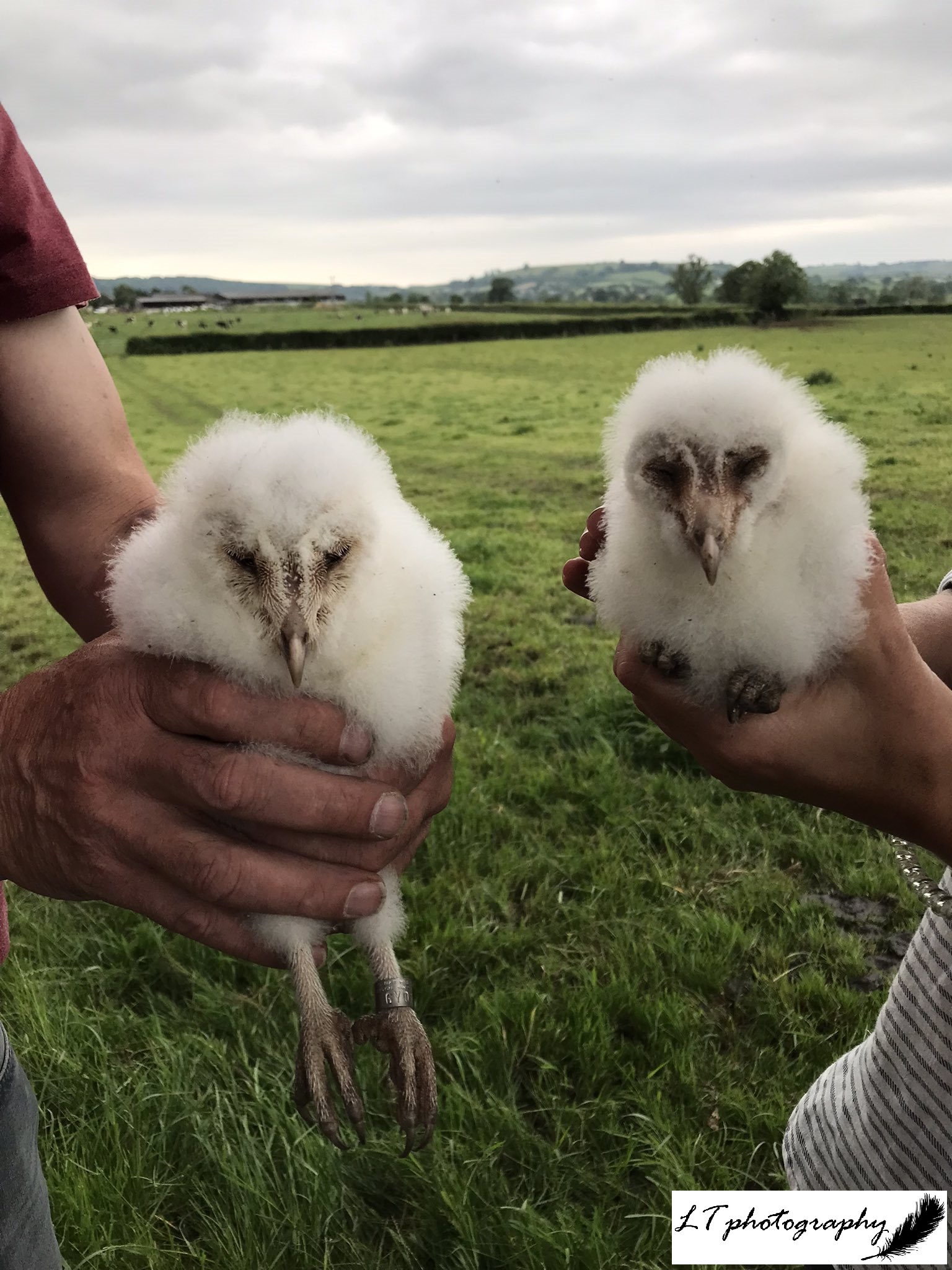
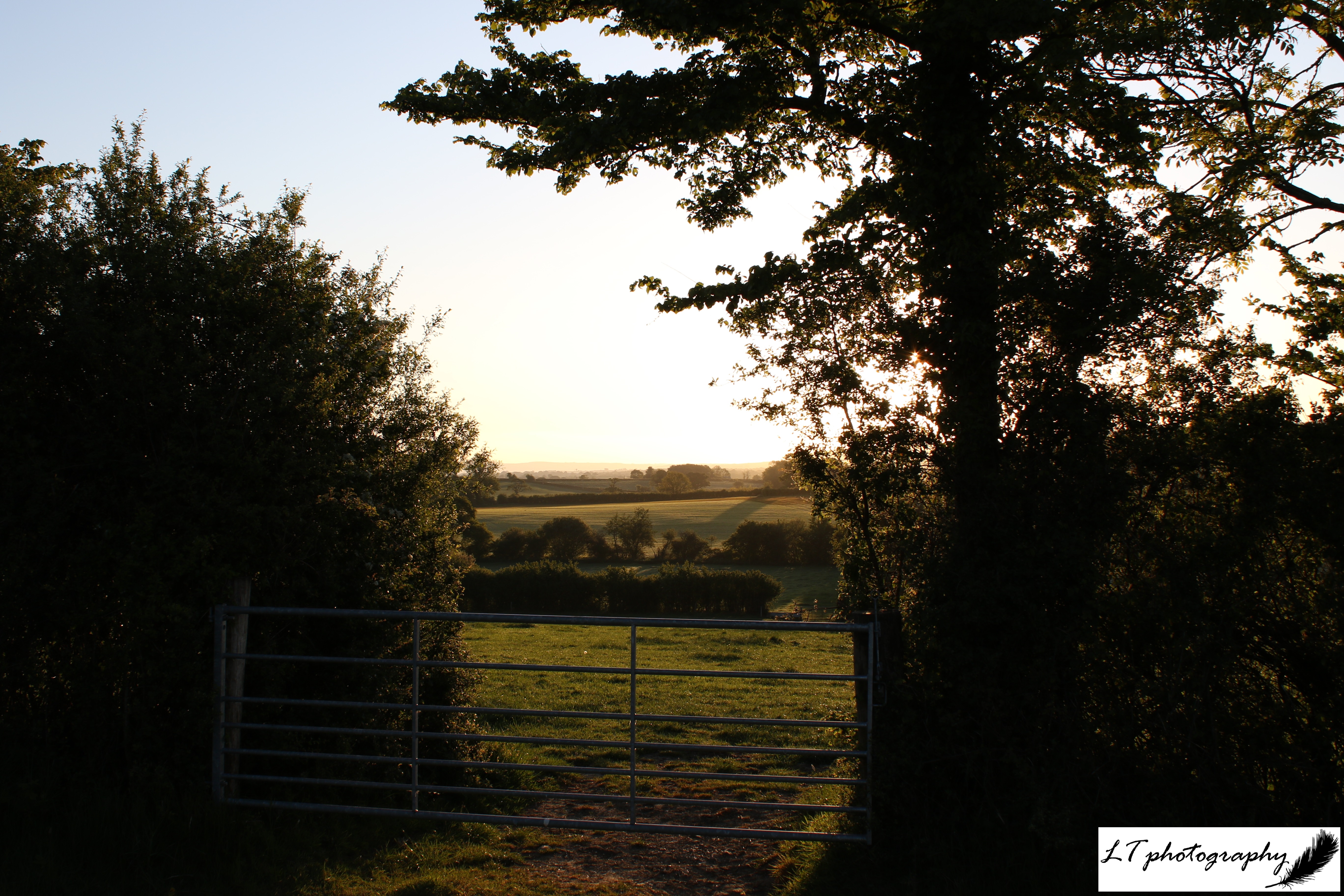
Growing up within her family’s 250 acres of land, for naturalist Laura, rural Dorset is home. In what may be called the ‘middle of nowhere’ for an urban adventurer, Laura grew up alongside wildlife from barn owls and hares to grass snakes, damselflies, and oak trees. With parents that nurtured her to take an interest from a young age in looking after the wildlife they saw on their doorstep, this landscape has made her the conservationist and scientist she is today. Now her home provides inspiration for her photography and writing, including her Laura’s Wild World blog. Check out her blog here.
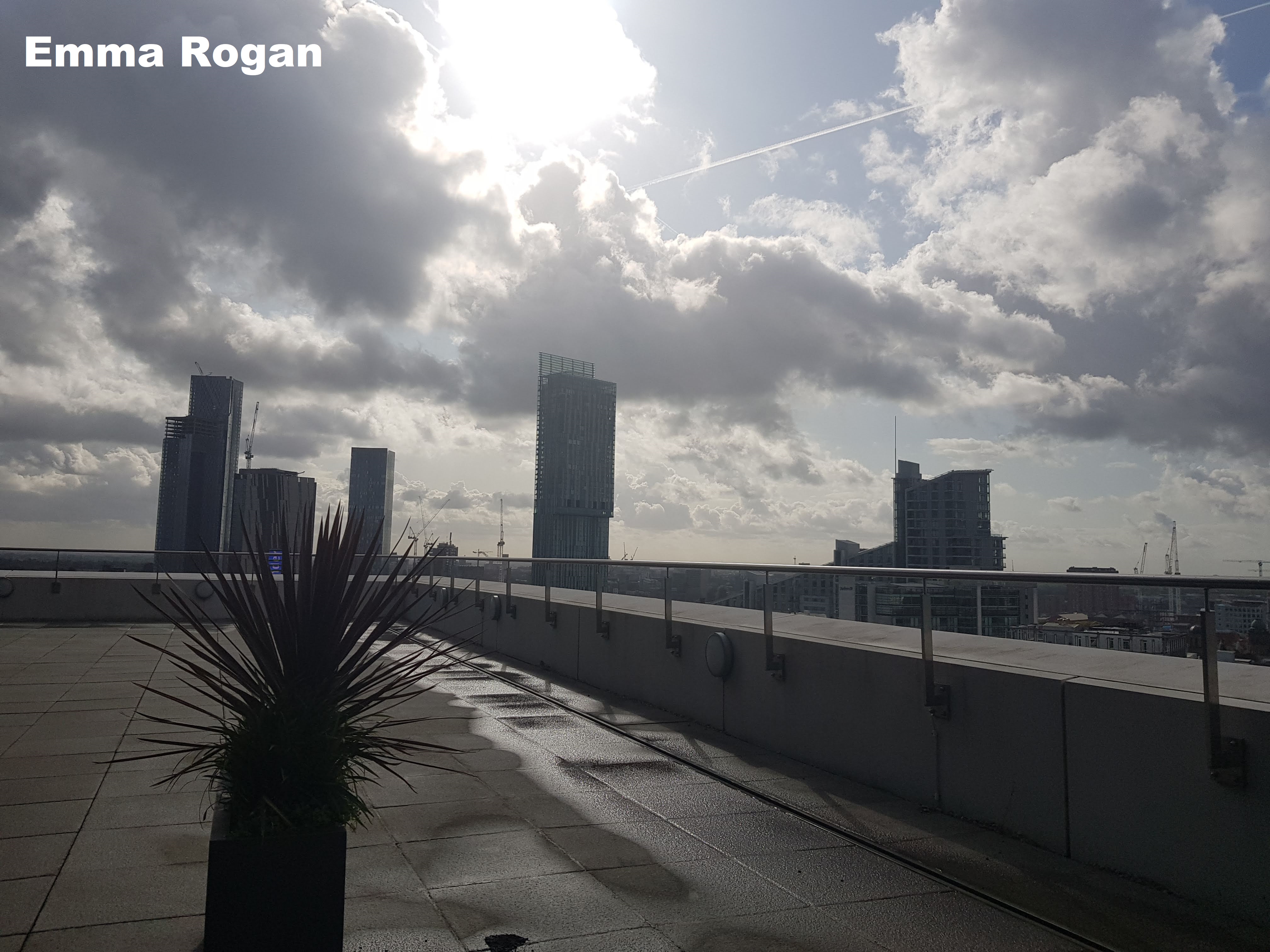
Guest for this series and wildlife enthusiast, Emma grew up in Manchester and will always be a city girl at heart. As a child she loved to watch nature documentaries and daydreamed about faraway places, but over time she fell in love with the wildlife that also calls Manchester its home. Emma has spent the past year documenting the lives of the insects, birds, squirrels and foxes that stop by her little rectangle of garden, and exploring the local woods alongside the River Mersey with her mum. Check out her page here.

In this brand new blog series, we take a look at the local wildlife that can be found in two very different home locations. Though at a contrast with each other, we will see how nature can make its home in both rural and urban landscapes, and the wealth of life that can be explored on anyone’s doorstep. At a time when it is so important that we protect and conserve the natural environment around us, let us inspire you as we take an adventure to explore a smaller side to nature.
Laura’s Countryside Minibeasts

Today was a warm and breezy day, perfect for walking through my family’s Dorset farmland in just a T-shirt and shorts. It was the kind of day though when you could feel the first breath of autumn in the air, kept at bay by the bleaching late-August sun. Pushing the cooler days to come to the back of my mind, I set out to try to see what smaller creatures I could find out in nature.
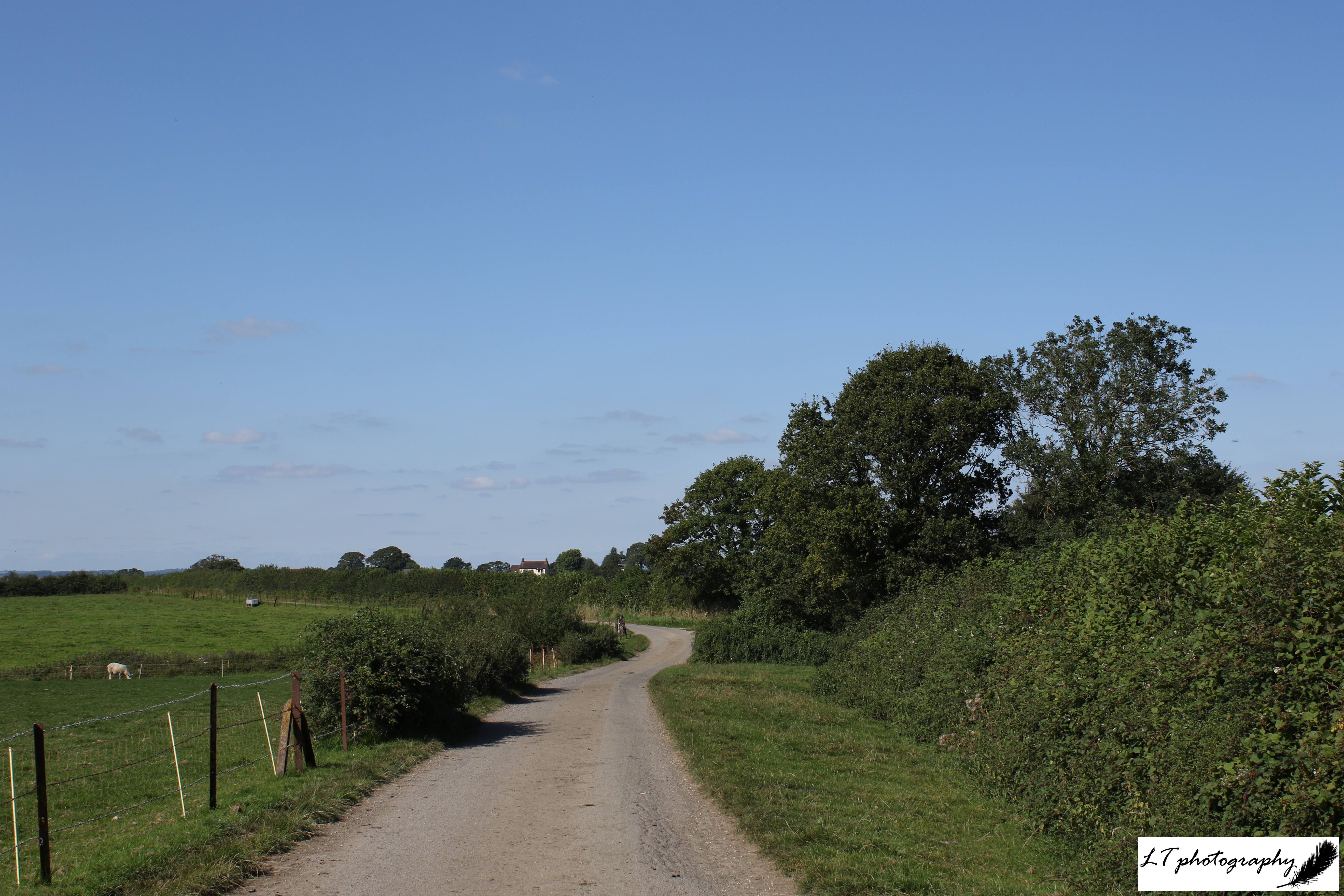
Journeying along tracks, through grass fields, over rivers, through tall maize, past a chalk ridge, and back home to my garden, my quest bore more and more fruits along the way. With every turn I got to experience a colourful and spectacular diversity of butterflies from small coppers to peacocks, got to be serenaded by grasshoppers singing their chirping tune, and to be joined by crane flies lazily hanging in the hazy golden light as I walked along on my own.

As my minibeast list grew, I stopped here and there to take a closer look, such as to gaze at beautifully banded snails hanging from nettles, or to photograph minibeasts, such as the curious looking froghoppers making maize leaves their home. I was loving it! The main highlight of my adventure though, had to be discovering a treasure trove of dragonfly and damselfly species on and around the pond in our conservation field. One minute I would see the golden-brown of an unknown dragonfly fly past me, before catching sight of common blue demoiselles dancing in the air and red-veined darters defending territories over the water. I was amazed at how many beautifully-coloured species I saw in such a short space of time!
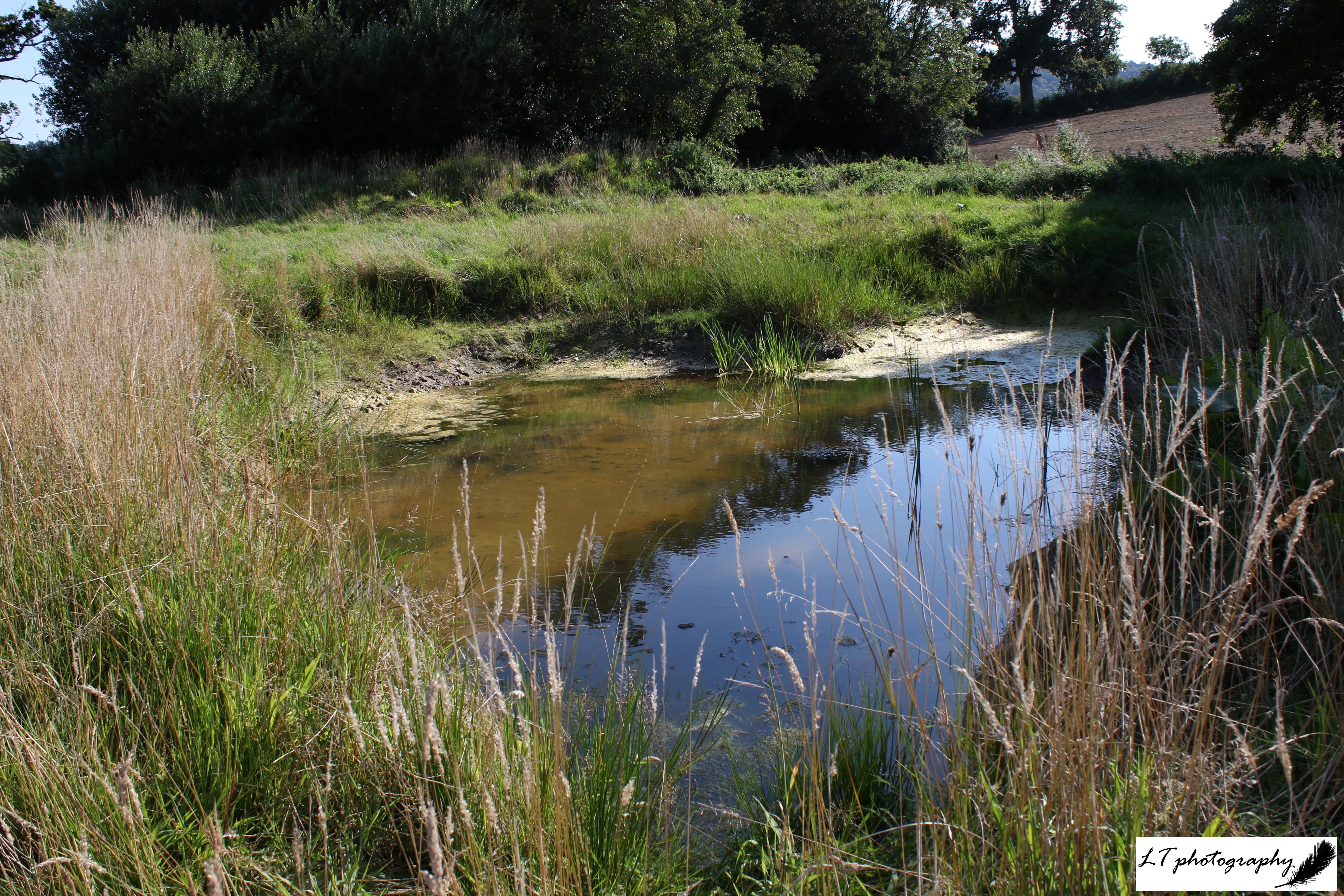
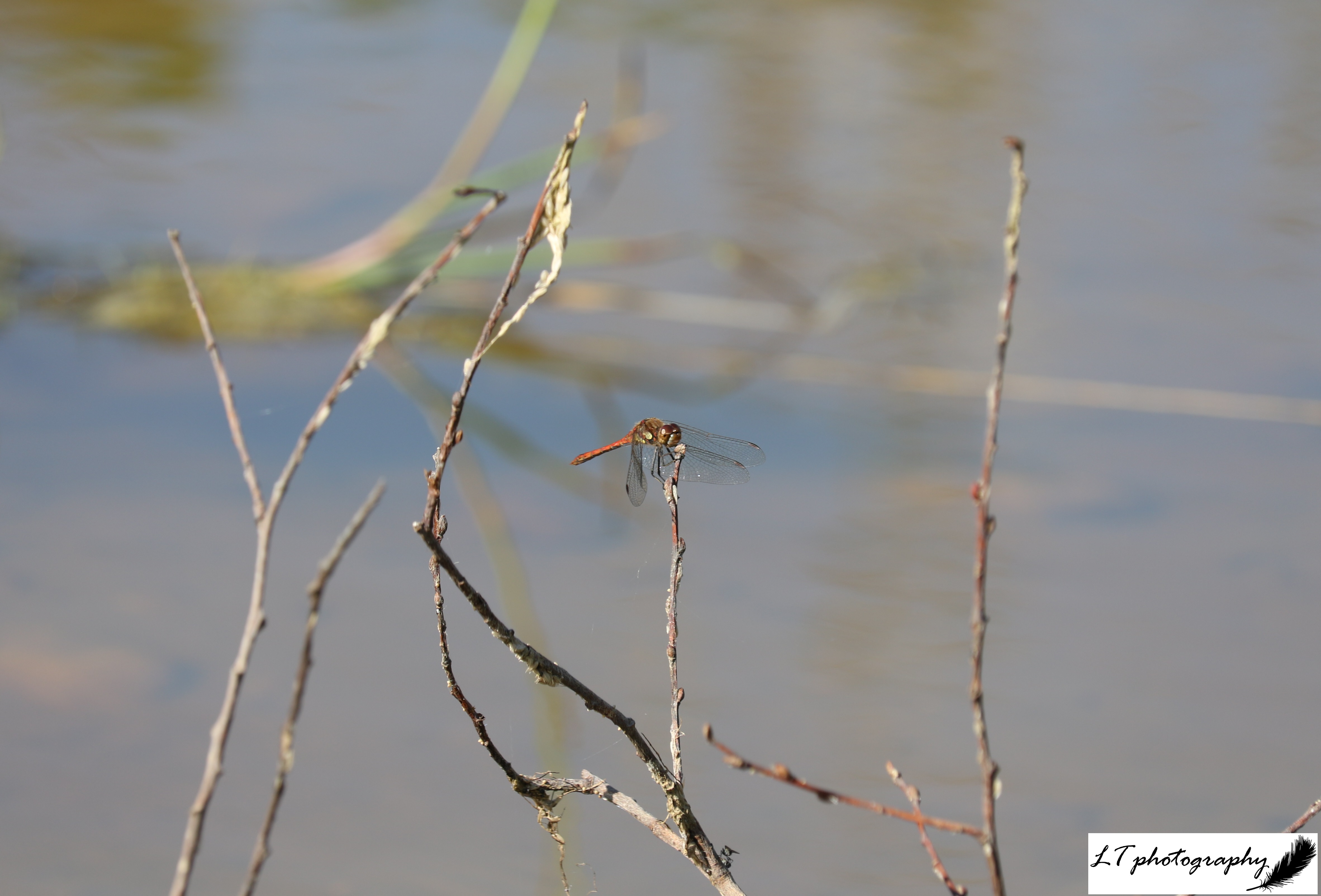
When I set out on my minibeast adventure, I was not entirely sure what I would find at this late stage of August. Whatever I thought though, by the end I was having a really great time, seeing some cool minibeasts ranging from busy honey bees enjoying a medley of flowers to many butterflies adorning buddleia bushes like gemstones. It really brought home that you never know what you might find until you open your eyes to the world around you. I am no invertebrate expert, but I was still able to take in all the wonders this mini world had to offer. It was a great break from life, though more importantly, a game changer!

Emma’s Minibeast Hunt in the City

Unbelievably, the afternoon I’d planned to go on my Minibeast Hunt was beautifully warm and sunny with a slight breeze. This is a rarity in Manchester! I gleefully pulled on my walking boots and headed out with my other half to Fletcher Moss, a nearby park and woodland alongside the River Mersey. We spent an hour wandering through the Parsonage Gardens, down to the river (down, down, doooown by the riveeeer – any Baldur’s Gate 3 fans?), and through the woods, making a brief stop for ice cream along the way!

The Old Parsonage and it’s beautiful walled garden was left to the citizens of Manchester by Alderman Fletcher Moss in 1919, and has since become a much-loved community space which is carefully looked after by volunteers. The garden was buzzing with pollinators drawn in by the variety of flowers, the echinops was particularly popular! It’s always lovely to see bees out and about in Manchester, as bees are the symbol of our city.

We then walked down the hill and took a winding path towards the river. The first stop on our riverside walk was Simon Bridge, a green iron bridge across the River Mersey which was gifted to the people of Didsbury by Henry Simon in 1901. Plenty of bees, wasps and hoverflies flew past us as we walked, but our second stop came when we heard what we thought was the singing of a grasshopper! This necessitated ten minutes of searching and more than a few curious glances before we found the little guy sat solemnly on a blade of grass.

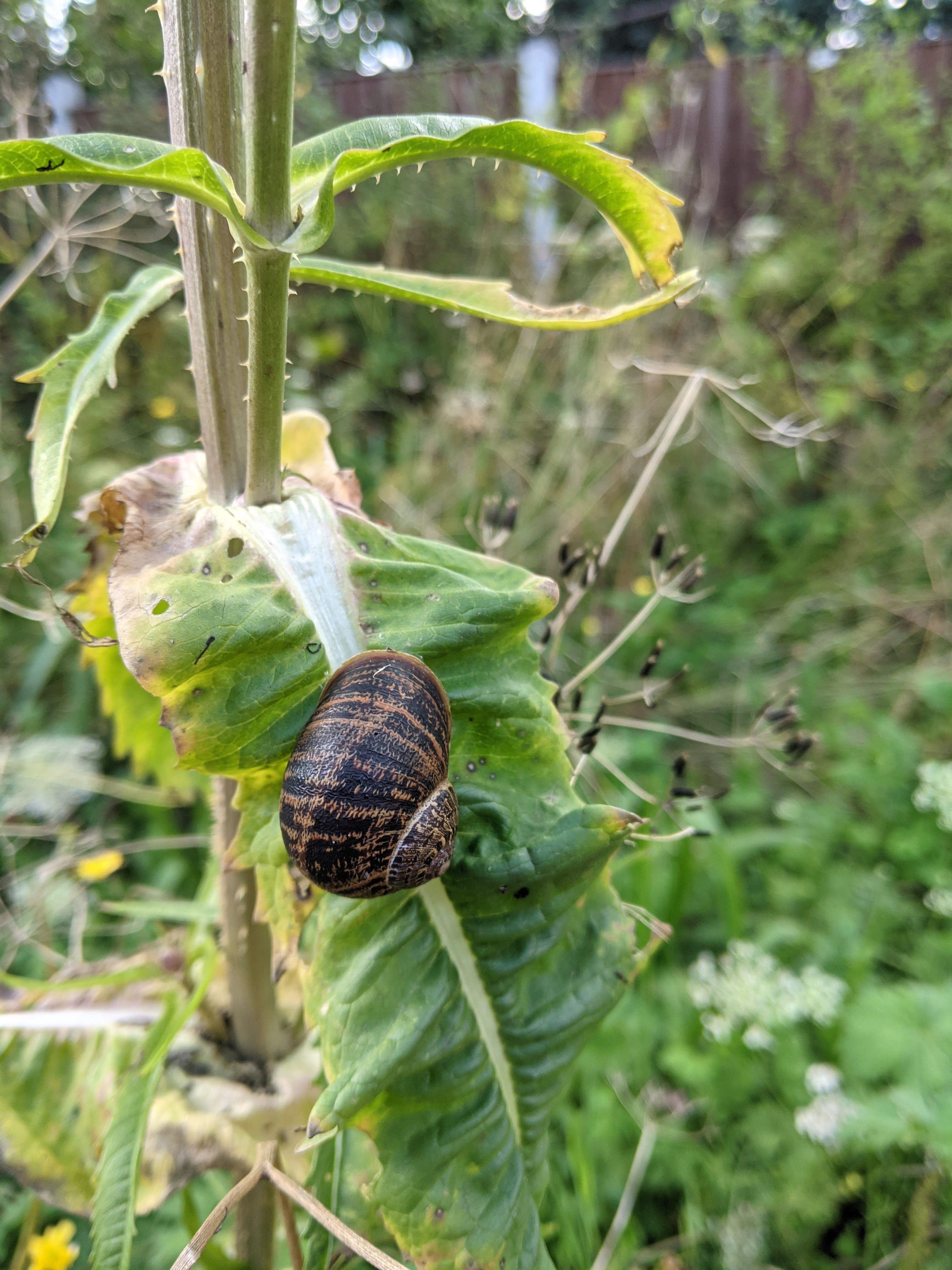
As we wandered on, our path took us away from the river and back up into Stenner Woods, a small area of woodland in the original Mersey Valley flood plain. It was at this point that a dragonfly decided to join us! Unfortunately, he wouldn’t stay still long enough for me to take a picture. We also came across a snail clinging to a thistle, and a ladybird nestled between the spines of a teasel, and a very hungry group of mint leaf beetles. Butterflies were noticeably absent, as we spotted only one female meadow brown butterfly during our walk. Our final stop was at a small pond area, where we saw what seemed to be hundreds of pond skaters!
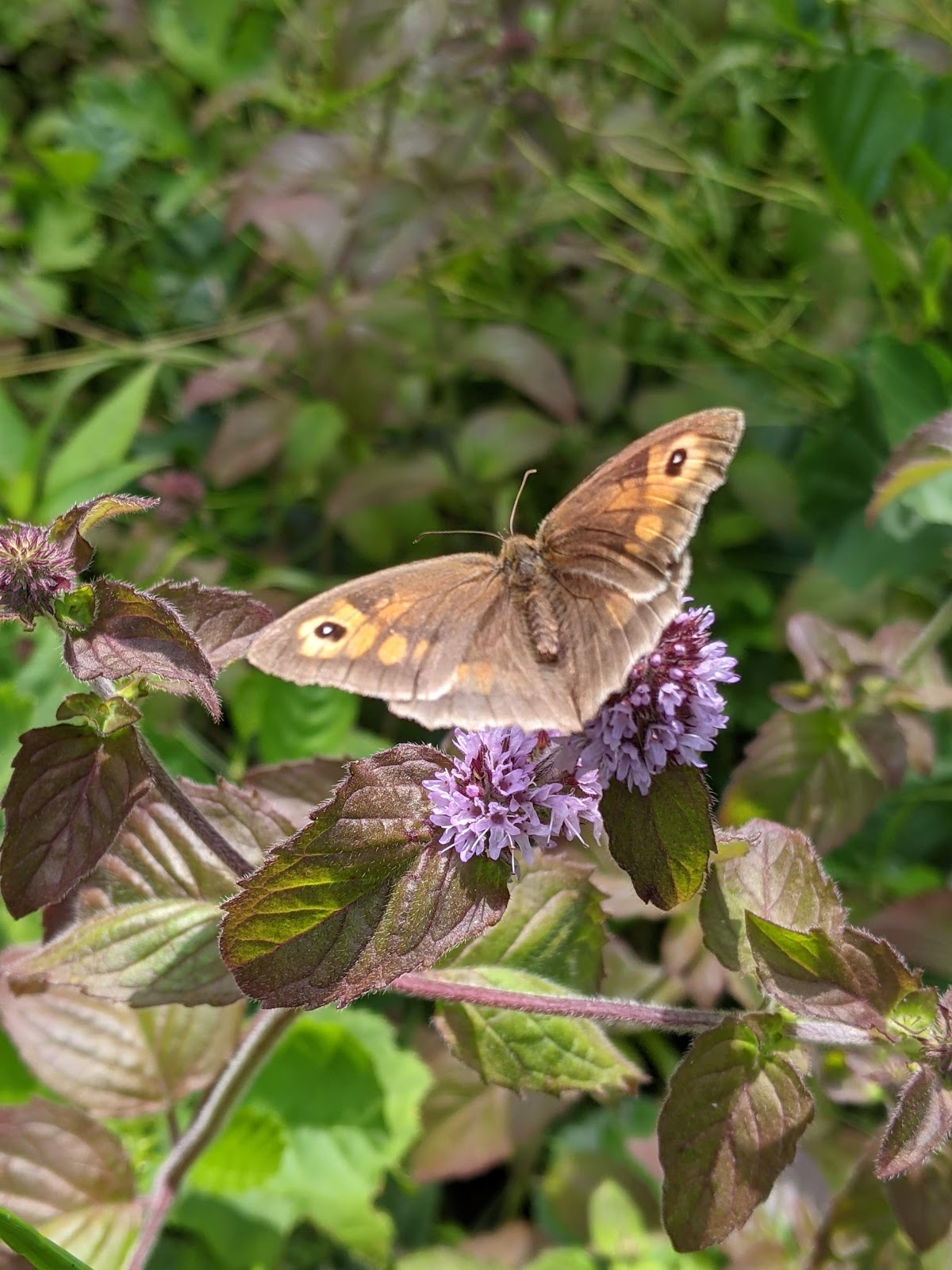
I’ve been fond of bees for quite a few years (I even wrote my dissertation on bees!), but I don’t often take the time to pause and notice the other minibeasts that live in my local area. This minibeast hunt was a great opportunity to challenge myself to look closer, and I felt very lucky to gain a snapshot into the lives of these smallest of animals.

Minibeasts

When people think of animals they usually think of lions, bears or elephants, for example, forgetting the smaller less observed animals in nature. The minibeasts we walk past each day though, can be equally majestic and awe-inspiring. Butterflies in spectacular colours, weird and wonderful froghoppers, or wriggling hard-working earthworms. All play an important role in nature, but tend to go unnoticed and be underappreciated.
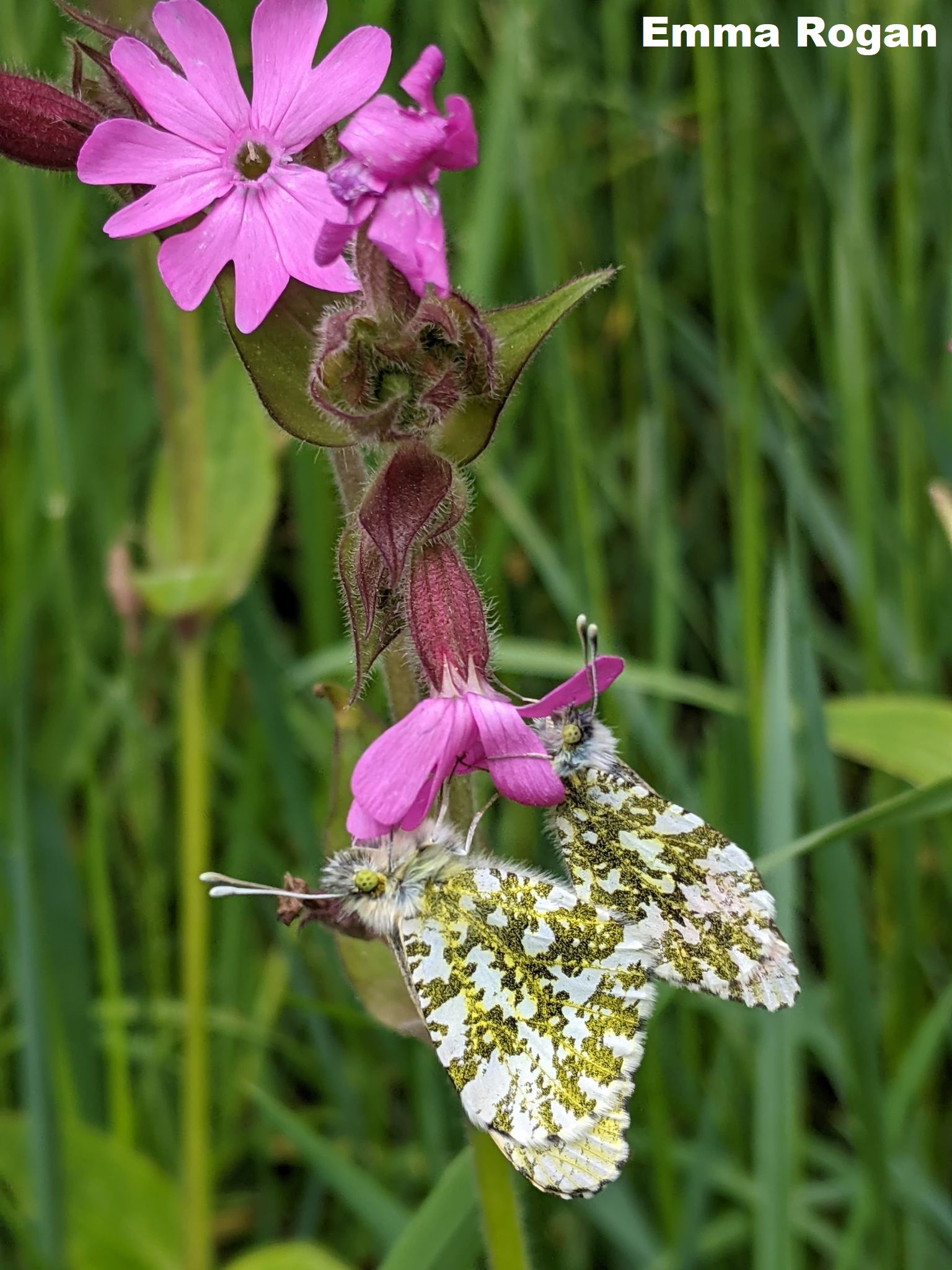
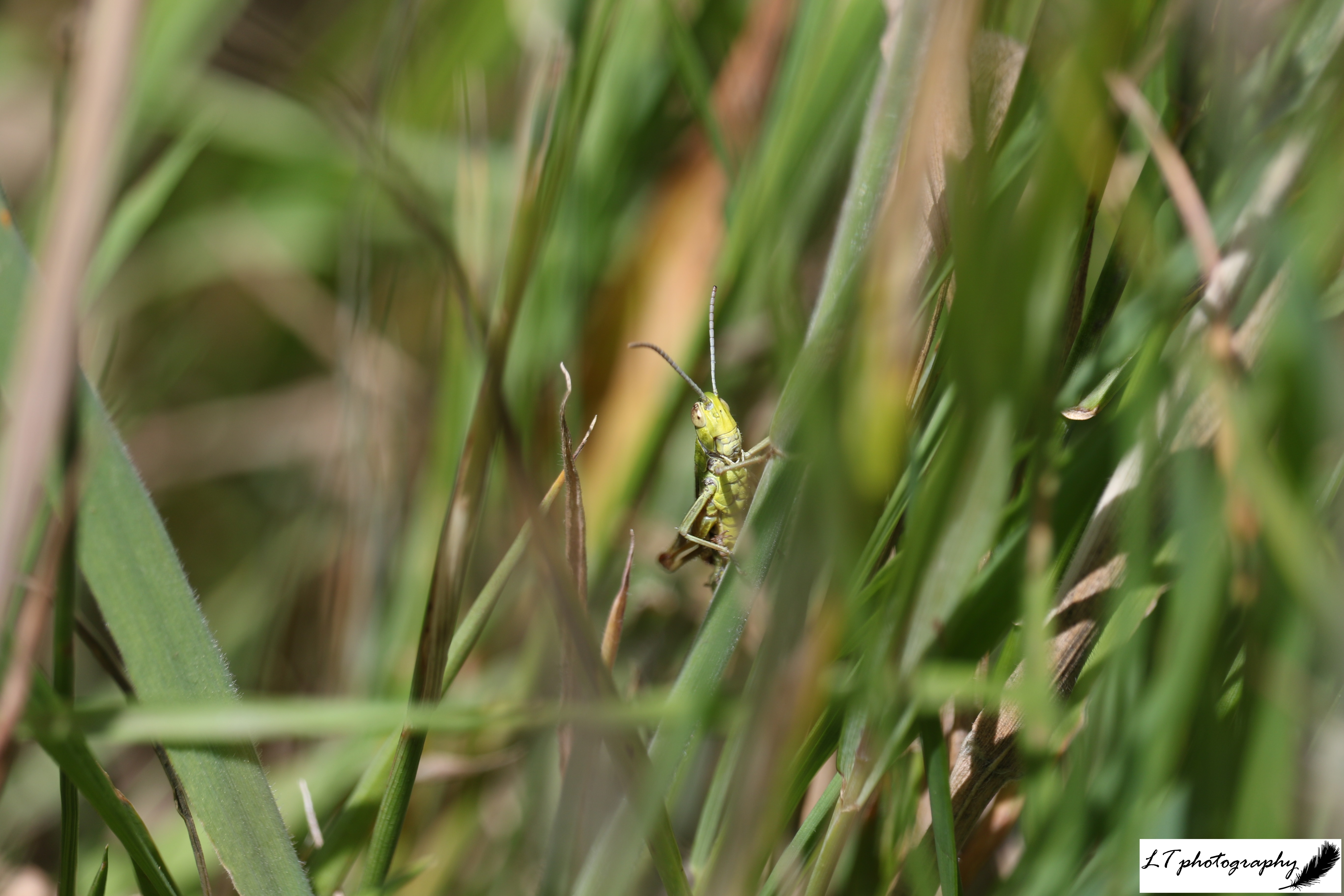
On both Emma and Laura’s minibeast adventures though, they found taking the time to focus on the smaller things eye opening. They might live in very different areas, but the green spaces they both have access to show an amazingly similar host of minibeasts. From grasshoppers to dragonflies, amazing minibeasts can be found anywhere. By challenging yourself to look closer at the smaller things in life, you can learn a lot, be provided with inspiration and even experience a moment of distraction and escape. Minibeasts are colourful, unusual, and awe-inspiring, so why not stop and find out what you could discover too?

How to… Identify Chalkland Wildflowers

Colourful, radiant, buzzing with life, a piece of paradise in the summer sunshine. All words to describe a small piece of chalk habitat nestled within the heart of my family’s farm in Dorset. Amidst a clay-dominated landscape, this small creation aims to emulate the approximately 41,000 hectares of lowland chalk grassland that can still be found across the UK. This super rich habitat contains over 40 species of flowering plants in every one square metre, giving chalk grassland its reputation as the tropical rainforest of Europe! Sadly though, 50% of chalk grassland has already been lost in Dorset alone since the 1950s.

In 2017, my Dad made the decision to transform a small triangular area of land on our farm into our very own chalk paradise. Though we do not live immediately on chalk downland, it can be found to the North and South of us. This makes our location ideal to create stopover habitat or a wildlife corridor, for the myriad of species that rely on these diverse plant communities. Following bringing in 40 tonnes of quarried chalk and lots of wildflower plugs and seeds, we now have a thriving 10m by 3m and 2m in height chalk mound.

Though my family’s chalk habitat is still in its relative infancy, over time it is transforming into a wildlife haven. From Grasshoppers and Marbled White Butterflies to blue Butterflies and Carder Bees, new species are popping up each and every year. This mini habitat has also been a great place for my mum to teach me all about the plant species that call chalkland grassland home. With her inspiration, I have put together a simple guide to identifying just some of the many wildflower species that are appearing on our mound.

Chalkland Wildflowers

Wild Marjoram (Origanum vulgare)Wild Marjoram

  • Family: Mint
  • Lifespan: Perennial (lives for several years)
  • Size: Short to medium height (30-60cm)
  • Stems: Erect, dark-red, downy and either round or square
  • Leaves: Oval, often slightly toothed, stalked, and 1.5-4.5cm in length
  • Flowers: Dark purple buds in loose clustered heads, opening to pale purple 6-8mm long flowers. Strongly aromatic. Flowers July-September
  • Range: Found throughout the UK (particularly in the South), but scarcer in Scotland
  • Fun Facts: This culinary herb is a symbol of happiness descended from Roman legend, with Origanum meaning ‘mountain joy’

Kidney Vetch (Anthyllis vulneraria)Kidney Vetch

  • Family: Legume
  • Lifespan: Annual (lives for one year) or perennial
  • Size: Sprawling and medium in height (up to 60cm), but very variable
  • Stems: Silkily hairy, round, and often greyish
  • Leaves: In pairs, they are silky white below and green above, and are 30-60mm in length
  • Flowers: Yellow, orange or a fiery red, and downy-white below. They are found in single heads (12-15mm across) or sometimes pairs. Flowers April-September
  • Range: Found throughout the UK, especially around the coast
  • Fun Facts: In the Middle Ages, it was known for speeding up wound healing, with vulneraria meaning ‘wound healer’. It was also once used to commonly treat kidney disorders

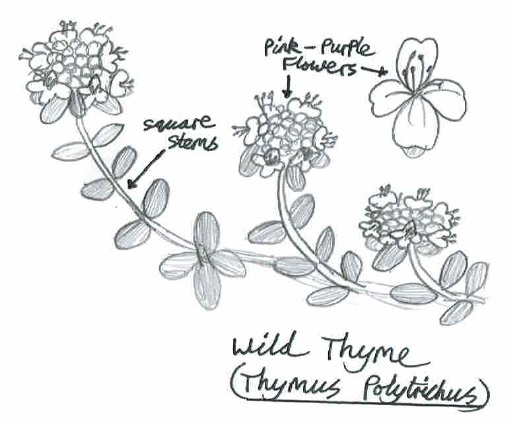
Wild Thyme (Thymus polytrichus) Wild Thyme

  • Family: Mint
  • Lifespan: Perennial
  • Size: Low to the ground, forming a mat of non-flowering rooting stems (up to 10cm in height)
  • Stems: Square with erect flowering stems
  • Leaves: Evergreen, short stalked, very small oval 4-8mm leaves in opposite pairs
  • Flowers: Faintly aromatic with pink-purple flowers in round and dense heads. Flowers May-September
  • Range: Widespread in South East England, but scattered distribution elsewhere
  • Fun Facts: Long regarded as the favourite flower of fairies, and associated with love. The Greek thumon though means ‘that which is included in a sacrifice’

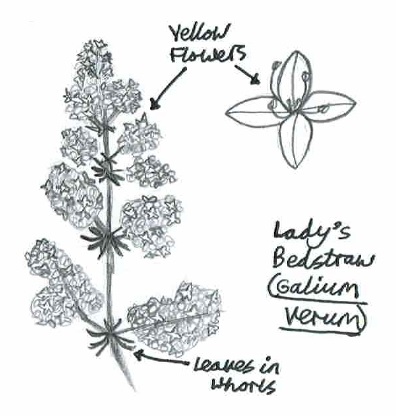
Lady’s Bedstraw (Galium verum)Lady's Bedstraw

  • Family: Madder/Bedstraw
  • Lifespan: Perennial
  • Size: Short to medium in height, often sprawling (up to 100cm)
  • Stems: Four-angled, almost hairless stems
  • Leaves: Dark green, long, narrow, shiny leaves in whorls of 8-12. Said to smell of new-mown hay
  • Flowers: Bright golden yellow, 2-4mm wide, in clusters, with a sweet honey-like scent. Only Bedstraw species in the UK with yellow flowers. Flowers June-September
  • Range: Widespread
  • Fun Facts: Associated with the story of the Virgin Mary giving birth to the baby Jesus, leading to the belief that a woman lying on a mattress of Lady’s Bedstraw would have a safe and easy childbirth

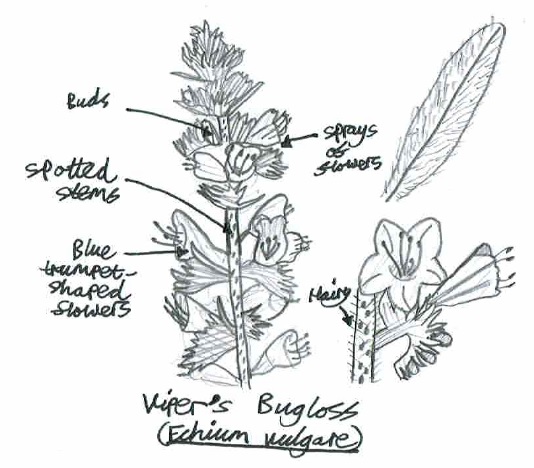
Viper’s Bugloss (Echium vulgare)Viper's Bugloss

  • Family: Borage/Forget-Me-Not
  • Lifespan: Biennial (flowers in its second year before dying) or perennial
  • Size: Medium to tall in height (up to 100cm)
  • Stems: Roughly hairy and spotted (red-based bristles)
  • Leaves: Narrow, oval-shaped lower leaves
  • Flowers: Flowers in drooping clusters of pink buds that open to become erect, blue, trumpet-shaped, open-mouthed flowers, 10-20mm long, in branched spikes. Flowers May-September
  • Range: Scattered distribution across the UK, being most common in the South
  • Fun Facts: The plant’s name comes from a time when it was believed to be a cure for snake-bites, reinforced by the dead flower-heads resembling a viper’s head

Rough Hawkbit (Leontodon hispidus)Rough Hawkbit

  • Family: Daisy
  • Lifespan: Perennial
  • Size: Short to medium in height (up to 60cm)
  • Stems: Very hairy, unbranched, leafless, and slightly swollen at the top
  • Leaves: Form a rosette of bluntly lobed leaves at the base of the flowering stem
  • Flowers: Golden-yellow, though often orange or reddish beneath, solitary and 20-40mm wide. Forms seed heads that look like dandelion clocks. Flowers late May-October
  • Range: Widespread and fairly abundant across the UK, apart from in the far North
  • Fun Facts: In Greek, Leontodon means ‘Lion’s tooth’, referring to the toothed leaves. The flowers are also rich in nectar and smell sweetly of honey

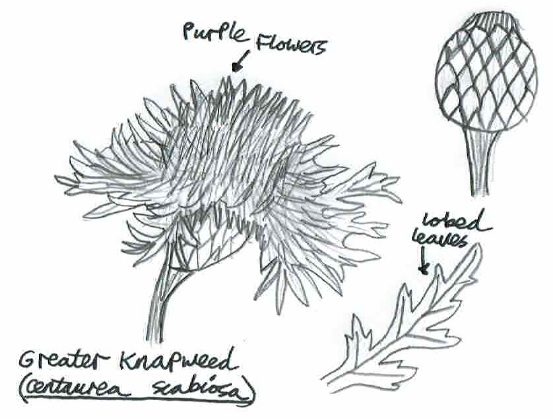
Greater Knapweed (Centaurea scabiosa)Greater Knapweed

  • Family: Daisy
  • Lifespan: Perennial
  • Size: Medium to tall in height (30-120cm)
  • Stems: Erect and grooved
  • Leaves: Lobed, where the lobes are positioned in pairs either side of the leaf centre. The leaves are 100-250mm long
  • Flowers: Purple, solitary and 30-60mm across. Flowers July-September
  • Range: Scattered across the UK, but predominantly grows in England
  • Fun Facts: Commonly used to treat wounds, bruises, sores and similar conditions

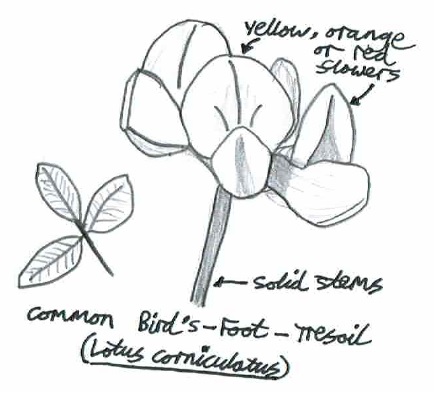
Common Bird’s-Foot-Trefoil (Lotus corniculatus)Common Bird's Foot Trefoil

  • Family: Legume
  • Lifespan: Perennial
  • Size: Short or medium in height and sprawling (up to 50cm)
  • Stems: Solid not hollow, and trailing
  • Leaves: Greyish-green, downy or hairless, and oval-shaped tapering to a point
  • Flowers: Deep yellow or orange, often partly red, and 10-16mm long, often 2-7 per flower head. Flowers May-September
  • Range: Widespread
  • Fun Facts: It has more than 70 common folk names including Eggs and Bacon. The name Bird’s-Foot-Trefoil reflects the resemblance to a bird’s foot, and is a larval food plant of Green Hairstreak and Dingy Skipper Butterflies

Ox-eye Daisy (Leucanthemum vulgare)Ox Eye Daisy

  • Family: Daisy
  • Lifespan: Perennial
  • Size: Medium in height (20-75cm)
  • Stems: Round, angled or square, erect, and slightly hairy
  • Leaves: Long-stalked, dark green, spoon-shaped, toothed and in a rosette around the base of the flowering stem
  • Flowers:  White, 20-60mm across, solitary and on sparsely leafy stalks. Flowers May-September
  • Range: Widespread
  • Fun Facts: In past times, an extract was obtained by boiling the plant down, that  was used in salves and medicines to cure a variety of ailments from liver disease to runny eyes. Largest native daisy species

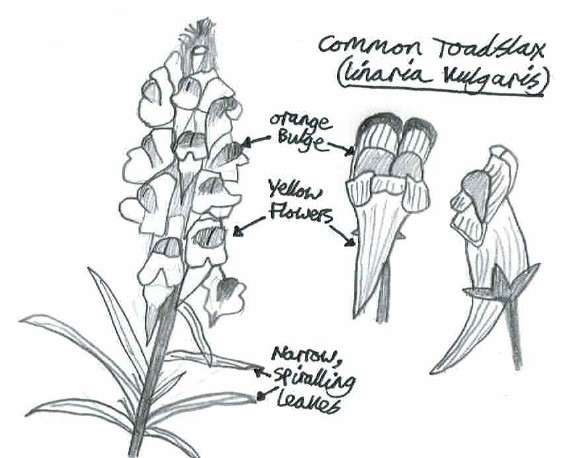
Common Toadflax (Linaria vulgaris)Common Toadflax

  • Family: Plantain
  • Lifespan: Perennial
  • Size: Short to medium in height (30-80cm)
  • Stems: Erect, grey-green, and hairless
  • Leaves: 30-80mm long, very narrow, untoothed, and spirally arranged up the stems
  • Flowers: 15-35mm long, yellow with an orange bulge and long straight spur, forming stalked spikes. Flowers June-October
  • Range: Widespread
  • Fun Facts: Most common Toadflax species in the UK, getting its name from previously being considered as useless, fit only for toads

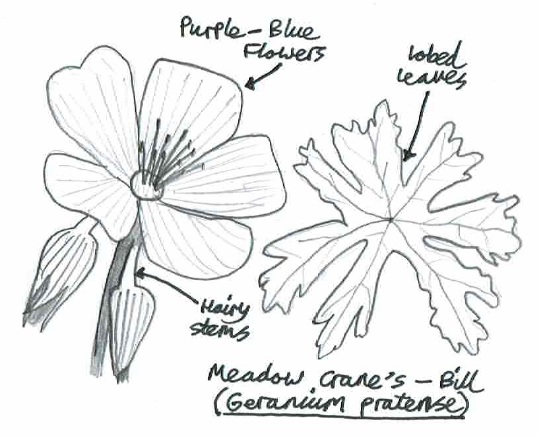
Meadow Crane’s-Bill (Geranium pratense)Meadow Cranesbill

  • Family: Geranium
  • Lifespan: Perennial
  • Size: Medium to tall in height (30-100cm)
  • Stems: Hairy, erect, and often reddish
  • Leaves: Have 5-9 lobes, cut nearly to the base
  • Flowers: Soft violet blue, petals not notched, 15-30mm wide. Flowers June-September
  • Range: Found throughout the UK, but rarer in South West England and East Anglia
  • Fact: With lesser known names such as ‘Jingling Johnny’ or Loving Andrews, it is a horticultural favourite dating back to before the Elizabethan times

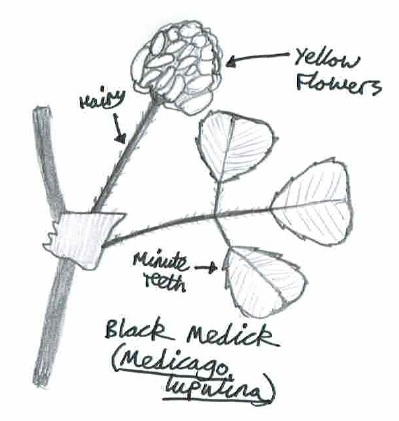
Black Medick (Medicago lupulina)Black Medick

  • Family: Legume
  • Lifespan: Annual or short-lived perennial
  • Size: Low in height (up to 60cm), and sprawling or erect
  • Stem: Round or square and hairy
  • Leaves: Trefoil, downy, and 5-20mm in length, with minute teeth
  • Flowers: Bright yellow and small, with 10-50 to one short-stalked rounded head (3-8mm wide). Flowers April-October
  • Range: Widespread across the UK, but sparser in Scotland
  • Facts: Name means ‘plant of the Medes’, referring to an ancient Middle Eastern people, whilst lupulina means ‘hop-like’, due to similarities with Hop Trefoil


Now get out there and see what you can find!


Drawings and photos all my own