Spring Camera Trapping 2024 – Part 2: Late May, June & Early July

Late spring is a time of vibrant energy, spectacular colour, and nature being at its busiest. Days are lengthening, temperatures are rising, and life is bursting forth wherever you go. This is joined by plant species growing abundantly, migrant birds having all returned to their breeding sites, alongside our native species, and mammals having welcomed young or waiting to do so. Despite this, how much do we actually see of our local wildlife on a day-to-day basis, as they go about their secretive lives?
In the first part of my two posts on my 2024 spring camera trapping adventures (check out the first part here), March, April and early May saw me exploring many locations on my family’s Dorset farm and getting some wonderful surprises. I was able to watch as some species fed young, some introduced them to the world for the first time, and others were feeding up ahead of laying eggs or giving birth themselves. My adventures did not finish there though, as I continued to watch on, as these individuals moved into late spring activity. So what happened next?
Late May

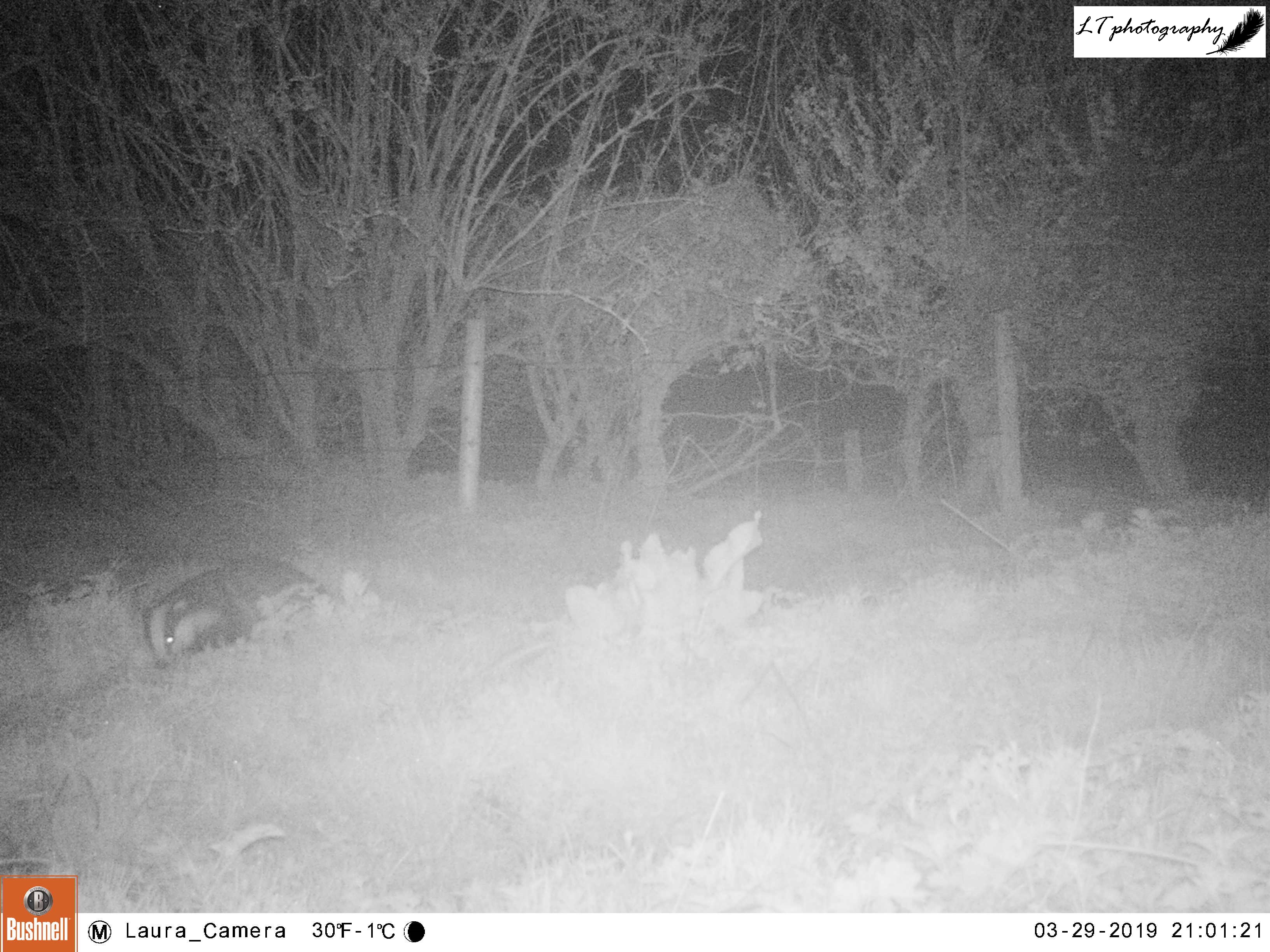
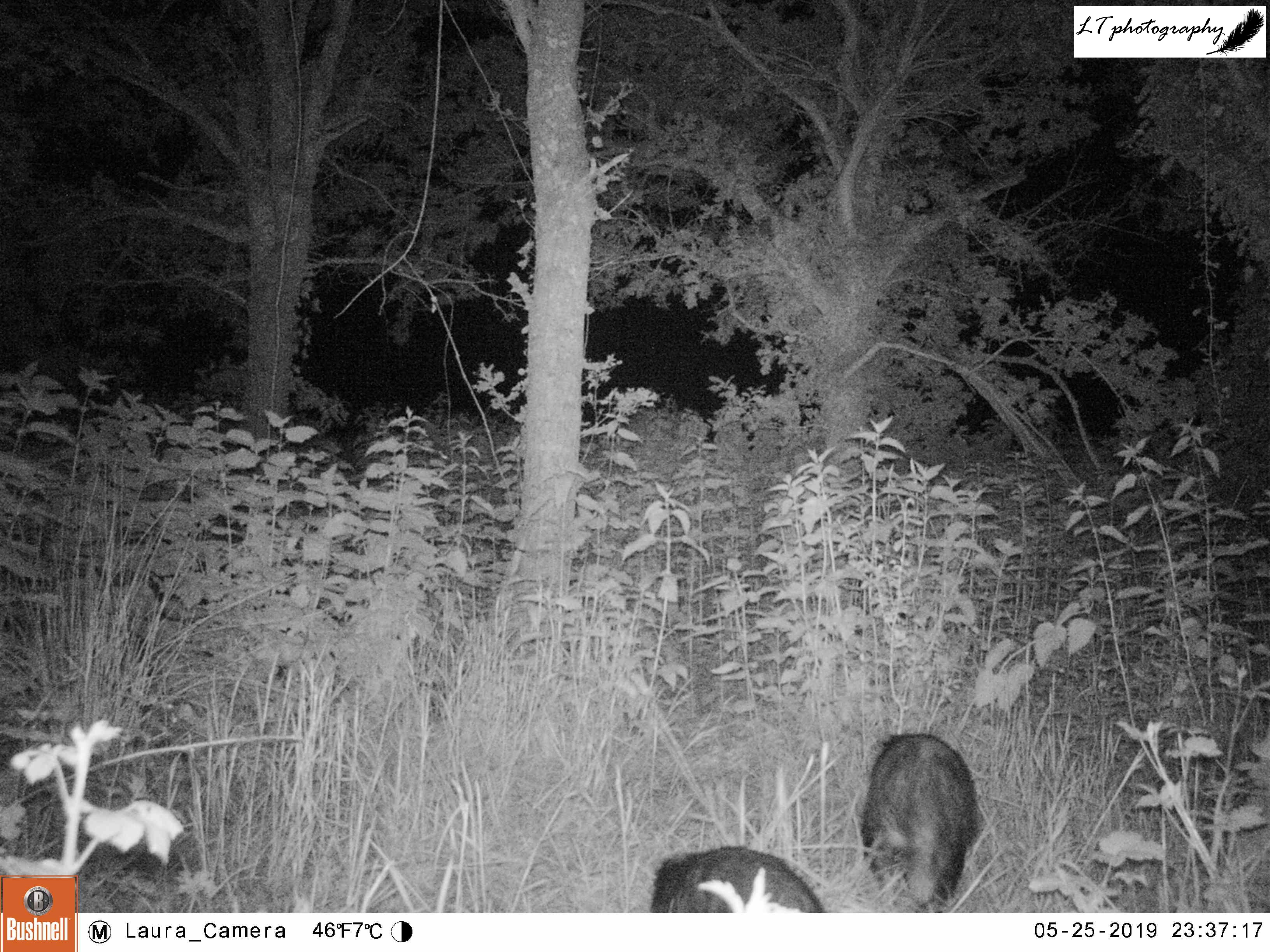
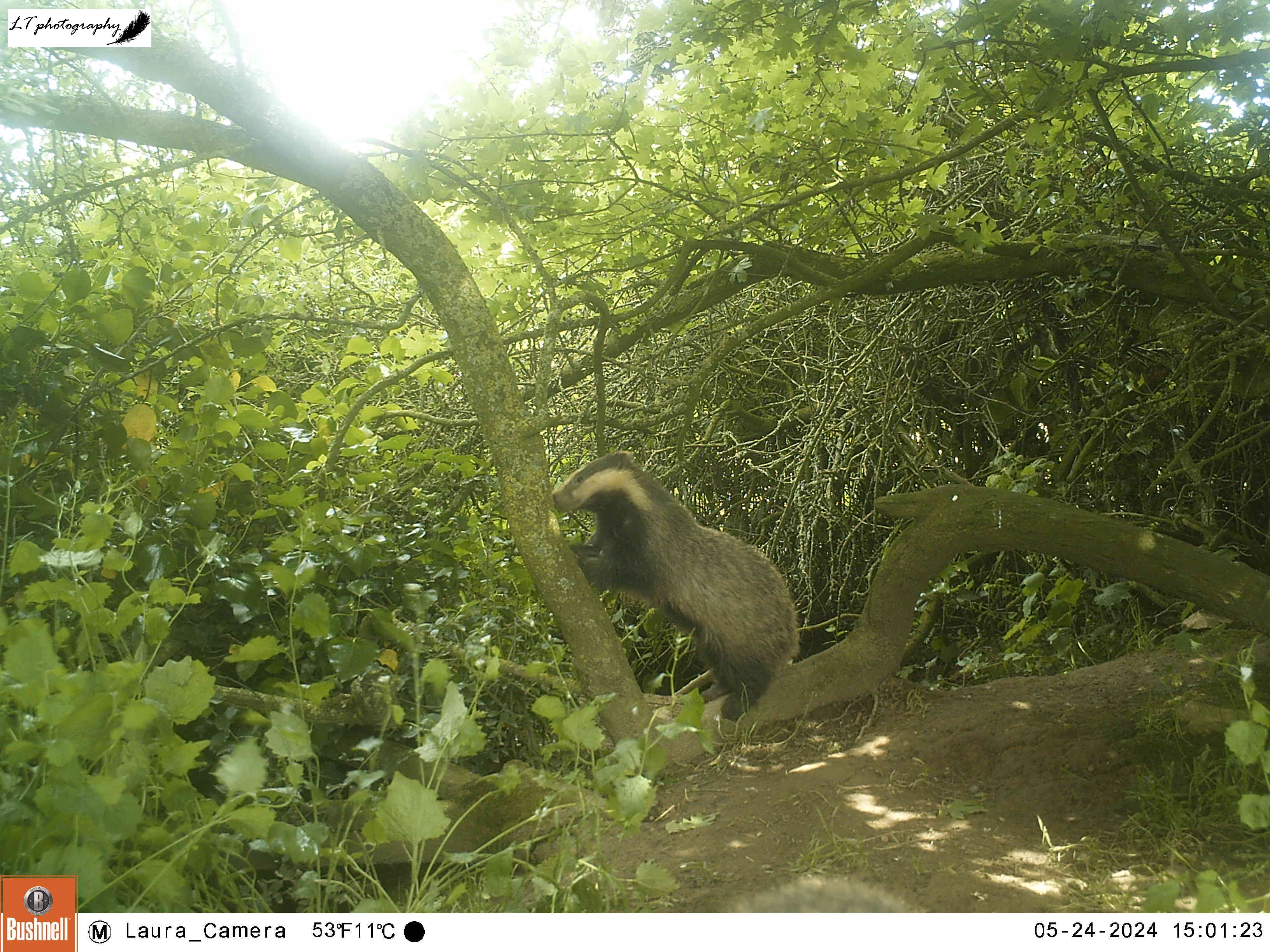
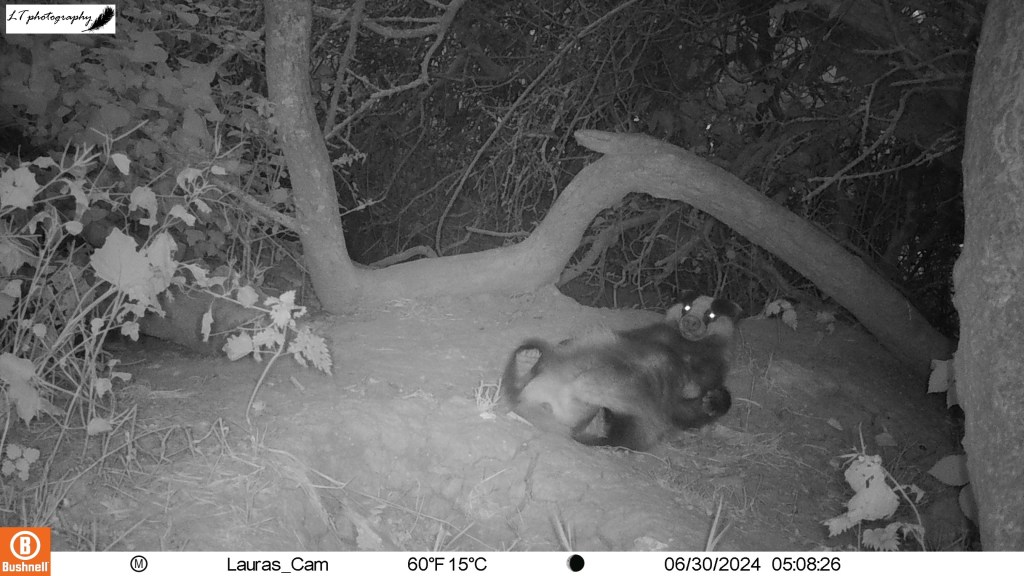
Late May is a a great time to see badgers at their setts, as cubs now explore the area around their homes, and adults spend more time above ground during the daytime. My camera traps allowed me to observe the behaviour of badger families in their natural habitat during this time close to my home, and also gave me some priviledged views of their lesser seen lives. This included badgers foraging and playing during the day, climbing trees, grooming, sleeping, and socialising.
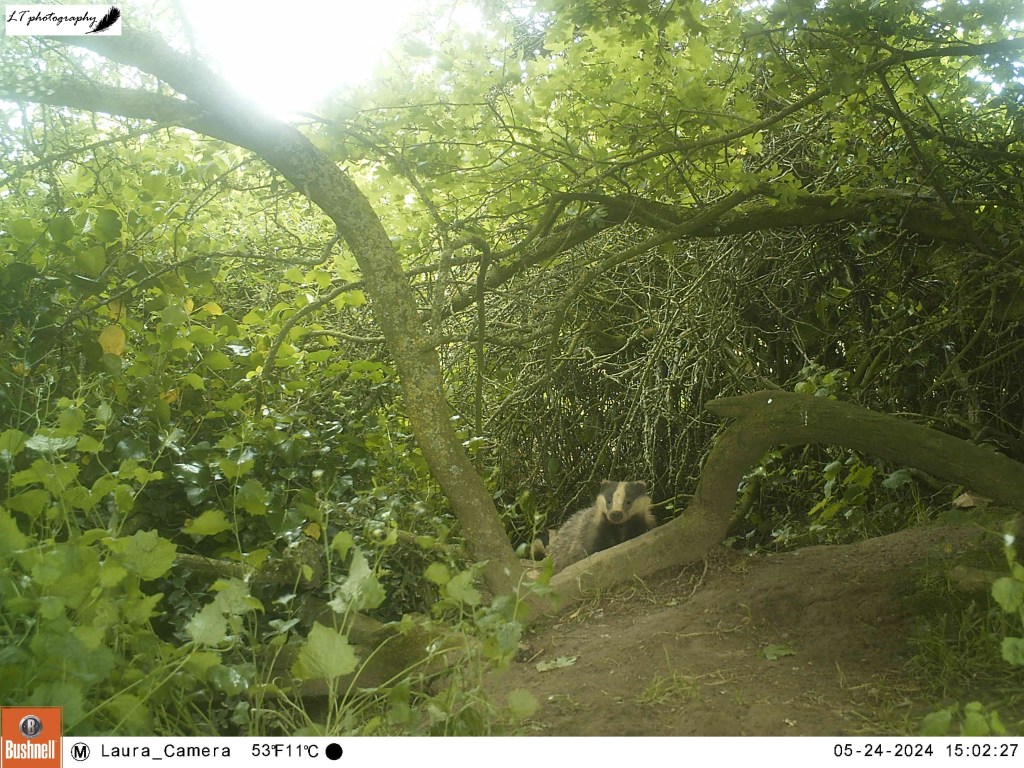
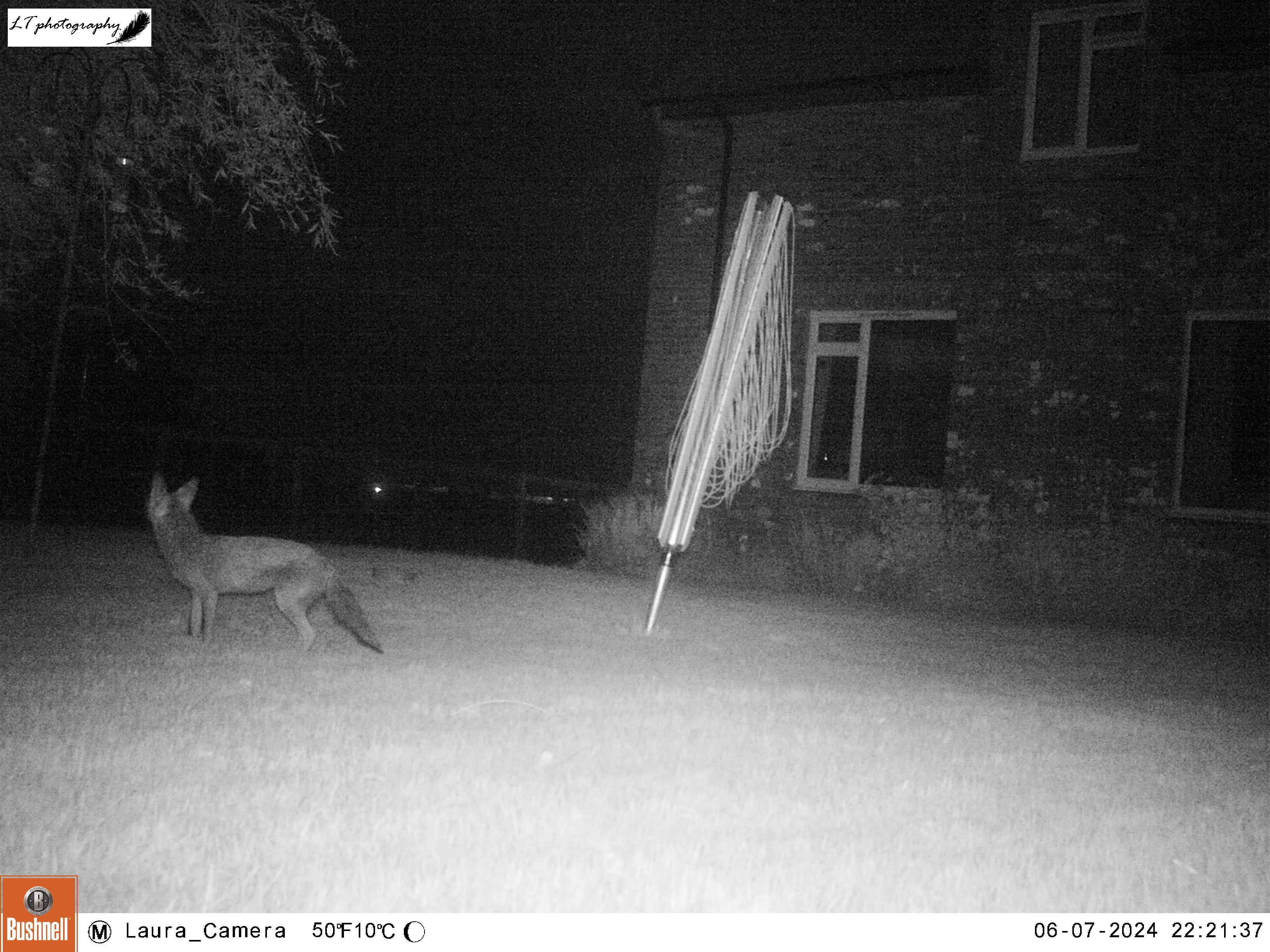
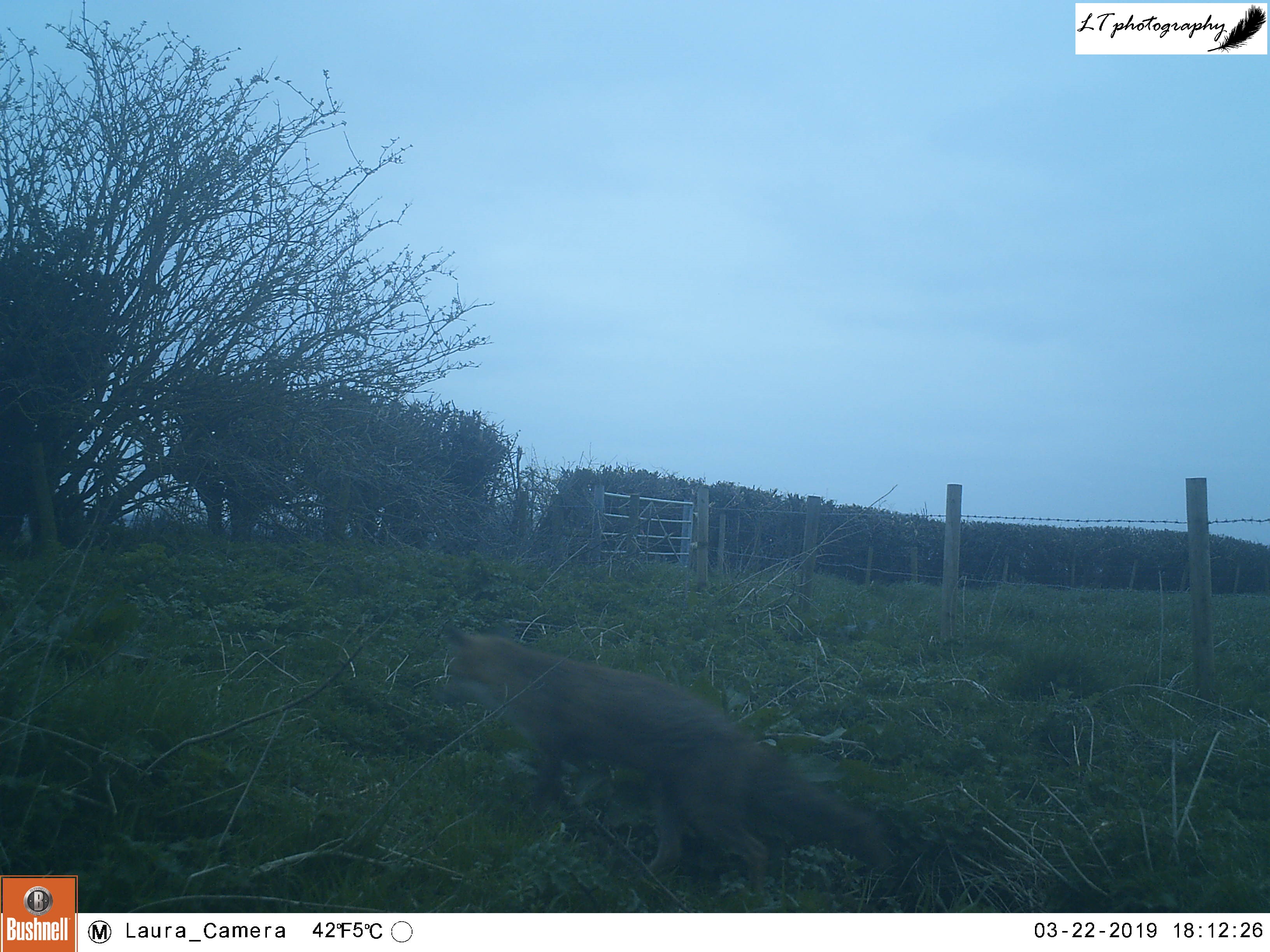
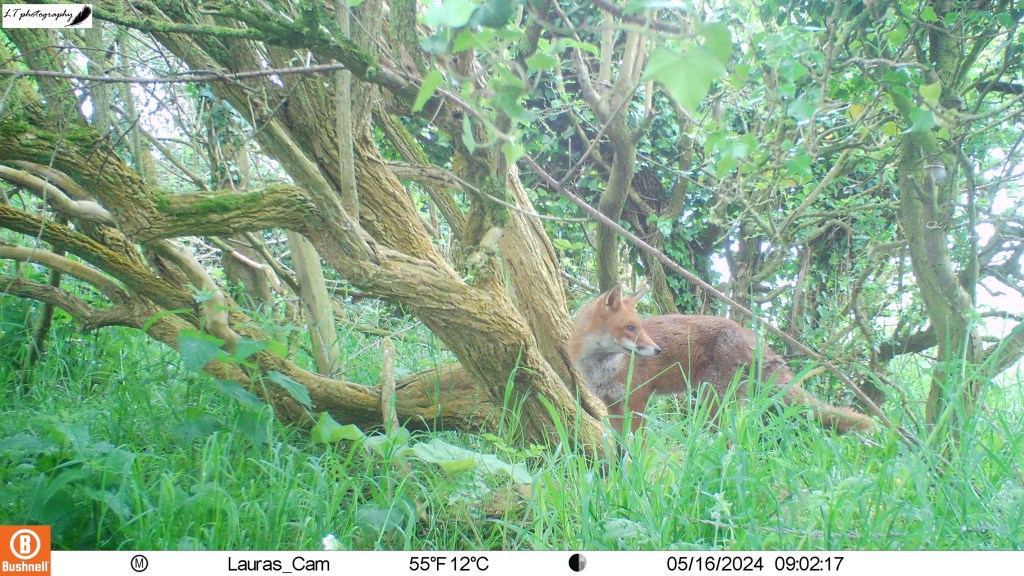
Badgers may have been captured more by my camera traps during late May this year, but foxes were seen less and less in some areas. This is a concern as unlike in previous years, fox cubs were not seen being born and emerging in the typical or usual locations and some adults also stopped bringing food to dens during the critical time. Unfortunately this may be due to more litters failing this year compared to previous ones.
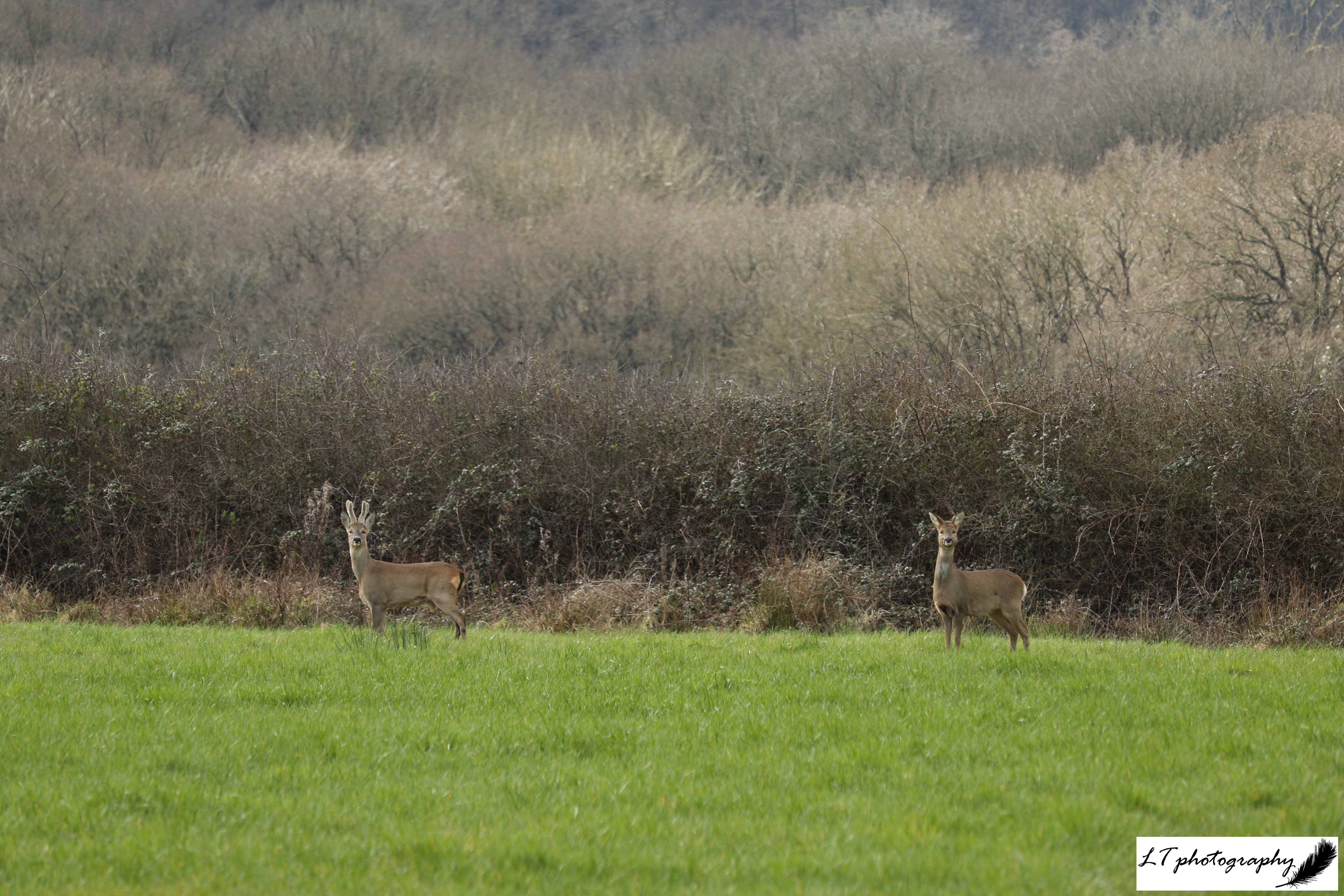
Where foxes were unexpectedly seen less during late may this spring, roe deer on the other hand were captured less because of behavioural changes to their daily patterns. This is due to winter roe deer groups splitting up and individuals becoming more solitary as females near the end of their pregnancies, and choose to go it alone. Spring babies are on the way!

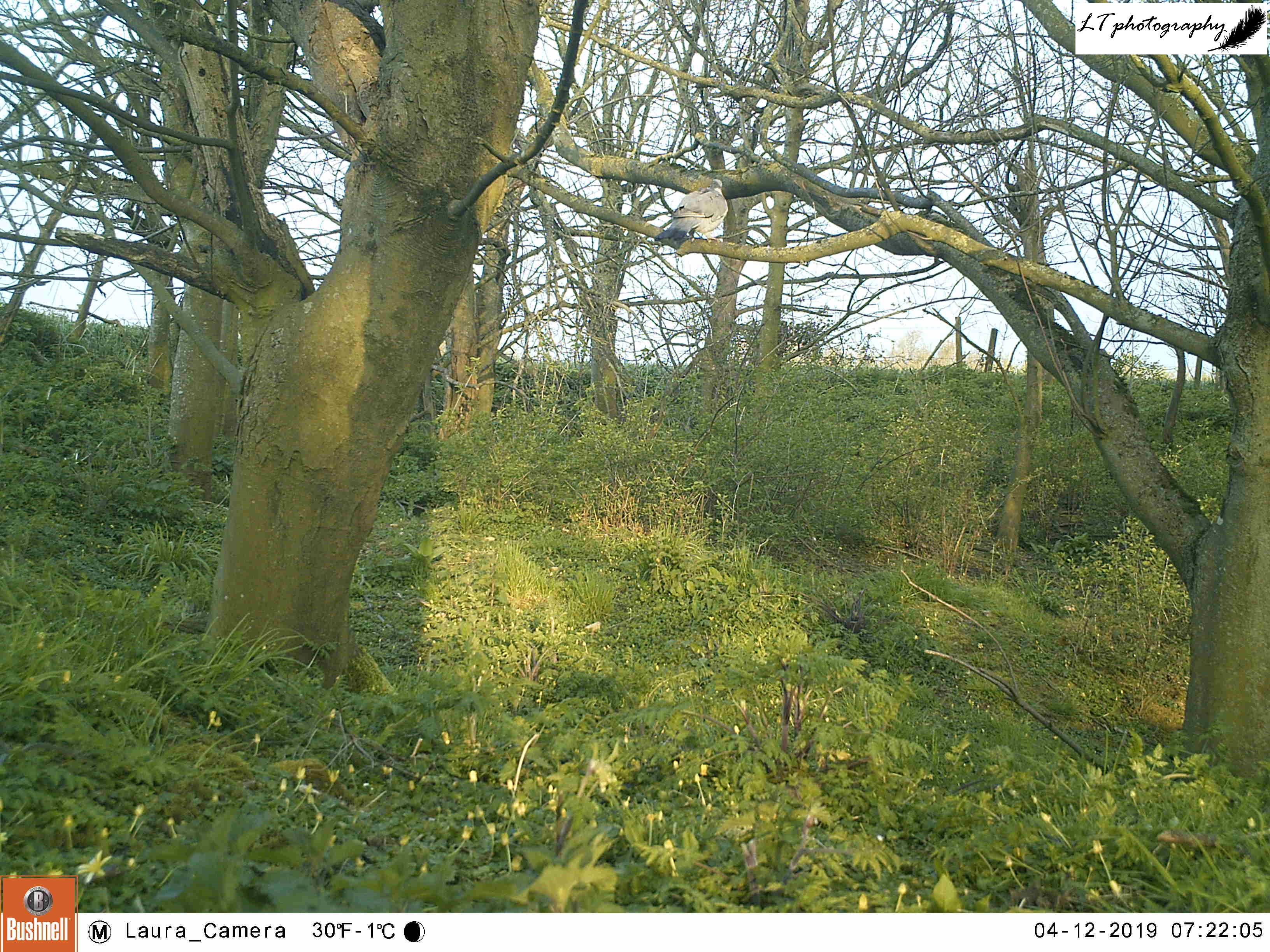
Species List: Roe deer, badger, fox, brown rat, blackbird, woodpigeon, magpie, great tit, rabbit

June

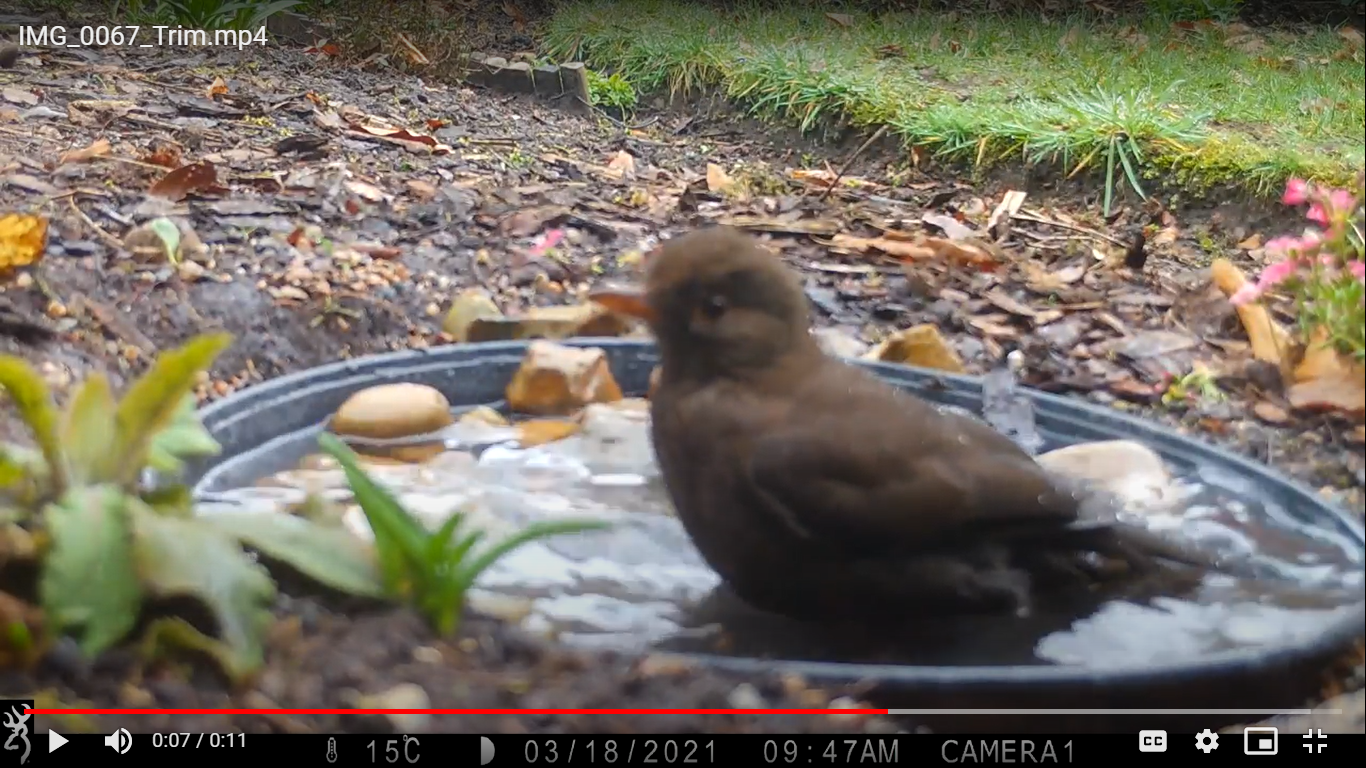
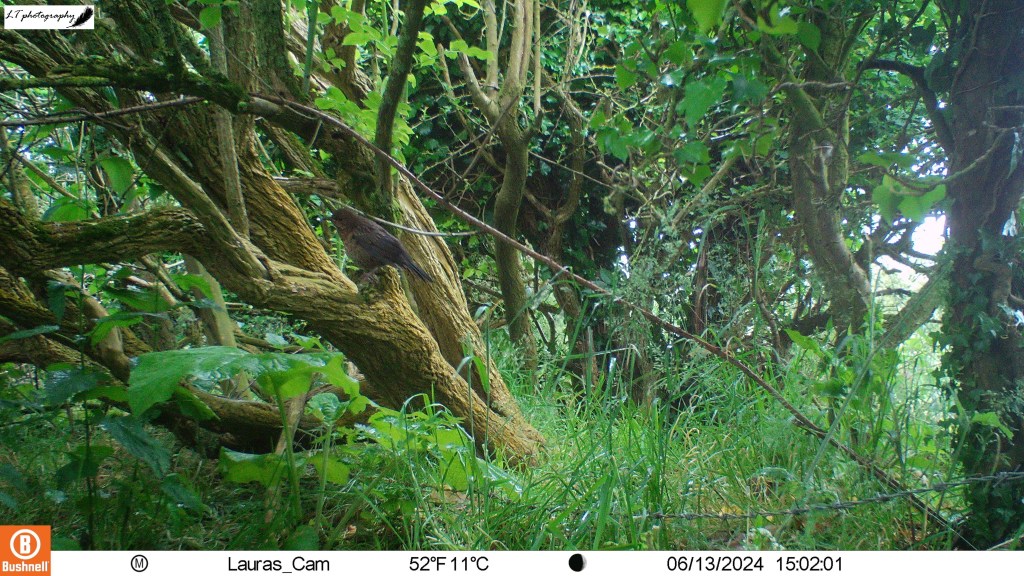
By June, with abundant food sources now available, lots of wildlife species have young on the ground, and this gives us a great opportunity to observe the unique bond between animals and their young. My camera traps this year were even able to delve into the lives of some bird species, capturing the lives of families of both blackbirds and robins. I was able to watch as adults interacted with their fledged young, whilst protecting them from predators, and still supplying them with food.
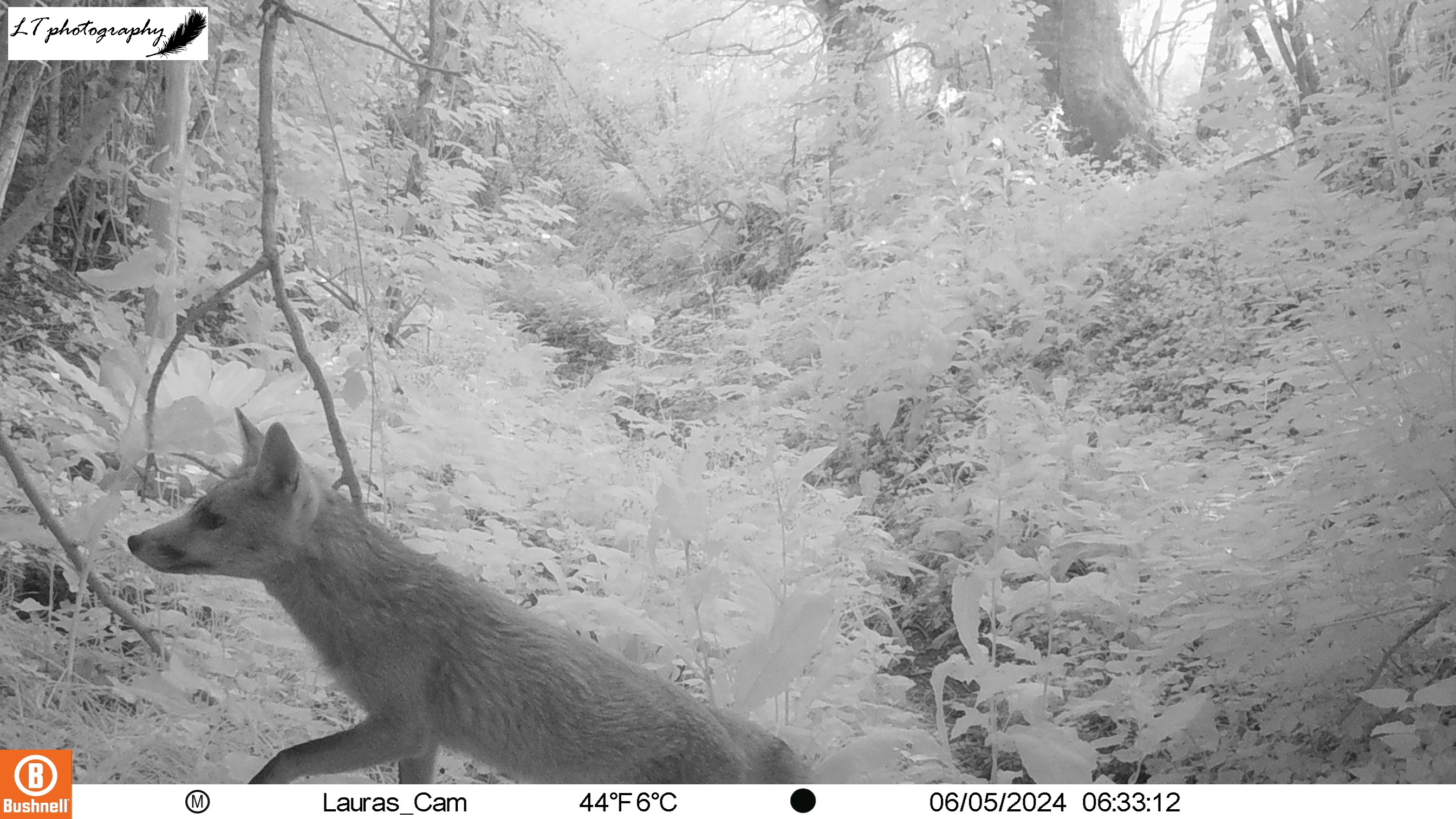
During late spring, as well as being a time of wildlife breeding, it is also a calmer time for individuals that are not breeding this year. For example, whilst adult foxes are still focussed on their cubs and breeding efforts, you can also get sightings of young and non-breeding individuals as they hunt and go it alone. This year my camera trap sightings on the farm included that of a small fox born last year, that felt safest staying close to our farm buildings to hunt and rest during the daytime.

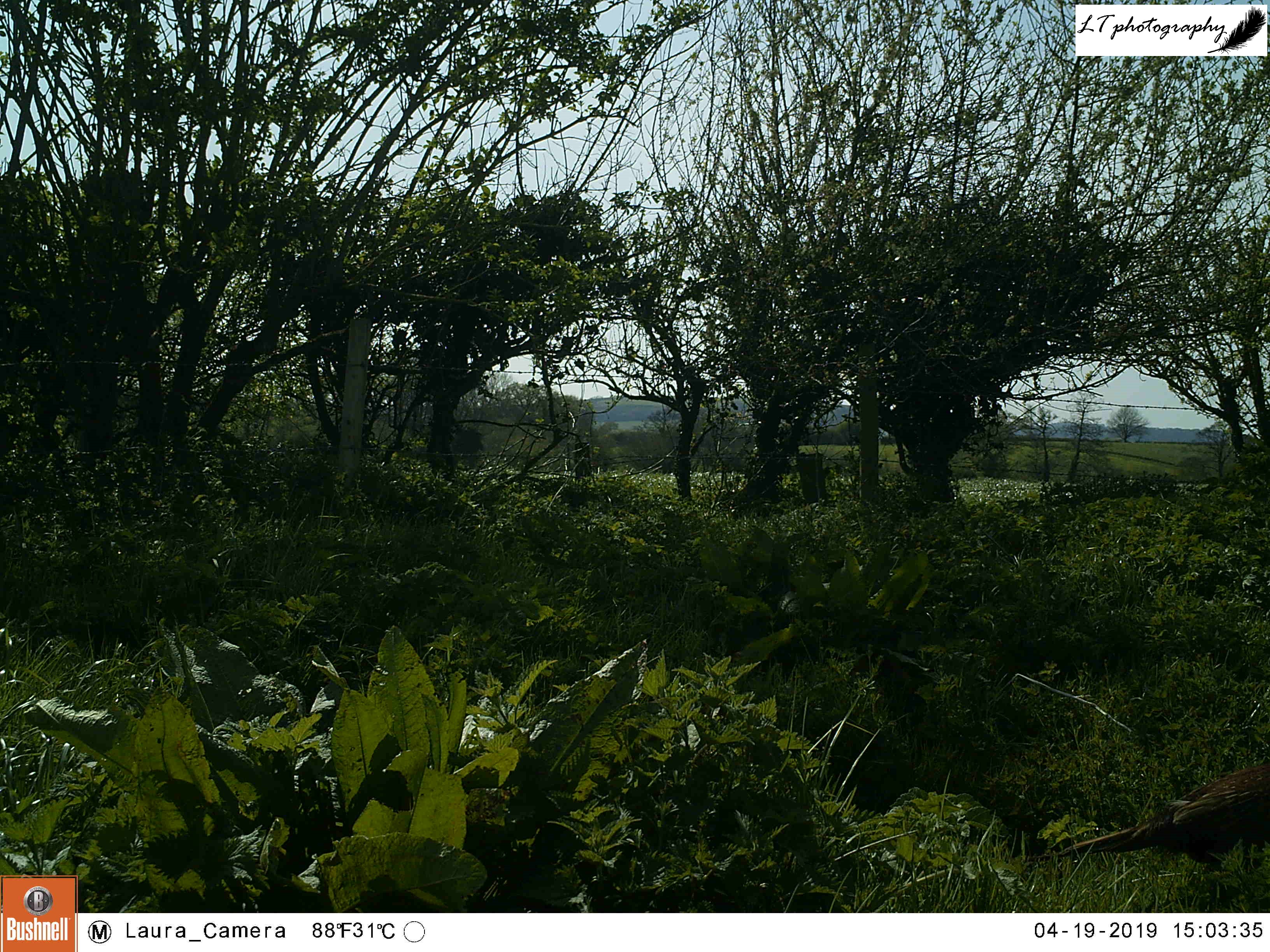
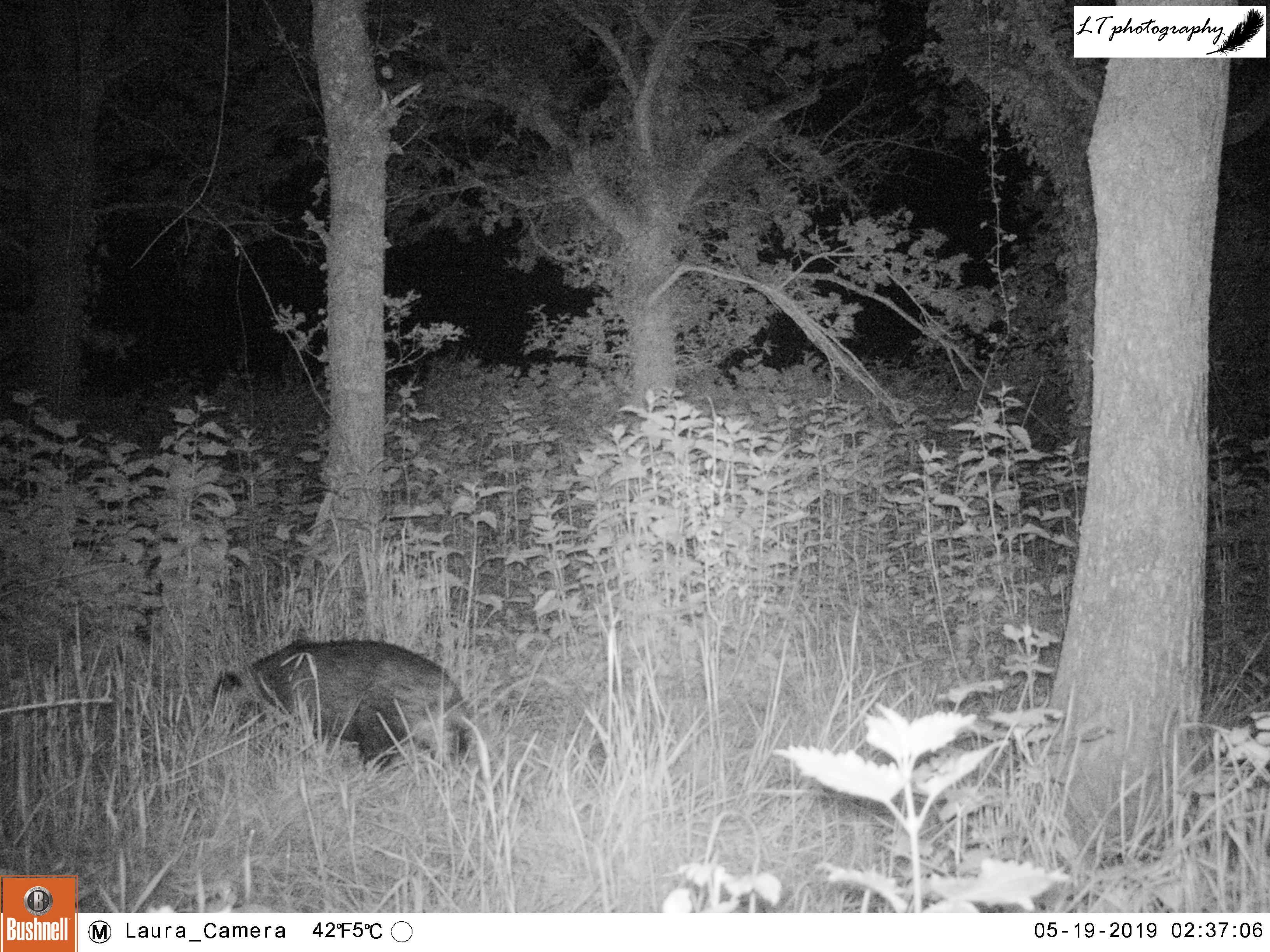
Species List: Fox, hedgehog, woodpigeon, roe deer, pheasant, magpie, robin, badger, brown rat, blackbird, wren, woodmouse

July

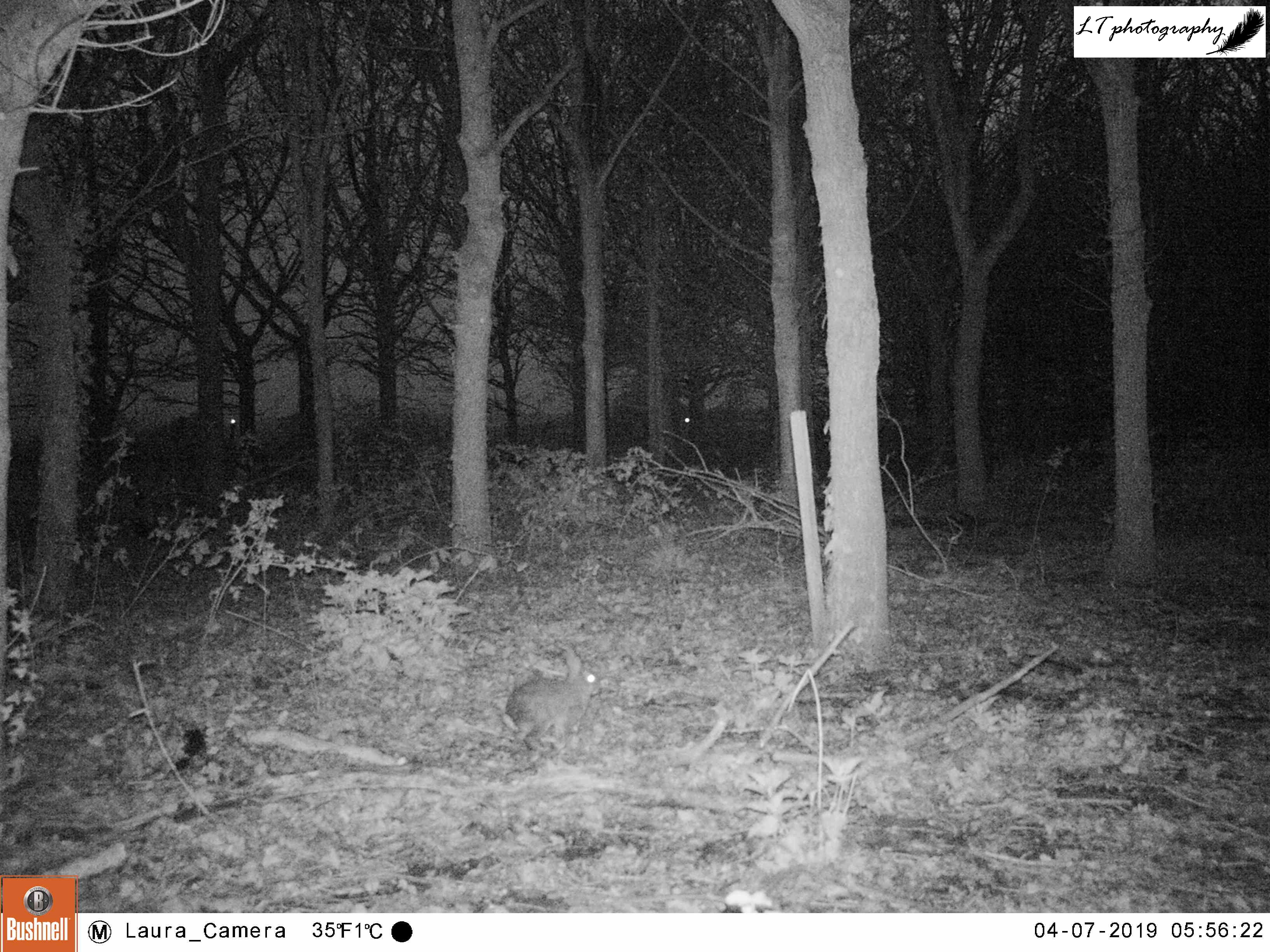
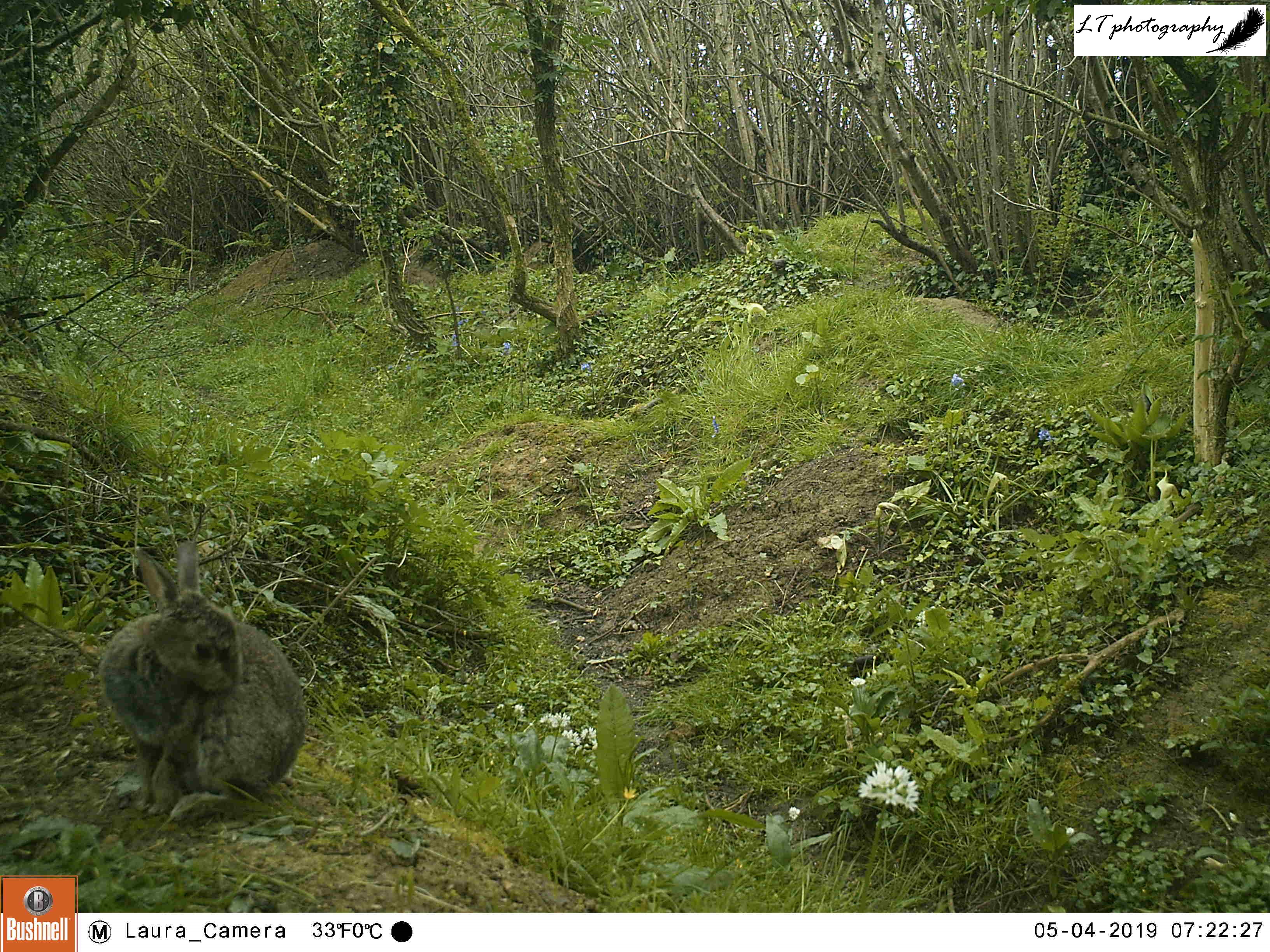
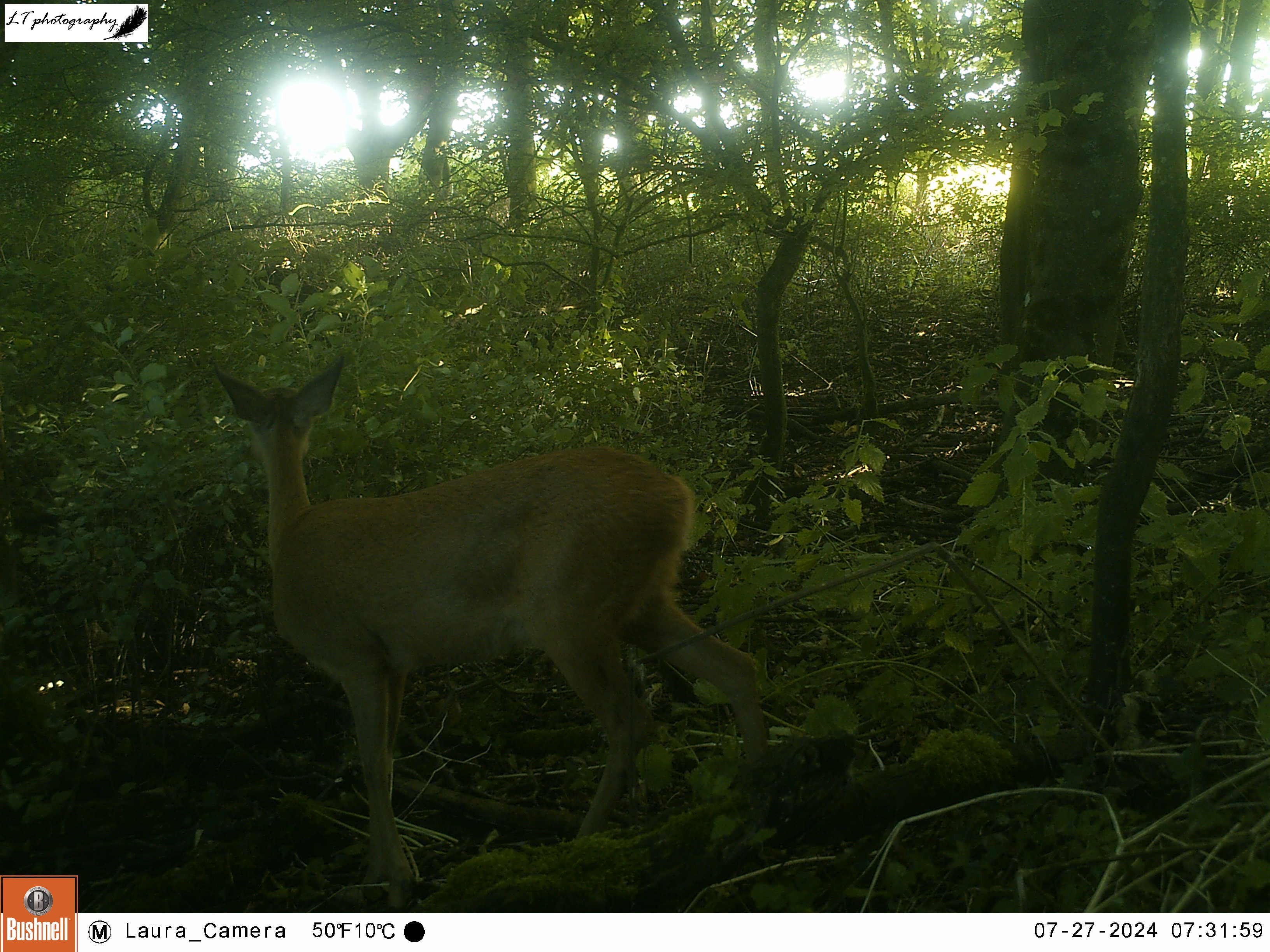
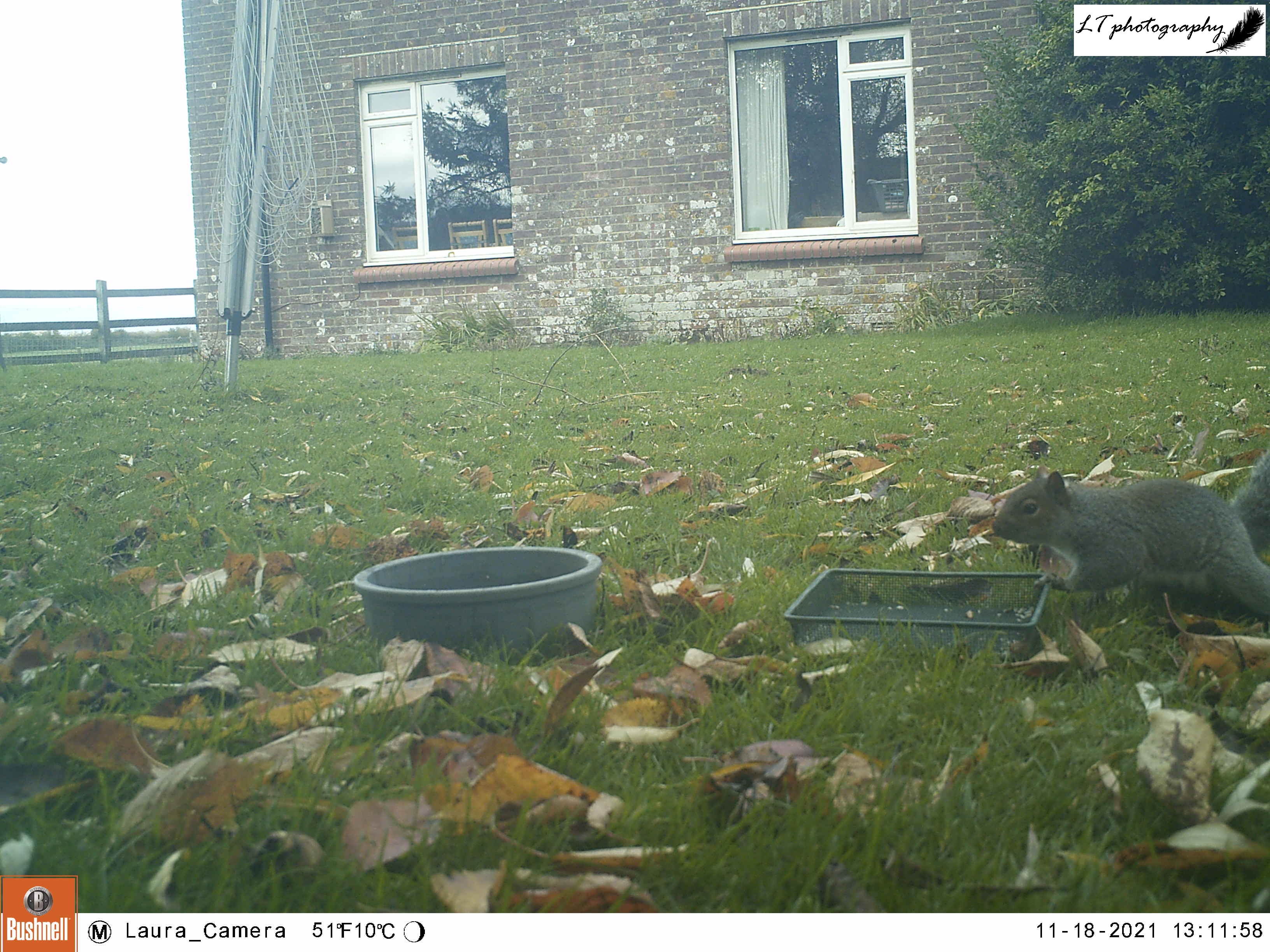
Having spent the last few months exploring particular locations around my family’s farm and focussing on particular spots, I finished up my camera trapping adventures by revisiting some of my favourite spots for one final look in. At badger alley, the well-trodden footpath, by roaming animals, had quietened down with the end of spring. Grey squirrels and rabbits still frequent this spot in July, and glimpses were made of last year’s fox cubs, solitary male roe deer, a territorial badger at the edge of its territory, and a muntjac deer passing through for the fourth time this year.

In woodland, roe deer feeding was the only sighting, whereas the quarry field badger sett was still busy with the activity of the family of badgers living there and a brand new family of fledged blackbird chicks. This year it has been sad to have not seen any sightings of new fox cubs, despite targeting many different locations frequently used by adult foxes this spring and in previous years. As spring turned into summer, the sightings of adult foxes by my camera traps and by observation was also down on this time last year. We wonder if foxes had a tough winter, but hope they have more luck next year.
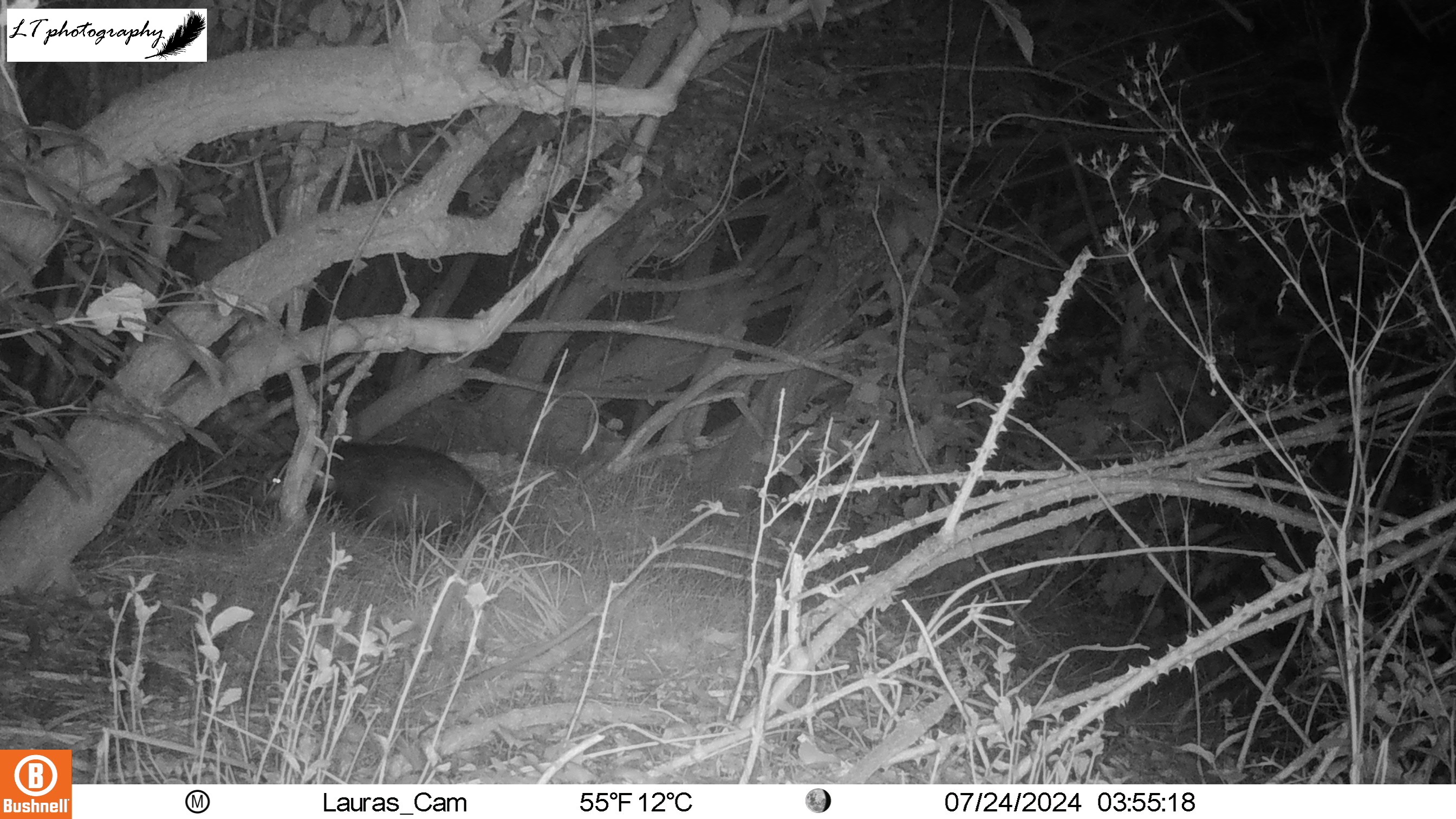
A camera trap positive though, was the frequent visits by hedgehogs to my family’s garden this year. In July, at least one adult was visiting, in particular one female that we knew to have bred not far from our garden. Also, some nights multiple adult hedgehogs would visit the garden at the same time, and even share the food that we put out for them. My camera trap allowed us to keep an eye on the hedgehogs, and learn new behaviour, such as hedgehogs being naturally dominant over brown rats, probably due to their size. It has been a joy to see this species grow in numbers once again in our area! Here’s to the end of another fantastic spring!

Species List: Rabbit, muntjac deer, grey squirrel, roe deer, fox, brown rat, badger, woodpigeon, pheasant, blackbird, hedgehog

How to… Identify All Year Round Garden Birds

Photographs will be updated in the future

In the UK, 633 wild bird species have been recorded up to 2024, from eagles and owls to kingfishers and thrushes. Between 2015 and 2020 though, almost half of all bird species in the UK were seen to have experienced a decline in number, adding to a steady decline over 50 years. Some of the biggest factors have been increased development, agricultural intensification, habitat loss, lack of woodland management, disease, and climate change, amongst others.

As bird species continue to lose access to habitat and food sources across the UK, our gardens, however big or small, are becoming an important lifeline for populations. ‘Garden birds’ refer to any species that visit and utilise a garden, and species will depend on what food, water, and habitat is available, and also the habitats that can be found around a garden. This often leads to variation in what people may see from garden-to-garden.

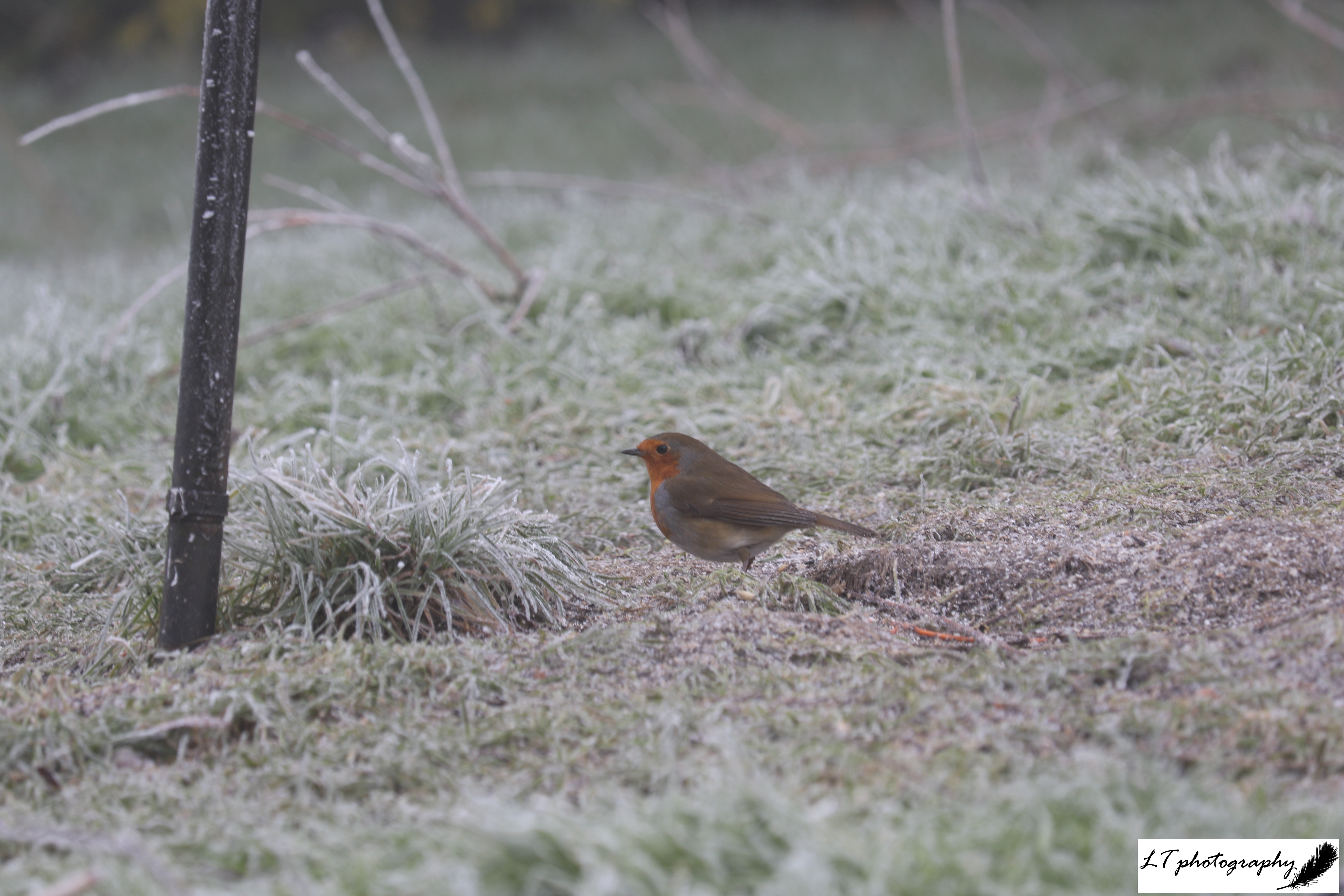
Despite differences, there are a number of birds that are more likely to be seen in gardens, and it is great to know what you may be seeing to help easily tailor your garden for their use, such as what bird food to offer. To help identify species, here you can find a helpful guide to 10 birds that can often be seen in gardens across the UK, even when their populations are decreasing in number. Take a look below!

Species:

Common Blackbird (Turdus merula)

  • Length: 23.5 – 29cm
  • Weight: 80 – 125g
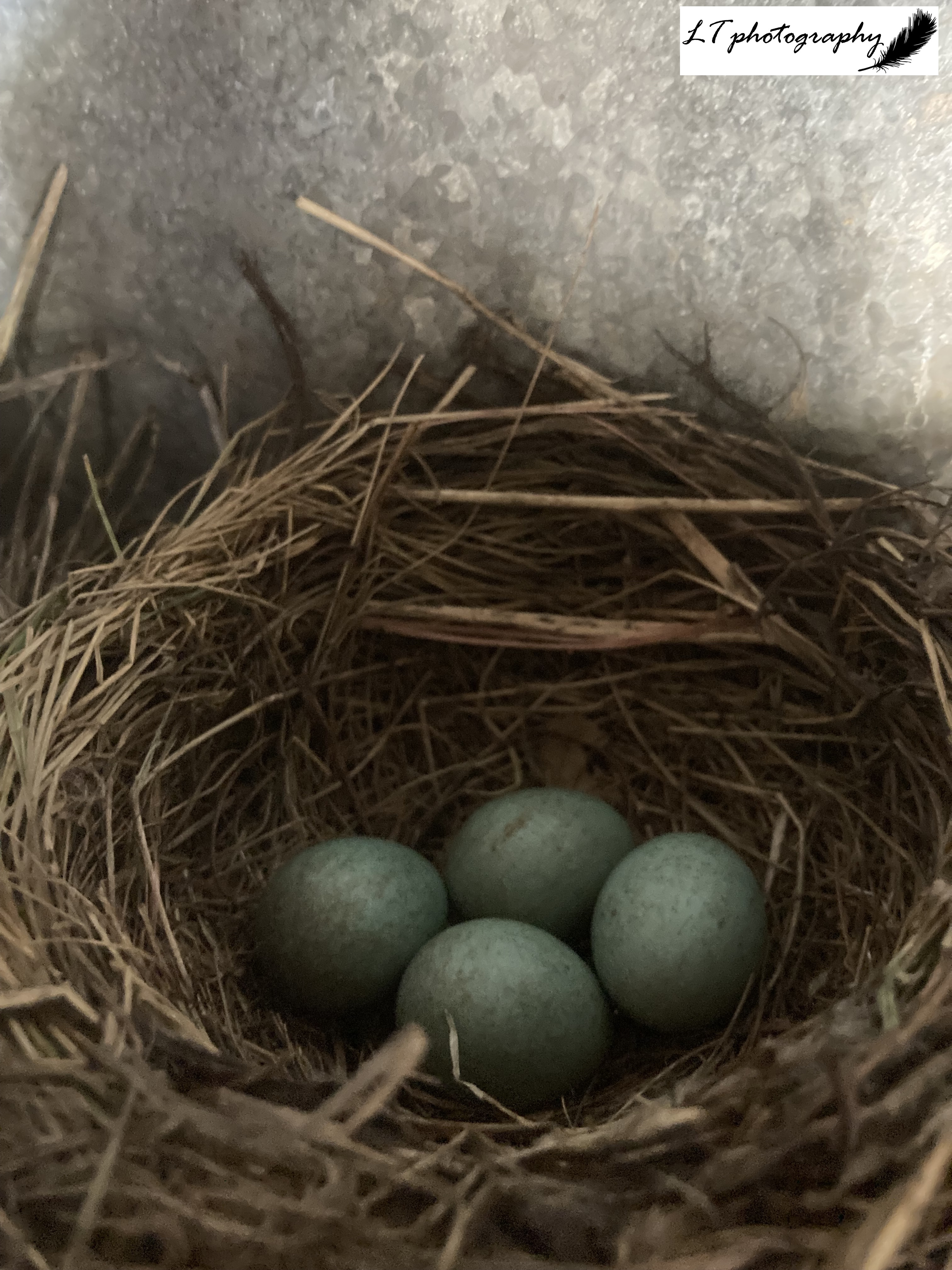
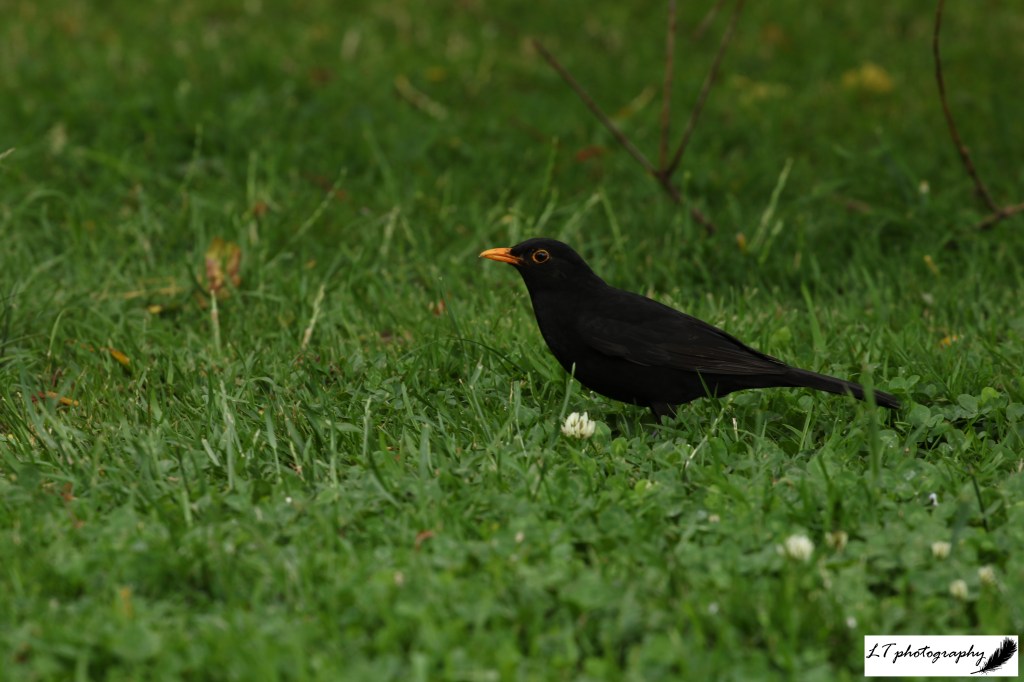
  • Colour: Adult males are all black with a yellow beak, whilst adult females are dark brown with a more dull beak. Young start as a speckled version of the female and change to adult feathers through moulting their feathers
  • What To Feed: Mealworms, fat balls, or sunflower hearts on the floor or in a ground feeder
  • Breeding Season: March to Late July
  • Nest: A round cup made of twigs, grass and other plant materials, close to the ground in adequate cover
  • UK Conservation status: Green

European Robin (Erithacus rubecula)

  • Length: 12.5 – 14cm
  • Weight: 13 – 21g
  • Colour: Adult males and females look the same, both brown with an orange-red breast and white underside. The young start a speckled brown
  • What To Feed: Mealworms, suet, or seeds on a ground feeder, bird table or bird feeder with platform
  • Breeding Season: March to mid-August
  • Nest: A round cup made of grass, moss and leaves and lined with hair and maybe feathers, usually tucked in a hole, crevice or behind something
  • UK Conservation Status: Green

House Sparrow (Passer domesticus)

  • Length: 14 – 16cm
  • Weight: 23 – 35g
  • Colour: Adult males have a grey crown and cheeks, chestnut sides to head, black bib, grey underparts, rufous-brown back, and white wing-bar. Adult females and young (until body moult) have buff-brown upperparts, underparts grey, brown cap and cream supercilium behind eye
  • What To Feed: Will eat a range food, including seeds and grains from feeders
  • Breeding Season: March to August
  • Nest: In cavities, where dried plant material is stuffed in to make an untidy sphere which is then lined with softer materials, such as feathers
  • UK Conservation Status: Red

Blue Tit (Cyanistes caeruleus)

  • Length: 13.5 – 15cm
  • Weight: 9 – 13.5g
  • Colour: Blue crown, wings and tail, white cheeks, black eye-stripe, underparts yellow, and greyish-black central belly stripe. Their young begin with more dull feathers and yellowish cheeks
  • What To Feed: Fat balls, suet, peanuts, or sunflower seeds from hanging feeders
  • Breeding Season: March to June
  • Nest: Built inside cavities and formed of a cup of plant material, such as moss, lined with soft materials, such as feathers, wool and fur
  • UK Conservation Status: Green

Great Tit (Parus major)

  • Length: 13.5 – 15cm
  • Weight: 14 – 22g
  • Colour: Black head with white cheeks, moss-green back, blue-grey wings and tails, yellow underparts and black central belly-band. Males have wider, more defined belly-band. Young begin more dull and with yellowish cheeks
  • What To Feed: Suet, fat balls, peanuts, or sunflower seeds in hanging feeders
  • Breeding Season: March to July
  • Nest: Built inside cavities, formed of a cup of twigs, roots, moss, lichen and/or grasses, and lined with soft materials, such as hair or plant material
  • UK Conservation Status: Green

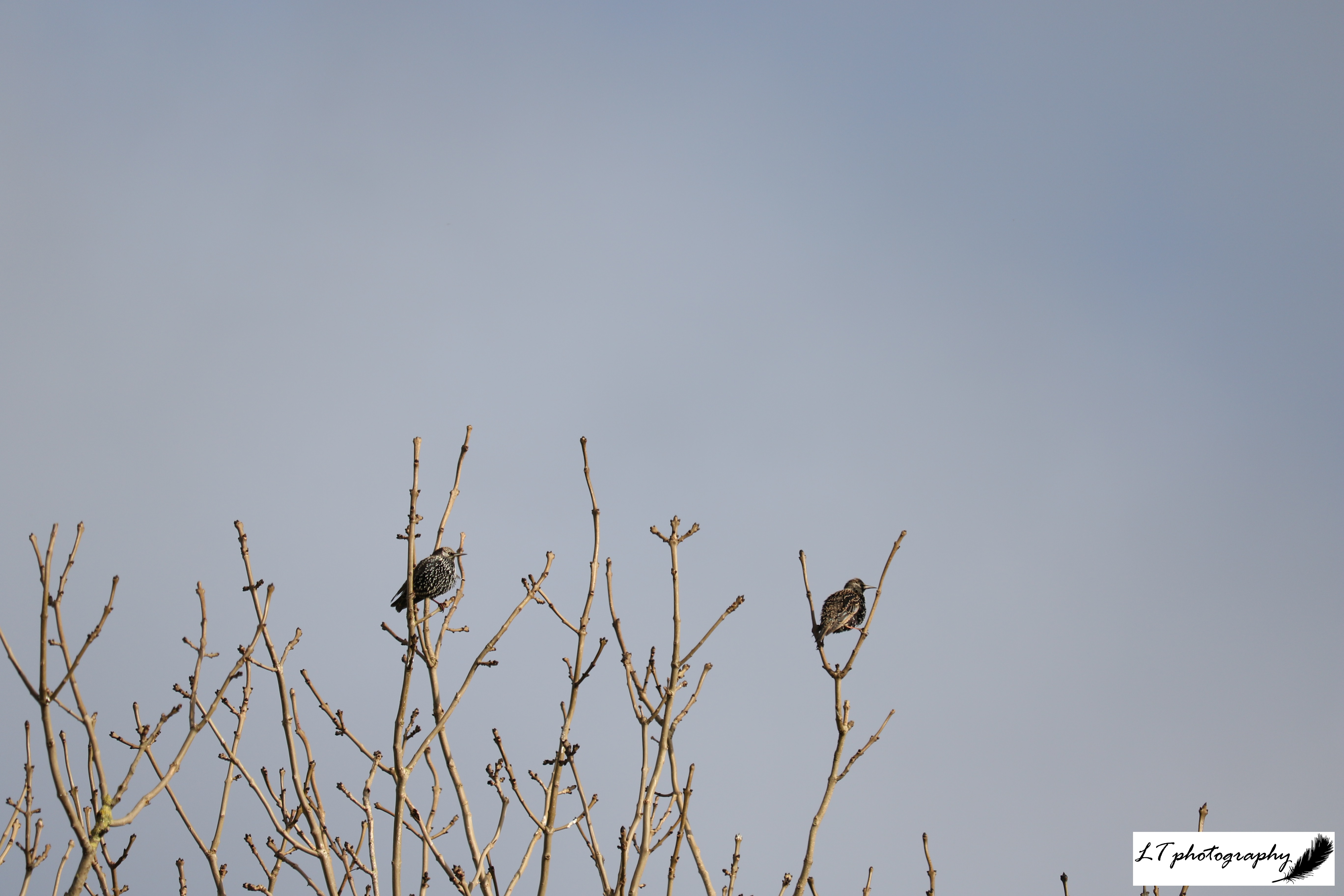
Starling (Sturnus vulgaris)

  • Length: 19 – 22cm
  • Weight: 60 – 97g
  • Colour: Black bird with long-pointed yellow bill, white spots dotted through plumage, a green-purple sheen to the feathers and pale pink legs. The young start with grey-brown feathers and change with body moult
  • What To Feed: Suet, peanuts or sunflower hearts in hanging and ground feeders
  • Breeding Season: March-July
  • Nest: In holes and cavities in trees and buildings, made up of a messy depression of plant stems, grass, and moss, and often lined with feathers or wool
  • UK Conservation Status: Red

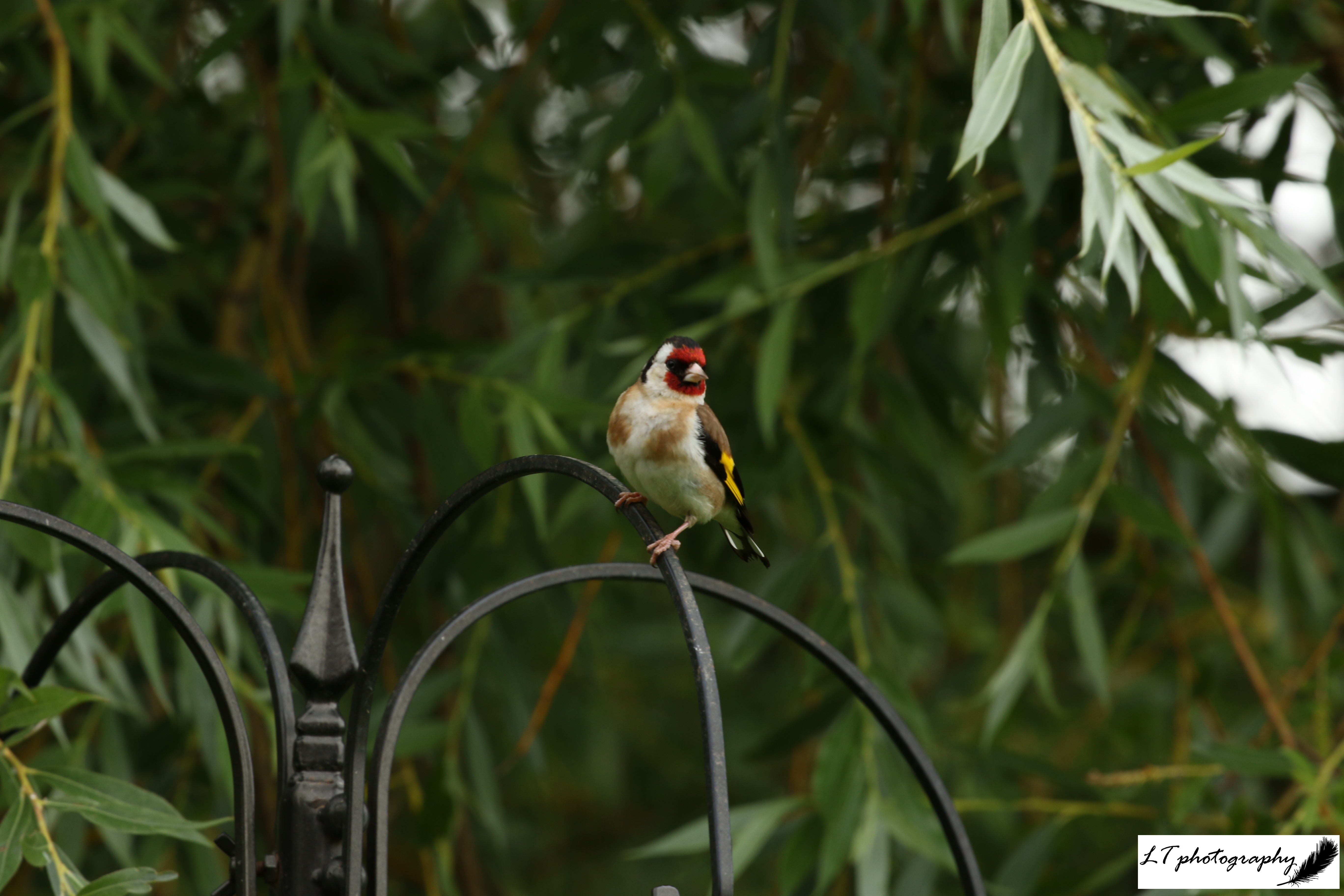
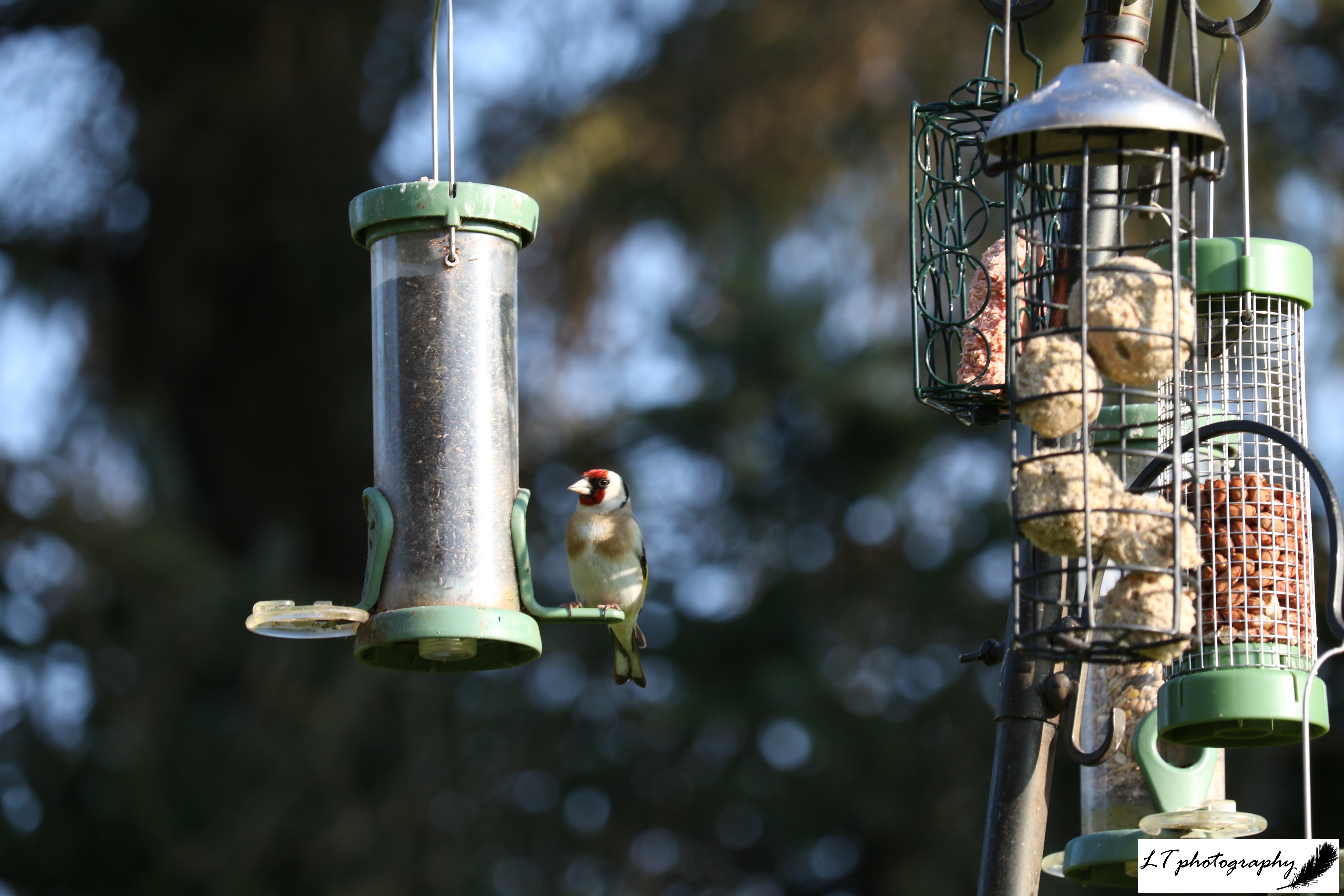
Goldfinch (Carduelis carduelis)

  • Length: 12 – 13.5cm
  • Weight: 13 – 20g
  • Colour: Adults have a black and white head with red face, brown back, black wings with yellow bar, and black tail with white spots. Young lack colourful head until body moult
  • What To Feed: Sunflower hearts, niger seeds or mixed seed in hanging feeders
  • Breeding Season: April to August
  • Nest: A neat cup made of moss, grass, wool, and hair, relatively far off of the ground in tight tree branches, hedges or shrubs
  • UK Conservation Status: Green

Chaffinch (Fringilla coelebs)

  • Length: 14 – 16cm
  • Weight: 17.5 – 29g
  • Colour: Adult males have pinky-red cheeks and breast, and blue-grey crown and neck, whereas adult females and young lack the colourful head and instead have a grey-green one. All have a distinct pale rump and double white wing bars
  • What To Feed: Peanuts, sunflower seeds, seed mixes, or suet in hanging or ground feeders
  • Breeding Season: April to June
  • Nest: Deep cup of lichens, grass, roots and feathers, lined with plant down, feathers or wool, usually in the fork of a tree, shrub or hedgerow
  • UK Conservation Status: Green

Collared Dove (Streptopelia decaocto)

  • Length: 29 – 33cm
  • Weight: 168 – 249g
  • Colour: Pale pinky-grey-brown feathers, black neck collar, dark eye, grey underparts, and reddish feet
  • What To Feed: Small seeds from ground feeders or bird tables
  • Breeding Season: March to September
  • Nest: Sparse platform of twigs and leaves in trees or high up in buildings
  • UK Conservation Status: Green

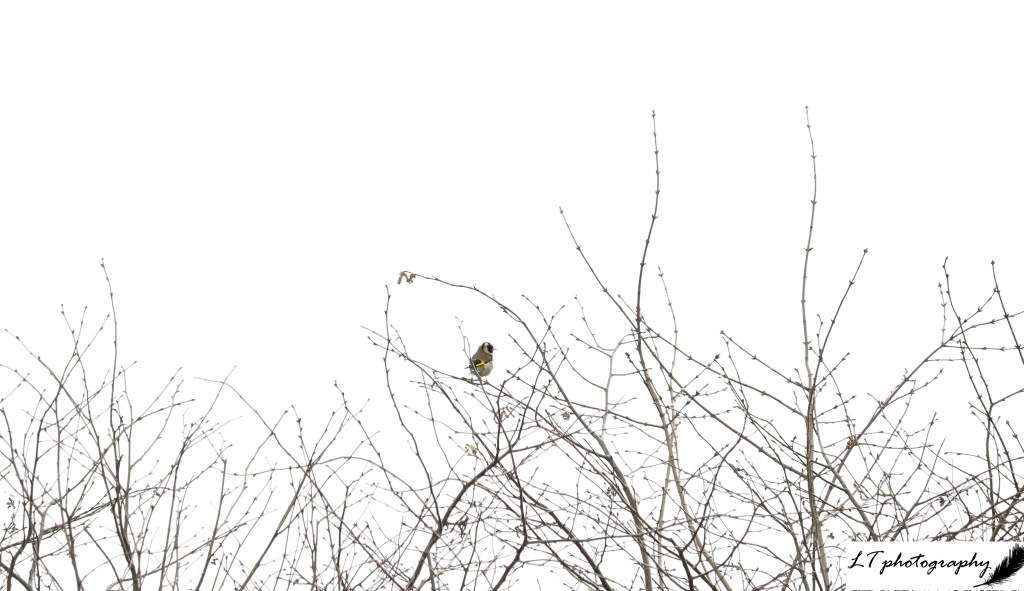
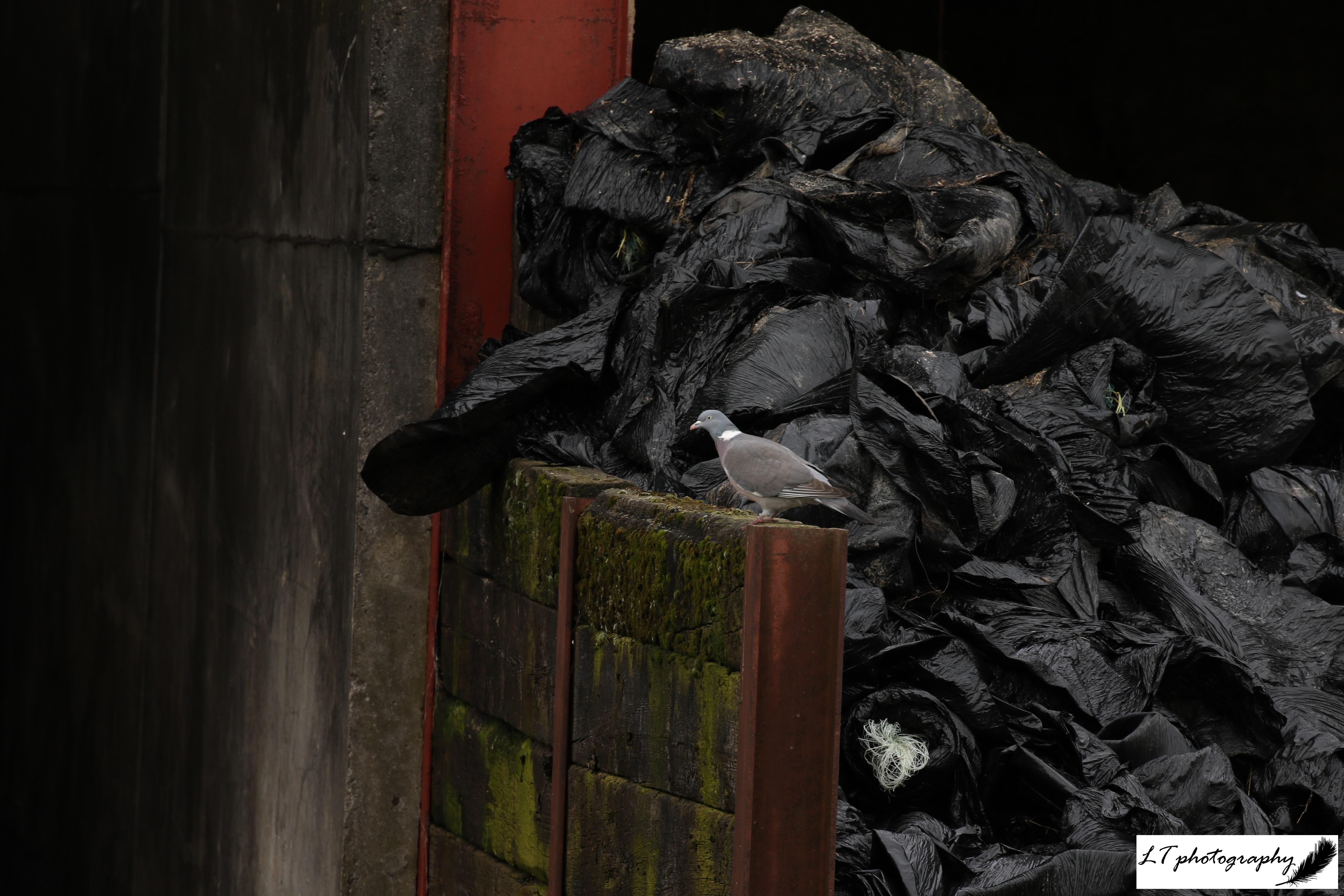
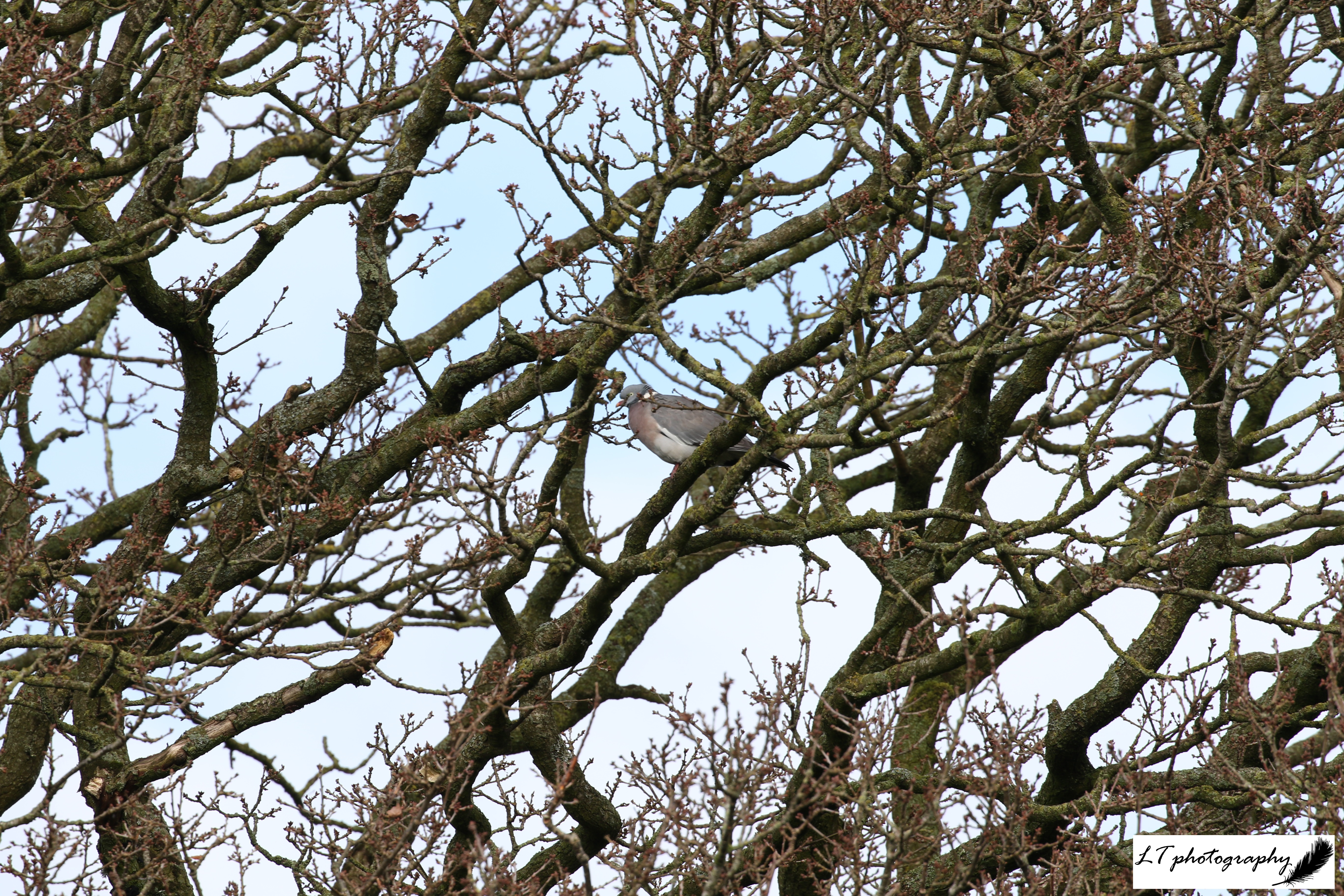
Woodpigeon (Columba palumbus)

  • Length: 38 – 43cm
  • Weight: 325 – 620g
  • Colour: Grey-blue head and back, pinky-red belly, large white patch on neck, sides of neck iridescent purple and green, white wing patches and pink legs. Young are pale with no neck patch.
  • What To Feed: Only British herbivorous bird. Feed seeds on a bird table, ground feeder or the ground
  • Breeding Season: February to November
  • Nest: Simple platform constructed from sticks in trees, shrubs, vegetation or ledges
  • UK Conservation Status: Amber

Breeding Birds on the Farm 2023

In memory of Trevor Squire

My love of birds can be first originated with my grandfather, who enjoyed sharing his own passion with me when I was child, even before my own began. In time, my mum passed her own knowledge on to me, but it took me going off to university to finally realise how much fascination bird species hold for me. Once I returned home to Dorset after completing my Master’s, I then got the opportunity to begin my training as a bird ringer in 2019 with a very special local trainer, Trevor Squire.

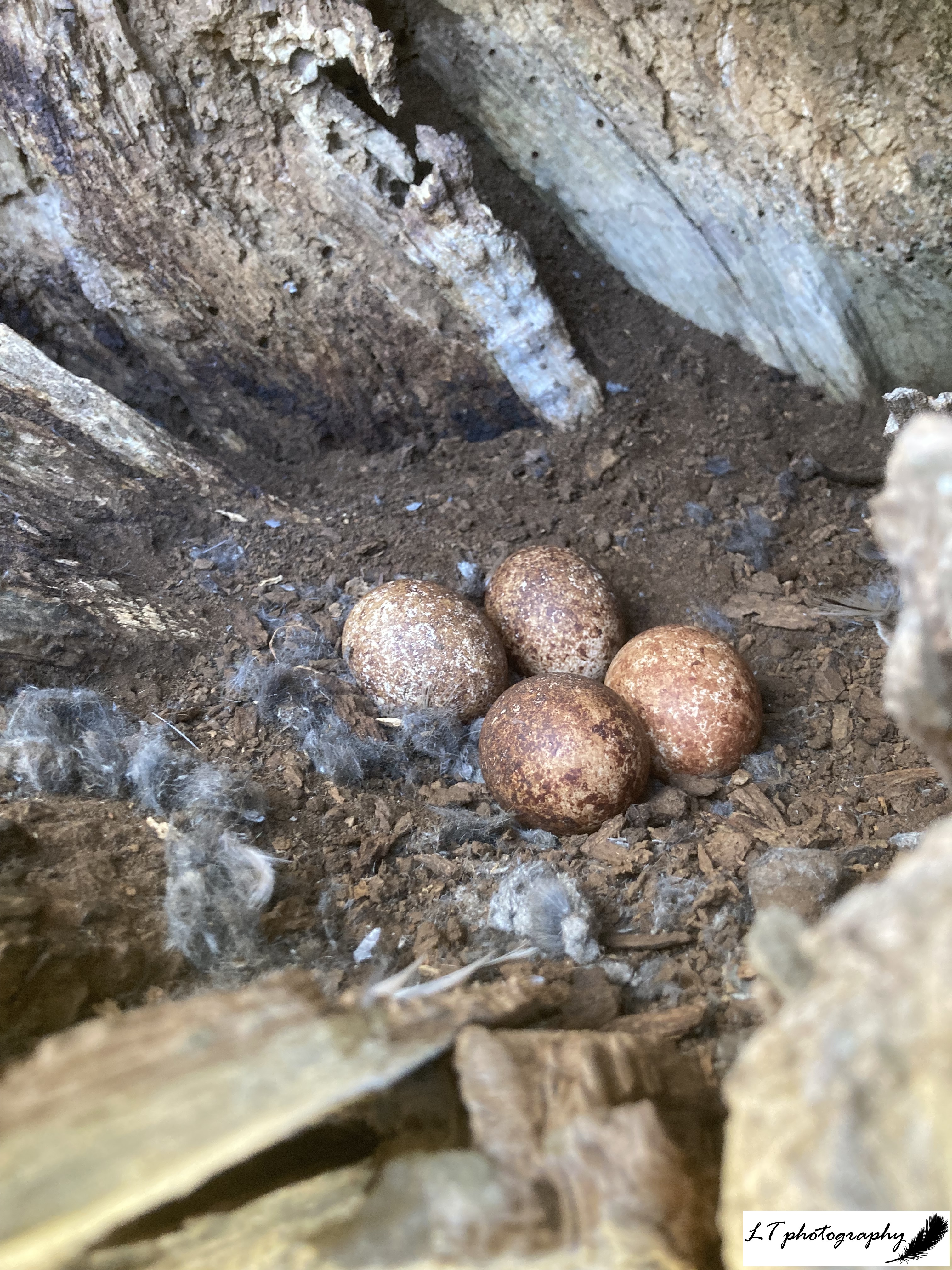
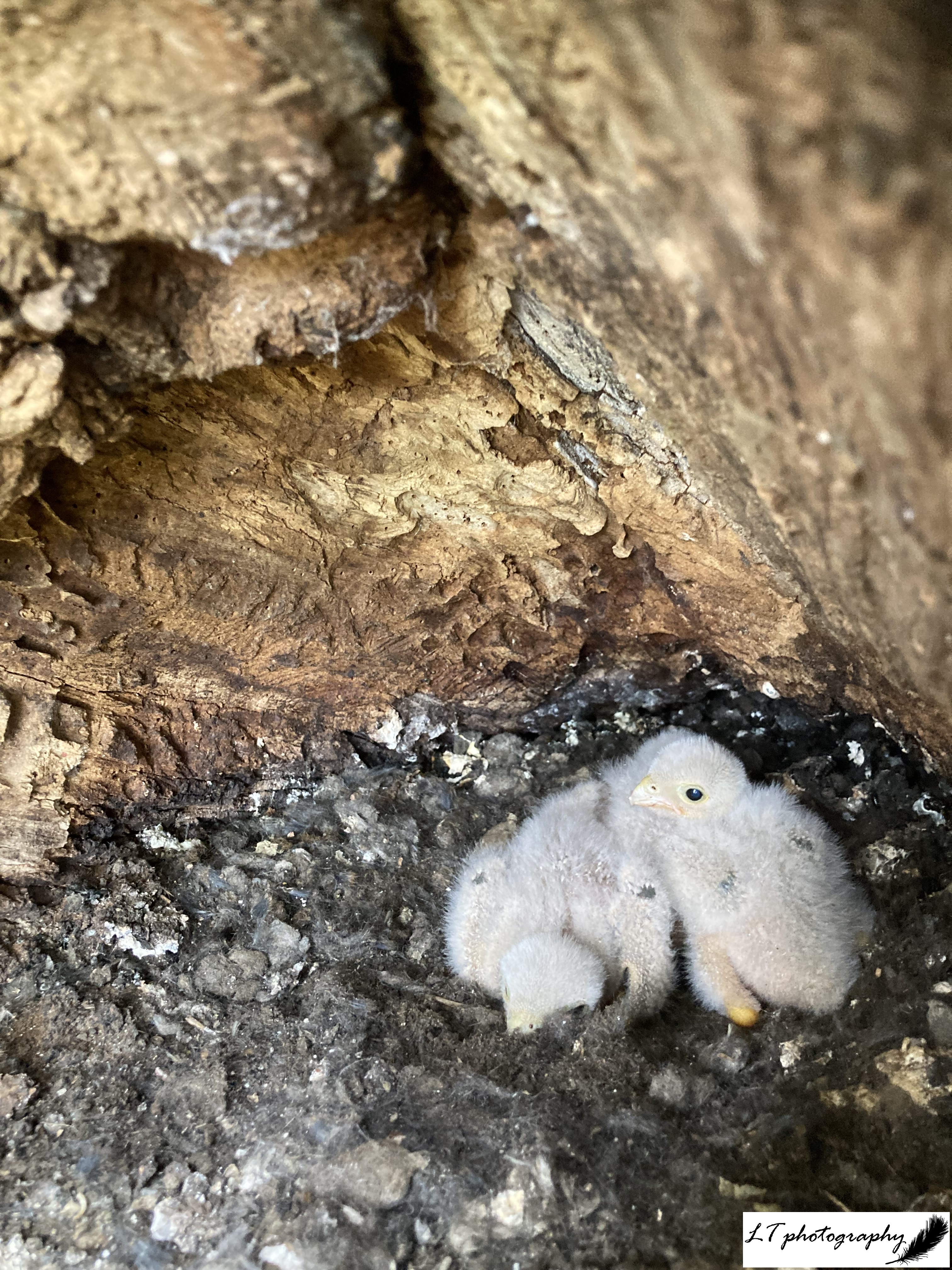
Last year I posted on my blog all about the birds breeding on my family’s farm in Dorset throughout 2022, whilst working to apply for my C permit (check it out here). That year I encountered 2 broods of kestrel chicks, 3 broods of swallow chicks, 2 broods of barn owl chicks, and 2 great mornings ringing in my own garden to build my confidence with a range of species.

Moving in to 2023, I had now gained my C permit with restrictions, and could begin to ring with more independence whilst exploring the bird life on my family’s Dorset farm. Unfortunately, no kestrel nests were discovered on the farm during 2023, as our local population were hit hard by avian flu. There was still lots of bird fun to be had though, so read on to find out what I got up to.

Swallows

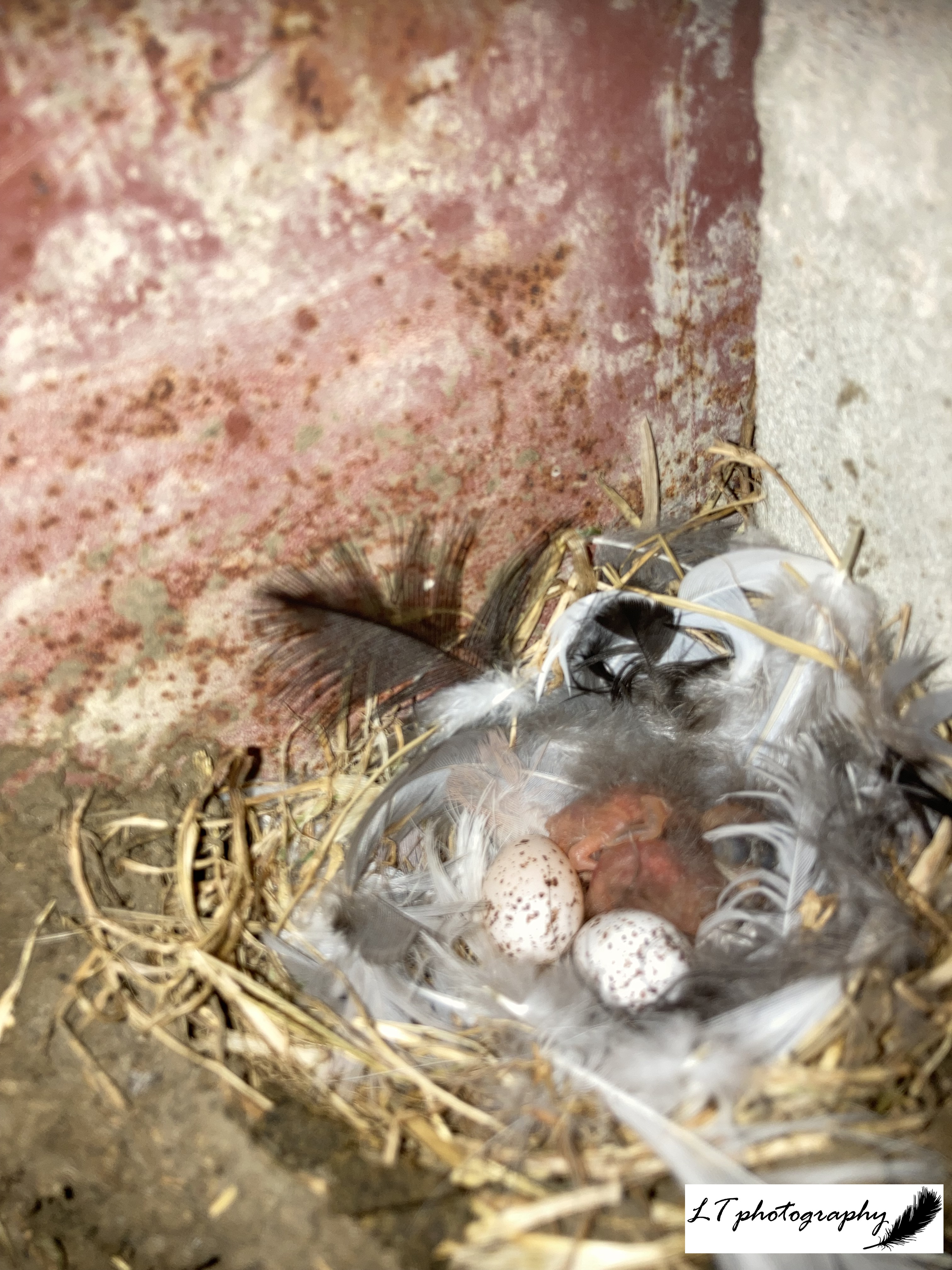
In 2022, the swallow population around my home had a tough year and a very poor breeding season, which may be because less pairs returned to start with. In total, I discovered 6 nests, but only 3 fledged chicks, 12 in total. So in 2023, with my new C permit now giving me the endorsement to ring swallow chicks on my own, I hoped for more luck for my swallows.

I began nest checks again on the 25th May and over the course of the breeding season I discovered 6 different nests in use, with 4 being used again for 2nd broods. I am very happy to say that I had the pleasure of ringing 42 swallow chicks from 11th June to 16th September. Knowing that some chicks even fledged before I had the chance to ring them, 2023 was a very good year for my swallow population in comparison to 2022.

Barn Owls

Those who follow my blog will already know that barn owls are a species that are very special to my family, with these birds being intertwined with farmland in Dorset. Barn owls are a great indicator of the state of nature on farmland, and have been followed closely on our land since 2019, helping to influence management. Check out my Barn Owl page for more stories.
In 2022, the barn owls had a good year on the farm, with 2 pairs nesting at opposite ends of our land, one in an annually used nest box and another in the same tree as a pair of kestrels. Both pairs went on to have 2 chicks fledge successfully, which was a big positive for the barn owl population in our area.

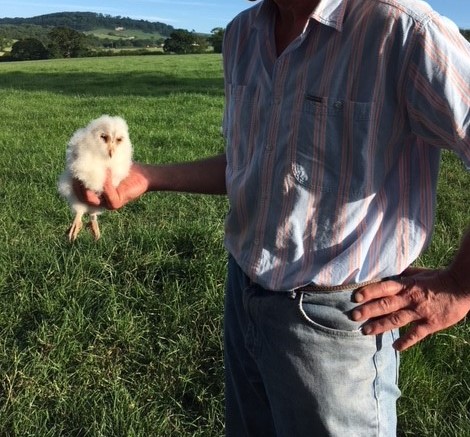
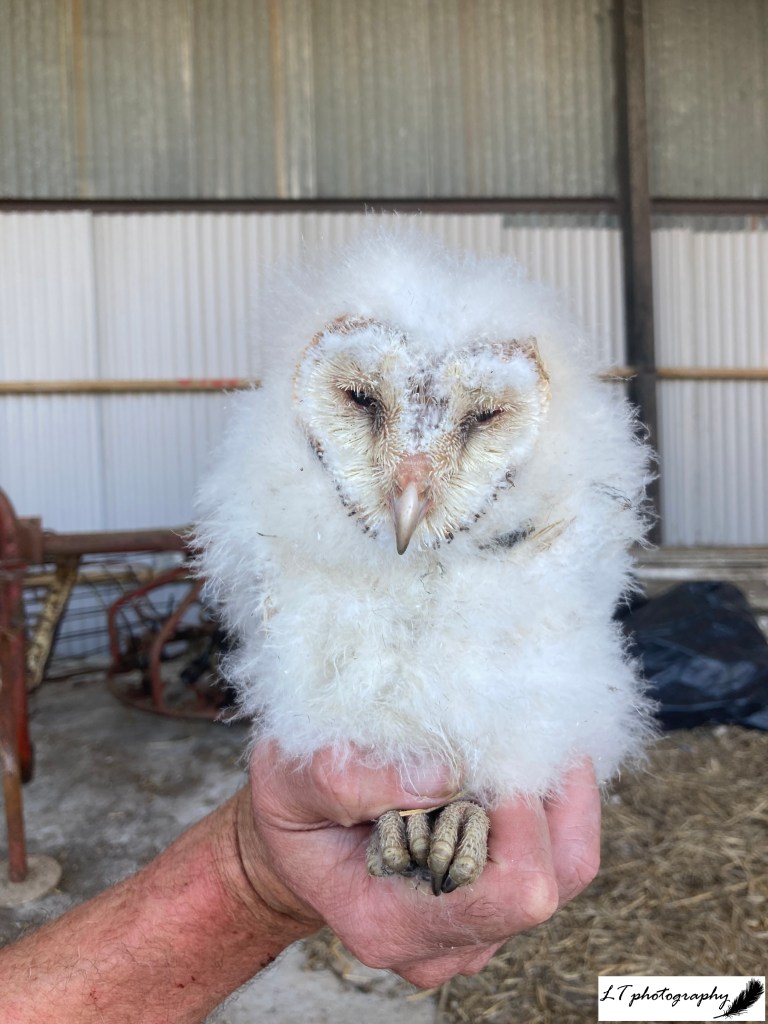
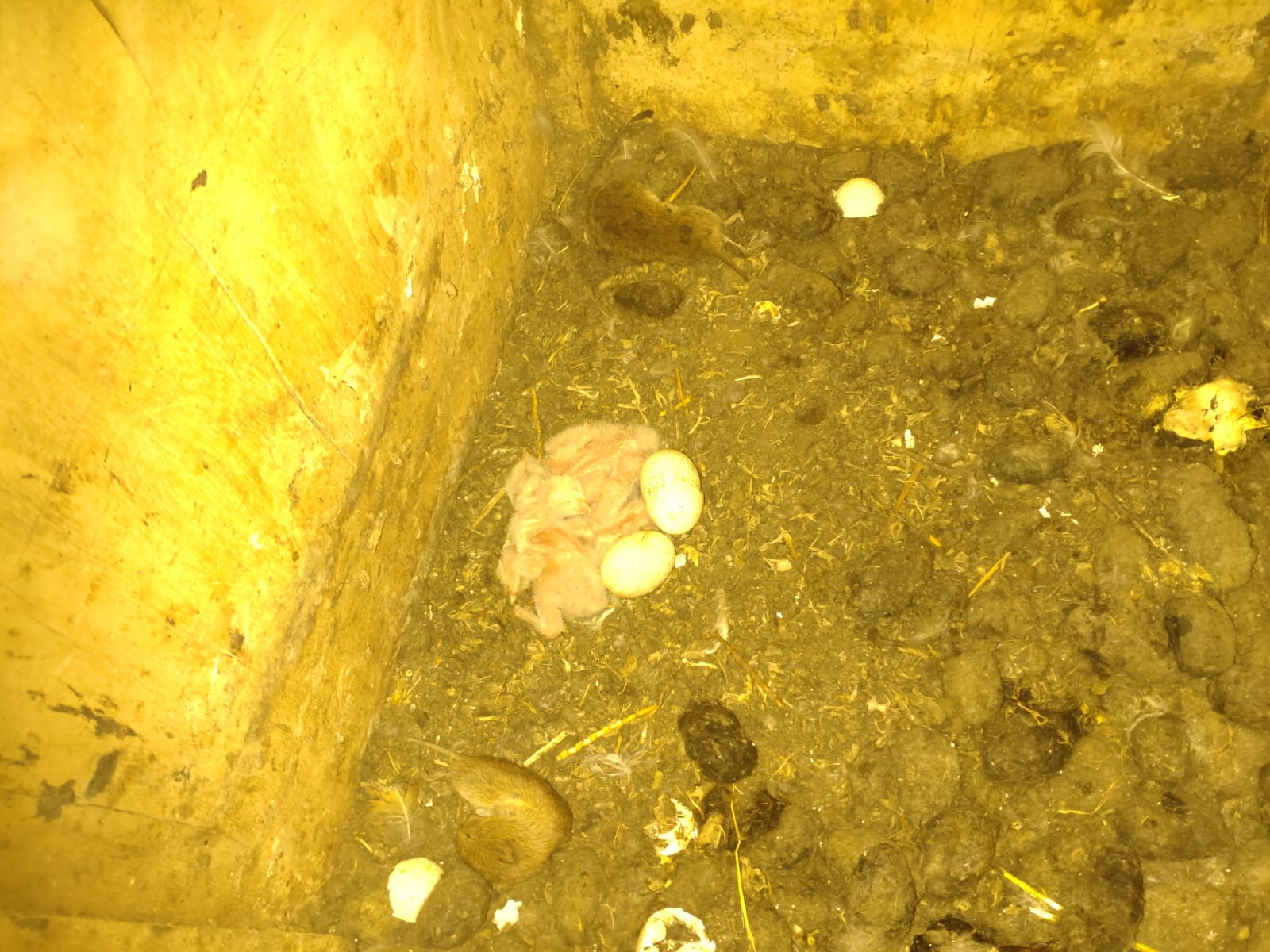
For 2023, I now had my C permit that had the inclusion of an endorsement for me to ring barn owl chicks on my own. We had high hopes for our barn nest box once again, having seen 2 owls hunting around the farm over the winter, and courting around the box in early spring. On checking the box on the 2nd June, we were happy to discover 3-4 young chicks. I used these chicks as an opportunity to gain confidence, and ringed 3 good sized chicks alongside my ringing trainer on the 7th July. We had hoped to discover a second pair breeding on our farm again in 2023, but we are very happy that at least 2 of the barn box chicks were seen to go on to fledge successfully. This is a definite improvement on only 1 chick in 2021!

Chicks Ringed of New Species

As on my newly acquired C permit I only have endorsements to ring swallow, kestrel, and barn owl chicks, in 2023 I aimed to ring chicks from other species alongside my ringing trainer to expand on my C permit in time.

On the farm in 2023, I got to ring my first brood of blackbird chicks (4), blue tit chicks (7), and starling chicks (1). The highlight though was one of our tawny owl boxes finally producing a healthy brood of 2 tawny owl chicks. A great start to increasing my experience, whilst I also got the opportunity to ring at other sites, such as checking tawny owl boxes with another ringing group.

Garden Mist Netting

In 2022, ahead of applying for my C permit, I got to spend 2 mornings mist netting and ringing in my own garden with another ringing trainer. This was an exciting first for me, made even greater by catching 192 new birds of 9 species, the highlight being some lovely starlings.

For 2023, I got to experience a new first, mist netting and ringing in my garden all on my own. Through June and July, I spent 6 mornings ringing in my garden, and managed the situation each time, so as to only catch as many birds as I could deal with on my own at one time. Over these mornings I caught 90 new birds of 11 species (1 robin, 7 chaffinches, 11 blue tits, 44 house sparrows, 1 blackbird, 13 great-spotted woodpeckers, 2 goldfinches, 3 dunnocks, 6 great tits, 1 starling, and 1 greenfinch), and learnt alot from acquiring this experience already. My highlight was definitely the greenfinch, as it was a beautiful adult male and my very first greenfinch ever ringed!

Here’s to 2024 being as interesting!

All birds were ringed under license and following rules to ensure the health and welfare of the birds handled at all times.

A Year In The Life Of A Woodland – Part 1

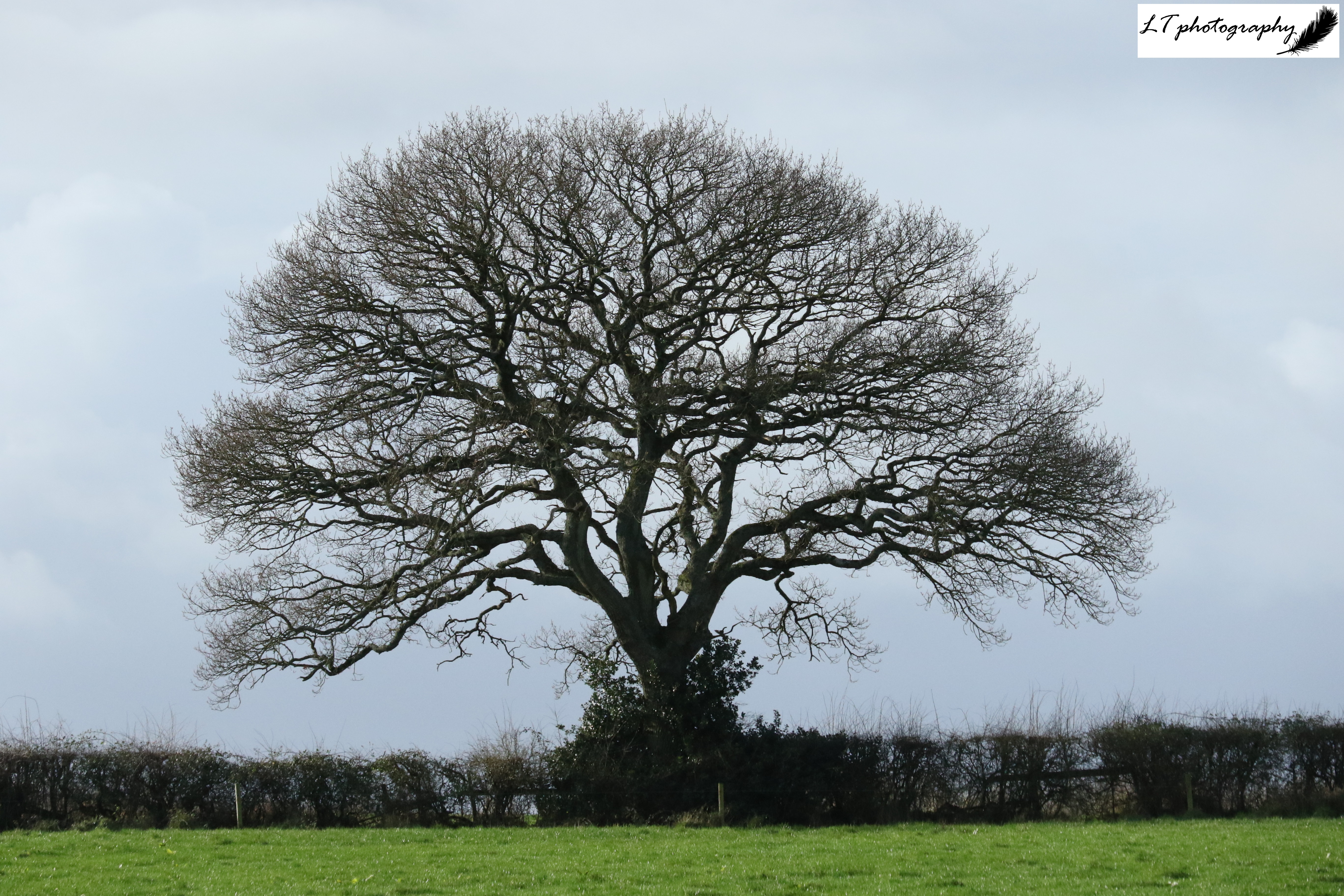
In 2022, I followed the annual cycle of one particular oak tree as it went through its own life stages, and watched the landscape change from its corner of a Dorset field. The tree encountered hunting barn owls, howling gales, breeding kestrels, and even a family of foxes, and observed such a vibrant year in nature even just from one spot. So for 2024, I wanted to follow such a story again, but this time on a different scale.

This year I am following a year in the life of an ancient, broadleaved woodland in the heart of rural, rolling Dorset. I will follow its progress from certain points within its bounds, and observe the beauty the woodland has to offer throughout the seasons. I look forward to seeing what goes on through the year, and the subtle differences from month to month at its heart. To start, I bring to you the first half of a year in the life of a woodland (January-June).

January

Entering the woods again at the start of a new year, there is a distinct feeling that the landscape currently lies in slumber. Though in previous years January has experienced wintery weather with cold spells characterised by hoar frosts and sheets of snow, this year the bite is missing from the weather, allowing the first signs of new life to appear already. The low winter sun breaks through the sturdy trunks of dormant trees, shining weak rays on the green leaves of woodland plants beginning to pop up underfoot, wood anemone and bluebells included.

Up in the naked boughs of the trees, birds fly from branch to branch, including blue tits, great tits, and goldcrests, buzzards whirl in the skies above, and pheasants make their raucous call now and again. Remaining holly and hawthorn berries provide a spot of colour against ivy and plentiful moss, but with the first lush greens and pastel yellows popping up, such as hazel catkins dangling from the trees, the woods are hinting at change. These are the first whisperings of spring in the stillness of the woodland, with more signs being found at night, such as tawny owls loudly defending their territories, and badgers and foxes increasing their roaming amongst the trees.

February

As a new month begins, the landscape feels like it is very much still in the grips of winter. A grey gloom hangs over the woodland, with the overcast sky threatening an endless possibility of rain. Where February 2023 was a cold, dry month, February 2024 is reflecting continued milder and wetter weather than average, with sunshine being much in demand. It is still not warm enough for any further advancement in the signs of spring from the previous month though, with the woodland floor still being mainly dressed in warm browns. Despite this, those first whisperings of new life can still be seen, with the slow marching growth of shoots of well known species, such as bluebell and stitchwort.

The mosses and lichens are also now joined by the much needed warm yellows of primroses and celandines, along with the red gems that are female hazel flowers. The slumbering woodland is currently the backdrop for the day-toiday life of its winter residents, but with the addition of blackbirds and song thrushes now starting to sing their melodious songs ahead of breeding in the spring.

March

As March begins, the start of blackthorn winter brings biting winds from the north, creating a break in 2024’s trend for warmer and wetter weather, which continues for the rest of the month. A rare calm day though sees the woodland bathed in soft, early spring sunshine, as it begins to finally switch from its shroud of brown to greens, with a carpet of new growth. Bluebell leaves are marching on in their advance of growth, making the most of increasing temperatures, whilst spear-shaped wild garlic leaves now carpet areas around the ambling streams through the middle of the wood. Hazel catkins are now fading to a creamy yellow, and their red female flowers are joined by swelling leaf buds. Though spring is advancing quickly, the woodland still waits for more flowers to keep company with the primroses and celandines.

A difference lies up in the trees. The woodland is coming alive with the sound of bird species that have wintered here in the UK and do not have to travel as far to return to their breeding territories. From great tits and blue tits, to wrens and goldcrests, a range of calls and songs can be heard, cut through by the sound of great-spotted woodpeckers drumming near and far. Mammals are beginning to become more active too, with grey squirrels fighting for territory and roe deer groups roaming through and around the woods. Spring is on its way!

April

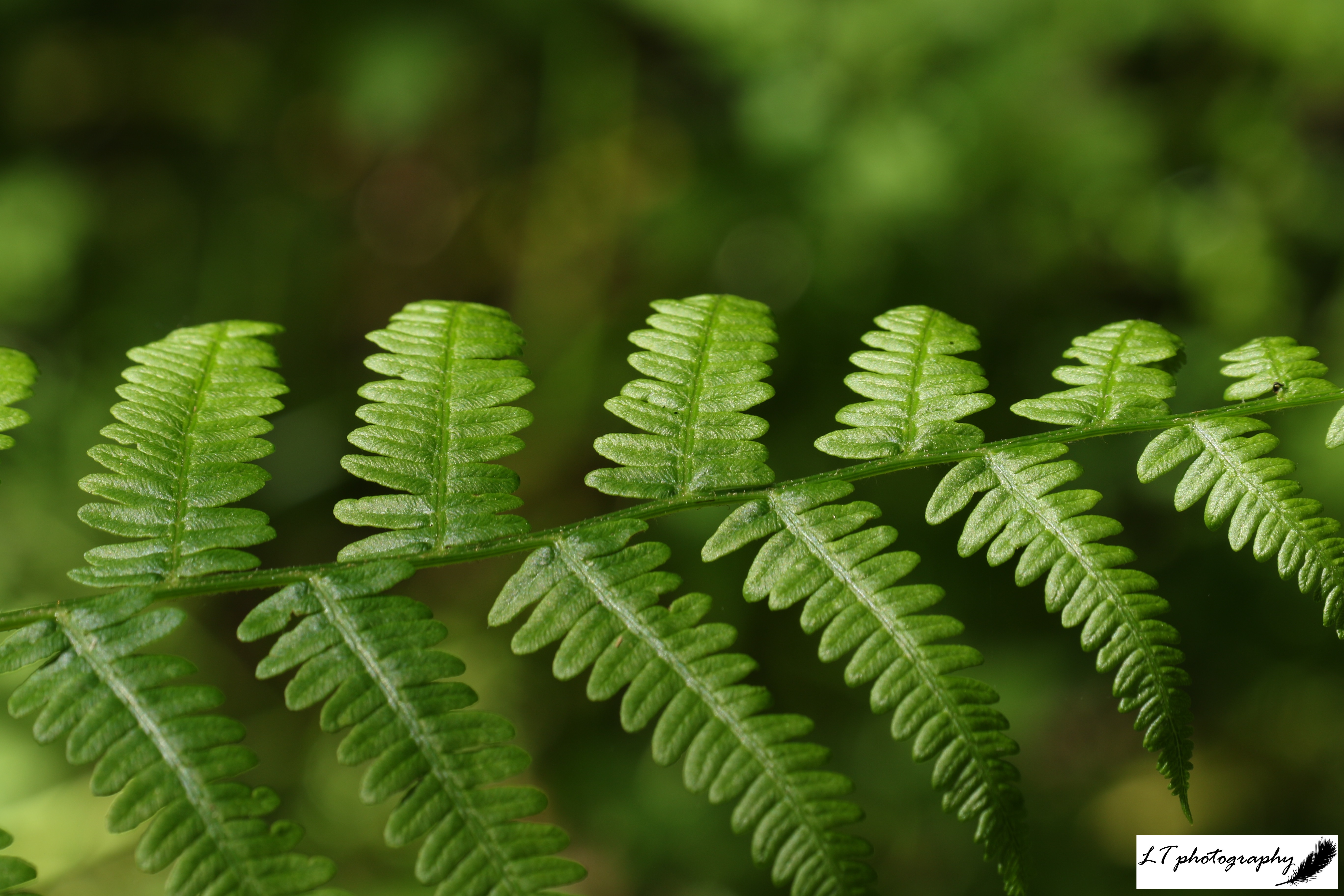
As spring unfurls, the weather of April feels reminiscent of 2023, with cooler, damper weather dominating due to persistent north winds and plenty of rain. In the woods growth continues to move forward, but at a noticeably slower pace than could be expected. The month opens with tree buds swelling, hazel and hawthorn leaves bursting forth, and trees dripping with blackthorn and willow flowers. The woodland floor is coming to life now with a never ending mat of purple dog violets, pale green moschatel, yellow celandines and primroses, white stitchwort, the beginnings of purple-blue bluebells, and the fantastic starry heads of wood anemones. Wild garlic leaves continue to grow around the bubbling streams, smelling noticeably pungent now and beginning to show the whites of flower buds, whilst ferns unfurl their hairy coils across the woodland.

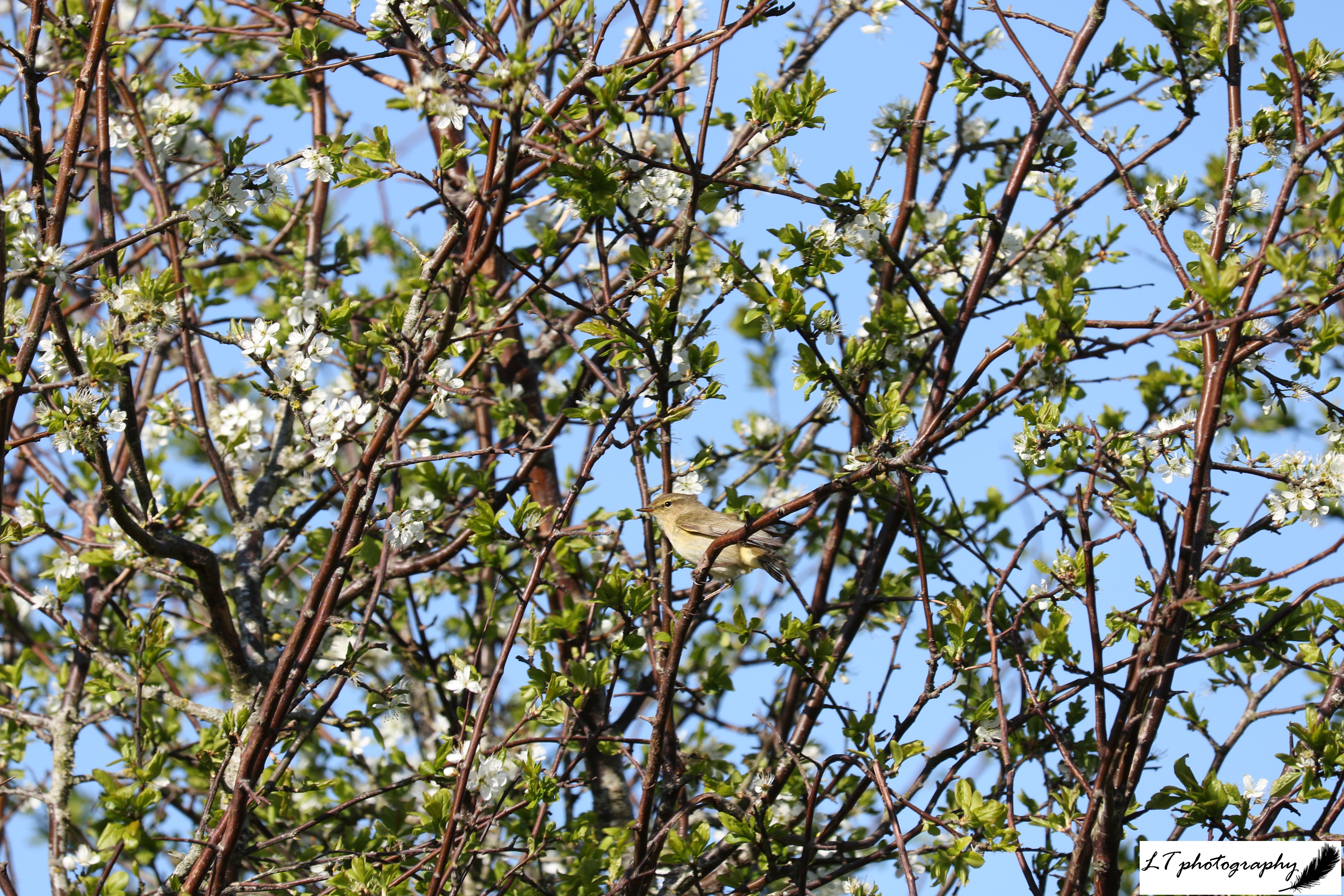
As the woodland bursts into life, it is accompanied by an intensifying soundtrack. In the background a rich tapestry of bird song can be heard, as migrants make their return, from great tits, blue tits and wrens, to chiffchaffs, blackbirds and robins. These include the continued crow of pheasants, the cat-like mewling of buzzards circling overhead, and the barks of grey squirrels. Listening more closely though, buzzing can now be heard as bees and flies make the most of flowers now blooming. The woodland finally feels alive after the first three months of the year taking its toll, though it waits for the return of some warm spring sunshine.

May

On a quiet afternoon at the start of the month, stepping amongst the trees is like stepping into a whole new world compared to the start of the year. Sunlight falls soft through new green leaves, dappling the woodland floor with warmth and light. At the base of the trees, the floor is now a lush green carpet of plant life. The cooler weather of April has meant that some April events have continued on into May, such as the bluebells, whilst the wind now coming from the south bringing warmer weather is beginning to promote much needed new growth.

Bluebells are just going over their peak after a spectacular show of rich purple-blue that has been breathtaking. Amongst hanging bells, stitchwort is continuing to open new flowers, alongside shocks of pink from herb Robert. New flowers appear in the forms of early-purple orchids, and red campion. Yellow archangel that took some time to arrive is becoming bleached to a creamy yellow, whereas wood anemones are bidding their final farewell. Wild garlic persists as do bright yellow celandines, adding to the show. Things move on though, as the ferns begin to overshadow the bluebells with their green fronds. Spring marches on.

With plant life becoming abundant, the woodland is now abuzz with insects of many kinds, whilst spiders make their homes between the flowers. Midges are particularly prevalent this year with a damp spring too! A highlight right now though, is the woodland’s bird life, with the continued singing of many species that call the woods home and are breeding right now, the chiffchaff really standing out in particular. Somewhere in a hole in a tree, maybe a tall oak, a female blue tit will now be sat tight on her eggs, growing the next generation of blue tits. 

June

As I step into the woodland on one of the first dry days in a while, my surroundings move from bright light to light spots and shadows. The tree canopy is now nearing completion and lush green oak, ash and hazel blanket out the light. Below on the woodland floor, a change has occurred. Spring stars have finally made their leave, and riotous bluebells, early-purple orchids, and wild garlic have been replaced by a dense green carpet of leaves. Herb Robert has taken over, with pink flowers creating a joyful pop of colour. Also these flowers are joined by white pig nut, purple germander speedwell, and pink foxgloves, and the lst yellow archangel, stitchwort and vibrant dog violets. The green seed pods of previous flowers remain, and a bluebell here and there when lucky, but now ferns stand tall above the woodland floor, unfurling their final leaves and making a canopy of their own.

As the spring season bids us farewell, it’s now the time of new life and growth, which is currently evident in the woodland. The drone of insects has lessened as flowers go over, but can still be found with flashes of blue damselflies, battling speckled wood butterflies, and striped flies. The first young of mammals, such as foxes, and birds, such as tawny owls, are also now venturing out to explore their new world. This can be heard up in the trees with the songs of birds and the alarm calls of protective parents. Summer and lazy days are on their way!

Rural Dorset vs. Urban Manchester: Exploring Winter’s Wild Birds

Series in collaboration with guest writer Emma Rogan

Winter is a time when a stillness grips the landscape, activity slows, and nature slumbers. This said, if you know where to look at this time of year, life can still be found. Barn Owls hunting along rough edges at first light, chattering Starlings feeding in flocks in open spaces, or Robins fighting to defend their small territories. For birds, winter is a time when migrant visitors, such as Redwings and Fieldfare, mix with resident species, such as Greenfinches and Great-Spotted Woodpeckers. Side-by-side through cold spells and stormy showers, in cities and the countryside, these birds are staying busy to try to survive.

Last time in Rural vs. Urban, we explored the wildlife that live close to home and delved into their hidden lives, all through using simple camera traps. For Dorset-born naturalist Laura, camera trapping has allowed her to record and explore the species that live on her family’s 250 acre farm, opening up a world that would otherwise be overlooked. For Manchester-born wildlife enthusiast Emma, her highlights included seeing a Badger, a Hedgehog, and getting to know the frequent visitors to her garden, such as a lovely Blackbird couple. For both, camera trapping has been a great way to connect with nature, whilst acting as a form of escapism!

For this last instalment of the current Rural vs. Urban series, we are now in winter, with days of sparkling frosts, stormy skies, and low-hanging mist. Last weekend was the RSPB’s annual Big Garden Birdwatch, so for this week we explore the bird species that call our local patches home during winter. As bird species try to survive, what may differ between the challenges of a city and of a countryside landscape? Are there differences or similarities in the species seen or in their behaviour? Lets explore winter on the wing to find out!

Laura’s Rural Garden Bird Survey

Over the last few years, I have taken part each year in the RSPB’s Big Garden Birdwatch and the BTO’s Garden BirdWatch in 2020, and have enjoyed gaining a deeper knowledge of the species that visit our garden all year round. Winter is one of the best times of year for a variety and abundance of species to be experienced in our garden, and at this time of year my parents and I often enjoy a lunchtime accompanied with birdwatching from our living room window.

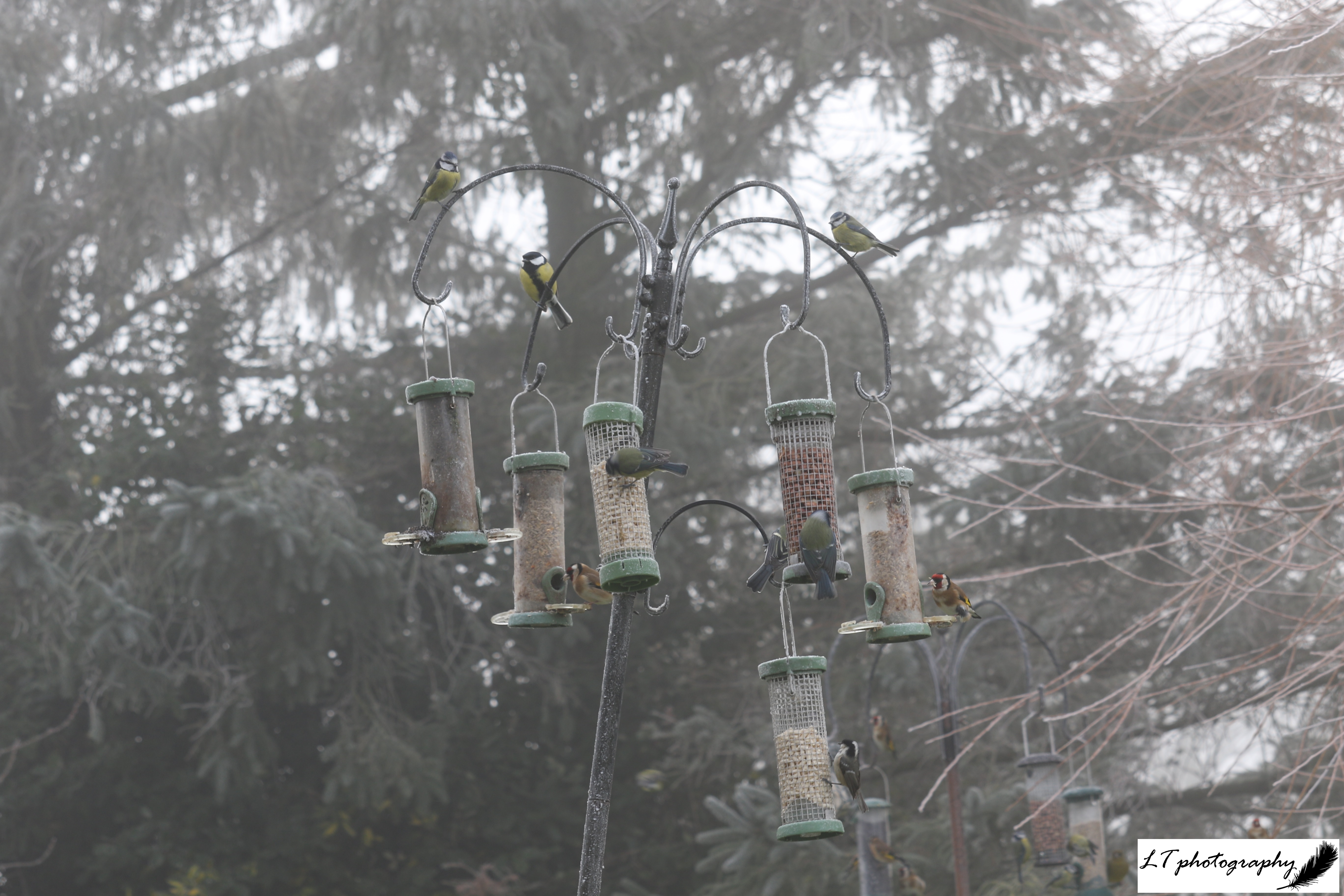
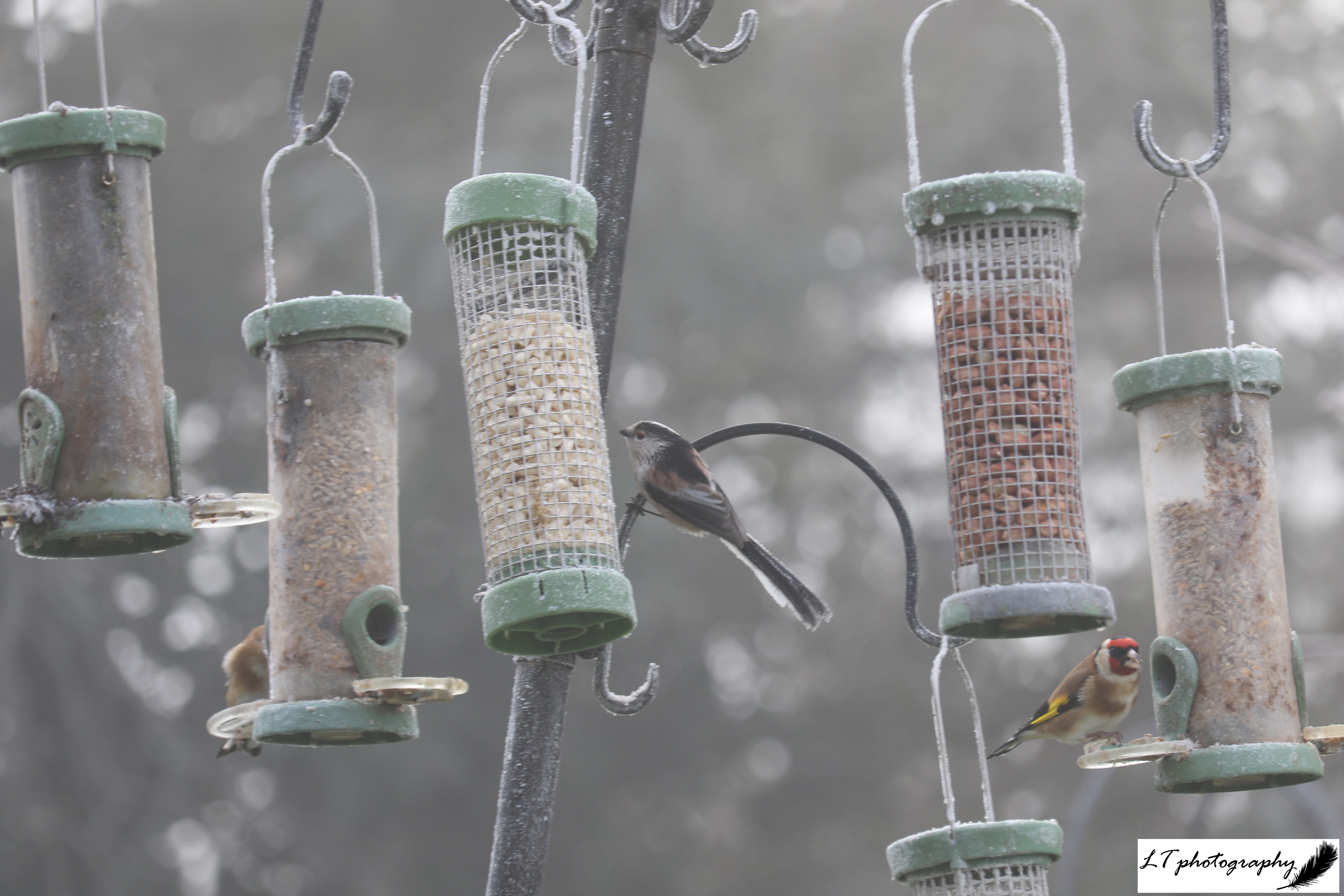
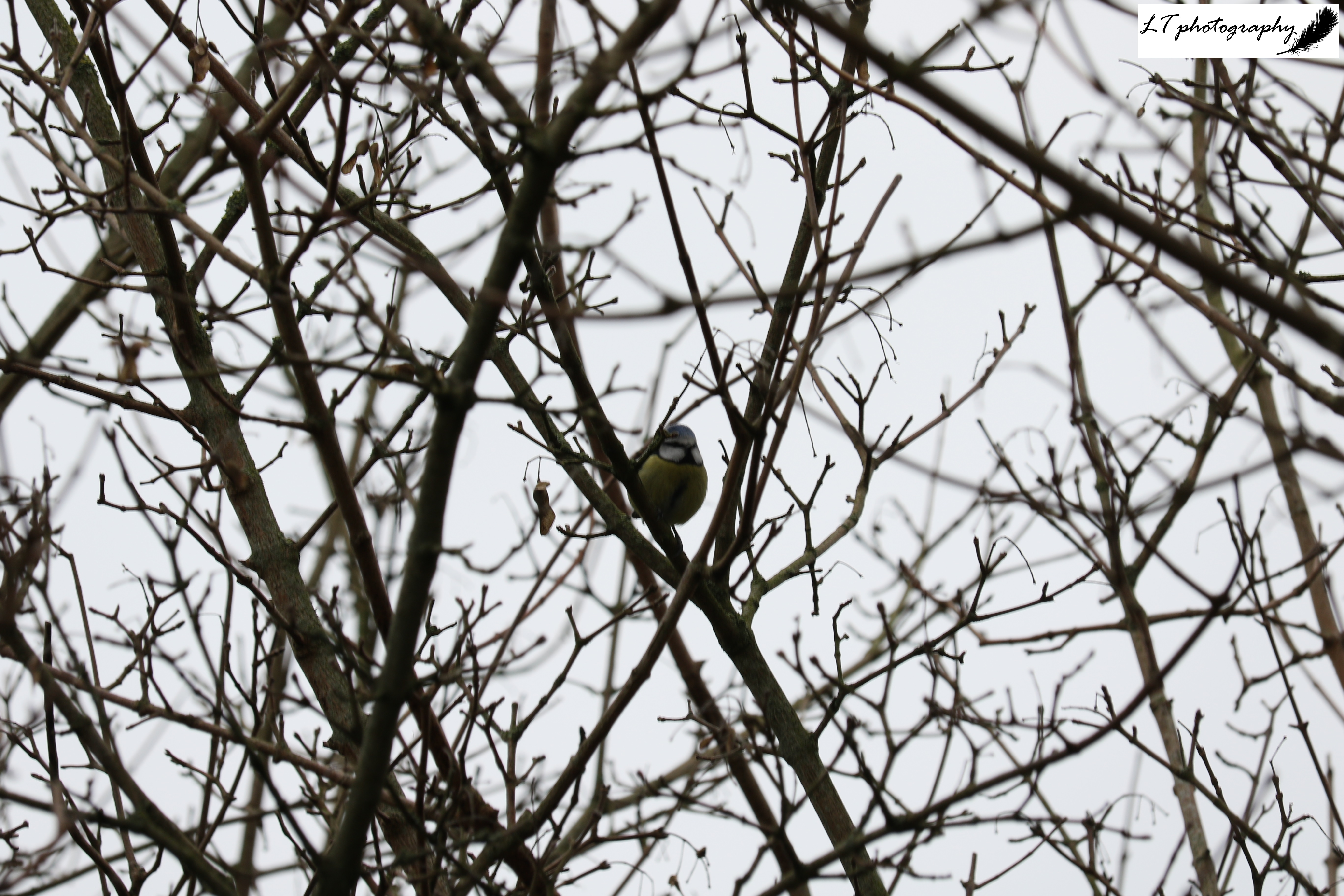
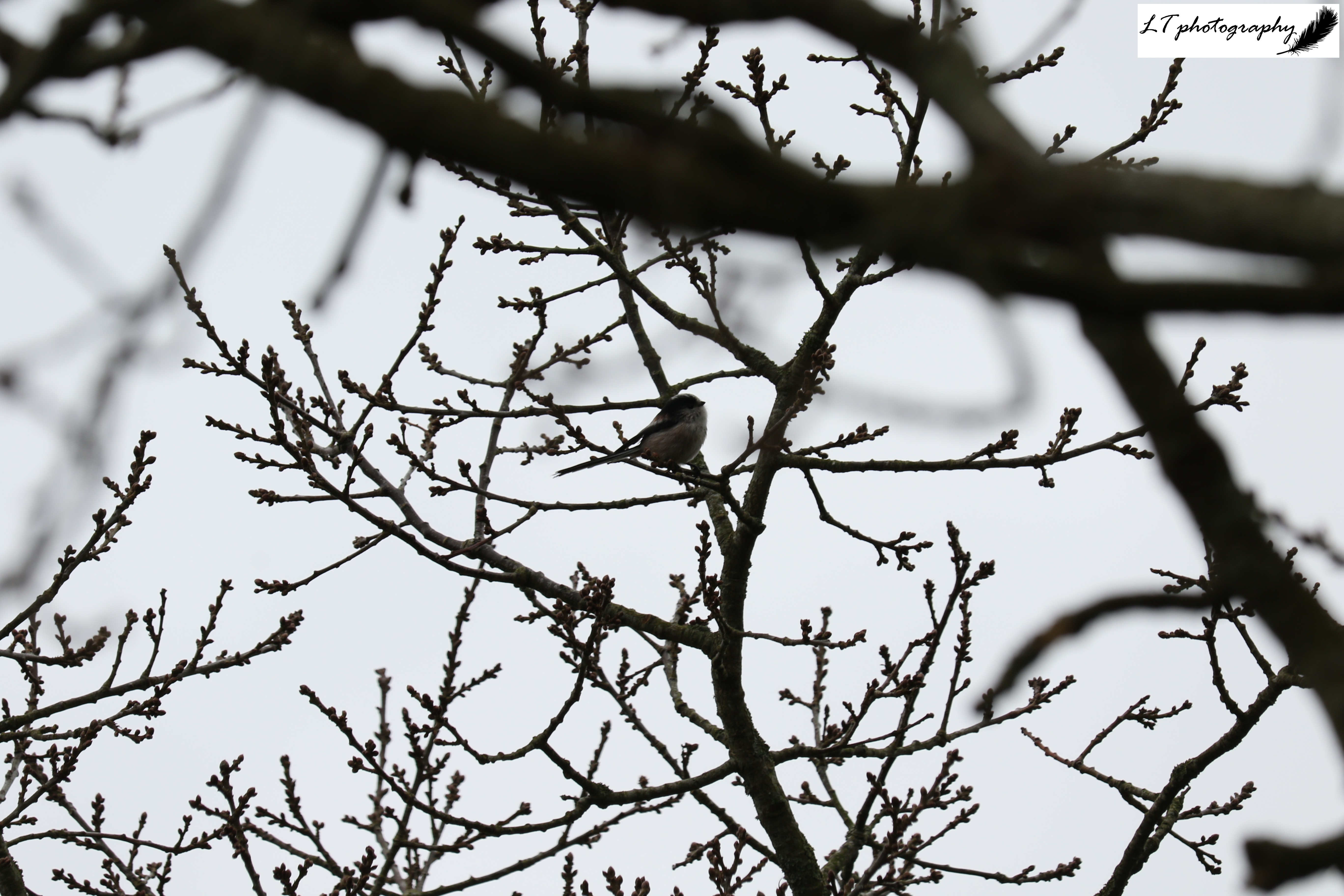
So on the 12th December we did just that, spending 30 minutes recording the diversity and abundance of bird species we saw in half an hour. For such a short period of time, the bird feeders in our garden delivered, with 17 species, varying from Greenfinches and Robins to a Great-Spotted Woodpecker and Starlings! By far the most abundant species though was the Goldfinch, with 14 spotted at one time, closely followed by 12 Chaffinches and 9 Blue Tits. A very good representation of our garden’s winter visitors, just missing Long-Tailed Tits and Coal Tits, the latter being amiss this year!

Emma’s Urban Garden Bird Survey

I combined my bird count with the event of the year, the Great Garden Birdwatch! We sat down with cups of tea and my dad’s iPad to record our garden visitors and contribute to this important monitoring exercise.

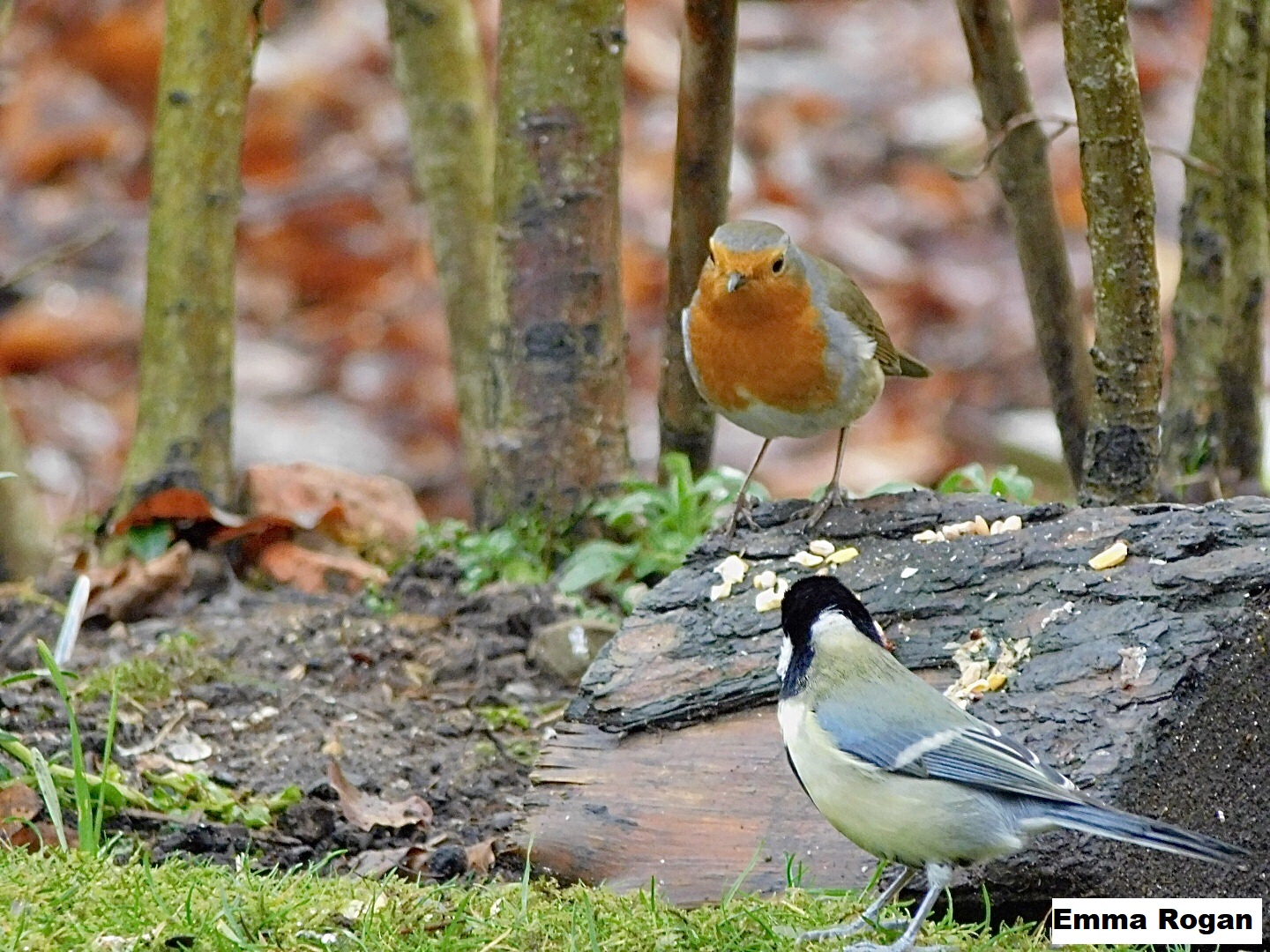
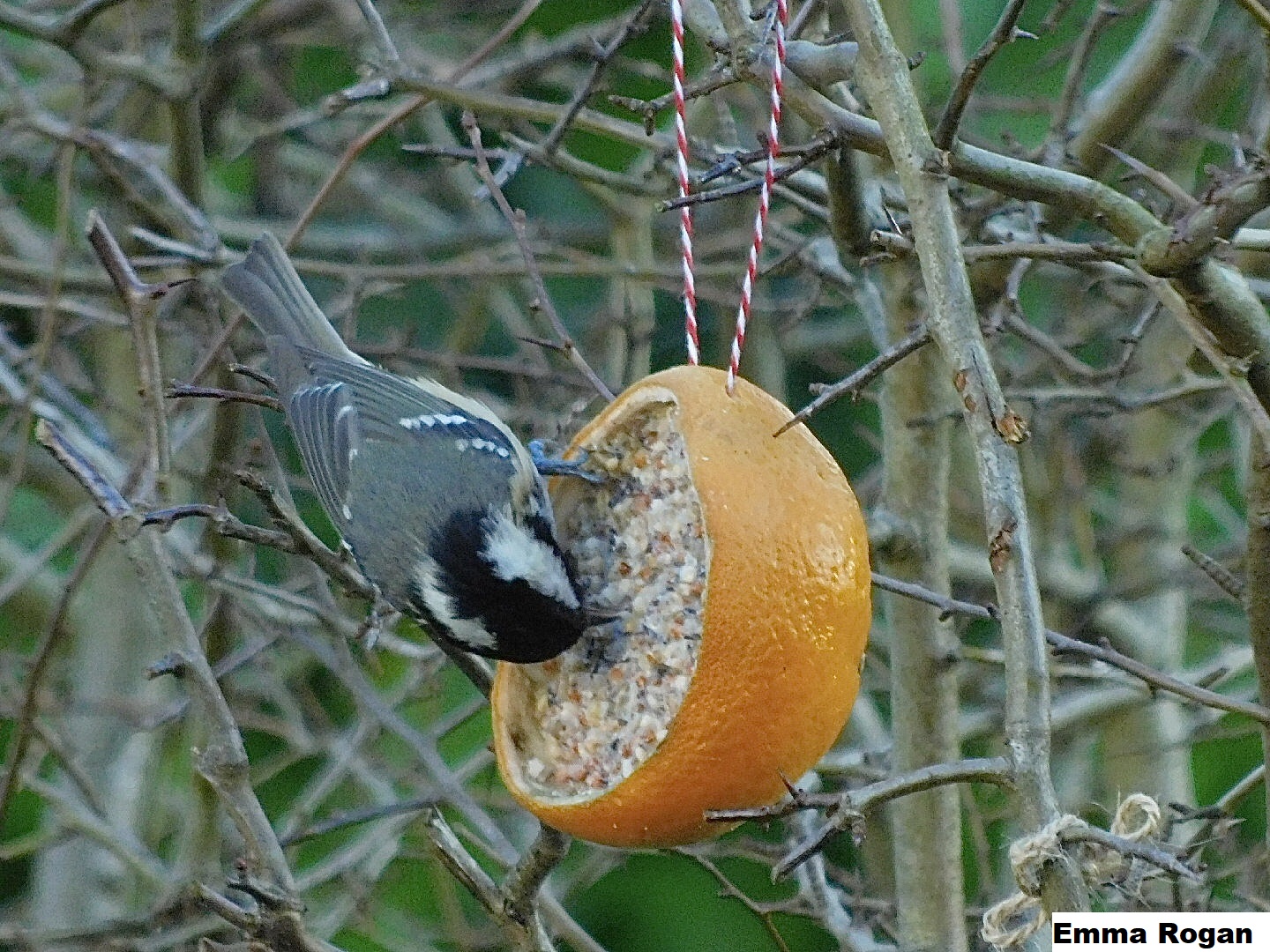
Expecting our birds to use their sixth sense and avoid our garden for an hour, we were pleasantly surprised to see a lot of our regulars! The Robin stopped by, as did Mr and Mrs Blackbird, who come every day for their plate of mealworms. Our bird feeders are also popular with Coal Tits, Blue Tits and Great Tits, and of course the neighbourhood Squirrels! We also have a Nuthatch who visits frequently, nibbling at our bird feeders in his distinctive upside-down stance.

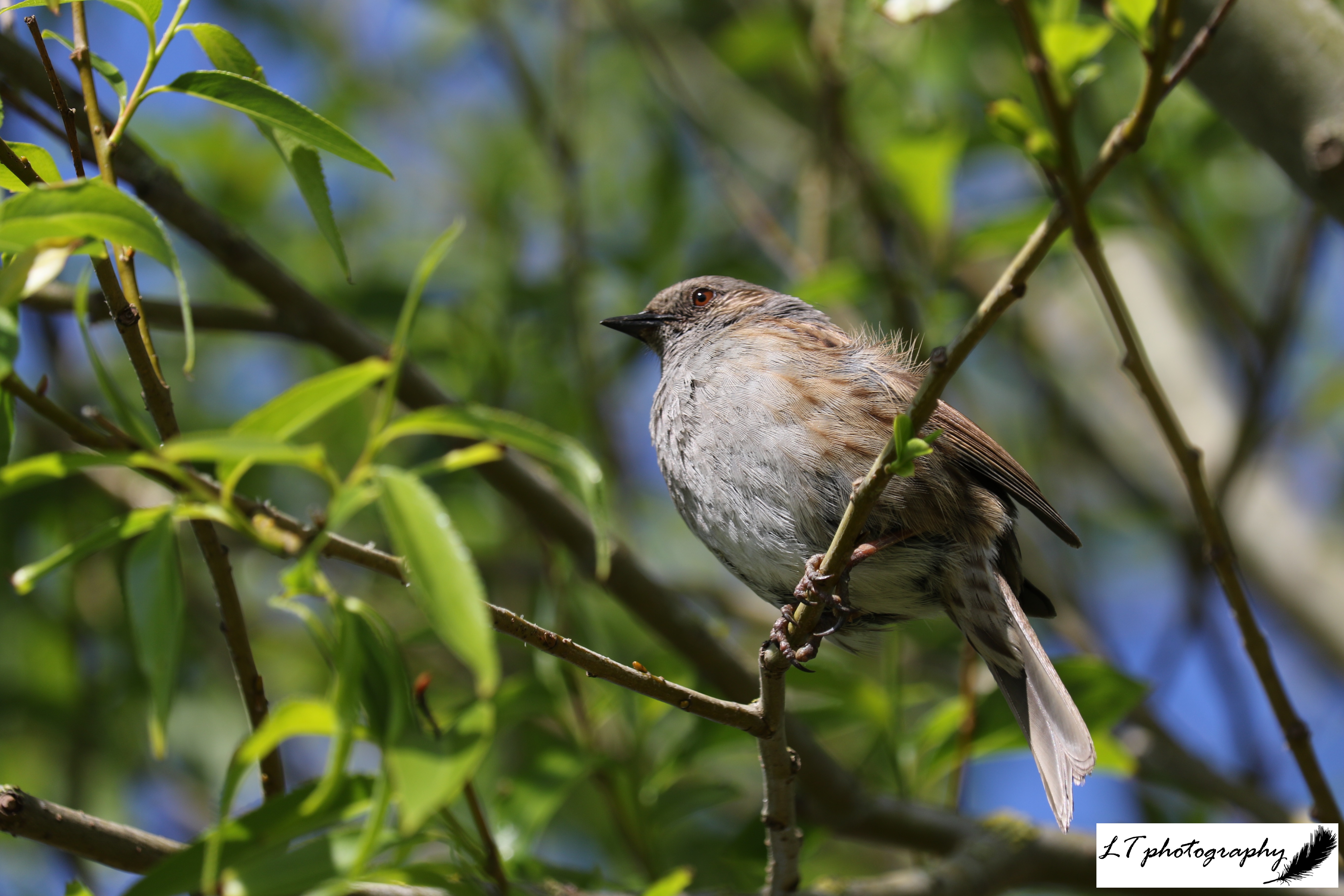
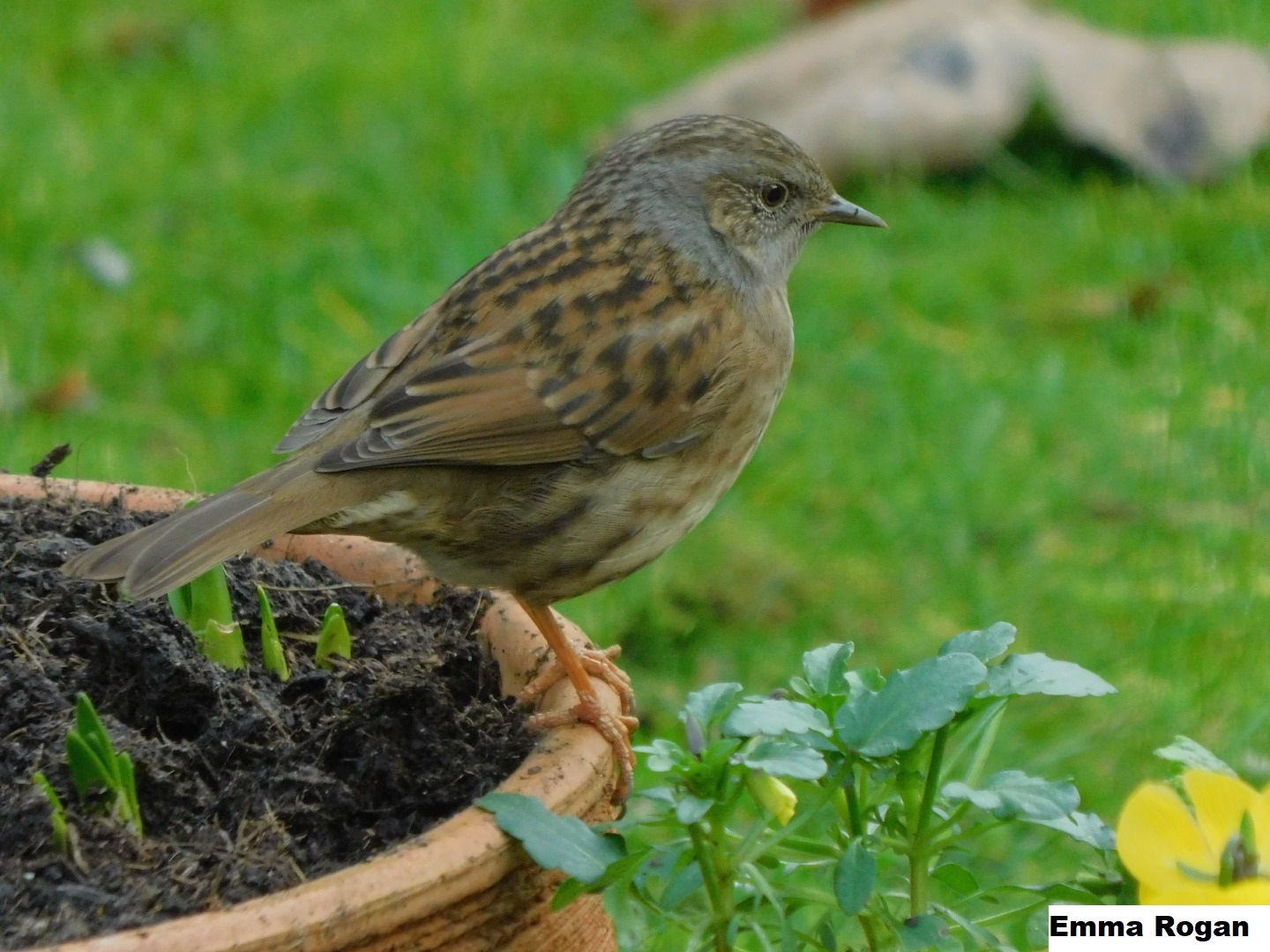
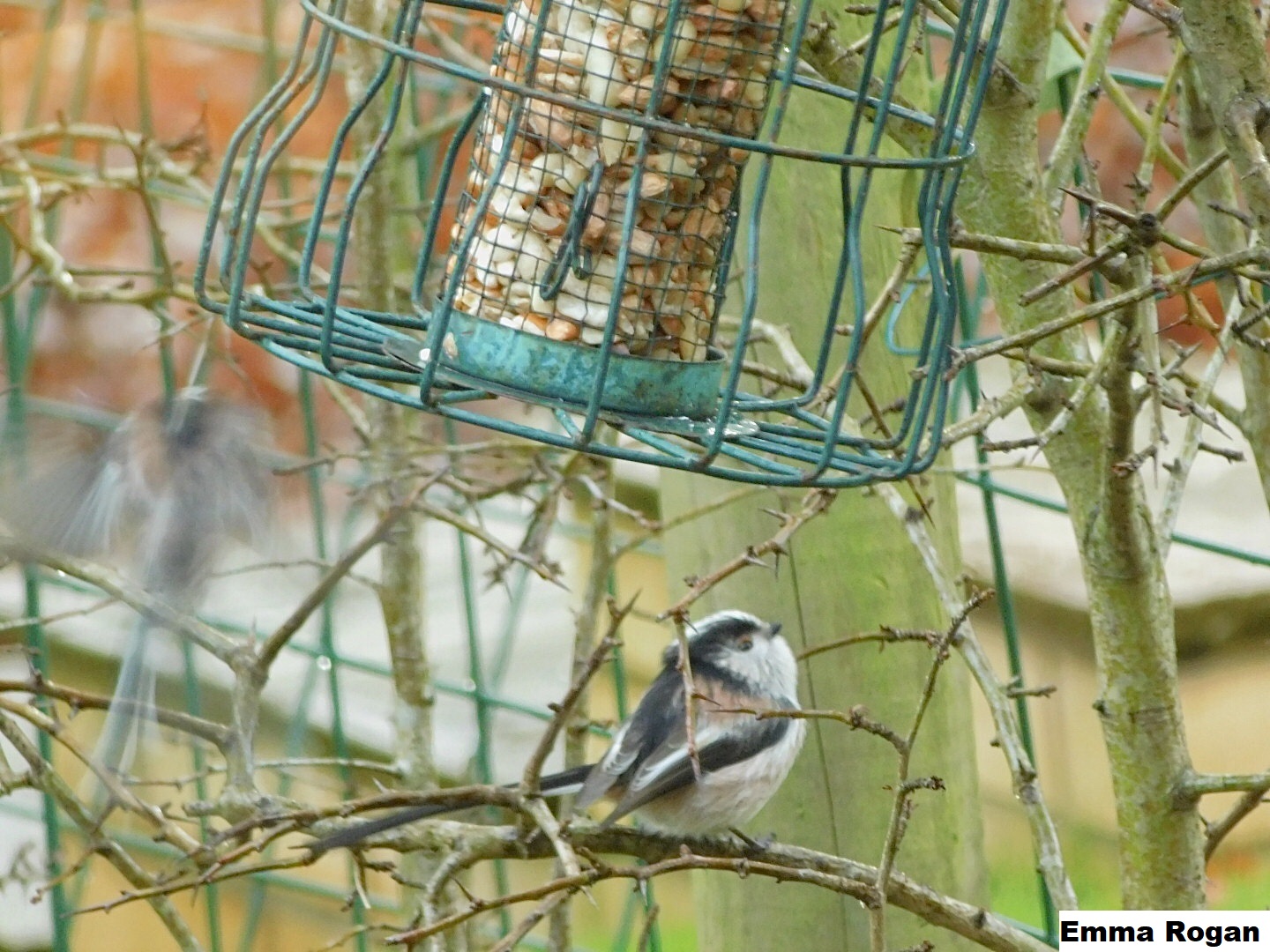
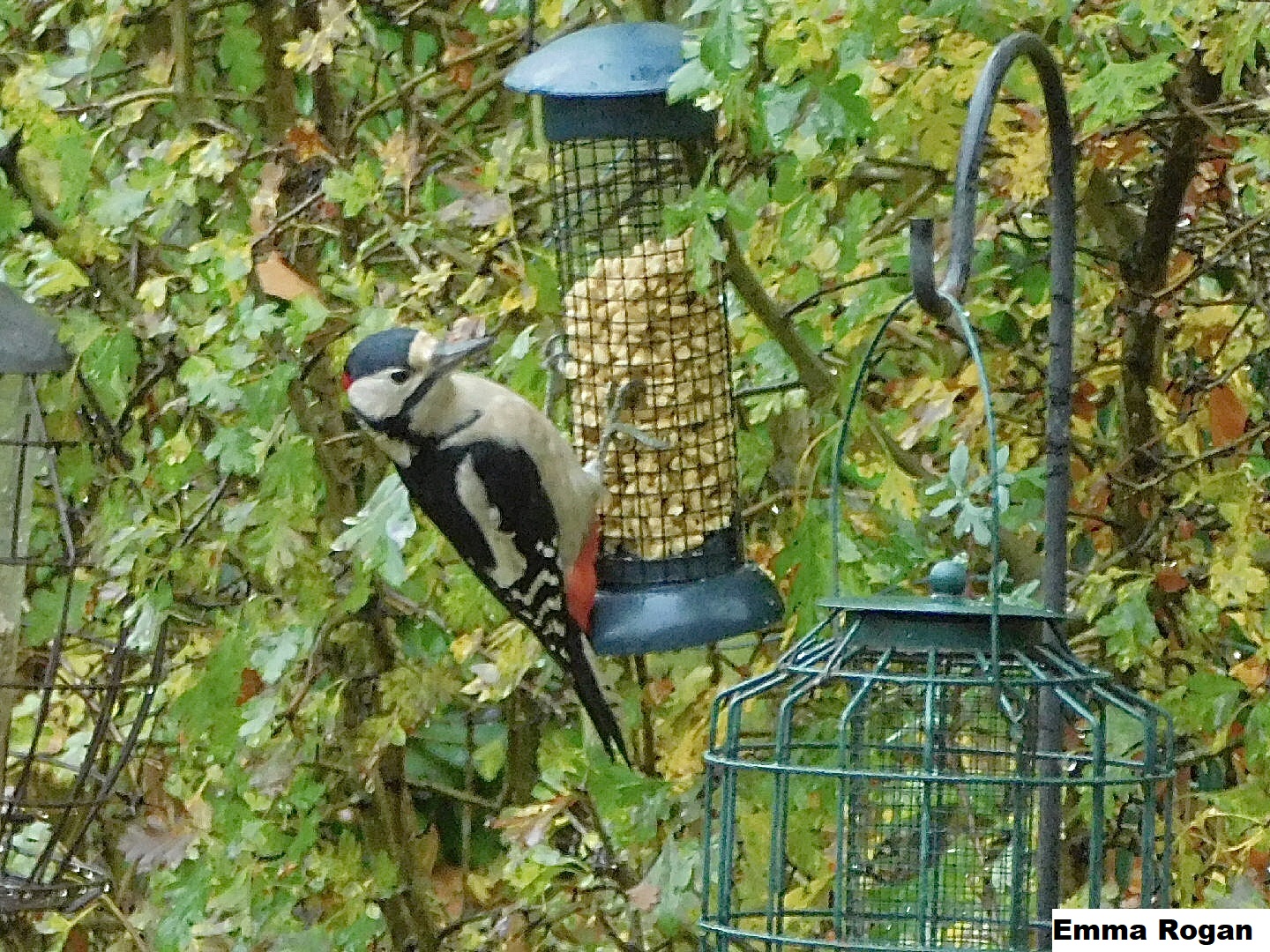
My absolute favourite though are the Long-Tailed Tits, they’re so round and fluffy! Although, I will always have a soft spot for our Dunnock, who we recognise by his extra-fluffy head feathers. Even a bird can have a bad hair day! Sadly though, our Woodpecker didn’t make an appearance.

Laura’s Countryside Bird Walk

Today (Sunday 9th January) was the first beautiful day of a new month and new year. Though the air was cold, it was calm and the sun was shining, a soft golden glow. Stepping out from my back door, I was immediately hit by an abundance of avian activity. Two Carrion Crows flew over my head, cawing as they went. Goldfinches chattered from the garden, hinting at a visit from a good sized flock. A Blue Tit sung its distinctive song, a Robin ‘ticked’ in alarm, and a Blackbird watched me from a nearby fence post. I could not miss this perfect opportunity to explore the bird life that could be found on my family’s land at this time of year.

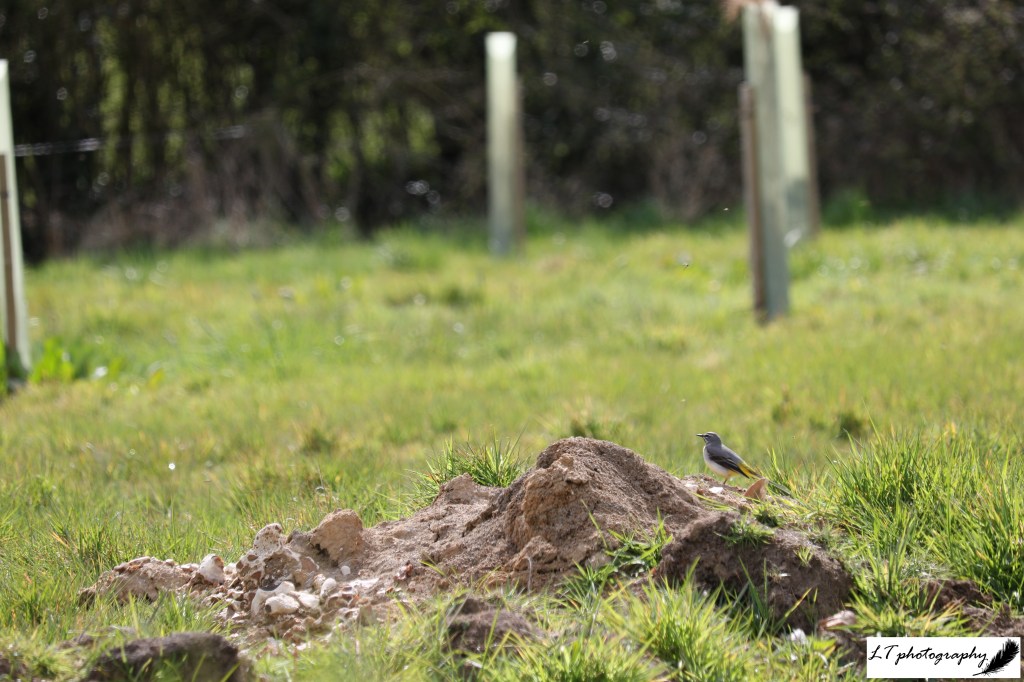
First, I headed down to our farm buildings, joined by the chattering of Starlings feeding out in the nearby fields. As usual at this time of year, the still hulking forms of the barns were being brought to life by busy birds living alongside our wintering animals. House Sparrows could be heard singing in the eaves of the barn, complimented by Great Tits calling from a lone Hawthorn tree, Collared Doves flapping here and there, and a flash of a yellow rump as one of our resident Grey Wagtails was disturbed from where it was feeding. The only thing that could add to the scene would be a Barn Owl floating by, a common sighting at dawn on the farm.

Satisfied with my sightings on the farm, I then headed away from my home hub, following the tracks out into the wider expanse of our land. Here I could find birds flitting along the hedgerows, such as feeding Redwings and wary Wrens. and fields busy with bird feeding activity, including Gulls, Rooks, and Pheasants.

As Fieldfare flew over head, I finished my wintery walk with a meander along one of the larger rivers on the farm. Here I could see the first Snowdrops beginning to push green shoots up from the river bank, marking the start of changes to come. This was joined by the calls of Dunnocks and the twittering of Meadow Pipits out in the fields across the river. With a count of at least 22 bird species, I felt this was a good end to my adventure.

Emma’s City Bird Walk

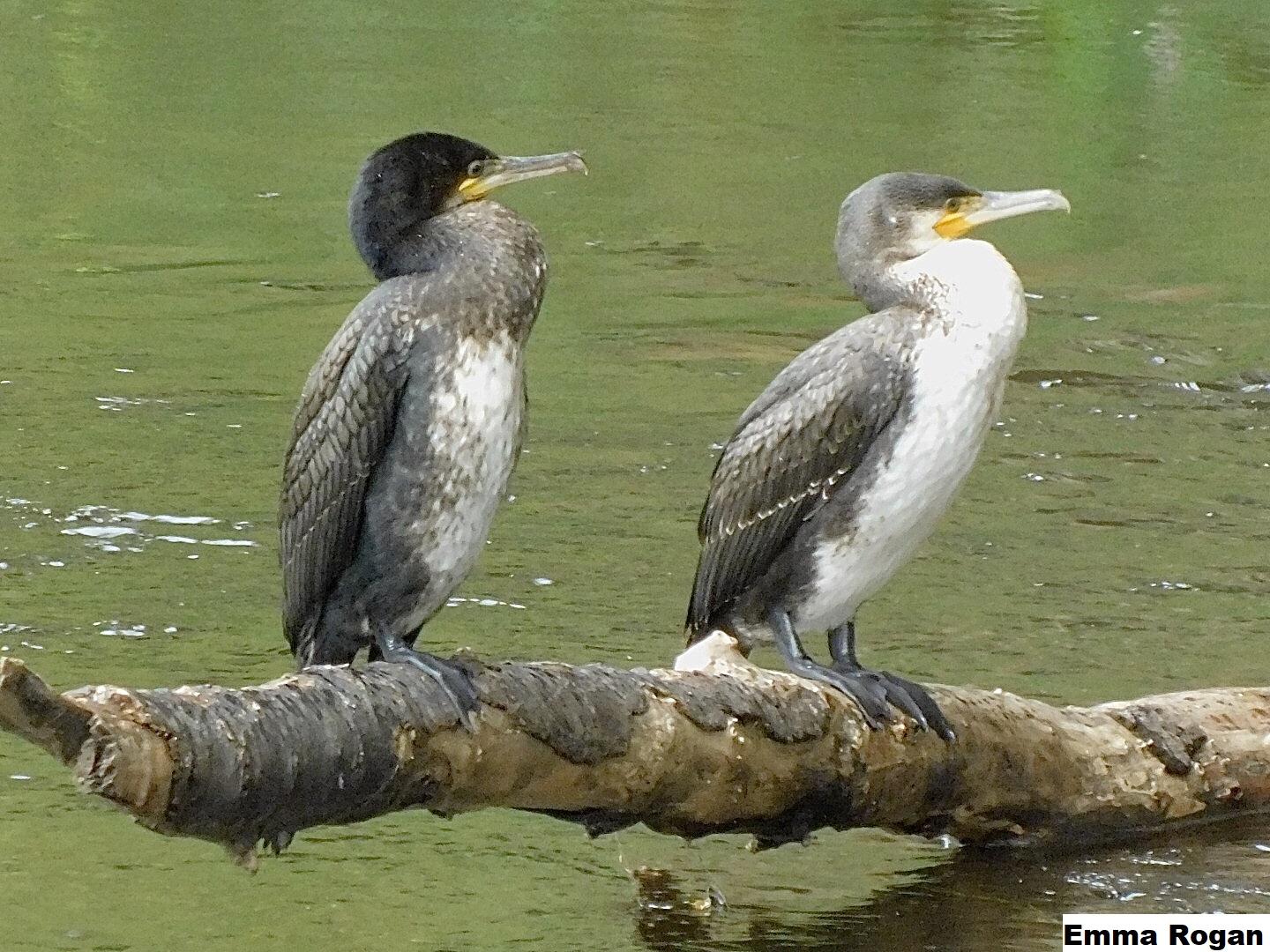
Manchester is home to a huge variety of urban birds. From Herons and Cormorants fishing under motorway bridges along the River Mersey, to hardy Woodpigeons in the city centre, to garden birds drawn in by feeding stations, there is always something new to see! I always love to see how many birds I can spot when I’m out for a walk, and I find that watching the birds in my garden brings me a moment of peace in the middle of busy days.

For my bird walk, I decided to head to a different park for a change! I’m lucky to live in a part of Manchester with a lot of nearby green spaces, and one of these is Didsbury Park, one of the first municipal planned parks in the city, and redesigned in the 1920’s to include recreational features which still exist today. There is also thought to be an old air-raid shelter under the football pitch! The impact of both World Wars One and Two on the local area, just a small village when WW1 began, is commemorated by a beautiful poppy field mural in the park created by graffiti artist Russell Meeham, also known as Quebek.

Suffice to say, I’ve spent many happy hours in Didsbury Park, and my bird walk was no exception! Although, I didn’t have a lot of success at spotting birds. The highlight of the walk was wondering why a group of people were gathered around a particular bush and wandering over there, to find a flock of House Sparrows singing away! My Mum and Dad remember House Sparrows as the most common bird about when they were growing up, but we’ve never actually seen one in our garden. Sadly, their populations have declined substantially in the UK in both rural and urban populations.

It’s All About The Birds!

If you open your eyes, wherever you go during winter you will see life and activity. Though from Laura’s and Emma’s adventures, Laura experienced more bird activity out and about in the countryside, both currently have vibrant gardens. This is testament to how everyone’s gardens right now are a lifeline for our wildlife, whether you live in a bustling city or a quieter piece of the countryside. They provide a valuable home in a changing landscape and prove that we can all do our bit for nature. Why not put out a bird feeder and see what you can see today?

Spring Countryside Camera Trap Surveys

M2E43L126-126R396B311

A few years ago, my passion for wildlife led me to save up to buy a Bushnell Trophy camera trap, to be able to explore the wildlife that can be found in my local area. Since then I have embarked on many adventures and had many hours of fun with it, as it allows you to get an amazing undisturbed insight into the lives of more elusive wildlife.

If you are unsure what a camera trap is, it is a digital camera connected to a sensor that is activated/triggered when movement is detected in front of it. It then takes one or a series of photos, a video of select length or a hybrid of the two, that are recorded on to a memory card for later viewing. They are easy to use and can be left out in the elements for long periods of time. My camera trap was a great investment and has now given me years of pleasure at home and further afield, such as in Costa Rica.

This year, as I have been even more inspired by the coming spring, I decided to spend 10 weeks across the season (21st March to 26th May), completing camera trap surveys on my family’s land, which is set in the beautiful Dorset countryside.

For my surveys, over the 10 weeks, I chose a total of 5 camera locations which were used for varying periods of time. These locations I fondly named: copse cam, sett cam, woodland cam, alley cam and fox cam. I left the camera in each location for between 14 to 42 hours across 1-2 nights depending on my intentions at the time. Now spring has seemed to have come to an end, it is now the time for me to take a look back at a fun, exploratory 10 weeks and reflect on some of the wildlife I got the pleasure of recording.

Copse cam

March 2019

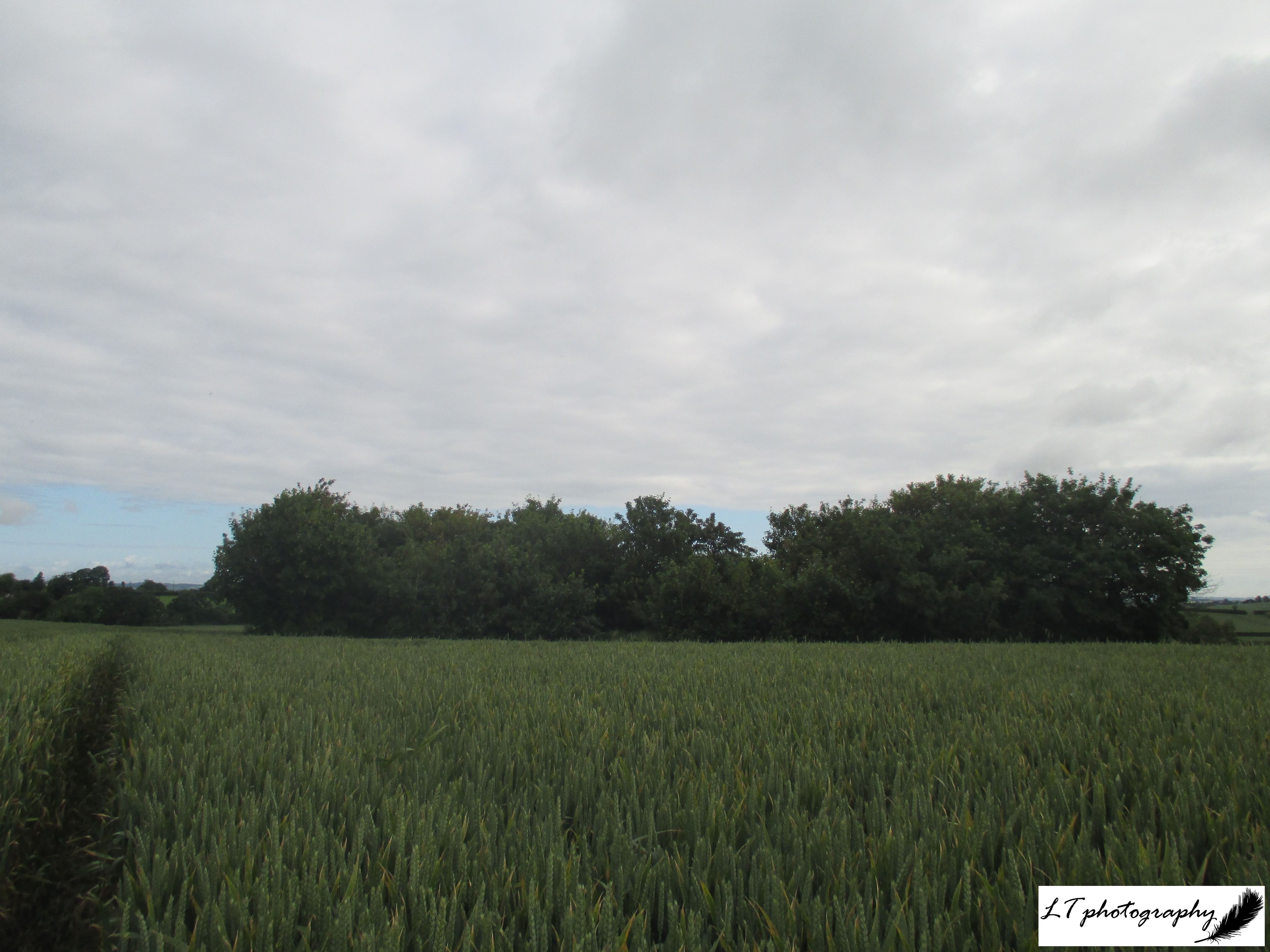
For my first camera location, I chose a small copse situated in a dip within a wheat field that has borders including hedges, trees, a river and a large badger sett. The copse shows signs of use from rabbits and species passing through. The camera was attached to the same tree each time at the centre of the copse, and was either pointed to the west or east to try and capture an idea of activity within the whole area. This location was used for 6 weeks (till 26th April) before the wheat became too long around the copse.

Copse from outside

Over the 6 weeks I used this location, 1 week the camera was not set due to bad weather, and another 2 weeks the camera was not triggered at all. Across the 3 weeks that had some success, 5 species were recorded (all singular individuals) that were:

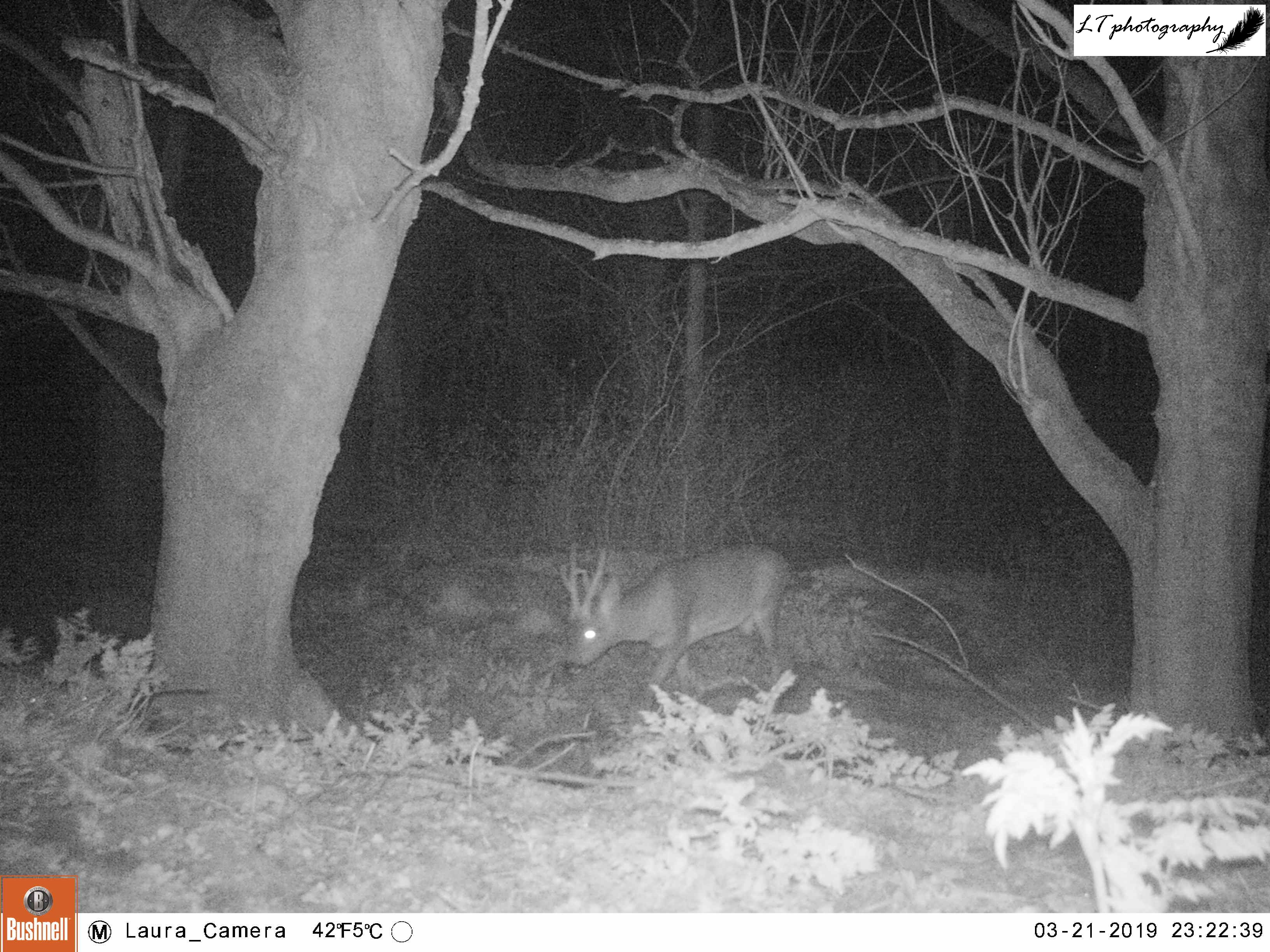
  • Male and female roe deer

Male roe deer

  • Badger

Badger

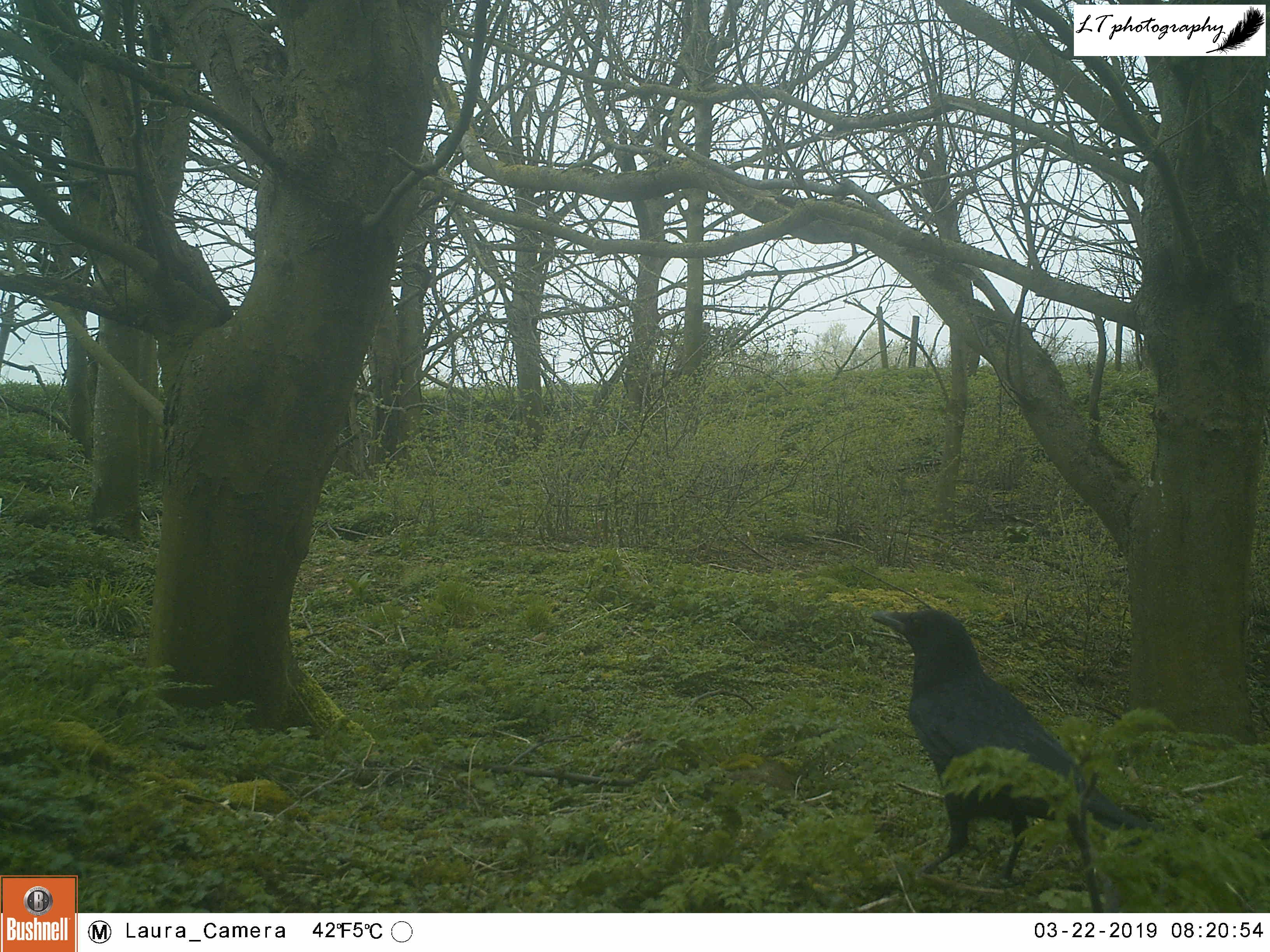
  • Carrion crow

Carrion crow

  • Woodpigeon

Woodpigeon

  • Red-legged partridge

Red-legged partridge

A range of animal behaviour was seen on the copse cam, including foraging, resting and fleeing behaviour. Unfortunately due to the growing wheat increasingly isolating the copse, the number of camera triggers, and thus survey success, dropped by 80% over the 3 weeks wildlife was seen. Despite this, I did enjoy the wildlife the camera did capture, as it gave an idea of the wildlife passing through this spot at the beginning of spring.

Favourite photo: an up-close and personal shot of a female roe deer. Other photos captured show that this particular female was possibly pregnant during my surveys.

Doe-eyed (female roe deer in the mist)

Sett cam

For my second camera location, I chose a large fenced off badger sett towards the east of my family’s land. The sett is on the border of agricultural grassland backed by a hedge made up of traditionally known hedge species, including blackthorn and hawthorn. The camera was attached to one of two fence posts spaced approximately a metre apart and facing into the main area of the sett in various directions. This location was used for 5 weeks (till 19th April) until the vegetation within the sett area grew to a height that obscured the view of the camera trap.

Sett in daytime

Over the 5 weeks, one week the camera was not set due to bad weather, leaving 4 weeks in which this location was used. In this time the species seen were (all singular individuals):

  • Badger

Badger

  • Fox

Fox

  • Pheasant

Male pheasant

  • Rook

Rook

The number of times the camera trap was triggered was random in relation to length of time set and survey week. Behaviours recorded included foraging and fleeing behaviour. Again, though this camera location was only used for a few weeks, it was great to see the wildlife there, in particular finally seeing badgers actively living in this sett.

Favourite photo: Though the subject of this shot is less noticeable, I love seeing in this photo the shape of a fox disappearing off along the hedge and field line in the background.

Cunning fox

Woodland cam

For my third location, I chose a small area of secondary woodland not far from my house, bordered on its edges by a private lane, meadows and more woodland. The woodland consists of wild cherry trees and predominantly oak trees. For the entire period of 10 weeks, the camera trap was moved between different trees and aimed in different directions to cover a variety of areas within the woodland.

Over the 10 weeks, the lives of 4 common species within this woodland were recorded. These were:

  • Badger (1-2 individuals in a photo)

2 badgers

  • Fox

  • Rabbit (included alongside a pheasant in a couple of shots)

Rabbit

  • Pheasant (1-2 individuals in a photo)

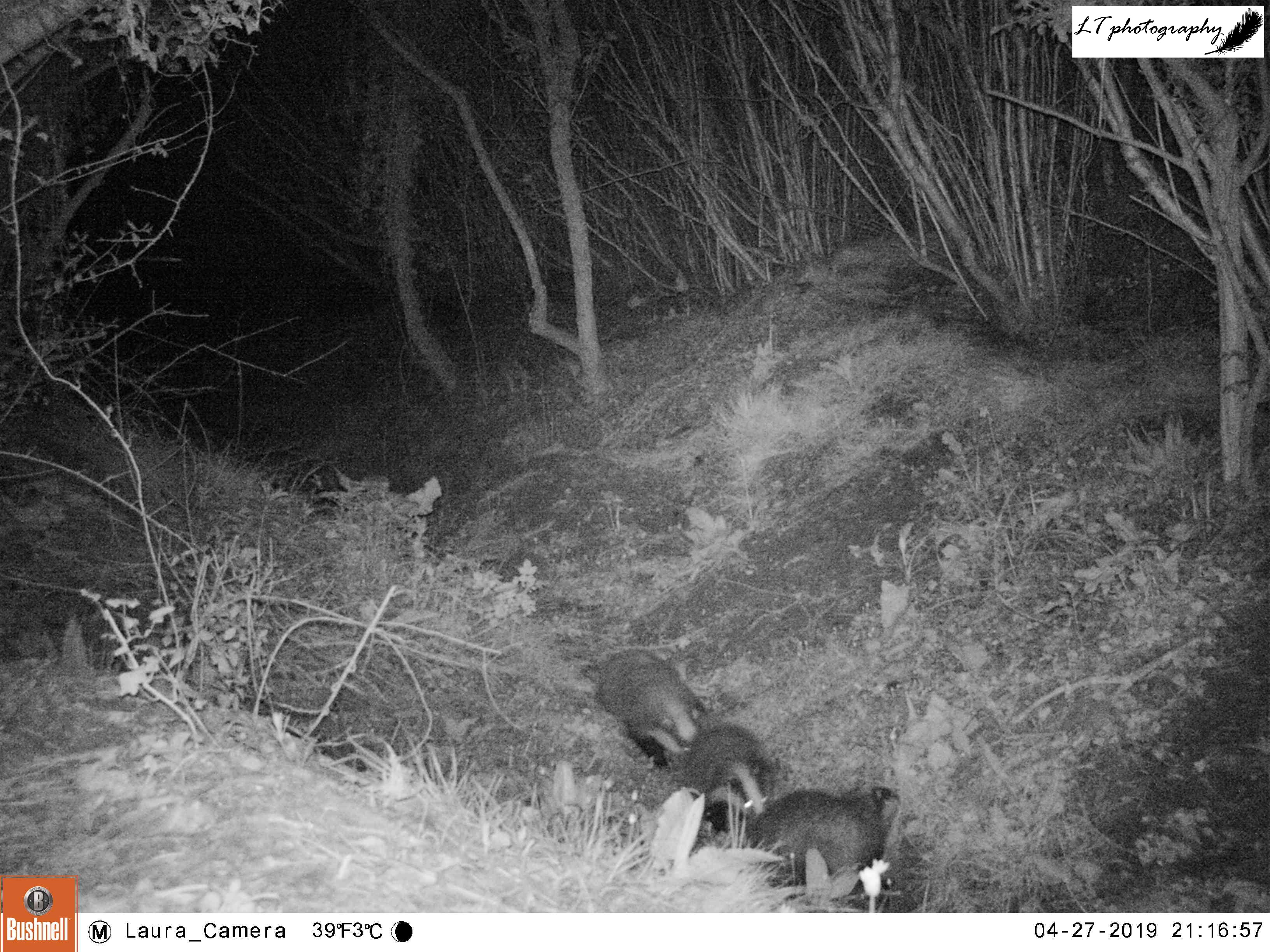
The number of times the camera trap was triggered was random in relation to length of time set and survey week. What is interesting though, is that foxes were seen passing through the wood over the first 5 weeks (March into April), but not in the last 5 (April into May). This differs to what was seen for badgers, where compared to the first few weeks, badgers were seen mainly in the last 4 weeks (May) and in increasing numbers, which would correspond with breeding stage and foraging tactics. It was great to see the badgers in this way.

Favourite photo: My favourite photo has to be from when I increasingly caught sight of the badgers in the woodland, as it filled me with excitement every time I saw these photos.

Badgered

Alley cam

For my fourth location, following week 6 (27th April), I chose one of my favourite sites on my family’s land, fondly known as Badger Alley. I refer to a 1-3m wide, rarely used bridle/footpath that is enclosed overhead by the tall hedges growing on either side (creating a tunnel effect). Along this path, an active badger sett and a deserted sett can be found, which are shared by other species, such as rabbits and foxes. The path is also rich along its length with a variety of plant species. In the end, I chose to position my camera trap to be able to take in part of the active sett as well as the path along side it to see what I could see.

Alley cam

Over the 5 weeks from 27th April to 25th May, the camera trap recorded a total of 6 different species, which were:

  • Roe deer

Female roe deer

  • Fox

  • Badger (1-3 individuals in a photo)

  • Rabbit (1-2 individuals in a photo)

  • Woodpigeon

Woodpigeon

  • Grey squirrel

Grey squirrel

The number of times the camera trap was triggered was random in relation to length of time set and survey week. A range of behaviours were observed in the photos, my favourite being grooming, bonding/socialising, hunting and play behaviour. It has to be sad that I particularly enjoyed using this location for my camera trap surveys!

Rabbit grooming

Favourite photos: When the badgers joined in with showing why Badger Alley was given its name!

M2E1L0-3R350B300

Fox cam (Note: date of photos are incorrect= 2019 not 2018)

For my final camera location, as a one-off (week 8: 10th May), I chose to investigate a potential fox den within the badger sett that borders the wheat field where the copse mentioned is found. This sett is fairly large, is fenced off from the adjacent wheat field whilst being backed by a wide, traditional hedgerow. In particular, a large part of the sett runs within the hedgerow itself, and in places there are open cavities at the centre of the hedge which are popularly used by wildlife.

Sett= location of fox cam

Before I chose this location, my mum had mentioned to me that she thought that she had seen signs of a female fox feeding cubs in this location, and so I decided to set up my camera with the purpose of investigating if this was true. Read on to find out the result!

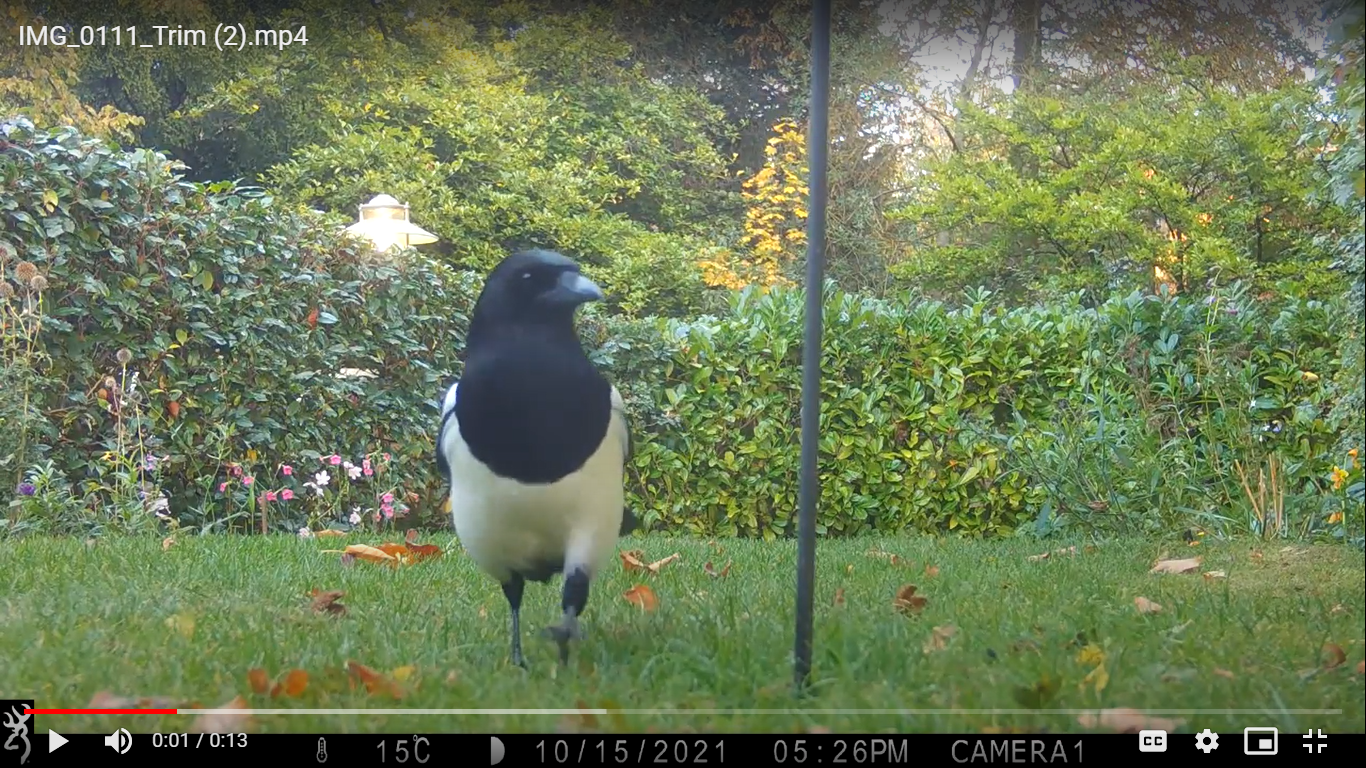
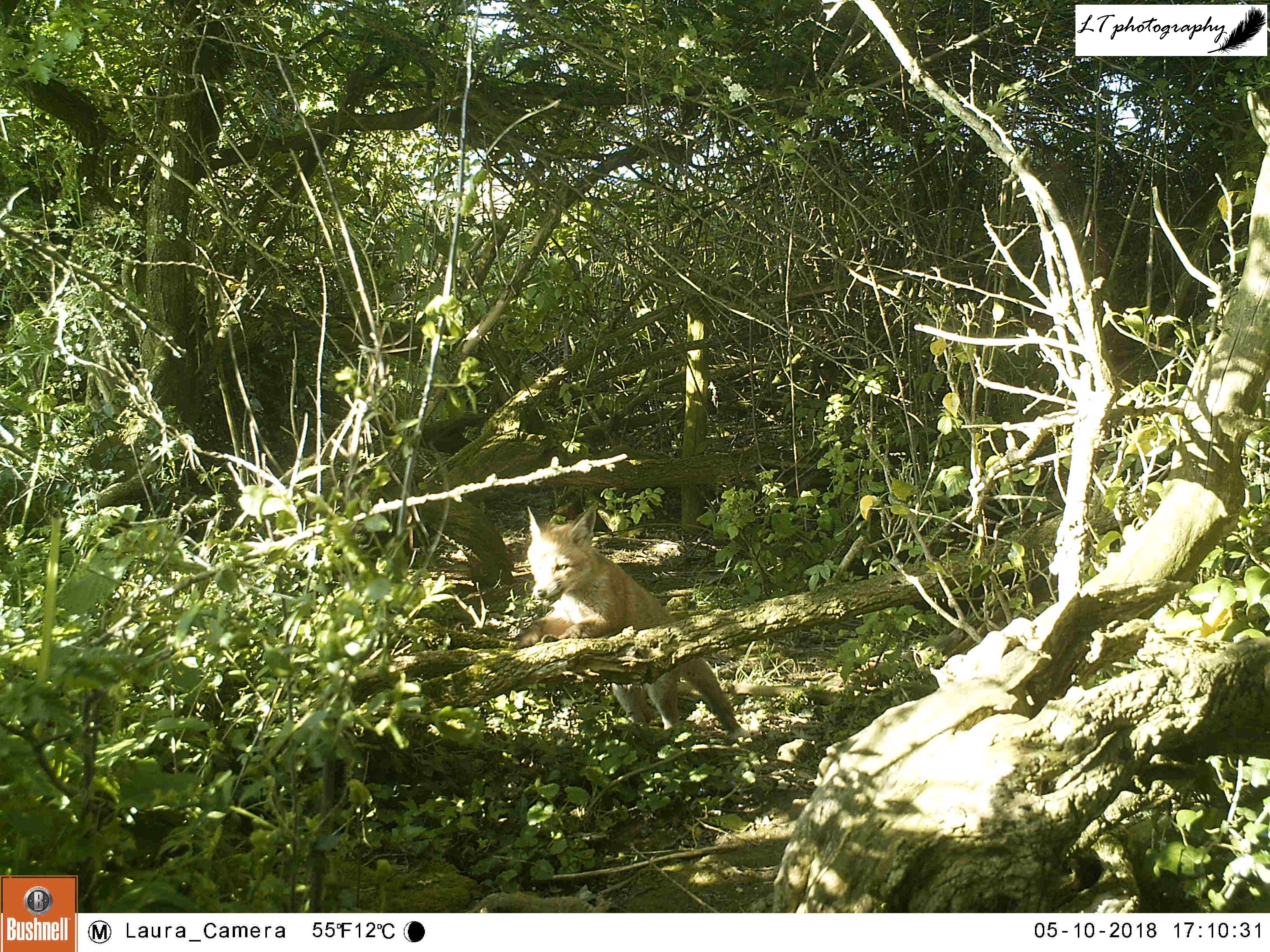
I can now reveal that this camera trap set up was a complete success! I caught a vixen and her 3 cubs on camera, as well as a cheeky magpie and an unexpected great tit. The foxes triggered the camera 127 times over 27 hrs, making for a greater insight into their behaviour, social relationships and private interactions. Very exciting!

Favourite photos: The fox cubs!

Fox cub

Sleepy cub


M2E52L162-162R389B314

Playful cubs

Summary

This spring I really enjoyed embarking on the completion of camera trap surveys and being able to analyse what species can less obviously be seen around me. In total, my camera trap caught sight of 12 different species of birds and mammals, with lots of different individuals being recorded within this.

I hope you enjoyed a small sight into my camera trapping fun and may be inspired to take exploring your local area to the next level. Camera trapping may not be for you but there are lots of other things out there waiting for you.