How to… Identify All Year Round Garden Birds

Photographs will be updated in the future

In the UK, 633 wild bird species have been recorded up to 2024, from eagles and owls to kingfishers and thrushes. Between 2015 and 2020 though, almost half of all bird species in the UK were seen to have experienced a decline in number, adding to a steady decline over 50 years. Some of the biggest factors have been increased development, agricultural intensification, habitat loss, lack of woodland management, disease, and climate change, amongst others.

As bird species continue to lose access to habitat and food sources across the UK, our gardens, however big or small, are becoming an important lifeline for populations. ‘Garden birds’ refer to any species that visit and utilise a garden, and species will depend on what food, water, and habitat is available, and also the habitats that can be found around a garden. This often leads to variation in what people may see from garden-to-garden.

Despite differences, there are a number of birds that are more likely to be seen in gardens, and it is great to know what you may be seeing to help easily tailor your garden for their use, such as what bird food to offer. To help identify species, here you can find a helpful guide to 10 birds that can often be seen in gardens across the UK, even when their populations are decreasing in number. Take a look below!

Species:

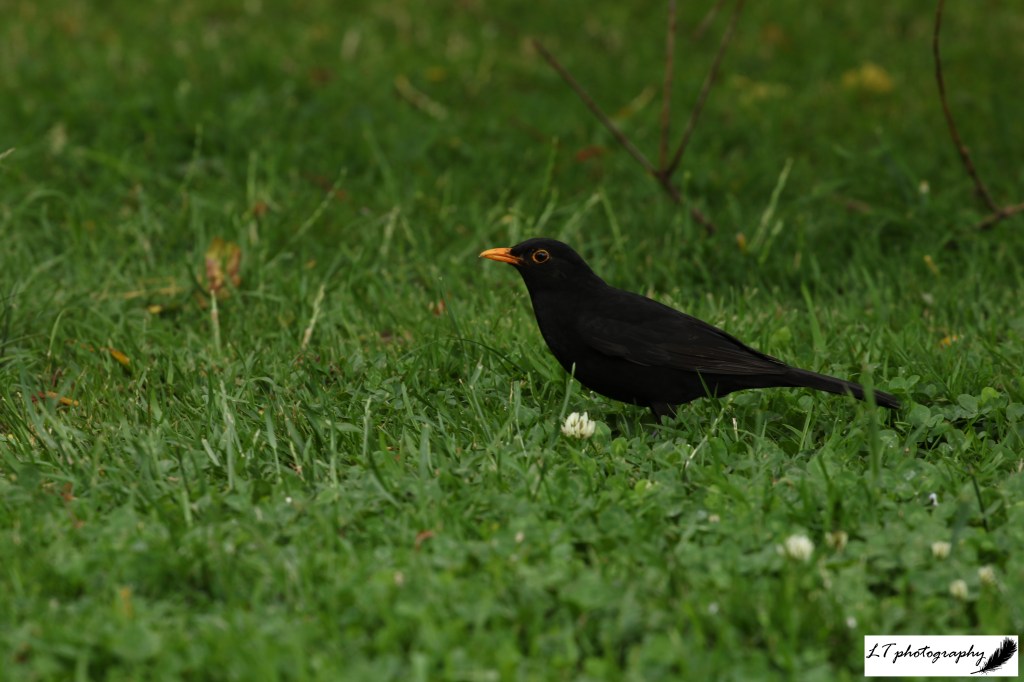
Common Blackbird (Turdus merula)

  • Length: 23.5 – 29cm
  • Weight: 80 – 125g
  • Colour: Adult males are all black with a yellow beak, whilst adult females are dark brown with a more dull beak. Young start as a speckled version of the female and change to adult feathers through moulting their feathers
  • What To Feed: Mealworms, fat balls, or sunflower hearts on the floor or in a ground feeder
  • Breeding Season: March to Late July
  • Nest: A round cup made of twigs, grass and other plant materials, close to the ground in adequate cover
  • UK Conservation status: Green

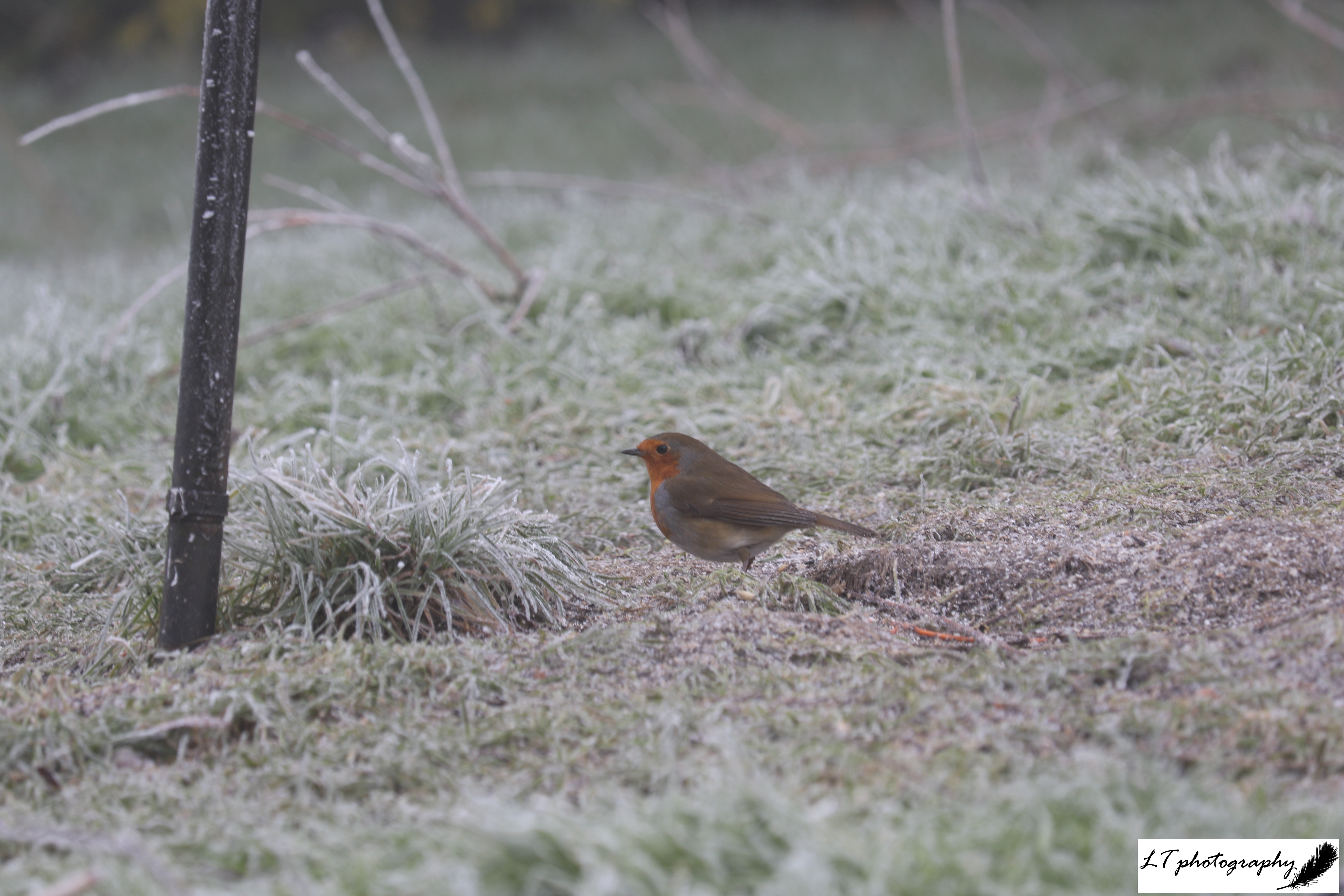
European Robin (Erithacus rubecula)

  • Length: 12.5 – 14cm
  • Weight: 13 – 21g
  • Colour: Adult males and females look the same, both brown with an orange-red breast and white underside. The young start a speckled brown
  • What To Feed: Mealworms, suet, or seeds on a ground feeder, bird table or bird feeder with platform
  • Breeding Season: March to mid-August
  • Nest: A round cup made of grass, moss and leaves and lined with hair and maybe feathers, usually tucked in a hole, crevice or behind something
  • UK Conservation Status: Green

House Sparrow (Passer domesticus)

  • Length: 14 – 16cm
  • Weight: 23 – 35g
  • Colour: Adult males have a grey crown and cheeks, chestnut sides to head, black bib, grey underparts, rufous-brown back, and white wing-bar. Adult females and young (until body moult) have buff-brown upperparts, underparts grey, brown cap and cream supercilium behind eye
  • What To Feed: Will eat a range food, including seeds and grains from feeders
  • Breeding Season: March to August
  • Nest: In cavities, where dried plant material is stuffed in to make an untidy sphere which is then lined with softer materials, such as feathers
  • UK Conservation Status: Red

Blue Tit (Cyanistes caeruleus)

  • Length: 13.5 – 15cm
  • Weight: 9 – 13.5g
  • Colour: Blue crown, wings and tail, white cheeks, black eye-stripe, underparts yellow, and greyish-black central belly stripe. Their young begin with more dull feathers and yellowish cheeks
  • What To Feed: Fat balls, suet, peanuts, or sunflower seeds from hanging feeders
  • Breeding Season: March to June
  • Nest: Built inside cavities and formed of a cup of plant material, such as moss, lined with soft materials, such as feathers, wool and fur
  • UK Conservation Status: Green

Great Tit (Parus major)

  • Length: 13.5 – 15cm
  • Weight: 14 – 22g
  • Colour: Black head with white cheeks, moss-green back, blue-grey wings and tails, yellow underparts and black central belly-band. Males have wider, more defined belly-band. Young begin more dull and with yellowish cheeks
  • What To Feed: Suet, fat balls, peanuts, or sunflower seeds in hanging feeders
  • Breeding Season: March to July
  • Nest: Built inside cavities, formed of a cup of twigs, roots, moss, lichen and/or grasses, and lined with soft materials, such as hair or plant material
  • UK Conservation Status: Green

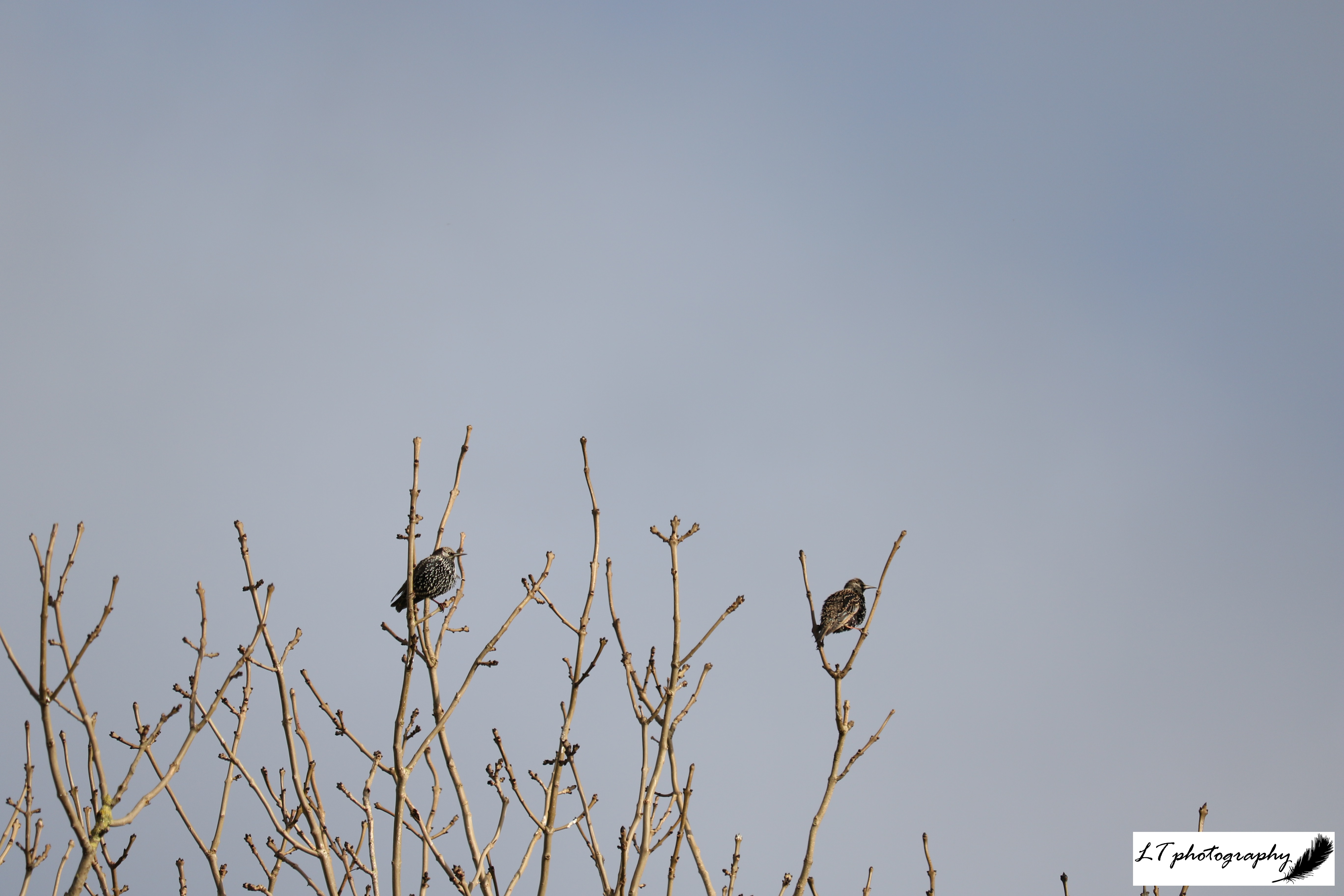
Starling (Sturnus vulgaris)

  • Length: 19 – 22cm
  • Weight: 60 – 97g
  • Colour: Black bird with long-pointed yellow bill, white spots dotted through plumage, a green-purple sheen to the feathers and pale pink legs. The young start with grey-brown feathers and change with body moult
  • What To Feed: Suet, peanuts or sunflower hearts in hanging and ground feeders
  • Breeding Season: March-July
  • Nest: In holes and cavities in trees and buildings, made up of a messy depression of plant stems, grass, and moss, and often lined with feathers or wool
  • UK Conservation Status: Red

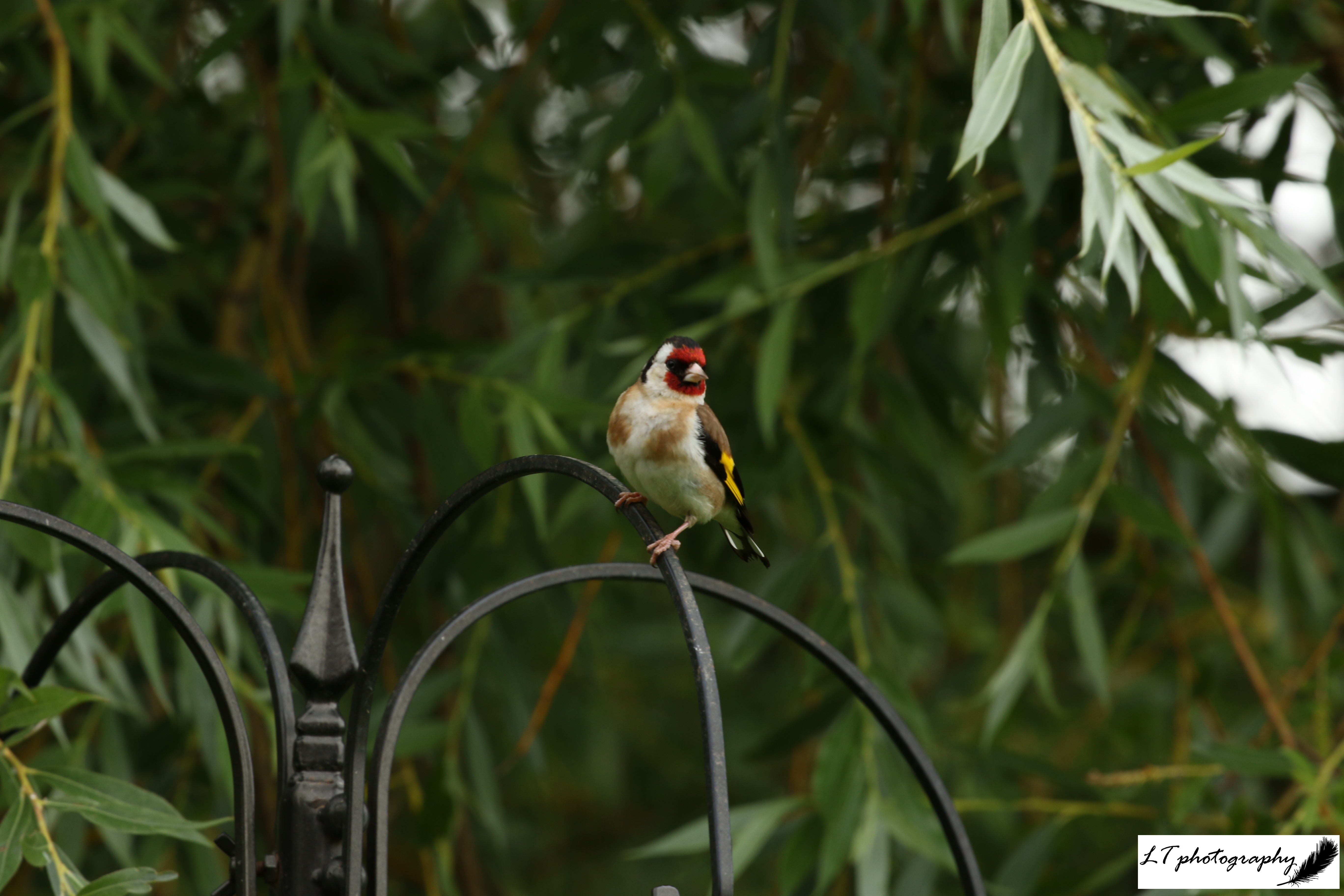
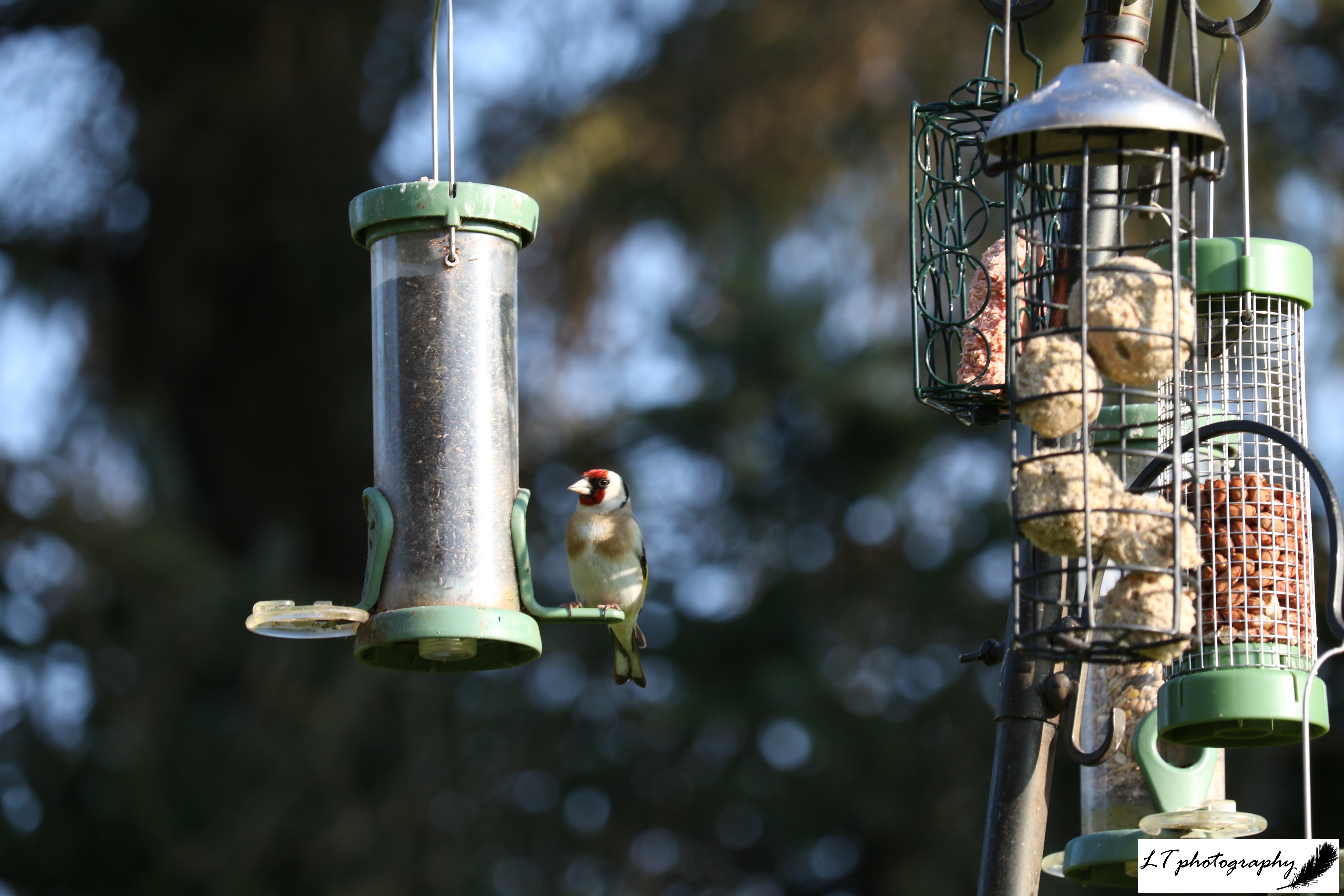
Goldfinch (Carduelis carduelis)

  • Length: 12 – 13.5cm
  • Weight: 13 – 20g
  • Colour: Adults have a black and white head with red face, brown back, black wings with yellow bar, and black tail with white spots. Young lack colourful head until body moult
  • What To Feed: Sunflower hearts, niger seeds or mixed seed in hanging feeders
  • Breeding Season: April to August
  • Nest: A neat cup made of moss, grass, wool, and hair, relatively far off of the ground in tight tree branches, hedges or shrubs
  • UK Conservation Status: Green

Chaffinch (Fringilla coelebs)

  • Length: 14 – 16cm
  • Weight: 17.5 – 29g
  • Colour: Adult males have pinky-red cheeks and breast, and blue-grey crown and neck, whereas adult females and young lack the colourful head and instead have a grey-green one. All have a distinct pale rump and double white wing bars
  • What To Feed: Peanuts, sunflower seeds, seed mixes, or suet in hanging or ground feeders
  • Breeding Season: April to June
  • Nest: Deep cup of lichens, grass, roots and feathers, lined with plant down, feathers or wool, usually in the fork of a tree, shrub or hedgerow
  • UK Conservation Status: Green

Collared Dove (Streptopelia decaocto)

  • Length: 29 – 33cm
  • Weight: 168 – 249g
  • Colour: Pale pinky-grey-brown feathers, black neck collar, dark eye, grey underparts, and reddish feet
  • What To Feed: Small seeds from ground feeders or bird tables
  • Breeding Season: March to September
  • Nest: Sparse platform of twigs and leaves in trees or high up in buildings
  • UK Conservation Status: Green

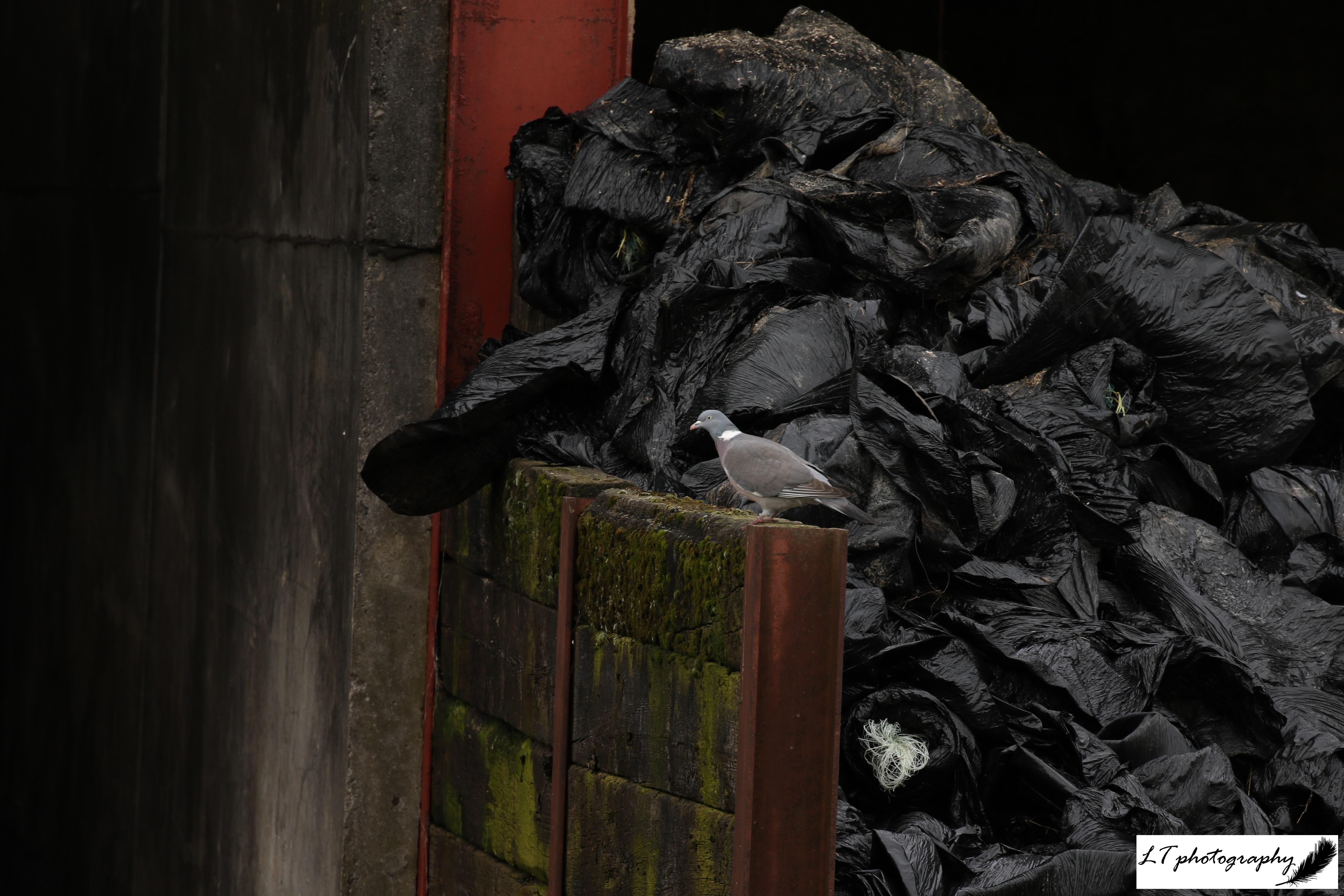
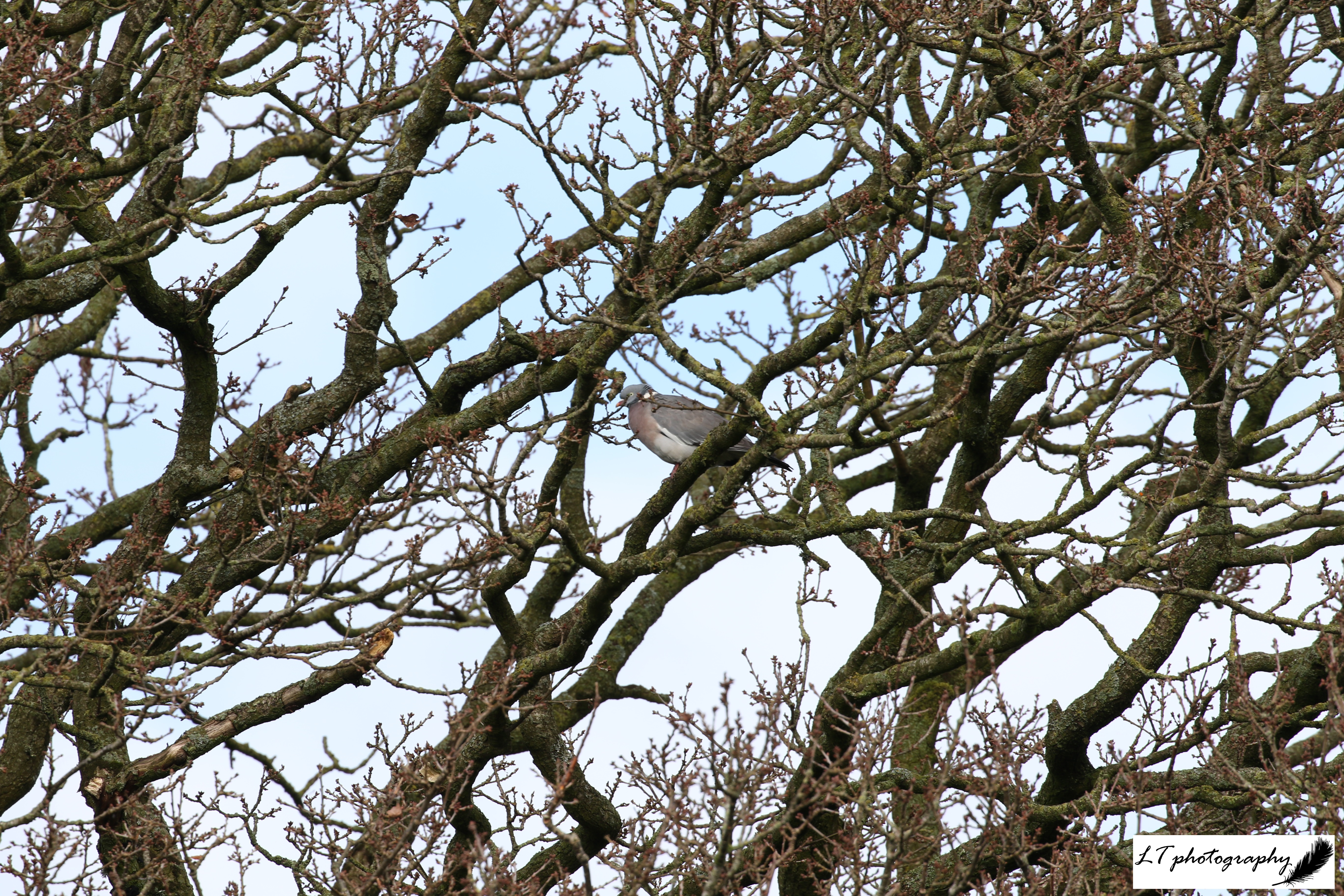
Woodpigeon (Columba palumbus)

  • Length: 38 – 43cm
  • Weight: 325 – 620g
  • Colour: Grey-blue head and back, pinky-red belly, large white patch on neck, sides of neck iridescent purple and green, white wing patches and pink legs. Young are pale with no neck patch.
  • What To Feed: Only British herbivorous bird. Feed seeds on a bird table, ground feeder or the ground
  • Breeding Season: February to November
  • Nest: Simple platform constructed from sticks in trees, shrubs, vegetation or ledges
  • UK Conservation Status: Amber

How to… Identify Signs of Spring in Britain

This year the Spring Equinox occurred on the 20th March, marking the point when the sun sat directly over the Earth’s equator heading northward, alongside the start of a new season, in our case spring. With spring comes longer day lengths, milder temperatures, regrowth, new beginnings, and the literal ‘springing’ of plants from the ground. After tough winters and a period of dormancy for nature, the sights of spring understandably lift spirits and create hope and joy.

As we look ahead to spring and what it means to us all, people will also be looking for the first signs of its arrival to tell them the season is upon us. With an increase in activity within nature, these signs can differ for different people, with examples including the first snowdrops, mammals coming out of hibernation, or even birds such as Rooks beginning to nest. For Emma, my Rural vs Urban blog series co-writer (check it out!), her first signs of spring in Manchester are as follows:

Signs of spring in Manchester, as typed from the tram on a lovely spring day: sunshine reflected off the sides of the glass buildings, daffodils and crocuses bravely making an appearance on the grass banks, seeing the first few Manchester bees buzzing about, thinking that it’s warm enough to leave the house without a coat then realising you made a mistake when it pours down with rain later in the day, and sitting outside at the pub!

Though we may all have our own personal favourites, there are some popular first signs of spring that can easily be looked for in anyone’s local area across Britain. Why not try to find them all yourself?

1. Hazel Catkins

  • Hazel is one of the first of our native species to flower at the start of the year, bringing real colour and joy to the still wintery landscape
  • Latin Name: Corylus avellana
  • Name: Catkin refers to long cylindrical clusters of small flowers
  • When to See: January to April
  • Where to See: Woodlands, scrub areas and hedgerows
  • Identifying Features: Lemon-yellow with pollen when open, and shaped like a lambstail, hanging in clusters from hazel branches
  • Range: Widespread throughout Britain

2. Yellow Flowers

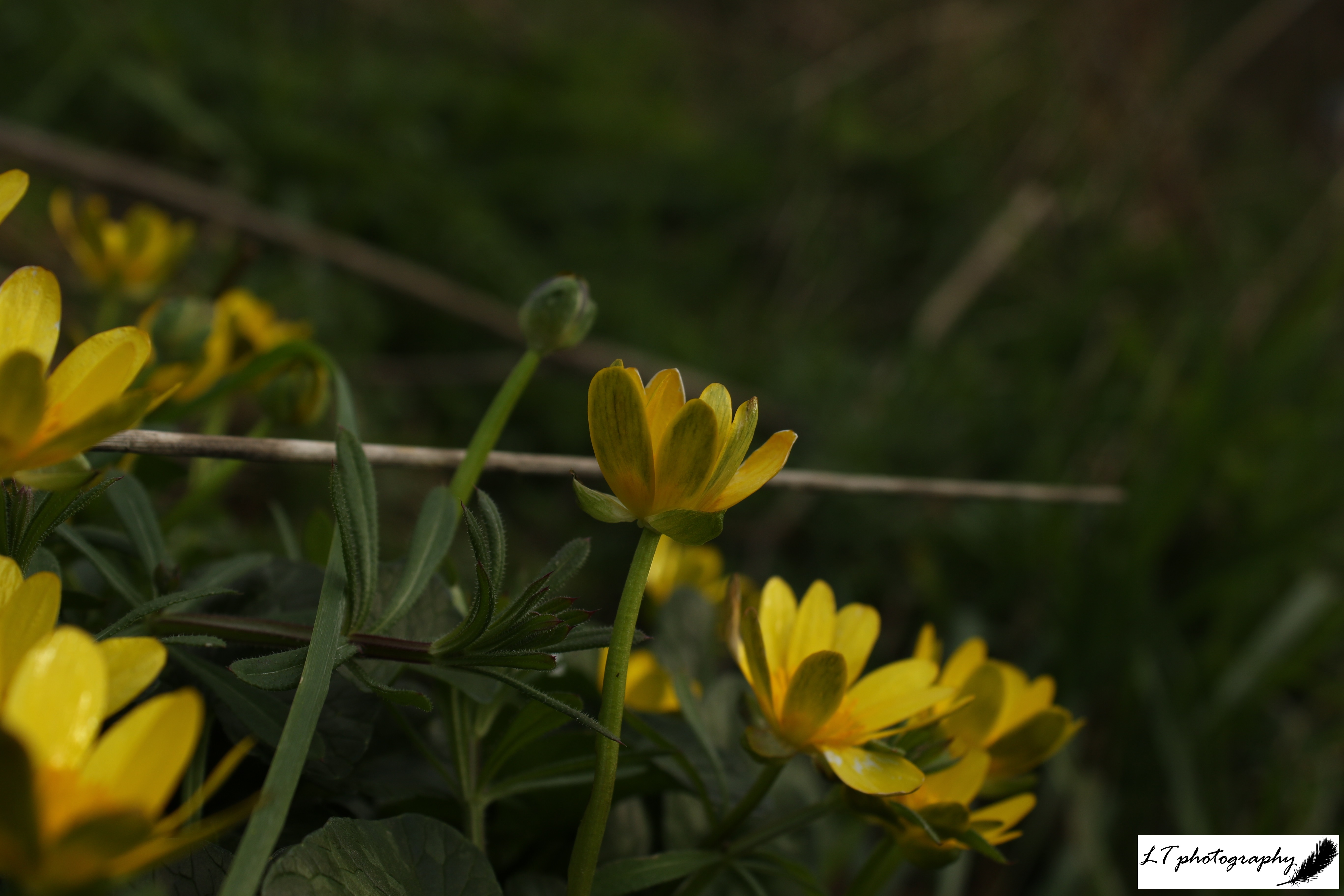
  • After a cold and grey winter, nothing raises the spirit like the blooming of sunshine yellow flowers in the landscape, a symbol of rebirth and new beginnings
  • Most Popular: Daffodils (Narcissus spp,); lesser celandines (Ficaria verna); primroses (Primula vulgaris); cowslips (Primula veris)
  • When to See: Daffodils= February to May; celandines= March to May; primroses= February to May; cowslips= April to May
  • Where to See: Daffodils= gardens, parks and woodlands; celandines= woodland, grassland and gardens; primroses= woodland, hedgerows, and gardens; cowslips= grassland, woodland and hedgerows
  • Identifying Features: Daffodils= inner trumpet shape with a crown of petals; celandines= shiny yellow stars; primroses= rosettes of pale petals with darker centres; cowslips= bell-shaped within a green casing

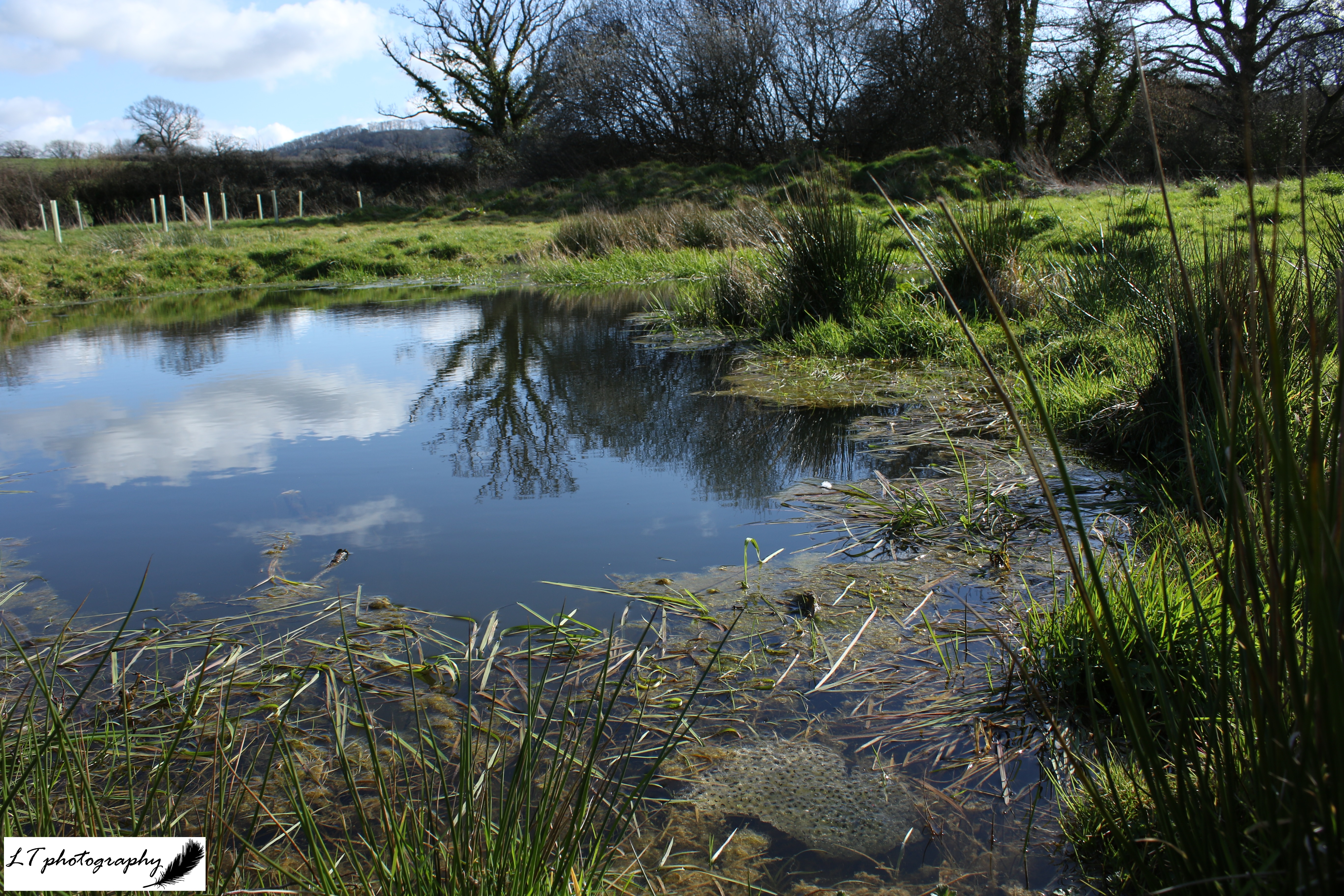
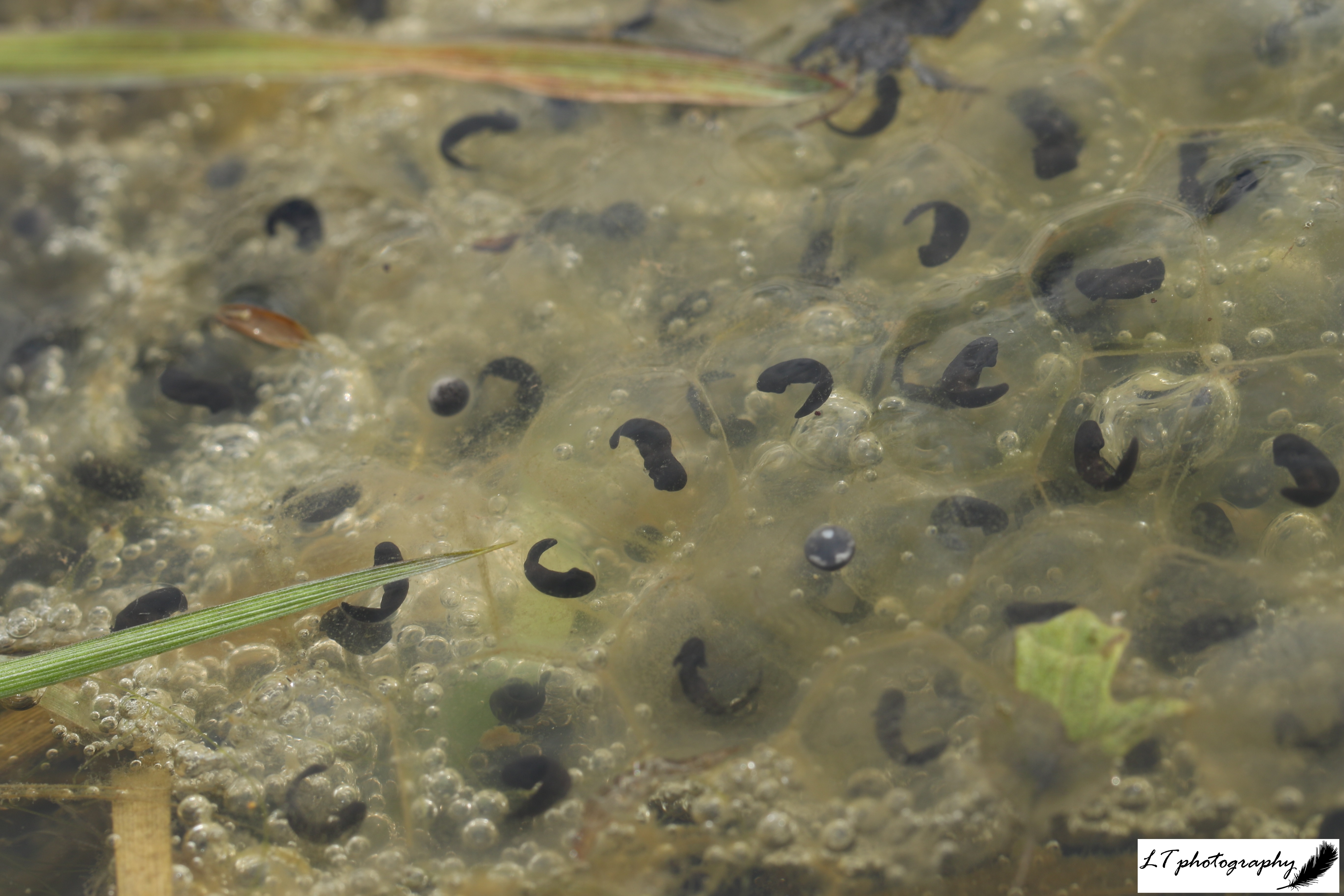
3. Frogspawn

  • A symbol of spring that captures the imagination from a young age with its strange and sudden appearance early each spring
  • What is it?: The eggs are most commonly laid by the common frog (Rana temporaria)
  • When to See: Mainly February to March
  • Where to See: Just below the surface of ponds and streams
  • Identifying Features: Floating clumps of jelly that are made up of lots of small jelly eggs with a black dot or developing tadpole at their centres
  • Range: Widespread across Britain but more likely to be seen in certain areas

4. Buzzing Bees

  • The sound of queen bees buzzing lazily around in warm sunshine is a real sound of spring, symbolising new life to come
  • Examples: Buff-tailed bumblebee (Bombus terrestris); red-tailed bumblebee (Bombus lapidarius); tree bumblebee (Bombus hypnorum); white-tailed bumblebee (Bombus lucorum)
  • When to See: Buff-tailed= February to October; red-tailed= mainly March to August; tree= mainly March to July; white-tailed= March to October
  • Where to See: All can be seen in a wide range of habitats from woodland and farmland to gardens and heathland
  • Identifying Features: Buff-tailed= yellow collar near head and another on abdomen with queens having buff ‘tails’ and workers white with buff line above; red-tailed= black with red ‘tails’ with males having two yellow bands on thorax and one at base of abdomen; tree= ginger-brown thorax and black abdomen with white tail; white-tailed= black with two lemon-yellow bands on body and white ‘tail’

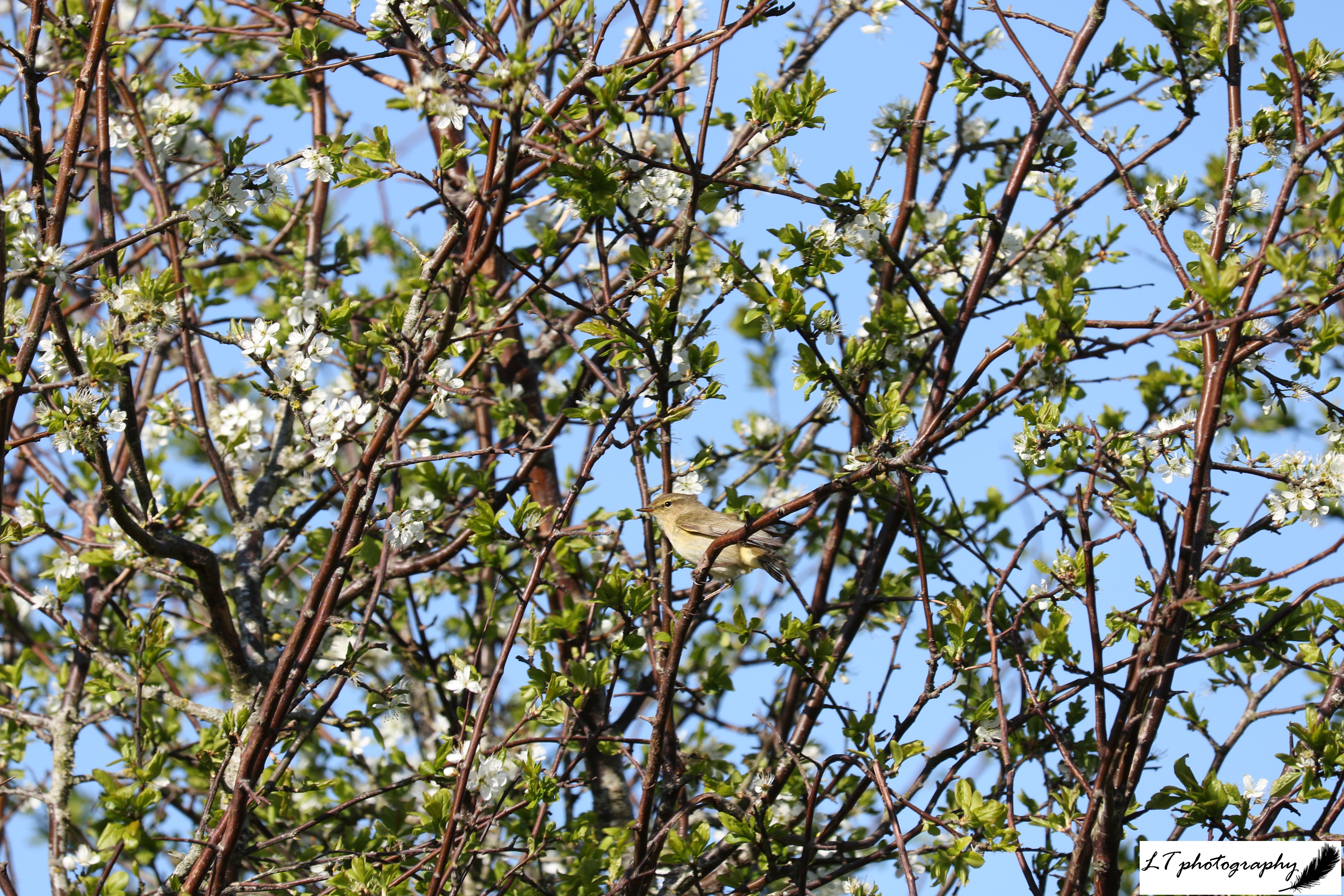
5. Chiffchaff

  • This tiny little bird is one of the earliest birds to arrive from warmer winter climes, and sing its heart out, heralding the start of spring
  • Latin Name: Phylloscopus collybita
  • Name: Named after its distinctive ‘chiff chaff chiff chaff’ song
  • When to See: Some winter in the UK, but can be heard singing from March to October when migrants return
  • Where to See: Woodland, scrubland, parks and gardens
  • Identifying Features: Green or dusky olive; short pale eye stripe; moderately dark eye stripe; dark legs; fine often dark bill; continuous tail-flicking movement; distinctive song
  • Range: Widespread across Britain, apart from more mountainous areas of Scotland

6. Pussy Willow

  • Emerging early on in the year, pussy willow is a real symbol of the beginnings of spring, and is often used as decorations at Easter
  • Latin Name: Salix caprea but also could refer to Salix cinerea
  • Name: Pussy willow is a colloquial name for goat willow, but is now often used for grey willow too. This is due to their furry male catkins looking like the soft, furry paws of a cat
  • When to See: February to April
  • Where to See: Woodland, hedgerows, scrub and damper, more open ground
  • Identifying Features: The more noticeable male flowers are the silver-grey, fluffy, and oval catkins standing upright from willow branches. They turn yellow when covered with pollen
  • Range: Widespread across Britain

7. Brimstone Butterfly

  • Though warmer, milder weather leads to the emerging of different butterfly species, the first brimstone butterfly is often the first species seen and its warm colour has connotations of sunshine and cheerfulness
  • Latin Name: Gonepteryx rhamni
  • Name: Brimstone is the old name for sulphur, which is the colour of the male butterfly’s wings
  • When to See: March onwards
  • Where to See: Can be seen in a wide variety of habitats, but the larval foodplants are alder buckthorn and buckthorn which is more scarcely distributed
  • Identifying Features: Veined wings with pale-yellow undersides and an orange dot on each wing. The uppersides are sulphurous yellow on males and paler on females
  • Range: Common in England and Wales, less common in Ireland, and very rare in Scotland

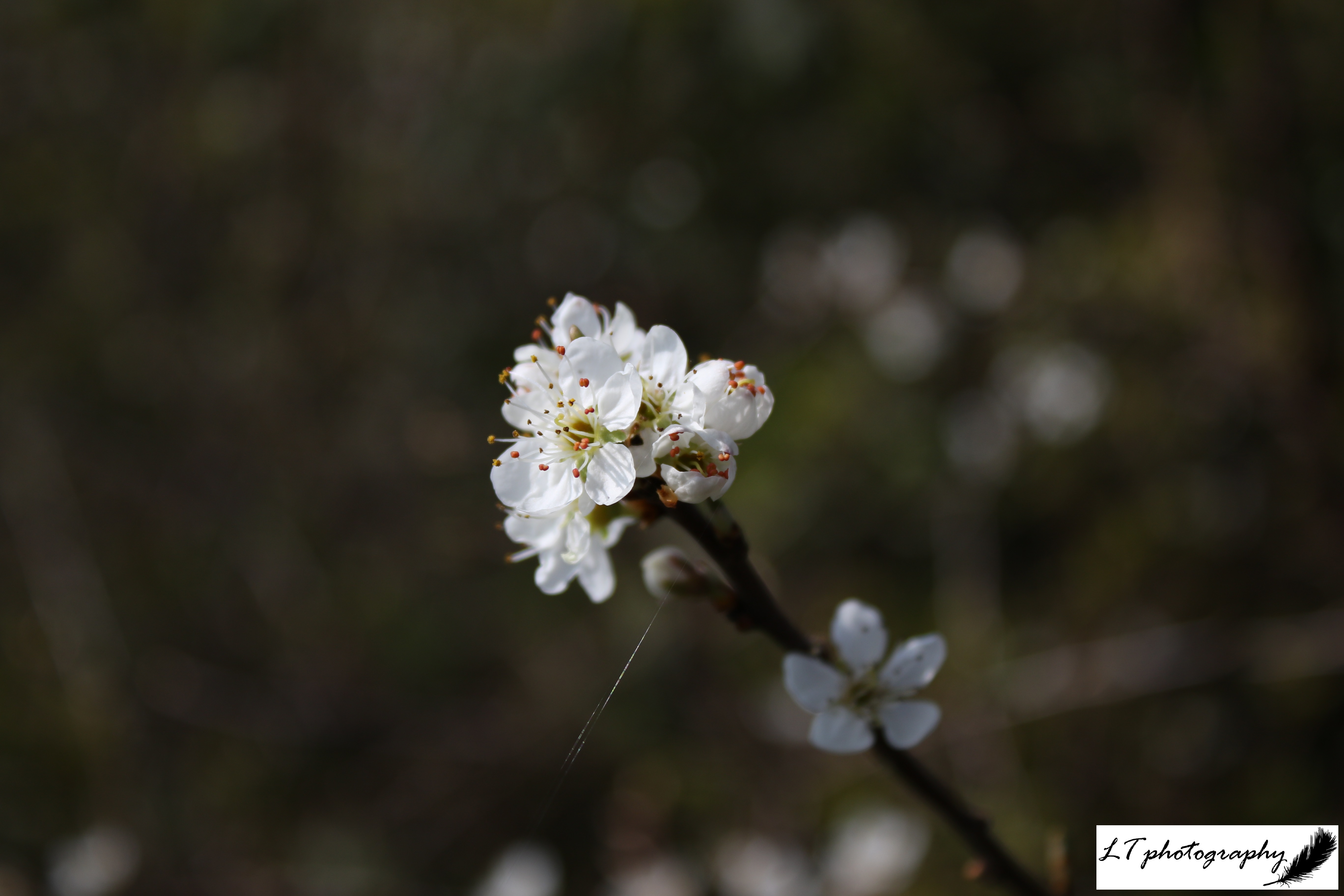
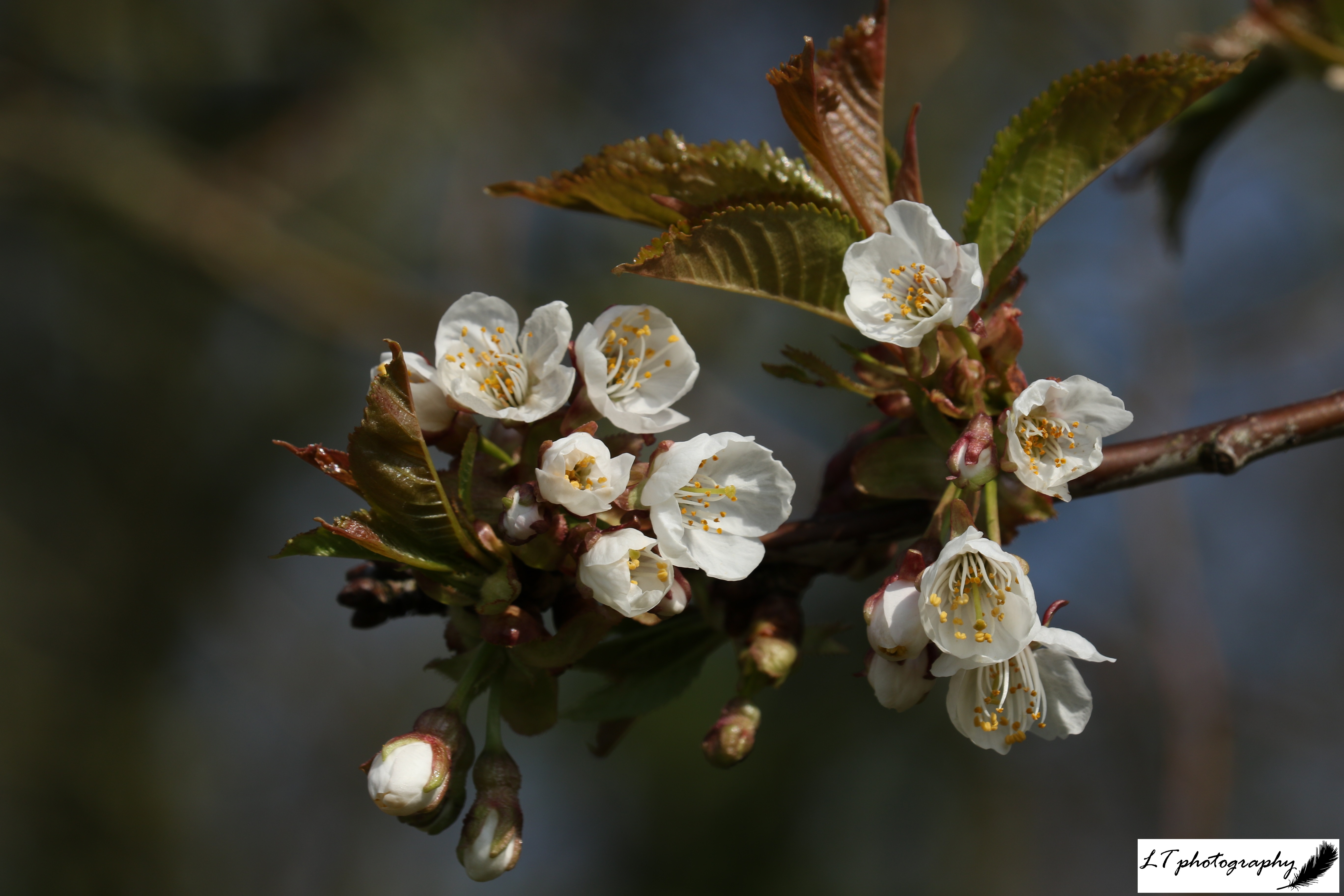
8. Spring Blossom

  • Everyone knows that spring is truly underway when blossom starts to coat trees and hedgerows in spectacular pastel fashion. It is a real spirit lifter after a long winter!
  • Examples: Blackthorn (Prunus spinosa); wild cherry (Prunus avium); hawthorn (Crataegus monogyna)
  • When to See: Blackthorn= March to April; wild cherry= April to May; hawthorn= April to June
  • Where to See: Blackthorn= hedgerows, woodland margins and scrubland; wild cherry= woodlands, gardens and hedgerows; hawthorn= hedgerows, woodland margins and scrubland
  • Identifying Features: Blackthorn= flowers white with 5 petals and red-tipped anthers; wild cherry= white flowers cup-shaped and with 5 petals; hawthorn= white flowers with 5 petals, pink or purple anthers and sickly sweet scent

9. Barn Swallow

  • This iconic bird makes a 6000 mile migration from Africa to breed in the UK, arriving with warmer weather and active exploration of potential nest sites
  • Latin Name: Hirundo rustica
  • Name: Barn comes from typically nesting in barns and out-houses, and the latin Hirundo means swallow
  • When to See: March to October
  • Where to See: Open country, perching on wires, and hunting low over grassland or water
  • Identifying Features: Blue-black; red forehead and throat; dark throat; long, pointed wings; deeply forked tail; agile flight
  • Range: Widespread across Britain

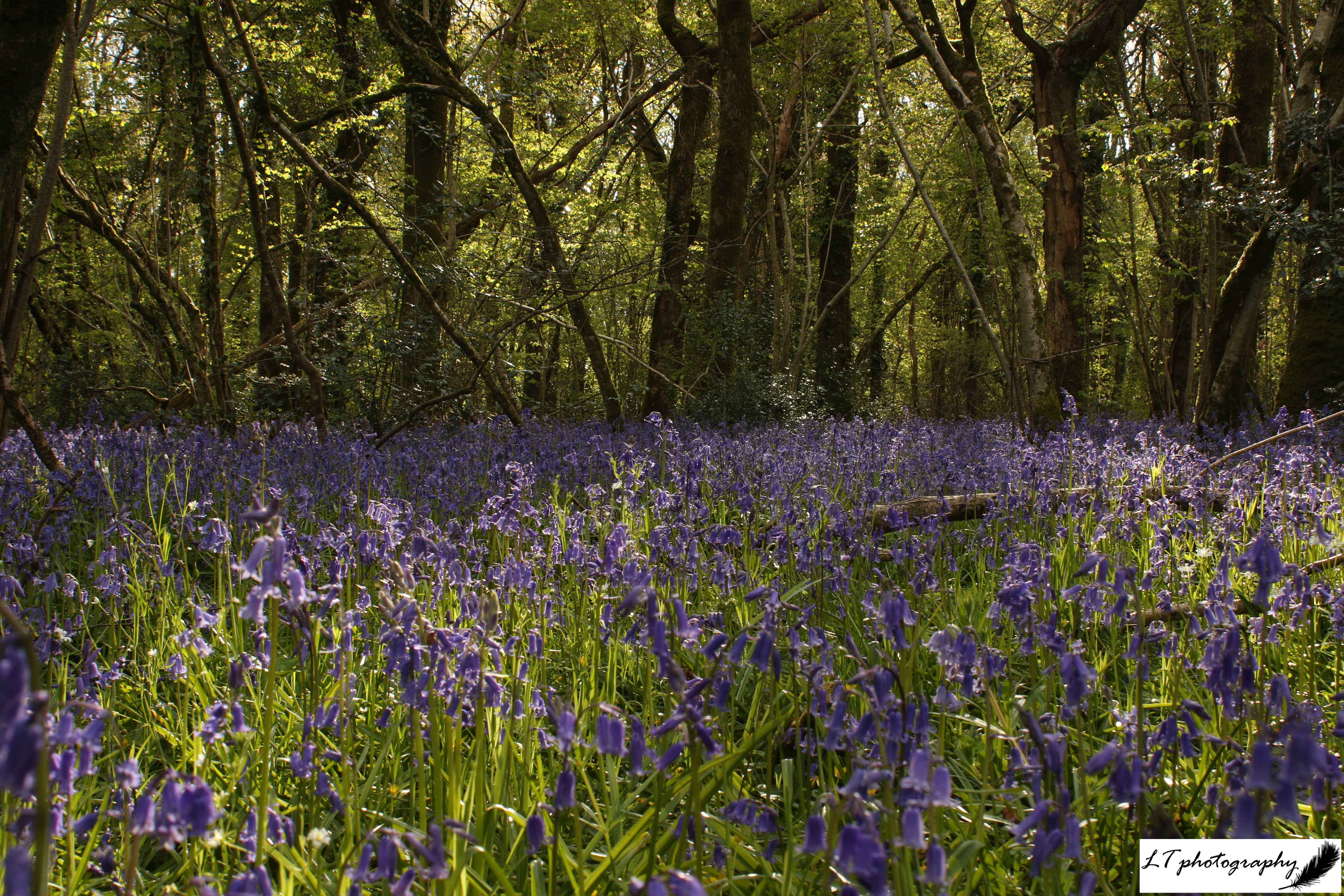
10. Common Bluebell

  • Over half of the world’s population of bluebells can be found in the UK, making for some incredible spring spectacles across Britain
  • Latin Name: Hyacinthoides non-scriptus
  • Name: Named for their distinctive flowers
  • When to See: March to June
  • Where to See: Carpeting woodlands, hedgerows, scrubland, on sea-cliffs and mountains
  • Identifying Features: Long, narrow green leaves; purple-blue bell-shaped flowers hanging from long stems; strong sweet scent
  • Range: Widespread across Britain

How to… Identify UK Butterfly Species

A flash of colour flitting by in the heat of the summer sun. Twisting this way and that, showing off amazing aerial acrobatics above a meadow of long, waving grass. A butterfly, small but standing out against a backdrop of browns, yellows, reds, blues and whites. Floating like a leaf down to a flower, the butterfly stops, flicking its wings before coming to a stop, wings outstretched in the sunshine. What could this beauty be?

Butterflies come in all shapes, sizes and colours, and can be found in a variety of habitats, from big cities to more remote areas. They are also a popular cultural symbol across the globe, with symbolism ranging from rebirth and transformation to representing the human soul. Along with their long history of capturing the mind and imagination of people, in nature, butterflies are great indicators of the health of habitats and are an important part of the food chain. As is the common story right now, butterflies are unfortunately threatened by habitat loss and degradation, as well as climate change, pesticide use, and invasive species. They need our help!

To be able to help butterflies, we need to understand them better. In the UK, we have 59 species, with only 2 being migrants. Though butterflies are more noticeable for people to identify, most Brits can only name but a handful of species. As we ease into summer, now is a great time to brush up your knowledge of what species you can identify. Here’s 13 to get you started!

Butterflies

Brimstone (Gonepteryx rhamni)

  • Family: White and Yellow butterflies
  • Size: Large (60-74mm wide)
  • Butterfly appearance: Look like veined-leaves with pale-yellow undersides and an orange dot on each wing. Uppersides: Males= sulphurous yellow; Female= paler in colour
  • Caterpillar food plants: Buckthorn and Alder Buckthorn
  • On the wing: Can be seen throughout the year, but most commonly during spring
  • Winter: Hibernate as adults in wooded areas
  • Distribution: Common in England and Wales, less common in Ireland, and very rare in Scotland

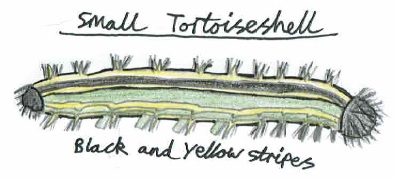
Small Tortoiseshell (Aglais urticae)

  • Family: Brush-footed butterflies
  • Size: Medium (45-60mm wide)
  • Butterfly appearance: Bright orange wings with a black pattern, white patch close to each outer top edge, and a border of blue half-moons. Underside dark and light brown
  • Caterpillar food plants: Nettles
  • On the wing: March-October
  • Winter: Hibernate as adults in sites, such as tree hollows and sheds
  • Distribution: Widespread throughout Britain

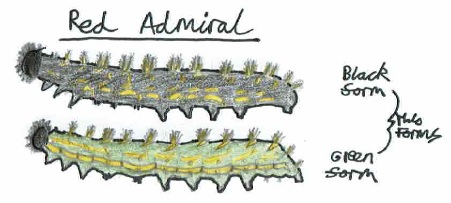
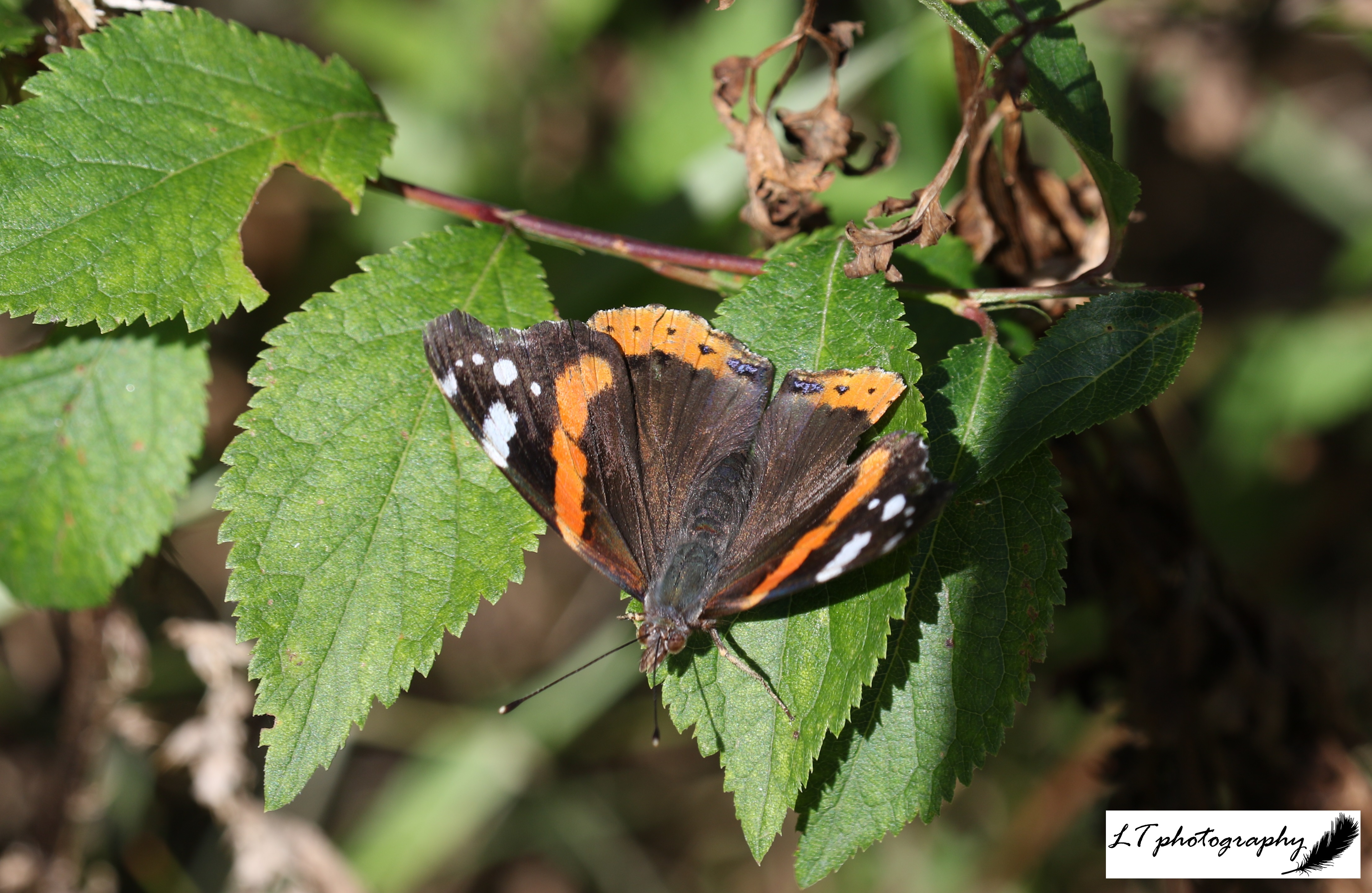
Red Admiral (Vanessa atalanta)

  • Family: Brush-footed butterflies
  • Size: Large (64-78mm wide)
  • Butterfly appearance: Black wings with red bands and white markings. Underside is similar, but paler and more mottled
  • Caterpillar food plants: Nettles
  • On the wing: March-October
  • Winter: Hibernate as adults
  • Distribution: Widespread throughout Britain

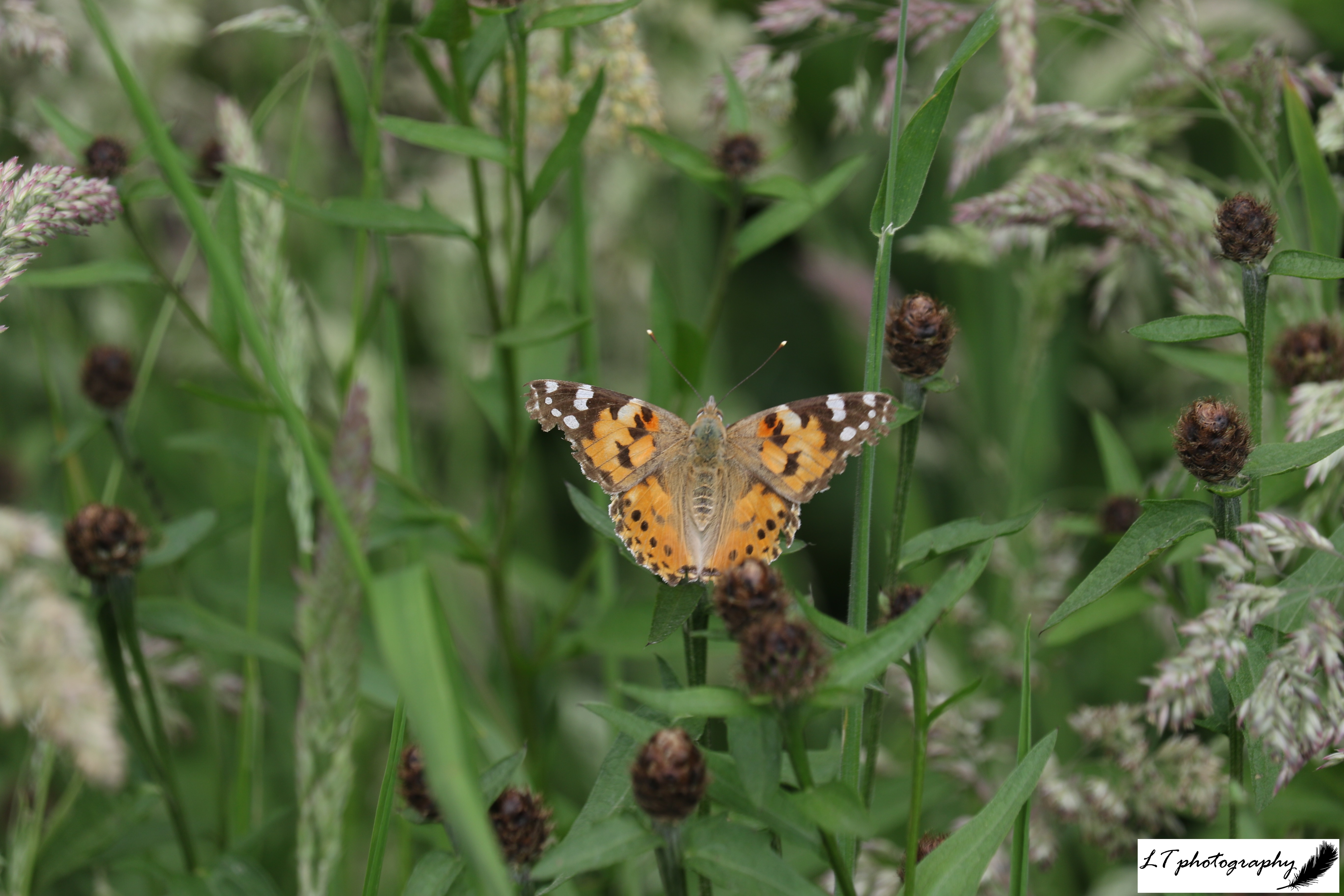
Painted Lady (Vanessa cardui)

  • Family: Brush-footed butterflies
  • Size: Medium/Large (58-74mm)
  • Butterfly appearance: Orange wings with black and white markings. Underside is similar, but paler and more mottled
  • Caterpillar food plants: Thistles and sometimes nettles and mallows
  • On the wing: March-October
  • Winter: Migrate from Africa each spring
  • Distribution: Widespread across Britain

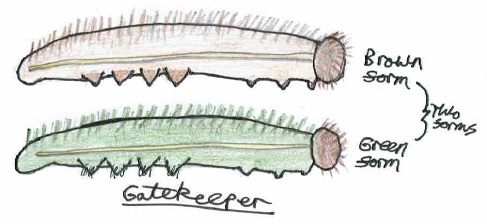
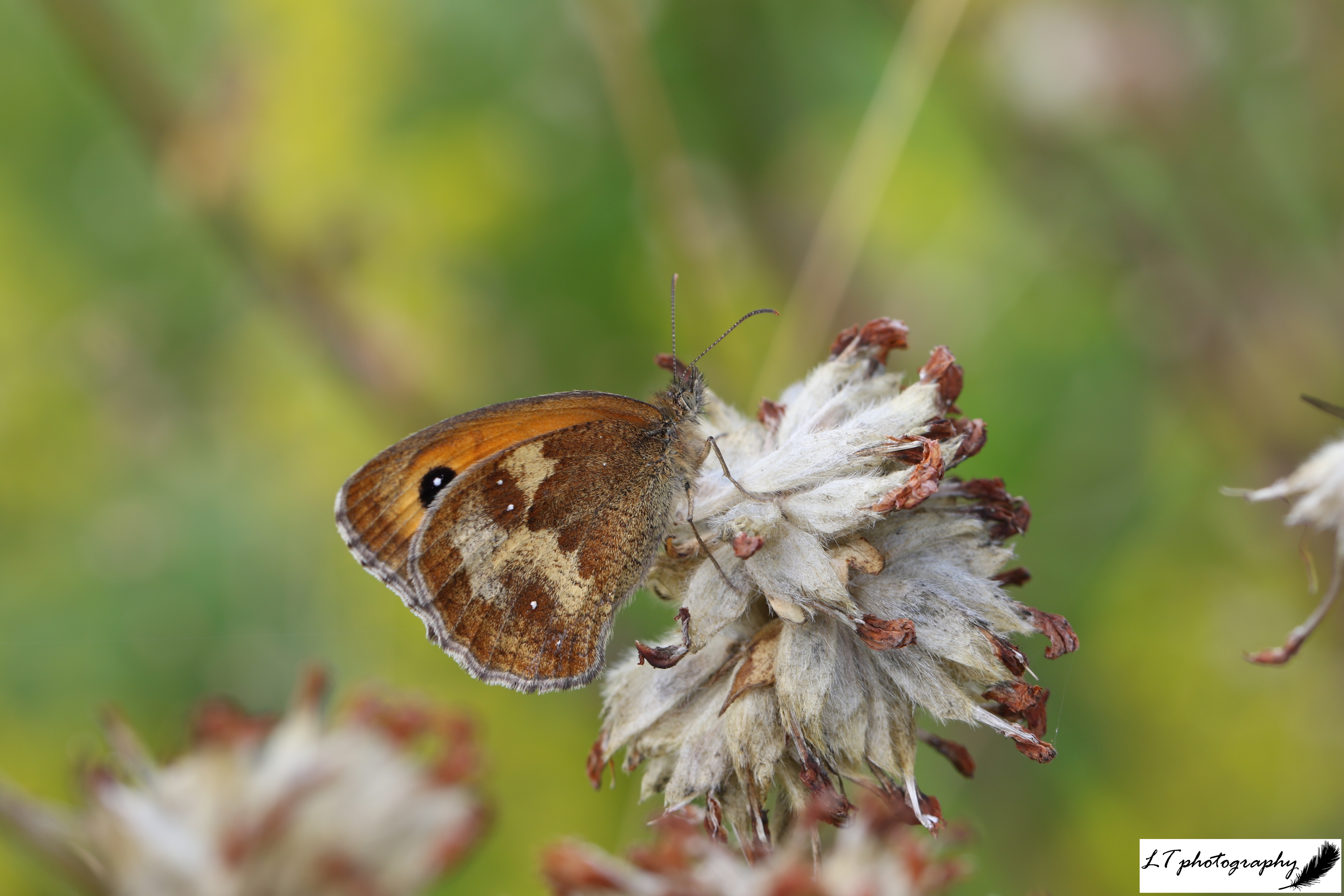
Gatekeeper (Pyronia tithonus)

  • Family: Brush-footed (brown) butterflies
  • Size: Medium (37-48mm wide)
  • Butterfly appearance: Orange and brown wings on top with a black false eye on each wing. Males are smaller and richer in colour than females, with distinct dark band across the forewing. Underside of the forewing is largely orange and the hindwing yellow and brown
  • Caterpillar food plants: Fine grasses, such as fescues
  • On the wing: June-September
  • Winter: Hibernate as caterpillars
  • Distribution: Most common in southern and central England and Wales

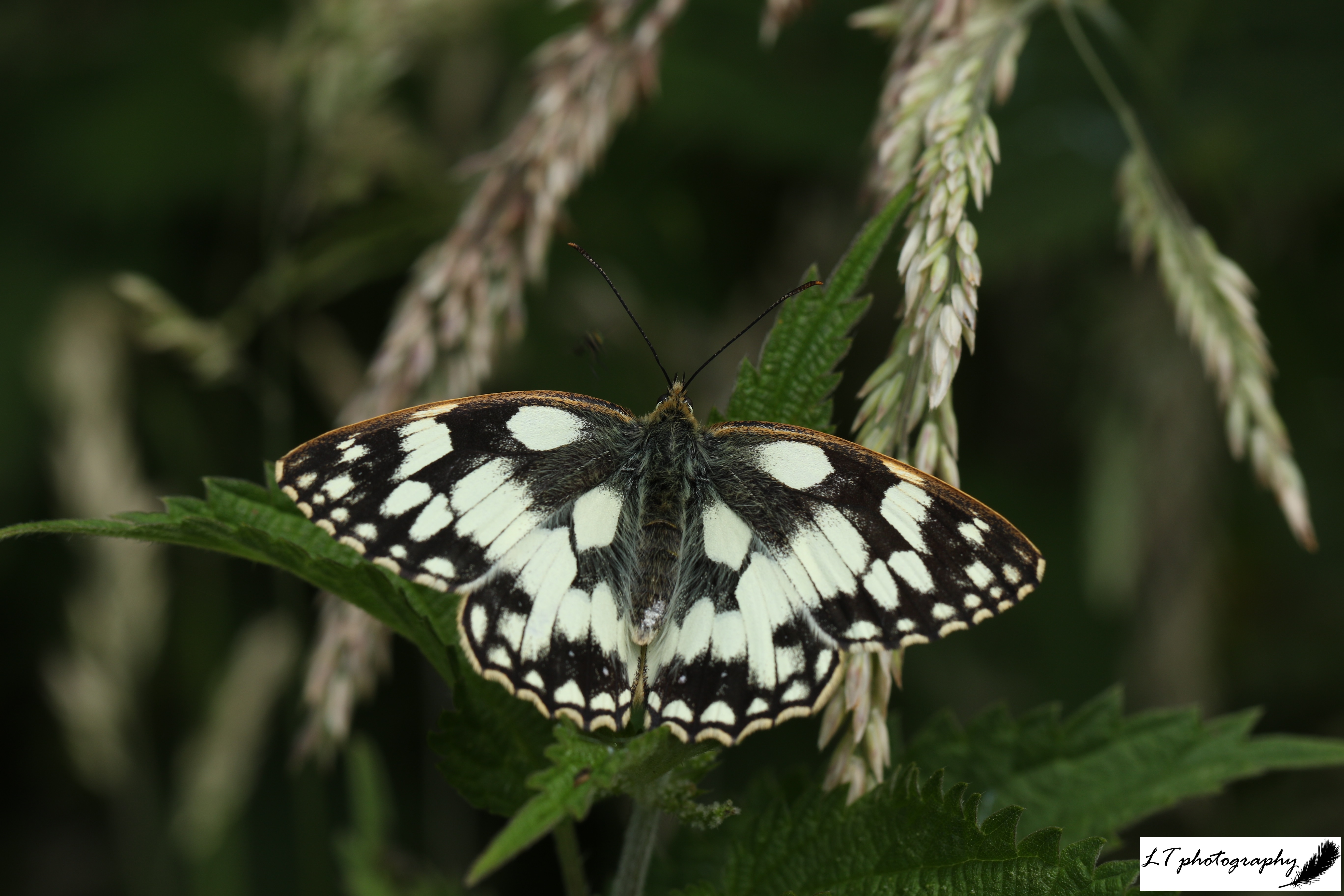
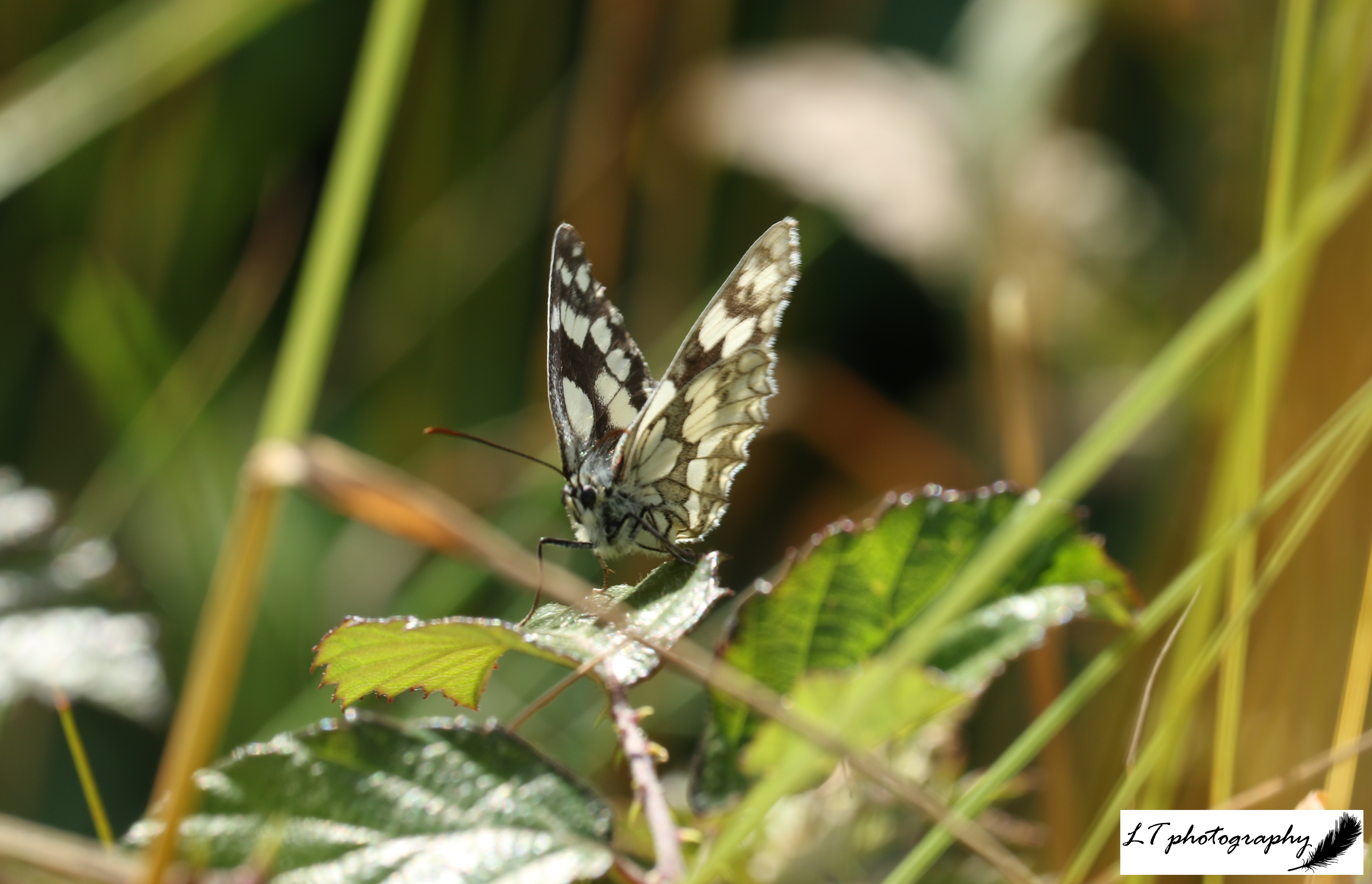
Marbled White (Melanargia galathea)

  • Family: Brush-footed (brown) butterflies
  • Size: Medium (53-58mm wide)
  • Butterfly appearance: Distinctive black and white chequered wings that vary in pattern between individuals. Undersidesnot so brightly marked with eye-spots and grey or yellowish bands
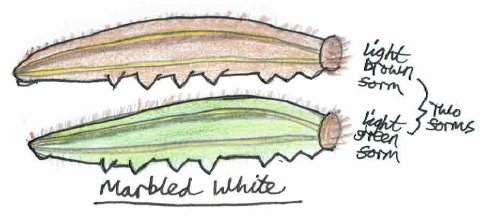
  • Caterpillar food plants: Grasses, such as red fescue and sheep’s-fescue
  • On the wing: June-August
  • Winter: Hibernate as caterpillars
  • Distribution: Southern and central England and Wales

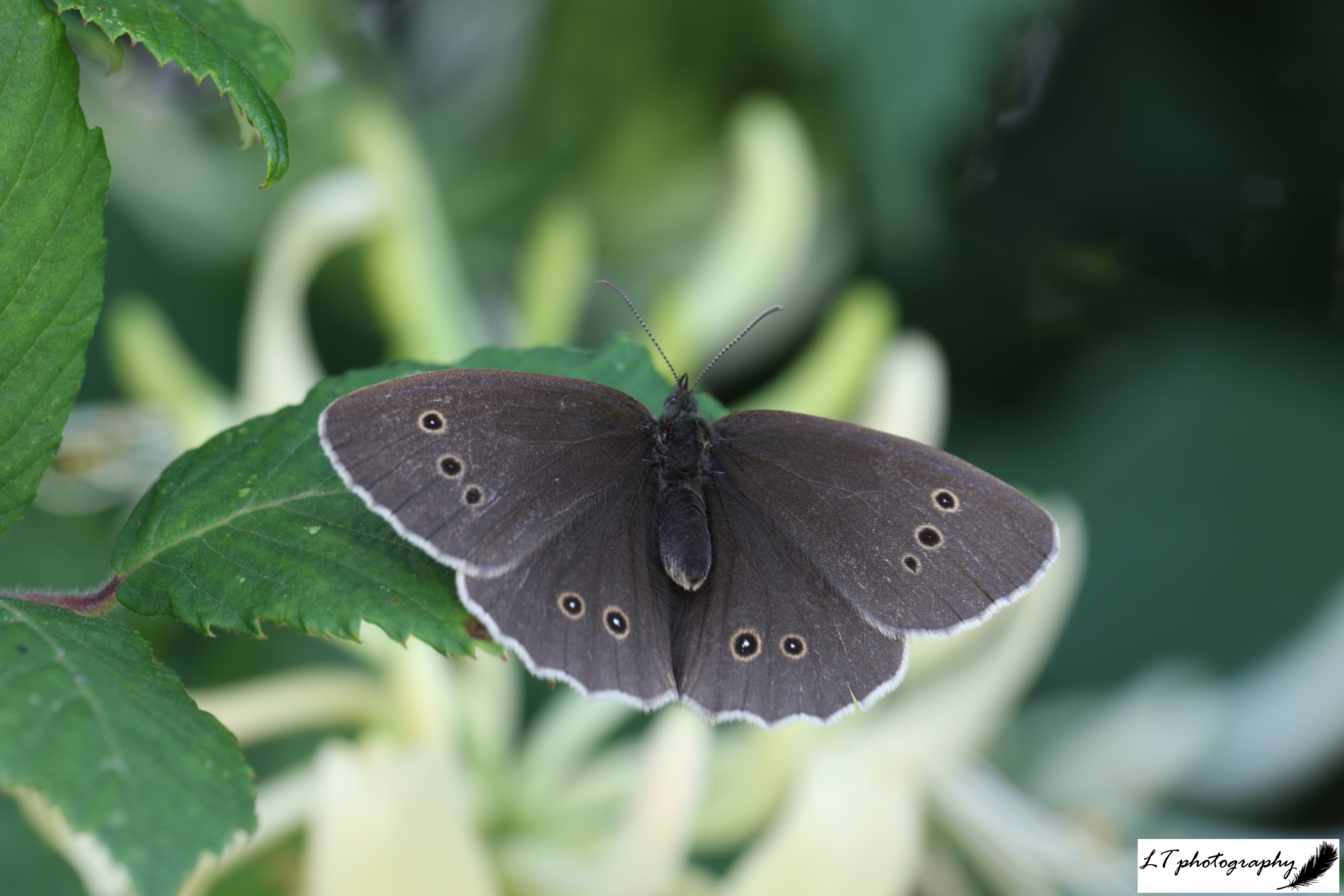
Ringlet (Aphantopus hyperantus)

  • Family: Brush-footed (brown) butterflies
  • Size: Medium (42-52mm wide)
  • Butterfly appearance: Begin velvety with deep blackish brown wings bordered by white. Iconic rings on wings vary in number, size and shape. Females larger with more pronounced markings
  • Caterpillar food plants: Various grasses including cock’s-foot and tufted hair-grass
  • On the wing: June-August
  • Winter: Hibernate as caterpillars
  • Distribution: Everywhere apart from northern Scotland

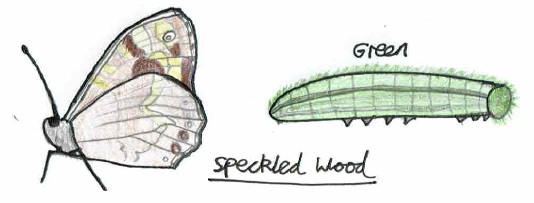
Speckled Wood (Pararge aegeria)

  • Family: Brush-footed (brown) butterflies
  • Size: Medium (46-56mm wide)
  • Butterfly appearance: Dark brown with cream spots, though the female’s are larger. Forewings have a false eye and hindwings have three false eyes. Undersides mottled brown
  • Caterpillar food plants: Various grasses including false brome, cock’s-foot, Yorkshire fog, and common couch
  • On the wing: March-October
  • Winter: Hibernate as caterpillars or a chrysalis
  • Distribution: Throughout England (except the far north), Wales and Ireland, and in northern Scotland

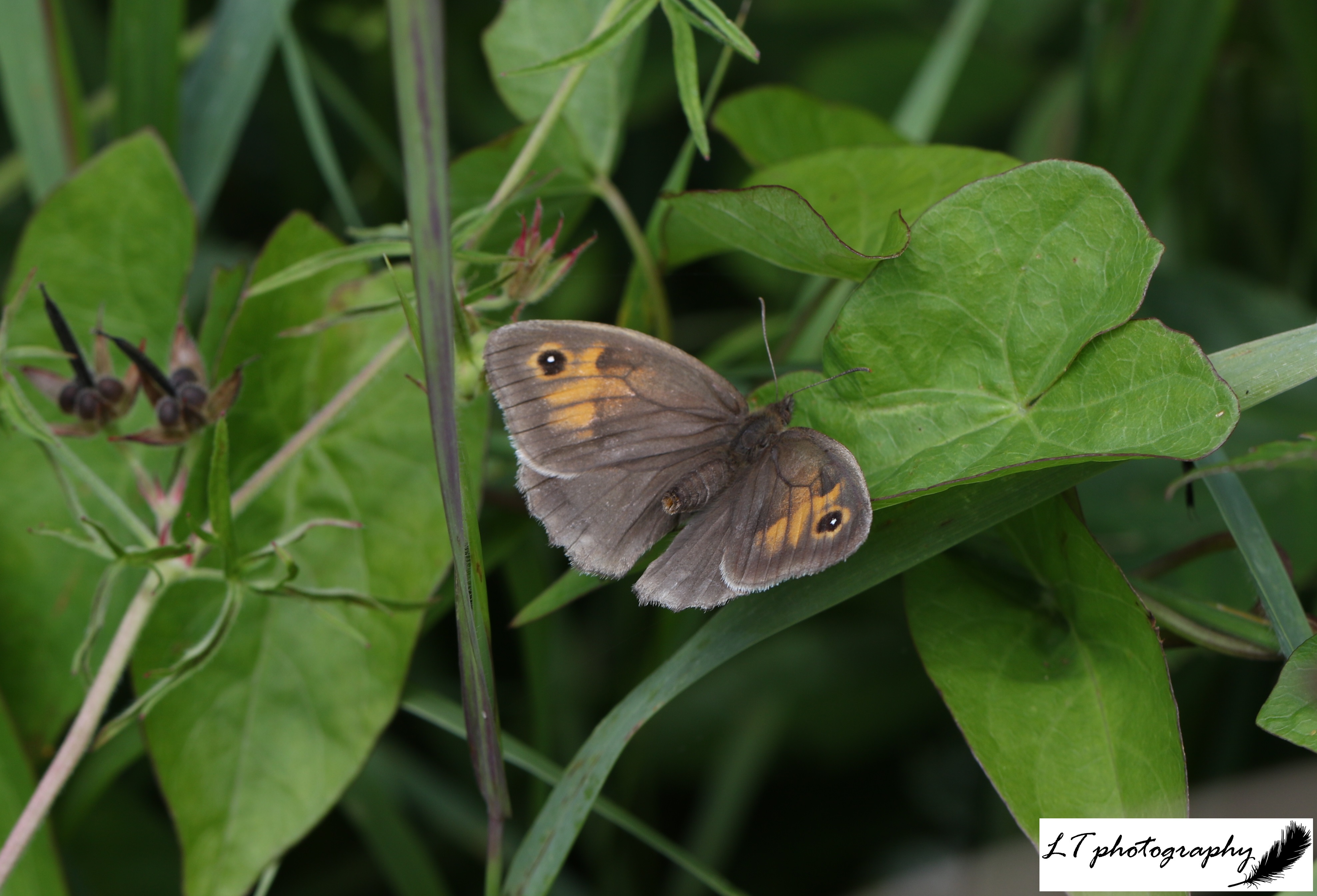
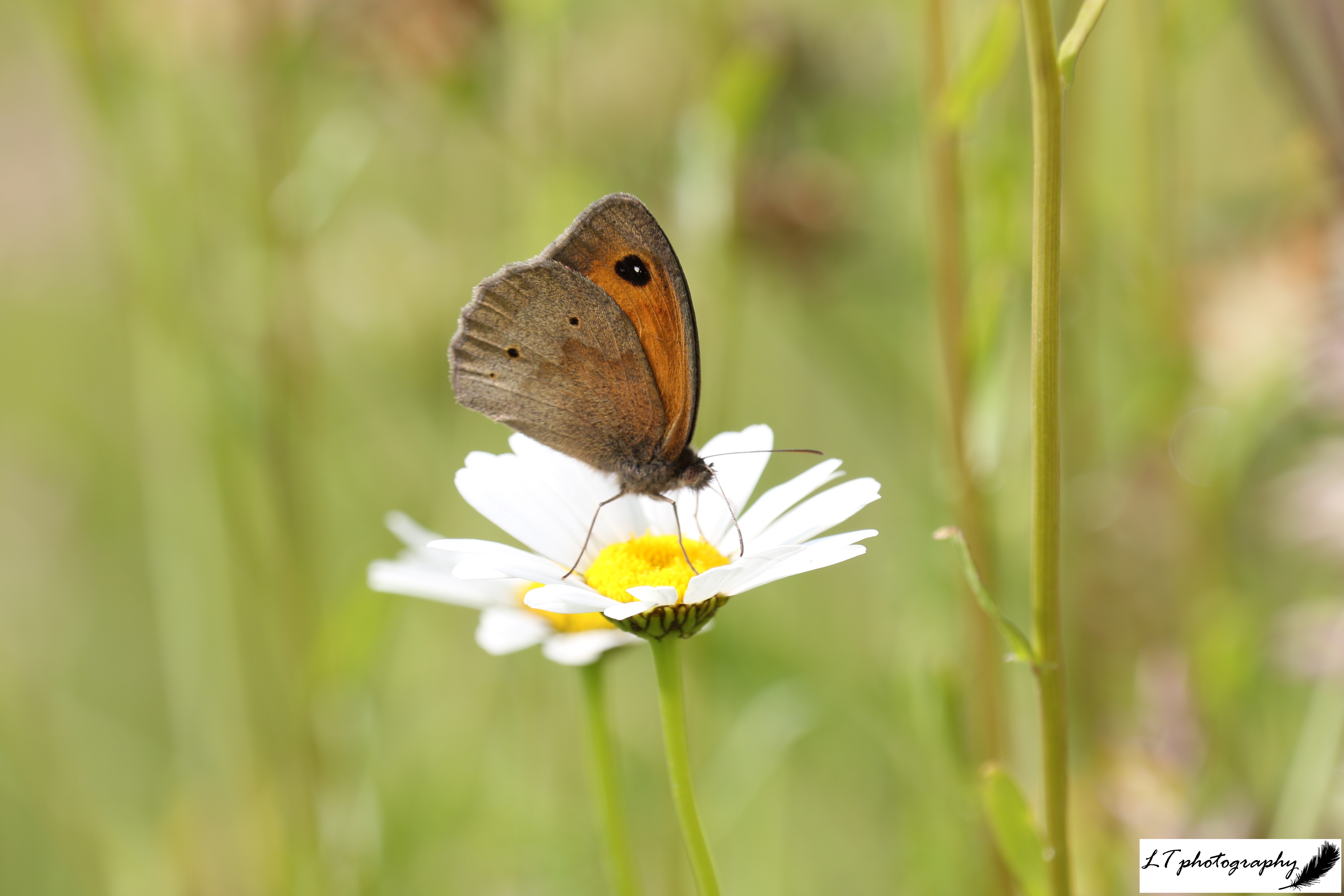
Meadow Brown (Maniola jurtina)

  • Family: Brush-footed (brown) butterflies
  • Size: Medium (40-60mm wide)
  • Butterfly appearance: Male= dark brown with dark scent patch on forewing and faint orange smudge; Female= lighter brown with more orange on wings. Underside is largely orange with mottled brown hindwing
  • Caterpillar food plants: Wide range of grasses from fine fescues to coarse cock’s-foot
  • On the wing: May-September
  • Winter: Hibernate as caterpillars
  • Distribution: Widespread across Britain

Comma (Polygonia c-album)

  • Family: Brush-footed butterflies
  • Size: Medium/Large (50-64mm)
  • Butterfly appearance: Orange wings with brown patterns and scalloped edges to wings. Mottled underside with white, comma-like mark on hindwing
  • Caterpillar food plants: Nettle, elm and hop
  • On the wing: Spring after hibernation; Summer brood= June-July; Autumn brood= August-September
  • Winter: Hibernate as adults, camouflaged as a leaf
  • Distribution: Widespread across England and Wales, rare in southern Scotland and Northern Ireland

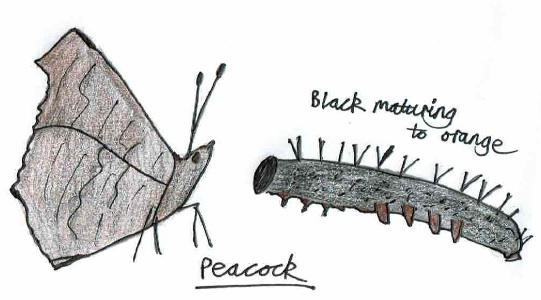
Peacock (Aglais io)

  • Family: Brush-footed butterflies
  • Size: Large (63-75mm wide)
  • Butterfly appearance: Red wings with four large false eyes. Undersides almost black
  • Caterpillar food plants: Nettles
  • On the wing: Spring after hibernation, and June-September
  • Winter: Hibernate as adults in hollow trees and buildings
  • Distribution: Widespread across Britain

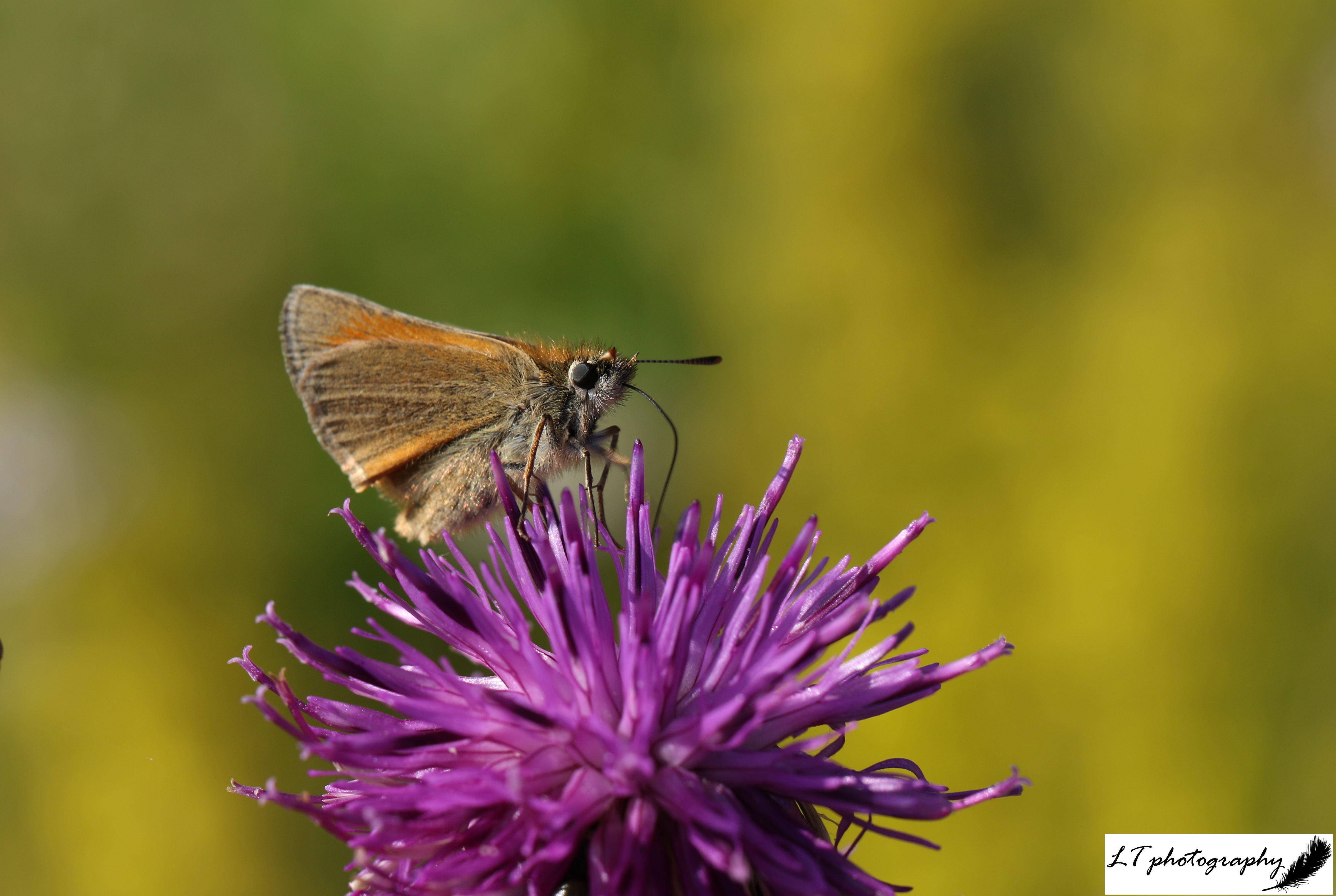
Small Skipper (Thymelicus sylvestris)

  • Family: Skippers
  • Size: Small (25-34mm wide)
  • Butterfly appearance: Orange on top with a black edge, and paler undersides. Male= dark stripe in centre of fore-wing. Antenna tip is orange below
  • Caterpillar food plants: Yorkshire fog and other tall grasses
  • On the wing: June-September
  • Winter: Hibernate as caterpillars
  • Distribution: Widespread up to North Yorkshire and Scottish border

Large Skipper (Ochlodes venatus)

  • Family: Skippers
  • Size: Small (28-36mm wide)
  • Butterfly appearance: Wings rich brown with orange patches, but male has a dark bar in the centre of the forewing. Underside mottled orange
  • Caterpillar food plants: Cock’s-foot and other tall grasses
  • On the wing: May-September
  • Winter: Hibernate as caterpillars
  • Distribution: Throughout England, Wales, and in Dumfries and Galloway

How to… Identify British Tree Species (Part 2)

A holly.tree shining bright with red berries and prickly green leaves in the grey of a wintertime woodland. An ancient evergreen yew standing watch over the final resting place of our ancestors. A colour-changing spindle cream flowered and glossy green in spring, turning to psychedelic pinks and oranges in autumn. Trees come in all shapes and sizes, often differing wildly from each other, but all can be found embedded in the landscape and culture of Britain.

In the last chapter of my How to… Identify British Tree Species guide, I focussed on 10 tree species that can easily be found across the UK, from the majestic oak to the graceful silver birch. These are but a few of the now 80 odd native and non-native species that can be found in the UK. From providing food to flood prevention, from the countryside to the city, trees can be found playing important roles across the country right now.

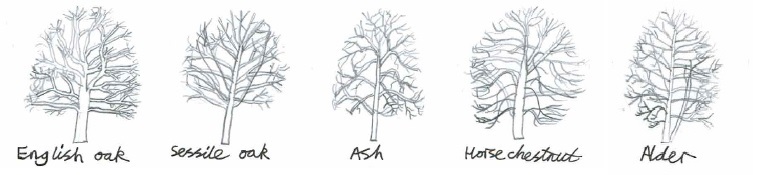
Following on from my last guide, part 2 covers 10 more tree species that can easily be found across Britain. This handy guide of facts, drawings, and photos is here to help you to identify these species at any time of year. Here’s to learning something new everyday!

Tree Species

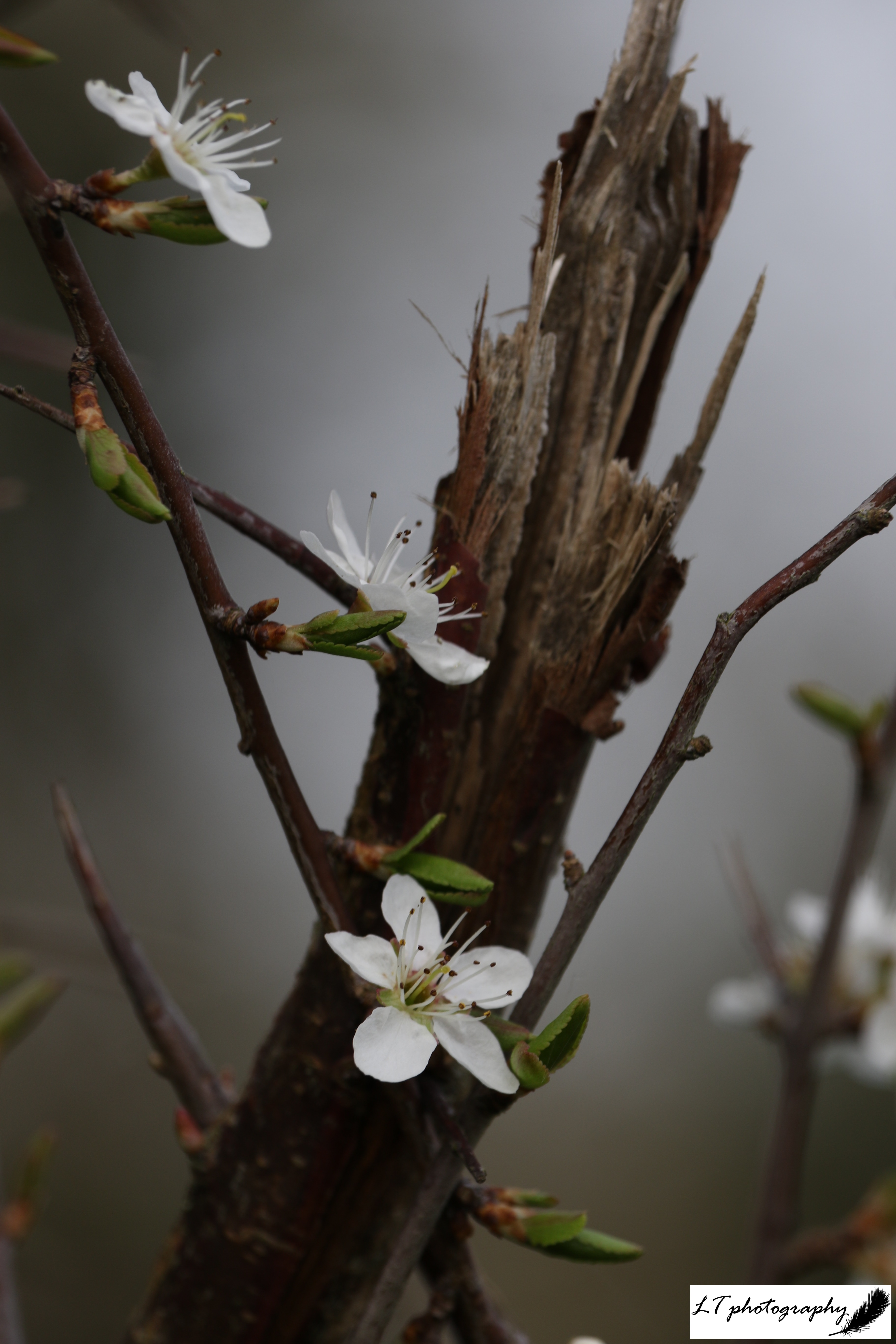
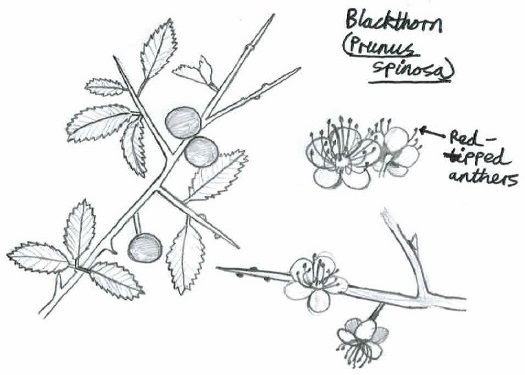
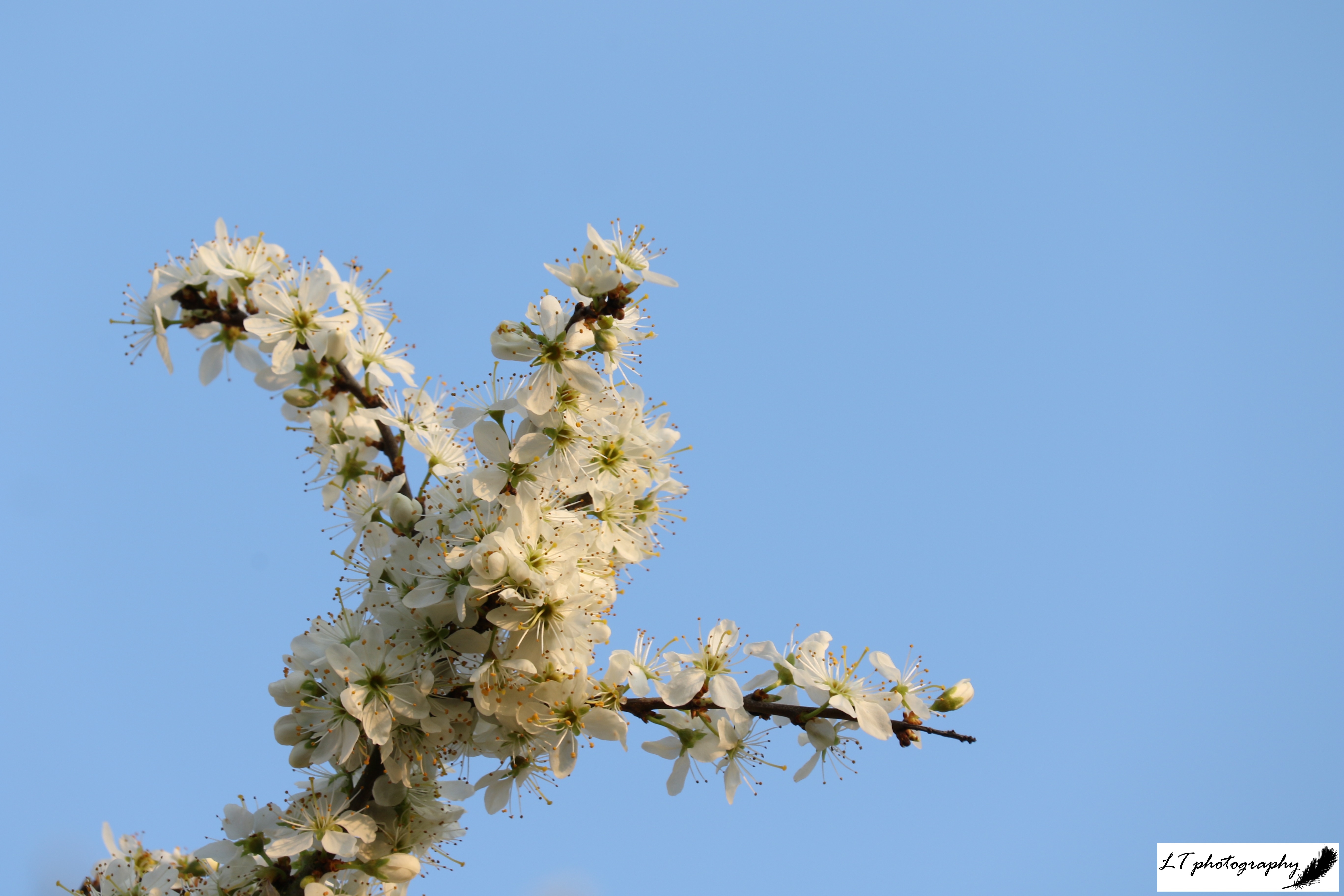
Blackthorn (Prunus spinosa)

  • Family: Rose – related to fruiting trees such as cherry and plum
  • Origin: Native
  • Shape and Size: Large shrub, occasionally small tree, up to 4m, forming impenetrable thickets
  • Stems and Twigs: Young twigs downy, maturing to dark brown bark, that shows orange beneath, with thorns
  • Leaves: Small, oval, alternate, tapering to a point, toothed margins, dull above and hairy beneath
  • Flowers: Flowers are white with 5 petals and red-tipped anthers. Flowers appear late March-April, before the leaves, often alongside cold weather known as Blackthorn winter
  • Seeds: Produces round, blue-black fruit (sloes) with a single seed (stone)
  • Range and Habitat: Grows on the edge of scrub woodlands and in hedgerows

In Winter: Twigs are dark and not shiny, with thorns at least 2cm long

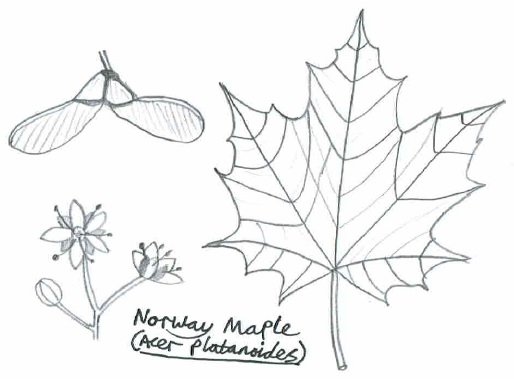
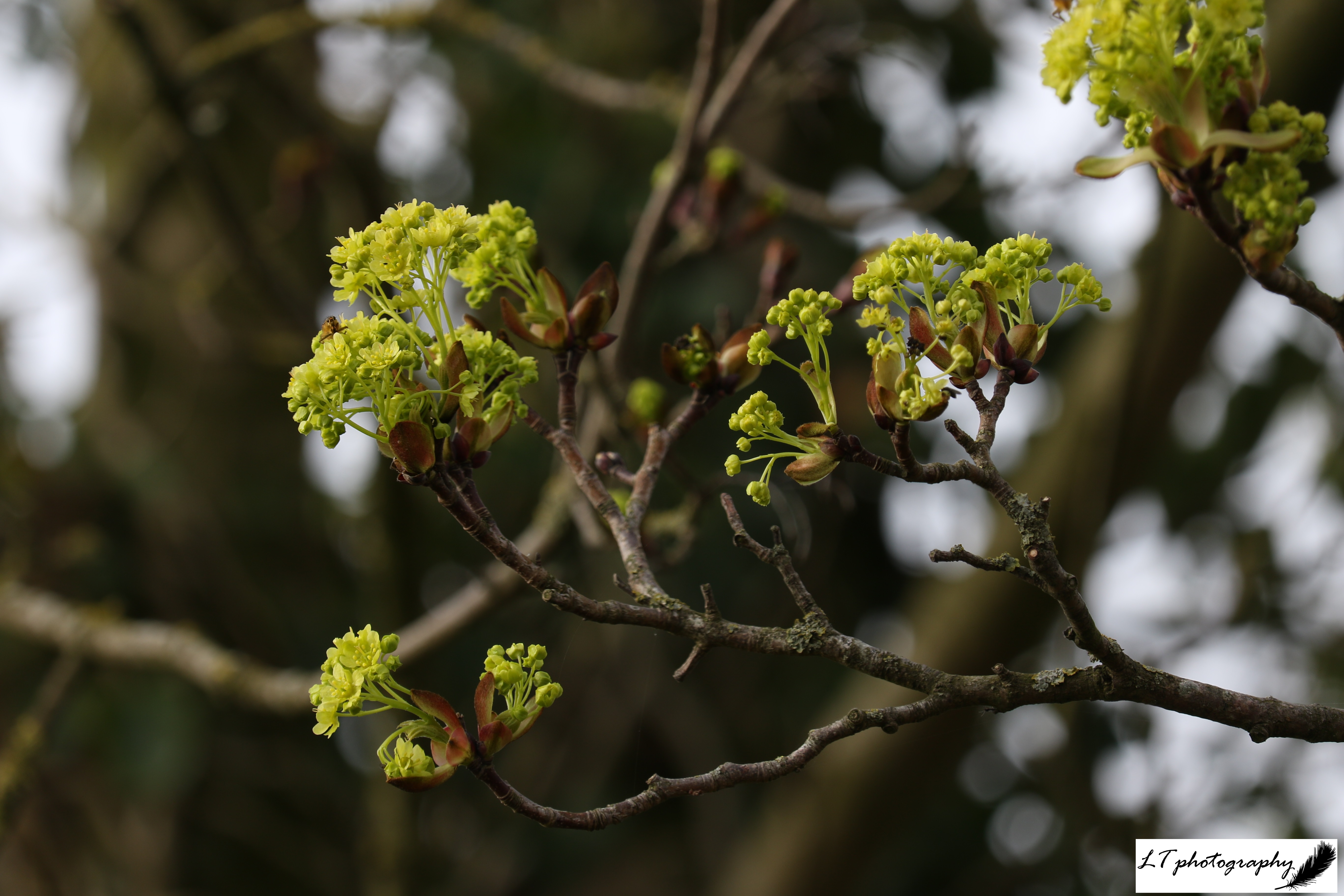
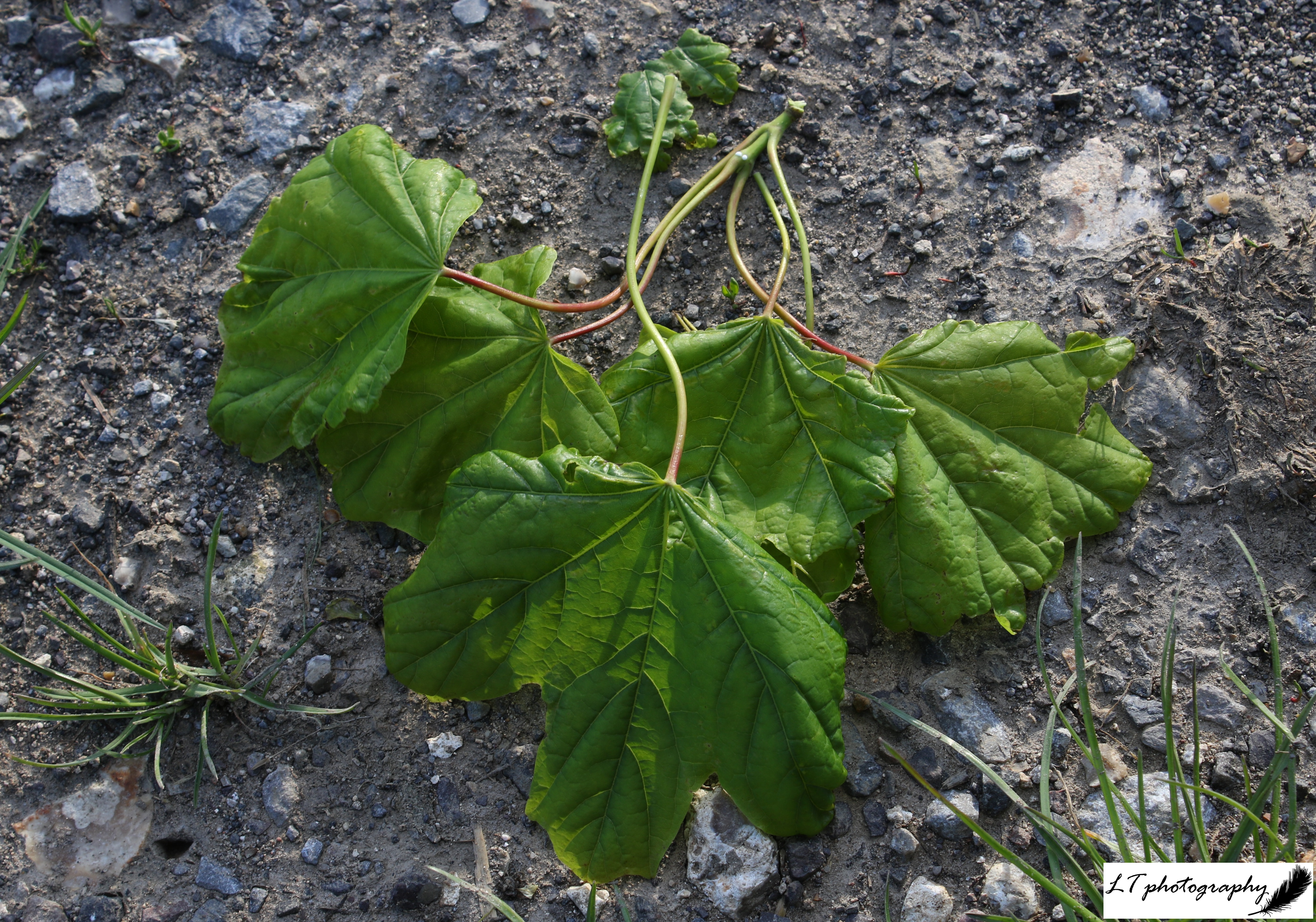
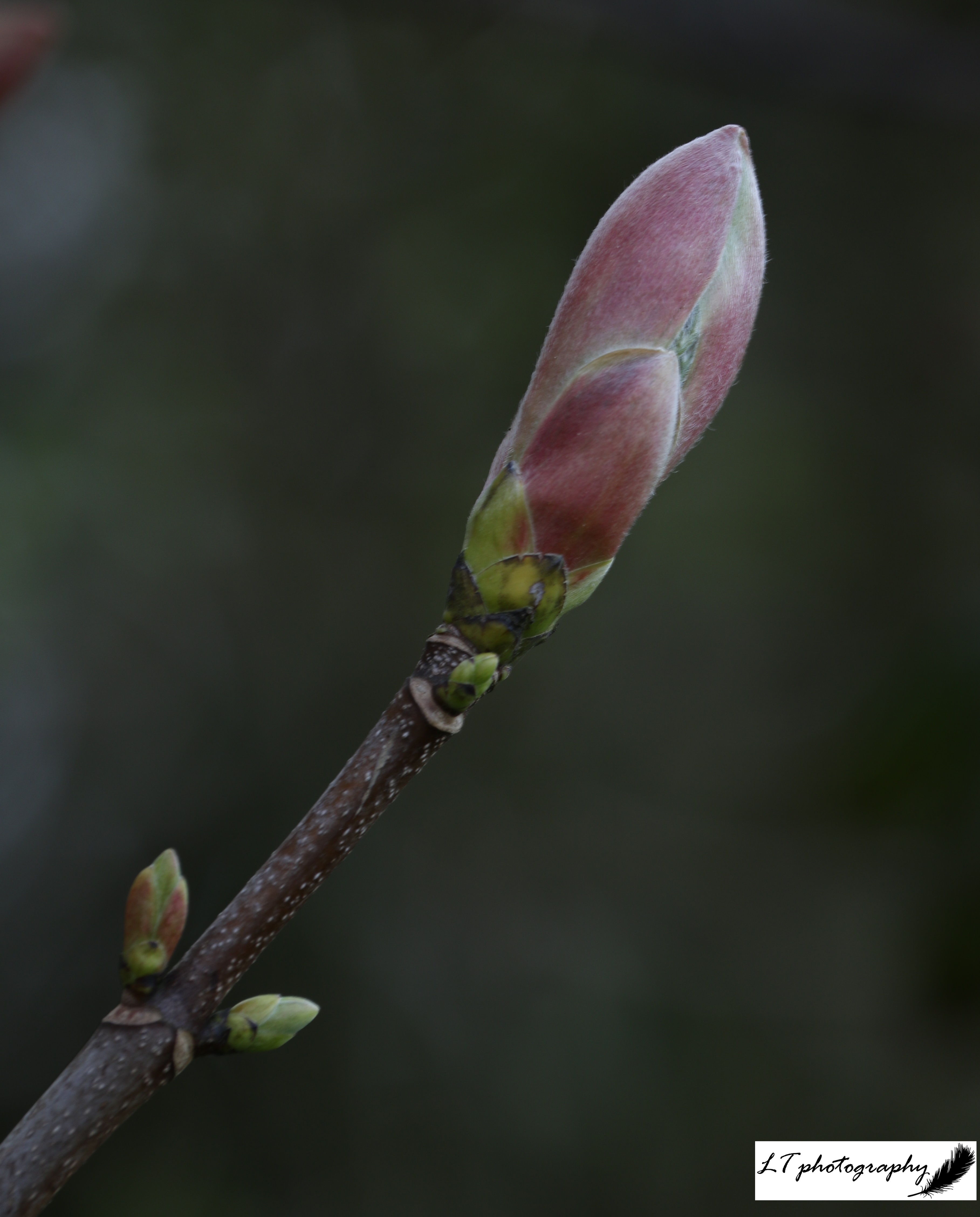
Norway Maple (Acer platanoides)

  • Family: Sapindaceae – related to lychee and horse chestnut
  • Origin: Non-native (introduced in the 17th century from Europe and Asia)
  • Shape and Size: Shorter and more slender tree, reaching up to 30m
  • Stems and Twigs: Bark is grey with many small fissures (not flaking), and twigs are slender and brown with tiny white spots
  • Leaves: Thin, light green leaves, opposite and have long pointed lobes
  • Flowers: Erect clusters of pale yellow flowers, before the leaves (April-May)
  • Seeds: Winged keys in opposite pairs
  • Range and Habitat: Increasingly planted and self-sown in parks, gardens, and hedges

In Winter: Distinctive shape and bark, and individual buds that are green and red

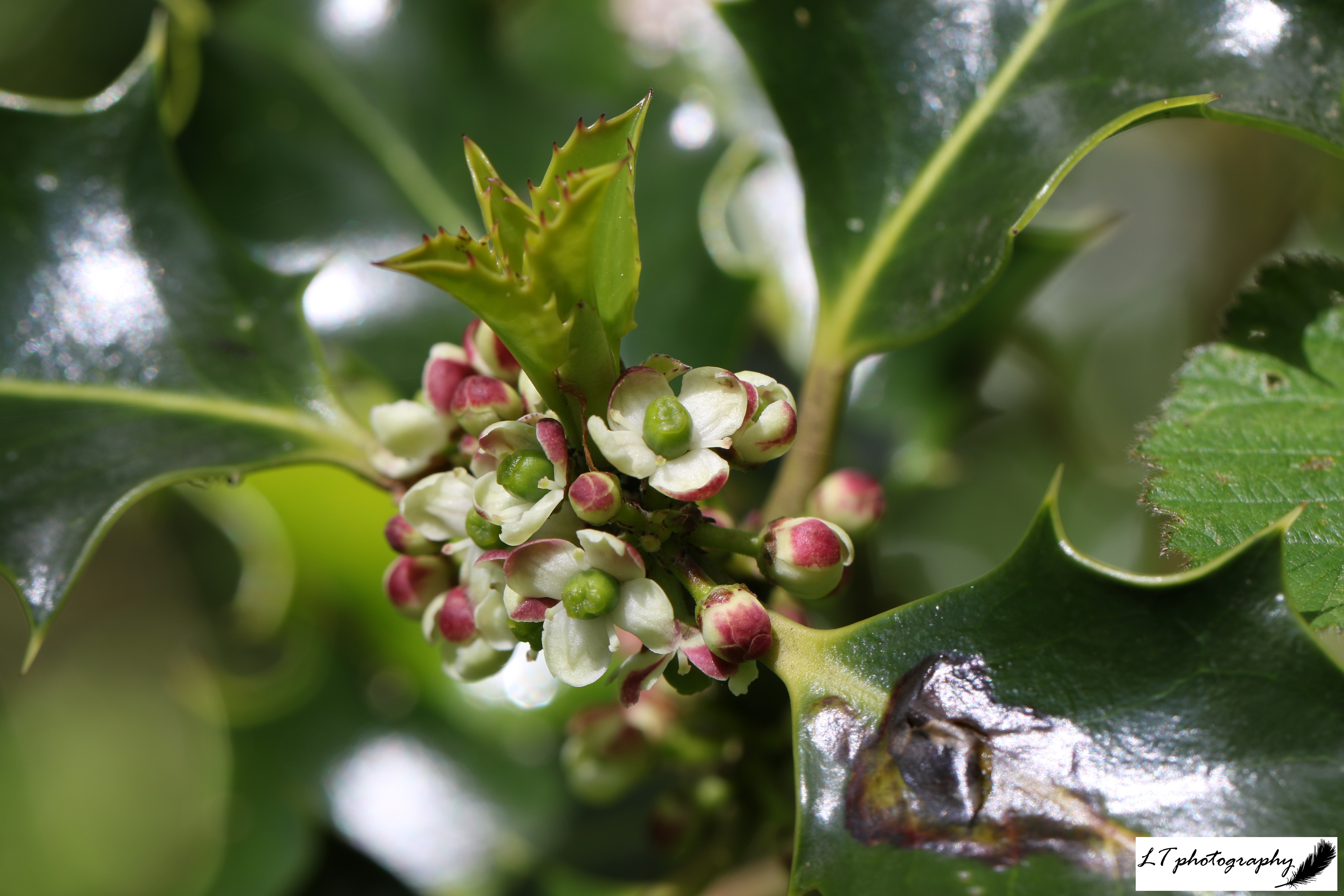
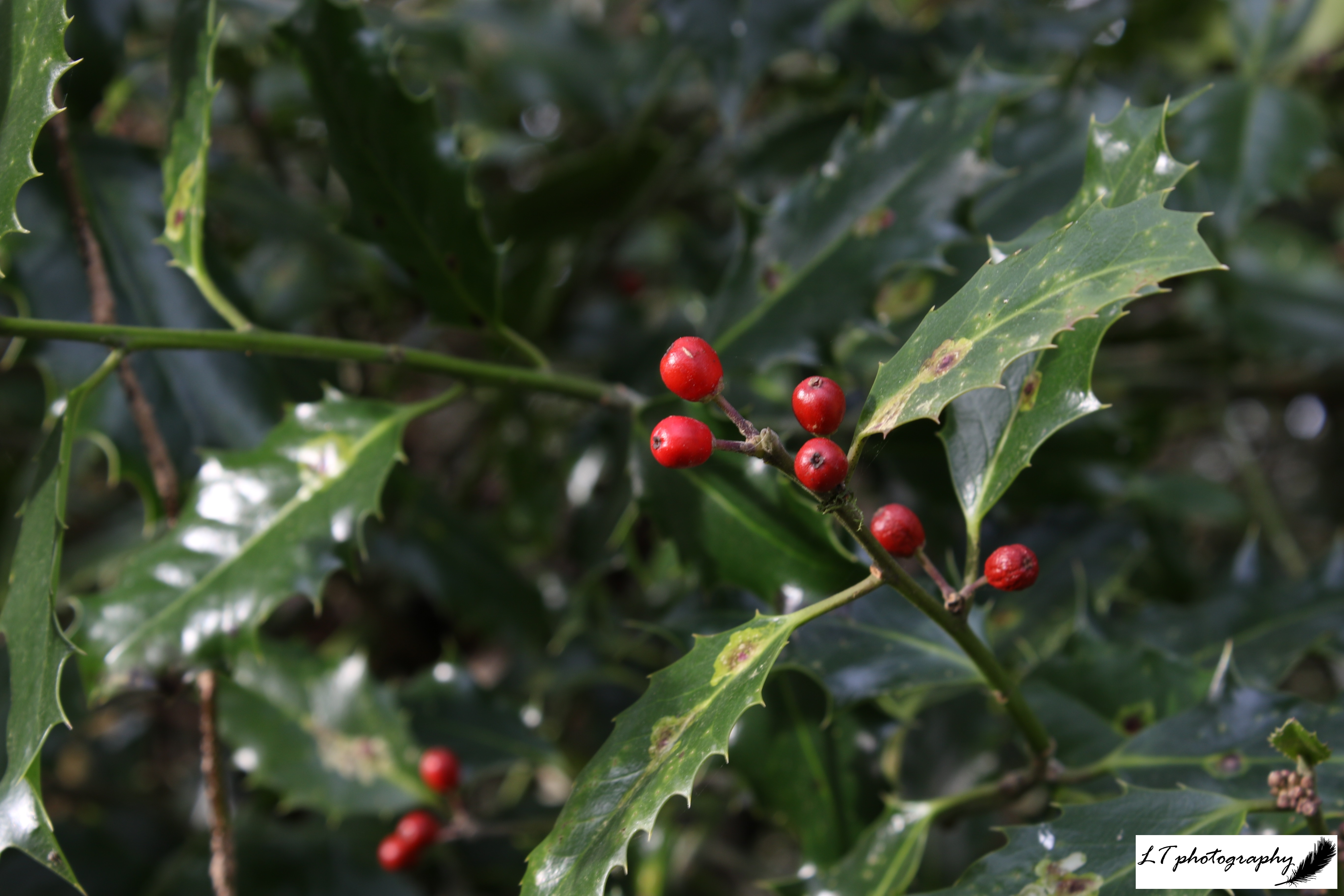
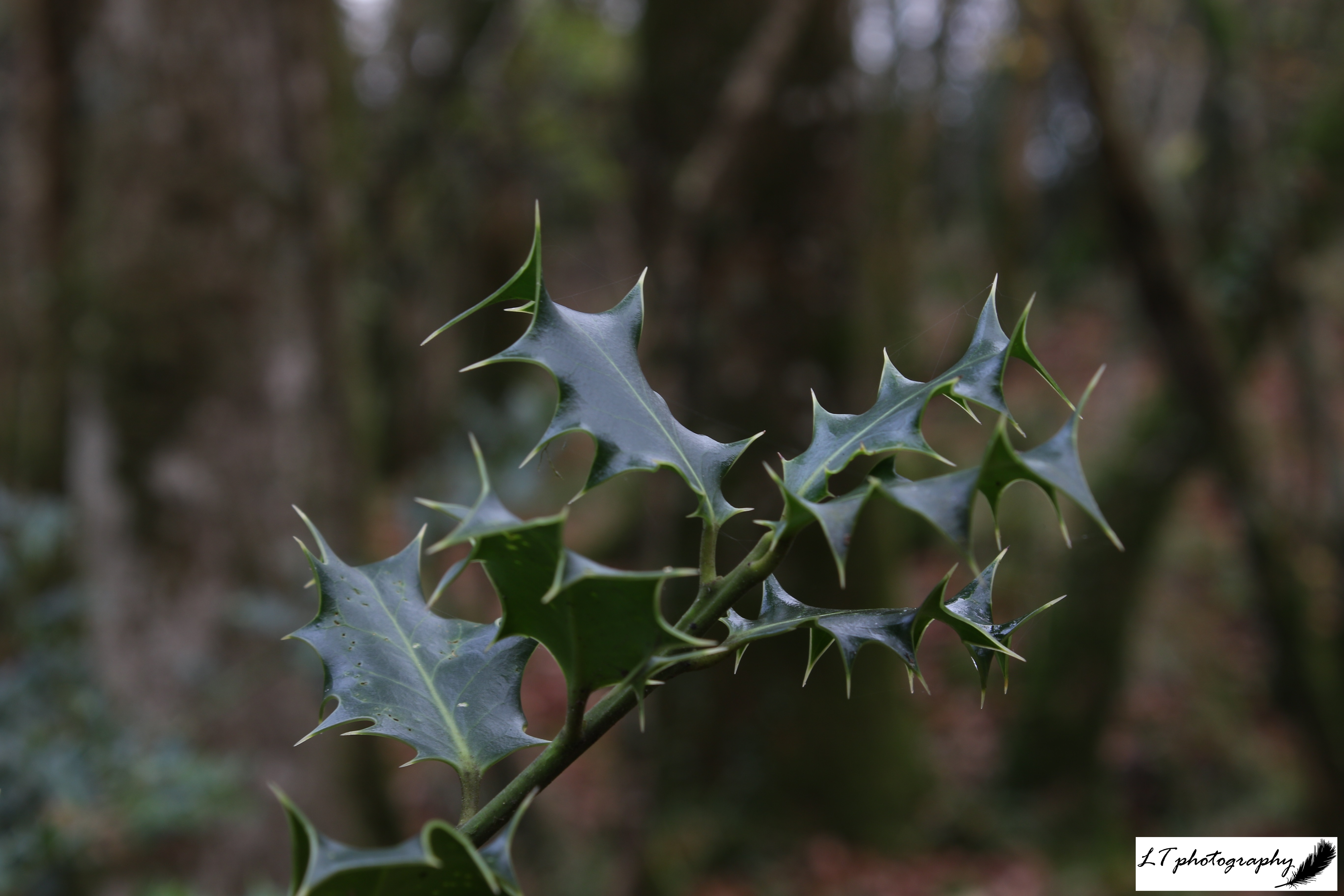
Holly (Ilex aquifolium)

  • Family: Aquifoliaceae – holly trees
  • Origin: Native
  • Shape and Size: Narrow-crowned, conical tree with regular branching, reaching up to 20m
  • Stems and Twigs: Bark is green when young, becoming smooth and grey with age
  • Leaves: Alternate, long, glossy, spiny teeth, and waxy on top, matt and pale green beneath
  • Flowers: White, 4-petalled and in close clusters, with male and female flowers on separate trees (May-August)
  • Seeds: Red berries with small seeds, only found on female trees
  • Range and Habitat: Can be found everywhere across the British Isles but prefers drier soils

In Winter: Evergreen spiky leaves and red berries, a symbol of Christmas

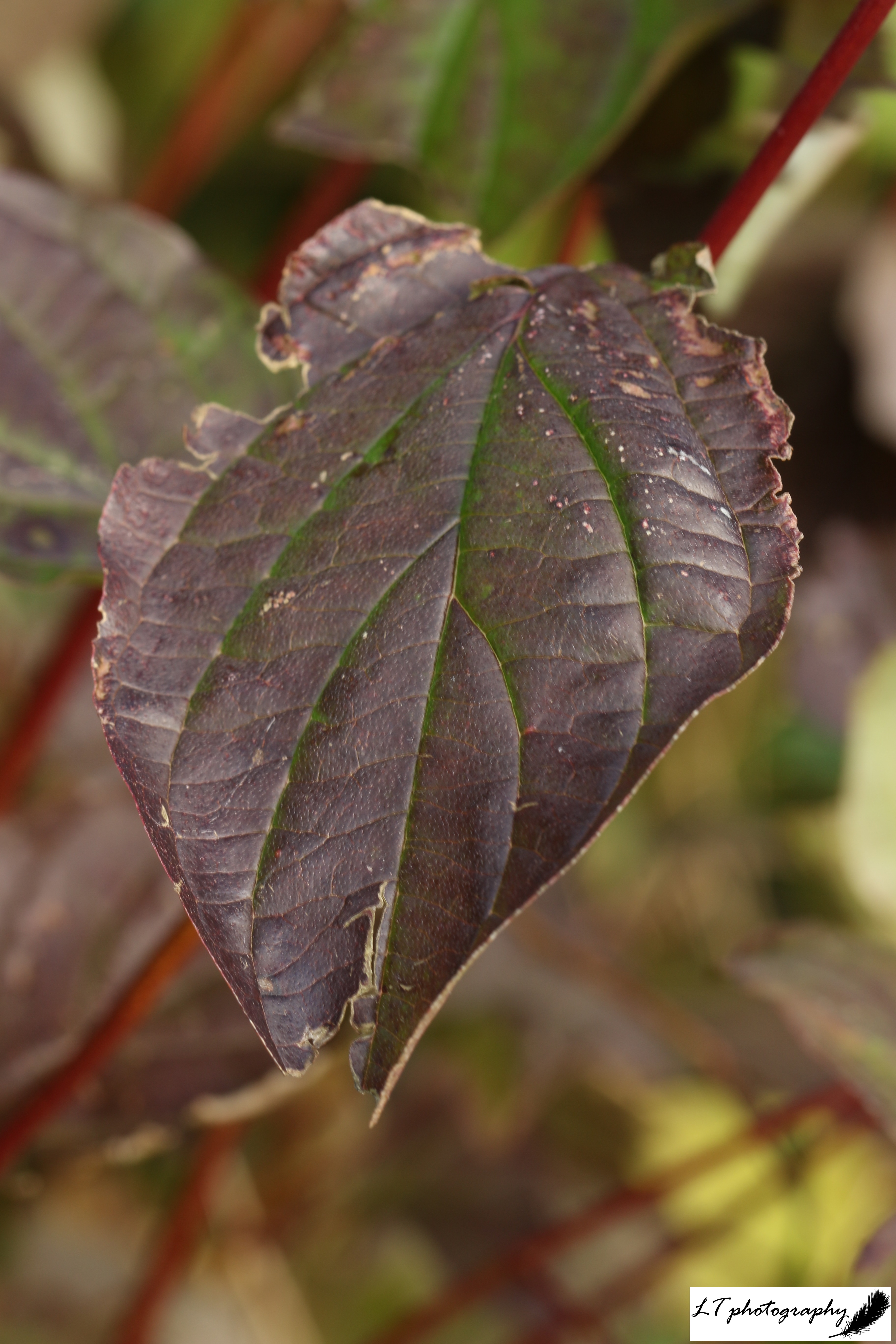
Dogwood (Cornus sanguinea)

  • Family: Cornaceae – dogwoods
  • Origin: Native
  • Shape and Size: Tall and deciduous sending out suckers to form dense thickets (up to 10m)
  • Stems and Twigs: Bark grey and smooth with shallow ridges, giving off a fetid smell when bruised, attractive to insects
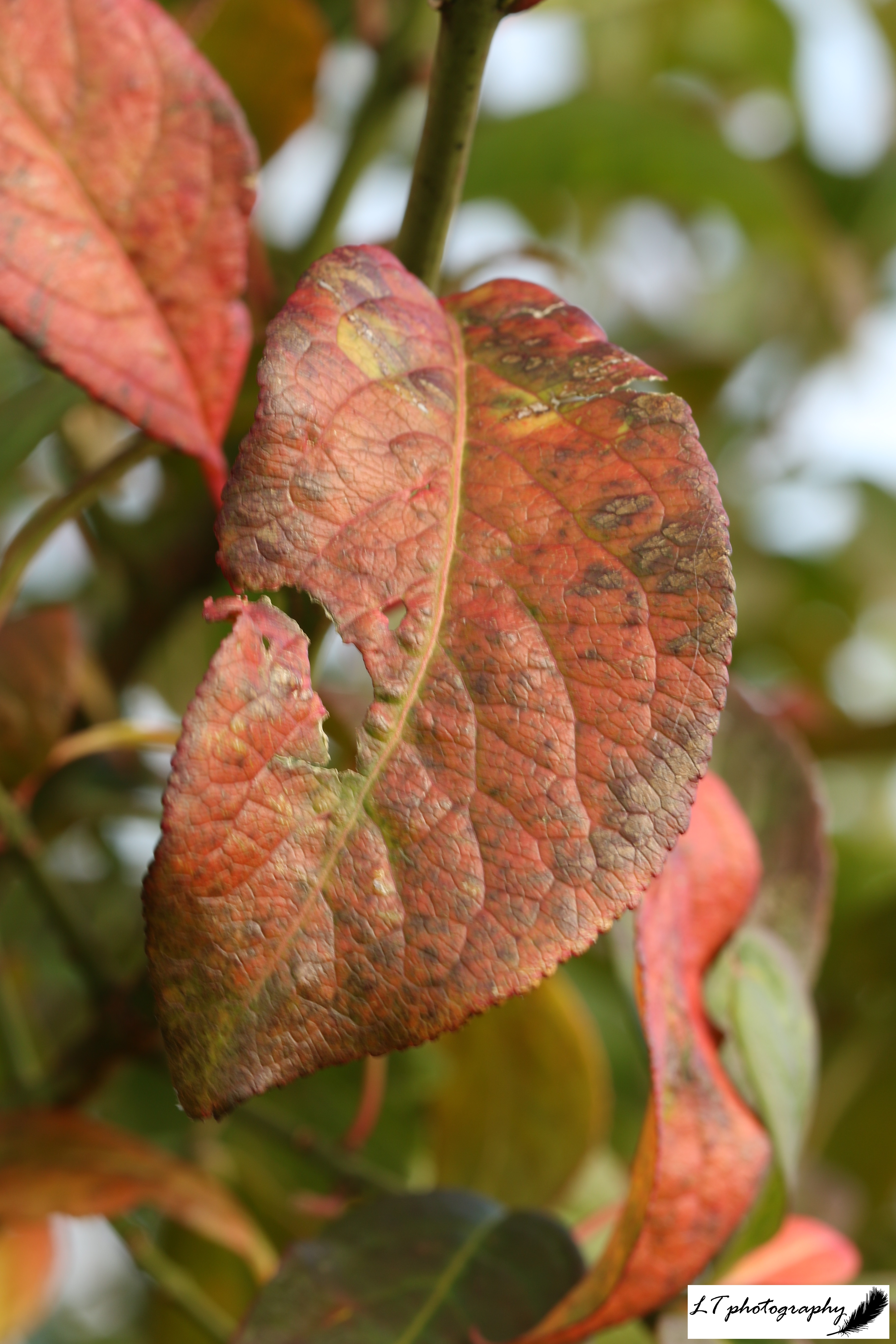
  • Leaves: Opposite, long, oval, pointed, hairy on both sides, side veins curving forward, and no teeth. Crimson colouring in late autumn
  • Flowers: Greenish-white 4-petalled flowers (June-July)
  • Seeds: Round, bitter, black berries in clusters (sometimes called ‘dogberries’), ripening in August or September
  • Range and Habitat: Frequent in Midlands and South, grows chiefly on chalk soils, but also found in woodlands, scrub and hedges

In Winter: New twigs are bright red

Common Lime (Tilia x europaea)

  • Family: Mallow family – related to trees such as cotton and cacao
  • Origin: Native
  • Shape and Size: Tall tree with long slender branches that start near the ground (up to 40m)
  • Stems and Twigs: Young bark is smooth and grey, whereas old bark is fissured
  • Leaves: Long and heart-shaped with small teeth and tapering to a point. Dark green and hairless above, whereas undersides are paler with white or buff hairs in the vein junctions
  • Flowers: Greenish-yellow 5-petalled flowers that are sweet smelling (late June-July)
  • Seeds: Encapsulated in small round hanging fruits, hairy, faintly ribbed and with pointed tips
  • Range and Habitat: Widespread in rows or avenues in streets, parks and also hedges

In Winter: Red, hairy twigs and shoots

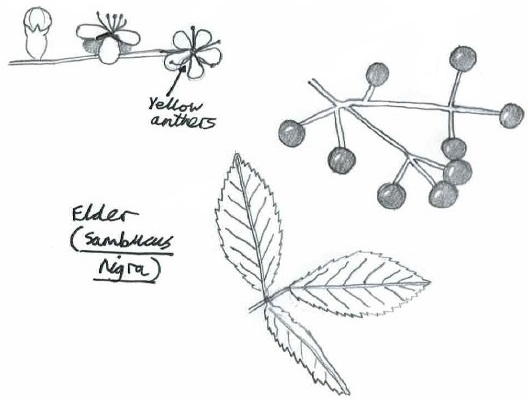
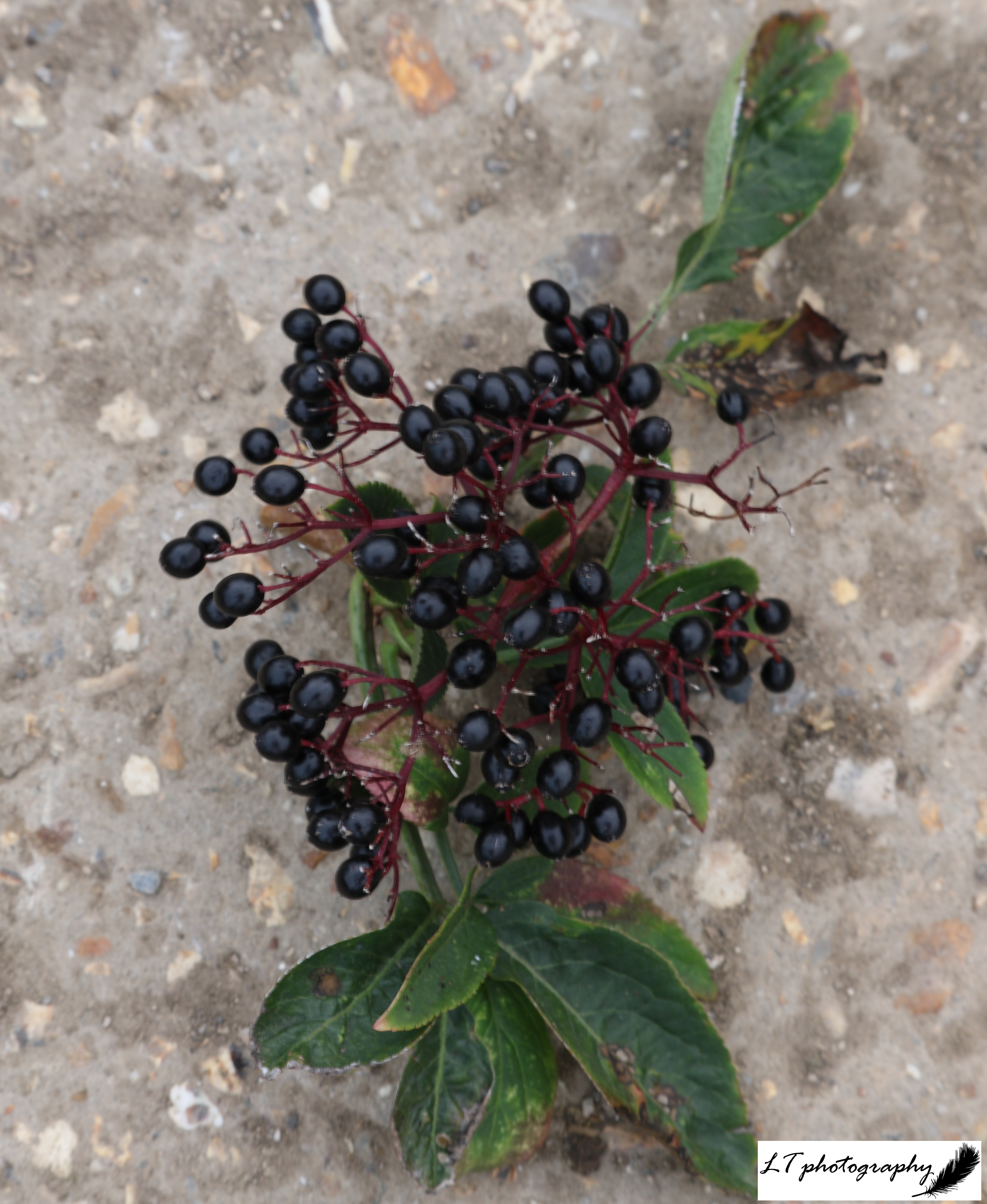
Elder (Sambucus nigra)

  • Family: Adoxaceae – previously in the honeysuckle family , but now reclassified in moschatel
  • Origin: Native
  • Shape and Size: Bushy shrub with many stems or growing into a small tree (up to 10m)
  • Stems and Twigs: Light brown bark is thick, corky, fissured, and strong smelling
  • Leaves: Long, dark green, and opposite, with leaflets in pairs, rounded, stalked and with teeth
  • Flowers: Creamy-white, small, and sweetly fragrant in flat-topped clusters with yellow anthers (May-August)
  • Seeds: Produces a juicy, edible, purplish-black berry
  • Range and Habitat: Widespread and common throughout Britain, particularly flourishing where nitrogen content high

In Winter: Pungent, hollow-stemmed twigs and often dotted with light-brown bumps

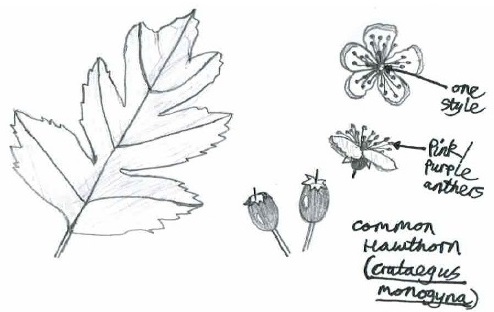
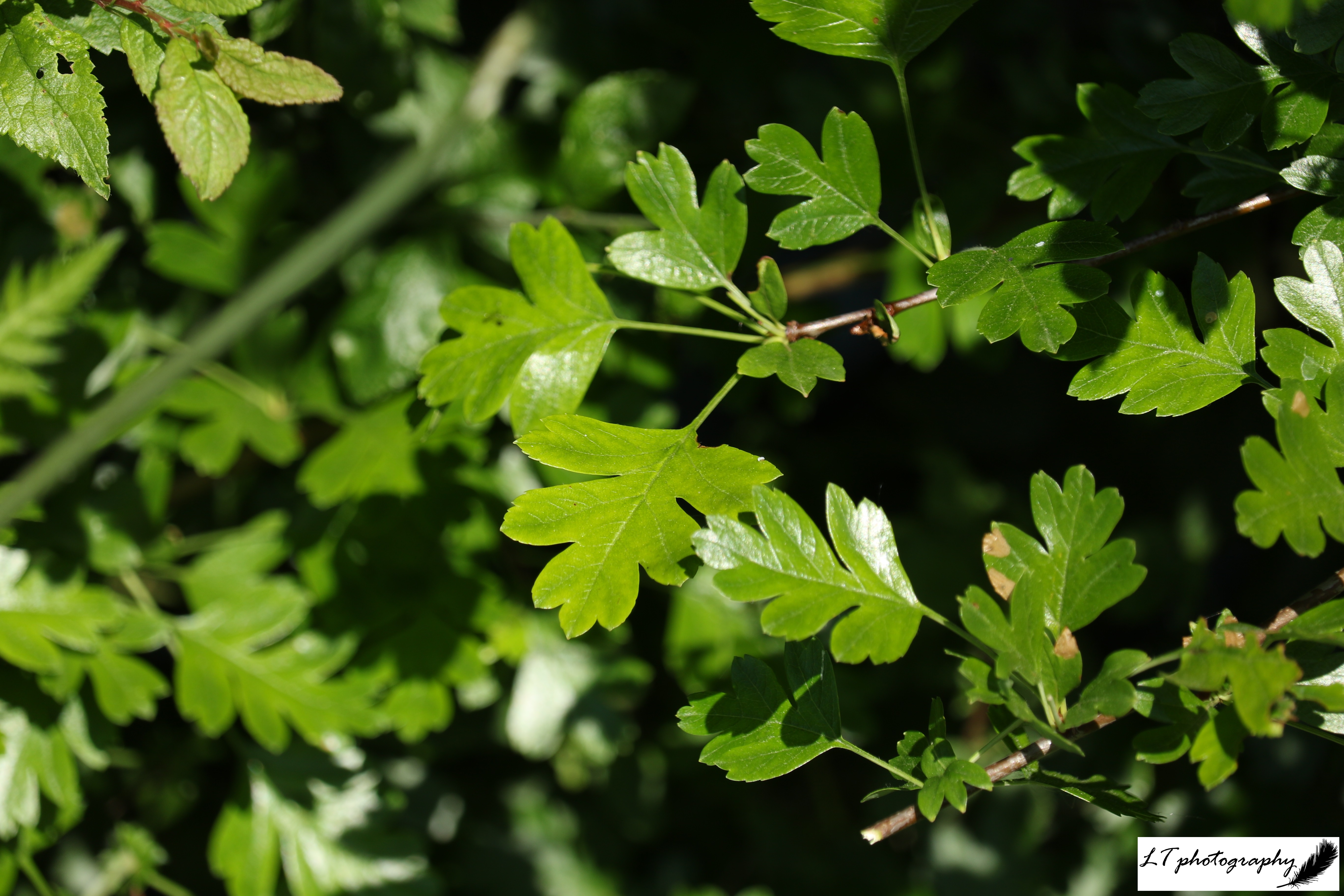
Hawthorn (Crataegus monogyna)

  • Family: Rose – related to fruit trees such as apricots and apples
  • Origin: Native
  • Shape and Size: Quick growing, becoming a dense shrub or single stemmed tree (up to 15m)
  • Stems and Twigs: Bark is hairless and greyish-brown, with many small scales and sharp spines
  • Leaves: Alternate, long, toothed, shiny, lobed, and roughly oval-shaped
  • Flowers: Showy white and fragrant (sickly sweet) with 5 petals, and pink or purple anthers (late April-June). Become deep pink as they fade
  • Seeds: Fleshy fruits (haws) turn dark wine-red and contain a single seed
  • Range and Habitat: Widespread and common throughout Britain, in hedges, scrub or woodland margins

In Winter: Spines emerging alongside buds on the twigs

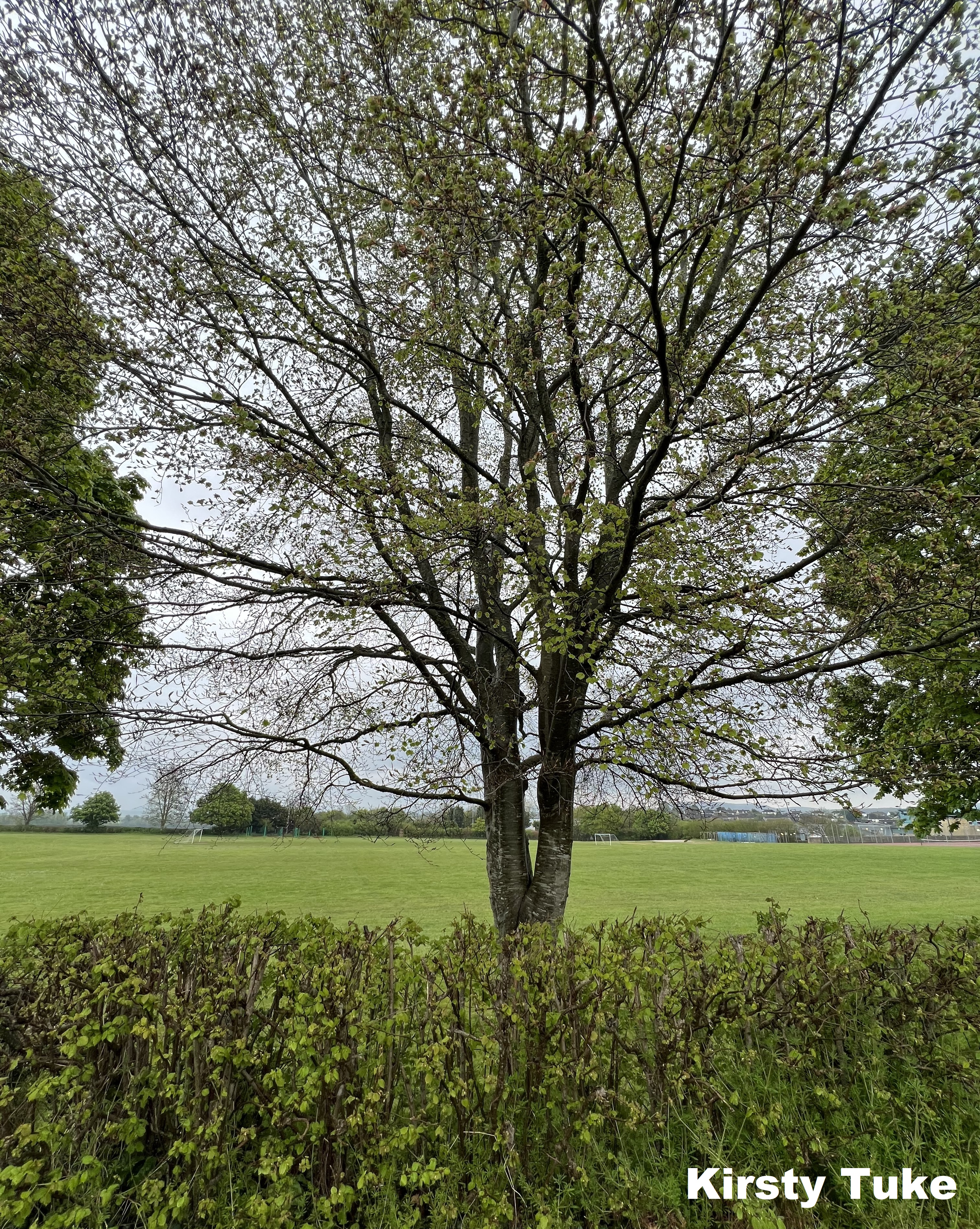
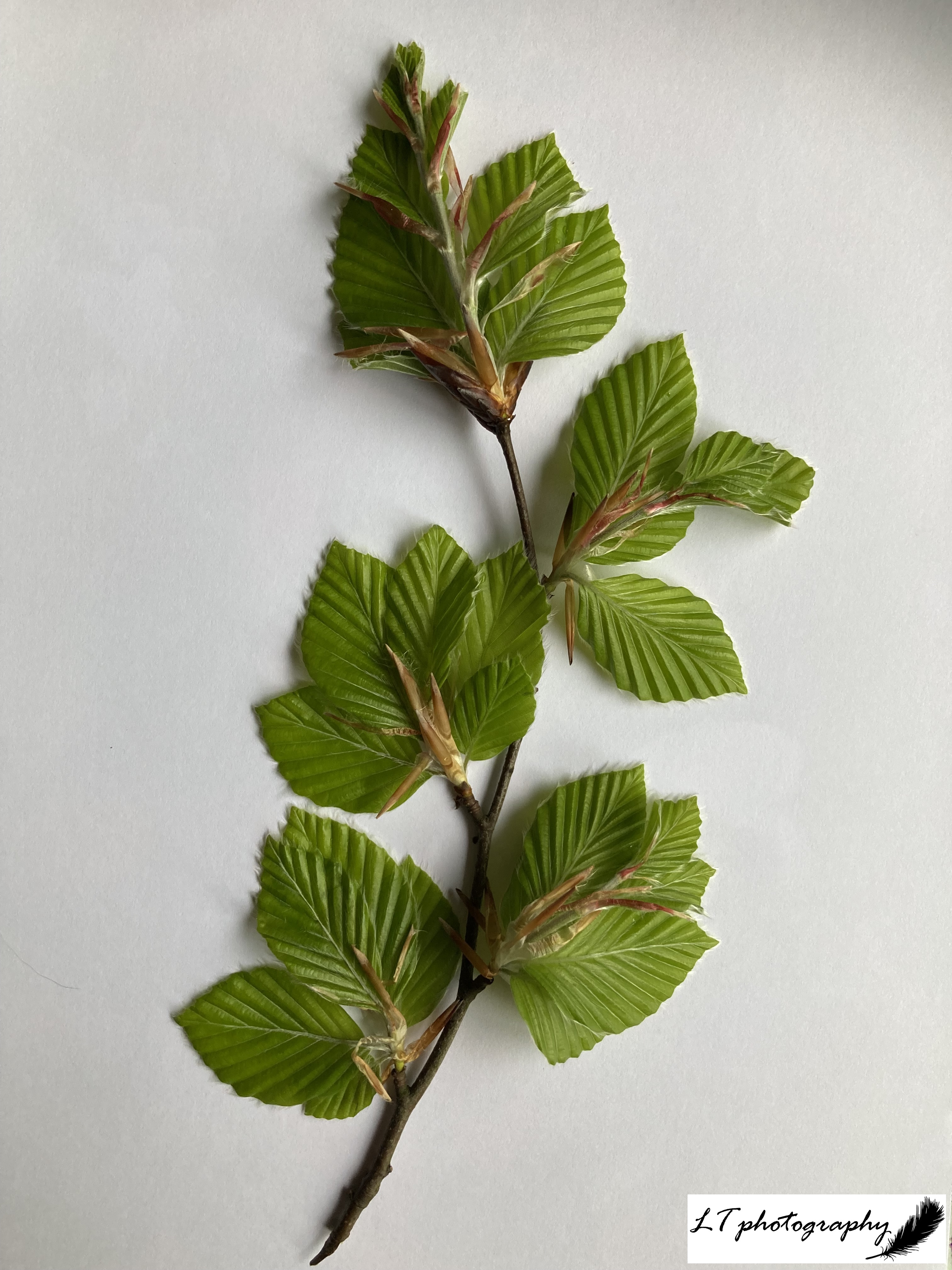
Beech (Fugus sylvatica)

  • Family: Beech – includes chestnuts and oaks
  • Origin: Native
  • Shape and Size: Older trees have a massive, many-branched dome, whereas young trees are slimmer and more conical in outline (up to 36m)
  • Stems and Twigs: Smooth grey bark may break into small squares
  • Leaves: Long, wavy margins, alternate, hairy leaf edges, and shiny green on both surfaces
  • Flowers: Young leaves appear with yellow long-stalked male flowers on tassel-like stalks, and greenish white female flowers (May)
  • Seeds: Four-lobed husk are two triangular nutlets (mast)
  • Range and Habitat: Native in woods in the south, but widely planted elsewhere

In Winter: Often hold on to leaves and have sharply-pointed buds

Spindle (Euonymus europaeus)

  • Family: Staff-vine
  • Origin: Native
  • Shape and Size: Small tree or big bush up to 6m
  • Stems and Twigs: Young, smooth, greenish bark later turns grey
  • Leaves: Light green leaves are opposite, thin, oval-shaped, and pointed, with small finely toothed margins. Turn pinkish-red in autumn
  • Flowers: Small greenish-yellow flowers with 4 narrow petals (May-June)
  • Seeds: Four-lobed seed capsules, which turn a deep pinkish-red when ripe.
  • Range and Habitat: Grows throughout England and Wales, most frequent in the South, but rarer in Scotland and Ireland. Found in woods, scrub, and hedgerows, in particular on lime

In Winter: Buds and twigs are angular with four sides

Yew (Taxus baccata)

  • Family: Yew
  • Origin: Native
  • Shape and Size: Round-headed tree with dark foliage, often has many trunks (reaches up to 20m)
  • Stems and Twigs: Smooth, light brown bark flakes to red patches
  • Leaves: Needles dark green on top and matt yellow-green on underside
  • Flowers: Male and female flowers are found on separate trees. Male flower is yellow, and tiny female flower is green (February-April)
  • Seeds: Bright red ripened fruits, much enjoyed by birds, partially encloses a single seed that is poisonous to humans
  • Range and Habitat: Found in woods, scrub, screes, downs and often on lime

In Winter: Evergreen needle-like leaves present all year round

Drawings are my own work

How to… Identify British Tree Species

A majestic oak standing tall in the landscape, watching as centuries pass it by. A silver birch with drooping branches, embellished with leaves, slowly blowing in the breeze. An alder leaning over the edge of a river, spreading its branches to shade the bank beneath it. From capturing the imaginations of children to symbolising strength and life for adults, trees in all their forms are an important part of the landscape and culture within Britain.

With over 70 species in the UK alone, trees come in all shapes and sizes, and can be found anywhere from our highlands to our cities. Trees colonised Britain following the last glaciation, and have since become intertwined with our very own history. They provide us with so much, including resources, such as medicines and building materials, improved air quality, homes for wildlife, and even cultural services, such as therapy through forest bathing. Thus, they are a very important part of our environment!

Now, as our reliance on trees grows and the threats to them increase, it is surprising how little people know about trees in general. For example, the average Brit is unable to name more than five tree species, and a third even believe a money tree is a real species! With two thirds of the public now wanting to learn a little more about the trees in their area, here’s my handy guide to help you identify 10 common tree species that can be found in the UK.

Tree Species

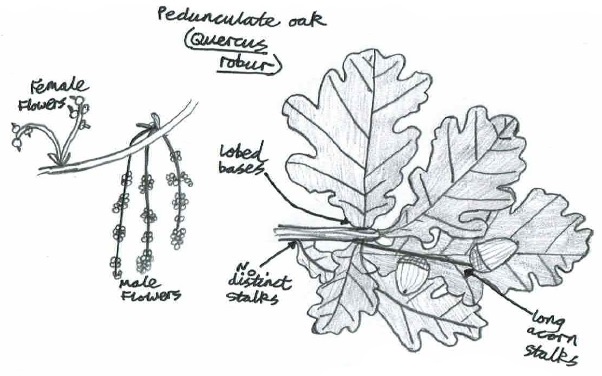
1. Pedunculate or English Oak (Quercus robur)

  • Family: Fagaceae – related to species such as beech and sweet chestnut
  • Origin: Native
  • Shape and size: Up to 40m tall, upward-reaching and broad crown
  • Stems and twigs: Massive rugged grey-brown trunk
  • Leaves: 10-12cm long, oblong, and lobed, turning brown in autumn
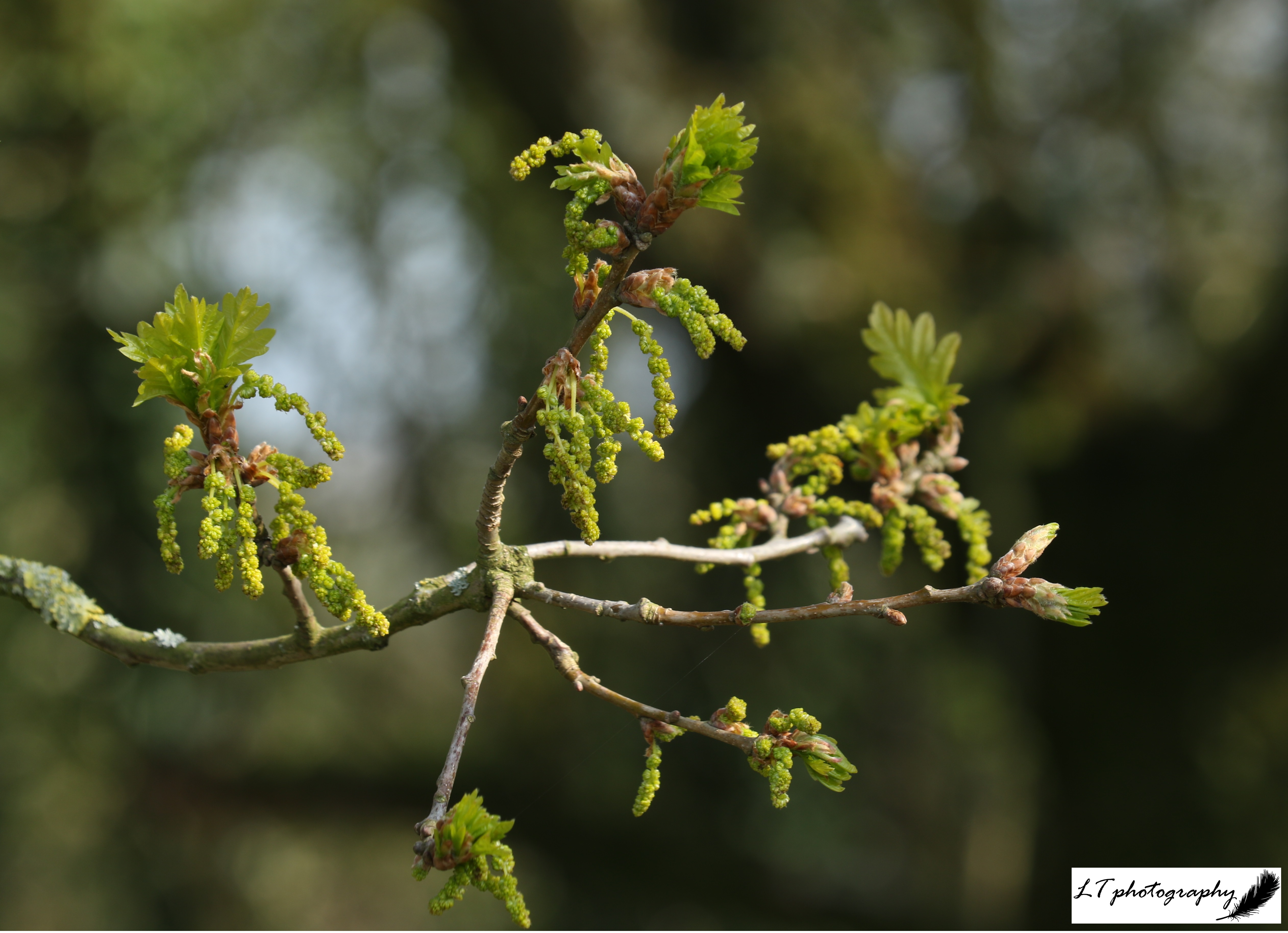
  • Flowers: On the same tree and flowering April-June. Male flowers= yellow-green catkins; female flowers= pinkish and on short stalks
  • Seeds: Produces the familiar acorn, with scaly cups and clusters carried on long stalks
  • Range & habitat: Widespread and common throughout Britain, found in habitats ranging from deciduous and mixed woodlands to open grassland and hedgerows

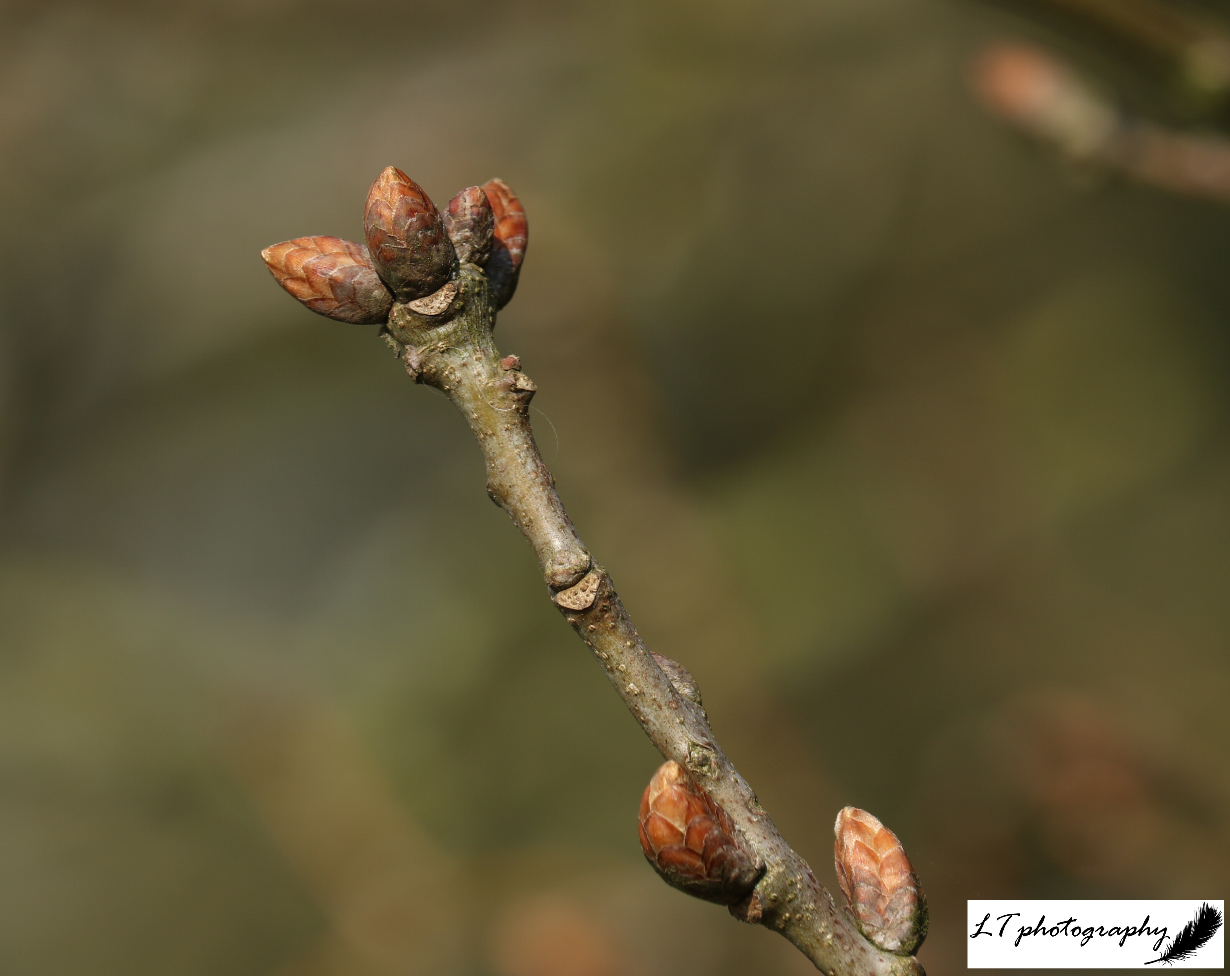
In Winter: Look for rounded buds that have overlapping scales and are found in clusters at the end of each shoot

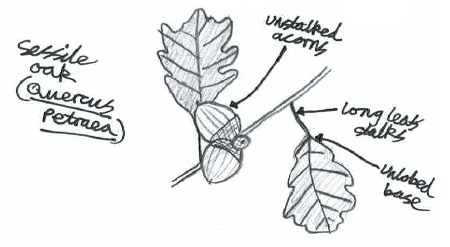
2. Sessile oak (Quercus petraea)

  • Differs to Pedunculate Oak in that the leaves taper to an unlobed base and have long stalks.
  • Buds in winter have more scales (more than 20).
  • Also, the clustered acorns are almost stalk-less with downy cups.
  • Narrower in shape, prefers more acid soils, and is more common in the West of Britain.

3. Common Ash (Fraxinus excelsior)

  • Family: Oleaceae – related to olive trees and lilac
  • Origin: Native
  • Shape and size: Tall and domed with widely spaced branches, growing up to 35m
  • Stems and twigs: Bark is pale brown to grey, becoming rugged with age
  • Leaves: Opposite and toothed, with 9-13 stalked leaflets that have long tips
  • Flowers: Male and female flowers typically grow on different trees, but both have purple flowers growing in clusters before the leaves
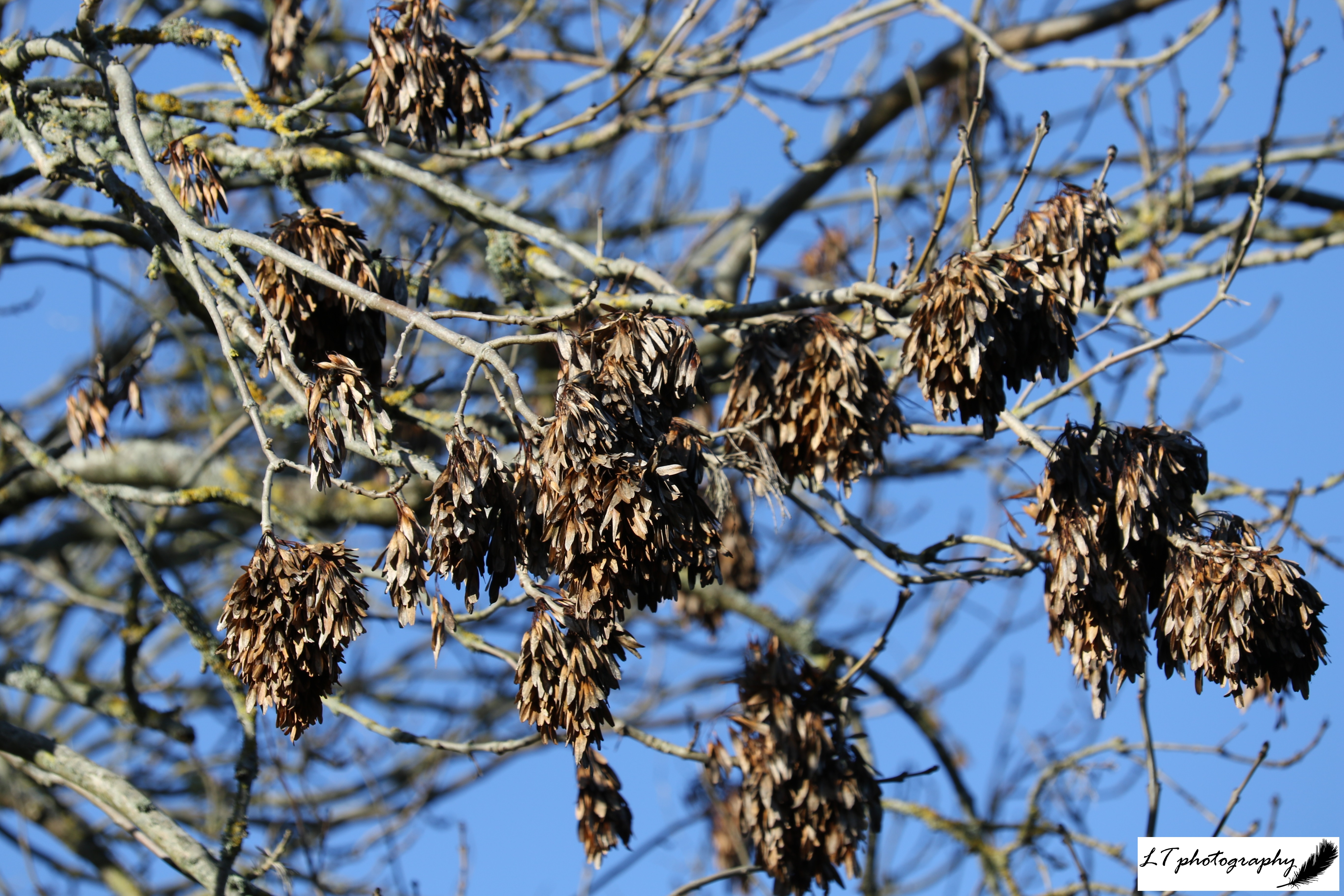
  • Seeds: Single seeds with a long wing (known as keys)
  • Range & habitat: Woods and hedges, in particular flourishing on a lime-rich/well-drained soil

In Winter: Smooth twigs with distinctive hairless black buds, and ridged bark on adult trees that resembles a diamond pattern

4. Horse Chestnut (Aesculus hippocastanum)

  • Family: Sapindaceae – related to lychee and maples
  • Origin: Non-native (introduced in the 1500s from the Balkan peninsula in southeastern Europe)
  • Shape and size: Arching branches, usually turned up at the ends, growing up to 35m tall
  • Stems and twigs: Bark is scaly and red-brown or dark grey-brown
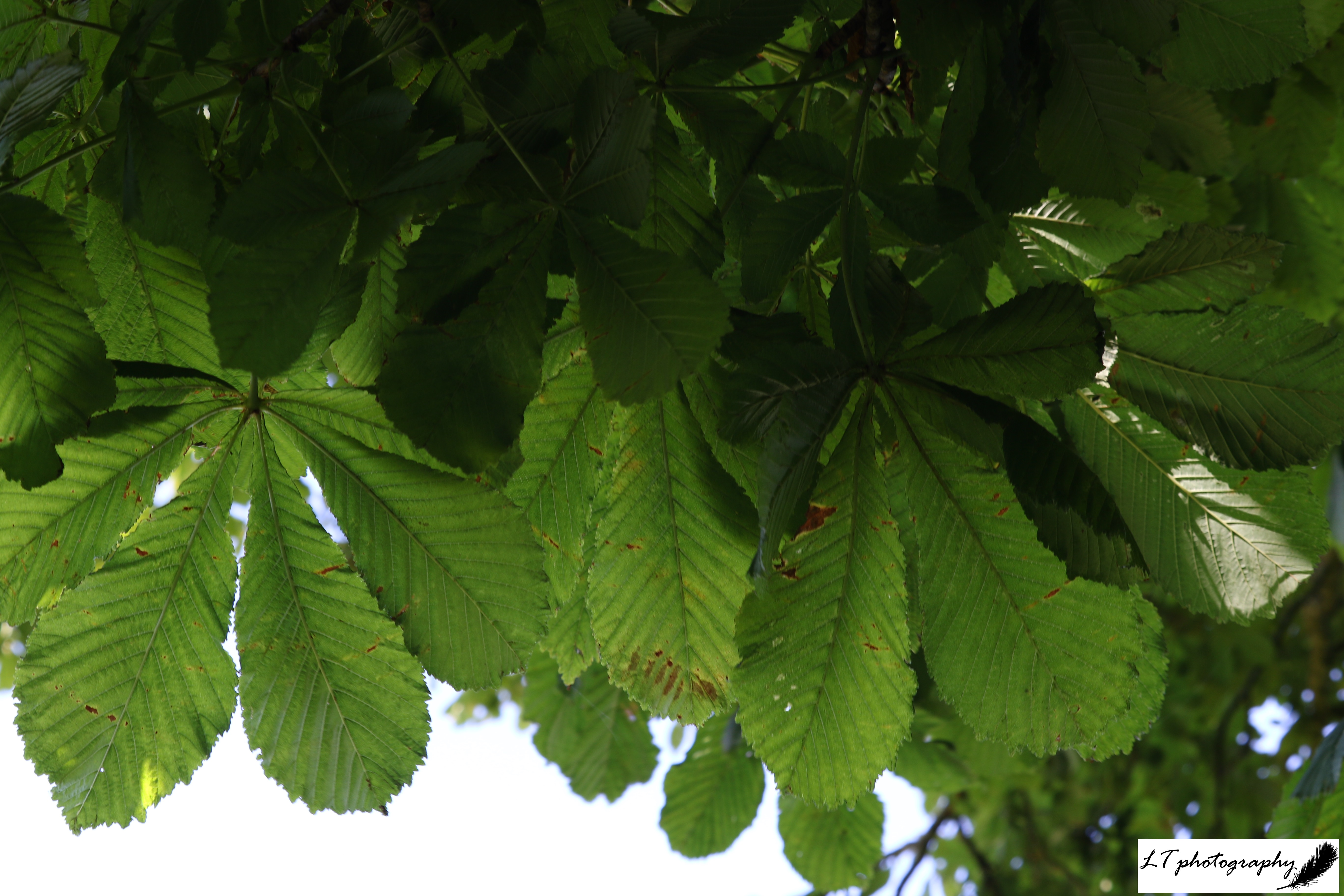
  • Leaves: Five to seven large, thick, stalkless leaflets with pronounced veins and a long, tapering base
  • Flowers: Showy spike (candle) of white flowers with a yellow to pink spot
  • Seeds: Spiny fruit contains one or more shiny conkers
  • Range & habitat: It has now become a widespread and common sight across Britain, tolerating a wide range of soils

In Winter: Smooth bark and sticky buds

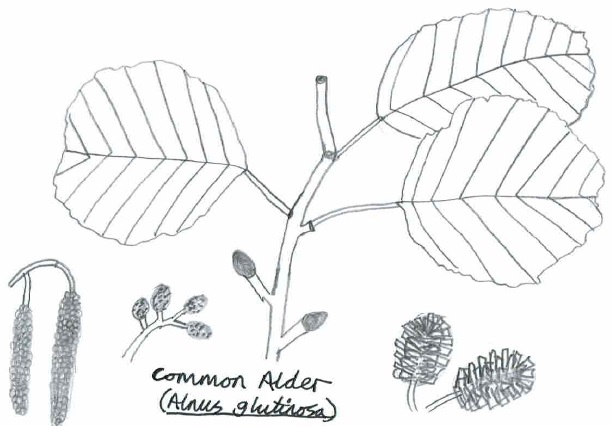
5. Common Alder (Alnus glutinosa)

  • Family: Betulaceae – related to hazel and birches
  • Origin: Native
  • Shape and size: Regular branching and conical shape, growing up to 25m
  • Stems and twigs: Dark brown bark that is often rough and sprouts young shoots
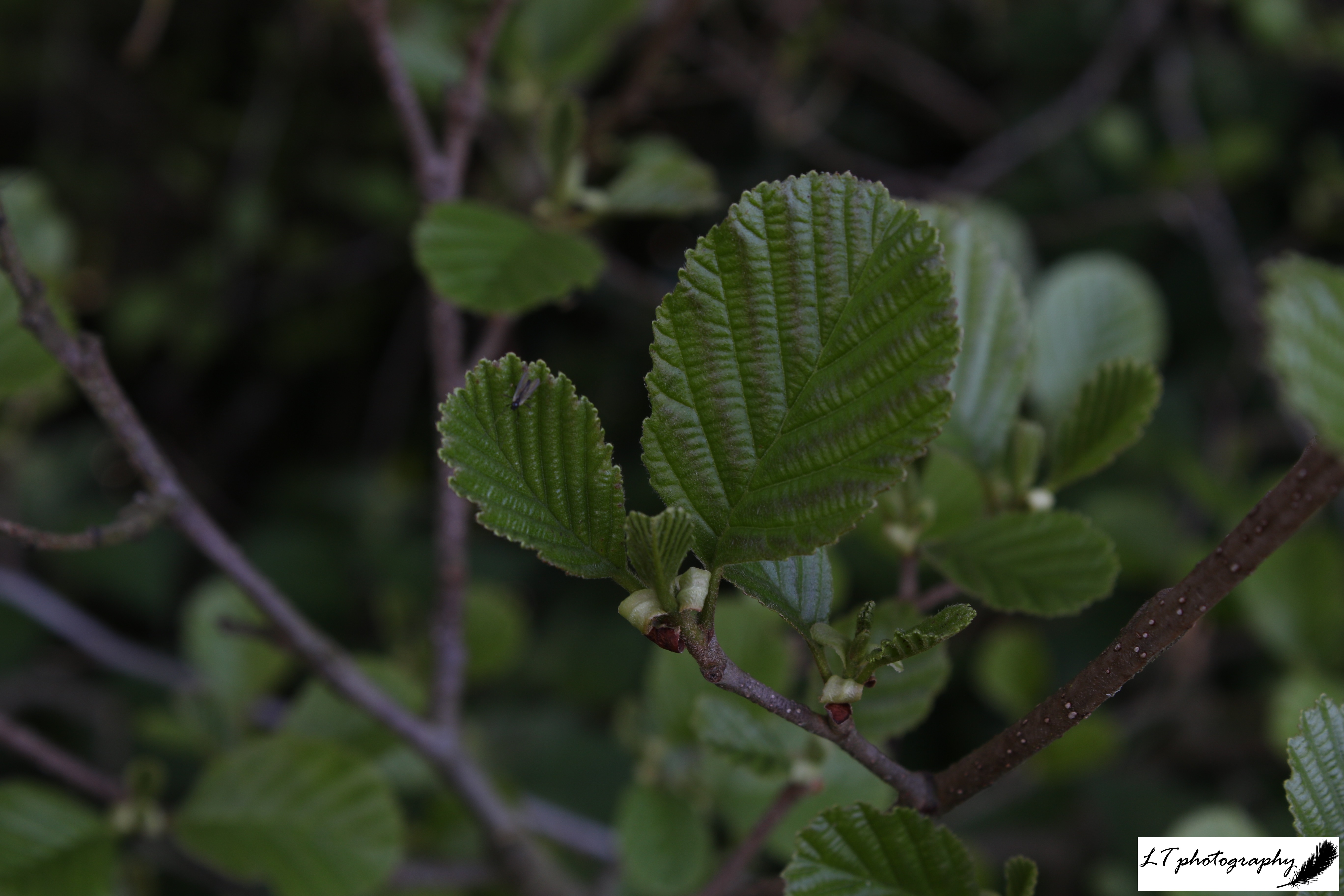
  • Leaves: Alternate, rounded, sometimes notched at the tip, and dark green
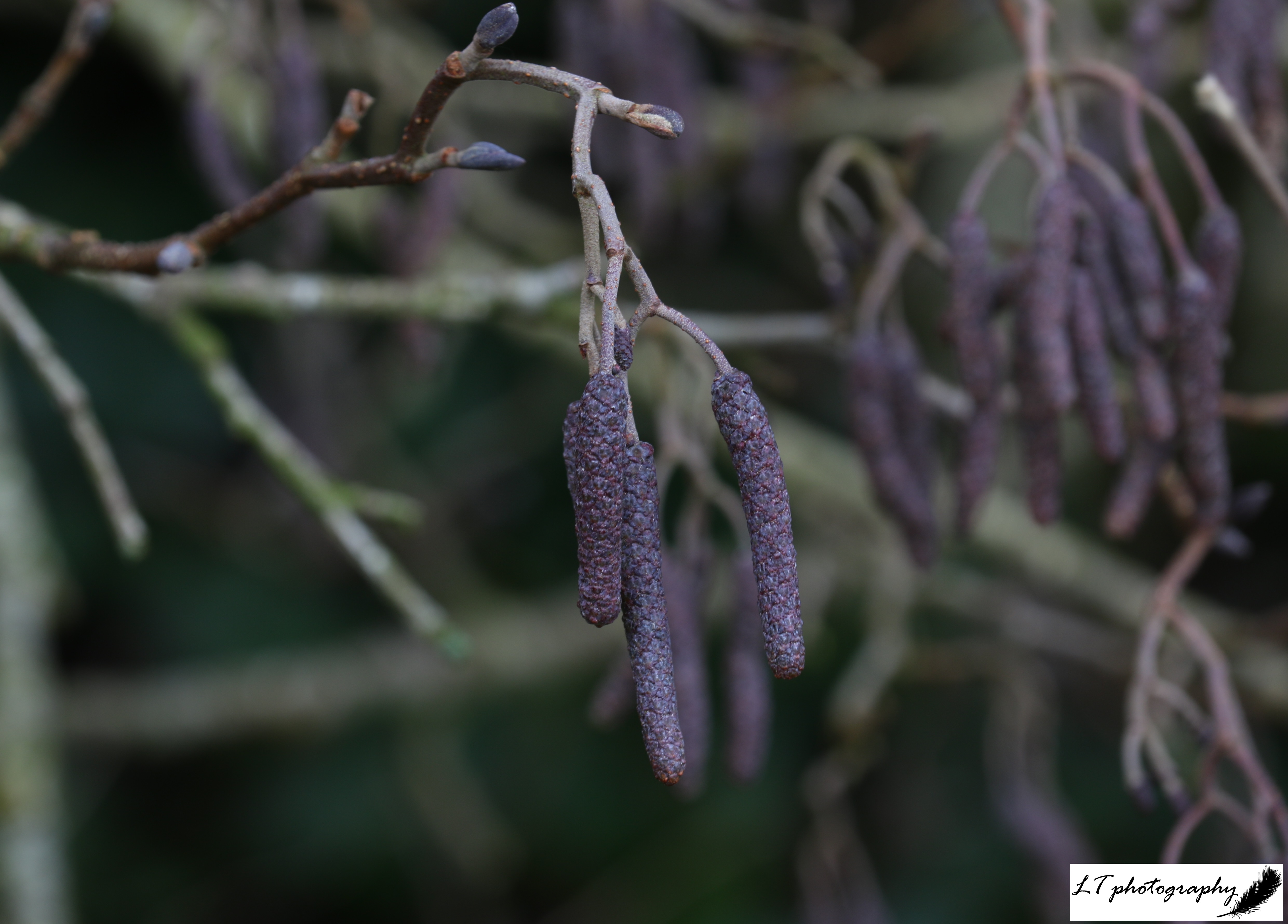
  • Flowers: Male and female catkins grow on the same tree, before the leaves. Male catkins= lambs’ tails; female catkins= small and egg-shaped
  • Seeds: Female catkins turn into a small cone, drying from green to brown, releasing the seeds. The seeds have corky outgrowths that keep them afloat on water
  • Range & habitat: Thrives in wet ground and is often seen lining the banks of rivers and streams across Britain

In Winter: Appears dull purplish due to purplish buds

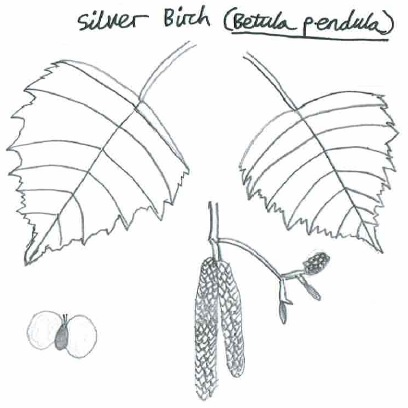
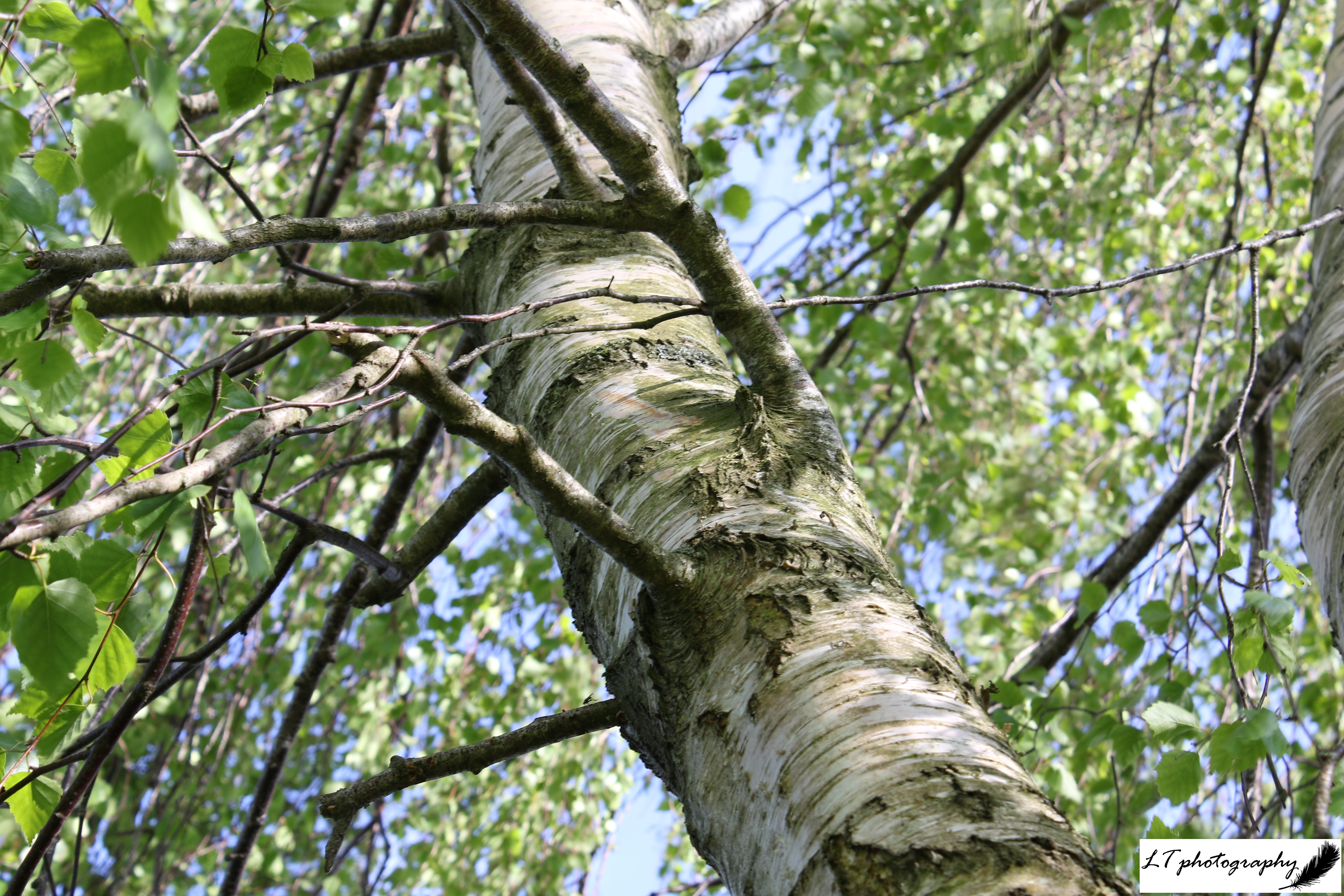
6. Silver Birch (Betula pendula)

  • Family: Betulaceae – related to alders, hazels and hornbeams
  • Origin: Native
  • Shape and size: Erect with pointed crown and drooping branches, reaching up to 30m
  • Stems and twigs: Young bark reddish, maturing to black and papery-white bark. Twigs smooth with small dark bumps
  • Leaves: Alternate, triangular and shiny, on slender stalks. Edges are ragged, with smaller teeth between larger main teeth
  • Flowers: Male catkins= purply-brown; female catkins= smaller and pale green
  • Seeds: Two winged and wind-borne, released in winter
  • Range & habitat: Form natural woodlands on light, dry soils throughout Britain

In Winter: Distinctive shape and bark

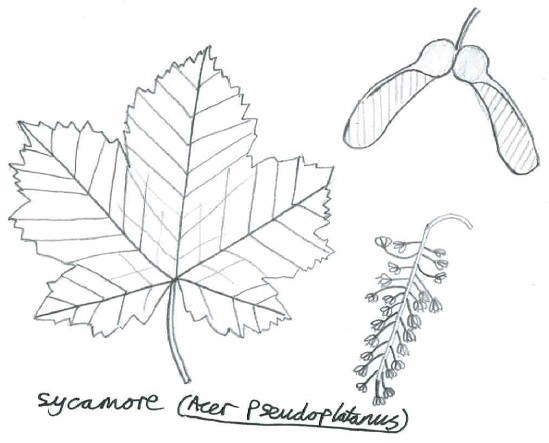
7. Sycamore (Acer pseudoplatanus)

  • Family: Sapindaceae – related to maples and horse chestnut
  • Origin: Non-native (introduced from Europe either in the 1500s or by the Romans)
  • Shape and size: Massive domed outline, with dense foliage and heavy lower branches, growing up to 35m
  • Stems and twigs: Grey fissured bark ages to pinkish-brown
  • Leaves: Opposite, five-lobed, and upper side dark green
  • Flowers: Greeny-yellow flowers in hanging clusters appear with the leaves
  • Seeds: Hairless keys in right-angled pairs
  • Range & habitat: Grow vigorously in all parts of Britain, being widely planted on their own for shelter or in woodlands and hedgerows

In Winter: Distinctive shape and bark

8. Wild Cherry (Prunus avium)

  • Family: Rosaceae – related to roses
  • Origin: Native
  • Shape and size: Pyramidal shape, reaching up to 30m
  • Stems and twigs: Shiny, red-brown bark peels in horizontal strips
  • Leaves: Alternate and oval with long points and regular, forward-pointing teeth, and two conspicuous red glands at the top of the stalk
  • Flowers: White flowers (blossom) appear before the leaves in small, loose clusters
  • Seeds: Produces round, red cherries
  • Range & habitat: Native throughout the UK, being found in woodlands and hedgerows

In Winter: Distinctive bark

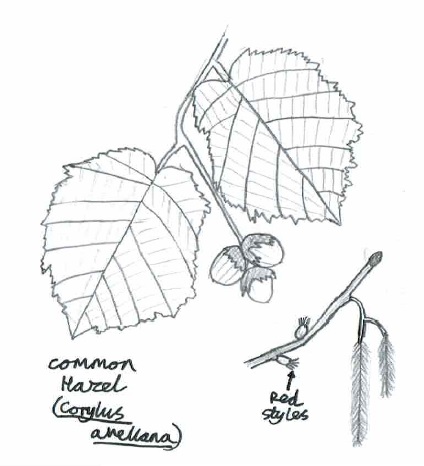
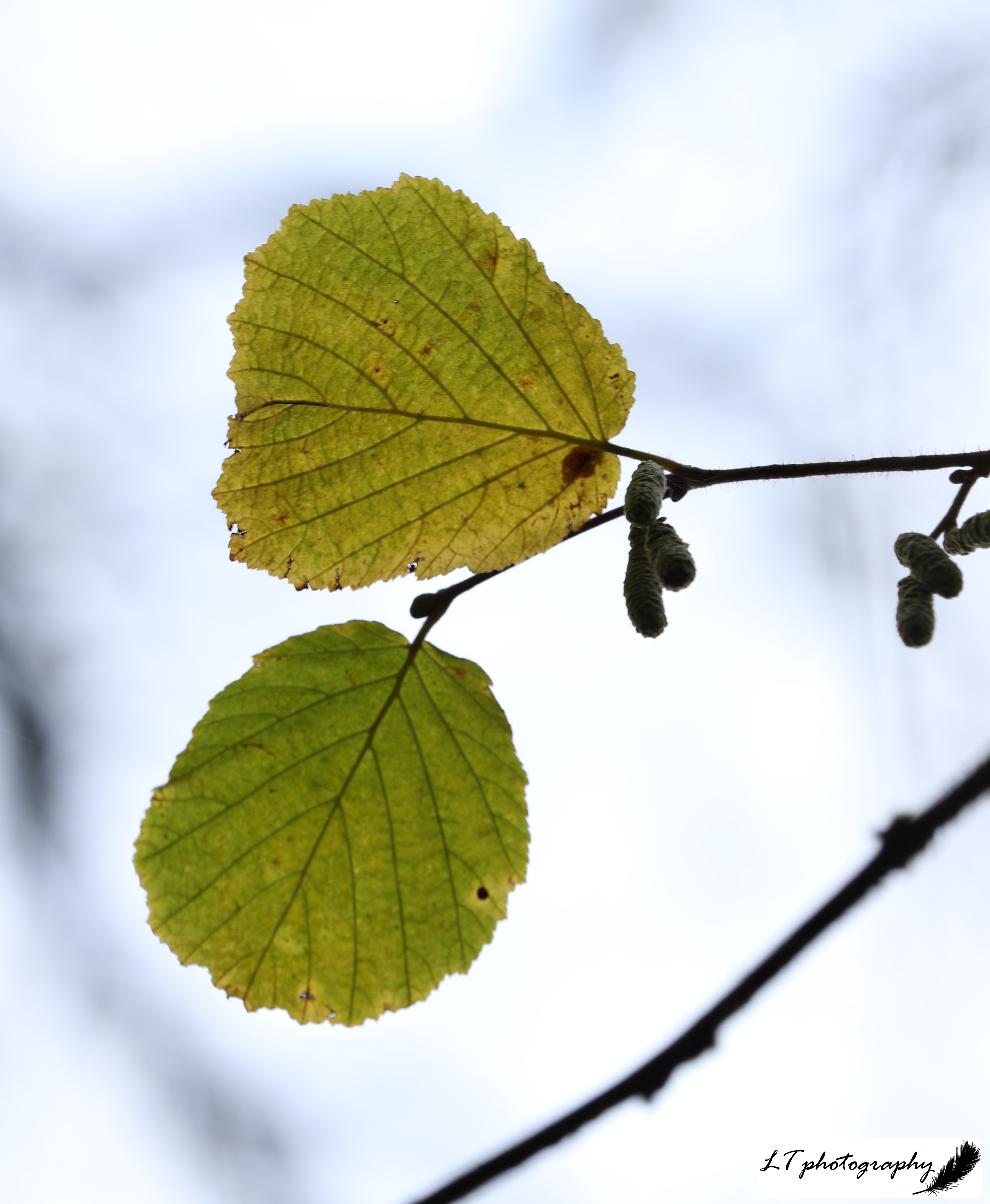
9. Common Hazel (Corylus avellana)

  • Family: Betulaceae – related to birches, alders and hornbeams
  • Origin: Native
  • Shape and size: Many stems rise from the ‘stool’, which if left uncut can reach 9m
  • Stems and twigs: Bark coppery brown, smooth and tending to peel
  • Leaves: Alternate, almost circular with sawtooth edges, hairy, and soft to the touch
  • Flowers: Male and female flowers found on the same tree. Male= lemon-yellow lambstail catkins; Female= tiny buds with red tassels
  • Seeds: An edible nut encased in a thick-green husk, ripening in autumn
  • Range & habitat: Grows throughout Britain, often found in woods, scrub areas, and hedges

In Winter: Distinctive shape and bark, accompanied by the male catkins from December

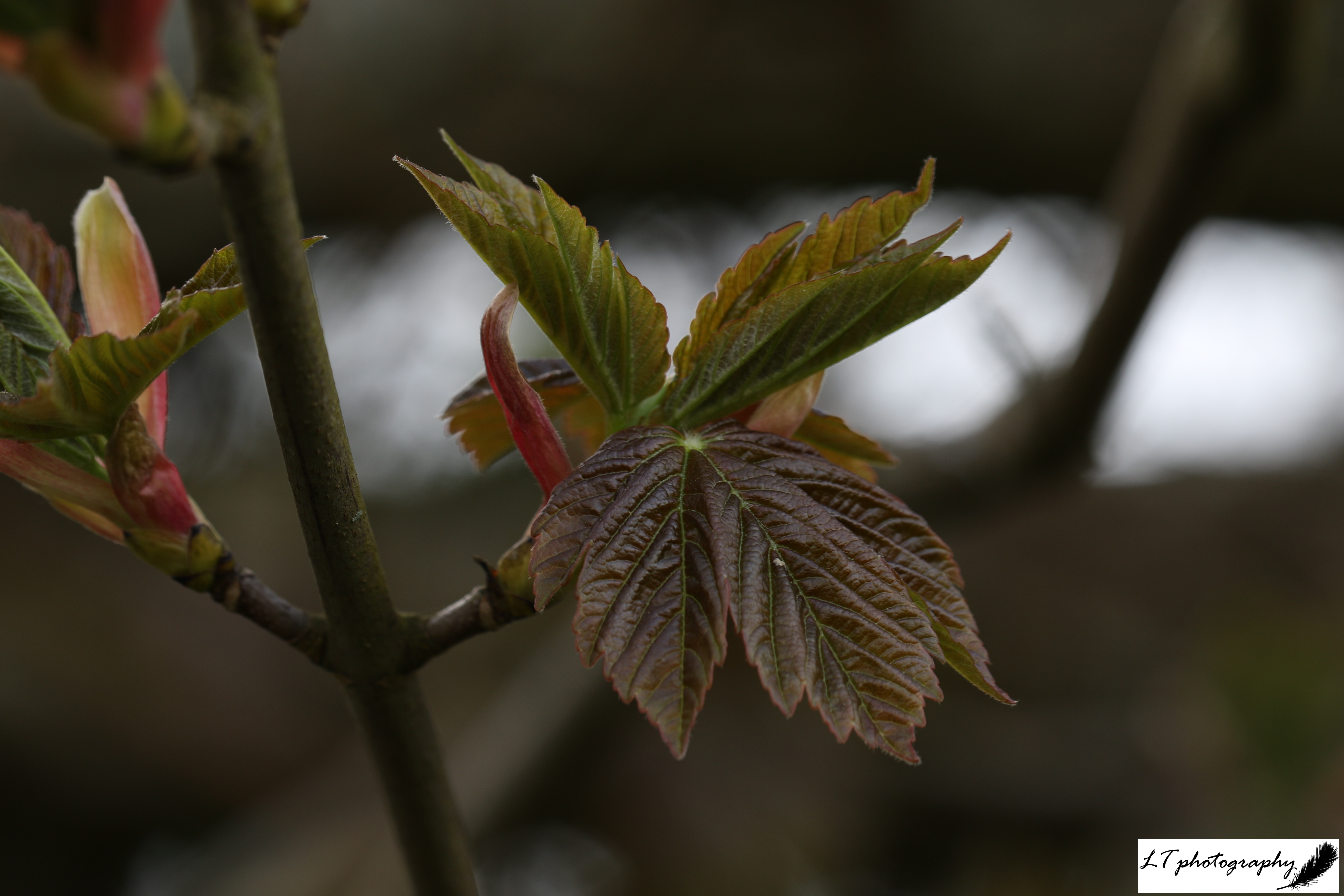
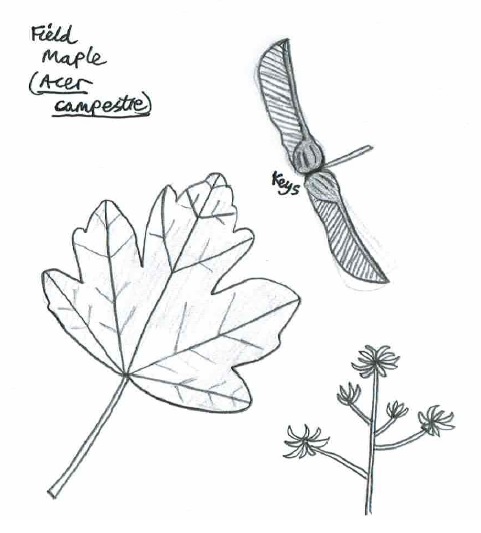
10. Field Maple (Acer campestre)

  • Family: Sapindaceae – related to lychee and horse chestnut
  • Origin: Native
  • Shape and size: Round-shaped tree with branches that droop at the end, growing up to 26m
  • Stems and twigs: Bark is grey or light brown and twigs downy, later corky
  • Leaves: Emerging leaves have a pinkish tinge, turning dull-green, and are opposite and small, with three main, round-tipped lobes and two smaller basal lobes
  • Flowers: Small yellow-green flowers form erect clusters
  • Seeds: Each pair of seed wings lie in an almost straight line, are often tinged with pink
  • Range & habitat: Frequent in England and East Wales in woods and hedgerows

In Winter: Sinuous trunk and distinctive shape

Drawings and photos all my own

How to… Identify Chalkland Wildflowers

Colourful, radiant, buzzing with life, a piece of paradise in the summer sunshine. All words to describe a small piece of chalk habitat nestled within the heart of my family’s farm in Dorset. Amidst a clay-dominated landscape, this small creation aims to emulate the approximately 41,000 hectares of lowland chalk grassland that can still be found across the UK. This super rich habitat contains over 40 species of flowering plants in every one square metre, giving chalk grassland its reputation as the tropical rainforest of Europe! Sadly though, 50% of chalk grassland has already been lost in Dorset alone since the 1950s.

In 2017, my Dad made the decision to transform a small triangular area of land on our farm into our very own chalk paradise. Though we do not live immediately on chalk downland, it can be found to the North and South of us. This makes our location ideal to create stopover habitat or a wildlife corridor, for the myriad of species that rely on these diverse plant communities. Following bringing in 40 tonnes of quarried chalk and lots of wildflower plugs and seeds, we now have a thriving 10m by 3m and 2m in height chalk mound.

Though my family’s chalk habitat is still in its relative infancy, over time it is transforming into a wildlife haven. From Grasshoppers and Marbled White Butterflies to blue Butterflies and Carder Bees, new species are popping up each and every year. This mini habitat has also been a great place for my mum to teach me all about the plant species that call chalkland grassland home. With her inspiration, I have put together a simple guide to identifying just some of the many wildflower species that are appearing on our mound.

Chalkland Wildflowers

Wild Marjoram (Origanum vulgare)Wild Marjoram

  • Family: Mint
  • Lifespan: Perennial (lives for several years)
  • Size: Short to medium height (30-60cm)
  • Stems: Erect, dark-red, downy and either round or square
  • Leaves: Oval, often slightly toothed, stalked, and 1.5-4.5cm in length
  • Flowers: Dark purple buds in loose clustered heads, opening to pale purple 6-8mm long flowers. Strongly aromatic. Flowers July-September
  • Range: Found throughout the UK (particularly in the South), but scarcer in Scotland
  • Fun Facts: This culinary herb is a symbol of happiness descended from Roman legend, with Origanum meaning ‘mountain joy’

Kidney Vetch (Anthyllis vulneraria)Kidney Vetch

  • Family: Legume
  • Lifespan: Annual (lives for one year) or perennial
  • Size: Sprawling and medium in height (up to 60cm), but very variable
  • Stems: Silkily hairy, round, and often greyish
  • Leaves: In pairs, they are silky white below and green above, and are 30-60mm in length
  • Flowers: Yellow, orange or a fiery red, and downy-white below. They are found in single heads (12-15mm across) or sometimes pairs. Flowers April-September
  • Range: Found throughout the UK, especially around the coast
  • Fun Facts: In the Middle Ages, it was known for speeding up wound healing, with vulneraria meaning ‘wound healer’. It was also once used to commonly treat kidney disorders

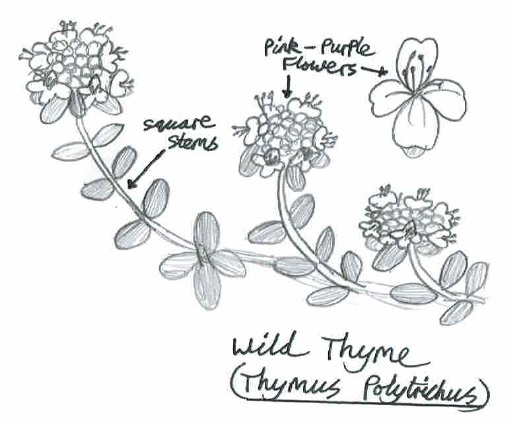
Wild Thyme (Thymus polytrichus) Wild Thyme

  • Family: Mint
  • Lifespan: Perennial
  • Size: Low to the ground, forming a mat of non-flowering rooting stems (up to 10cm in height)
  • Stems: Square with erect flowering stems
  • Leaves: Evergreen, short stalked, very small oval 4-8mm leaves in opposite pairs
  • Flowers: Faintly aromatic with pink-purple flowers in round and dense heads. Flowers May-September
  • Range: Widespread in South East England, but scattered distribution elsewhere
  • Fun Facts: Long regarded as the favourite flower of fairies, and associated with love. The Greek thumon though means ‘that which is included in a sacrifice’

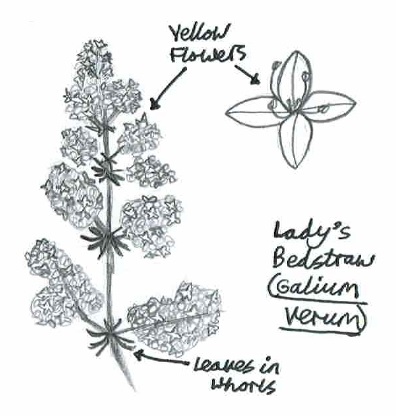
Lady’s Bedstraw (Galium verum)Lady's Bedstraw

  • Family: Madder/Bedstraw
  • Lifespan: Perennial
  • Size: Short to medium in height, often sprawling (up to 100cm)
  • Stems: Four-angled, almost hairless stems
  • Leaves: Dark green, long, narrow, shiny leaves in whorls of 8-12. Said to smell of new-mown hay
  • Flowers: Bright golden yellow, 2-4mm wide, in clusters, with a sweet honey-like scent. Only Bedstraw species in the UK with yellow flowers. Flowers June-September
  • Range: Widespread
  • Fun Facts: Associated with the story of the Virgin Mary giving birth to the baby Jesus, leading to the belief that a woman lying on a mattress of Lady’s Bedstraw would have a safe and easy childbirth

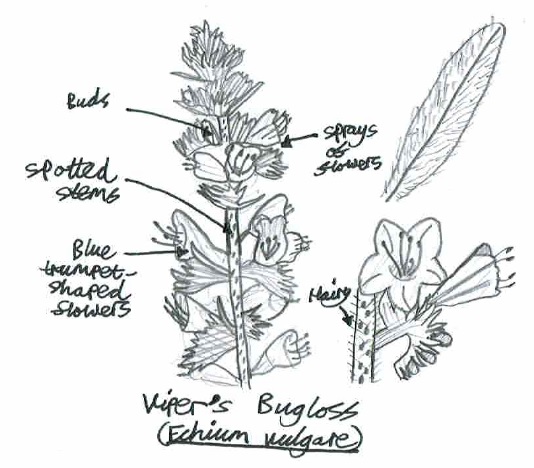
Viper’s Bugloss (Echium vulgare)Viper's Bugloss

  • Family: Borage/Forget-Me-Not
  • Lifespan: Biennial (flowers in its second year before dying) or perennial
  • Size: Medium to tall in height (up to 100cm)
  • Stems: Roughly hairy and spotted (red-based bristles)
  • Leaves: Narrow, oval-shaped lower leaves
  • Flowers: Flowers in drooping clusters of pink buds that open to become erect, blue, trumpet-shaped, open-mouthed flowers, 10-20mm long, in branched spikes. Flowers May-September
  • Range: Scattered distribution across the UK, being most common in the South
  • Fun Facts: The plant’s name comes from a time when it was believed to be a cure for snake-bites, reinforced by the dead flower-heads resembling a viper’s head

Rough Hawkbit (Leontodon hispidus)Rough Hawkbit

  • Family: Daisy
  • Lifespan: Perennial
  • Size: Short to medium in height (up to 60cm)
  • Stems: Very hairy, unbranched, leafless, and slightly swollen at the top
  • Leaves: Form a rosette of bluntly lobed leaves at the base of the flowering stem
  • Flowers: Golden-yellow, though often orange or reddish beneath, solitary and 20-40mm wide. Forms seed heads that look like dandelion clocks. Flowers late May-October
  • Range: Widespread and fairly abundant across the UK, apart from in the far North
  • Fun Facts: In Greek, Leontodon means ‘Lion’s tooth’, referring to the toothed leaves. The flowers are also rich in nectar and smell sweetly of honey

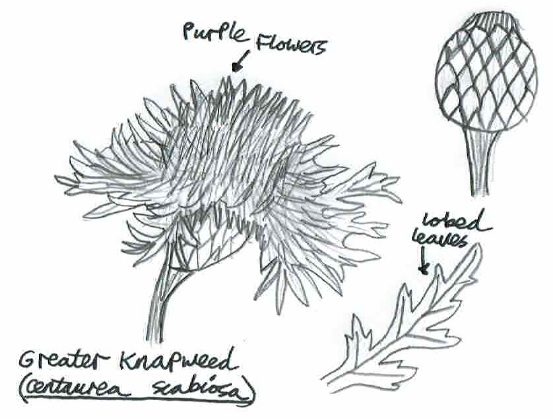
Greater Knapweed (Centaurea scabiosa)Greater Knapweed

  • Family: Daisy
  • Lifespan: Perennial
  • Size: Medium to tall in height (30-120cm)
  • Stems: Erect and grooved
  • Leaves: Lobed, where the lobes are positioned in pairs either side of the leaf centre. The leaves are 100-250mm long
  • Flowers: Purple, solitary and 30-60mm across. Flowers July-September
  • Range: Scattered across the UK, but predominantly grows in England
  • Fun Facts: Commonly used to treat wounds, bruises, sores and similar conditions

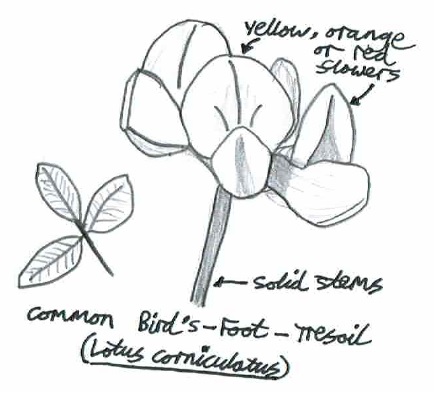
Common Bird’s-Foot-Trefoil (Lotus corniculatus)Common Bird's Foot Trefoil

  • Family: Legume
  • Lifespan: Perennial
  • Size: Short or medium in height and sprawling (up to 50cm)
  • Stems: Solid not hollow, and trailing
  • Leaves: Greyish-green, downy or hairless, and oval-shaped tapering to a point
  • Flowers: Deep yellow or orange, often partly red, and 10-16mm long, often 2-7 per flower head. Flowers May-September
  • Range: Widespread
  • Fun Facts: It has more than 70 common folk names including Eggs and Bacon. The name Bird’s-Foot-Trefoil reflects the resemblance to a bird’s foot, and is a larval food plant of Green Hairstreak and Dingy Skipper Butterflies

Ox-eye Daisy (Leucanthemum vulgare)Ox Eye Daisy

  • Family: Daisy
  • Lifespan: Perennial
  • Size: Medium in height (20-75cm)
  • Stems: Round, angled or square, erect, and slightly hairy
  • Leaves: Long-stalked, dark green, spoon-shaped, toothed and in a rosette around the base of the flowering stem
  • Flowers:  White, 20-60mm across, solitary and on sparsely leafy stalks. Flowers May-September
  • Range: Widespread
  • Fun Facts: In past times, an extract was obtained by boiling the plant down, that  was used in salves and medicines to cure a variety of ailments from liver disease to runny eyes. Largest native daisy species

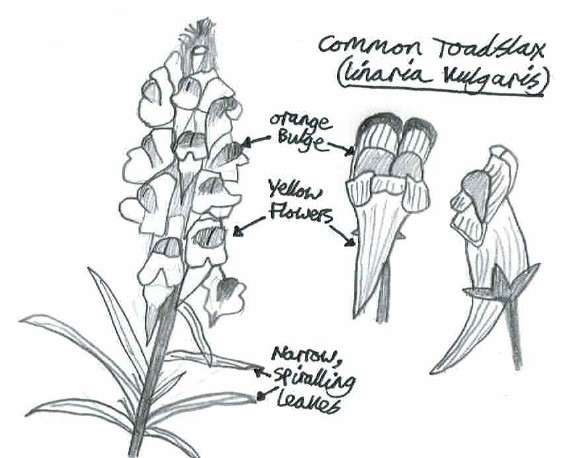
Common Toadflax (Linaria vulgaris)Common Toadflax

  • Family: Plantain
  • Lifespan: Perennial
  • Size: Short to medium in height (30-80cm)
  • Stems: Erect, grey-green, and hairless
  • Leaves: 30-80mm long, very narrow, untoothed, and spirally arranged up the stems
  • Flowers: 15-35mm long, yellow with an orange bulge and long straight spur, forming stalked spikes. Flowers June-October
  • Range: Widespread
  • Fun Facts: Most common Toadflax species in the UK, getting its name from previously being considered as useless, fit only for toads

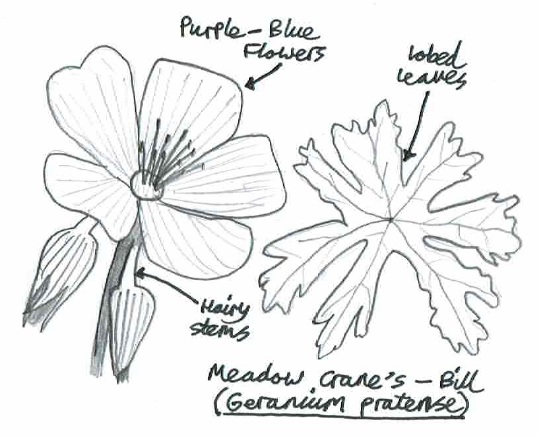
Meadow Crane’s-Bill (Geranium pratense)Meadow Cranesbill

  • Family: Geranium
  • Lifespan: Perennial
  • Size: Medium to tall in height (30-100cm)
  • Stems: Hairy, erect, and often reddish
  • Leaves: Have 5-9 lobes, cut nearly to the base
  • Flowers: Soft violet blue, petals not notched, 15-30mm wide. Flowers June-September
  • Range: Found throughout the UK, but rarer in South West England and East Anglia
  • Fact: With lesser known names such as ‘Jingling Johnny’ or Loving Andrews, it is a horticultural favourite dating back to before the Elizabethan times

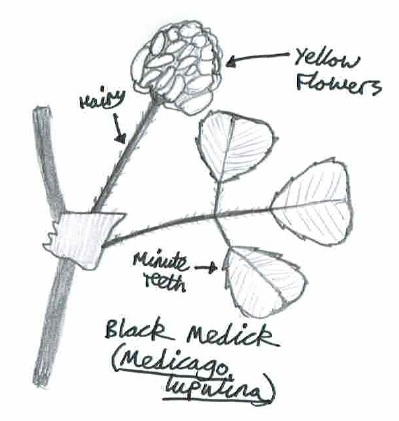
Black Medick (Medicago lupulina)Black Medick

  • Family: Legume
  • Lifespan: Annual or short-lived perennial
  • Size: Low in height (up to 60cm), and sprawling or erect
  • Stem: Round or square and hairy
  • Leaves: Trefoil, downy, and 5-20mm in length, with minute teeth
  • Flowers: Bright yellow and small, with 10-50 to one short-stalked rounded head (3-8mm wide). Flowers April-October
  • Range: Widespread across the UK, but sparser in Scotland
  • Facts: Name means ‘plant of the Medes’, referring to an ancient Middle Eastern people, whilst lupulina means ‘hop-like’, due to similarities with Hop Trefoil


Now get out there and see what you can find!


Drawings and photos all my own

30 Days Wild 2020: My Wild Month

I have always lived a wild life. For this I have my family to thank, being raised in the middle of the beautiful Dorset countryside, immersed in everything Mother Nature has to offer. It has been my playground, my classroom, my escape, and my counsellor. It is a part of who I am. This is why I am so passionate to protect and conserve our natural world, and why I now make it my mission to share all it has to offer with the rest of the world.

So when I heard about 30 Days Wild, I just had to get involved! The month-long challenge aims to bring people closer to nature, get people learning and exploring, and make a positive difference for wildlife in the UK. This year I made it my goal to spread the word, and before the month started, I began blogging about the challenge in the hope of inspiring others to also get involved (check out How to… Get involved in the June 30 Days Wild challenge). The response was amazing!

Once June was under way, I also made 30 Days Wild a focus of each and every day for the whole of the month. I got to try some new things, learn some new knowledge, help some worthy causes, share with others about nature and wildlife, and most importantly, I got to explore and spend valuable time out in nature. I enjoyed every minute, so join me now as I take a look back at how wild my month of June really was!

Wall Chart

30 Days Wild – June 2020

Day 1 – Monday 1st (Work):

For the very first day of my 30 Days Wild, I started with a bang, showing my support for my local Wildlife Trust by becoming a member. By joining Dorset Wildlife Trust, I have joined 25,000 other members helping to conserve and safeguard wildlife in Dorset and on my doorstep. I look forward to now doing my bit!

Day 2 – Tuesday 2nd (Work):

For my second day, I was faced again with the challenge of completing a Random Act of Wildness alongside a busy day at work. I achieved this though, by taking a break in the evening to watch a wild webcam in the form of BBC Springwatch’s live nest cams. It was amazing to get a different perspective of the nests, such as being right inside a Jackdaw’s nest!
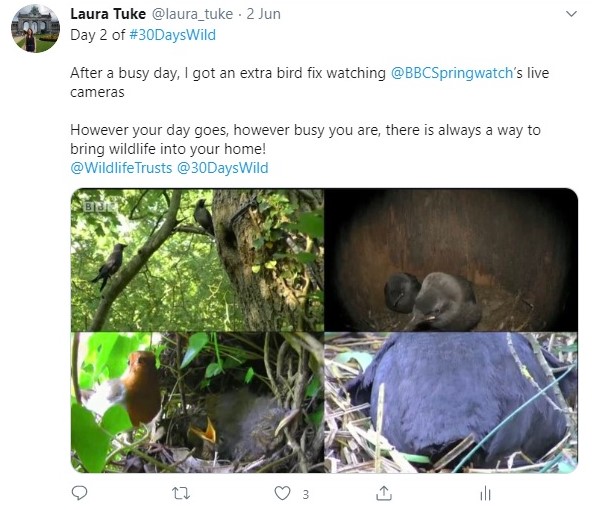
Day 2

Day 3 – Wednesday 3rd (Day off):

On my first day off during the challenge, I was able to go for a long walk out in nature, seeing what I could discover on my way. Despite it being a rainy day, the wildlife did not disappoint, with lots of different birds and insects making their presence felt, from families of Long-Tailed Tits to chattering Magpies.

Day 4 – Thursday 4th (Day off):

With another day off work, I decided to combine taking in nature with another of my passions, horse riding. On a hack with my next door neighbour’s mare Marsha, I got to get some really great views of the beautiful countryside near where I live, combined with views of some great bird species, such as my favourites, the birds of prey.

Day 5 – Friday 5th (Work):

Over the last couple of months I have tried to regularly upload a new post to this blog every Friday. To combine 30 Days Wild with my recent How to… series, on this day I uploaded a piece about making a home for wildlife, and in particular a hotel for bees. To do this post, I got to make my very own hotel, which was very rewarding, so if you would like to make your own, why not check out my easy guide: How to… Make Your Own Bee Hotel
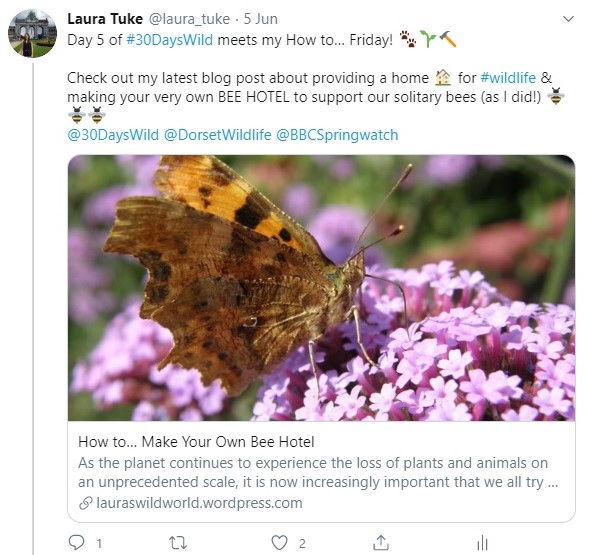
Day 5

Day 6 – Saturday 6th (Day off):

I love growing my own fruit and vegetables, and then being able to pick and eat them! So I was happy on this day off, that I got the pleasure of picking my family’s first gooseberry crop, though it took a while after to top and tail all of them! I also spent time listening to my bird songs and calls CD to do some revision before going out for a walk to test my knowledge. I now love being able to instinctively know when I can hear certain species, such as a Blackcap or Yellowhammer singing in the landscape!

Day 6

Day 7 – Sunday 7th (Work):

I spent the whole of my Sunday making a note of the species that I came across as I went about my usual day before, during and after work. I was able to realise just how lucky I am to work outside and spend so much time out in nature everyday!

I also spent the evening catching up on Springwatch with the company of one of my house cats!

Day 8 – Monday 8th (Work):

During my 30 Days Wild, I wanted to donate to a wildlife cause. I decided that one cause I wanted to support was the Marine Turtle Conservation Project, which without funding would not be able to continue their important work. It was also well timed as the 8th of June was World Oceans Day!

I as well finished my day excitingly helping with Barn Owl nest box checks in my local area, now that I am fully licensed. This included the Barn Owl box on my family’s own farm and it is definitely looking positive for them this year!

Day 9 – Tuesday 9th (Work):

On this day, I was lucky enough to go out hacking on horseback whilst at work, and rode through some really spectacular countryside. It was one very busy day at work, so when I got home I also relaxed with some wild reading, including a great fictional book by zoologist Delia Owens called Where The Crawdads Sing. Her imagery of the North Carolina marshland is absolutely stunning!
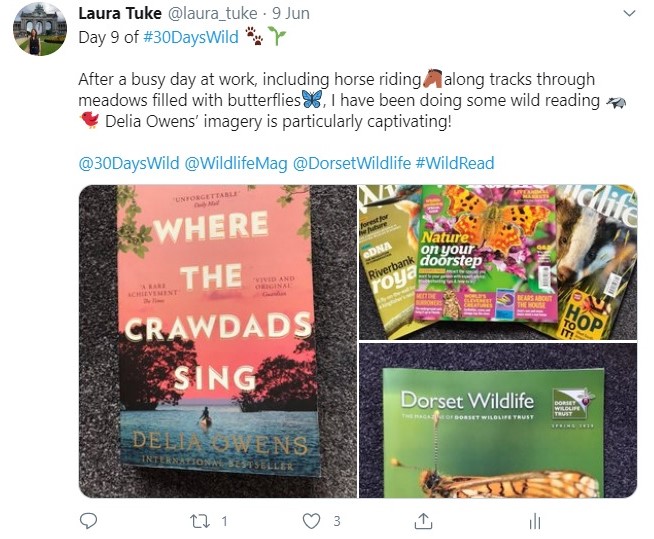
Day 9

Day 10 – Wednesday 10th (Day off):

For my day off, I wanted to spend time really taking in the natural world around me and exploring the finer details. In this way, I got to see some incredible things from a hunting Sparrowhawk and Digger Bee nests to strong smelling Honeysuckle and mating Yellow Shell Moths. There is just so much to see if you give yourself the time to take it all in!

Day 10

Day 11 – Thursday 11th (Day off):

The day before during my walks, I had collected some Barn Owl pellets from beneath two nest sites, a tree and a nest box, on my family’s land. I then spent the next day soaking the pellets and teasing them apart to see what they held inside. From the nest box site, there was Field Vole, Mouse and Common Shrew bones, whereas from the tree site there was Field and Bank Vole, Common and Pygmy Shrew, and Brown Rat.

I also spent some time identifying plants that I had seen out and about, including learning to identify a Male Fern that my cat was very interested in helping me with!
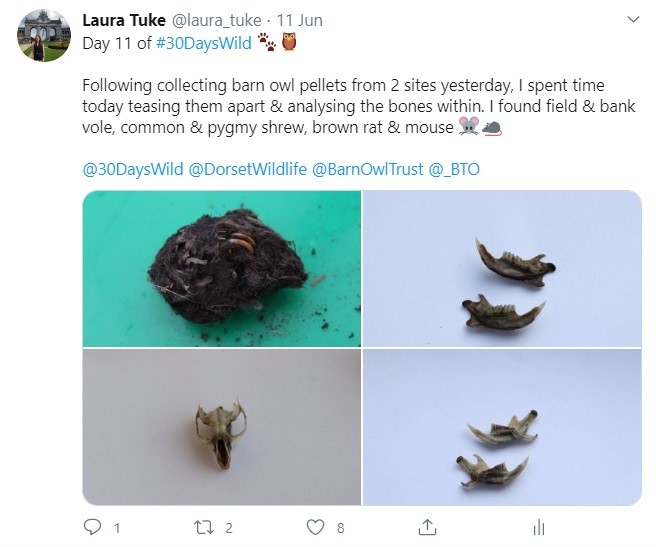
Day 11

Day 12 – Friday 12th (Work):

This Friday, I once again combined 30 Days Wild with my recent How to… series, uploading a post on making small changes to your own life to help our planet. For example, walking and cycling more, thinking before you buy, and cutting your water usage. If you want to get inspired yourself, check out my post: How to… Help the planet one small step at a time.

I also spent some time on this rainy day, appreciating the beauty of the falling rain.

Day 12

Day 13 – Saturday 13th (Day off):

I spent my Saturday wild and busy. My activities ranged from identifying pollinators to organising equipment ahead of the autumn bird ringing season. I am always happiest doing something but doing something outside is even better!

Day 14 – Sunday 14th (Work):

There is nothing more valuable than your own parents passing down their knowledge to you, and with mine it is no different. I have my Mum to thank for the foundations of all my wildlife knowledge today, from bird song to plant species. This year my Mum has been teaching me about chalkland species, using the chalk mound my Mum and Dad have created themselves on our farmland. It has been so enjoyable listening to my Mum as she IDs and teaches me each and every species on the ridge!

Day 15 – Monday 15th (Work):

The ever-changing sky is a source of wonder and life. I took time over the course of a whole day, appreciating it and watching it change, from cloud watching with white fluffy and dark rain clouds to an unexpectedly beautiful sunset!

Day 16 – Tuesday 16th (Work):

One of the acitivities I definitely wanted to do during 30 Days Wild, was to make my own bird food, taking me back to my childhood. I kept it simple with lard and bird seed, and packed the food into different shaped recycled containers for some variation. I then left it in the fridge overnight with the aim of testing it the very next day!

Day 16

Day 17 – Wednesday 17th (Day off):

I began my day off by putting out my homemade bird food in the garden. Unfortunately it was a bit hot, and the food kept melting off its strings! It was a hit with the local fledged Starling chicks though, and eventually disappeared within 48 hours.

I also took my mum and dad to my bird ringing trainer’s private nature reserve for a a different walk. It is such a lovely place to be, and gave us all some inspiration of how we can make more homes for wildlife on our own land. To finish the day, I helped pick some of the fruit growing in my family’s garden, my favourites being the strawberries!
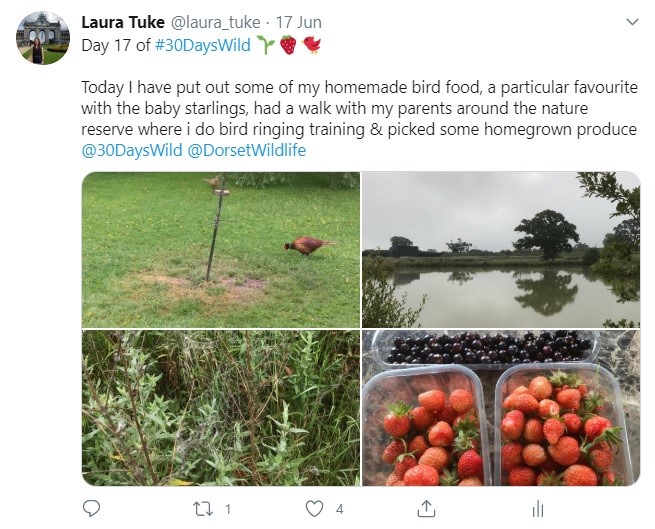
Day 17

Day 18 – Thursday 18th (Day off) :

People who read my blog will know that I love the woods! It’s a place I go to when I want a break from the world or just to watch the seasons change in a place where it’s at its most noticeable. So as part of my 30 Days Wild, I headed into the woods for a spot of forest bathing and a refresher. The day’s rain did not even stop me!

Day 18

Day 19 – Friday 19th (Work):

Due to my love of spring and wildlife photography, for this Friday on my blog, I uploaded a post about my favourite photos from spring 2020. It was great to reflect on my own spring and to look back on some great moments, making it easily one of my favourite posts so far this year! If you want to take a look, check out my Spring 2020: In Photos

I also headed out into my family’s land after work, to revisit a favourite camera trapping spot from this spring. Once there, I set up my camera trap again, and looked forward to seeing what I might catch this time around.

Day 19

Day 20 – Saturday 20th (Work):

After work, I signed up to the BTO’s Garden BirdWatch, which is currently free for everyone to take part, and allows me to upload what I see in my garden at home every week. I also took time out to focus on my mental health, and completed a wild guided meditation, lying on the grass in my garden. I picked this particular meditation as it incorporates taking in the sounds around you, such as the sounds of nature. It was so surreal for me to relax outside and then reopen my eyes to see lots and lots of baby starlings looking back at me!

Day 20

Day 21 – Sunday 21st (Day off):

As it was Father’s Day, for my Sunday off, I got to spend lots of time with my dad. This included two walks also with my mum, where we tried to see what nature had to offer us, which included birds of prey and wonderful Skylarks. To top off an active day, I also pulled on my trainers for the first time in a couple of weeks, due to an injury, and went for a run through the countryside around my home. I just cannot get enough of being outdoors!
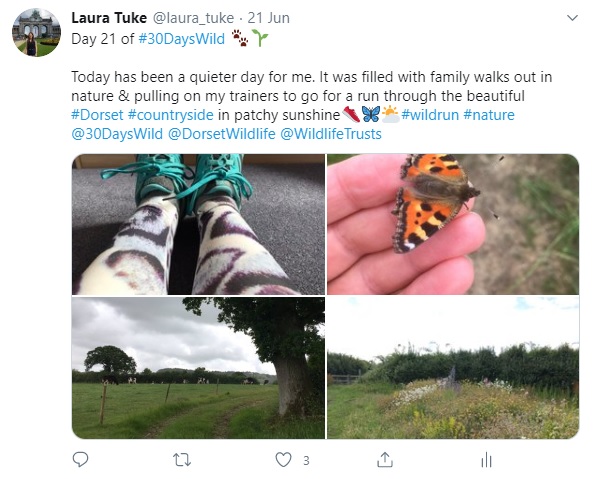
Day 21

Day 22 – Monday 22nd (Work):

For my Monday, I completed two different Random Acts of Wildness. Firstly, I began writing down all the birds I saw in my garden during the day as part of the BTO’s Garden BirdWatch.

I then made a donation to charity. I may not have a lot of money, but at times like these I realise how lucky and fortunate I am in life. So when I saw another great cause, I had to get involved and donate!

Two years ago, during my Master’s in Conservation and Biodiversity, I got the opportunity to go on a field course to Kenya, with a lot of organisation from Adventure Upgrade Safaris. They even got me a cake for my birthday! Now without tourism, the company are struggling and without our support, they will not be able to continue for the future. They need our help to survive!
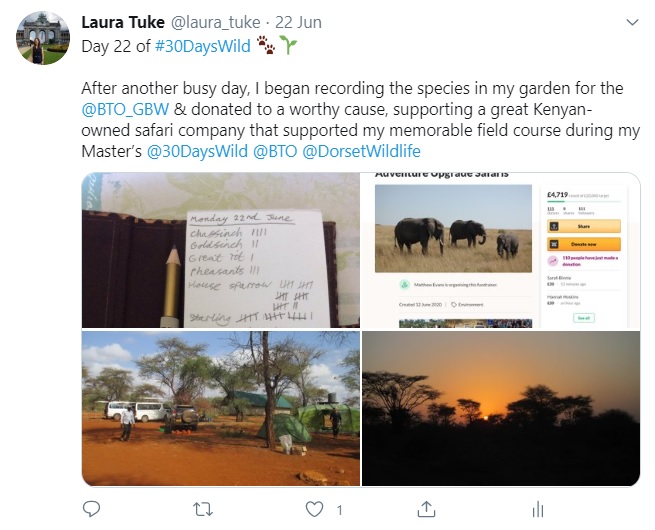
Day 22

Day 23 – Tuesday 23rd (Work):

This day was an exciting day for me! It was the day that, after work, I got to retrieve my camera trap that I had put out last Friday!

Though I had previously captured my best camera trap photo this year in this location (a fox cub), I did not know what to expect this time around. My camera trap did not disappoint though, and the photos included those of the fox cub I had previously seen, a rabbit and some really great photos of some badgers!

Day 24 – Wednesday 24th (Day off):

On a day when I really needed it, I got to spend my day off doing some things I love. My bird ringing group starts the autumn migration ringing season on the 1st of August and so to start my Wednesday, I helped with some of the preparation for the season. For example, we completed an important but often overlooked job, re-dying our mist nets with a special dye mix.

I also excitingly spent some of my day ringing Kestrel chicks and, now that I am fully licensed, helped with Barn Owl nest box checks. This led to me also getting to ring Barn Owl chicks and getting some great views of some Little Owls!

Day 24

Day 25 – Thursday 25th (Day off):

Another activity I really wanted to do during my 30 Days Wild, was to do some wild baking. I decided on making some simple vanilla cupcakes and decorating them with minibeasts in different colours.

My time spent baking was not without some drama though, as I ended up modelling icing during an afternoon of over 30 degrees heat! Despite this, I soldiered on through runny icing, with the much needed help of my mum, and had some great fun, whilst making some yummy cakes topped with interesting and colourful creatures!
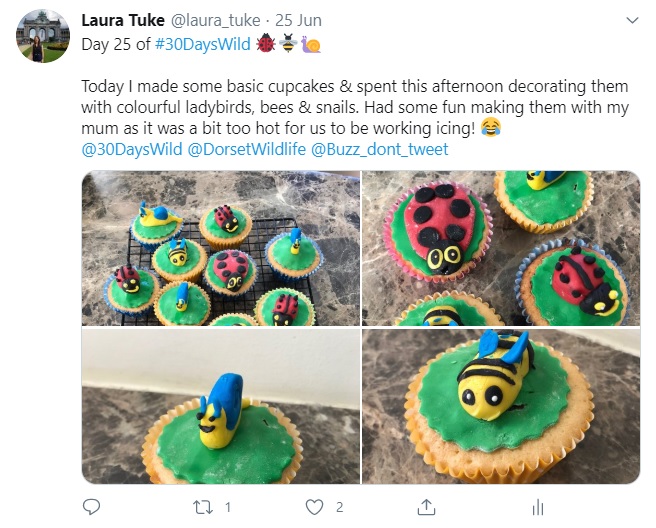
Day 25

Day 26 – Friday 26th (Work):

For my last Friday of 30 Days Wild, I uploaded to my blog another brand new post. This time my post followed on from last Friday’s spring upload, and focussed on how spring unfolded this year. If you want to have a read about how my extra special spring actually turned out this year, check out my Spring 2020: How It Happened.
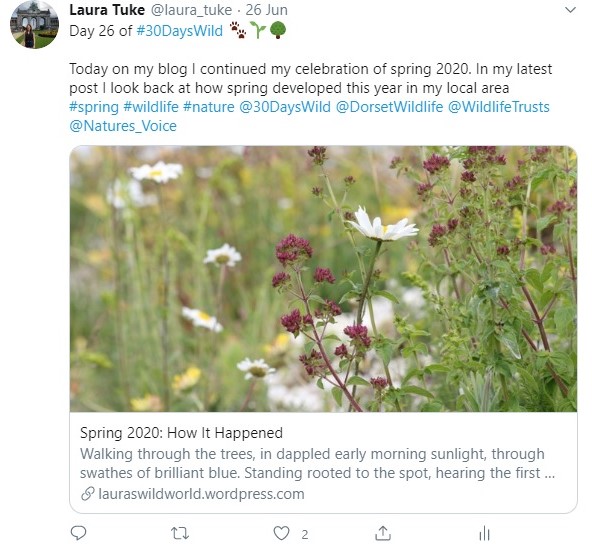
Day 26

Day 27 – Saturday 27th (Day off):

This day was another day of relaxing in nature. This included watching and recording the birds in my garden, going for a long horse ride through the Dorset countryside, and exploring the flowers growing in my garden and on my currently ‘no mow’ lawn.

Day 27

Day 28 – Sunday 28th (Work):

With it being especially rainy during my day at work, I made it my priority to spend my lunch break outdoors during a break in the weather. It was a much needed refresher! Also, having completed my first week of the BTO’s Garden BirdWatch yesterday, I spent my evening uploading my results to their website. It was exciting to see how the week actually went!
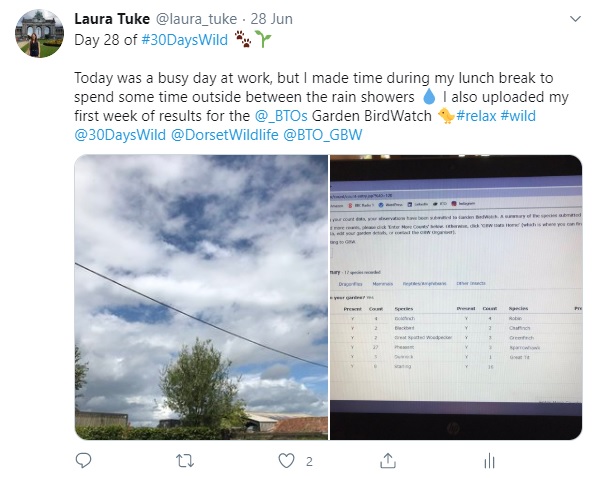
Day 28

Day 29 – Monday 29th (Work):

I spent this Monday rushed off of my feet at work. To keep my brain relaxed though, I came up with the plan of spending my day attempting to noticing the wildlife around me and seeing if I could find a species for each letter of the alphabet. I had a very successful day of it, alongside being very productive at work, leading to only one species missing (the letter X)!

The response to me completing this activity was absolutely amazing on Twitter. It gave me a real sense of joy to see everyone’s support, so thank you everyone!

Day 30 – Tuesday 30th (Work):

Today was the last day of June and the final day of 30 Days Wild. However much I would have liked to have finished with a bang, it would not have fit my true and busy day. Instead, today was a day of appreciating and being grateful for the natural world around me. This may be in the form of what I encountered on my travels or seen out of my window, or by taking in other people’s experiences such as through books and on twitter. I treasured them all!
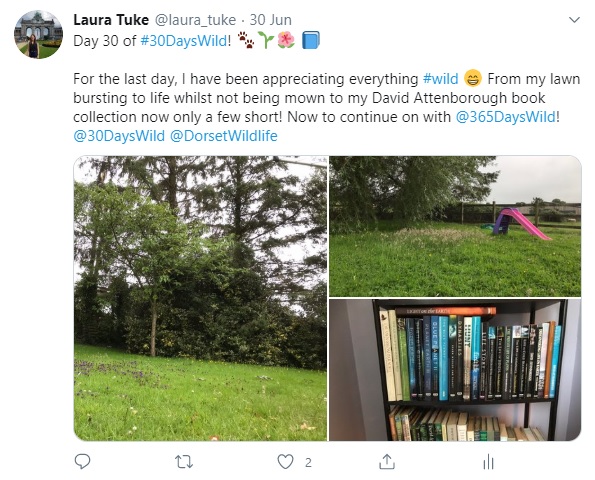
Day 30

My Highlights

This June has been a wild rollercoaster which I have absolutely loved! Spending time focussing on nature each and every day has enriched my days, relaxed me, and allowed me to connect further with the wild world around me. If I had to pick some highlights, these would include my wild alphabet becoming popular on Twitter, making wild cupcakes with my mum, expanding my knowledge of plants, ringing my first Kestrel and Barn Owl chicks, and sharing my 30 Days Wild on social media.

I have learnt and experienced so much this past month, and I am now inspired to continue making the natural world an important part of each and every day, and to share my passion with as many people as I possibly can. I hope that if you participated in this year’s challenge, that you also had a great month. Otherwise here’s to next year’s 30 Days Wild!

19_04_19_Farm_Cows_Milk_Blackthorn_3

How to… Identify Hedgerow Plants

Whizzing past our car windows, naturally bordering our fields and gardens, or providing a home for wildlife. Often going unseen and unnoticed, hedgerows are a widespread and overlooked habitat right on our doorsteps. Bountiful and bursting with life, each hedge is unique from the next, with a story to be told and a world to be explored.

Blackthorn 5

From butterflies and birds to hedgehogs and dormice, an incredible number of species rely on the plants in our hedges for their survival, such as food, shelter, and corridors along which to travel. They do not just play a role for wildlife though, holding value in the wider landscape, providing us with services such as stopping soil erosion and buffering pollution. In this way, hedgerows have been important for humans and wildlife alike for hundreds of years!

20_03_20_Farm_Goldfinch_2

The first hedgerows can be dated back to the Bronze Age, when farmers cleared woodland to grow crops, leaving carefully maintained strips to act as boundaries. Some of these strips of ancient woodland can still be found today! Since then hedges have grown in popularity, but following the Second World War, many were ripped up to provide more space to grow food and for development. Despite approximately half of all hedges in Britain being lost during this time, thankfully the remaining were given protected status in 1997.

13_05_20_Farm_Sunrise_Hangings_Trees

The hedgerows rolling across our countryside today are a piece of history, full of life and colour and provide us with a whole host of resources. So, why not try and see this for yourself, and take a moment to see what you can find in a hedgerow local to you? To help, here’s my simple guide to identifying some of our iconic hedgerow species.

Hedgerow Plants

Blackthorn (Prunus spinosa)Blackthorn

  • Family: Rose – related to fruiting trees such as cherries and plums
  • Size: Up to 4m tall
  • Stems and twigs: Blackish and thorny
  • Leaves: 2-4cm long, oval-shaped tapering to a point with toothed margins
  • Flowers: Snow-white and 5-petalled with red-tipped anthers in the centre. Flowers late March-April, appearing BEFORE the leaves
  • Seeds: Produces fruit (sloes) which are small blackish plums with a bluish powdery surface. Tongue-numbingly tart to eat but popular to flavour gin
  • Range: Widespread and common throughout most of Britain
  • Fun Facts: Blackthorn, long used for making items such as walking and riding sticks, has long been associated with witchcraft

Spindle (Euonymus europaeus)Spindle

  • Indicator of an ancient hedgerow
  • Family: Staff-vine
  • Size: Up to 9m tall
  • Stems and twigs: Bark and 4-sided twigs are deep green, darkening with age
  • Leaves: 3-13cm long, shiny, mid-green, oval-shaped tapering to a point with finely toothed margins, and turning distinctively pinkish-red in autumn
  • Flowers: Greenish-white and 4-petalled in small overlooked stalked clusters. Flowers May-June
  • Seeds: Distinctive 4-lobed bright coral-pink berries
  • Range: Less common in Scotland and Ireland, found throughout England and Wales, but most frequent in the south
  • Fun Facts: The hard dense wood of spindle was used from ancient times to make spindles, whereas the leaves and seeds were powdered to dust on the skin of children to drive away lice

Cow parsley (Anthriscus sylvestris) Cow parsley

  • Family: Carrot – related to species such as parsnips and poison hemlock
  • Size: ~1m tall
  • Stems and twigs: Stems are hollow and furrowed, often becoming purple
  • Leaves: Fresh green, 3-pinnate, and sharply cut
  • Flowers: White, forming clusters known as umbels. Flowers April-June
  • Seeds: Round, smooth and broad-based
  • Range: Widespread and common throughout Britain and strongly associated with hedgerows
  • Fun Facts: Its folk-name is ‘Queen Anne’s lace’. This comes from a folk tale which said that the flowers would bloom for Queen Anne and her ladies in waiting and reflect the delicate lace they wore

Common Hazel (Corylus avellana)Hazel

  • Family: Birch – related to species such as silver birch, alders and hornbeams
  • Size: Up to 8m tall
  • Stems and twigs: Bark coppery brown, smooth and tending to peel
  • Leaves: 5-12cm long and almost circular with sawtooth edges
  • Flowers: Male= lemon-yellow catkins; Female= Tiny and bud-like with red styles. Flowers January-March BEFORE the leaves
  • Seeds: An edible nut encased at first in a thick-green husk before ripening in autumn
  • Range: Widespread and common throughout Britain
  • Fun Facts: Hazel rods have historically been used for a range of purposes from hurdles and coracles for fishing to house building and basketwork

Dog Rose (Rosa canina)

  • Family: Rose
  • Size: Up to 4m tall
  • Stems and twigs: Arching stems with broad-based strongly hooked prickles
  • Leaves: Dark green and oval-shaped tapering to a point with toothed edges
  • Flowers: Flat and fragrant white or pale pink, with large petals and hairless stalks. Flowers June-July
  • Seeds: Fruit, known as a hip, that is egg-shaped and bright red
  • Range: Most common and variable wild rose, widespread throughout Britain, but most frequent in the south
  • Fun Facts: Adopted as a symbol of the British monarchy and England since the reign of Henry VII. It is also a valuable medicinal plant, with its hips being made into a Vitamin C rich syrup for children

Field Rose (Rosa arvensis)

  • Compared to the Dog Rose, the Field Rose is shorter, growing up to about 2m, with slightly smaller, cup-shaped creamy-white flowers that flower about a fortnight later, from June-July. Also, the flowers’ sepals are often purplish, the styles are in a column, and the hips are smaller and often more round. The Field Rose’s range does not stretch as far north as that of the Dog Rose, being absent from Scotland

Roses

Common Hawthorn (Crataegus monogyna)Hawthorn

  • Family: Rose
  • Size: Up to 10m tall
  • Stems and twigs: Very thorny and hairless
  • Leaves: Leafing in April, the leaves are shiny and roughly oval-shaped with 3-5 deeply cut lobes
  • Flowers: White fragrant (sickly sweet) flowers with pink/purple anthers, only one style and 5 petals. Become deeper pink as they fade
  • Seeds: Fruit, known as haws, have a single seed and ripen to a bright red
  • Range: Widespread and common throughout Britain
  • Fun Facts: Hawthorn is linked to Christian, pagan and medieval rites, and has ancient associations with May Day. Bringing hawthorn blossom in your house was believed to bring in illness and death upon you

Elder (Sambucus nigra)Elder

  • Family: Previously in the honeysuckle family , but now reclassified in moschatel
  • Size: Up to 10m tall
  • Stems and twigs: Strong smelling with corky and fissured bark
  • Leaves: Dark green, pinnate with 5-7 leaflets
  • Flowers: White, small and fragrant in flat-topped clusters with yellow anthers. Flowers May-August
  • Seeds: Produces a juicy edible purplish-black berry
  • Range: Widespread and common throughout Britain
  • Fun Facts: Has many uses from wines and jams, to toys and dyes. Also, it was believed that planting an elder tree near your house would keep the Devil away

Field Maple (Acer campestre)Field Maple

  • Family: Soapberry – related to horse chestnut and lychee
  • Size: Up to 25m tall
  • Stems and twigs: Twigs downy
  • Leaves: Much smaller than sycamore at 4-7cm long and wide, rather bluntly lobed (3-5), and dark green. Turn distinctively amber in autumn
  • Flowers: Yellowish-green and carried in upright spikes. Flowers May-June after the leaves
  • Seeds: The seeds, known as keys, are winged and paired forming an angle of 180 degrees
  • Range: Common in England and East Wales, but less common elsewhere
  • Fun Facts: Wood used for furniture veneers, wall panelling, and violin-making, but previously used to make domestic utensils such as drinking bowls. As with all maple trees, the sap of the field maple can be used to make maple syrup

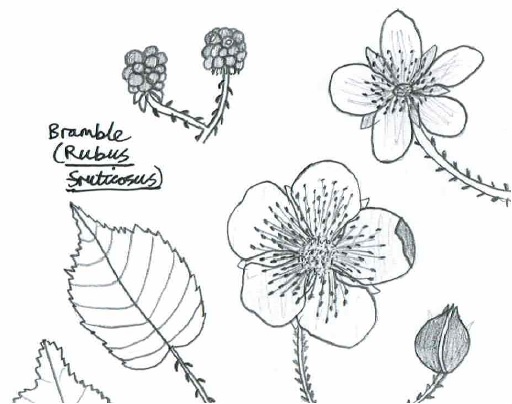
Bramble (Rubus fruticosus)Bramble

  • Family: Rose – closely related to species such as raspberries and dewberries
  • Size: Up to 4m tall or long
  • Stems and twigs: Prickly and half-evergreen
  • Leaves: 3-5 broad, toothed leaflets
  • Flowers: White or pink and flowers from May onwards
  • Seeds: Fruit is the familiar edible blackberry that starts green, then turns red, finally ripening to purple-black
  • Range: Widespread and common throughout Britain
  • Fun Facts: Folklore dictates that blackberries should not be picked after Old Michaelmas Day in October, as the Devil has sullied them. Brambles were also previously planted on graves to stop sheep grazing

Pedunculate or English oak (Quercus robur)

  • Family: Beech – related to species such as beech and sweet chestnut
  • Size: Up to 40m tall
  • Stems and twigs: Massive rugged grey-brown trunk and broad crown
  • Leaves: 10-12cm long, oblong, usually broader at the base and lobed, turning brown in autumn
  • Flowers: Yellow-green catkins flowering April-June
  • Seeds: Produces the familiar acorn, with scaly cups and clusters carried on long stalks
  • Range: Widespread and common throughout Britain
  • Fun Facts: Druids in Celtic Britain held the oak tree sacred, with the oak becoming an English national symbol of strength

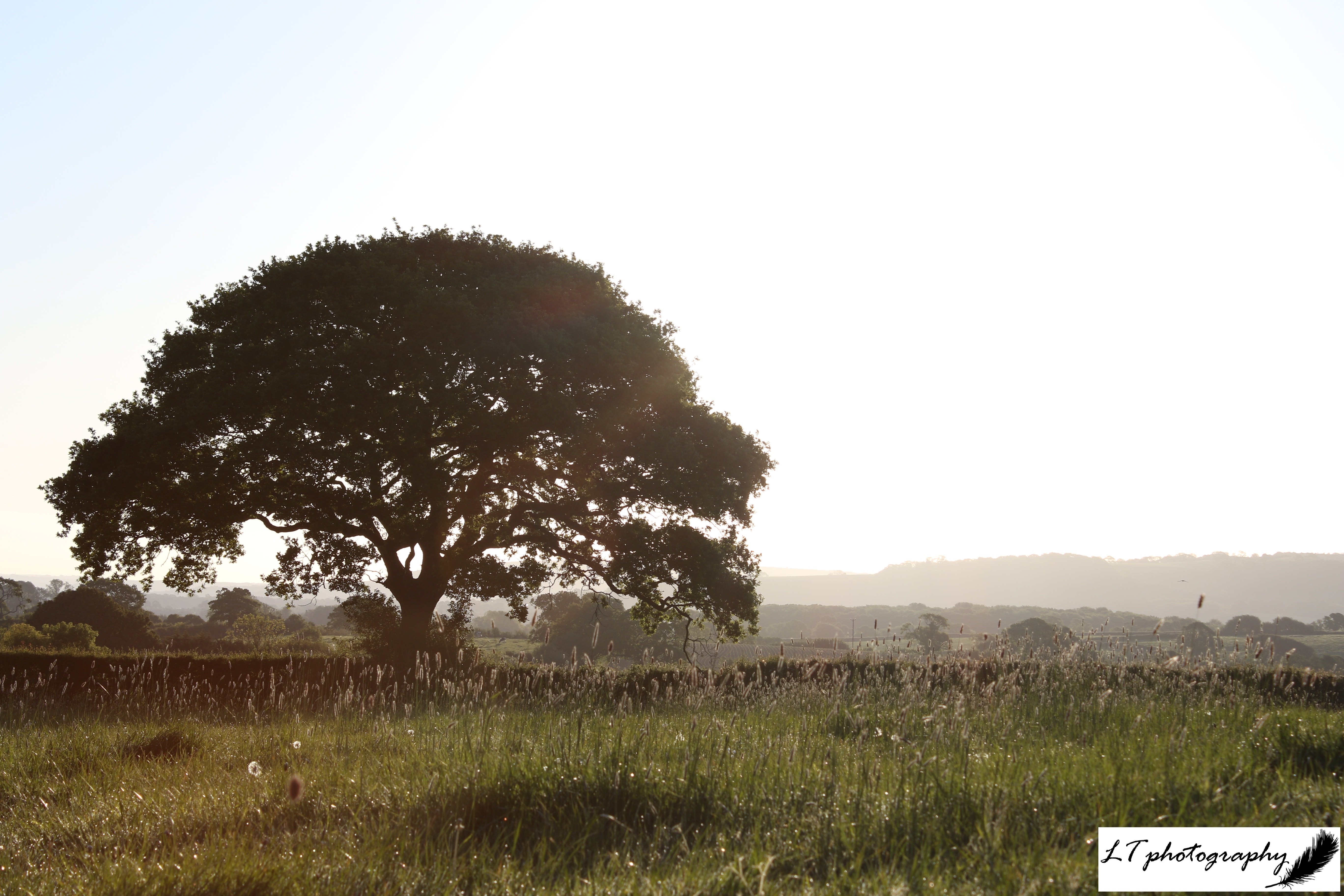
13_05_20_Sunrise_Oak_Tree_Grass_3

Sessile oak (Quercus petraea)

  • Differs to Pedunculate Oak in that the leaves taper to an unlobed base and have long stalks. Also, the clustered acorns are almost stalk-less with downy cups. Prefers more acid soils and is more common in the West of Britain

Oak Trees

Other species

  • There are lots of flowering species to also be found at the base of hedges. To help with identifying these, check out my ‘How to… Identify Woodland Flowers’ guide, to help with crossover species, such as bluebells, primroses, and moschatel

All photos and drawings are my own

How to… Identify British Woodland Flowers

At this moment, as spring moves on, the natural world outside our doors is going through one of its busiest times. From birds nesting to the leaves bursting, the world around us is buzzing with the promise of new life.

During spring, one of my favourite things to do is walk in the dappled light beneath an increasing canopy, between steadfast trees and amongst undergrowth blooming with colour. Walking through a woodland is an easy way to lose yourself for a little while and give yourself a much needed lift. To connect further, an easy way on a woodland walk is to pick out the plants and animals that you can recognise around you. This can often be more difficult than first thought.

So to help you be mindful of the wonderful world out there, I have put together a simple guide to some of my favourite woodland flowering species that are easy to find during spring. It is time to get out there and explore!

16_04_20_Horseshoe_Woods_Bluebells_8

Well known flowers

Primrose (Primula vulgaris)Primrose

  • Size: Low carpeter; up to 12cm tall
  • Flowers: Pale yellow (there are pink-purple forms) with a deep yellow eye and honey-guides
  • Stems and leaves: Long shaggily hairy stems with wrinkled and toothed leaves, that are hairless above and hairy below (up to 15cm long)
  • When does it flower? March-May (heralds the arrival of spring)
  • Where can it be found? Woods, hedgebanks and grassy places throughout Britain


Lesser Celandine (Ficaria verna)Lesser celandine

  • Size: Up to 30cm tall
  • Flowers: Solitary with 8-12 glossy yellow petals and 3 sepals
  • Stems and leaves: Hairless with leaves that are long-stalked, heart-shaped, and dark green. Sometimes bear dark or light markings
  • When does it flower? February-May
  • Where can it be found? Woods, grassland, hedges, waysides, bare ground and by fresh water throughout Britain


Bluebell (Hyacinthoides non-scriptus)Bluebell 2

  • Size: Up to 50cm tall
  • Flowers: Azure blue (though sometimes pink or white) with cream-coloured anthers. Fragrant and bell-shaped with six turned-down lobes
  • Stems and leaves: Long, narrow, strap-shaped, keeled leaves
  • When does it flower? April-June
  • Where can it be found? Carpeting woodlands, hedges, scrubland, on sea-cliffs and mountains in most parts of Britain


Common Dog-violet (Viola riviniana)Common Dog-Violet

  • Most common wild violet species in the UK
  • Size: Up to 15cm tall
  • Flowers: Unscented with petals that are blue-violet but variable, usually overlapping. Stout spur, curved upward, blunt, notched at tip and paler than petals (often creamy)
  • Stems and leaves: Hairless or only slightly downy leaves and stalks. The leaves are long-stalked, heart-shaped, pointed at the tip, and as broad as they are long
  • When does it flower? March-May and sometimes July-September
  • Where can it be found? Woods, hedges, pastures, heaths and rocky areas throughout the British isles

Sweet Violet (Viola odorata)

  • Size: Up to 15cm tall
  • Flowers: Blue-violet, often white, occasionally lilac, pink or yellow. Only fragrant violet in Britain
  • Stems and leaves: Leaves are heart-shaped, downy and enlarged in summer
  • When does it flower? February-May
  • Where can it be found? Woods and hedges over most of the British isles


Plants known to some

Wood anemone (Anemone nemorosa)Wood Anemone

  • Size: Up to 30cm tall
  • Flowers: Solitary white (sometimes tinged purple) that nod when closed
  • Stems and leaves: About two-thirds of the way up each slender stem is a ring of three leaves (trifoliate), each divided into three toothed segments. Rising above the leaves is the solitary flower
  • When does it flower? March-May
  • Where can it be found? Carpeting woodlands in spring, as well as hedge-banks and occasionally grasslands throughout Britain


Greater stitchwort (Stellaria holostea)Greater Stitchwort

  • Size: Up to 60cm tall
  • Flowers: Deeply cleft white petals
  • Stems and leaves: Stalkless, narrow and long-pointed leaves with a slightly grey tinge (15-60cm long)
  • When does it flower? March-June
  • Where can it be found? Across woodlands, hedgerows and scrub areas throughout Britain except some northern isles


Wild Garlic/Ramsons (Allium ursinum) Wild Garlic

  • Most common and only native broad-leaved garlic
  • Size: Up to 45cm tall
  • Flowers: White star-like flowers
  • Stems and leaves: Have leafless flowering stems. The leaves are broad, flat, lanceolate and distinctive smelling
  • When does it flower? April-June
  • Where can it be found? Often seen growing in large clumps in woods and shady places throughout Britain


Wild Strawberry (Fragaria vesca)

  • Size: Up to 30cm tall
  • Flowers: White flowers with no gaps between the 5 unnotched petals. Produce reddish fleshy strawberries that have protruding pips
  • Stems and leaves: Hairy. Leaves are trefoil on long stalks and are brighter green on top and pale below. Lower leaves form a rosette
  • When does it flower? April-July
  • Where can it be found? Woods, scrub, and grassland throughout the British Isles

Strawberry

Barren Strawberry (Potentilla sterilis)

  • Size: Up to 30cm tall
  • Flowers: Unlike wild strawberry, there are gaps between the slightly notched white petals. Produces unstrawberry-like non-fleshy fruits
  • Stems and leaves: They are hairy, but unlike wild strawberry, they have smaller, shorter stems and blue-green leaves
  • When does it flower? Earlier than wild strawberry, from February-May
  • Where can it be found? Woodlands, scrub, hedgebanks and other dry banks

16_04_20_Horseshoe_Woods_Flower_Wild_Strawberry_2


Less known plants

Yellow Archangel (Lamiastrum galeobdolon)Yellow Archangel

  • Size: Up to 30cm tall
  • Flowers: Yellow and two-lipped, with the upper lip being helmet-shaped and the lower having three almost equal-sized lobes
  • Stems and leaves: Hairy and patch-forming, with leafy and upright flowering stems. The leaves are long-stalked, oval in shape, dark green, irregularly toothed and borne in opposite pairs
  • When does it flower? April-June
  • Where can it be found? Woodlands and hedgerows in England and Wales


Early Purple Orchid (Orchis mascula)Early Purple Orchid

  • Size: Up to 40cm tall
  • Flowers: Form a spike on a stout, upright stem. Usually some shade of purple, sometimes pinkish or white, and are three-lobed with three inner and three outer petals. The upper five petals are oval and form a hood; the lower petal extends into a long lip. Scent described as tom-cat-like
  • Stems and leaves: Lance-shaped, varying from broad to narrow, and usually have round, purple-black blotches on their upper surface
  • When does it flower? April-June
  • Where can it be found? Frequently in woodlands, and is widespread throughout Britain


Moschatel (Adoxa moschatellina)Moschatel

  • Also known as townhall clock and is the only species in its family
  • Size: Up to 15cm tall
  • Flowers: Flower heads greenish, almost forming a cube with one flower on each side (5 petals each) and one flower on top (4 petals). Scent is musk-like, likened to almond or elder blossom
  • Stems and leaves: Hairless with long-stalked trefoil leaves, that are positioned in one pair on each flower-stalk
  • When does it flower? March-May
  • Where can it be found? Woods, hedge-banks, and rocky mountain places, locally common throughout Britain


Herb-robert (Geranium robertianum)Herb-Robert

  • Size: Up to 50cm tall
  • Flowers: Strong smelling and deep pink, occasionally white, with rounded petals that are not notched
  • Stems and leaves: Hairy with stems that are often reddish and leaves that are fern-like with 3-5 lobes
  • When does it flower? April-November
  • Where can it be found? Shady spots on hedgebanks, rocks and walls or in woods throughout Britain

25_05_19_Horseshoe_Wood_Herb_Robert_3


All photos and drawings are my own