Spring 2024: How It Happened

Over the last few years, it has been noticeable that weather patterns and average temperatures have been changing and highly unpredictable, leading to the seasons, such as spring, varying from month-to-month and year-to-year, especially here in Dorset. For example, last year spring began a wash out, moving to cold and stormy spells, before ending with heat waves. This year was an equally odd series of spring weather events with a cold start to the season, followed by wet weather with northerly winds, and finishing with drier spells. It was on average warmer and wetter, but cold nights continued for a long time, and had a noticeable effect on plant growth patterns being seen.

Spring 2023 encountered trends for later spring events and a slow start to spring, which helped to create a mismatch between species and spring events. With a warmer, wetter winter before spring this year, and often above average spring temperatures, it is likely the trends this year may differ to those of 2023. It will be interesting to see if this has had an effect though, by looking at trends for some tree, shrub, flower, insect and bird species. How will spring 2024 have shaped up? Read on to see how my favourite season unfurled this year!

Trees

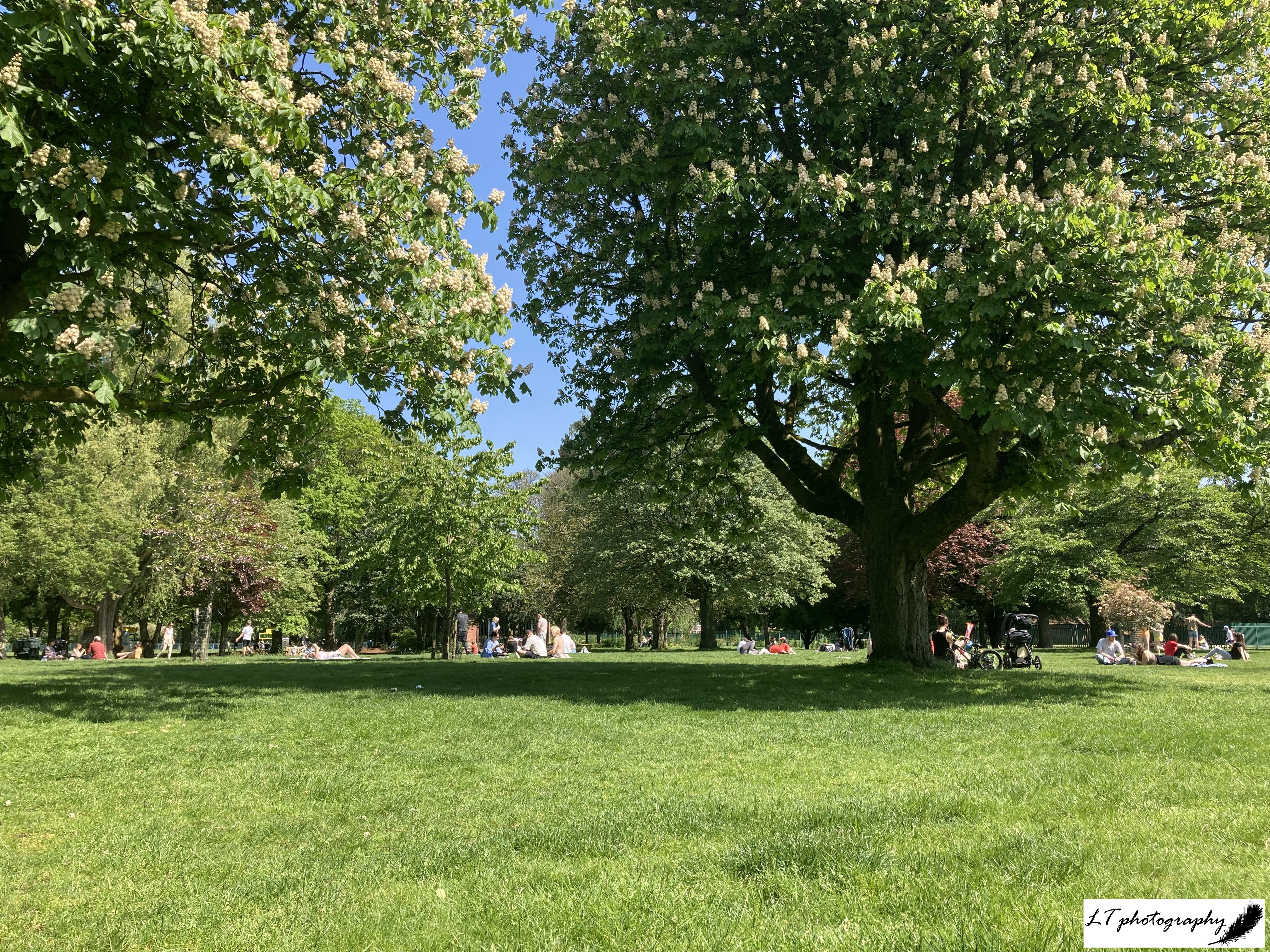
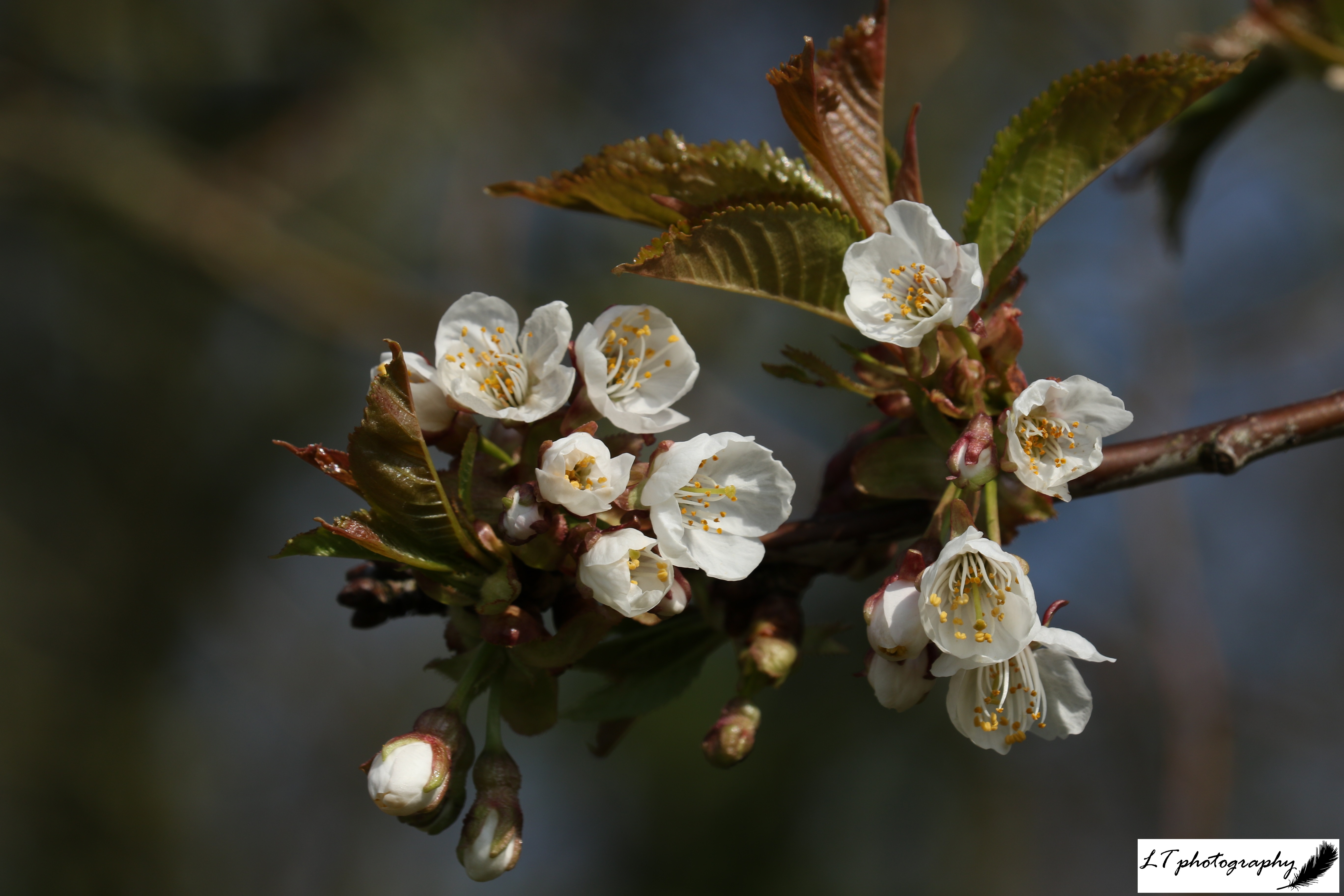
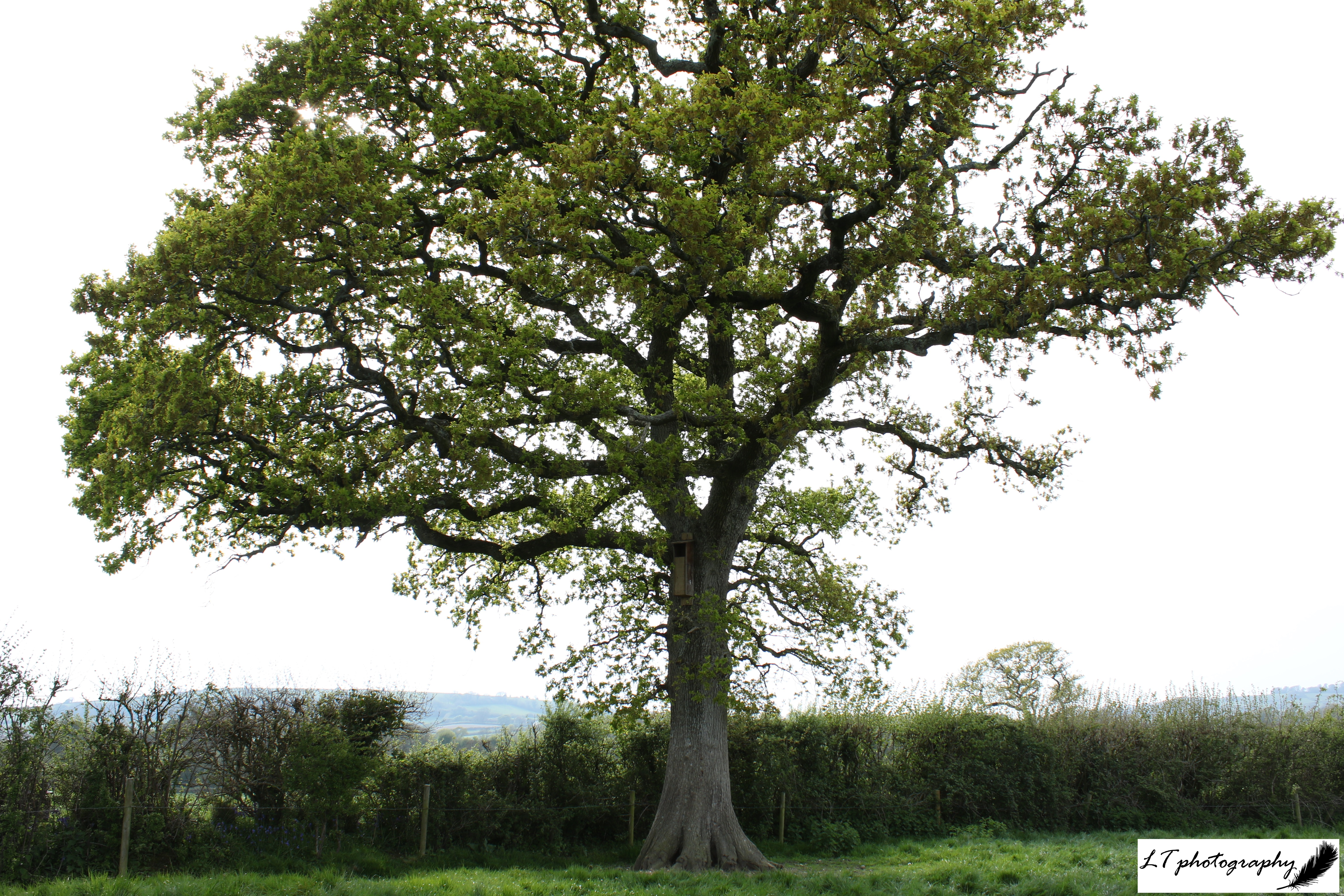
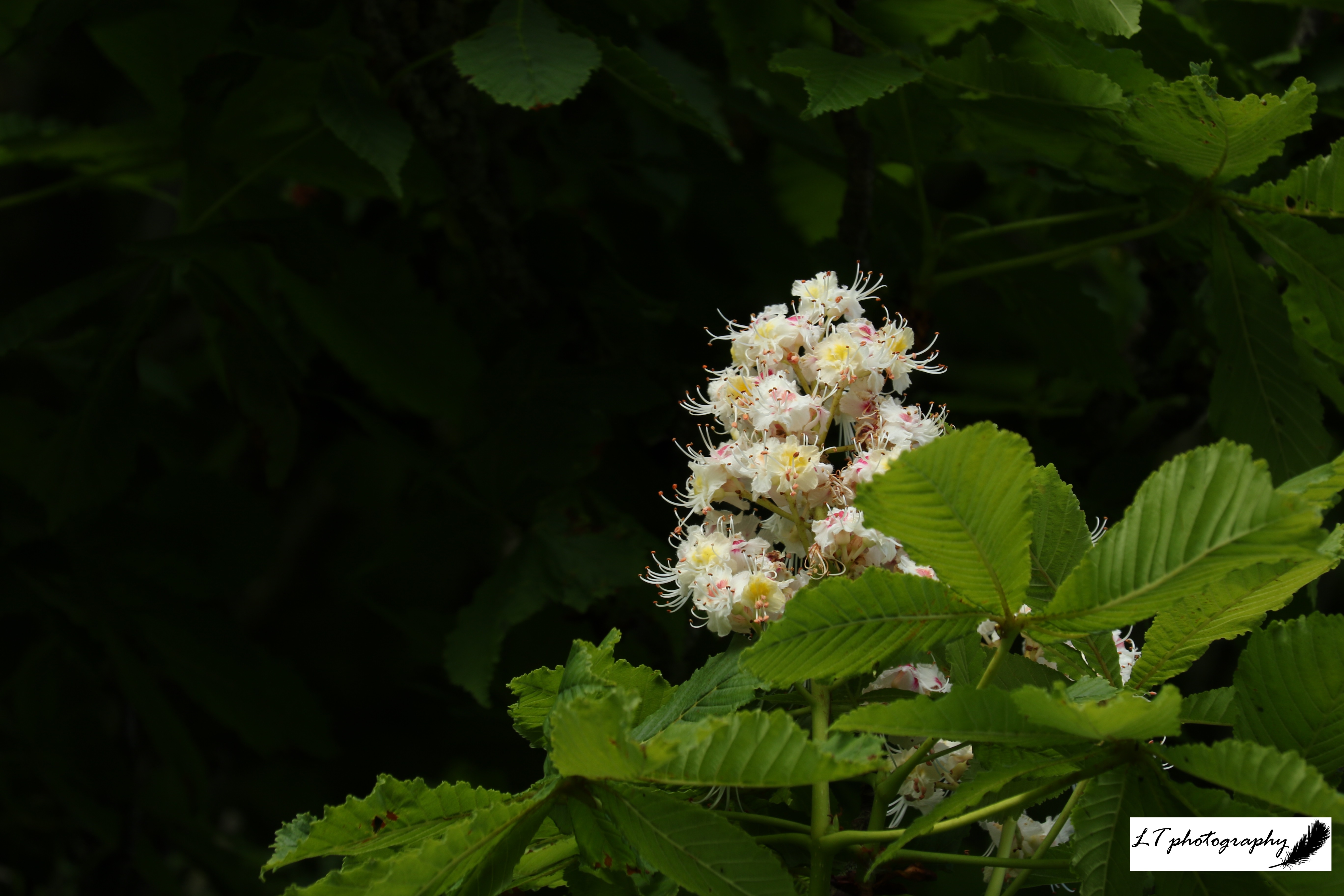
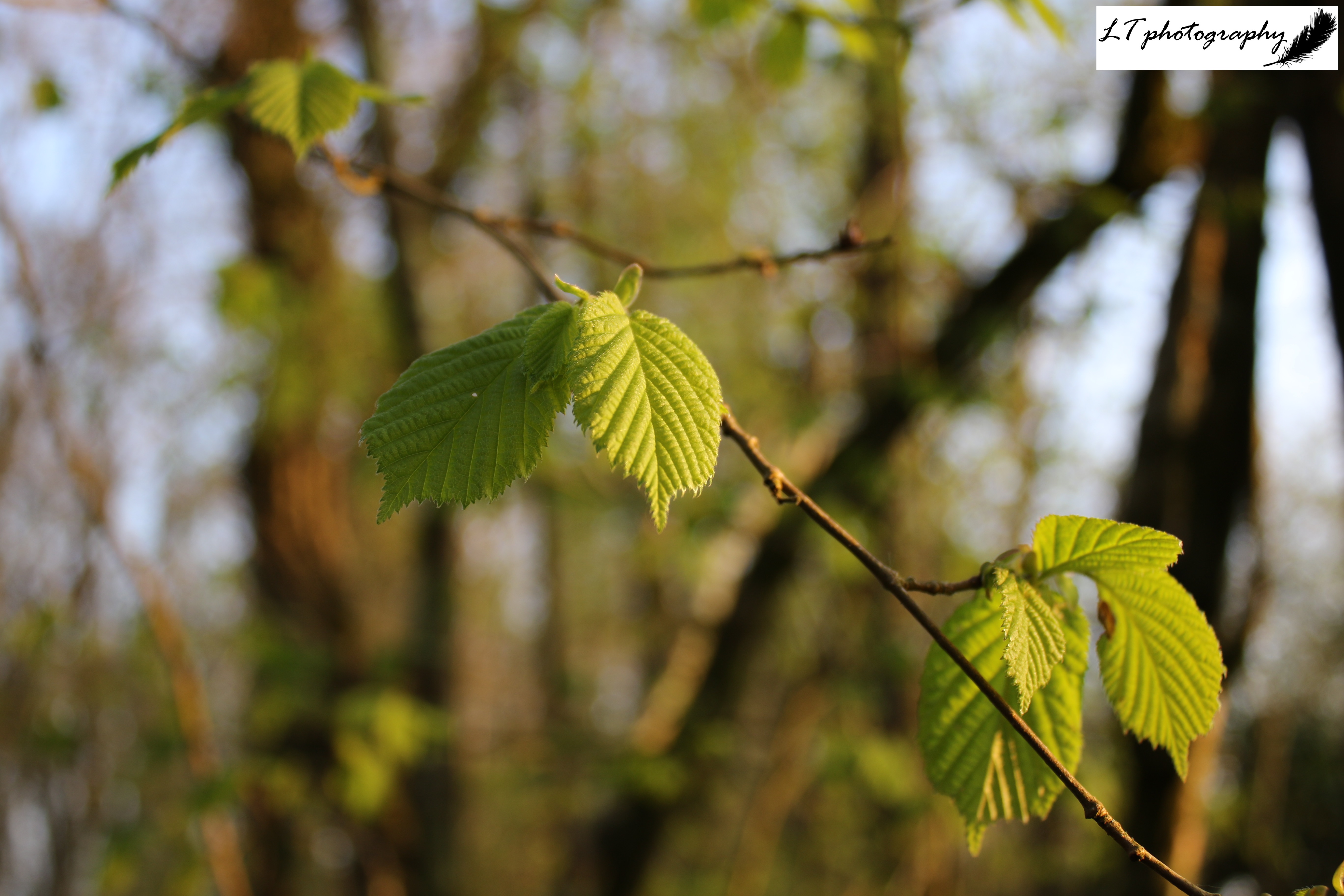
During 2023, spring emergence dates for trees showed a trend for on average later dates, ranging from 1 to 28 days later. In 2024 though, the majority of spring tree dates were earlier, as seen with field maple, horse chestnut, english oak, and wild cherry, ranging from 1 to 22 days earlier from March through to May. Alder dates though were fractionally later, as were ash and sycamore flowering, and silver birch and norway maple budburst, but the other events for these species occurred earlier. The on average warmer and wetter weather will most likely be the reason for these trends, allowing trees to get a head start this year.

Flowers

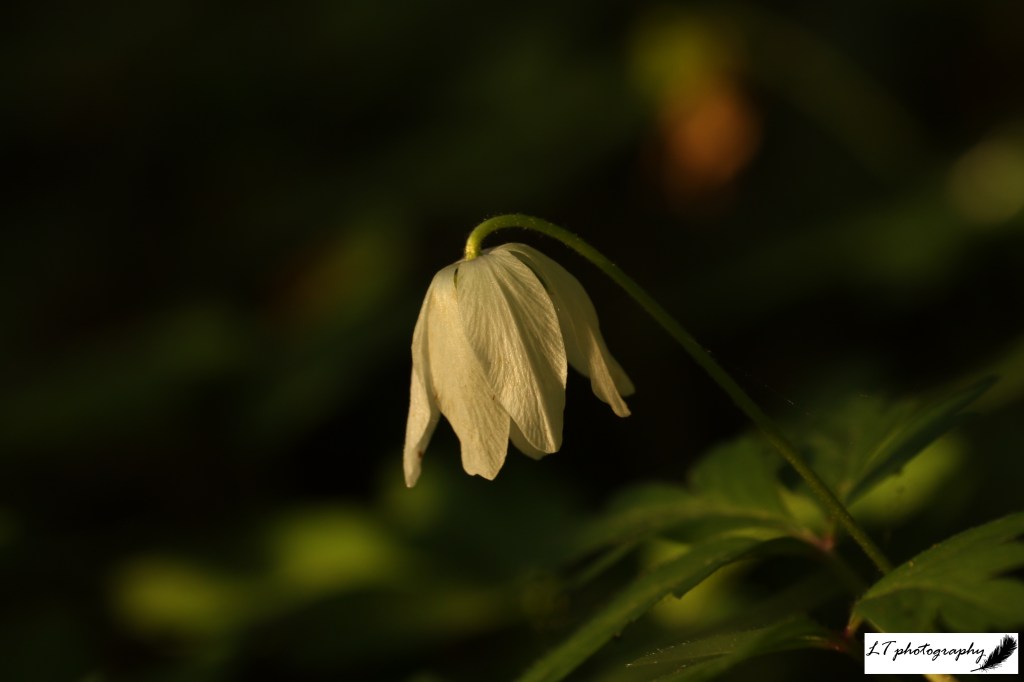
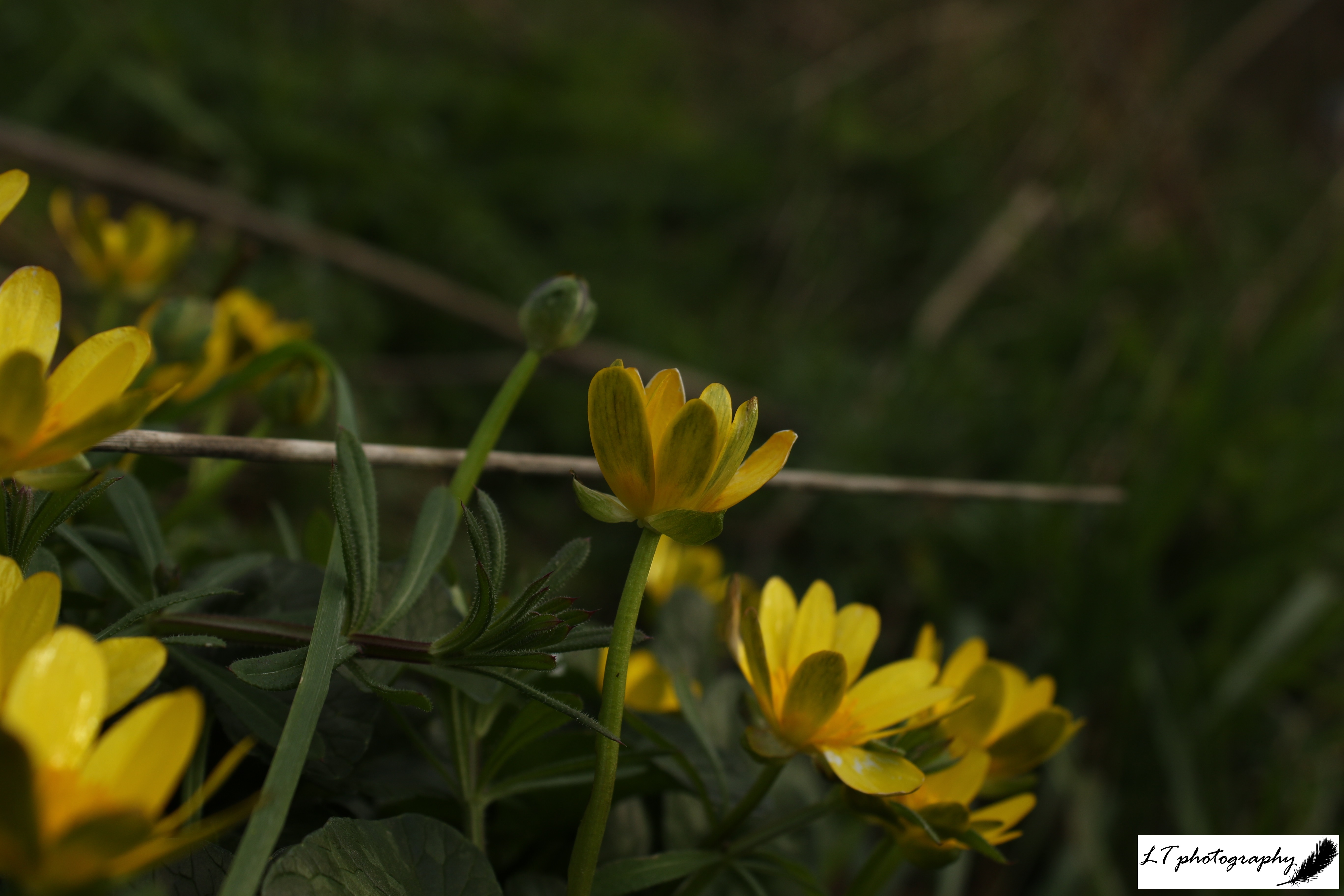
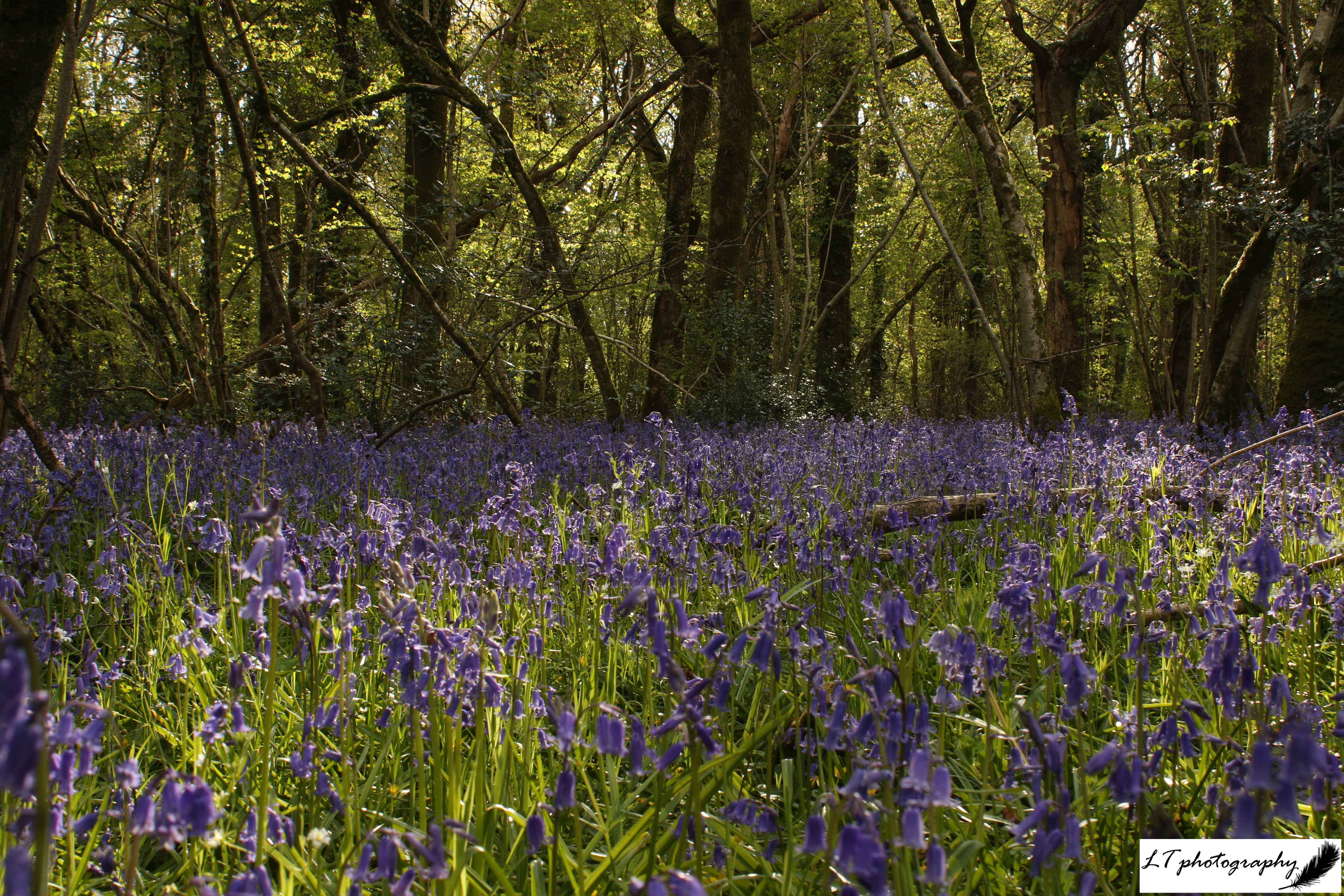
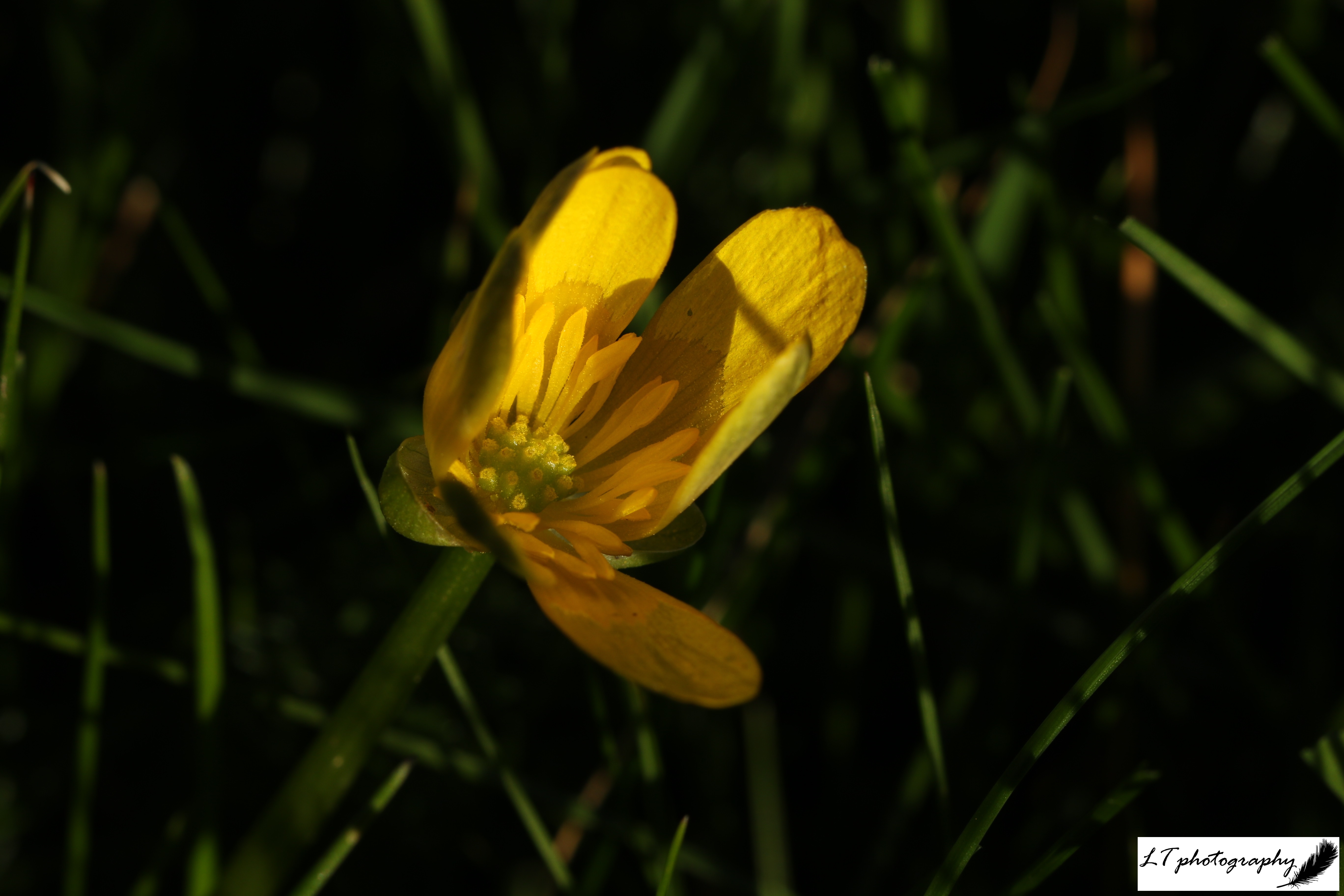
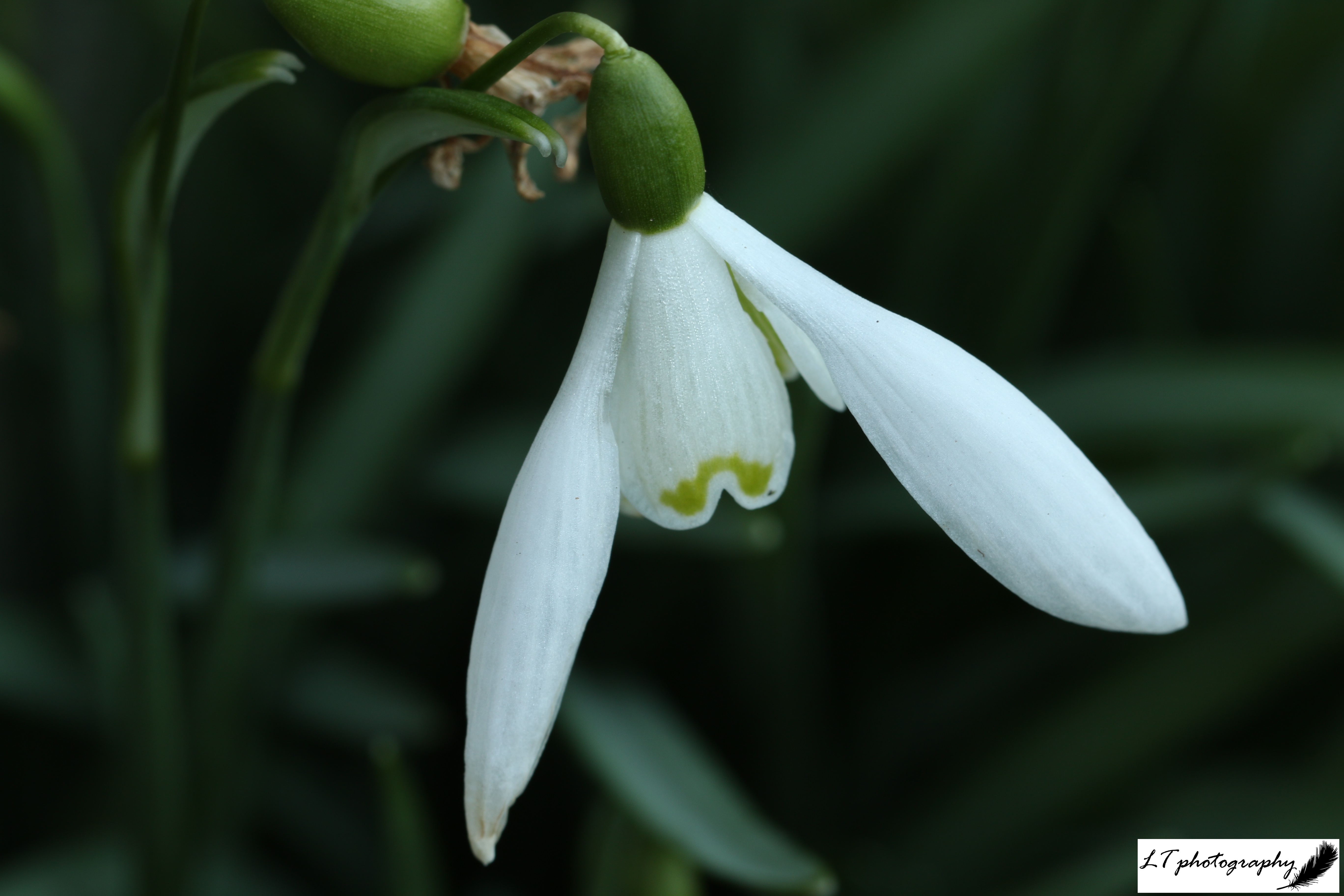
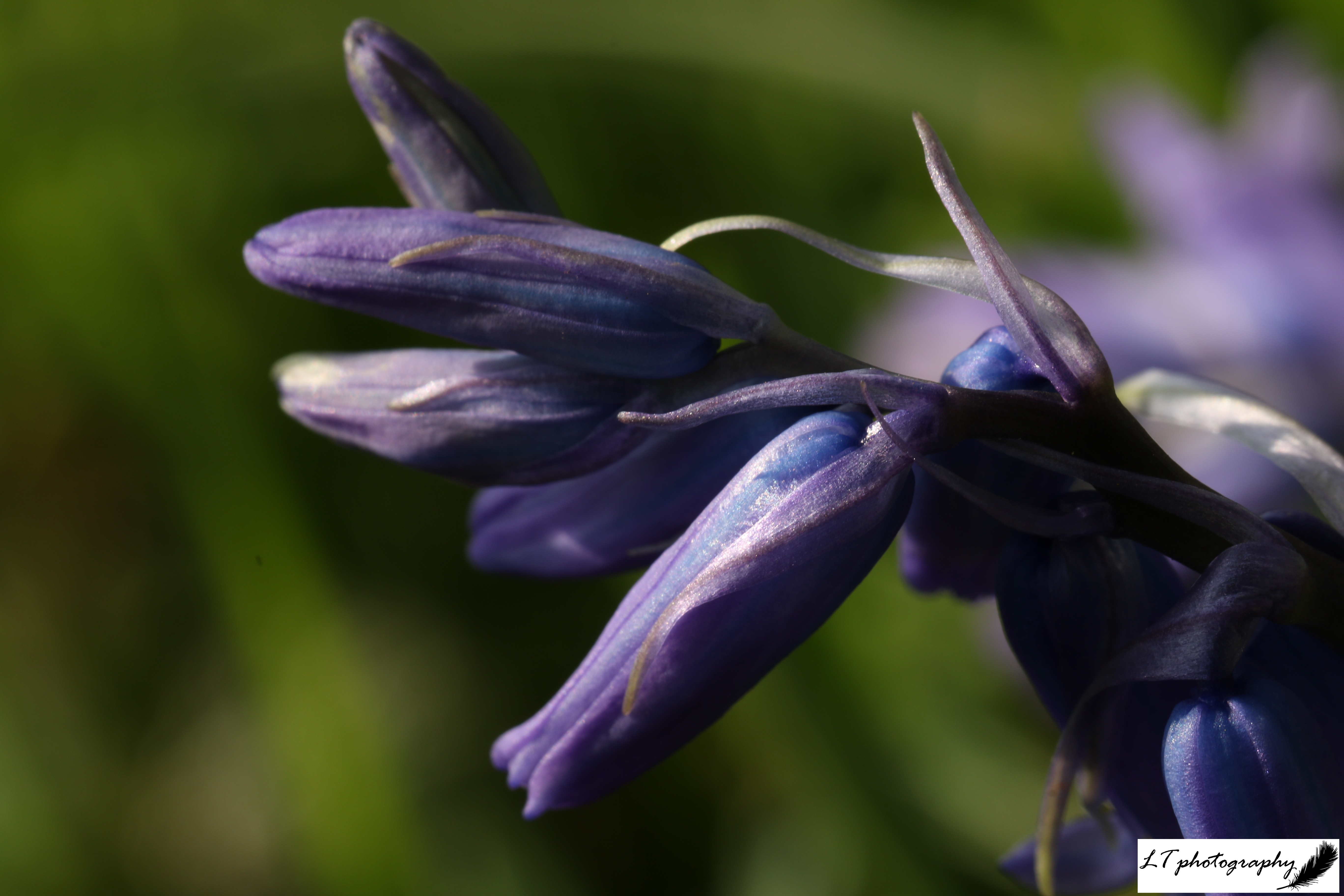
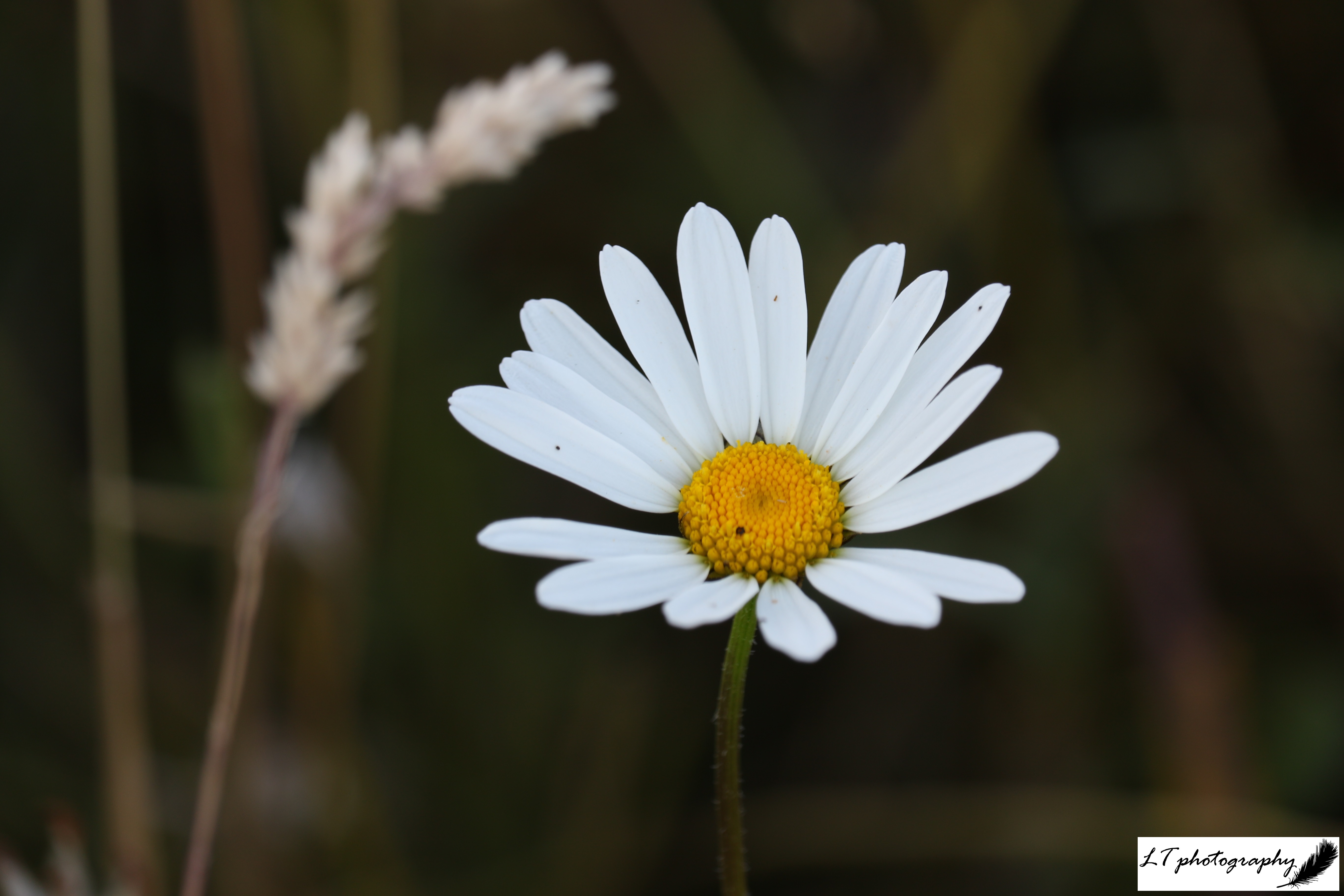
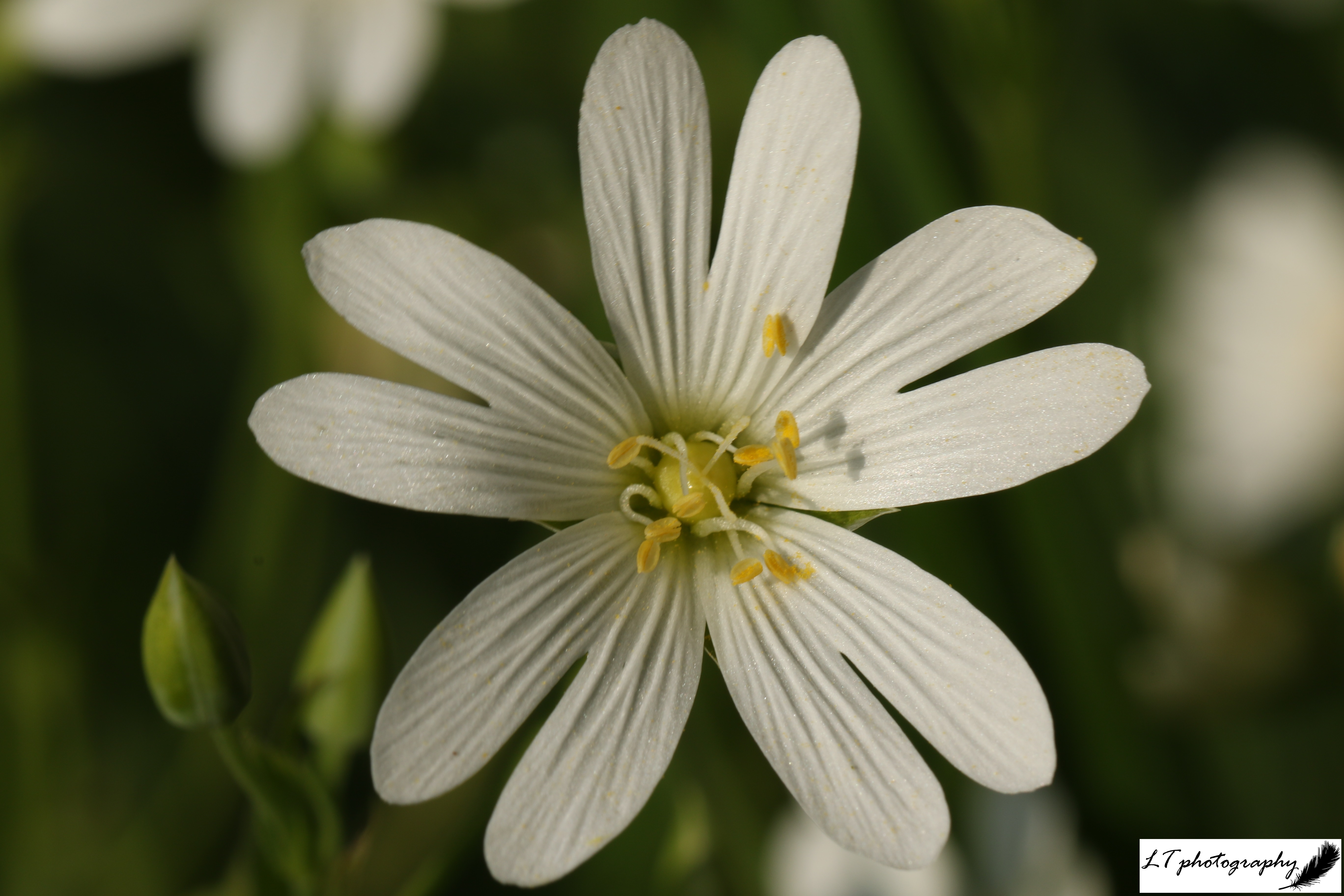
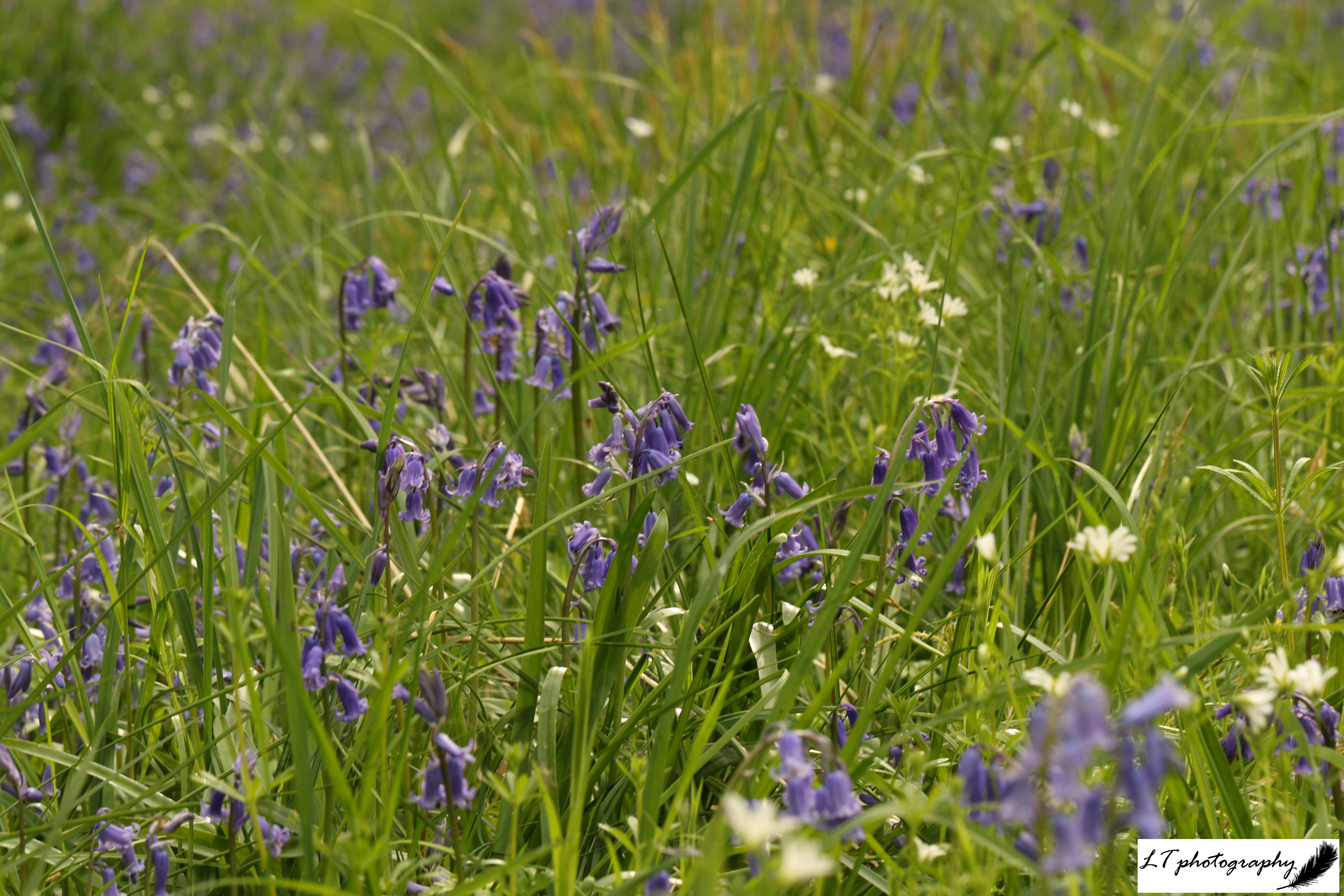
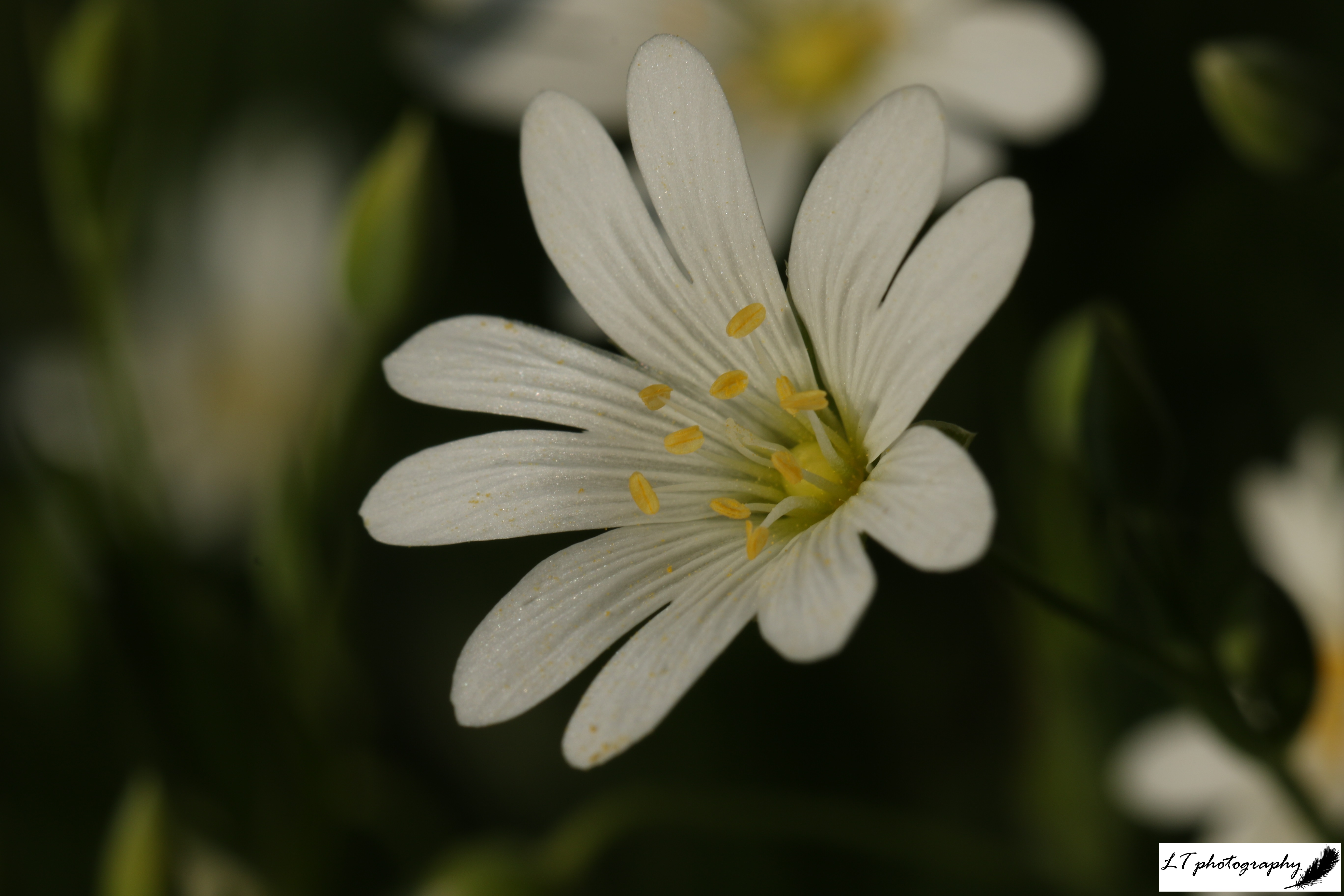
Plants flowering during spring 2023 occurred on average later, varying from 1 to 16 days. During spring 2024 though, flowering has occurred earlier, as was the trend with tree species. For snowdrops, lesser celandines, primroses, greater stitchwort, wood anemones, early purple orchids, wild garlic, yellow archangel, cuckooflowers, oxeye daisies, and bluebells flowering occurred 1 to 32 days earlier between January and May. The exceptions were found with daffodils, flowering 6 days later during February, and cowslips, 4 days later during April. It would be understandable thus to think that the warmer, wetter weather of the start of spring will have had a heavy influence on these events, just like with trees.

Insects

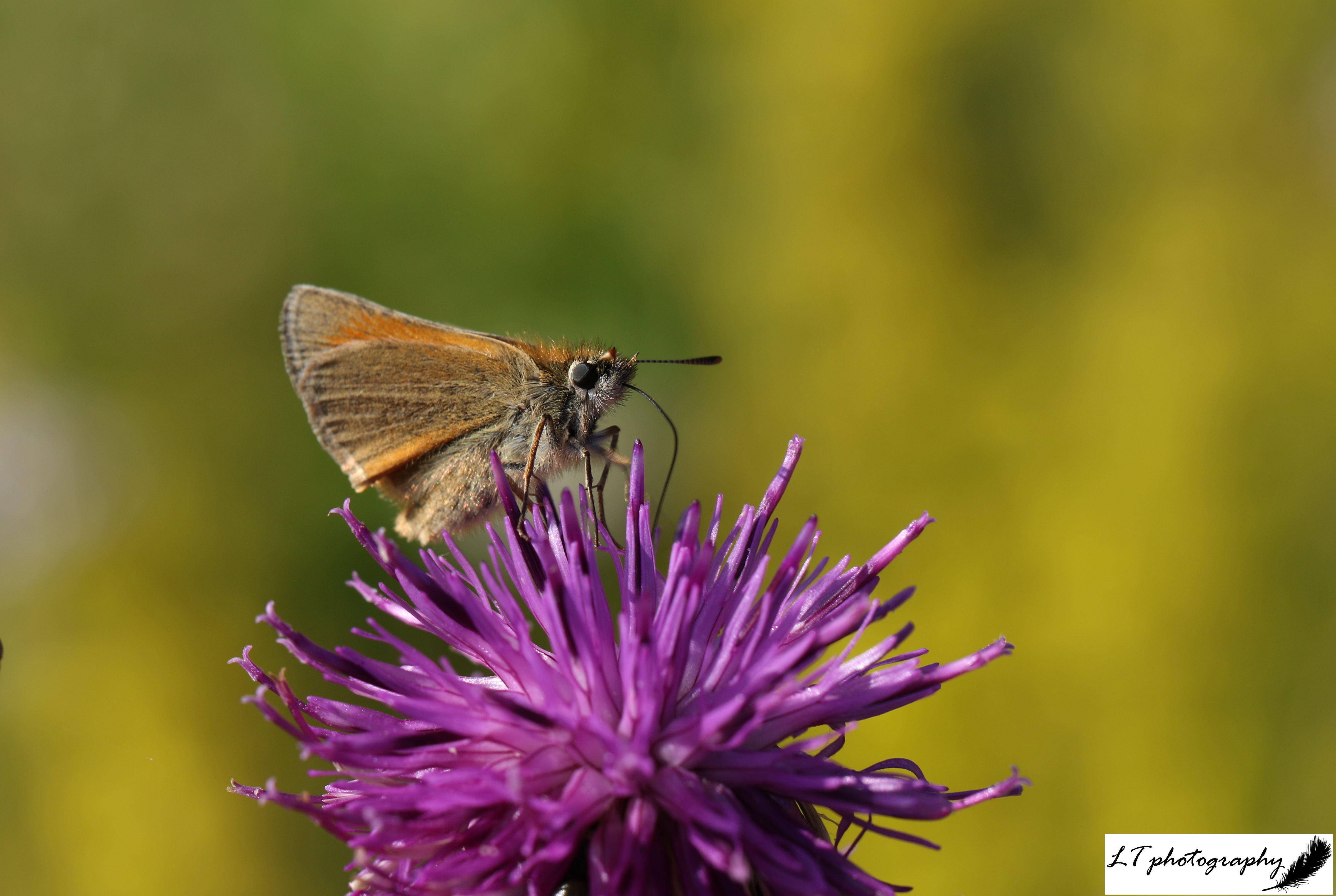
Of 12 species that had the emergence date recorded during spring 2023, the majority emerged later than the year before, ranging from 2 to 46 days later. This year though, spring 2024 saw the occurrence of a 50:50 split for the 10 species that had their emergence date recorded, with some species from 2023 yet to be seen at all, such as painted lady butterflies.

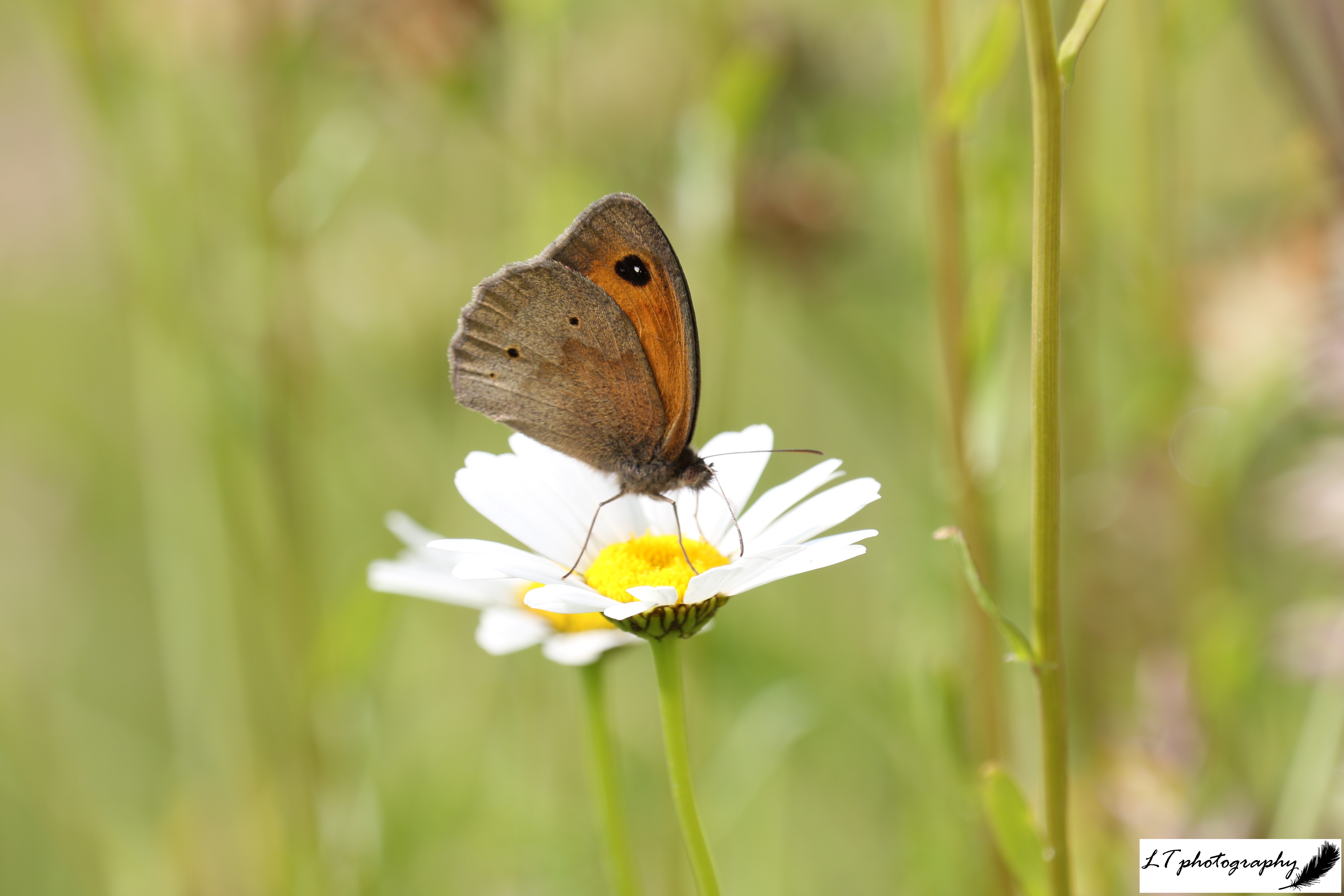
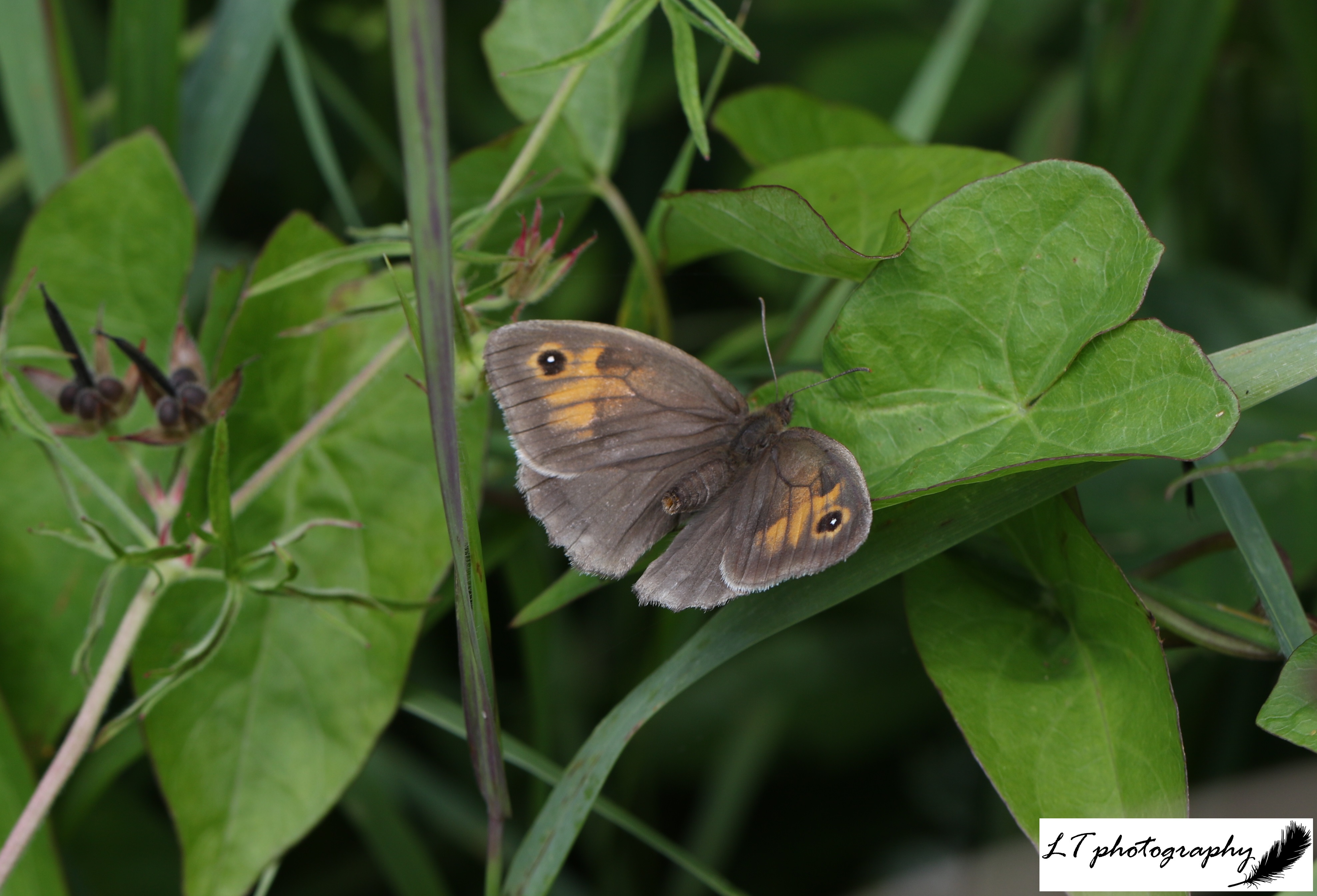
Buff-tailed bumblebees, 7-spotted ladybirds, and orange tip, red admiral, and speckled wood butterflies all emerged earlier this year, ranging from 2 to 46 days earlier. Conversely, queen wasps, and brimstone, peacock, gatekeeper, and small tortoiseshell butterflies all emerged later than 2023, ranging from 8 to 47 days later. Though not complete for all, the split does tend to be due to March to April species emerging earlier this year whereas April to June species emerged later this year. This may be due to April being a cooler, wetter month this year, impacting insect species more greatly than plant species that were already making their advance and were less impacted.

Shrubs

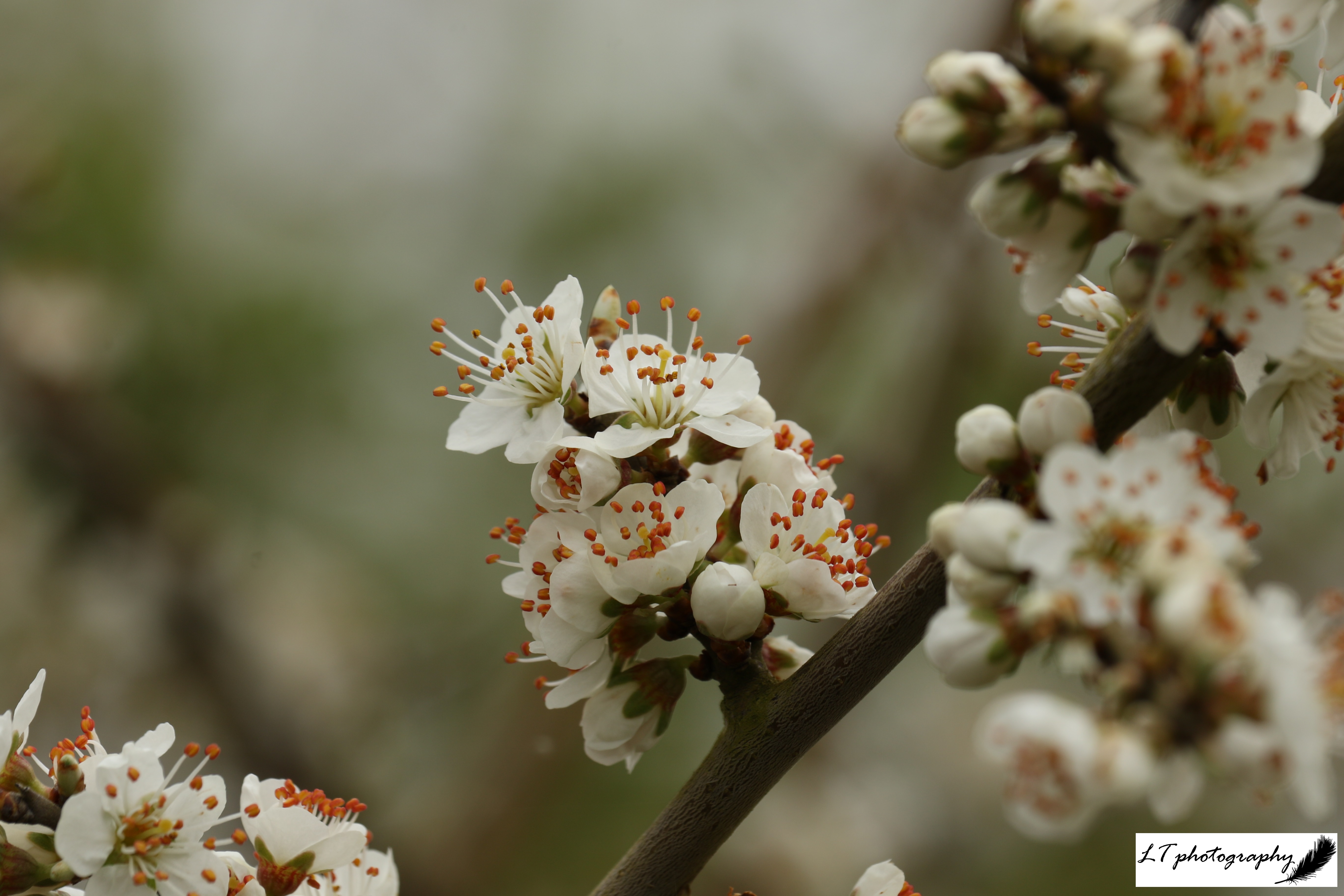
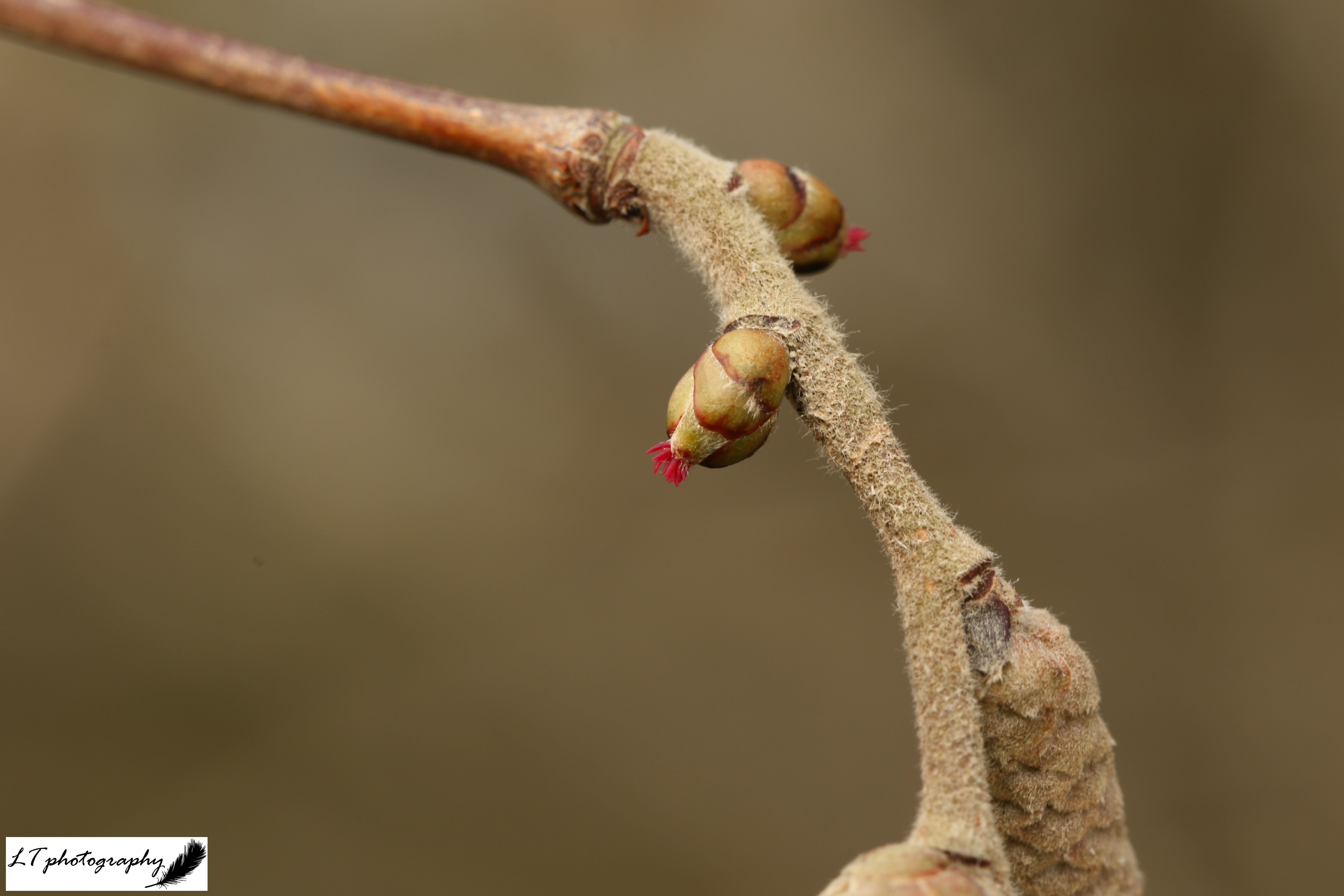
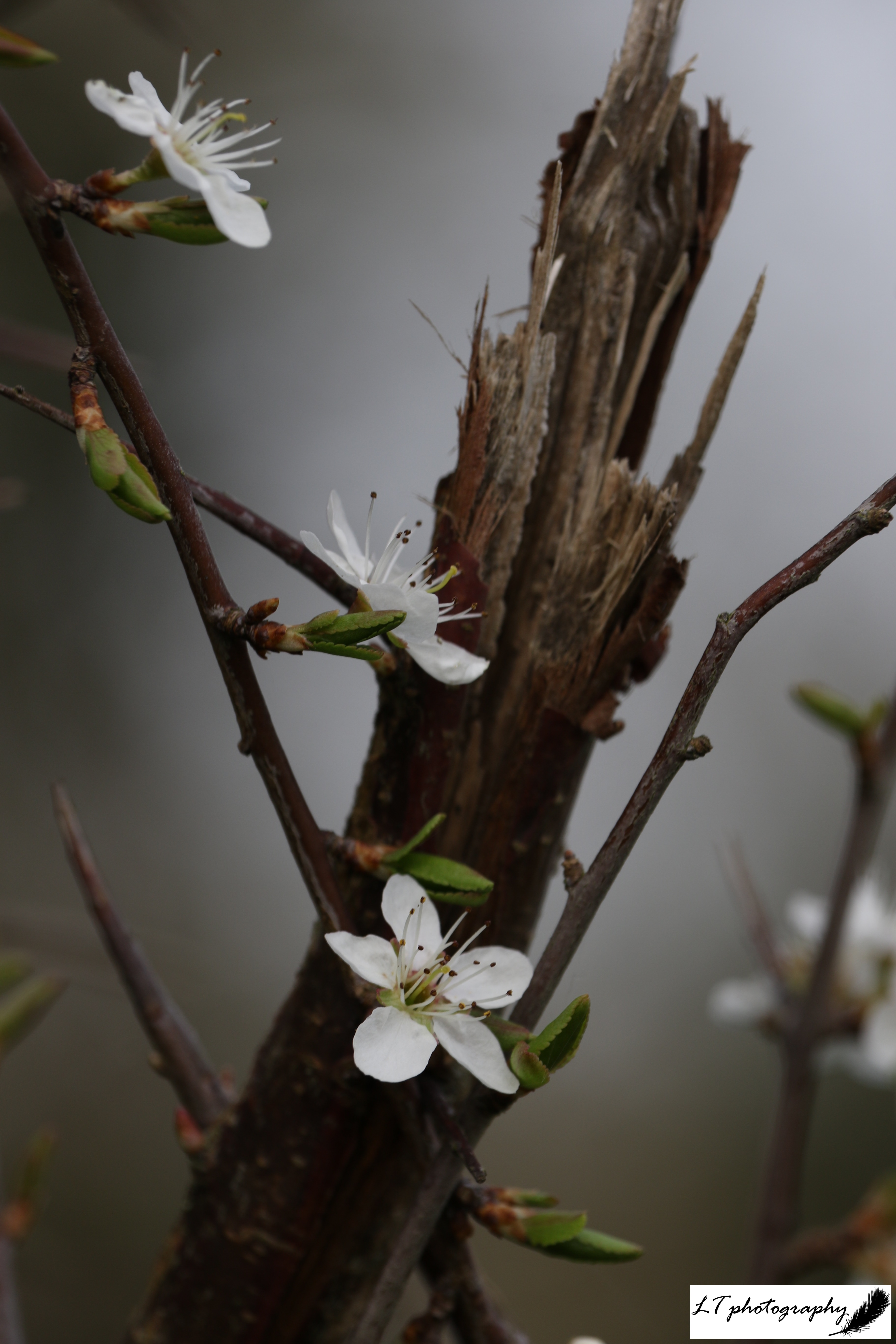
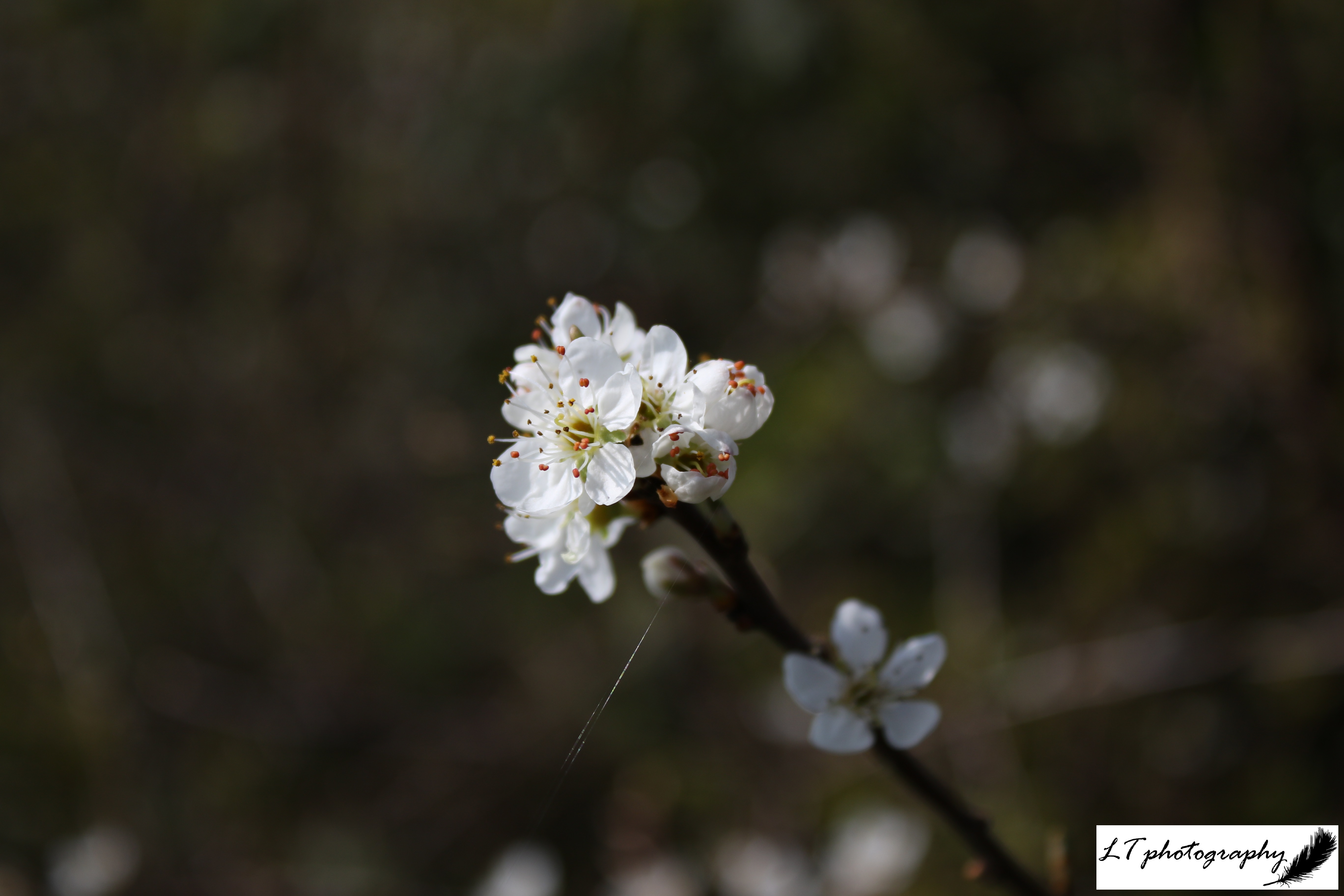
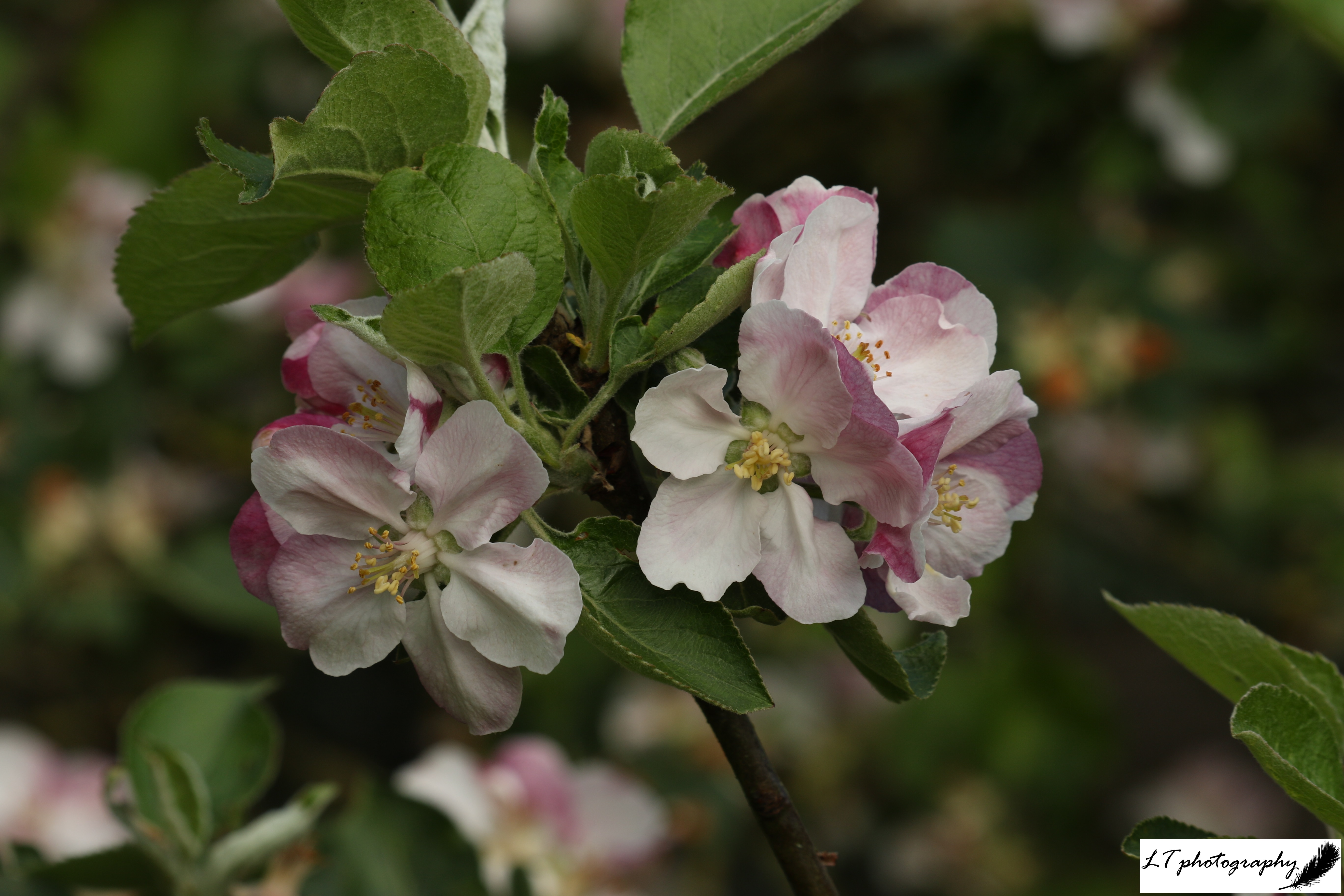
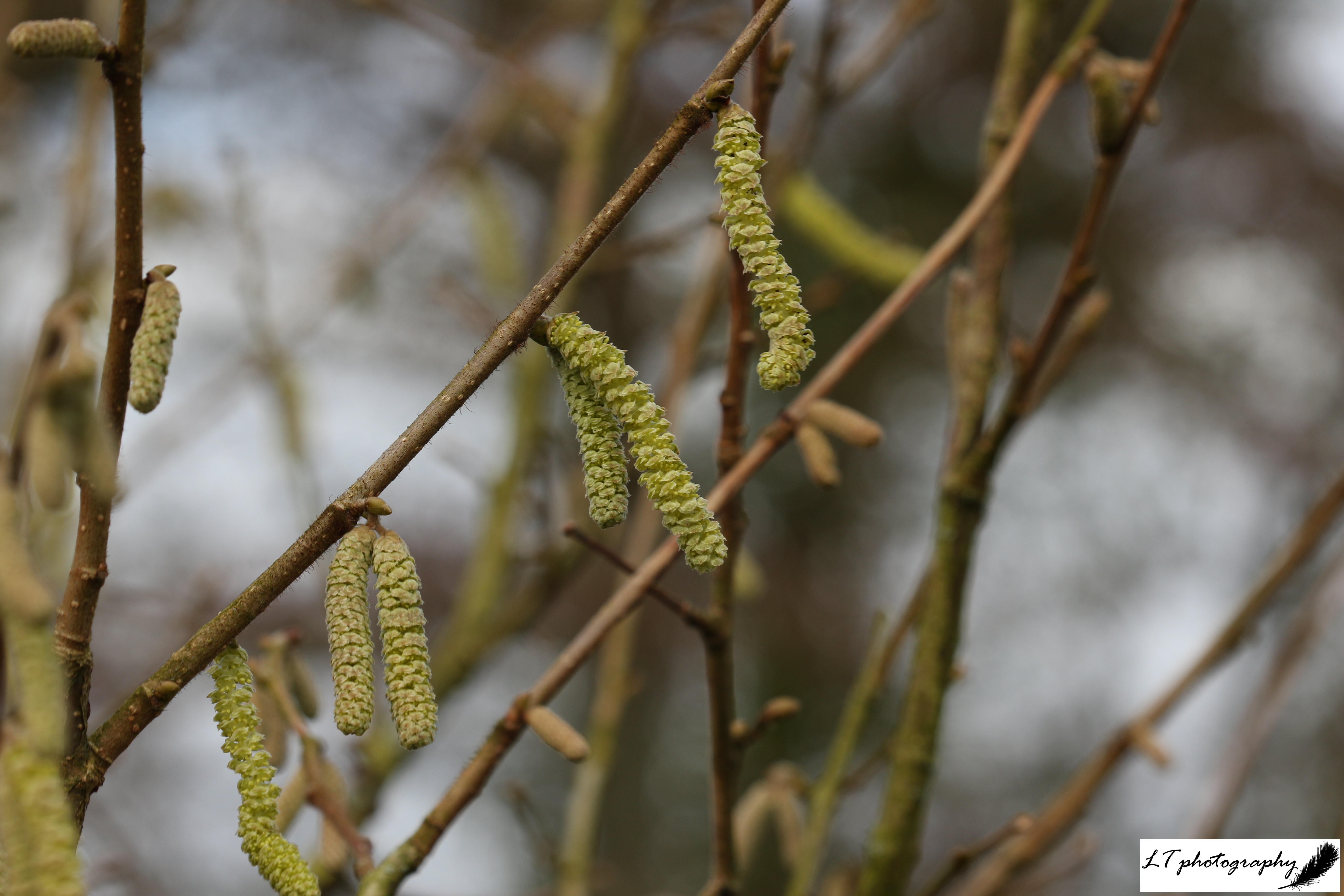
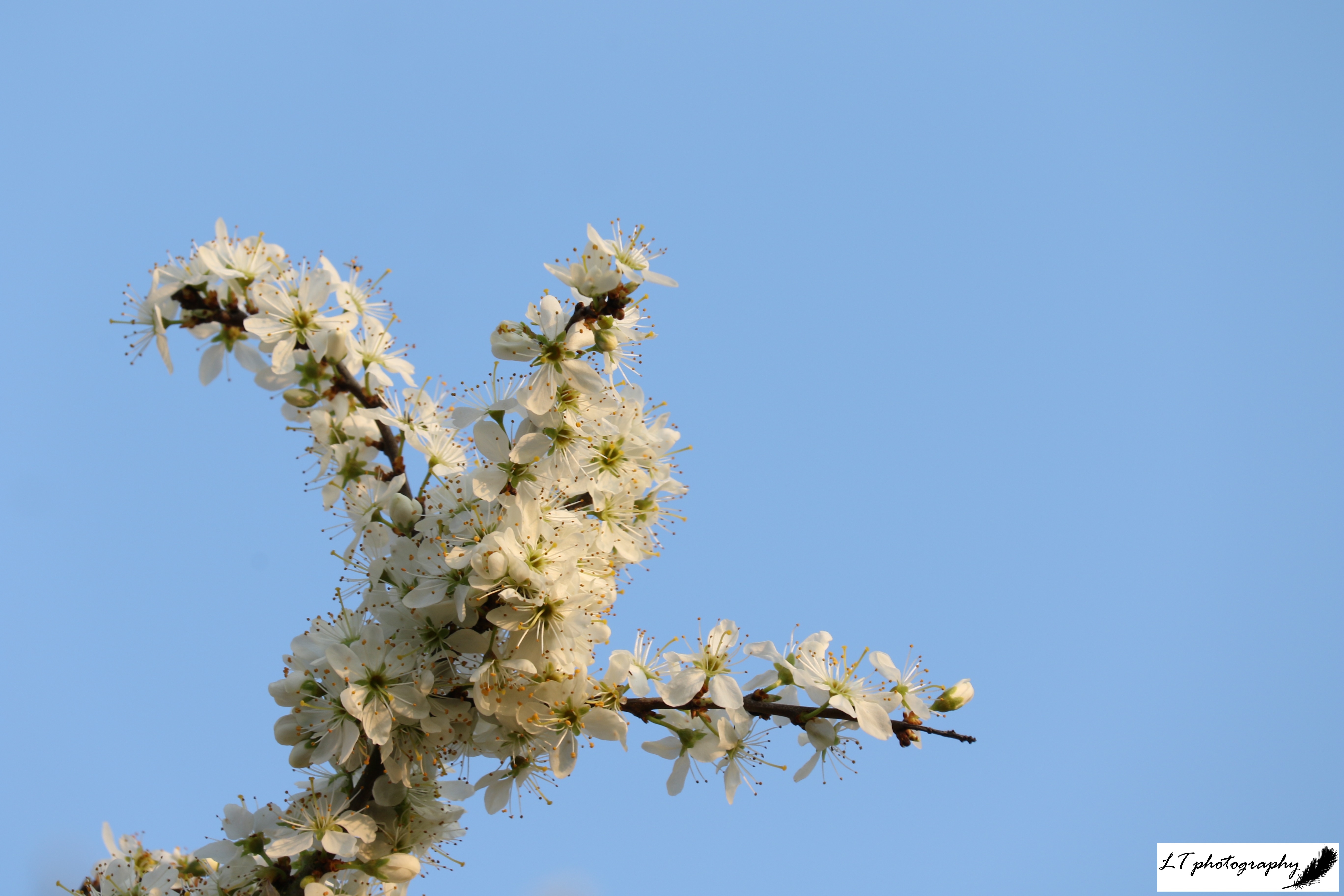
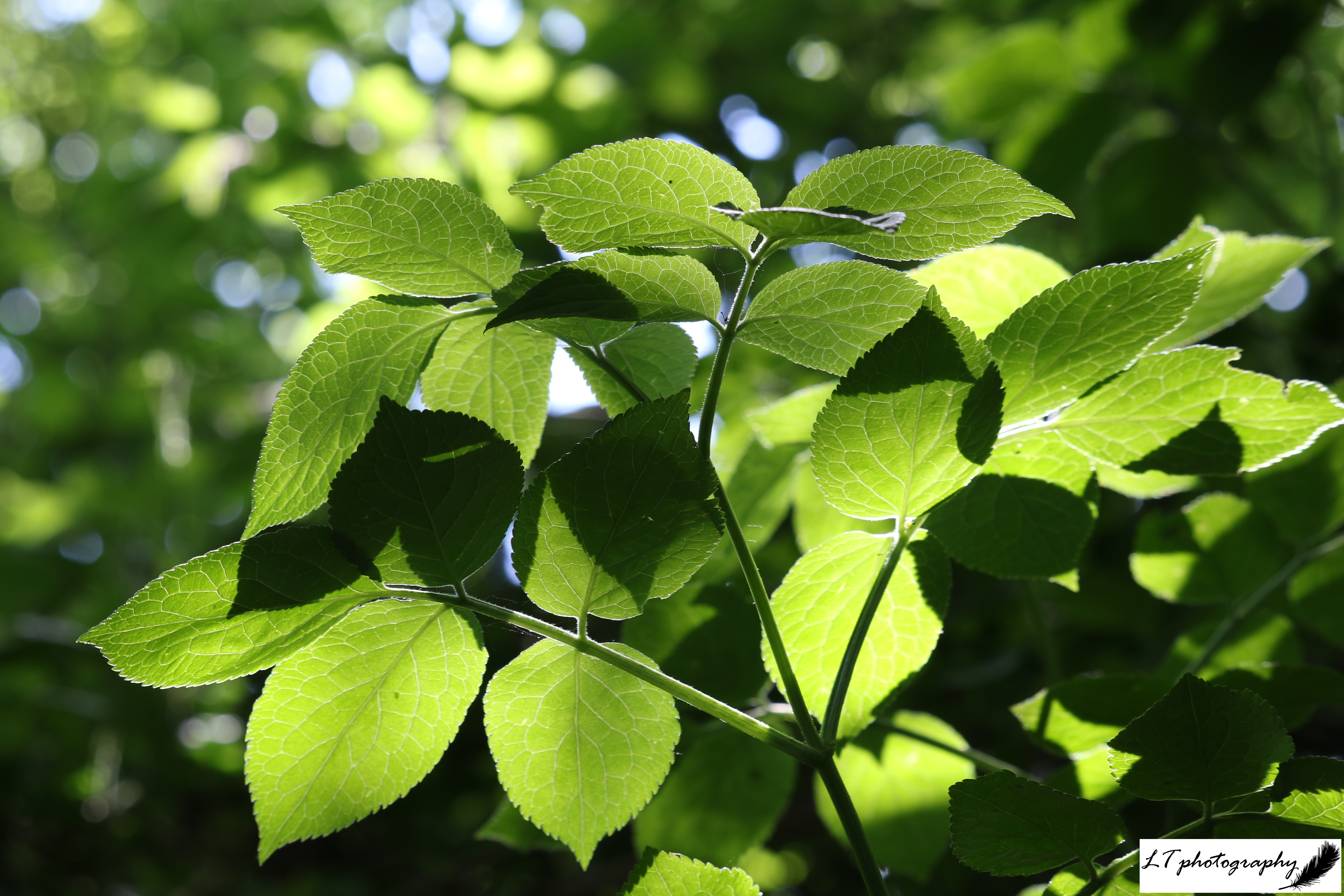
Spring 2023 mainly showed a trend for later shrub budburst, leaf unfurling and flowering, ranging from 3-27 days from March to May. In contrast, for spring 2024, the majority of events for shrubs occurred earlier, ranging from 1 to 53 days earlier from December through to May. These included for blackthorn, dog rose, elder, hawthorn and hazel, with the only later event being for red female hazel flowers being observed. This trend shows similarities to those of trees and spring flowering plants, and would be similarly due to a warmer, wetter winter and start of spring, allowing events to occur earlier and shrubs to get a head start on the season.

Birds

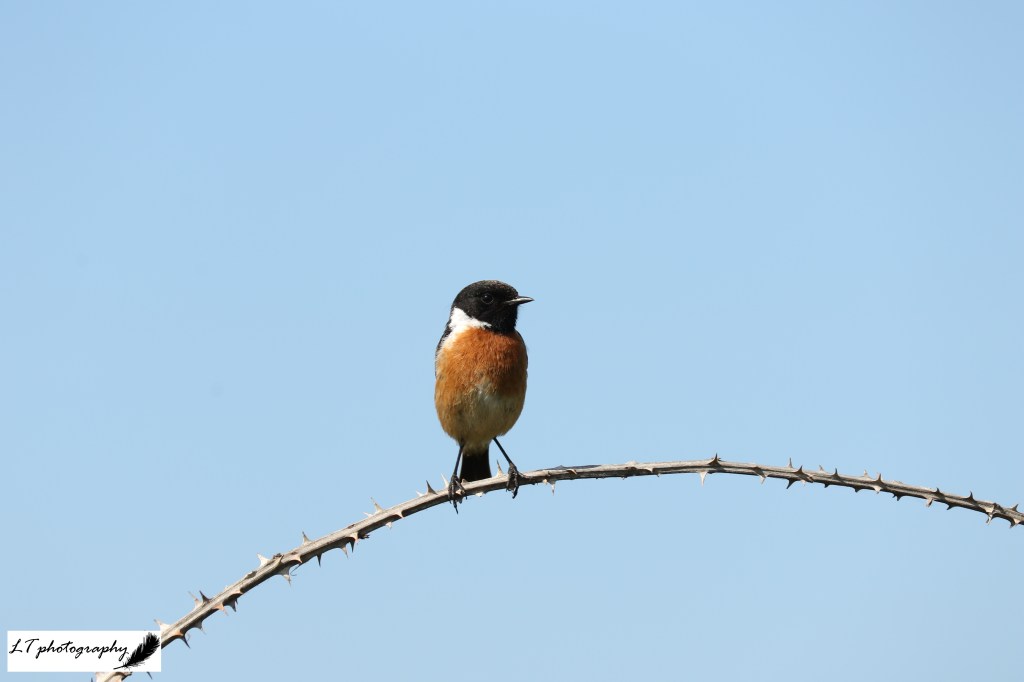
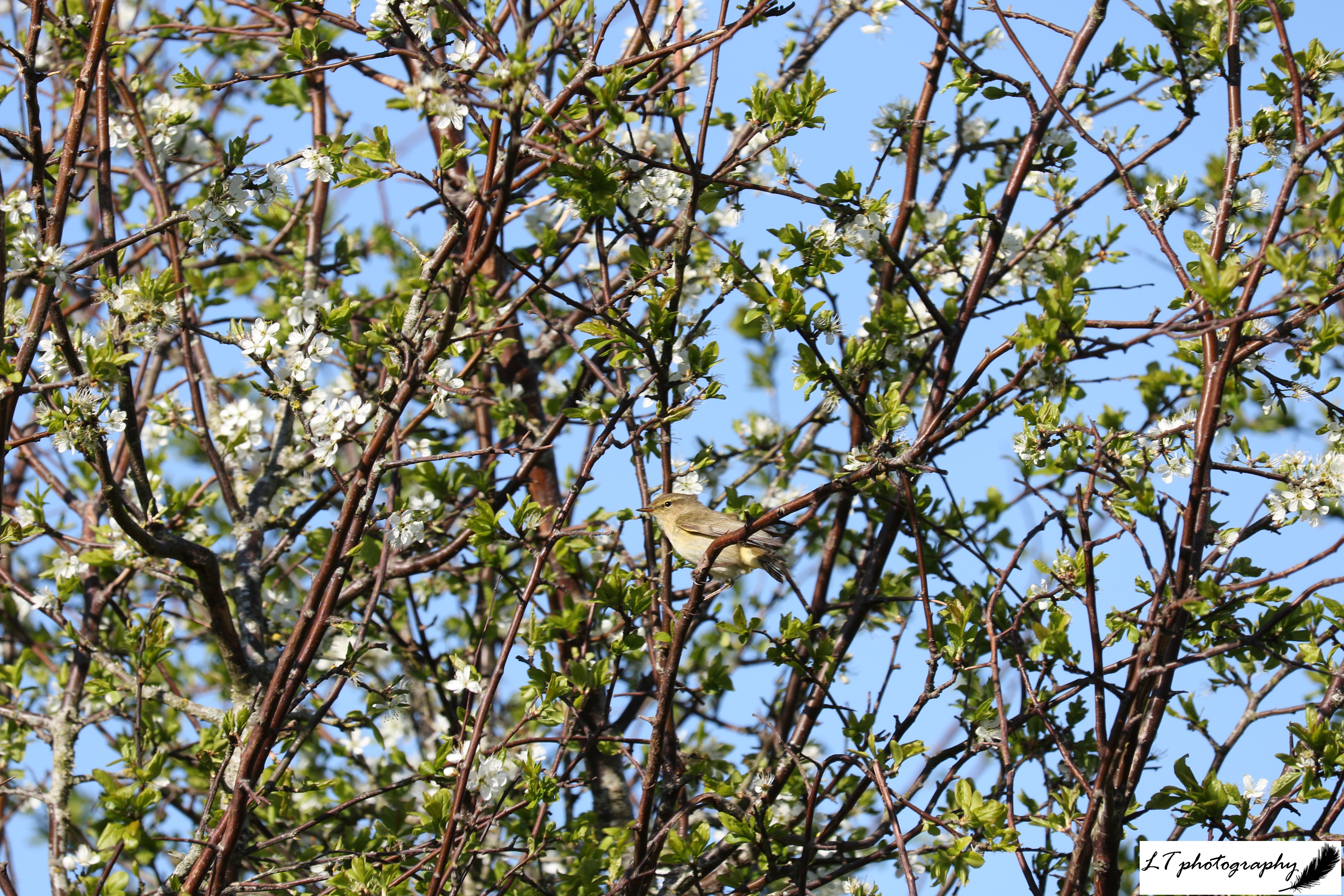
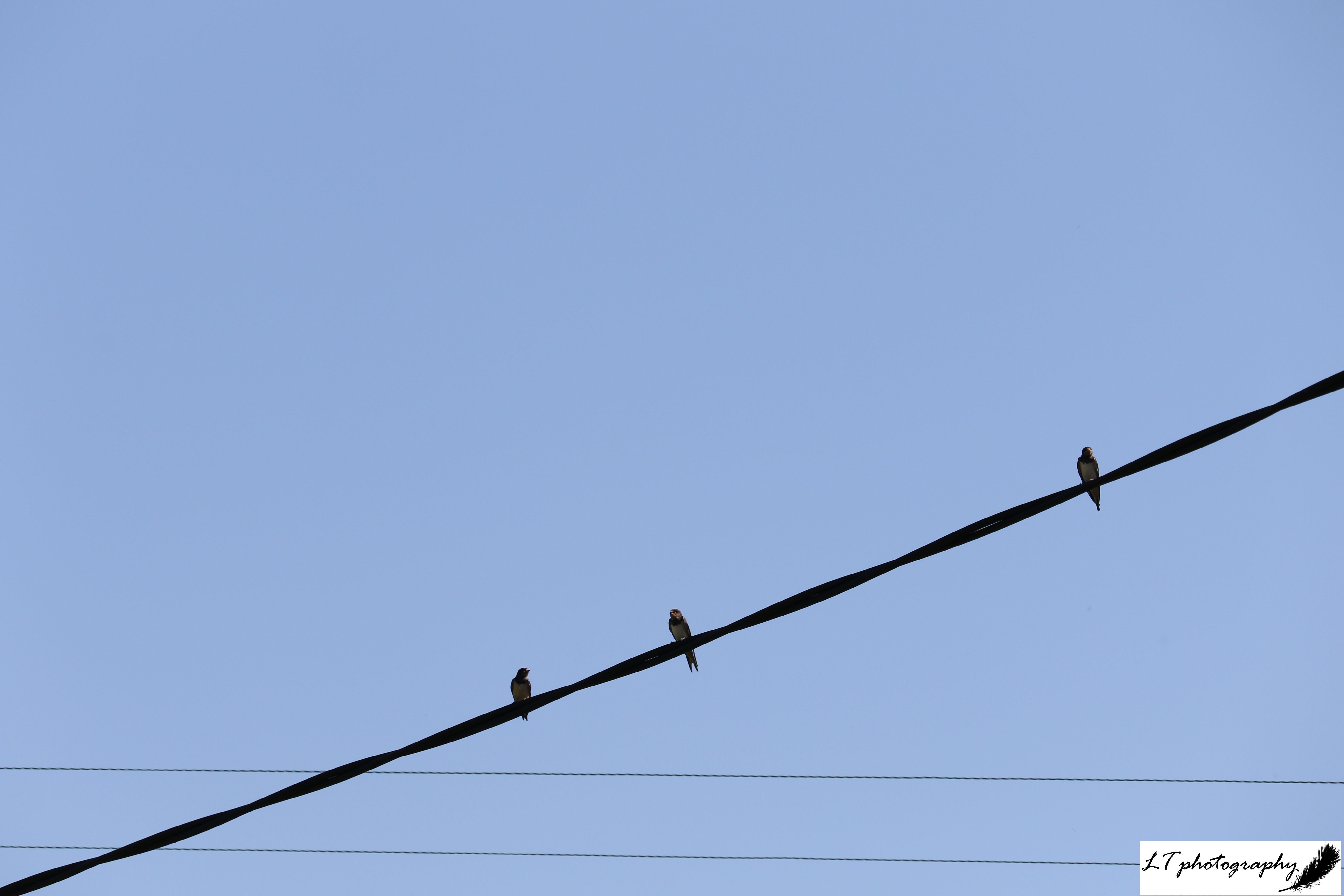
Following on from the last two years (2022 and 2023), the dates of bird events during spring 2024 showed no clear trend, with a split between different species and events. Rooks began building their nests earlier, chiffchaffs and swallows arrived earlier, song thrushes and yellowhammers first sang earlier, and the first wrens fledged earlier. Conversely, blackbirds first sang later, the first blackbirds fledged later, blackcaps, cuckoos and house martins arrived later, and great-spotted woodpeckers drummed later.

Some of these event timing changes will be due to spring temperatures and weather conditions on short term and long term scales. Other reasons are less obvious currently, but the hope is that bird events will still have been timed right with other species to make the most of resources this year.

Conclusion

Spring 2024 was a thoroughly odd season, varying from month-to-month, but feeling like wet weather prevailed more than the normal. In the end it was vibrant and colourful, though missing the traditional spring feeling. This year spring was heavily effected by climatic changes and changes to weather patterns, and this may become typical during the springs to come. It is really hard to predict then how each season will play out, and it will be interesting to see now how all British species cope with such unpredictability as time goes on. Only time will tell!

Species List

  • Alder (Tree) Alnus glutinosa
  • Ash (Tree) Fraxinus excelsior
  • Blackbird (Bird) Turdus merula
  • Blackcap (Bird) Sylvia atricapilla
  • Blackthorn (Shrub) Prunus spinosa
  • Bluebell (Flowering Plant) Hyacinthoides non-scripta
  • Brimstone butterfly (Insect) Gonepteryx rhamni
  • Buff-tailed bumblebee (Insect) Bombus terrestris
  • Chiffchaff (Bird) Phylloscopus collybita
  • Common wasp (Insect) Vespula vulgaris
  • Cowslip (Flowering Plant) Primula veris
  • Cuckoo (Bird) Cuculus canorus
  • Cuckooflower (Flowering Plant) Cardamine pratensis
  • Daffodil (Flowering Plant) Narcissus spp.
  • Dog rose (Shrub) Rosa canina
  • Early purple orchid (Flowering Plant) Orchis mascula
  • Elder (Shrub) Sambucus nigra
  • English oak (Tree) Quercus robur
  • Field maple (Tree) Acer campestre
  • Gatekeeper butterfly (Insect) Pyronia tithonus
  • Greater stitchwort (Flowering Plant) Stellaria holostea
  • Great-spotted woodpecker (Bird) Dendrocopos major
  • Hawthorn (Shrub) Crataegus monogyna
  • Hazel (Shrub) Crataegus monogyna
  • Horse chestnut (Tree) Aesculus hippocastanum
  • House martin (Bird) Delichon urbicum
  • Lesser celandine (Flowering Plant) Ficaria verna
  • Norway maple (Tree) Acer platanoides
  • Orange-tip butterfly (Insect) Anthocharis cardamines
  • Oxeye daisy (Flowering Plant) Leucanthemum vulgare
  • Peacock butterfly (Insect) Aglais io
  • Primrose (Flowering Plant) Primula vulgaris
  • Red admiral butterfly (Insect) Vanessa atalanta
  • Rook (Bird) Corvus frugilegus
  • Seven-spot ladybird (Insect) Coccinella septempunctata)
  • Silver birch (Tree) Betula pendula
  • Small tortoiseshell butterfly (Insect) Aglais urticae
  • Snowdrop (Flowering Plant) Galanthus spp.
  • Song thrush (Bird) Turdus philomelos
  • Speckled wood butterfly (Insect) Pararge aegeria
  • Swallow (Bird) Hirundo rustica
  • Sycamore (Tree) Acer pseudoplatanus
  • Wild cherry (Tree) Prunus avium
  • Wild garlic (Flowering Plant) Allium ursinum
  • Wood anemone (Flowering Plant) Anemone nemorosa
  • Wren (Bird) Troglodytes troglodytes
  • Yellow archangel (Flowering Plant) Lamium galeobdolon
  • Yellowhammer (Bird) Emberiza citrinella

A Year In The Life Of A Woodland – Part 1

In 2022, I followed the annual cycle of one particular oak tree as it went through its own life stages, and watched the landscape change from its corner of a Dorset field. The tree encountered hunting barn owls, howling gales, breeding kestrels, and even a family of foxes, and observed such a vibrant year in nature even just from one spot. So for 2024, I wanted to follow such a story again, but this time on a different scale.

This year I am following a year in the life of an ancient, broadleaved woodland in the heart of rural, rolling Dorset. I will follow its progress from certain points within its bounds, and observe the beauty the woodland has to offer throughout the seasons. I look forward to seeing what goes on through the year, and the subtle differences from month to month at its heart. To start, I bring to you the first half of a year in the life of a woodland (January-June).

January

Entering the woods again at the start of a new year, there is a distinct feeling that the landscape currently lies in slumber. Though in previous years January has experienced wintery weather with cold spells characterised by hoar frosts and sheets of snow, this year the bite is missing from the weather, allowing the first signs of new life to appear already. The low winter sun breaks through the sturdy trunks of dormant trees, shining weak rays on the green leaves of woodland plants beginning to pop up underfoot, wood anemone and bluebells included.

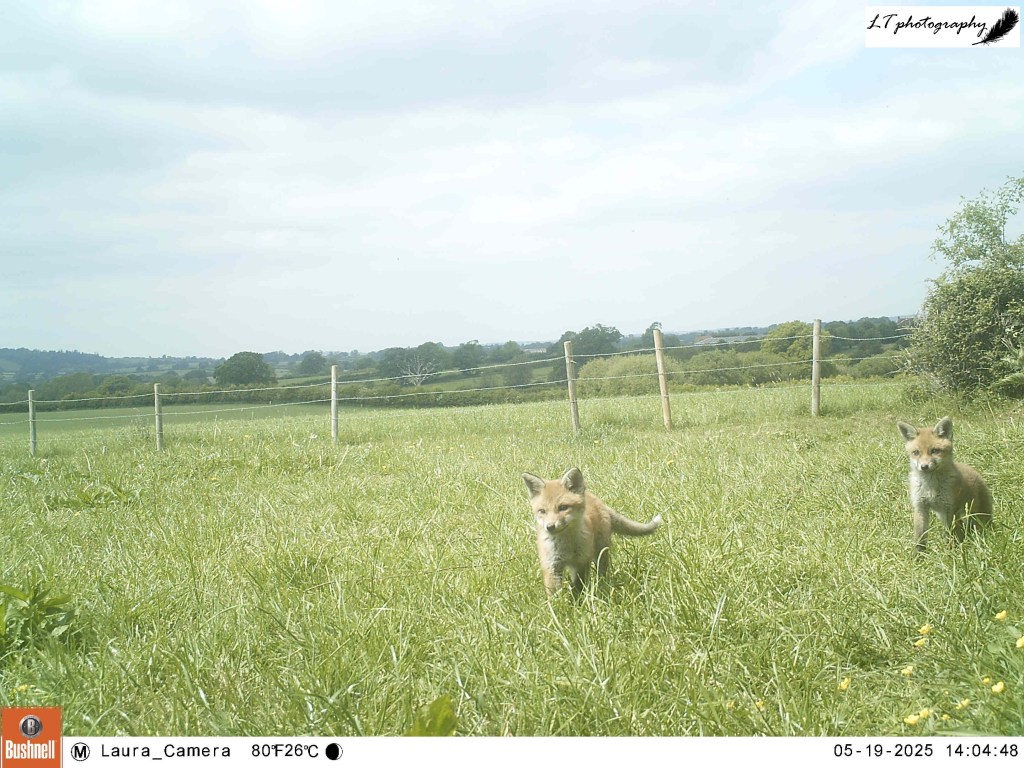
Up in the naked boughs of the trees, birds fly from branch to branch, including blue tits, great tits, and goldcrests, buzzards whirl in the skies above, and pheasants make their raucous call now and again. Remaining holly and hawthorn berries provide a spot of colour against ivy and plentiful moss, but with the first lush greens and pastel yellows popping up, such as hazel catkins dangling from the trees, the woods are hinting at change. These are the first whisperings of spring in the stillness of the woodland, with more signs being found at night, such as tawny owls loudly defending their territories, and badgers and foxes increasing their roaming amongst the trees.

February

As a new month begins, the landscape feels like it is very much still in the grips of winter. A grey gloom hangs over the woodland, with the overcast sky threatening an endless possibility of rain. Where February 2023 was a cold, dry month, February 2024 is reflecting continued milder and wetter weather than average, with sunshine being much in demand. It is still not warm enough for any further advancement in the signs of spring from the previous month though, with the woodland floor still being mainly dressed in warm browns. Despite this, those first whisperings of new life can still be seen, with the slow marching growth of shoots of well known species, such as bluebell and stitchwort.

The mosses and lichens are also now joined by the much needed warm yellows of primroses and celandines, along with the red gems that are female hazel flowers. The slumbering woodland is currently the backdrop for the day-toiday life of its winter residents, but with the addition of blackbirds and song thrushes now starting to sing their melodious songs ahead of breeding in the spring.

March

As March begins, the start of blackthorn winter brings biting winds from the north, creating a break in 2024’s trend for warmer and wetter weather, which continues for the rest of the month. A rare calm day though sees the woodland bathed in soft, early spring sunshine, as it begins to finally switch from its shroud of brown to greens, with a carpet of new growth. Bluebell leaves are marching on in their advance of growth, making the most of increasing temperatures, whilst spear-shaped wild garlic leaves now carpet areas around the ambling streams through the middle of the wood. Hazel catkins are now fading to a creamy yellow, and their red female flowers are joined by swelling leaf buds. Though spring is advancing quickly, the woodland still waits for more flowers to keep company with the primroses and celandines.

A difference lies up in the trees. The woodland is coming alive with the sound of bird species that have wintered here in the UK and do not have to travel as far to return to their breeding territories. From great tits and blue tits, to wrens and goldcrests, a range of calls and songs can be heard, cut through by the sound of great-spotted woodpeckers drumming near and far. Mammals are beginning to become more active too, with grey squirrels fighting for territory and roe deer groups roaming through and around the woods. Spring is on its way!

April

As spring unfurls, the weather of April feels reminiscent of 2023, with cooler, damper weather dominating due to persistent north winds and plenty of rain. In the woods growth continues to move forward, but at a noticeably slower pace than could be expected. The month opens with tree buds swelling, hazel and hawthorn leaves bursting forth, and trees dripping with blackthorn and willow flowers. The woodland floor is coming to life now with a never ending mat of purple dog violets, pale green moschatel, yellow celandines and primroses, white stitchwort, the beginnings of purple-blue bluebells, and the fantastic starry heads of wood anemones. Wild garlic leaves continue to grow around the bubbling streams, smelling noticeably pungent now and beginning to show the whites of flower buds, whilst ferns unfurl their hairy coils across the woodland.

As the woodland bursts into life, it is accompanied by an intensifying soundtrack. In the background a rich tapestry of bird song can be heard, as migrants make their return, from great tits, blue tits and wrens, to chiffchaffs, blackbirds and robins. These include the continued crow of pheasants, the cat-like mewling of buzzards circling overhead, and the barks of grey squirrels. Listening more closely though, buzzing can now be heard as bees and flies make the most of flowers now blooming. The woodland finally feels alive after the first three months of the year taking its toll, though it waits for the return of some warm spring sunshine.

May

On a quiet afternoon at the start of the month, stepping amongst the trees is like stepping into a whole new world compared to the start of the year. Sunlight falls soft through new green leaves, dappling the woodland floor with warmth and light. At the base of the trees, the floor is now a lush green carpet of plant life. The cooler weather of April has meant that some April events have continued on into May, such as the bluebells, whilst the wind now coming from the south bringing warmer weather is beginning to promote much needed new growth.

Bluebells are just going over their peak after a spectacular show of rich purple-blue that has been breathtaking. Amongst hanging bells, stitchwort is continuing to open new flowers, alongside shocks of pink from herb Robert. New flowers appear in the forms of early-purple orchids, and red campion. Yellow archangel that took some time to arrive is becoming bleached to a creamy yellow, whereas wood anemones are bidding their final farewell. Wild garlic persists as do bright yellow celandines, adding to the show. Things move on though, as the ferns begin to overshadow the bluebells with their green fronds. Spring marches on.

With plant life becoming abundant, the woodland is now abuzz with insects of many kinds, whilst spiders make their homes between the flowers. Midges are particularly prevalent this year with a damp spring too! A highlight right now though, is the woodland’s bird life, with the continued singing of many species that call the woods home and are breeding right now, the chiffchaff really standing out in particular. Somewhere in a hole in a tree, maybe a tall oak, a female blue tit will now be sat tight on her eggs, growing the next generation of blue tits. 

June

As I step into the woodland on one of the first dry days in a while, my surroundings move from bright light to light spots and shadows. The tree canopy is now nearing completion and lush green oak, ash and hazel blanket out the light. Below on the woodland floor, a change has occurred. Spring stars have finally made their leave, and riotous bluebells, early-purple orchids, and wild garlic have been replaced by a dense green carpet of leaves. Herb Robert has taken over, with pink flowers creating a joyful pop of colour. Also these flowers are joined by white pig nut, purple germander speedwell, and pink foxgloves, and the lst yellow archangel, stitchwort and vibrant dog violets. The green seed pods of previous flowers remain, and a bluebell here and there when lucky, but now ferns stand tall above the woodland floor, unfurling their final leaves and making a canopy of their own.

As the spring season bids us farewell, it’s now the time of new life and growth, which is currently evident in the woodland. The drone of insects has lessened as flowers go over, but can still be found with flashes of blue damselflies, battling speckled wood butterflies, and striped flies. The first young of mammals, such as foxes, and birds, such as tawny owls, are also now venturing out to explore their new world. This can be heard up in the trees with the songs of birds and the alarm calls of protective parents. Summer and lazy days are on their way!

Spring 2023: How It Happened

The last few years spring has been unusual and unpredictable, with the effects of climate change changing from month-to-month, year-to-year in Dorset. This year has fitted into this with months switching back and forth between record breaking dry spells or heat waves to rainfall or low temperatures. This is bound to have had an effect on nature and the wildlife around us, which is interesting to explore.

Last year there were trends towards earlier spring events or a slow start to spring and then a speeding up to events in April. I can already suggest that spring this year was slow to start as it gave me the opportunity to really experience spring as it got under way and unfolded in front of me. It will be interesting to see though, if this was the trend for trees, shrubs, flowers, insects and birds alike, if the trend differs to 2022 and how spring shaped up as a whole. Read on to see how my favourite season went this year in all its vibrancy!

Trees

Though in 2022 spring emergence dates for trees had crept earlier than the year before, in 2023 nearly all tree dates were later than 2022, following a more similar trend to 2021 and the proceeding years. Field maple and silver birch both flowered earlier in April, but otherwise ash, horse chestnut, english oak, wild cherry and Norway maple all budburst, unfurled leaves and flowered between 1 and 28 days later from March through to May. The same could be said for the leaves of field maple and silver birch. It was odd to see trees though, lacking their fineries for so long this year!

Flowers

In 2022, flowering times varied between species, but this could be split into half flowering earlier and half later than the year before. This year primroses, cuckooflowers and bluebells in woodland all flowered earlier (4, 2 and 1 day earlier respectively), but flowering trends generally followed a more similar pattern to to those of tree events, occurring later. For snowdrops, lesser celandines, daffodils, stitchwort, cowslips, wood anemones, early purple orchids, wild garlic, oxeye daisies, and hedgerow bluebells this was 1-16 days later between January and June. Interestingly yellow archangel was noticeably absent during its usual flowering time, and instead flowered 36 days later than in 2022 on 17th May, being greatly affected by climate and a great indicator of spring conditions.

Insects

Of 13 species recorded emerging during spring 2022, only 2 did not emerge earlier than the year before: the buff-tailed bumblebee and orange-tip butterfly. For 2023, spring flipped dates back around for insect emergences, with 10 out of 12 recorded species emerging later than the year before. This ranged from 2 days later with the speckled wood butterfly to 46 days later with the red admiral butterfly. The exceptions were peacock and comma butterflies, being recorded 15 and 36 days earlier respectively. This could be due to the colder spring impacting and delaying emergences, for example the brimstone butterfly, a common sign of spring, delayed its emergence until the 3rd of April 2023.

Shrubs

For shrub species recorded in 2022, spring events occurred both earlier and later than in 2021, with no obvious trends. In comparison, spring 2023 showed an obvious trend, with nearly all recorded budburst, first leaf unfurling and flowering for 6 species, occurring later than 2022. The exceptions were dog rose flowering earlier in May and hazel catkins flowering earlier in January. The other spring events took place 3-27 days later from February to May. It was an odd year to see blackthorn flowering 2 weeks later within March and meeting its peak in April, and hawthorn first flowering in May, later than usual.

Birds

There was a split with spring bird events in 2022, with events closer to the start of the season occurring later, and those towards the second half occurring earlier than 2021. For 2023, it seems that the dates of spring bird events were also split, but this time with less clear a trend. Rooks began building nests later and most birds fledged young later, but swallows arrived on the 11th April once again, and blackbirds began singing earlier in February. Some differences in event occurrence can be explained by spring temperatures and weather conditions, whereas some are less easily explained for 2023. It is expected though that the later spring will have an overall effect on bird species through other spring events occurring later.

Conclusion

Spring 2023 varied from month-to-month with weather, temperatures, natural events and vibrancy. As a whole, a general unsettled and cooler time led to spring events occurring later than the year before for many species. The concern is though, that there may be a mismatch between the occurrence of events for different species, such as trees and birds, which could have had a greater impact than currently known. Time will tell what the impact of spring 2023 may be!

Species List

  • Ash (Tree) Fraxinus excelsior
  • Blackbird (Bird) Turdus merula
  • Blackcap (Bird) Sylvia atricapilla
  • Blackthorn (Shrub) Prunus spinosa
  • Bluebell (Flowering Plant) Hyacinthoides non-scripta
  • Brimstone butterfly (Insect) Gonepteryx rhamni
  • Buff-tailed bumblebee (Insect) Bombus terrestris
  • Chiffchaff (Bird) Phylloscopus collybita
  • Comma butterfly (Insect) Polygonia c-album
  • Cowslip (Flowering Plant) Primula veris
  • Cuckoo (Bird) Cuculus canorus
  • Cuckooflower (Flowering Plant) Cardamine pratensis
  • Daffodil (Flowering Plant) Narcissus spp.
  • Dog rose (Shrub) Rosa canina
  • Early purple orchid (Flowering Plant) Orchis mascula
  • Elder (Shrub) Sambucus nigra
  • English oak (Tree) Quercus robur
  • Field maple (Tree) Acer campestre
  • Goldfinch (Bird) Carduelis carduelis
  • Greater stitchwort (Flowering Plant) Stellaria holostea
  • Great-spotted woodpecker (Bird) Dendrocopos major
  • Hawthorn (Shrub) Crataegus monogyna
  • Hazel (Shrub) Crataegus monogyna
  • Horse chestnut (Tree) Aesculus hippocastanum
  • House martin (Bird) Delichon urbicum
  • House sparrow (Bird) Passer domesticus
  • Lesser celandine (Flowering Plant) Ficaria verna
  • Meadow brown butterfly (Insect) Maniola jurtina
  • Norway maple (Tree) Acer platanoides
  • Orange-tip butterfly (Insect) Anthocharis cardamines
  • Oxeye daisy (Flowering Plant) Leucanthemum vulgare
  • Painted lady butterfly (Insect) Vanessa cardui
  • Peacock butterfly (Insect) Aglais io
  • Primrose (Flowering Plant) Primula vulgaris
  • Red admiral butterfly (Insect) Vanessa atalanta
  • Red-tailed bumblebee (Insect) Bombus lapidarius
  • Rook (Bird) Corvus frugilegus
  • Seven-spot ladybird (Insect) Coccinella septempunctata)
  • Silver birch (Tree) Betula pendula
  • Small tortoiseshell butterfly (Insect) Aglais urticae
  • Snowdrop (Flowering Plant) Galanthus spp.
  • Song thrush (Bird) Turdus philomelos
  • Speckled wood butterfly (Insect) Pararge aegeria
  • Starling (Bird) Sturnus vulgaris
  • Swallow (Bird) Hirundo rustica
  • Swift (Bird) Apus apus
  • Wild cherry (Tree) Prunus avium
  • Wild garlic (Flowering Plant) Allium ursinum
  • Wood anemone (Flowering Plant) Anemone nemorosa
  • Wren (Bird) Troglodytes troglodytes
  • Yellow archangel (Flowering Plant) Lamium galeobdolon
  • Yellowhammer (Bird) Emberiza citrinella

A Naturalist in Manchester

A city of industry, Manchester is well known for its textiles, football, music, and transport links. It is lesser known though for its connection to nature, such as the city’s proud centuries-old symbol of the worker bee, and the wildlife that call the city and wider area home, from barn owls and otters to hedgehogs and peregrine falcons. With over half of urban Greater Manchester currently being made up of green or blue spaces, the city itself now aims to tackle biodiversity loss, beginning with the 2020 Edinburgh Declaration.

As Manchester works to recover and improve spaces for nature and wildlife of all shapes and sizes in an ever-changing environment, it is an interesting time to explore what the city and Greater Manchester has to offer. On a recent trip to visit my friend and fellow wildlife lover Emma Rogan in her home city (see Rural vs. Urban), I got to do just that. Through a series of different adventures, Emma introduced me to what Manchester has to offer to the naturalist over the course of a week. So what did I discover?

Didsbury Park, Didsbury

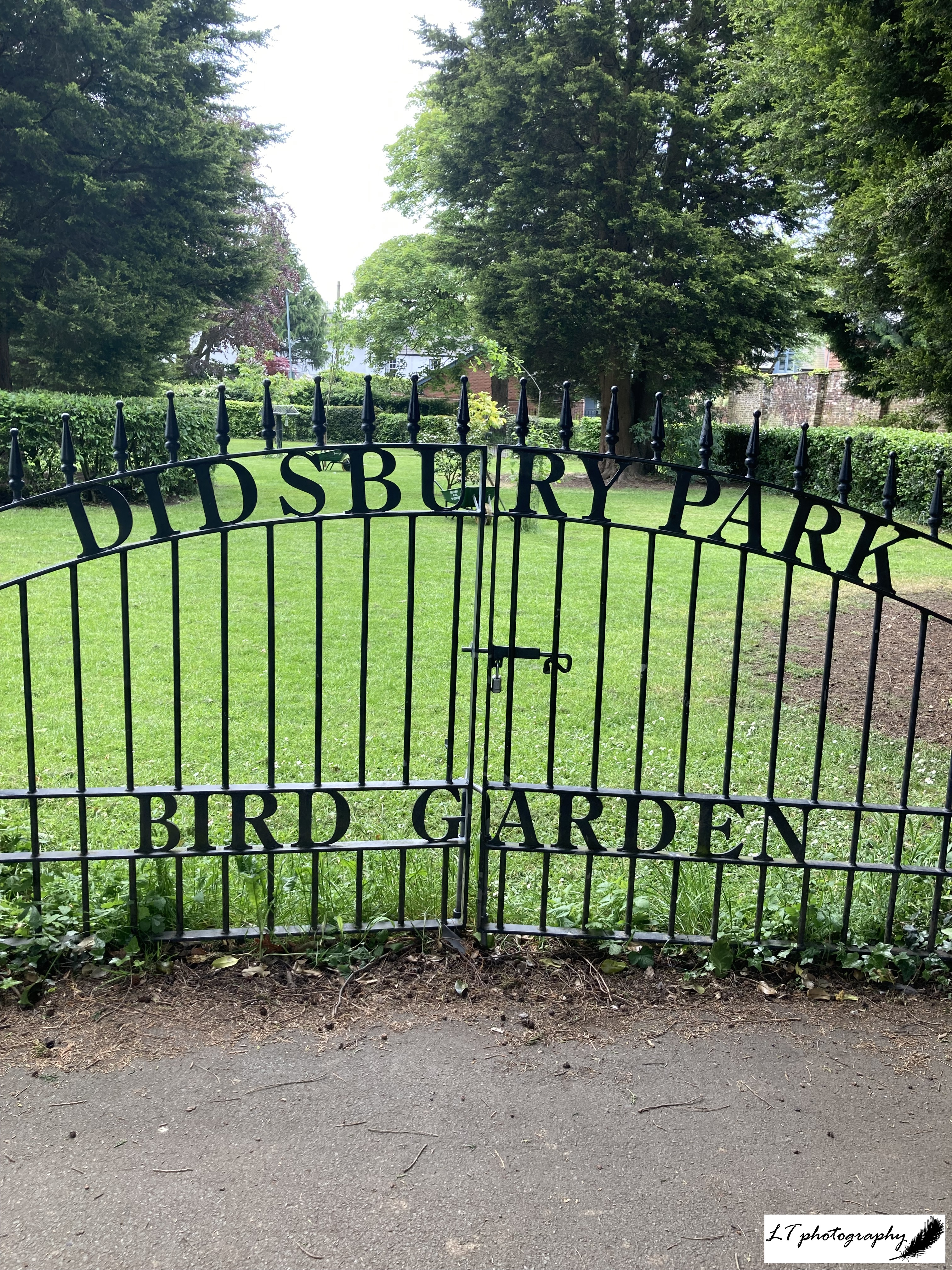
Situated in the south of the city, this modest green space has been a popular recreational spot since its redesign in the 1920s. Managed by a team of volunteers, Didsbury park meets the needs of the community with a play area, football pitch, bowling green, and cafe. Alongside the human elements, the park also puts an emphasis on providing habitats for wildlife where possible.

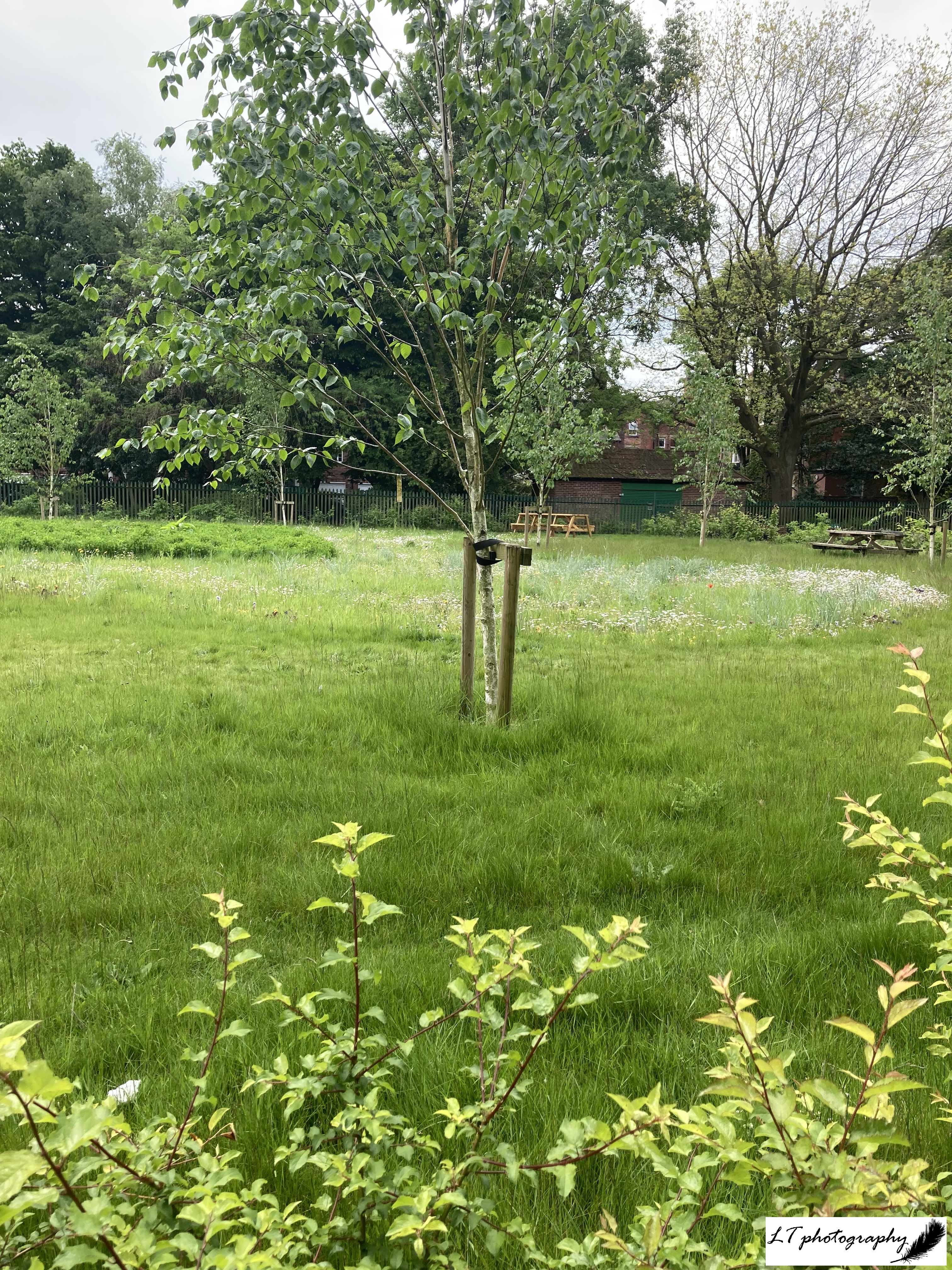
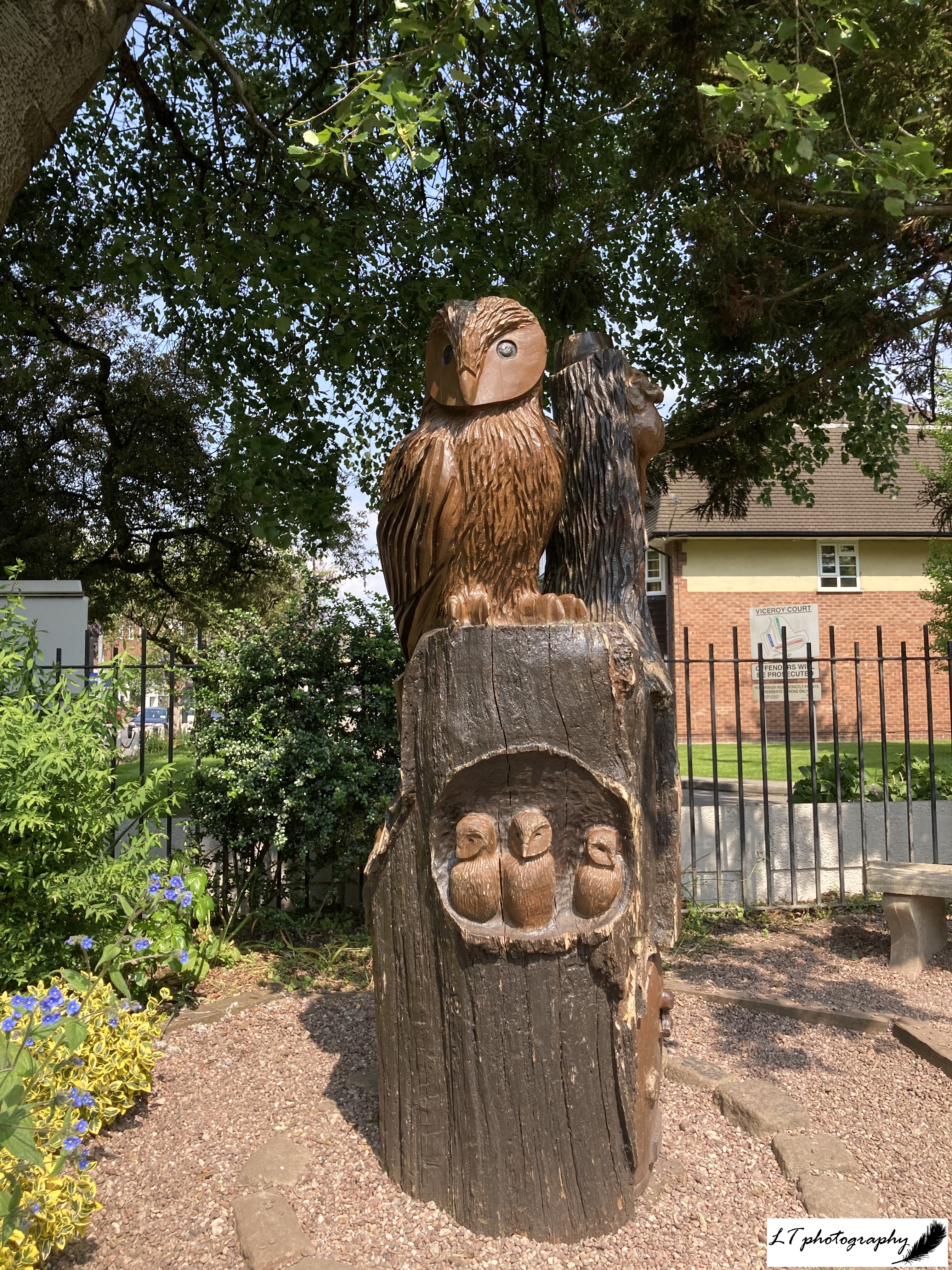
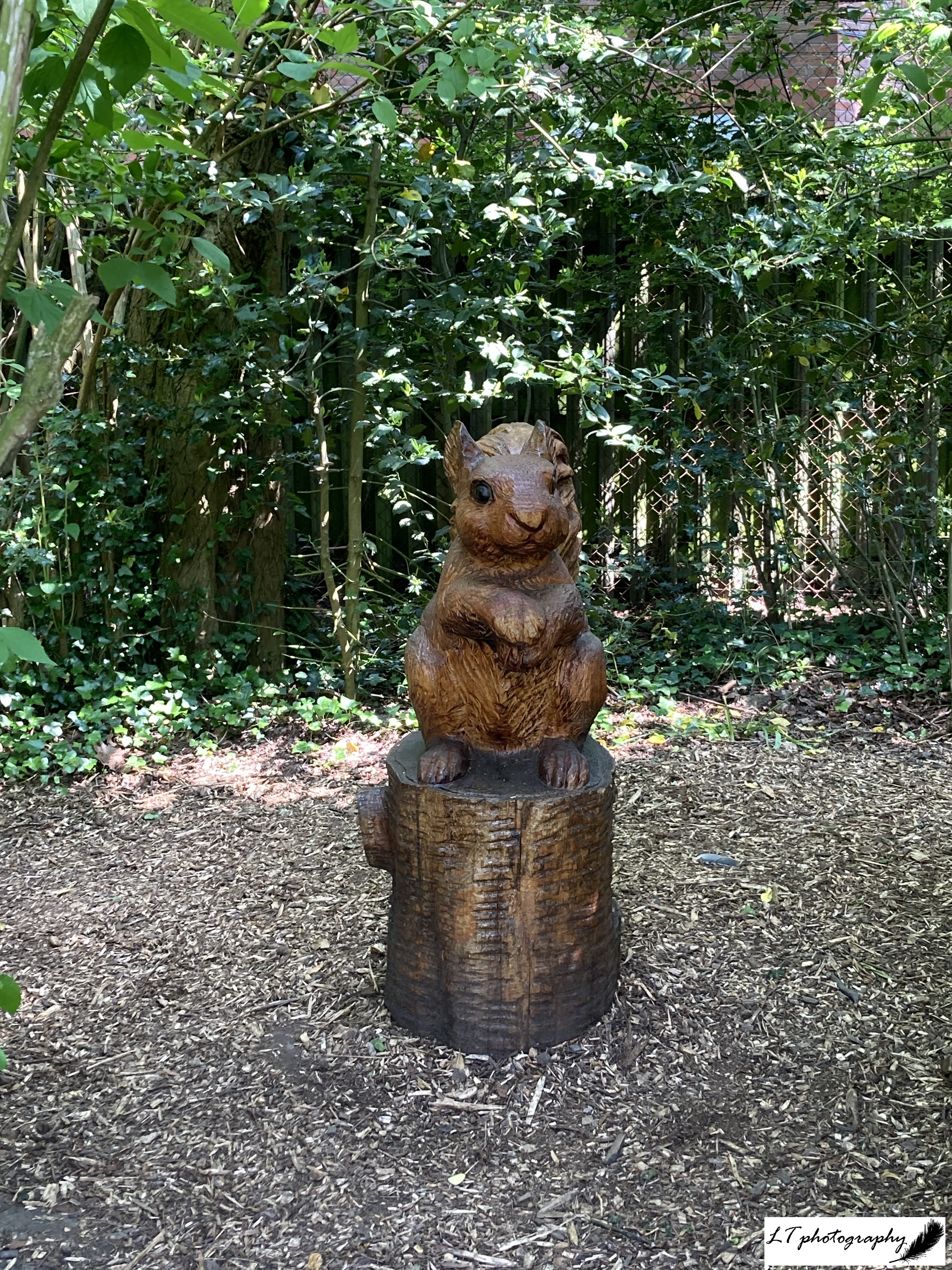
For me, when first entering the park, I took in the many flowering tree species, such as horse chestnut and wild cherry, and flowerbeds abuzz with insects. Though only a short walk to take in all the park had to offer, there were also surprises to be found. This included a wildflower meadow, wood carvings tucked away, and even a bird garden managed for different bird species, including providing food for the pair of nuthatches I saw feeding their fledged young up in the trees. The park was a lovely example of how even small green spaces are so important for city wildlife!

Fletcher Moss, Didsbury

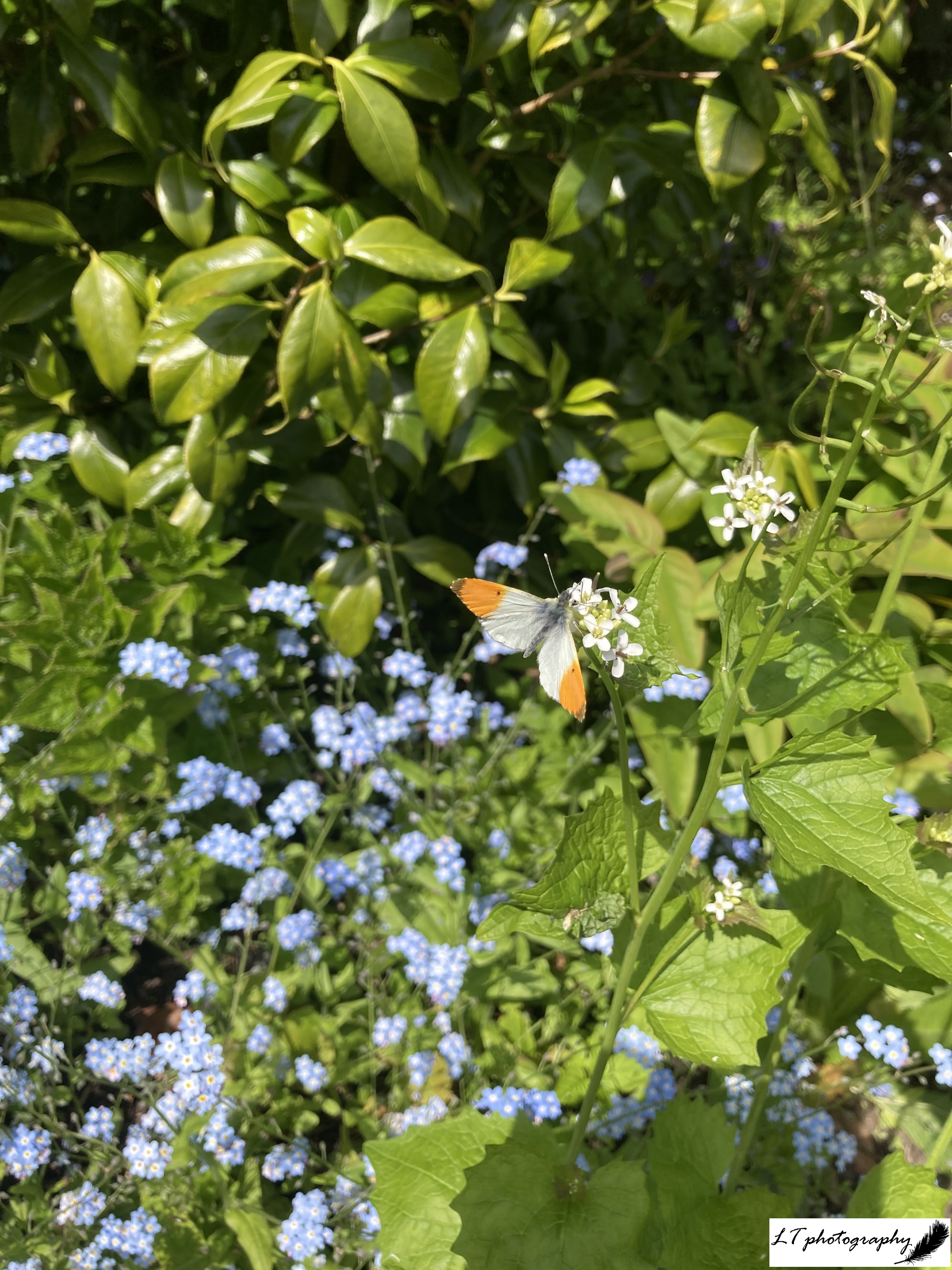
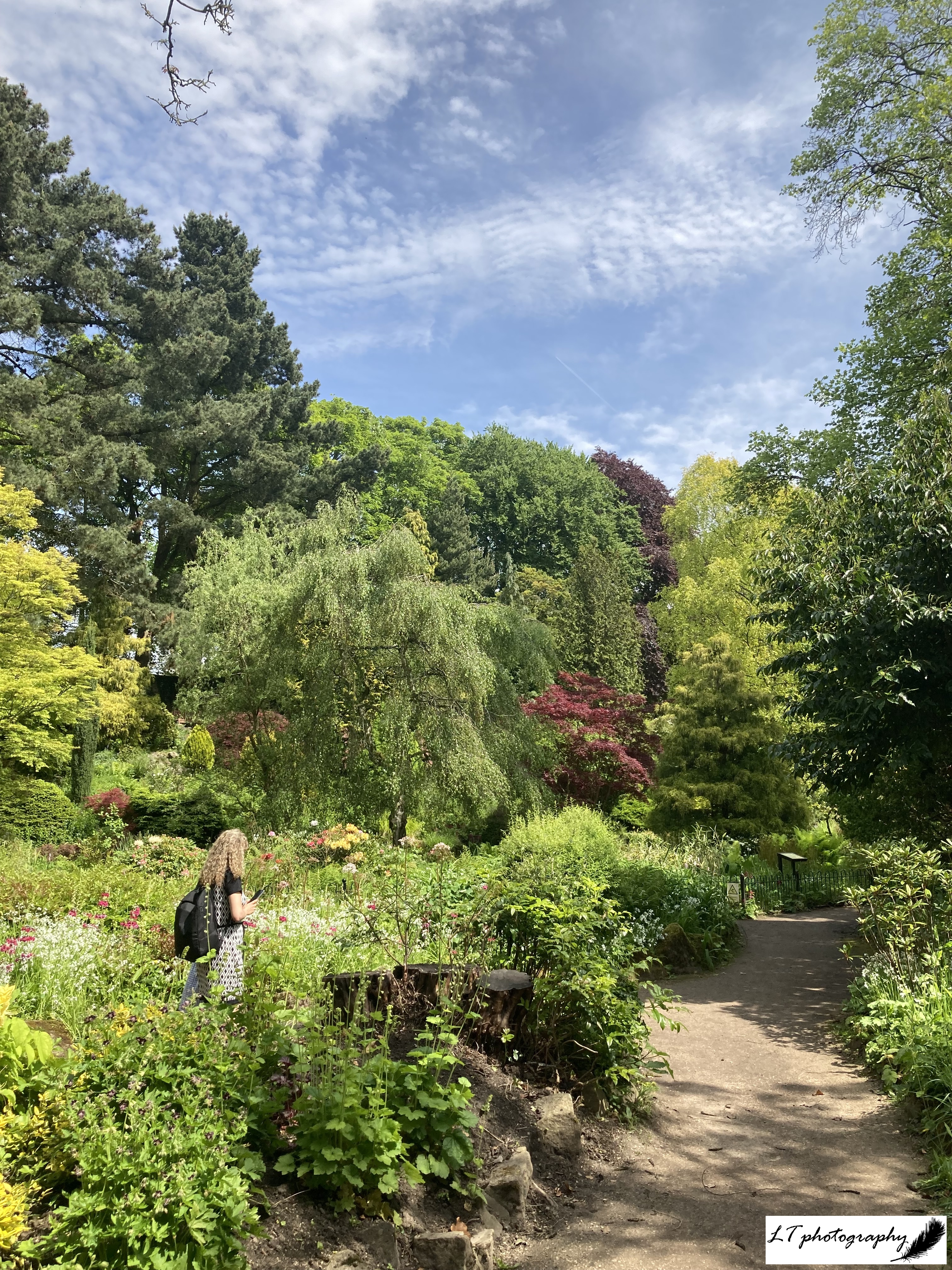
A 5 minute walk from Didsbury Park and also situated in the south of Manchester, Fletcher Moss Park is perfect for a dog walk, birdwatching, or a Sunday morning ramble. Mine and Emma’s adventure to Fletcher Moss started at the Parsonage Gardens, a tranquil area surrounding the old home of the park’s namesake Fletcher Moss. In May, the gardens were particularly spectacular with azaleas and wisteria in flower, along with flowerbeds awash with colour and alive with bees and orange-tip butterflies. Walking on past compost heaps and an alpine greenhouse, we made our way out on to Stenner Lane.

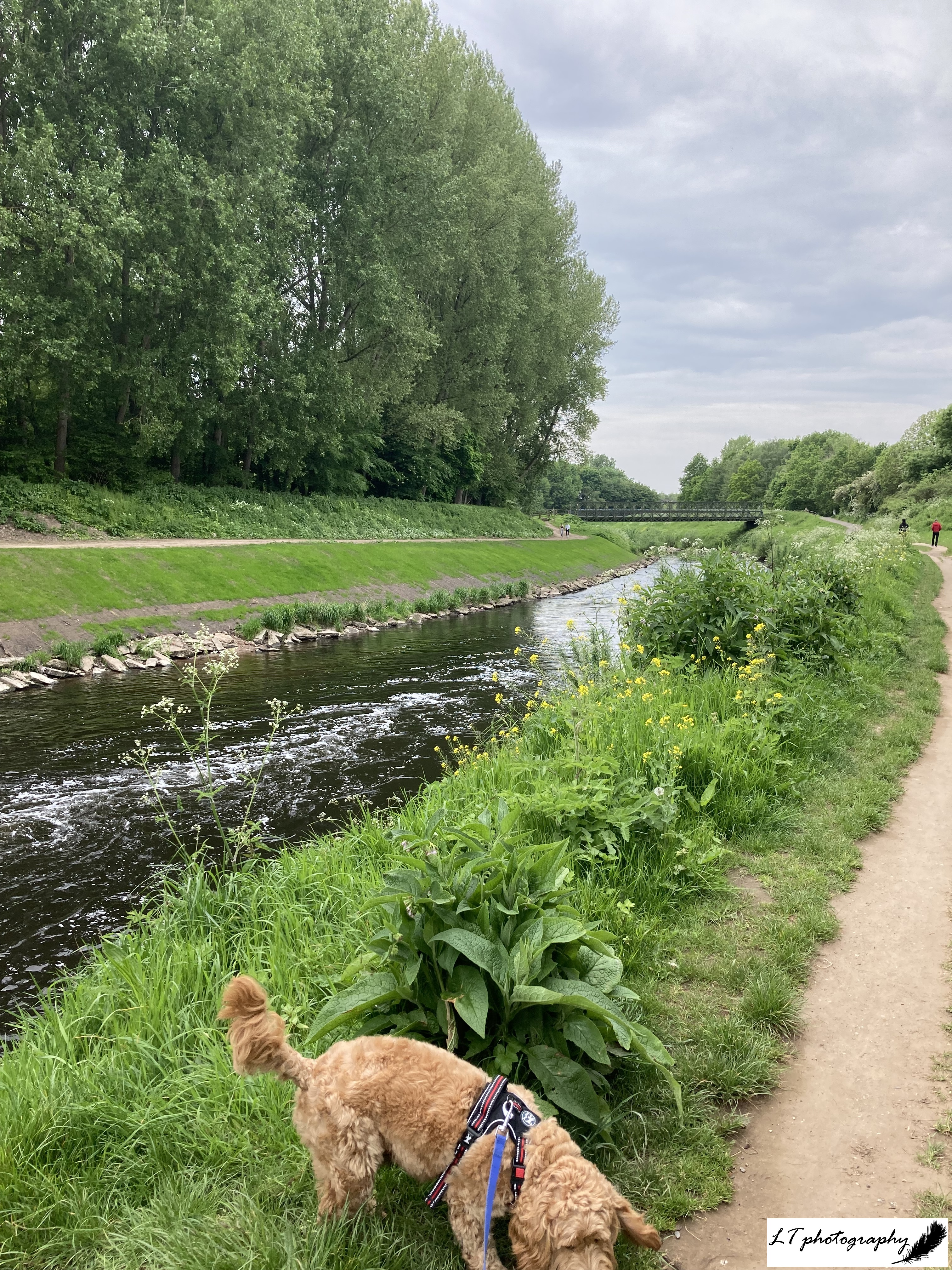
After a short walk, we left the lane behind with its swathes of wild garlic and sights of the magnificent poplar avenue, to join the banks of the meandering River Mersey. Along it’s stretches, we came across Simon’s Bridge constructed in 1901, and a whole host of wildlife, all with a backdrop of the noise of the M60 close by. Though the river had much wildlife on offer, such as colourful brimstone butterflies, on this part of the walk I was most interested in the bird species to be seen. This ranged from the city specialists, such as ring-necked parakeets and magpies, to smaller species, such as great tits, dunnocks and chiffchaffs, and water birds, such as canada geese, mallard ducks and even a female goosander.

Once breaking away from the calming flow of the river, the habitat changed from edge habitat to grassland to woodland all within a couple of kilometres. Through Millgate Fields we experienced hedgerows full of heady-scented hawthorn flowers, small white butterflies, and cows grazing, before venturing into Stenner Woods, with ponds of tadpoles, moorhens and speckled wood butterflies. The path then led us out for a much needed drink at the Alpine Tea Room.

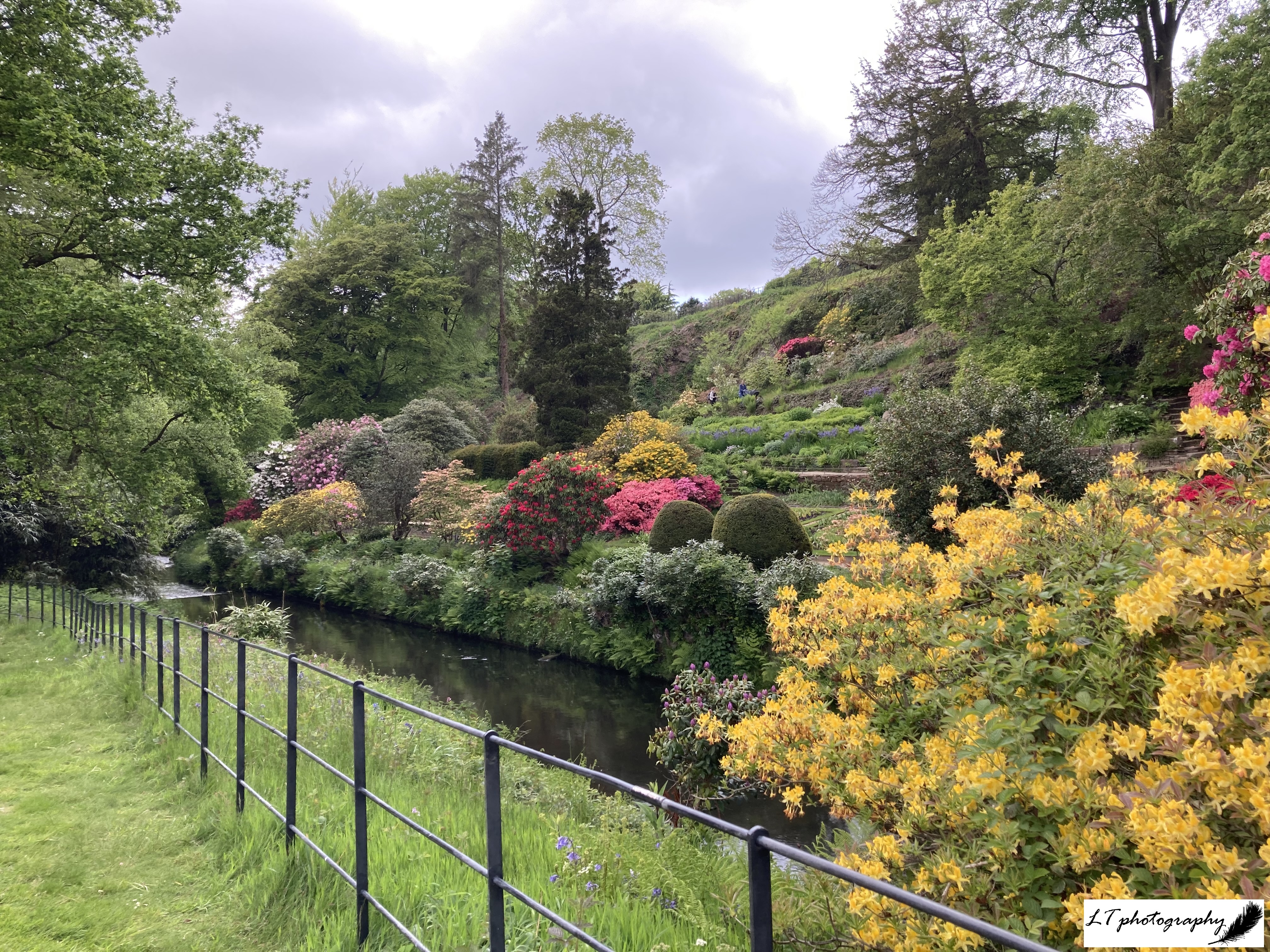
After our drinks, we continued on our journey, passing through Fletcher Moss Botanical Gardens, situated on a sunny south-facing slope. Within these gardens we found mini waterfalls, rock gardens, ponds containing many reshwater snails, giant rhubarb, exotic and unusual plants, damselflies, and small birds, such as wrens and robins, up in the trees. Following the path out through the gardens and park, under towering horse chestnuts and silver birches, we finally came to the end of our ramble.

Styal Country Park and NT Quarry Bank, Wilmslow

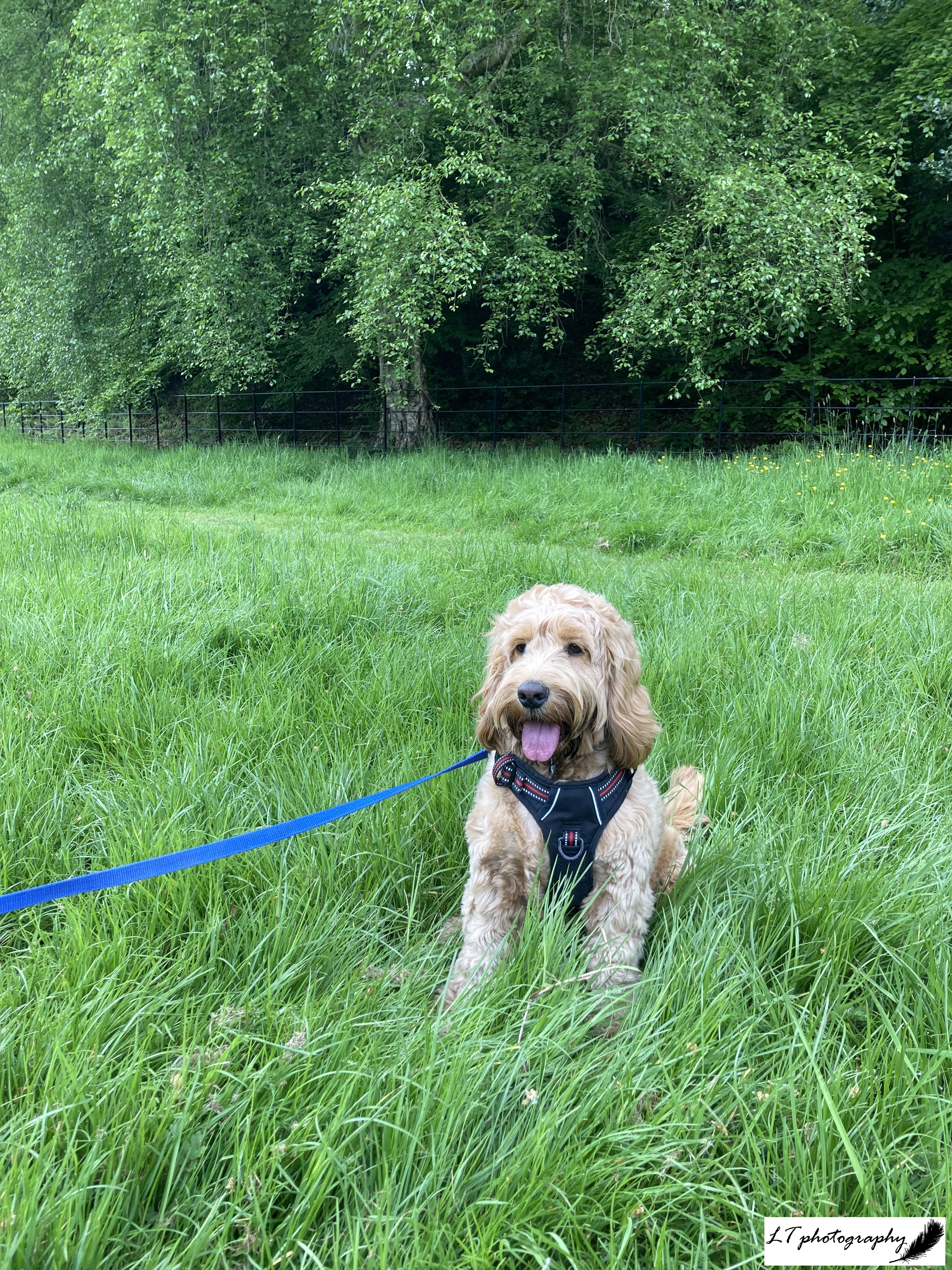
Another great way to venture out in nature is with a furry friend by your side, something I have missed over the last couple of years. So what better way to spend an afternoon than with my friend Emma and her sister’s cockapoo Persy, just outside of the city area of Manchester.

Starting at the Styal Country Park car park, our walk took us through fields perfect for running through, woodland filled with birds and squirrels, and along the banks of the River Bollin. Going at the active pace of Persy, we quickly stumbled upon the National Trust’s Quarry Bank, an old cotton mill first built at the start of the Industrial Revolution in 1784. The factory looking like a flash back in time, also boasts a magnificent walled garden, filled in May with the vibrant colours of rhododendrons, camellias, and borders filled many different species.

We topped off our adventure with a cup of tea in the National Trust cafe, and Persy leading us on our last stretch of walk through the gorges and woodland west of Quarry Bank. With robins, song thrushes, mallard ducks, woodpigeons, blackbirds, mandarin ducks, chiffchaffs, and nuthatches making appearances, among others, it was a great end to an afternoon wild walk.

Chorlton Water Park and the River Mersey, Chorlton

After a lovely dog walk at Styal, Emma and I were excited towards the end of my trip to take Persy on another walk to do some exploring. This time we headed to Chorlton Water Park within the south of the city bounds. An interesting nature reserve, it was formed when gravel was excavated from the site of Barlow Hall Farm for the M60 construction in the 1970s. The remaining pit was flooded, forming a central lake, surrounded by grassland, woodland and the River Mersey. Complete with fishing and pond-dipping platforms, and a play area, this green area is a site for both wildlife and the community alike.

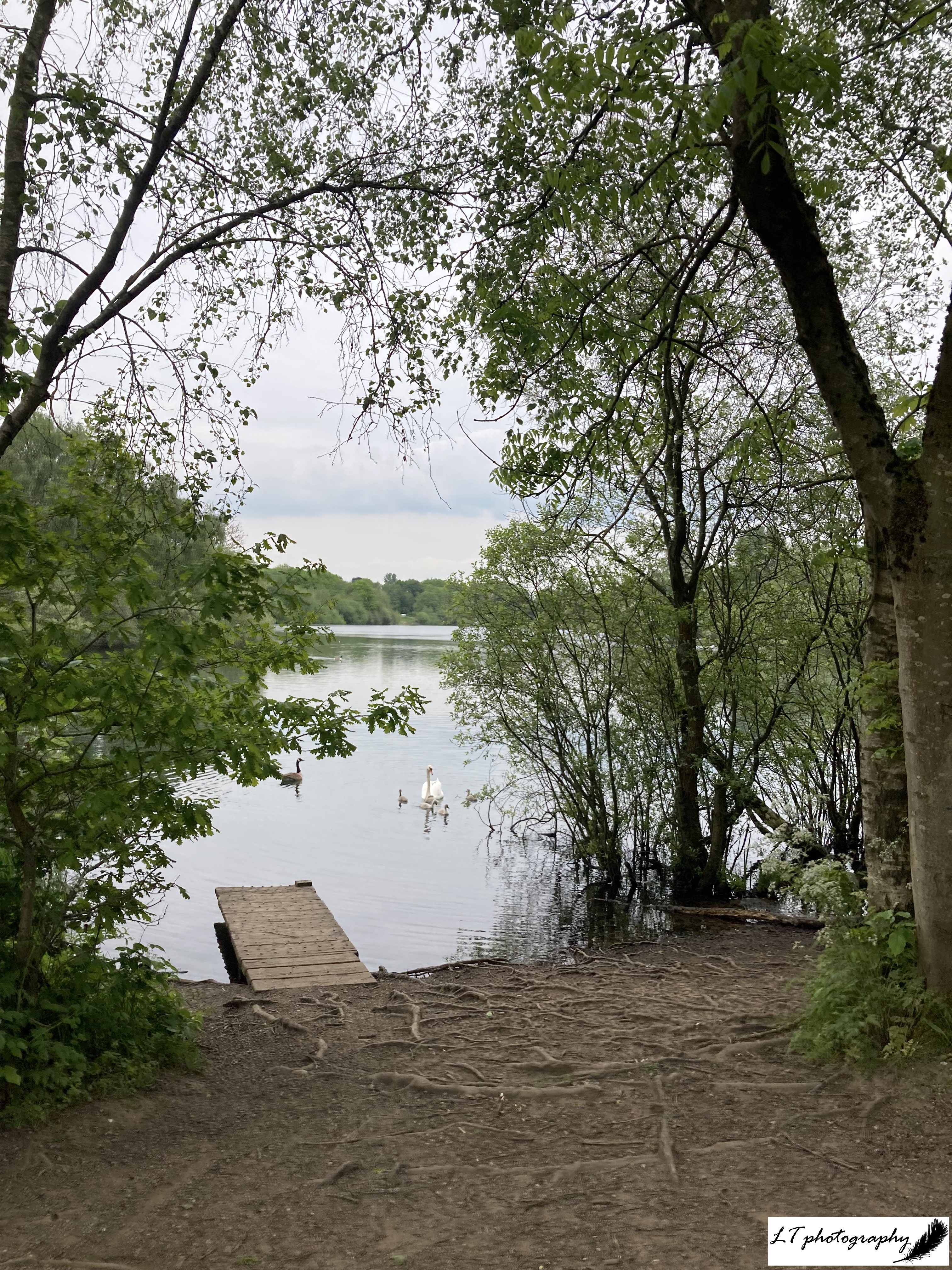
With Persy by our side, Emma and I first took a walk around the lake, taking in the birds on the water framed by willows and yellow flag irises, including Canada geese, mallard ducks, and mute swans all with young. Once we had completed this circuit, we extended our walk by heading east along the River Mersey back to Didsbury. The path was framed by froths of cow parsley and hawthorn, and added to by flitting butterflies, such as orange-tips, and a melodic bird soundtrack of tits, blackbirds, robins, dunnocks, wrens, chiffchaffs, and blackcaps. Though a simple route, it was really lovely to walk within an urban area, but be surrounded by nature and accompanied by wildlife the whole way!

Green Manchester

As a true country mouse and nature lover, when I am on holiday and travelling, I am always looking out for wildlife to discover, and green spaces to explore. So on my recent trip to visit friends and family up north, my time spent with my fellow animal-loving friend Emma was a real joy. City trips and activities were mixed with nature walks and lots of time enjoying being outside in green spaces. This ranged from areas within the city of Manchester, to further afield, such as a fantastic day trip to the Peak District via a 1 hour train.

When it came to being a naturalist in Manchester, the city surprised me with how much it had to offer. With a city-wide focus on providing homes for wildlife and recovering habitat lost within urban areas, you are never too far from a park or green space to escape to. There are also bee hives to be found on rooftops across the city centre, hedgehog highways being created between suburban gardens, new nature reserves being created each year, and much more to excite the urban naturalist. It just goes to show that wherever you live, nature can be accessed and enjoyed by all!

Disclosure: Unmarked photos taken by Emma Rogan
How to… Identify Signs of Spring in Britain

This year the Spring Equinox occurred on the 20th March, marking the point when the sun sat directly over the Earth’s equator heading northward, alongside the start of a new season, in our case spring. With spring comes longer day lengths, milder temperatures, regrowth, new beginnings, and the literal ‘springing’ of plants from the ground. After tough winters and a period of dormancy for nature, the sights of spring understandably lift spirits and create hope and joy.

As we look ahead to spring and what it means to us all, people will also be looking for the first signs of its arrival to tell them the season is upon us. With an increase in activity within nature, these signs can differ for different people, with examples including the first snowdrops, mammals coming out of hibernation, or even birds such as Rooks beginning to nest. For Emma, my Rural vs Urban blog series co-writer (check it out!), her first signs of spring in Manchester are as follows:

Signs of spring in Manchester, as typed from the tram on a lovely spring day: sunshine reflected off the sides of the glass buildings, daffodils and crocuses bravely making an appearance on the grass banks, seeing the first few Manchester bees buzzing about, thinking that it’s warm enough to leave the house without a coat then realising you made a mistake when it pours down with rain later in the day, and sitting outside at the pub!

Though we may all have our own personal favourites, there are some popular first signs of spring that can easily be looked for in anyone’s local area across Britain. Why not try to find them all yourself?

1. Hazel Catkins

  • Hazel is one of the first of our native species to flower at the start of the year, bringing real colour and joy to the still wintery landscape
  • Latin Name: Corylus avellana
  • Name: Catkin refers to long cylindrical clusters of small flowers
  • When to See: January to April
  • Where to See: Woodlands, scrub areas and hedgerows
  • Identifying Features: Lemon-yellow with pollen when open, and shaped like a lambstail, hanging in clusters from hazel branches
  • Range: Widespread throughout Britain

2. Yellow Flowers

  • After a cold and grey winter, nothing raises the spirit like the blooming of sunshine yellow flowers in the landscape, a symbol of rebirth and new beginnings
  • Most Popular: Daffodils (Narcissus spp,); lesser celandines (Ficaria verna); primroses (Primula vulgaris); cowslips (Primula veris)
  • When to See: Daffodils= February to May; celandines= March to May; primroses= February to May; cowslips= April to May
  • Where to See: Daffodils= gardens, parks and woodlands; celandines= woodland, grassland and gardens; primroses= woodland, hedgerows, and gardens; cowslips= grassland, woodland and hedgerows
  • Identifying Features: Daffodils= inner trumpet shape with a crown of petals; celandines= shiny yellow stars; primroses= rosettes of pale petals with darker centres; cowslips= bell-shaped within a green casing

3. Frogspawn

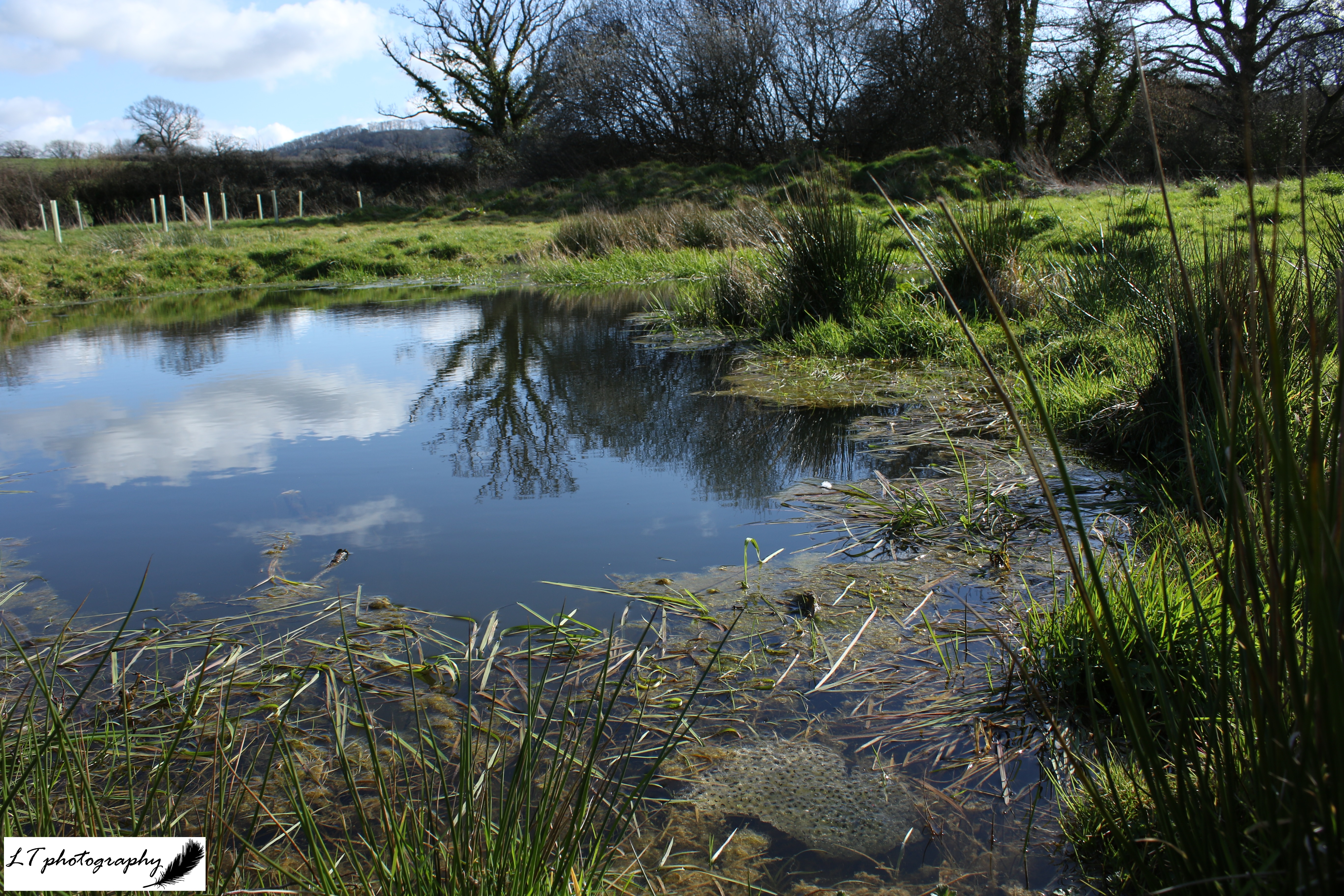
  • A symbol of spring that captures the imagination from a young age with its strange and sudden appearance early each spring
  • What is it?: The eggs are most commonly laid by the common frog (Rana temporaria)
  • When to See: Mainly February to March
  • Where to See: Just below the surface of ponds and streams
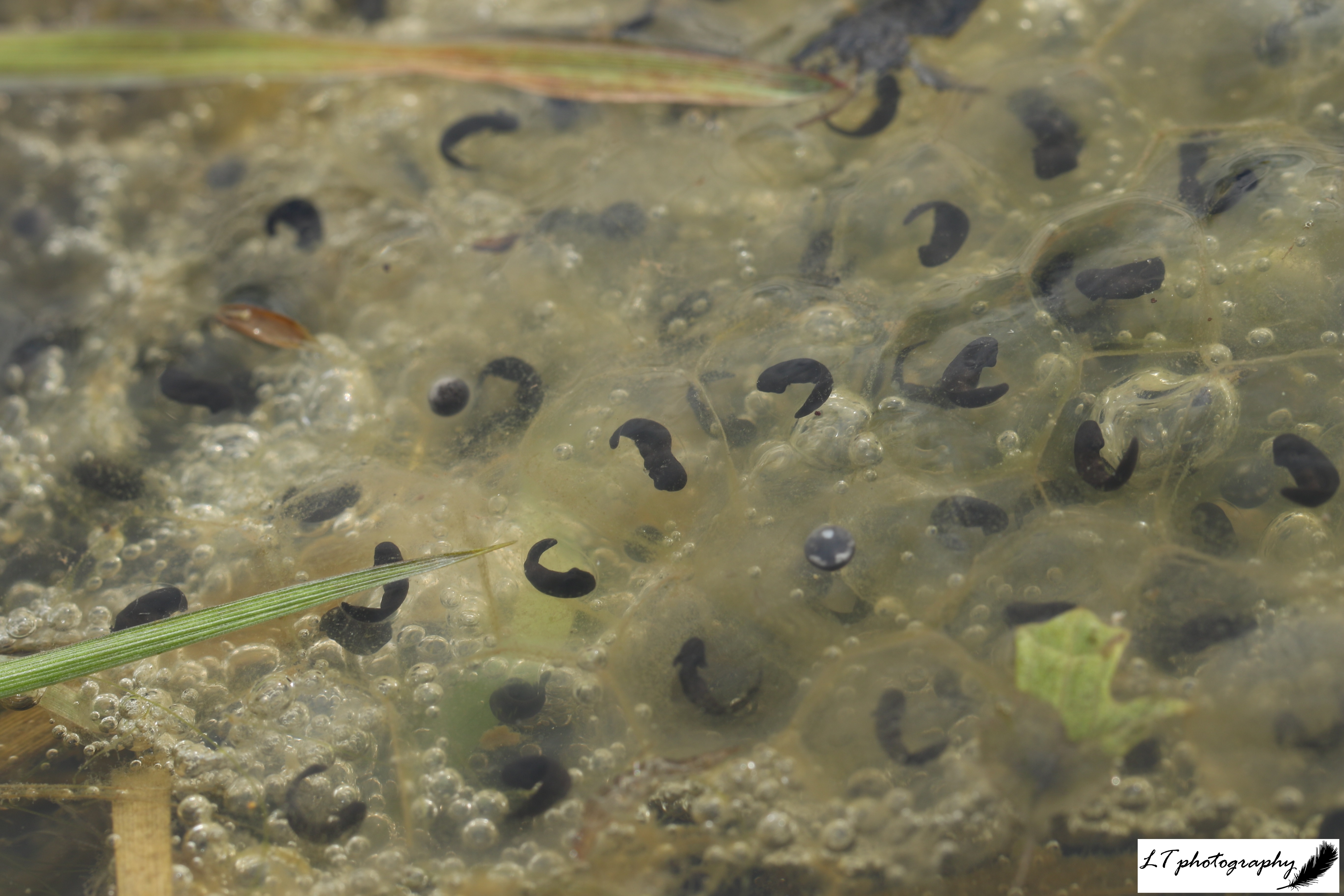
  • Identifying Features: Floating clumps of jelly that are made up of lots of small jelly eggs with a black dot or developing tadpole at their centres
  • Range: Widespread across Britain but more likely to be seen in certain areas

4. Buzzing Bees

  • The sound of queen bees buzzing lazily around in warm sunshine is a real sound of spring, symbolising new life to come
  • Examples: Buff-tailed bumblebee (Bombus terrestris); red-tailed bumblebee (Bombus lapidarius); tree bumblebee (Bombus hypnorum); white-tailed bumblebee (Bombus lucorum)
  • When to See: Buff-tailed= February to October; red-tailed= mainly March to August; tree= mainly March to July; white-tailed= March to October
  • Where to See: All can be seen in a wide range of habitats from woodland and farmland to gardens and heathland
  • Identifying Features: Buff-tailed= yellow collar near head and another on abdomen with queens having buff ‘tails’ and workers white with buff line above; red-tailed= black with red ‘tails’ with males having two yellow bands on thorax and one at base of abdomen; tree= ginger-brown thorax and black abdomen with white tail; white-tailed= black with two lemon-yellow bands on body and white ‘tail’

5. Chiffchaff

  • This tiny little bird is one of the earliest birds to arrive from warmer winter climes, and sing its heart out, heralding the start of spring
  • Latin Name: Phylloscopus collybita
  • Name: Named after its distinctive ‘chiff chaff chiff chaff’ song
  • When to See: Some winter in the UK, but can be heard singing from March to October when migrants return
  • Where to See: Woodland, scrubland, parks and gardens
  • Identifying Features: Green or dusky olive; short pale eye stripe; moderately dark eye stripe; dark legs; fine often dark bill; continuous tail-flicking movement; distinctive song
  • Range: Widespread across Britain, apart from more mountainous areas of Scotland

6. Pussy Willow

  • Emerging early on in the year, pussy willow is a real symbol of the beginnings of spring, and is often used as decorations at Easter
  • Latin Name: Salix caprea but also could refer to Salix cinerea
  • Name: Pussy willow is a colloquial name for goat willow, but is now often used for grey willow too. This is due to their furry male catkins looking like the soft, furry paws of a cat
  • When to See: February to April
  • Where to See: Woodland, hedgerows, scrub and damper, more open ground
  • Identifying Features: The more noticeable male flowers are the silver-grey, fluffy, and oval catkins standing upright from willow branches. They turn yellow when covered with pollen
  • Range: Widespread across Britain

7. Brimstone Butterfly

  • Though warmer, milder weather leads to the emerging of different butterfly species, the first brimstone butterfly is often the first species seen and its warm colour has connotations of sunshine and cheerfulness
  • Latin Name: Gonepteryx rhamni
  • Name: Brimstone is the old name for sulphur, which is the colour of the male butterfly’s wings
  • When to See: March onwards
  • Where to See: Can be seen in a wide variety of habitats, but the larval foodplants are alder buckthorn and buckthorn which is more scarcely distributed
  • Identifying Features: Veined wings with pale-yellow undersides and an orange dot on each wing. The uppersides are sulphurous yellow on males and paler on females
  • Range: Common in England and Wales, less common in Ireland, and very rare in Scotland

8. Spring Blossom

  • Everyone knows that spring is truly underway when blossom starts to coat trees and hedgerows in spectacular pastel fashion. It is a real spirit lifter after a long winter!
  • Examples: Blackthorn (Prunus spinosa); wild cherry (Prunus avium); hawthorn (Crataegus monogyna)
  • When to See: Blackthorn= March to April; wild cherry= April to May; hawthorn= April to June
  • Where to See: Blackthorn= hedgerows, woodland margins and scrubland; wild cherry= woodlands, gardens and hedgerows; hawthorn= hedgerows, woodland margins and scrubland
  • Identifying Features: Blackthorn= flowers white with 5 petals and red-tipped anthers; wild cherry= white flowers cup-shaped and with 5 petals; hawthorn= white flowers with 5 petals, pink or purple anthers and sickly sweet scent

9. Barn Swallow

  • This iconic bird makes a 6000 mile migration from Africa to breed in the UK, arriving with warmer weather and active exploration of potential nest sites
  • Latin Name: Hirundo rustica
  • Name: Barn comes from typically nesting in barns and out-houses, and the latin Hirundo means swallow
  • When to See: March to October
  • Where to See: Open country, perching on wires, and hunting low over grassland or water
  • Identifying Features: Blue-black; red forehead and throat; dark throat; long, pointed wings; deeply forked tail; agile flight
  • Range: Widespread across Britain

10. Common Bluebell

  • Over half of the world’s population of bluebells can be found in the UK, making for some incredible spring spectacles across Britain
  • Latin Name: Hyacinthoides non-scriptus
  • Name: Named for their distinctive flowers
  • When to See: March to June
  • Where to See: Carpeting woodlands, hedgerows, scrubland, on sea-cliffs and mountains
  • Identifying Features: Long, narrow green leaves; purple-blue bell-shaped flowers hanging from long stems; strong sweet scent
  • Range: Widespread across Britain

Spring 2022: How It Happened

This year spring has been a blast of colour, abundance, and new beginnings. Though April experienced some cooler weather, and storms blew up here and there, on the whole spring was calm and dry. What characterised this spring most of all though was the weather being warmer in general, making spring 2022 the 5th warmest on average with a quarter less rainfall. Turbulent winter weather led to a slower start to spring, but the increasing warmer days led to spring speeding up and going out in a hurry in my home area of Dorset.

Last year weather patterns had a big influence on spring events, with events moving earlier or later as a result. For many species, events actually occurred later in spring in Dorset in 2021 due to cooler and wetter weather overall. For example, compared to 2020, oak leaves unfurled 31 days later, bluebells flowered 4 days later, and swallows arrived 5 days later. It was an unsual spring that was still joyful, but showed the unexpected impact that climate change is already having on spring events.

After the unpredictability of spring 2021, it will be interesting to see how spring events have fared this year in 2022. How is spring looking as a season overall in 2022? Did specific spring events get back on track or continue to become later? And did spring events continue to follow weather patterns? Read on to find out!

Trees

This year on my family’s farm we have seen a general trend for tree budburst, first leaf and first flowering occurring earlier than in 2021, showing dates more similar to those of 2020 or ones that were even earlier. This was true for beech (Fagus sylvatica), field maple (Acer campestre), horse chestnut (Aesculus hippocastanum), english oak (Quercus robur), wild cherry (Prunus avium), and Norway maple (Acer platanoides) trees, all between 9 and 28 days earlier. This was similar for ash (Fraxinus excelsior) and silver birch (Betula pendula) trees, but ash showed budburst 10 days later and silver birch first leaves 4 days later.

For first flowers, horse chestnut and ash trees shared the earlier trend with them blooming 2 and 34 days earlier respectively. For field maple, english oak, silver birch, wild cherry, and Norway maple flowers though, flowers actually appeared anywhere between 1 to 24 days later.

Shrubs

For blackthorn (Prunus spinosa), dog rose (Rosa canina), elder (Sambucus nigra), hawthorn (Crataegus monogyna), lilac (Syringa vulgaris), and hazel (Crataegus monogyna) first flowering occurred earlier than in 2021. This ranged from hazel flowers 5 days earlier to blackthorn flowers 21 days earlier.

Surprisingly for first budburst and first leaf, the opposite trend was actually shown. For blackthorn, dog rose, elder, hawthorn, and lilac these spring events were seen to occur on the same day as 2021 or later by 2-13 days. As these shrub events occur more towards the start of spring, maybe the slow start to spring was having an effect. Hazel budburst occurred 12 days earlier instead, but first leaf was delayed and ended up fitting the trend, unfurling 13 days later on 24th March.

Flowers

Though snowdrops (Galanthus spp.) first showed their snowy heads 12 days earlier on 6th January, first flowering was 6 days later for daffodils (Narcissus spp.) on 25th January, 11 days later for lesser celandines (Ficaria verna) on 26th January, and 45 days later for primroses (Primula vulgaris) on 14th February.

Other spring flowering species had a more mixed response to the season, either appearing earlier or later compared to 2021, as we moved from March to April. The earlier appearers were:

  • Bluebell (Hyacinthoides non-scripta) – 6 days earlier on 26th March
  • Early purple orchid (Orchis mascula) – 11 days earlier on 7th April
  • Yellow archangel (Lamium galeobdolon) – 22 days earlier on 11th April
  • Wild garlic (Allium ursinum) – 1 day earlier on 19th April
  • Oxeye daisy (Leucanthemum vulgare) – 16 days earlier on 18th May

The later appearers were:

  • Wood anemone (Anemone nemorosa) – 2 days later on 1st April
  • Greater stitchwort (Stellaria holostea) – 3 days later on 4th April
  • Cuckooflower (Cardamine pratensis) – 2 days later on 10th April
  • Cowslips (Primula veris) – 9 days later on 11th April

Grasses

This year all recorded grass species flowered earlier. Meadow foxtail (Alopecurus pratensis) first flowered 18 days earlier on 22nd April, Yorkshire fog (Holcus lanatus) 33 days earlier on 10th May, and cocksfoot (Dactylis glomerata) 21 days earlier on 19th May.

Birds

With birds, the first spring events of the year occurred later on average. For example, song thrushes (Turdus philomelos) were first heard singing 18 days later on 19th January, rooks (Corvus frugilegus) were first seen building their nests 2 days later on 27th February, and blackbirds (Turdus merula) were first heard singing 6 days later on 16th February.

As we reached March, events occurred earlier than in 2021, with chiffchaffs Phylloscopus collybita) arriving 3 days earlier on 13th March, cuckoos (Cuculus canorus), blackcaps (Sylvia atricapilla), and yellowhammers (Emberiza citrinella) first singing 3, 7 and 14 days earlier respecitvely in April, and great-spotted woodpeckers (Dendrocopos major) first fledging 10 days earlier on 6th June. Swallows (Hirundo rustica) were an exception though first returning to our land 1 day later on 11th April.

Insects

The majority of insects I recorded were first seen on the wing on our land earlier than in 2021, making the most of our more stable weather, These were:

  • Red-tailed bumblebee (Bombus lapidarius) – 27 days earlier on 3rd March
  • 7-spot ladybird (Coccinella septempunctata) – 1 day earlier on 19th March
  • Peacock butterfly (Aglais io) – 10 days earlier on 20th March
  • Small tortoiseshell butterfly (Aglais urticae) – 16 days earlier on 22nd March
  • Brimstone butterfly (Gonepteryx rhamni) – 26 days earlier on 23rd March
  • Red admiral butterfly (Vanessa atalanta) – 14 days earlier on 24th March
  • Speckled wood butterfly (Pararge aegeria) – 53 days earlier on 21st April
  • Small white butterfly (Pieris rapae) – 14 days earlier on 8th May
  • Painted lady butterfly (Vanessa cardui) – 43 days earlier on 17th May
  • Meadow brown butterfly (Maniola jurtina) – 27 days earlier on 22nd May
  • Comma butterfly (Polygonia c-album) – 31 days earlier on 17th June

The exceptions were the buff-tailed bumblebee (Bombus terrestris) that emerged 19 days later on 18th March and orange-tip butterfly (Anthocharis cardamines) first seen 18 days later on 18th April.

Summary

This year during spring, plants tended to flower earlier, which could be due to the on average less turbulent weather, alongside the possibility of stress responses being triggered by the increasing temperatures at times. As a result flowers appeared earlier and went over more quickly.

Budburst and leaves did not follow as consistent a trend, but on average plants went through these spring events later than 2021. This may be due to many of these events occurring more towards the beginning of spring, when day length and temperature increases would have only just started to take an effect. Bird events followed spring in general with a slow start and a quick finish, whilst insects emerged earlier, as expected after last year’s unpredictable weather.

This year I have enjoyed all that spring had to offer, though it felt like once it got started it rushed through to its finish. In the moment it was a glorious season, but was cut short in its splendour. Being my favourite season, this year I was particularly sad when the season went over in to summer. Let’s see what will happen during the seasons to come and enjoy the adventures to be had!

How to… Identify UK Butterfly Species

A flash of colour flitting by in the heat of the summer sun. Twisting this way and that, showing off amazing aerial acrobatics above a meadow of long, waving grass. A butterfly, small but standing out against a backdrop of browns, yellows, reds, blues and whites. Floating like a leaf down to a flower, the butterfly stops, flicking its wings before coming to a stop, wings outstretched in the sunshine. What could this beauty be?

Butterflies come in all shapes, sizes and colours, and can be found in a variety of habitats, from big cities to more remote areas. They are also a popular cultural symbol across the globe, with symbolism ranging from rebirth and transformation to representing the human soul. Along with their long history of capturing the mind and imagination of people, in nature, butterflies are great indicators of the health of habitats and are an important part of the food chain. As is the common story right now, butterflies are unfortunately threatened by habitat loss and degradation, as well as climate change, pesticide use, and invasive species. They need our help!

To be able to help butterflies, we need to understand them better. In the UK, we have 59 species, with only 2 being migrants. Though butterflies are more noticeable for people to identify, most Brits can only name but a handful of species. As we ease into summer, now is a great time to brush up your knowledge of what species you can identify. Here’s 13 to get you started!

Butterflies

Brimstone (Gonepteryx rhamni)

  • Family: White and Yellow butterflies
  • Size: Large (60-74mm wide)
  • Butterfly appearance: Look like veined-leaves with pale-yellow undersides and an orange dot on each wing. Uppersides: Males= sulphurous yellow; Female= paler in colour
  • Caterpillar food plants: Buckthorn and Alder Buckthorn
  • On the wing: Can be seen throughout the year, but most commonly during spring
  • Winter: Hibernate as adults in wooded areas
  • Distribution: Common in England and Wales, less common in Ireland, and very rare in Scotland

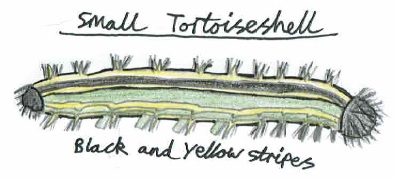
Small Tortoiseshell (Aglais urticae)

  • Family: Brush-footed butterflies
  • Size: Medium (45-60mm wide)
  • Butterfly appearance: Bright orange wings with a black pattern, white patch close to each outer top edge, and a border of blue half-moons. Underside dark and light brown
  • Caterpillar food plants: Nettles
  • On the wing: March-October
  • Winter: Hibernate as adults in sites, such as tree hollows and sheds
  • Distribution: Widespread throughout Britain

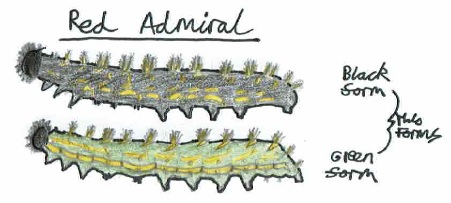
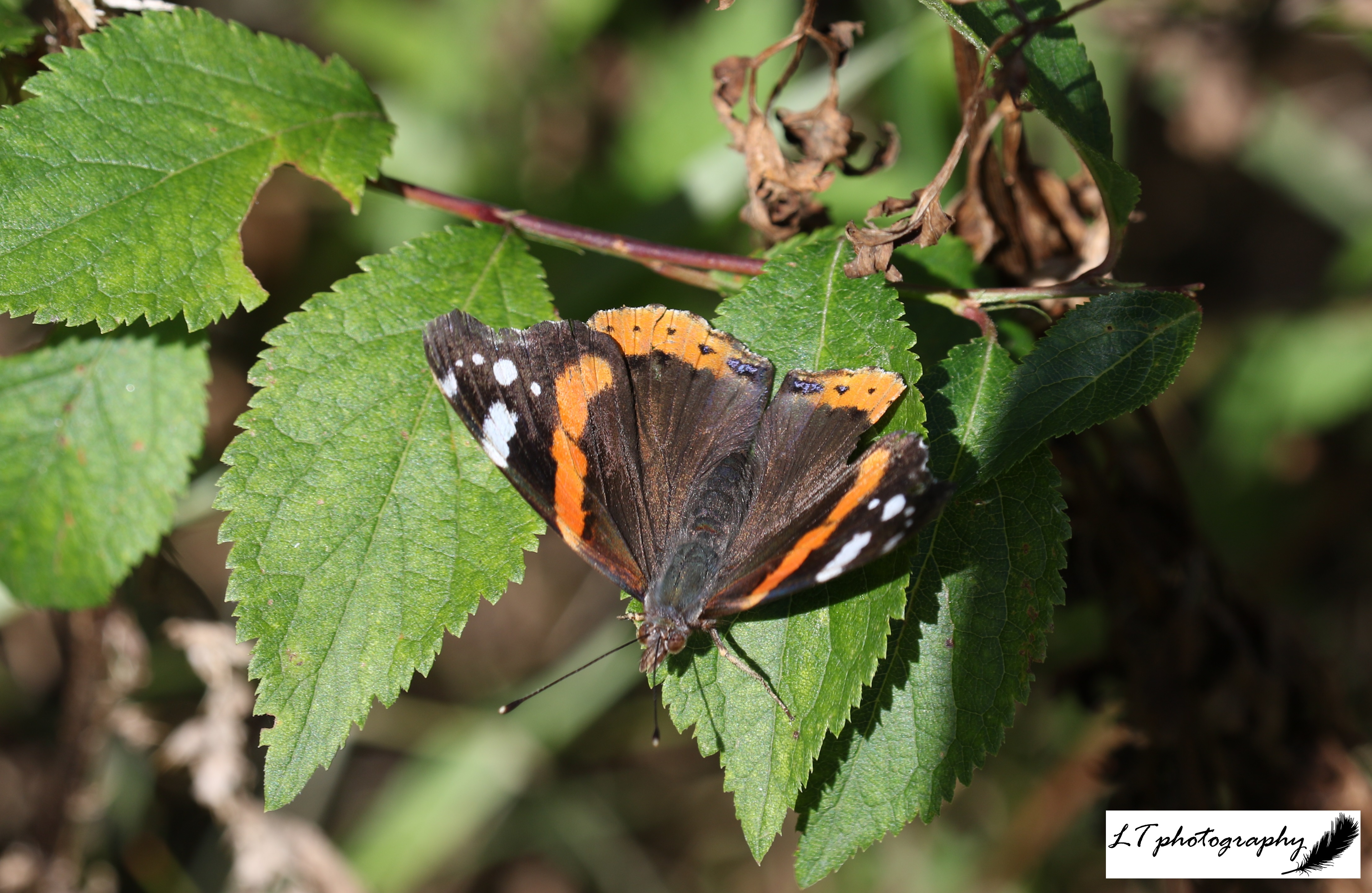
Red Admiral (Vanessa atalanta)

  • Family: Brush-footed butterflies
  • Size: Large (64-78mm wide)
  • Butterfly appearance: Black wings with red bands and white markings. Underside is similar, but paler and more mottled
  • Caterpillar food plants: Nettles
  • On the wing: March-October
  • Winter: Hibernate as adults
  • Distribution: Widespread throughout Britain

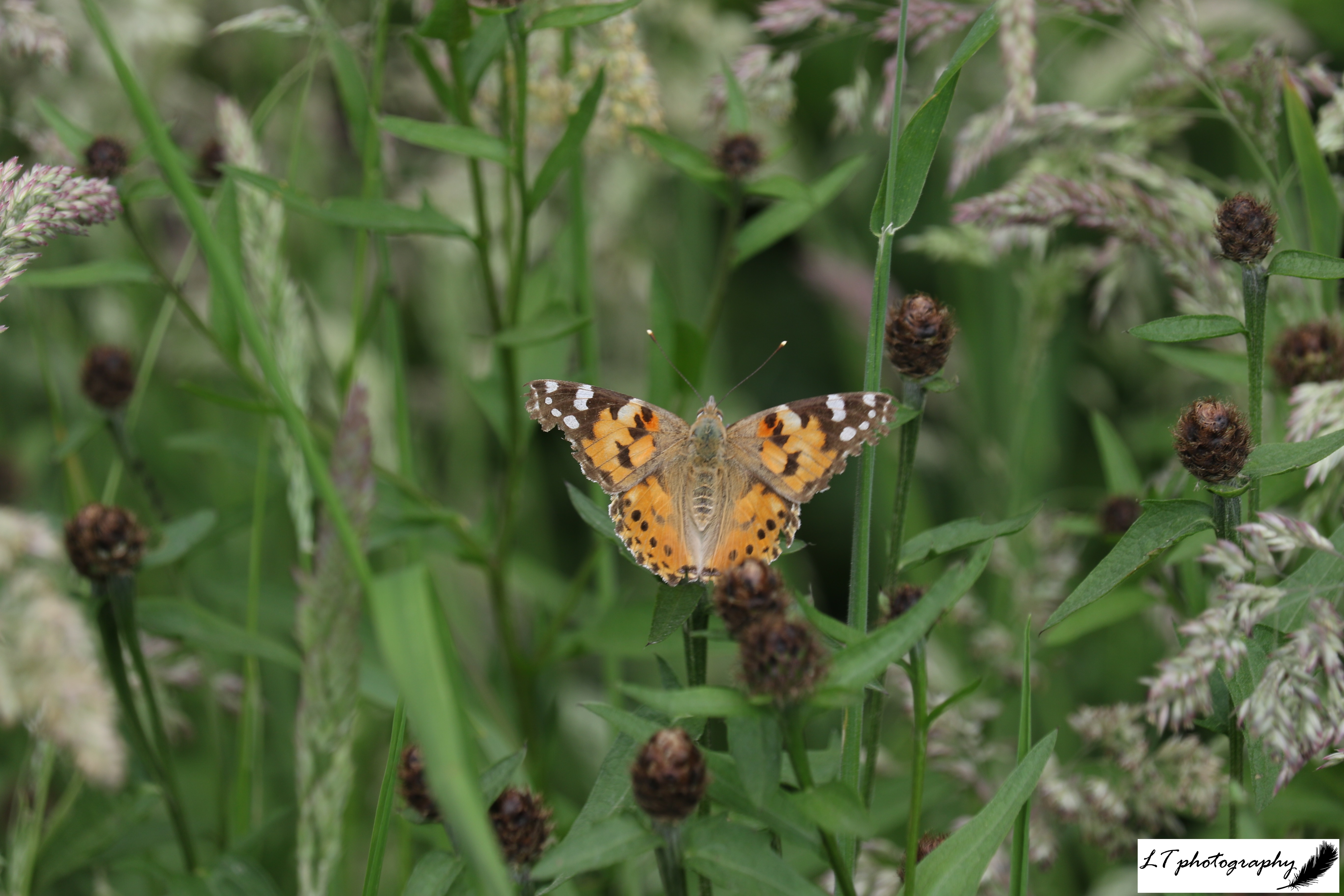
Painted Lady (Vanessa cardui)

  • Family: Brush-footed butterflies
  • Size: Medium/Large (58-74mm)
  • Butterfly appearance: Orange wings with black and white markings. Underside is similar, but paler and more mottled
  • Caterpillar food plants: Thistles and sometimes nettles and mallows
  • On the wing: March-October
  • Winter: Migrate from Africa each spring
  • Distribution: Widespread across Britain

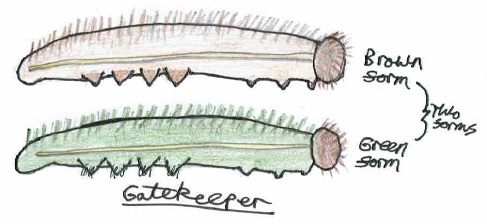
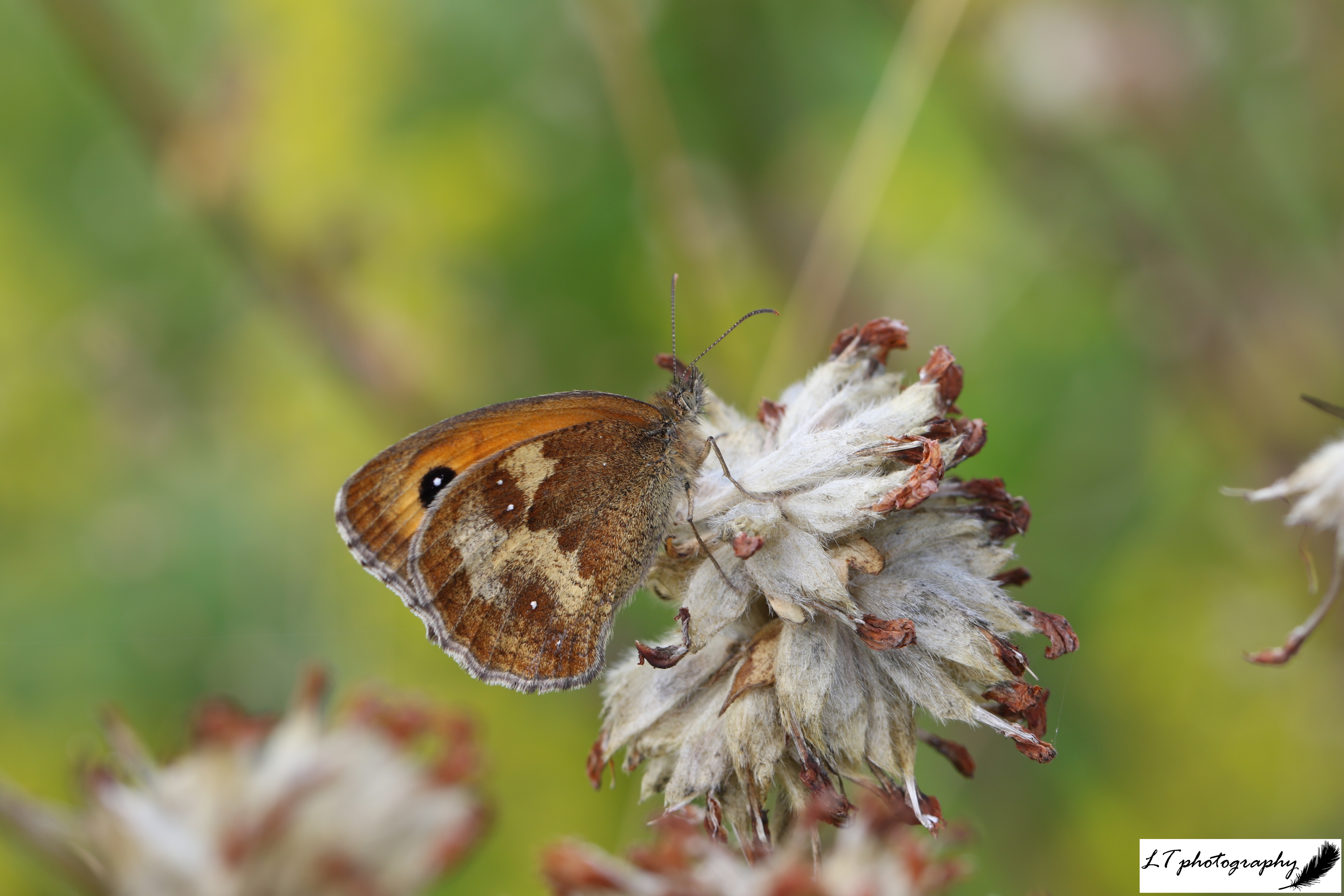
Gatekeeper (Pyronia tithonus)

  • Family: Brush-footed (brown) butterflies
  • Size: Medium (37-48mm wide)
  • Butterfly appearance: Orange and brown wings on top with a black false eye on each wing. Males are smaller and richer in colour than females, with distinct dark band across the forewing. Underside of the forewing is largely orange and the hindwing yellow and brown
  • Caterpillar food plants: Fine grasses, such as fescues
  • On the wing: June-September
  • Winter: Hibernate as caterpillars
  • Distribution: Most common in southern and central England and Wales

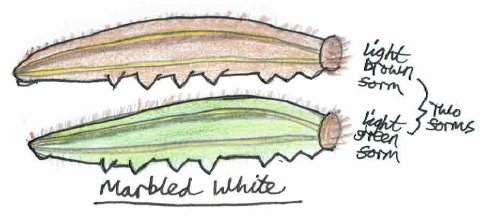
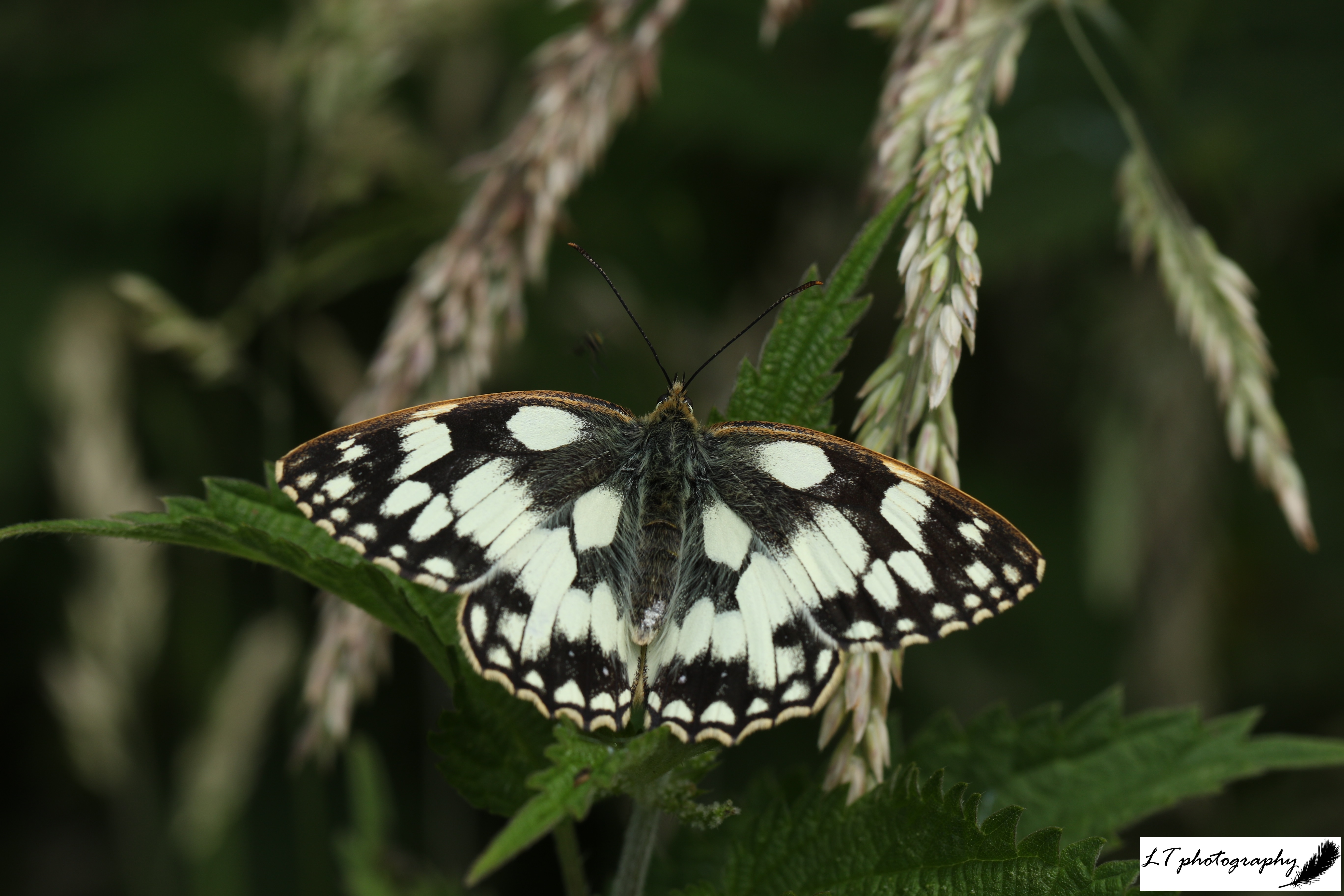
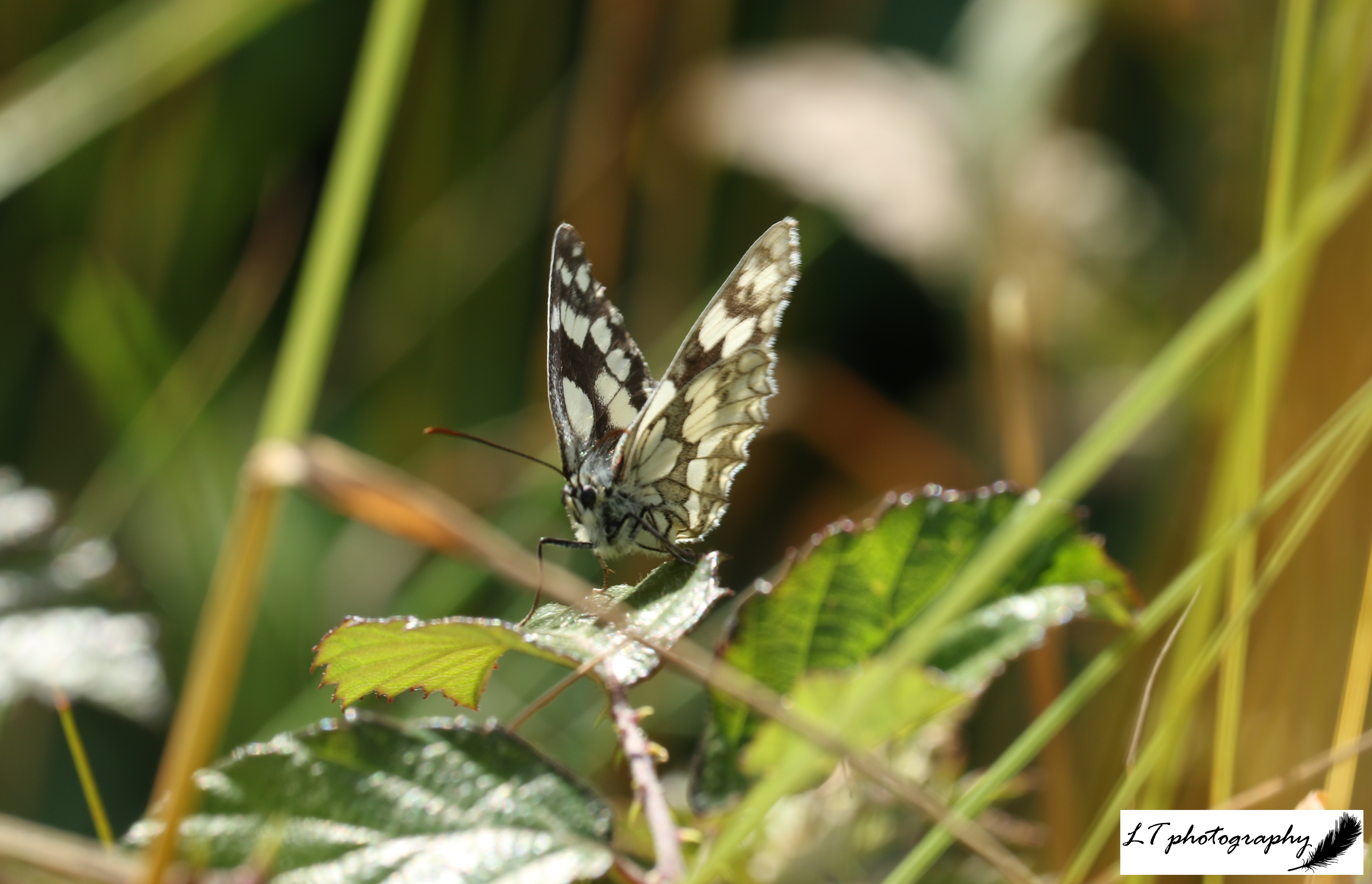
Marbled White (Melanargia galathea)

  • Family: Brush-footed (brown) butterflies
  • Size: Medium (53-58mm wide)
  • Butterfly appearance: Distinctive black and white chequered wings that vary in pattern between individuals. Undersidesnot so brightly marked with eye-spots and grey or yellowish bands
  • Caterpillar food plants: Grasses, such as red fescue and sheep’s-fescue
  • On the wing: June-August
  • Winter: Hibernate as caterpillars
  • Distribution: Southern and central England and Wales

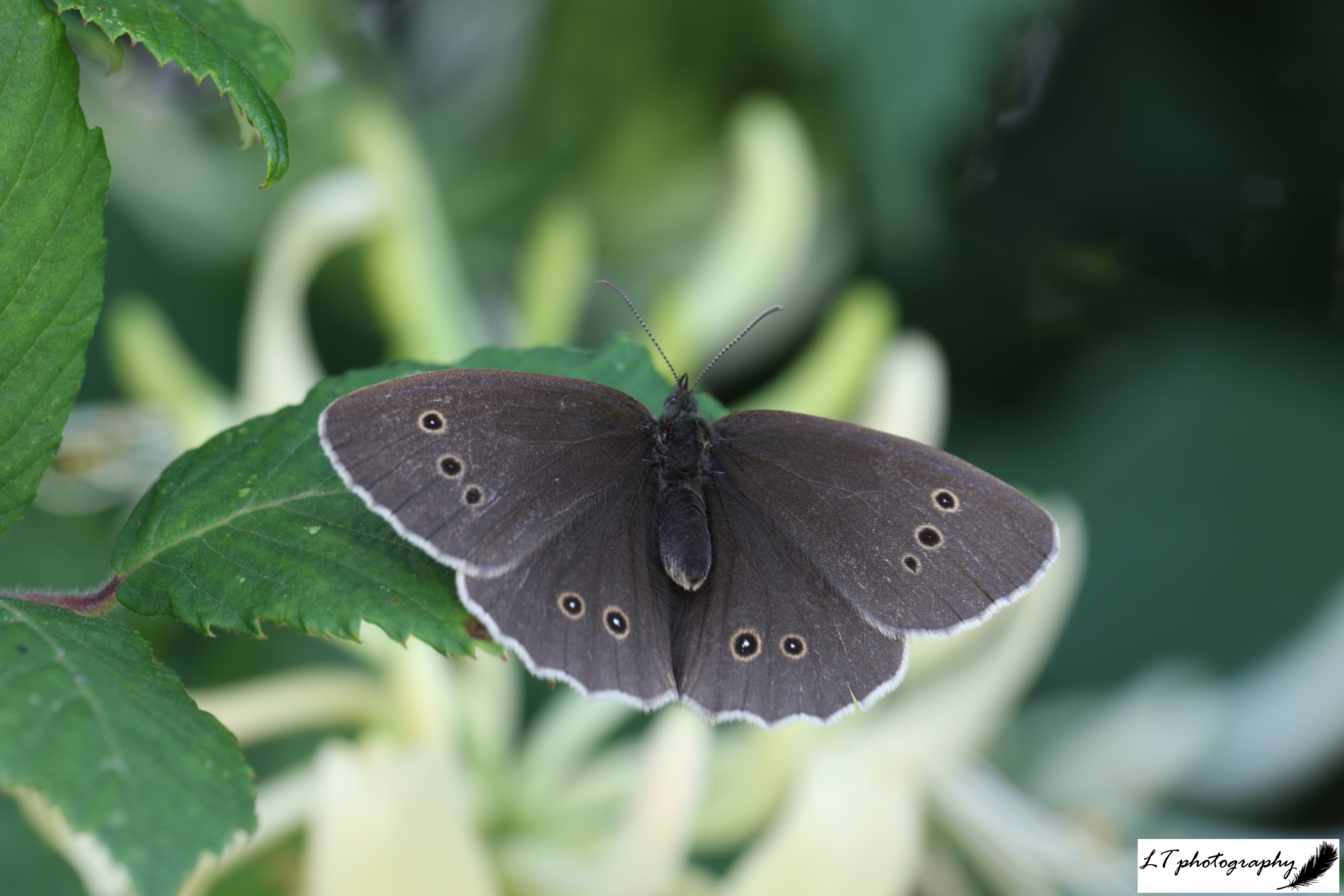
Ringlet (Aphantopus hyperantus)

  • Family: Brush-footed (brown) butterflies
  • Size: Medium (42-52mm wide)
  • Butterfly appearance: Begin velvety with deep blackish brown wings bordered by white. Iconic rings on wings vary in number, size and shape. Females larger with more pronounced markings
  • Caterpillar food plants: Various grasses including cock’s-foot and tufted hair-grass
  • On the wing: June-August
  • Winter: Hibernate as caterpillars
  • Distribution: Everywhere apart from northern Scotland

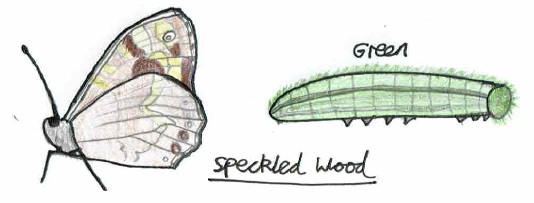
Speckled Wood (Pararge aegeria)

  • Family: Brush-footed (brown) butterflies
  • Size: Medium (46-56mm wide)
  • Butterfly appearance: Dark brown with cream spots, though the female’s are larger. Forewings have a false eye and hindwings have three false eyes. Undersides mottled brown
  • Caterpillar food plants: Various grasses including false brome, cock’s-foot, Yorkshire fog, and common couch
  • On the wing: March-October
  • Winter: Hibernate as caterpillars or a chrysalis
  • Distribution: Throughout England (except the far north), Wales and Ireland, and in northern Scotland

Meadow Brown (Maniola jurtina)

  • Family: Brush-footed (brown) butterflies
  • Size: Medium (40-60mm wide)
  • Butterfly appearance: Male= dark brown with dark scent patch on forewing and faint orange smudge; Female= lighter brown with more orange on wings. Underside is largely orange with mottled brown hindwing
  • Caterpillar food plants: Wide range of grasses from fine fescues to coarse cock’s-foot
  • On the wing: May-September
  • Winter: Hibernate as caterpillars
  • Distribution: Widespread across Britain

Comma (Polygonia c-album)

  • Family: Brush-footed butterflies
  • Size: Medium/Large (50-64mm)
  • Butterfly appearance: Orange wings with brown patterns and scalloped edges to wings. Mottled underside with white, comma-like mark on hindwing
  • Caterpillar food plants: Nettle, elm and hop
  • On the wing: Spring after hibernation; Summer brood= June-July; Autumn brood= August-September
  • Winter: Hibernate as adults, camouflaged as a leaf
  • Distribution: Widespread across England and Wales, rare in southern Scotland and Northern Ireland

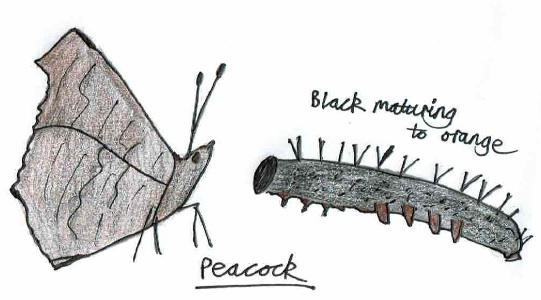
Peacock (Aglais io)

  • Family: Brush-footed butterflies
  • Size: Large (63-75mm wide)
  • Butterfly appearance: Red wings with four large false eyes. Undersides almost black
  • Caterpillar food plants: Nettles
  • On the wing: Spring after hibernation, and June-September
  • Winter: Hibernate as adults in hollow trees and buildings
  • Distribution: Widespread across Britain

Small Skipper (Thymelicus sylvestris)

  • Family: Skippers
  • Size: Small (25-34mm wide)
  • Butterfly appearance: Orange on top with a black edge, and paler undersides. Male= dark stripe in centre of fore-wing. Antenna tip is orange below
  • Caterpillar food plants: Yorkshire fog and other tall grasses
  • On the wing: June-September
  • Winter: Hibernate as caterpillars
  • Distribution: Widespread up to North Yorkshire and Scottish border

Large Skipper (Ochlodes venatus)

  • Family: Skippers
  • Size: Small (28-36mm wide)
  • Butterfly appearance: Wings rich brown with orange patches, but male has a dark bar in the centre of the forewing. Underside mottled orange
  • Caterpillar food plants: Cock’s-foot and other tall grasses
  • On the wing: May-September
  • Winter: Hibernate as caterpillars
  • Distribution: Throughout England, Wales, and in Dumfries and Galloway

Life Amongst the Bluebells

‘When you go down to the woods today, you’re sure of a big surprise’, and in late April to early May, this surprise comes in the form of a fantastic mass event! During this time, our woodlands are blanketed with a sweeping carpet of colour; a rich mass of violet-blue, made up of thousands of nodding heads. This popular spring spectacle is a heady treat for the senses, epitomising the beauty of British springtime. This is not all that our woodlands have to offer at this time though, with the Bluebells making us overlook some humbler stars of the show.

So when walking through the Bluebells, why not stop and look around you for a moment. ‘Daddy’s-shirt-buttons’ or Greater Stitchwort can be found dotted throughout the woodland carpet, white star-shaped flowers on slender stems. In thicker patches of green, clusters of green-centred stars can also be found on sturdy stems, their pungent scent giving them away as the flowers of Wild Garlic. These are joined closer to the ground by the white-cupped faces of the Wood Anemone, heads turned to the sun, merging into the galaxy of colour.

The palette is added to by splashes of pink and yellow. Shining yellow stars of Lesser Celandine float above heart-shaped leaves. The green-spiked Yellow Archangel, like a nettle, adorned with rings of butter-yellow flowers, each with their own hood. You can also find Early Purple Orchids beneath the trees, pink spikes growing from purple-splattered green leaves. Closer to the ground, the glittering pink faces of Herb Robert add to the show.

Amongst the Bluebells, there is not just a colourful backdrop of flowers to be found, but a hidden world to be discovered. Down at Bluebell level, the woodland floor comes alive. Spiders spin webs from Bluebell to Bluebell hoping to catch a meal, whilst Bumblebees fly from flower to flower collecting nectar and pollen for their colonies. They are joined by a fantastic array of flies, varying in size, shape, and colour.

If you take an even closer look at the flowers, you might even find some more hidden characters that capture your mind and inspire your imagination. Camouflaged spiders, weird and wonderful weevils, colourful shield bugs, fascinating beetles, and even patchwork snails are waiting to be found. Minibeasts and their tiny worlds can create a sense of calm and simple joy, an easy example being a graceful Butterfly gently flitting by through dappled spring sunshine.

Walking through the Bluebells is a wonderful visual experience, but if you open your ears, then another world can also be added to this. The fluting notes of the Song Thrush, the onomatopoeic song of the Chiffchaff, the melodic Robin, or the powerful trilling song of the Wren. All flow together to create a symphony of bird song, a soundtrack fit for the spectacle that is the blooming of the Bluebells.

‘When you go down to the woods today, you’re sure of a big surprise’, and in spring this might just be bigger than you expect. Next time the Bluebells are blooming, why not stop and see what you might find amongst those nodding heads.

Wildlife Photos for 2021

Last year was an unusual one for us all, as we got used to a new reality, but for me it was also a year of colour, amazing wildlife, and fabulous adventures. I learnt alot and was able to continue to grow as a person, which includes my skill in wildlife photography and passion for communicating nature with you all. To celebrate, here’s a collection of my nature photos spanning 2021, capturing a range of themes, species and stories, and holding a feel good factor. Enjoy!

January

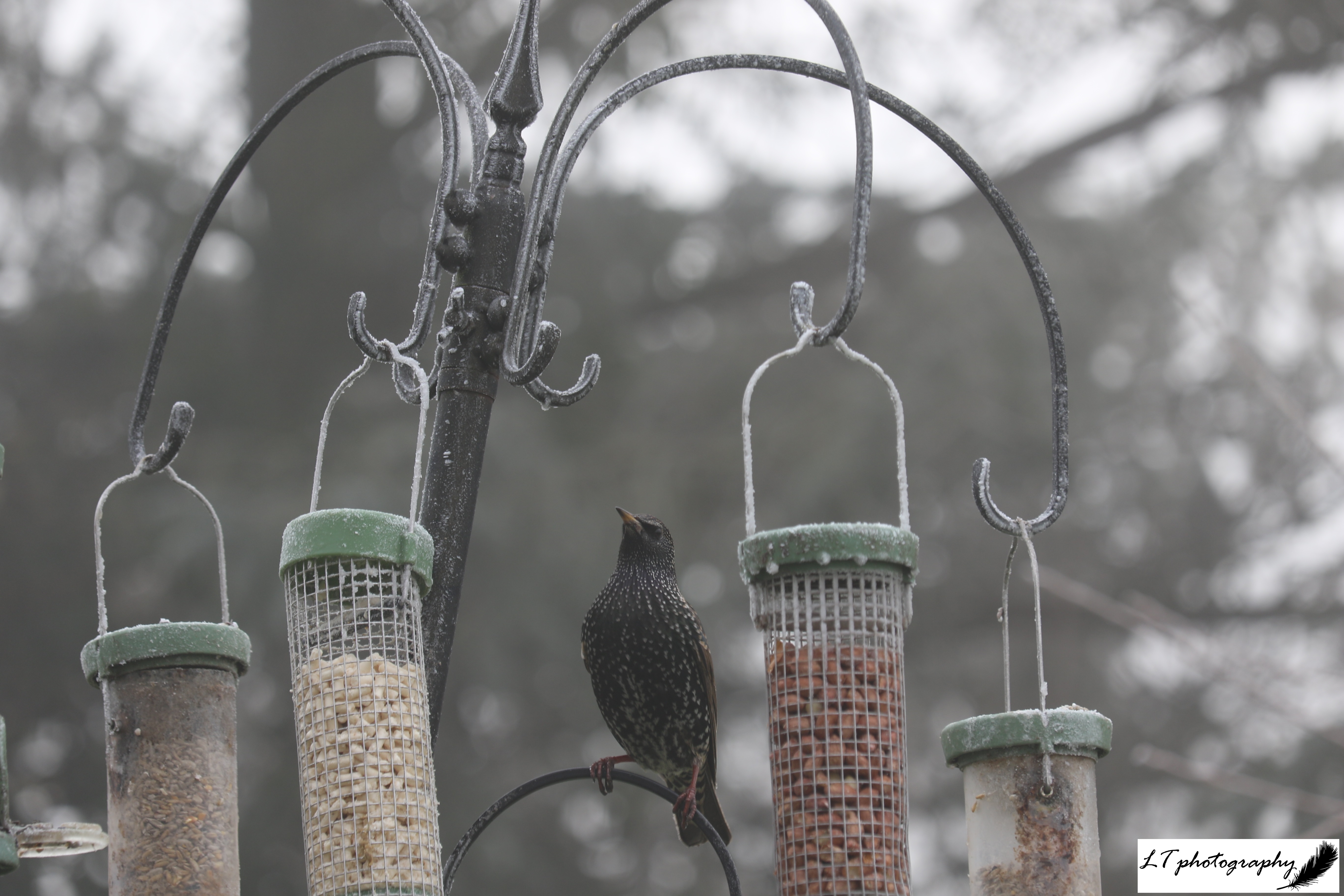
I began my year taking advantage of frosty mornings to capture the birds relying on our garden during the winter. Here a starling looking magnificent in its speckled plumage.

February

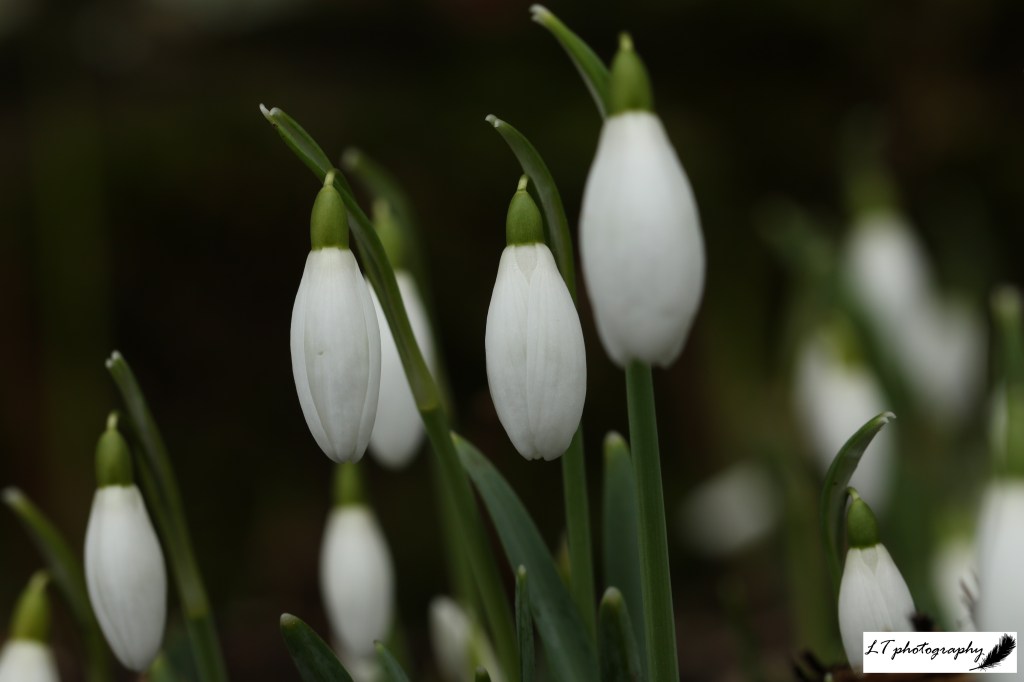
In 2021 I made it my mission to take my first up close photos of snowdrops. I enjoyed the challenge, brightening up a gloomier start to my year.

March

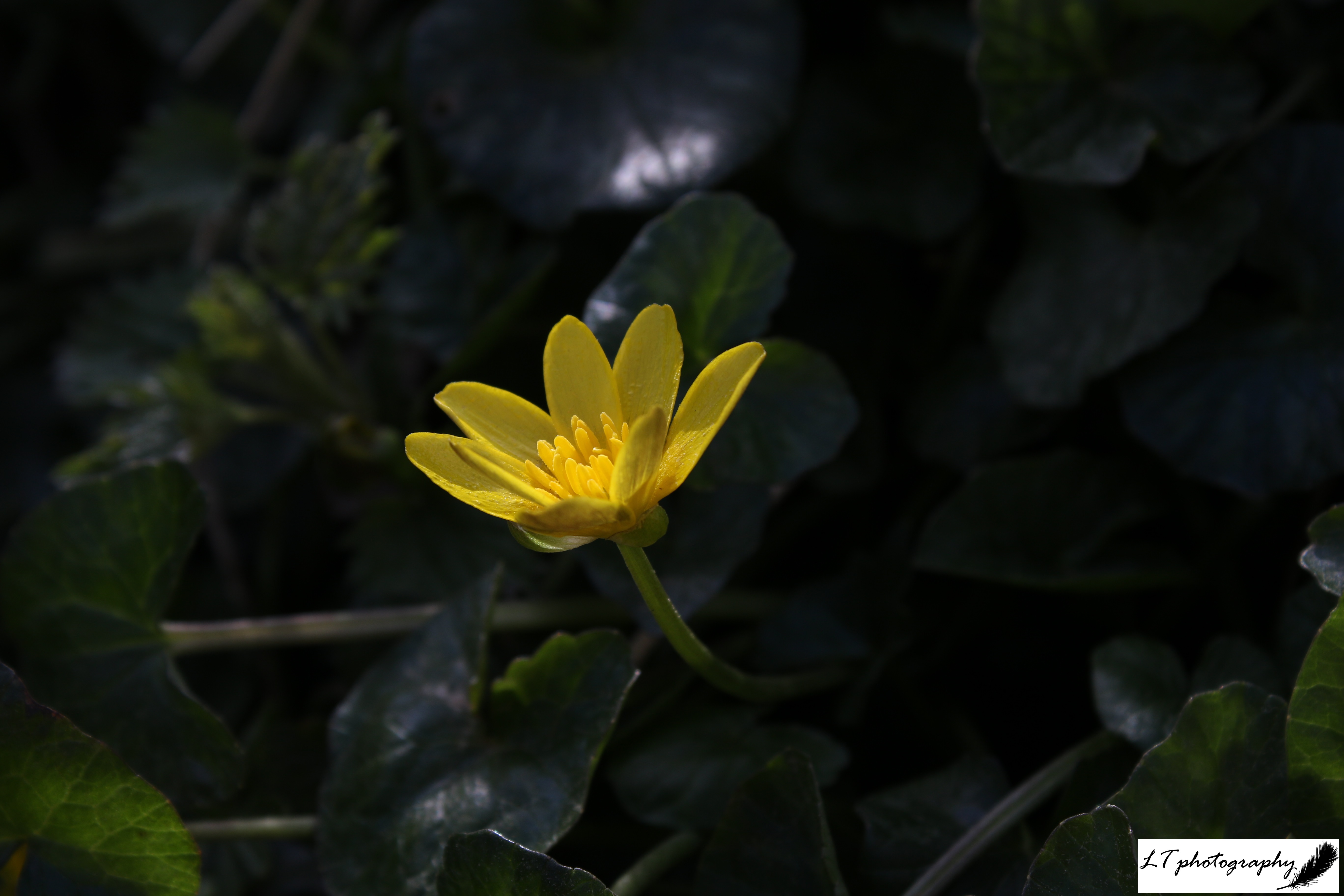
As the first signs of spring began to arrive, my focus turned to the ground and colourful spring flowers. Here a celandine peaks out its sunshine head from a thick cluster of green leaves.

April

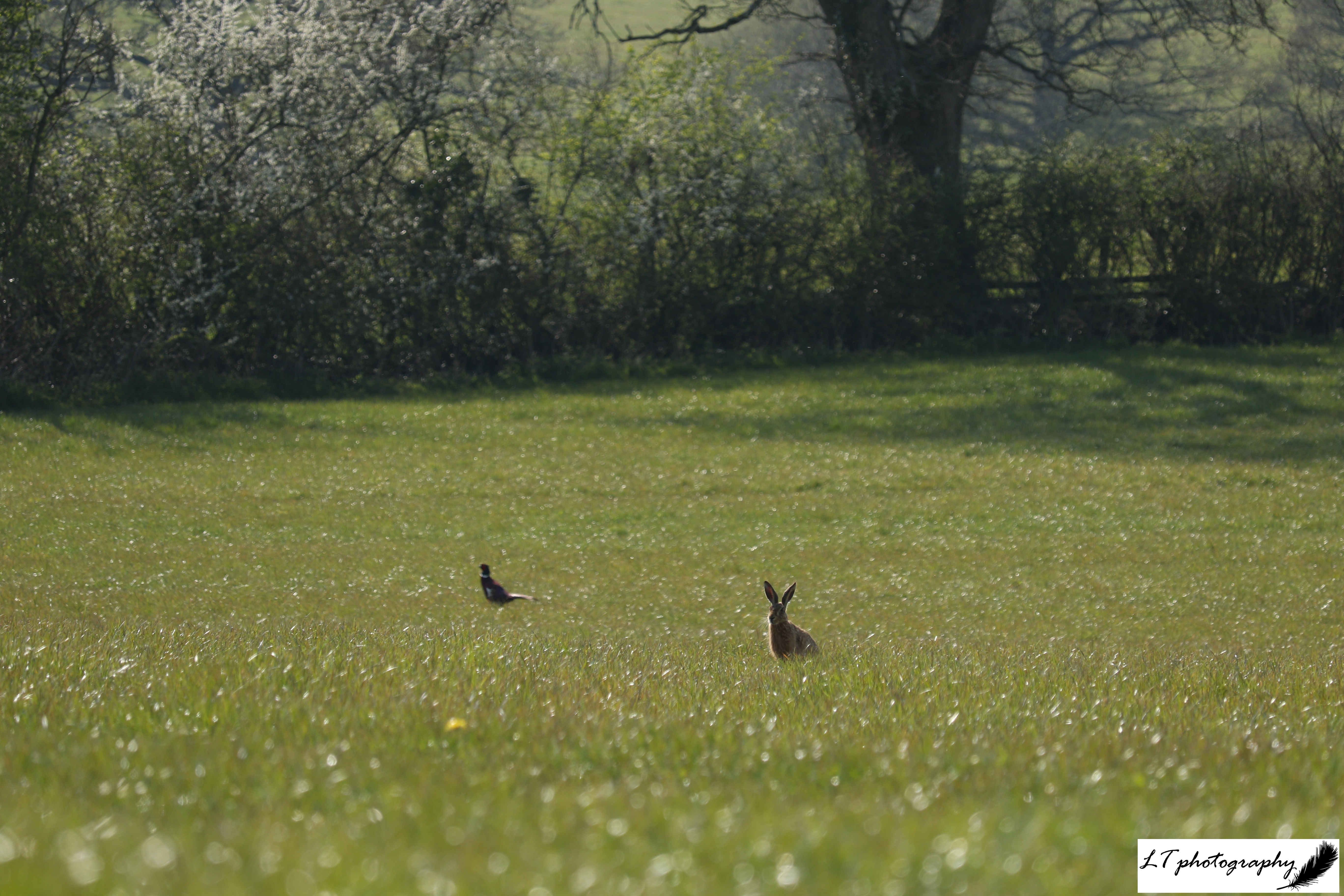
As spring burst into life, my focus turned to the animal species now becoming active in the rural landscape. Here is a relaxed hare (and pheasant) that I ended up spending a sunny afternoon watching feed on this hillside.
Each year grey wagtails are becoming a more and more frequent sight on my family’s farmland. We now have a soft spot for them as they brighten gloomy winter days and add a flash of colour in spring sunshine.

May

In 2021 I bought my very first macro lens which I was very excited about. It was great fun to head out with no set challenge, and just see what I could find!

June

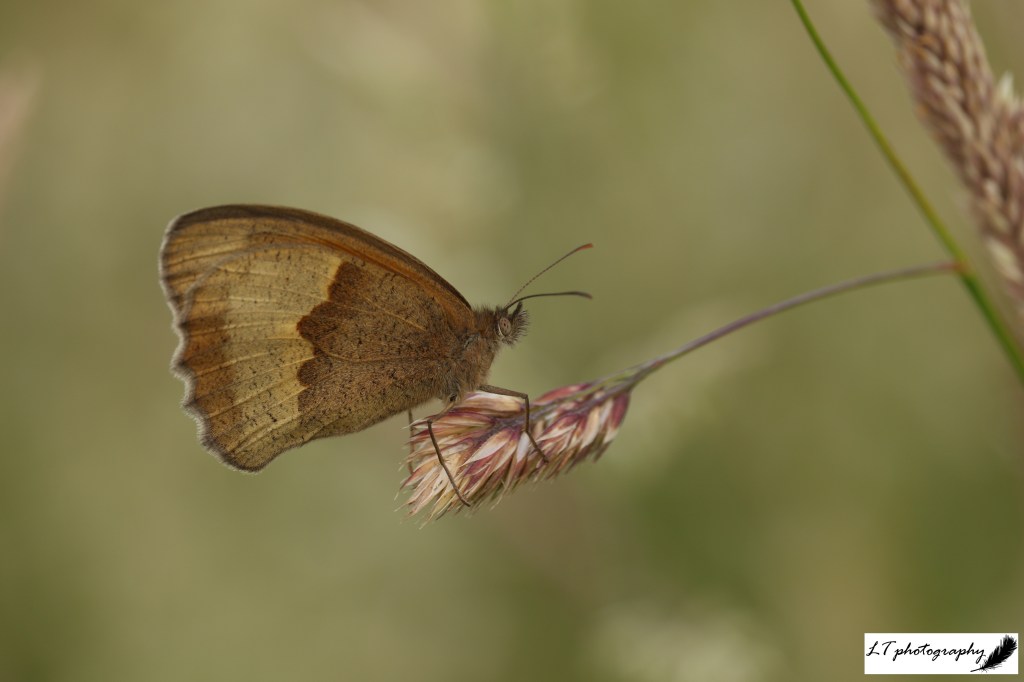
Last year was definitely the year of butterflies for me. I had alot of fun expanding my knowledge of species and getting to see an increasing number living on my family’s land, such as this meadow brown.

July

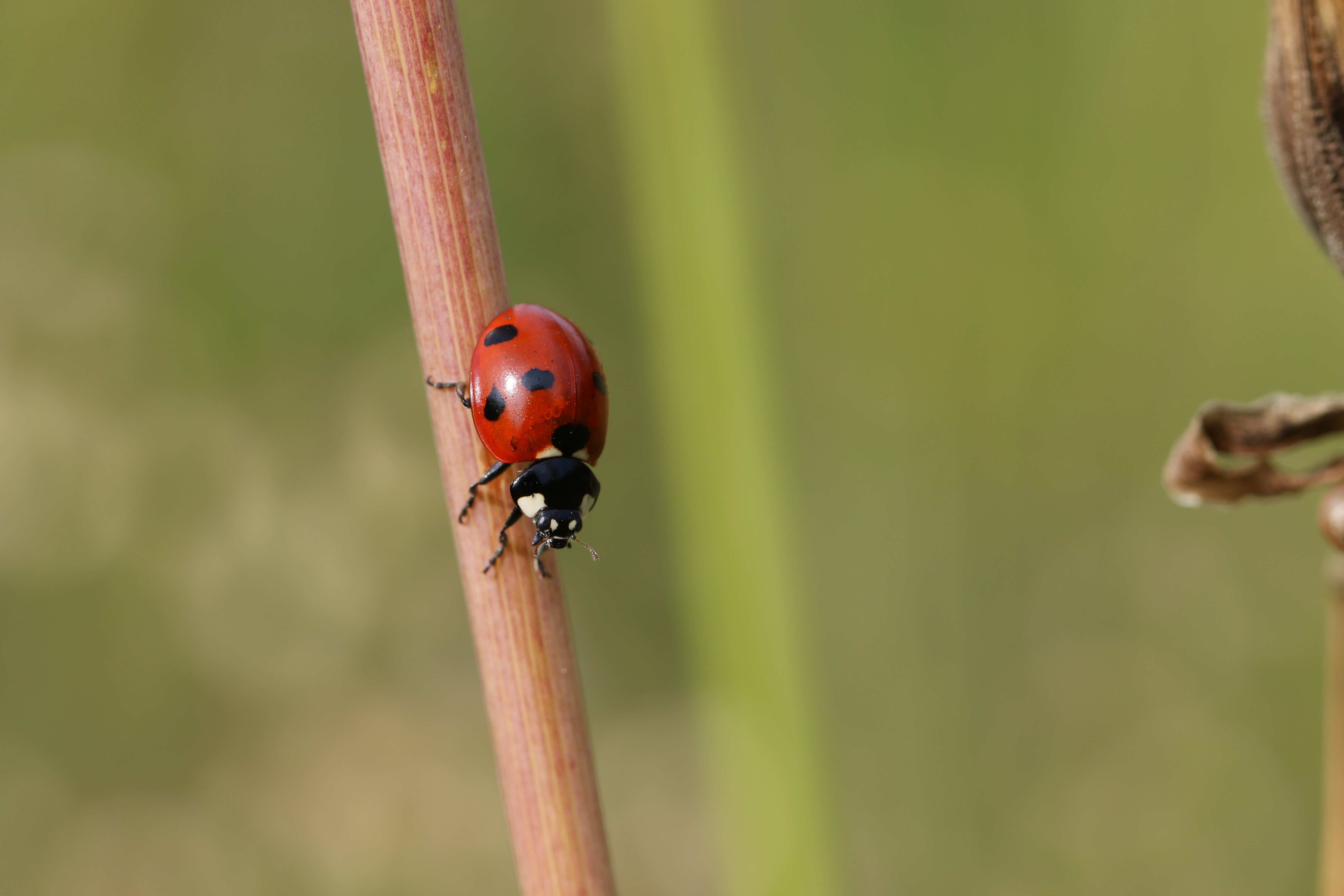
A series of photos that I took of this ladybird became some of my favourites for myself and my family in 2021!
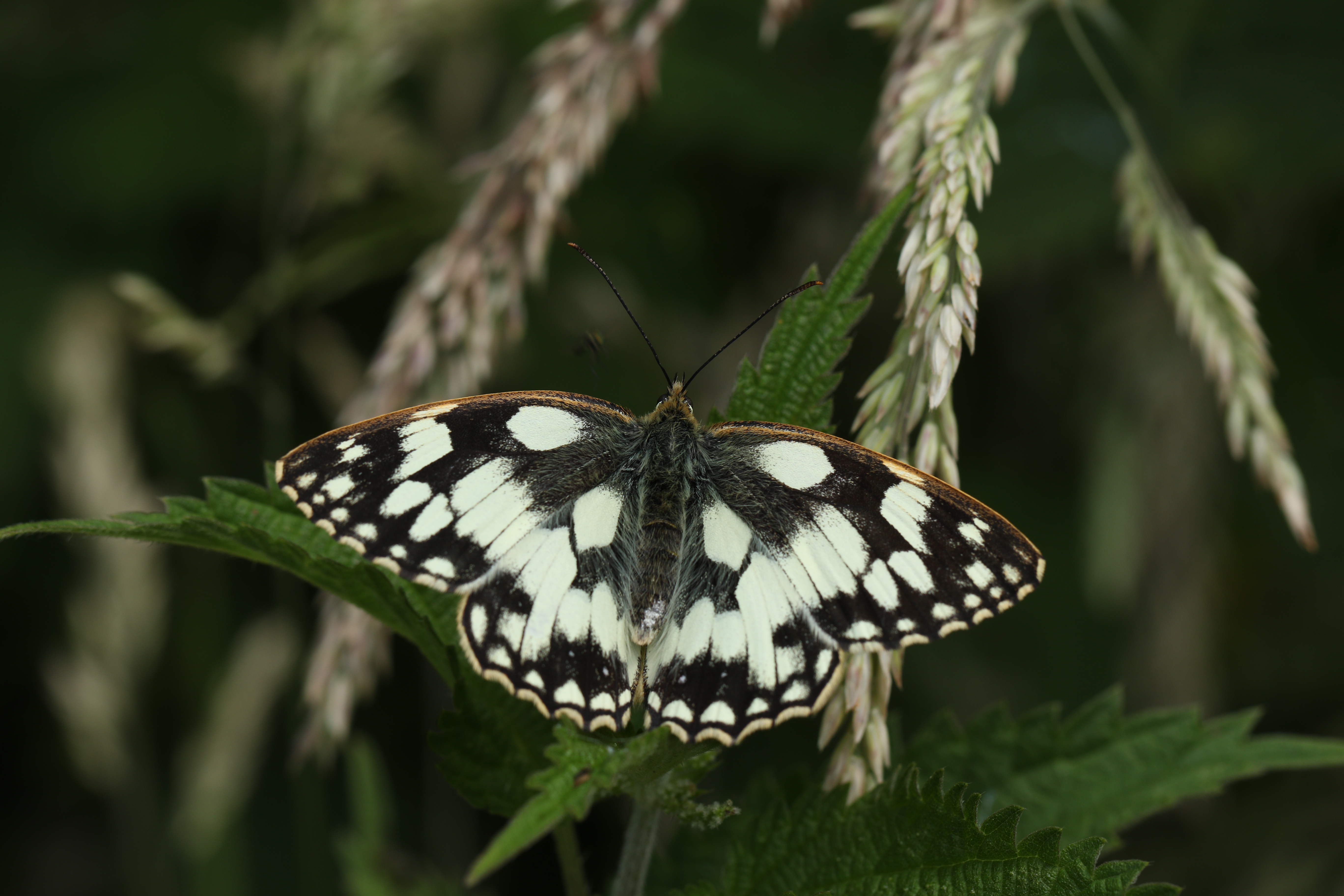
Another one of my 2021 favourites, a spectacular marbled white!

August

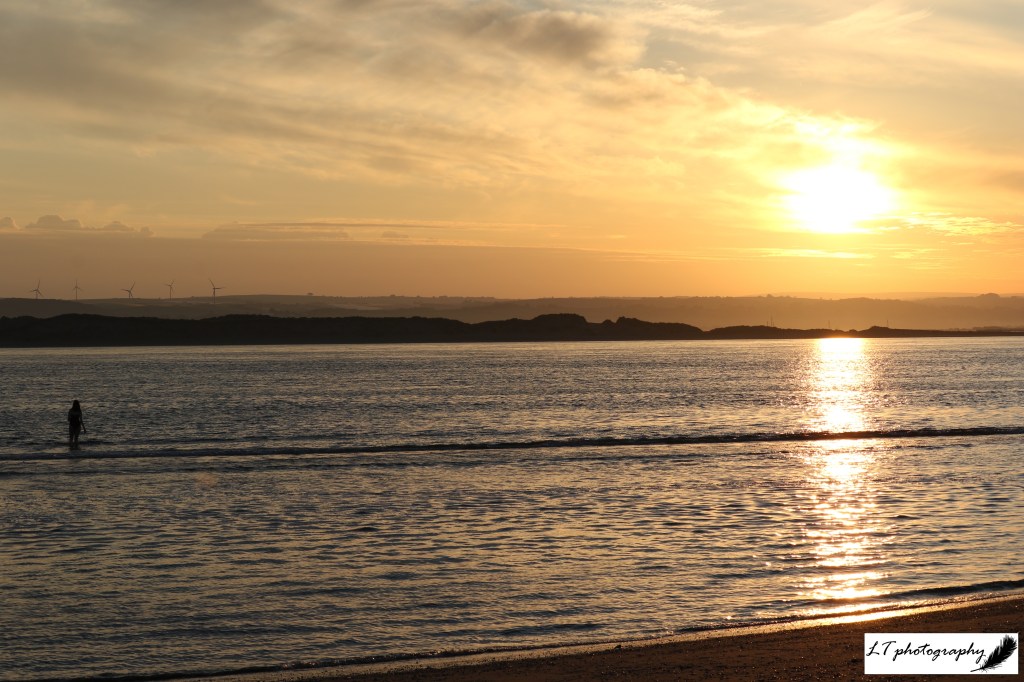
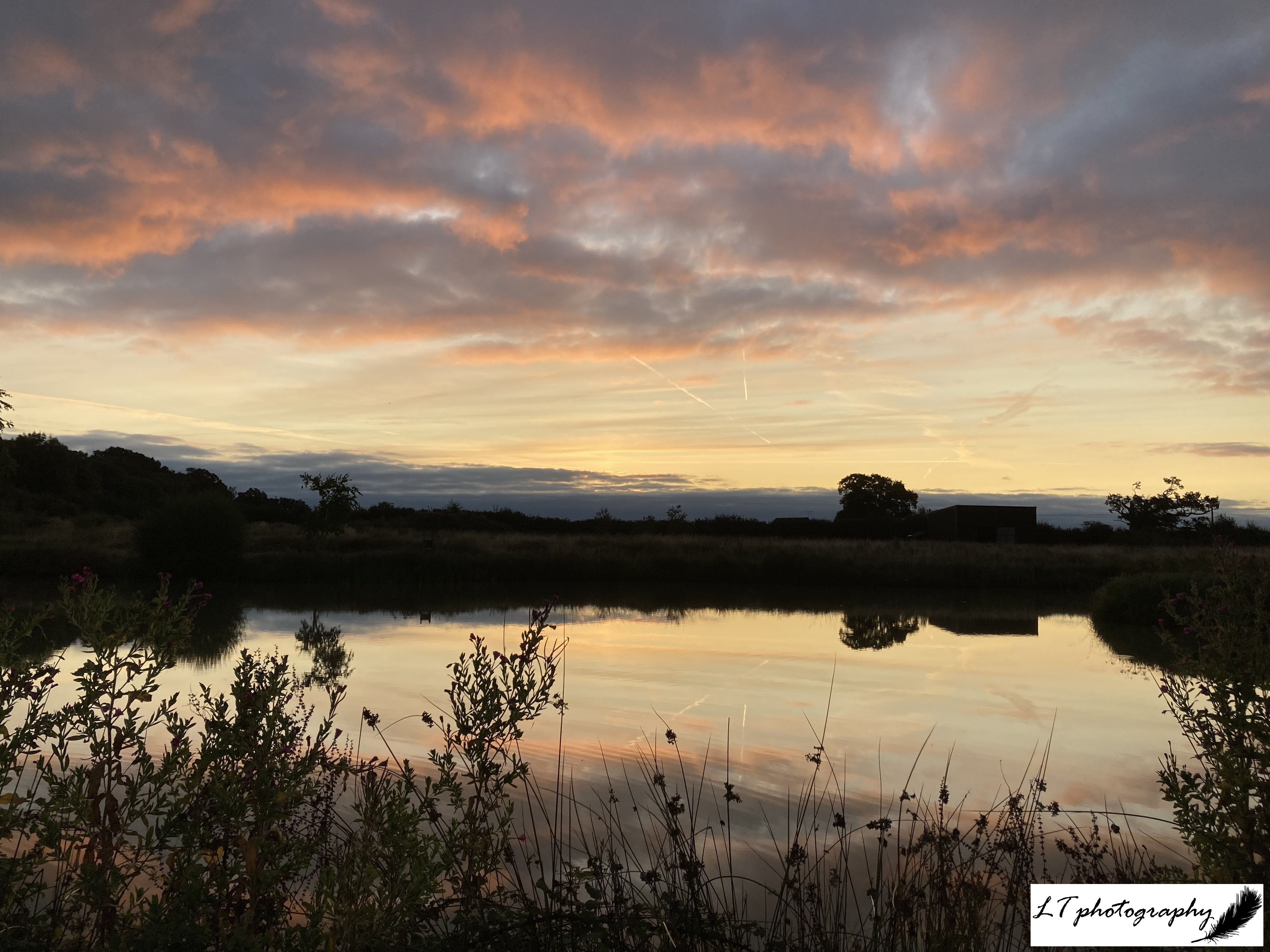
There’s something special about a sunrise over water with pinks, oranges and yellows streaked across the sky like a watercolour.

September

One of my favourite places to be is between two ears exploring the countryside. Here I also had the golden glow of a setting autumn sun to make my ride even more magical.

October

Autumn has some of the best sunsets, with everyday promising something different. Here an oak tree holds on to its leaves as autumn continues its advance through the landscape.

November

A magical part of late autumn is seeing the sun rise over dewy fields covered in a blanket of wafting spiders’ webs. These are produced by thousands of small spiders active before winter arrives.

December

To round off the year, one of my wildlife activities was to plant some new fruiting trees and shrubs down in my family’s conservation field (here a crab apple). Tree planting is definitely a rewarding activity at this time of year!

Here’s to new adventures in 2022!

Rural Dorset vs. Urban Manchester: Magical Minibeasts

Series in collaboration with guest writer Emma Rogan

Rolling green hills, trees sprawling across the landscape, hedgerows thick with plant and animal life, flowers growing up here and there, and rivers flowing through it all. The light of an orange sunset cast out over the city by a soaring glass tower block, the lonely lights of a crane against an evening sky, busy streets lit up for Christmas filled with music and laughter. Everyone’s idea of idyll varies, but for nature any landscape could provide a home. Let us explore.
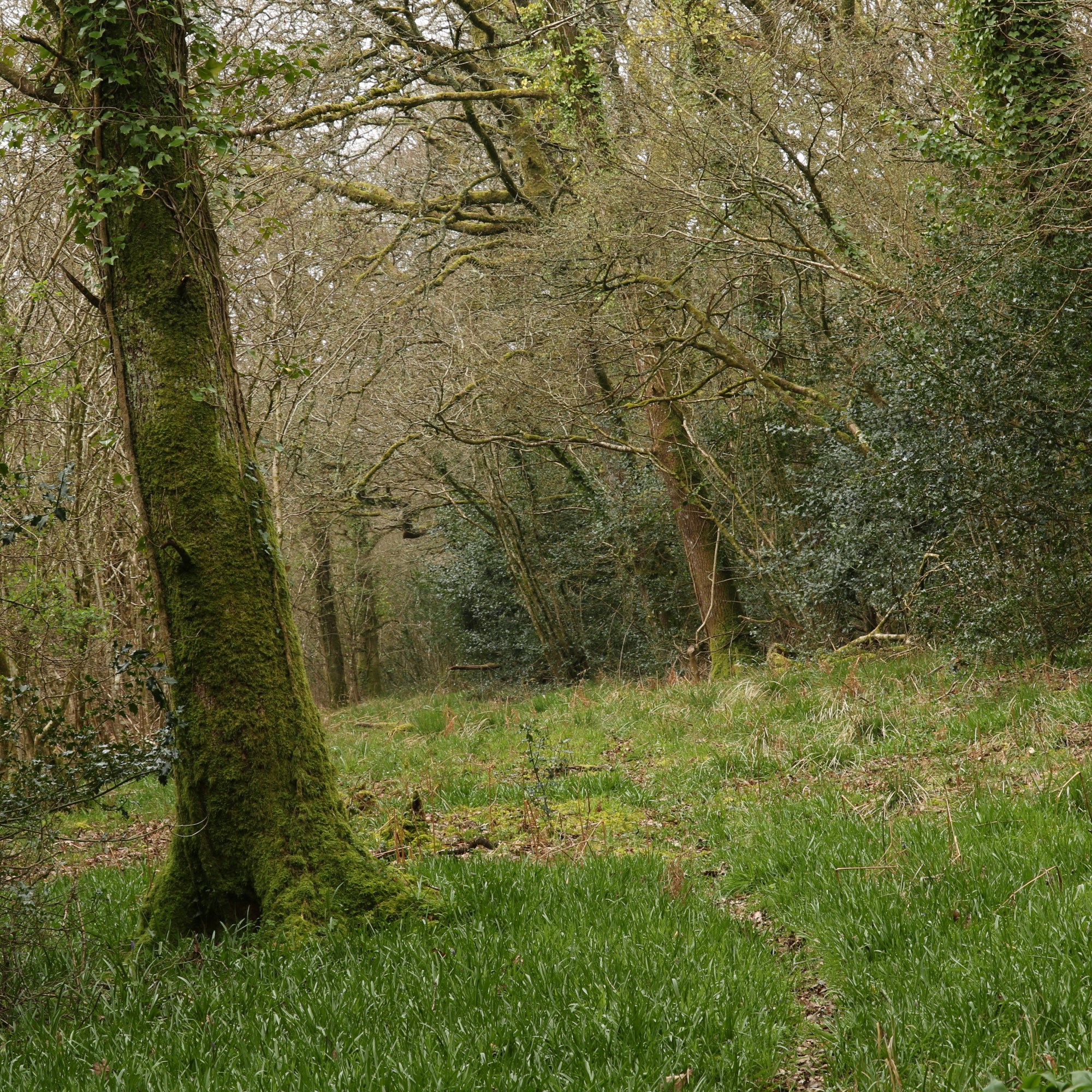
Growing up within her family’s 250 acres of land, for naturalist Laura, rural Dorset is home. In what may be called the ‘middle of nowhere’ for an urban adventurer, Laura grew up alongside wildlife from barn owls and hares to grass snakes, damselflies, and oak trees. With parents that nurtured her to take an interest from a young age in looking after the wildlife they saw on their doorstep, this landscape has made her the conservationist and scientist she is today. Now her home provides inspiration for her photography and writing, including her Laura’s Wild World blog. Check out her blog here.

Guest for this series and wildlife enthusiast, Emma grew up in Manchester and will always be a city girl at heart. As a child she loved to watch nature documentaries and daydreamed about faraway places, but over time she fell in love with the wildlife that also calls Manchester its home. Emma has spent the past year documenting the lives of the insects, birds, squirrels and foxes that stop by her little rectangle of garden, and exploring the local woods alongside the River Mersey with her mum. Check out her page here.

In this brand new blog series, we take a look at the local wildlife that can be found in two very different home locations. Though at a contrast with each other, we will see how nature can make its home in both rural and urban landscapes, and the wealth of life that can be explored on anyone’s doorstep. At a time when it is so important that we protect and conserve the natural environment around us, let us inspire you as we take an adventure to explore a smaller side to nature.

Laura’s Countryside Minibeasts

Today was a warm and breezy day, perfect for walking through my family’s Dorset farmland in just a T-shirt and shorts. It was the kind of day though when you could feel the first breath of autumn in the air, kept at bay by the bleaching late-August sun. Pushing the cooler days to come to the back of my mind, I set out to try to see what smaller creatures I could find out in nature.

Journeying along tracks, through grass fields, over rivers, through tall maize, past a chalk ridge, and back home to my garden, my quest bore more and more fruits along the way. With every turn I got to experience a colourful and spectacular diversity of butterflies from small coppers to peacocks, got to be serenaded by grasshoppers singing their chirping tune, and to be joined by crane flies lazily hanging in the hazy golden light as I walked along on my own.

As my minibeast list grew, I stopped here and there to take a closer look, such as to gaze at beautifully banded snails hanging from nettles, or to photograph minibeasts, such as the curious looking froghoppers making maize leaves their home. I was loving it! The main highlight of my adventure though, had to be discovering a treasure trove of dragonfly and damselfly species on and around the pond in our conservation field. One minute I would see the golden-brown of an unknown dragonfly fly past me, before catching sight of common blue demoiselles dancing in the air and red-veined darters defending territories over the water. I was amazed at how many beautifully-coloured species I saw in such a short space of time!

When I set out on my minibeast adventure, I was not entirely sure what I would find at this late stage of August. Whatever I thought though, by the end I was having a really great time, seeing some cool minibeasts ranging from busy honey bees enjoying a medley of flowers to many butterflies adorning buddleia bushes like gemstones. It really brought home that you never know what you might find until you open your eyes to the world around you. I am no invertebrate expert, but I was still able to take in all the wonders this mini world had to offer. It was a great break from life, though more importantly, a game changer!

Emma’s Minibeast Hunt in the City

Unbelievably, the afternoon I’d planned to go on my Minibeast Hunt was beautifully warm and sunny with a slight breeze. This is a rarity in Manchester! I gleefully pulled on my walking boots and headed out with my other half to Fletcher Moss, a nearby park and woodland alongside the River Mersey. We spent an hour wandering through the Parsonage Gardens, down to the river (down, down, doooown by the riveeeer – any Baldur’s Gate 3 fans?), and through the woods, making a brief stop for ice cream along the way!

The Old Parsonage and it’s beautiful walled garden was left to the citizens of Manchester by Alderman Fletcher Moss in 1919, and has since become a much-loved community space which is carefully looked after by volunteers. The garden was buzzing with pollinators drawn in by the variety of flowers, the echinops was particularly popular! It’s always lovely to see bees out and about in Manchester, as bees are the symbol of our city.

We then walked down the hill and took a winding path towards the river. The first stop on our riverside walk was Simon Bridge, a green iron bridge across the River Mersey which was gifted to the people of Didsbury by Henry Simon in 1901. Plenty of bees, wasps and hoverflies flew past us as we walked, but our second stop came when we heard what we thought was the singing of a grasshopper! This necessitated ten minutes of searching and more than a few curious glances before we found the little guy sat solemnly on a blade of grass.

As we wandered on, our path took us away from the river and back up into Stenner Woods, a small area of woodland in the original Mersey Valley flood plain. It was at this point that a dragonfly decided to join us! Unfortunately, he wouldn’t stay still long enough for me to take a picture. We also came across a snail clinging to a thistle, and a ladybird nestled between the spines of a teasel, and a very hungry group of mint leaf beetles. Butterflies were noticeably absent, as we spotted only one female meadow brown butterfly during our walk. Our final stop was at a small pond area, where we saw what seemed to be hundreds of pond skaters!

I’ve been fond of bees for quite a few years (I even wrote my dissertation on bees!), but I don’t often take the time to pause and notice the other minibeasts that live in my local area. This minibeast hunt was a great opportunity to challenge myself to look closer, and I felt very lucky to gain a snapshot into the lives of these smallest of animals.

Minibeasts

When people think of animals they usually think of lions, bears or elephants, for example, forgetting the smaller less observed animals in nature. The minibeasts we walk past each day though, can be equally majestic and awe-inspiring. Butterflies in spectacular colours, weird and wonderful froghoppers, or wriggling hard-working earthworms. All play an important role in nature, but tend to go unnoticed and be underappreciated.

On both Emma and Laura’s minibeast adventures though, they found taking the time to focus on the smaller things eye opening. They might live in very different areas, but the green spaces they both have access to show an amazingly similar host of minibeasts. From grasshoppers to dragonflies, amazing minibeasts can be found anywhere. By challenging yourself to look closer at the smaller things in life, you can learn a lot, be provided with inspiration and even experience a moment of distraction and escape. Minibeasts are colourful, unusual, and awe-inspiring, so why not stop and find out what you could discover too?