The future for Sable Island

The majority of ecosystems around the world are currently under pressure from the effects of a rapidly growing global human population. Sable island, home to a unique but fragile ecosystem, is no different and has been influenced in many ways by human presence on the island and surrounding area. As a result, the island gained protected National Park Reserve status in 2013, and is now managed by Parks Canada, a Canadian government agency.
Sable

On the island

Since first arrival on Sable Island during the 1500s, humans have left their footprint there. This ranges from infrastructure, such as Main Station and the West Light site, to permanently contaminated sites and introduced non-native species. To attempt to reduce further impact, to visit the island now specific permission has to be acquired from Parks Canada before arrival. Though humans have already left their mark, Parks Canada hope to reduce any further damage to the island in the future.

With Sable Island’s feral horses also counting as an introduced species to the island, this led to scientists in the 1950s stating that the population should be removed due to causing damage to the island’s sensitive ecology. This sparked public campaigning which led to the horses achieving legal protection in 1961. As a result, the horses can be a controversial topic for some, with their social and positive ecological impacts being weighed against the negatives. In the meantime, the iconic horses are going nowhere and will continue to be studied in the future, which will increase knowledge of the horses and their island environment.

Sable Island is also home to a meteorological station, built in the late 1800s. Being in this remote location, this weather centre is an important site for climate monitoring, for example with increasing unpredictability of weather patterns. Also, the station is becoming increasingly important in the monitoring and assessment of pollutants transported in the air, allowing for the impact of human activities to be analysed beyond their origin in mainland Canada.

In the surrounding marine environment

Though my Sable Island Stories series has mainly focussed on Sable Island’s terrestrial island, and most is known above the realm of water, Sable Island is definitely not limited to its land mass. For example in relation to mammals, in the surrounding marine environment, Sable Island is home to 17 cetacean species (whales, dolphins and porpoises) and 2 species of seal. In particular, Sable Island is home to the largest grey seal breeding colony in the world, and importantly the grey and harbour seals make up part of a complex cycle of nutrients between the sea and the land.

Seal

Seal haul out

Despite less being known about the marine environment in comparison to terrestrial, following the BBC’s hit series Blue Planet II, issues within our marine environment are becoming increasingly at the forefront of the public’s mind. For Sable Island marine pressures include offshore platforms for extraction of oil and natural gas, cetacean strandings, rising sea levels, tarballs, and washed up toxic materials.
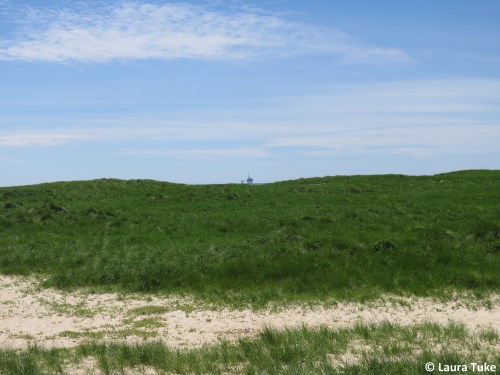
Rig

Most noticeable from my time on Sable Island though, was the marine issue of plastic pollution. This is because where Sable Island is situated a lot of plastic and debris is washed up onto its shores every year, such as during storms. I saw this for myself during my time on the island, and here’s only a few of the photos of what I did see.

Washed up

IMG_7872

Though Sable Island has been influenced by humans in the past, with research and increased education it is now hoped that going forward the island can be protected for future generations to come. It is a rich and biodiverse place with a lot to offer, and will always hold many memories for myself from my amazing summer this year.

Sunset on Sable
Thanks for following my Sable Island Stories blog series. Feel free to check out my previous seven posts, and tune in for updates and to follow my next adventures.
11 things you need to know about the Sable Island Horse


IMG_8130

In all things of nature there is something of the marvelous – Aristotle

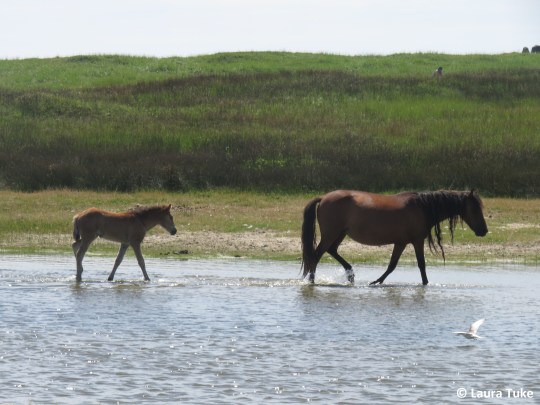
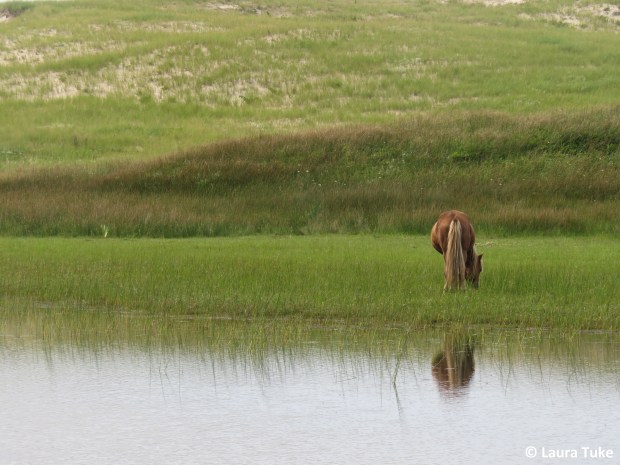
As part of my Master’s degree, from the other side of the North Atlantic, I have had the pleasure of studying a renowned animal population situated on Sable Island, Canada. Though this species is not the first that comes to mind when you think of an island made of sand, within the last few centuries Sable Island has become home to a population of feral horses (Equus ferus ssp. caballus). These horses vary in shape, colour and size, and have now captured the minds of the public and scientists alike, as well as my own.

IMG_4444

For those of you who have never heard of the Sable Island horse, or even for those who have, I have put together a helpful ’11 interesting facts’, so you can learn everything you need to know about these compelling creatures:

  1. Today’s population of Sable Island horses originate from horses first released on the island by European travellers during the mid-1700s, and though genetically distinct as a subspecies, are most closely related to Nordic breeds.

IMG_9271

2. Previously, the horses have been used for a range of purposes on the island, including use as breeding stock for sale on the mainland, hauling lifeboats for the past lifesaving crews, and exportation for the meat trade (mainly dog food).

IMG_9589

3. During the 1950s, scientists said the horses were damaging the sensitive ecology of the island, and proposed their removal. Following a strong public campaign, the Canadian government gave the Sable Island horses legal protection in the 1961 Canadian Shipping Act, protecting them from all human use and interference in the future.

IMG_7413

4. Due to their protected status, the horses are now treated as a wild and naturalised population. As a result, all people visiting and living on the island have to maintain a distance of at least 20m away from the horses at all time.

5. Currently, there are approximately 550 horses living on Sable Island.

IMG_3587

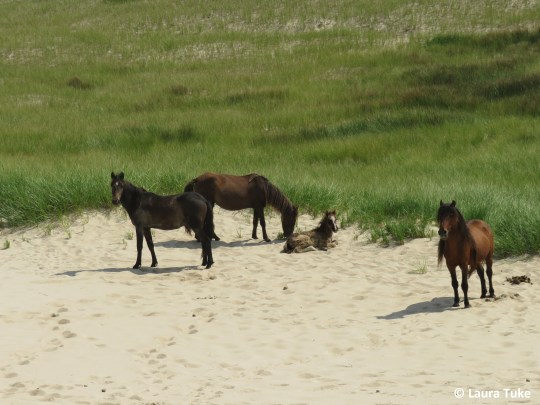
6. Sable Island horses live in all year-round social groups, called bands, which either contain bachelor, unmated males or typically consist of anywhere up to 15 individuals, with 1-3 dominant males (stallions), adult females (mares) and young offspring (typically foals and yearlings).

7. In the Sable Island population, the sex ratio is heavily male-biased. This is because a lower number of females are surviving on the island, due to the different, more extreme conditions they experience in comparison to males, such as with breeding.

IMG_7005

8. The Sable Island horse’s diet is composed mainly of tough American marram grass, other grass species and beach pea, though they will feed opportunistically on a range of other species.

9. The horses are found in a range of colours, but there are none that are spotted, grey, white, or coloured on Sable Island. It is suspected that this is because these colours were kept out of the population previously.

IMG_9103

10. The Sable Island horses have been part of an ongoing long-term individual-based study since 2007, meaning every individual is surveyed between July to early-September each year. As a result, every individual is followed from birth to death, can be individually identified, and have their very own name, such as Orbit, Ripley or Maria.

Orbit and house

Orbit

11. Alongside the Sable Island Horse Project (a collaboration between the University of Saskatchewan and University of Calgary), my research has focused on investigating the genetic basis of foal body size and the potential for it to evolve in the Sable Island horse. Data collection for this research involved a special piece of equipment consisting of two lasers and a camera attached to a frame. This allows for photos to be taken from a distance that were then used to calculate reliable body size measurements.

Laser standard

IMG_7872

Disclaimer: All horse photos (from wide shots to zoomed in) were taken from at least the minimum of 20m away from the subject(s)

Introducing Sable

We had been flying nearly an hour when a smudge first appeared on the horizon of the ocean stretching before us. Though shrouded in fog, it was clear that we were finally nearing  our destination, the remote island that would be my home for the next 4 weeks, Sable Island.


Flying

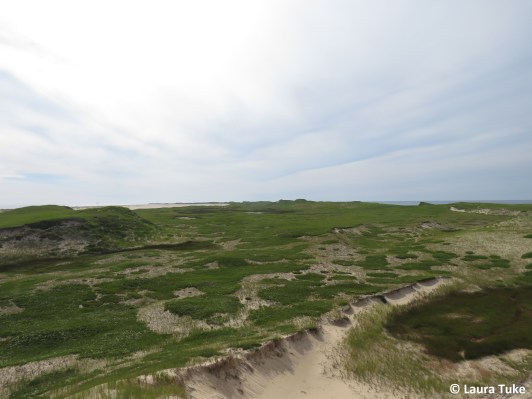
First recorded by European explorers during the early 1500s, Sable Island is a large crescent-shaped sandbar situated approximately 156km from the nearest landmass (Nova Scotia, Canada). Sitting on the edge of the eastern North American continental shelf, the island was probably formed from deposits left by retreating glaciers at the end of the last ice age. Currently at about 49km in length, 1.25km in width and up to 30m in height above sea level, the island is experiencing decreases in size over time and shifting eastwards.

Sable Island

Map images from Google Maps

Though fabled by many, Sable Island is known for its abundance of wildlife and colourful history. In particular, the island is famous for being the ‘Graveyard of the Atlantic’, with 350+ shipwrecks resting off its shores, the latest originating from 1999 (the Merrimac). Despite people living on Sable from time to time since its discovery, during the 19th century it was these shipwrecks and the establishment of lighthouses and lifesaving stations that led to the start of continuous human presence on the island. The lifesaving stations persisted till they were decommissioned in 1958, but a meteorological station was set up at the start of the 20th century that is still functioning on the island today.

Sable shipwreck map

Map from the NS Department of Education

Today Sable Island is now under the management of Parks Canada, following its designation as a National Park Reserve in 2013. This designation recognises Sable for its impressive dune system and rich biodiversity, including endemic species and the world’s largest grey seal breeding colony. Despite this and the island’s many bird, invertebrate and plant species, you will find that the island’s population of feral horses is what captures most the public’s imagination. These horses were what I first saw when the green strip of Sable flanked by sandy beaches first came fully into view from the plane and its these horses that I was here to visit.

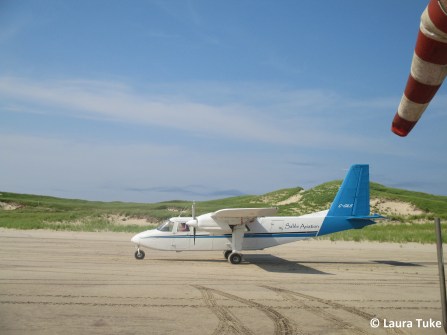
Following my first sight of the island, we were soon bumping down on to the landing strip on the island’s sandy south beach. After months of planning and much hard work, I had finally arrived!

Sable Aviation Plane


For Further Reading:

  • Sable Island: Explorations in Ecology and Biodiversity – Edited by Bill Freedman