How to… Identify British Tree Species

A majestic oak standing tall in the landscape, watching as centuries pass it by. A silver birch with drooping branches, embellished with leaves, slowly blowing in the breeze. An alder leaning over the edge of a river, spreading its branches to shade the bank beneath it. From capturing the imaginations of children to symbolising strength and life for adults, trees in all their forms are an important part of the landscape and culture within Britain.

With over 70 species in the UK alone, trees come in all shapes and sizes, and can be found anywhere from our highlands to our cities. Trees colonised Britain following the last glaciation, and have since become intertwined with our very own history. They provide us with so much, including resources, such as medicines and building materials, improved air quality, homes for wildlife, and even cultural services, such as therapy through forest bathing. Thus, they are a very important part of our environment!

Now, as our reliance on trees grows and the threats to them increase, it is surprising how little people know about trees in general. For example, the average Brit is unable to name more than five tree species, and a third even believe a money tree is a real species! With two thirds of the public now wanting to learn a little more about the trees in their area, here’s my handy guide to help you identify 10 common tree species that can be found in the UK.
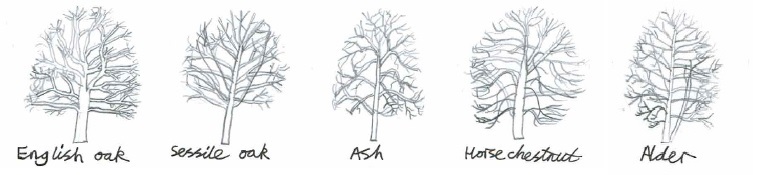
Tree Species

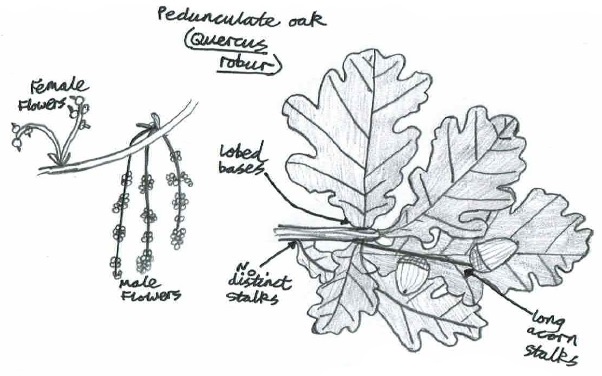
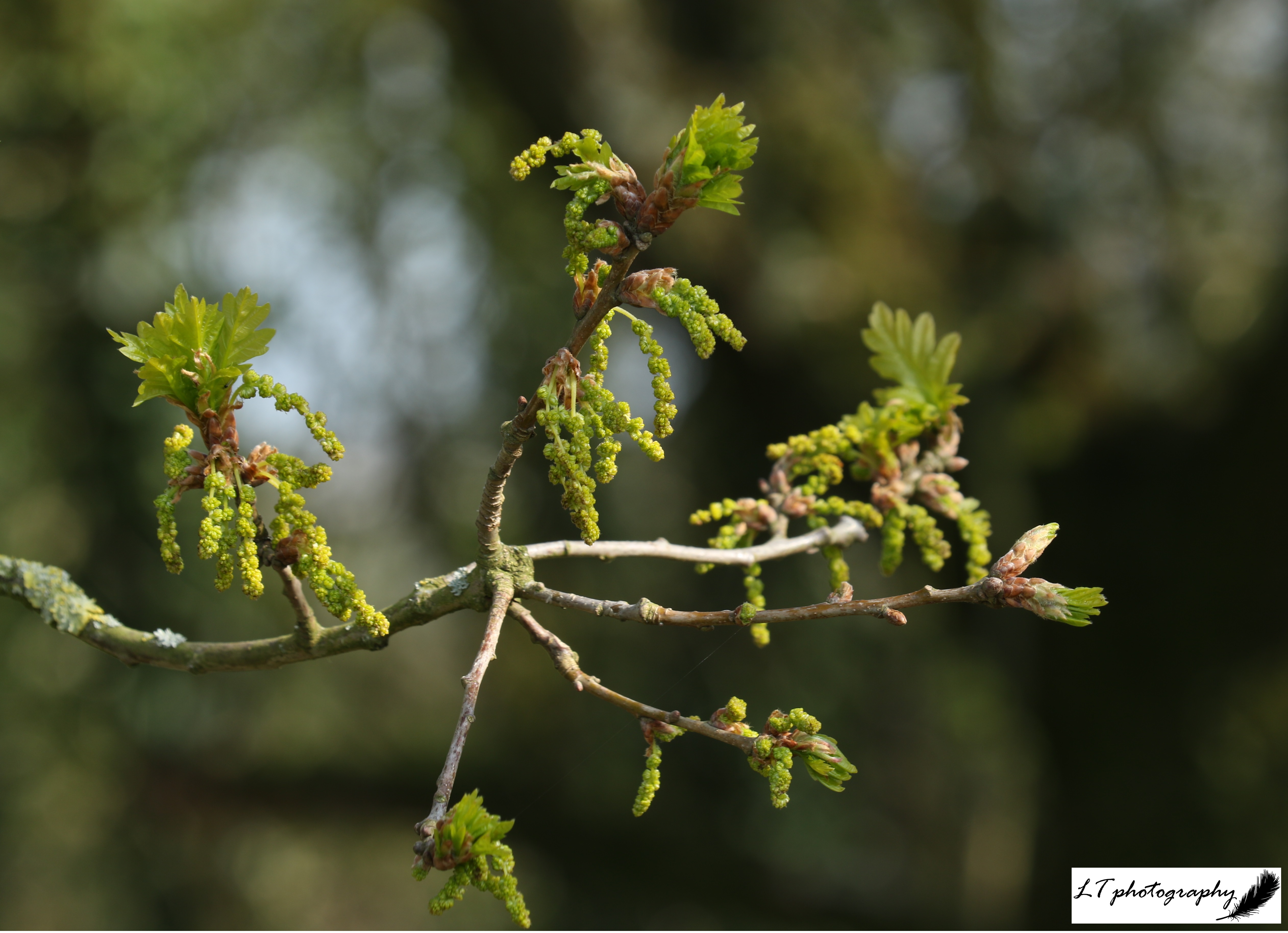
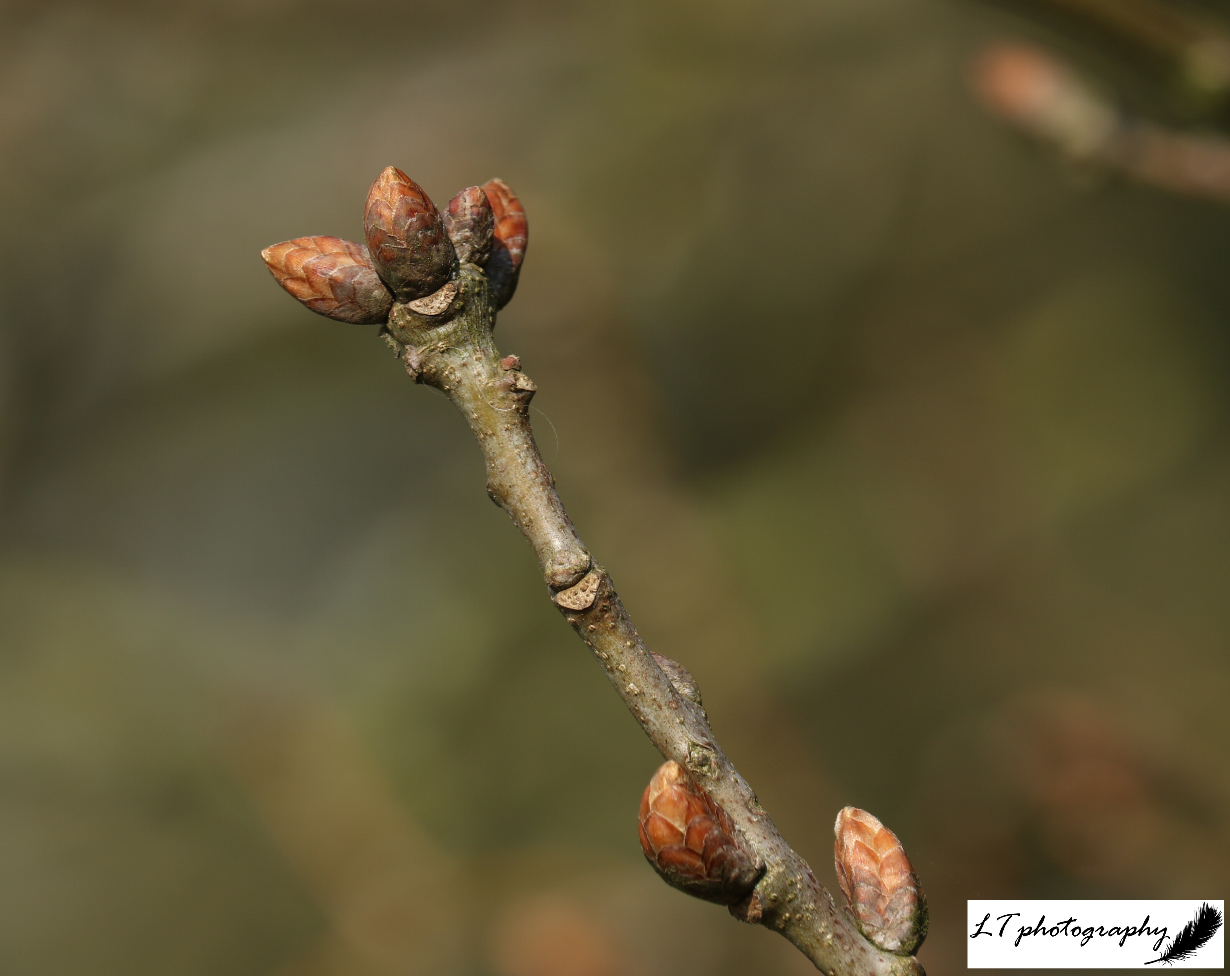
1. Pedunculate or English Oak (Quercus robur)
  • Family: Fagaceae – related to species such as beech and sweet chestnut
  • Origin: Native
  • Shape and size: Up to 40m tall, upward-reaching and broad crown
  • Stems and twigs: Massive rugged grey-brown trunk
  • Leaves: 10-12cm long, oblong, and lobed, turning brown in autumn
  • Flowers: On the same tree and flowering April-June. Male flowers= yellow-green catkins; female flowers= pinkish and on short stalks
  • Seeds: Produces the familiar acorn, with scaly cups and clusters carried on long stalks
  • Range & habitat: Widespread and common throughout Britain, found in habitats ranging from deciduous and mixed woodlands to open grassland and hedgerows

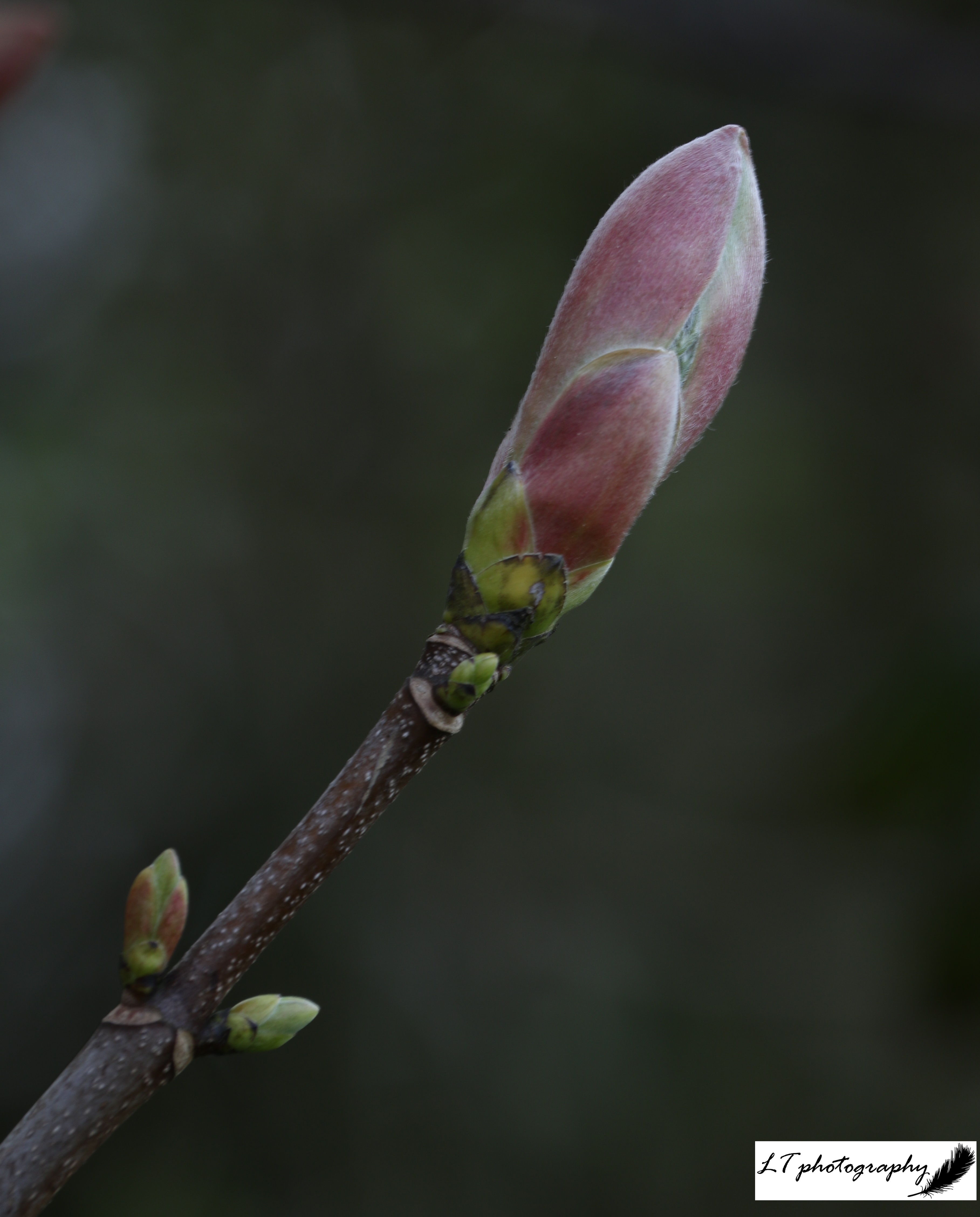
In Winter: Look for rounded buds that have overlapping scales and are found in clusters at the end of each shoot
2. Sessile oak (Quercus petraea)
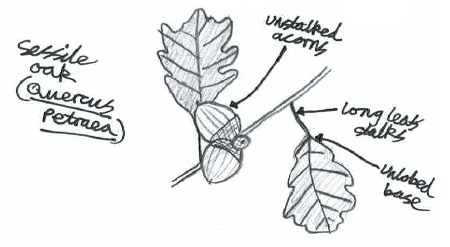
  • Differs to Pedunculate Oak in that the leaves taper to an unlobed base and have long stalks.
  • Buds in winter have more scales (more than 20).
  • Also, the clustered acorns are almost stalk-less with downy cups.
  • Narrower in shape, prefers more acid soils, and is more common in the West of Britain.

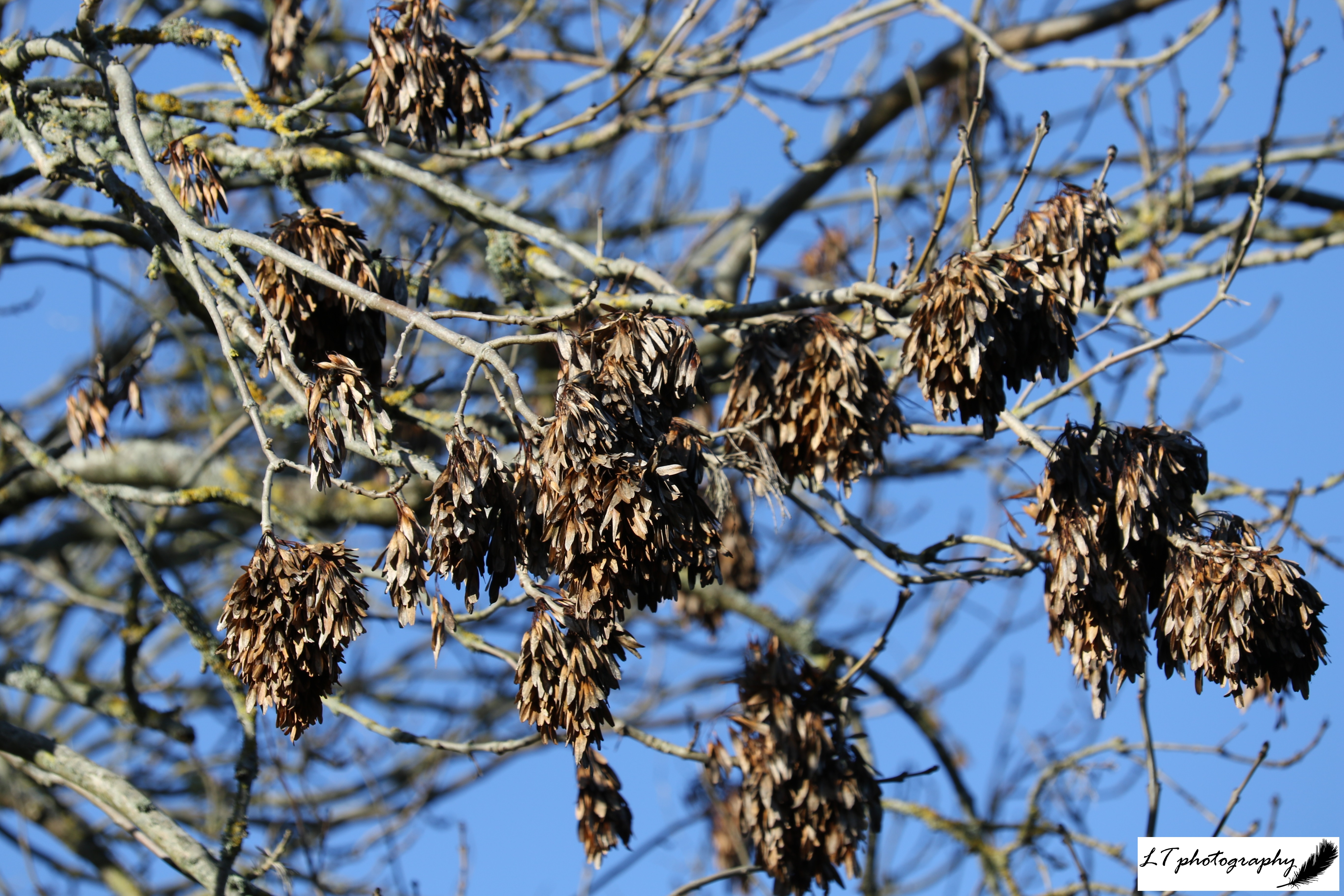
3. Common Ash (Fraxinus excelsior)

  • Family: Oleaceae – related to olive trees and lilac
  • Origin: Native
  • Shape and size: Tall and domed with widely spaced branches, growing up to 35m
  • Stems and twigs: Bark is pale brown to grey, becoming rugged with age
  • Leaves: Opposite and toothed, with 9-13 stalked leaflets that have long tips
  • Flowers: Male and female flowers typically grow on different trees, but both have purple flowers growing in clusters before the leaves
  • Seeds: Single seeds with a long wing (known as keys)
  • Range & habitat: Woods and hedges, in particular flourishing on a lime-rich/well-drained soil

In Winter: Smooth twigs with distinctive hairless black buds, and ridged bark on adult trees that resembles a diamond pattern

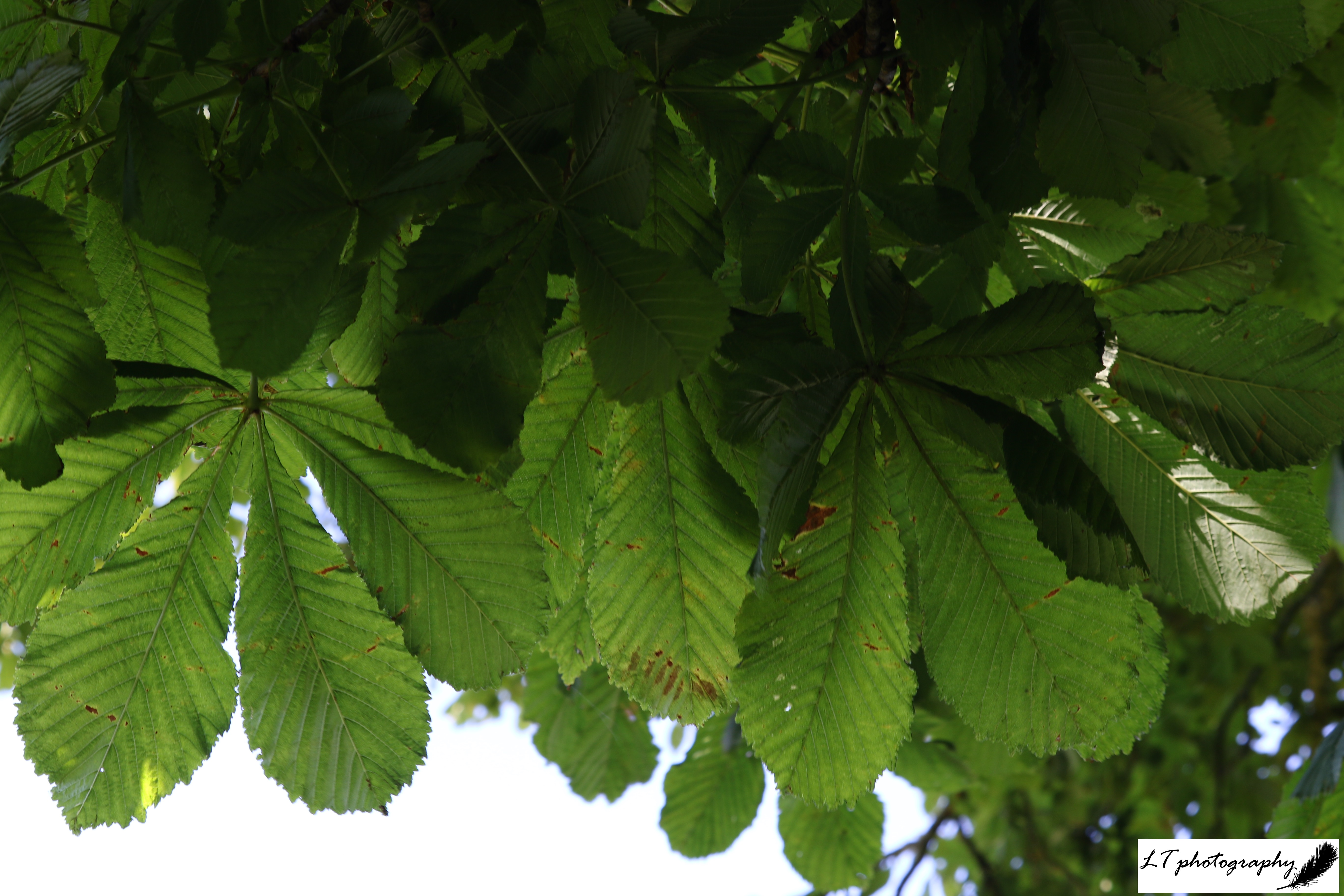
4. Horse Chestnut (Aesculus hippocastanum)

  • Family: Sapindaceae – related to lychee and maples
  • Origin: Non-native (introduced in the 1500s from the Balkan peninsula in southeastern Europe)
  • Shape and size: Arching branches, usually turned up at the ends, growing up to 35m tall
  • Stems and twigs: Bark is scaly and red-brown or dark grey-brown
  • Leaves: Five to seven large, thick, stalkless leaflets with pronounced veins and a long, tapering base
  • Flowers: Showy spike (candle) of white flowers with a yellow to pink spot
  • Seeds: Spiny fruit contains one or more shiny conkers
  • Range & habitat: It has now become a widespread and common sight across Britain, tolerating a wide range of soils

In Winter: Smooth bark and sticky buds

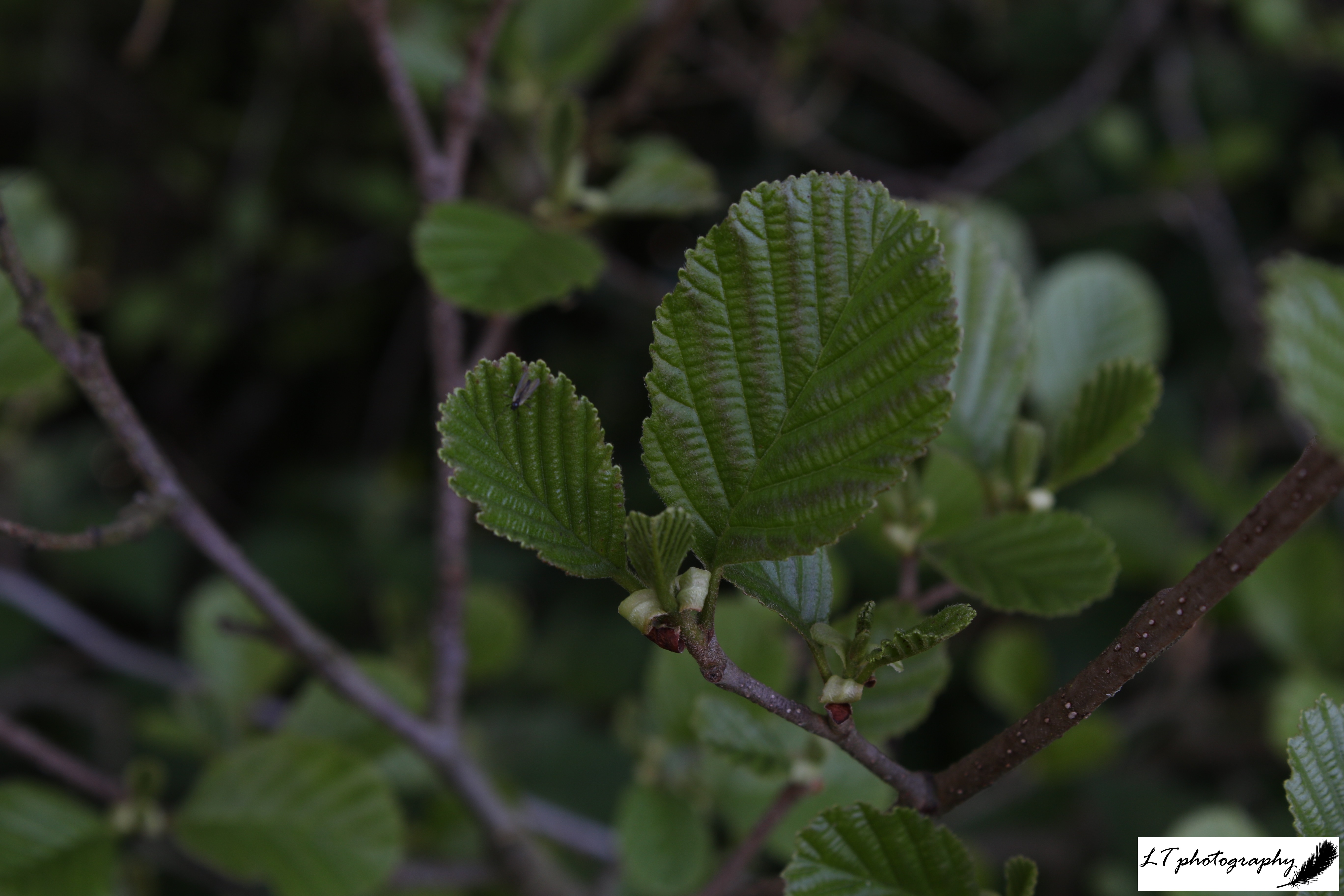
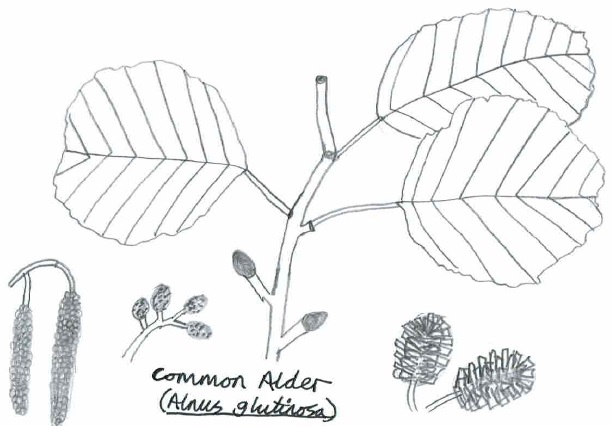
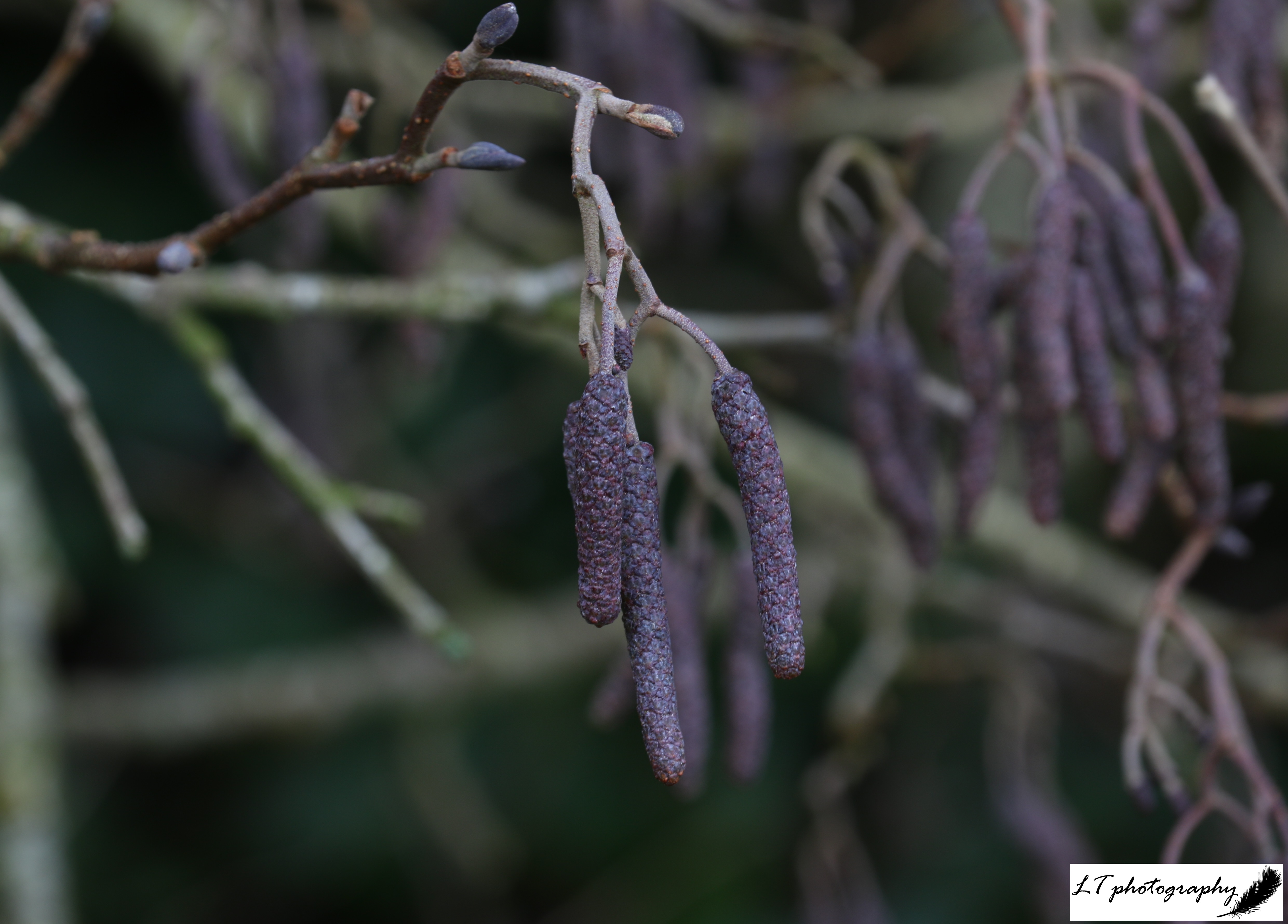
5. Common Alder (Alnus glutinosa)
  • Family: Betulaceae – related to hazel and birches
  • Origin: Native
  • Shape and size: Regular branching and conical shape, growing up to 25m
  • Stems and twigs: Dark brown bark that is often rough and sprouts young shoots
  • Leaves: Alternate, rounded, sometimes notched at the tip, and dark green
  • Flowers: Male and female catkins grow on the same tree, before the leaves. Male catkins= lambs’ tails; female catkins= small and egg-shaped
  • Seeds: Female catkins turn into a small cone, drying from green to brown, releasing the seeds. The seeds have corky outgrowths that keep them afloat on water
  • Range & habitat: Thrives in wet ground and is often seen lining the banks of rivers and streams across Britain

In Winter: Appears dull purplish due to purplish buds
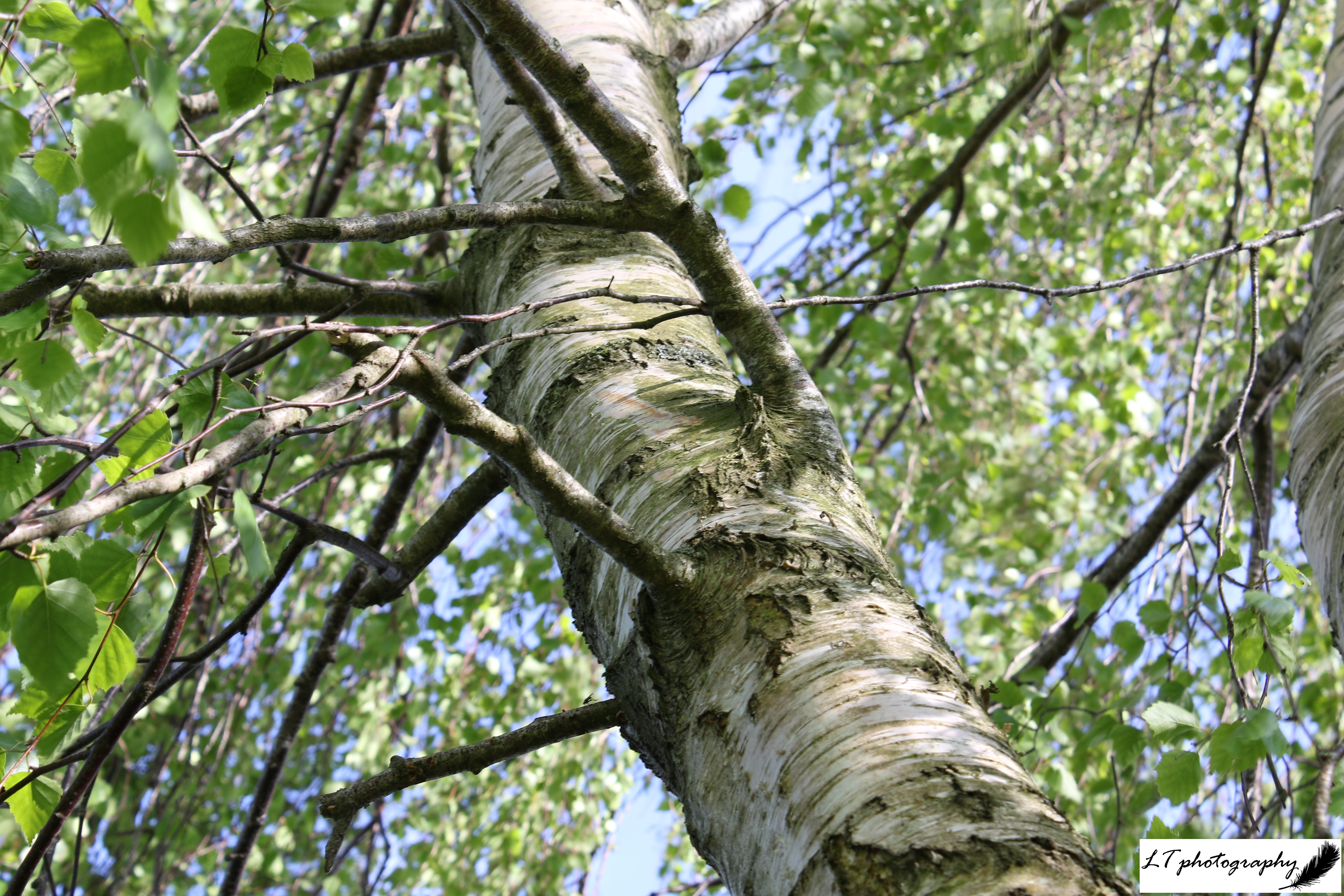
6. Silver Birch (Betula pendula)
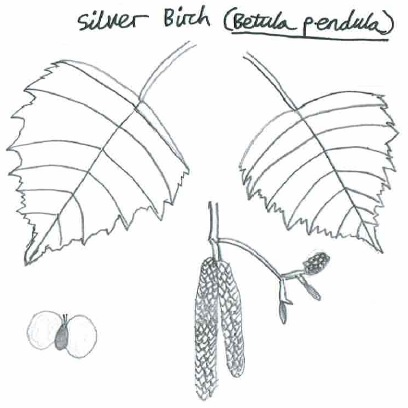
  • Family: Betulaceae – related to alders, hazels and hornbeams
  • Origin: Native
  • Shape and size: Erect with pointed crown and drooping branches, reaching up to 30m
  • Stems and twigs: Young bark reddish, maturing to black and papery-white bark. Twigs smooth with small dark bumps
  • Leaves: Alternate, triangular and shiny, on slender stalks. Edges are ragged, with smaller teeth between larger main teeth
  • Flowers: Male catkins= purply-brown; female catkins= smaller and pale green
  • Seeds: Two winged and wind-borne, released in winter
  • Range & habitat: Form natural woodlands on light, dry soils throughout Britain

In Winter: Distinctive shape and bark

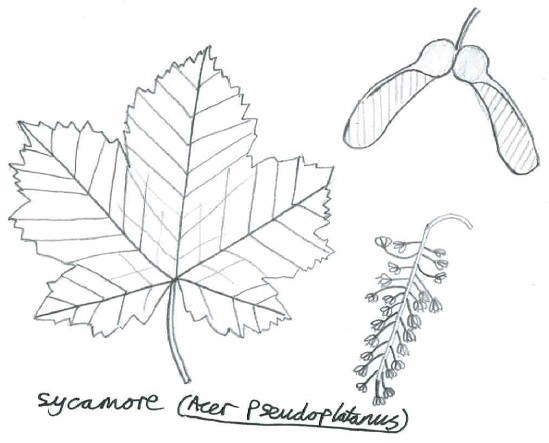
7. Sycamore (Acer pseudoplatanus)

  • Family: Sapindaceae – related to maples and horse chestnut
  • Origin: Non-native (introduced from Europe either in the 1500s or by the Romans)
  • Shape and size: Massive domed outline, with dense foliage and heavy lower branches, growing up to 35m
  • Stems and twigs: Grey fissured bark ages to pinkish-brown
  • Leaves: Opposite, five-lobed, and upper side dark green
  • Flowers: Greeny-yellow flowers in hanging clusters appear with the leaves
  • Seeds: Hairless keys in right-angled pairs
  • Range & habitat: Grow vigorously in all parts of Britain, being widely planted on their own for shelter or in woodlands and hedgerows

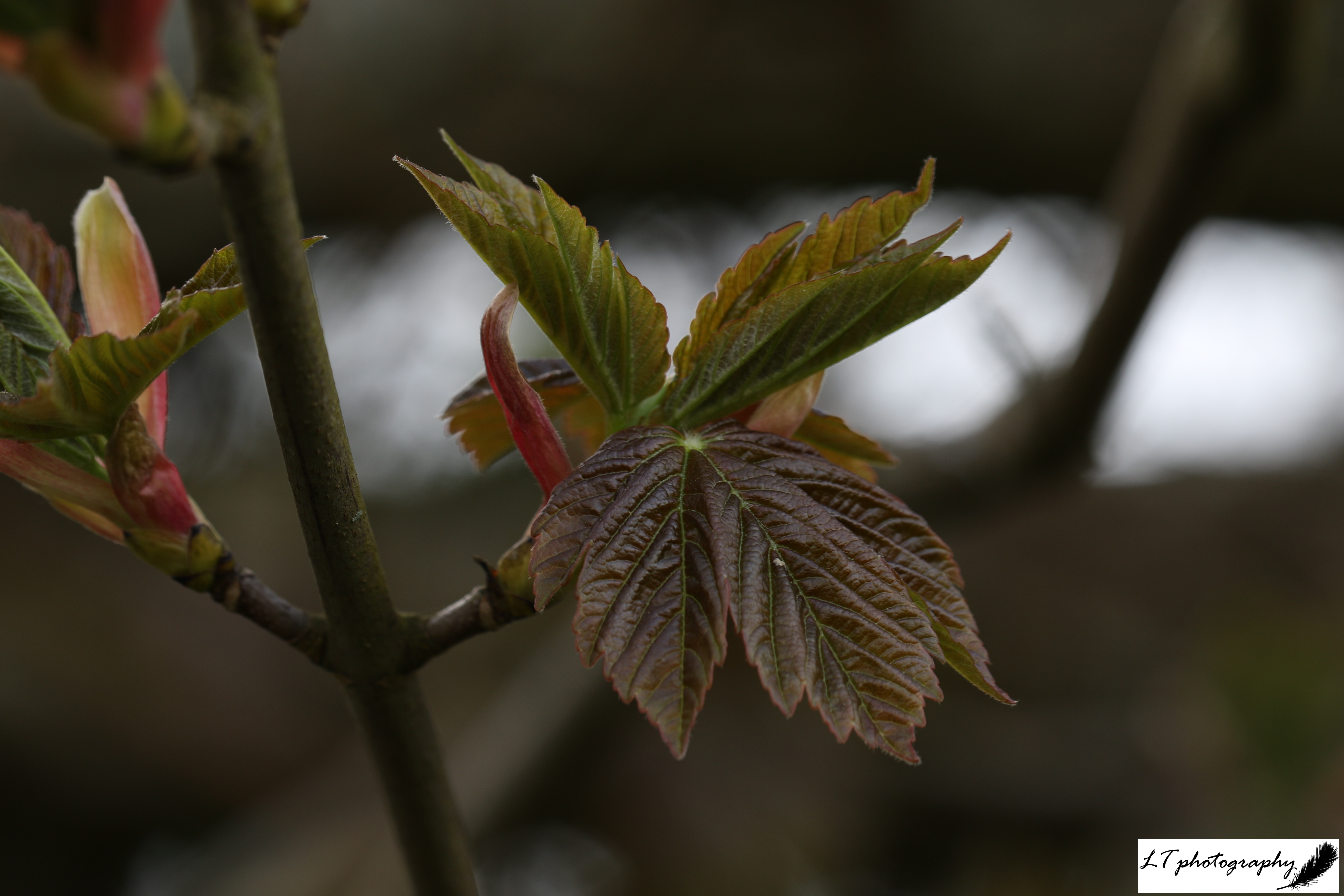
In Winter: Distinctive shape and bark
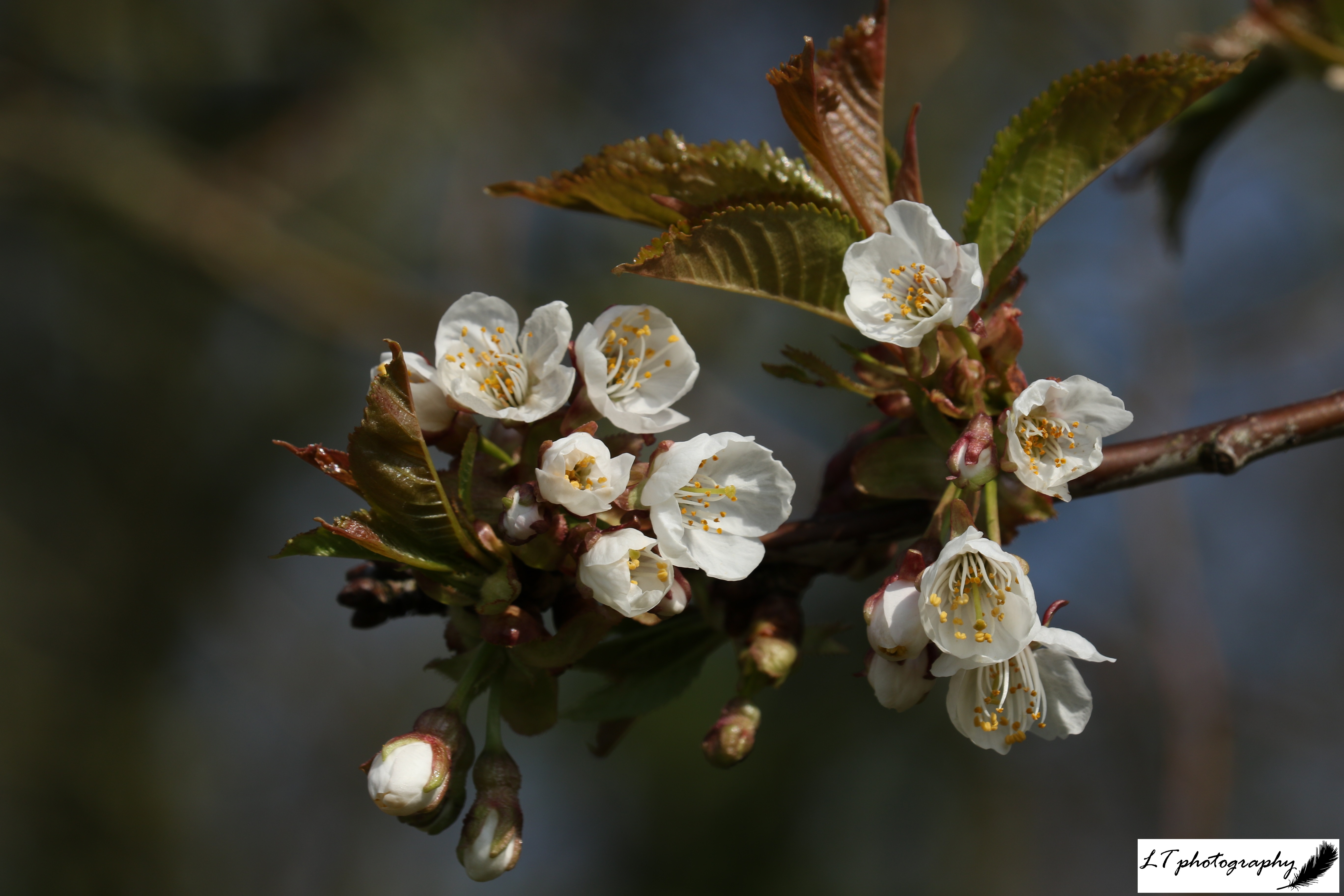
8. Wild Cherry (Prunus avium)

  • Family: Rosaceae – related to roses
  • Origin: Native
  • Shape and size: Pyramidal shape, reaching up to 30m
  • Stems and twigs: Shiny, red-brown bark peels in horizontal strips
  • Leaves: Alternate and oval with long points and regular, forward-pointing teeth, and two conspicuous red glands at the top of the stalk
  • Flowers: White flowers (blossom) appear before the leaves in small, loose clusters
  • Seeds: Produces round, red cherries
  • Range & habitat: Native throughout the UK, being found in woodlands and hedgerows

In Winter: Distinctive bark
9. Common Hazel (Corylus avellana)
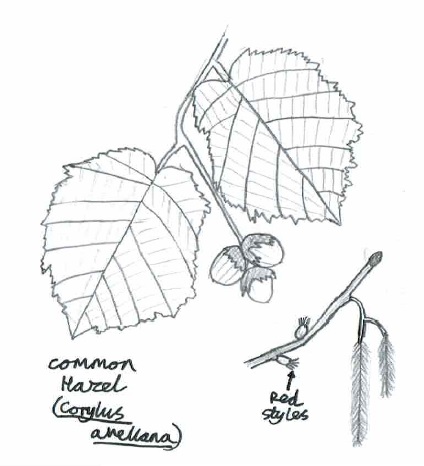
  • Family: Betulaceae – related to birches, alders and hornbeams
  • Origin: Native
  • Shape and size: Many stems rise from the ‘stool’, which if left uncut can reach 9m
  • Stems and twigs: Bark coppery brown, smooth and tending to peel
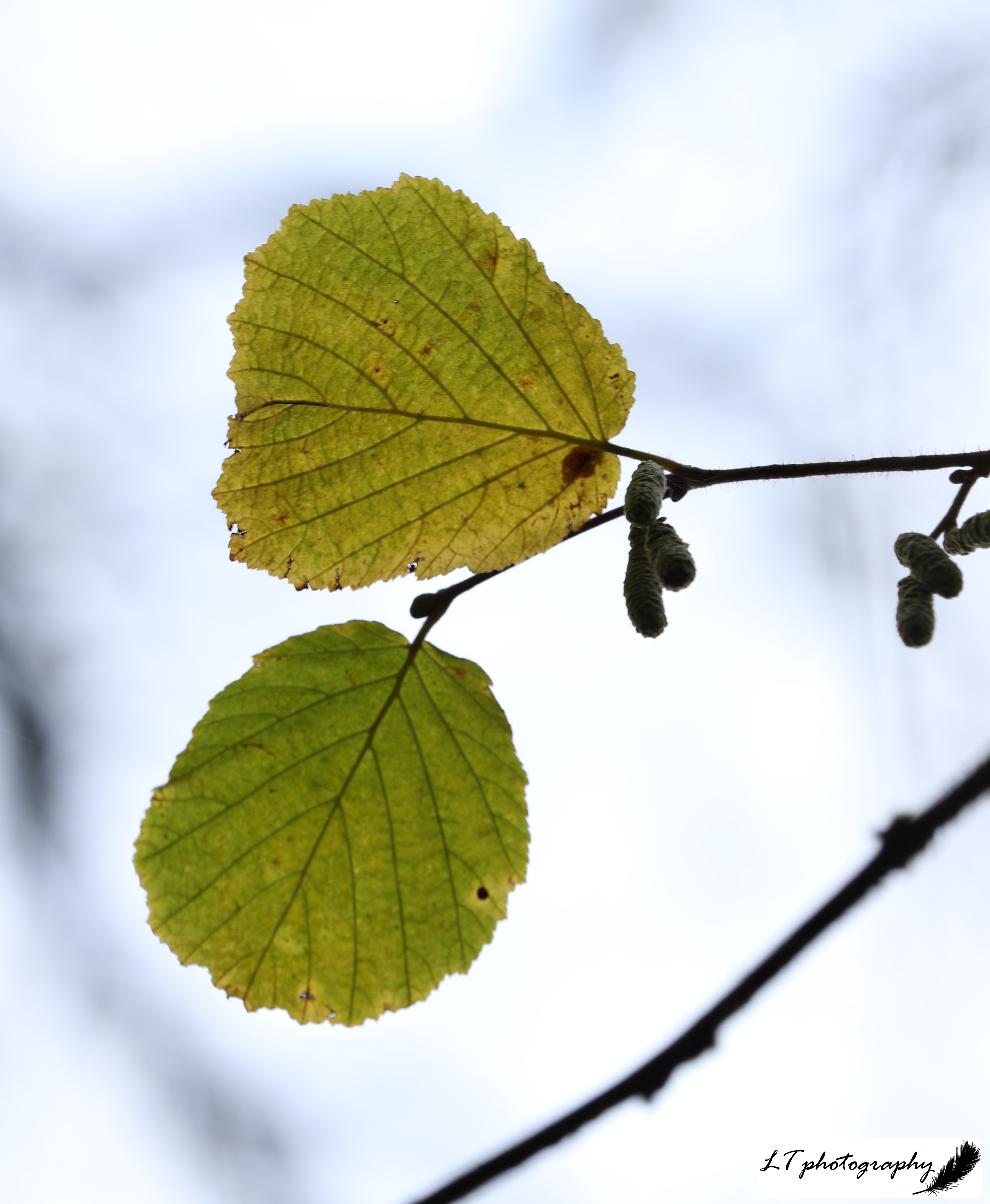
  • Leaves: Alternate, almost circular with sawtooth edges, hairy, and soft to the touch
  • Flowers: Male and female flowers found on the same tree. Male= lemon-yellow lambstail catkins; Female= tiny buds with red tassels
  • Seeds: An edible nut encased in a thick-green husk, ripening in autumn
  • Range & habitat: Grows throughout Britain, often found in woods, scrub areas, and hedges

In Winter: Distinctive shape and bark, accompanied by the male catkins from December

10. Field Maple (Acer campestre)
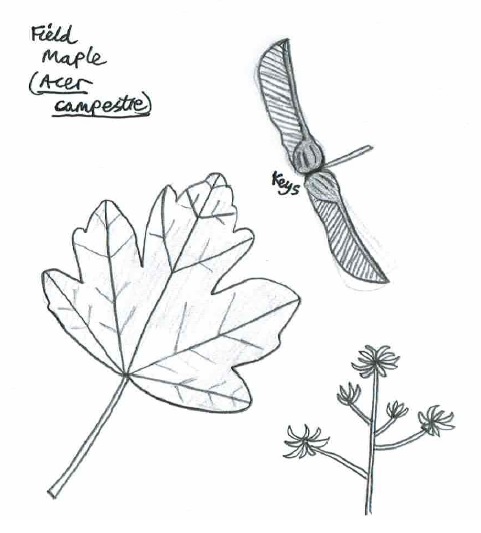
  • Family: Sapindaceae – related to lychee and horse chestnut
  • Origin: Native
  • Shape and size: Round-shaped tree with branches that droop at the end, growing up to 26m
  • Stems and twigs: Bark is grey or light brown and twigs downy, later corky
  • Leaves: Emerging leaves have a pinkish tinge, turning dull-green, and are opposite and small, with three main, round-tipped lobes and two smaller basal lobes
  • Flowers: Small yellow-green flowers form erect clusters
  • Seeds: Each pair of seed wings lie in an almost straight line, are often tinged with pink
  • Range & habitat: Frequent in England and East Wales in woods and hedgerows

In Winter: Sinuous trunk and distinctive shape

Drawings and photos all my own

26 Years of the BTO’s Garden BirdWatch: Getting Involved During Lockdown

As winter creeps into the landscape and a second lockdown keeps us close to home, our gardens are once again coming alive. Wrens creep through the undergrowth catching insects, Robins sing to defend small territories, and Long-Tailed Tits flit between hedgerows foraging in family groups. It’s not just the birds though, other species are settling down to see out the winter in our gardens too, from butterflies and toads to hedgehogs and ladybirds.

With this year being a bit different, I have found it a great time to take part in the BTO’s Garden BirdWatch, to further connect with nature, boost my mental health, and do my bit. Gardens are very important homes for wildlife, not just at this time of year, so now is an important time for us to understand how we can better help the wildlife that share our gardens with us. If you have a bit of time on your hands, want to do something a bit different, or are interested in the wildlife on your doorstep, then this survey could be just what you need!

The BTO and the Garden BirdWatch

So, what is the BTO? Well, the BTO stands for the British Trust for Ornithology, where ornithology refers to the study of birds. Started in Oxford in 1933, this now Norfolk-based charity aims to engage people with science whilst advancing the understanding of birds and now other wildlife species. With over 60,000 dedicated volunteers, and projects ranging from bird ringing and Cuckoo tracking to urban gull and bat surveys, the BTO has gone from strength-to-strength.

Set up in 1995, one popular BTO project has been the Garden Birdwatch, a project aiming to understand the relationship between wildlife species and our gardens, and how and why some of these species populations may be undergoing change. In a nutshell, the Garden BirdWatch is about participants recording the birds they see in their garden, along with mammals, amphibians, reptiles, butterflies, bumblebees, and dragonflies. As vital habitat for wildlife continues to decrease, whilst the importance of gardens as substitute habitat increases, the information we can provide now can be used to better tailor help to support wildlife in the future.

So why should you take part? Well, the Garden BirdWatch is a great way to enjoy the wildlife in your garden, improve your knowledge, and allow you to follow the annual cycle of life. Taking part is also easy! All you need is a garden, a minimum of 20 minutes a week, and a way to identify the species you see. You do not need to have a big or elaborate garden, put food out, or be an expert. With the Garden BirdWatch currently being free for a year, signing up is easy. Provide a few details about your garden, and get started recording the garden birds and other wildlife that visit you.

Why not join thousands of other volunteers today, and do something new from the comfort of your own home!

Examples of Results

Last year marked the 25th year of the Garden BirdWatch, and so the BTO have now been able to use 25 years of weekly garden observations to begin analysing the relationship between our gardens and wildlife. For example:

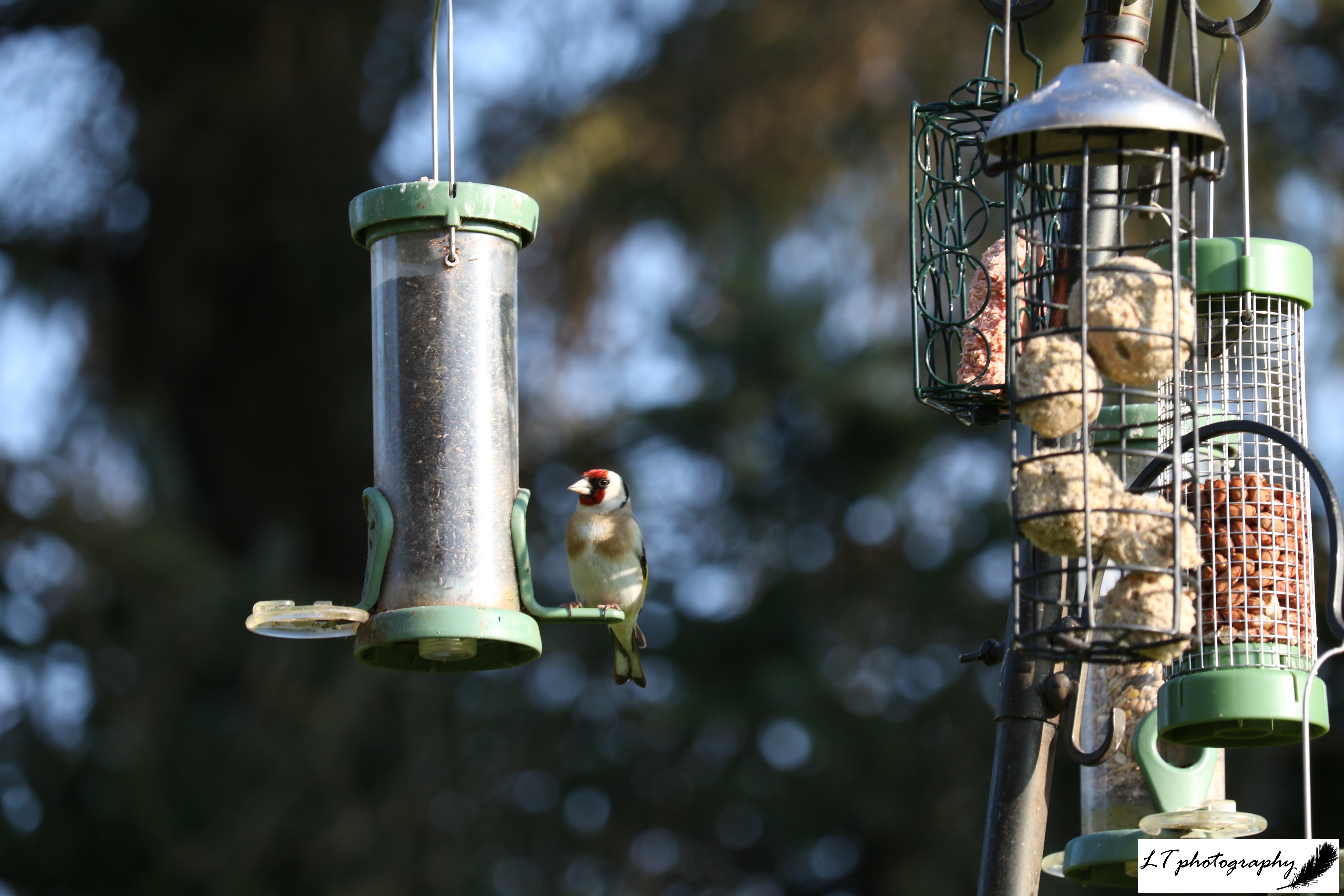
  • Goldfinches, Woodpigeons, Nuthatches, and Jackdaws have become an increasingly common sight in our gardens, relying on our gardens for vital foraging habitat
  • Song Thrushes, Greenfinches, Starlings, and House Sparrows have become a less common sight in our gardens since 1995, due to a range of factors from disease to loss of habitat

I have now been taking part in the BTO’s Garden BirdWatch for the last 21 weeks. This time has gone past so fast, but has opened my mind to the diversity and abundance of species that visit my garden through the seasons. To sum up my time so far, here are some of my results:

  • I have observed 26 different bird species in my garden, with the most abundant species being Starlings (50 on 28th July) and House Sparrows (40 on 28th July), followed by Goldfinches (30 on 1st October)
  • Every week Blue Tits, Great Tits, Collared Doves, Pheasants, Goldfinches, and House Sparrows have been consistently recorded
  • As summer has moved into autumn and winter, Coal Tits, Jackdaws, and flocks of Goldfinches have become newly reliant on my garden, whereas Great-Spotted Woodpeckers, flocks of House Sparrows, Pheasants, flocks of Starlings, and Sparrowhawks have decreased their visits
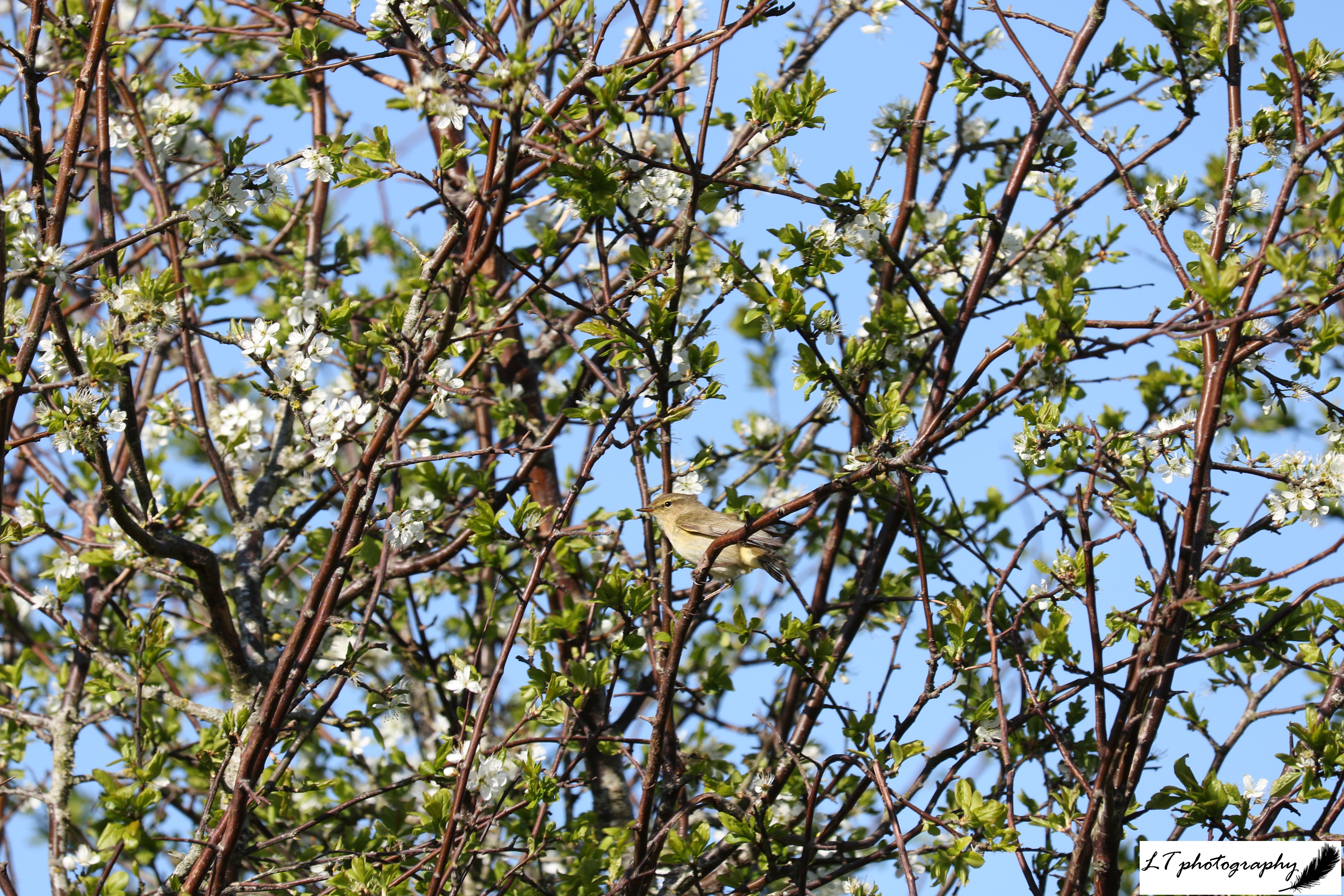
  • No week or month has been the same, with summer highlights including Greenfinches, Siskins, Chiffchaffs, and Garden Warblers!

So, why not see what wildlife you can encounter this winter?

A Wild Adventure to Richmond Park

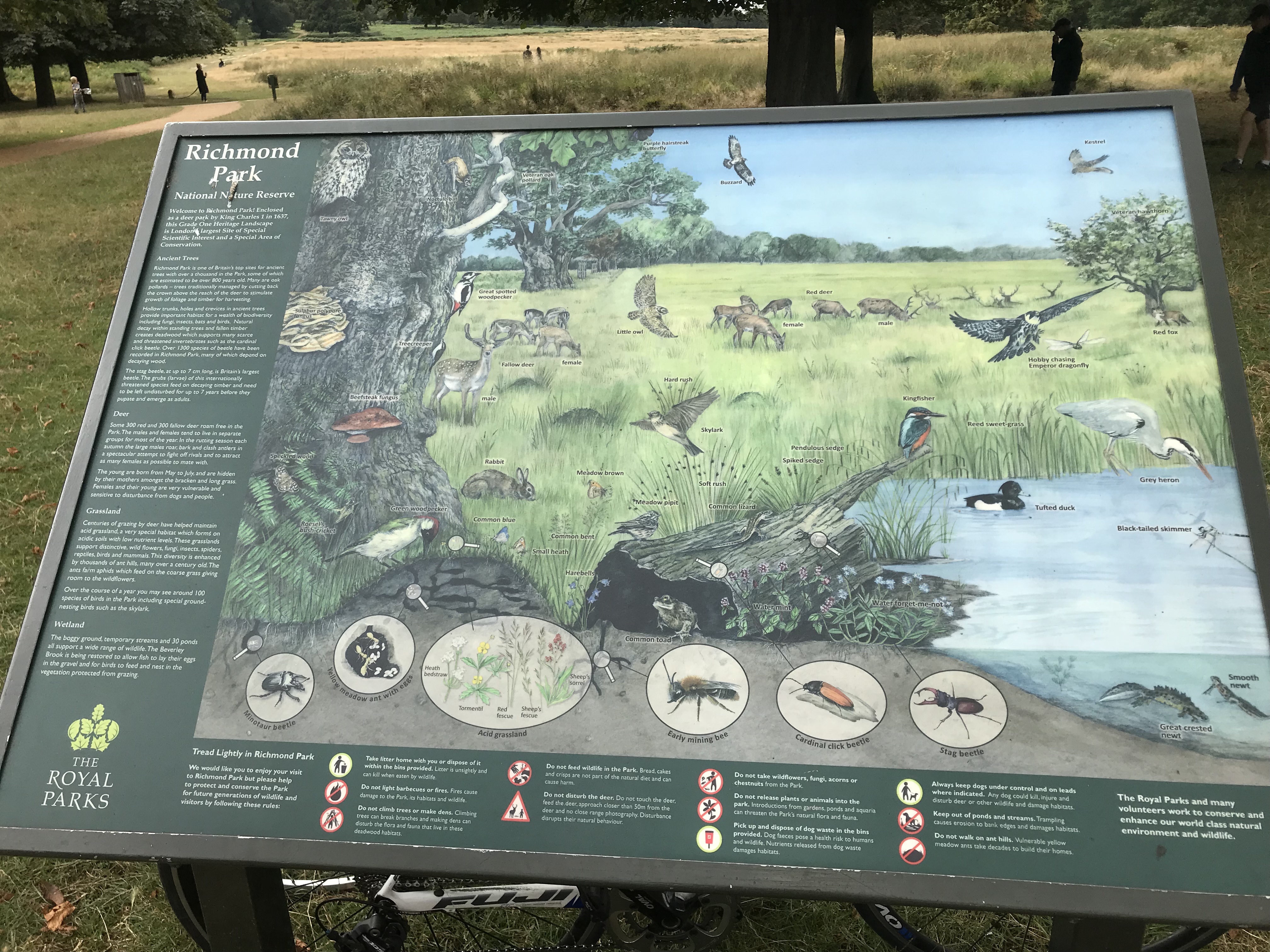
In a green oasis surrounded by urban jungle, ancient trees stand as sentinels. They have watched over this space for centuries, watching as time and history passes by. Some have even stood in this spot for over 800 years, growing taller whilst a wall was raised, royals hunted deer, and a city grew up around its edges. As a busy metropolis hums and pulses at its borders, this park rolling on for 2,500 acres, has lain timeless for centuries. It now continues to capture the hearts and minds of the millions of visitors that step through its walls every year.

IMG_0033

Nestled in the south-west of London, Richmond Park stands as London’s largest Site of Special Scientific Interest and a Grade One Heritage Landscape, with even the Royal Ballet School and a royal residence within its walls. This impressive park first came to my attention last year when I was given the book ‘Park Life: The Memoirs of a Royal Parks Gamekeeper’ written by John Bartram. This book recounts the author’s 30 years working and living within the bubble of Richmond Park. Sparking my imagination, it was his story that inspired in me the desire to make my day trip to his beloved Richmond.

On a hot, but grey autumn day in early September, I made my trek to Richmond Park, with the company of my aunt by my side to guide my path. Starting at the Roehampton Gate in the north-east of the upside-down pentagon-shaped park, we set a route to allow us to take in a range of beautiful habitats, incredible wildlife and the character of this impressive landscape.

IMG_0035

Our first steps took us south, hugging the 2km of river that winds down the east side of the park, known as the Beverley Brook. This river for a time became our birdwatching paradise, filling us with excitement with every stretch. We saw everything from a family of long-tailed tits feeding, fish swimming in the shallows, a spotted flycatcher doing its iconic hunting routine, and a bedraggled juvenile kestrel, to a pair of resting mandarin ducks, a tree creeping tree creeper, the flash of yellow of a chiffchaff, and a grey wagtail wagging. With around 100 bird species having been recorded in the park, we could not wish for more fantastic species to start our walk.

IMG_0045

Moving on from the river, we then headed into the heart of the parkland. With Richmond also being a Special Area of Conservation, the park is home to over a thousand ancient trees; over 1300 species of beetle including iconic stag beetles; at least 9 species of bat; and a range of habitat types including acid grassland, bogs, and 30 ponds. It is truly an incredible space that feels isolated from the rest of the outside world. With every step you can spot another butterfly species, discover a whole host of plants, spot a range of bird species from green woodpeckers to wheatears, and simply escape everyday life.

IMG_0054

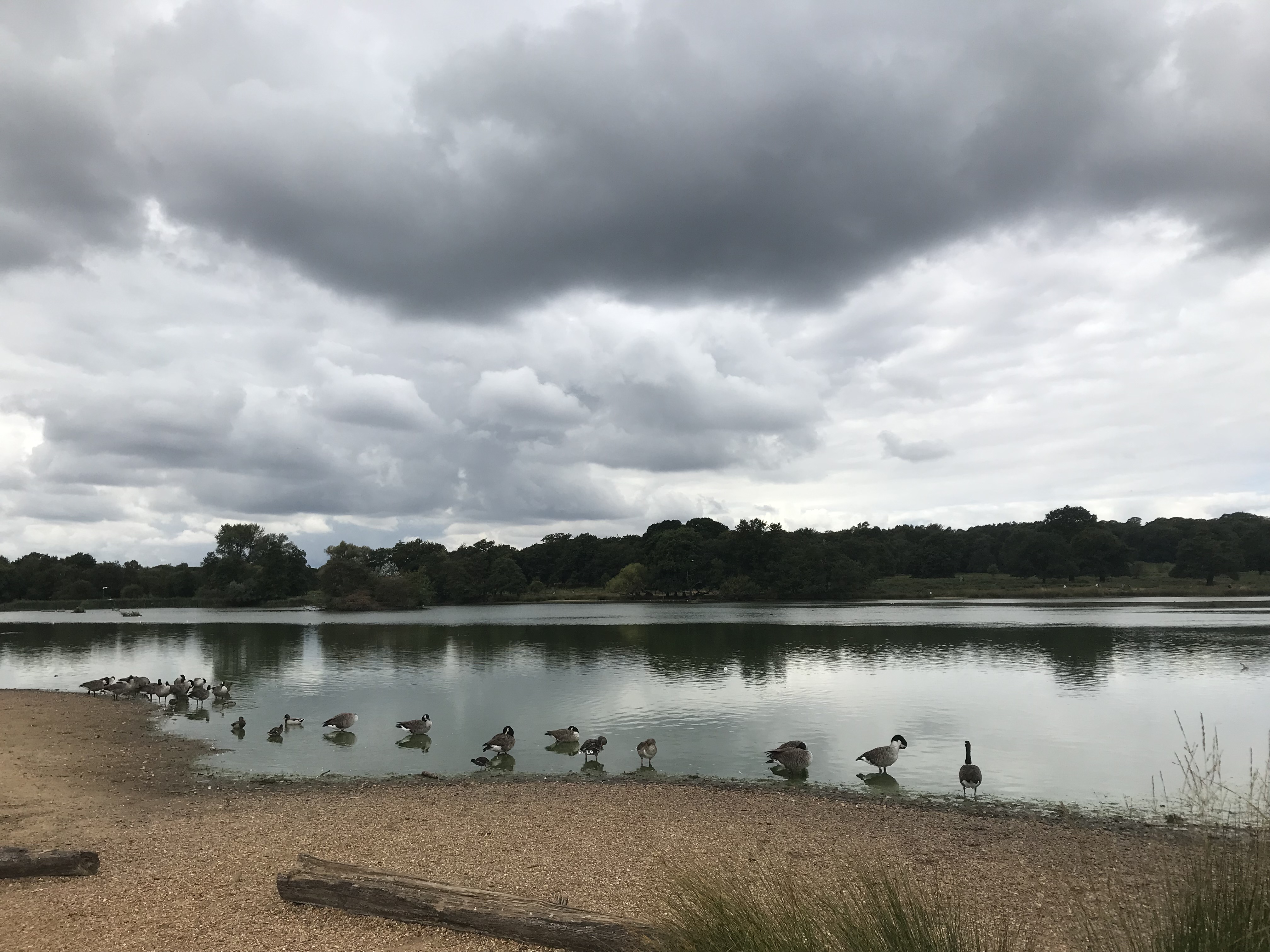
Our journey through the park also took us through the middle of the Pen Ponds which were filled with a myriad of bird species. This ranged from coots to black-headed gulls, tufted ducks to greylag geese, and moorhens to little egrets. With drama unfolding in front of us with every sight, we got to see gulls mobbing late nesting grebes, ducks competing for food, and birds flying low overhead, whilst getting the closest views of great-crested grebes that I have ever had!

IMG_0047

Though Richmond Park is home to many amazing species, it is the majestic beasts with sleek coats and antlers standing heavy on their heads, that are the star attraction for millions of visitors each year. The Park is home to about 300 red and 300 fallow deer, and these deer are most popular during their impressive autumn spectacle of rutting. Of course during my journey through the park, my aunt and I came across many of the red deer impressive with their bare antlers, and watched them in awe from a far. These deer were very much a main part of John Bartram’s 30 years in Richmond Park as a Park ranger.

IMG_0056

As I neared the end of my adventures in Richmond Park for one day, it was evident that though my few hours of escapism were great, you could also easily lose yourself in Richmond Park for days, or in the case of John Bartram, years. It was easy to understand how he spent 4 decades hidden away working and living within this park. Its a place which has something for everyone, with everything from open space and incredible landscapes to amazing wildlife and cafes! For me, seeing 44 species of bird in a short space of time was my highlight. When beautiful places such as this can be found on your doorstep, what more could you want?