12 Days of Laura’s Wild Photos 2024

Last year, was a year full of colour and vibrancy for me, a year of adventures, many firsts, and always some learning curves. This also applies to my time spent in nature and my year immersed in my wildlife photography. From sitting amongst the bluebells and chasing after butterflies, to capturing red kites and watching sunsets, it has been a spectacular year as a whole.

To continue my new tradition, over the 12 Days of Christmas of 2024, I accompanied each day on social media with one of my nature photos taken with my camera, camera trap or phone. The aim is always to share my snapshots of nature’s hidden beauty, share some yet to be seen favourite photos, and simply to put a smile on people’s faces during the tough winter months.

Here are my latest 12 Days of Laura’s Wild Photos all in one place!

The 12 Photos
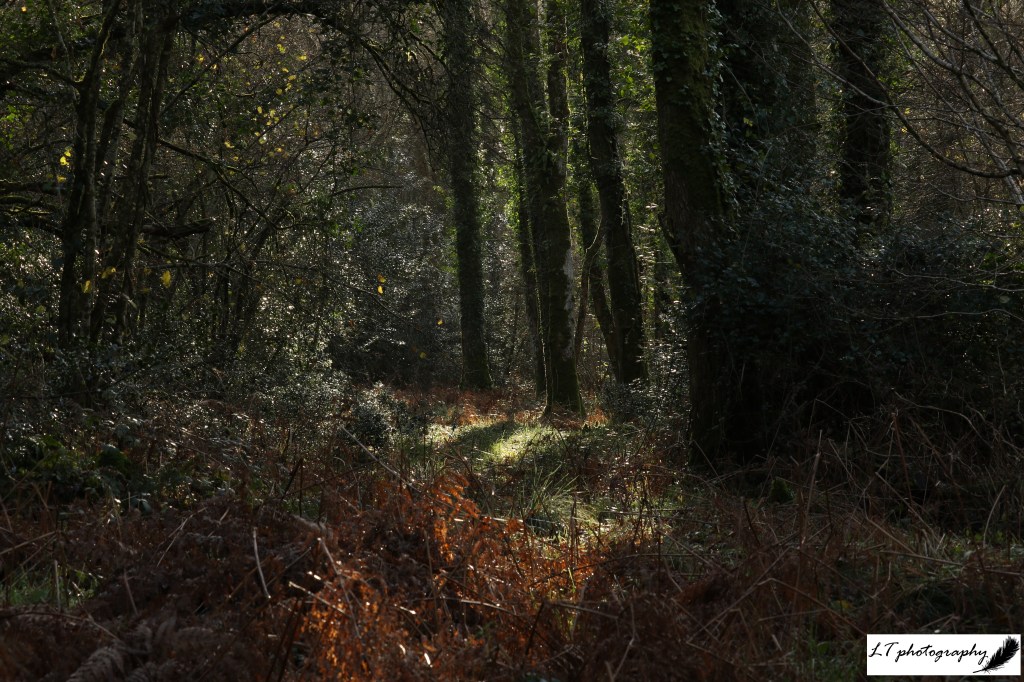
Day 1 – To begin my 12 Days of Laura’s Wild Photos for 2024, I chose a photo that made me think of winter, with it being taken during the winter months. I love the soft sunshine breaking through the trees and producing a pocket of light within the greys and browns of the sleeping woodland.
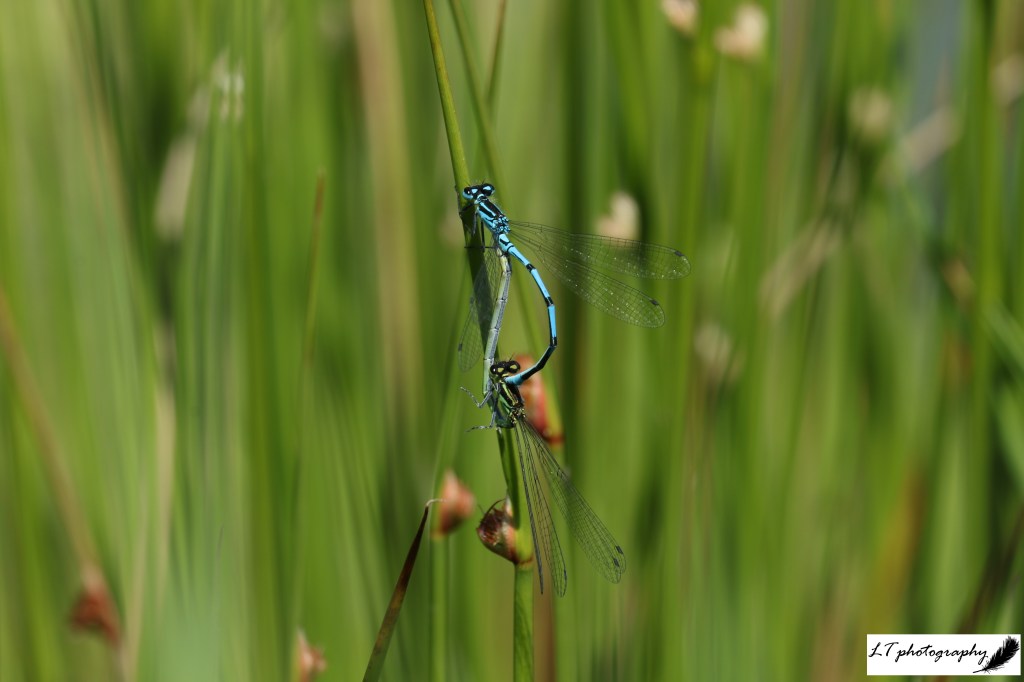
Day 2 – Last year was a year of many adventures and firsts for me, including in my wildlife photography. During May, I got the opportunity to watch and try photographing damselflies for the first time, as they courted over water, and attempted to mate and lay eggs. They are such fantastic coloured jewels to behold!
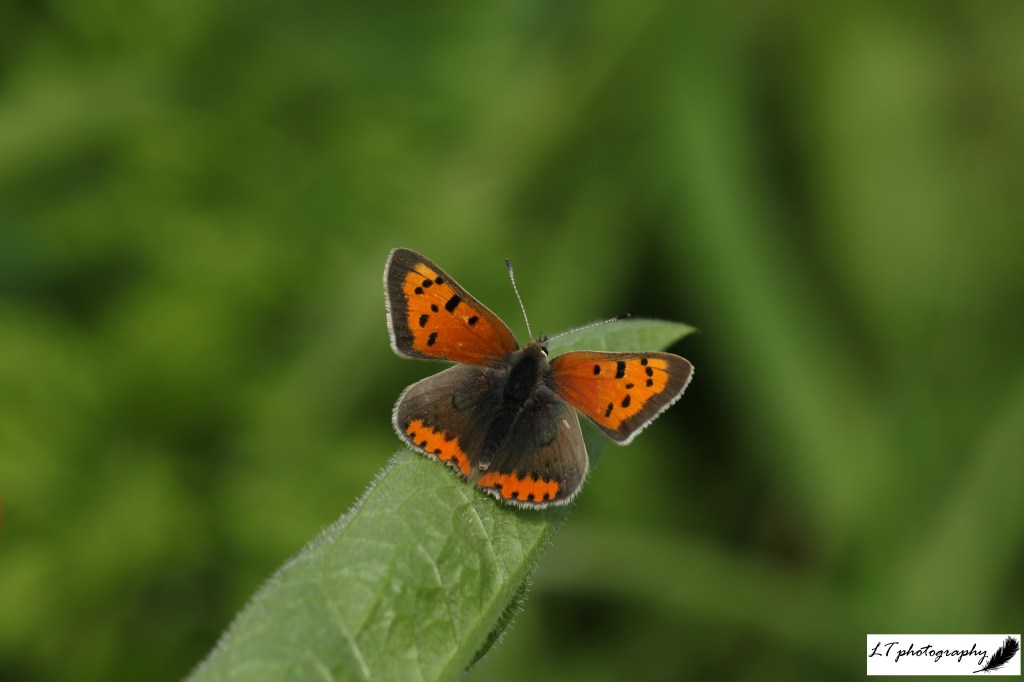
Day 3 – This beautiful Small Copper butterfly was a bright spot of colour for me during an autumnal October day. It was wonderful to see these butterflies flitting around my family’s new wildflower meadow, courting on the wing. It was exciting to see these butterflies choosing to lay eggs here already, despite it only being our meadow’s very first year!

Day 4 – I have captured fantastic sunsets from Canada to Kenya, so I am always trying to find new and wonderful ways to capture their never-ending beauty. They are one of my favourite subjects to photograph, and understandably this photo fills me with such joy including from the experience of taking the photo itself.

Day 5 – For day 5 of my 12 days, I wanted to include a photo of one of my highlights of 2024, my boy Rook. I had for 9 months looked forward to my cow Raven calving for the first time, and Rook was finally born in April, a week overdue. I enjoyed watching him grow bigger and bigger, and develop a character of his own.

Day 6 – Whenever I needed a mindful moment this autumn, I would escape to our wildflower meadow with my camera. This year my family and I trialled the planting of this meadow with wildflower seeds to see how it would turn out. Well for the first year, it has done well, growing a large diversity of species and becoming a splash of colour as flowers began to pop up throughout the autumn.

Day 7 – For the last day of 2024, I posted a simple photo of a hedgehog feeding from a plate. What is special about it though, is that it marks one evening of many throughout the summer months when a hedgehog would appear before sunset to find food. This tends to signify a lack of wild food available for our hedgehogs, but it was still a great opportunity for me to get to know the hedgehogs in our local area.
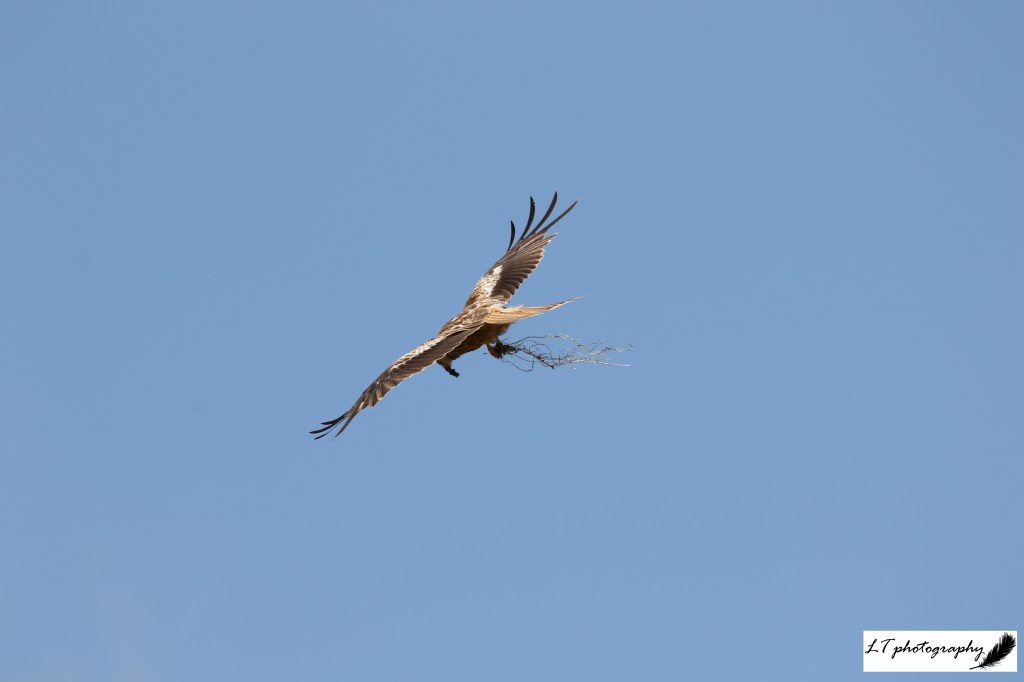
Day 8 – Another of my firsts for 2024 was capturing red kites on the wing in flight. This photo comes from a collection taken during this shoot, when red kites were hunting over a field that was being cut and baled. If you look closely, you can see that this particular bird had some success!
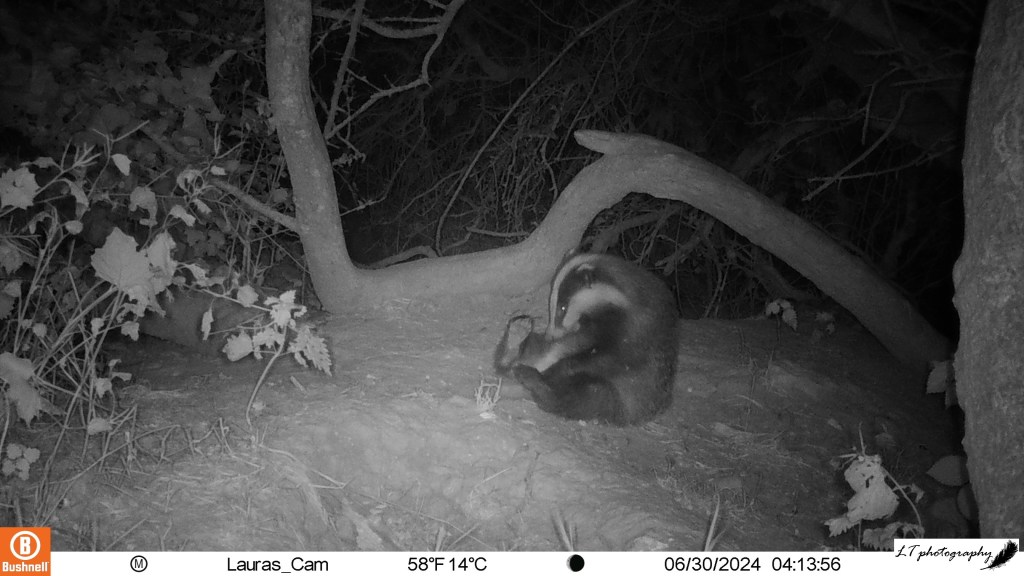
Day 9 – 2024 was a year for me full of incredible wildlife moments and adventures in my happy place out in nature. This included sightings from my camera traps of wildlife ranging from hungry hedgehogs to inquisitive foxes. Some of the best characters though, came in the form of a family of chilled out badgers, including this badger that just needed a sit down!

Day 10 – Though I love being out in nature all year round, spring always ends up being my favourite season of the year. It’s a time of hope, new life and incredible natural beauty, which always inspires me in my capturing of the natural world. Here’s just one of the many, many photos from spring 2024, that fills me with joy for the season to come this year!

Day 11 – During 2024, I also had the pleasure of getting to observe my very first nuthatch nest of my bird ringing career. It was amazing to be able to watch as these chicks overtime grew from looking like little dinosaurs to beautifully feathered nuthatch fledglings. This all happened in the matter of a couple of short weeks!

Day 12 – I saved my favourite photo until last during my 12 Days of Laura’s Wild Photos, with this photo showing one of my favourite spring sights. There is nothing quite like a beautiful rich blue carpet of bluebells set against the lush green of new woodland growth. It fills me with joy and the motivation to enjoy another year of the natural wonders in my local area and further afield.

For now it is time to make the most of the last of our winter months, and to look forward to new wild adventures to come!

How to… Identify All Year Round Garden Birds

Photographs will be updated in the future

In the UK, 633 wild bird species have been recorded up to 2024, from eagles and owls to kingfishers and thrushes. Between 2015 and 2020 though, almost half of all bird species in the UK were seen to have experienced a decline in number, adding to a steady decline over 50 years. Some of the biggest factors have been increased development, agricultural intensification, habitat loss, lack of woodland management, disease, and climate change, amongst others.

As bird species continue to lose access to habitat and food sources across the UK, our gardens, however big or small, are becoming an important lifeline for populations. ‘Garden birds’ refer to any species that visit and utilise a garden, and species will depend on what food, water, and habitat is available, and also the habitats that can be found around a garden. This often leads to variation in what people may see from garden-to-garden.

Despite differences, there are a number of birds that are more likely to be seen in gardens, and it is great to know what you may be seeing to help easily tailor your garden for their use, such as what bird food to offer. To help identify species, here you can find a helpful guide to 10 birds that can often be seen in gardens across the UK, even when their populations are decreasing in number. Take a look below!

Species:

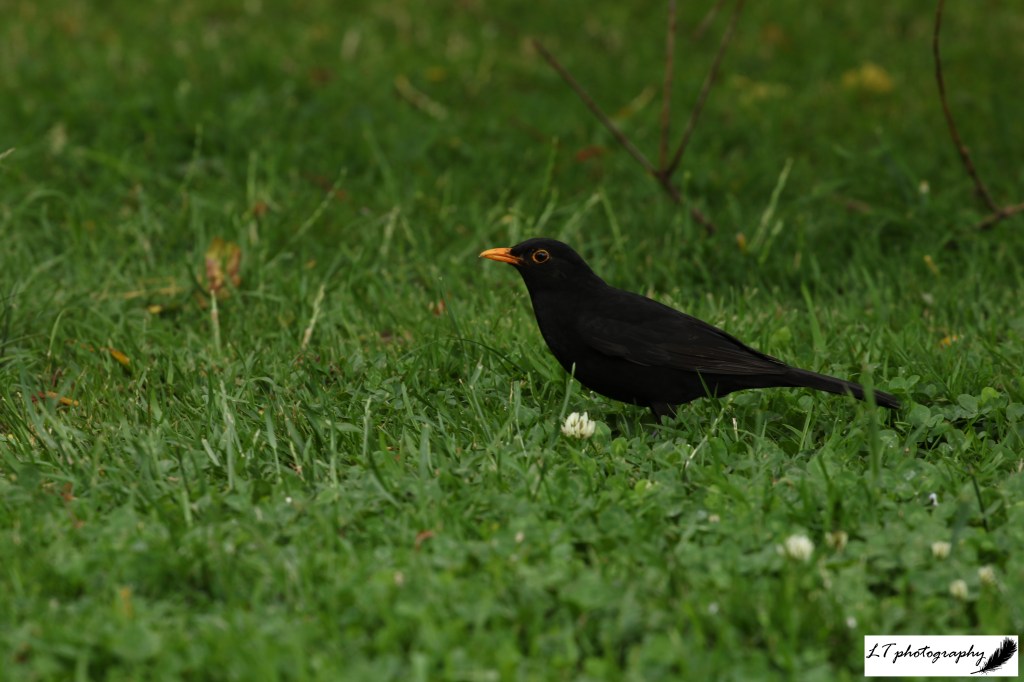
Common Blackbird (Turdus merula)

  • Length: 23.5 – 29cm
  • Weight: 80 – 125g
  • Colour: Adult males are all black with a yellow beak, whilst adult females are dark brown with a more dull beak. Young start as a speckled version of the female and change to adult feathers through moulting their feathers
  • What To Feed: Mealworms, fat balls, or sunflower hearts on the floor or in a ground feeder
  • Breeding Season: March to Late July
  • Nest: A round cup made of twigs, grass and other plant materials, close to the ground in adequate cover
  • UK Conservation status: Green

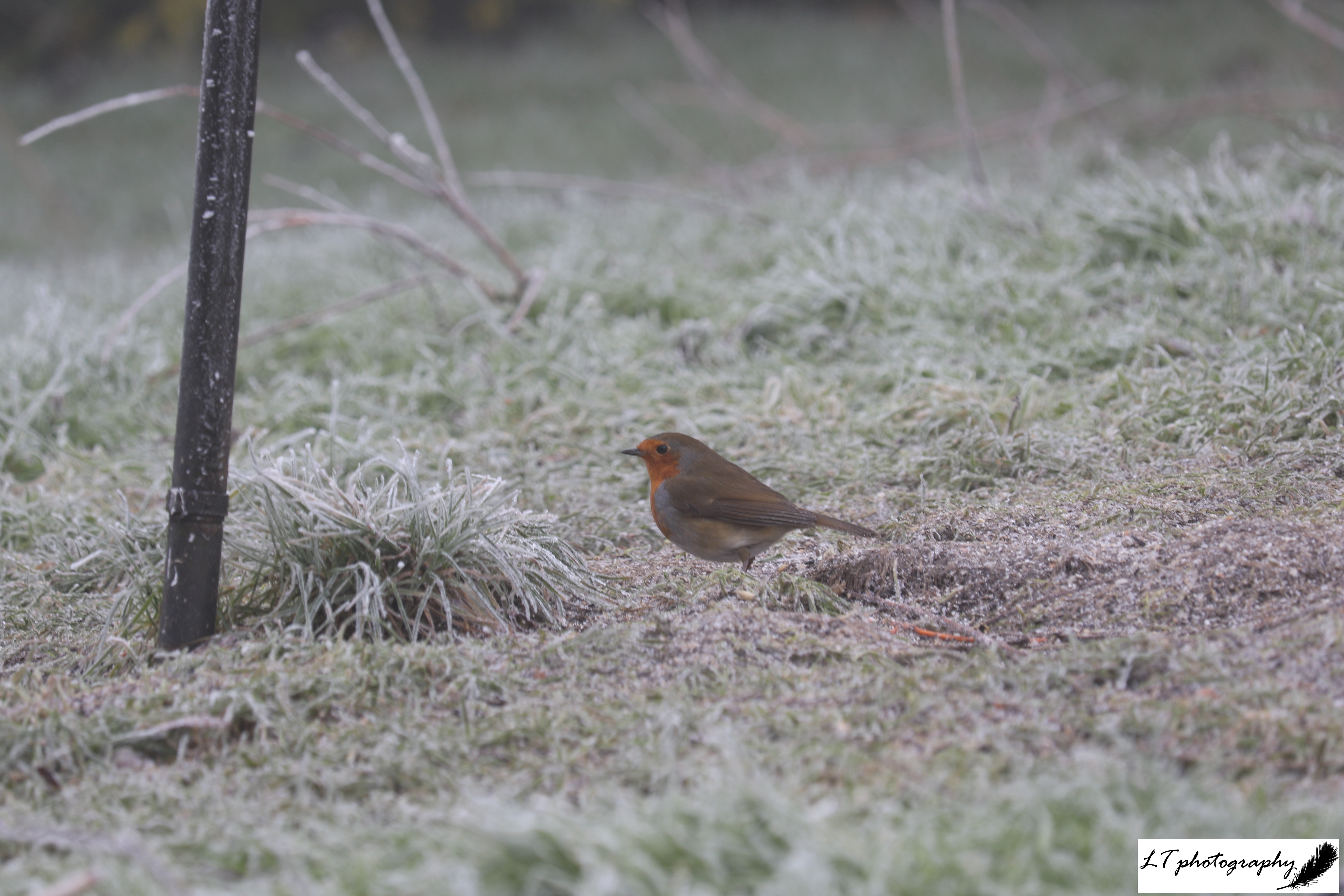
European Robin (Erithacus rubecula)

  • Length: 12.5 – 14cm
  • Weight: 13 – 21g
  • Colour: Adult males and females look the same, both brown with an orange-red breast and white underside. The young start a speckled brown
  • What To Feed: Mealworms, suet, or seeds on a ground feeder, bird table or bird feeder with platform
  • Breeding Season: March to mid-August
  • Nest: A round cup made of grass, moss and leaves and lined with hair and maybe feathers, usually tucked in a hole, crevice or behind something
  • UK Conservation Status: Green

House Sparrow (Passer domesticus)

  • Length: 14 – 16cm
  • Weight: 23 – 35g
  • Colour: Adult males have a grey crown and cheeks, chestnut sides to head, black bib, grey underparts, rufous-brown back, and white wing-bar. Adult females and young (until body moult) have buff-brown upperparts, underparts grey, brown cap and cream supercilium behind eye
  • What To Feed: Will eat a range food, including seeds and grains from feeders
  • Breeding Season: March to August
  • Nest: In cavities, where dried plant material is stuffed in to make an untidy sphere which is then lined with softer materials, such as feathers
  • UK Conservation Status: Red

Blue Tit (Cyanistes caeruleus)

  • Length: 13.5 – 15cm
  • Weight: 9 – 13.5g
  • Colour: Blue crown, wings and tail, white cheeks, black eye-stripe, underparts yellow, and greyish-black central belly stripe. Their young begin with more dull feathers and yellowish cheeks
  • What To Feed: Fat balls, suet, peanuts, or sunflower seeds from hanging feeders
  • Breeding Season: March to June
  • Nest: Built inside cavities and formed of a cup of plant material, such as moss, lined with soft materials, such as feathers, wool and fur
  • UK Conservation Status: Green

Great Tit (Parus major)

  • Length: 13.5 – 15cm
  • Weight: 14 – 22g
  • Colour: Black head with white cheeks, moss-green back, blue-grey wings and tails, yellow underparts and black central belly-band. Males have wider, more defined belly-band. Young begin more dull and with yellowish cheeks
  • What To Feed: Suet, fat balls, peanuts, or sunflower seeds in hanging feeders
  • Breeding Season: March to July
  • Nest: Built inside cavities, formed of a cup of twigs, roots, moss, lichen and/or grasses, and lined with soft materials, such as hair or plant material
  • UK Conservation Status: Green

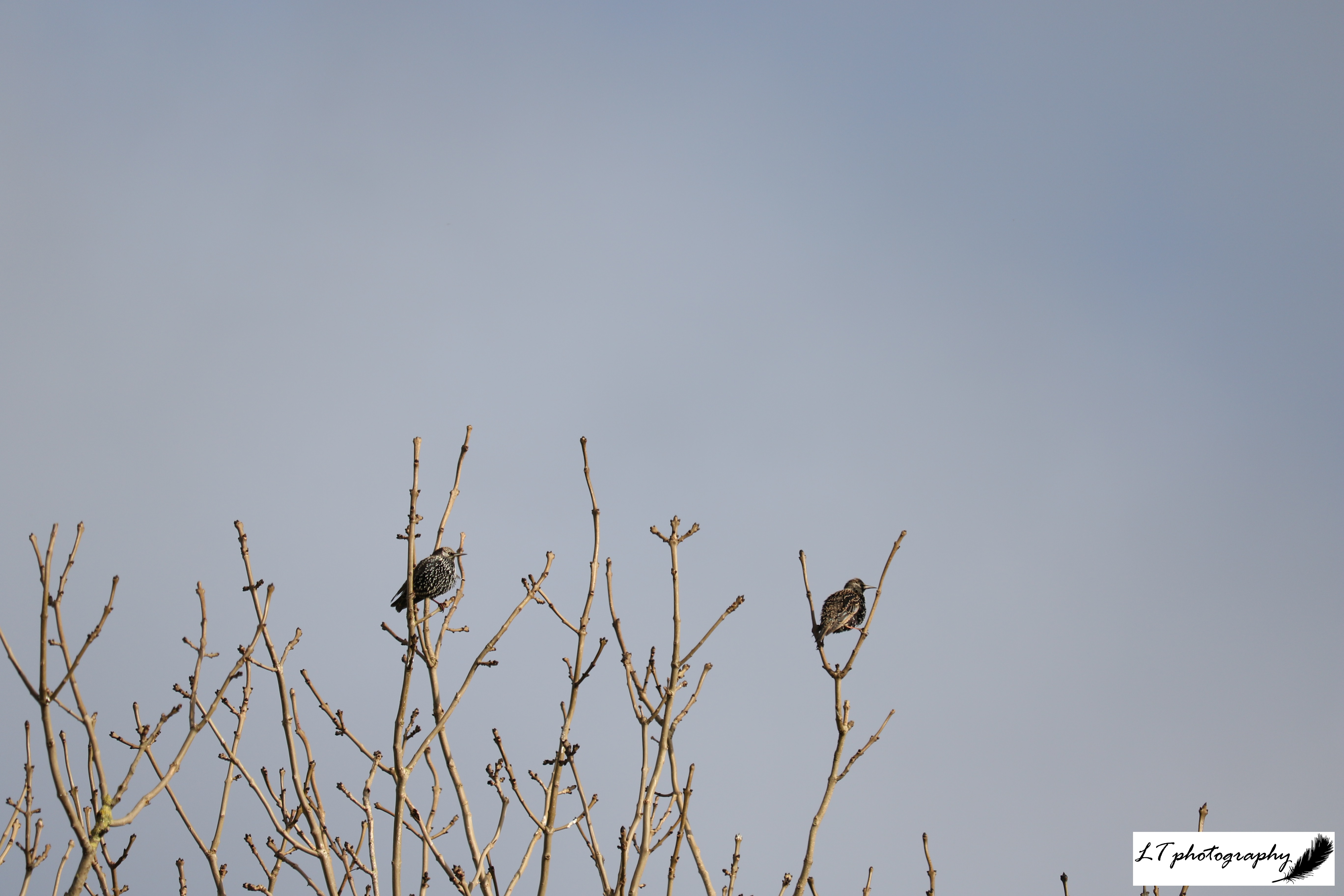
Starling (Sturnus vulgaris)

  • Length: 19 – 22cm
  • Weight: 60 – 97g
  • Colour: Black bird with long-pointed yellow bill, white spots dotted through plumage, a green-purple sheen to the feathers and pale pink legs. The young start with grey-brown feathers and change with body moult
  • What To Feed: Suet, peanuts or sunflower hearts in hanging and ground feeders
  • Breeding Season: March-July
  • Nest: In holes and cavities in trees and buildings, made up of a messy depression of plant stems, grass, and moss, and often lined with feathers or wool
  • UK Conservation Status: Red

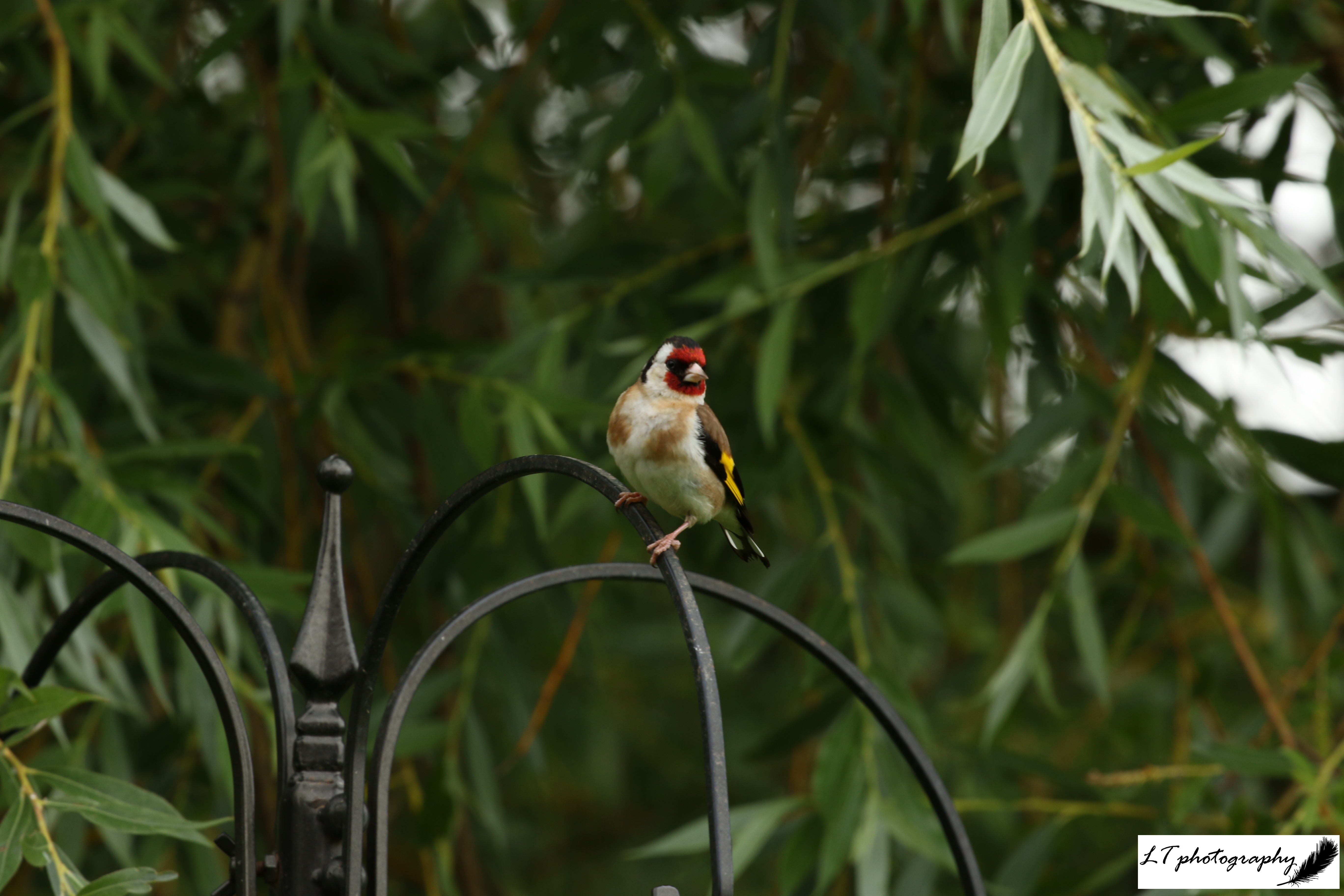
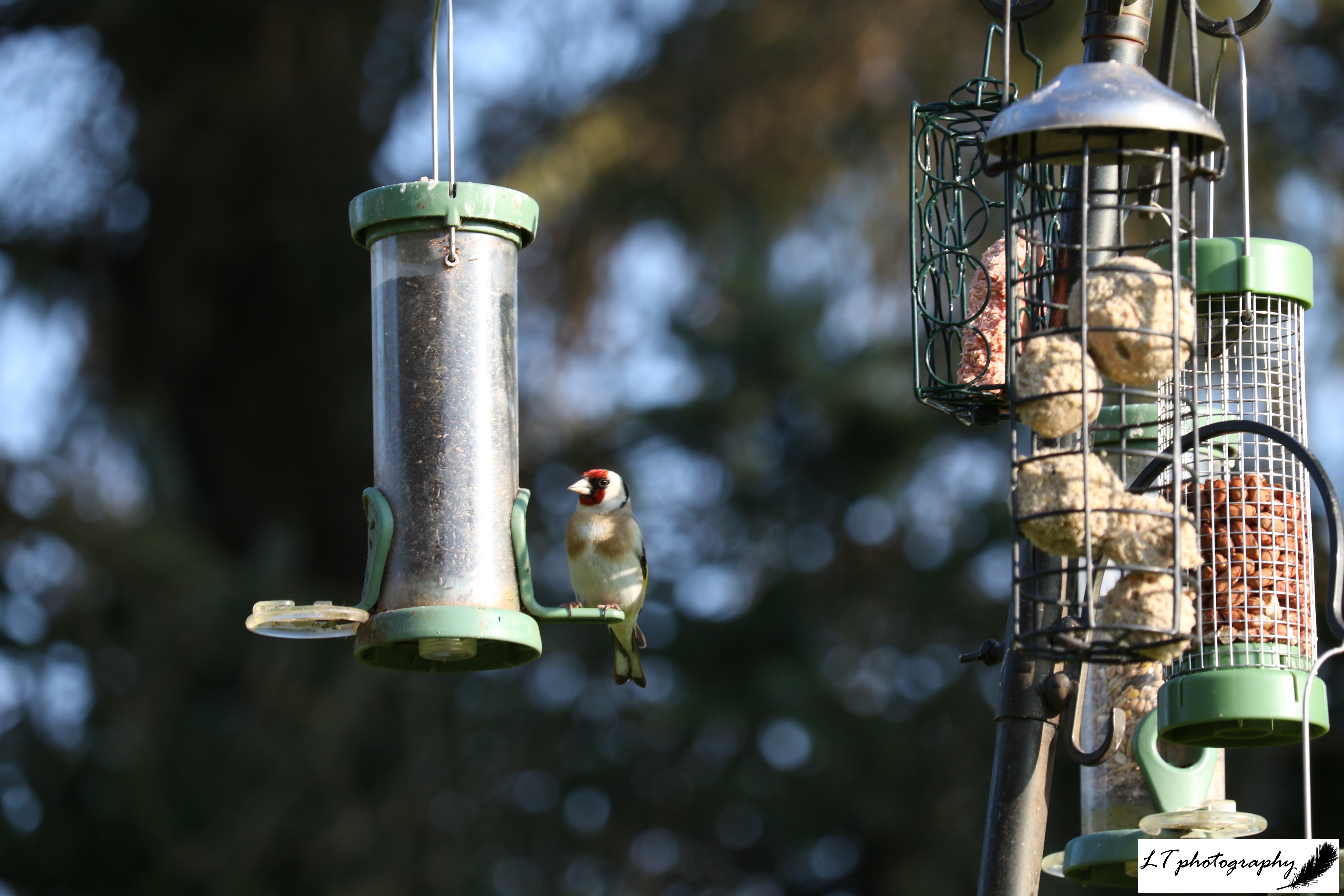
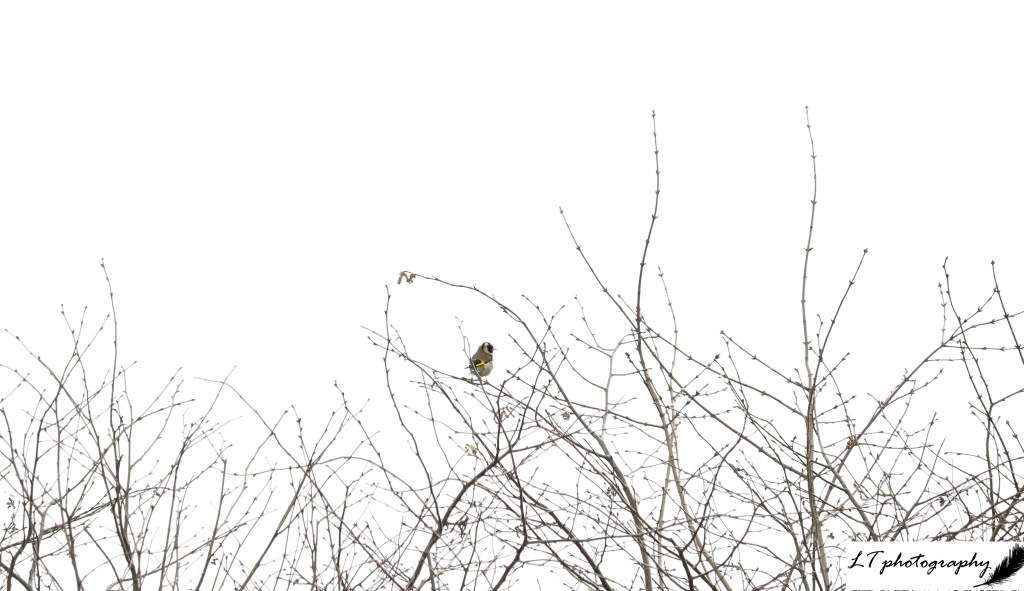
Goldfinch (Carduelis carduelis)

  • Length: 12 – 13.5cm
  • Weight: 13 – 20g
  • Colour: Adults have a black and white head with red face, brown back, black wings with yellow bar, and black tail with white spots. Young lack colourful head until body moult
  • What To Feed: Sunflower hearts, niger seeds or mixed seed in hanging feeders
  • Breeding Season: April to August
  • Nest: A neat cup made of moss, grass, wool, and hair, relatively far off of the ground in tight tree branches, hedges or shrubs
  • UK Conservation Status: Green

Chaffinch (Fringilla coelebs)

  • Length: 14 – 16cm
  • Weight: 17.5 – 29g
  • Colour: Adult males have pinky-red cheeks and breast, and blue-grey crown and neck, whereas adult females and young lack the colourful head and instead have a grey-green one. All have a distinct pale rump and double white wing bars
  • What To Feed: Peanuts, sunflower seeds, seed mixes, or suet in hanging or ground feeders
  • Breeding Season: April to June
  • Nest: Deep cup of lichens, grass, roots and feathers, lined with plant down, feathers or wool, usually in the fork of a tree, shrub or hedgerow
  • UK Conservation Status: Green

Collared Dove (Streptopelia decaocto)

  • Length: 29 – 33cm
  • Weight: 168 – 249g
  • Colour: Pale pinky-grey-brown feathers, black neck collar, dark eye, grey underparts, and reddish feet
  • What To Feed: Small seeds from ground feeders or bird tables
  • Breeding Season: March to September
  • Nest: Sparse platform of twigs and leaves in trees or high up in buildings
  • UK Conservation Status: Green

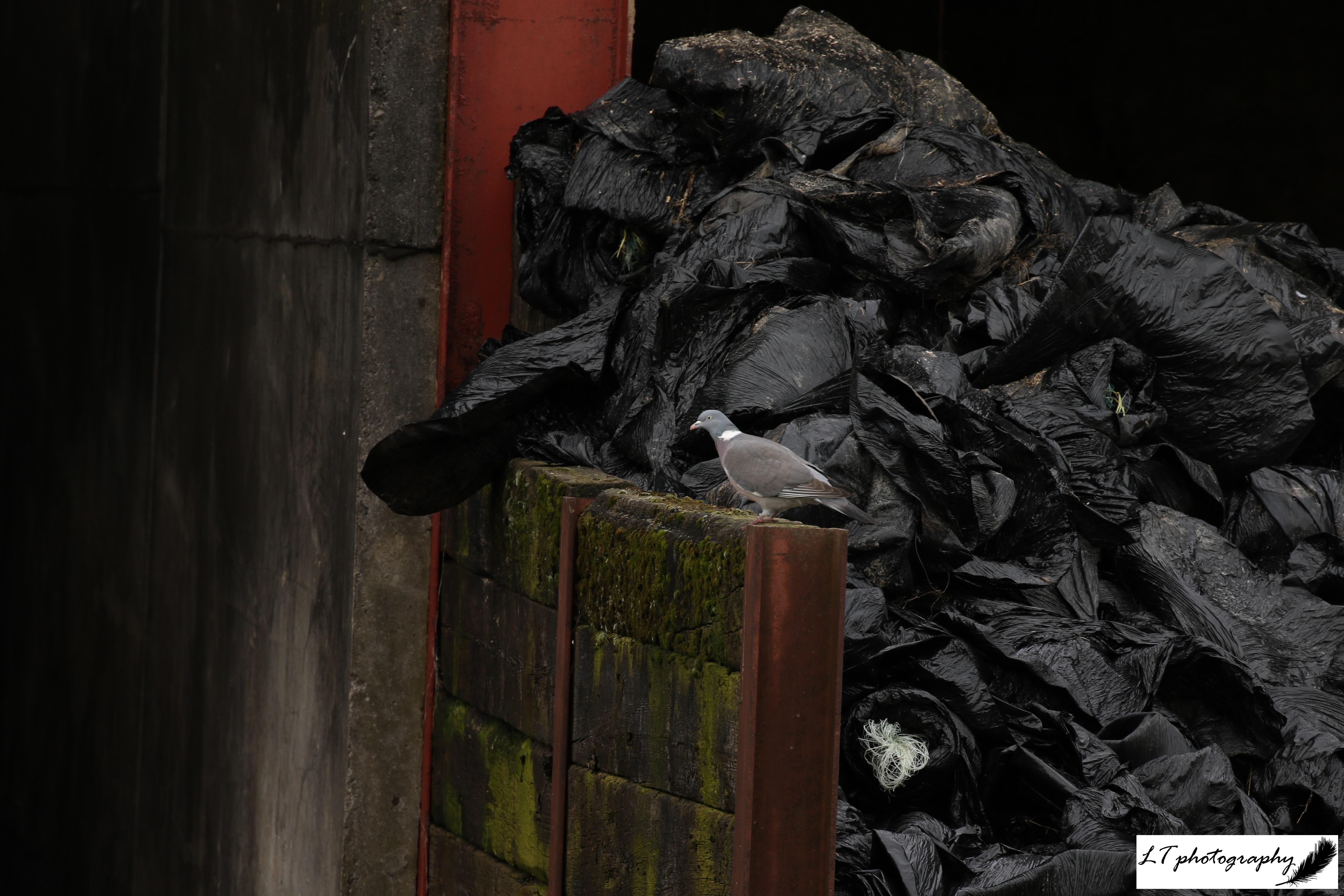
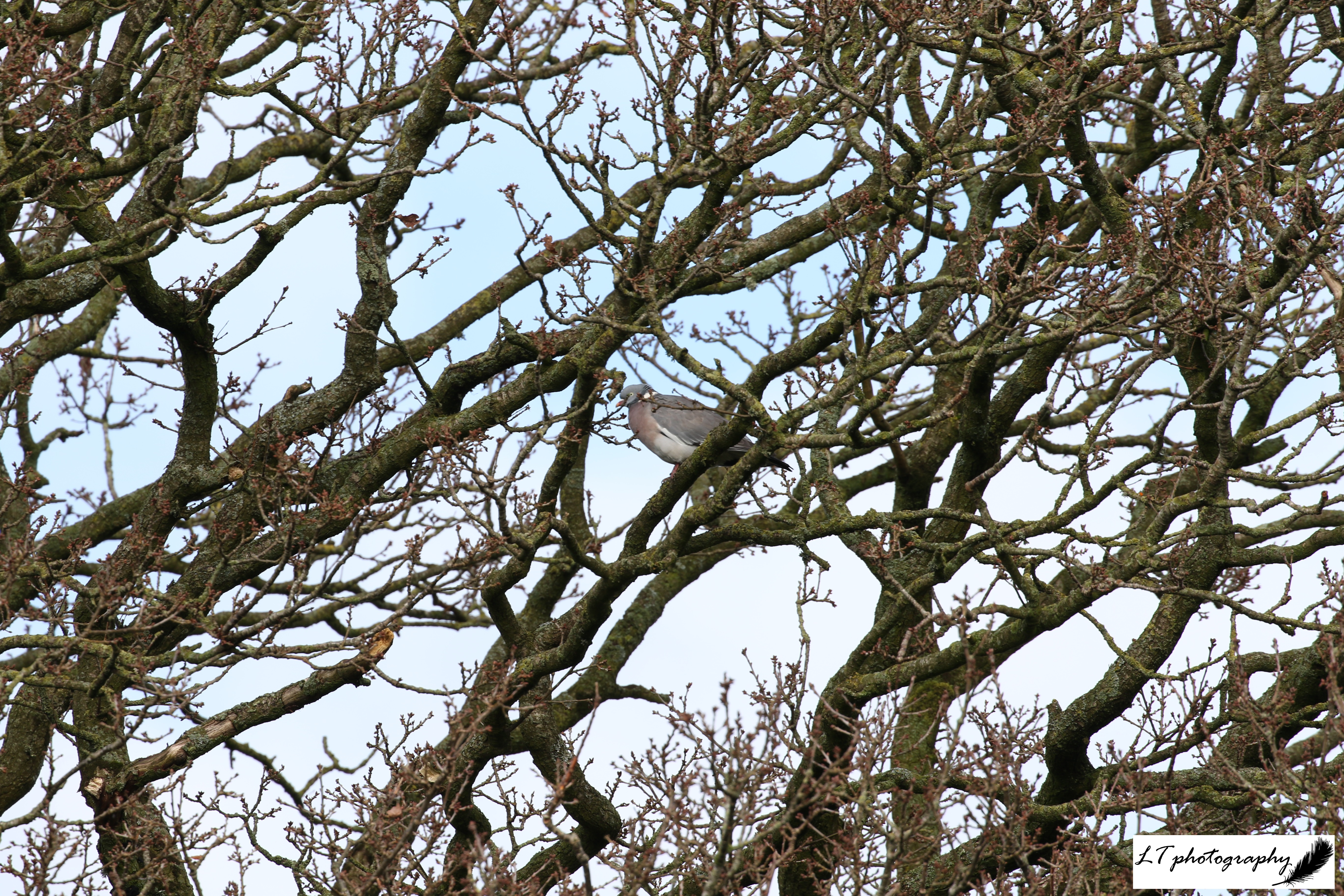
Woodpigeon (Columba palumbus)

  • Length: 38 – 43cm
  • Weight: 325 – 620g
  • Colour: Grey-blue head and back, pinky-red belly, large white patch on neck, sides of neck iridescent purple and green, white wing patches and pink legs. Young are pale with no neck patch.
  • What To Feed: Only British herbivorous bird. Feed seeds on a bird table, ground feeder or the ground
  • Breeding Season: February to November
  • Nest: Simple platform constructed from sticks in trees, shrubs, vegetation or ledges
  • UK Conservation Status: Amber