How to… Make the Most of Autumn’s Bounty

Leaves rustling beneath my feet, golden, russet, auburn. Crisp, dewy mornings, adorned with misty tendrils and spider’s webs. Hedgerows hung with bright berries, and woodlands dotted with fantastical fungi. Cosy nights in, whilst the night comes alive with Tawnys and foraging mammals. Lazily buzzing insects, murmurations, Red Kites soaring, waders and wildfowl, and endless wonder.
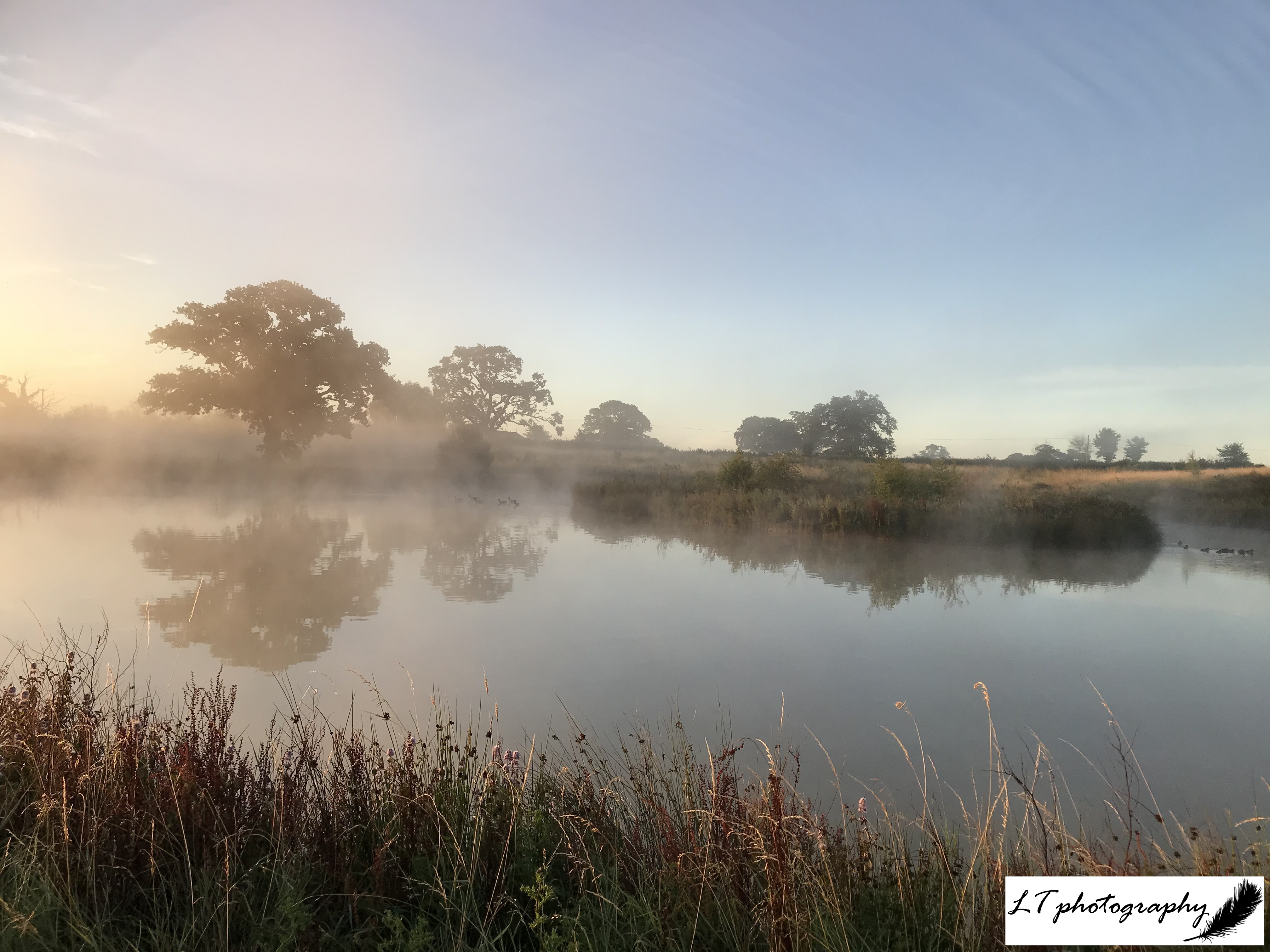
Autumn means different things to different people, but it is deep rooted in the natural world around us. A season of reflection and change, it is the favourite season of many. Some people celebrate turning a new leaf, some the drop in temperature and cosiness that comes with it, some the festivities, and others celebrate the little things, from migrating birds to reconnecting with nature. To all though, it is a bountiful season, marked with plentiful food and the first whispers of winter.

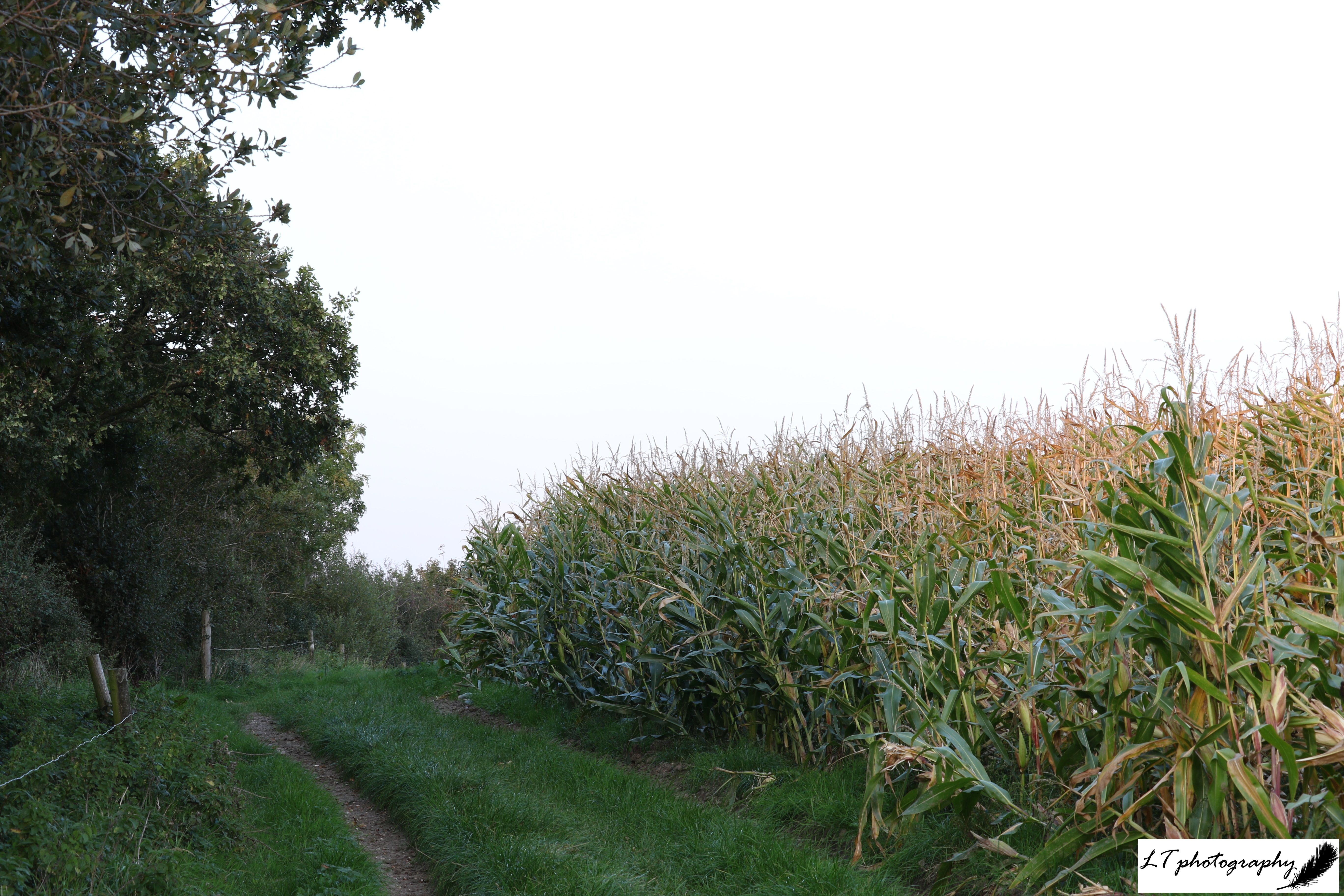
Historically, autumn is associated with harvest time and bringing in the food of the land before winter. From corn dolls to harvest festivals, autumn is symbolic in British tradition and culture. It has been inspiration for poets and writers alike including Keats (‘Season of mists and mellow fruitfulness’) and Jane Austen (‘the thousand poetical descriptions extant of autumn’). It is an important time of year to check in with the status of wildlife, whilst also being a time of spiritual significance for many.
As temperatures begin to drop and the leaves begin to change, it is time for us all to get out there, watch amazing sunrises and sunsets, forage for food, and stay connected with mother nature. With autumn being deep rooted in what lays outside our doors, here’s a guide to just some of the important species flourishing in autumn.
Autumn Species

Unless you are 100% sure of what something is and if it is edible, then do not eat it! Also, harvest only what you need and leave the rest for wildlife!

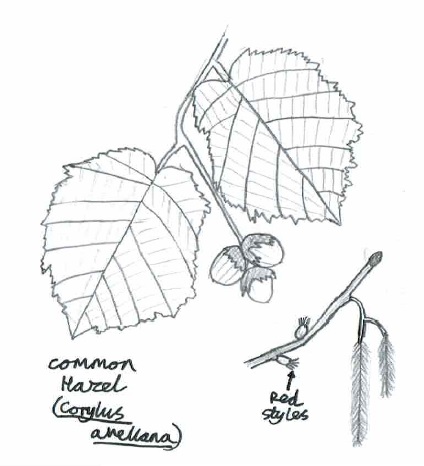
Hazel (Corylus avellana)

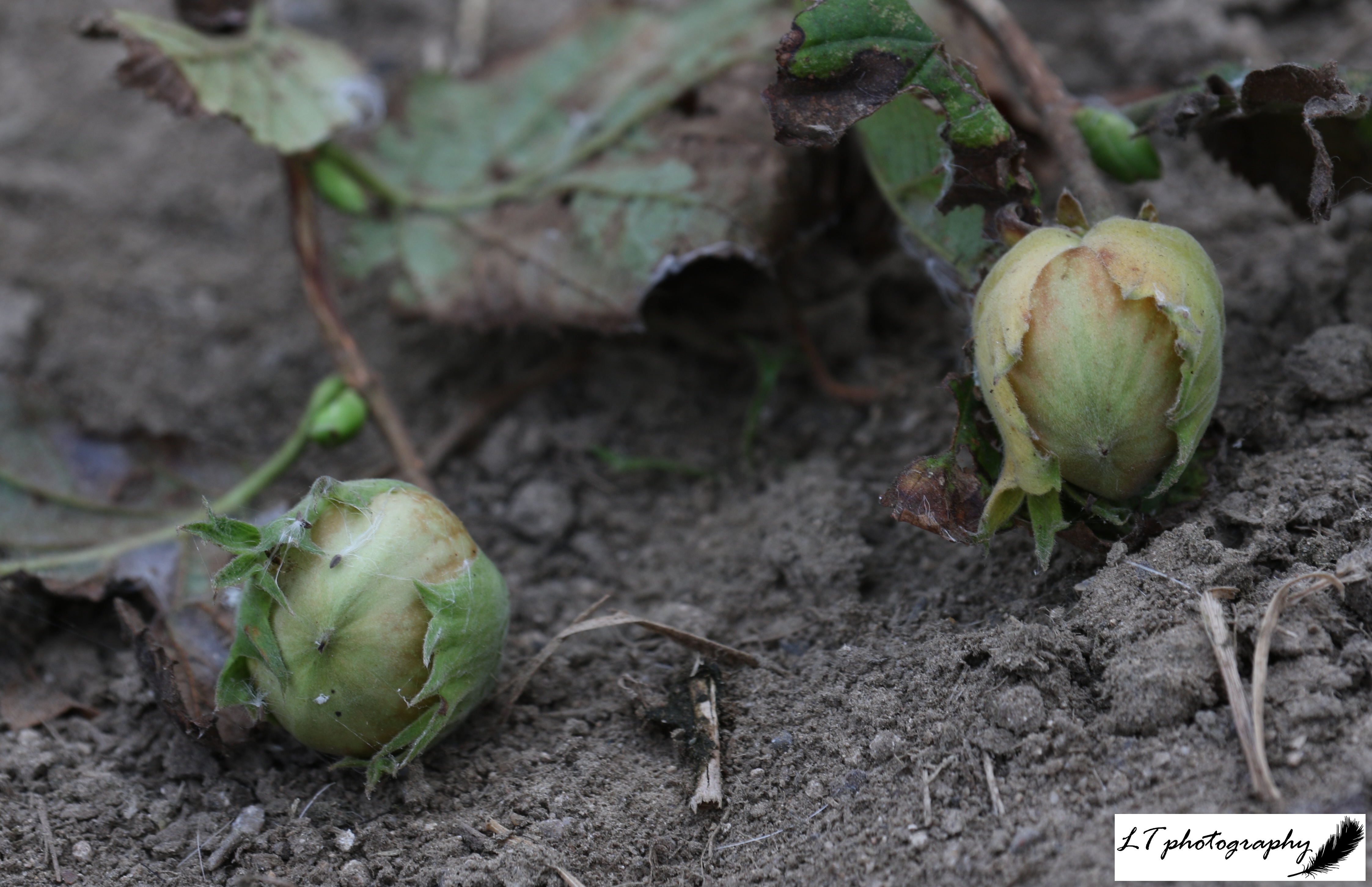
  • Fruit: The popular hazelnut, an edible nut that begins with a thick-green husk, before ripening to a brown in autumn
  • For Wildlife: A favourite food of Grey Squirrels, Dormice and Wood Mice, amongst other species, often being cached for winter
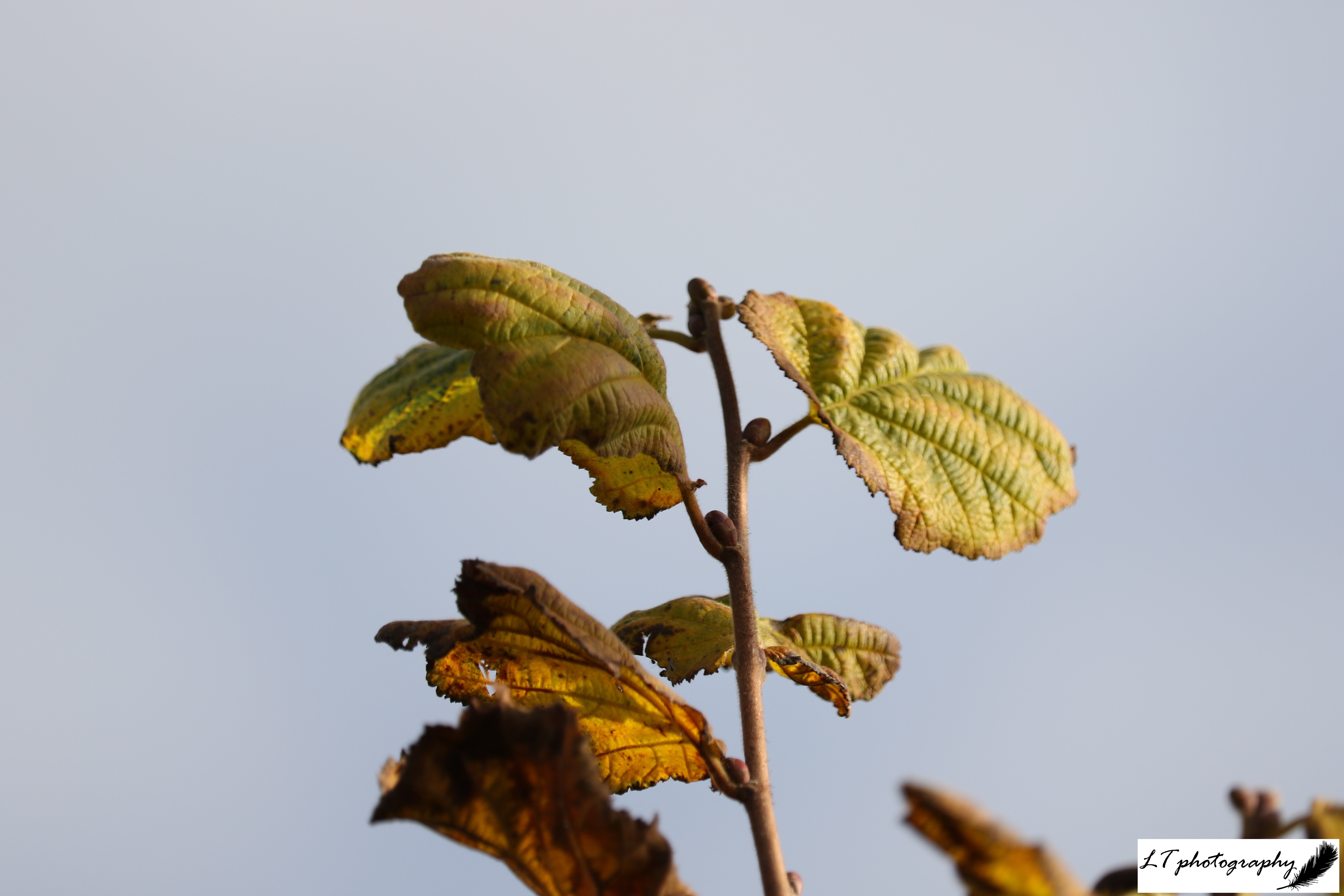
  • How to Identify: Circular-shaped leaves with toothed edges and tapering to a point; coppery brown smooth to peeling bark; lemon-yellow catkins and tiny red bud-like flowers in spring
  • Autumn Facts: Until the First World War, Holy Cross Day on the 14th September was traditionally a school holiday, where children would go nut gathering
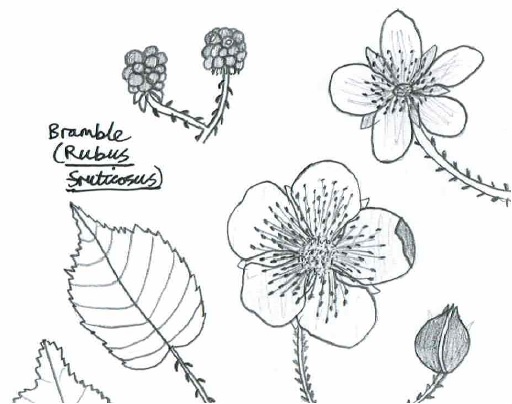
Bramble (Rubus fruticosus)
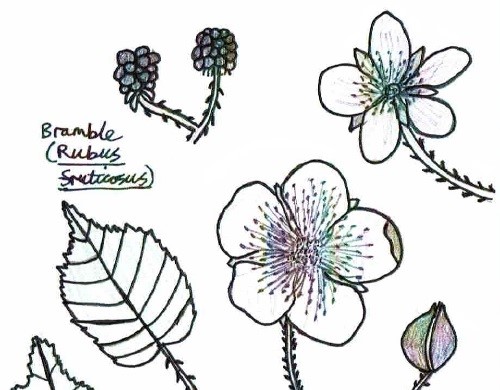
  • Fruit: The familiar edible blackberry that begins green, then turns red, before ripening to purple-black in autumn. Blackberry picking is a favourite part of autumn for many!
  • For Wildlife: The berries are a valuable food source for mammals, such as badgers, and small birds, such as Blackcaps
  • How to Identify: Oval-shaped leaves with toothed edges and tapering to a point; prickly and half-evergreen stems; white or pink flowers from spring onwards
  • Autumn Facts: Folklore in Britain dictates that blackberries should not be picked after Old Michaelmas Day (11th October), as the Devil has by then made them unfit to eat

Recipe:

Hawthorn (Crataegus monogyna)
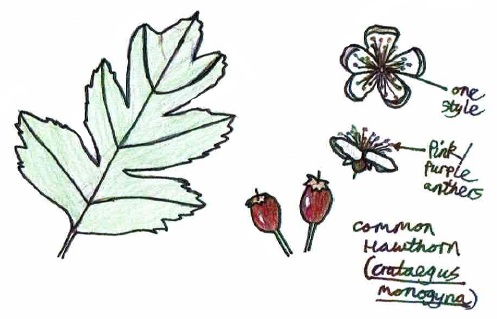
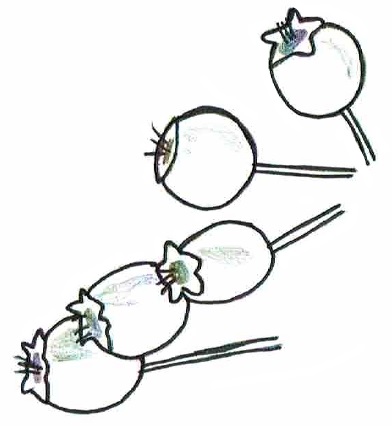
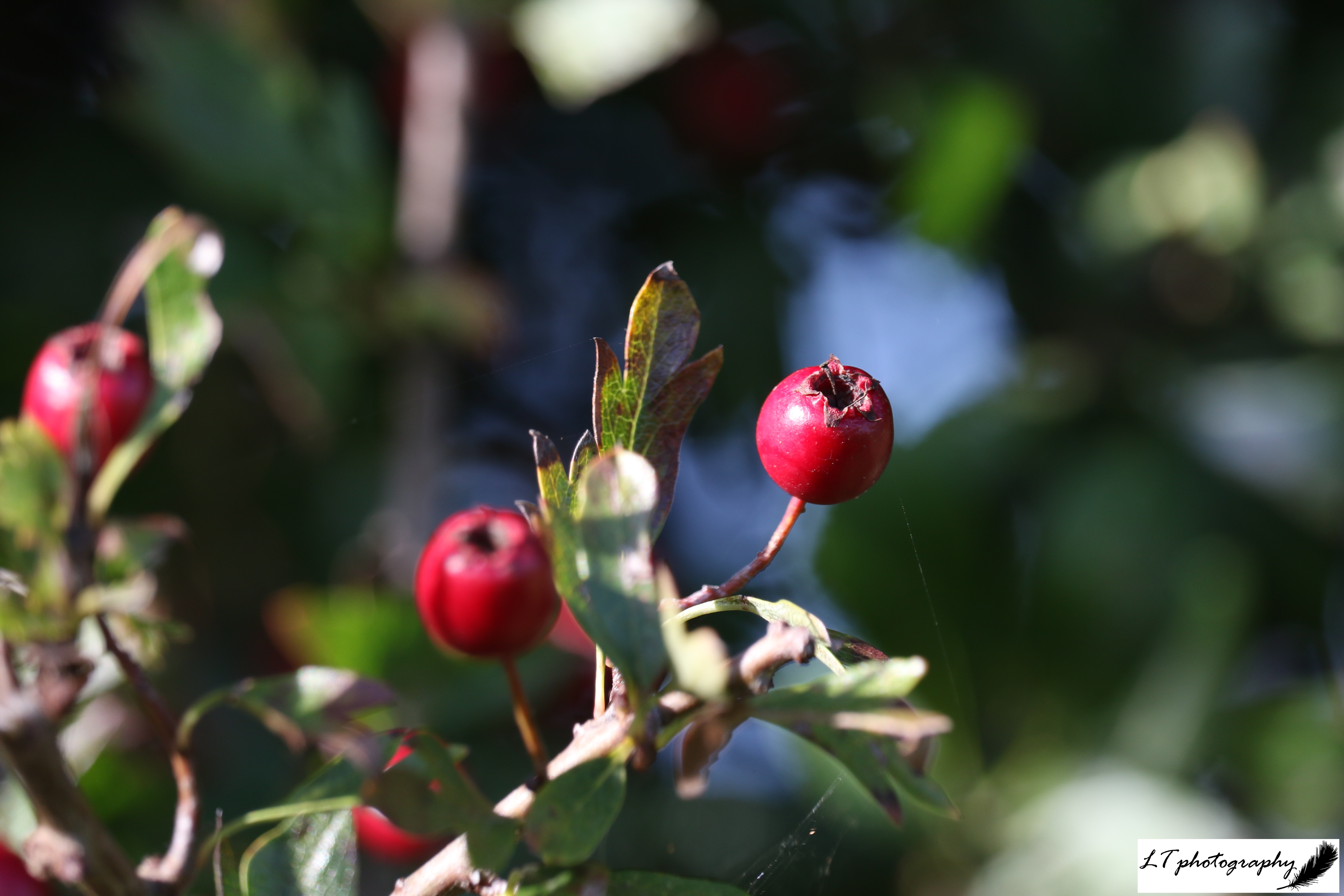
  • Fruit: Hawthorn berries, sometimes known as haws, are edible but their single seed is toxic to humans. They ripen to a bright red, is likened to over-ripe apples in taste, and are used to make jams, jellies and wines
  • For Wildlife: Important source of food during autumn and winter for small mammals and birds, including Blackbirds and Redwings
  • How to Identify: Shiny leaves that are oval-shaped with deeply cut lobes; thorny stems and twigs; white fragant flowers with 5 petals fading to pink
  • Autumn Facts: One of the main uses of Hawthorn is to treat high blood pressure, widening blood vessels and increasing blood flow 

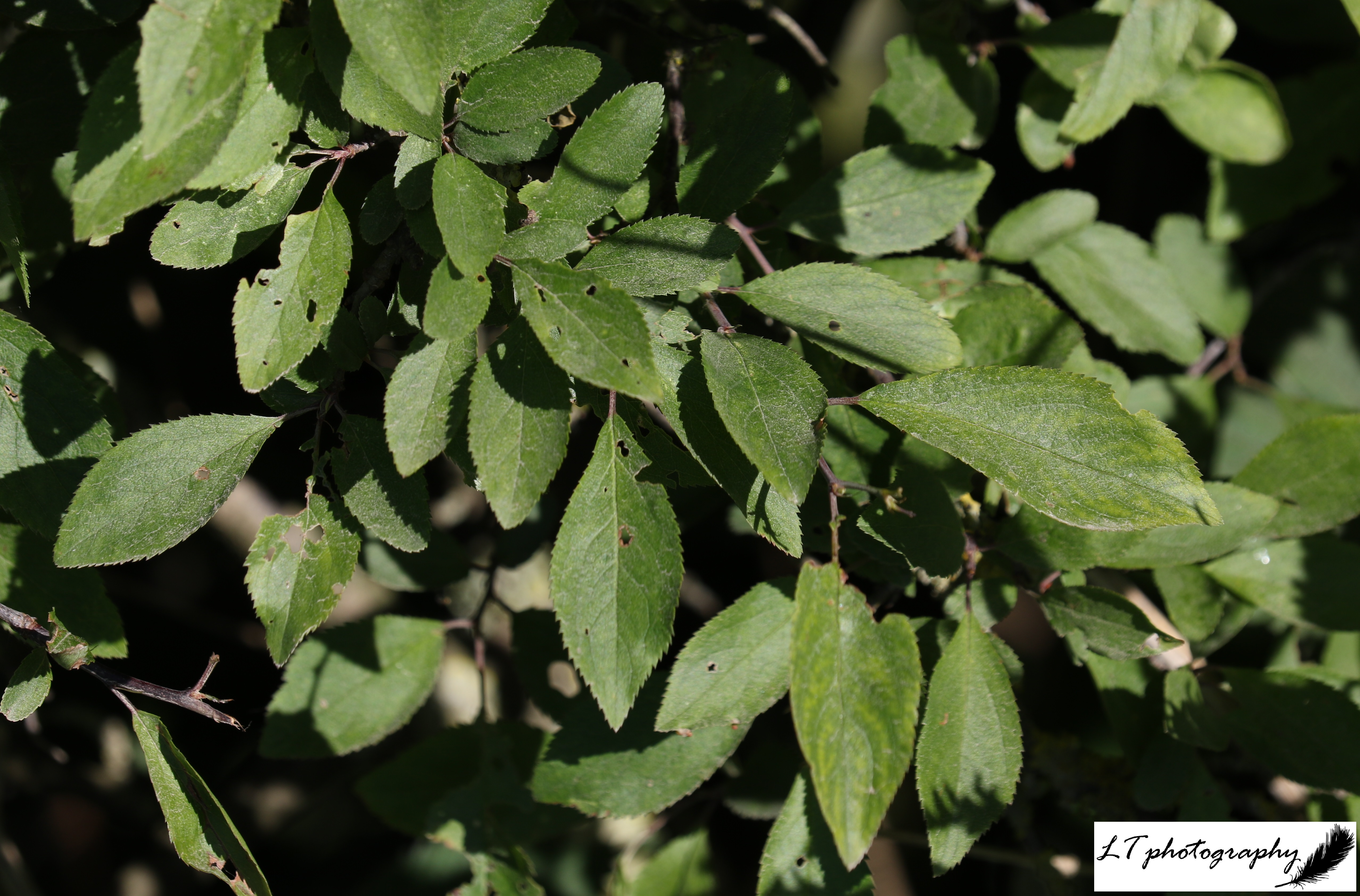
Blackthorn (Prunus spinosa)

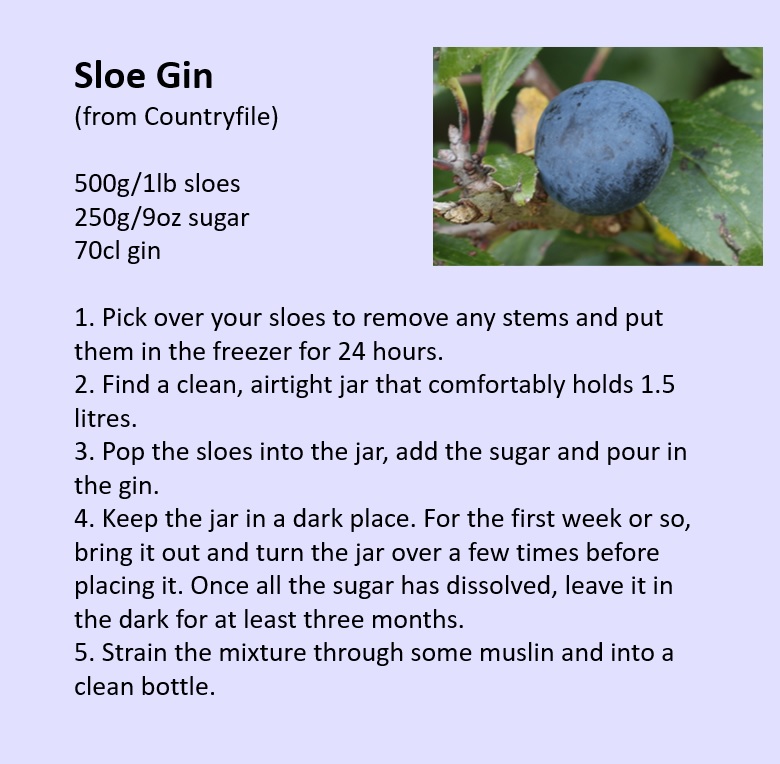
  • Fruit: Produces edible, but tongue-numbing, sloes which are small blackish plums with a bluish powdery surface. Popular to flavour gin!
  • For Wildlife: A feast for birds in autumn and winter that help to disperse the plant’s seeds
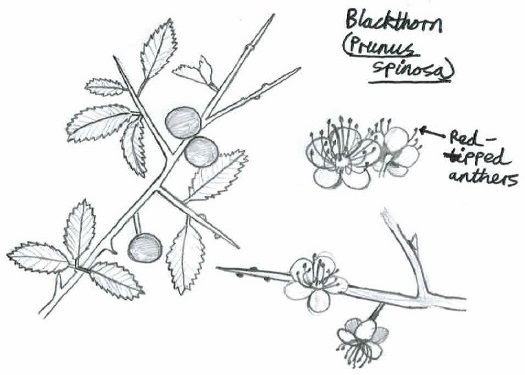
  • How to identify: Oval-shaped leaves with toothed edges and tapering to a point; blackish, thorny stems and twigs; snow-white and 5-petalled flowers with red-tipped anthers in the centre
  • Autumn Facts: Sloes are rich in vitamin C and have been used to treat stomach disorders, blood purification, teeth whitening, and even gum problems

Recipe:
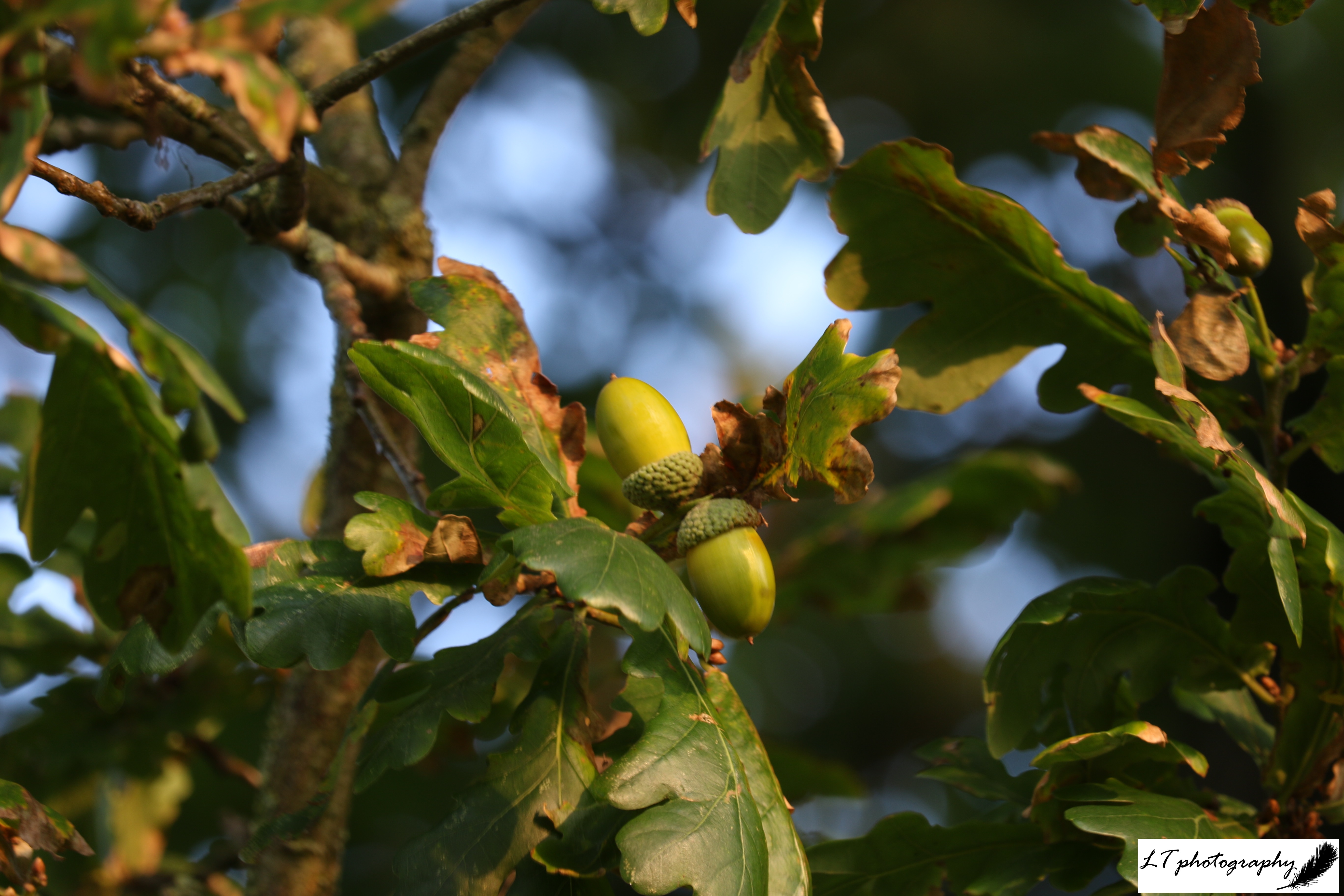
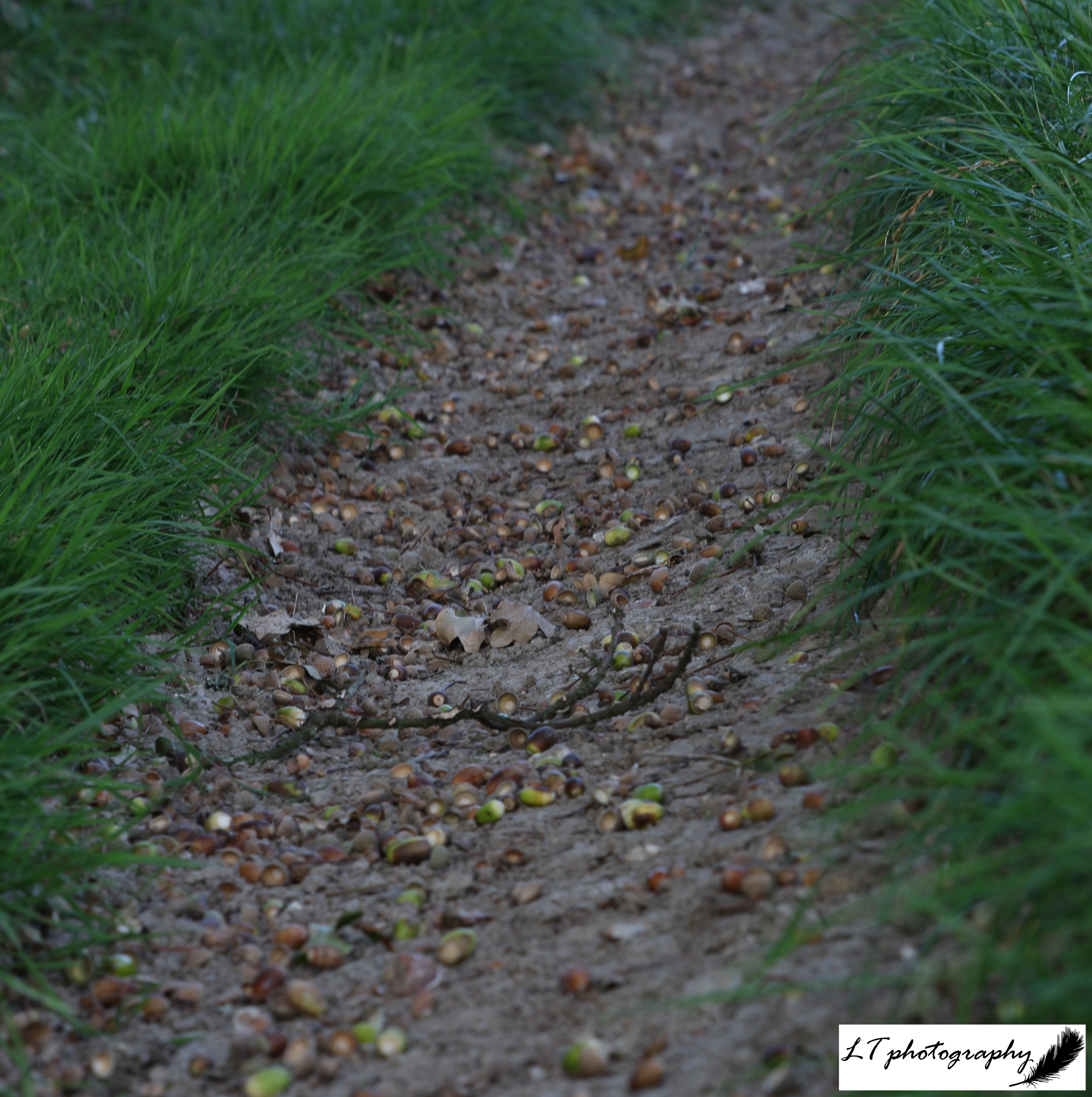
Pedunculate Oak (Quercus robur)
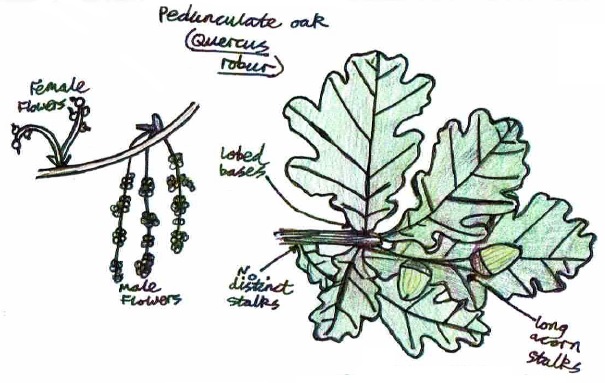
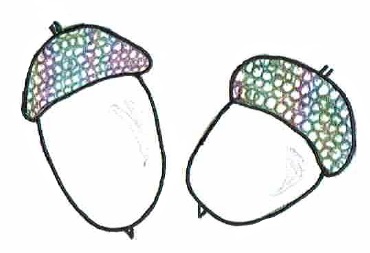
  • Fruit: Produces the familiar acorn, with scaly cups and clusters carried on long stalks. Contain tannins that are toxic and bitter to humans, but can be leached out to make edible
  • For Wildlife: An important rich source of food for species such as Jays, Mice, Squirrels and Badgers, often being cached for winter
  • How to Identify: Large, oblong leaves, broader at the base and lobed, turning brown in autumn; massive rugged grey-brown trunk and broad crown; yellow-green catkins in spring
  • Autumn Facts: The most important texts in British history, such as the Magna Carta, were written in Oak gall ink
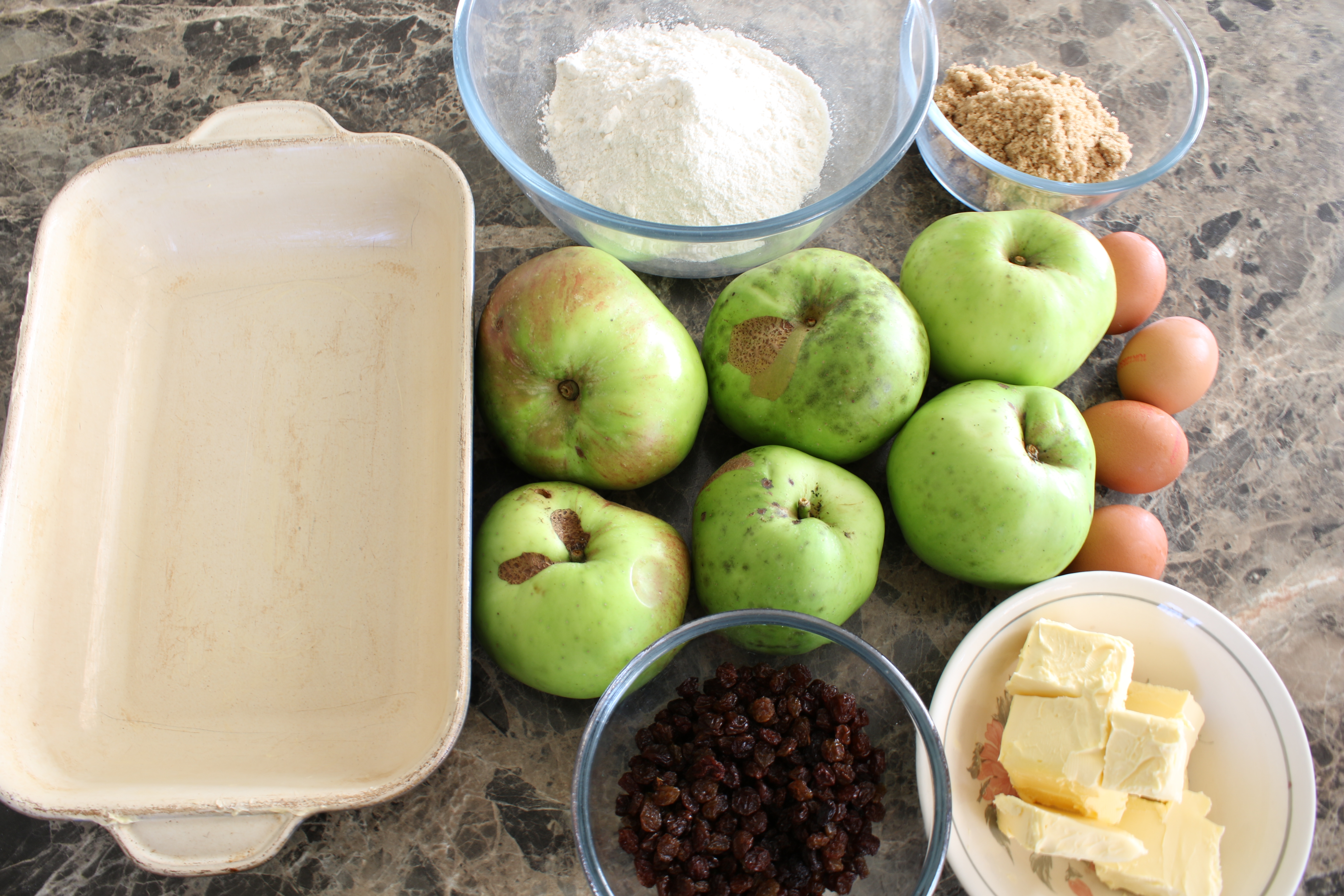
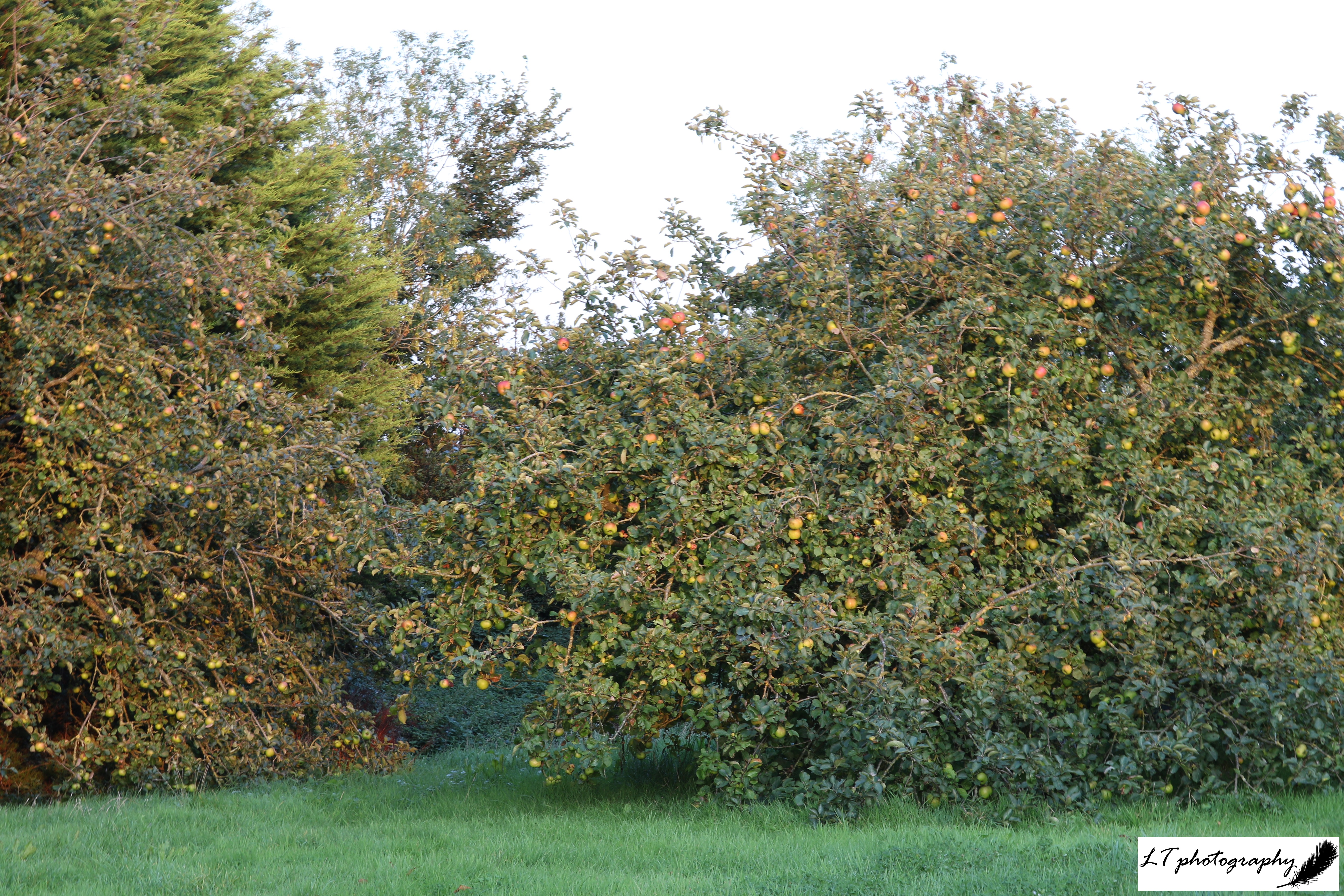
Apple (Malus domestica)
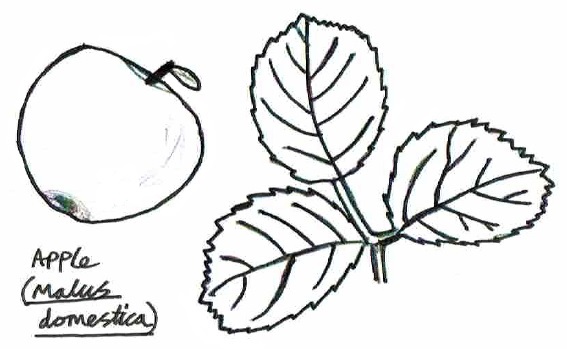
  • Fruit: Though not native to the UK, domestic Apple trees produce the popular apple which is now cultivated across the globe
  • For Wildlife: Apples are not just for humans, being a popular food source for wildlife too. Birds, such as Thrushes, and mammals, such as Badgers, feast on the fallen and ripening fruit
  • How to Identify: Dark green and typically oval-shaped leaves with toothed edges, and hair underneath; flowers are five-petalled and pink to white in colour
  • Autumn Facts: Most apples are still picked by hand and the world’s top apple producers are China, United States, Turkey, Poland and Italy
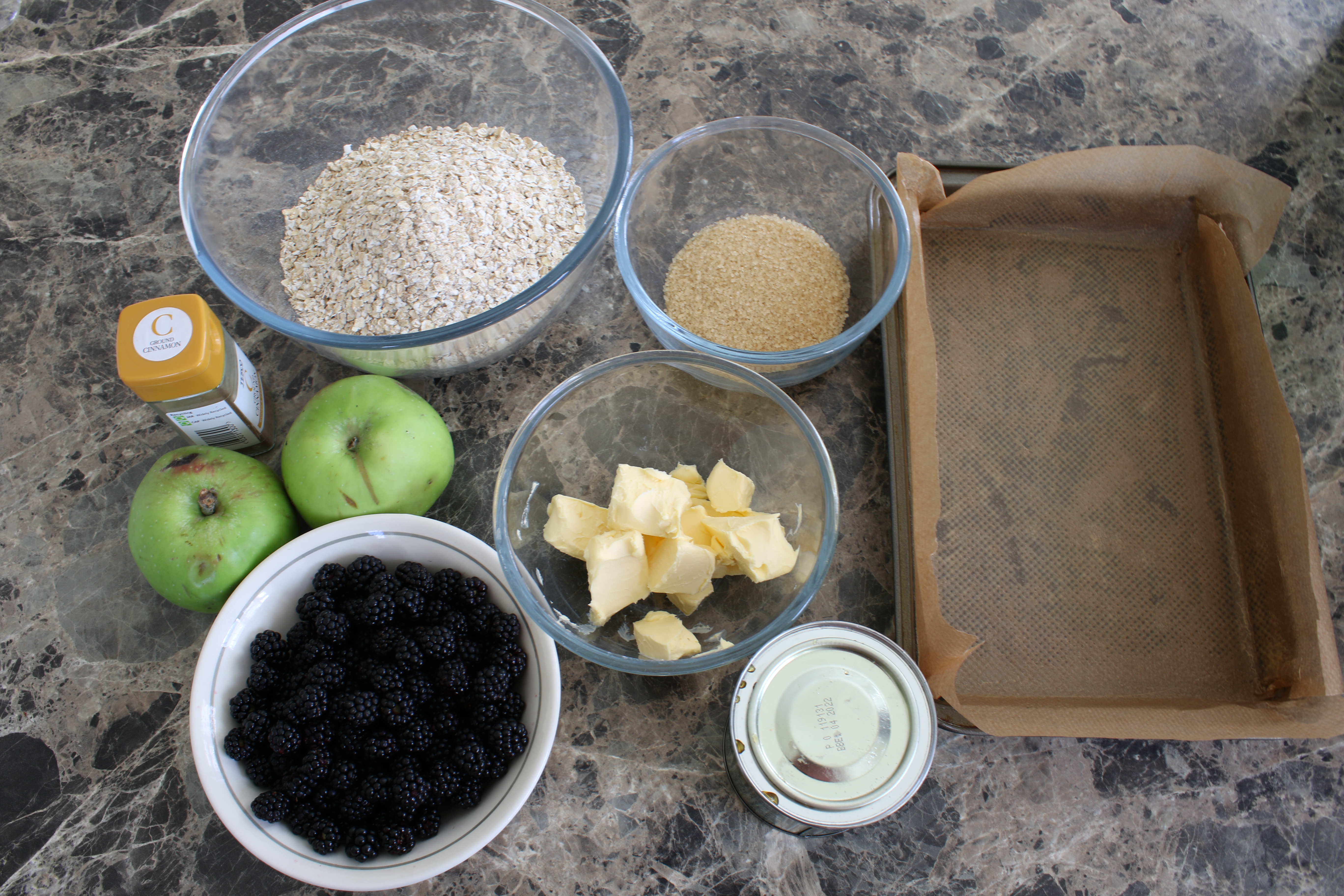
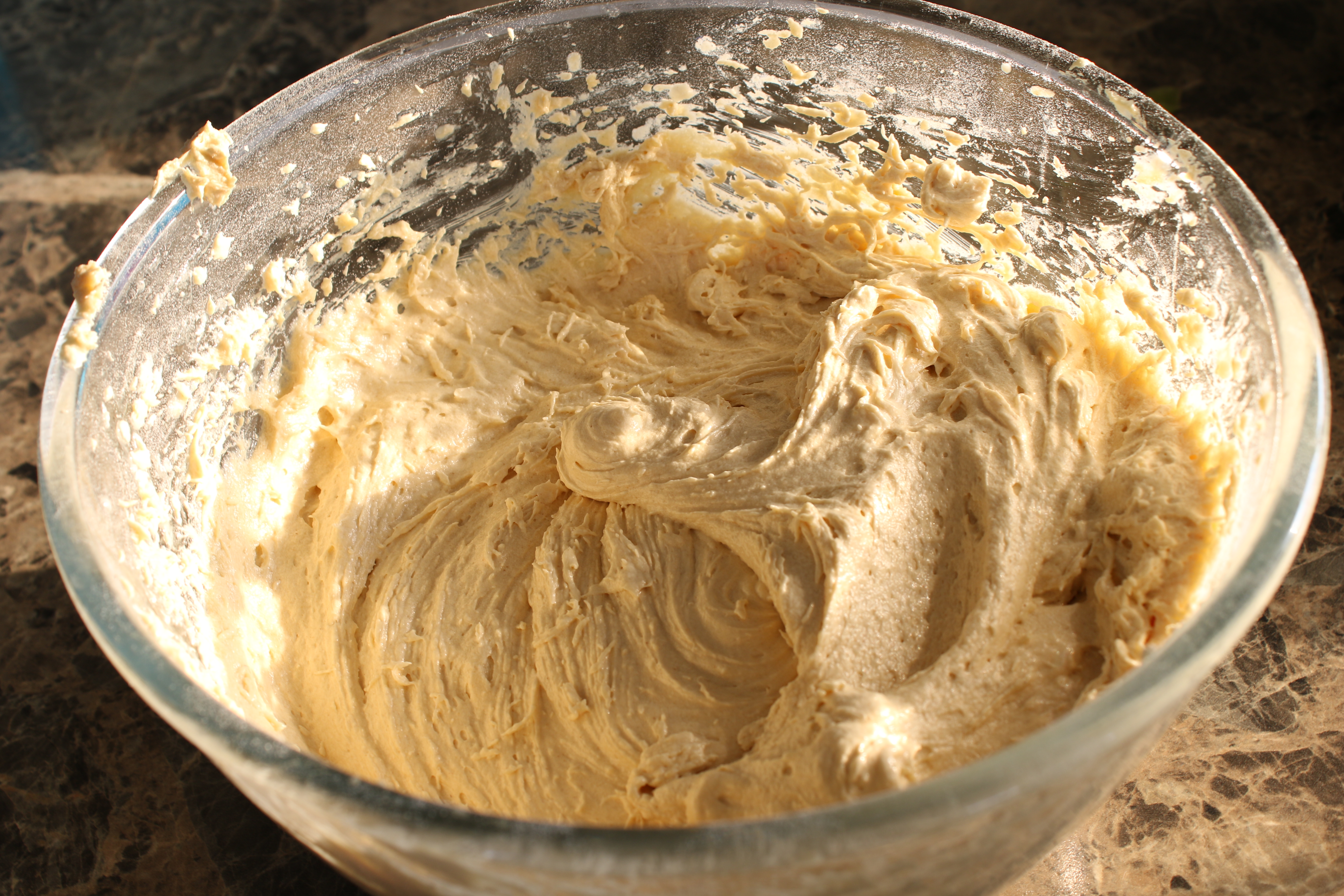
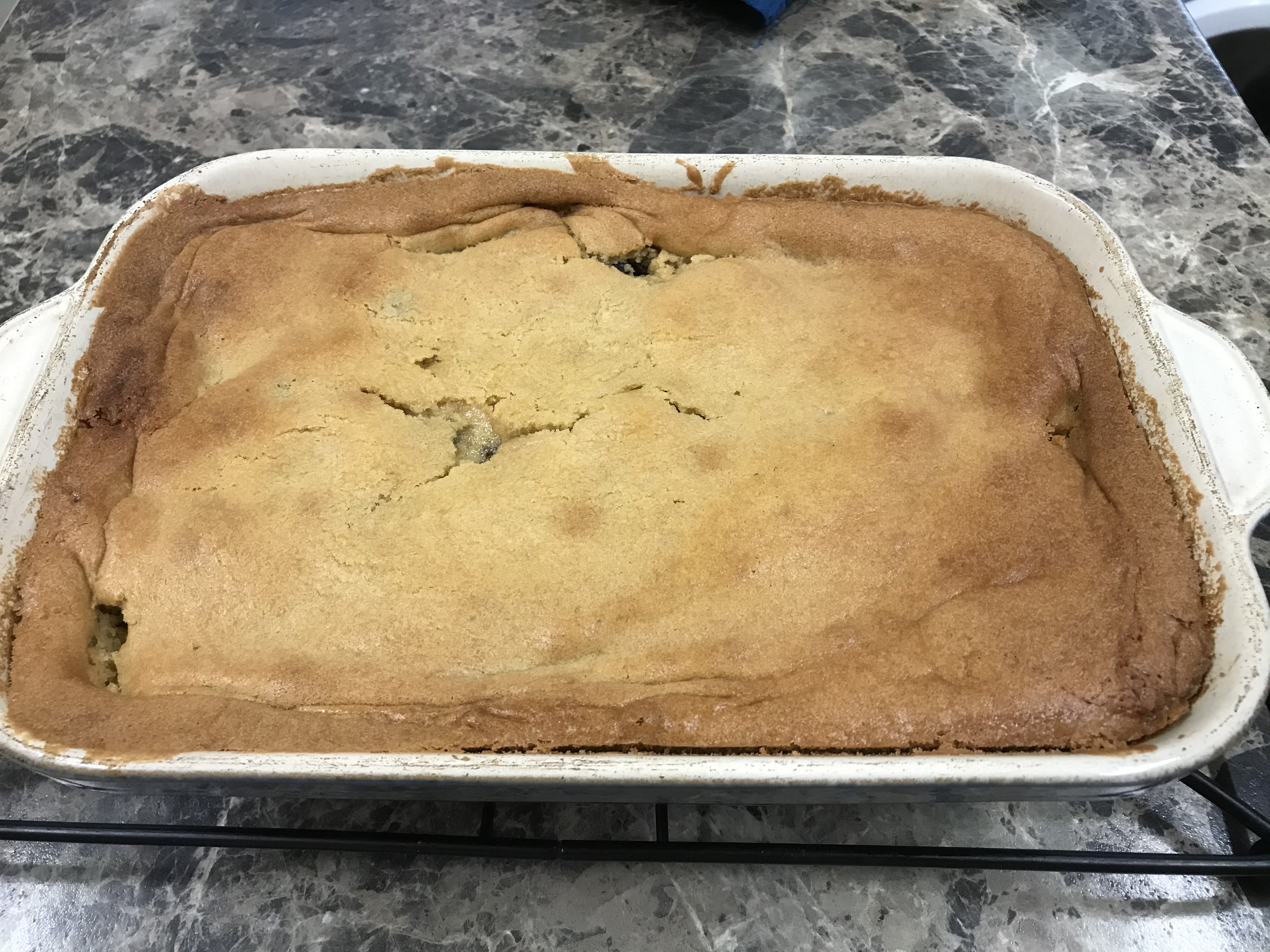
Recipe:

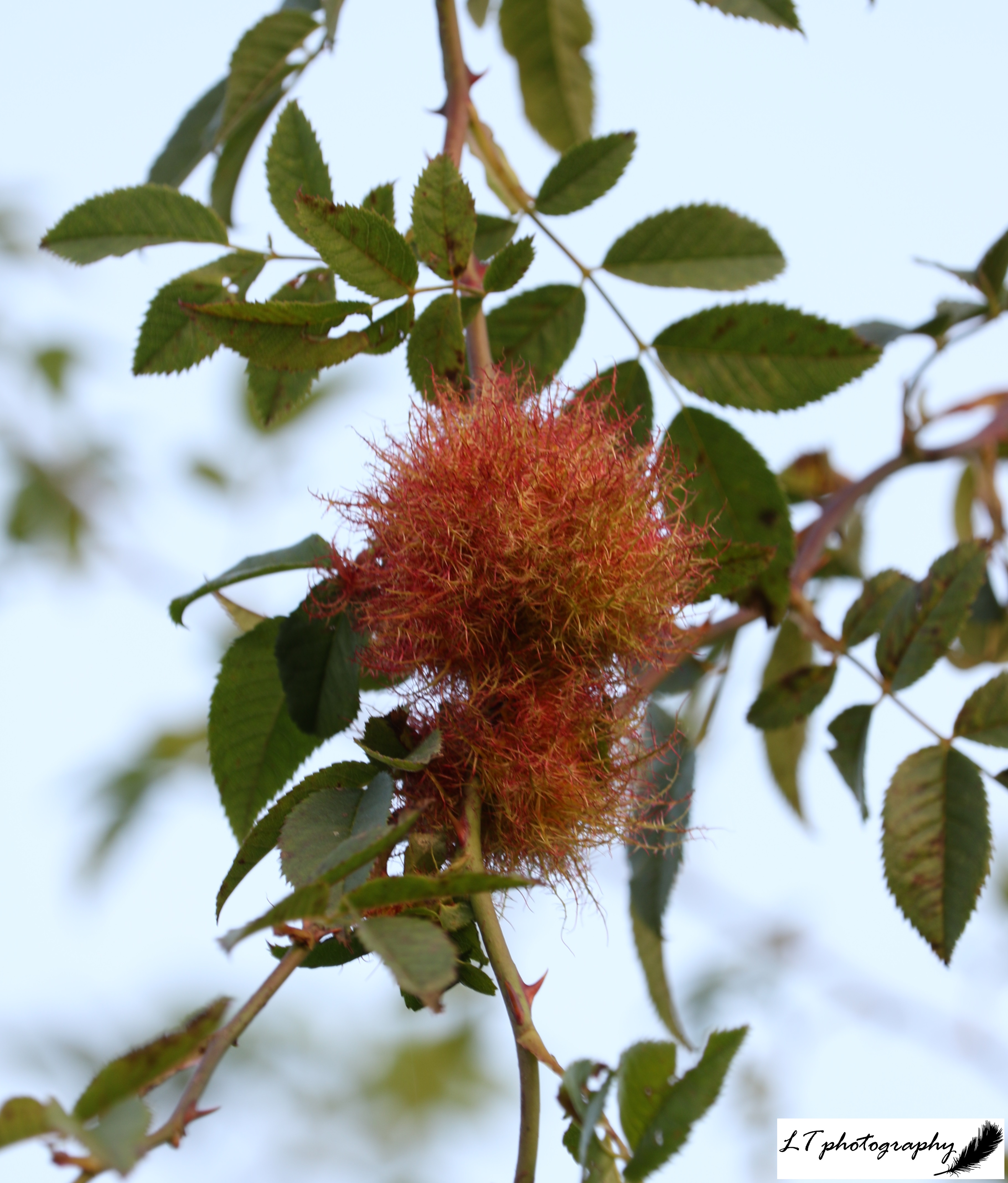
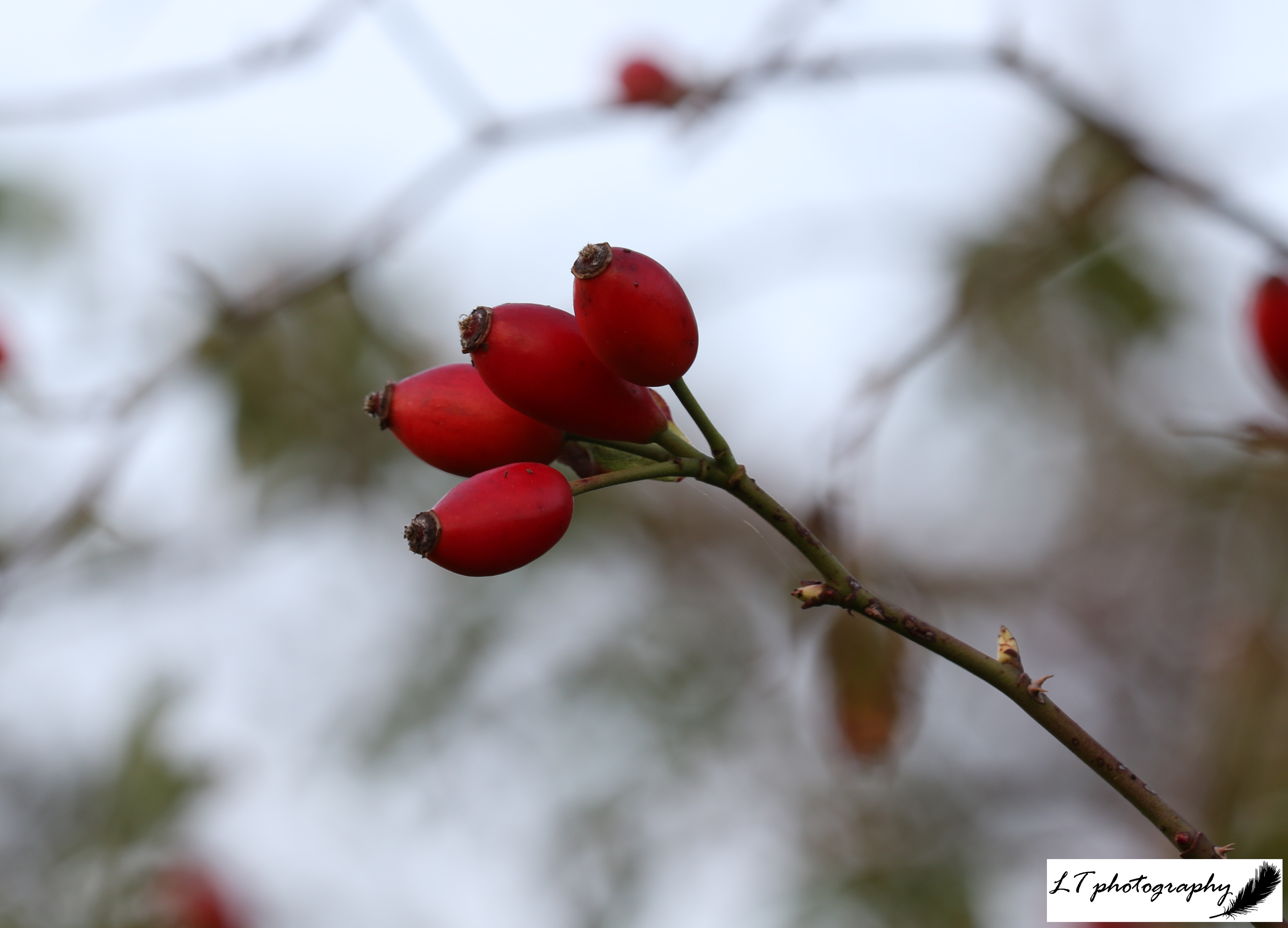
Dog Rose (Rosa canina)

  • Fruit: Berries known as hips, that are edible, egg-shaped and bright red. Popularly used for a wide range of food and drink
  • For Wildlife: The hips are eaten by fruit-eating birds, such as Fieldfare and Waxwings, and small mammals, such as Bank Voles
  • How to identify: Dark green and oval-shaped with toothed edges and tapering to a point; arching stems with broad-based strongly hooked prickles; flat and fragrant white or pale pink flowers with large petals and hairless stalks
  • Autumn Facts: It is a valuable medicinal plant, with the hips being made into a vitamin C rich syrup for children (20 times the amount that is in orange juice)

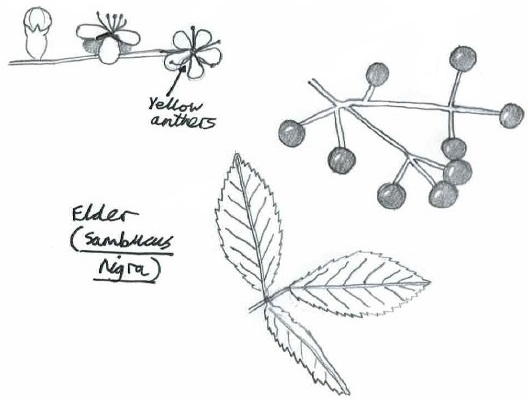
Elder (Sambucus nigra)
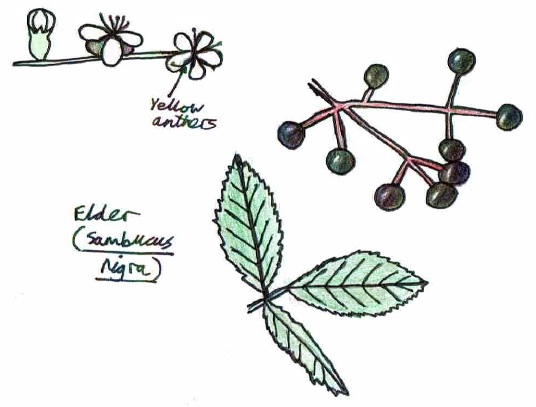
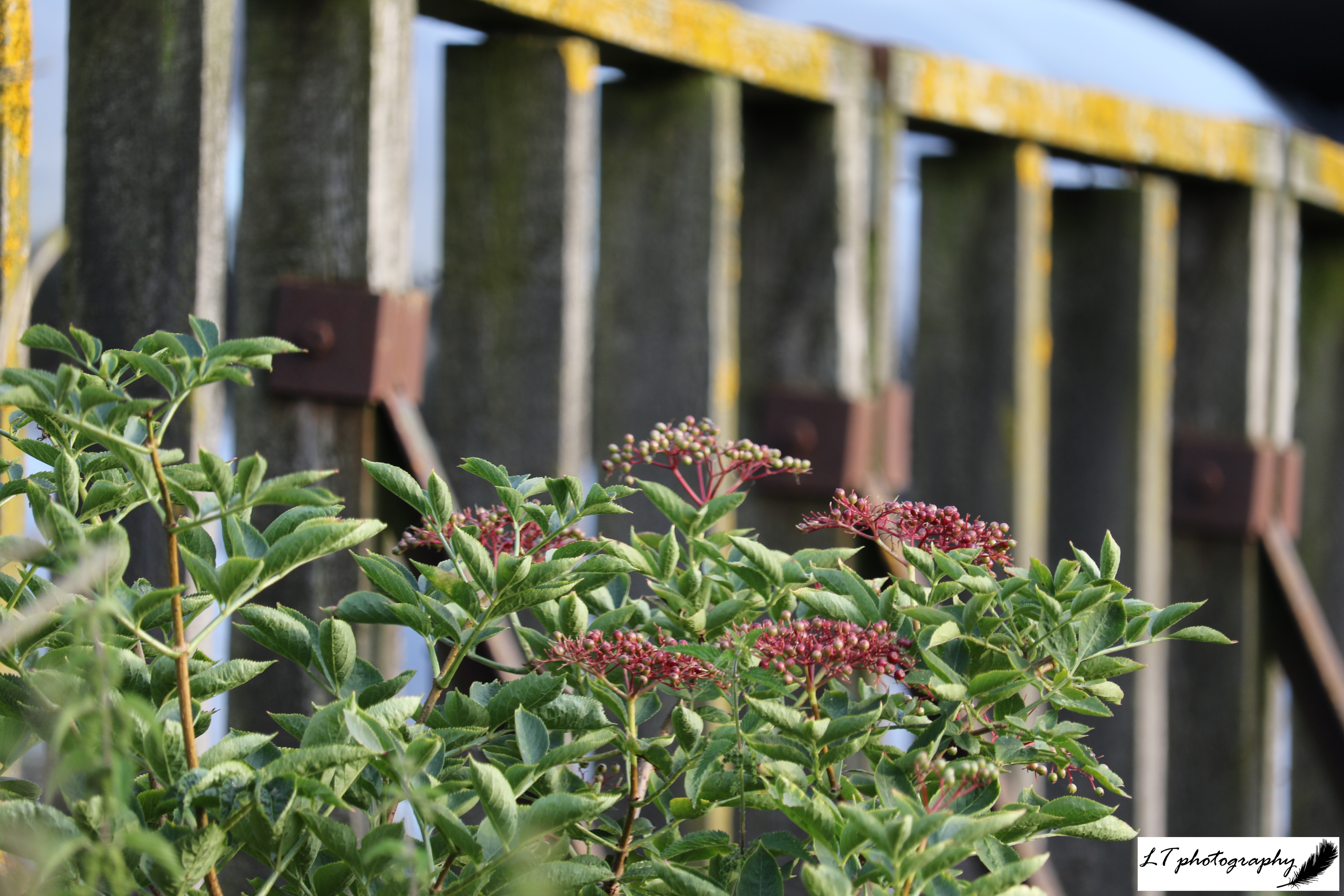
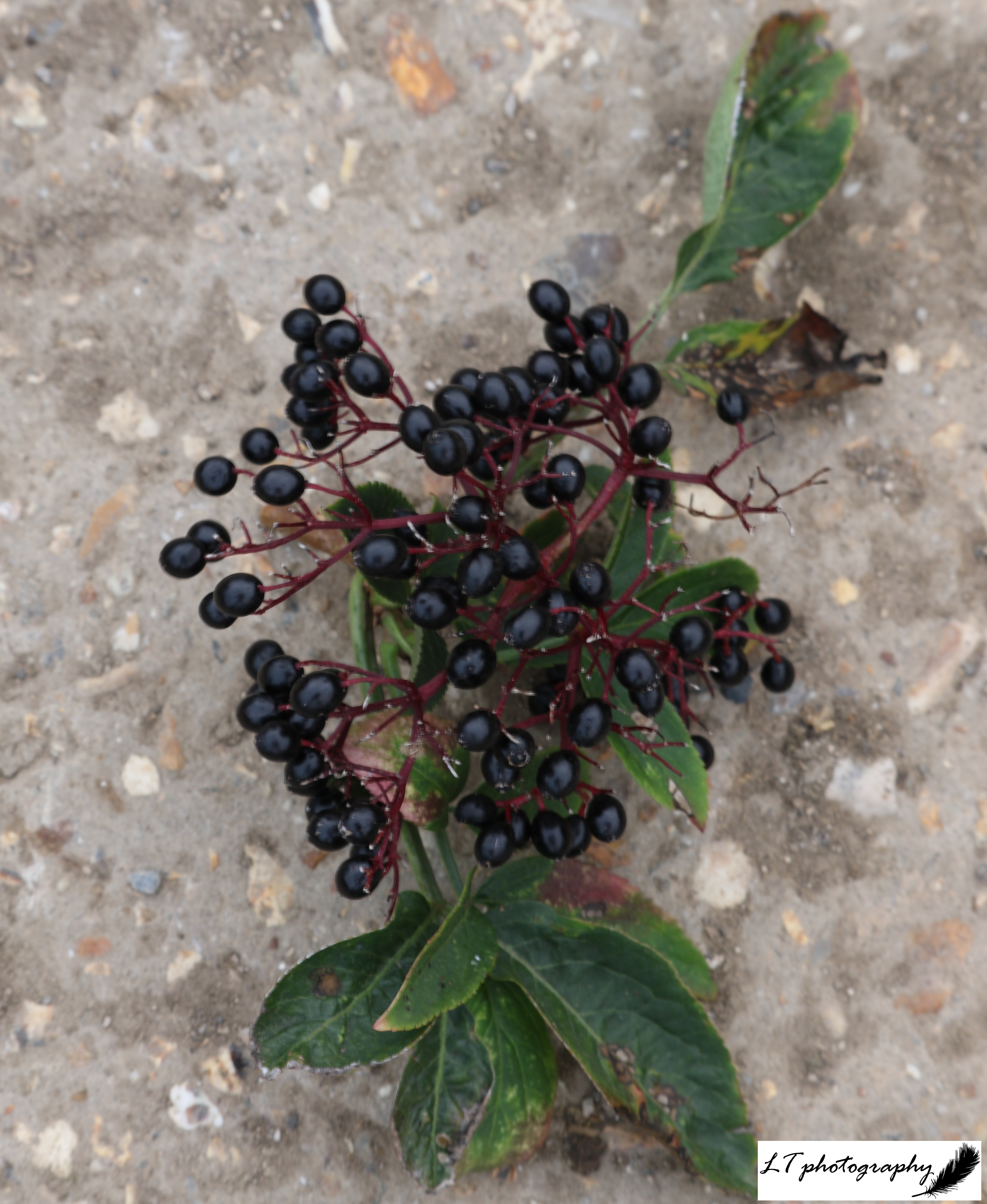
  • Fruit: Juicy edible purplish-black berries, known as elderberries, that are used to make a variety of wines, juices, jams and jellies
  • For Wildlife: The berries are eaten by both birds and small mammals, from Whitethroats to Dormice
  • How to identify: Long, dark green oval-shaped leaves with finely toothed edges and tapering to a point; strong smelling bark that is corky and fissured; white, small and fragrant flowers in flat-topped clusters
  • Autumn Facts: One of the most commonly used medicinal plants across the world, from Native Americans using it to treat infections to the Egyptians using it to improve their complexions and heal burns
Recipe:

Spindle (Euonymus europaeus)

  • Fruit: Spindle berries are toxic to humans, with a laxative effect. They are highly distinctive, with 4-lobes and being bright coral-pink
  • For Wildlife: Provide food for a variety of species including mice, birds and even Foxes
  • How to Identify: Shiny oval-shaped leaves with finely toothed edges and tapering to a point that turn distinctively pinkish-red in autumn; deep green 4-sided twigs darkening with age; greenish-white 4-petalled flowers in clusters
  • Autumn Facts: Spindle is at its best and most colourful during autumn with warm leaves and berries

How to… Identify Chalkland Wildflowers

Colourful, radiant, buzzing with life, a piece of paradise in the summer sunshine. All words to describe a small piece of chalk habitat nestled within the heart of my family’s farm in Dorset. Amidst a clay-dominated landscape, this small creation aims to emulate the approximately 41,000 hectares of lowland chalk grassland that can still be found across the UK. This super rich habitat contains over 40 species of flowering plants in every one square metre, giving chalk grassland its reputation as the tropical rainforest of Europe! Sadly though, 50% of chalk grassland has already been lost in Dorset alone since the 1950s.

In 2017, my Dad made the decision to transform a small triangular area of land on our farm into our very own chalk paradise. Though we do not live immediately on chalk downland, it can be found to the North and South of us. This makes our location ideal to create stopover habitat or a wildlife corridor, for the myriad of species that rely on these diverse plant communities. Following bringing in 40 tonnes of quarried chalk and lots of wildflower plugs and seeds, we now have a thriving 10m by 3m and 2m in height chalk mound.

Though my family’s chalk habitat is still in its relative infancy, over time it is transforming into a wildlife haven. From Grasshoppers and Marbled White Butterflies to blue Butterflies and Carder Bees, new species are popping up each and every year. This mini habitat has also been a great place for my mum to teach me all about the plant species that call chalkland grassland home. With her inspiration, I have put together a simple guide to identifying just some of the many wildflower species that are appearing on our mound.

Chalkland Wildflowers

Wild Marjoram (Origanum vulgare)Wild Marjoram

  • Family: Mint
  • Lifespan: Perennial (lives for several years)
  • Size: Short to medium height (30-60cm)
  • Stems: Erect, dark-red, downy and either round or square
  • Leaves: Oval, often slightly toothed, stalked, and 1.5-4.5cm in length
  • Flowers: Dark purple buds in loose clustered heads, opening to pale purple 6-8mm long flowers. Strongly aromatic. Flowers July-September
  • Range: Found throughout the UK (particularly in the South), but scarcer in Scotland
  • Fun Facts: This culinary herb is a symbol of happiness descended from Roman legend, with Origanum meaning ‘mountain joy’

Kidney Vetch (Anthyllis vulneraria)Kidney Vetch

  • Family: Legume
  • Lifespan: Annual (lives for one year) or perennial
  • Size: Sprawling and medium in height (up to 60cm), but very variable
  • Stems: Silkily hairy, round, and often greyish
  • Leaves: In pairs, they are silky white below and green above, and are 30-60mm in length
  • Flowers: Yellow, orange or a fiery red, and downy-white below. They are found in single heads (12-15mm across) or sometimes pairs. Flowers April-September
  • Range: Found throughout the UK, especially around the coast
  • Fun Facts: In the Middle Ages, it was known for speeding up wound healing, with vulneraria meaning ‘wound healer’. It was also once used to commonly treat kidney disorders

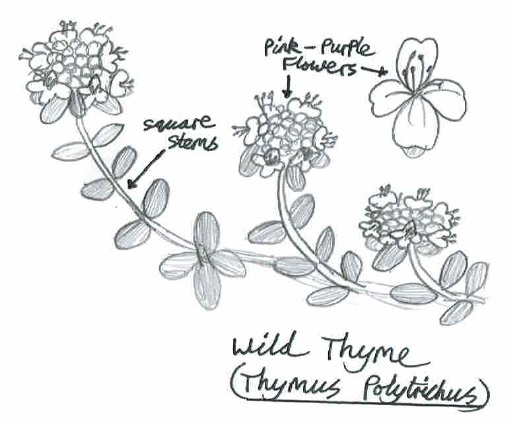
Wild Thyme (Thymus polytrichus) Wild Thyme

  • Family: Mint
  • Lifespan: Perennial
  • Size: Low to the ground, forming a mat of non-flowering rooting stems (up to 10cm in height)
  • Stems: Square with erect flowering stems
  • Leaves: Evergreen, short stalked, very small oval 4-8mm leaves in opposite pairs
  • Flowers: Faintly aromatic with pink-purple flowers in round and dense heads. Flowers May-September
  • Range: Widespread in South East England, but scattered distribution elsewhere
  • Fun Facts: Long regarded as the favourite flower of fairies, and associated with love. The Greek thumon though means ‘that which is included in a sacrifice’

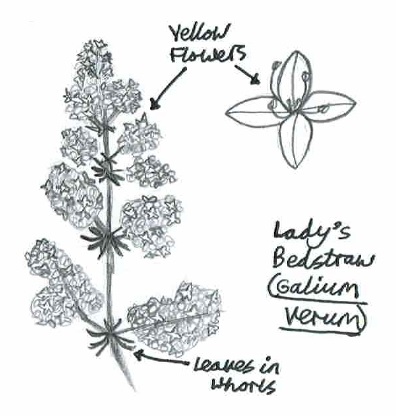
Lady’s Bedstraw (Galium verum)Lady's Bedstraw

  • Family: Madder/Bedstraw
  • Lifespan: Perennial
  • Size: Short to medium in height, often sprawling (up to 100cm)
  • Stems: Four-angled, almost hairless stems
  • Leaves: Dark green, long, narrow, shiny leaves in whorls of 8-12. Said to smell of new-mown hay
  • Flowers: Bright golden yellow, 2-4mm wide, in clusters, with a sweet honey-like scent. Only Bedstraw species in the UK with yellow flowers. Flowers June-September
  • Range: Widespread
  • Fun Facts: Associated with the story of the Virgin Mary giving birth to the baby Jesus, leading to the belief that a woman lying on a mattress of Lady’s Bedstraw would have a safe and easy childbirth

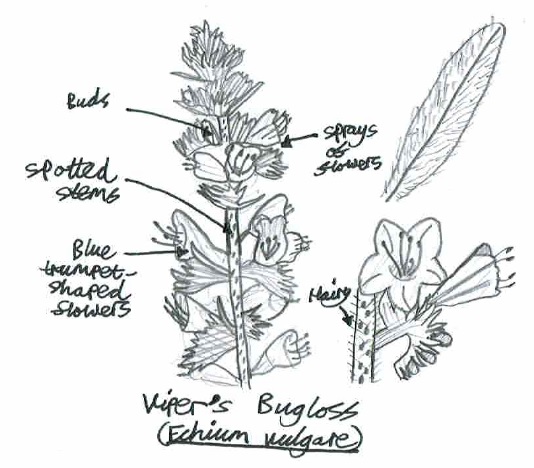
Viper’s Bugloss (Echium vulgare)Viper's Bugloss

  • Family: Borage/Forget-Me-Not
  • Lifespan: Biennial (flowers in its second year before dying) or perennial
  • Size: Medium to tall in height (up to 100cm)
  • Stems: Roughly hairy and spotted (red-based bristles)
  • Leaves: Narrow, oval-shaped lower leaves
  • Flowers: Flowers in drooping clusters of pink buds that open to become erect, blue, trumpet-shaped, open-mouthed flowers, 10-20mm long, in branched spikes. Flowers May-September
  • Range: Scattered distribution across the UK, being most common in the South
  • Fun Facts: The plant’s name comes from a time when it was believed to be a cure for snake-bites, reinforced by the dead flower-heads resembling a viper’s head

Rough Hawkbit (Leontodon hispidus)Rough Hawkbit

  • Family: Daisy
  • Lifespan: Perennial
  • Size: Short to medium in height (up to 60cm)
  • Stems: Very hairy, unbranched, leafless, and slightly swollen at the top
  • Leaves: Form a rosette of bluntly lobed leaves at the base of the flowering stem
  • Flowers: Golden-yellow, though often orange or reddish beneath, solitary and 20-40mm wide. Forms seed heads that look like dandelion clocks. Flowers late May-October
  • Range: Widespread and fairly abundant across the UK, apart from in the far North
  • Fun Facts: In Greek, Leontodon means ‘Lion’s tooth’, referring to the toothed leaves. The flowers are also rich in nectar and smell sweetly of honey

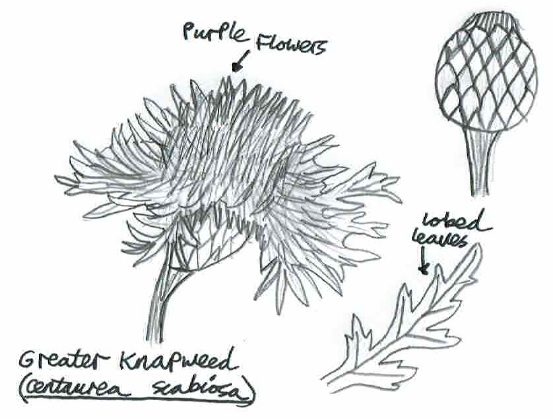
Greater Knapweed (Centaurea scabiosa)Greater Knapweed

  • Family: Daisy
  • Lifespan: Perennial
  • Size: Medium to tall in height (30-120cm)
  • Stems: Erect and grooved
  • Leaves: Lobed, where the lobes are positioned in pairs either side of the leaf centre. The leaves are 100-250mm long
  • Flowers: Purple, solitary and 30-60mm across. Flowers July-September
  • Range: Scattered across the UK, but predominantly grows in England
  • Fun Facts: Commonly used to treat wounds, bruises, sores and similar conditions

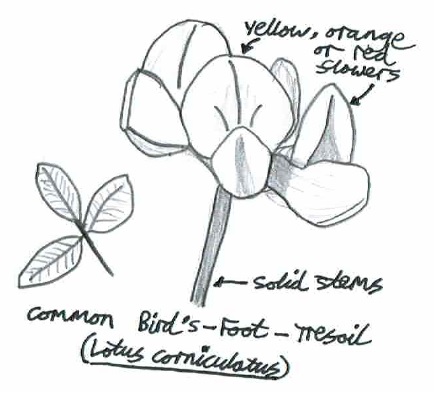
Common Bird’s-Foot-Trefoil (Lotus corniculatus)Common Bird's Foot Trefoil

  • Family: Legume
  • Lifespan: Perennial
  • Size: Short or medium in height and sprawling (up to 50cm)
  • Stems: Solid not hollow, and trailing
  • Leaves: Greyish-green, downy or hairless, and oval-shaped tapering to a point
  • Flowers: Deep yellow or orange, often partly red, and 10-16mm long, often 2-7 per flower head. Flowers May-September
  • Range: Widespread
  • Fun Facts: It has more than 70 common folk names including Eggs and Bacon. The name Bird’s-Foot-Trefoil reflects the resemblance to a bird’s foot, and is a larval food plant of Green Hairstreak and Dingy Skipper Butterflies

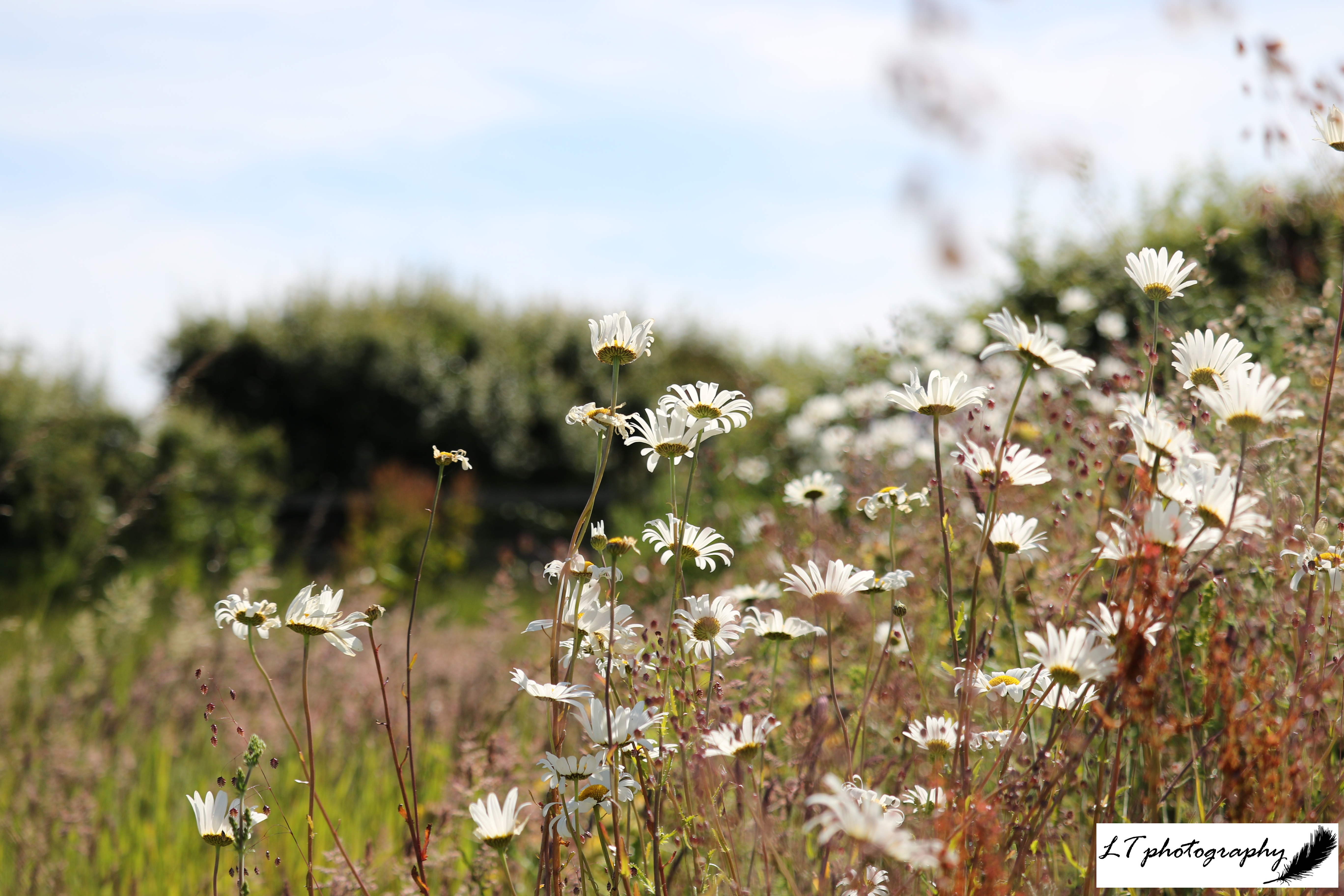
Ox-eye Daisy (Leucanthemum vulgare)Ox Eye Daisy

  • Family: Daisy
  • Lifespan: Perennial
  • Size: Medium in height (20-75cm)
  • Stems: Round, angled or square, erect, and slightly hairy
  • Leaves: Long-stalked, dark green, spoon-shaped, toothed and in a rosette around the base of the flowering stem
  • Flowers:  White, 20-60mm across, solitary and on sparsely leafy stalks. Flowers May-September
  • Range: Widespread
  • Fun Facts: In past times, an extract was obtained by boiling the plant down, that  was used in salves and medicines to cure a variety of ailments from liver disease to runny eyes. Largest native daisy species

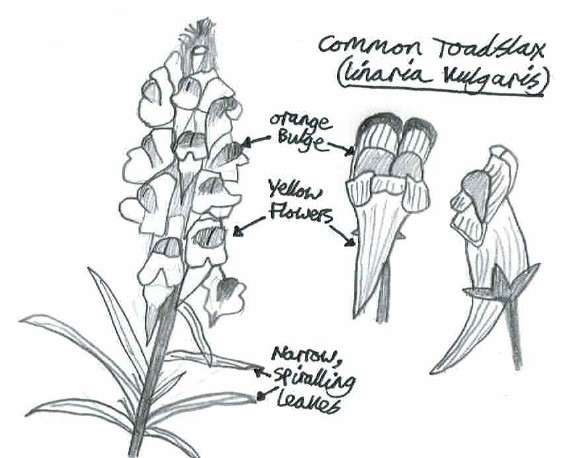
Common Toadflax (Linaria vulgaris)Common Toadflax

  • Family: Plantain
  • Lifespan: Perennial
  • Size: Short to medium in height (30-80cm)
  • Stems: Erect, grey-green, and hairless
  • Leaves: 30-80mm long, very narrow, untoothed, and spirally arranged up the stems
  • Flowers: 15-35mm long, yellow with an orange bulge and long straight spur, forming stalked spikes. Flowers June-October
  • Range: Widespread
  • Fun Facts: Most common Toadflax species in the UK, getting its name from previously being considered as useless, fit only for toads

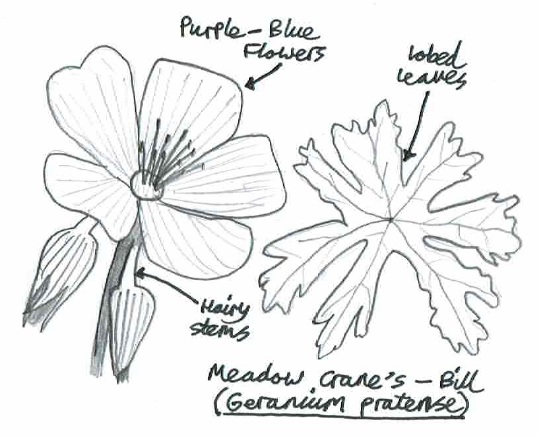
Meadow Crane’s-Bill (Geranium pratense)Meadow Cranesbill

  • Family: Geranium
  • Lifespan: Perennial
  • Size: Medium to tall in height (30-100cm)
  • Stems: Hairy, erect, and often reddish
  • Leaves: Have 5-9 lobes, cut nearly to the base
  • Flowers: Soft violet blue, petals not notched, 15-30mm wide. Flowers June-September
  • Range: Found throughout the UK, but rarer in South West England and East Anglia
  • Fact: With lesser known names such as ‘Jingling Johnny’ or Loving Andrews, it is a horticultural favourite dating back to before the Elizabethan times

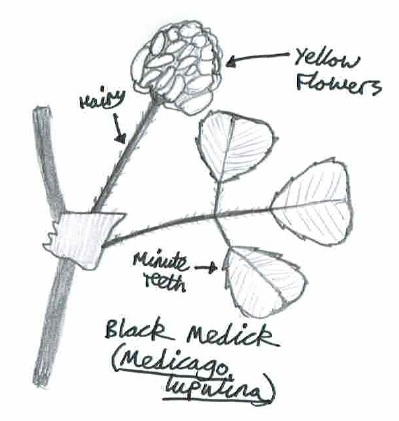
Black Medick (Medicago lupulina)Black Medick

  • Family: Legume
  • Lifespan: Annual or short-lived perennial
  • Size: Low in height (up to 60cm), and sprawling or erect
  • Stem: Round or square and hairy
  • Leaves: Trefoil, downy, and 5-20mm in length, with minute teeth
  • Flowers: Bright yellow and small, with 10-50 to one short-stalked rounded head (3-8mm wide). Flowers April-October
  • Range: Widespread across the UK, but sparser in Scotland
  • Facts: Name means ‘plant of the Medes’, referring to an ancient Middle Eastern people, whilst lupulina means ‘hop-like’, due to similarities with Hop Trefoil


Now get out there and see what you can find!


Drawings and photos all my own

Spring 2020: In Photos

As the world was thrown into disarray with the full force of a pandemic, our daily lives were hit by lockdown, slowing and grounding to a halt. For the natural world outside our windows though, spring was just beginning, with days warming, buds bursting, and migrants making their return. Even when our own lives were being disrupted, the natural world was carrying on.

13_06_20_Farm_Chalk_Mound_Rough_Hawkbit_Small_Tortoiseshell_Butterfly_2

For me, spring has been a real lifeline this year. With the natural world bursting with life, I was able to draw real strength from the return of the swallows, the flowering of the bluebells and the trees becoming cloaked in delicate new leaves. Every moment I could spend out in nature gave me the strength to continue as if nothing had changed, cherishing every moment for what it was. For this I am grateful, and I really appreciate that I am lucky to have the beautiful Dorset countryside right on my doorstep.

As spring begins to make its exit, I wanted to take some moments to reflect on a time that has taught me a lot, brought me some real magic through the natural world, and will be remembered for as many good memories as those eclipsed by Covid-19. To begin with, here are a selection of my favourite photos from this spring. They range from spring wonderment to heart-warming moments, that all mean something to me.

Spring 2020 in photos

1) Small Tortoiseshell Butterfly – The photo featured above was taken only last week, and reminds me of how valuable the time I spend expanding my knowledge of nature really is, including the identification of butterflies and flowers. I found this Small Tortoiseshell butterfly on a 10m long chalk mound that my parents have created for wildlife within our farmland, and it really is coming into its own this year!

16_04_20_Horseshoe_Woods_Bluebells_Spider_Dewdrop_3

2) Bluebell & Spider – When the bluebells are flowering, it has to be one of my most favourite times of the year. As the woodland floor transforms to a carpet of blue purple, I feel at my happiest and enjoy noticing new details each year, such as the spider hunting on these drooping bells.

2) 20_03_20_Farm_Goldfinch_2

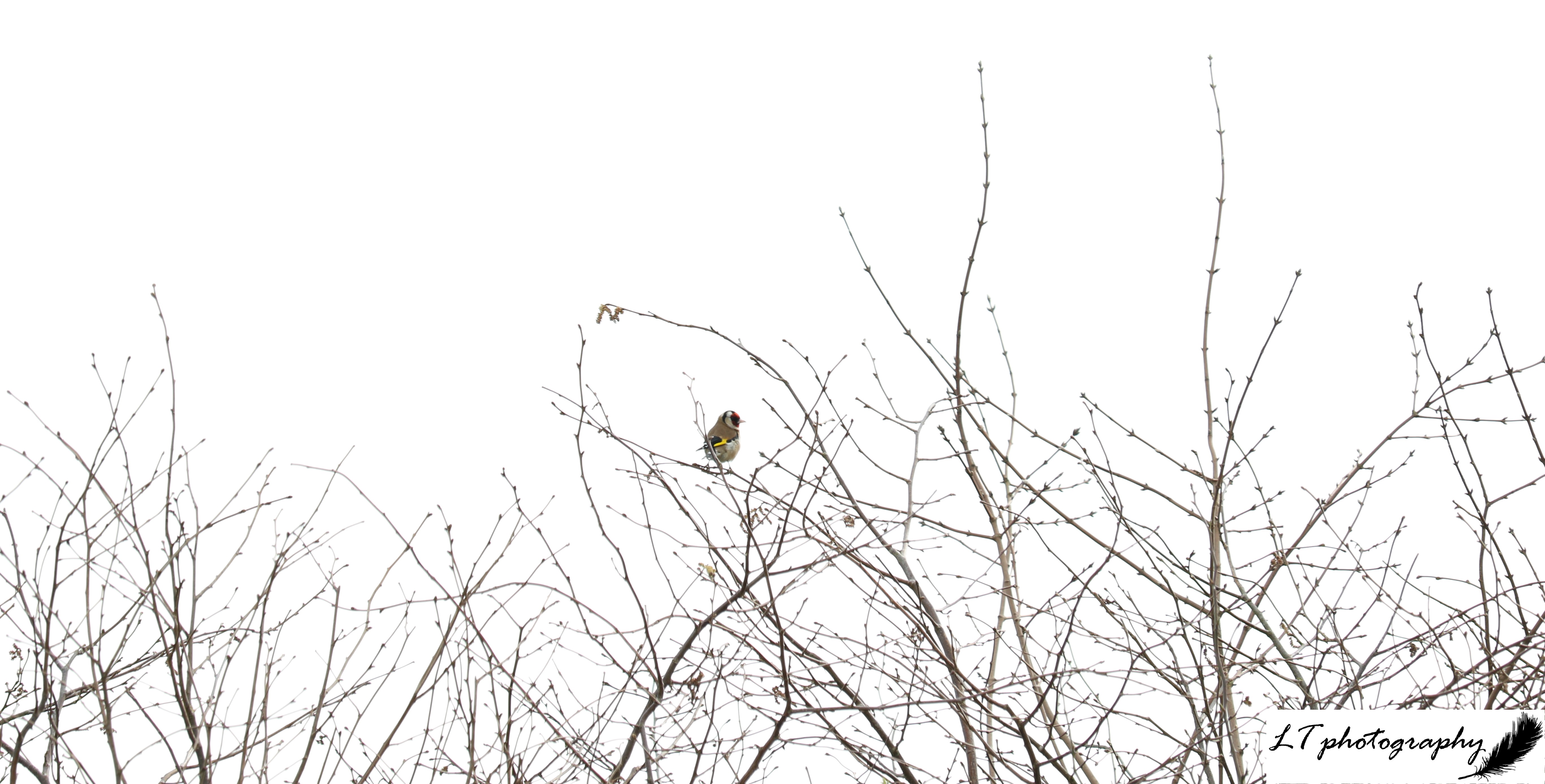
3) Goldfinch – I love the simplicity of this photo of a Goldfinch taken back in March. The bright colours of the bird vividly stand out from the swelling buds and bare twigs of the hazel in this hedgerow. It was enough to brighten a moment on a decidedly chilly spring day.

15_04_20_Farm_Flowers_Stitchwort_3

4) Stitchwort – Every flower is unique and different in its own way. With Greater Stitchwort, every flower stands out like a small white star, carpeting verges, hedgerows and woodlands alike.

07_05_20_Farm_Dandelion_Seeds_4

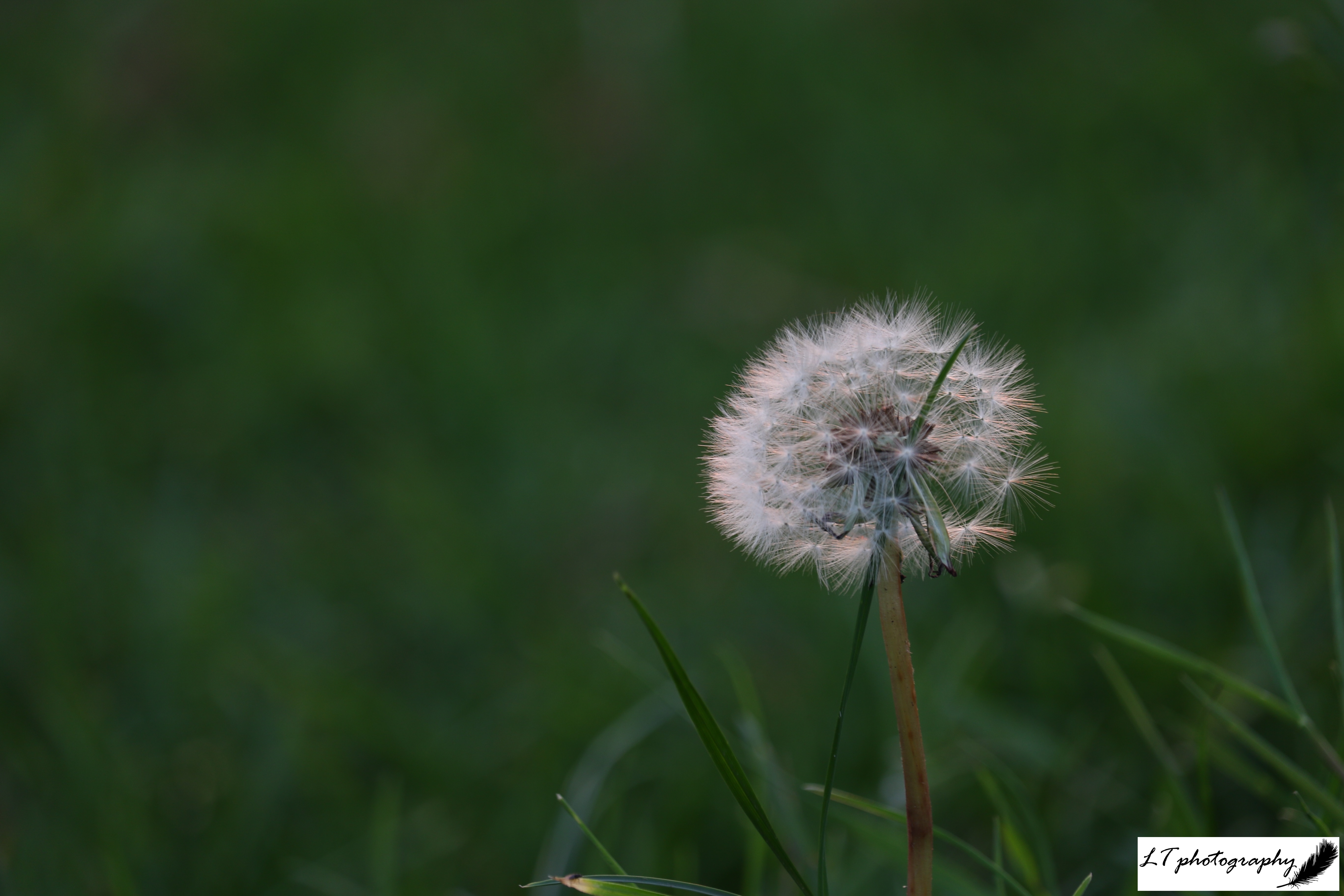
5) Dandelion Seeds – Now as an adult I still hold on to the child-like curiosity that a dandelion invokes. With hundreds of parachuting seeds waiting to fly, this dandelion creates a beautiful fluffy silhouette in the spring sunshine.

20_03_20_Farm_Lleyn_Lamb_3

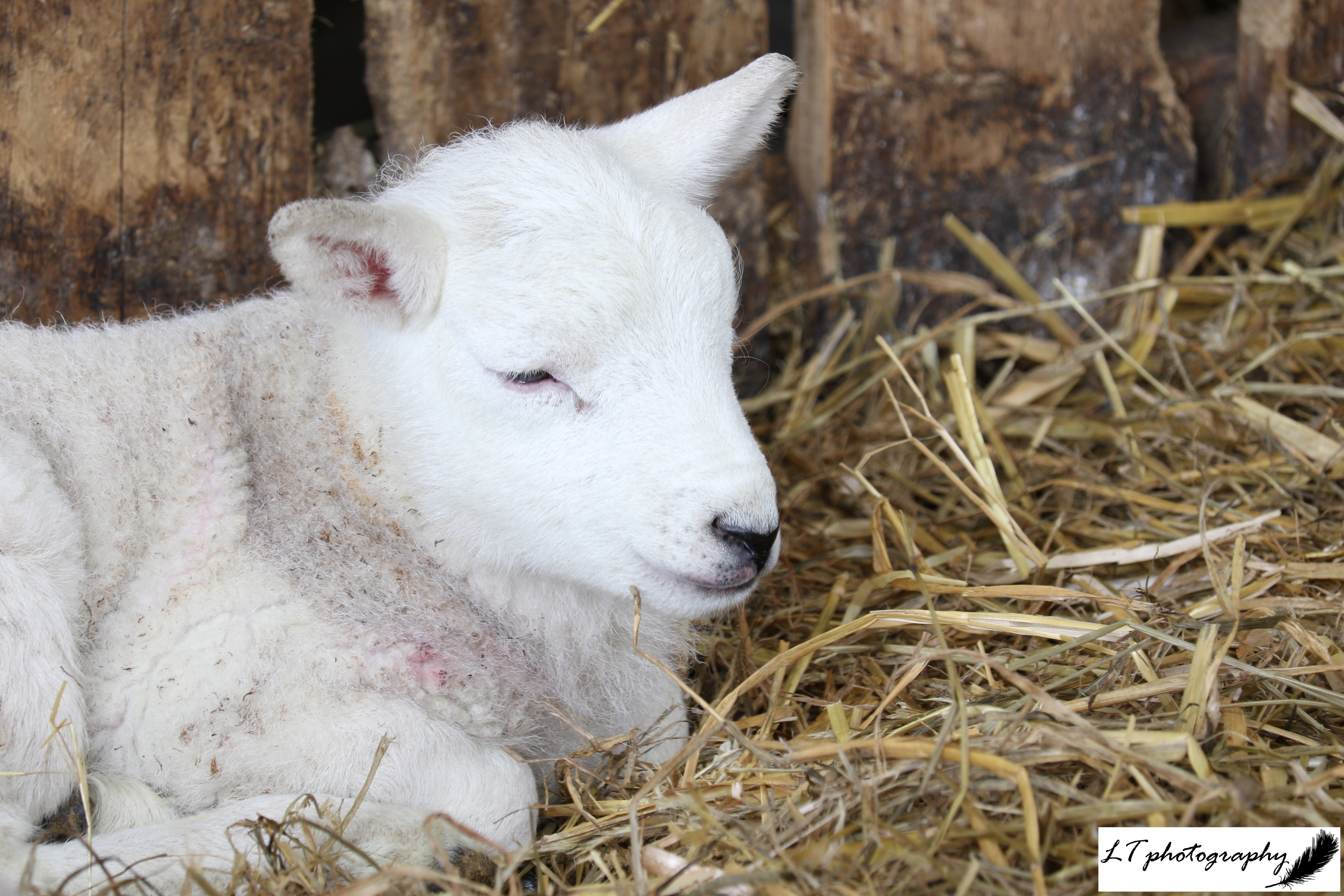
6) Lleyn Lamb – This photo is as it seems, a photo of a sleepy newborn lamb, born earlier this year. I am proud to say that I come from a farming background in the heart of Dorset. It has been this that has provided me with a spectacular backdrop to learn about the natural world around me, given me the knowledge and experiences to be able to make informed decisions about how I live my life, and given me an understanding of the important relationship between the environment and modern agriculture.

07_05_20_Farm_Wild_Garlic_Insect_3

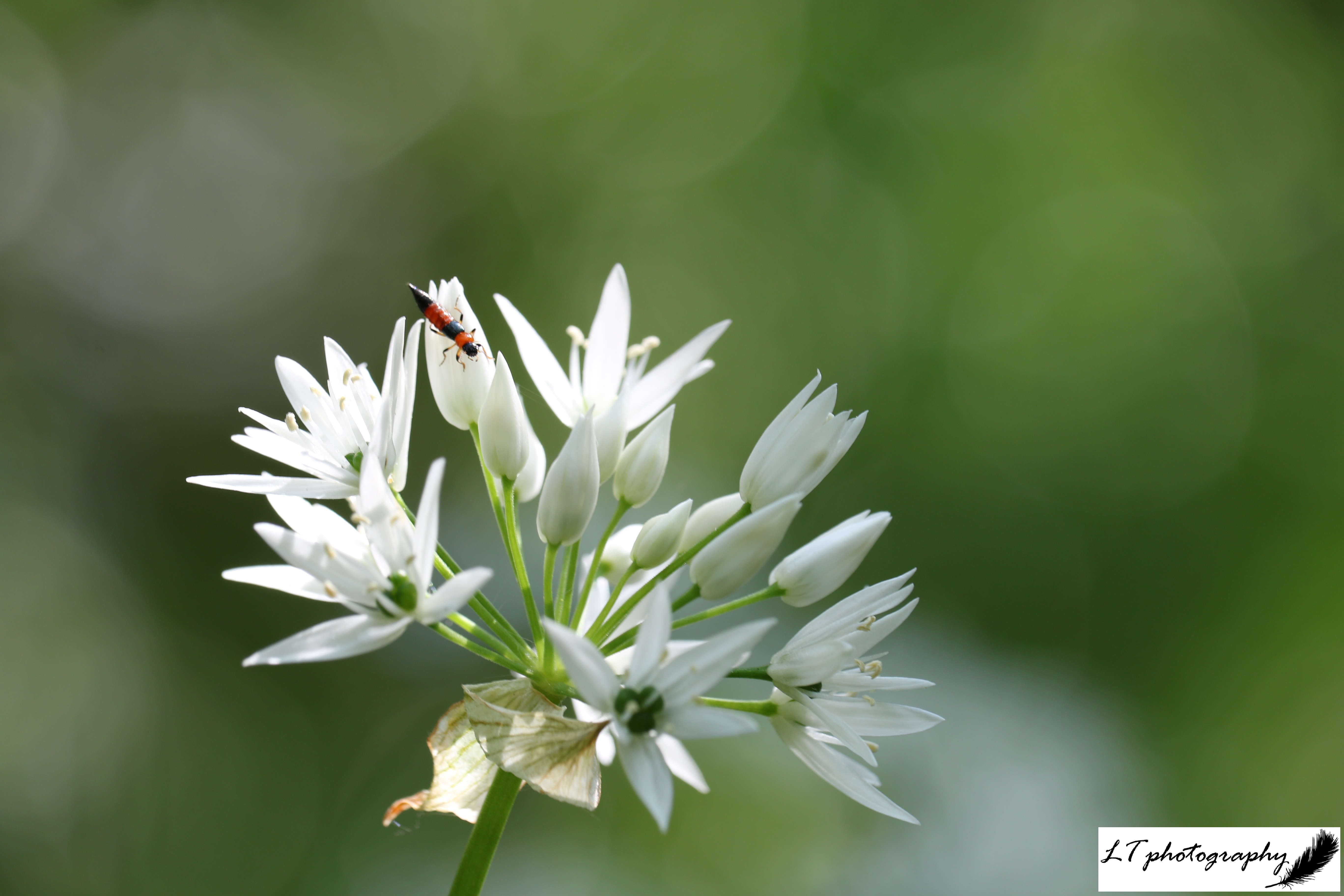
7) Wild Garlic & Insect – I love to notice the details in nature and get down to the level of the ‘small things’. This may be noticing the curl of an unfurling fern, the patterns on the petals of a tiny flower, or the jewel-like colours of an insect exploring a cluster of star-shaped wild garlic flowers.

13_05_20_Farm_Sunrise_Hangings_Gate

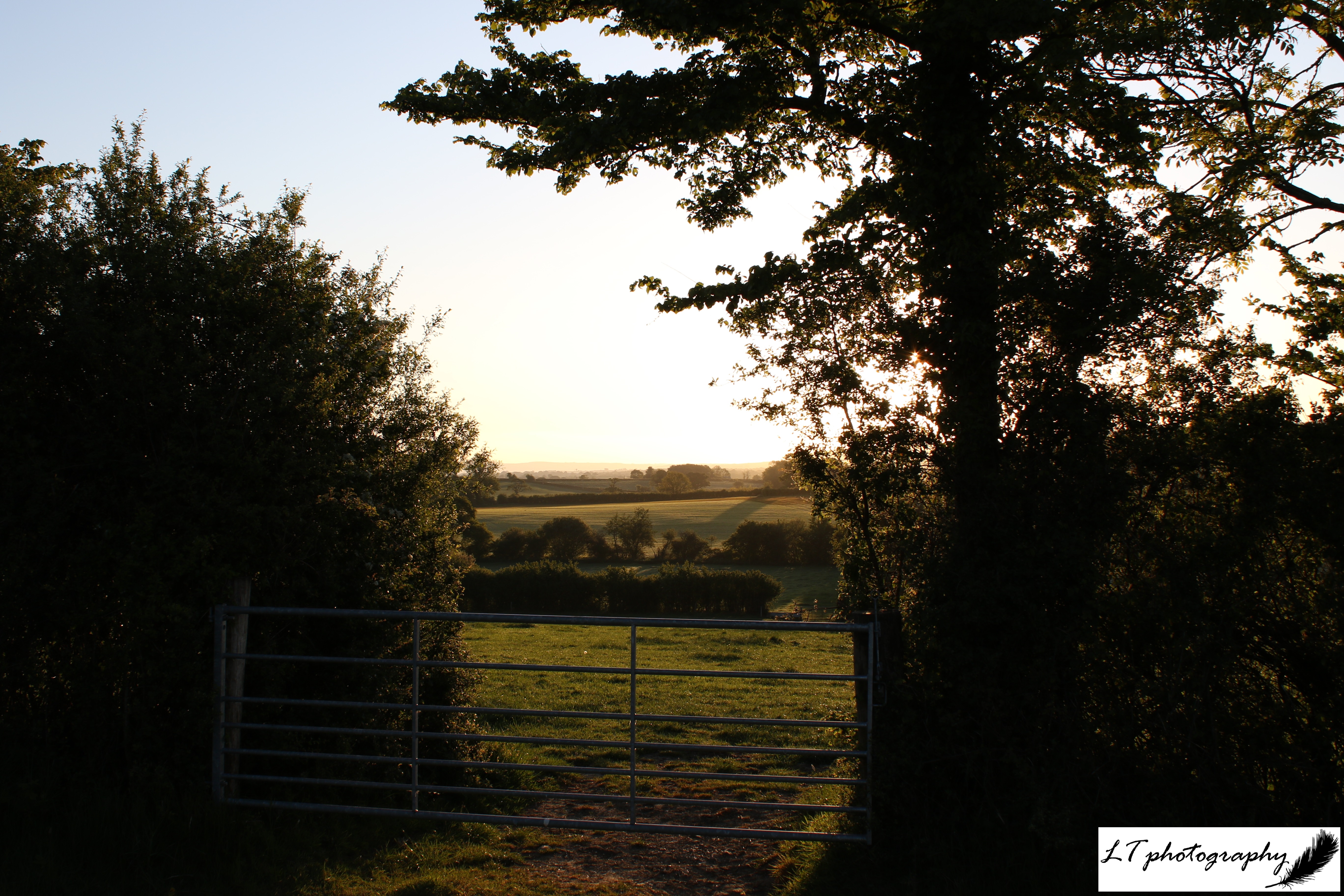
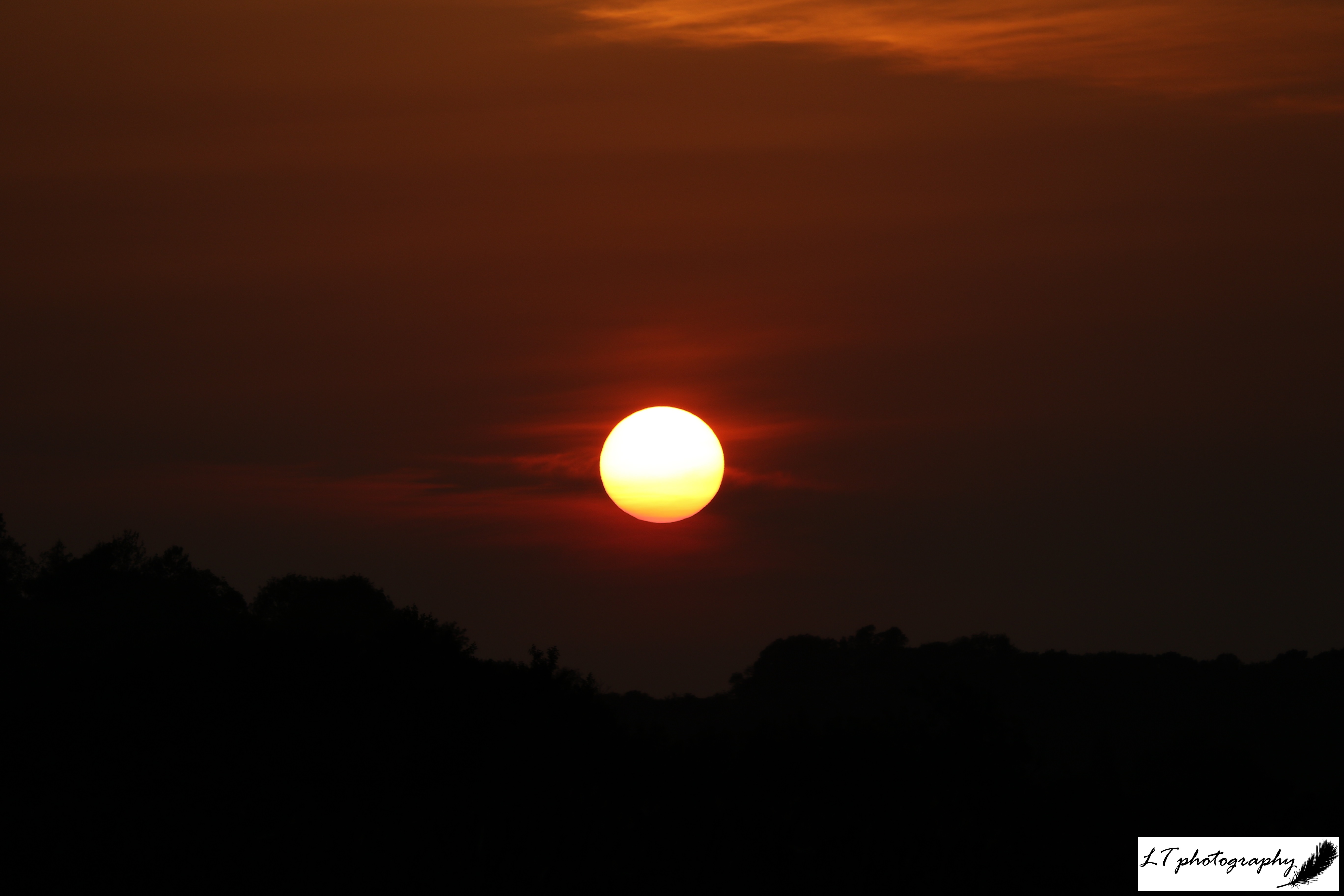
8) Sunrise – One of the best times of day has usually come and gone by the time most people have woken up in the morning. A sunrise is a golden time though to get out, listen to the birds singing and watch as the world wakes up around you. There is nothing like it!

07_05_20_Farm_Rabbit_Baby_Black_6

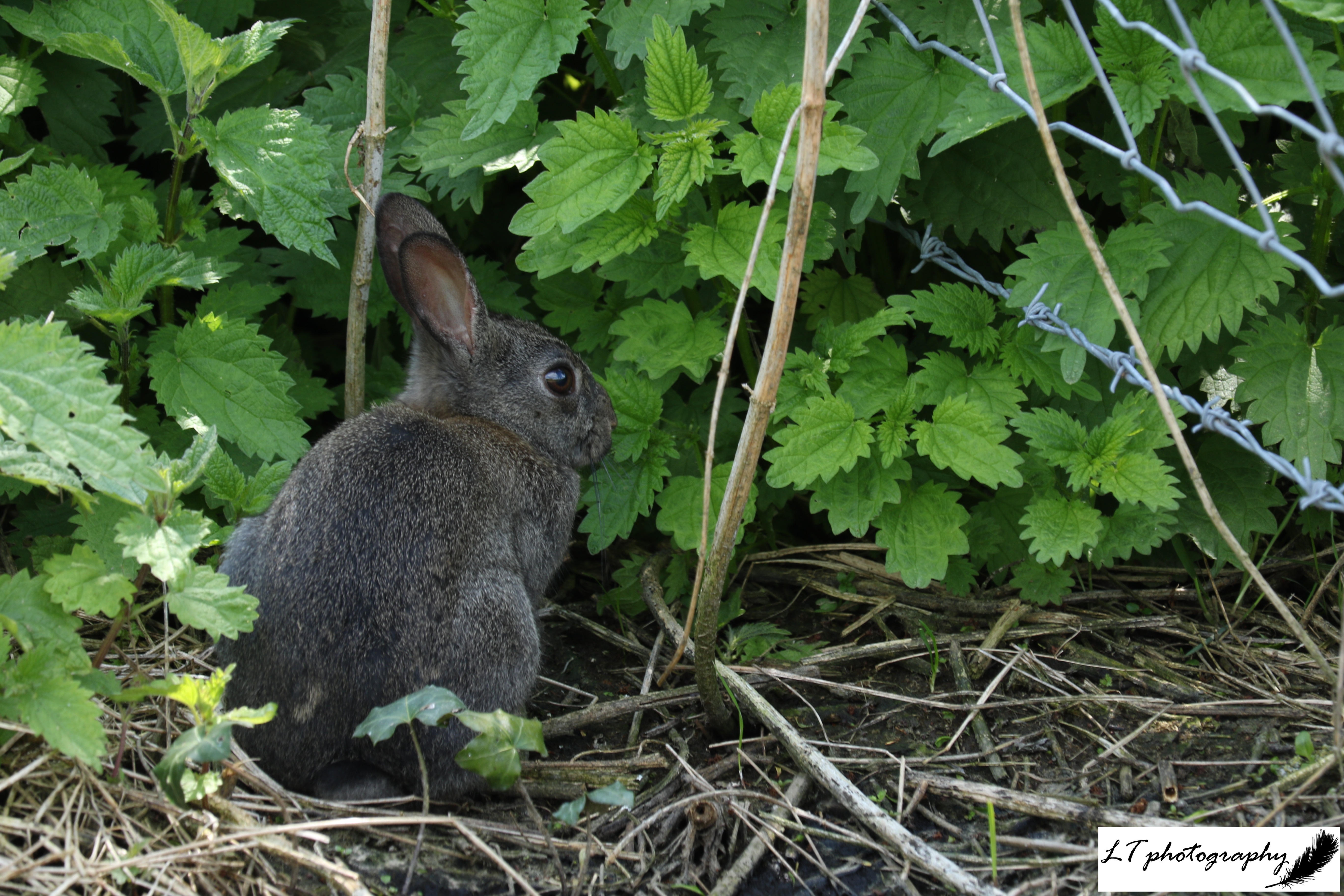
9) Dark Rabbit – One of my more unusual sightings this year has to be this rabbit, that has notably darker fur compared to the usual European rabbit. It was small in size, and though showing wild instincts, it was slightly less fearful of us humans. Everyday it could be found sunning itself in a small open area within vegetation situated behind our farm buildings.

8) 16_04_20_Horseshoe_Woods_Flower_Moschatel_8

10) Moschatel – Every year I try and learn one new species of flowering plant that can be found in our woodlands and surrounding countryside. This year it was the turn of Moschatel. An often overlooked flower due to its greenish colour, Moschatel is also known as Townhall Clock, due to its flowers having 5 faces that make it look like a cube or townhall clock in shape.

15_04_20_Farm_Bird_Chiffchaff

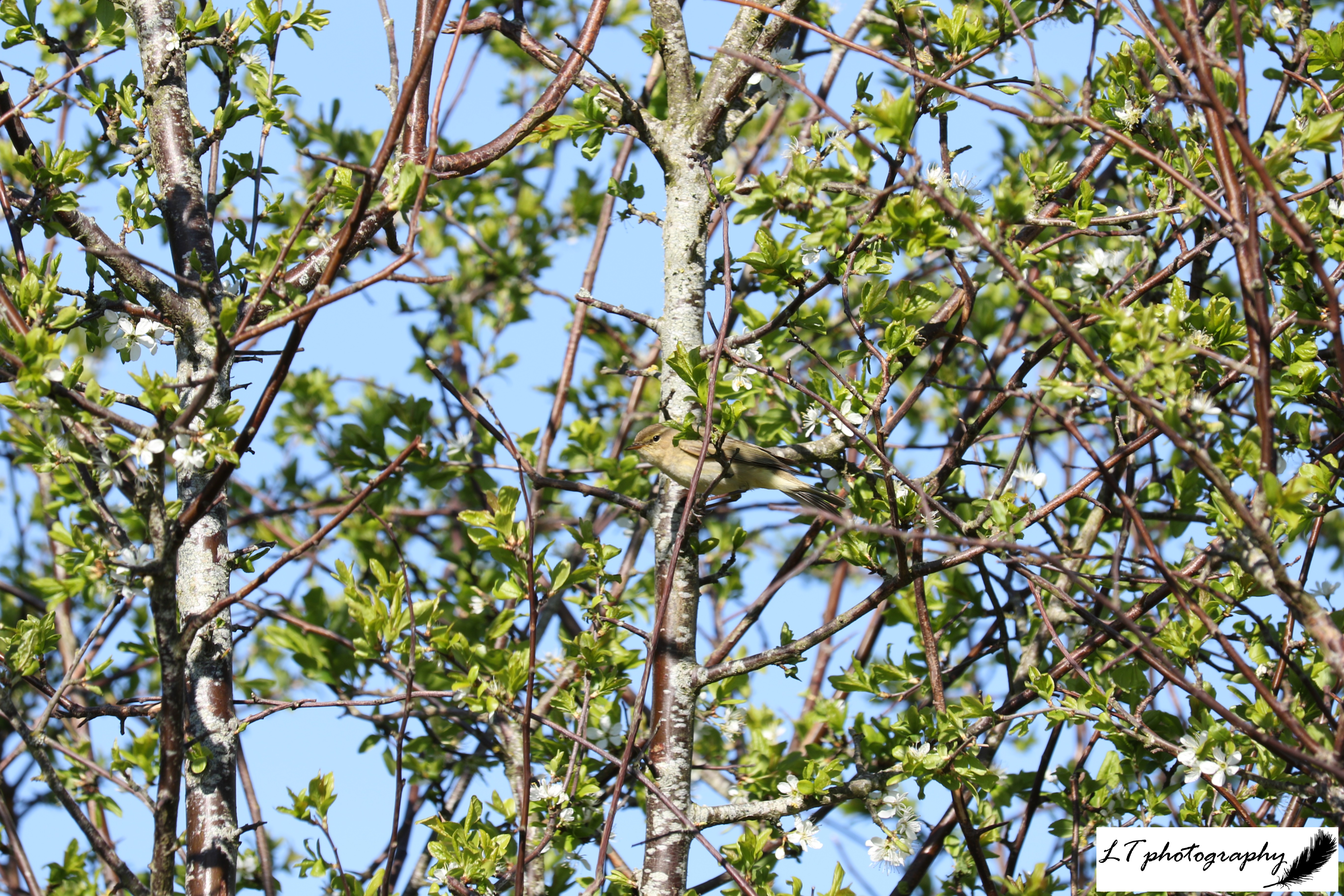
11) Chiffchaff – One of my highlights of spring every year is the return of the Chiffchaff. When I hear this bird sing for the first time each year, I feel like spring has truly arrived, so I am particularly saddened when their singing finally falls silent as autumn grips the landscape.

15_04_20_Farm_Badger_Alley_Feather

12) Feather – This photo is a good example of the beauty of detail. It is simple, but a spot of light highlights the real elegance of this contour feather, now left to lay amongst the vegetation.

15_04_20_Farm_Beef_Cows_Dream

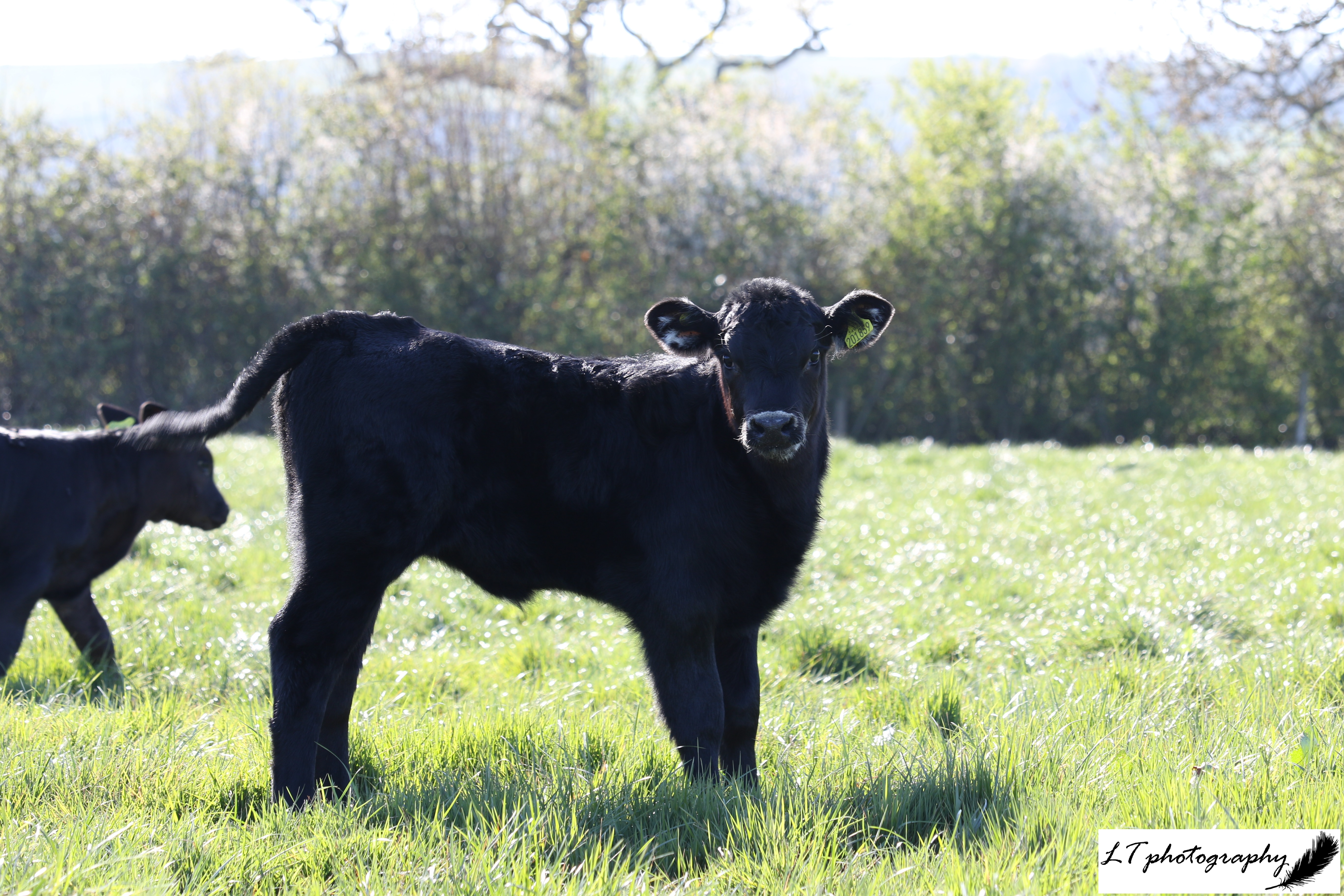
13) Aberdeen Angus Calf – This inquisitive and interestingly marked calf is another photo that connects with my farming roots. Spring is synonymous with new life, from on the farm to the wider countryside, and this little one was just one of many, precious and to be celebrated.

07_05_20_Farm_Hart's-Tongue_Fern_Spider

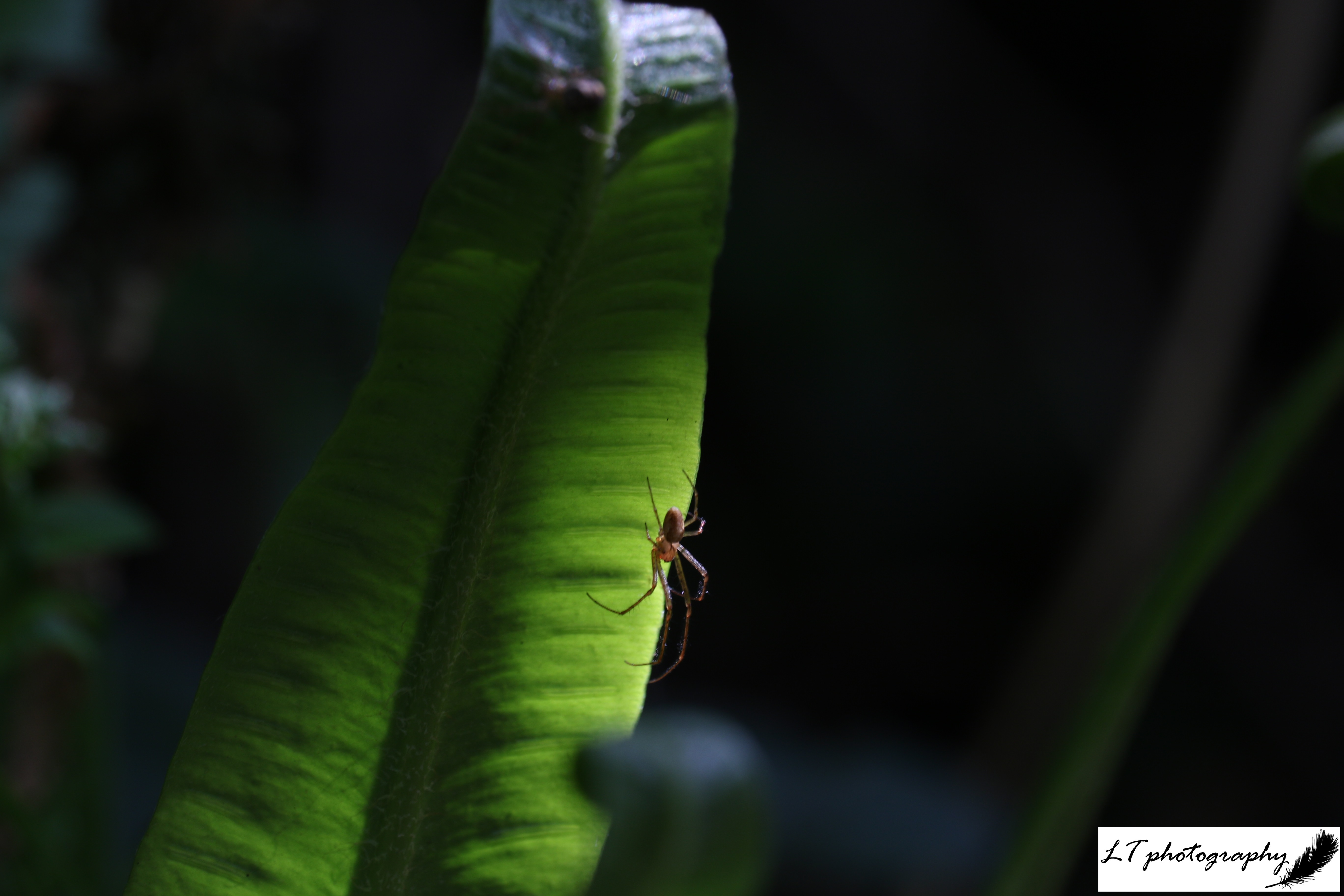
14) Spider & Hart’s-Tongue Fern – Some days I walk along in my own world and the wildlife around me merges into one. Other days the world becomes bigger though and I see every detail pop out at me, such as with this spider making its home on a Hart’s-Tongue fern.

M2E54L167-167R388B312

15) Fox Cub – As people who follow my blog or social media will already know, this spring I have had fun yet again using my camera trap on my family’s land. This has to be one of my favourite photos from this year! It was a totally unexpected surprise when this fox cub turned up on my camera trap.

13_06_20_Farm_Chalk_Barn_Owl_Pellet_Tree_Bank_Vole

16) Vole Bones – With the return of breeding barn owls to my family’s farm, I had some fun one afternoon dissecting the pellets left by these owls. It is definitely a very rewarding feeling when you are then able to identify the species the bones you find come from. Here I believe this mandible to be from a bank vole.

IMG-1149

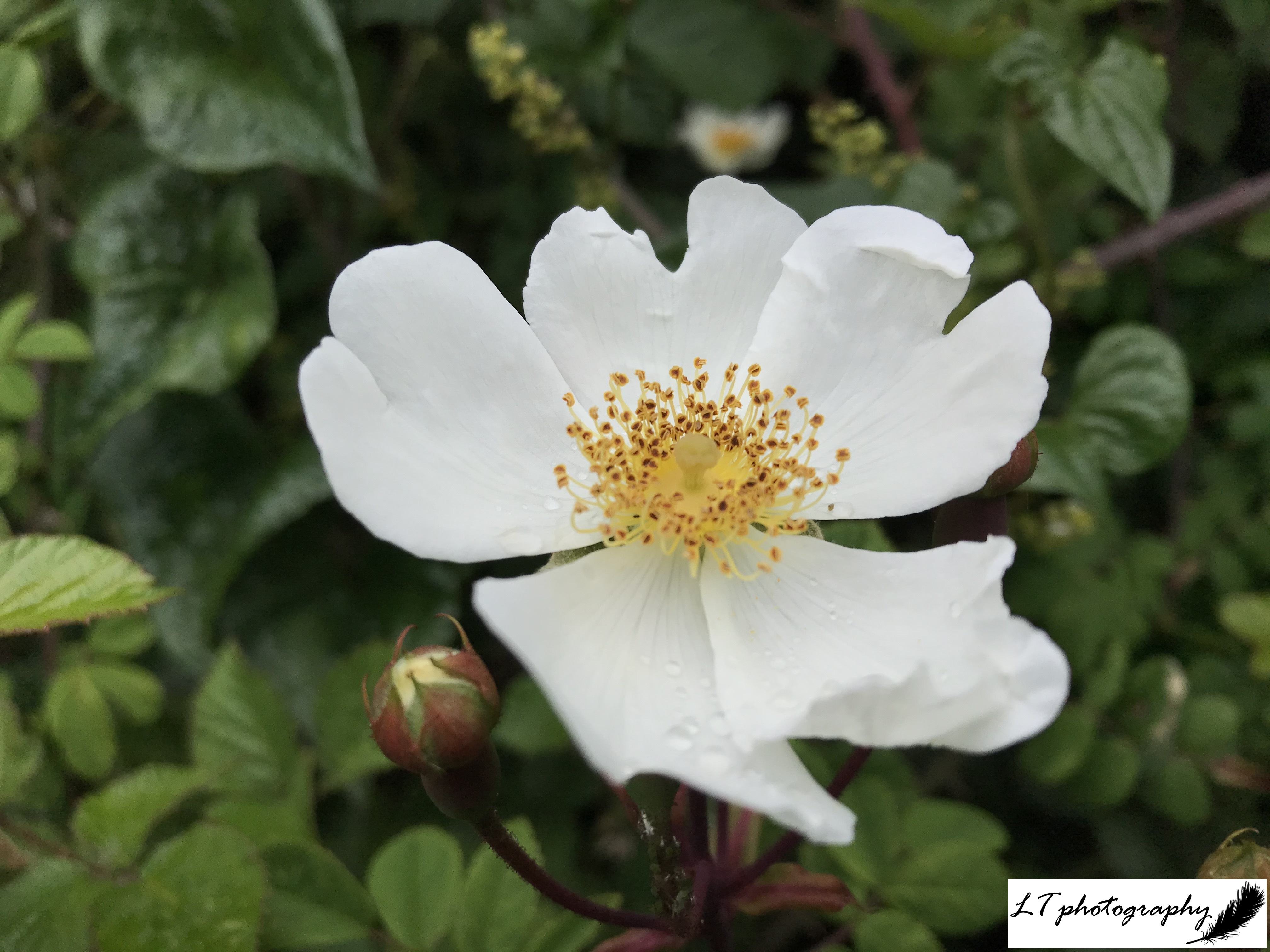
17) Field Rose – I have always loved taking photos of flowers and capturing their small details. Here a field rose, you can clearly see the reproductive organs from the stamens to the stigma.

How to… Identify Hedgerow Plants

Whizzing past our car windows, naturally bordering our fields and gardens, or providing a home for wildlife. Often going unseen and unnoticed, hedgerows are a widespread and overlooked habitat right on our doorsteps. Bountiful and bursting with life, each hedge is unique from the next, with a story to be told and a world to be explored.

Blackthorn 5

From butterflies and birds to hedgehogs and dormice, an incredible number of species rely on the plants in our hedges for their survival, such as food, shelter, and corridors along which to travel. They do not just play a role for wildlife though, holding value in the wider landscape, providing us with services such as stopping soil erosion and buffering pollution. In this way, hedgerows have been important for humans and wildlife alike for hundreds of years!

20_03_20_Farm_Goldfinch_2

The first hedgerows can be dated back to the Bronze Age, when farmers cleared woodland to grow crops, leaving carefully maintained strips to act as boundaries. Some of these strips of ancient woodland can still be found today! Since then hedges have grown in popularity, but following the Second World War, many were ripped up to provide more space to grow food and for development. Despite approximately half of all hedges in Britain being lost during this time, thankfully the remaining were given protected status in 1997.

13_05_20_Farm_Sunrise_Hangings_Trees

The hedgerows rolling across our countryside today are a piece of history, full of life and colour and provide us with a whole host of resources. So, why not try and see this for yourself, and take a moment to see what you can find in a hedgerow local to you? To help, here’s my simple guide to identifying some of our iconic hedgerow species.

Hedgerow Plants

Blackthorn (Prunus spinosa)Blackthorn

  • Family: Rose – related to fruiting trees such as cherries and plums
  • Size: Up to 4m tall
  • Stems and twigs: Blackish and thorny
  • Leaves: 2-4cm long, oval-shaped tapering to a point with toothed margins
  • Flowers: Snow-white and 5-petalled with red-tipped anthers in the centre. Flowers late March-April, appearing BEFORE the leaves
  • Seeds: Produces fruit (sloes) which are small blackish plums with a bluish powdery surface. Tongue-numbingly tart to eat but popular to flavour gin
  • Range: Widespread and common throughout most of Britain
  • Fun Facts: Blackthorn, long used for making items such as walking and riding sticks, has long been associated with witchcraft

Spindle (Euonymus europaeus)Spindle

  • Indicator of an ancient hedgerow
  • Family: Staff-vine
  • Size: Up to 9m tall
  • Stems and twigs: Bark and 4-sided twigs are deep green, darkening with age
  • Leaves: 3-13cm long, shiny, mid-green, oval-shaped tapering to a point with finely toothed margins, and turning distinctively pinkish-red in autumn
  • Flowers: Greenish-white and 4-petalled in small overlooked stalked clusters. Flowers May-June
  • Seeds: Distinctive 4-lobed bright coral-pink berries
  • Range: Less common in Scotland and Ireland, found throughout England and Wales, but most frequent in the south
  • Fun Facts: The hard dense wood of spindle was used from ancient times to make spindles, whereas the leaves and seeds were powdered to dust on the skin of children to drive away lice

Cow parsley (Anthriscus sylvestris) Cow parsley

  • Family: Carrot – related to species such as parsnips and poison hemlock
  • Size: ~1m tall
  • Stems and twigs: Stems are hollow and furrowed, often becoming purple
  • Leaves: Fresh green, 3-pinnate, and sharply cut
  • Flowers: White, forming clusters known as umbels. Flowers April-June
  • Seeds: Round, smooth and broad-based
  • Range: Widespread and common throughout Britain and strongly associated with hedgerows
  • Fun Facts: Its folk-name is ‘Queen Anne’s lace’. This comes from a folk tale which said that the flowers would bloom for Queen Anne and her ladies in waiting and reflect the delicate lace they wore

Common Hazel (Corylus avellana)Hazel

  • Family: Birch – related to species such as silver birch, alders and hornbeams
  • Size: Up to 8m tall
  • Stems and twigs: Bark coppery brown, smooth and tending to peel
  • Leaves: 5-12cm long and almost circular with sawtooth edges
  • Flowers: Male= lemon-yellow catkins; Female= Tiny and bud-like with red styles. Flowers January-March BEFORE the leaves
  • Seeds: An edible nut encased at first in a thick-green husk before ripening in autumn
  • Range: Widespread and common throughout Britain
  • Fun Facts: Hazel rods have historically been used for a range of purposes from hurdles and coracles for fishing to house building and basketwork

Dog Rose (Rosa canina)

  • Family: Rose
  • Size: Up to 4m tall
  • Stems and twigs: Arching stems with broad-based strongly hooked prickles
  • Leaves: Dark green and oval-shaped tapering to a point with toothed edges
  • Flowers: Flat and fragrant white or pale pink, with large petals and hairless stalks. Flowers June-July
  • Seeds: Fruit, known as a hip, that is egg-shaped and bright red
  • Range: Most common and variable wild rose, widespread throughout Britain, but most frequent in the south
  • Fun Facts: Adopted as a symbol of the British monarchy and England since the reign of Henry VII. It is also a valuable medicinal plant, with its hips being made into a Vitamin C rich syrup for children

Field Rose (Rosa arvensis)

  • Compared to the Dog Rose, the Field Rose is shorter, growing up to about 2m, with slightly smaller, cup-shaped creamy-white flowers that flower about a fortnight later, from June-July. Also, the flowers’ sepals are often purplish, the styles are in a column, and the hips are smaller and often more round. The Field Rose’s range does not stretch as far north as that of the Dog Rose, being absent from Scotland

Roses

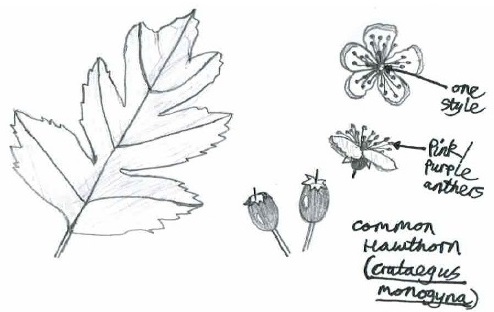
Common Hawthorn (Crataegus monogyna)Hawthorn

  • Family: Rose
  • Size: Up to 10m tall
  • Stems and twigs: Very thorny and hairless
  • Leaves: Leafing in April, the leaves are shiny and roughly oval-shaped with 3-5 deeply cut lobes
  • Flowers: White fragrant (sickly sweet) flowers with pink/purple anthers, only one style and 5 petals. Become deeper pink as they fade
  • Seeds: Fruit, known as haws, have a single seed and ripen to a bright red
  • Range: Widespread and common throughout Britain
  • Fun Facts: Hawthorn is linked to Christian, pagan and medieval rites, and has ancient associations with May Day. Bringing hawthorn blossom in your house was believed to bring in illness and death upon you

Elder (Sambucus nigra)Elder

  • Family: Previously in the honeysuckle family , but now reclassified in moschatel
  • Size: Up to 10m tall
  • Stems and twigs: Strong smelling with corky and fissured bark
  • Leaves: Dark green, pinnate with 5-7 leaflets
  • Flowers: White, small and fragrant in flat-topped clusters with yellow anthers. Flowers May-August
  • Seeds: Produces a juicy edible purplish-black berry
  • Range: Widespread and common throughout Britain
  • Fun Facts: Has many uses from wines and jams, to toys and dyes. Also, it was believed that planting an elder tree near your house would keep the Devil away

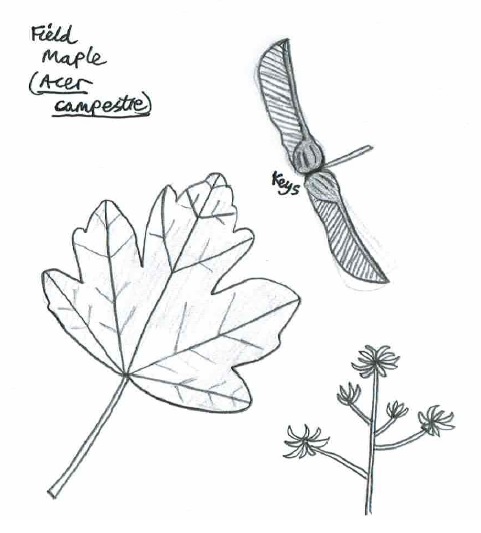
Field Maple (Acer campestre)Field Maple

  • Family: Soapberry – related to horse chestnut and lychee
  • Size: Up to 25m tall
  • Stems and twigs: Twigs downy
  • Leaves: Much smaller than sycamore at 4-7cm long and wide, rather bluntly lobed (3-5), and dark green. Turn distinctively amber in autumn
  • Flowers: Yellowish-green and carried in upright spikes. Flowers May-June after the leaves
  • Seeds: The seeds, known as keys, are winged and paired forming an angle of 180 degrees
  • Range: Common in England and East Wales, but less common elsewhere
  • Fun Facts: Wood used for furniture veneers, wall panelling, and violin-making, but previously used to make domestic utensils such as drinking bowls. As with all maple trees, the sap of the field maple can be used to make maple syrup

Bramble (Rubus fruticosus)Bramble

  • Family: Rose – closely related to species such as raspberries and dewberries
  • Size: Up to 4m tall or long
  • Stems and twigs: Prickly and half-evergreen
  • Leaves: 3-5 broad, toothed leaflets
  • Flowers: White or pink and flowers from May onwards
  • Seeds: Fruit is the familiar edible blackberry that starts green, then turns red, finally ripening to purple-black
  • Range: Widespread and common throughout Britain
  • Fun Facts: Folklore dictates that blackberries should not be picked after Old Michaelmas Day in October, as the Devil has sullied them. Brambles were also previously planted on graves to stop sheep grazing

Pedunculate or English oak (Quercus robur)

  • Family: Beech – related to species such as beech and sweet chestnut
  • Size: Up to 40m tall
  • Stems and twigs: Massive rugged grey-brown trunk and broad crown
  • Leaves: 10-12cm long, oblong, usually broader at the base and lobed, turning brown in autumn
  • Flowers: Yellow-green catkins flowering April-June
  • Seeds: Produces the familiar acorn, with scaly cups and clusters carried on long stalks
  • Range: Widespread and common throughout Britain
  • Fun Facts: Druids in Celtic Britain held the oak tree sacred, with the oak becoming an English national symbol of strength

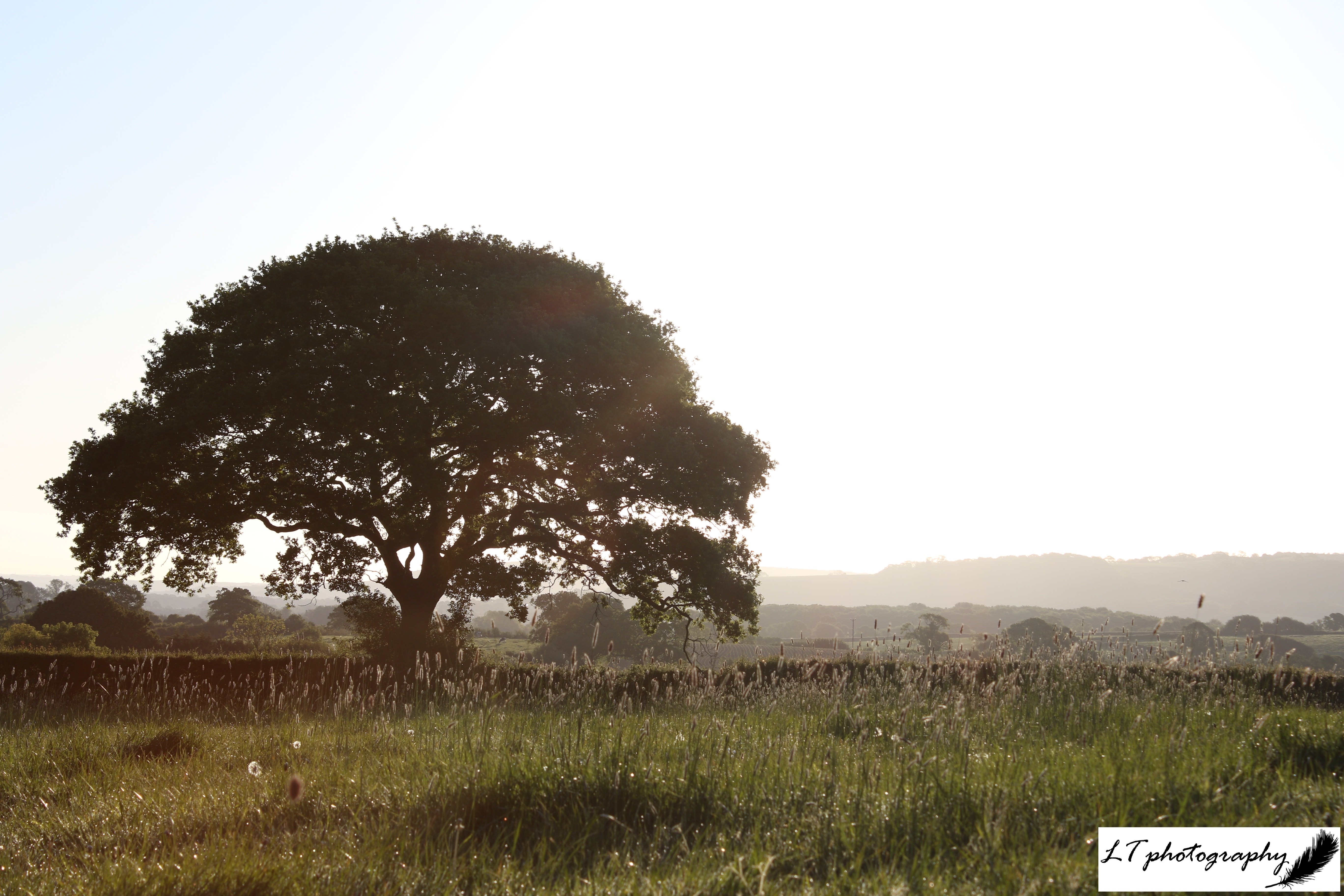
13_05_20_Sunrise_Oak_Tree_Grass_3

Sessile oak (Quercus petraea)

  • Differs to Pedunculate Oak in that the leaves taper to an unlobed base and have long stalks. Also, the clustered acorns are almost stalk-less with downy cups. Prefers more acid soils and is more common in the West of Britain

Oak Trees

Other species

  • There are lots of flowering species to also be found at the base of hedges. To help with identifying these, check out my ‘How to… Identify Woodland Flowers’ guide, to help with crossover species, such as bluebells, primroses, and moschatel

All photos and drawings are my own

How to… Identify British Woodland Flowers

At this moment, as spring moves on, the natural world outside our doors is going through one of its busiest times. From birds nesting to the leaves bursting, the world around us is buzzing with the promise of new life.

During spring, one of my favourite things to do is walk in the dappled light beneath an increasing canopy, between steadfast trees and amongst undergrowth blooming with colour. Walking through a woodland is an easy way to lose yourself for a little while and give yourself a much needed lift. To connect further, an easy way on a woodland walk is to pick out the plants and animals that you can recognise around you. This can often be more difficult than first thought.

So to help you be mindful of the wonderful world out there, I have put together a simple guide to some of my favourite woodland flowering species that are easy to find during spring. It is time to get out there and explore!

16_04_20_Horseshoe_Woods_Bluebells_8

Well known flowers

Primrose (Primula vulgaris)Primrose

  • Size: Low carpeter; up to 12cm tall
  • Flowers: Pale yellow (there are pink-purple forms) with a deep yellow eye and honey-guides
  • Stems and leaves: Long shaggily hairy stems with wrinkled and toothed leaves, that are hairless above and hairy below (up to 15cm long)
  • When does it flower? March-May (heralds the arrival of spring)
  • Where can it be found? Woods, hedgebanks and grassy places throughout Britain


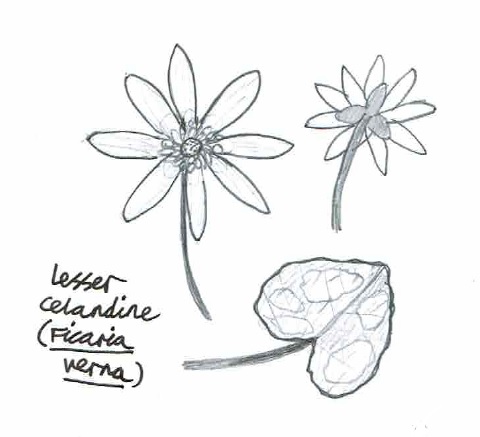
Lesser Celandine (Ficaria verna)Lesser celandine

  • Size: Up to 30cm tall
  • Flowers: Solitary with 8-12 glossy yellow petals and 3 sepals
  • Stems and leaves: Hairless with leaves that are long-stalked, heart-shaped, and dark green. Sometimes bear dark or light markings
  • When does it flower? February-May
  • Where can it be found? Woods, grassland, hedges, waysides, bare ground and by fresh water throughout Britain


Bluebell (Hyacinthoides non-scriptus)Bluebell 2

  • Size: Up to 50cm tall
  • Flowers: Azure blue (though sometimes pink or white) with cream-coloured anthers. Fragrant and bell-shaped with six turned-down lobes
  • Stems and leaves: Long, narrow, strap-shaped, keeled leaves
  • When does it flower? April-June
  • Where can it be found? Carpeting woodlands, hedges, scrubland, on sea-cliffs and mountains in most parts of Britain


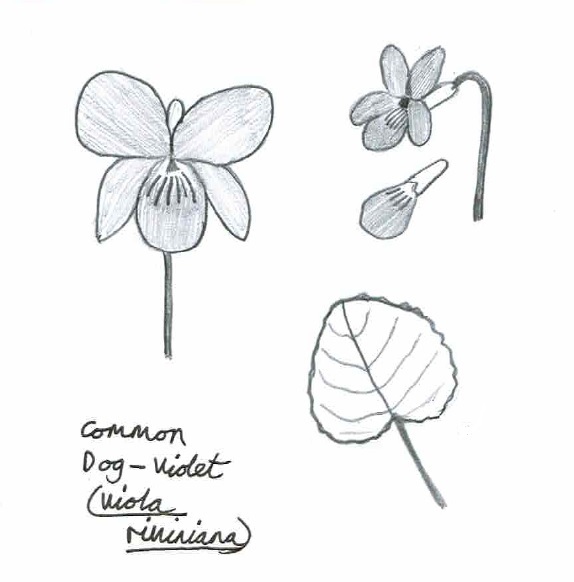
Common Dog-violet (Viola riviniana)Common Dog-Violet

  • Most common wild violet species in the UK
  • Size: Up to 15cm tall
  • Flowers: Unscented with petals that are blue-violet but variable, usually overlapping. Stout spur, curved upward, blunt, notched at tip and paler than petals (often creamy)
  • Stems and leaves: Hairless or only slightly downy leaves and stalks. The leaves are long-stalked, heart-shaped, pointed at the tip, and as broad as they are long
  • When does it flower? March-May and sometimes July-September
  • Where can it be found? Woods, hedges, pastures, heaths and rocky areas throughout the British isles

Sweet Violet (Viola odorata)

  • Size: Up to 15cm tall
  • Flowers: Blue-violet, often white, occasionally lilac, pink or yellow. Only fragrant violet in Britain
  • Stems and leaves: Leaves are heart-shaped, downy and enlarged in summer
  • When does it flower? February-May
  • Where can it be found? Woods and hedges over most of the British isles


Plants known to some

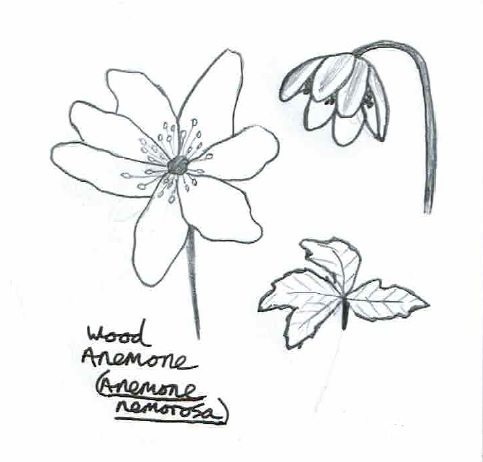
Wood anemone (Anemone nemorosa)Wood Anemone

  • Size: Up to 30cm tall
  • Flowers: Solitary white (sometimes tinged purple) that nod when closed
  • Stems and leaves: About two-thirds of the way up each slender stem is a ring of three leaves (trifoliate), each divided into three toothed segments. Rising above the leaves is the solitary flower
  • When does it flower? March-May
  • Where can it be found? Carpeting woodlands in spring, as well as hedge-banks and occasionally grasslands throughout Britain


Greater stitchwort (Stellaria holostea)Greater Stitchwort

  • Size: Up to 60cm tall
  • Flowers: Deeply cleft white petals
  • Stems and leaves: Stalkless, narrow and long-pointed leaves with a slightly grey tinge (15-60cm long)
  • When does it flower? March-June
  • Where can it be found? Across woodlands, hedgerows and scrub areas throughout Britain except some northern isles


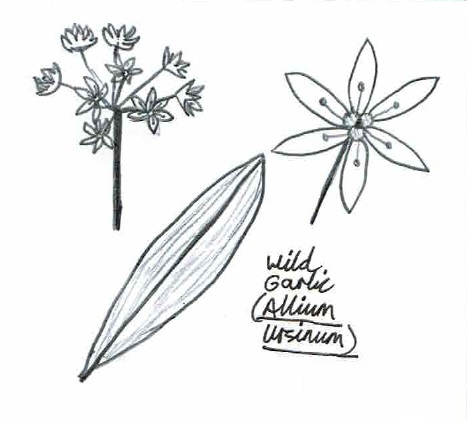
Wild Garlic/Ramsons (Allium ursinum) Wild Garlic

  • Most common and only native broad-leaved garlic
  • Size: Up to 45cm tall
  • Flowers: White star-like flowers
  • Stems and leaves: Have leafless flowering stems. The leaves are broad, flat, lanceolate and distinctive smelling
  • When does it flower? April-June
  • Where can it be found? Often seen growing in large clumps in woods and shady places throughout Britain


Wild Strawberry (Fragaria vesca)

  • Size: Up to 30cm tall
  • Flowers: White flowers with no gaps between the 5 unnotched petals. Produce reddish fleshy strawberries that have protruding pips
  • Stems and leaves: Hairy. Leaves are trefoil on long stalks and are brighter green on top and pale below. Lower leaves form a rosette
  • When does it flower? April-July
  • Where can it be found? Woods, scrub, and grassland throughout the British Isles

Strawberry

Barren Strawberry (Potentilla sterilis)

  • Size: Up to 30cm tall
  • Flowers: Unlike wild strawberry, there are gaps between the slightly notched white petals. Produces unstrawberry-like non-fleshy fruits
  • Stems and leaves: They are hairy, but unlike wild strawberry, they have smaller, shorter stems and blue-green leaves
  • When does it flower? Earlier than wild strawberry, from February-May
  • Where can it be found? Woodlands, scrub, hedgebanks and other dry banks

16_04_20_Horseshoe_Woods_Flower_Wild_Strawberry_2


Less known plants

Yellow Archangel (Lamiastrum galeobdolon)Yellow Archangel

  • Size: Up to 30cm tall
  • Flowers: Yellow and two-lipped, with the upper lip being helmet-shaped and the lower having three almost equal-sized lobes
  • Stems and leaves: Hairy and patch-forming, with leafy and upright flowering stems. The leaves are long-stalked, oval in shape, dark green, irregularly toothed and borne in opposite pairs
  • When does it flower? April-June
  • Where can it be found? Woodlands and hedgerows in England and Wales


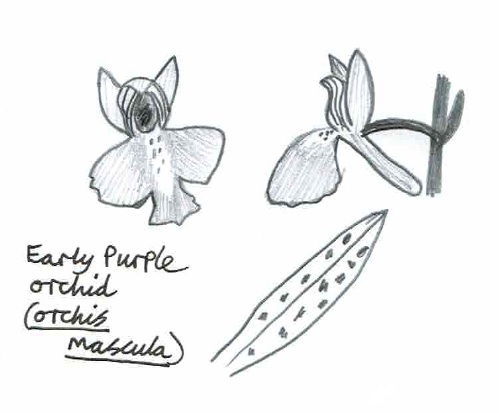
Early Purple Orchid (Orchis mascula)Early Purple Orchid

  • Size: Up to 40cm tall
  • Flowers: Form a spike on a stout, upright stem. Usually some shade of purple, sometimes pinkish or white, and are three-lobed with three inner and three outer petals. The upper five petals are oval and form a hood; the lower petal extends into a long lip. Scent described as tom-cat-like
  • Stems and leaves: Lance-shaped, varying from broad to narrow, and usually have round, purple-black blotches on their upper surface
  • When does it flower? April-June
  • Where can it be found? Frequently in woodlands, and is widespread throughout Britain


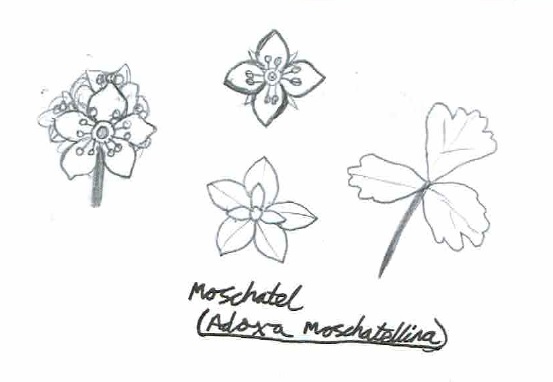
Moschatel (Adoxa moschatellina)Moschatel

  • Also known as townhall clock and is the only species in its family
  • Size: Up to 15cm tall
  • Flowers: Flower heads greenish, almost forming a cube with one flower on each side (5 petals each) and one flower on top (4 petals). Scent is musk-like, likened to almond or elder blossom
  • Stems and leaves: Hairless with long-stalked trefoil leaves, that are positioned in one pair on each flower-stalk
  • When does it flower? March-May
  • Where can it be found? Woods, hedge-banks, and rocky mountain places, locally common throughout Britain


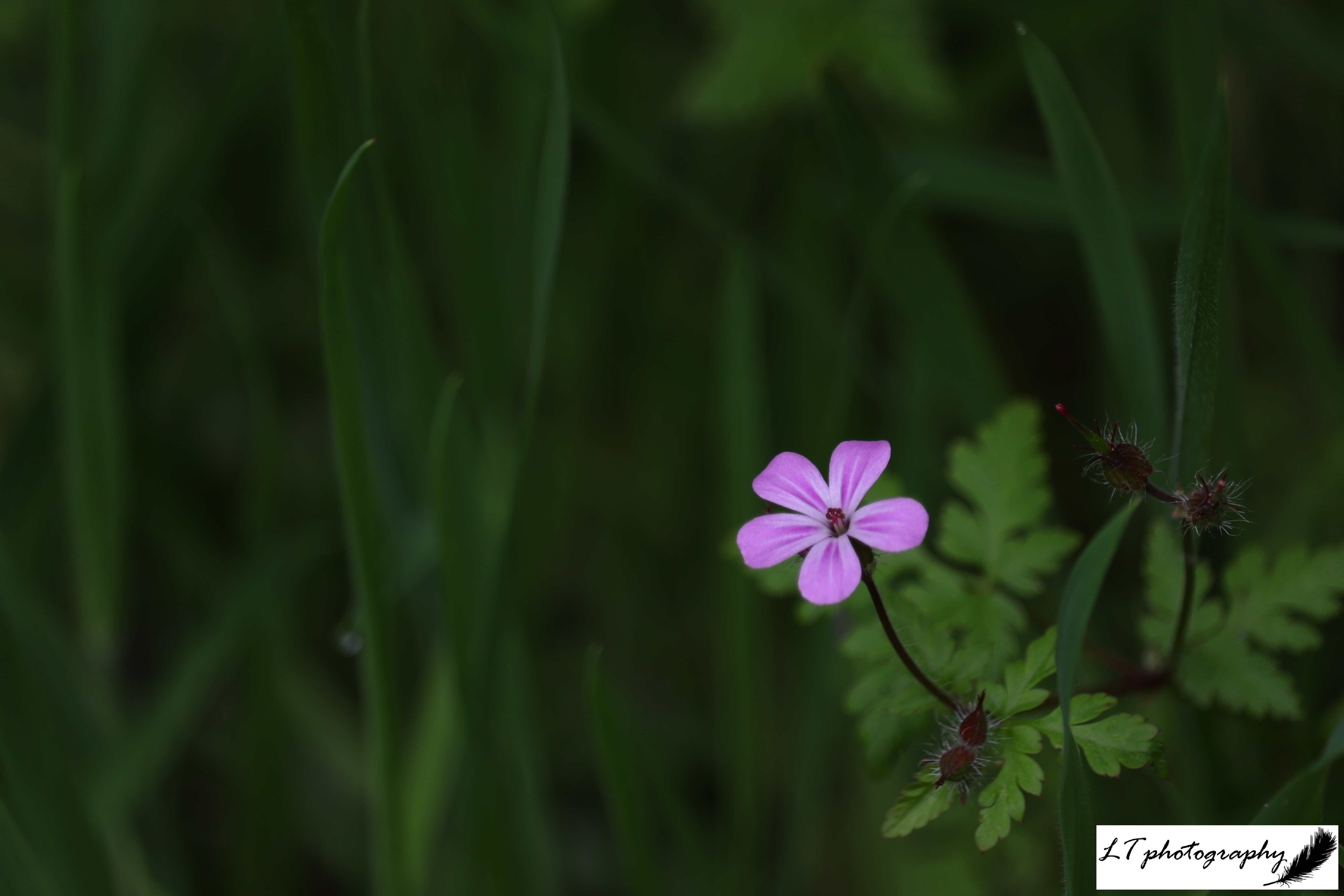
Herb-robert (Geranium robertianum)Herb-Robert

  • Size: Up to 50cm tall
  • Flowers: Strong smelling and deep pink, occasionally white, with rounded petals that are not notched
  • Stems and leaves: Hairy with stems that are often reddish and leaves that are fern-like with 3-5 lobes
  • When does it flower? April-November
  • Where can it be found? Shady spots on hedgebanks, rocks and walls or in woods throughout Britain

25_05_19_Horseshoe_Wood_Herb_Robert_3


All photos and drawings are my own 

Golden days of autumn

As we ease into the holiday season and creep closer to the closing of the year, it is time to contemplate and reflect, be thankful for what we have, and celebrate what is important to you. Looking outwards during this time, to the world beyond the window, autumn has now also made its departure. Skeletal trees, howling gales, freezing temperatures, and dormancy characterise the landscape, though there are hidden gems to be found. As you cuddle up in your home on this cold winter’s evening, let us now remember back to those golden days of autumn.

Autumn as it happened

When I think of autumn, the first thoughts that come to mind are dazzling colours, falling leaves collecting in drifts on the ground, bountiful fruit, and migrant birds passing through. Though my favourite season tends to be blossoming spring, autumn is a time that is often the favourite of many. Each season has something special to offer and autumn is no different!

This year autumn has been a bit more unpredictable and turbulent in its advancement than many other years, being the 5th wettest english autumn since records began. Despite this, it has mainly progressed in the traditional fashion.

September saw evening temperatures drop, the start of misty mornings with spider webs shining with dew, ripening fruit and nuts, grey squirrels beginning to cache food, the emergence of the first autumn fungi, and the start of birds moving through.

October saw the trees beginning to change, becoming decked out in resplendent colour, fungi in abundance, the buzz of late insects such as wasps and honeybees, goldfinches harvesting seeds from thistles and teasels, fallen acorns becoming available as a valuable food source, the squawks of jays collecting nuts, and by the end of the month most migrants had moved on.

As the season of decline and decay moved on also, November saw oak trees in colour, other trees losing their leaves on mass, cackling fieldfare in the hedgerows, withering bracken, plentiful ripe seeds and fruit, redwings making their return, wildfowl and wading birds settling in for winter, thrushes and blackbirds harvesting fruit, winter flocks forming as they scavenge in bushes and along hedgerows, and lengthening nights.

By the end of November, most of the trees and hedgerows were bare of leaves, conditions were cooler, frost and fog were more common in the mornings, and winter was on its way.

A day in the woods

As part of my celebration of autumn this year, I made a visit to my favourite local woods. On this October trip, I spent time being mindful, capturing the world around me through words and through a lens.

‘As I step into the woods, it is noticeable how the vegetation is beginning to die away, though the ferns still stand sentinel over the woodland floor. Looking closer though, fungi is dotted everwhere. Small capped mushrooms stand only a couple of centimetres tall, whilst larger and more exquisite shapes stand taller and hang from the trunks of trees.

A nuthatch lands on a branch above my head. I look up and see that autumn is already in full swing, with the trees working at different paces, creating a spectacular mosaic of colour from fading greens to copper and gold. The trees are beginning to lose their magnificent mantels in spectacular style. Berries adorn holly and hawthorn bushes, shining scarlet in the strained autumn light.

My other senses are also stimulated. To my nose, the forest smells fresh, though with every step the woodland floor releases an aroma of damp decay and rotting vegetation. On my exposed skin, a gentle cool breeze plays, whilst midges crawl and bite.

My ears are most active though. Long-tailed tits flit from tree to tree around me, making high-pitched calls as they feed as a family, characteristic of autumn. Robins and tits also sing their songs in the trees around, before a wren sounds its alarm call and the other birds join in. Further away, still in the forest, pheasants fight, a collared dove coos, and a jay caws its raucous call as it goes about its way, storing food for winter. Outside of the wood, I can also hear farm sounds along with crows and rooks cawing.

Though the buzz of woodland life is beginning to slow, decay and slip away, the landscape is still full of life.’

Sunlight

The science of autumn

Why do leaves change colour?

  • This process is triggered by changing day length and is sped up by increased sunlight and cooler temperatures. It occurs when pigments, such as chlorophyll, is broken down, and then transported back into the branch. The colour is produced by the remaining degraded pigments in the leaf. Different amounts of pigment left in leaves creates the different colours.

Why do birds migrate?

  • Birds migrate from areas of low or decreasing resources, such as food, to areas of high or increasing resources. It can be triggered by factors such as changes in day length, temperature, or is simply a genetic predisposition. Migration can vary from short within-country movement to long-distance migration. It is still not fully understood how birds navigate during migration, but suggestions include using landmarks or an inbuilt magnetic compass.

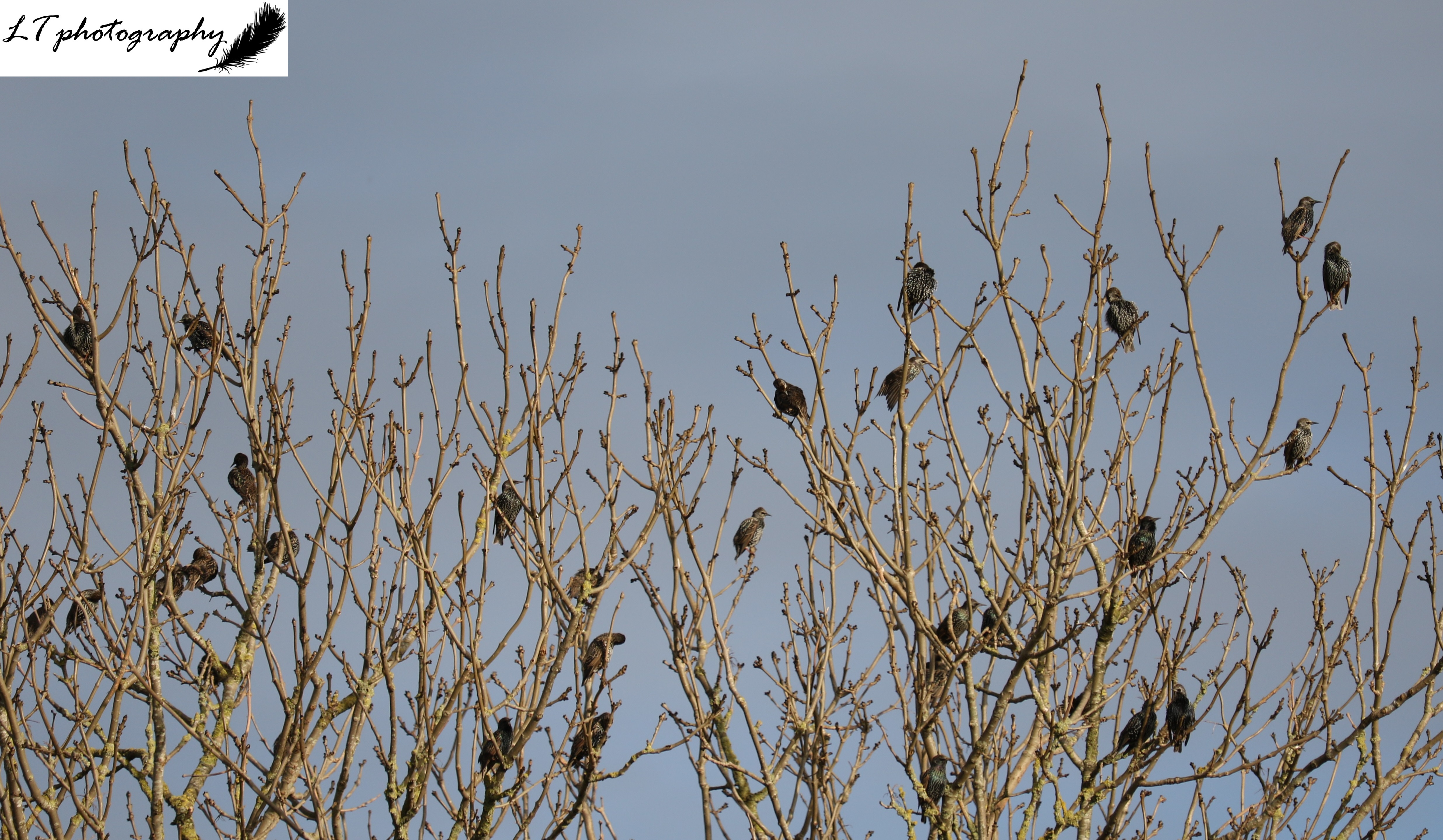
Starlings

How do mammals survive the winter?

  • A variety of adaptations are used during the winter by different mammal species. They grow longer, thicker coats. increase food intake to produce fat reserves, and create underground nests where they can sleep through colder days. Mammals that find it difficult to cope during the winter, such as those that eat mainly insects, instead slow their body processes down nearly to a stand still to survive. This is called hibernation with common examples being seen in hedgehogs, bats and dormice.

Rabbit

The end of autumn’s glory

This year’s autumn has been fantastically colourful trees and woodlands, incredible wildlife displays and cliche autumnal moments.

Buzzard and Pheasants

One of my highlights has to be experiencing some of the more interesting migrants that rock up on the British shores during autumn. For me these included wacky wrynecks and marvellous marsh warblers giving some exciting moments.

Now autumn 2019 has come and gone in a blaze of glory, though it was a little wet at times!

Sunset

How spring happened 2017-2019

Over the last few years, I have taken part in recording how spring has unfurled at my home in Dorset, for a citizen science scheme. As at the end of each spring I upload my results to an online site, in 2017 I decided that I should be writing my observations down for myself in my wildlife journal, making it easy to look back on them in the future.

Now I have recorded dates for many different wildlife spring events, from trees coming into leaf to the return of migrants, for 2017, 2018, and 2019. So here, I want to take a moment to look back at these and reflect on what they may show about spring and its current emergence, and if there is anything interesting we can take from this.

10_05_19_Horseshoe_Woods_Cassie_Bluebells_11

Trees

In my local area, you can find a large variety of native and non-native tree species. Over the last 3 years, I have consistently made observations for 5 tree species: ash, sycamore, horse chestnut, pedunculate oak and silver birch.

25_05_19_Outside

For the 5 tree species, some similar patterns can be observed from my recorded spring dates for the last 3 years. In 2018, a colder winter was experienced, with heavy snowfalls taking place in January, February and March. Evidently this had an effect on the timing of budburst, first leaf and first flowering for tree species, in comparison to the year before.

Budburst was 36 days later for ash trees (27/04/18), 10 days later for sycamore trees (08/04/18), 19 days later for horse chestnut trees (20/03/18), 21 days later for oak trees (18/04/18), and 26 days later for silver birch trees (12/04/18). The same amount of lateness was also seen with the first leaf and first flowering for these tree species in 2018.

19_04_19_Farm_Oak_Tree_2

Due to the weather of spring 2018, this meant that when looking at how this year’s spring unfurled (2019) in comparison to last year, predictably budburst, first leaf and first flowering took place 4-53 days earlier than 2018. When comparing 2019 with 2017 though, I am able to get an idea of the average trend for the three years. For example, ash and silver birch events are getting later, as are horse chestnut flowering and sycamore first leaf. Sycamore, horse chestnut and oak generally show a trend though of spring events getting earlier, from a couple of days to a month.

30_03_19_Farm_Horse_Chestnut_Tree_2

Shrubs

For shrubs, the selection I have been observing during spring each year are: blackthorn, dog rose, elder, hawthorn and lilac. From 2017-2019, a similar trend was predominantly observed in these species as with tree species.
In comparison to 2017, blackthorn first flowering was 14 days later in 2018 (30/03/18), elder budburst was 9 days later (13/03/18), elder first leaf was 23 days later (30/03/18) , hawthorn budburst was 33 days later (02/04/18), hawthorn first leaf was 6 days later (08/04/18), and lilac first flowering was 27 days later (07/05/18).

Then when looking at 2019, spring dates were earlier in comparison to 2018, with blackthorn budburst, first leaf and first flowering being 20, 9 and 29 days earlier, dog rose budburst, first leaf and first flowering being 22 and 29 days earlier, elder budburst, first leaf and first flowering being 9, 24 and 8 days earlier, hawthorn budburst and first flowering being 36 and 13 days earlier, and lilac first flowering being 14 days earlier.

Also, similarly to tree species, blackthorn and elder both showed that from 2017 to 2019 spring events have become earlier on average. Hawthorn and lilac showed the opposite trend though, with hawthorn first leaf and first flowering becoming later over the 3 years on average, if only by 7-13 days.

21_04_19_Garden_Lilac_Sunset

Flowers 

In comparing spring between 2017, 2018 and 2019, it is evident that for many plant species the same trends have been shown from year to year. This is not true for all though, as between bluebells, cuckooflowers, lesser celandines, oxeye daisies, snowdrops and wood anemones, flowering times varied from being later in 2018 and earlier in 2019, to being earlier overall, or being similar overall.

22_06_19_Farm_Chalk_Mound_Oxeye_Daisies_10

  • Bluebells flowered 17 days later in 2018 (13/04/18) than 2017, and then 10 days earlier in 2019 compared to 2018. From 2017 to 2019, this was 7 days later overall.

  • Cuckooflowers flowered 16 days later in 2018 (20/04/18) than 2017, and then 12 days earlier in 2019 compared to 2018. From 2017 to 2019, this was 4 days later overall.
  • Lesser celandines flowered 5 days earlier from 2017 to 2018 (24/02/18), followed by another 13 days earlier in 2019.

  • Snowdrops flowered 10 days earlier from 2017 to 2018 (10/01/18), followed by another 7 days earlier in 2019.
  • Wood anemones flowered around a similar date at the beginning of March each year.

12_04_19_Horseshoe_Wood_Anemone_7

  • Oxeye daisies flowered around a similar date at the end of May each year.

Grasses

Grass species also showed a differing trend to tree and shrub species for 2017-2019, with a united pattern of flowering later each year. When observing spring events with grasses, I observe from year to year 4 species: cocksfoot, meadow foxtail, timothy, and yorkshire fog.

22_06_19_Farm_Chalk_Mound_Yorkshire_Fog_Grass_2

Only timothy had observations made for 2017, and so in comparing with 2018, it was found to have flowered 18 days later (18/05/18). This is in line with comparisons between 2018 and 2019, where it was found that cocksfoot flowered 4 days later (30/05/19), meadow foxtail flowered 14 days later (15/05/19), timothy flowered 23 days later (10/06/19), and yorkshire fog flowered 14 days later (12/06/19).

Birds

Though I have started increasing my recordings of different bird species during spring, I only have records for 2+ years for rooks, blackcaps, chiffchaffs, house martins, song thrushes, cuckoos, and swallows.

  • Following the first snowfall of the year, rooks were first seen to be nest building 16 days earlier in 2018 (04/02/18) than 2017, but with no snow, this was 11 days later in 2019.
  • Blackcaps returned to my local area 12 days later in 2018 (11/04/18) than 2017.
  • Chiffchaffs returned 13 days later in 2018 (26/03/18) than 2017, following the last of the snow and cold weather. Consequently, in 2019 they returned 8 days earlier than 2019 (15/02/19), closer to the 2017 date.
  • House martins returned 12 days later in 2018 (25/05/18) than 2017, whilst being 31 days earlier in 2019 than 2018.
  • Male song thrushes were first heard singing in 2018 on 28/01/18, 8 days earlier than 2017. In 2019, this occurred a lot earlier though, 30 days earlier, falling on 29/12/18.
  • Male cuckoo heard calling at a similar time at the end of May in 2018 and 2019.
  • Swallows returned to my local area at a similar time at the end of March/beginning of April in 2017, 2018 and 2019.

Insects

22_06_19_Garden_Yellow_Flower_Bee

In line with tree and shrub species, the first sightings recorded each spring of insects followed a general pattern of emerging later in 2018 than 2017, and earlier in 2019 than 2018. This was true for:

  • Brimstone butterflies – 13 days later on 14th April 2018 and 47 days earlier on 26th February 2019
  • Peacock butterflies – 14 days later on 20th April 2018 and 26 days earlier on 25th March 2019
  • Small tortoiseshell butterflies – 31 days later on 26th April 2018 and 25 days earlier on 1st April 2019
  • Speckled wood butterflies – 20 days later on 26th April 2018 and 4 days earlier on 22nd April 2019
  • Orange tip butterflies – 28 days later on 4th May 2018 and 33 days earlier on 1st April 2019
  • Red admiral butterflies – 27 days earlier on 22nd April 2019 
  • 7-spot ladybirds – 19 days later on 25th April 2018
  • Queen wasps – 47 days earlier on 31st March 2019
  • Red-tailed bumblebees – 13 days earlier on 21st April 2019

25_05_19_Horseshoe_Wood_Speckled_Wood_Butterfly_3

Summary

With my love of spring, each year I have enjoyed recording the dates of when things happen during spring, such as the first swallow, first leaf or first elder flower. It has been satisfying now to be able to take a moment to put a few of my records together and take a look at how spring has unfurled over the last few years and what this could mean.

For some species, events are getting earlier, probably due to warmer temperatures earlier on in the year and during the winter before. For others, they are in fact getting later, which will be related to other weather and environmental factors here and further afield. Either way, the ‘norm’ is changing and it will be interesting to see how this could progress over the next few years to come.

19_04_19_Farm_Cows_Milk_Blackthorn_3

Winter into spring: April on the farm

April is one of my favourite months of the year on the farm. During April, the Dorset countryside begins to burst into new life. Newborn lambs bounce in the fields, newborn calves snooze in the fields in the spring sunshine, birds begin to nest and raise a new generation, and flowers carpet the woodlands.

Plants this April still followed a trend of being late, with some woodlands not becoming decked out in their full splendour during this month like in past years. Still Bluebells, wild garlic, early purple orchids and late wood anemones began to coat the woodland floor. Also, the woodland ferns began to unfurl in the woods later than usual.

During this April, trees were very much still late, with sycamore and silver birch finally bursting into leaf. Oaks were noticeably asynchronous in their bud burst, with some trees on there way to being in full leaf and others yet to start.

April saw the main crop of migrants arriving on warm winds. This year our barn swallows returned on April 6th, exactly the same date as in 2015! By the time we were fully into April, bird breeding pairs had been firmly established, and the nesting season for many bird species was fully under way. During April, more birds can be heard singing at dawn than any other time of year, which is quite magical to hear.

This year the tawny owls are breeding later than last year, but by the end of April the first hissing calls of tawny owl fledglings could be heard resonating through Dorset woodlands.

Life could be seen blooming everywhere throughout April. Dog violets and cowslips, among other species, were seen flowering along roadside banks.

WP_20160427_002

27/04/16

Brimstone butterflies, orange tip butterflies, and peacock butterflies all began to emerge during the first half of April.

Throughout April, I made myself busy amongst the mounds university revision, by setting up my camera trap at different popular sites around our farmland. It was amazing to see the first badger cubs emerge from their den, and even more special to me, was being able to watch fox cubs beginning to explore above ground with their siblings, during the second half of the month. Fox cubs have to be my highlight of beautiful April!