My year, last year, was heavily rooted in nature, from new life and wild hobbies to holidays and my nature photography. It was a year to grow and expand my horizons, to experiment and continue to enjoy and capture the magic of the natural world around us. Some of my many highlights include getting up to watch the sun rise over Devon, hiking through Herefordshire, and producing my very first mass produced calendar.
It is typical on my adventures to have a camera in tow or at least a phone or camera trap, and so every year I now use the 12 Days of Christmas to look back on 12 moments of the year in photos. I never know what photos I will end up selecting of so many, but to me they are all snapshots of nature’s hidden beauty, and allow me to bring a splash of colour to people’s homes during the tough winter months.
Here are my latest 12 Days of Laura’s Wild Photos all in one place!
The 12 Days
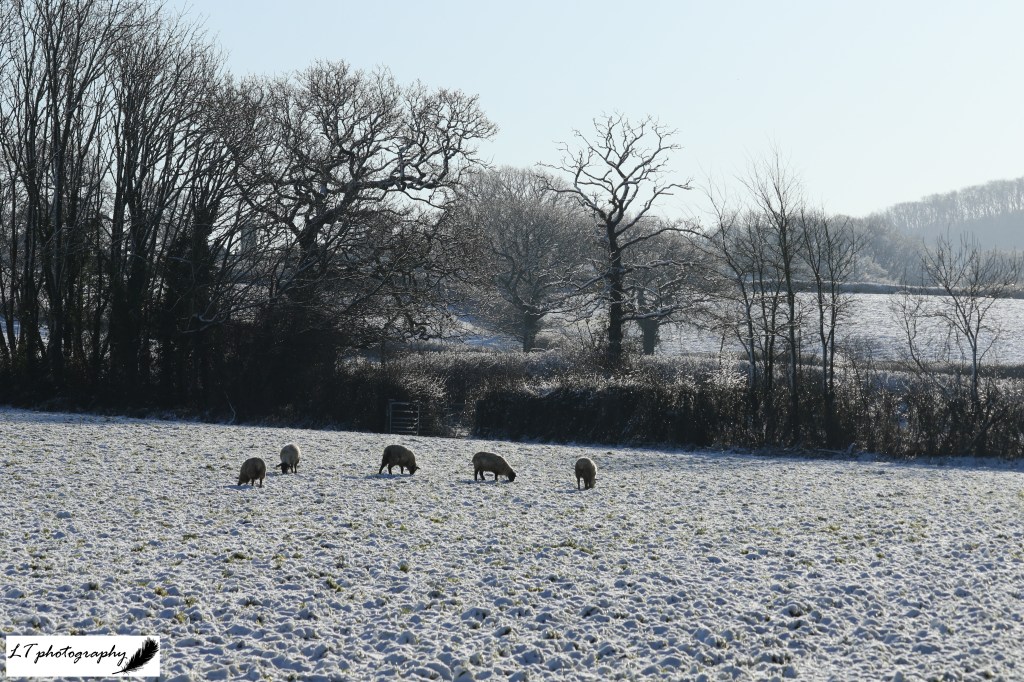
Day 1 – On Christmas Day, I shared a photo taken during the January snows of 2025. I love the skeletal trees providing a backdrop for young sheep grazing on a blanket of glistening snow.
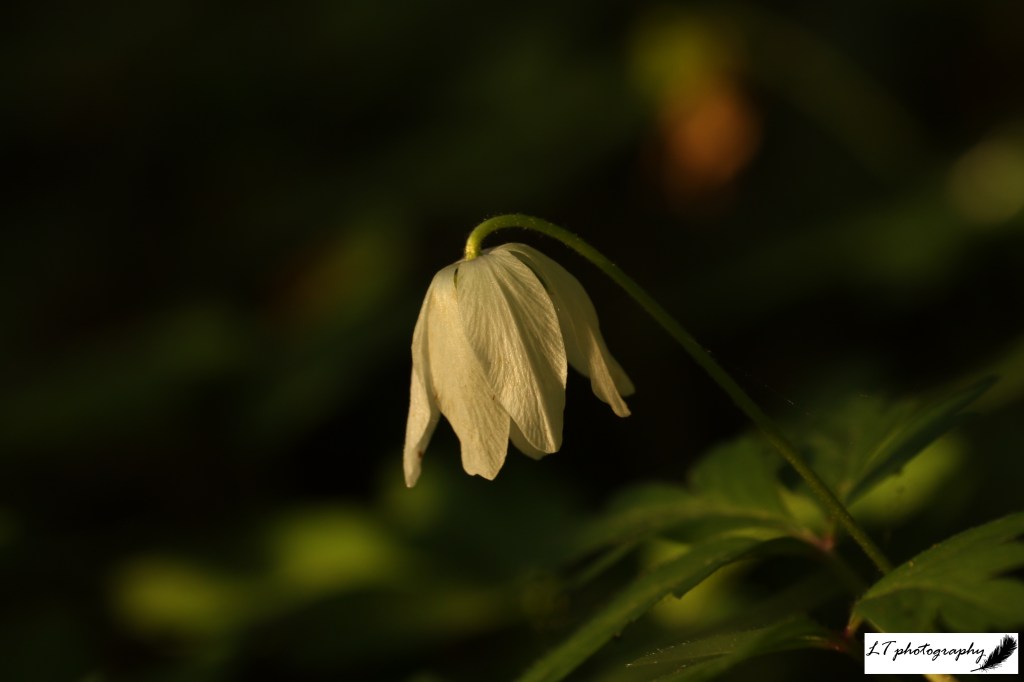
Day 2 – In my nature photography, I love playing with the use of light and shape to capture a moment of wild magic. Here this wild anemone, nestled in the undergrowth of a spring woodland, is a moment of new growth, warmth and hidden beauty.
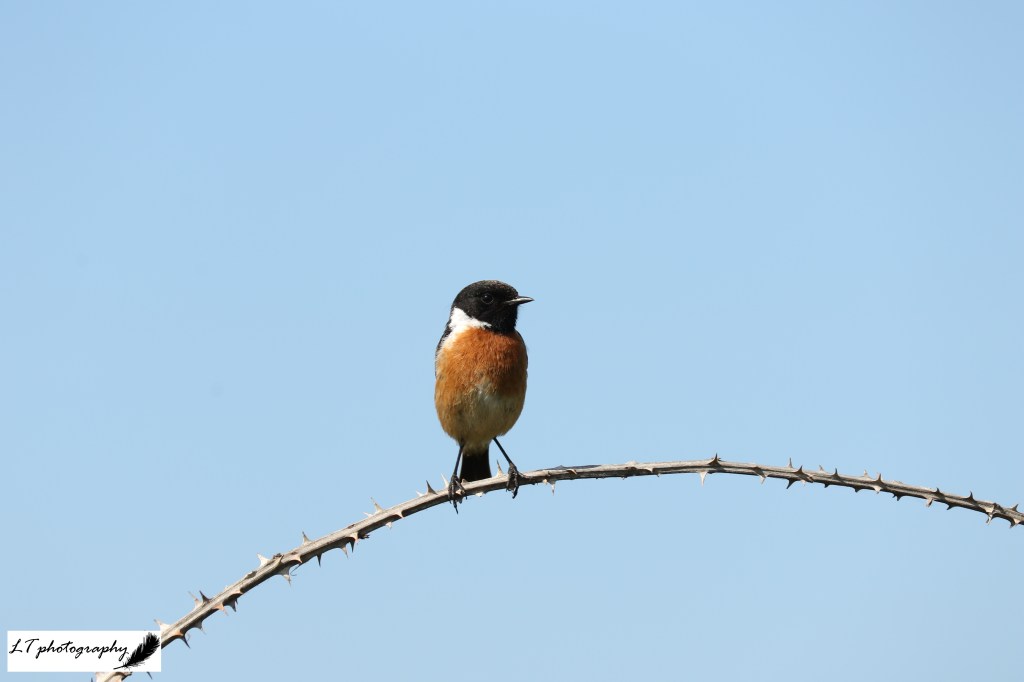
Day 3 – I love an adventure, from exploring close to home and holidaying in the UK to enjoying the wilds of another continent. This stonechat comes from one of my 2025 adventures, when I took a break in beautiful North Devon with my urban buddy Emma Rogan (check out Rural vs Urban).
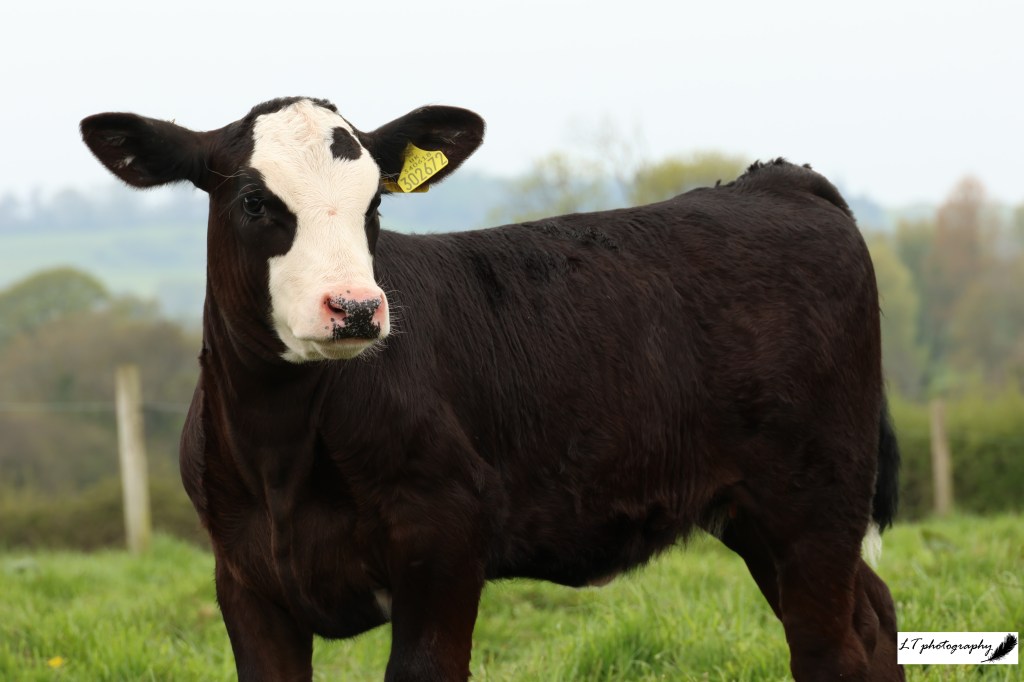
Day 4 – I will always be a farmer’s daughter at heart, and from this place I get hours of enjoyment sat in fields capturing the characters and antics of cows and calves. You never know what will happen or who will be the star, and here is a young suckler calf called Orchid, on a grey but lush green day during April 2025.
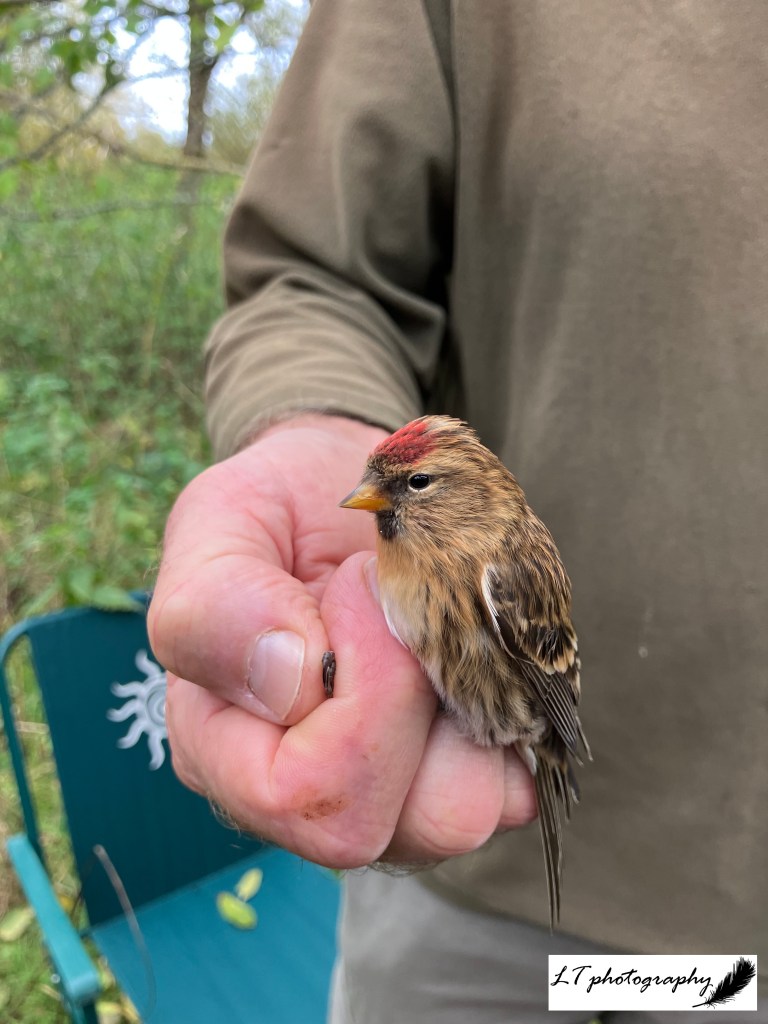
Day 5 – Another part of my life alongside photography is bird ringing, where birds are safely caught and ringed with a metal ring to allow all sorts of data to be collected about their populations. Here’s one of my favourite birds caught in 2025, a very smartly marked lesser redpoll.
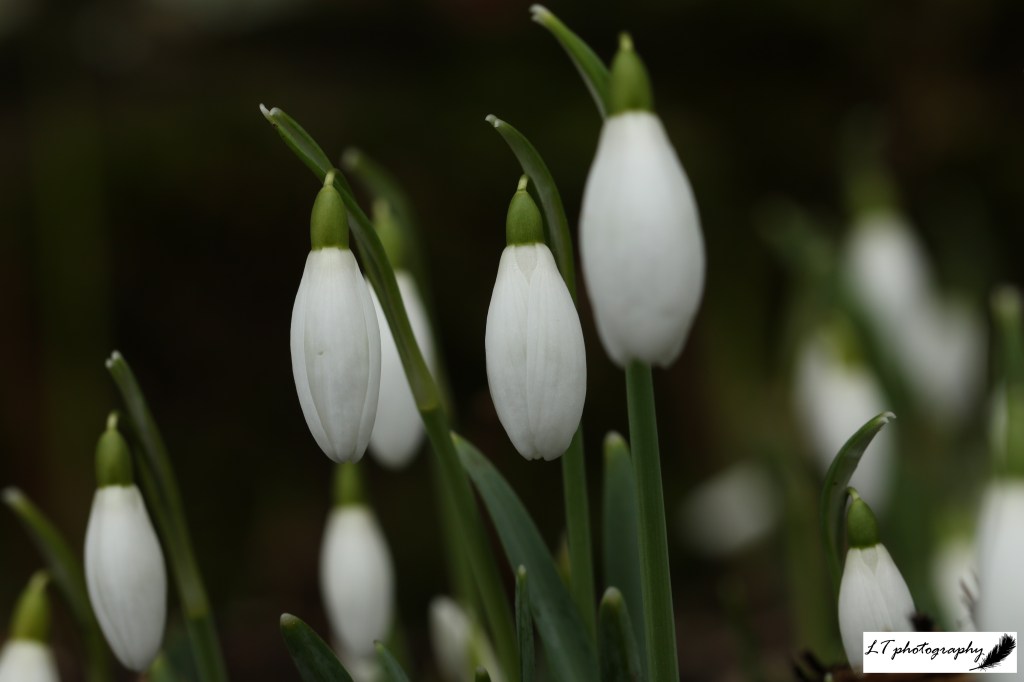
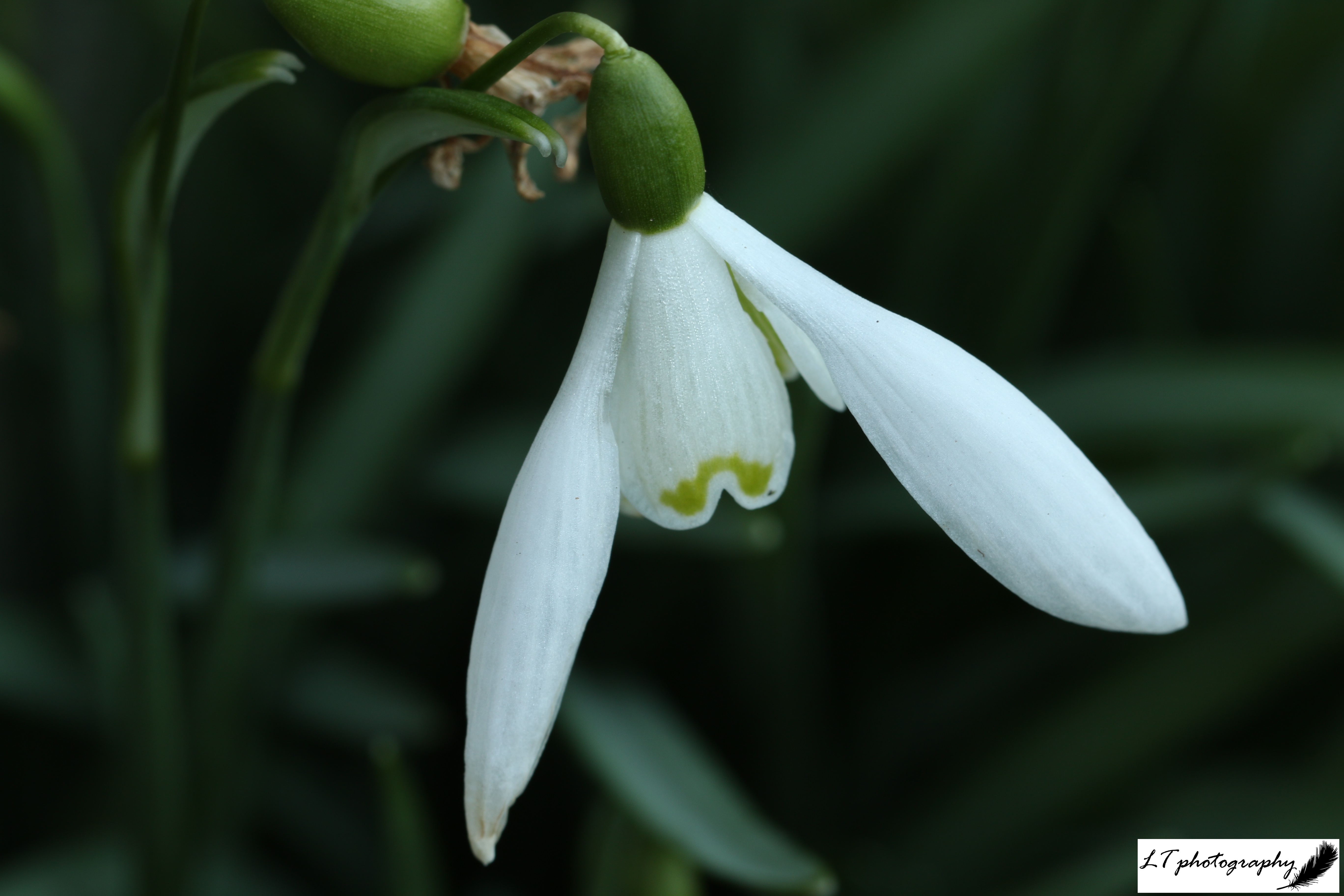
Day 6 – The first true herald of spring days to come, snowdrops are iconic, bursting forth at the start of the new year and bringing hope to all. There’s something magic about seeing their opalescent heads nodding in a cool breeze after the darkest weeks of winter.
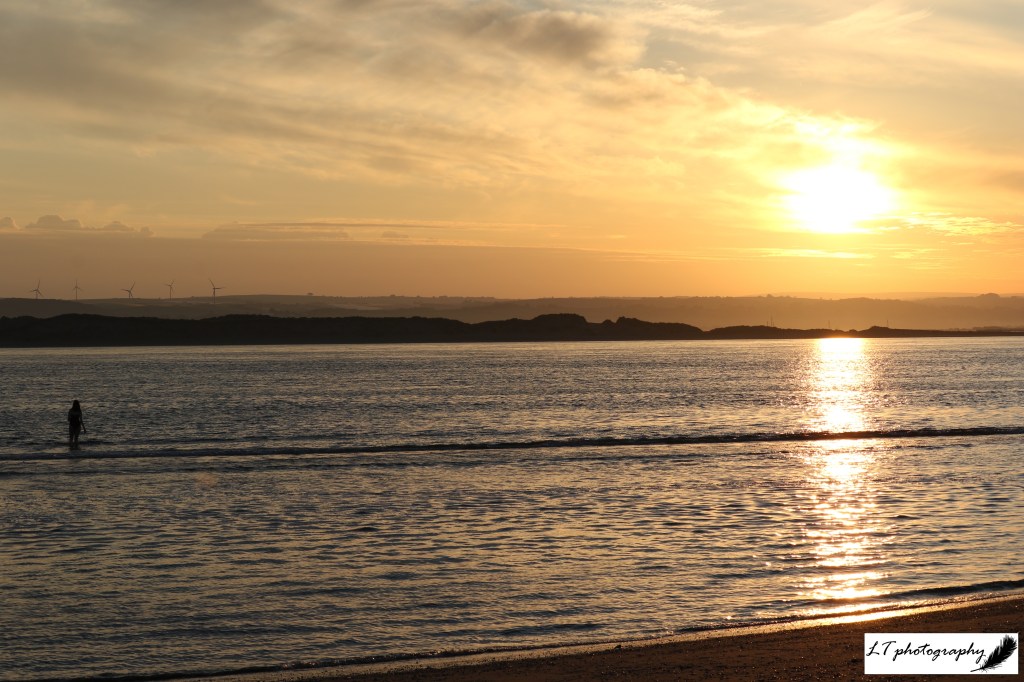
Day 7 – I am known for loving capturing a beautiful sunset, but that does not mean that I am not a fan of a fiery sunrise, the start is just a bit more painful for me! Here is the stunning beginning of a day on a North Devon estuary, with wind turbines and morning swimmer adding to the magic.
Day 8 – Like these gorgeous wild poppies, my 2025 was a year of growth with this blog having its best year yet, many adventures being embarked on, and the start of my nature photography business flourishing. I am so so thankful to everyone’s support, so watch this space!
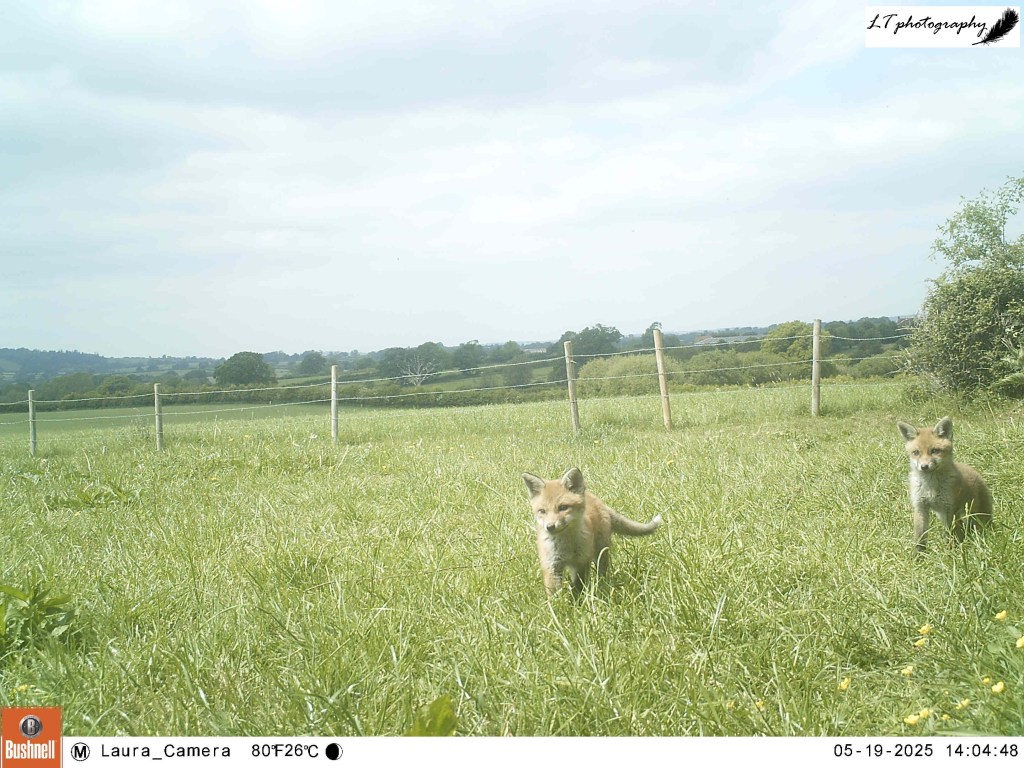
Day 9 – Another of my wild hobbies is camera trapping, where I use a trail camera to unobtrusively observe the unseen lives of our common British wildlife. A firm favourite of mine is the fox, with their tough cubs giving hours of pleasure to watch. Here is just one of many of the photos taken last year yet to be shared with you all!
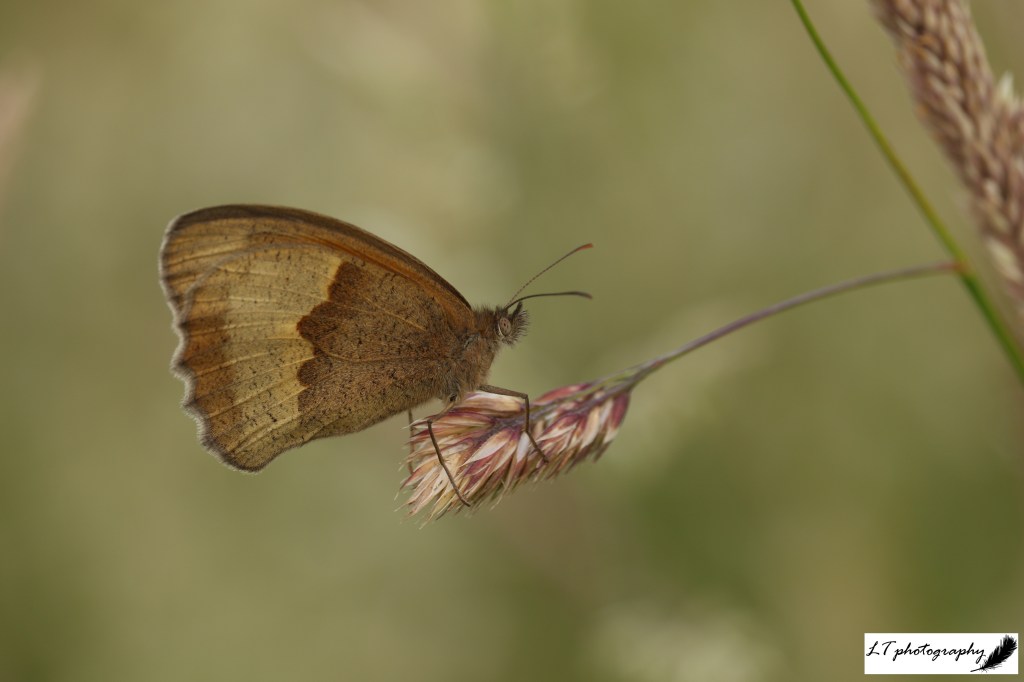
Day 10 – Last year I printed and mass sold my very first nature calendar, and I was overwhelmed by the response. This photo featured in the calendar was of a simple meadow brown butterfly in a wild meadow in Herefordshire, but gives us an up close view of these often overlooked minibeasts. ‘Dull brown’ can also be captivating!
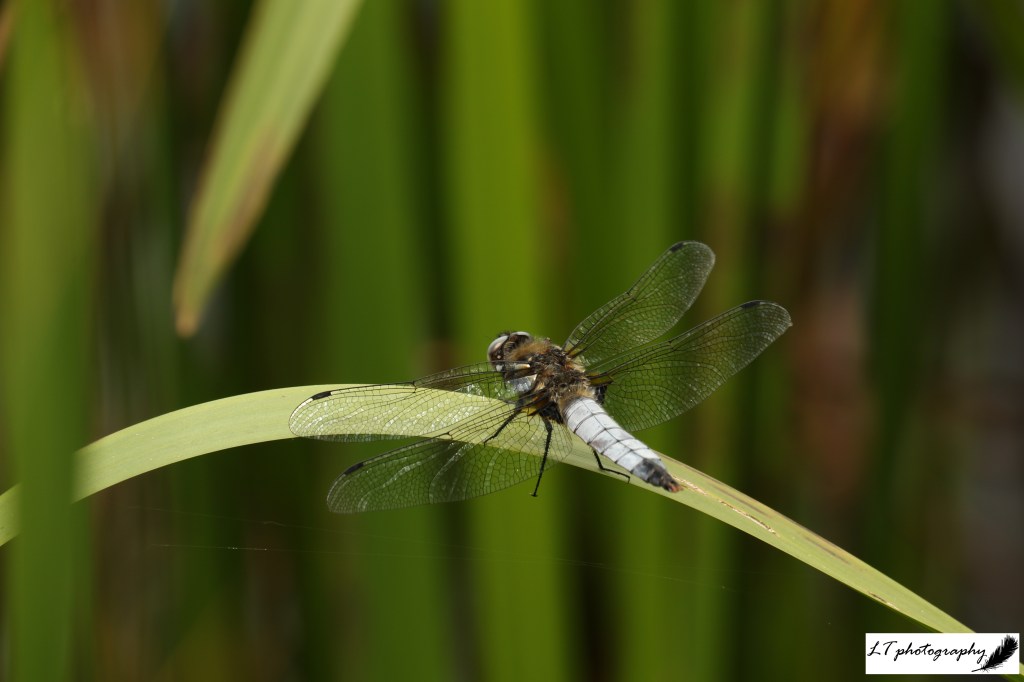
Day 11 – As I neared the end of my 12 Days of Laura’s Wild Photos for 2025, I kept things simple with this dragonfly. Another interesting creature, dragonflies are a game to capture, super fast and often changing their course quickly as they hunt over water. It is a moment to breathe when they finally fall to rest for a short time!
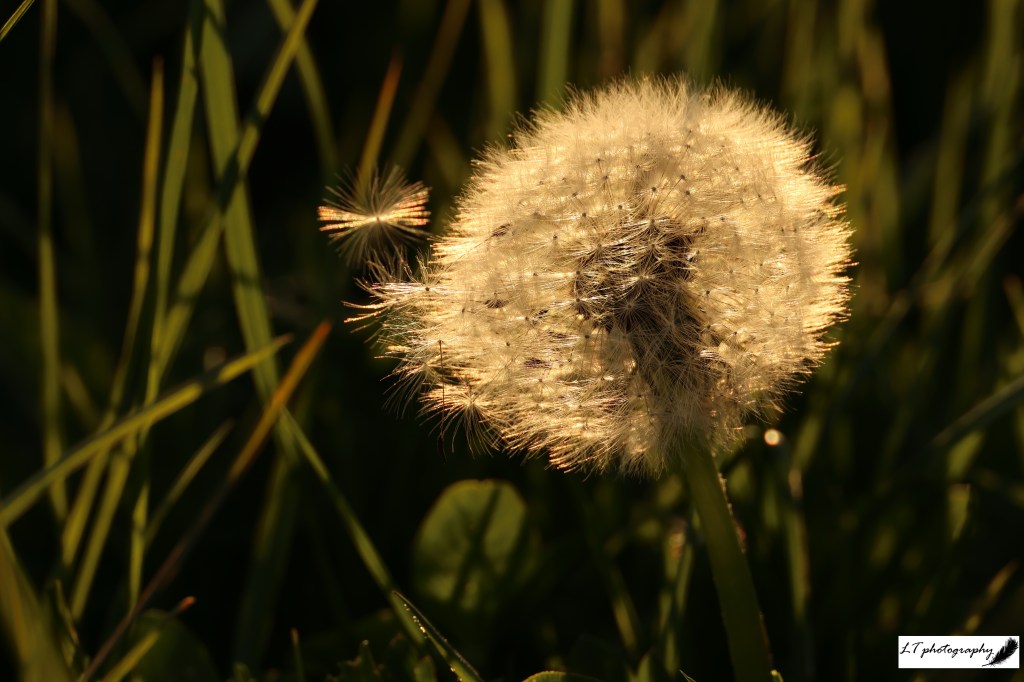
Day 12 – There is something magical about a dandelion clock. I believe it is the childlike wonder they invoke for most people, and here, in warm spring sunlight, this dandelion even has seeds beginning to parachute from its main head, floating on the wind to a new place of rest.
Over the last few years, it has been noticeable that weather patterns and average temperatures have been changing and highly unpredictable, leading to the seasons, such as spring, varying from month-to-month and year-to-year, especially here in Dorset. For example, last year spring began a wash out, moving to cold and stormy spells, before ending with heat waves. This year was an equally odd series of spring weather events with a cold start to the season, followed by wet weather with northerly winds, and finishing with drier spells. It was on average warmer and wetter, but cold nights continued for a long time, and had a noticeable effect on plant growth patterns being seen.
Spring 2023 encountered trends for later spring events and a slow start to spring, which helped to create a mismatch between species and spring events. With a warmer, wetter winter before spring this year, and often above average spring temperatures, it is likely the trends this year may differ to those of 2023. It will be interesting to see if this has had an effect though, by looking at trends for some tree, shrub, flower, insect and bird species. How will spring 2024 have shaped up? Read on to see how my favourite season unfurled this year!
Trees
During 2023, spring emergence dates for trees showed a trend for on average later dates, ranging from 1 to 28 days later. In 2024 though, the majority of spring tree dates were earlier, as seen with field maple, horse chestnut, english oak, and wild cherry, ranging from 1 to 22 days earlier from March through to May. Alder dates though were fractionally later, as were ash and sycamore flowering, and silver birch and norway maple budburst, but the other events for these species occurred earlier. The on average warmer and wetter weather will most likely be the reason for these trends, allowing trees to get a head start this year.
Flowers
Plants flowering during spring 2023 occurred on average later, varying from 1 to 16 days. During spring 2024 though, flowering has occurred earlier, as was the trend with tree species. For snowdrops, lesser celandines, primroses, greater stitchwort, wood anemones, early purple orchids, wild garlic, yellow archangel, cuckooflowers, oxeye daisies, and bluebells flowering occurred 1 to 32 days earlier between January and May. The exceptions were found with daffodils, flowering 6 days later during February, and cowslips, 4 days later during April. It would be understandable thus to think that the warmer, wetter weather of the start of spring will have had a heavy influence on these events, just like with trees.
Insects
Of 12 species that had the emergence date recorded during spring 2023, the majority emerged later than the year before, ranging from 2 to 46 days later. This year though, spring 2024 saw the occurrence of a 50:50 split for the 10 species that had their emergence date recorded, with some species from 2023 yet to be seen at all, such as painted lady butterflies.
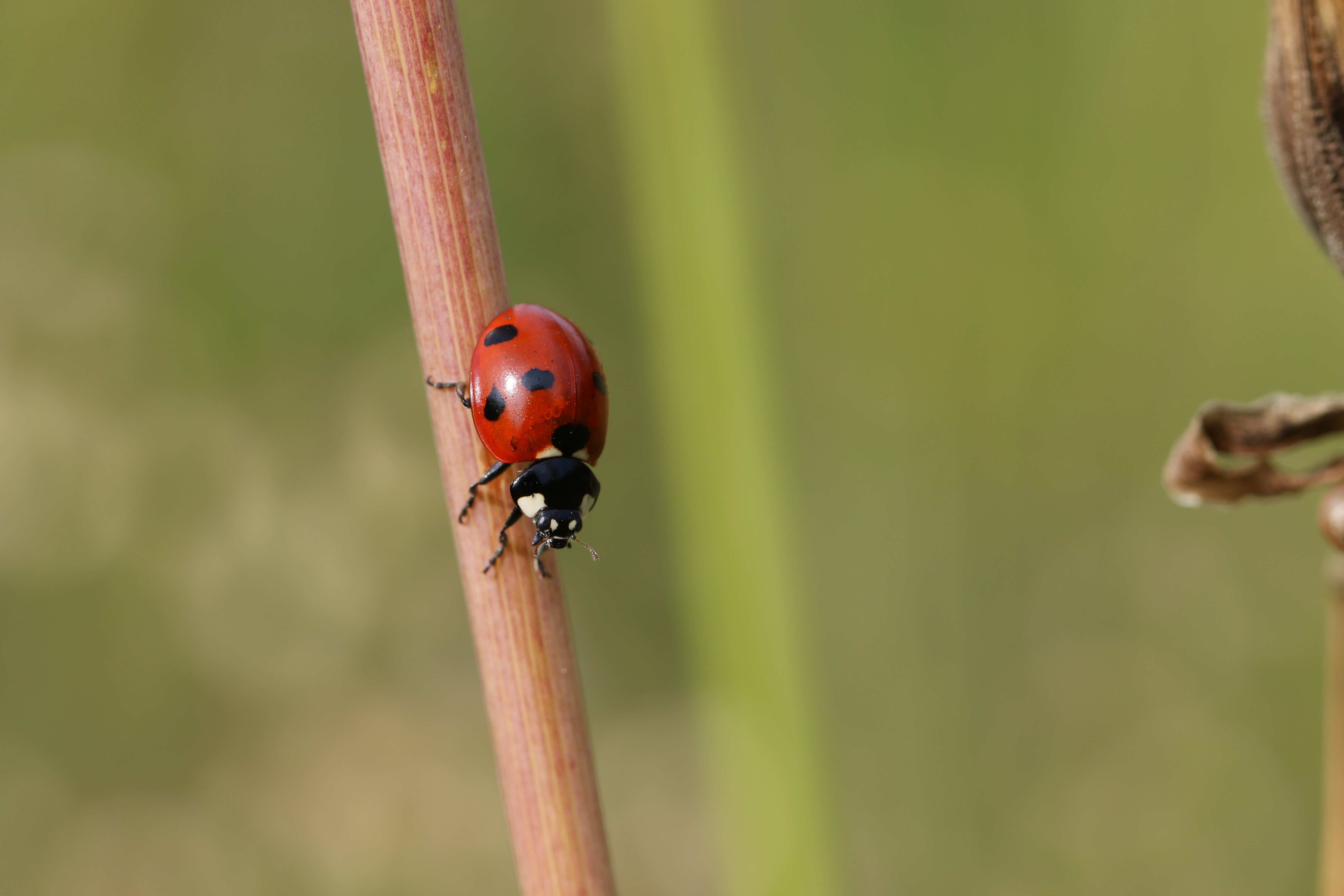
Buff-tailed bumblebees, 7-spotted ladybirds, and orange tip, red admiral, and speckled wood butterflies all emerged earlier this year, ranging from 2 to 46 days earlier. Conversely, queen wasps, and brimstone, peacock, gatekeeper, and small tortoiseshell butterflies all emerged laterthan 2023, ranging from 8 to 47 days later. Though not complete for all, the split does tend to be due to March to April species emerging earlier this year whereas April to June species emerged later this year. This may be due to April being a cooler, wetter month this year, impacting insect species more greatly than plant species that were already making their advance and were less impacted.
Shrubs
Spring 2023 mainly showed a trend for later shrub budburst, leaf unfurling and flowering, ranging from 3-27 days from March to May. In contrast, for spring 2024, the majority of events for shrubs occurred earlier, ranging from 1 to 53 days earlier from December through to May. These included for blackthorn, dog rose, elder, hawthorn and hazel, with the only later event being for red female hazel flowers being observed. This trend shows similarities to those of trees and spring flowering plants, and would be similarly due to a warmer, wetter winter and start of spring, allowing events to occur earlier and shrubs to get a head start on the season.
Birds
Following on from the last two years (2022 and 2023), the dates of bird events during spring 2024 showed no clear trend, with a split between different species and events. Rooks began building their nests earlier, chiffchaffs and swallows arrived earlier, song thrushes and yellowhammers first sang earlier, and the first wrens fledged earlier. Conversely, blackbirds first sang later, the first blackbirds fledged later, blackcaps, cuckoos and house martins arrived later, and great-spotted woodpeckers drummed later.
Some of these event timing changes will be due to spring temperatures and weather conditions on short term and long term scales. Other reasons are less obvious currently, but the hope is that bird events will still have been timed right with other species to make the most of resources this year.
Conclusion
Spring 2024 was a thoroughly odd season, varying from month-to-month, but feeling like wet weather prevailed more than the normal. In the end it was vibrant and colourful, though missing the traditional spring feeling. This year spring was heavily effected by climatic changes and changes to weather patterns, and this may become typical during the springs to come. It is really hard to predict then how each season will play out, and it will be interesting to see now how all British species cope with such unpredictability as time goes on. Only time will tell!
In 2022, I followed the annual cycle of one particular oak tree as it went through its own life stages, and watched the landscape change from its corner of a Dorset field. The tree encountered hunting barn owls, howling gales, breeding kestrels, and even a family of foxes, and observed such a vibrant year in nature even just from one spot. So for 2024, I wanted to follow such a story again, but this time on a different scale.
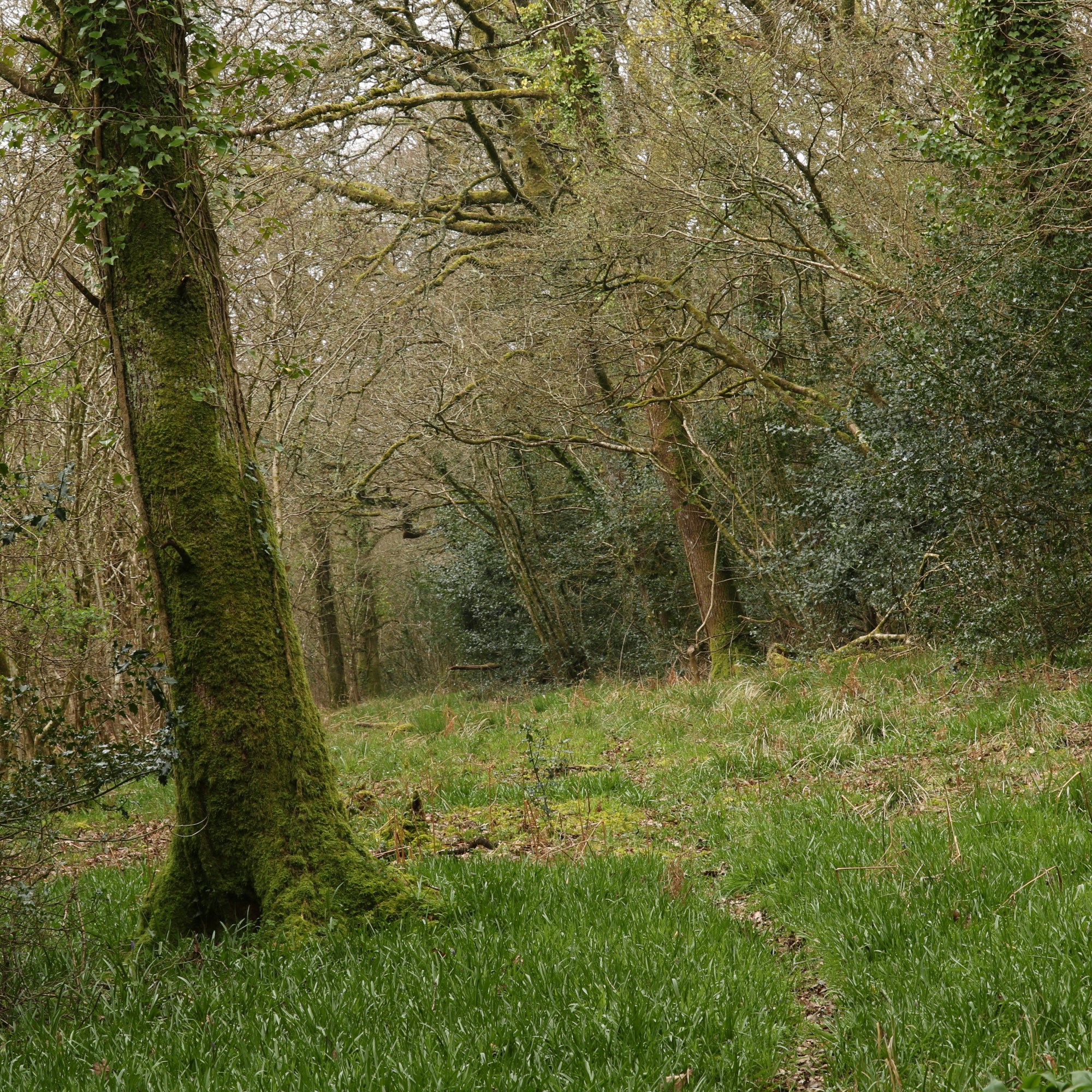
This year I am following a year in the life of an ancient, broadleaved woodland in the heart of rural, rolling Dorset. I will follow its progress from certain points within its bounds, and observe the beauty the woodland has to offer throughout the seasons. I look forward to seeing what goes on through the year, and the subtle differences from month to month at its heart. To start, I bring to you the first half of a year in the life of a woodland (January-June).
January
Entering the woods again at the start of a new year, there is a distinct feeling that the landscape currently lies in slumber. Though in previous years January has experienced wintery weather with cold spells characterised by hoar frosts and sheets of snow, this year the bite is missing from the weather, allowing the first signs of new life to appear already. The low winter sun breaks through the sturdy trunks of dormant trees, shining weak rays on the green leaves of woodland plants beginning to pop up underfoot, wood anemone and bluebells included.
Up in the naked boughs of the trees, birds fly from branch to branch, including blue tits, great tits, and goldcrests, buzzards whirl in the skies above, and pheasants make their raucous call now and again. Remaining holly and hawthorn berries provide a spot of colour against ivy and plentiful moss, but with the first lush greens and pastel yellows popping up, such as hazel catkins dangling from the trees, the woods are hinting at change. These are the first whisperings of spring in the stillness of the woodland, with more signs being found at night, such as tawny owls loudly defending their territories, and badgers and foxes increasing their roaming amongst the trees.
February
As a new month begins, the landscape feels like it is very much still in the grips of winter. A grey gloom hangs over the woodland, with the overcast sky threatening an endless possibility of rain. Where February 2023 was a cold, dry month, February 2024 is reflecting continued milder and wetter weather than average, with sunshine being much in demand. It is still not warm enough for any further advancement in the signs of spring from the previous month though, with the woodland floor still being mainly dressed in warm browns. Despite this, those first whisperings of new life can still be seen, with the slow marching growth of shoots of well known species, such as bluebell and stitchwort.
The mosses and lichens are also now joined by the much needed warm yellows of primroses and celandines, along with the red gems that are female hazel flowers. The slumbering woodland is currently the backdrop for the day-toiday life of its winter residents, but with the addition of blackbirds and song thrushes now starting to sing their melodious songs ahead of breeding in the spring.
March
As March begins, the start of blackthorn winter brings biting winds from the north, creating a break in 2024’s trend for warmer and wetter weather, which continues for the rest of the month. A rare calm day though sees the woodland bathed in soft, early spring sunshine, as it begins to finally switch from its shroud of brown to greens, with a carpet of new growth. Bluebell leaves are marching on in their advance of growth, making the most of increasing temperatures, whilst spear-shaped wild garlic leaves now carpet areas around the ambling streams through the middle of the wood. Hazel catkins are now fading to a creamy yellow, and their red female flowers are joined by swelling leaf buds. Though spring is advancing quickly, the woodland still waits for more flowers to keep company with the primroses and celandines.
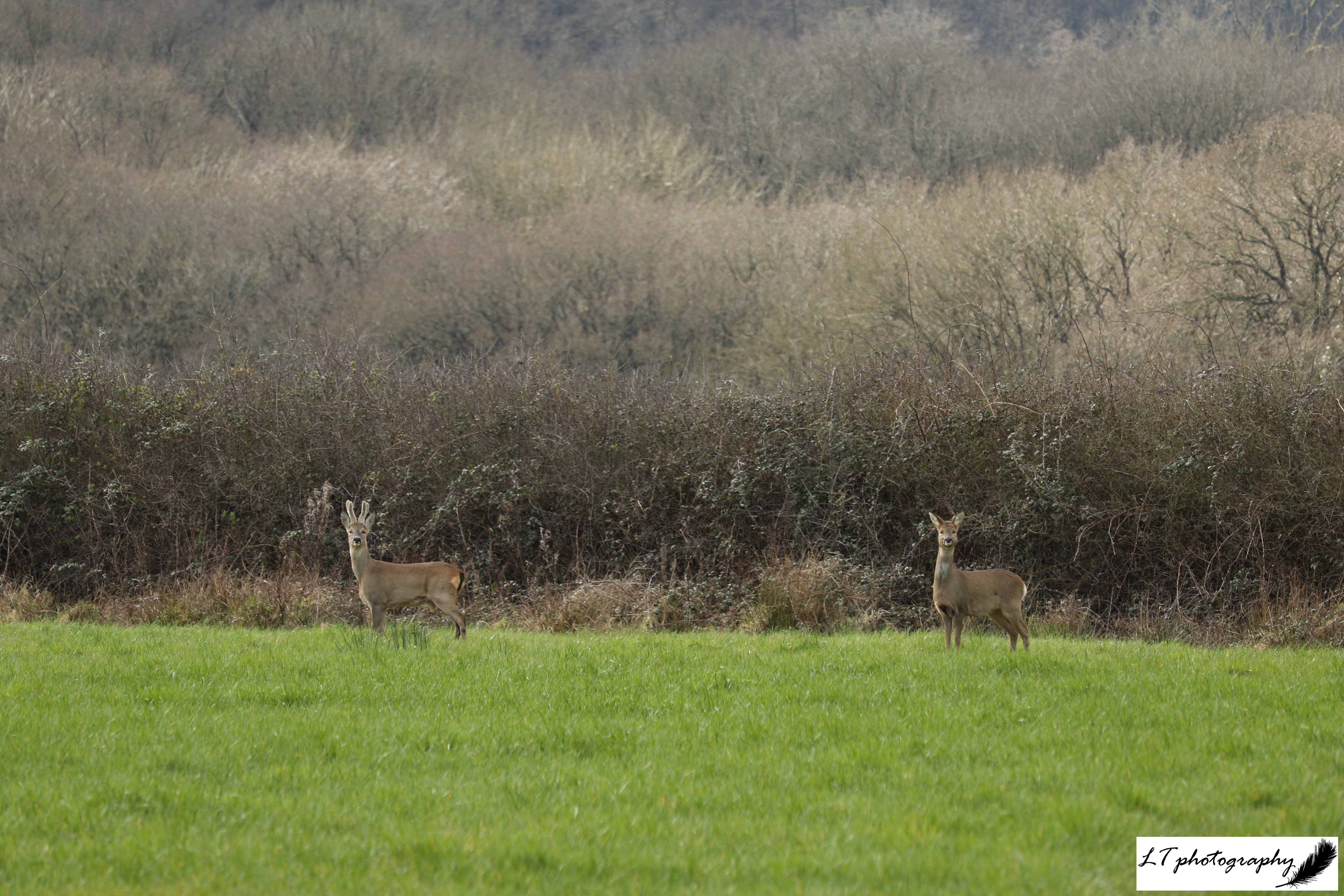
A difference lies up in the trees. The woodland is coming alive with the sound of bird species that have wintered here in the UK and do not have to travel as far to return to their breeding territories. From great tits and blue tits, to wrens and goldcrests, a range of calls and songs can be heard, cut through by the sound of great-spotted woodpeckers drumming near and far. Mammals are beginning to become more active too, with grey squirrels fighting for territory and roe deer groups roaming through and around the woods. Spring is on its way!
April
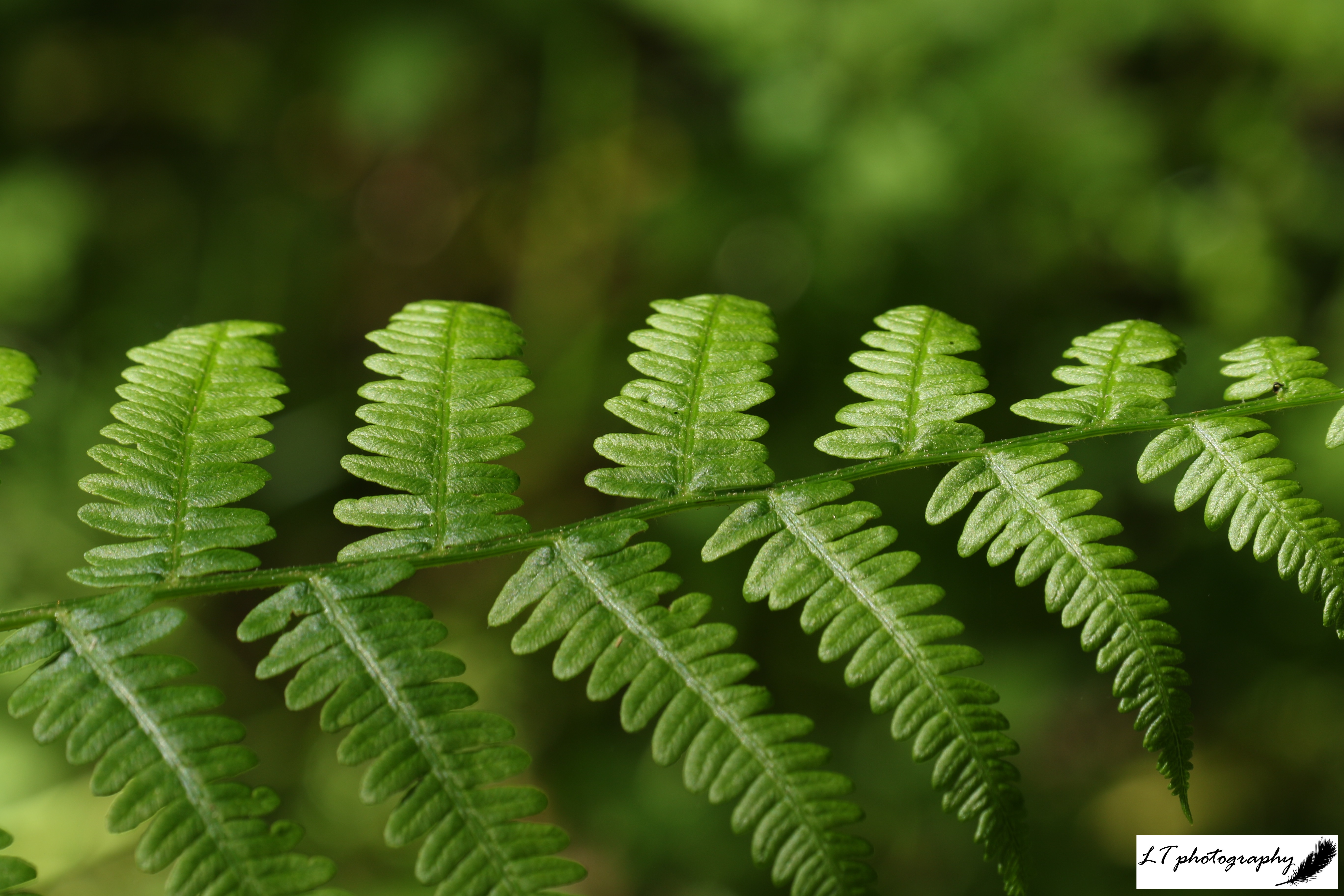
As spring unfurls, the weather of April feels reminiscent of 2023, with cooler, damper weather dominating due to persistent north winds and plenty of rain. In the woods growth continues to move forward, but at a noticeably slower pace than could be expected. The month opens with tree buds swelling, hazel and hawthorn leaves bursting forth, and trees dripping with blackthorn and willow flowers. The woodland floor is coming to life now with a never ending mat of purple dog violets, pale green moschatel, yellow celandines and primroses, white stitchwort, the beginnings of purple-blue bluebells, and the fantastic starry heads of wood anemones. Wild garlic leaves continue to grow around the bubbling streams, smelling noticeably pungent now and beginning to show the whites of flower buds, whilst ferns unfurl their hairy coils across the woodland.
As the woodland bursts into life, it is accompanied by an intensifying soundtrack. In the background a rich tapestry of bird song can be heard, as migrants make their return, from great tits, blue tits and wrens, to chiffchaffs, blackbirds and robins. These include the continued crow of pheasants, the cat-like mewling of buzzards circling overhead, and the barks of grey squirrels. Listening more closely though, buzzing can now be heard as bees and flies make the most of flowers now blooming. The woodland finally feels alive after the first three months of the year taking its toll, though it waits for the return of some warm spring sunshine.
May
On a quiet afternoon at the start of the month, stepping amongst the trees is like stepping into a whole new world compared to the start of the year. Sunlight falls soft through new green leaves, dappling the woodland floor with warmth and light. At the base of the trees, the floor is now a lush green carpet of plant life. The cooler weather of April has meant that some April events have continued on into May, such as the bluebells, whilst the wind now coming from the south bringing warmer weather is beginning to promote much needed new growth.
Bluebells are just going over their peak after a spectacular show of rich purple-blue that has been breathtaking. Amongst hanging bells, stitchwort is continuing to open new flowers, alongside shocks of pink from herb Robert. New flowers appear in the forms of early-purple orchids, and red campion. Yellow archangel that took some time to arrive is becoming bleached to a creamy yellow, whereas wood anemones are bidding their final farewell. Wild garlic persists as do bright yellow celandines, adding to the show. Things move on though, as the ferns begin to overshadow the bluebells with their green fronds. Spring marches on.
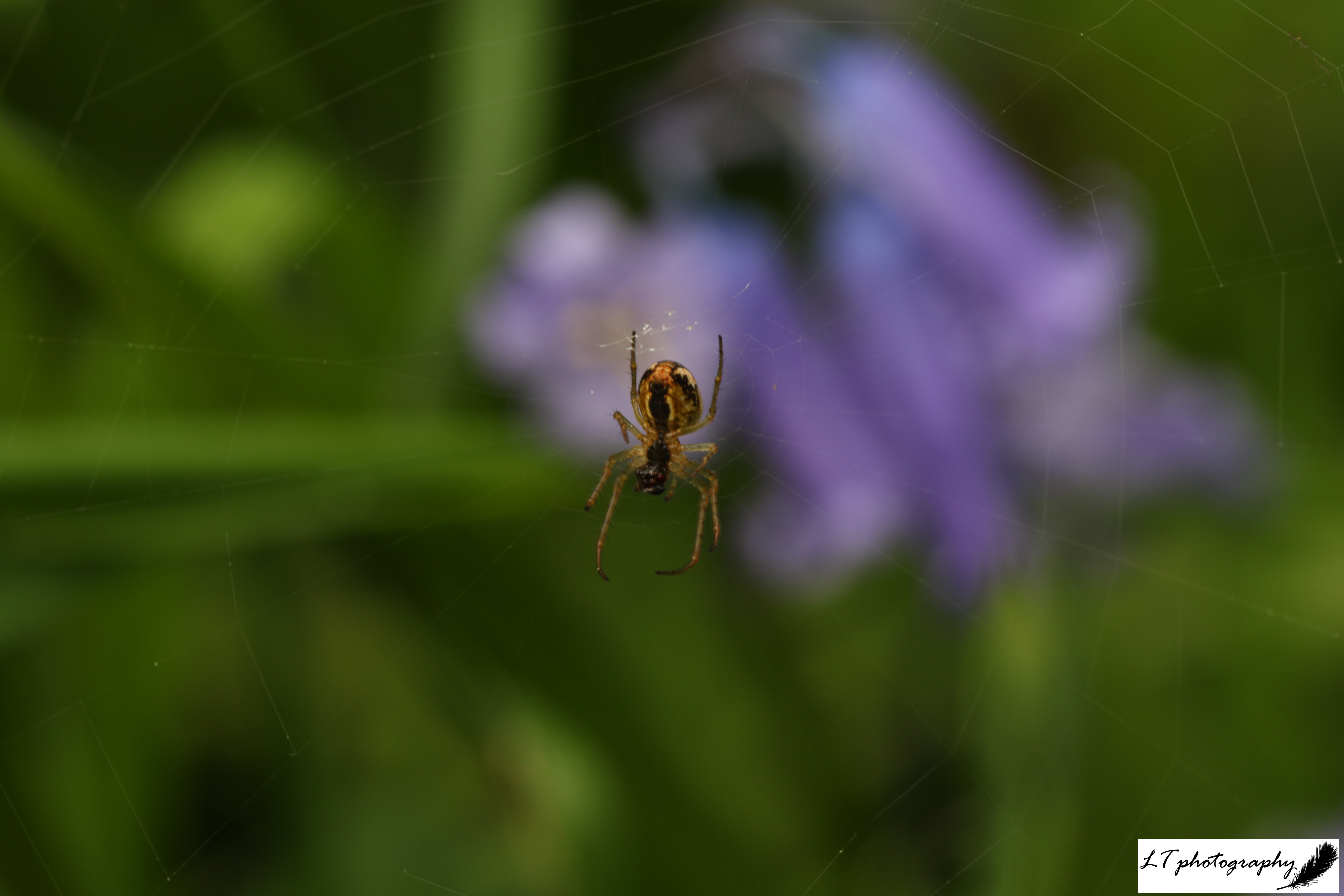
With plant life becoming abundant, the woodland is now abuzz with insects of many kinds, whilst spiders make their homes between the flowers. Midges are particularly prevalent this year with a damp spring too! A highlight right now though, is the woodland’s bird life, with the continued singing of many species that call the woods home and are breeding right now, the chiffchaff really standing out in particular. Somewhere in a hole in a tree, maybe a tall oak, a female blue tit will now be sat tight on her eggs, growing the next generation of blue tits.
June
As I step into the woodland on one of the first dry days in a while, my surroundings move from bright light to light spots and shadows. The tree canopy is now nearing completion and lush green oak, ash and hazel blanket out the light. Below on the woodland floor, a change has occurred. Spring stars have finally made their leave, and riotous bluebells, early-purple orchids, and wild garlic have been replaced by a dense green carpet of leaves. Herb Robert has taken over, with pink flowers creating a joyful pop of colour. Also these flowers are joined by white pig nut, purple germander speedwell, and pink foxgloves, and the lst yellow archangel, stitchwort and vibrant dog violets. The green seed pods of previous flowers remain, and a bluebell here and there when lucky, but now ferns stand tall above the woodland floor, unfurling their final leaves and making a canopy of their own.
As the spring season bids us farewell, it’s now the time of new life and growth, which is currently evident in the woodland. The drone of insects has lessened as flowers go over, but can still be found with flashes of blue damselflies, battling speckled wood butterflies, and striped flies. The first young of mammals, such as foxes, and birds, such as tawny owls, are also now venturing out to explore their new world. This can be heard up in the trees with the songs of birds and the alarm calls of protective parents. Summer and lazy days are on their way!
For the last couple of years I have accompanied the 12 Days of Christmas, up to Twelfth Night, with my own 12 Days of Laura’s Wild Photos. On these 12 days I share one photo a day on my social media platforms from the collection of photos that I have taken over the proceeding year out in nature with my camera, camera trap or phone. With these photos I aim to share glimpses of the beauty of nature, share some of my favourites from the year that have yet to take centre stage, and to simply put a smile on people’s faces.
This last christmas I embarked on my 12 Days of Laura’s Wild Photos challenge once again and had a lovely response to my collection of photos with my landscape photos being the main favourites. As I look forward to more wild adventures to come in 2024, here’s my 12 Days of Laura’s Wild Photos for 2023.
12 Photos
Day 1 – I began my 12 Days with a bang on Christmas Day as this photo of a snowy woods in misty sunlight ended up being the most popular photo of the 12 days. It’s a family favourite and was also described as ‘could be a painting’ which I was extremely happy to hear. Maybe it has a future beyond these 12 days!
Day 2 – For the second day, I wanted to share 2 classics of spring combined in one photo: a Chiffchaff and Blackthorn. A season of hope, joy and new beginnings, spring is my favourite time to get out with a camera and this photo captures that start when the landscape is just coming back to life.
Day 3 – As I continued on through the days, day 3 had been a very stormy one in the UK, thanks to Storm Gerrit, and so I wanted to bring some warmth to people’s homes. Here is suckler calf Blueberry Muffin, who in January last year, was still living outside with her mother as the ground had stayed drier than this winter!
Day 4 – Drawing our focus down to the ground, this photo takes us back to the days of spring with lush woodlands and glades with soft light filtering through unfurling leaves. A sign of ancient woodland, the wood anemone is also said to bring good luck!
Day 5 – This year I was licensed for the first time to handle and ring Barn Owl chicks on my own, as part of the vital work going on to conserve protected Barn Owls in Dorset and further afield, including on Dorset County Council farms. Some very special moments were had this year and lots still to be learnt! (Disclaimer: Barn Owl Chicks were handled following specific protocols by trained ringers and under a Schedule 1 license)
Day 6 – When we are in the clutches of winter and the landscape is bare, the snowdrop is a wonderful symbol of theend of winter to come, creating carpets of pure white wherever you go. It will not be long now until the first white heads can be seen nodding in the wind once again, and a feeling of hope and strength will return.
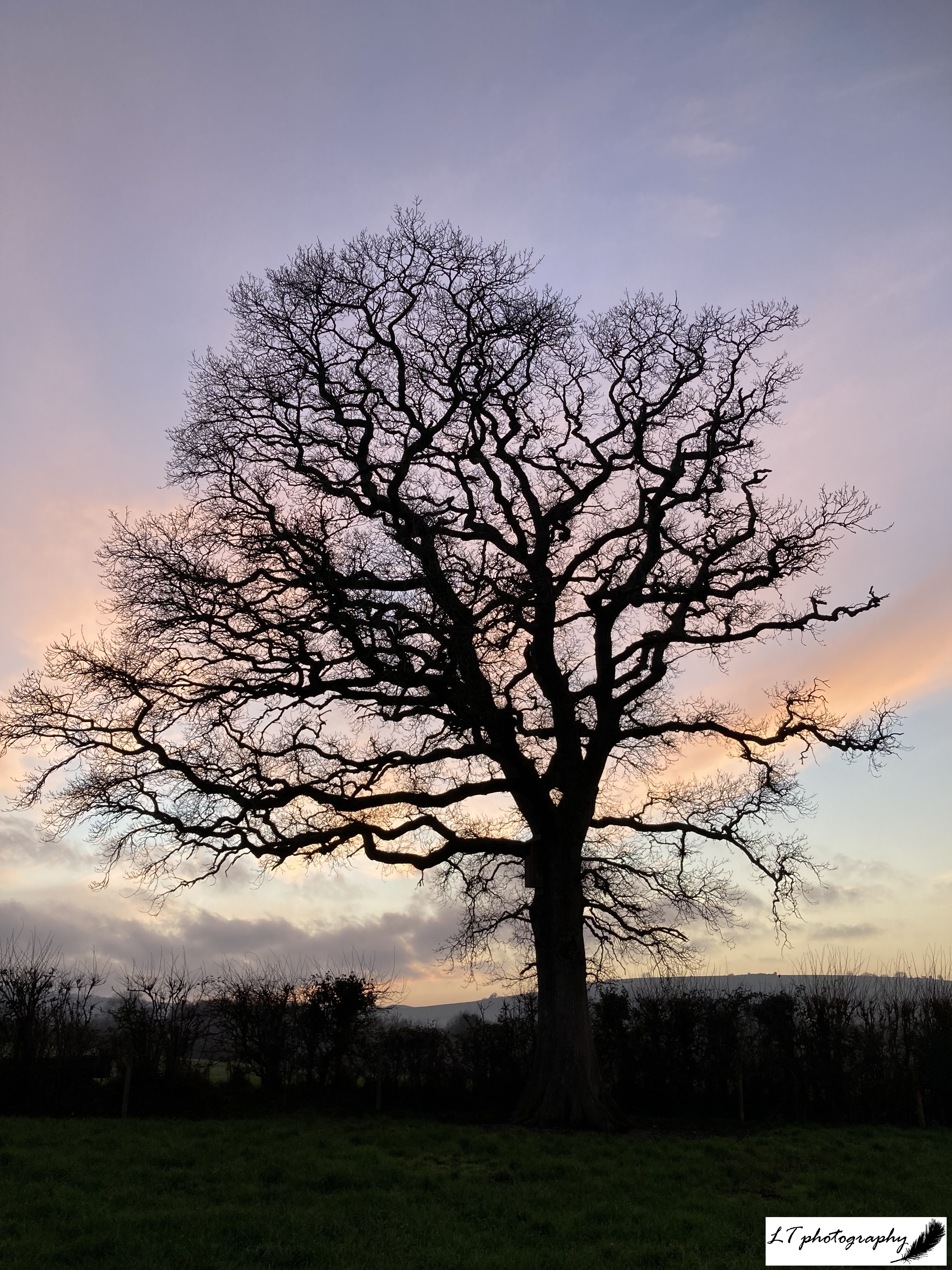
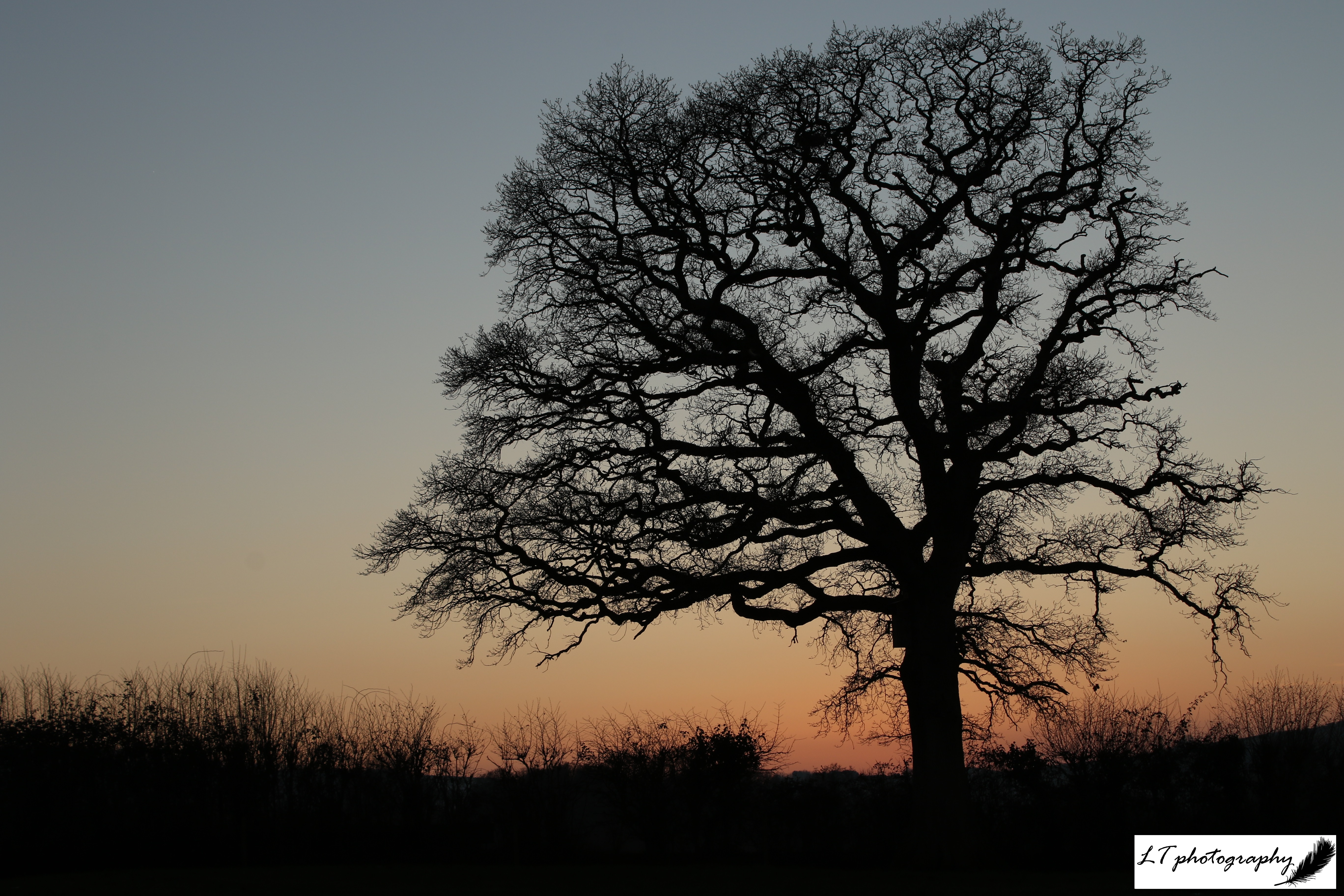
Day 7 – The 7th day marked the arrival of New Year’s Eve and the ending of another year. I thought this photo of a magnificent oak tree resplendent in its skeletal form in front of a warm winter sunset was a perfect way to match the feeling of the light falling on 2023.
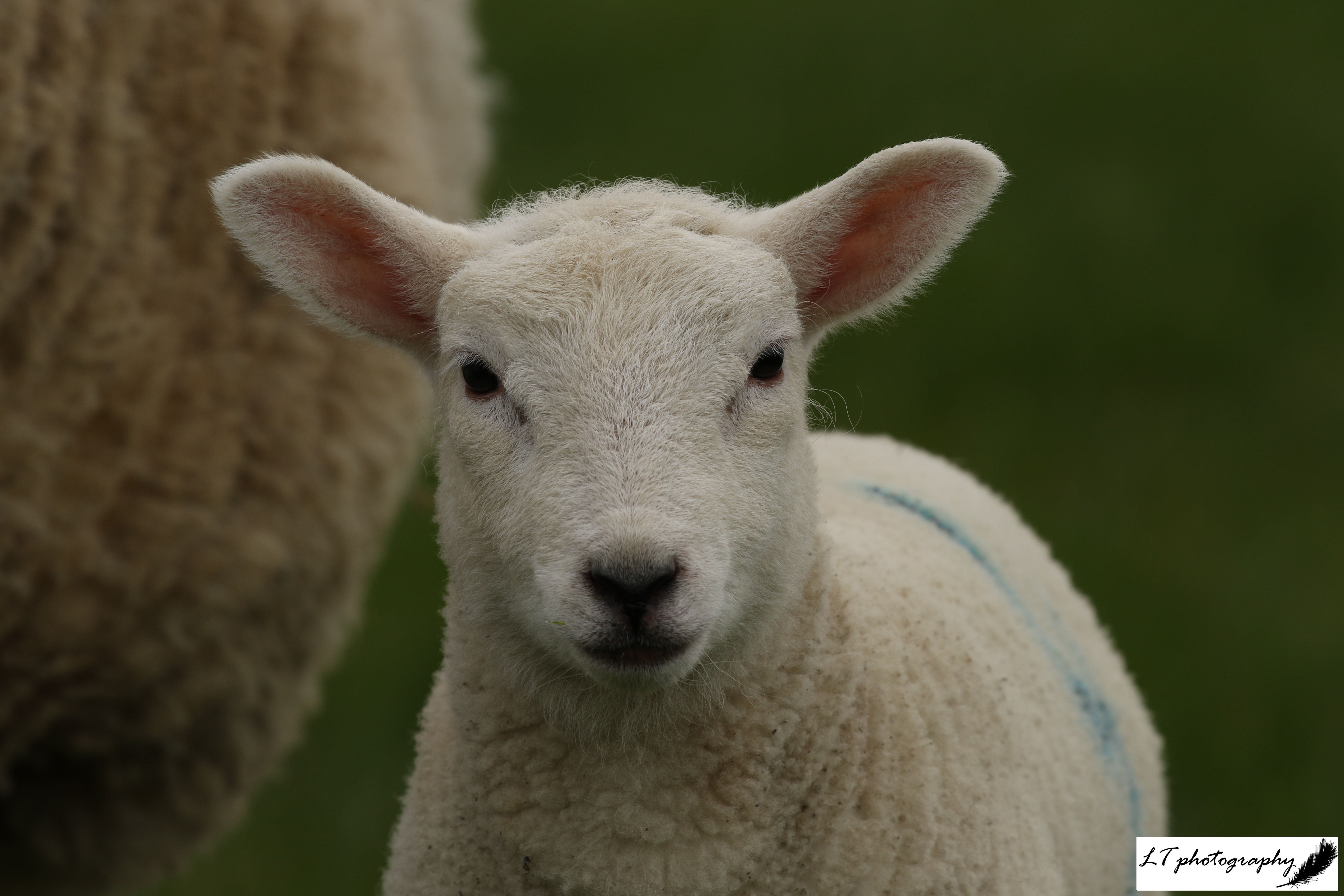
Day 8 – This year I finally bought my first super telephoto lens and so to practise I made use of our very last baby lambs born in spring 2023. It is a wonderful sight to now see subjects up close through a lens without having to be really close. Here’s to more fun in 2024!
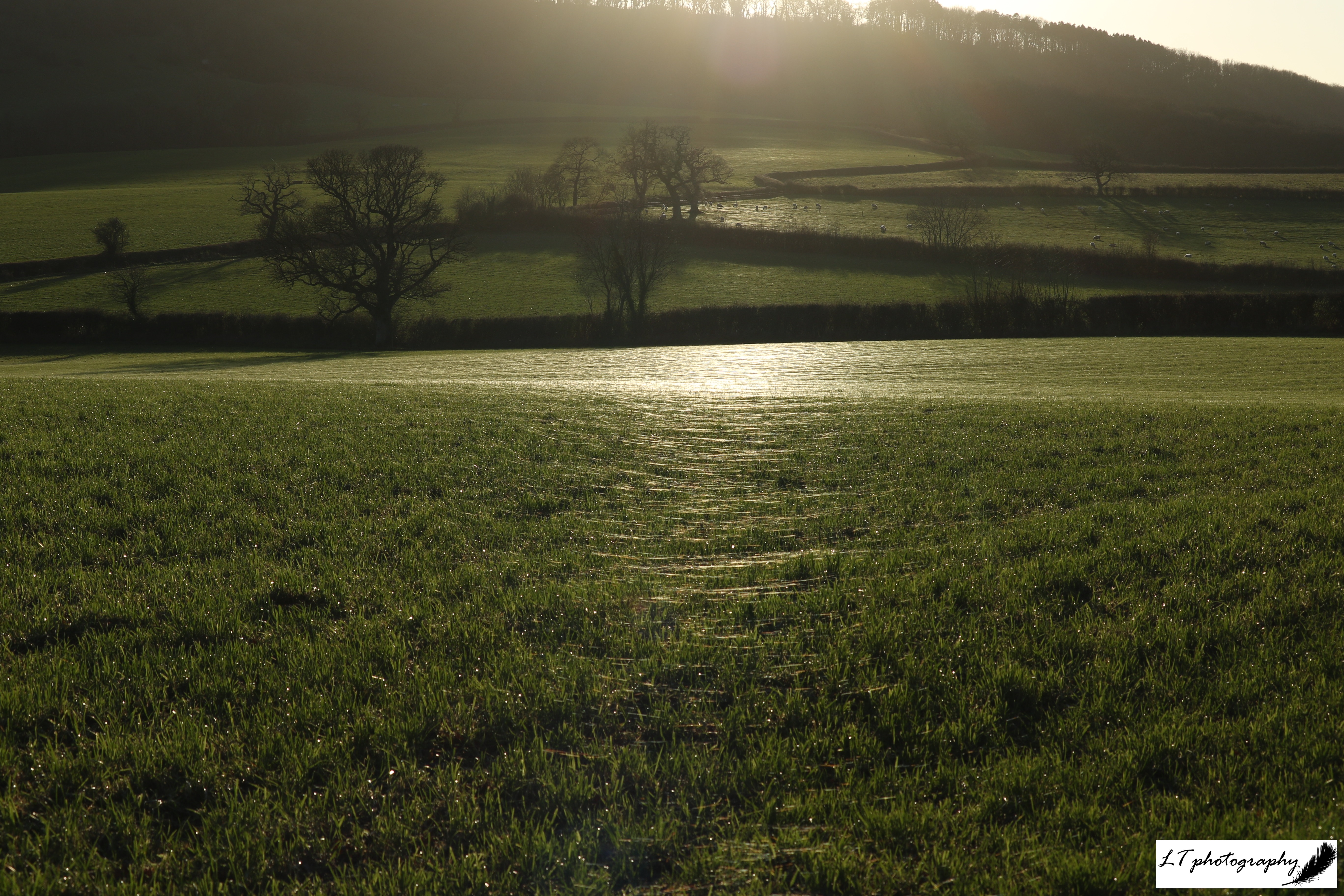
Day 9 – For the 9th day of my challenge, I decided to focus on the effectiveness of simple photos. My example is a photo from last year when soft winter sunshine could be seen glistening off cobwebs completely blanketing a field. A quite simple and spectacular phenomenon!
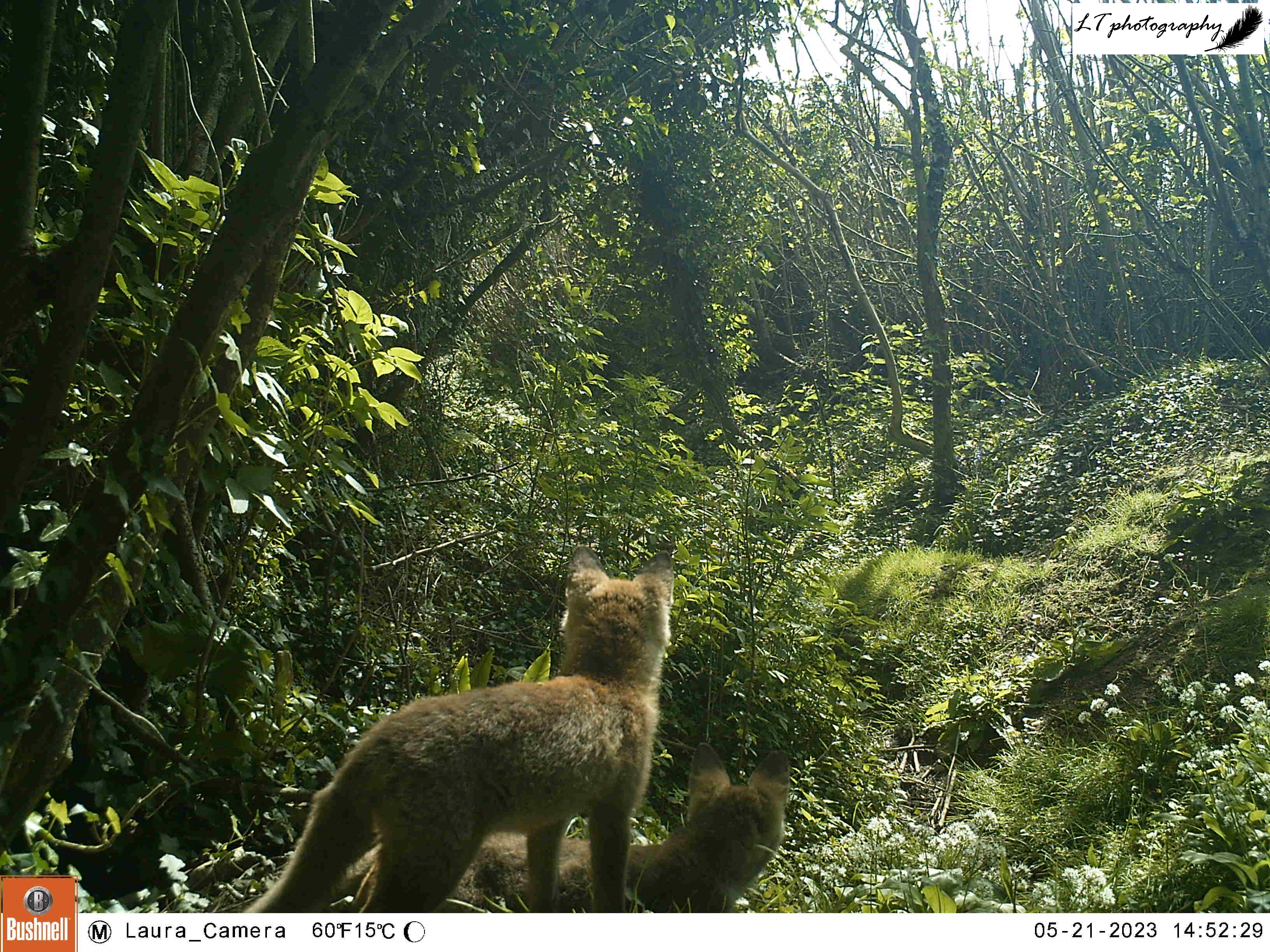
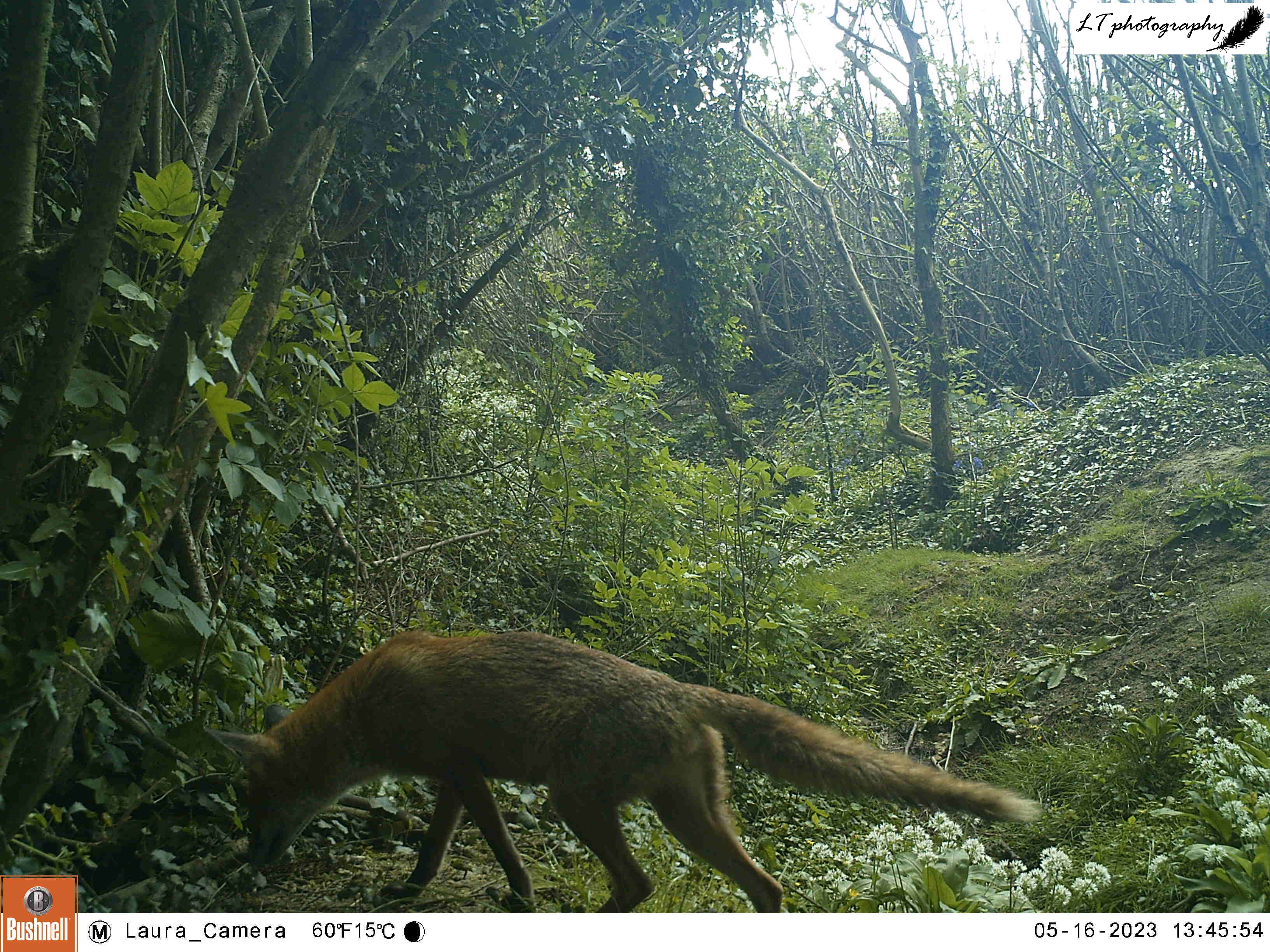
Day 10 – I got to experience lots of fantastic wildlife during 2023 with my two camera traps, and one highlight species was definitely the fox. Here is the first glimpse I got of a family foxes with four very young cubs,that I went on to watch grow up to become independent themselves. Fantastic! (For more check out my blog post Spring Dorset Camera Trapping Part 2.: Fabulous Foxes).
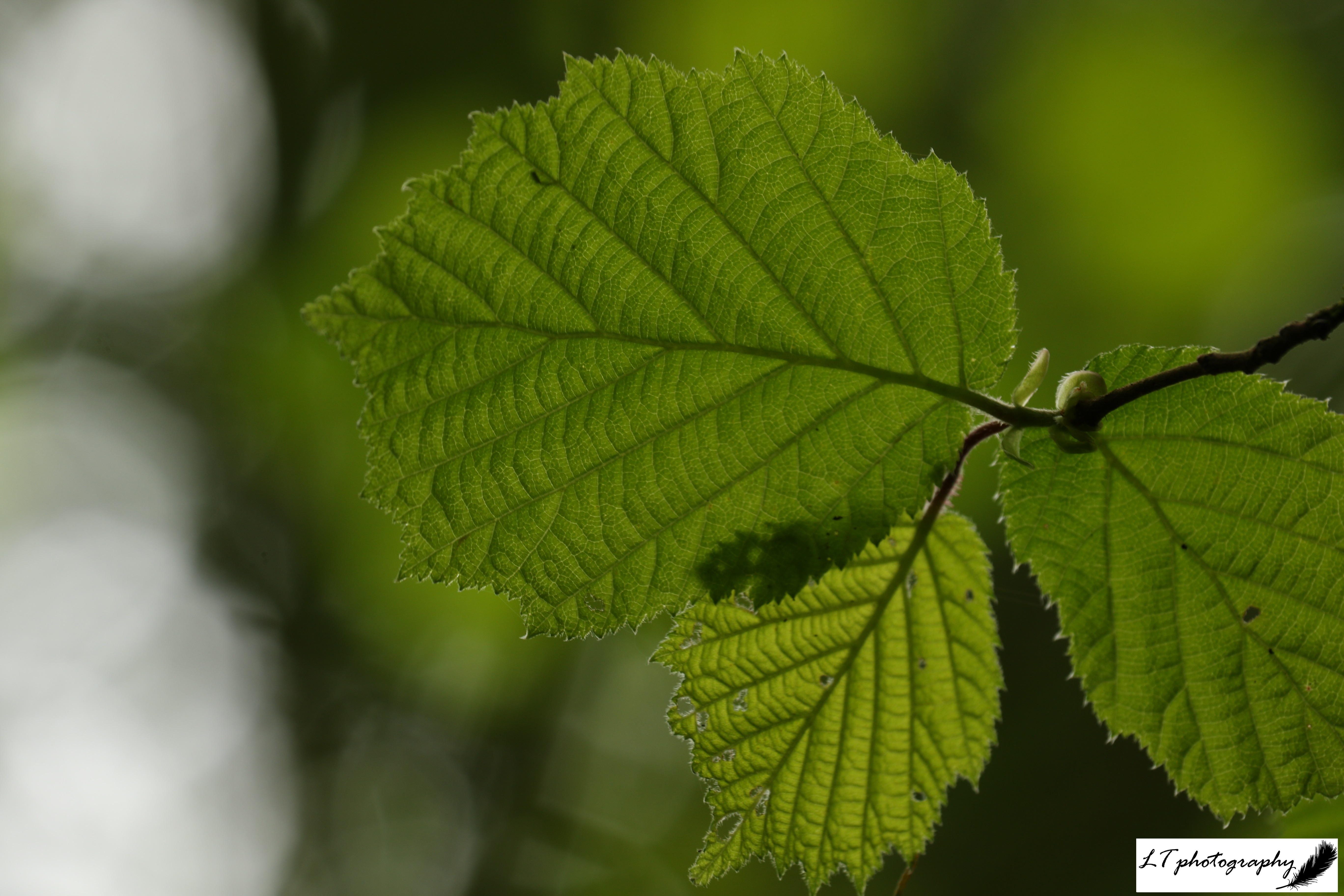
Day 11 – For my penultiate day, I picked this photo as I enjoy how the light delicately falls through this hazel leaf, highlighting the veins stretching out across its surface. Thus, I look forward to the return of green leaves when spring rolls roundonce again.
Day 12 – For my finale, I decided to head back into the woodlands during late spring. Under boughs of hazel here, alone early purple orchid can be found standing watch over a well trodden animal track, calling the observer deeper into the trees.
For now it is time to look to the present and to make the most of the winter months still to come!
Bouncing, pouncing, twisting, turning, four tumbling balls of red fur. So small, so little, miniature versions of what they will grow to become. Playing for hours, fighting, racing, hunting each other, unknowingly preparing for the world beyond their home. One day these furballs will venture out, cunning, wily, and most of all majestic.
From the city to the countryside, wherever you live, you will most likely have seen a fox in your lifetime. In Britain the red fox is an iconic mammal species, standing out with their striking orangey-red coats and bushy tails. They are known as expert hunters, catching a range of prey from rats to crows, but are actually omnivores, supplementing their diets with plant material, such as berries. As a species they feature heavily in British folklore, being depicted as cunning and wily, spiritual and intelligent.
Though foxes are often seen wandering around cities, they mainly inhabit rural areas, being more elusive than their urban counterparts. On my family’s farm in Dorset, my camera traps have allowed us to gain an uninterrupted view of the lesser seen world of this majestic species. By gain a greater understanding of their behaviour, habits and daily patterns, it allows us to live alongside them with ease. With the frequency of their presence on my camera traps this year, there will be much that can be learnt once again!
Field Cameras
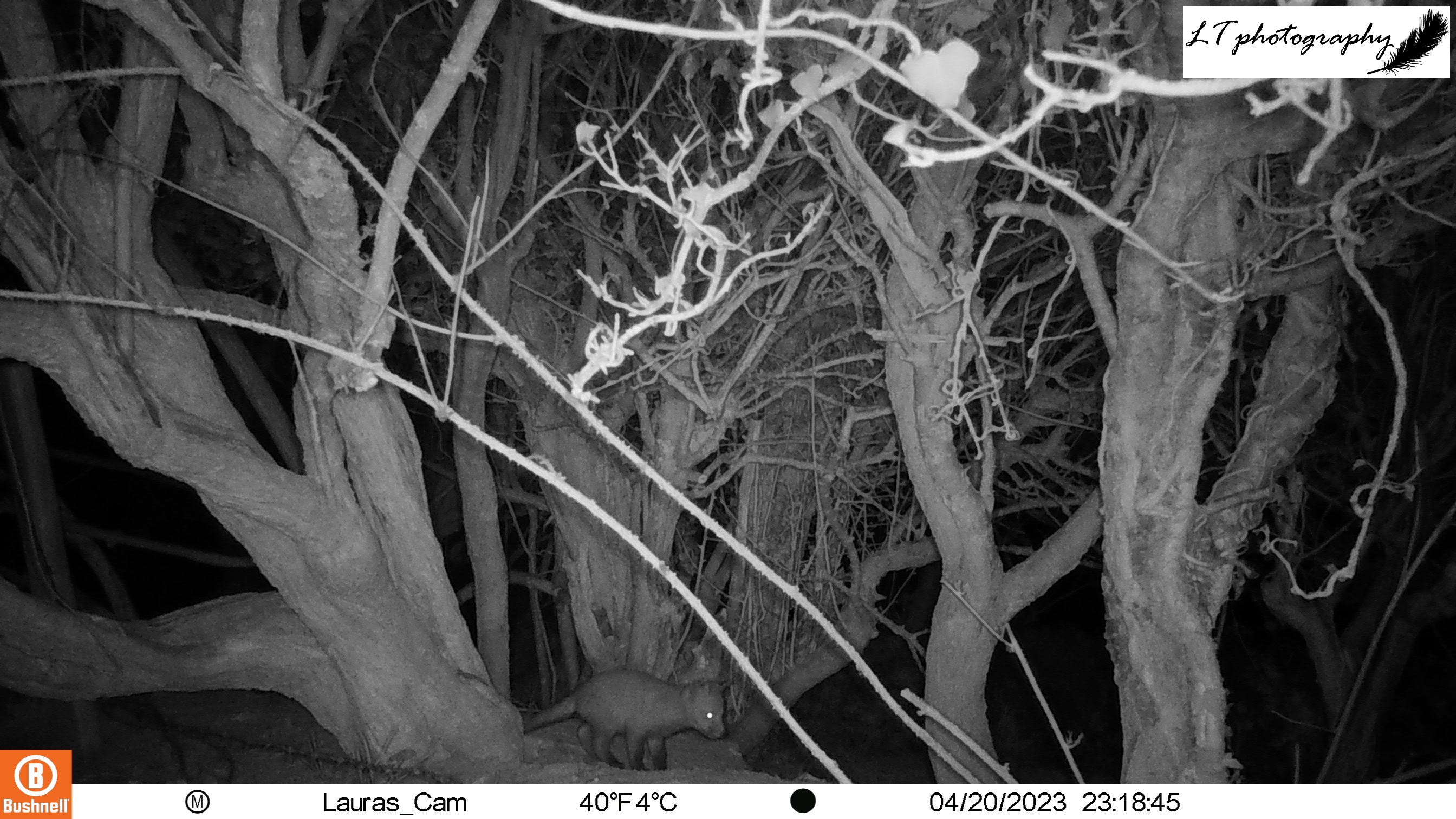
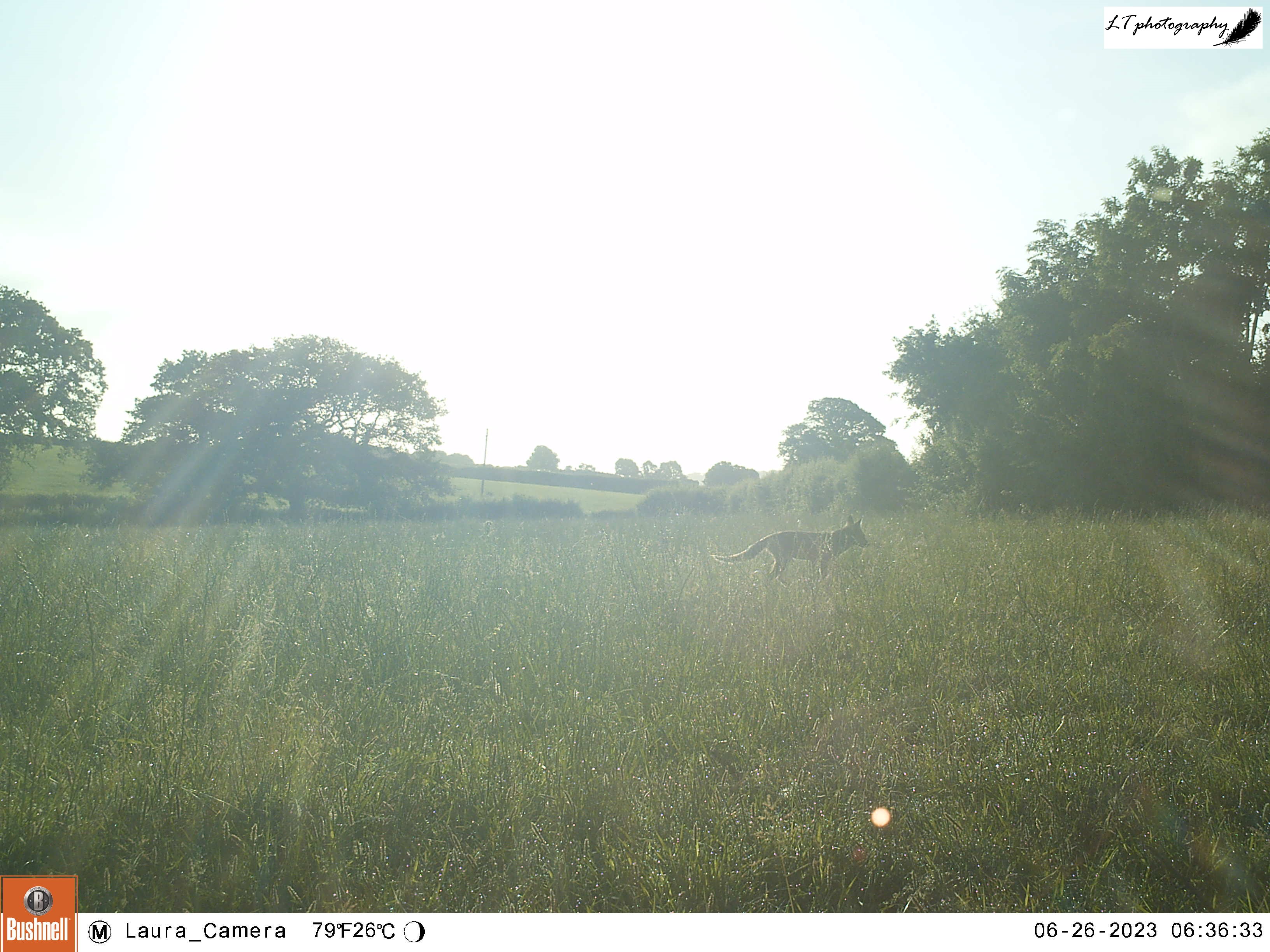
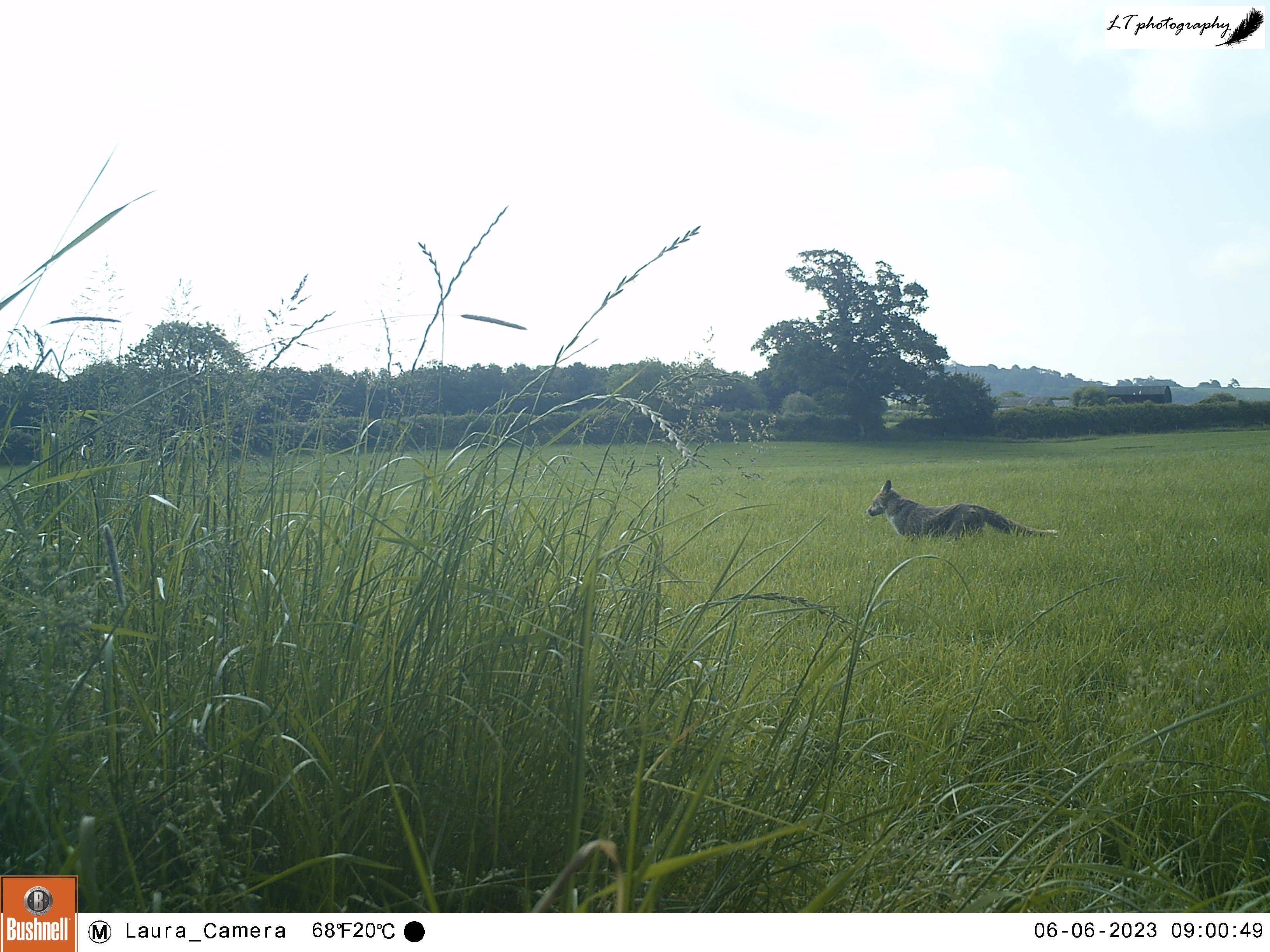
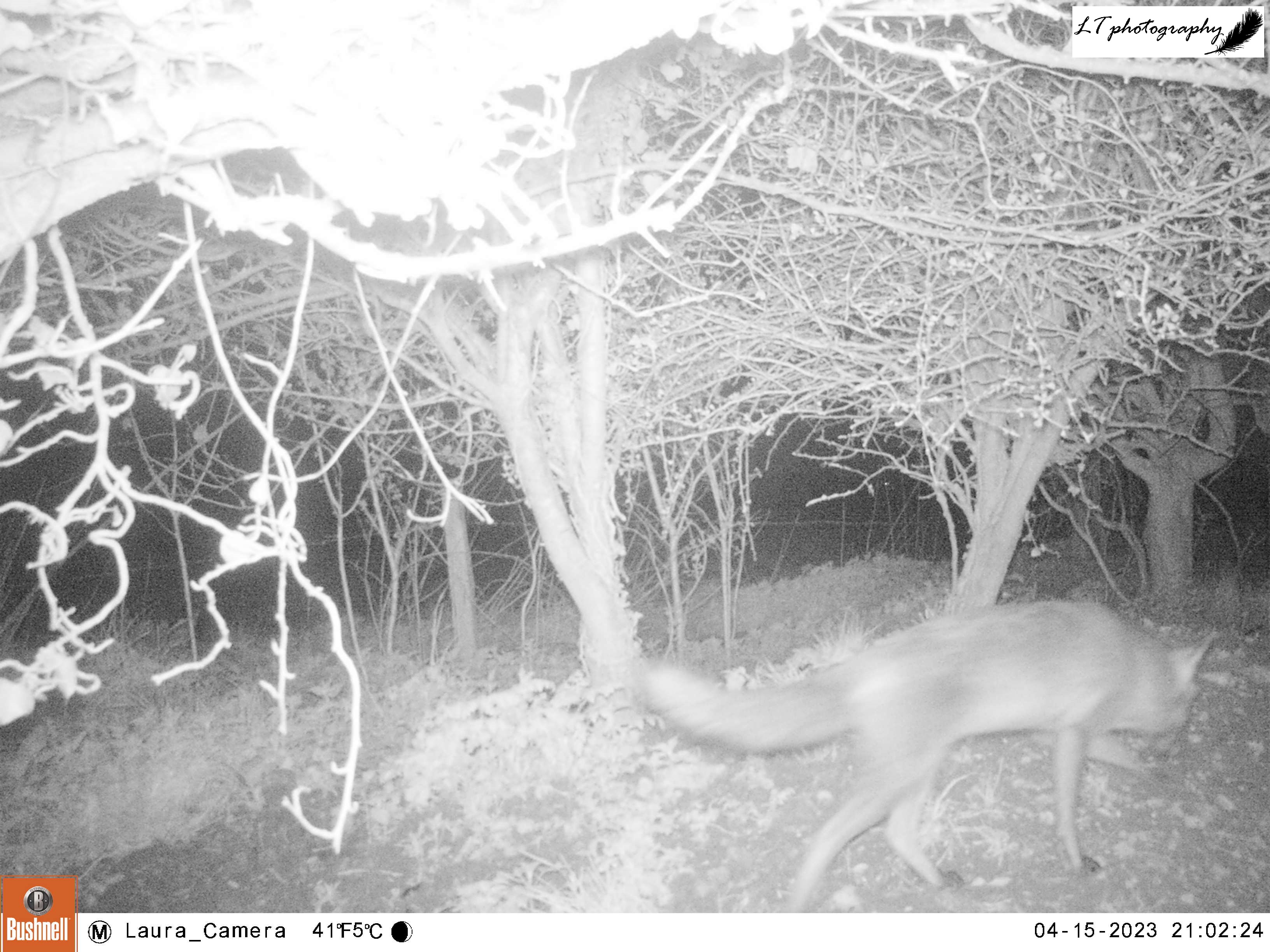
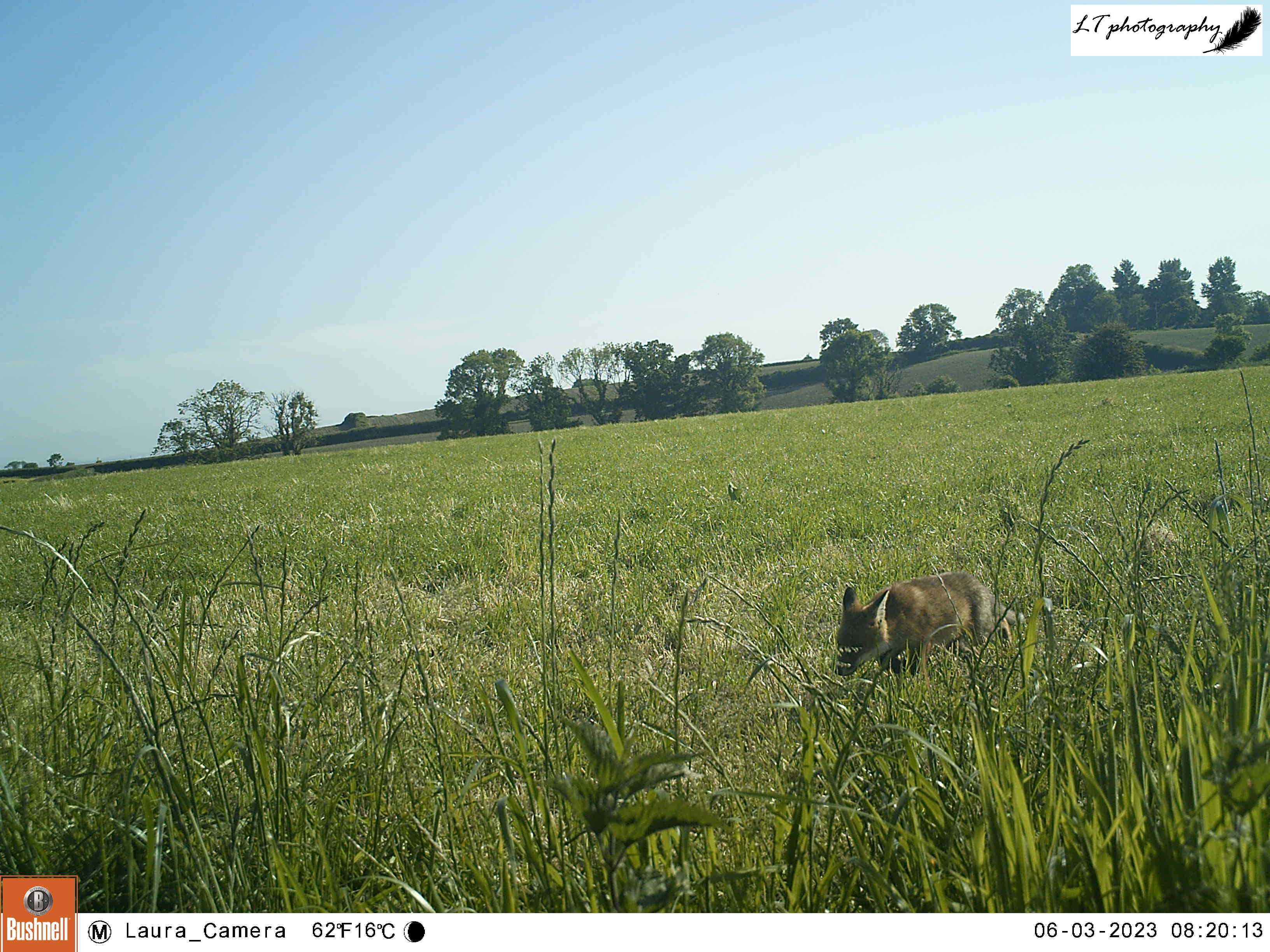
This year foxes featured at nearly all of my camera trap locations, including all sites where my cameras faced out into open fields and meadows. This could be capturing foxes passing through, hunting, leaving their dens, or just watching the world, but it showed us where the foxes were seen more often and in what capacity. Here’s some of the highlights:
Water Meadow – Fox highway
Sugar Field – Adult fox passing through; fox cub venturing out of a possible den
Tower Paddock – Fox hunting spot
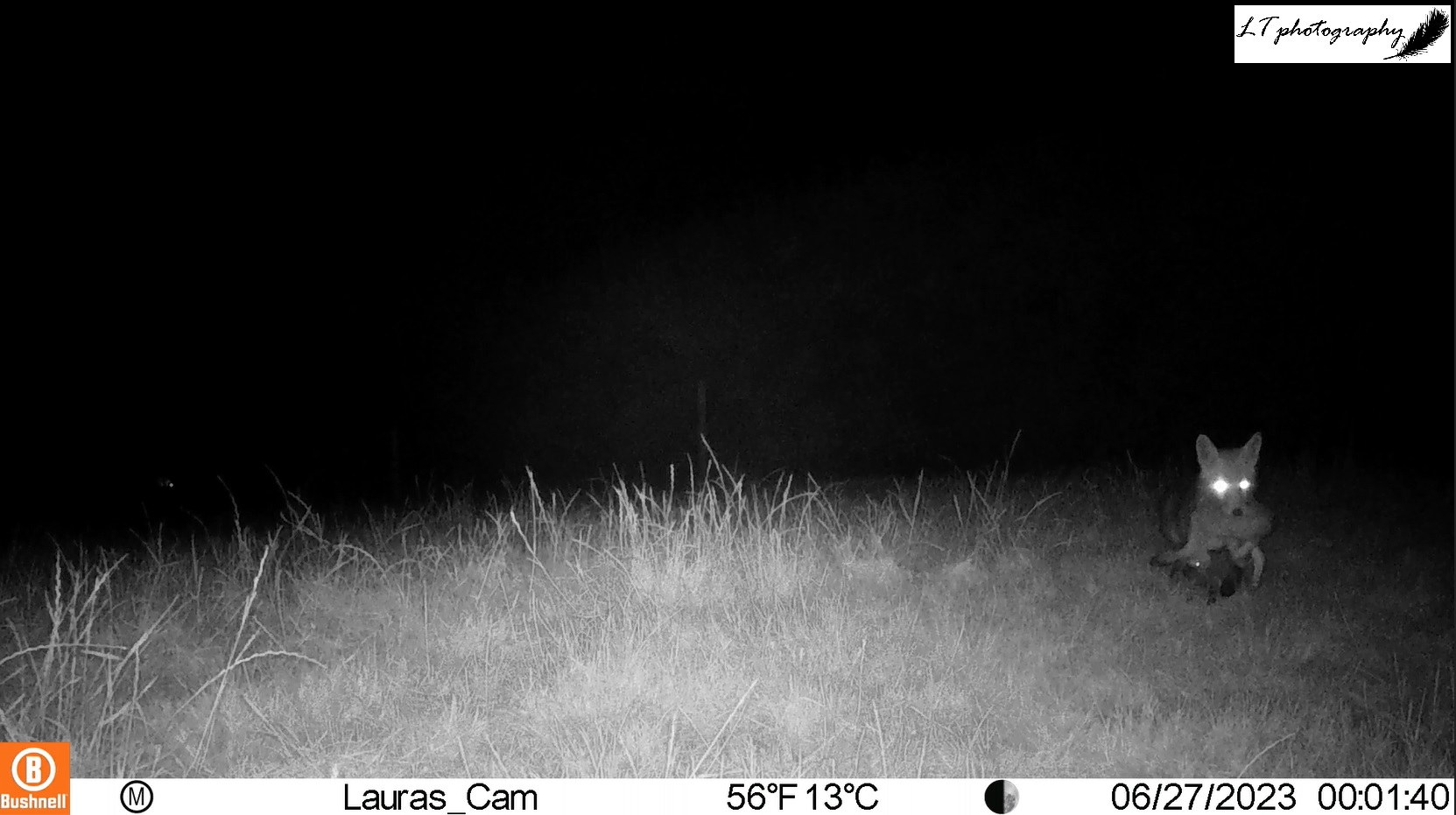
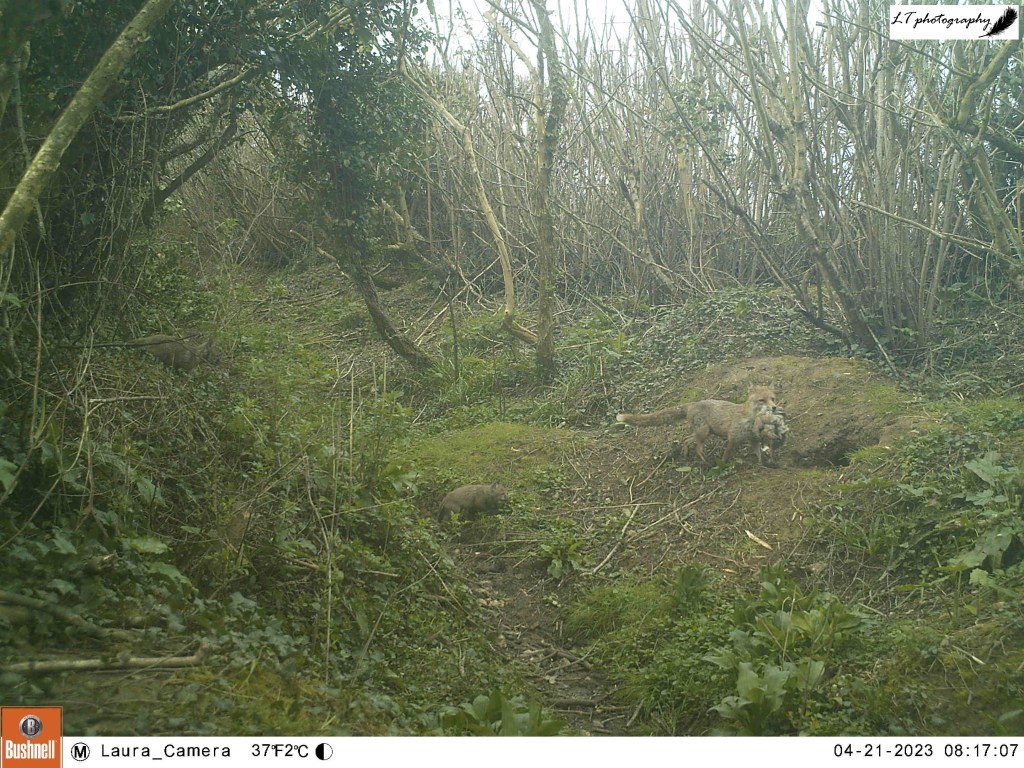
Cowleighs – Fox cub on the wander; adult fox returning to their den with food
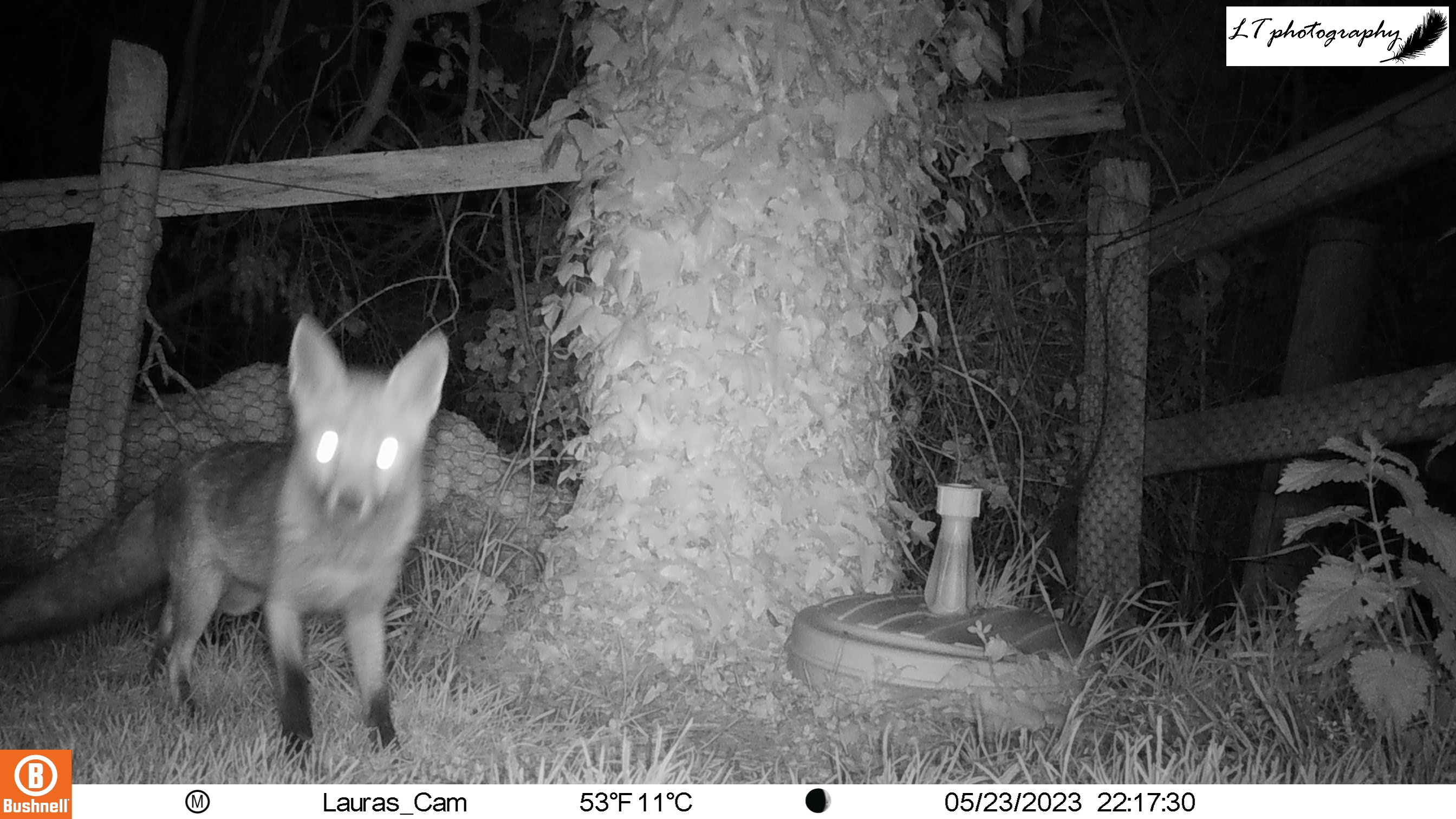
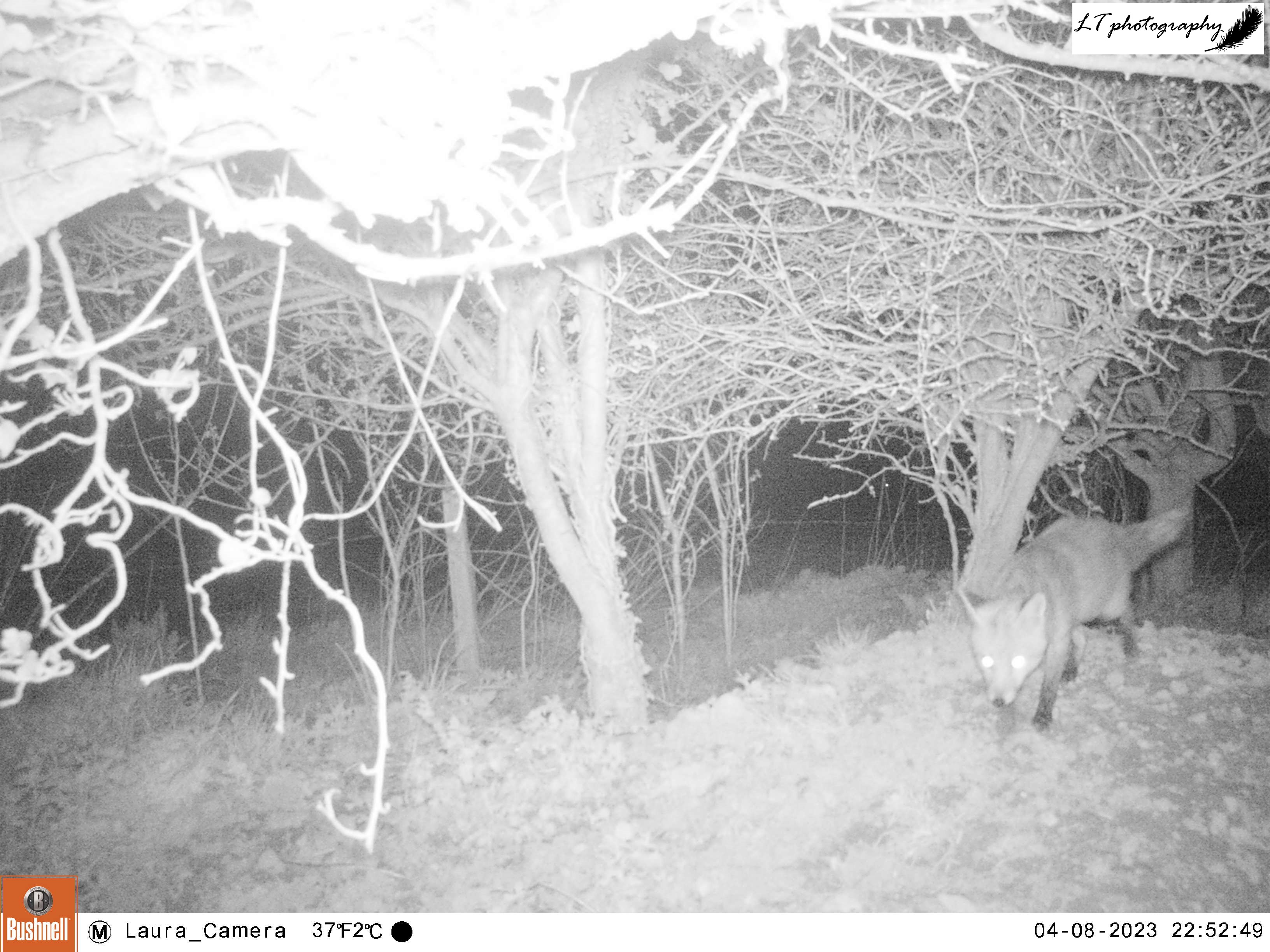
Garden – Adult fox checking things out
Badger Alley
Last year Badger Alley was home to a pair of lovable fox cubs that gave me the wonderful opportunity to watch as they grew up to be scruffy young adults venturing out to explore the wider world. So when spring rolled around this year, I put my camera traps out once again to see what stories would unfold in Badger Alley.
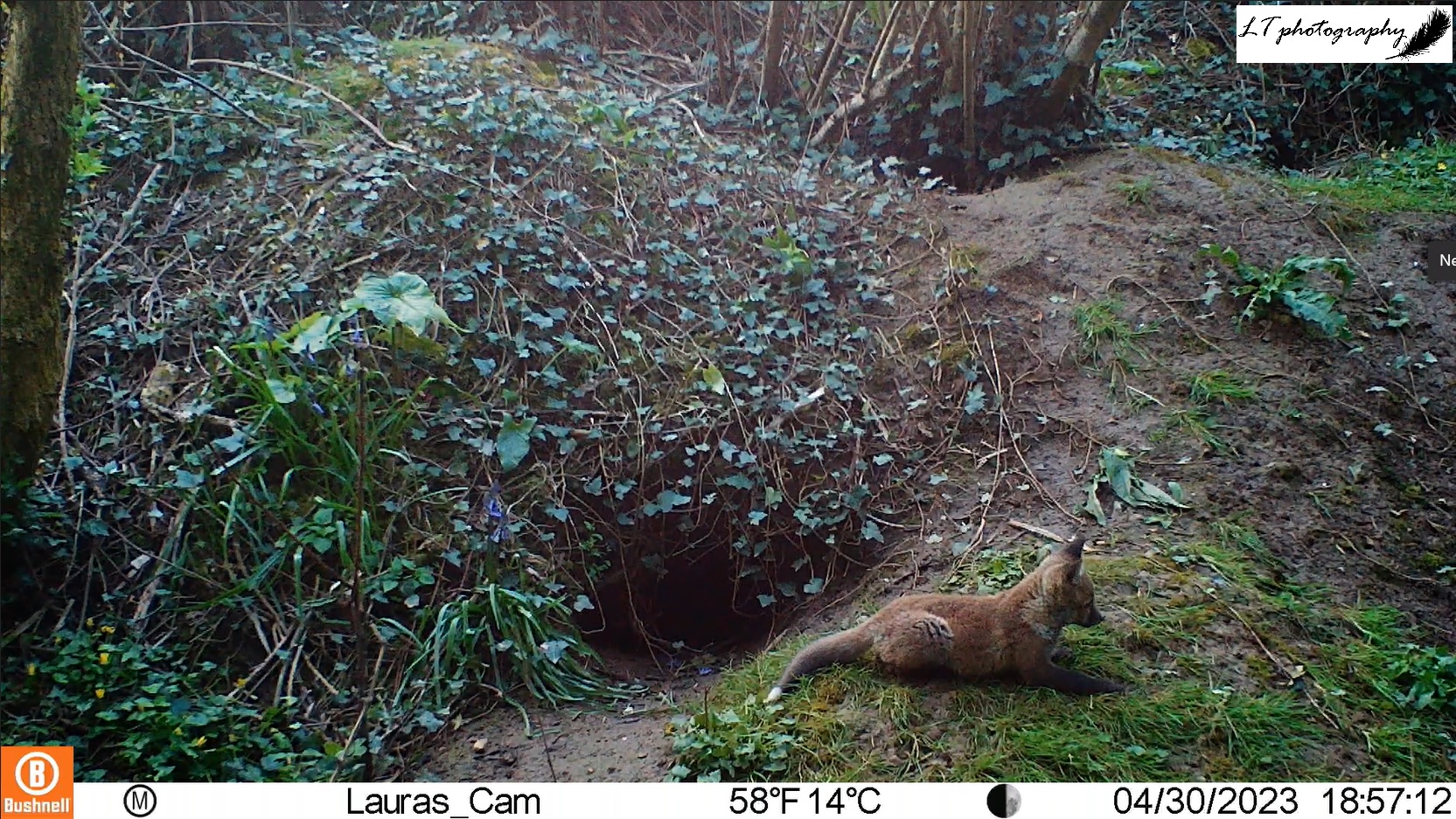
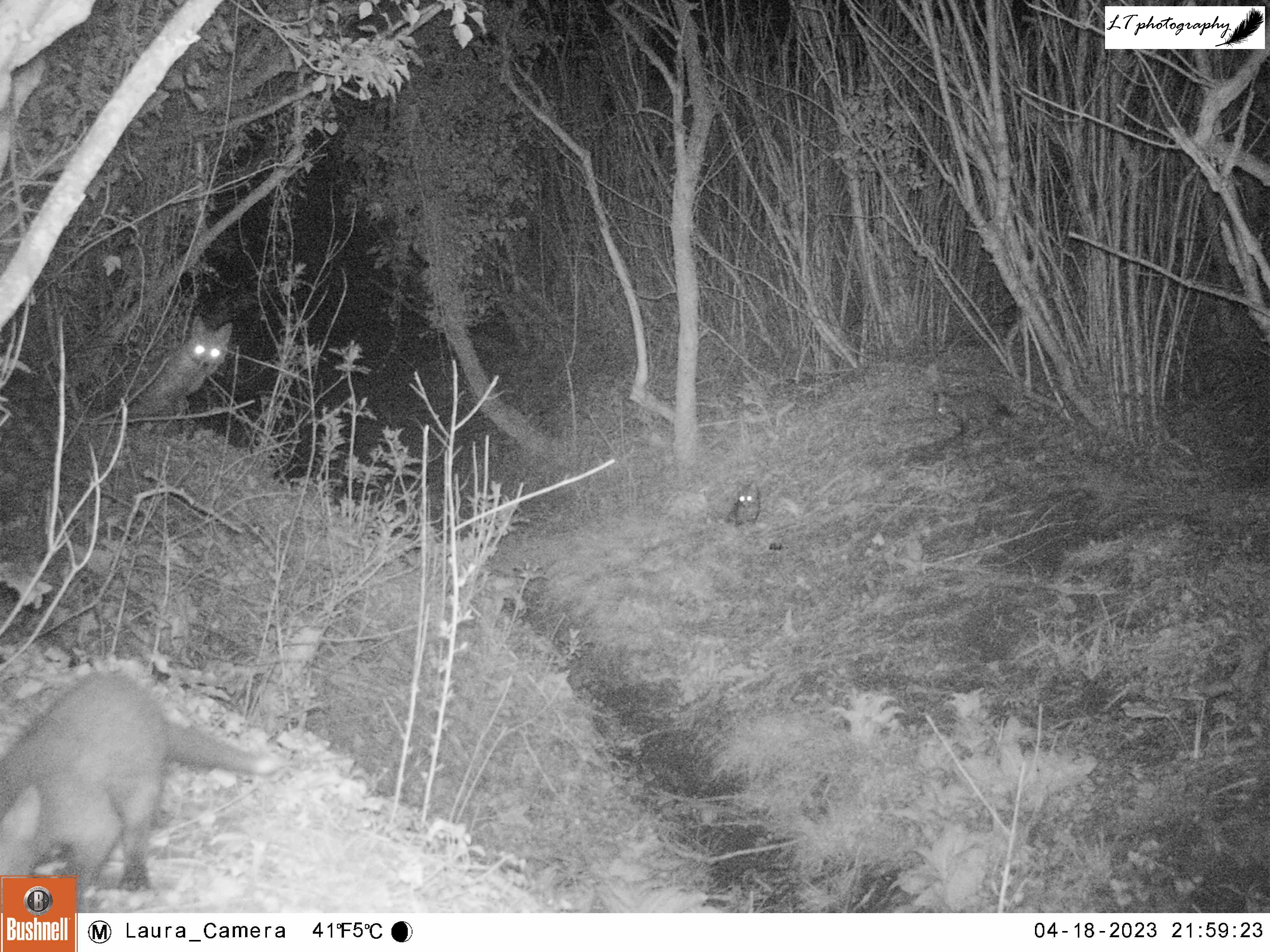
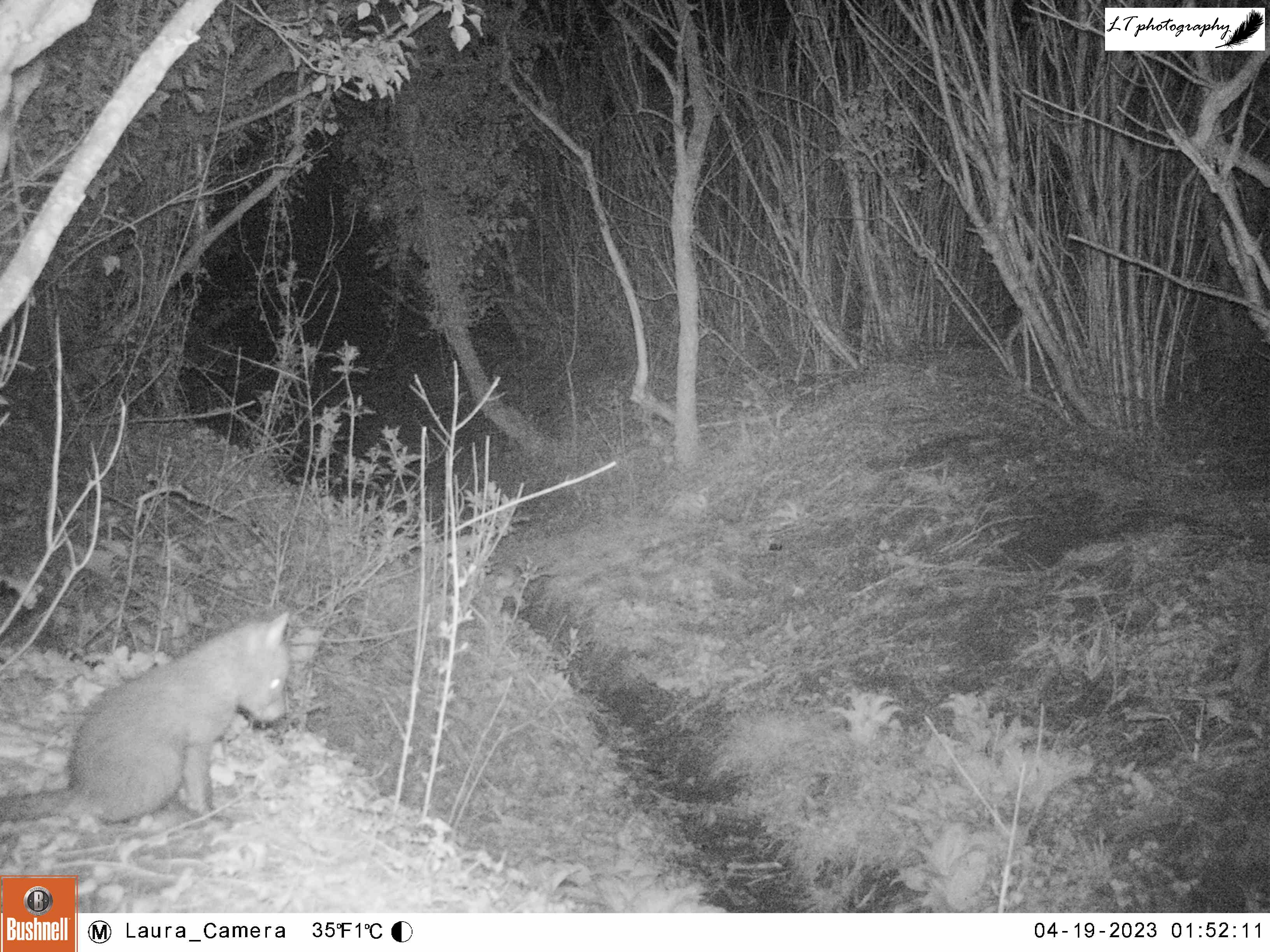
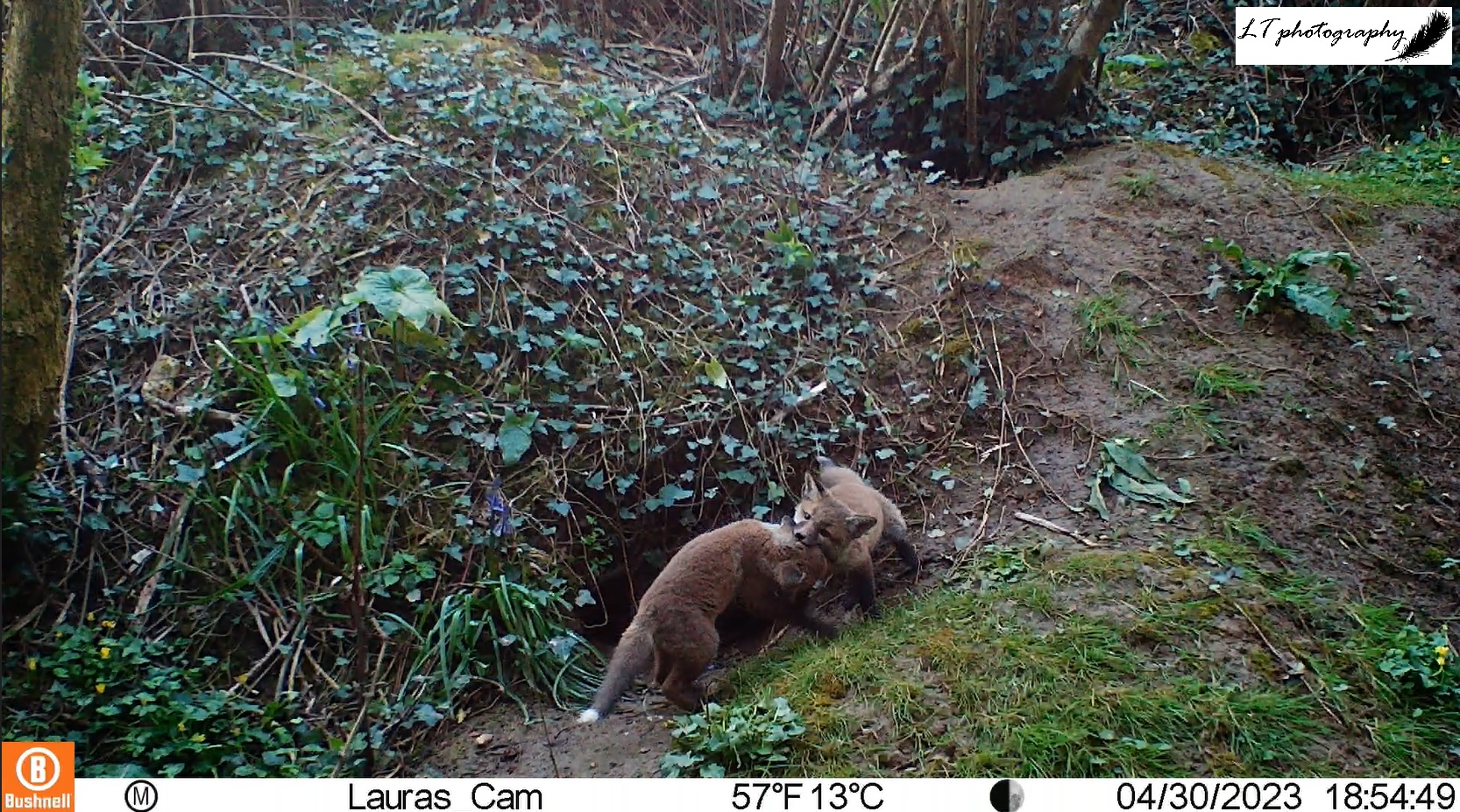
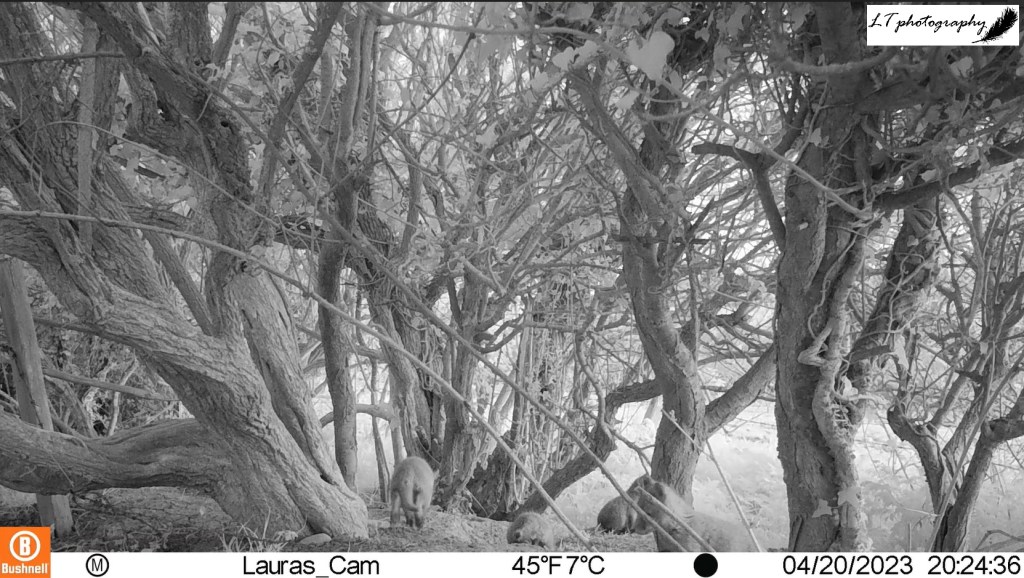
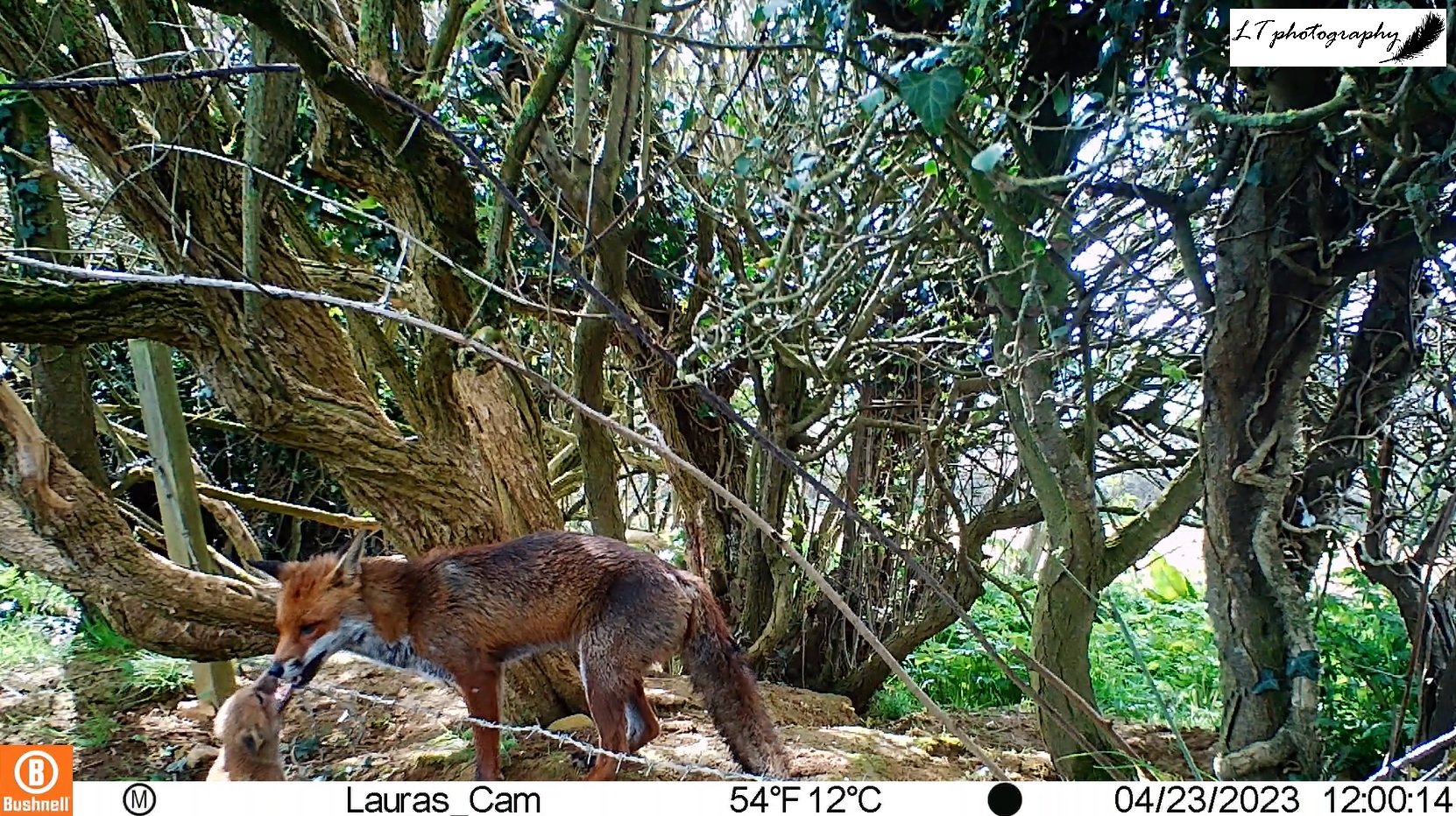
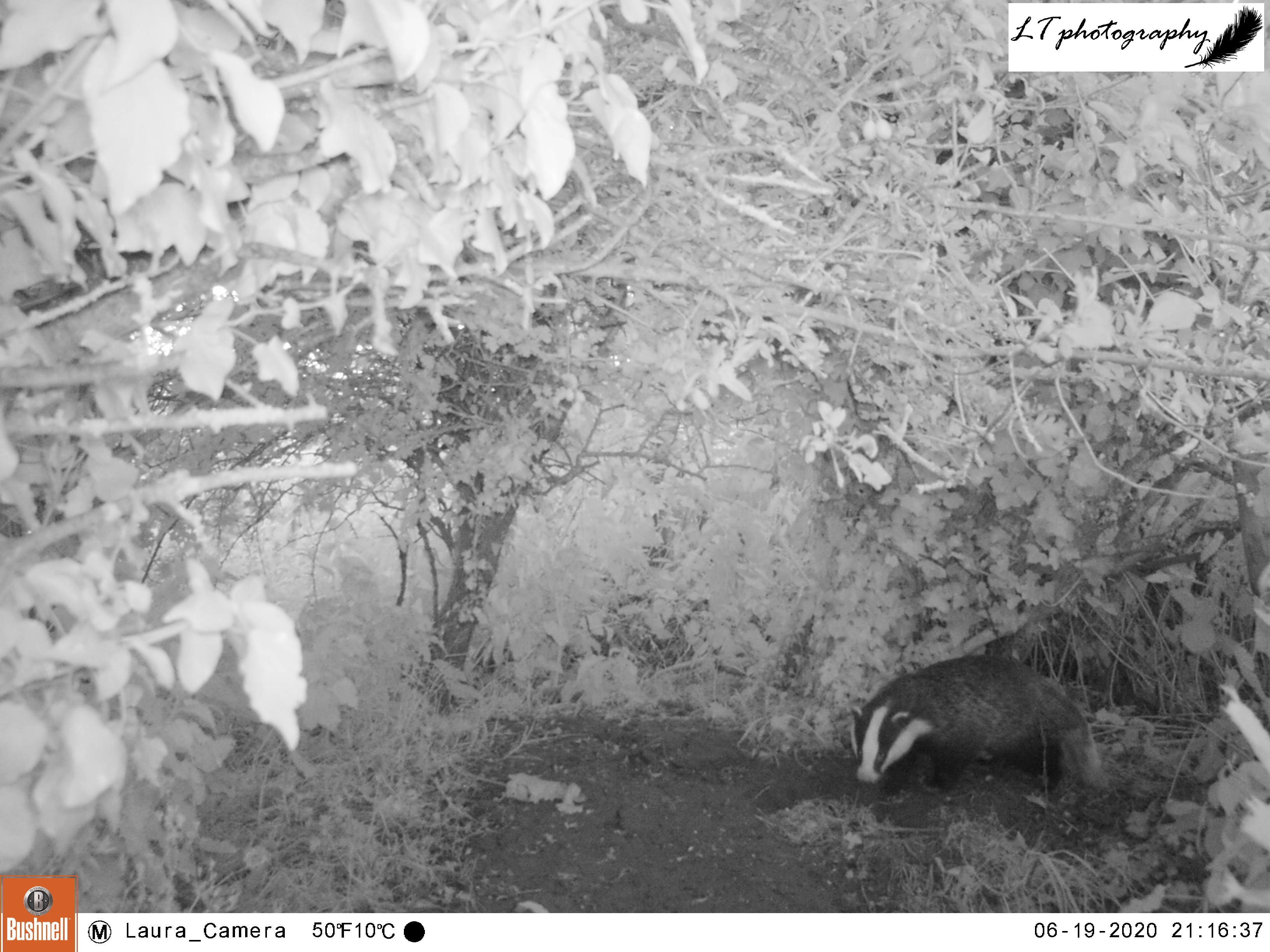
On the 18th April, my camera trap gave me my first views of a new family inhabiting a badger sett in Badger Alley. I was amazed to see a litter of four small cubs exploring the world created by the trees sheltering the footpath, and also excitedly welcoming their parents back as they brought back food to them. On the 21st April I got the wonderful sight too, of all four cubs being suckled by their mother.
With each week my camera traps watched as the fox cubs grew bigger and bigger and came into their deep orange-reds coats like those of their parents. They fought, played and sunbathed, and began to venture further from their den. It was great to see all four cubs thrive through this time and I hope they continue to do so!
Quarry Field
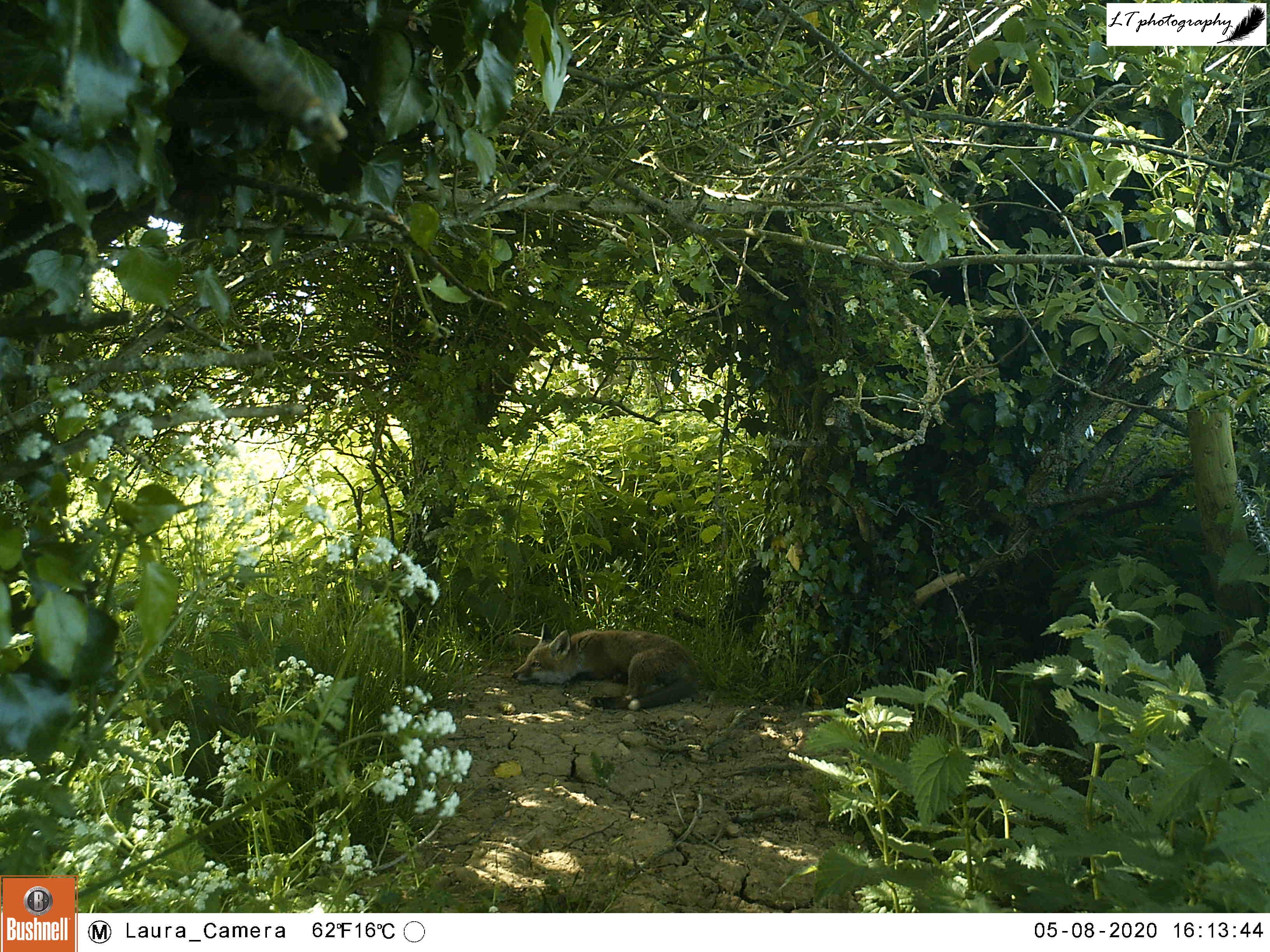
My Quarry Field site is an active badger sett shared with other species. In 2020, I captured a lone cub on my camera traps, sleeping, being fed and wandering around on its own. The following year, in 2021, things looked a bit brighter with two rowdy fox cubs living in the sett, keeping each other company, playing, fighting and growing together. Last year, in 2022, there was signs of an adult fox passing through with food, but that spring I saw no actual sign of fox cubs living within the sett. What did I find this year then?
During spring 2023, I first put a camera trap out at this site on the 8th of April. During the following week, my camera caught lots of sights of an active badger family and a passing through female roe deer, but also an adult fox passing through every night. This was a positive sighting as it meant to me that the sett could be being used once again by a fox family.
This year luck was on my side and on the 17th April, my camera trap caught a first sighting of very small fox cubs venturing above ground at the sett, and there was not just one, or two, but four! I was astounded to have two known large litters of fox cubs on the farm this year, with potential others situated across our land also.
It was amazing over the following weeks to watch the cubs play, race around, rough and tumble, explore, and even beg one of their parents for food in front of the camera. Over time the cubs turned from orangey-brown little cubs into true miniature versions of their parents, lying outside the sett in evening sunshine, running up and down the hedgerows, or venturing out into the surrounding fields, still relying on their parents though. They even blessed me with some in person views of their natural behaviour on my adventures this year too!
Thisyear has been a particularly incredible year for foxes that I will not be forgetting in a hurry, but it will be interesting to now see what the impactmay be for local fox populations. They are an important species in the countryside and one people need to learn to continue to live alongside.
Every June the Wildlife Trusts hold their annual 30 Days Wild challenge, aiming to connect more people with nature. It is free and easy to get involved with, and is a great way to have fun, relax, and learn something new. It is completely up to you how you spend your 30 days, with every ‘Random Act of Wildness’ counting. Now in its 8th year, the Wildlife Trusts hope that this year will have been the challenge’s best year yet.
For the last 3 years, I have been taking part in 30 Days Wild each June. From baking to birdwatching, this challenge has been an opportunity to slow down and spend more time out in nature. If you want to read all about my previous years participating in 30 Days Wild, check out my blog posts from 2020 and 2021.
For this year, I wanted to try something a little bit different. Instead of intentionally trying to do something wild every day, I wanted to simply appreciate nature in my everyday life. Being a very active, outdoor person, I wanted to see how in 30 Days I naturally connect with nature on an average day-to-day basis. Read on to find out all about my 30 Days Wild 2022!
30 Days Wild2022
Wednesday 1st: The first day of the month was a busy one, but in my downtime I spent part of my evening exploring my farm’s and neighbours’ buildings for occupied swallow nests ahead of monitoring them over the coming weeks. So far I have found 4 that were either lined or already had eggs laid or chicks hatched.
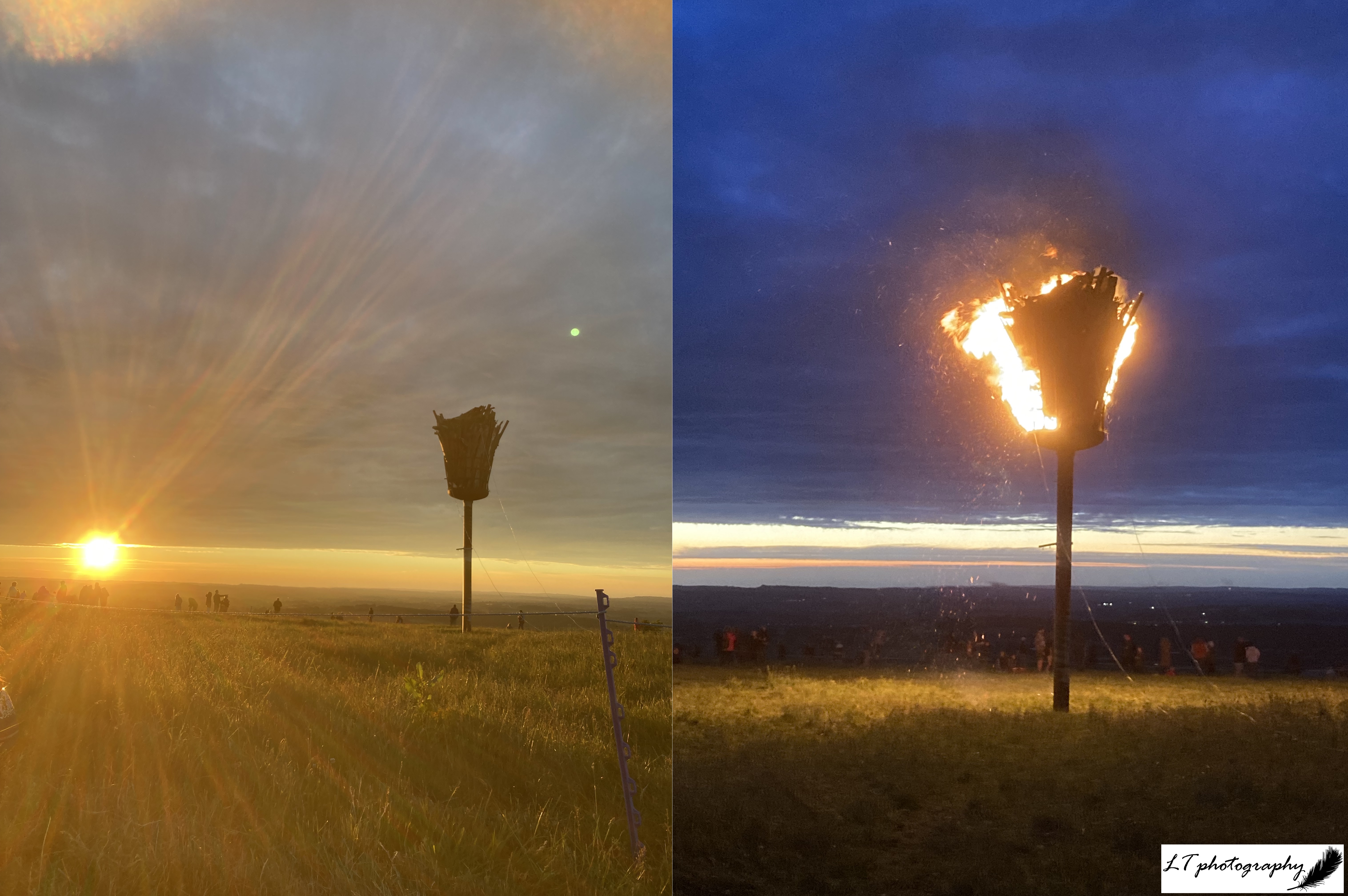
Thursday 2nd: I spent my Thursday working, but also taking some time to relax out in nature. This included going out for a hack on my neighbour’s lovely mare Marsha with a friend and her horse, and watching a spectacular sunset with friends on Okeford Hill for Okeford Fitzpaine’s Platinum Jubilee beacon lighting.
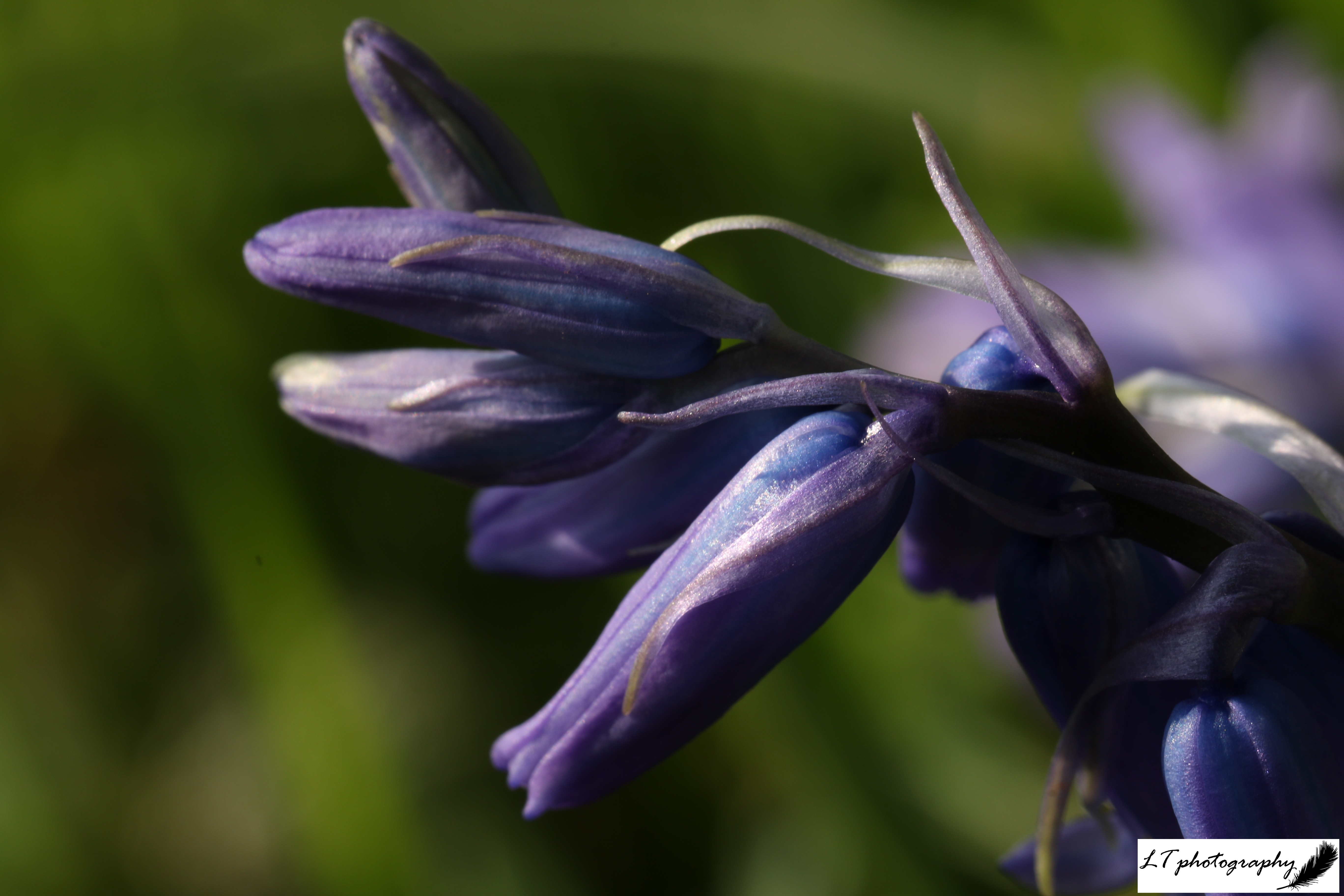
Friday 3rd: This Friday was my first Wild Friday of the month on my blog. For this one, I went back to one of my very favourite times of the year: the blooming of the bluebells. This post had a twist though as I explored a little further and focused on the life amongst the bluebells this year.
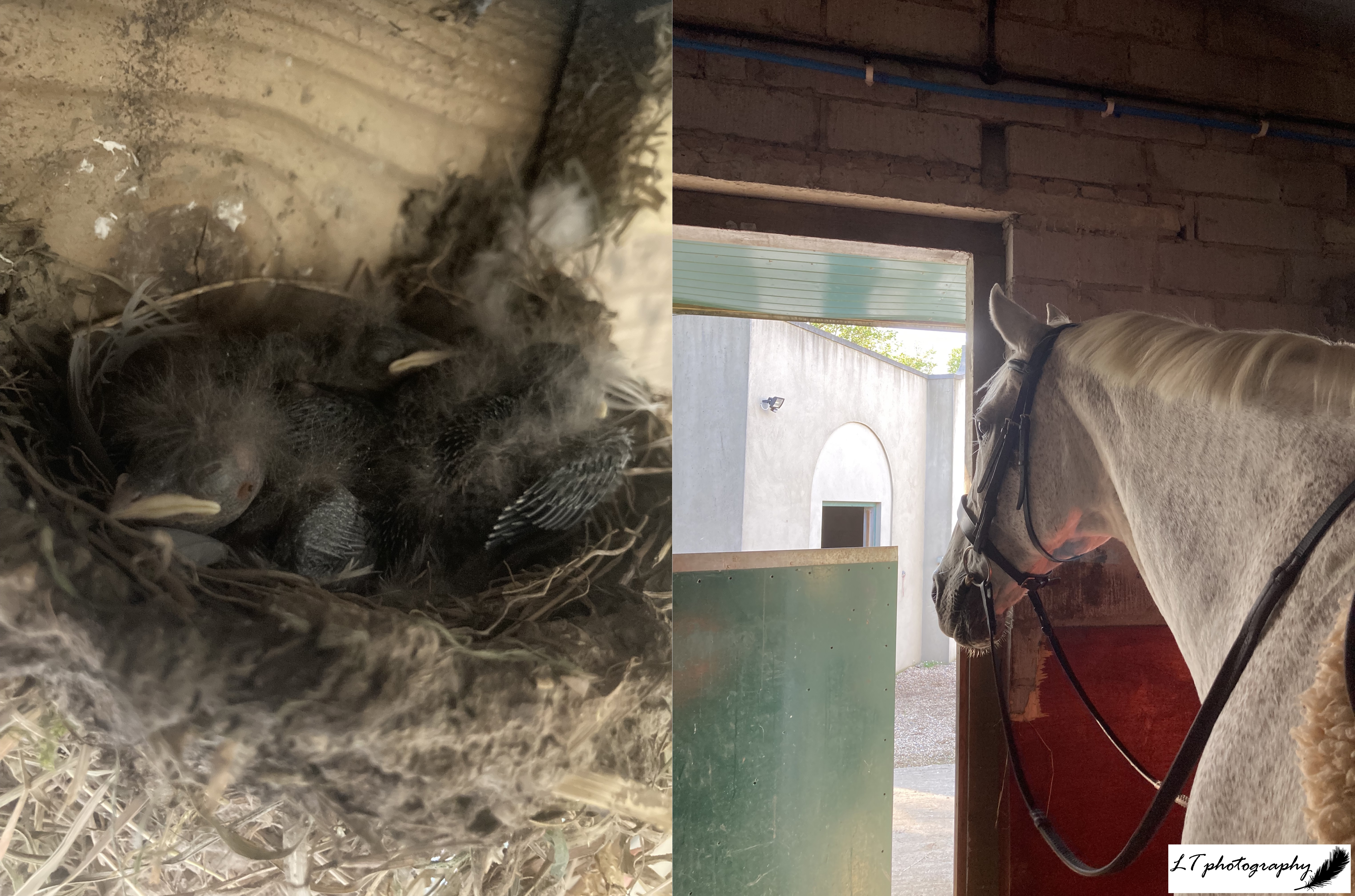
Saturday 4th: As the breeding season for birds continued, I took some time today to check some of my nests. My barn owl nest box was looking good, and I discovered an interesting new nest tree on the farm (stay tuned!). I also discovered a robin’s nest hidden in the middle of a rubbish pile where the chicks are close to fledging.
Sunday 5th: On a more chilled work day, I began reading Simon King’s book ‘The Shetland Diaries’ and continued sketching butterflies and their caterpillars for my next blog post. A little bit of escapism!
Monday 6th: Today I got to ring my first swallow chicks of the year, with one nest that has done well and is 2 weeks ahead of all the others. I hope the chicks continue doing well and fledge successfully! The rest of the day I was out working in nature, until I ended up hurting my knee and going to A and E!
Tuesday 7th: Despite a stitched up knee, between rest and easy jobs, I still went to check my current bird nests. I now have 5 swallow nests, 1 with my ringed chicks and 4 with eggs, and discovered my second kestrel nest of the year.
Wednesday 8th: My wild highlight of the day came in the form of fluffy goslings. At lunch my neighbour’s family of Canada geese got spooked and the parents flew off. The 6-8 goslings fled in fright and I did my best to catch them back up. I only found 4, but I was able to successfully release them back to their lake and their parents thankfully returned to them later on in the day.
Thursday 9th: I began my busy day, that included some habitat maintenance, bright and early with the dawn chorus and a wonderful sunrise. It was a great start to the day, listening to the songs of robins, song thrushes, chiffchaffs, and more.
Friday 10th: Today’s wild time was spent out in nature walking a lovely little dog called Kaya for the Cinnamon Trust. It was also Wild Friday on this blog once again, and this Friday’s post was one of my favourites to put together. With a collection of facts, my photos, and my own drawings, my post was a How to.. guide to identifying common British butterfly species.
Saturday 11th: Today I had a lot on my mind, weighing me down. So I thought it was the perfect time to take a break and be mindful in nature. It was just what I needed to clear my head and calm my body, allowing me to pick myself up and carry on.
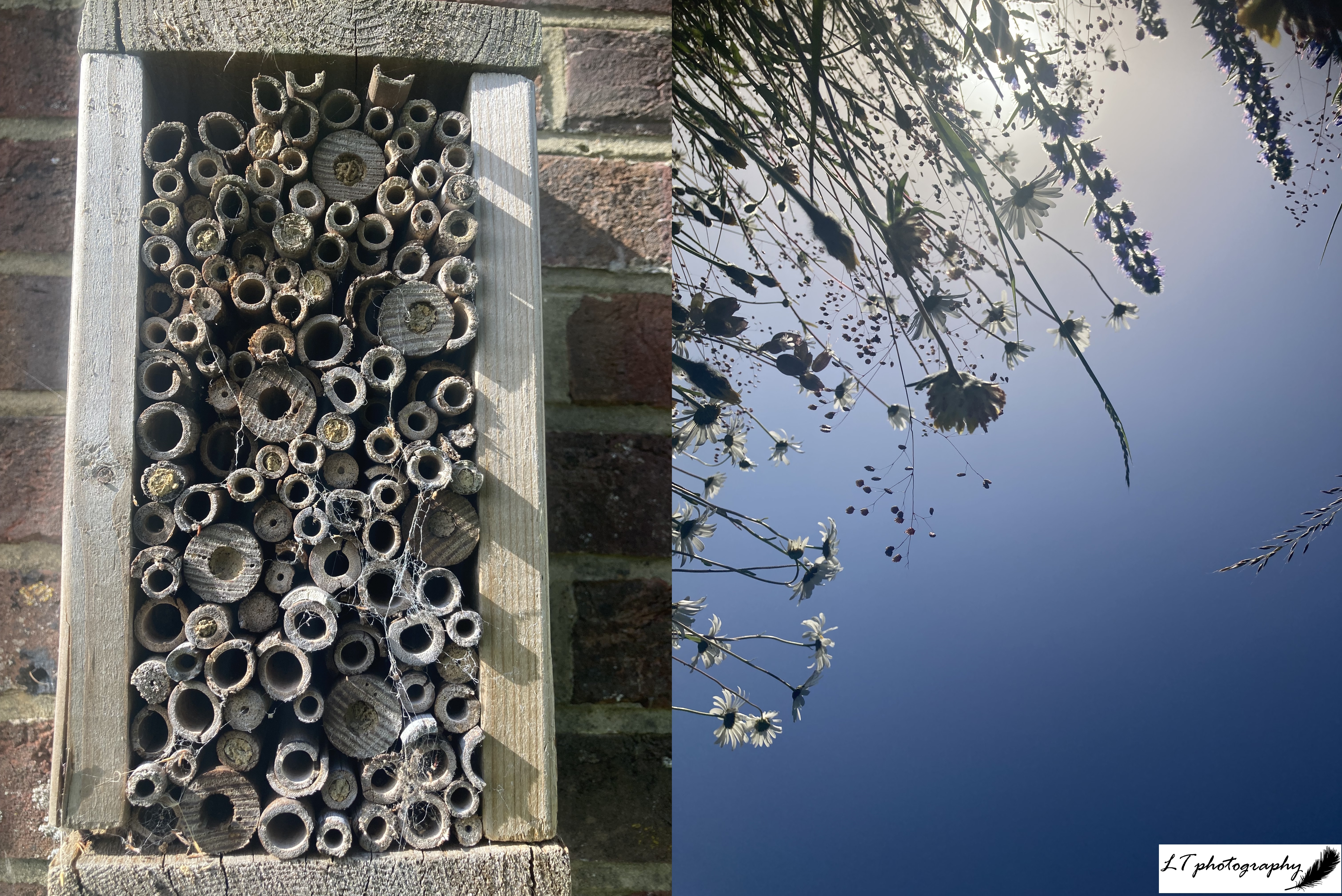
Sunday 12th:I took the day easy, giving my knee some more time to rest. I did though check my bee hotel, which is currently being well used, and spent a really lovely summer’s evening with my brother and his family in their wonderful little garden.
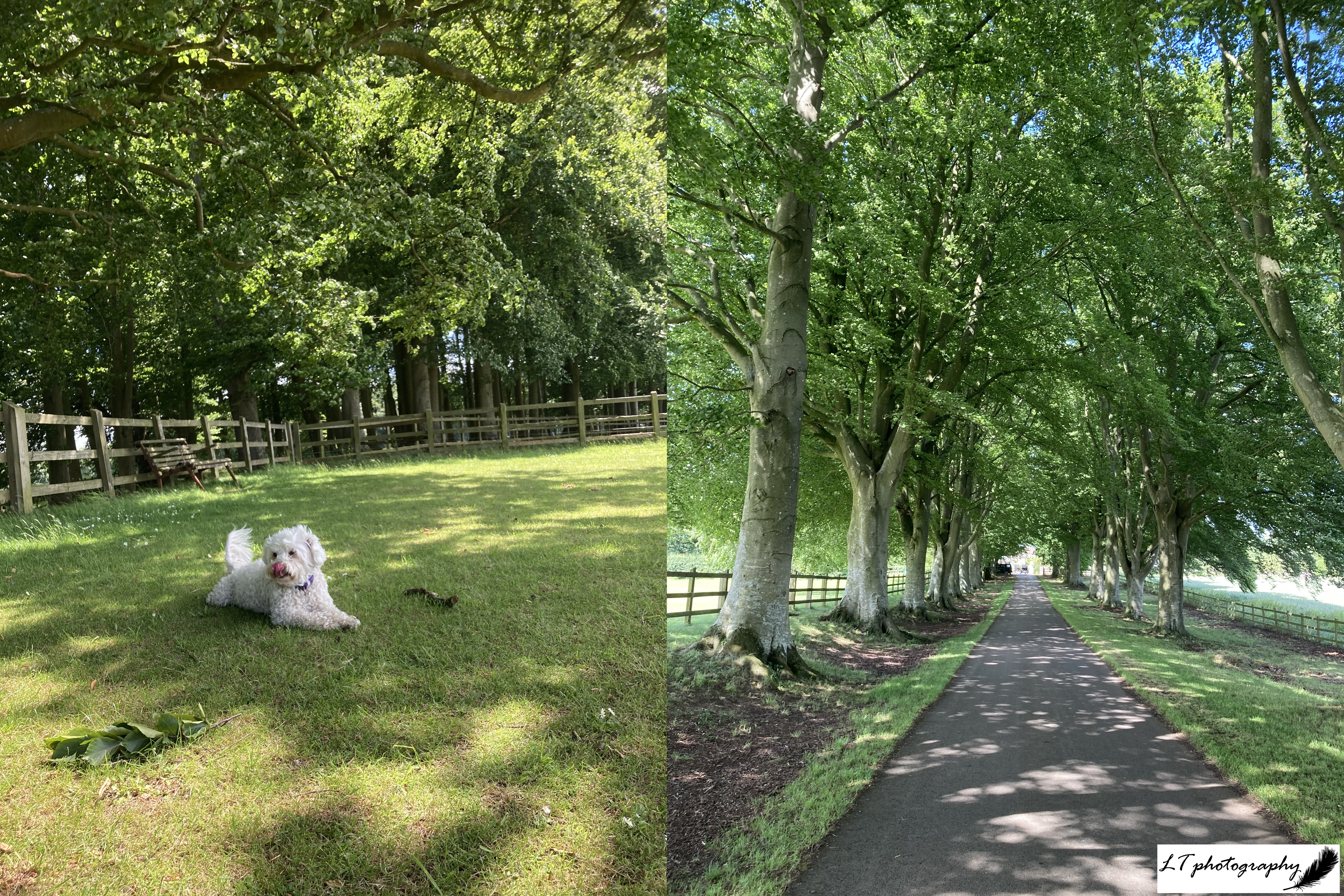
Monday 13th: Today was another day when I got to walk the little dog Kaya, and this time we escaped the hot day by walking in the shade of a huge avenue of trees and looking out for all the wildflowers we could find.
Tuesday 14th: Today was a special day on the farm for me. I got to ring the first of this year’s barn owl chicks, which is always a real pleasure, but I also got to ring our very first kestrel chicks on the farm! Stay tuned to this blog later on in the year to find out how our barn owls (and kestrels) have fared this year.
Wednesday 15th: My wild highlight of today’s work day was seeing fox cubs. On my daily travels around our land, I saw not one family of fox cubs, but 3, all out playing and exploring. Whatever people might think of foxes, fox cubs are a real joy to watch.
Thursday 16th: Though a day late, today I made my usual swallow nest checks. My 5 nests are doing well, 1 ringed brood of 5 staying close to their nest, 2 nests nearly ready to be ringed, and 2 more that are just hatching.
Friday 17th: I was outside most of the day, but my wild highlight has to be watching 4 red kites swooping over the fields following grass being cut by tractors. It was also Wild Friday on this blog, and so this Friday’s post was a collection of some of my favourite photos from spring 2020.
Saturday 18th: In between work hours, I used my free time to finish hand painting the bee hotel I had been working on for my niece’s 4th birthday. I really enjoyed painting it and I was very happy with the end result! Maybe I will have to do more wild wood painting in the future!
Sunday 19th: As I had a more relaxed day, I headed out and collected recent photos and videos from my two camera traps that are out and active at the moment. This is my favourite part of camera trapping, and my cameras did not disappoint. Check out my blog posts coming in the next few weeks to see all about my camera trapping adventures this spring!
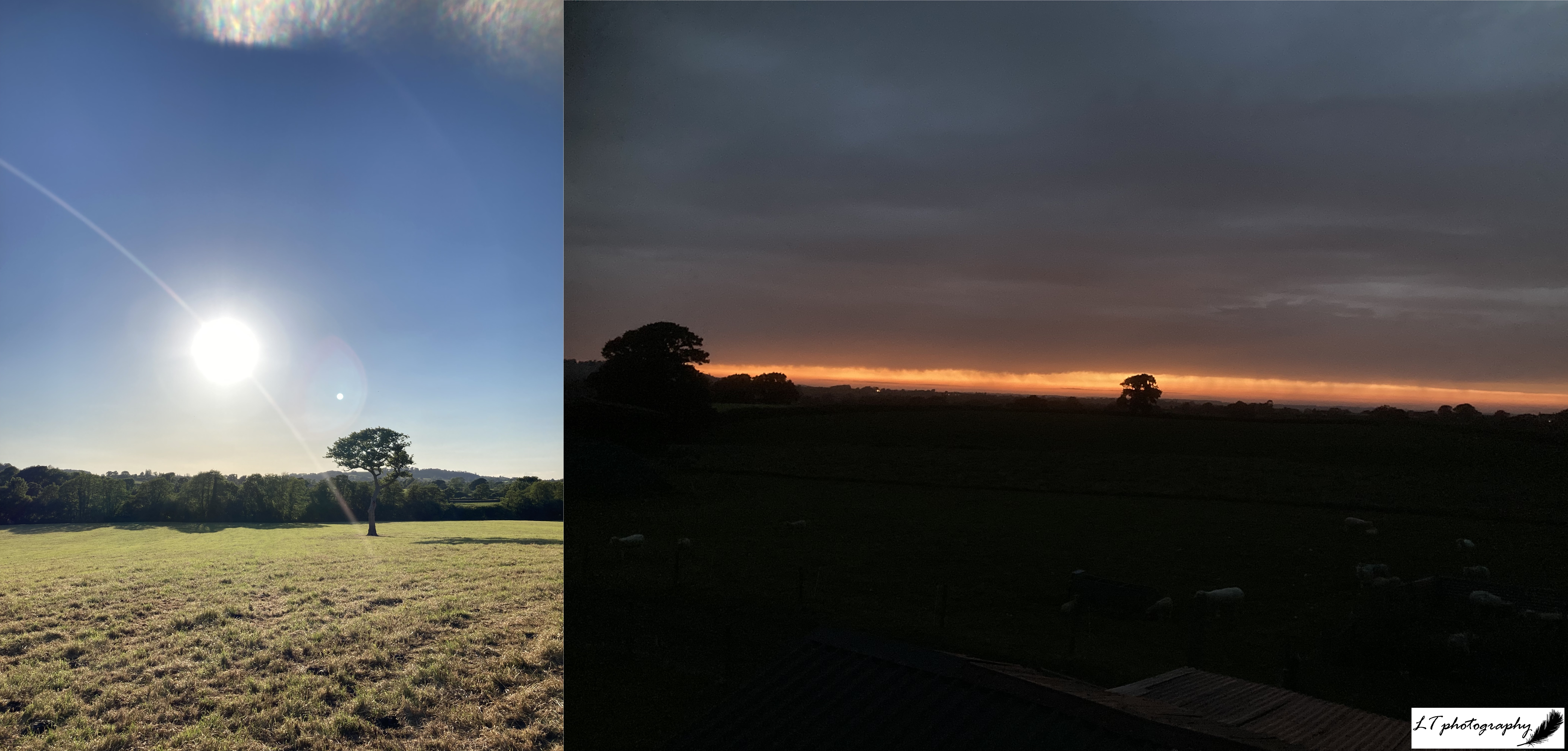
Monday 20th:Around work today, I picked the first gooseberries of the year, explored what flowers are currently out right now, and watched a lovely sunset.
Tuesday 21st:Today I spent most of the day working away from the main hub of our farm, provided with wild moments including listening to yellowhammers sing, watching adult kestrels feeding their chicks, and escaping a swarm of honey bees. To finish the day, I got to ring another 2 of my 5 swallow nests. I am enjoying monitoring my small swallow population!
Wednesday 22nd: As Wednesday rolled around once again, I was back checking on my swallows that have yet to reach the ringing stage. Now 1 nest has completely fledged, another 2 have been ringed, 1 is ready to ring, and unfortunately 1 of my nests has been predated. This year has definitely been a tough one for swallows once again, but it is good to have seen some chicks fledge already.
Thursday 23rd: After a couple of weeks resting up from my knee injury, I was finally back out on horseback. I went for a lovely chilled hack out around my local area on Marsha, taking in lots of wildlife, including singing greenfinches and a hunting buzzard.
Friday 24th: Today I enjoyed sharing the last Wild Friday on my Laura’s Wild World blog this June. This particular post celebrates spring by looking at how spring happened in 2022. It was an interesting post to put together!
Saturday 25th: For the first day I had had off in a long time, I had been invited to a ‘Greylag Goose Roundup’. This event was being held at Poole Park to catch geese for a project where each year as many as possible of the current population are being coloured ring. It was a great day of catching up with other bird ringers and getting to ring my very first greylag goose!
Sunday 26th: Today I woke up to the rain falling and quenching the thirst of the land right now. It was great to take some time to appreciate the falling rain, before getting some drier spells to walk the countryside.
Monday 27th: Again another day begun with rain, before heating up and drying out. After a busy day, I enjoyed taking a break from life and walking around our land, exploring nature. Flocks of juvenile goldfinches, knapweed blossoming into purple flowers, and hares grazing in the fields, just some of the few sights to be beheld.
Tuesday 28th: This morning I had another lovely ride out on Marsha, with some of my wild highlights being a buzzard trying to hide in a tree, painted lady butterflies on the wing, and hedgerows full of wildflowers. This afternoon I had a good walk with my Dad watching butterflies and birds, including meadow browns and red kites.
Wednesday 29th: Today when I was not working or going to appointments, I spent time organising my wildlife photos and camera trap photos, and playing outside with my young nieces, who both love nature in their own individual ways.
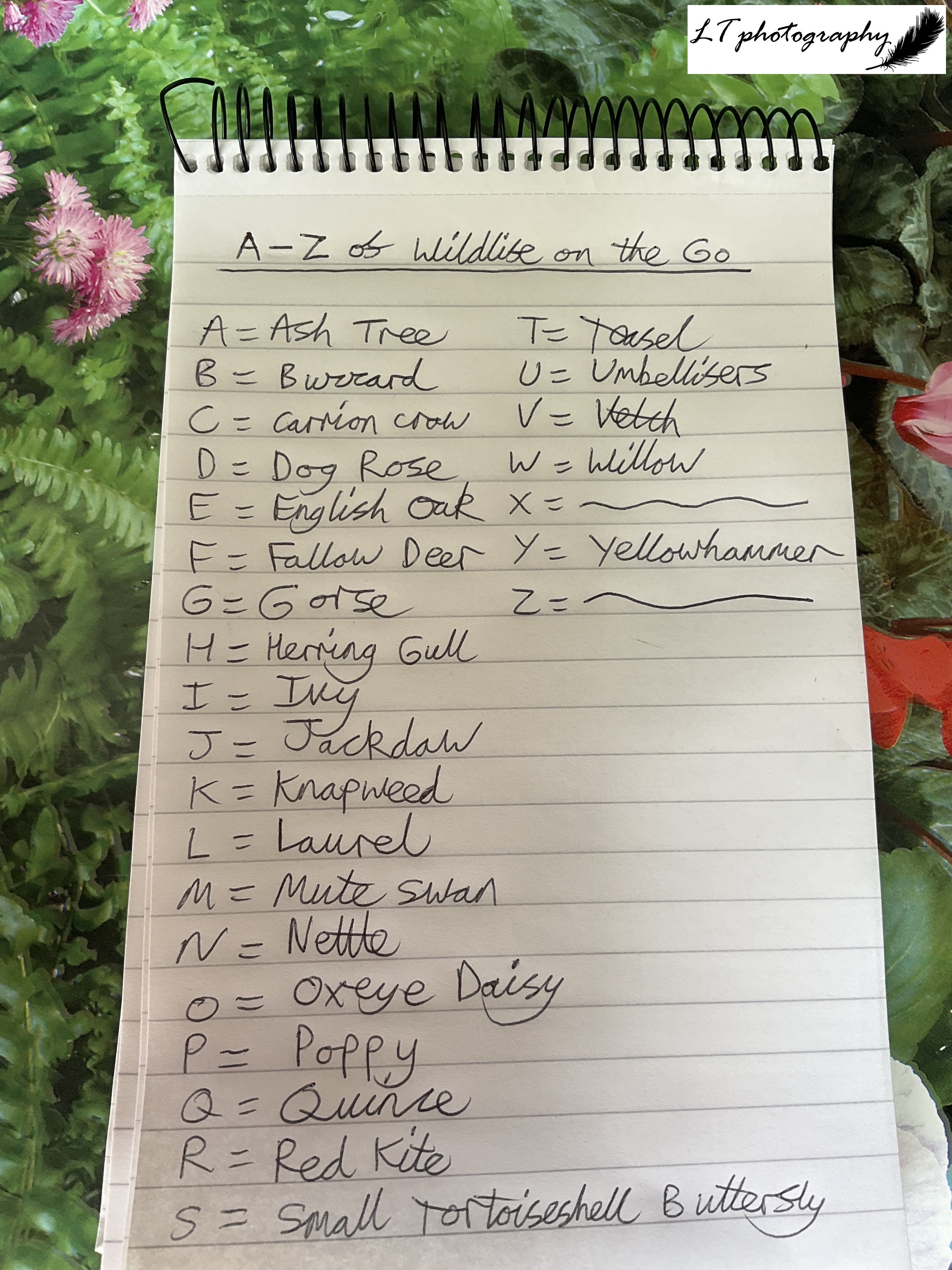
Thursday 30th: For the last day of this year’s 30 Days Wild, I have been travelling up to London by bus to spend a few days exploring with my mum. For something a little different, I challenged myself to my annual A-Z of wildlife, but a travel edition. Here’s how I got on:
Looking back at my June this year, I was very busy, but the month shows that I naturally take time each day to connect with and appreciate nature. This could be through harvesting food, walking out in nature, or even getting involved in conservation projects. Being outside out in nature is important for my mental health, for my inspiration, and for my lifestyle, and so after this year’s 30 Days Wild, I now appreciate our natural environment even more so. Here’s for living every day a wild one!







































 Laura's Wild World