Whizzing past our car windows, naturally bordering our fields and gardens, or providing a home for wildlife. Often going unseen and unnoticed, hedgerows are a widespread and overlooked habitat right on our doorsteps. Bountiful and bursting with life, each hedge is unique from the next, with a story to be told and a world to be explored.

From butterflies and birds to hedgehogs and dormice, an incredible number of species rely on the plants in our hedges for their survival, such as food, shelter, and corridors along which to travel. They do not just play a role for wildlife though, holding value in the wider landscape, providing us with services such as stopping soil erosion and buffering pollution. In this way, hedgerows have been important for humans and wildlife alike for hundreds of years!
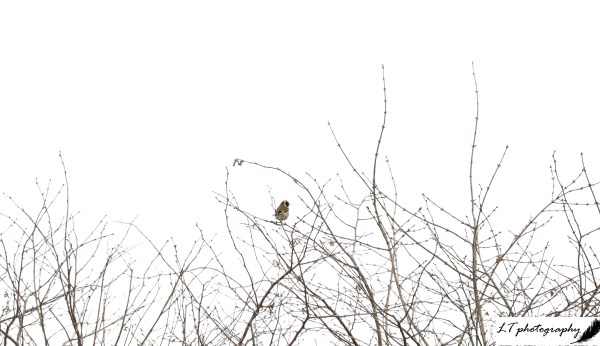
The first hedgerows can be dated back to the Bronze Age, when farmers cleared woodland to grow crops, leaving carefully maintained strips to act as boundaries. Some of these strips of ancient woodland can still be found today! Since then hedges have grown in popularity, but following the Second World War, many were ripped up to provide more space to grow food and for development. Despite approximately half of all hedges in Britain being lost during this time, thankfully the remaining were given protected status in 1997.

The hedgerows rolling across our countryside today are a piece of history, full of life and colour and provide us with a whole host of resources. So, why not try and see this for yourself, and take a moment to see what you can find in a hedgerow local to you? To help, here’s my simple guide to identifying some of our iconic hedgerow species.
Hedgerow Plants
Blackthorn (Prunus spinosa)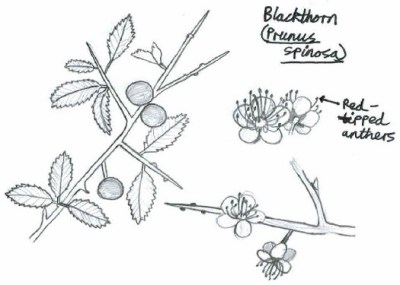
- Family: Rose – related to fruiting trees such as cherries and plums
- Size: Up to 4m tall
- Stems and twigs: Blackish and thorny
- Leaves: 2-4cm long, oval-shaped tapering to a point with toothed margins
- Flowers: Snow-white and 5-petalled with red-tipped anthers in the centre. Flowers late March-April, appearing BEFORE the leaves
- Seeds: Produces fruit (sloes) which are small blackish plums with a bluish powdery surface. Tongue-numbingly tart to eat but popular to flavour gin
- Range: Widespread and common throughout most of Britain
- Fun Facts: Blackthorn, long used for making items such as walking and riding sticks, has long been associated with witchcraft


Spindle (Euonymus europaeus)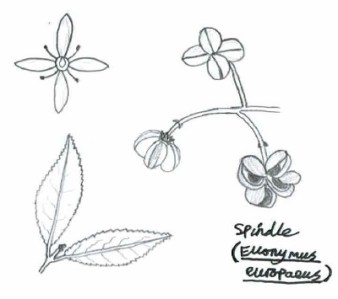
- Indicator of an ancient hedgerow
- Family: Staff-vine
- Size: Up to 9m tall
- Stems and twigs: Bark and 4-sided twigs are deep green, darkening with age
- Leaves: 3-13cm long, shiny, mid-green, oval-shaped tapering to a point with finely toothed margins, and turning distinctively pinkish-red in autumn
- Flowers: Greenish-white and 4-petalled in small overlooked stalked clusters. Flowers May-June
- Seeds: Distinctive 4-lobed bright coral-pink berries
- Range: Less common in Scotland and Ireland, found throughout England and Wales, but most frequent in the south
- Fun Facts: The hard dense wood of spindle was used from ancient times to make spindles, whereas the leaves and seeds were powdered to dust on the skin of children to drive away lice


Cow parsley (Anthriscus sylvestris) 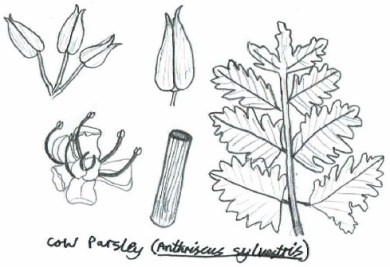
- Family: Carrot – related to species such as parsnips and poison hemlock
- Size: ~1m tall
- Stems and twigs: Stems are hollow and furrowed, often becoming purple
- Leaves: Fresh green, 3-pinnate, and sharply cut
- Flowers: White, forming clusters known as umbels. Flowers April-June
- Seeds: Round, smooth and broad-based
- Range: Widespread and common throughout Britain and strongly associated with hedgerows
- Fun Facts: Its folk-name is ‘Queen Anne’s lace’. This comes from a folk tale which said that the flowers would bloom for Queen Anne and her ladies in waiting and reflect the delicate lace they wore


Common Hazel (Corylus avellana)
- Family: Birch – related to species such as silver birch, alders and hornbeams
- Size: Up to 8m tall
- Stems and twigs: Bark coppery brown, smooth and tending to peel
- Leaves: 5-12cm long and almost circular with sawtooth edges
- Flowers: Male= lemon-yellow catkins; Female= Tiny and bud-like with red styles. Flowers January-March BEFORE the leaves
- Seeds: An edible nut encased at first in a thick-green husk before ripening in autumn
- Range: Widespread and common throughout Britain
- Fun Facts: Hazel rods have historically been used for a range of purposes from hurdles and coracles for fishing to house building and basketwork


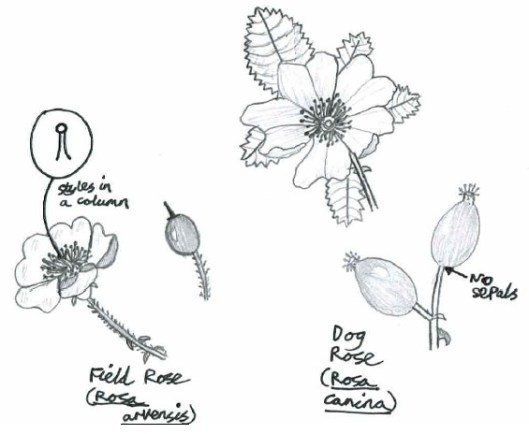
Dog Rose (Rosa canina)
- Family: Rose
- Size: Up to 4m tall
- Stems and twigs: Arching stems with broad-based strongly hooked prickles
- Leaves: Dark green and oval-shaped tapering to a point with toothed edges
- Flowers: Flat and fragrant white or pale pink, with large petals and hairless stalks. Flowers June-July
- Seeds: Fruit, known as a hip, that is egg-shaped and bright red
- Range: Most common and variable wild rose, widespread throughout Britain, but most frequent in the south
- Fun Facts: Adopted as a symbol of the British monarchy and England since the reign of Henry VII. It is also a valuable medicinal plant, with its hips being made into a Vitamin C rich syrup for children


Field Rose (Rosa arvensis)
- Compared to the Dog Rose, the Field Rose is shorter, growing up to about 2m, with slightly smaller, cup-shaped creamy-white flowers that flower about a fortnight later, from June-July. Also, the flowers’ sepals are often purplish, the styles are in a column, and the hips are smaller and often more round. The Field Rose’s range does not stretch as far north as that of the Dog Rose, being absent from Scotland
Common Hawthorn (Crataegus monogyna)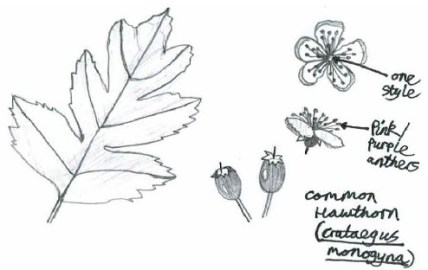
- Family: Rose
- Size: Up to 10m tall
- Stems and twigs: Very thorny and hairless
- Leaves: Leafing in April, the leaves are shiny and roughly oval-shaped with 3-5 deeply cut lobes
- Flowers: White fragrant (sickly sweet) flowers with pink/purple anthers, only one style and 5 petals. Become deeper pink as they fade
- Seeds: Fruit, known as haws, have a single seed and ripen to a bright red
- Range: Widespread and common throughout Britain
- Fun Facts: Hawthorn is linked to Christian, pagan and medieval rites, and has ancient associations with May Day. Bringing hawthorn blossom in your house was believed to bring in illness and death upon you


Elder (Sambucus nigra)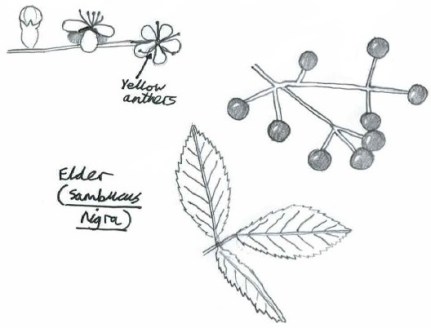
- Family: Previously in the honeysuckle family , but now reclassified in moschatel
- Size: Up to 10m tall
- Stems and twigs: Strong smelling with corky and fissured bark
- Leaves: Dark green, pinnate with 5-7 leaflets
- Flowers: White, small and fragrant in flat-topped clusters with yellow anthers. Flowers May-August
- Seeds: Produces a juicy edible purplish-black berry
- Range: Widespread and common throughout Britain
- Fun Facts: Has many uses from wines and jams, to toys and dyes. Also, it was believed that planting an elder tree near your house would keep the Devil away


Field Maple (Acer campestre)
- Family: Soapberry – related to horse chestnut and lychee
- Size: Up to 25m tall
- Stems and twigs: Twigs downy
- Leaves: Much smaller than sycamore at 4-7cm long and wide, rather bluntly lobed (3-5), and dark green. Turn distinctively amber in autumn
- Flowers: Yellowish-green and carried in upright spikes. Flowers May-June after the leaves
- Seeds: The seeds, known as keys, are winged and paired forming an angle of 180 degrees
- Range: Common in England and East Wales, but less common elsewhere
- Fun Facts: Wood used for furniture veneers, wall panelling, and violin-making, but previously used to make domestic utensils such as drinking bowls. As with all maple trees, the sap of the field maple can be used to make maple syrup


Bramble (Rubus fruticosus)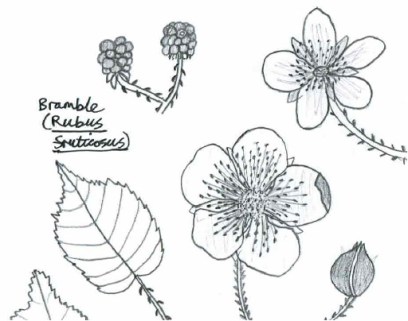
- Family: Rose – closely related to species such as raspberries and dewberries
- Size: Up to 4m tall or long
- Stems and twigs: Prickly and half-evergreen
- Leaves: 3-5 broad, toothed leaflets
- Flowers: White or pink and flowers from May onwards
- Seeds: Fruit is the familiar edible blackberry that starts green, then turns red, finally ripening to purple-black
- Range: Widespread and common throughout Britain
- Fun Facts: Folklore dictates that blackberries should not be picked after Old Michaelmas Day in October, as the Devil has sullied them. Brambles were also previously planted on graves to stop sheep grazing


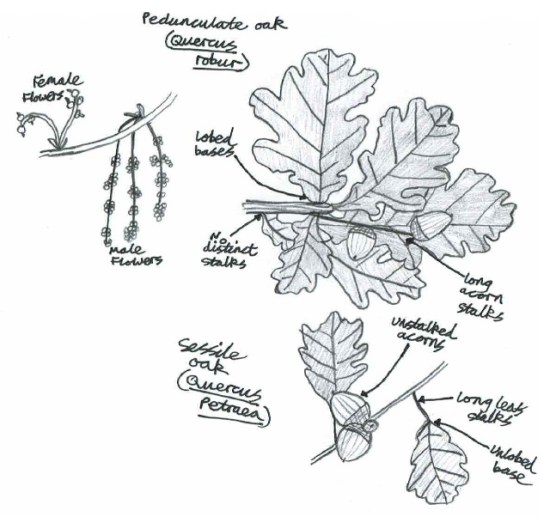
Pedunculate or English oak (Quercus robur)
- Family: Beech – related to species such as beech and sweet chestnut
- Size: Up to 40m tall
- Stems and twigs: Massive rugged grey-brown trunk and broad crown
- Leaves: 10-12cm long, oblong, usually broader at the base and lobed, turning brown in autumn
- Flowers: Yellow-green catkins flowering April-June
- Seeds: Produces the familiar acorn, with scaly cups and clusters carried on long stalks
- Range: Widespread and common throughout Britain
- Fun Facts: Druids in Celtic Britain held the oak tree sacred, with the oak becoming an English national symbol of strength


Sessile oak (Quercus petraea)
- Differs to Pedunculate Oak in that the leaves taper to an unlobed base and have long stalks. Also, the clustered acorns are almost stalk-less with downy cups. Prefers more acid soils and is more common in the West of Britain
Other species
- There are lots of flowering species to also be found at the base of hedges. To help with identifying these, check out my ‘How to… Identify Woodland Flowers’ guide, to help with crossover species, such as bluebells, primroses, and moschatel


All photos and drawings are my own



 Laura's Wild World