A Year In The Life Of An Oak Tree

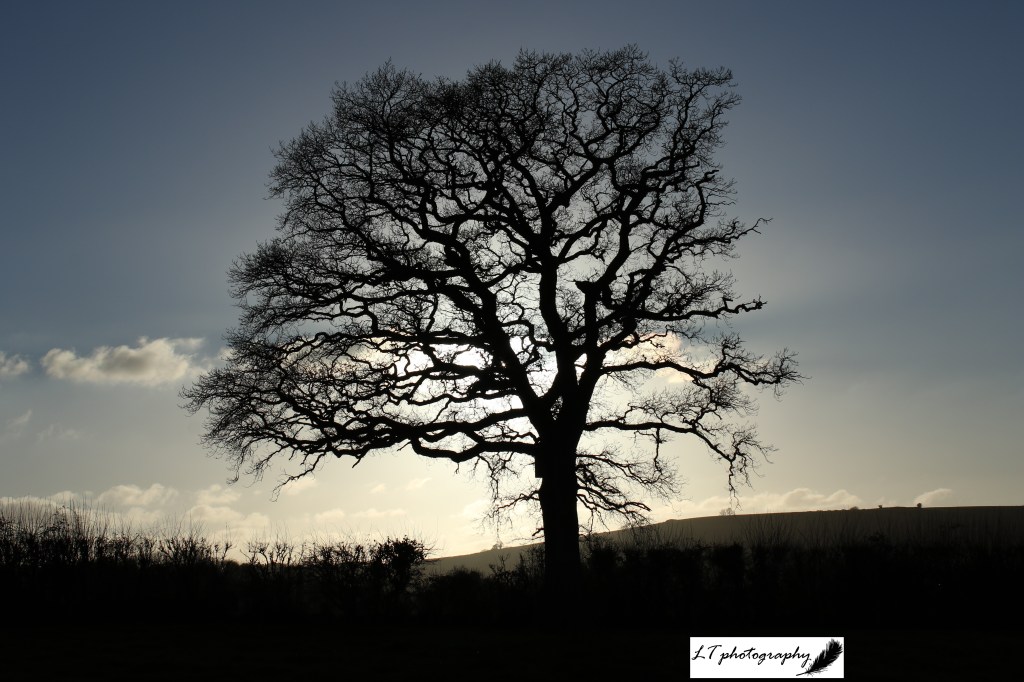
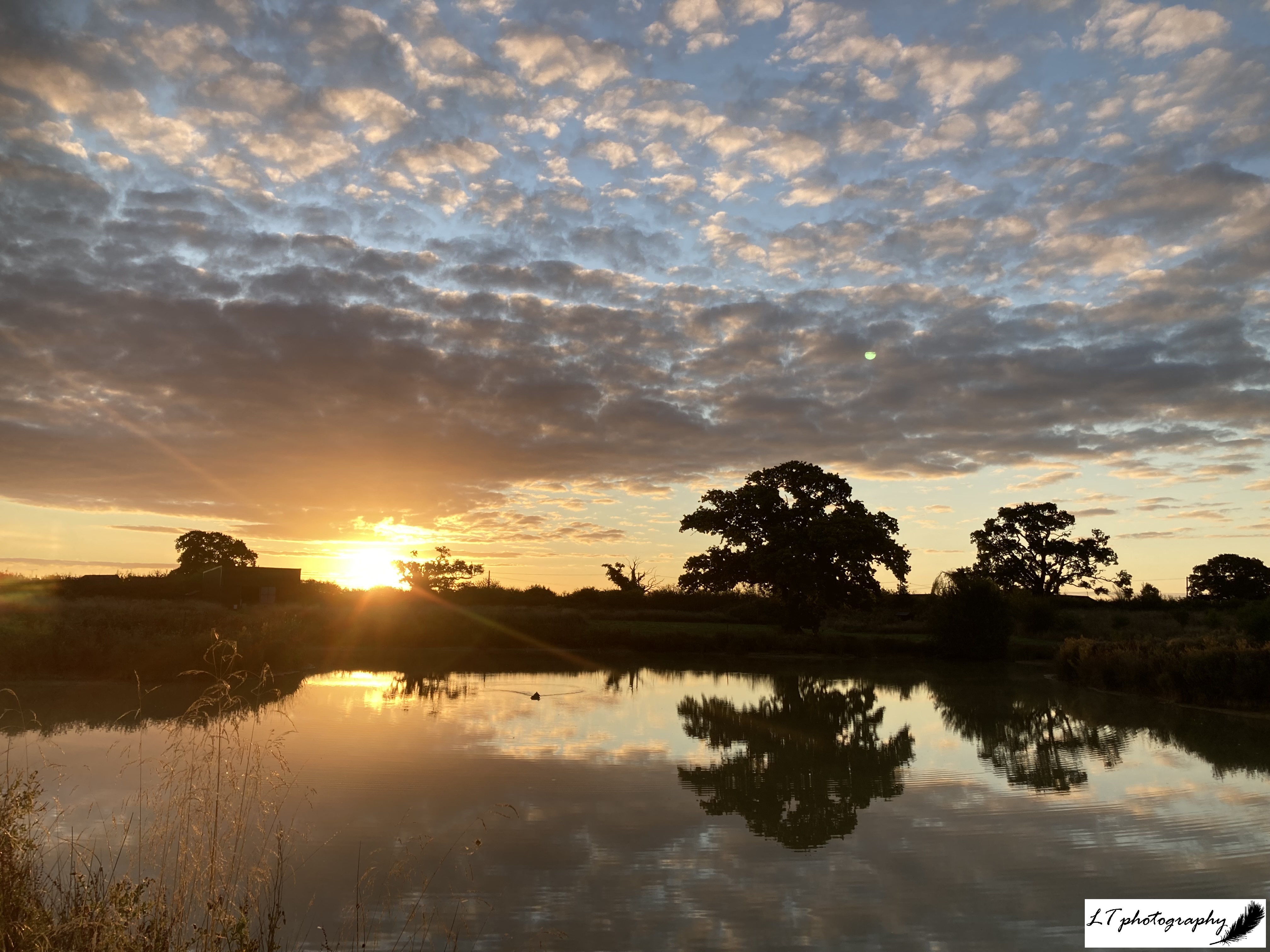
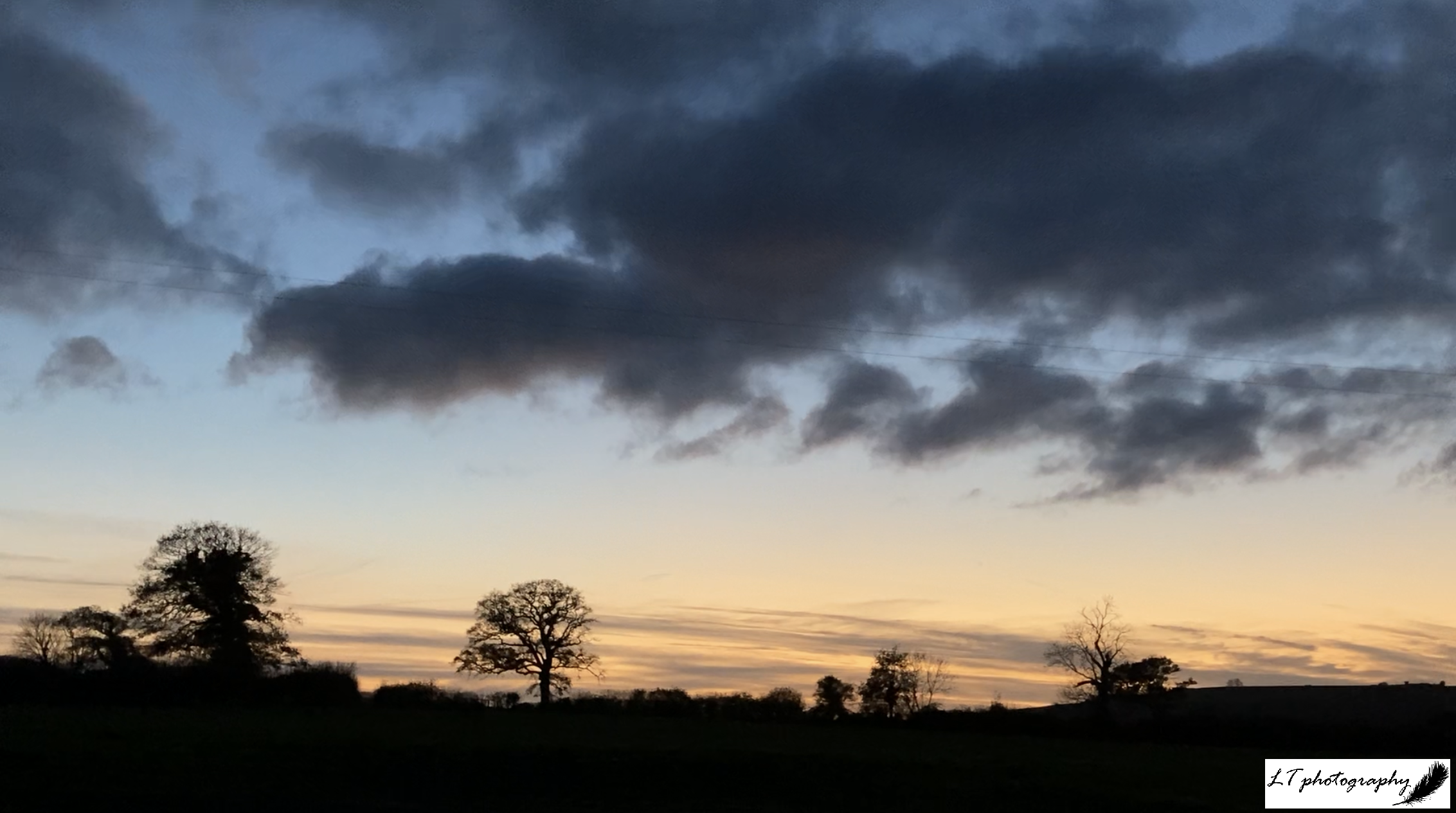
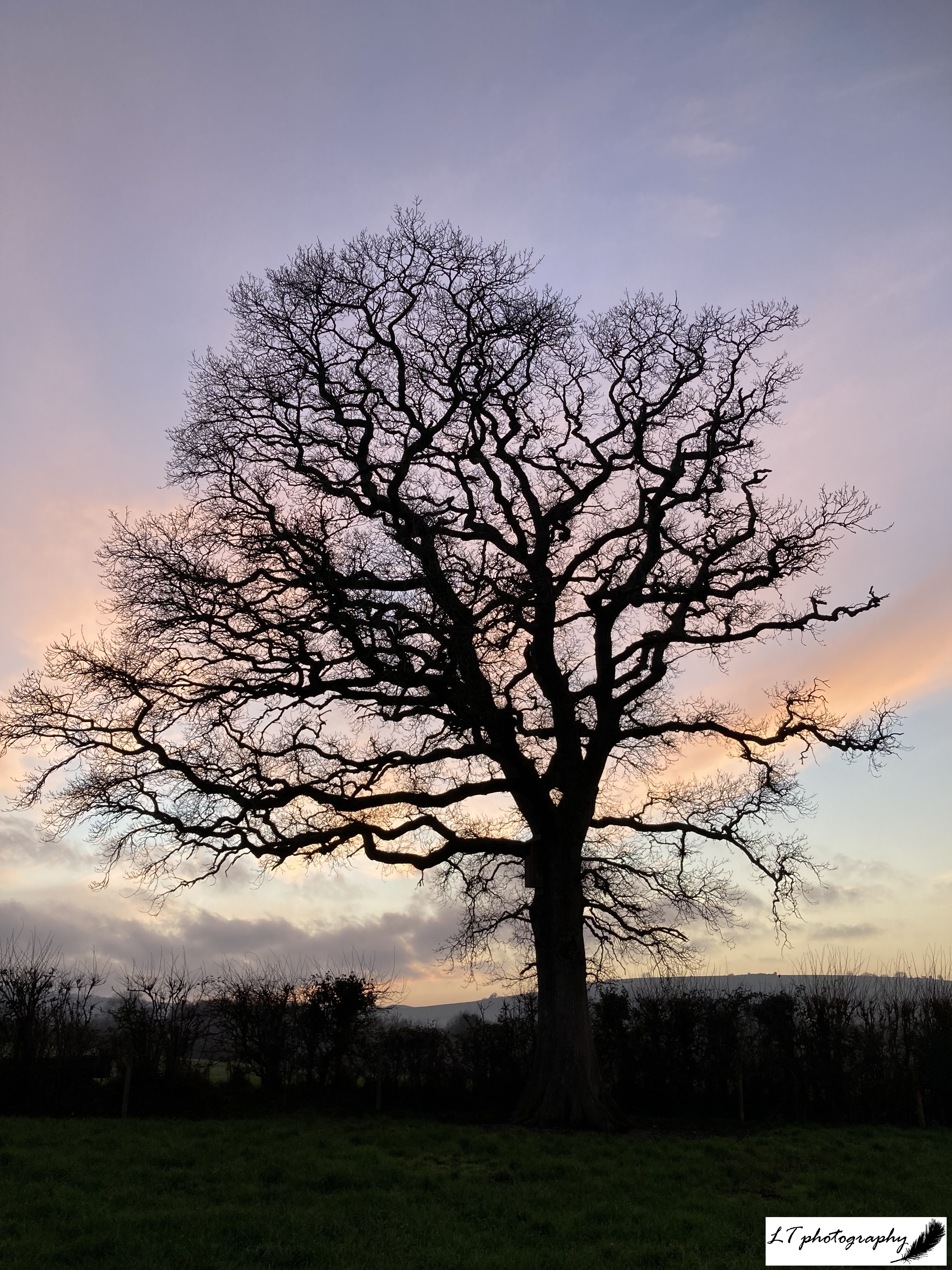
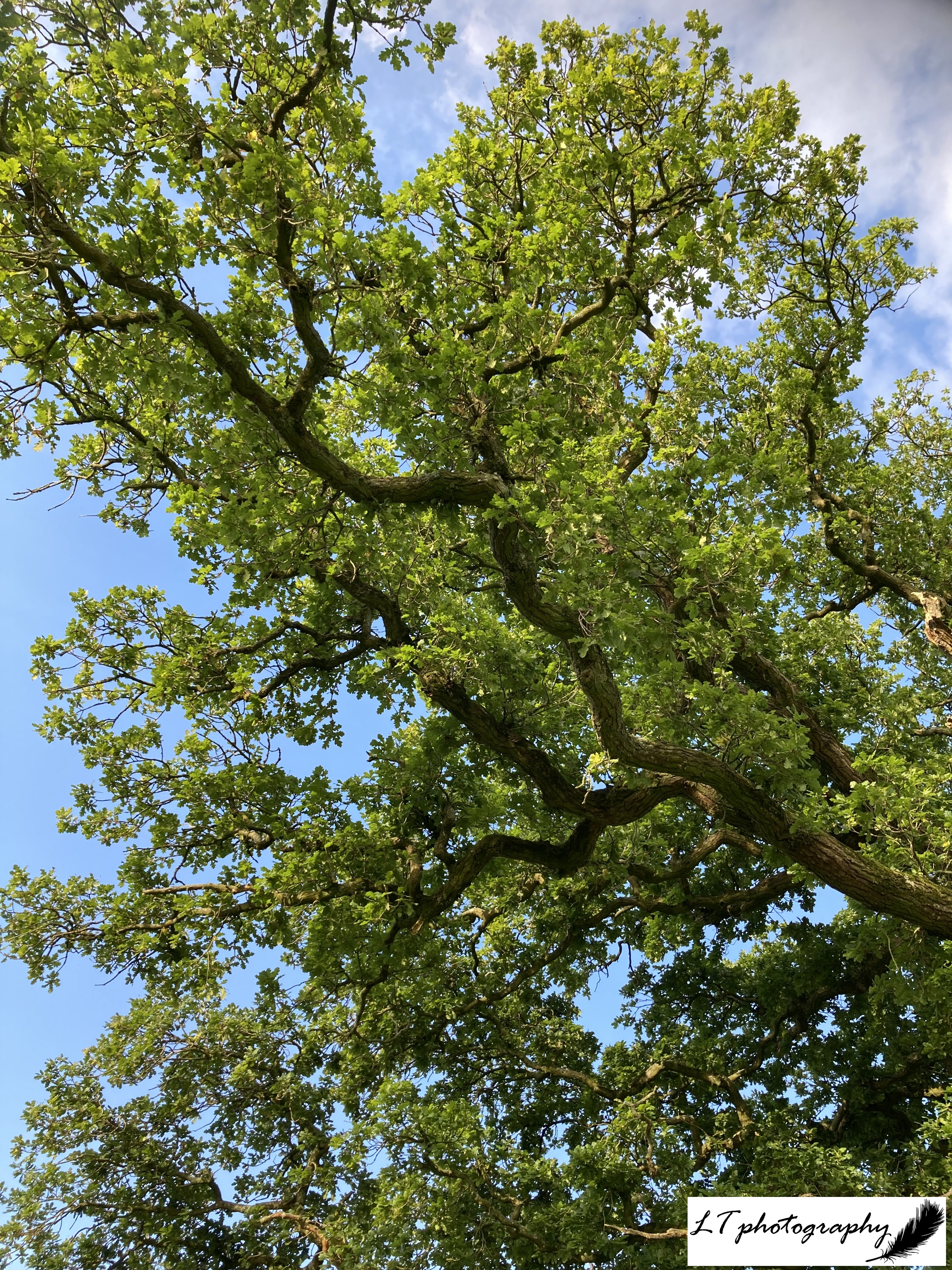
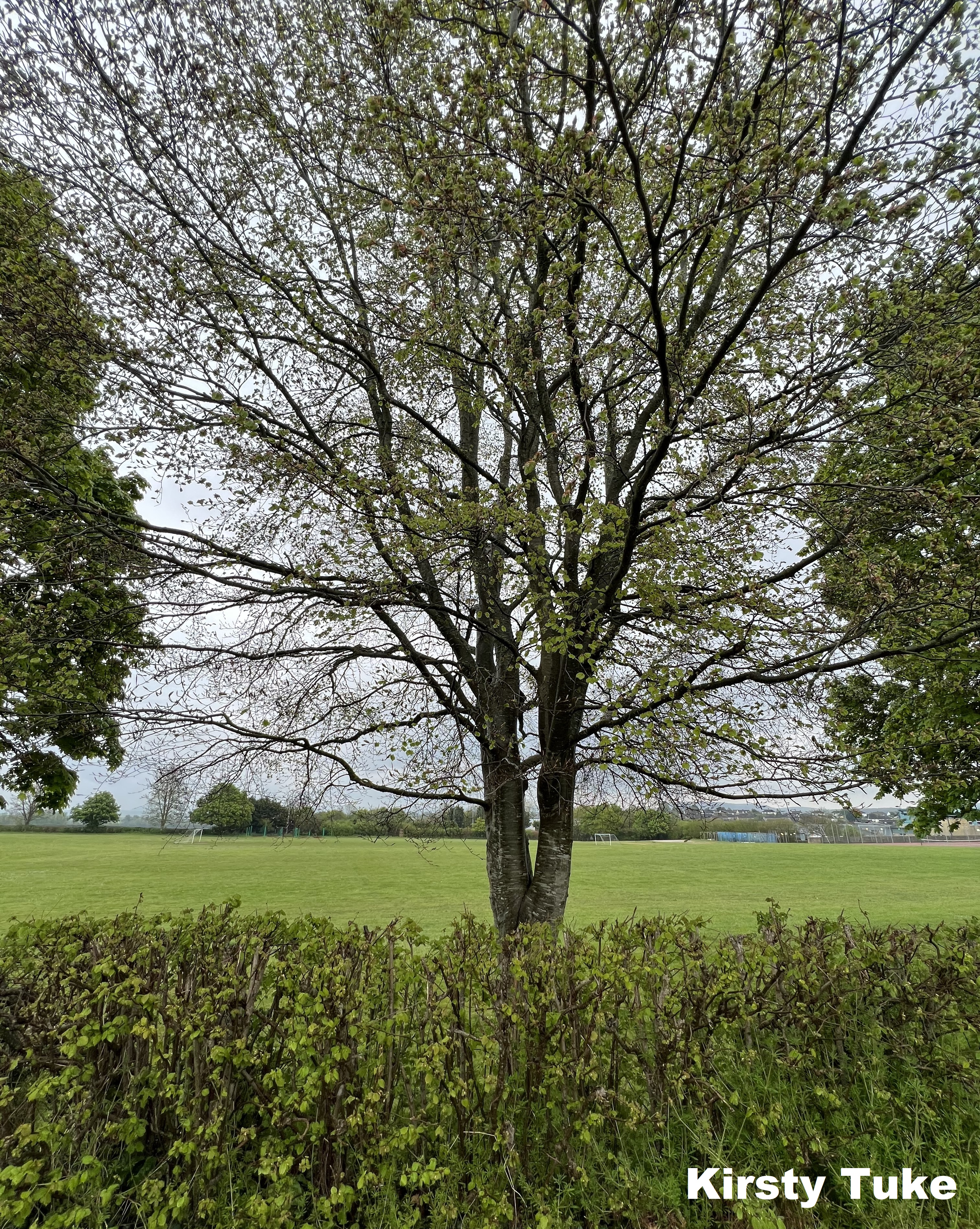
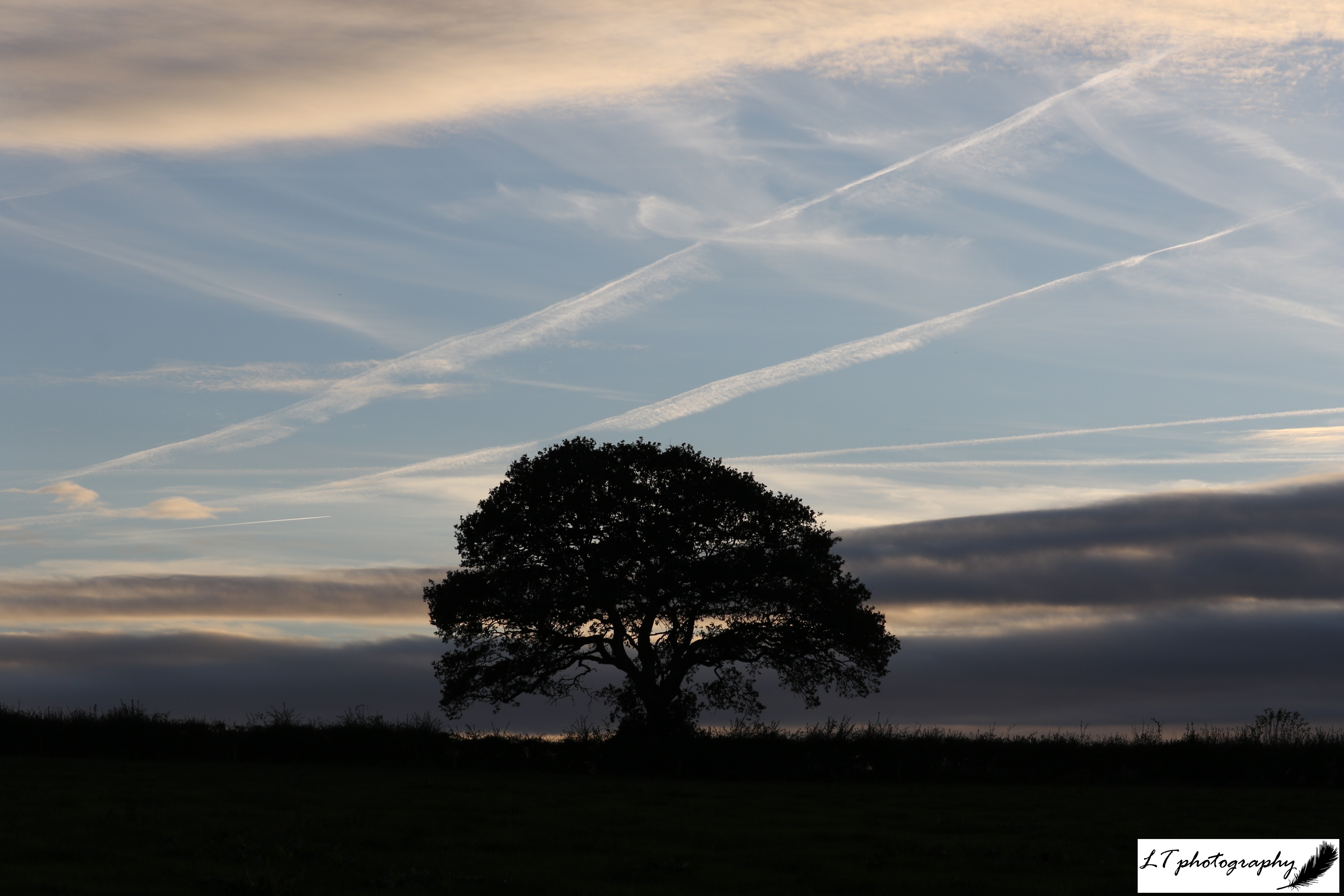
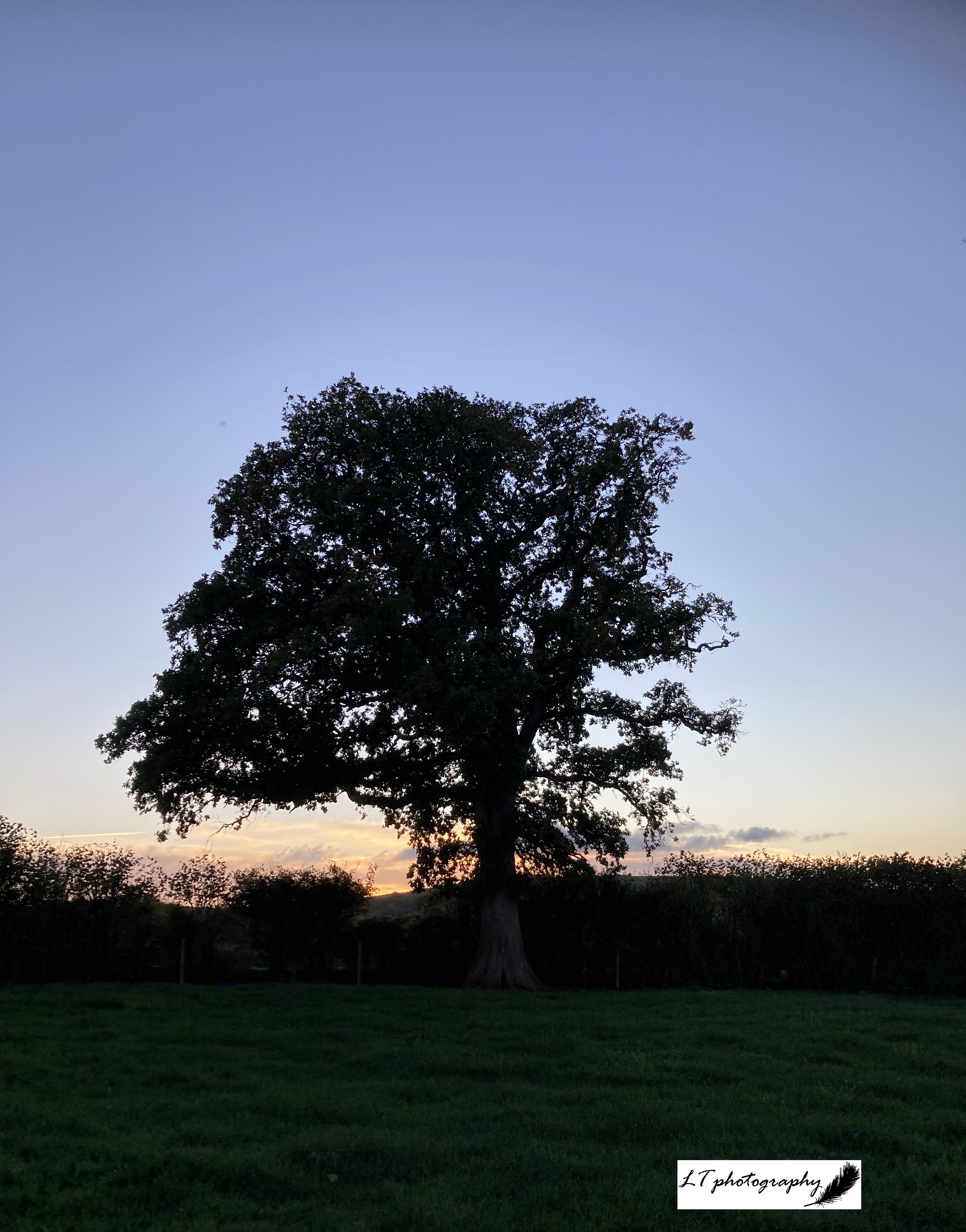
In the depths of the Dorset countryside, amongst hills, fields, rivers and hedgerows, an oak tree stands tall, stretching its branches over its corner of a field. Having stood proud for many years, each year this tree goes through its cycle, starting with its skeletal form, and moving through budburst, flowering and leaves unfurling, to shedding its green cloak in the autumn at the start of its long winter sleep. Hopefully it will keep continuing its cycle for many years to come.

Every year the rest of nature also goes through its cycle of life, overlooked by this oak tree. From the beginning of new life to the death of others, from howling gales to sleepy sunshine, from constant neighbours to new wildlife spectacles, this tree stands tall through it all. So for this piece, lets follow a year in the life of this particular oak tree in 2022, and see what can be experienced in just one spot.

January

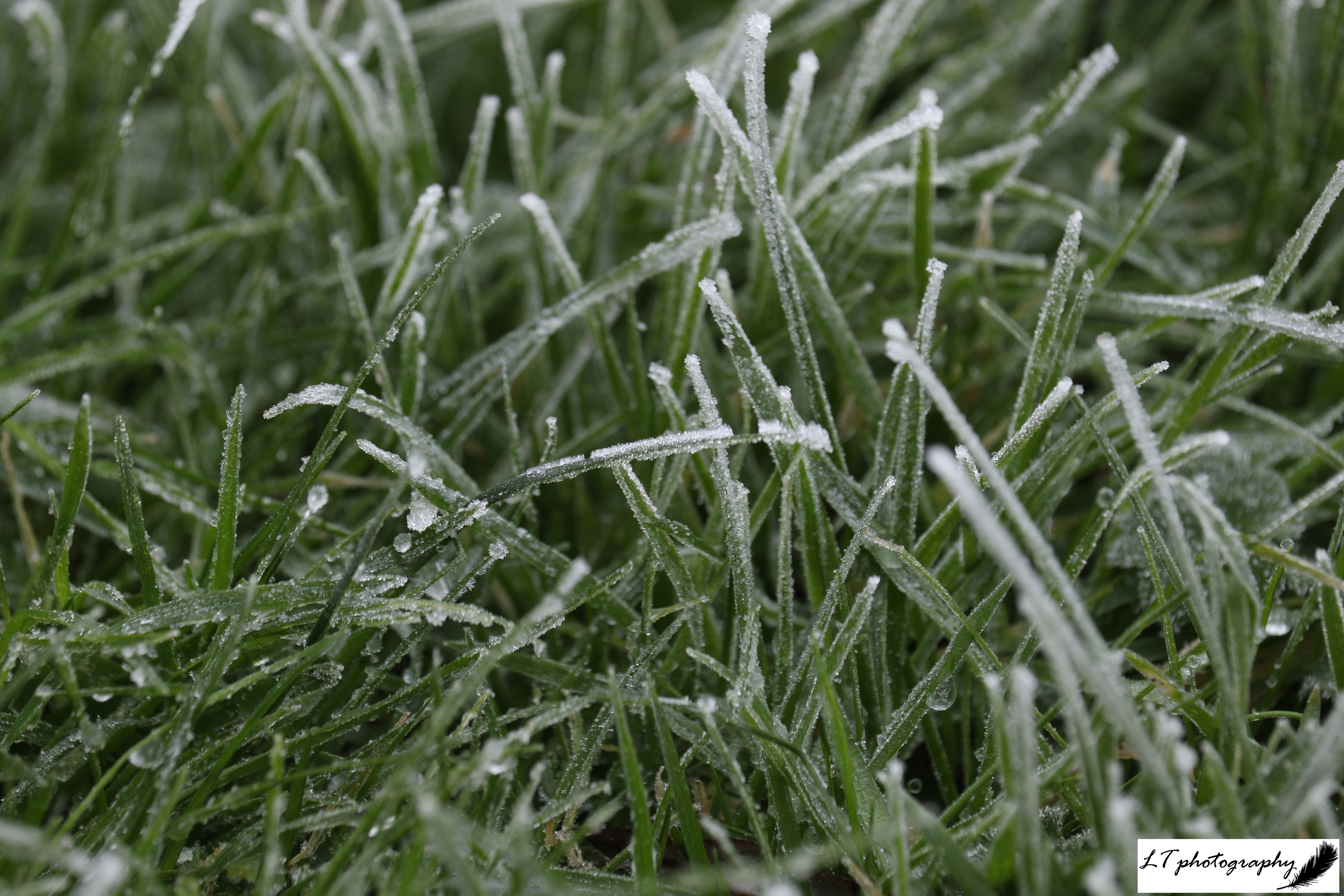
As a new year began, the landscape lay in slumber, riding out the worst of a harsh winter. Hibernating animals, seeds and bulbs laying beneath the earth, and trees standing tall in dormancy. The oak tree was no different, slumbering through a very chilly January 2022, with many dry, cold, and foggy spells. A number of mornings began with the glittering shine of thick hoar frost, turning the landscape into a crisp, white world. During clear nights, the oak tree was surrounded by tawny owls ‘twit-ing’ and ‘twoo-ing’, rekindling pair bonds. By day birds were busy, robins defending feeding patches and forming pairs, great tits singing their squeaky gate songs, and buzzards hunting over the open countryside.

February

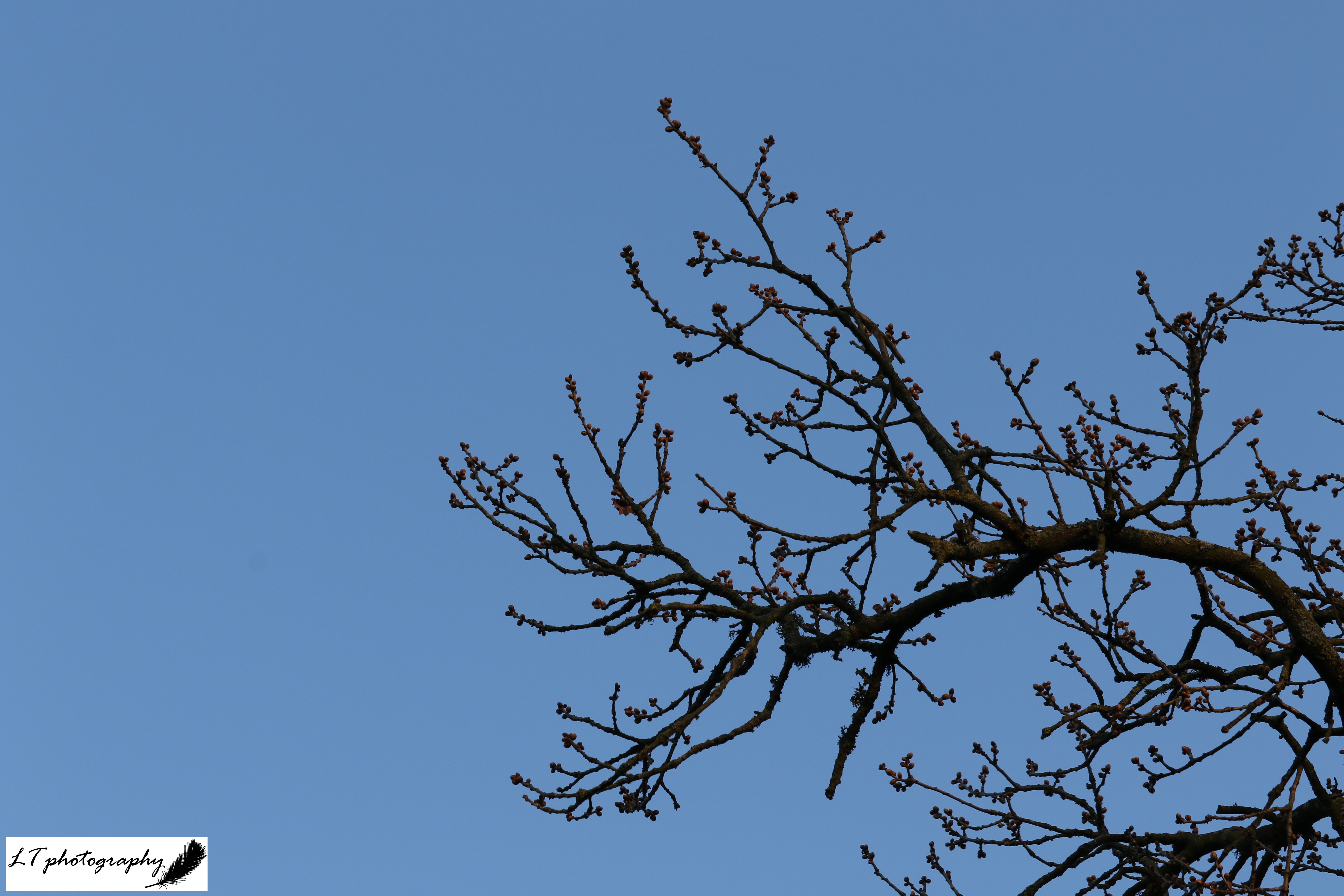
As a new month unfolded, the oak tree still stood slumbering, lichen dotting its bark and its buds hard and scaly, waiting. The oak tree may have been dormant, but around it subtle changes were beginning to appear in the landscape. White snowdrops nodding their heads under the hedgerows, lemon yellow catkins blowing in the breeze, and a woodpecker drumming on a trunk nearby. At night, male badgers pass by on the hunt for a mate, and foxes can be heard making their chilling howls, with females now heavily pregnant. February was a wet and very stormy month, but the the tree stood strong throughout.

March

As spring began to unfold, the oak tree experienced a month of unpredictable weather, moving from cold frosty nights to some very hot days. Despite this, change was in the air, with the oak tree beginning to wake up and show swelling in its buds. This was mirrored in the landscape, through blackthorn dripping white from the hedgerows, primroses creating a yellow carpet beneath, and the distinctive nodding heads of bluebells beginning to pop up everywhere. The oak tree also witnessed the first chiffchaff singing, the first brimstone butterfly flitting by, and even the first tawny owl nesting in the oak tree’s box before being unfortunately predated. Mammals were beginning to range further from their homes and other species were making their returns, such as the melodious blackcap.

April

A new month dawned, and the oak tree was becoming a symbol of new life. The first pale green leaves were unfurling and yellowy-green flowers were now hanging down from its branches. Drier, more stable weather meant the oak tree was now standing side-by-side with bovine neighbours, whilst many species were making use of the oak tree itself, such as blackbirds singing from its heights. Hedgerows and meadows around were also coming to life, with spectacular springtime flowers, from snowy stitchwort to sunshine celandines and cowslips. Daily, foxes can be found passing by, off hunting to bring back pheasants and rabbits to their cubs that are growing fast. The oak’s paddock also becomes a feeding ground for wonderful returning swallows and house martins, just the tip of the fantastic spring wildlife that were there to be discovered.

May

As spring blossomed into its full potential, the oak tree became adorned in its full cloak of fresh green leaves, thriving on warmer, calmer weather. The tree’s neighbouring hedgerow also began to bloom into life with flurries of white hawthorn flowers and the swelling cream buds of elder flowers. The tree was now home to a new family of woodpeckers, as well as some boisterous young squirrels and blue tits flitting between the leaves picking off oak eggar moth caterpillars. New life and its signs were everywhere, with fox cubs playing above ground, a male cuckoo singing, and even a female kestrel sitting on eggs in a lone oak tree in the next field. The landscape was buzzing with life!

June

As June hit, the oak tree was experiencing the peak of spring and its ending for another year. The oak tree continued to flourish whilst watching the cycle of nature surrounding it. House martins dancing on the wing, swallows hunting low over the fields, swifts speeding past screaming, red kites circling over fields following tractors cutting grass, hares grazing by falling light, a roe deer quietly sneaking past, and fox cubs beginning to roam. Not too far away the clutch of kestrel eggs had hatched and the chicks were beginning to grow fast!

July

Though a calm and sunny month, July was by far a very hot one, with some extreme heat waves hitting the oak tree and its home, its leaves now deepening to a dark green. In the midst of heat, the landscape was still dotted with colour in the form of wildflowers, from red campion and knapweed to bramble and swathes of cow parsley. Butterflies were busy on the wing, with the sight of a red admiral flitting by the oak tree in lazy summer sunshine being a tranquil sight to the eye. A highlight of the month was the yellowhammers singing their metallic song from the nearby hedgerows, and the neighbouring kestrel nest producing 4 healthy chicks to fledging and leaving their tree silent for another year.

August

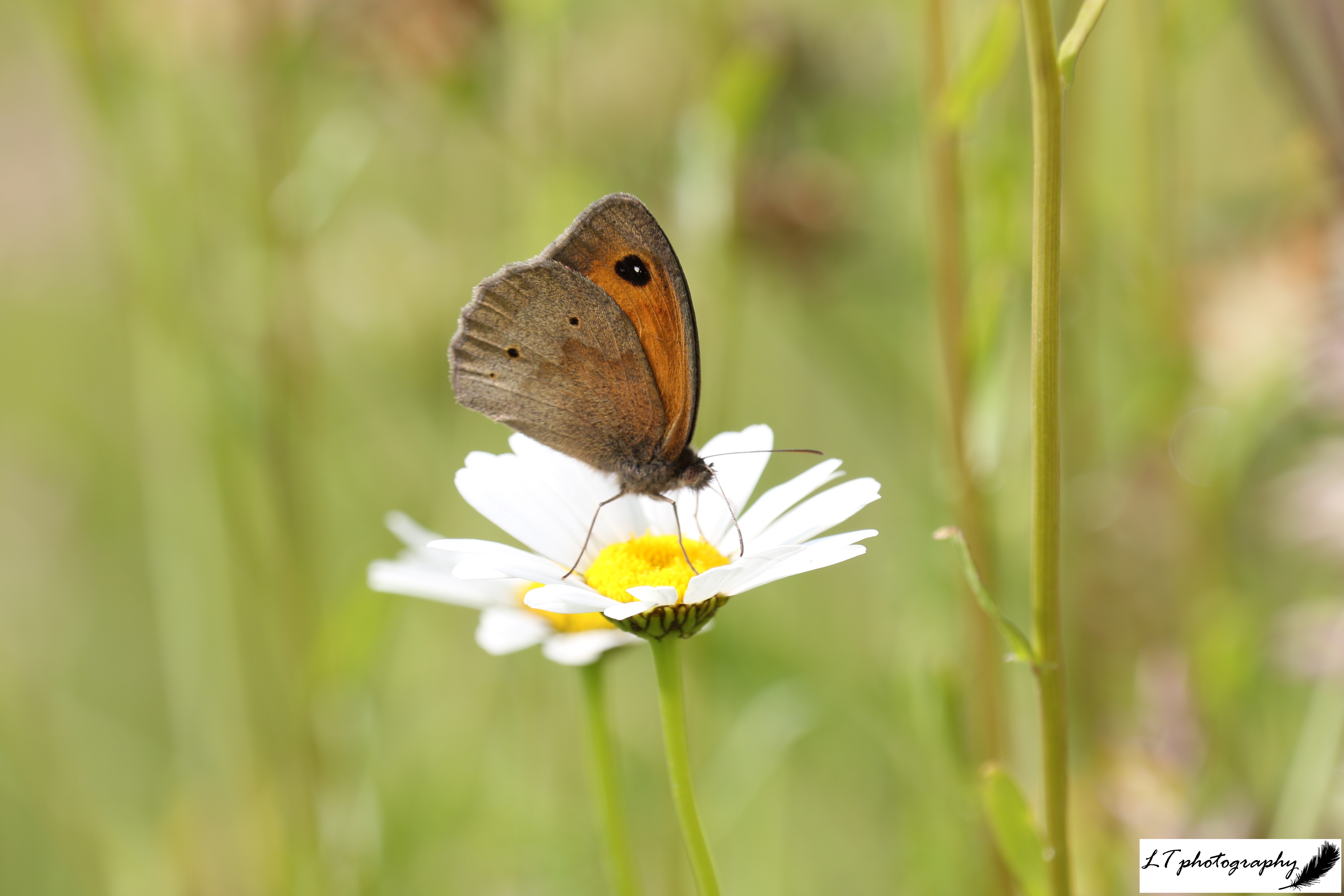
Following on from July, August saw the descent of the countryside into a worsening drought state. Now the oak tree’s leaves were starting to look dusty and sad, whilst the oak began to produce young acorns, small and green. The lush summer was beginning to fade, though colour still could be found in the form of darting blue damselflies, orange flashes of a meadow brown butterfly, and the first shining blackberries. As nature’s season of new life passes, with fox cubs becoming more independent and young birds now feeding up ahead of migrating, the tree watches on, as a new mother cow gives birth in the shade of its lofty boughs.

September

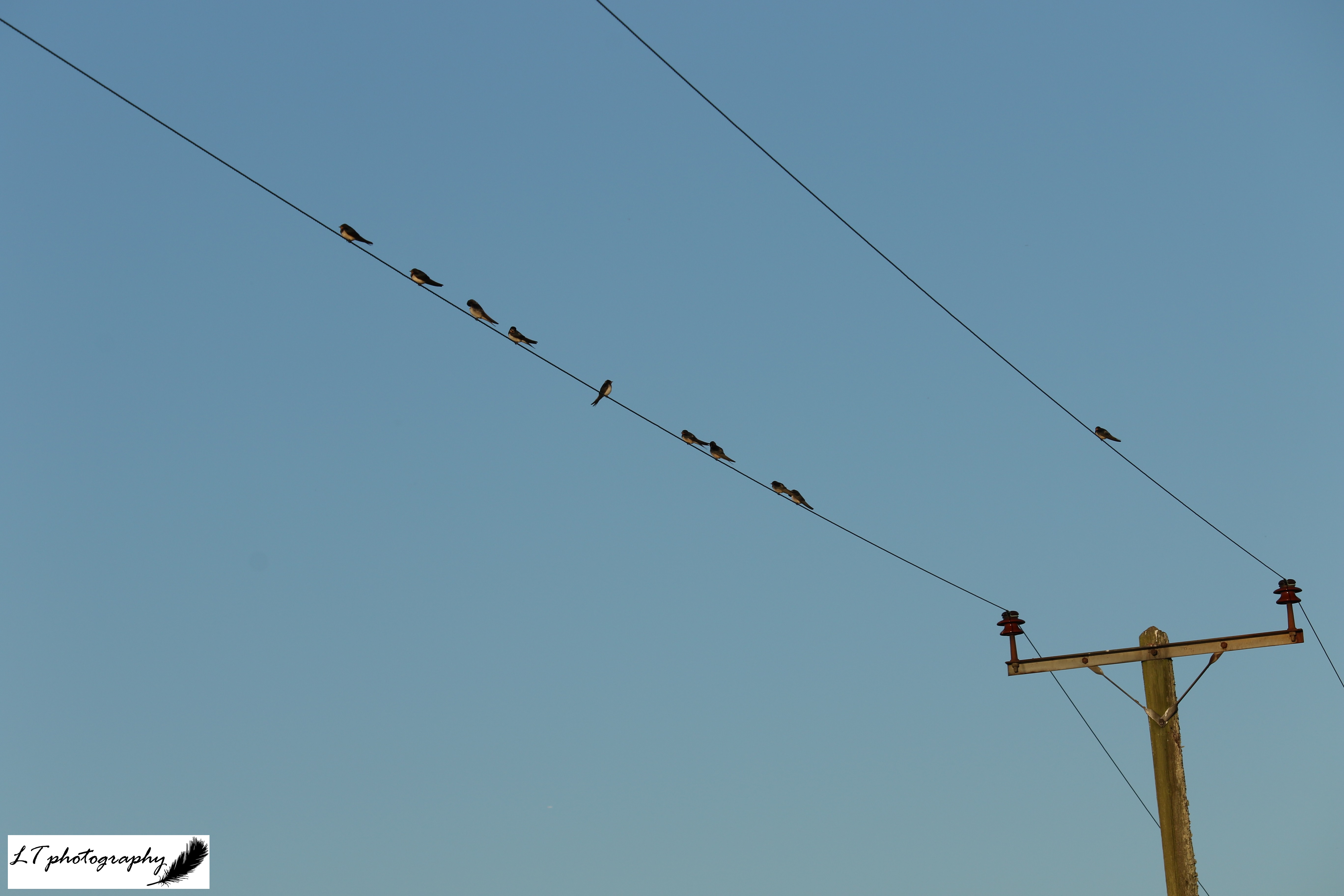
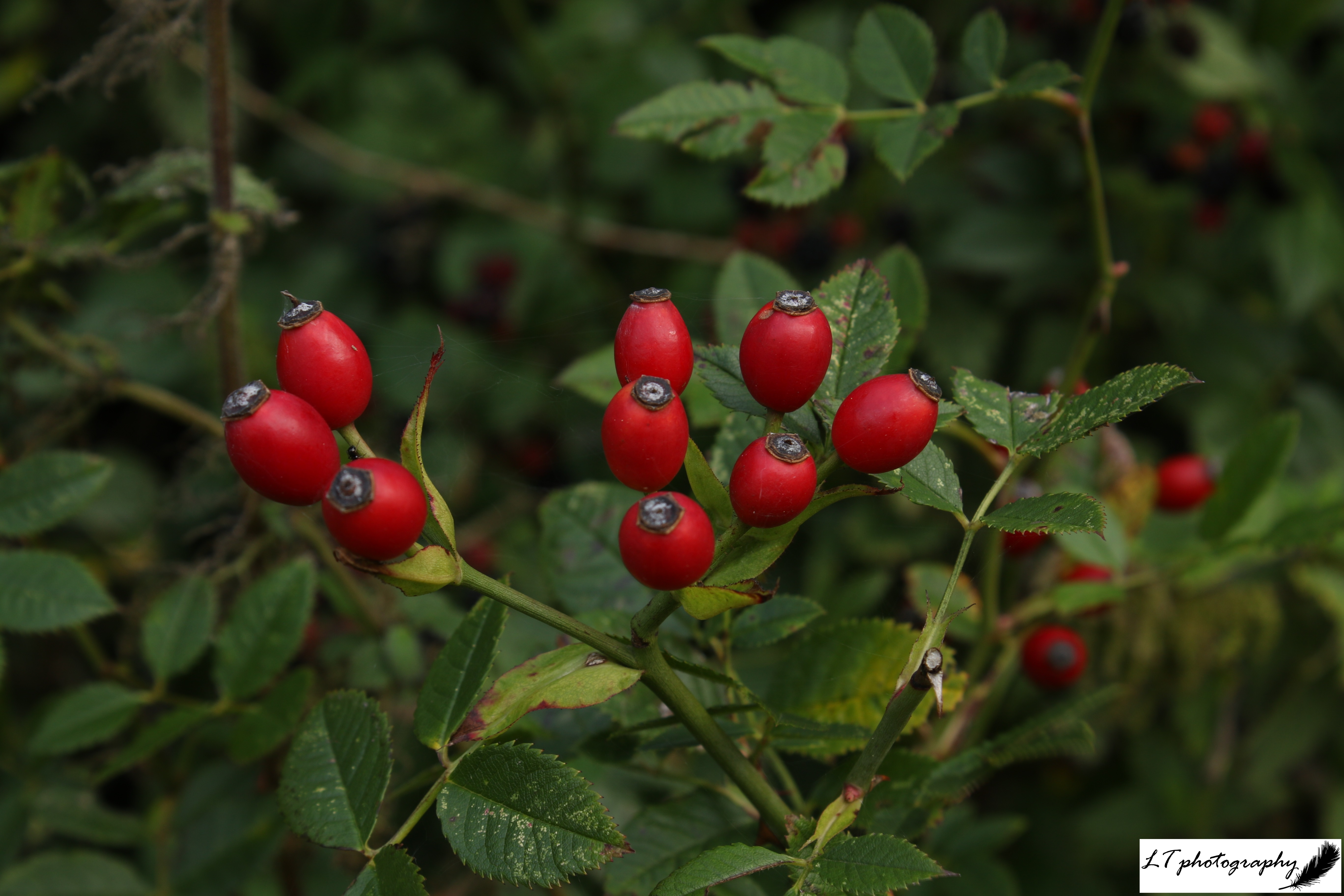
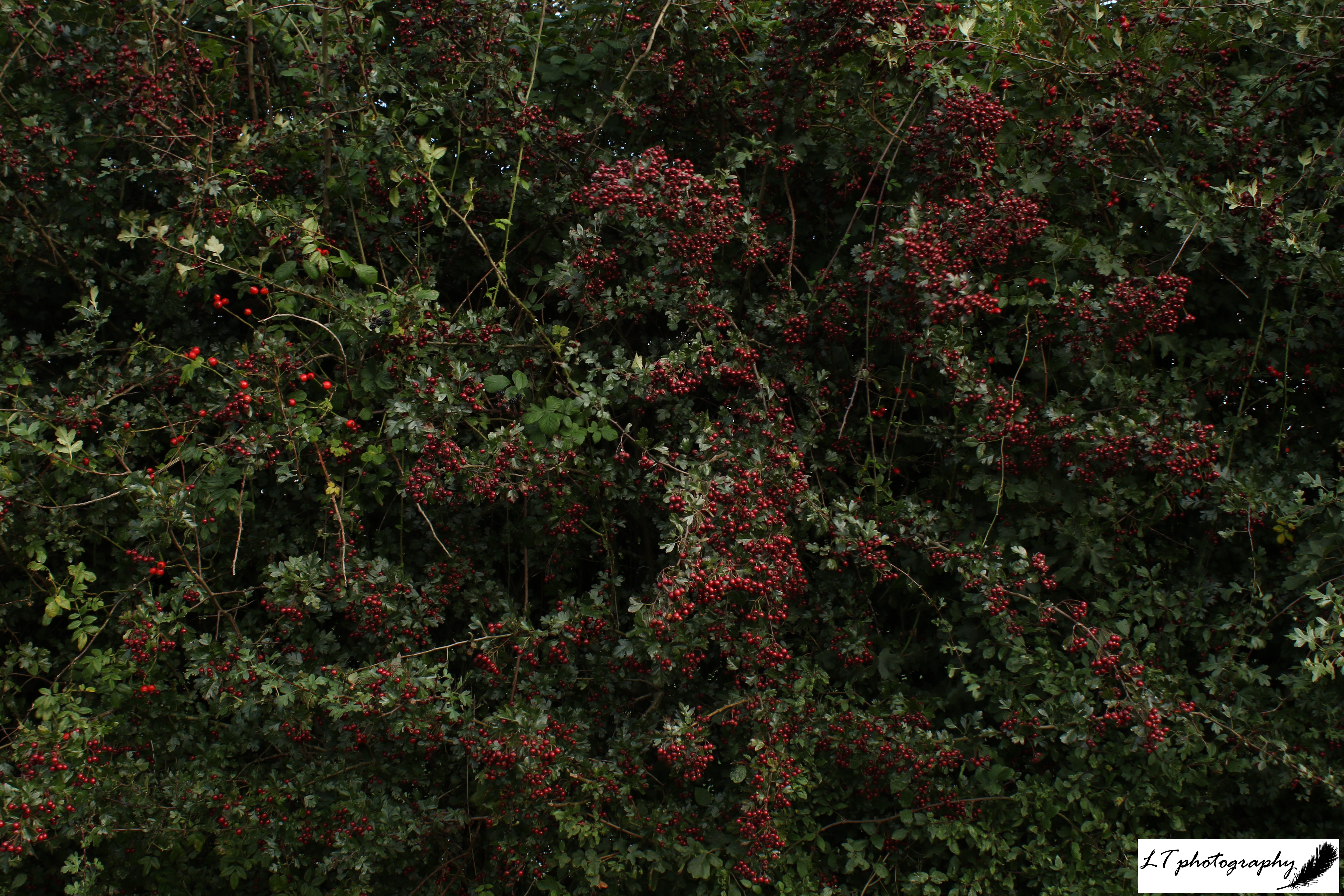
With the onset of autumn, the oak tree experienced the continuation of warm weather alongside the return of some rain showers. This was enough for the tree to green up once again and for its plentiful little green acorns to swell into the typical acorns we all know. The oak’s bounty was also joined by hedgerows filled with hazel nuts and shining berries, such as elder, rose hips, hawthorn, and sloes. This bounty was attracting an array of species, including wasps, blackbirds and jays. The oak tree also overlooked other spectacular sights from spider webs glistening with morning dew, red kites scavenging close by, charms of colourful goldfinches feeding on seedheads, swallows lining up on telegraph lines in the evening sun, and some fantastic sights of a family of linnets.

October

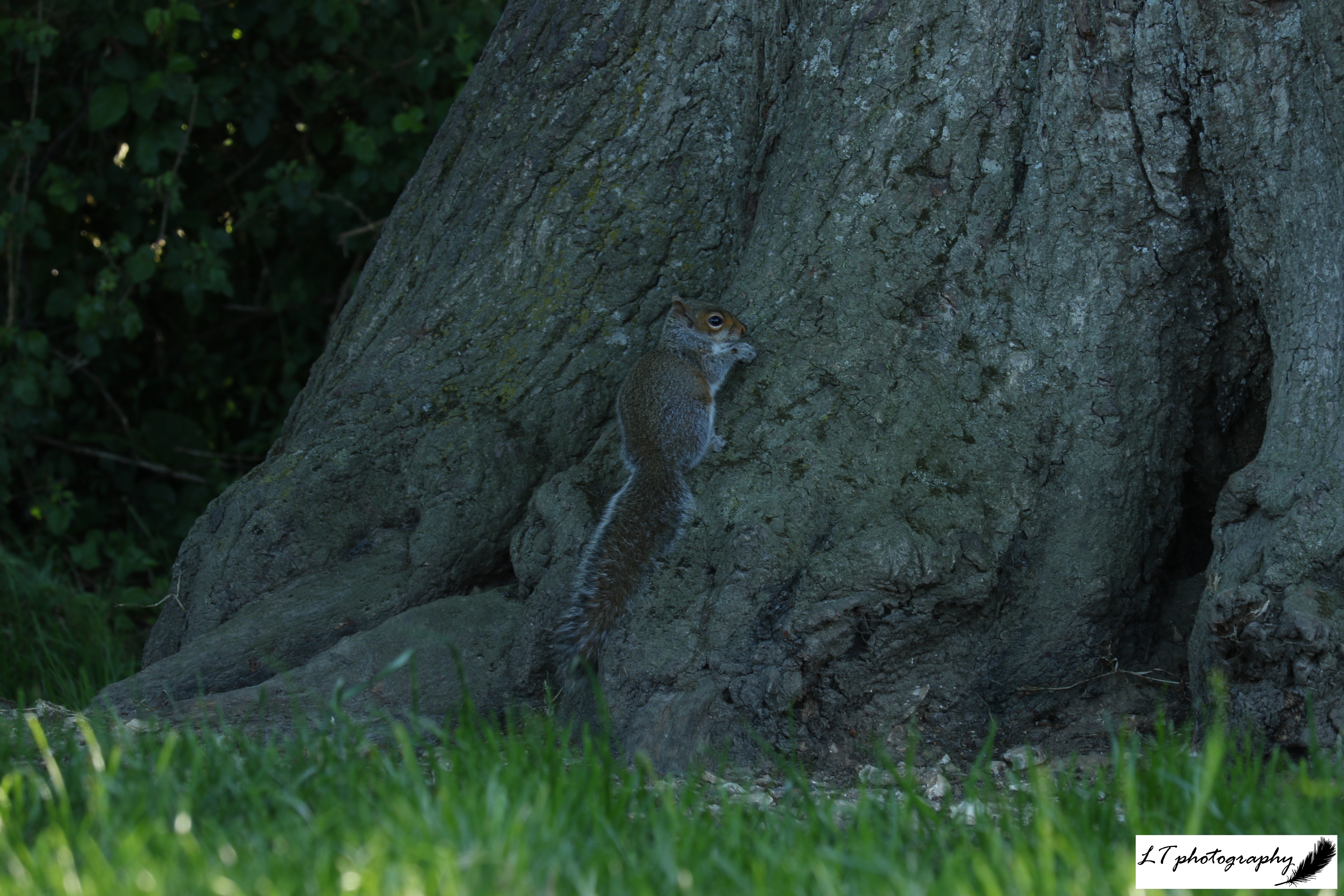
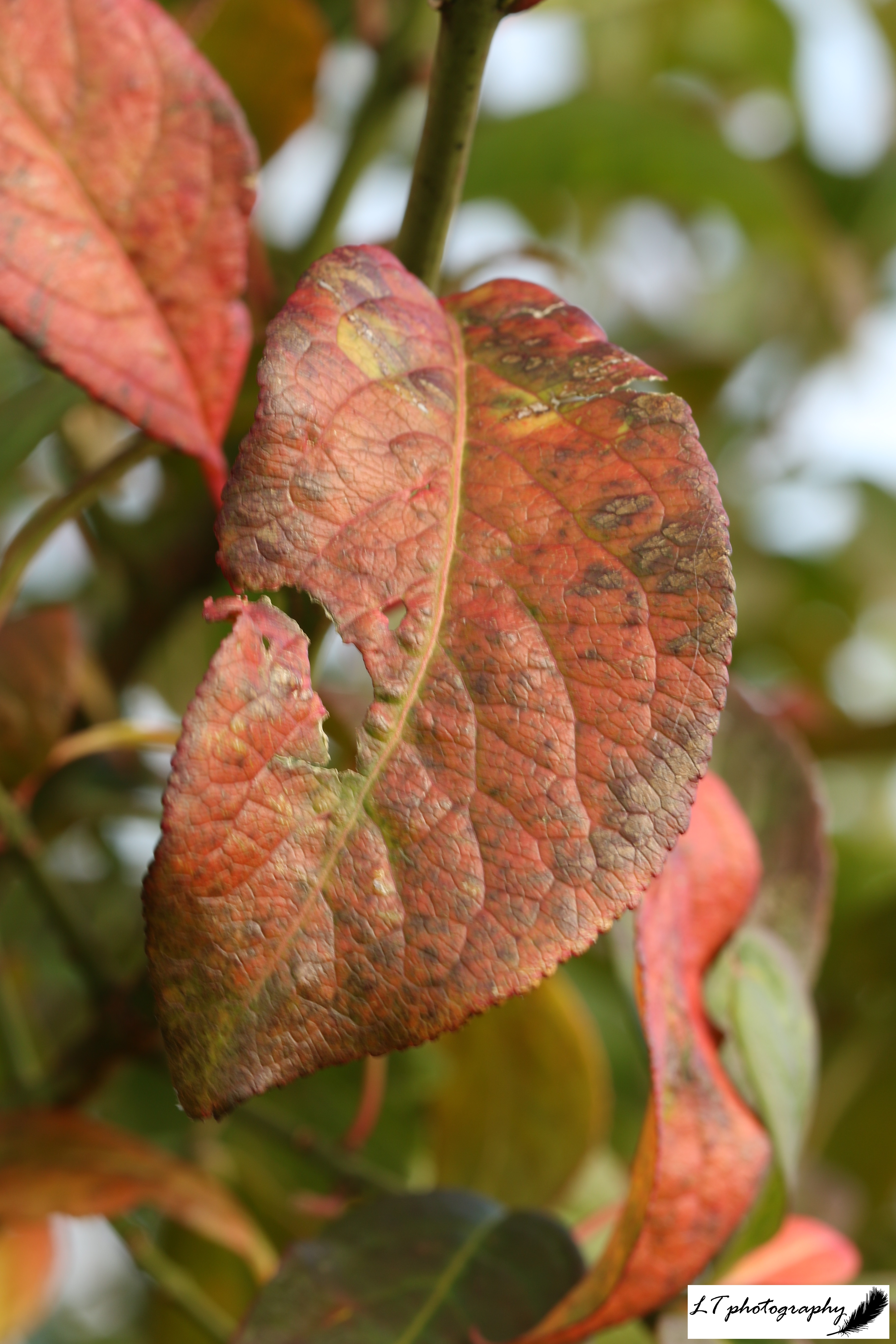
The mild weather continued into October, with the oak tree now covered with ripening acorns, and leaves beginning to be tinted with spots of orange and brown. These acorns were already being utilised by grey squirrels and migrating woodpigeons, amongst other species. With the oak tree’s bovine neighbours beginning to leave the tree behind for the winter, the oak was left alone overlooking the landscape changing colour spectacularly, from the pinks of spindle to the yellows of silver birch. The oak tree also watched over other autumn spectacles, such as craneflies lazily flying over the grass in warm sunshine, roe deer bucks chasing does, and the growing of magnificent fungi, such as the oak’s own bracket fungus. The landscape is alive at night too, with the return of calling tawny owls, the snuffling of badgers, and the exploring of now fully grown fox cubs.

November

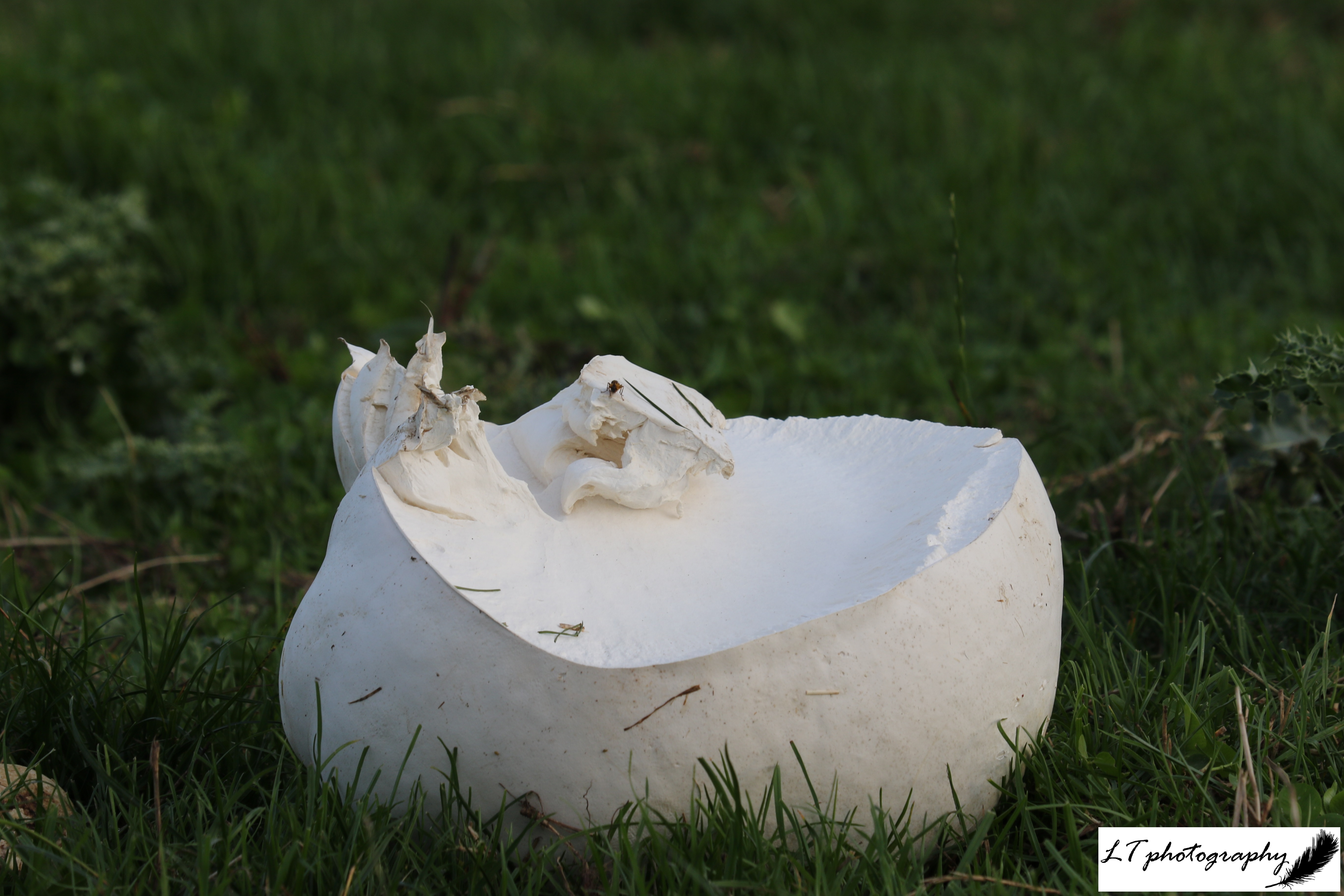
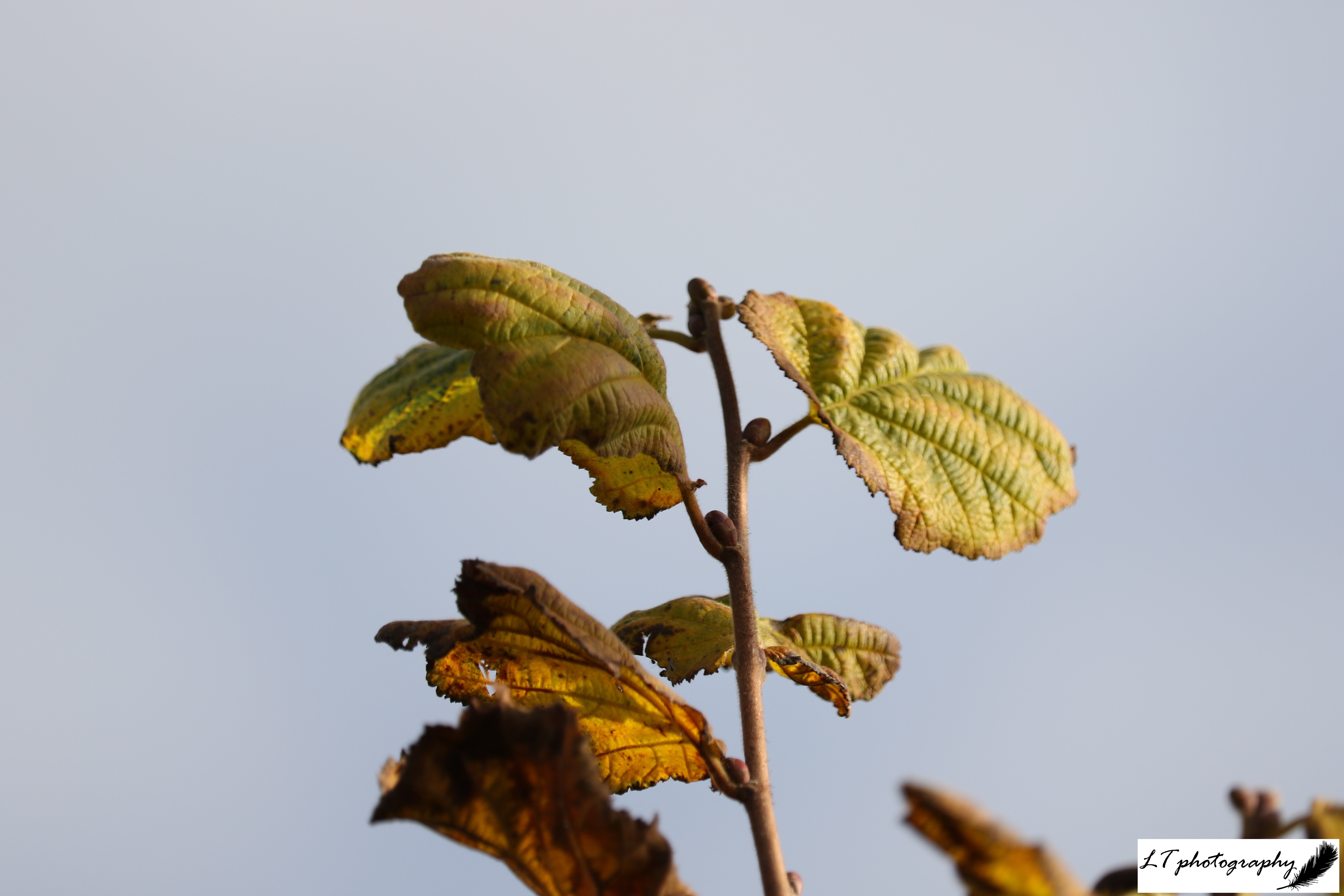
A mild November led to it being a very wet and windy month for the oak tree and its home. Ripe acorns now lay scattered around the trunk of the tree, and brown and orange leaves were now being blown free with each storm. On calmer days, the landscape was still showing lots of wildlife activity, with territorial robins fighting, families of long-tailed tits flying between hedgerows, flocks of meadow pipits feeding out in the fields, and large flocks of fieldfare and redwings making themselves at home. Whilst exploring around the oak tree, fantastical puffballs could be found in the grass, late ivy flowers and the start of its black berries in the hedgerows, and spectacular pink and orange spindle berries in the hedges further away from the oak.

December

To wrap up the year, December marked a change in the weather, with colder, drier, and sunnier days, and some spells of real hard frosts and frozen ground. By now the landscape was beginning to fall into its winter slumber once again, as was the oak tree, with only the hardier species still active. A lone cattle egret, a murmuration of starlings, wagging grey and pied wagtails, a hare passing through, and hunting barn owls included. As the tree’s surroundings lose their colour, a little can still be found with the shining green of a hart’s-tongue fern or the blood red of holly berries in the hedgerows. Here the year is drawing to a close, with a fantastic sunset and the oak’s last leaf floating softly to the ground.

Spring In Photos 2022

Spring this year has been a joyful and colourful experience. In 2020, spring was a lifeline during lockdown. In 2021, spring was a turbulent and unpredictable season, with some real wonderous moments to behold. This year though, I have simply enjoyed every moment that spring had to offer, watching as the season swelled into being and slipped out once again with the heat of the summer sun.

This spring the season began slower, but reached its peak quickly once it got going. In Dorset, from blossom and bursting leaves to nesting birds and breeding mammals, spring bloomed spectacularly, with so much new life on offer. During this time I made lots of adventures out with my camera and took many, many photos. Here are just a few of my favourites from spring 2022.

Spring 2022: In Photos

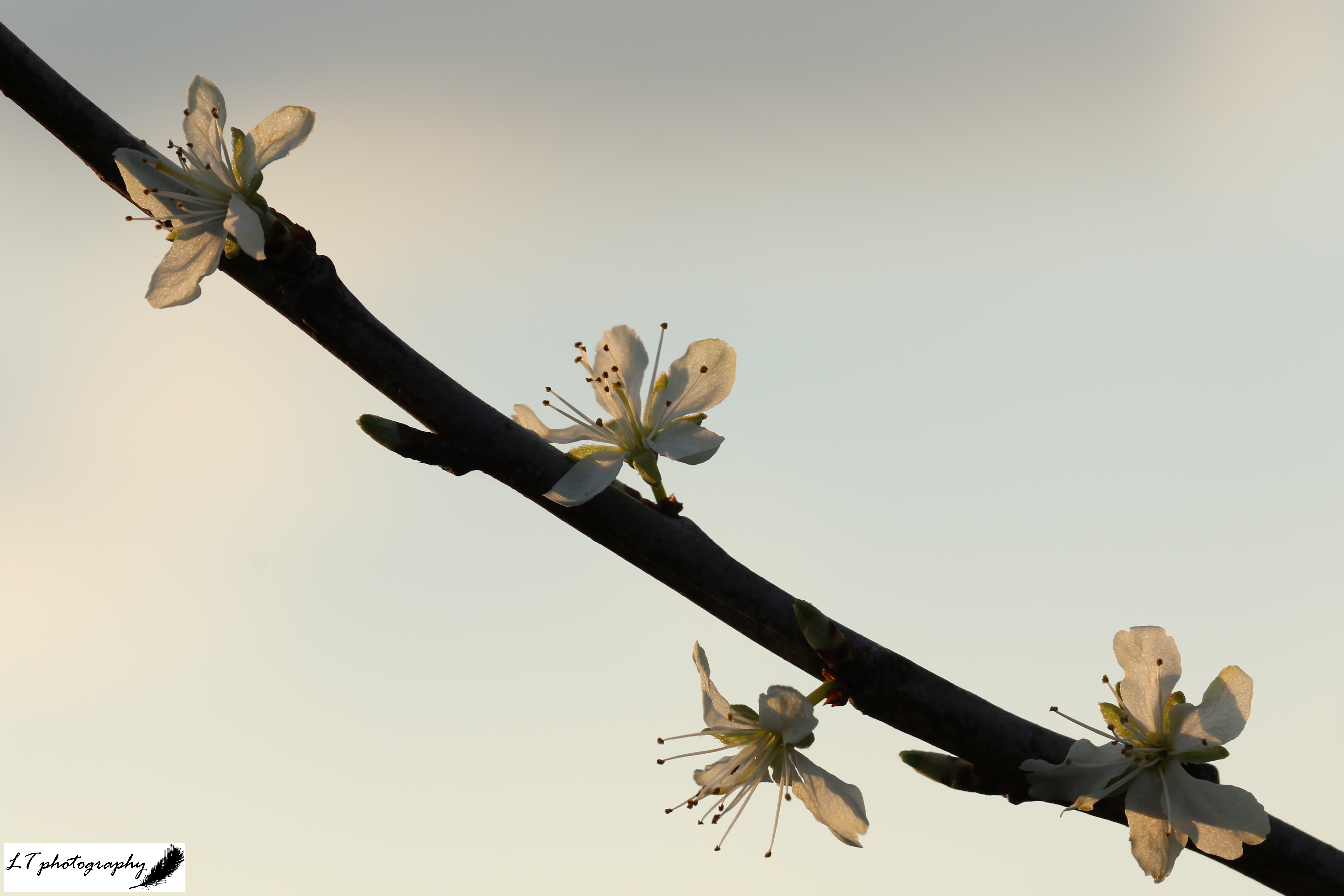
Sunset Damson Blossom – This year the blossom of fruiting trees was fantastic. Our damson tree blossomed without being bitten by frost or hit by strong winds, so hopefully it will be a good year for damsons

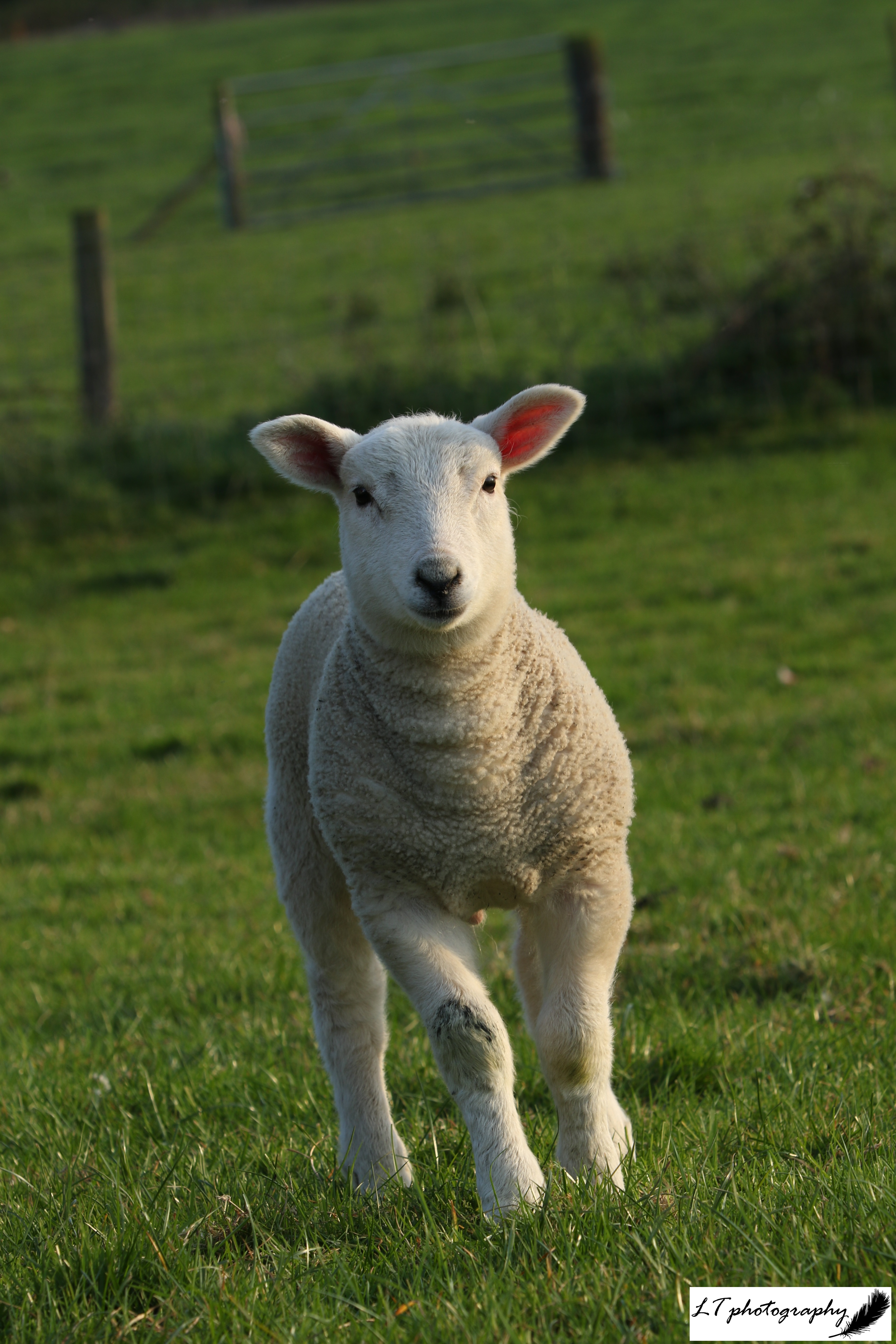
Lambing at Home – My mum has her own mini flock of Lleyn ewes, a Lleyn ram, and a Charolais ram, and for us spring would not be spring without lambs springing around the fields!

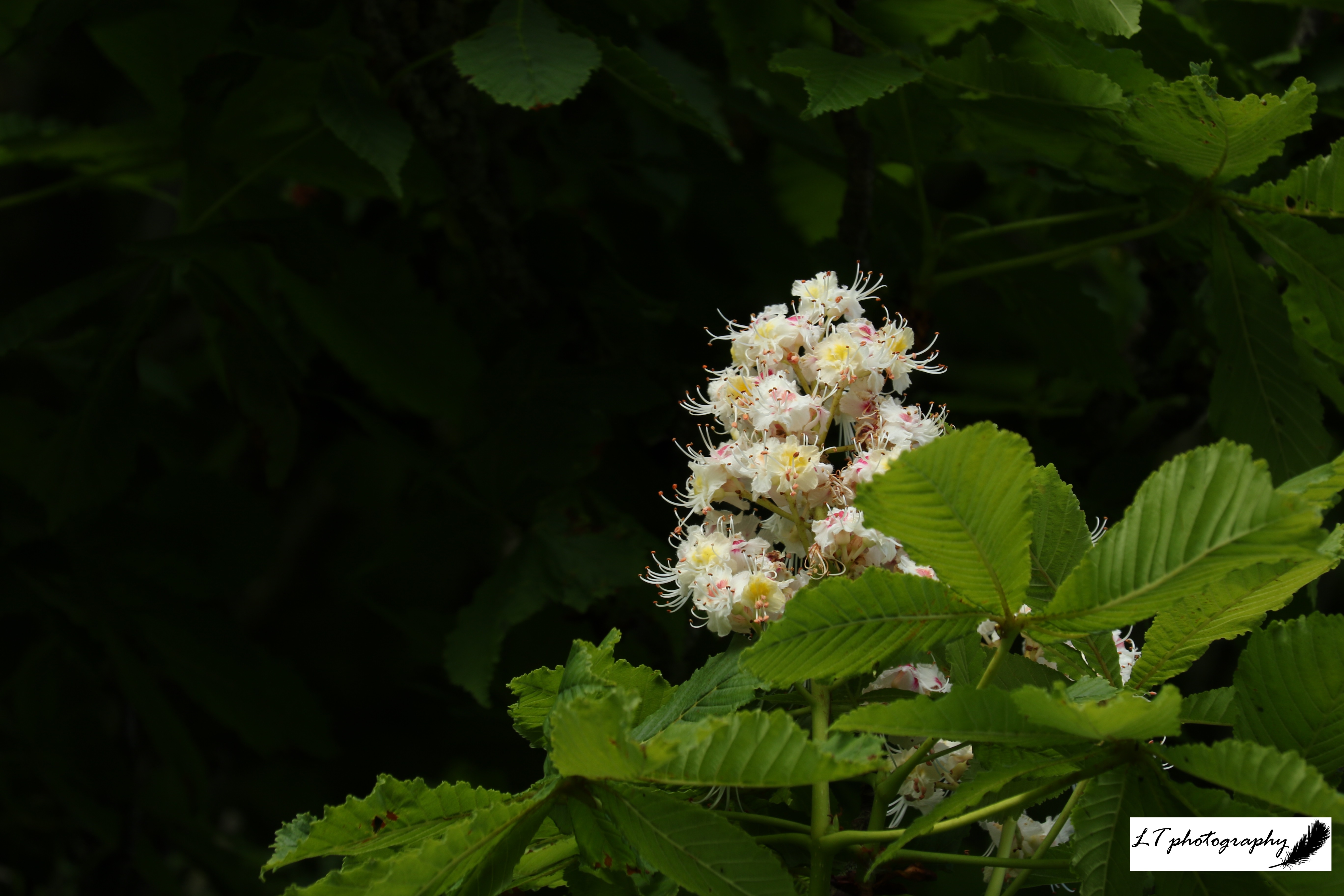
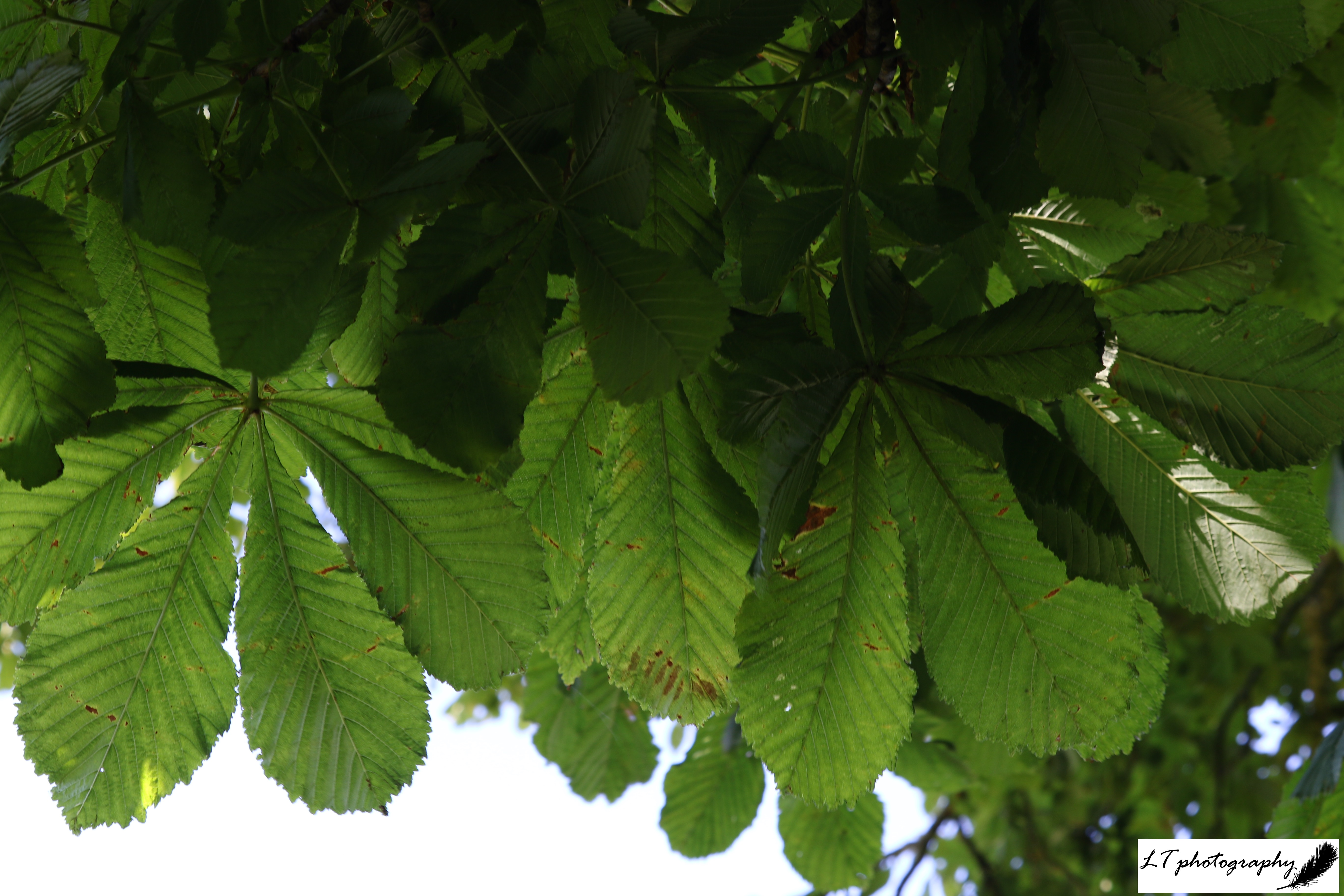
Horse Chestnut Flowers – Often tree flowers are simple, green and unassuming, but not those of horse chestnut trees. Horse chestnut flowers form a candelabra of fantastic white flowers with dots of pink and yellow, towering high in the boughs of the trees

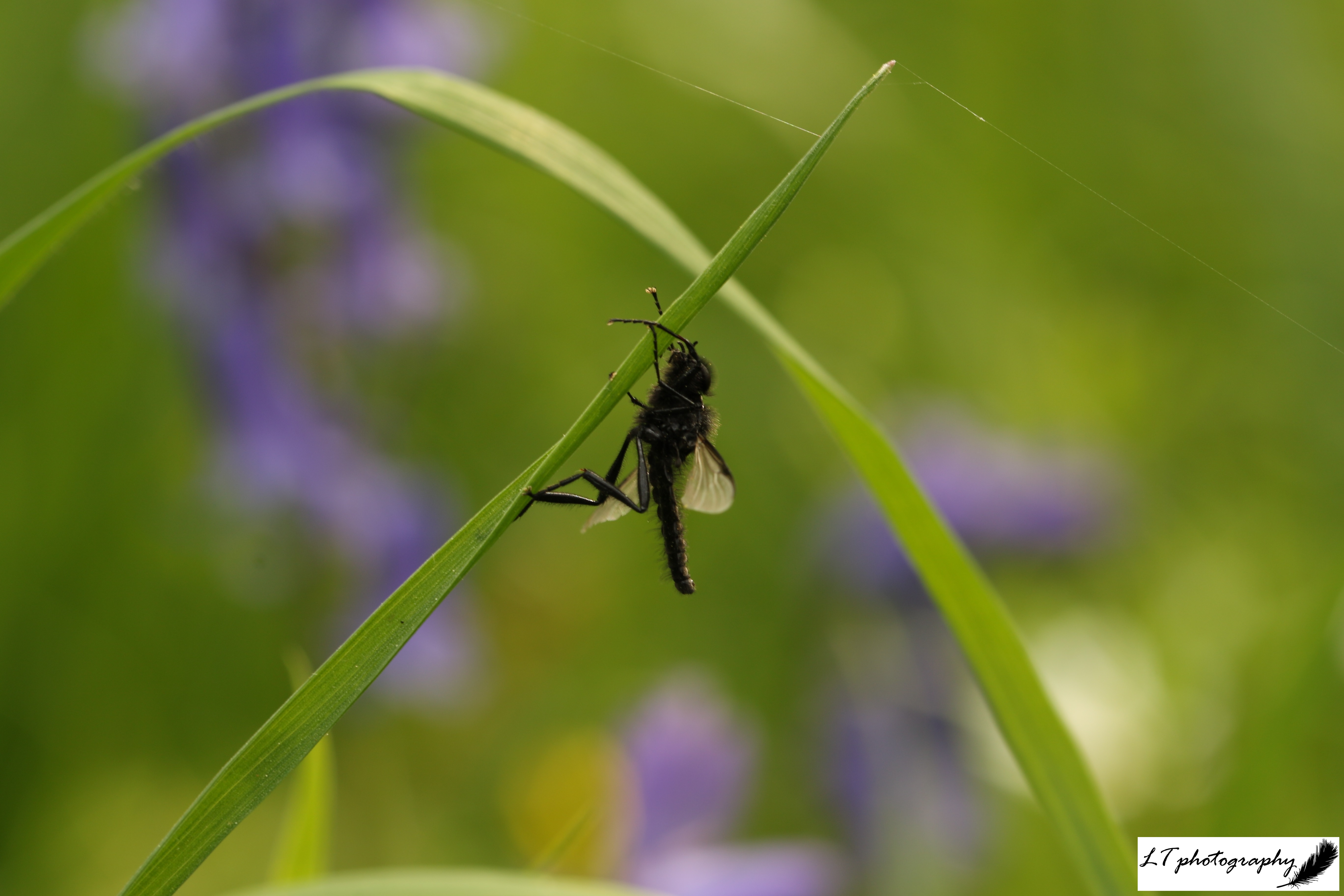
Woodland Minibeasts – This year during the bluebell bloom, I focused on exploring the hidden life amongst the bluebells (check out my previous post for more). One of my finds during my hunts was this fly which looks to be a St. Mark’s fly. This fly gets its name due to emerging around St. Mark’s Day in April each year

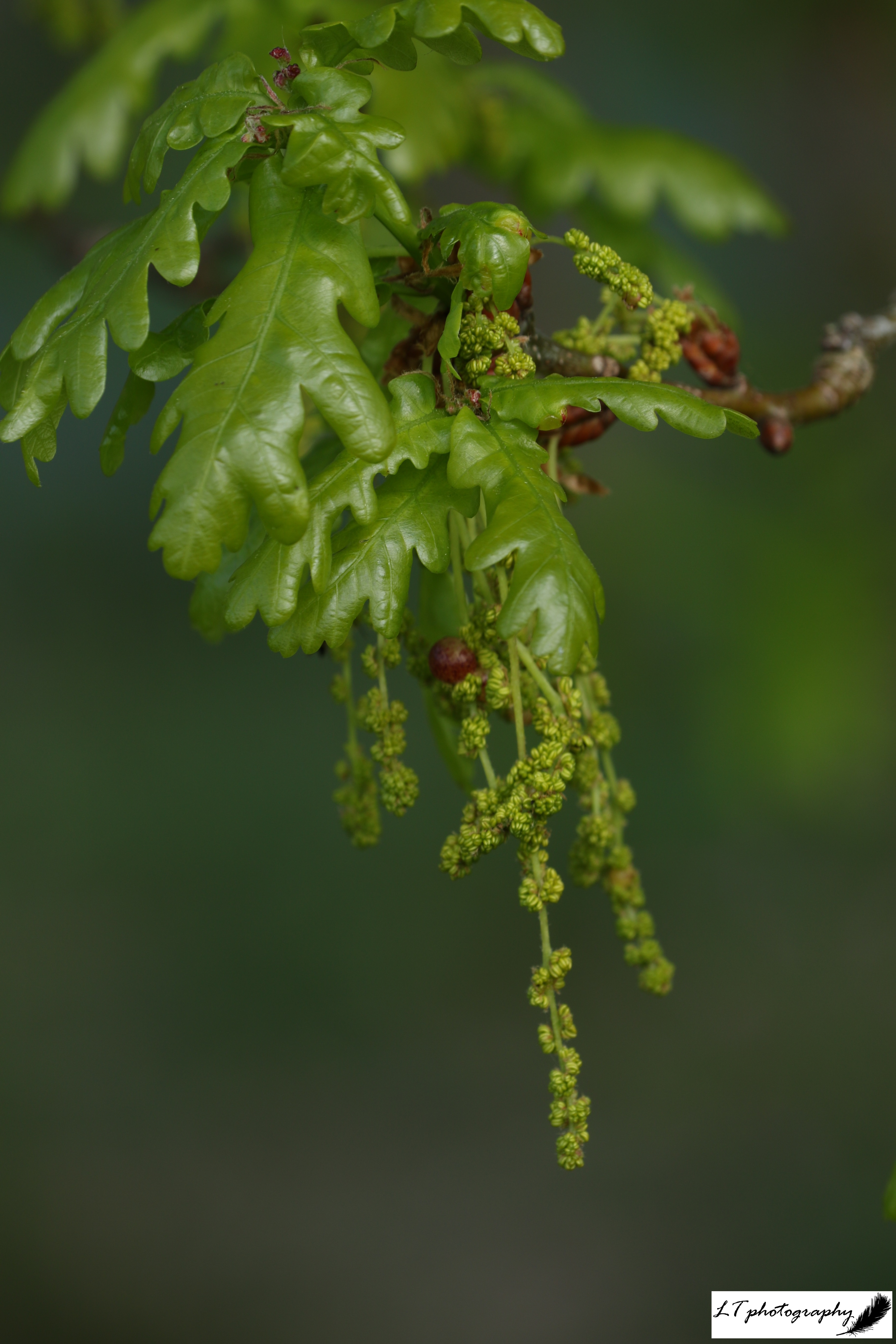
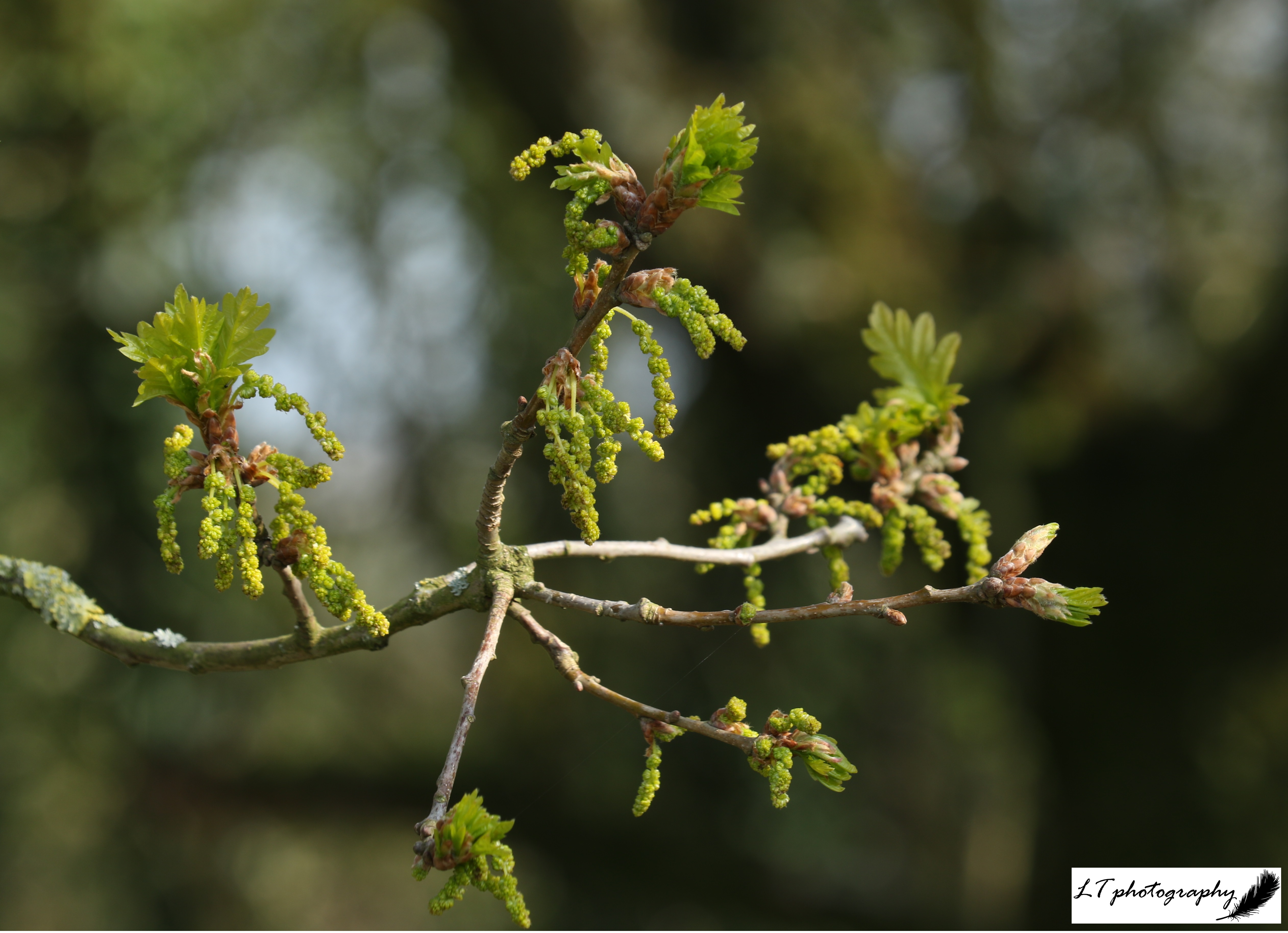
Oak Flowers – Though horse chestnut flowers are showy, some tree flowers are fantastic in a subtler way. The flowers of English oak trees hang down in green streamers from their branches, looking pretty swaying softly in gentle spring breezes

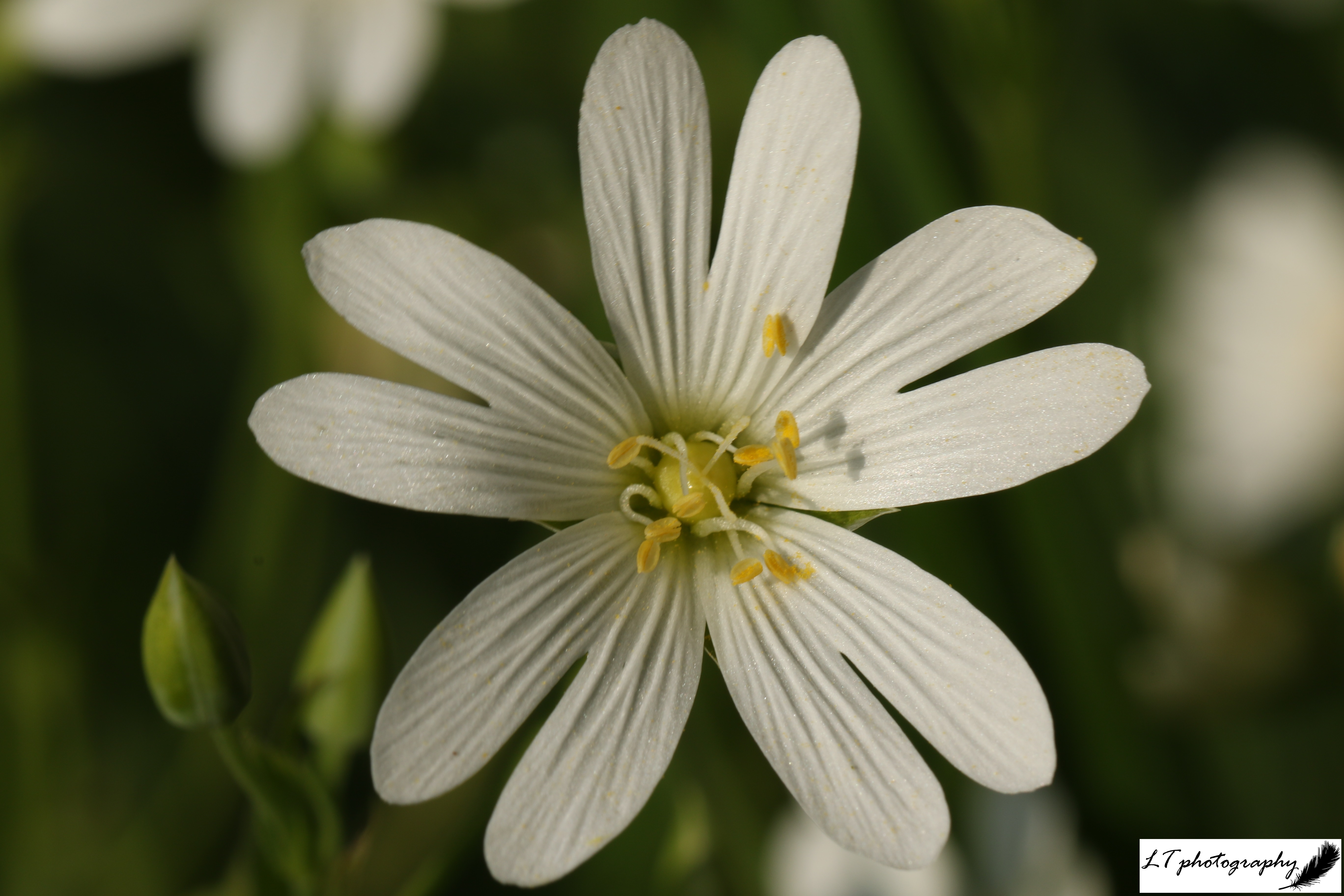
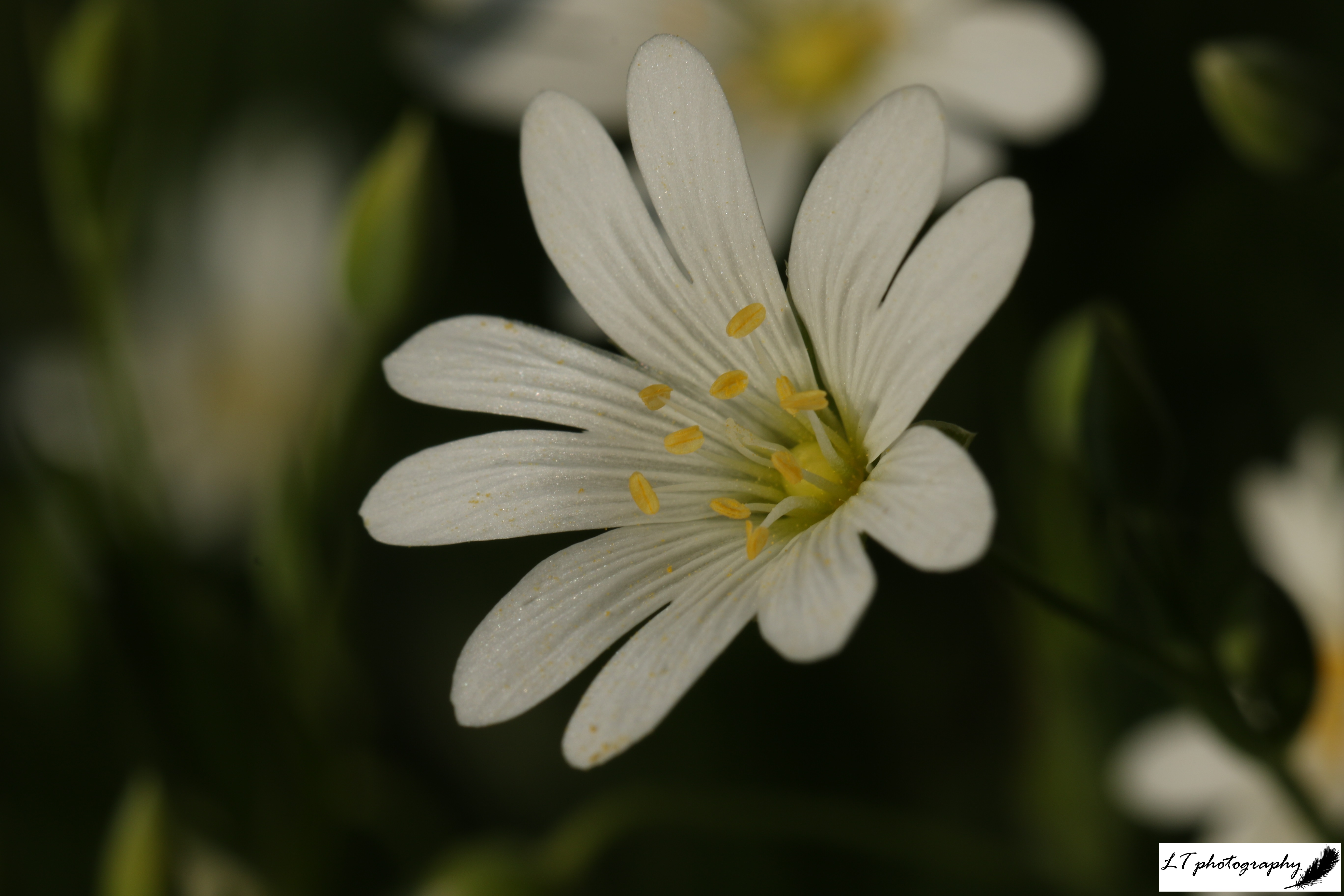
Up Close With Stitchwort Flowers – Stitchwort flowers or ‘Shirt-buttons’ are white stars spotting the countryside throughout spring. Taking a closer look, this particular flower looks weird and wonderful with stamens that curl around each other

Super Snail – This white-lipped snail is a simple, but colourful individual amongst the green of spring. Their swirling shells are a great subject to photograph

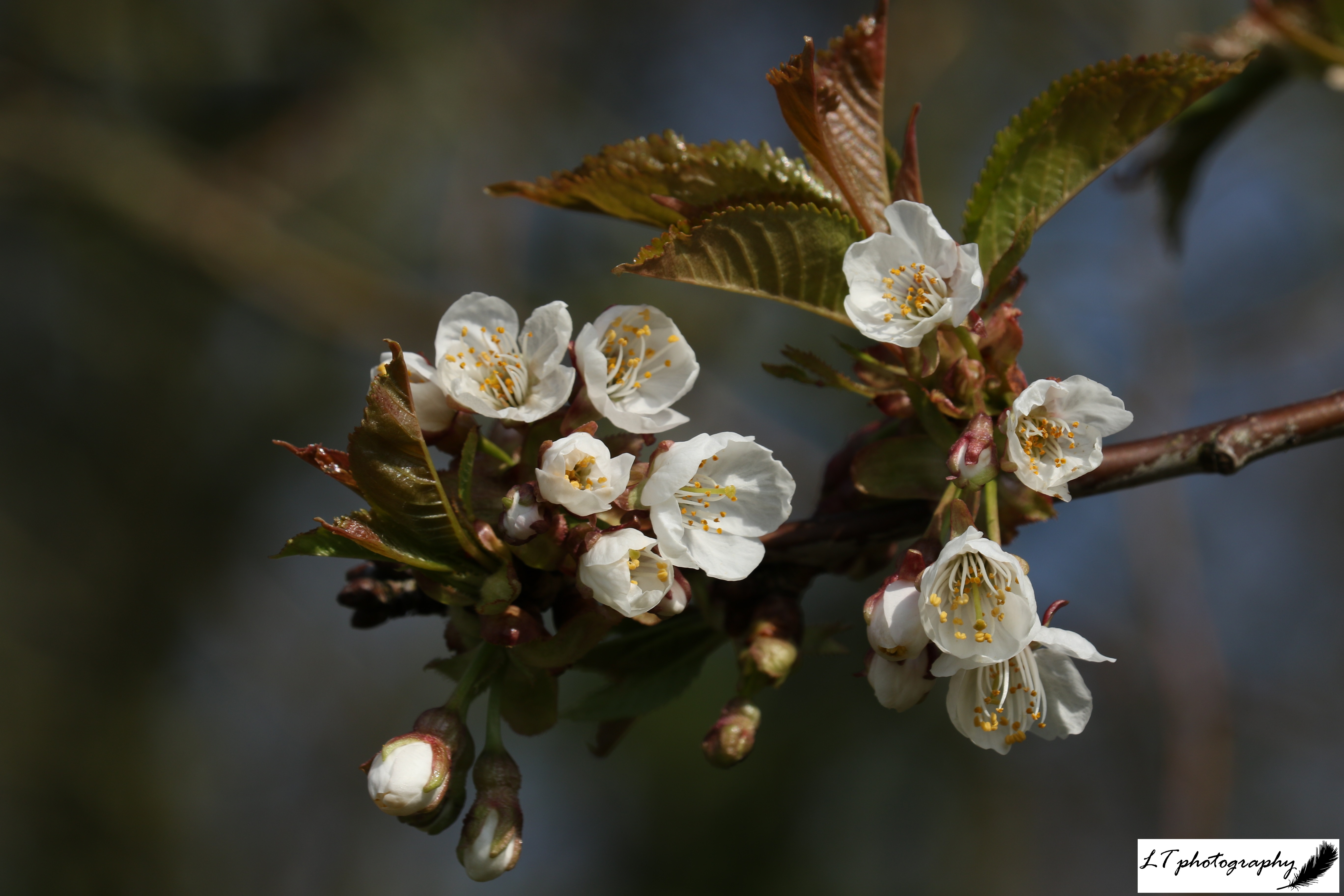
Wild Cherry Blossom – Every year one of my favourite flowering trees is the Wild Cherry. There’s nothing like banches covered in blankets of white set against a bright green backdrop of new leaves

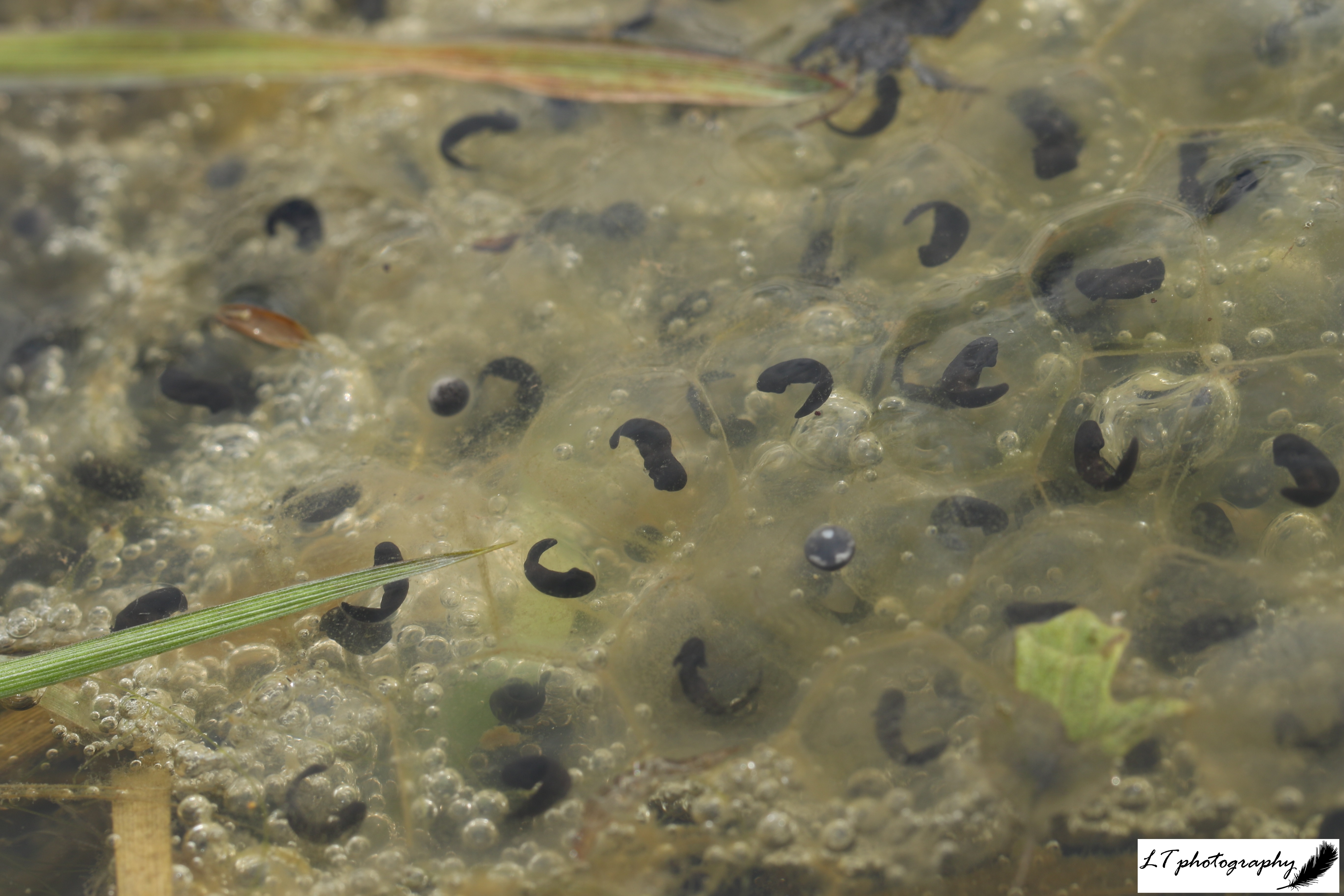
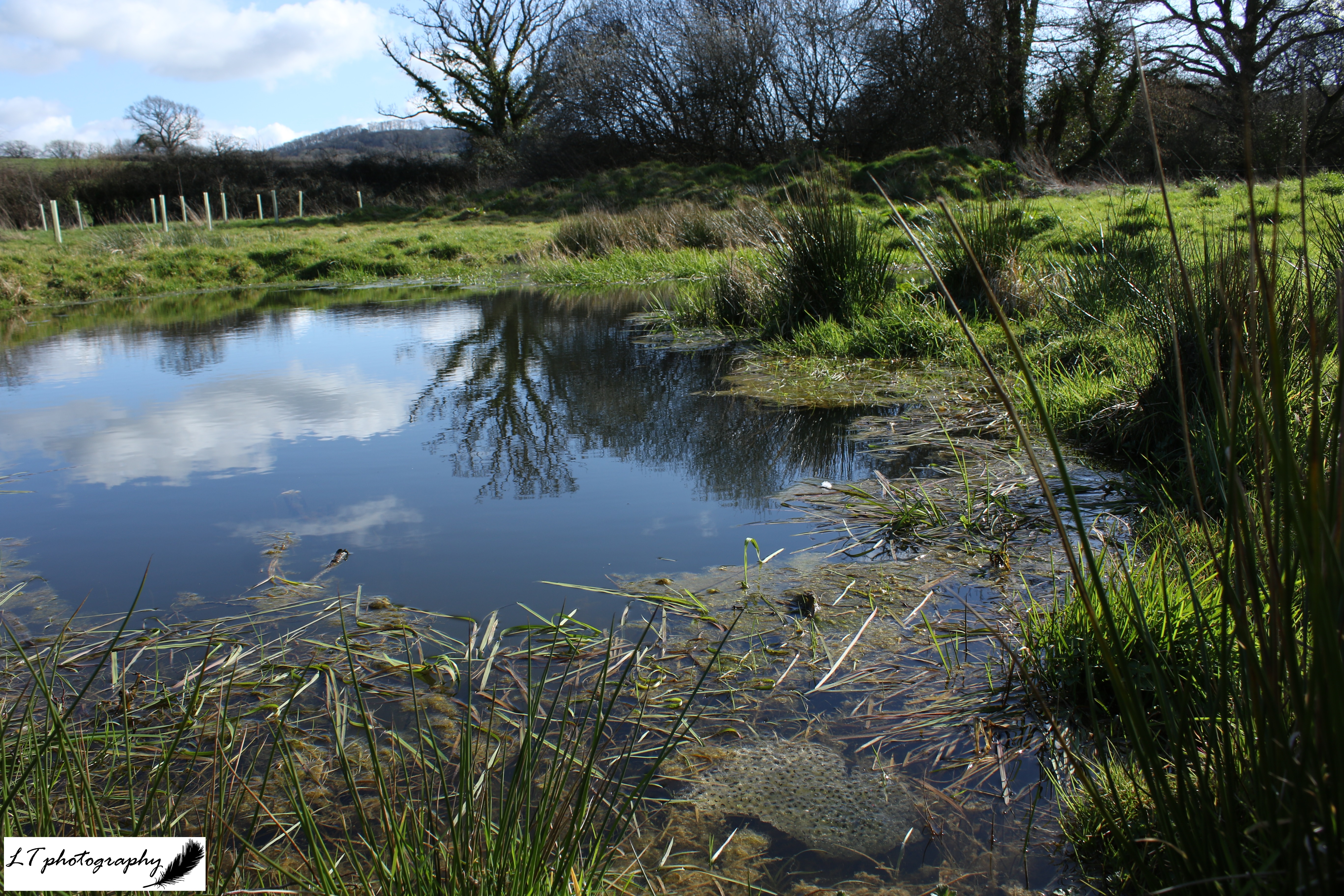
Fabulous First Frogspawn – In 2020, we started digging a pond in our own mini nature reserve at home on our farm. This year we were excited to find our very first frogspawn! It was amazing to watch the tadpoles change and transform over time

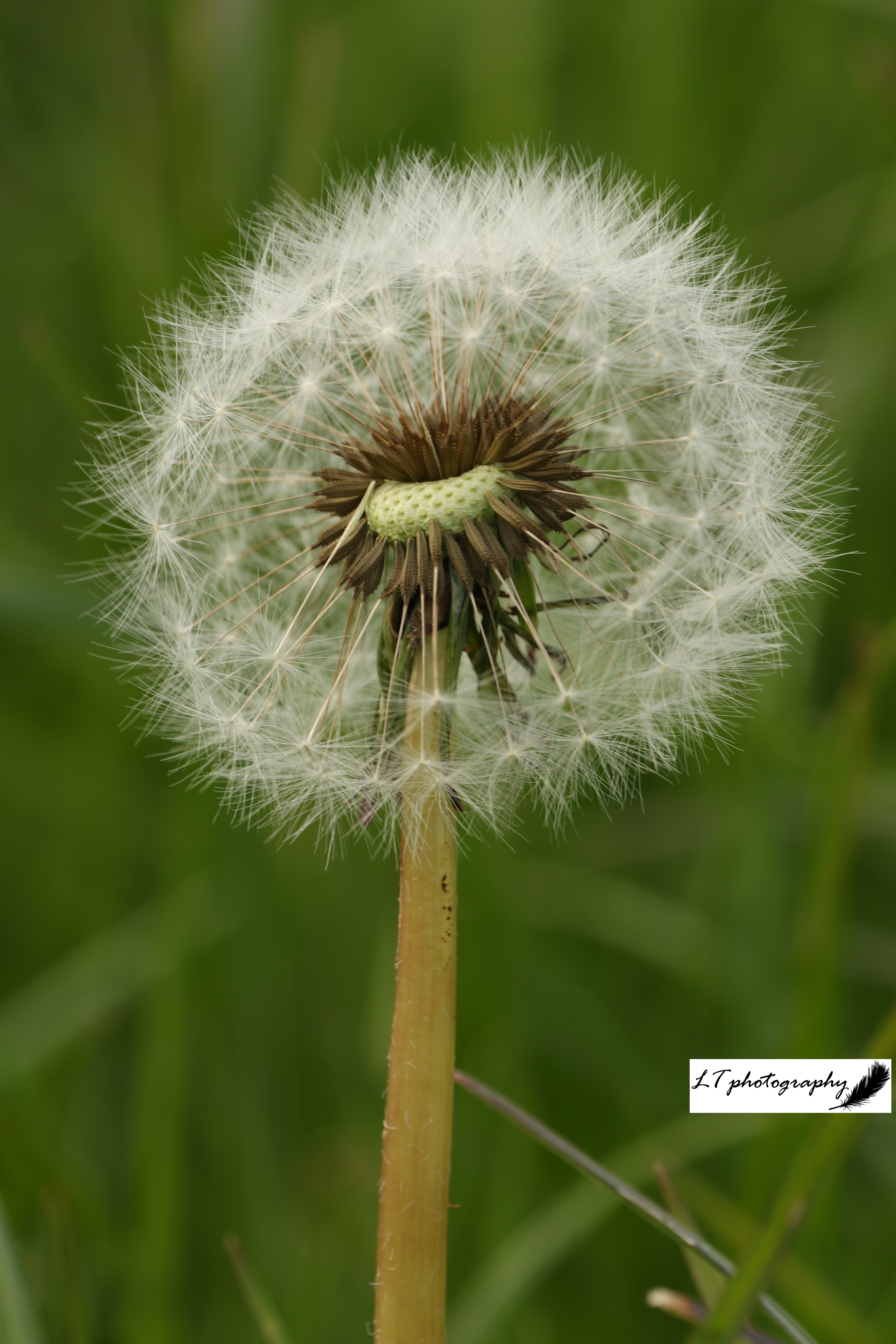
1 O’Clock, 2 O’Clock, Dandelion Clock – All children find magic and wonderment in dandelion clocks and their parachute seeds. Even as an adult I still find inspiration in their fragile globe-like forms

Majestic Beasts – My mum has her own herd of beef cross suckler cows and an Aberdeen angus bull that are free range and raise their own calves. We especially enjoy watching the calves grow up and grow into themselves over their very first year of life

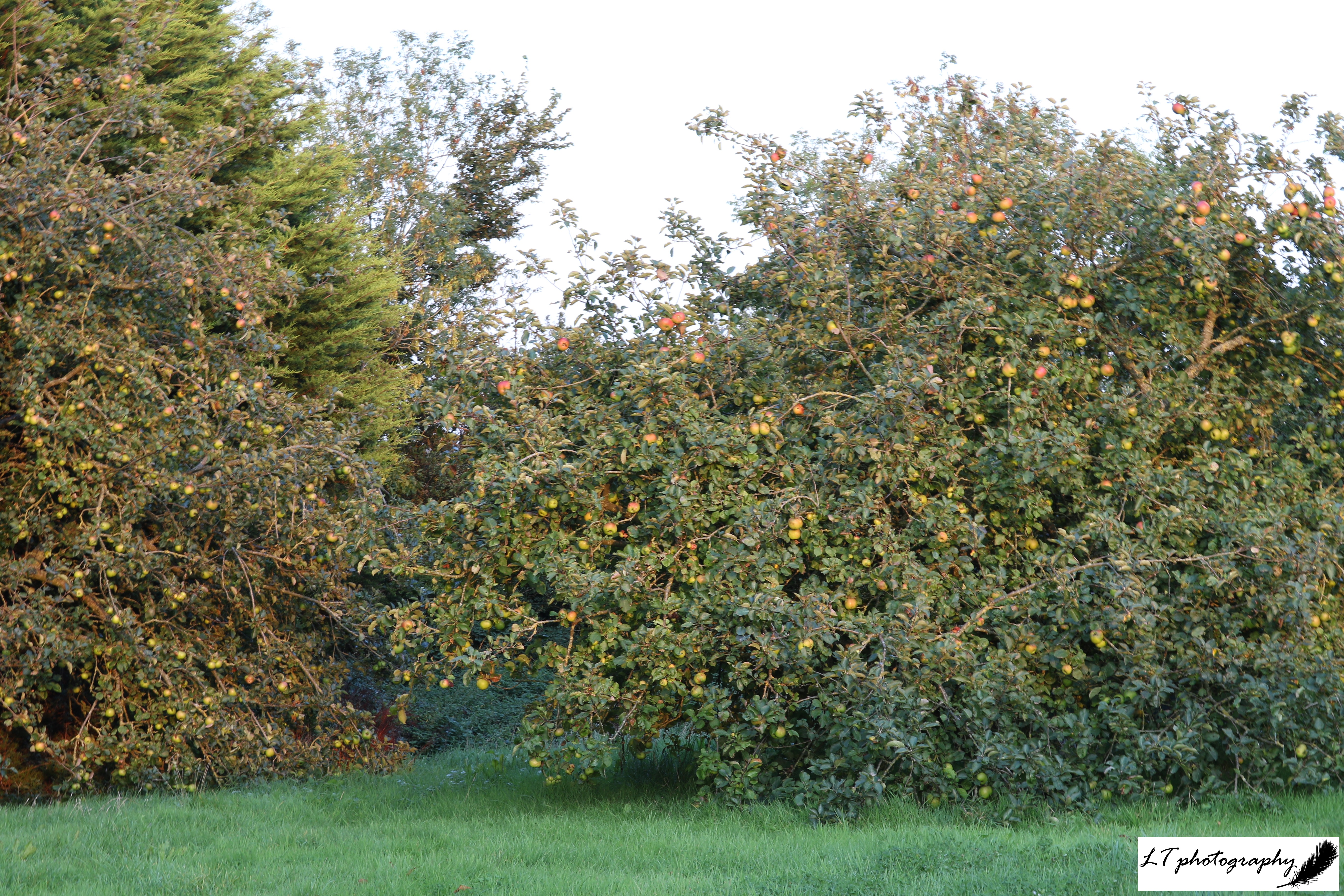
Apple Blossom – As a family we have always enjoyed growing and foraging for our own food in our local area. Though last year was not a very good year for fruit, this year looks to be a better year, apples included

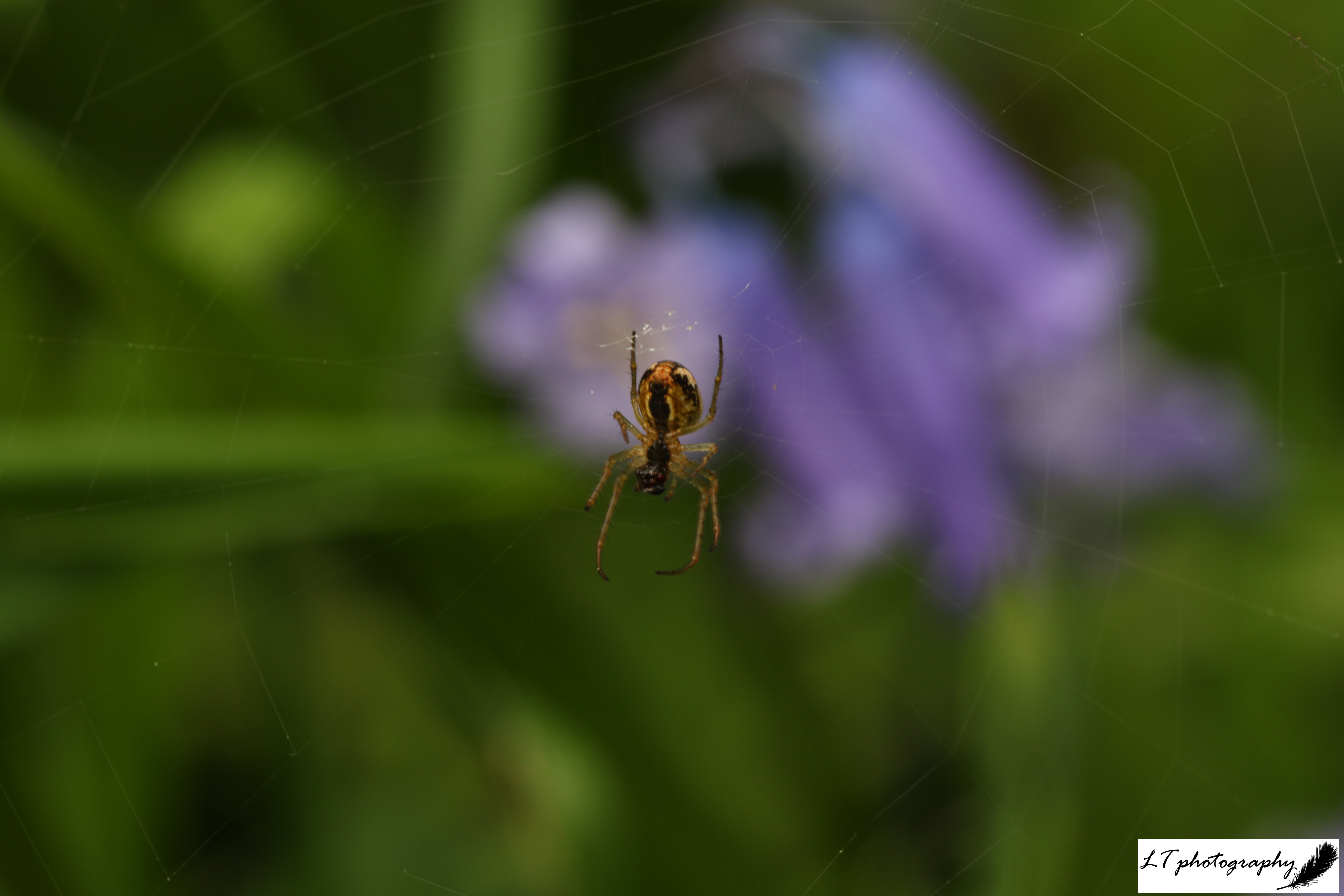
Woodland Spider – Just like the St. Mark’s fly, whilst exploring a woodland of bluebells, I found this species of orb-weaver spider. The bluebells were home to many, many of these little arachnids all weaving their webs between flowers, waiting to catch a meal

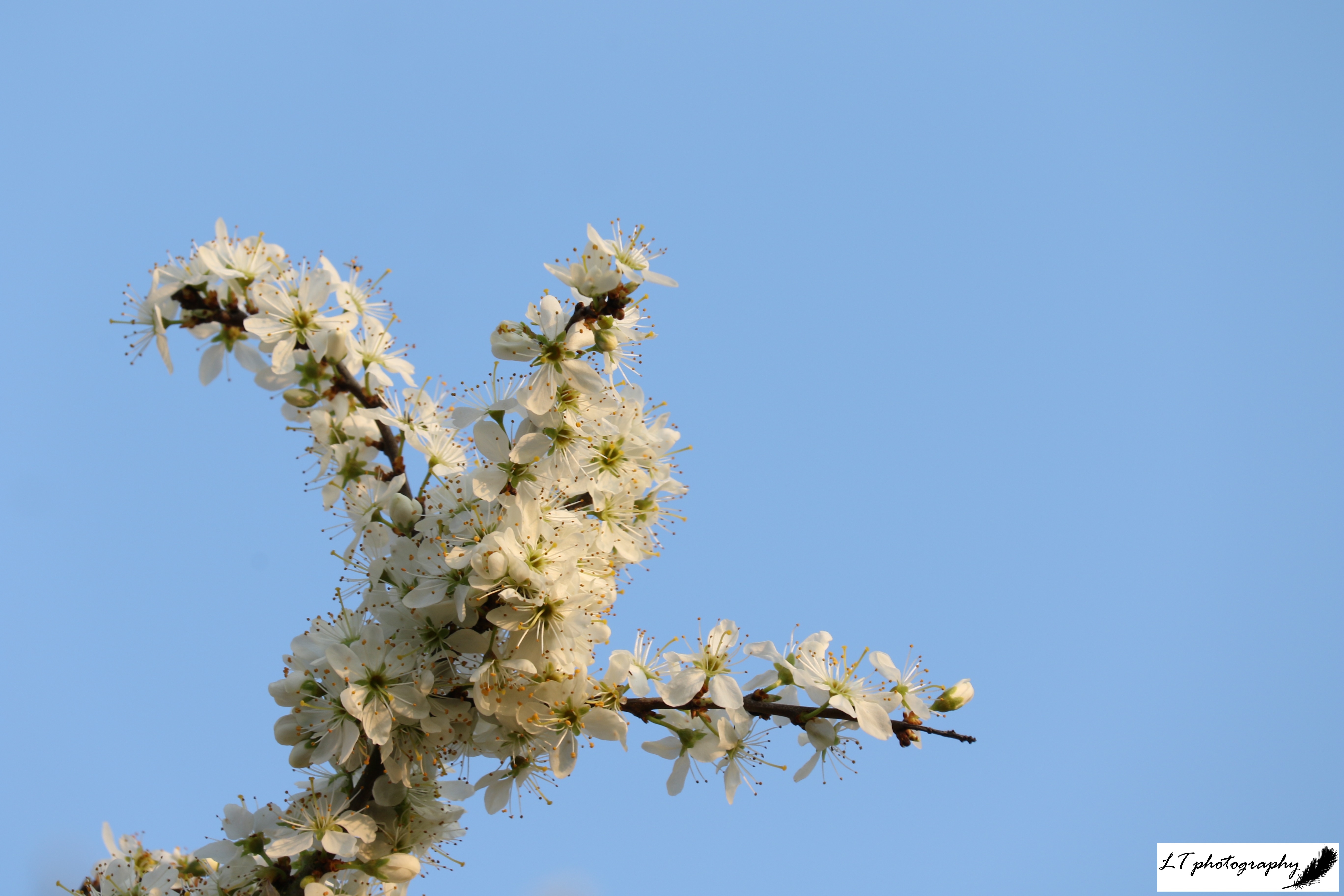
Beautiful Blackthorn Blossom – Every year one of my favourite parts of spring is blackthorn. The snow white flowers of blackthorn winter bring colour to the landscape at a time when things are still grey and spring is only just trickling in

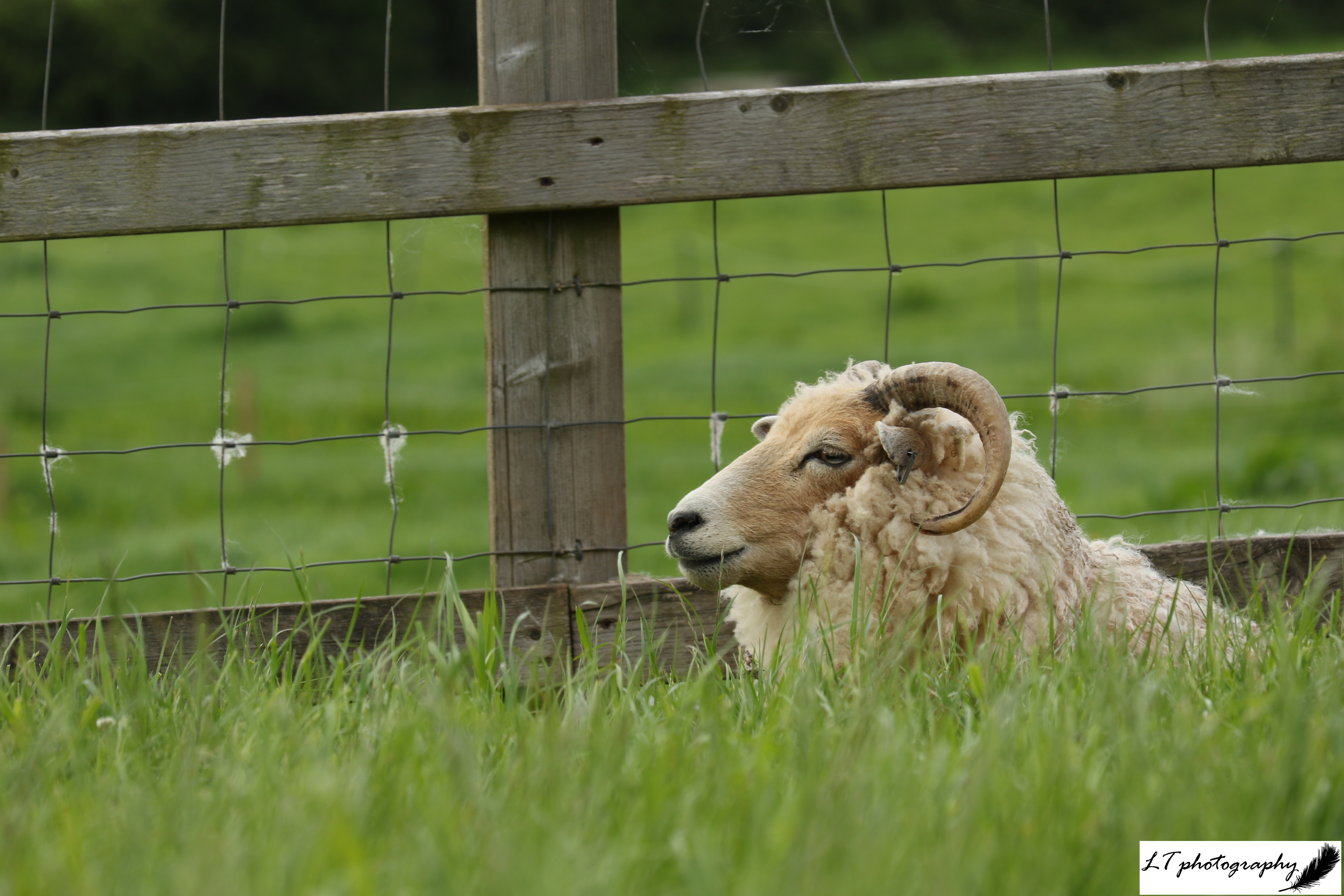
Portland Pets – This year I spent some time photographing my neighbour’s pedigree Portland flock. These small sheep, topped off with curling horns, have a great character and warm colour to them which make it a joy to take their portraits again and again

Life Amongst the Bluebells

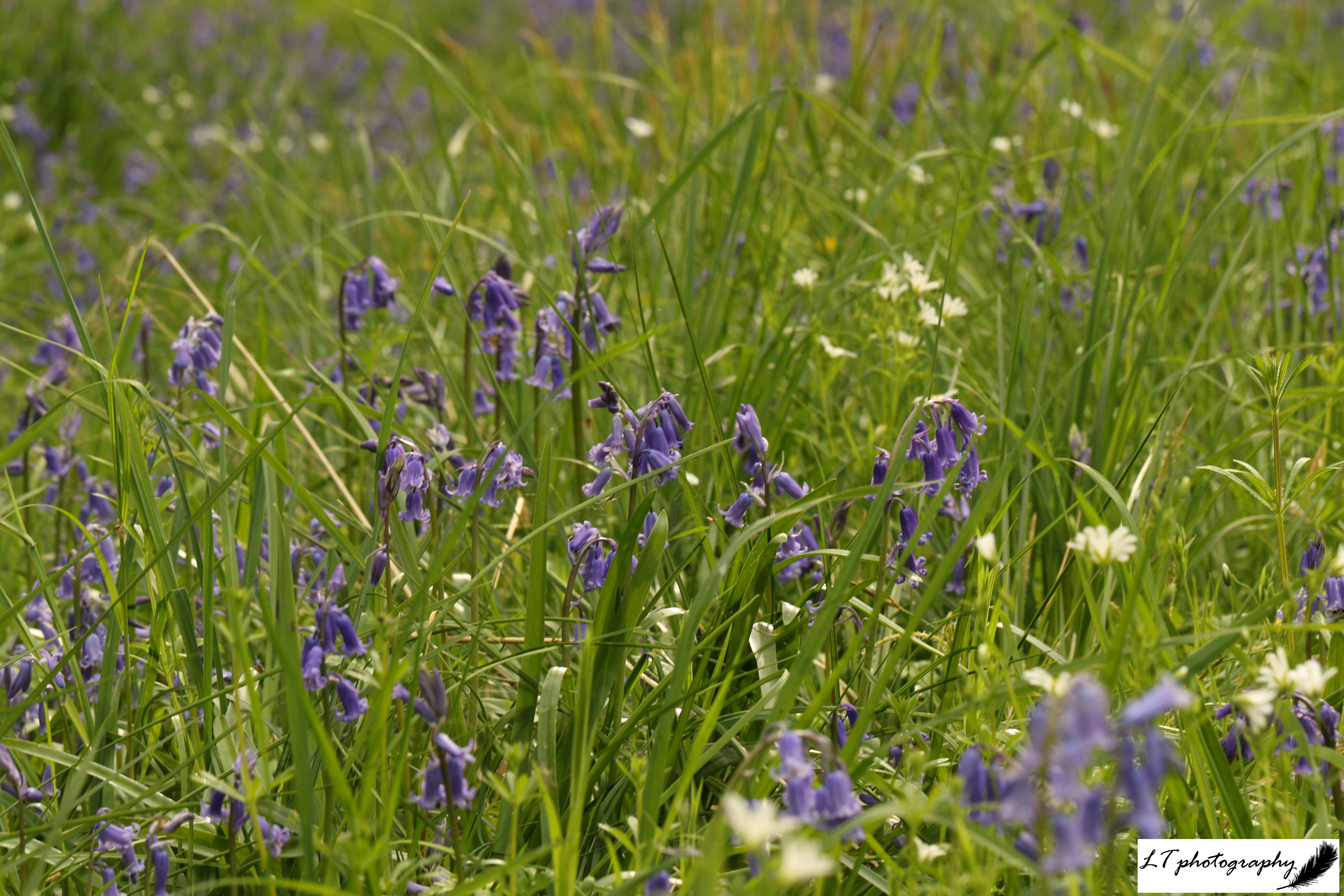
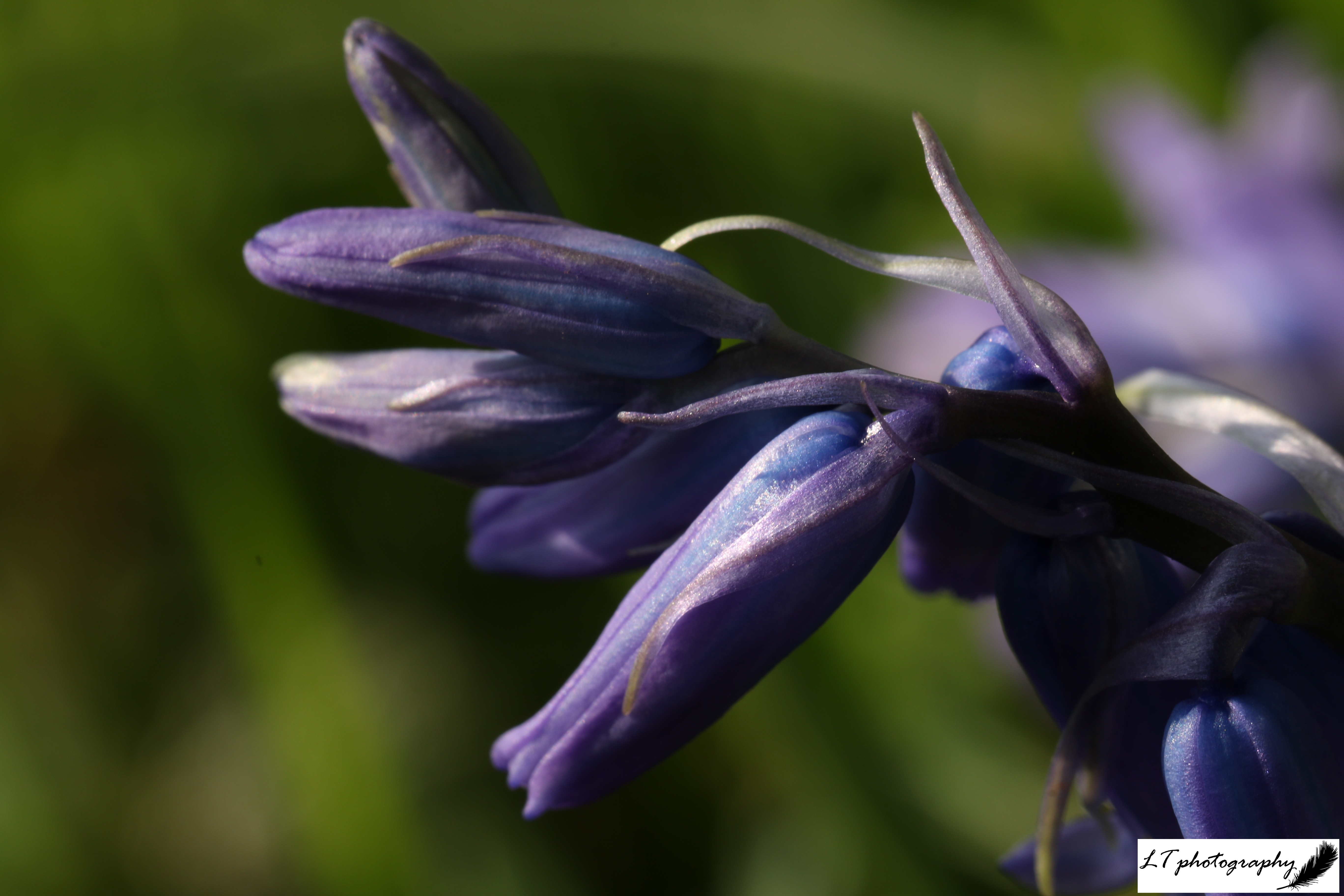
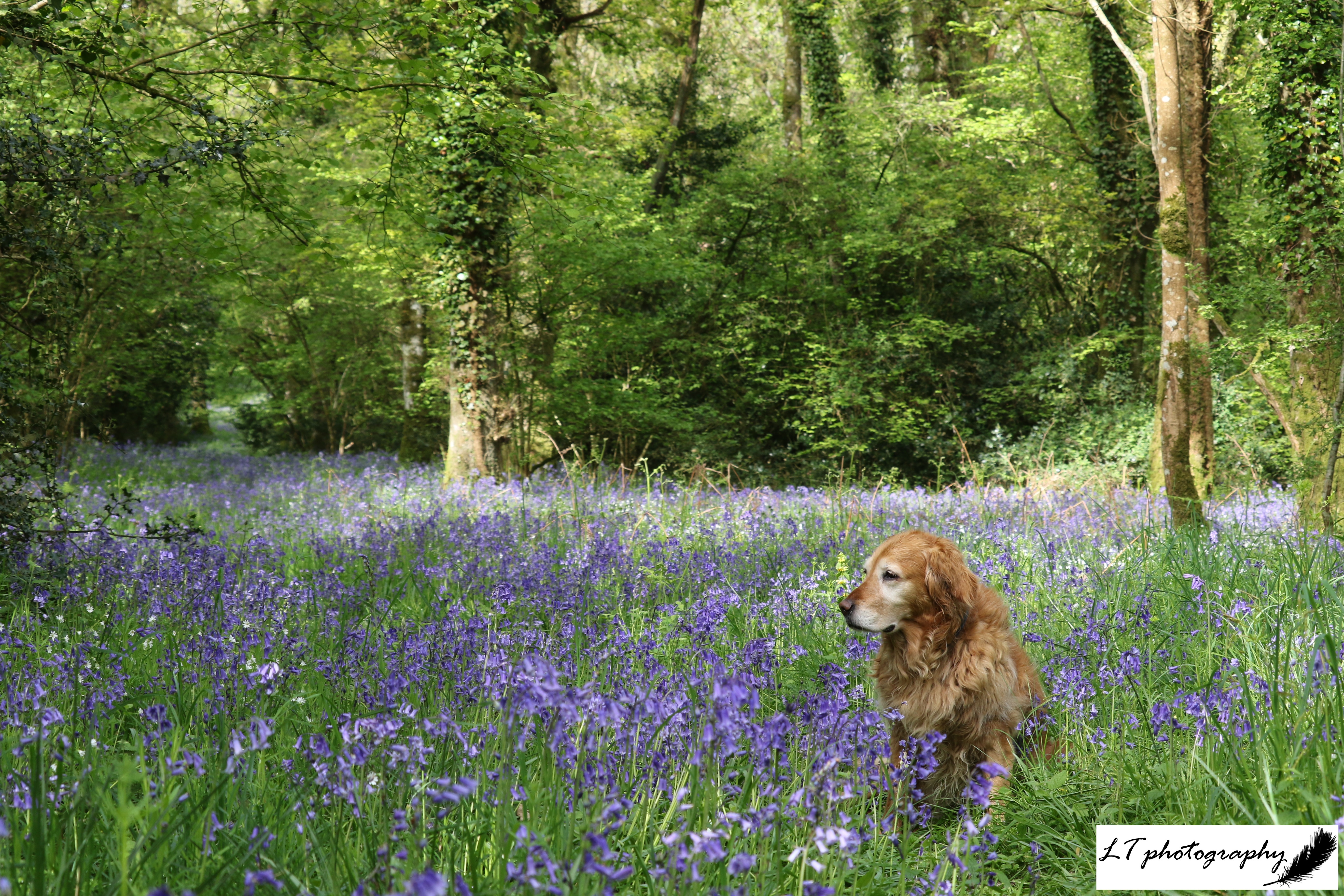
‘When you go down to the woods today, you’re sure of a big surprise’, and in late April to early May, this surprise comes in the form of a fantastic mass event! During this time, our woodlands are blanketed with a sweeping carpet of colour; a rich mass of violet-blue, made up of thousands of nodding heads. This popular spring spectacle is a heady treat for the senses, epitomising the beauty of British springtime. This is not all that our woodlands have to offer at this time though, with the Bluebells making us overlook some humbler stars of the show.

So when walking through the Bluebells, why not stop and look around you for a moment. ‘Daddy’s-shirt-buttons’ or Greater Stitchwort can be found dotted throughout the woodland carpet, white star-shaped flowers on slender stems. In thicker patches of green, clusters of green-centred stars can also be found on sturdy stems, their pungent scent giving them away as the flowers of Wild Garlic. These are joined closer to the ground by the white-cupped faces of the Wood Anemone, heads turned to the sun, merging into the galaxy of colour.

The palette is added to by splashes of pink and yellow. Shining yellow stars of Lesser Celandine float above heart-shaped leaves. The green-spiked Yellow Archangel, like a nettle, adorned with rings of butter-yellow flowers, each with their own hood. You can also find Early Purple Orchids beneath the trees, pink spikes growing from purple-splattered green leaves. Closer to the ground, the glittering pink faces of Herb Robert add to the show.

Amongst the Bluebells, there is not just a colourful backdrop of flowers to be found, but a hidden world to be discovered. Down at Bluebell level, the woodland floor comes alive. Spiders spin webs from Bluebell to Bluebell hoping to catch a meal, whilst Bumblebees fly from flower to flower collecting nectar and pollen for their colonies. They are joined by a fantastic array of flies, varying in size, shape, and colour.

If you take an even closer look at the flowers, you might even find some more hidden characters that capture your mind and inspire your imagination. Camouflaged spiders, weird and wonderful weevils, colourful shield bugs, fascinating beetles, and even patchwork snails are waiting to be found. Minibeasts and their tiny worlds can create a sense of calm and simple joy, an easy example being a graceful Butterfly gently flitting by through dappled spring sunshine.

Walking through the Bluebells is a wonderful visual experience, but if you open your ears, then another world can also be added to this. The fluting notes of the Song Thrush, the onomatopoeic song of the Chiffchaff, the melodic Robin, or the powerful trilling song of the Wren. All flow together to create a symphony of bird song, a soundtrack fit for the spectacle that is the blooming of the Bluebells.

‘When you go down to the woods today, you’re sure of a big surprise’, and in spring this might just be bigger than you expect. Next time the Bluebells are blooming, why not stop and see what you might find amongst those nodding heads.

How to… Identify British Tree Species (Part 2)

A holly.tree shining bright with red berries and prickly green leaves in the grey of a wintertime woodland. An ancient evergreen yew standing watch over the final resting place of our ancestors. A colour-changing spindle cream flowered and glossy green in spring, turning to psychedelic pinks and oranges in autumn. Trees come in all shapes and sizes, often differing wildly from each other, but all can be found embedded in the landscape and culture of Britain.

In the last chapter of my How to… Identify British Tree Species guide, I focussed on 10 tree species that can easily be found across the UK, from the majestic oak to the graceful silver birch. These are but a few of the now 80 odd native and non-native species that can be found in the UK. From providing food to flood prevention, from the countryside to the city, trees can be found playing important roles across the country right now.

Following on from my last guide, part 2 covers 10 more tree species that can easily be found across Britain. This handy guide of facts, drawings, and photos is here to help you to identify these species at any time of year. Here’s to learning something new everyday!

Tree Species

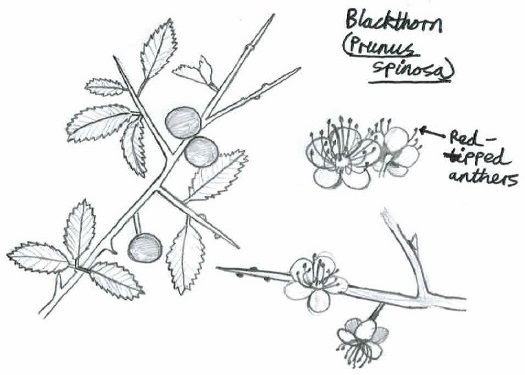
Blackthorn (Prunus spinosa)

  • Family: Rose – related to fruiting trees such as cherry and plum
  • Origin: Native
  • Shape and Size: Large shrub, occasionally small tree, up to 4m, forming impenetrable thickets
  • Stems and Twigs: Young twigs downy, maturing to dark brown bark, that shows orange beneath, with thorns
  • Leaves: Small, oval, alternate, tapering to a point, toothed margins, dull above and hairy beneath
  • Flowers: Flowers are white with 5 petals and red-tipped anthers. Flowers appear late March-April, before the leaves, often alongside cold weather known as Blackthorn winter
  • Seeds: Produces round, blue-black fruit (sloes) with a single seed (stone)
  • Range and Habitat: Grows on the edge of scrub woodlands and in hedgerows

In Winter: Twigs are dark and not shiny, with thorns at least 2cm long

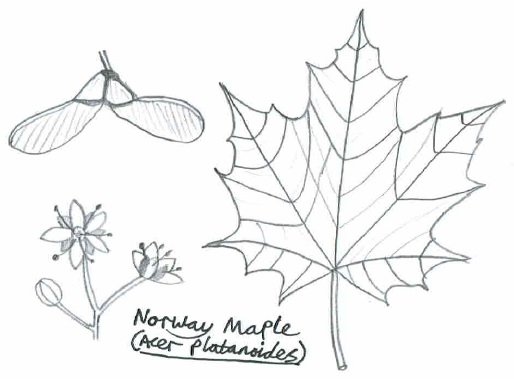
Norway Maple (Acer platanoides)

  • Family: Sapindaceae – related to lychee and horse chestnut
  • Origin: Non-native (introduced in the 17th century from Europe and Asia)
  • Shape and Size: Shorter and more slender tree, reaching up to 30m
  • Stems and Twigs: Bark is grey with many small fissures (not flaking), and twigs are slender and brown with tiny white spots
  • Leaves: Thin, light green leaves, opposite and have long pointed lobes
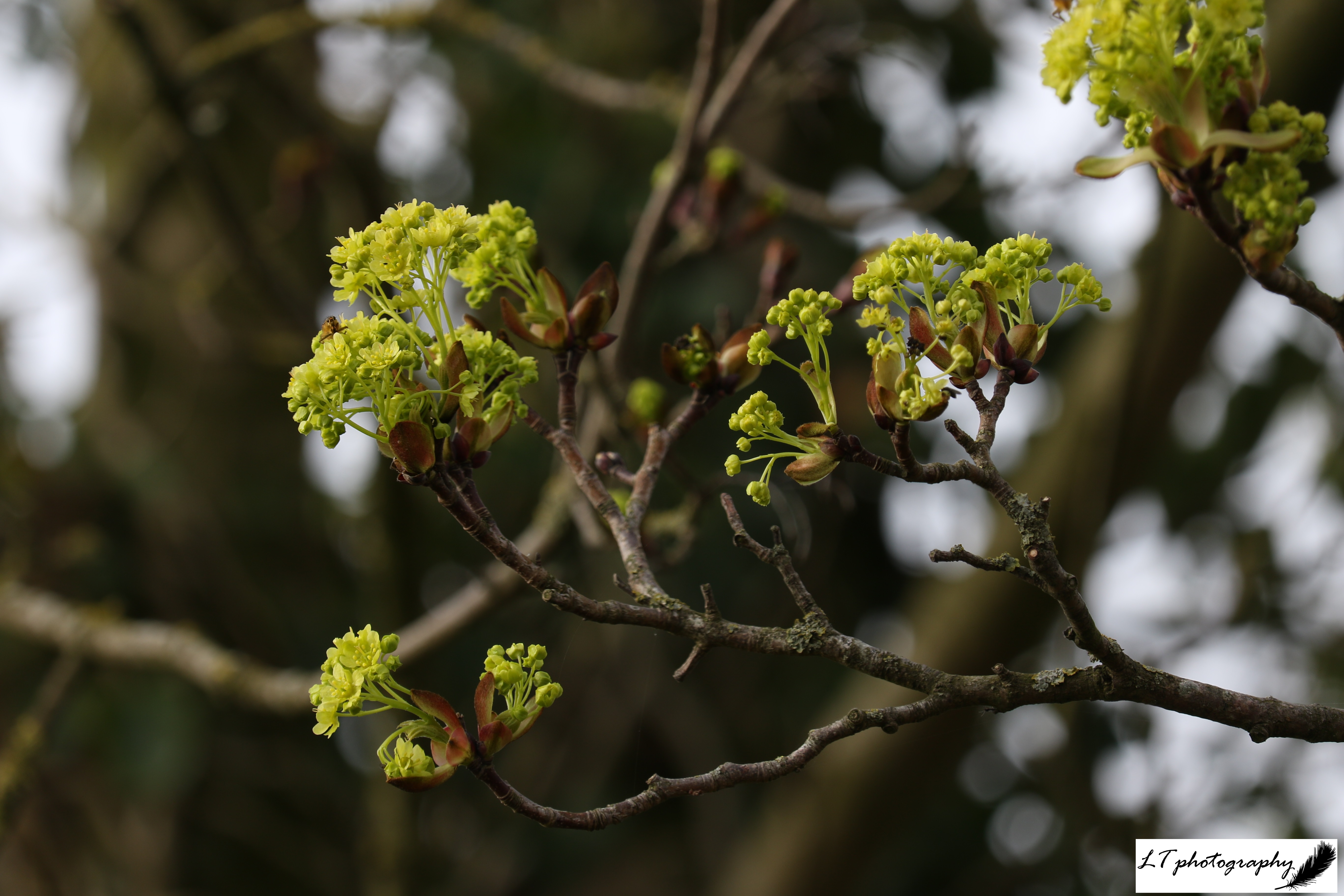
  • Flowers: Erect clusters of pale yellow flowers, before the leaves (April-May)
  • Seeds: Winged keys in opposite pairs
  • Range and Habitat: Increasingly planted and self-sown in parks, gardens, and hedges

In Winter: Distinctive shape and bark, and individual buds that are green and red

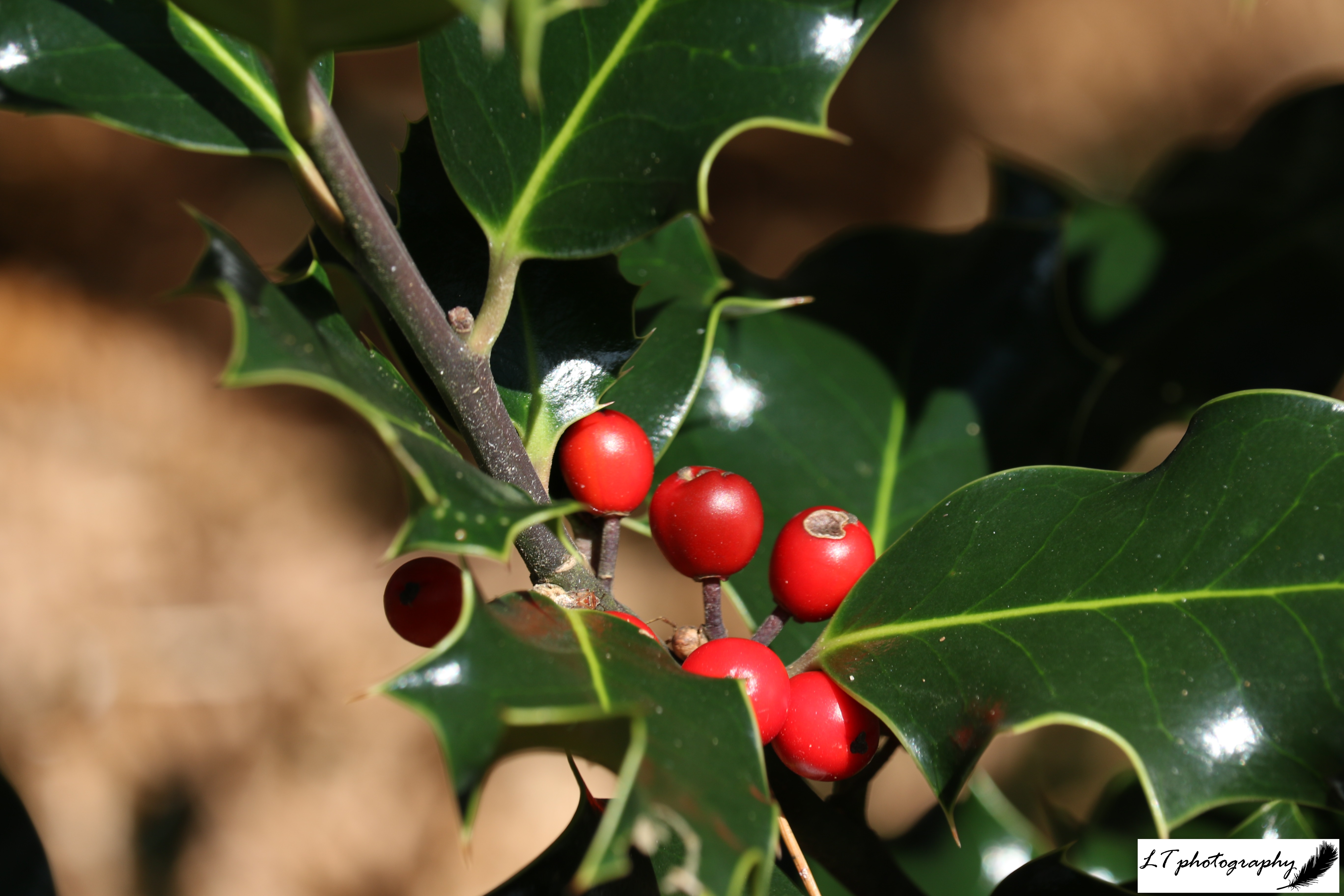
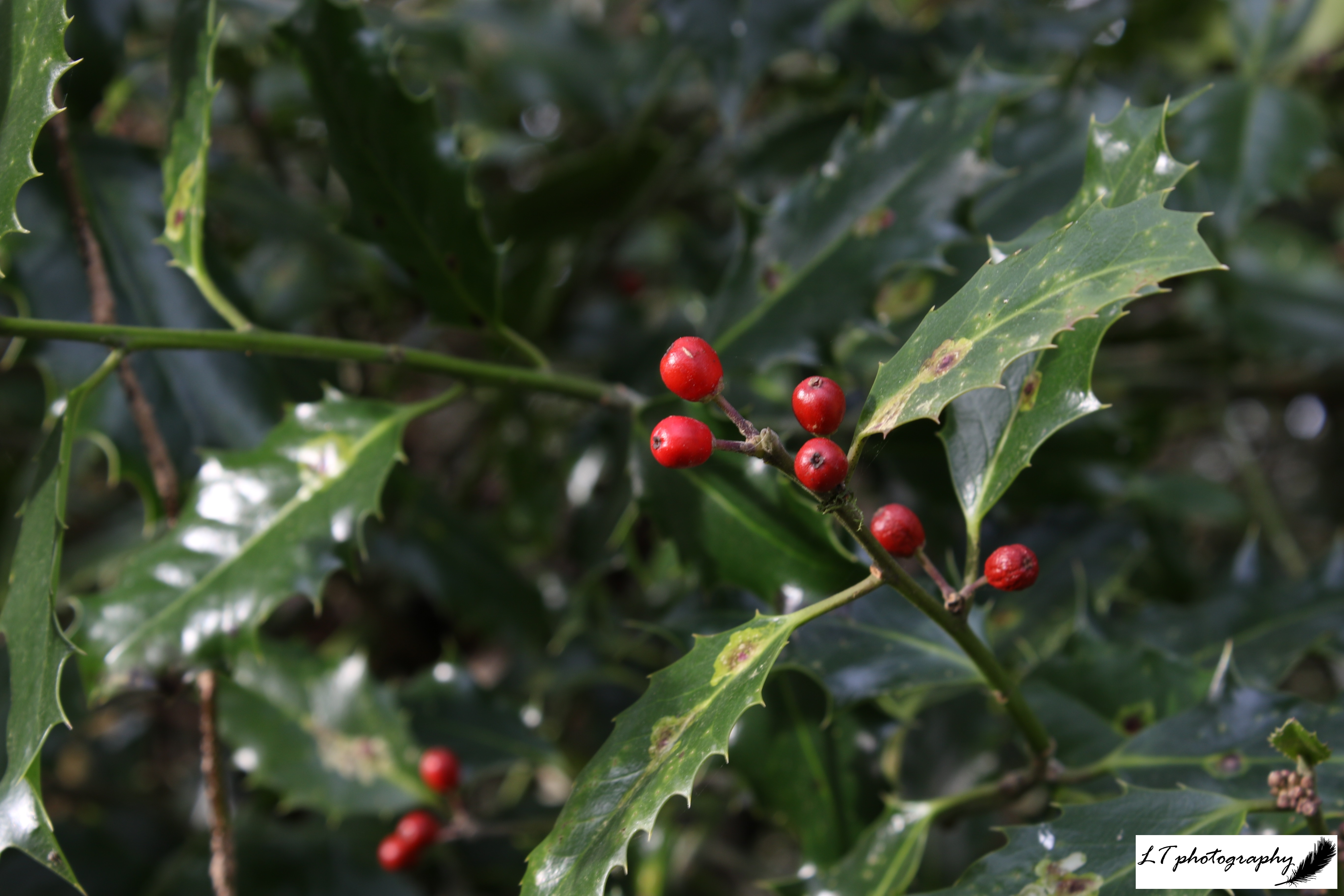
Holly (Ilex aquifolium)

  • Family: Aquifoliaceae – holly trees
  • Origin: Native
  • Shape and Size: Narrow-crowned, conical tree with regular branching, reaching up to 20m
  • Stems and Twigs: Bark is green when young, becoming smooth and grey with age
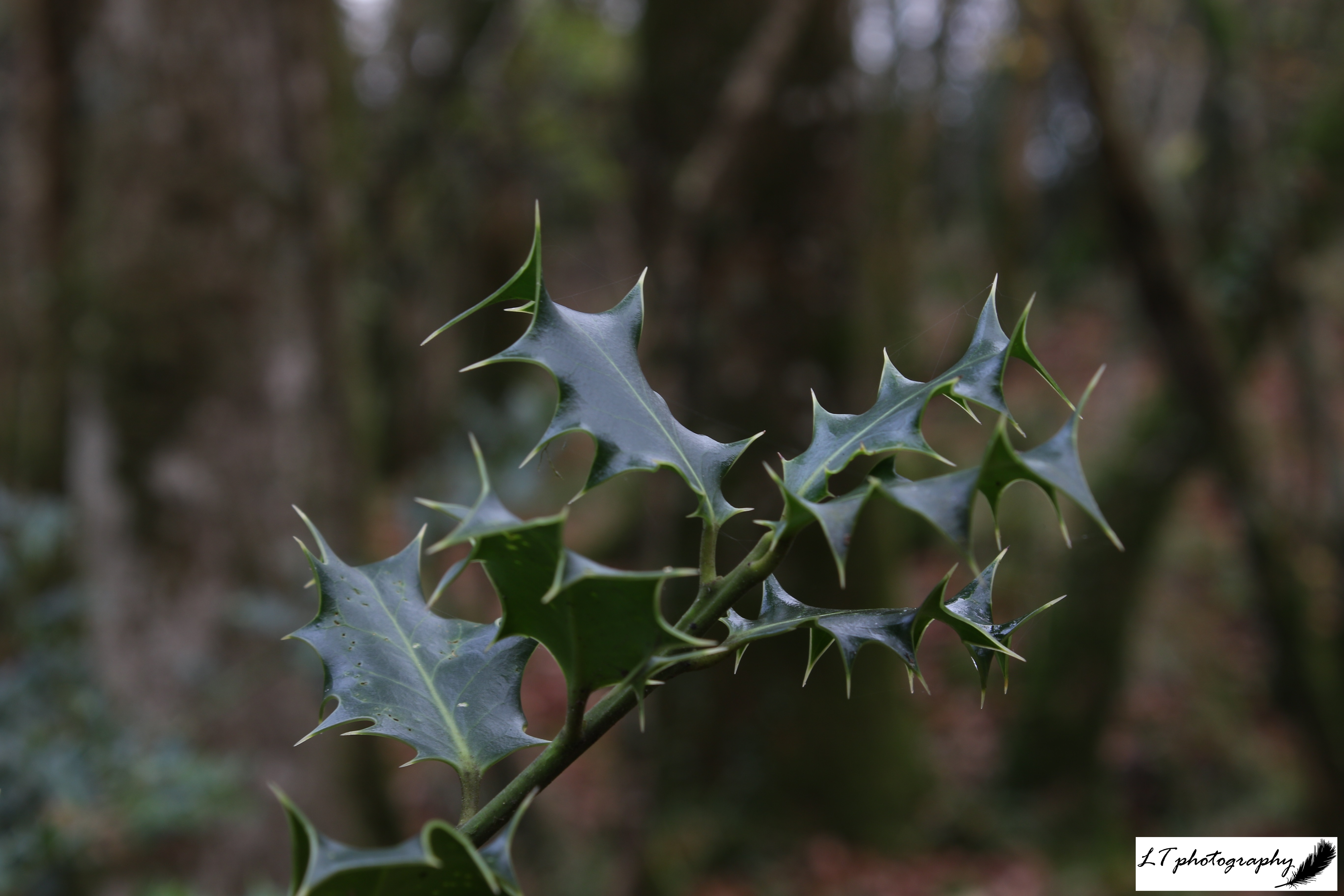
  • Leaves: Alternate, long, glossy, spiny teeth, and waxy on top, matt and pale green beneath
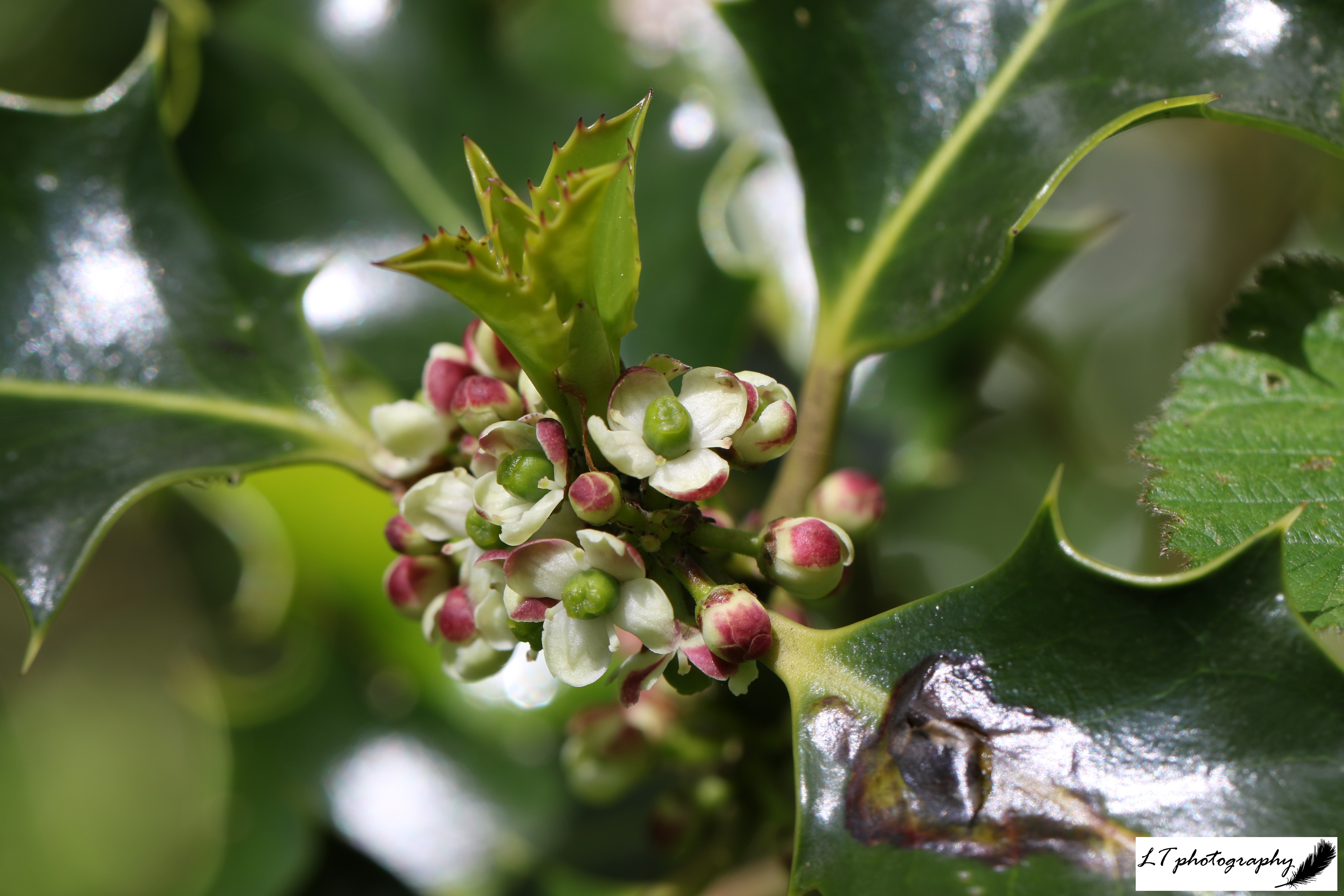
  • Flowers: White, 4-petalled and in close clusters, with male and female flowers on separate trees (May-August)
  • Seeds: Red berries with small seeds, only found on female trees
  • Range and Habitat: Can be found everywhere across the British Isles but prefers drier soils

In Winter: Evergreen spiky leaves and red berries, a symbol of Christmas

Dogwood (Cornus sanguinea)

  • Family: Cornaceae – dogwoods
  • Origin: Native
  • Shape and Size: Tall and deciduous sending out suckers to form dense thickets (up to 10m)
  • Stems and Twigs: Bark grey and smooth with shallow ridges, giving off a fetid smell when bruised, attractive to insects
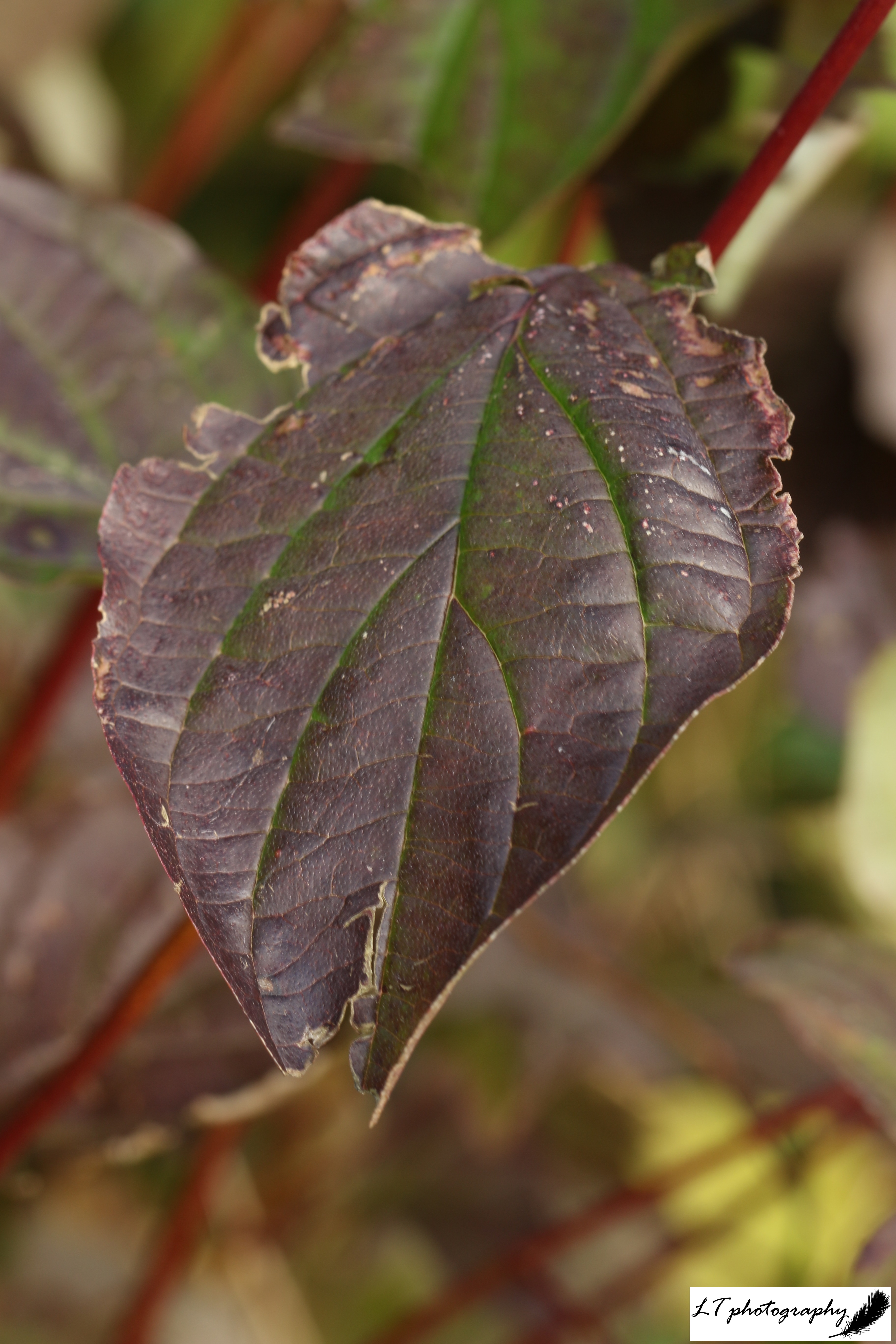
  • Leaves: Opposite, long, oval, pointed, hairy on both sides, side veins curving forward, and no teeth. Crimson colouring in late autumn
  • Flowers: Greenish-white 4-petalled flowers (June-July)
  • Seeds: Round, bitter, black berries in clusters (sometimes called ‘dogberries’), ripening in August or September
  • Range and Habitat: Frequent in Midlands and South, grows chiefly on chalk soils, but also found in woodlands, scrub and hedges

In Winter: New twigs are bright red

Common Lime (Tilia x europaea)

  • Family: Mallow family – related to trees such as cotton and cacao
  • Origin: Native
  • Shape and Size: Tall tree with long slender branches that start near the ground (up to 40m)
  • Stems and Twigs: Young bark is smooth and grey, whereas old bark is fissured
  • Leaves: Long and heart-shaped with small teeth and tapering to a point. Dark green and hairless above, whereas undersides are paler with white or buff hairs in the vein junctions
  • Flowers: Greenish-yellow 5-petalled flowers that are sweet smelling (late June-July)
  • Seeds: Encapsulated in small round hanging fruits, hairy, faintly ribbed and with pointed tips
  • Range and Habitat: Widespread in rows or avenues in streets, parks and also hedges

In Winter: Red, hairy twigs and shoots

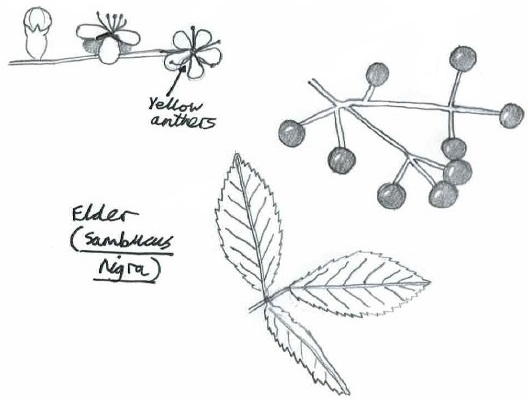
Elder (Sambucus nigra)

  • Family: Adoxaceae – previously in the honeysuckle family , but now reclassified in moschatel
  • Origin: Native
  • Shape and Size: Bushy shrub with many stems or growing into a small tree (up to 10m)
  • Stems and Twigs: Light brown bark is thick, corky, fissured, and strong smelling
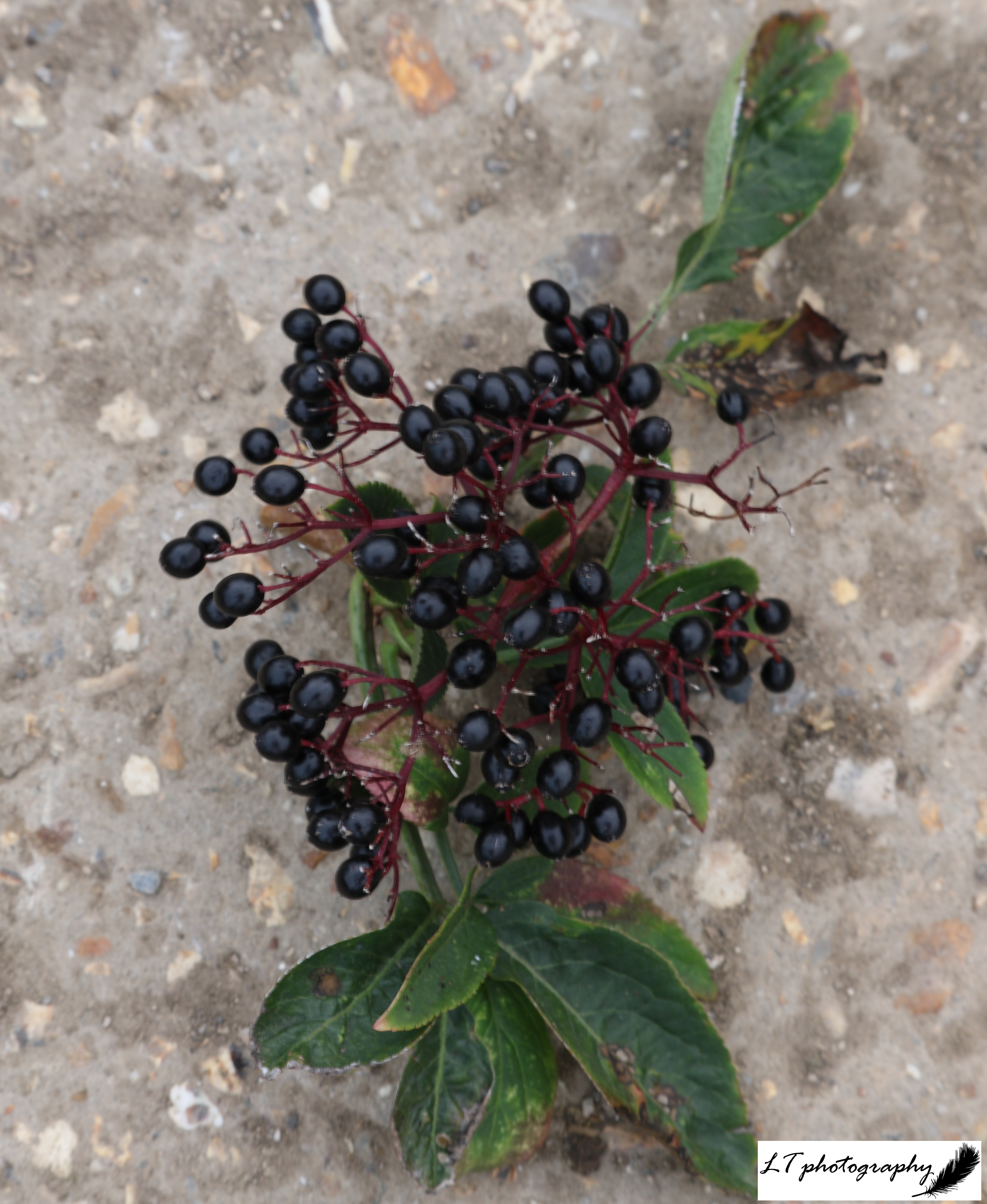
  • Leaves: Long, dark green, and opposite, with leaflets in pairs, rounded, stalked and with teeth
  • Flowers: Creamy-white, small, and sweetly fragrant in flat-topped clusters with yellow anthers (May-August)
  • Seeds: Produces a juicy, edible, purplish-black berry
  • Range and Habitat: Widespread and common throughout Britain, particularly flourishing where nitrogen content high

In Winter: Pungent, hollow-stemmed twigs and often dotted with light-brown bumps

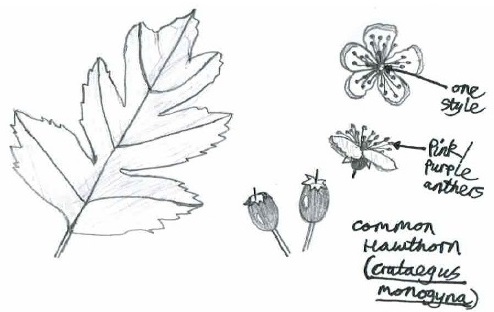
Hawthorn (Crataegus monogyna)

  • Family: Rose – related to fruit trees such as apricots and apples
  • Origin: Native
  • Shape and Size: Quick growing, becoming a dense shrub or single stemmed tree (up to 15m)
  • Stems and Twigs: Bark is hairless and greyish-brown, with many small scales and sharp spines
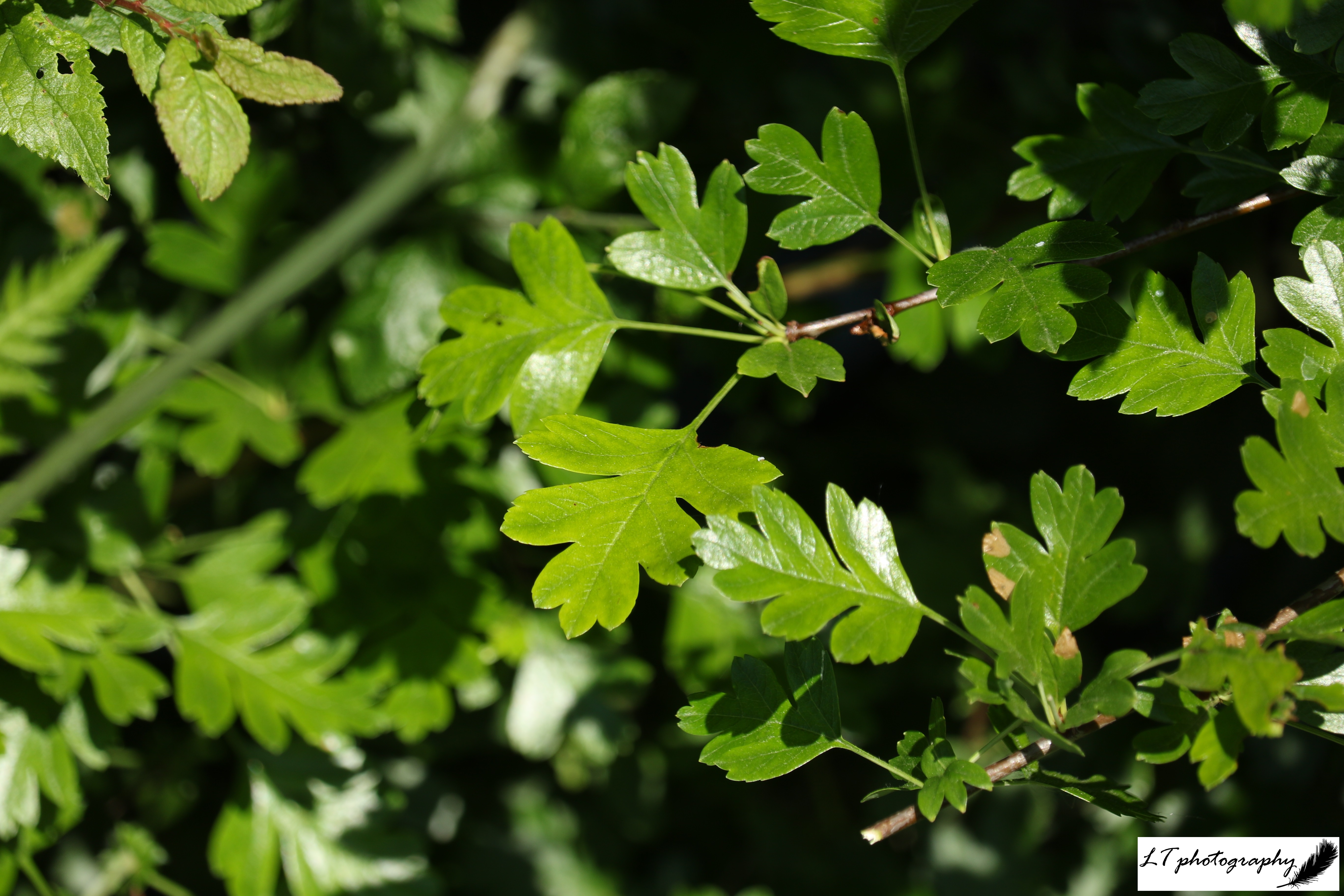
  • Leaves: Alternate, long, toothed, shiny, lobed, and roughly oval-shaped
  • Flowers: Showy white and fragrant (sickly sweet) with 5 petals, and pink or purple anthers (late April-June). Become deep pink as they fade
  • Seeds: Fleshy fruits (haws) turn dark wine-red and contain a single seed
  • Range and Habitat: Widespread and common throughout Britain, in hedges, scrub or woodland margins

In Winter: Spines emerging alongside buds on the twigs

Beech (Fugus sylvatica)

  • Family: Beech – includes chestnuts and oaks
  • Origin: Native
  • Shape and Size: Older trees have a massive, many-branched dome, whereas young trees are slimmer and more conical in outline (up to 36m)
  • Stems and Twigs: Smooth grey bark may break into small squares
  • Leaves: Long, wavy margins, alternate, hairy leaf edges, and shiny green on both surfaces
  • Flowers: Young leaves appear with yellow long-stalked male flowers on tassel-like stalks, and greenish white female flowers (May)
  • Seeds: Four-lobed husk are two triangular nutlets (mast)
  • Range and Habitat: Native in woods in the south, but widely planted elsewhere

In Winter: Often hold on to leaves and have sharply-pointed buds

Spindle (Euonymus europaeus)

  • Family: Staff-vine
  • Origin: Native
  • Shape and Size: Small tree or big bush up to 6m
  • Stems and Twigs: Young, smooth, greenish bark later turns grey
  • Leaves: Light green leaves are opposite, thin, oval-shaped, and pointed, with small finely toothed margins. Turn pinkish-red in autumn
  • Flowers: Small greenish-yellow flowers with 4 narrow petals (May-June)
  • Seeds: Four-lobed seed capsules, which turn a deep pinkish-red when ripe.
  • Range and Habitat: Grows throughout England and Wales, most frequent in the South, but rarer in Scotland and Ireland. Found in woods, scrub, and hedgerows, in particular on lime

In Winter: Buds and twigs are angular with four sides

Yew (Taxus baccata)

  • Family: Yew
  • Origin: Native
  • Shape and Size: Round-headed tree with dark foliage, often has many trunks (reaches up to 20m)
  • Stems and Twigs: Smooth, light brown bark flakes to red patches
  • Leaves: Needles dark green on top and matt yellow-green on underside
  • Flowers: Male and female flowers are found on separate trees. Male flower is yellow, and tiny female flower is green (February-April)
  • Seeds: Bright red ripened fruits, much enjoyed by birds, partially encloses a single seed that is poisonous to humans
  • Range and Habitat: Found in woods, scrub, screes, downs and often on lime

In Winter: Evergreen needle-like leaves present all year round

Drawings are my own work

Rural Dorset vs. Urban Manchester: Autumnal Plants and Fungi

Series in collaboration with guest writer Emma Rogan

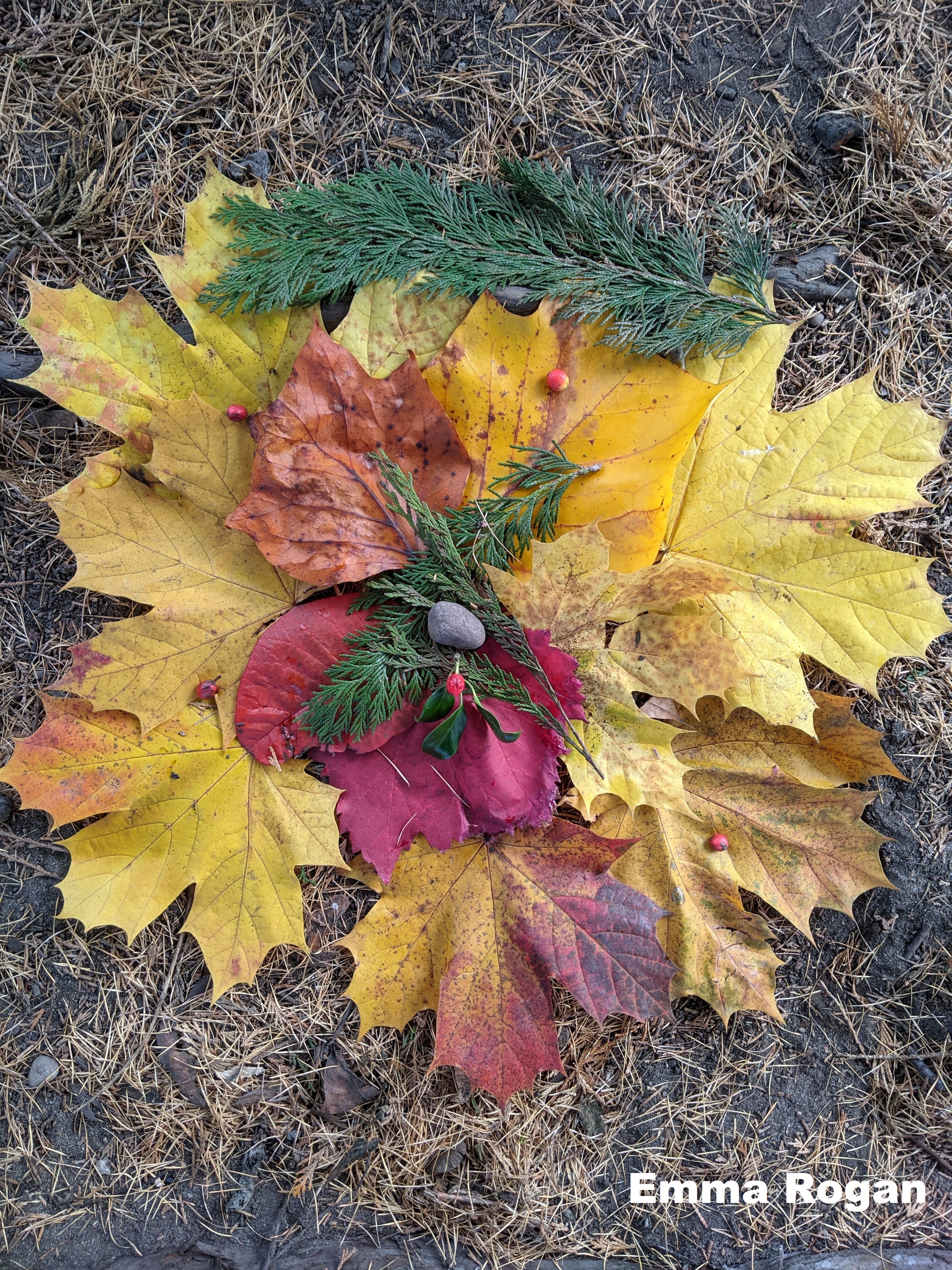
Autumn is a time of plenty, painted with fantastic colours, such as leaves changing, berries and nuts adorning unveiling branches, and the emergence of marvellous mushrooms. Wherever you go during this time, autumn may be moving at a different pace, but the vein of change runs throughout. In Dorset, autumn begins with the first blackberries in August, the start of the migration of birds to warmer climes, and the beginning of a bite in the early morning. In Manchester these signs can also be found, but the change in season is more easily spotted by the increasing carpet of amber leaves on the pavement. For nature, this time of bounty and activity foreshadows the days of dormancy to come.

Last time in Rural vs. Urban, Dorset-born naturalist Laura was joined by Manchester-born wildlife enthusiast and friend Emma, to explore the magical minibeasts that could be found in their local patches. From grasshoppers to froghoppers, both Laura and Emma were amazed by the variety of species they found in such a short space of time! No experts on minibeasts, just enthusiastic adults, their eyes were opened to this miniature world by slowing down and focussing on the smaller things. In this way, we can gain a lot, from escapism to inspiration.

In this next instalment of Rural vs. Urban, we move into autumn with Laura and Emma exploring their home areas to see in the change of the seasons. As colours change and leaves fall, what will location and season mean for the plant and fungi life observed? What treasures will be discovered as we go back to the golden days of autumn?

Laura’s Plants and Fungi in the Countryside

This year autumn could be felt in cold mornings and stormy weather, but did not start showing its true face until October. I first took in the change of the season with a walk to my local woods on the 6th October, seeing the ruby red gleam of Hawthorn berries and a spectacular sunset of chilly blues and pinks. I was finally inspired explore all that autumn had to offer.

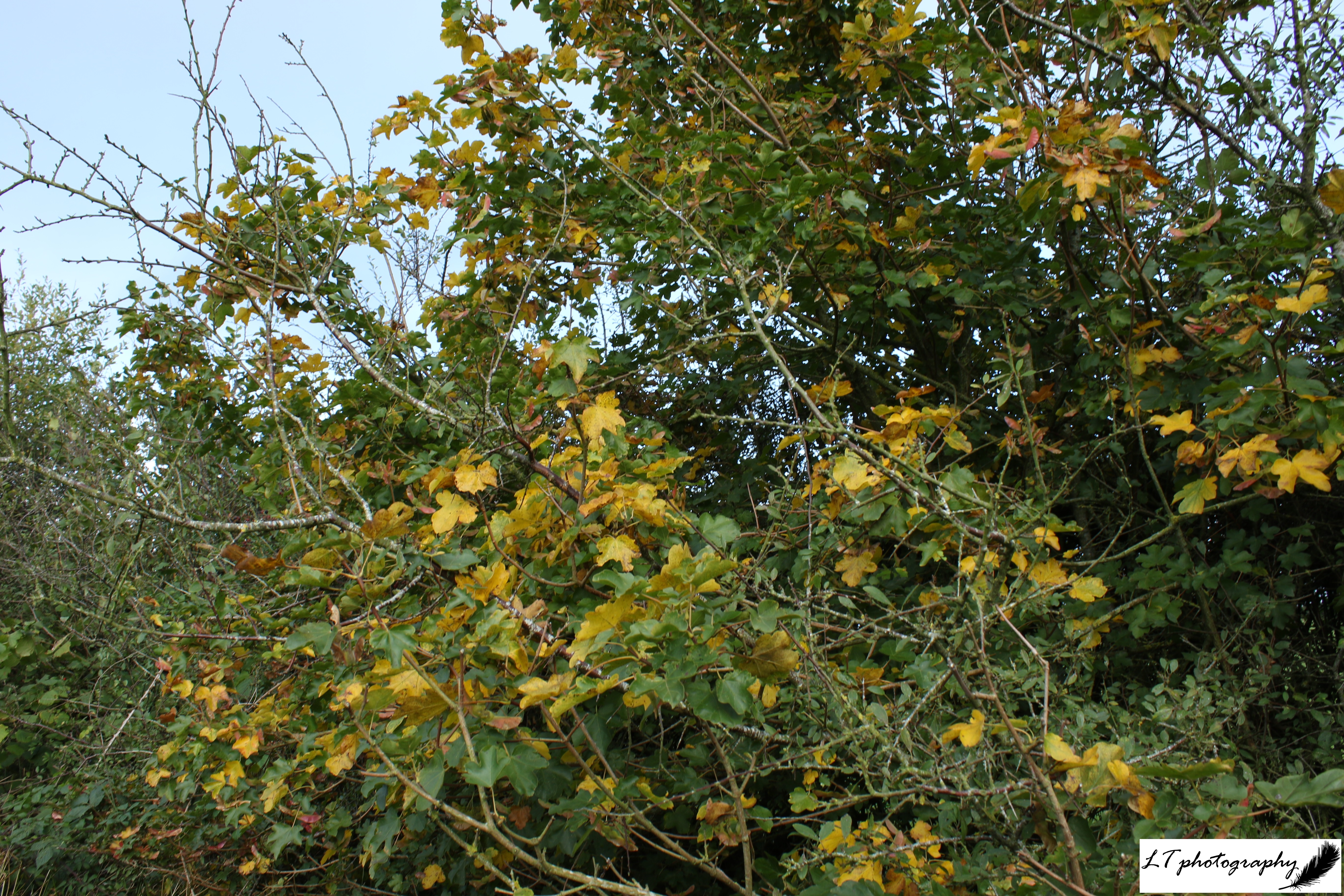
So, on the next day, I ventured out into my family’s land to take in all that nature had to offer, as autumn made its slow decline towards putting the landscape to sleep. Leaves were yet to start falling on this day, other than being ripped from their branches in strong winds, but were beginning to show a change in colour. Purples, reds, yellows, oranges, browns, and also the spectacular pink of Spindle leaves. By far the most common trees to be found in my local area though, are Pedunculate Oak, Field Maple, Hazel, Blackthorn, Elder, and Hawthorn; Oaks being a personal favourite.

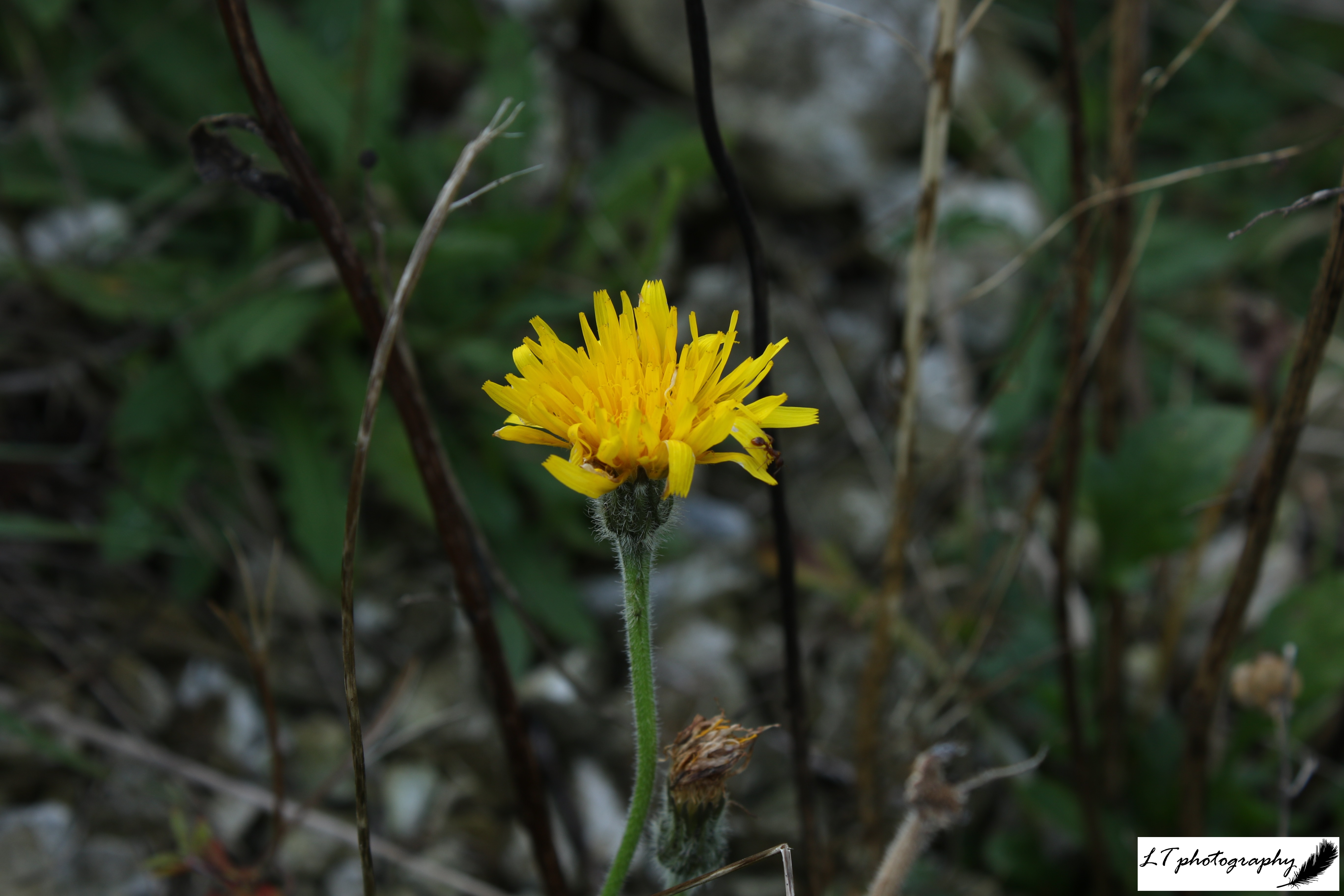
The warm weather this autumn has meant that it has felt even slower in its start. So it was not surprising on my walk to find a variety of flowers still out, ranging from Herb Robert and Wild Marjoram to Meadow Cranesbill and Rough Hawkbit. With their presence at least, they will have provided an extended food source for wildlife that were yet to hide for the winter, for example Small Tortoiseshell Butterflies that were still on the wing. They also added colour to the magnificent display of nature’s bounty this autumn, which included the rich reds of Rose hips and the deep blues of sloes.

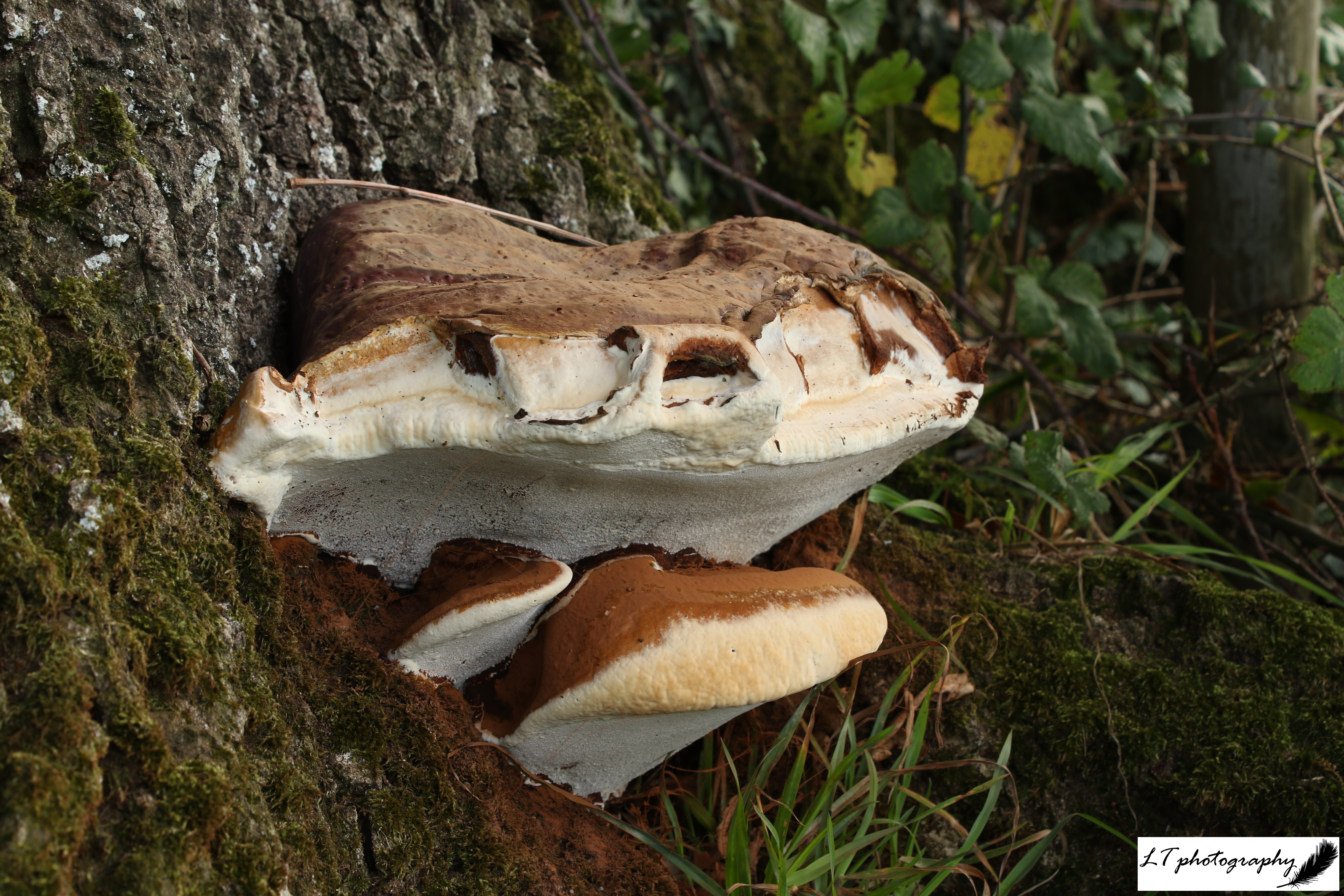
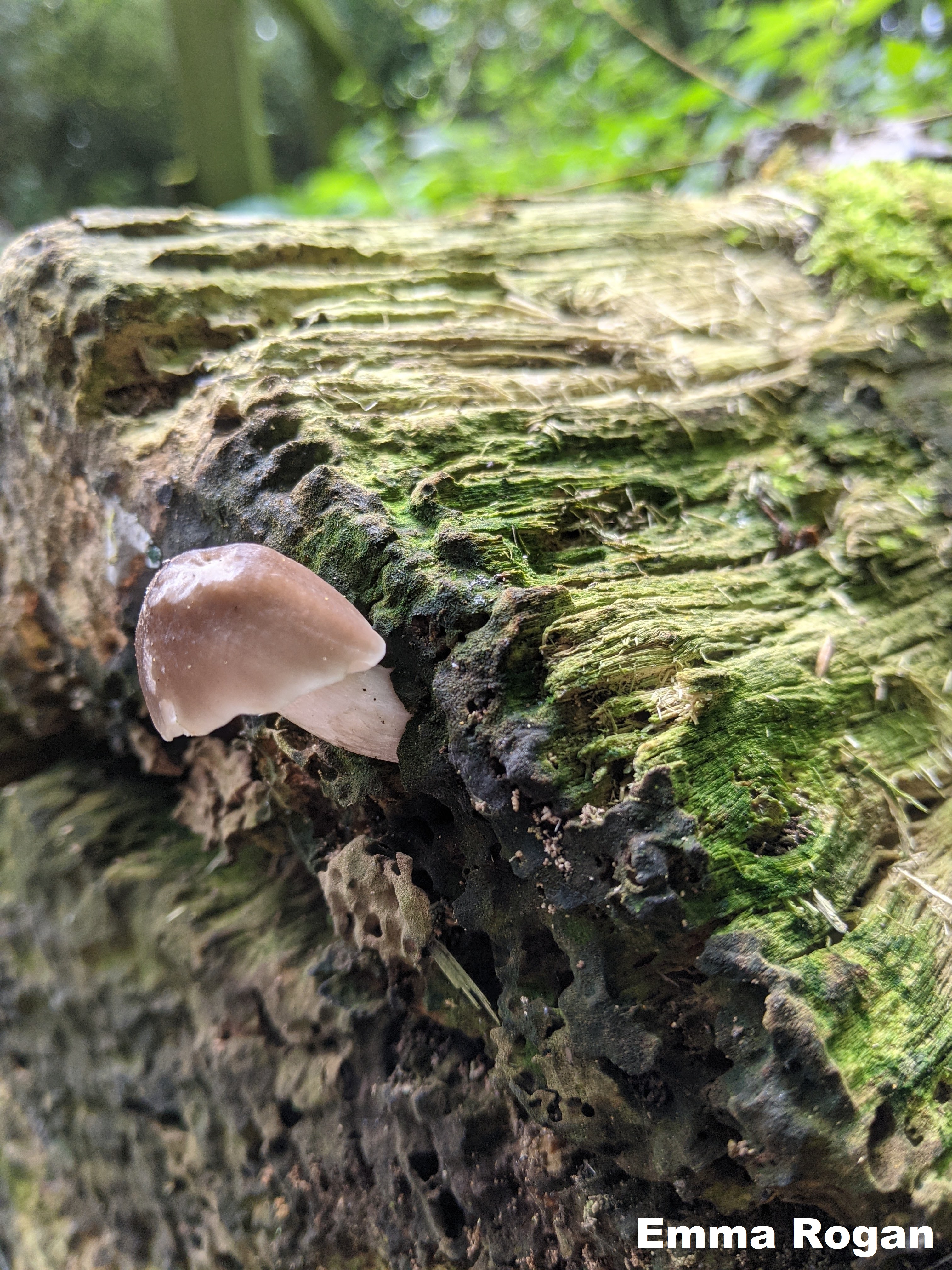
The warm and damp weather also provided the perfect conditions for fruiting fungi, an area where my knowledge is yet to fledge. Two species I did learn on my exploration though, were the pale, peeling Shaggy Inkcap and the unusual hulking forms of Bracket fungus, possibly Southern. Looking for fungi showed me that every day is a learning day and that our knowledge is ever expanding!

To round off my autumn adventure, I picked some apples from our apple trees to make a family favourite, an apple cake. The cake was simple to make, but went down a treat!

Emma’s Urban Plants and Fungi Adventure

For me, no time of the year evokes a feeling of new beginnings more than September. Perhaps it’s a throwback to when September meant the start of a new school year, but the changing of the season always lifts my spirits. Autumn is the season of hot chocolate, curling up with a book, re-watching Gilmore Girls for the fourth (okay, sixth…) time, and wrapping up warm to head out for a walk in the crisp autumn sun! Which, on September 26th, is exactly what me and my partner did.

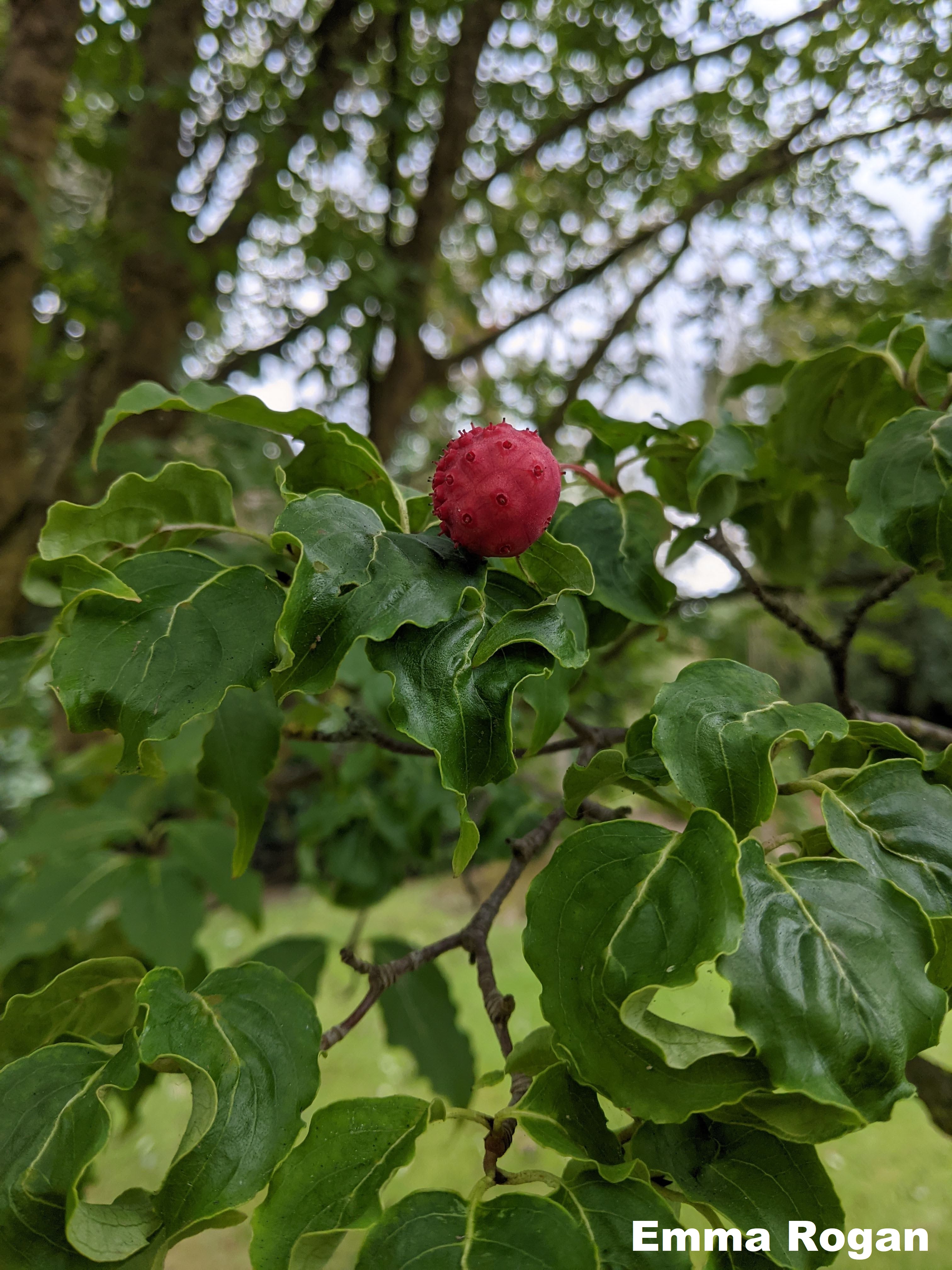
Our first stop, as usual, was the beloved Parsonage Gardens in Didsbury. This beautiful walled garden provides a home for an amazing variety of trees, looked after by a dedicated team of volunteers. My favourite is the old mulberry tree at the entrance to the gardens, but we also found a corkscrew hazel, a yew tree with bright red berries, some bamboo, a sargent’s rowan tree, a Chinese dogwood, and some ferns! I love ferns because of how ancient they are. With a fossil record dating back to the middle Devonian (383-393 million years ago) they are one of the oldest groups of plants on Earth. A piece of ancient history on our doorstep!

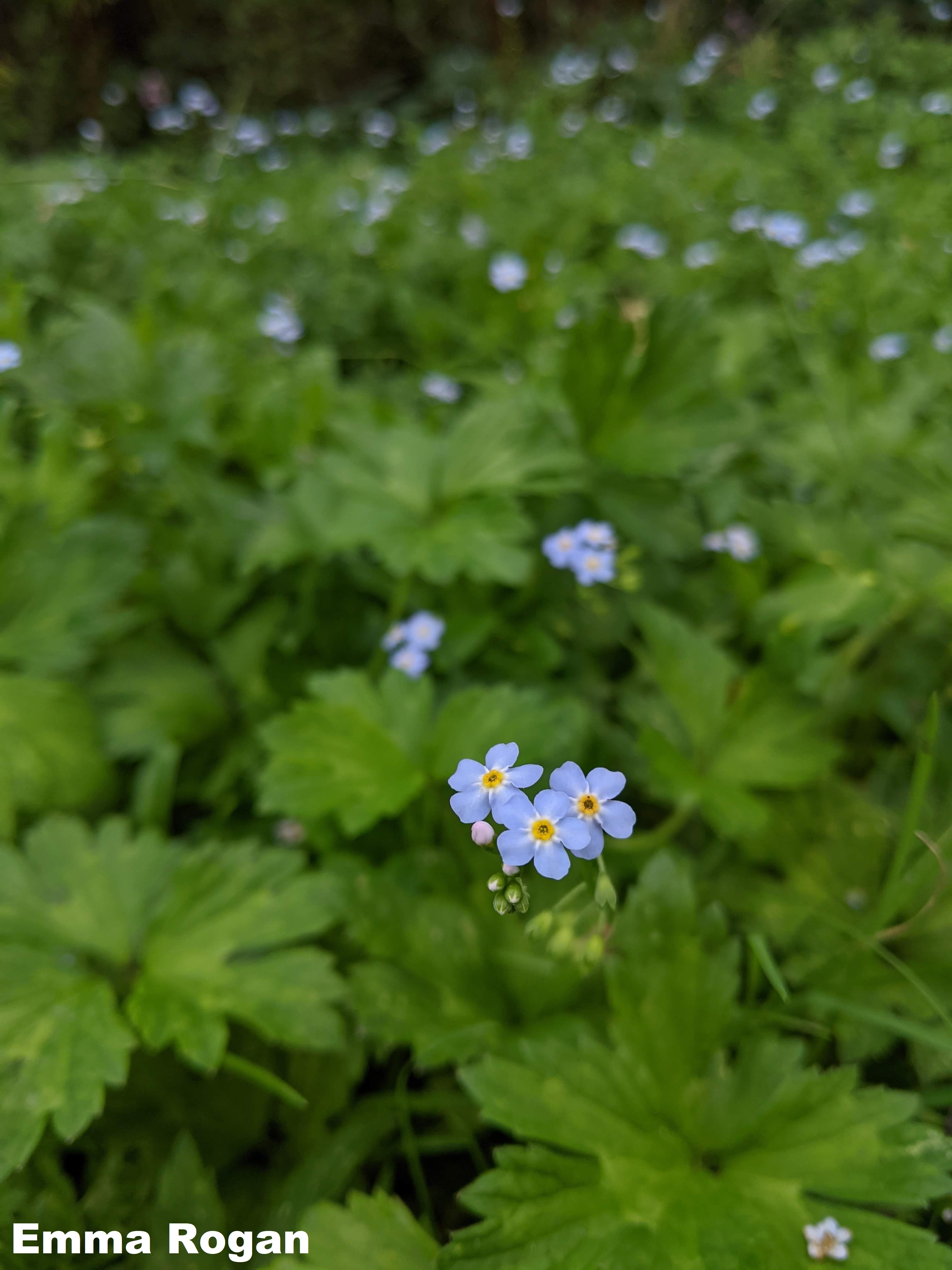
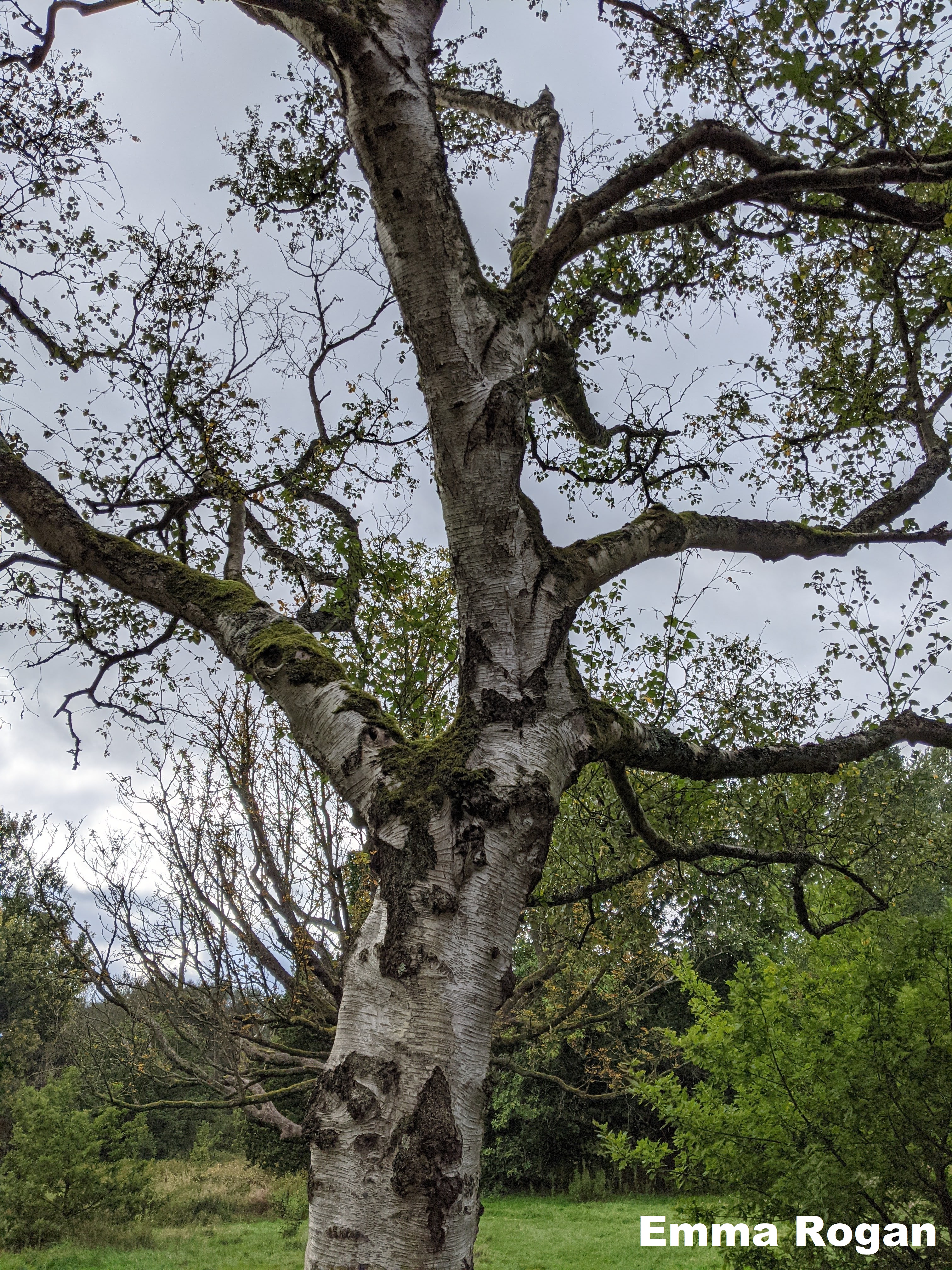
As we walked down the hill to Fletcher Moss Gardens, we passed the Church of St James on Stenner Lane. St James is the second oldest church in Manchester, dating back to 1275. I paused for a moment to admire the ivy spilling over the walls surrounding the church garden, before continuing on. The species we encountered as we wandered through Fletcher Moss ranged from the small (forget-me-nots) to the large (silver birch). We also found another rowan tree, the bane of witches! Rowan has an illustrious history in British folklore as red was considered the best colour for fighting evil, so it was planted by houses so that it’s red berries could protect the occupants from witches.

Our walk took us further into Stenner Woods, where we were on the lookout for fungi. This is not my area of expertise, but I’ve done my best to identify what we found! Growing on the side of a fallen log was a small mushroom which I think is a type of inkcap, and on top of another log was a large, flat mushroom with a white underside which I think is a giant polypore. Like Laura I spotted some bracket fungus, although the fungus looked to be past it’s best so I was not sure of the species! While searching through the woodland for fungi, I also came across an abandoned spider’s web adorned with raindrops which looked like crystals.

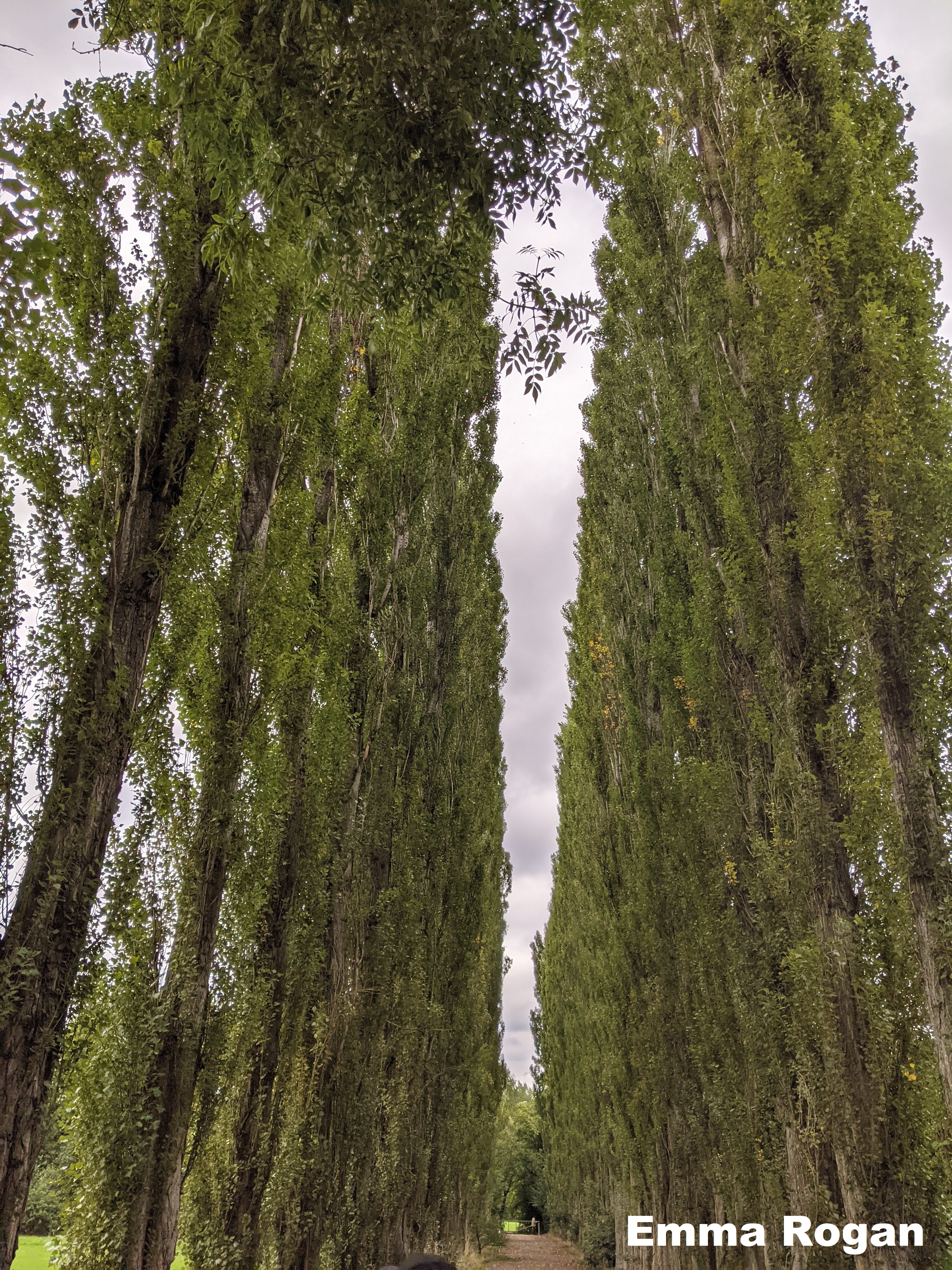
We ended our plant and fungi hunt by walking through the iconic poplar grove which leads from the river back to Stenner Lane. I had a lovely time on my autumn adventure, but I think I need to brush up on my fungus identification skills!

Autumnal Plants and Fungi

Autumn is usually defined as the season between summer and winter when leaves change colour and fall, the weather becomes cooler, and a time of full maturity is reached, such as crops becoming ripe. Autumn is so much more than this though, with it often being a favourite time of year for many, encapsulated in a feeling of cosiness, plentifulness and change. For Laura at this time of year, the sunsets are spectacular, the nights full of starry skies, and surroundings full of natural food on offer. For Emma, frost sparkles on bright leaves, the morning air becomes crisp, and the smell of hot chocolate is a welcome aroma.

This season is also a time for plants and fungi to reach the ends of their annual cycle and go out with a bang. As Laura and Emma found, autumn is a vibrant season before winter’s slumber descends on the landscape. It was interesting to see some variation between the two locations though, such as in Manchester more exotic species thrive and autumn marches forward earlier than in Dorset. This would be due to the naturally milder climate found in an urban setting, but temperatures tending to be colder in the North-West than the balmier South-West.

Still there were treasures to be found in both locations, with plants and fungi taking centre stage. Colourful, bountiful and spectacular, such species capture the imagination and provide a lifeline in nature. Engulfed in the cold and storminess of winter, we can now look back on the golden glow of autumn days with a smile, before we begin to look forward to the return of new life once again.

Rural Dorset vs. Urban Manchester: Magical Minibeasts

Series in collaboration with guest writer Emma Rogan

Rolling green hills, trees sprawling across the landscape, hedgerows thick with plant and animal life, flowers growing up here and there, and rivers flowing through it all. The light of an orange sunset cast out over the city by a soaring glass tower block, the lonely lights of a crane against an evening sky, busy streets lit up for Christmas filled with music and laughter. Everyone’s idea of idyll varies, but for nature any landscape could provide a home. Let us explore.

Growing up within her family’s 250 acres of land, for naturalist Laura, rural Dorset is home. In what may be called the ‘middle of nowhere’ for an urban adventurer, Laura grew up alongside wildlife from barn owls and hares to grass snakes, damselflies, and oak trees. With parents that nurtured her to take an interest from a young age in looking after the wildlife they saw on their doorstep, this landscape has made her the conservationist and scientist she is today. Now her home provides inspiration for her photography and writing, including her Laura’s Wild World blog. Check out her blog here.

Guest for this series and wildlife enthusiast, Emma grew up in Manchester and will always be a city girl at heart. As a child she loved to watch nature documentaries and daydreamed about faraway places, but over time she fell in love with the wildlife that also calls Manchester its home. Emma has spent the past year documenting the lives of the insects, birds, squirrels and foxes that stop by her little rectangle of garden, and exploring the local woods alongside the River Mersey with her mum. Check out her page here.

In this brand new blog series, we take a look at the local wildlife that can be found in two very different home locations. Though at a contrast with each other, we will see how nature can make its home in both rural and urban landscapes, and the wealth of life that can be explored on anyone’s doorstep. At a time when it is so important that we protect and conserve the natural environment around us, let us inspire you as we take an adventure to explore a smaller side to nature.

Laura’s Countryside Minibeasts

Today was a warm and breezy day, perfect for walking through my family’s Dorset farmland in just a T-shirt and shorts. It was the kind of day though when you could feel the first breath of autumn in the air, kept at bay by the bleaching late-August sun. Pushing the cooler days to come to the back of my mind, I set out to try to see what smaller creatures I could find out in nature.

Journeying along tracks, through grass fields, over rivers, through tall maize, past a chalk ridge, and back home to my garden, my quest bore more and more fruits along the way. With every turn I got to experience a colourful and spectacular diversity of butterflies from small coppers to peacocks, got to be serenaded by grasshoppers singing their chirping tune, and to be joined by crane flies lazily hanging in the hazy golden light as I walked along on my own.

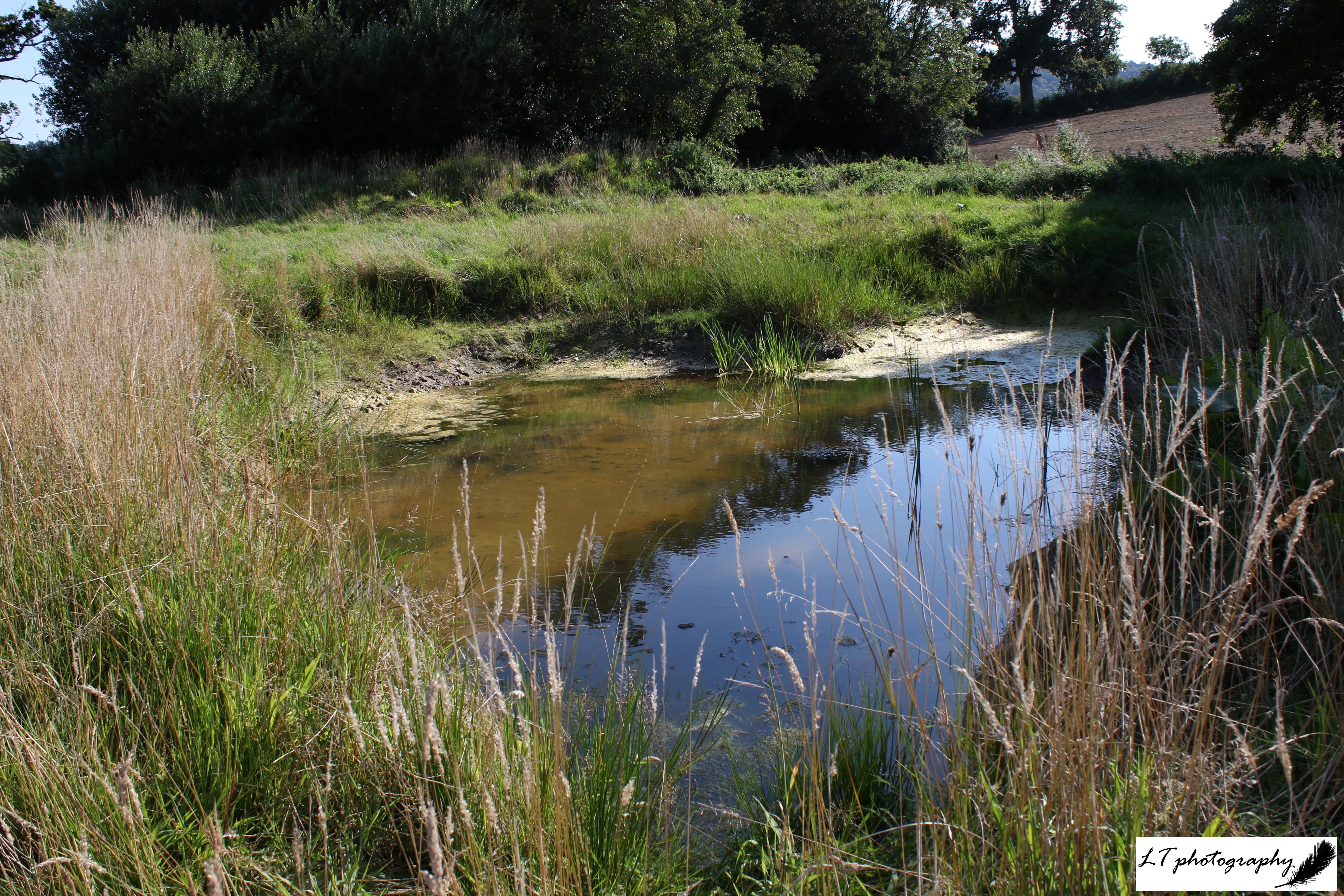
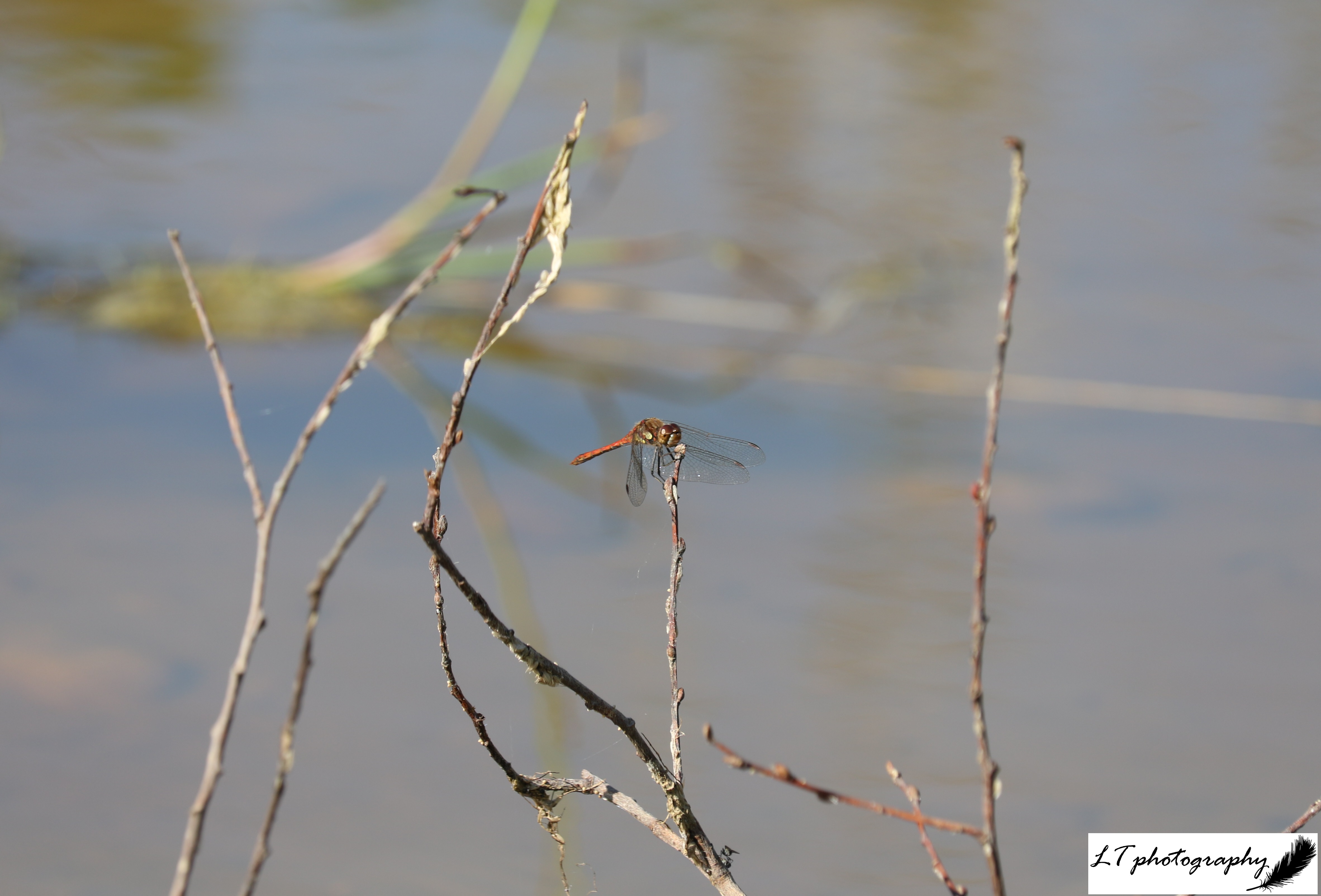
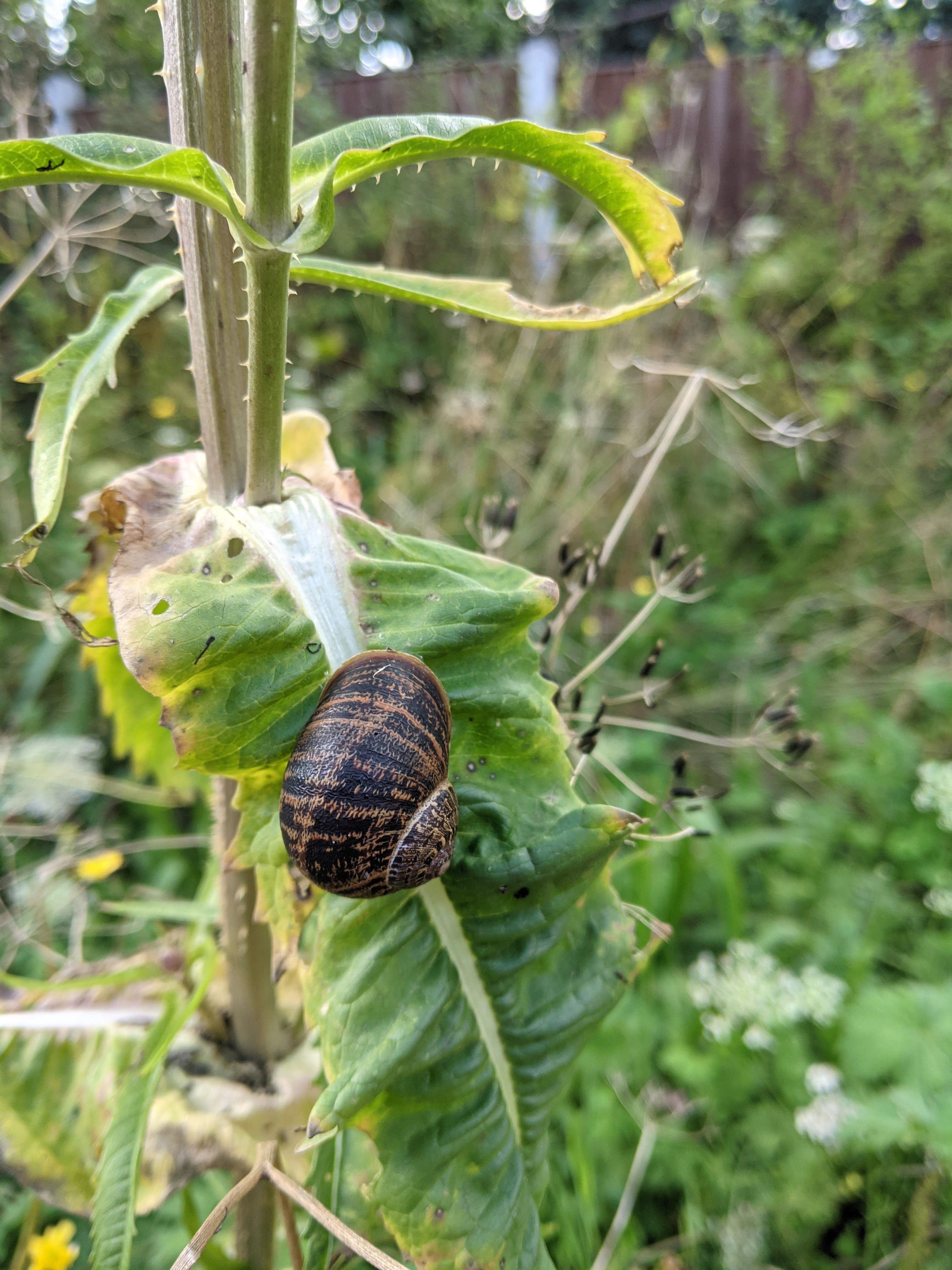
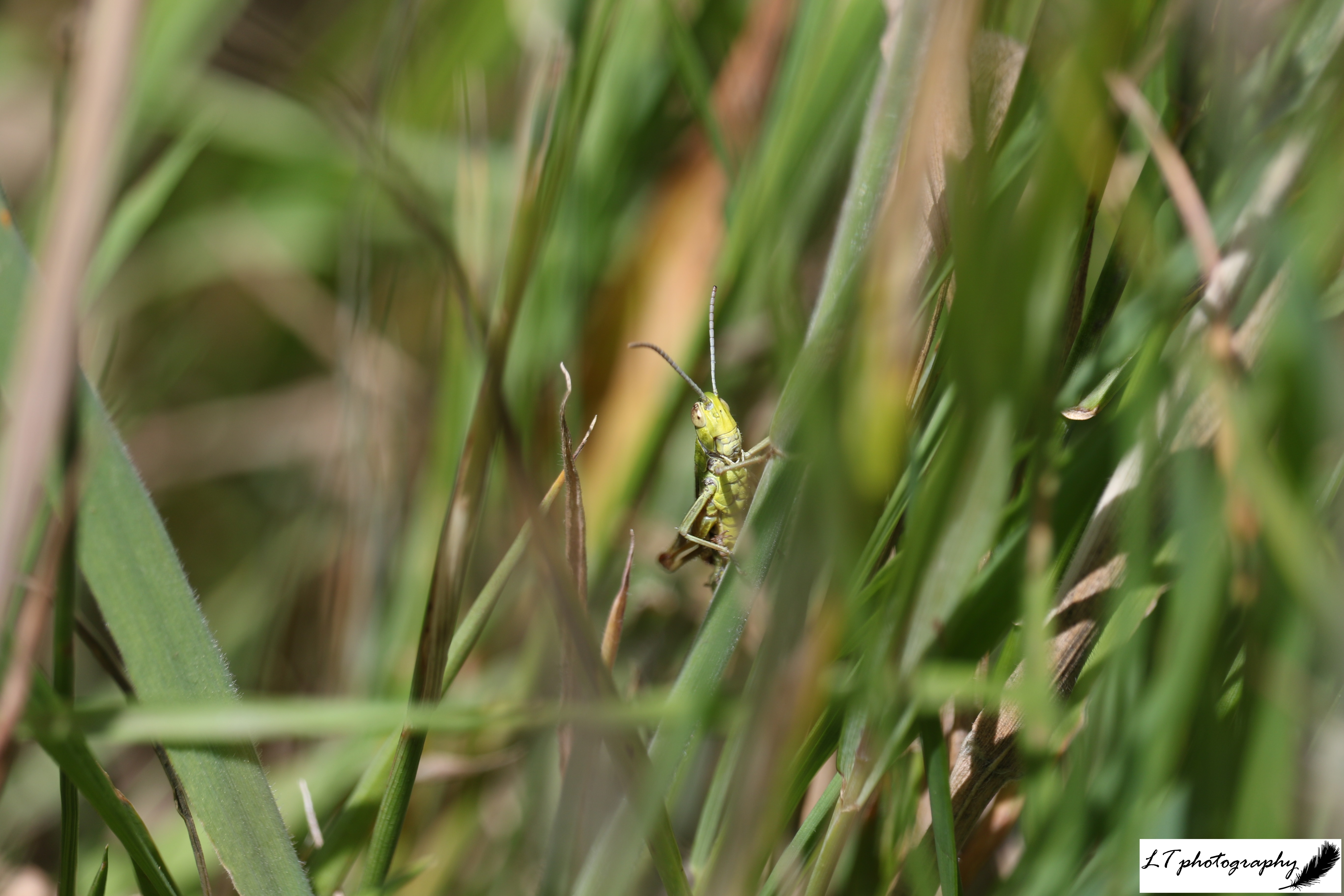
As my minibeast list grew, I stopped here and there to take a closer look, such as to gaze at beautifully banded snails hanging from nettles, or to photograph minibeasts, such as the curious looking froghoppers making maize leaves their home. I was loving it! The main highlight of my adventure though, had to be discovering a treasure trove of dragonfly and damselfly species on and around the pond in our conservation field. One minute I would see the golden-brown of an unknown dragonfly fly past me, before catching sight of common blue demoiselles dancing in the air and red-veined darters defending territories over the water. I was amazed at how many beautifully-coloured species I saw in such a short space of time!

When I set out on my minibeast adventure, I was not entirely sure what I would find at this late stage of August. Whatever I thought though, by the end I was having a really great time, seeing some cool minibeasts ranging from busy honey bees enjoying a medley of flowers to many butterflies adorning buddleia bushes like gemstones. It really brought home that you never know what you might find until you open your eyes to the world around you. I am no invertebrate expert, but I was still able to take in all the wonders this mini world had to offer. It was a great break from life, though more importantly, a game changer!

Emma’s Minibeast Hunt in the City

Unbelievably, the afternoon I’d planned to go on my Minibeast Hunt was beautifully warm and sunny with a slight breeze. This is a rarity in Manchester! I gleefully pulled on my walking boots and headed out with my other half to Fletcher Moss, a nearby park and woodland alongside the River Mersey. We spent an hour wandering through the Parsonage Gardens, down to the river (down, down, doooown by the riveeeer – any Baldur’s Gate 3 fans?), and through the woods, making a brief stop for ice cream along the way!

The Old Parsonage and it’s beautiful walled garden was left to the citizens of Manchester by Alderman Fletcher Moss in 1919, and has since become a much-loved community space which is carefully looked after by volunteers. The garden was buzzing with pollinators drawn in by the variety of flowers, the echinops was particularly popular! It’s always lovely to see bees out and about in Manchester, as bees are the symbol of our city.

We then walked down the hill and took a winding path towards the river. The first stop on our riverside walk was Simon Bridge, a green iron bridge across the River Mersey which was gifted to the people of Didsbury by Henry Simon in 1901. Plenty of bees, wasps and hoverflies flew past us as we walked, but our second stop came when we heard what we thought was the singing of a grasshopper! This necessitated ten minutes of searching and more than a few curious glances before we found the little guy sat solemnly on a blade of grass.

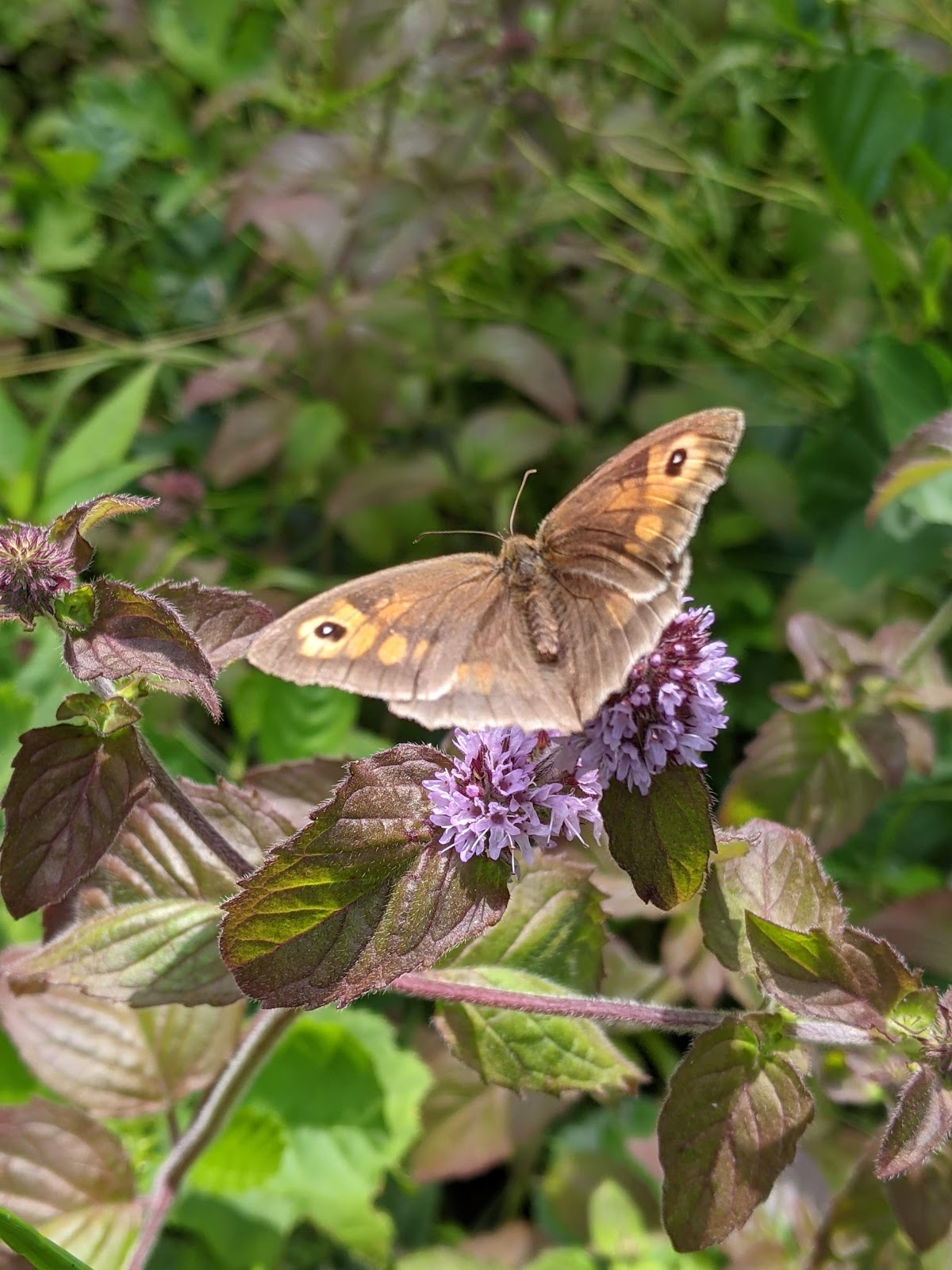
As we wandered on, our path took us away from the river and back up into Stenner Woods, a small area of woodland in the original Mersey Valley flood plain. It was at this point that a dragonfly decided to join us! Unfortunately, he wouldn’t stay still long enough for me to take a picture. We also came across a snail clinging to a thistle, and a ladybird nestled between the spines of a teasel, and a very hungry group of mint leaf beetles. Butterflies were noticeably absent, as we spotted only one female meadow brown butterfly during our walk. Our final stop was at a small pond area, where we saw what seemed to be hundreds of pond skaters!

I’ve been fond of bees for quite a few years (I even wrote my dissertation on bees!), but I don’t often take the time to pause and notice the other minibeasts that live in my local area. This minibeast hunt was a great opportunity to challenge myself to look closer, and I felt very lucky to gain a snapshot into the lives of these smallest of animals.

Minibeasts

When people think of animals they usually think of lions, bears or elephants, for example, forgetting the smaller less observed animals in nature. The minibeasts we walk past each day though, can be equally majestic and awe-inspiring. Butterflies in spectacular colours, weird and wonderful froghoppers, or wriggling hard-working earthworms. All play an important role in nature, but tend to go unnoticed and be underappreciated.

On both Emma and Laura’s minibeast adventures though, they found taking the time to focus on the smaller things eye opening. They might live in very different areas, but the green spaces they both have access to show an amazingly similar host of minibeasts. From grasshoppers to dragonflies, amazing minibeasts can be found anywhere. By challenging yourself to look closer at the smaller things in life, you can learn a lot, be provided with inspiration and even experience a moment of distraction and escape. Minibeasts are colourful, unusual, and awe-inspiring, so why not stop and find out what you could discover too?

How to… Identify British Tree Species

A majestic oak standing tall in the landscape, watching as centuries pass it by. A silver birch with drooping branches, embellished with leaves, slowly blowing in the breeze. An alder leaning over the edge of a river, spreading its branches to shade the bank beneath it. From capturing the imaginations of children to symbolising strength and life for adults, trees in all their forms are an important part of the landscape and culture within Britain.

With over 70 species in the UK alone, trees come in all shapes and sizes, and can be found anywhere from our highlands to our cities. Trees colonised Britain following the last glaciation, and have since become intertwined with our very own history. They provide us with so much, including resources, such as medicines and building materials, improved air quality, homes for wildlife, and even cultural services, such as therapy through forest bathing. Thus, they are a very important part of our environment!

Now, as our reliance on trees grows and the threats to them increase, it is surprising how little people know about trees in general. For example, the average Brit is unable to name more than five tree species, and a third even believe a money tree is a real species! With two thirds of the public now wanting to learn a little more about the trees in their area, here’s my handy guide to help you identify 10 common tree species that can be found in the UK.

Tree Species

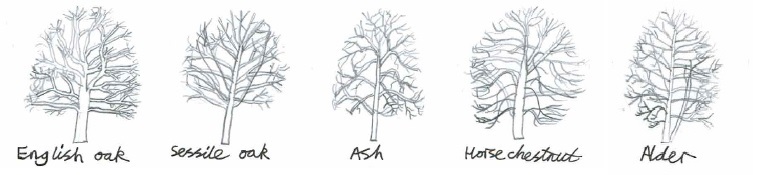
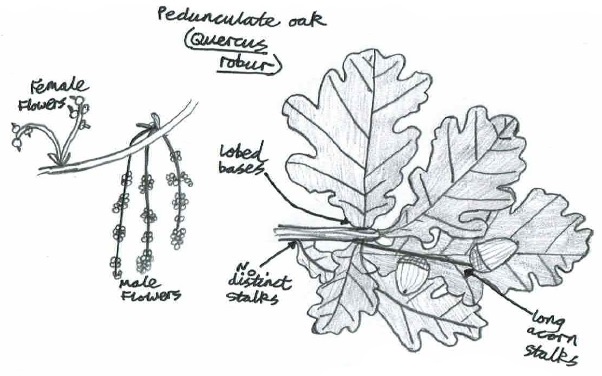
1. Pedunculate or English Oak (Quercus robur)

  • Family: Fagaceae – related to species such as beech and sweet chestnut
  • Origin: Native
  • Shape and size: Up to 40m tall, upward-reaching and broad crown
  • Stems and twigs: Massive rugged grey-brown trunk
  • Leaves: 10-12cm long, oblong, and lobed, turning brown in autumn
  • Flowers: On the same tree and flowering April-June. Male flowers= yellow-green catkins; female flowers= pinkish and on short stalks
  • Seeds: Produces the familiar acorn, with scaly cups and clusters carried on long stalks
  • Range & habitat: Widespread and common throughout Britain, found in habitats ranging from deciduous and mixed woodlands to open grassland and hedgerows

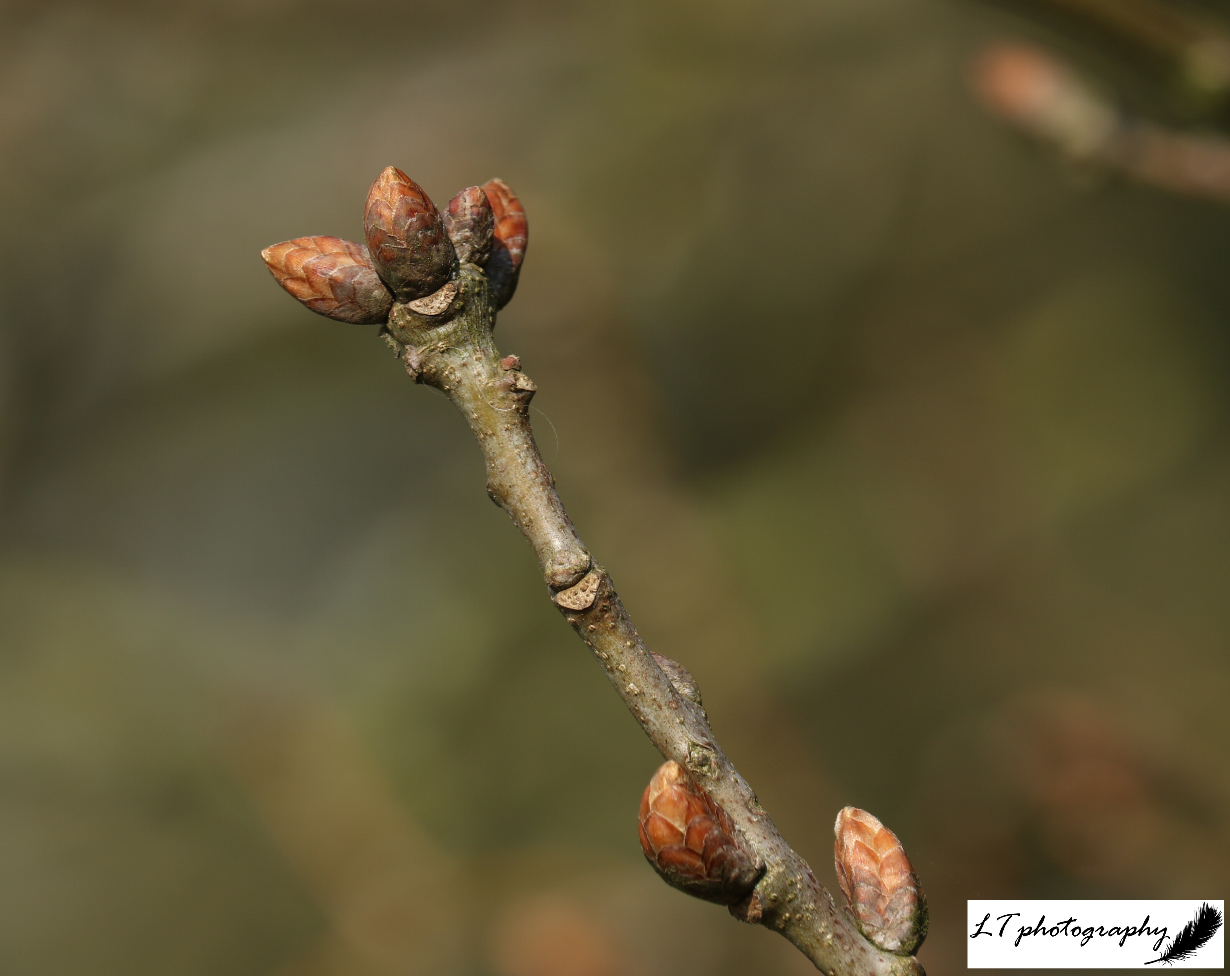
In Winter: Look for rounded buds that have overlapping scales and are found in clusters at the end of each shoot

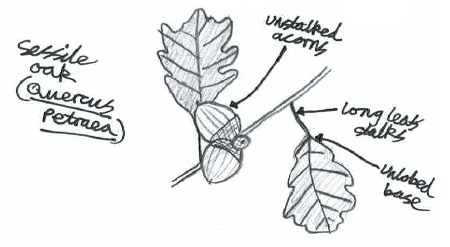
2. Sessile oak (Quercus petraea)

  • Differs to Pedunculate Oak in that the leaves taper to an unlobed base and have long stalks.
  • Buds in winter have more scales (more than 20).
  • Also, the clustered acorns are almost stalk-less with downy cups.
  • Narrower in shape, prefers more acid soils, and is more common in the West of Britain.

3. Common Ash (Fraxinus excelsior)

  • Family: Oleaceae – related to olive trees and lilac
  • Origin: Native
  • Shape and size: Tall and domed with widely spaced branches, growing up to 35m
  • Stems and twigs: Bark is pale brown to grey, becoming rugged with age
  • Leaves: Opposite and toothed, with 9-13 stalked leaflets that have long tips
  • Flowers: Male and female flowers typically grow on different trees, but both have purple flowers growing in clusters before the leaves
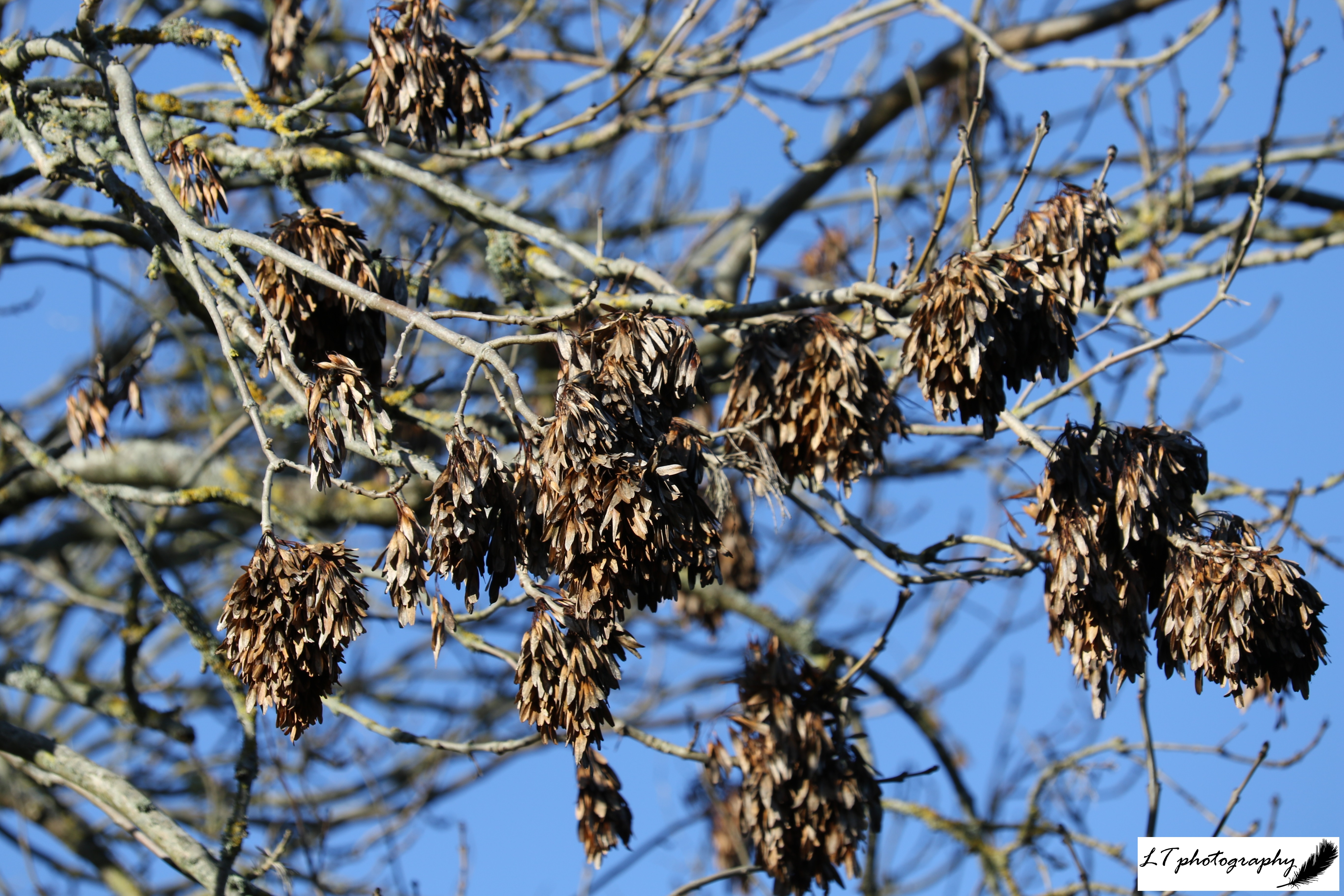
  • Seeds: Single seeds with a long wing (known as keys)
  • Range & habitat: Woods and hedges, in particular flourishing on a lime-rich/well-drained soil

In Winter: Smooth twigs with distinctive hairless black buds, and ridged bark on adult trees that resembles a diamond pattern

4. Horse Chestnut (Aesculus hippocastanum)

  • Family: Sapindaceae – related to lychee and maples
  • Origin: Non-native (introduced in the 1500s from the Balkan peninsula in southeastern Europe)
  • Shape and size: Arching branches, usually turned up at the ends, growing up to 35m tall
  • Stems and twigs: Bark is scaly and red-brown or dark grey-brown
  • Leaves: Five to seven large, thick, stalkless leaflets with pronounced veins and a long, tapering base
  • Flowers: Showy spike (candle) of white flowers with a yellow to pink spot
  • Seeds: Spiny fruit contains one or more shiny conkers
  • Range & habitat: It has now become a widespread and common sight across Britain, tolerating a wide range of soils

In Winter: Smooth bark and sticky buds

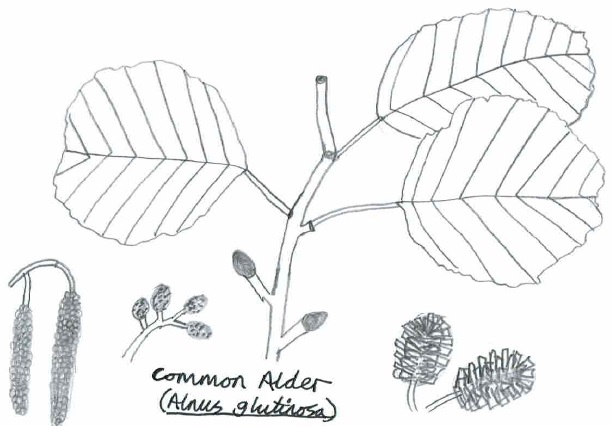
5. Common Alder (Alnus glutinosa)

  • Family: Betulaceae – related to hazel and birches
  • Origin: Native
  • Shape and size: Regular branching and conical shape, growing up to 25m
  • Stems and twigs: Dark brown bark that is often rough and sprouts young shoots
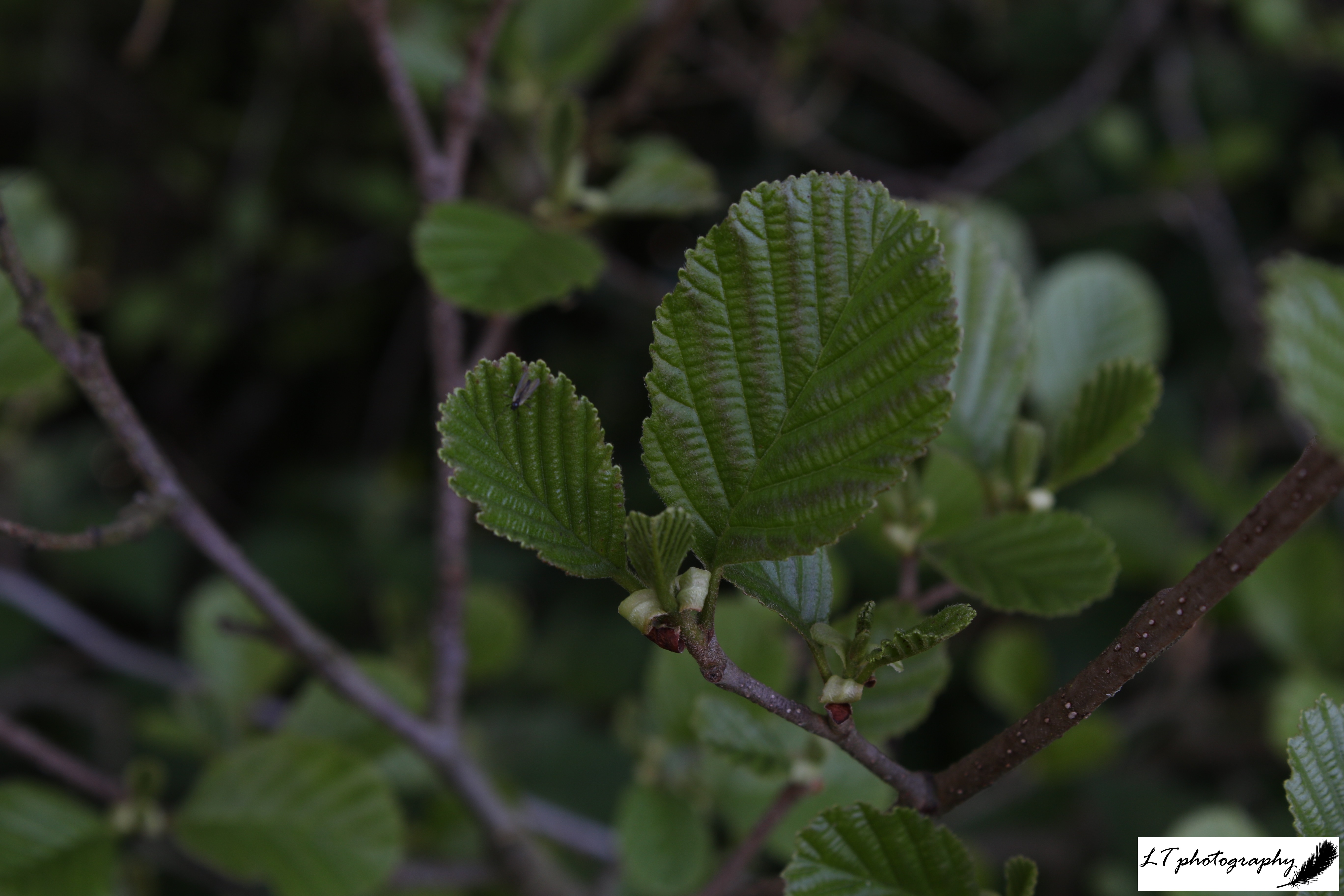
  • Leaves: Alternate, rounded, sometimes notched at the tip, and dark green
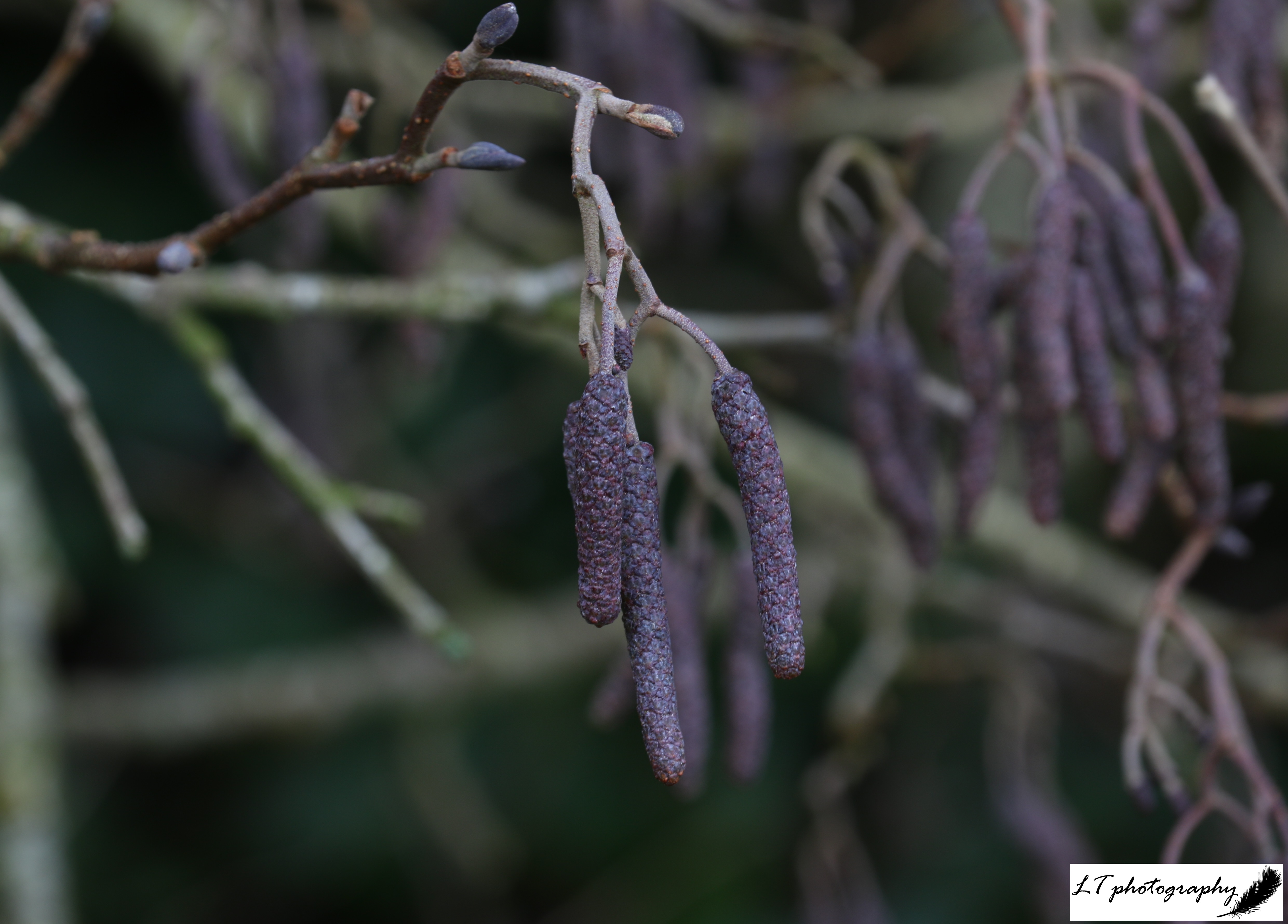
  • Flowers: Male and female catkins grow on the same tree, before the leaves. Male catkins= lambs’ tails; female catkins= small and egg-shaped
  • Seeds: Female catkins turn into a small cone, drying from green to brown, releasing the seeds. The seeds have corky outgrowths that keep them afloat on water
  • Range & habitat: Thrives in wet ground and is often seen lining the banks of rivers and streams across Britain

In Winter: Appears dull purplish due to purplish buds

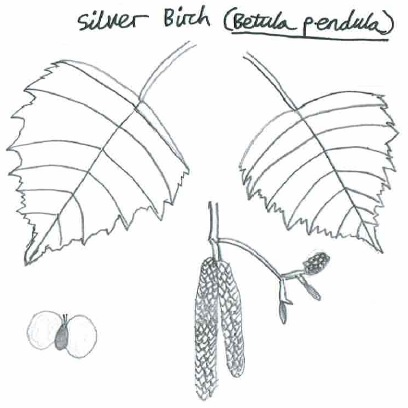
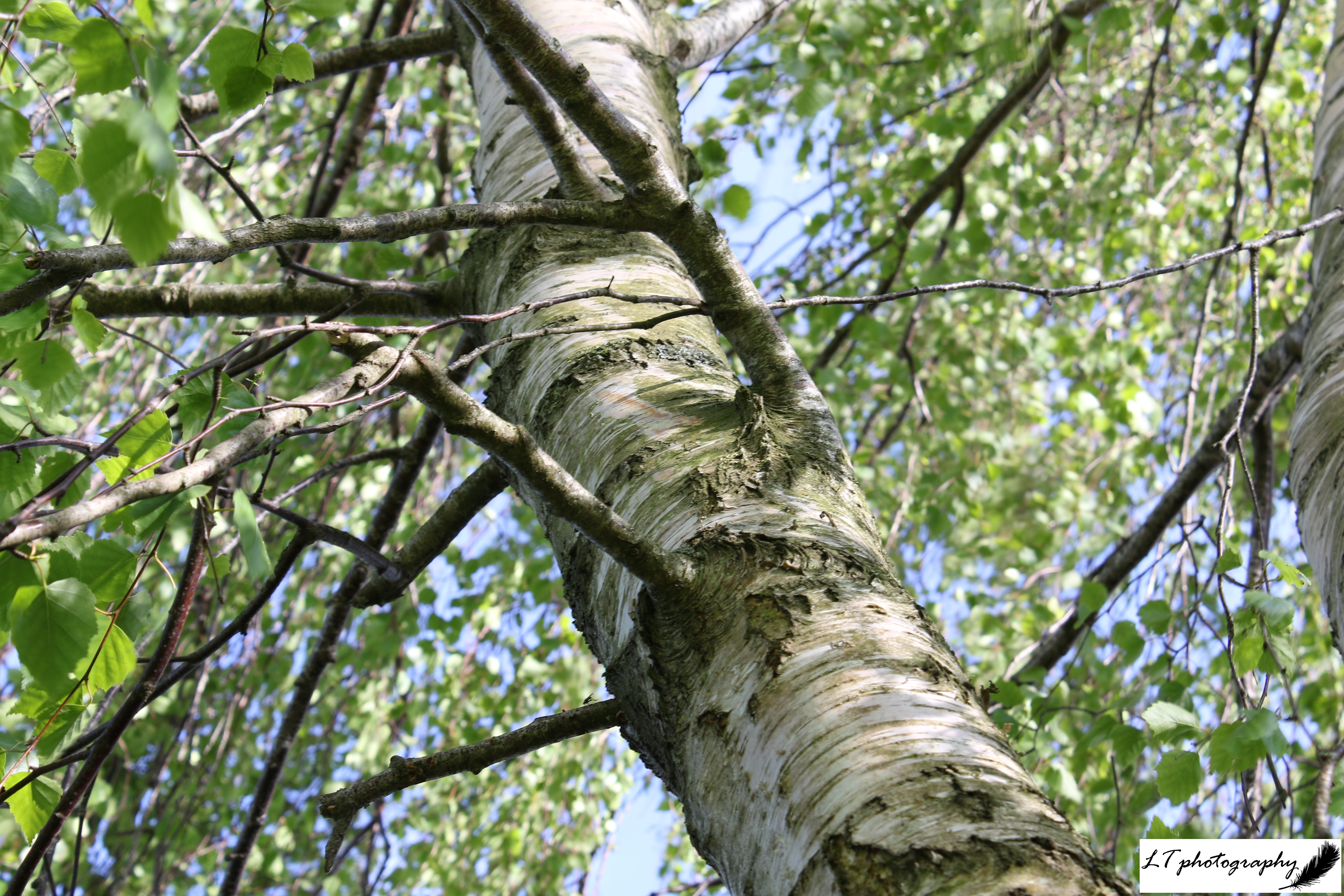
6. Silver Birch (Betula pendula)

  • Family: Betulaceae – related to alders, hazels and hornbeams
  • Origin: Native
  • Shape and size: Erect with pointed crown and drooping branches, reaching up to 30m
  • Stems and twigs: Young bark reddish, maturing to black and papery-white bark. Twigs smooth with small dark bumps
  • Leaves: Alternate, triangular and shiny, on slender stalks. Edges are ragged, with smaller teeth between larger main teeth
  • Flowers: Male catkins= purply-brown; female catkins= smaller and pale green
  • Seeds: Two winged and wind-borne, released in winter
  • Range & habitat: Form natural woodlands on light, dry soils throughout Britain

In Winter: Distinctive shape and bark

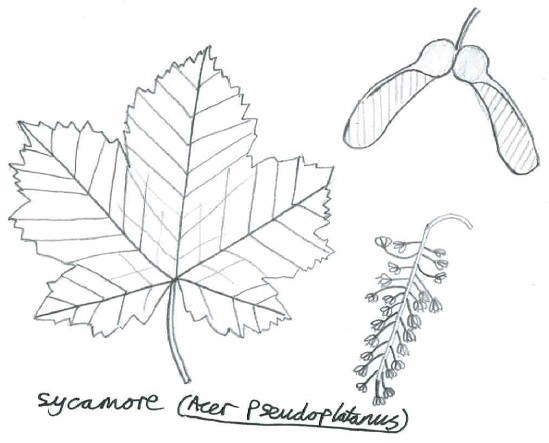
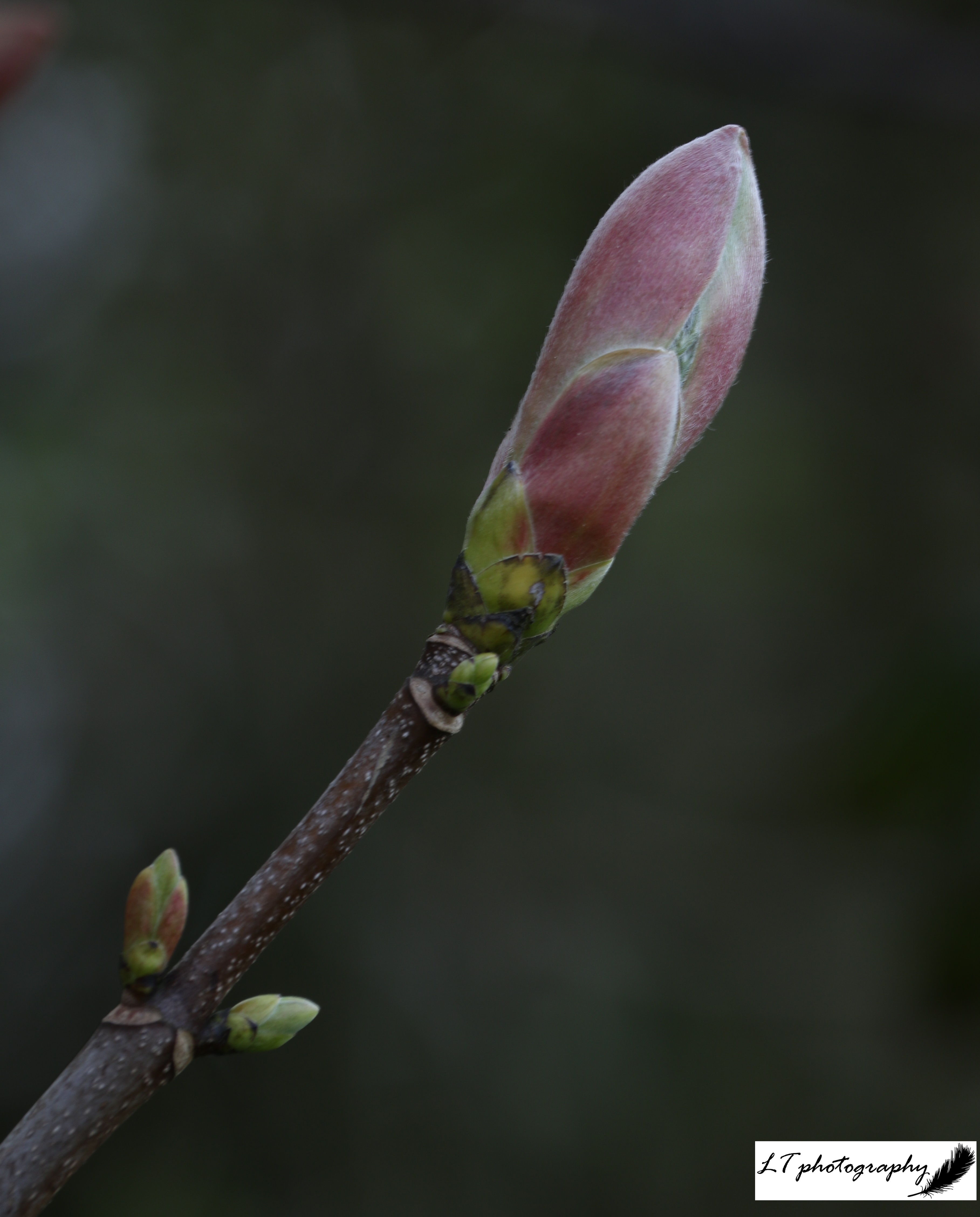
7. Sycamore (Acer pseudoplatanus)

  • Family: Sapindaceae – related to maples and horse chestnut
  • Origin: Non-native (introduced from Europe either in the 1500s or by the Romans)
  • Shape and size: Massive domed outline, with dense foliage and heavy lower branches, growing up to 35m
  • Stems and twigs: Grey fissured bark ages to pinkish-brown
  • Leaves: Opposite, five-lobed, and upper side dark green
  • Flowers: Greeny-yellow flowers in hanging clusters appear with the leaves
  • Seeds: Hairless keys in right-angled pairs
  • Range & habitat: Grow vigorously in all parts of Britain, being widely planted on their own for shelter or in woodlands and hedgerows

In Winter: Distinctive shape and bark

8. Wild Cherry (Prunus avium)

  • Family: Rosaceae – related to roses
  • Origin: Native
  • Shape and size: Pyramidal shape, reaching up to 30m
  • Stems and twigs: Shiny, red-brown bark peels in horizontal strips
  • Leaves: Alternate and oval with long points and regular, forward-pointing teeth, and two conspicuous red glands at the top of the stalk
  • Flowers: White flowers (blossom) appear before the leaves in small, loose clusters
  • Seeds: Produces round, red cherries
  • Range & habitat: Native throughout the UK, being found in woodlands and hedgerows

In Winter: Distinctive bark

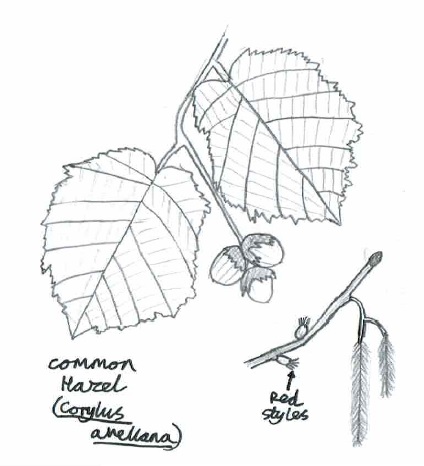
9. Common Hazel (Corylus avellana)

  • Family: Betulaceae – related to birches, alders and hornbeams
  • Origin: Native
  • Shape and size: Many stems rise from the ‘stool’, which if left uncut can reach 9m
  • Stems and twigs: Bark coppery brown, smooth and tending to peel
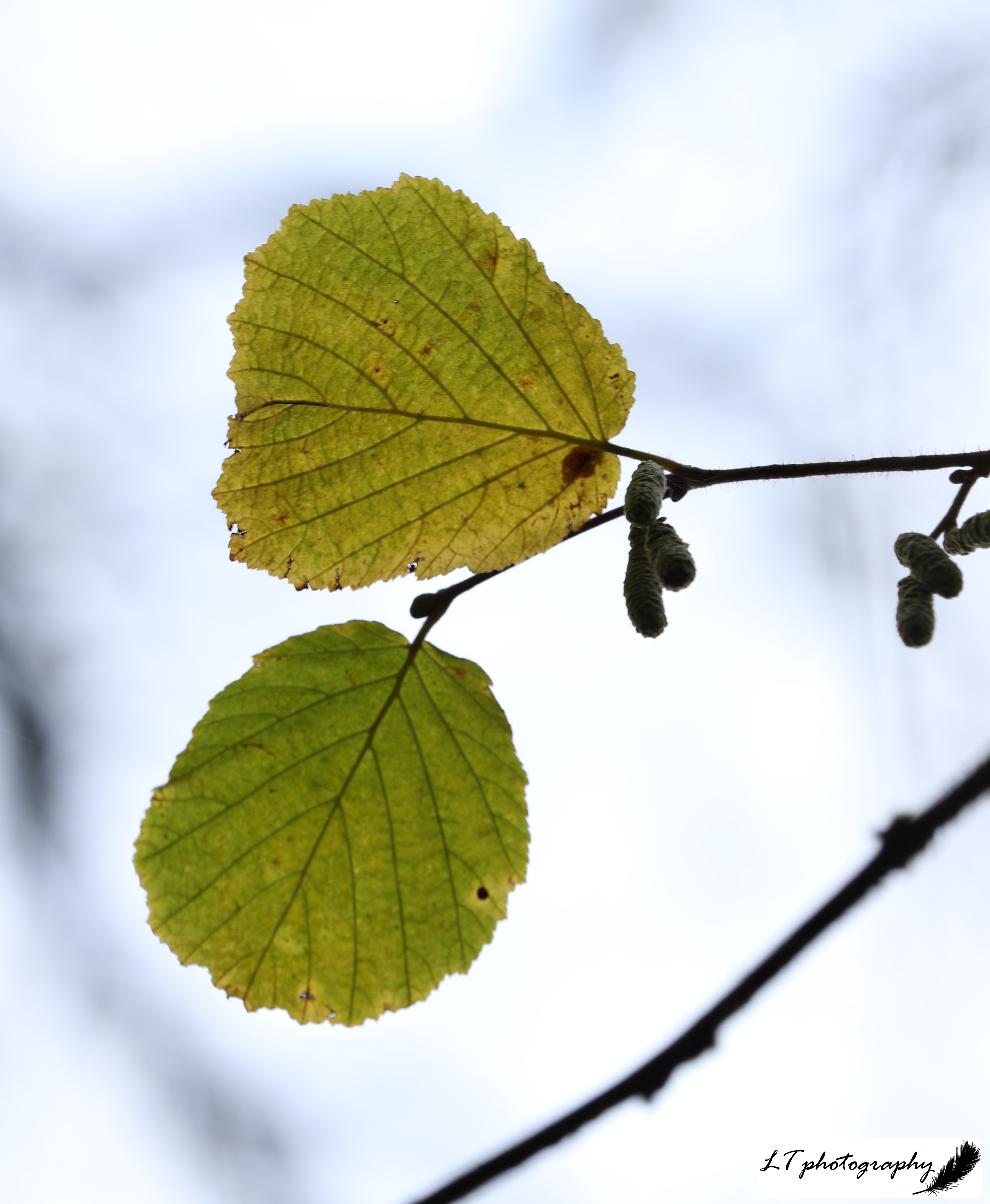
  • Leaves: Alternate, almost circular with sawtooth edges, hairy, and soft to the touch
  • Flowers: Male and female flowers found on the same tree. Male= lemon-yellow lambstail catkins; Female= tiny buds with red tassels
  • Seeds: An edible nut encased in a thick-green husk, ripening in autumn
  • Range & habitat: Grows throughout Britain, often found in woods, scrub areas, and hedges

In Winter: Distinctive shape and bark, accompanied by the male catkins from December

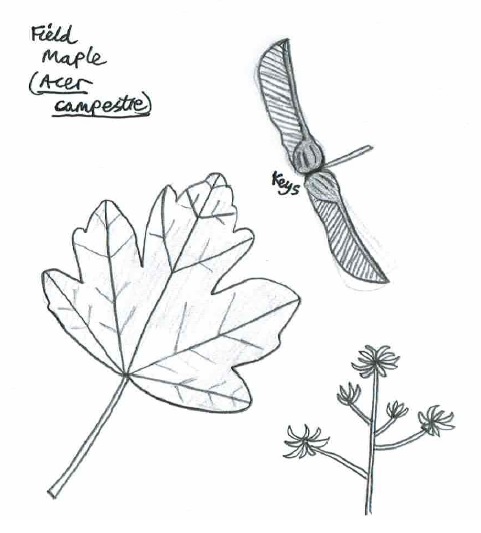
10. Field Maple (Acer campestre)

  • Family: Sapindaceae – related to lychee and horse chestnut
  • Origin: Native
  • Shape and size: Round-shaped tree with branches that droop at the end, growing up to 26m
  • Stems and twigs: Bark is grey or light brown and twigs downy, later corky
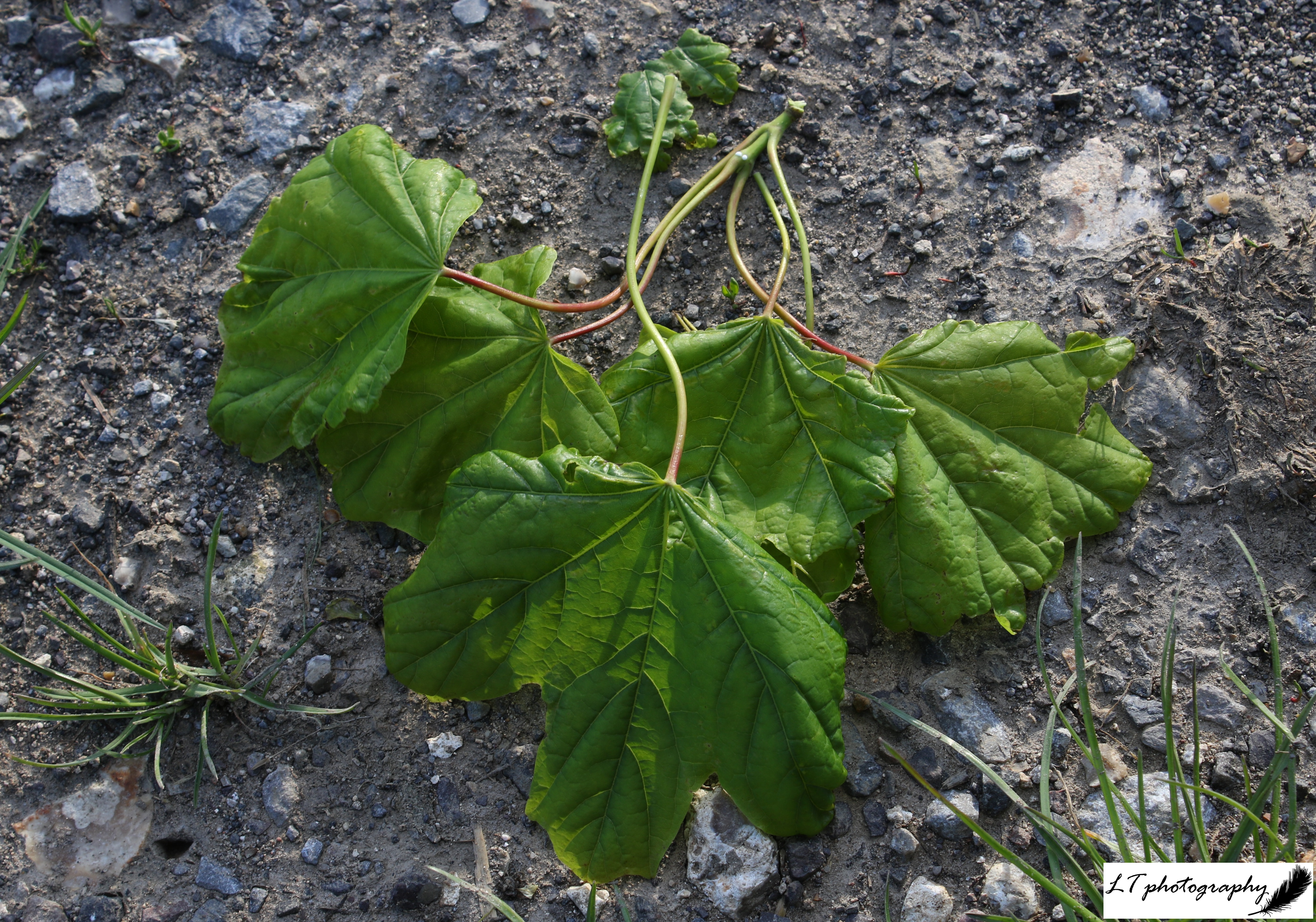
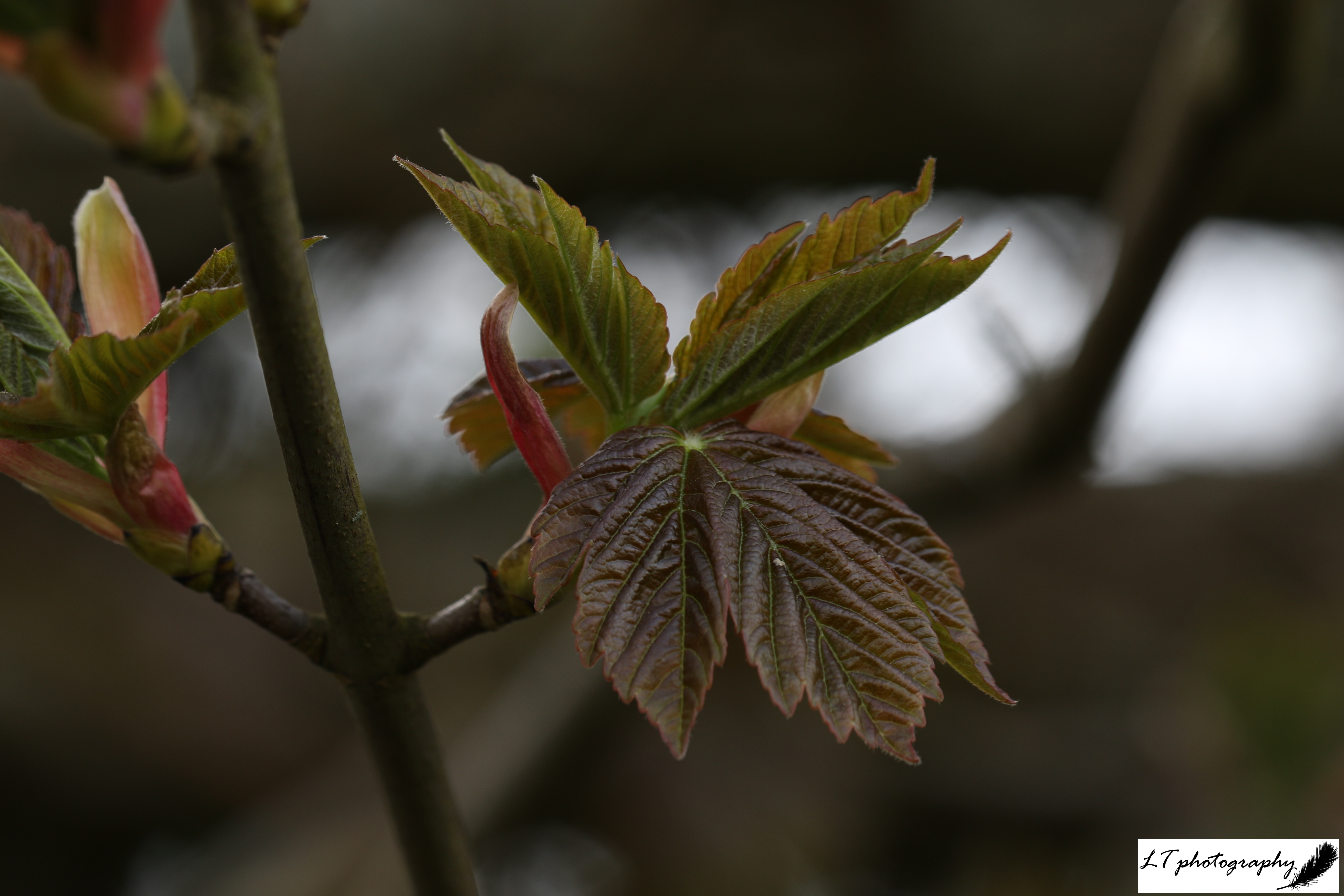
  • Leaves: Emerging leaves have a pinkish tinge, turning dull-green, and are opposite and small, with three main, round-tipped lobes and two smaller basal lobes
  • Flowers: Small yellow-green flowers form erect clusters
  • Seeds: Each pair of seed wings lie in an almost straight line, are often tinged with pink
  • Range & habitat: Frequent in England and East Wales in woods and hedgerows

In Winter: Sinuous trunk and distinctive shape

Drawings and photos all my own

How to… Bring Nature Into Your Home This Christmas

Christmas for me, alongside being all about family, friendship and feeling grateful, is deep rooted in nature. This is not unusual though, as people have been taking direction from nature during mid-winter celebrations for thousands of years. From the Romans decorating their homes with greenery to the Victorian Christmas tree, from pagans to Christians, the inspiration for how Christmas looks today has often come from the world outside our doors. For me, every year during December, I also bring nature into my home in the form of plant life. But why and how?

Plants and Christmas

During the winter and Christmas period, it’s popular for evergreens to be brought into our homes to be used as decorations. This practice has been observed for thousands of years, evolving but often holding the same symbolism and meaning. Evergreens are a traditional symbol of everlasting life due to their longevity, and were worshipped by pagans as symbols of immortality and everlasting light, being used to ward off illness and evil spirits. The bright natural colours of evergreens have also long provided inspiration for many, and still do during the cold, dark days of winter. They are a symbol of celebration and remind us that the days of spring will return in time.

Some Christmas examples include:

Mistletoe – A long history in Britain from being sacred to the druids and warding off evil spirits during the Middle Ages to symbolising healing, shelter and fertility. It was once banned from Christian churches due to its pagan links. The Victorians gave the plant its modern tradition of being hung in a doorway to kiss under, though the exact reason why we do this is still unknown.

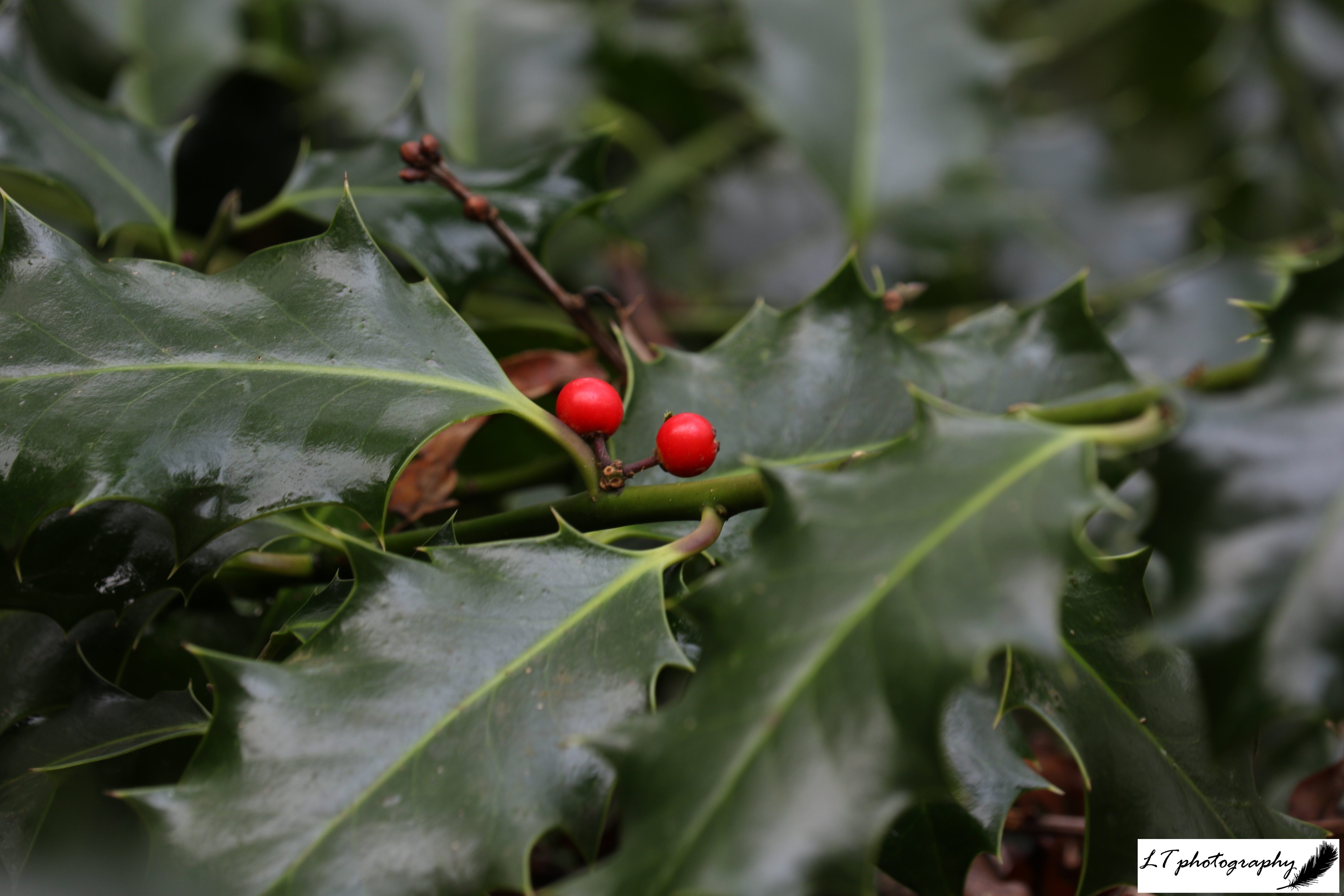
Holly – Long associated with fertility, protection and eternal life in Britain, due to being able to withstand harsh conditions. It was originally brought into people’s homes to ward off witches and malevolent spirits during the dark months, before being adopted by the Church to symbolise Jesus’ sacrifice (prickles= thorns and berries= spilt blood).

Poinsettas – Native to Mexico and brought over from America, the flowers have become a meaningful symbol of Christmas. Their star shape is thought to symbolise the Star of Bethlehem, and the colours either purity or the spilt blood of Christ. For some, Poinsettas also symbolise new life.

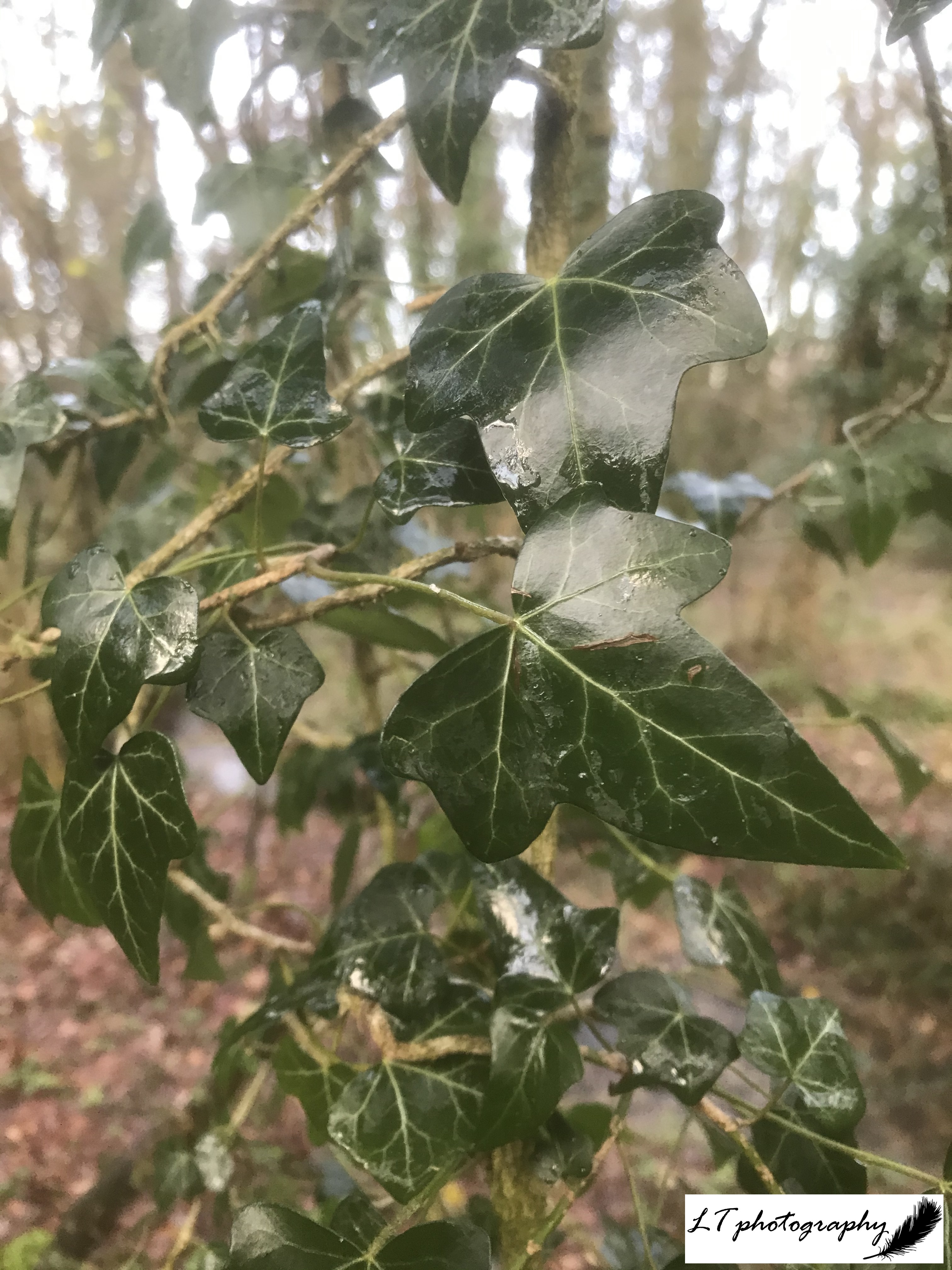
Ivy – Symbolises everlasting life, resurrection, rebirth, and the coming of spring. During Christmas time, Ivy is closely associated with Holly, being once considered a female plant whereas Holly was the matching male plant. It was said that whichever of these two species was brought into the house first during the winter, would predict whether a man or woman would be in charge of the house for the next year. Now popular at Christmas, Ivy was once banished from homes by the Christian church due to its ability to grow in the shade, giving it associations with secrecy and debauchery.

How to make your own Christmas decorations

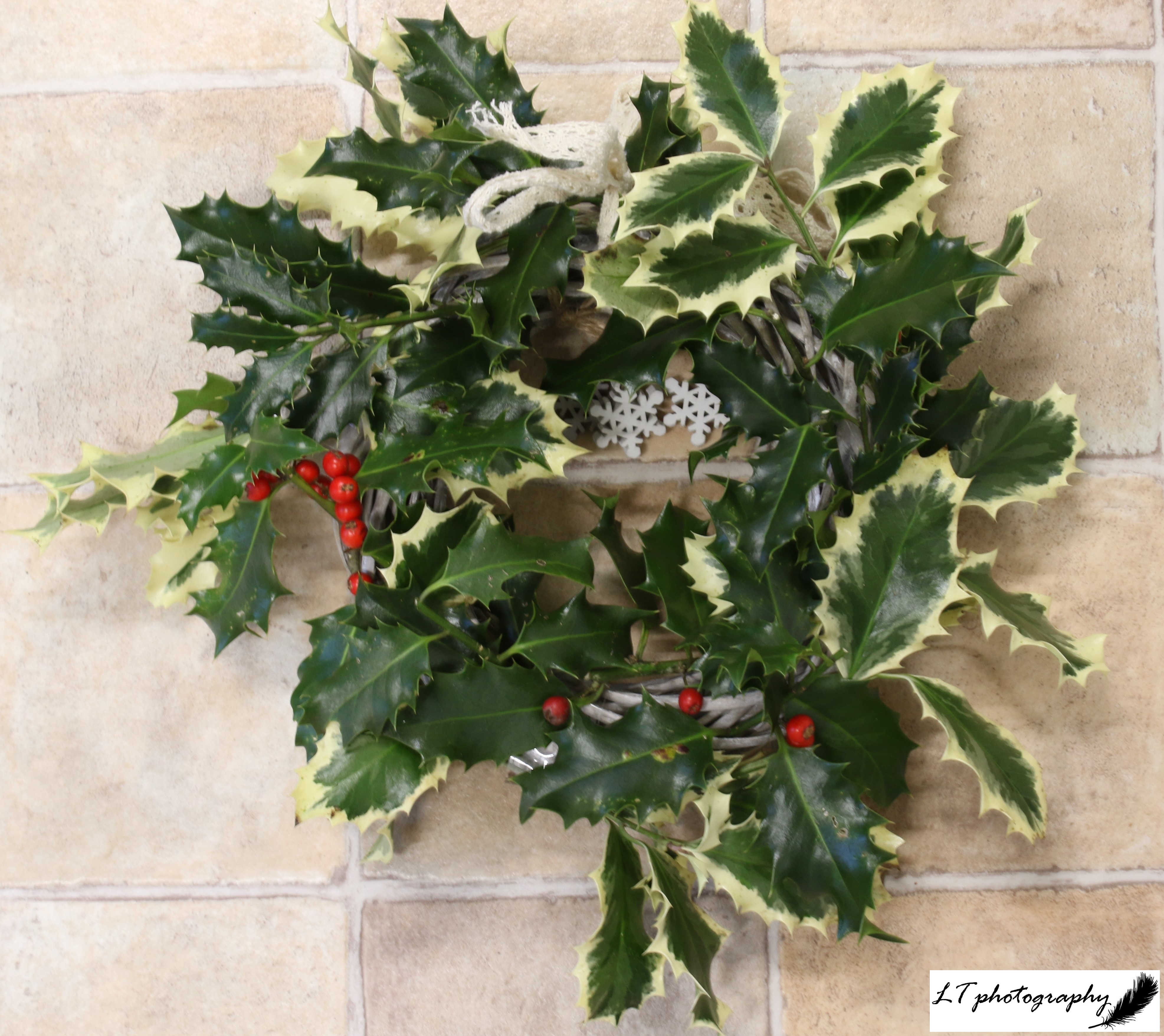
Bringing nature into your home is a great way to brighten things up and add a bit of colour to your Christmas festivities. Though it is understandable if you feel daunted by the prospect of turning your hand to making your very own decorations for the first time, such as a wreath or centrepiece, it is actually a simple and a great way to create decorations personal to you. Using natural materials can be a fun and easy way to do this, so why not try something new and have a go! For a little inspiration and some tips, here are some of the decorations that I put together for my family home each year, including this year.

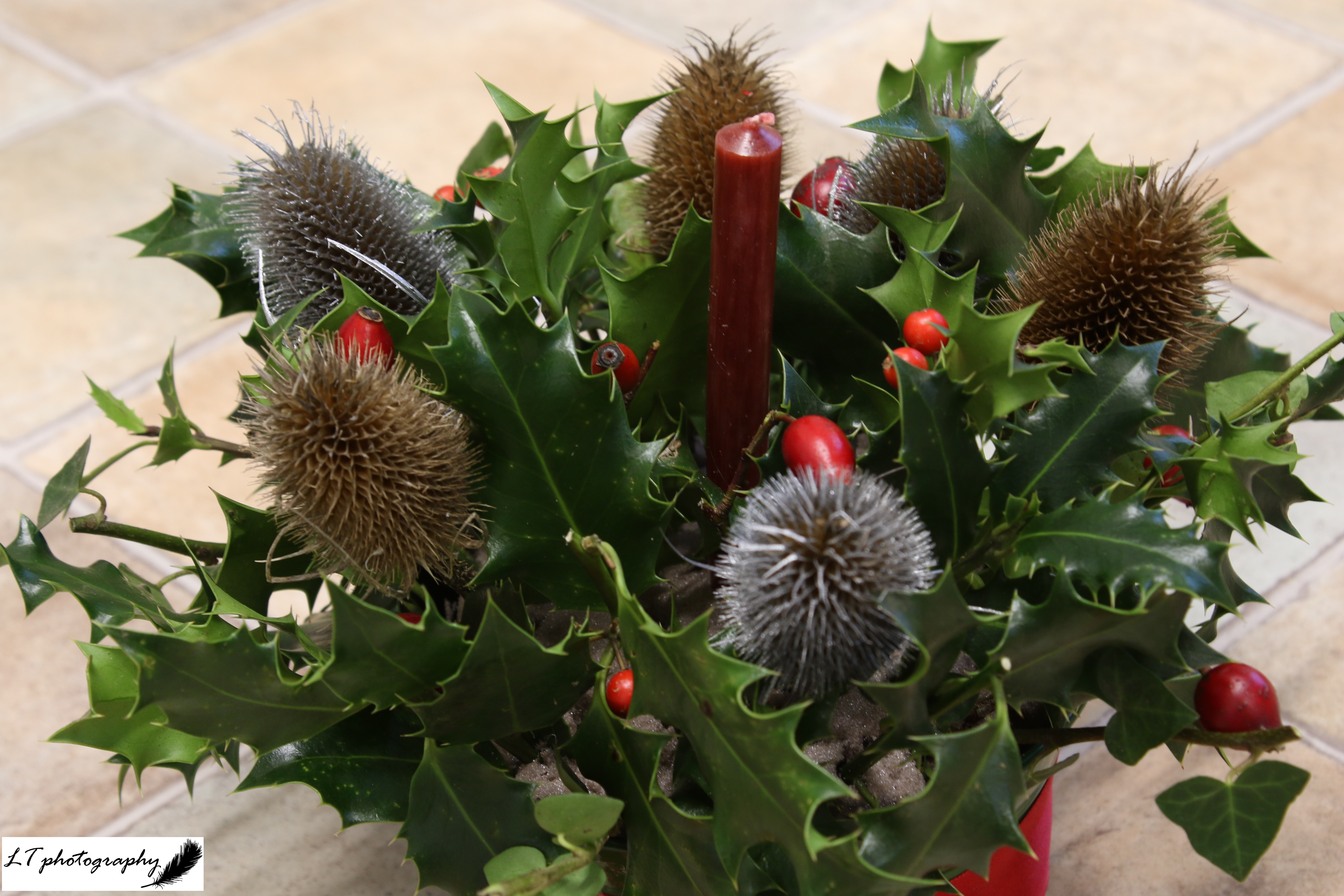
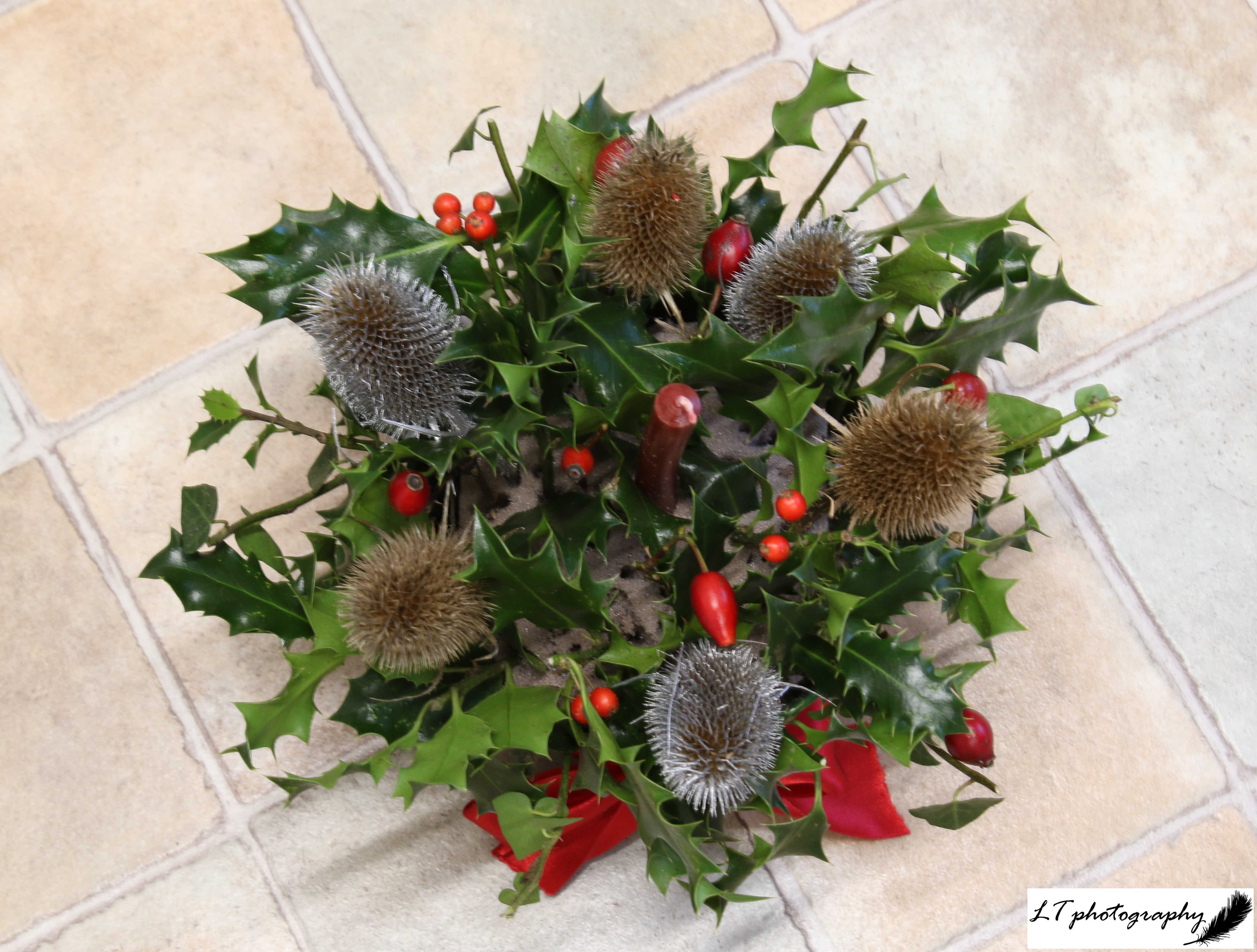
Popularly Used Species

  • Holly – With and without berries
  • Ivy
  • Rose hips
  • Teasels – Some sprayed with non-toxic paint

Centrepiece and Mantlepiece Decorations

For my centrepiece and mantelpiece decorations, every year I simply use a couple of small metal buckets with a bit of oasis in them. My squares of oasis are reused again and again each year, so if you are starting out it is better to use a non-toxic, biodegradable alternative that will not harm the environment.

To begin putting together one of my Christmas arrangements, I start with placing a candle at the centre (though it is simply for decoration). I then build up from there, beginning with a few Teasels around or behind the candle, then adding Holly with and without berries, Rose hips, and Ivy. You can arrange the greenery however you want and add what you like. It is a bit of fun of course!

Basic Wreath

A wreath’s circular shape has long been seen as a symbol of eternal love and rebirth. They can first be traced back to early Roman times, where wreaths were made and given during the festival of Saturnalia each year (check out my blog post: The Twists of Christmas Traditions for more information).

To begin my wreath, I use a basic wooden wreath as my base and work from there. I usually start by wrapping Holly around the base and adding extra Holly with and without berries. This year I was happy with just Holly, but other years I have added Ivy and other greenery, and decorations such as ribbon. Less is more though, and watch out for the Holly’s spiky prickles!

Vase Arrangements

To finish my Christmas decorations, I like to use whatever greenery I have left to create some simple vase arrangements in fun vases. Teasels and Ivy are a great mix for this, adding a little colour and decoration to any room.

Warning

When collecting your greenery, pick only what you need, especially when picking plants with berries, such as Holly. These berries are a source of food for animals during the winter, so it is important that we leave some for them too.

Stay safe and Merry Christmas!

The Twists of Christmas Traditions

December is a time for magic and the sparking of our imaginations to bring us warmth through bleak days and long cold nights. As the end of the month draws near, our worlds are filling with images of twinkling lights, decadent festive food, and idyllic Christmas card scenes. We welcome Christmas traditions back into our homes, spend time being thankful for what we have, and spend time with family. For how Christmas is shaped today we have the Victorians to thank, but for many of our modern day traditions their origins lay even further back, from times when celebrations were deep rooted in our wild landscapes. As Christmas creeps closer, let’s take a look back at the origins of a few popular traditions, and get in touch with our wild and remarkable past.

The celebration of mid-winter can be traced as far back as the Roman times. Even before the birth of Jesus, the Romans celebrated this time of year with a festival called Saturnalia, a pagan festival honouring Saturn the Roman god of agriculture and fertility. It was a celebration of the year’s harvest, whilst looking forward to the spring and return of the sun, and trying to ensure a successful next harvest. Starting around the 17th of December, the Romans would offer gifts and sacrifices, decorate their houses with wreaths and greenery, wear colourful clothing, light candles, hold feasts, and be merry. Today’s paper crowns and festive hats can also be traced back to the Romans and Saturnalia. Thus, it is not a new thing to honour the end of the year and welcome the next with colourful celebrations and festivities!

One part of the magic of Christmas for me is the making of sweet treats that are only associated with this time of year. For example, sweet biscuits have long been made to mark Christmas festivities, gaining their spiced flavour, reminiscent of winter, during the Middle Ages. This evolved into gingerbread men, first appearing in 16th century England when Queen Elizabeth I had them made to impress foreign dignitaries and subjects in court. A century later, gingerbread houses joined Christmas traditions, becoming popular in Germany in 1812 following the publication of the Brothers Grimm story, Hansel and Gretel. For many years now I have continued the tradition of making both gingerbread men and houses as part of my Christmas celebrations!

Though the first sweet mince pie is a more recent creation, the first genuine mince pie was enjoyed during the Middle Ages, hundreds of years ago. These mince pies were instead filled with savoury minced meat, chopped fruit, and a preserving liquid, and were larger than those we know today. Traditionally people would eat one of these mince pies every day from Christmas to Twelfth Night (5th January), otherwise it was said that they would suffer misfortune for the whole of the next year. Since then the mince pie has undergone its evolution, becoming the mince pie many of us know and love today.

From the Yule log to stollen, many Christmas sweet treats have been around for hundreds of years. One such is the iconic candy cane that originated in 1670’s Germany. It was said that they were first made as white candy sticks by the choirmaster of Cologne cathedral to give to young singers to keep them still during the long Christmas Eve church services each year. If this is true or not, by 1900 they had taken on their curved shape, red stripes and peppermint flavouring reminiscent of Christmas.

Many of our Christmas traditions and symbols are rooted in nature, for example one popular symbol of Christmas close to nature is the Robin. It is unknown exactly why this is so, but there are lots of interesting legends and reasons associated. For example:

  • A Robin was at the birth of Jesus, and fanned the flames of the dying fire to keep Mary and Jesus warm. The Robin’s breast was scorched by a stray ember though, and so for the bird’s kindness, Mary declared that this badge of kindness would in memory pass on to the Robin’s descendants
  • In the UK, Robins are seen in increased numbers in our gardens during the winter months
  • Royal Mail postmen were nicknamed Robins during the Victorian times due to their bright red uniforms

Whatever the true reason, they are a colourful addition to Christmas celebrations!

Even the origins of Father Christmas can be connected to nature. Though the image of Santa Claus and his reindeer sleigh first came to our shores from America in the 1870s, the idea of Father Christmas has been around for a very long time. Father Christmas was once associated with pagan winter festivals in the 17th century and represented the coming of spring. He was dressed all in green with a wreath of Holly, Mistletoe, or Ivy and was a symbol of happy times, and those to come, brightening winter celebrations.

During the festive period, one ancient custom is still being practised in orchards across the country. Traditionally held on Twelfth Night (5th January), this 400 year old tradition is called Apple Wassailing, where wassail comes from the Anglo-Saxon for whole or healthy. During these celebrations, a wassail king and queen would lead a group of revellers to an orchard, where cider would be poured over the roots of the largest and most prolific apple tree, known as the Apple Tree Man, cider-soaked toast would be hung in its branches, and a toast would be made to the health of the tree. This tradition aimed to scare away bad spirits in the orchard and wake up the trees in the hope of a bountiful harvest next autumn!

One of the most popular modern Christmas traditions still celebrated across the UK is putting up a Christmas tree. Last year alone, ninety per cent of families in the UK put up a Christmas tree in their home. This tradition first became popular during the Victorian era, when Queen Victoria’s husband Prince Albert brought trees over from Germany for his family in 1840. Despite this, the first Christmas tree was actually brought to England in 1800, by Queen Charlotte, the wife of King George III.

Greenery has long been used to decorate homes during the winter, with trees even being used during the Roman times. In some countries, evergreen boughs were believed to keep evil spirits and illness away, but most importantly they were a reminder that abundance would once again return. Check out my next Christmas-themed blog post out on Monday 21st to take a look at the history of natural decorations, and how you can bring some natural colour into your own home this Christmas.

However you celebrate Christmas time, it is important to stop and think about where our traditions come from. They are rich in history and meaning and can allow us to anchor ourselves during a turbulent season. My favourite parts of Christmas often relate to nature and baking, which have long been a part of celebrating this time of year. Why not join me in honouring our history and start a new Christmas tradition this year!

30 Days Wild 2020: My Wild Month

I have always lived a wild life. For this I have my family to thank, being raised in the middle of the beautiful Dorset countryside, immersed in everything Mother Nature has to offer. It has been my playground, my classroom, my escape, and my counsellor. It is a part of who I am. This is why I am so passionate to protect and conserve our natural world, and why I now make it my mission to share all it has to offer with the rest of the world.

So when I heard about 30 Days Wild, I just had to get involved! The month-long challenge aims to bring people closer to nature, get people learning and exploring, and make a positive difference for wildlife in the UK. This year I made it my goal to spread the word, and before the month started, I began blogging about the challenge in the hope of inspiring others to also get involved (check out How to… Get involved in the June 30 Days Wild challenge). The response was amazing!

Once June was under way, I also made 30 Days Wild a focus of each and every day for the whole of the month. I got to try some new things, learn some new knowledge, help some worthy causes, share with others about nature and wildlife, and most importantly, I got to explore and spend valuable time out in nature. I enjoyed every minute, so join me now as I take a look back at how wild my month of June really was!

Wall Chart

30 Days Wild – June 2020

Day 1 – Monday 1st (Work):

For the very first day of my 30 Days Wild, I started with a bang, showing my support for my local Wildlife Trust by becoming a member. By joining Dorset Wildlife Trust, I have joined 25,000 other members helping to conserve and safeguard wildlife in Dorset and on my doorstep. I look forward to now doing my bit!

Day 2 – Tuesday 2nd (Work):

For my second day, I was faced again with the challenge of completing a Random Act of Wildness alongside a busy day at work. I achieved this though, by taking a break in the evening to watch a wild webcam in the form of BBC Springwatch’s live nest cams. It was amazing to get a different perspective of the nests, such as being right inside a Jackdaw’s nest!

Day 2

Day 3 – Wednesday 3rd (Day off):

On my first day off during the challenge, I was able to go for a long walk out in nature, seeing what I could discover on my way. Despite it being a rainy day, the wildlife did not disappoint, with lots of different birds and insects making their presence felt, from families of Long-Tailed Tits to chattering Magpies.

Day 4 – Thursday 4th (Day off):

With another day off work, I decided to combine taking in nature with another of my passions, horse riding. On a hack with my next door neighbour’s mare Marsha, I got to get some really great views of the beautiful countryside near where I live, combined with views of some great bird species, such as my favourites, the birds of prey.

Day 5 – Friday 5th (Work):

Over the last couple of months I have tried to regularly upload a new post to this blog every Friday. To combine 30 Days Wild with my recent How to… series, on this day I uploaded a piece about making a home for wildlife, and in particular a hotel for bees. To do this post, I got to make my very own hotel, which was very rewarding, so if you would like to make your own, why not check out my easy guide: How to… Make Your Own Bee Hotel

Day 5

Day 6 – Saturday 6th (Day off):

I love growing my own fruit and vegetables, and then being able to pick and eat them! So I was happy on this day off, that I got the pleasure of picking my family’s first gooseberry crop, though it took a while after to top and tail all of them! I also spent time listening to my bird songs and calls CD to do some revision before going out for a walk to test my knowledge. I now love being able to instinctively know when I can hear certain species, such as a Blackcap or Yellowhammer singing in the landscape!

Day 6

Day 7 – Sunday 7th (Work):

I spent the whole of my Sunday making a note of the species that I came across as I went about my usual day before, during and after work. I was able to realise just how lucky I am to work outside and spend so much time out in nature everyday!

I also spent the evening catching up on Springwatch with the company of one of my house cats!

Day 8 – Monday 8th (Work):

During my 30 Days Wild, I wanted to donate to a wildlife cause. I decided that one cause I wanted to support was the Marine Turtle Conservation Project, which without funding would not be able to continue their important work. It was also well timed as the 8th of June was World Oceans Day!

I as well finished my day excitingly helping with Barn Owl nest box checks in my local area, now that I am fully licensed. This included the Barn Owl box on my family’s own farm and it is definitely looking positive for them this year!

Day 9 – Tuesday 9th (Work):

On this day, I was lucky enough to go out hacking on horseback whilst at work, and rode through some really spectacular countryside. It was one very busy day at work, so when I got home I also relaxed with some wild reading, including a great fictional book by zoologist Delia Owens called Where The Crawdads Sing. Her imagery of the North Carolina marshland is absolutely stunning!

Day 9

Day 10 – Wednesday 10th (Day off):

For my day off, I wanted to spend time really taking in the natural world around me and exploring the finer details. In this way, I got to see some incredible things from a hunting Sparrowhawk and Digger Bee nests to strong smelling Honeysuckle and mating Yellow Shell Moths. There is just so much to see if you give yourself the time to take it all in!

Day 10

Day 11 – Thursday 11th (Day off):

The day before during my walks, I had collected some Barn Owl pellets from beneath two nest sites, a tree and a nest box, on my family’s land. I then spent the next day soaking the pellets and teasing them apart to see what they held inside. From the nest box site, there was Field Vole, Mouse and Common Shrew bones, whereas from the tree site there was Field and Bank Vole, Common and Pygmy Shrew, and Brown Rat.

I also spent some time identifying plants that I had seen out and about, including learning to identify a Male Fern that my cat was very interested in helping me with!

Day 11

Day 12 – Friday 12th (Work):

This Friday, I once again combined 30 Days Wild with my recent How to… series, uploading a post on making small changes to your own life to help our planet. For example, walking and cycling more, thinking before you buy, and cutting your water usage. If you want to get inspired yourself, check out my post: How to… Help the planet one small step at a time.

I also spent some time on this rainy day, appreciating the beauty of the falling rain.

Day 12

Day 13 – Saturday 13th (Day off):

I spent my Saturday wild and busy. My activities ranged from identifying pollinators to organising equipment ahead of the autumn bird ringing season. I am always happiest doing something but doing something outside is even better!

Day 14 – Sunday 14th (Work):

There is nothing more valuable than your own parents passing down their knowledge to you, and with mine it is no different. I have my Mum to thank for the foundations of all my wildlife knowledge today, from bird song to plant species. This year my Mum has been teaching me about chalkland species, using the chalk mound my Mum and Dad have created themselves on our farmland. It has been so enjoyable listening to my Mum as she IDs and teaches me each and every species on the ridge!

Day 15 – Monday 15th (Work):

The ever-changing sky is a source of wonder and life. I took time over the course of a whole day, appreciating it and watching it change, from cloud watching with white fluffy and dark rain clouds to an unexpectedly beautiful sunset!

Day 16 – Tuesday 16th (Work):

One of the acitivities I definitely wanted to do during 30 Days Wild, was to make my own bird food, taking me back to my childhood. I kept it simple with lard and bird seed, and packed the food into different shaped recycled containers for some variation. I then left it in the fridge overnight with the aim of testing it the very next day!

Day 16

Day 17 – Wednesday 17th (Day off):

I began my day off by putting out my homemade bird food in the garden. Unfortunately it was a bit hot, and the food kept melting off its strings! It was a hit with the local fledged Starling chicks though, and eventually disappeared within 48 hours.

I also took my mum and dad to my bird ringing trainer’s private nature reserve for a a different walk. It is such a lovely place to be, and gave us all some inspiration of how we can make more homes for wildlife on our own land. To finish the day, I helped pick some of the fruit growing in my family’s garden, my favourites being the strawberries!

Day 17

Day 18 – Thursday 18th (Day off) :

People who read my blog will know that I love the woods! It’s a place I go to when I want a break from the world or just to watch the seasons change in a place where it’s at its most noticeable. So as part of my 30 Days Wild, I headed into the woods for a spot of forest bathing and a refresher. The day’s rain did not even stop me!

Day 18

Day 19 – Friday 19th (Work):

Due to my love of spring and wildlife photography, for this Friday on my blog, I uploaded a post about my favourite photos from spring 2020. It was great to reflect on my own spring and to look back on some great moments, making it easily one of my favourite posts so far this year! If you want to take a look, check out my Spring 2020: In Photos

I also headed out into my family’s land after work, to revisit a favourite camera trapping spot from this spring. Once there, I set up my camera trap again, and looked forward to seeing what I might catch this time around.
Day 19

Day 20 – Saturday 20th (Work):

After work, I signed up to the BTO’s Garden BirdWatch, which is currently free for everyone to take part, and allows me to upload what I see in my garden at home every week. I also took time out to focus on my mental health, and completed a wild guided meditation, lying on the grass in my garden. I picked this particular meditation as it incorporates taking in the sounds around you, such as the sounds of nature. It was so surreal for me to relax outside and then reopen my eyes to see lots and lots of baby starlings looking back at me!

Day 20

Day 21 – Sunday 21st (Day off):

As it was Father’s Day, for my Sunday off, I got to spend lots of time with my dad. This included two walks also with my mum, where we tried to see what nature had to offer us, which included birds of prey and wonderful Skylarks. To top off an active day, I also pulled on my trainers for the first time in a couple of weeks, due to an injury, and went for a run through the countryside around my home. I just cannot get enough of being outdoors!

Day 21

Day 22 – Monday 22nd (Work):

For my Monday, I completed two different Random Acts of Wildness. Firstly, I began writing down all the birds I saw in my garden during the day as part of the BTO’s Garden BirdWatch.

I then made a donation to charity. I may not have a lot of money, but at times like these I realise how lucky and fortunate I am in life. So when I saw another great cause, I had to get involved and donate!

Two years ago, during my Master’s in Conservation and Biodiversity, I got the opportunity to go on a field course to Kenya, with a lot of organisation from Adventure Upgrade Safaris. They even got me a cake for my birthday! Now without tourism, the company are struggling and without our support, they will not be able to continue for the future. They need our help to survive!

Day 22

Day 23 – Tuesday 23rd (Work):

This day was an exciting day for me! It was the day that, after work, I got to retrieve my camera trap that I had put out last Friday!

Though I had previously captured my best camera trap photo this year in this location (a fox cub), I did not know what to expect this time around. My camera trap did not disappoint though, and the photos included those of the fox cub I had previously seen, a rabbit and some really great photos of some badgers!

Day 24 – Wednesday 24th (Day off):

On a day when I really needed it, I got to spend my day off doing some things I love. My bird ringing group starts the autumn migration ringing season on the 1st of August and so to start my Wednesday, I helped with some of the preparation for the season. For example, we completed an important but often overlooked job, re-dying our mist nets with a special dye mix.

I also excitingly spent some of my day ringing Kestrel chicks and, now that I am fully licensed, helped with Barn Owl nest box checks. This led to me also getting to ring Barn Owl chicks and getting some great views of some Little Owls!

Day 24

Day 25 – Thursday 25th (Day off):

Another activity I really wanted to do during my 30 Days Wild, was to do some wild baking. I decided on making some simple vanilla cupcakes and decorating them with minibeasts in different colours.

My time spent baking was not without some drama though, as I ended up modelling icing during an afternoon of over 30 degrees heat! Despite this, I soldiered on through runny icing, with the much needed help of my mum, and had some great fun, whilst making some yummy cakes topped with interesting and colourful creatures!

Day 25

Day 26 – Friday 26th (Work):

For my last Friday of 30 Days Wild, I uploaded to my blog another brand new post. This time my post followed on from last Friday’s spring upload, and focussed on how spring unfolded this year. If you want to have a read about how my extra special spring actually turned out this year, check out my Spring 2020: How It Happened.

Day 26

Day 27 – Saturday 27th (Day off):

This day was another day of relaxing in nature. This included watching and recording the birds in my garden, going for a long horse ride through the Dorset countryside, and exploring the flowers growing in my garden and on my currently ‘no mow’ lawn.
Day 27

Day 28 – Sunday 28th (Work):

With it being especially rainy during my day at work, I made it my priority to spend my lunch break outdoors during a break in the weather. It was a much needed refresher! Also, having completed my first week of the BTO’s Garden BirdWatch yesterday, I spent my evening uploading my results to their website. It was exciting to see how the week actually went!

Day 28

Day 29 – Monday 29th (Work):

I spent this Monday rushed off of my feet at work. To keep my brain relaxed though, I came up with the plan of spending my day attempting to noticing the wildlife around me and seeing if I could find a species for each letter of the alphabet. I had a very successful day of it, alongside being very productive at work, leading to only one species missing (the letter X)!

The response to me completing this activity was absolutely amazing on Twitter. It gave me a real sense of joy to see everyone’s support, so thank you everyone!

Day 30 – Tuesday 30th (Work):

Today was the last day of June and the final day of 30 Days Wild. However much I would have liked to have finished with a bang, it would not have fit my true and busy day. Instead, today was a day of appreciating and being grateful for the natural world around me. This may be in the form of what I encountered on my travels or seen out of my window, or by taking in other people’s experiences such as through books and on twitter. I treasured them all!
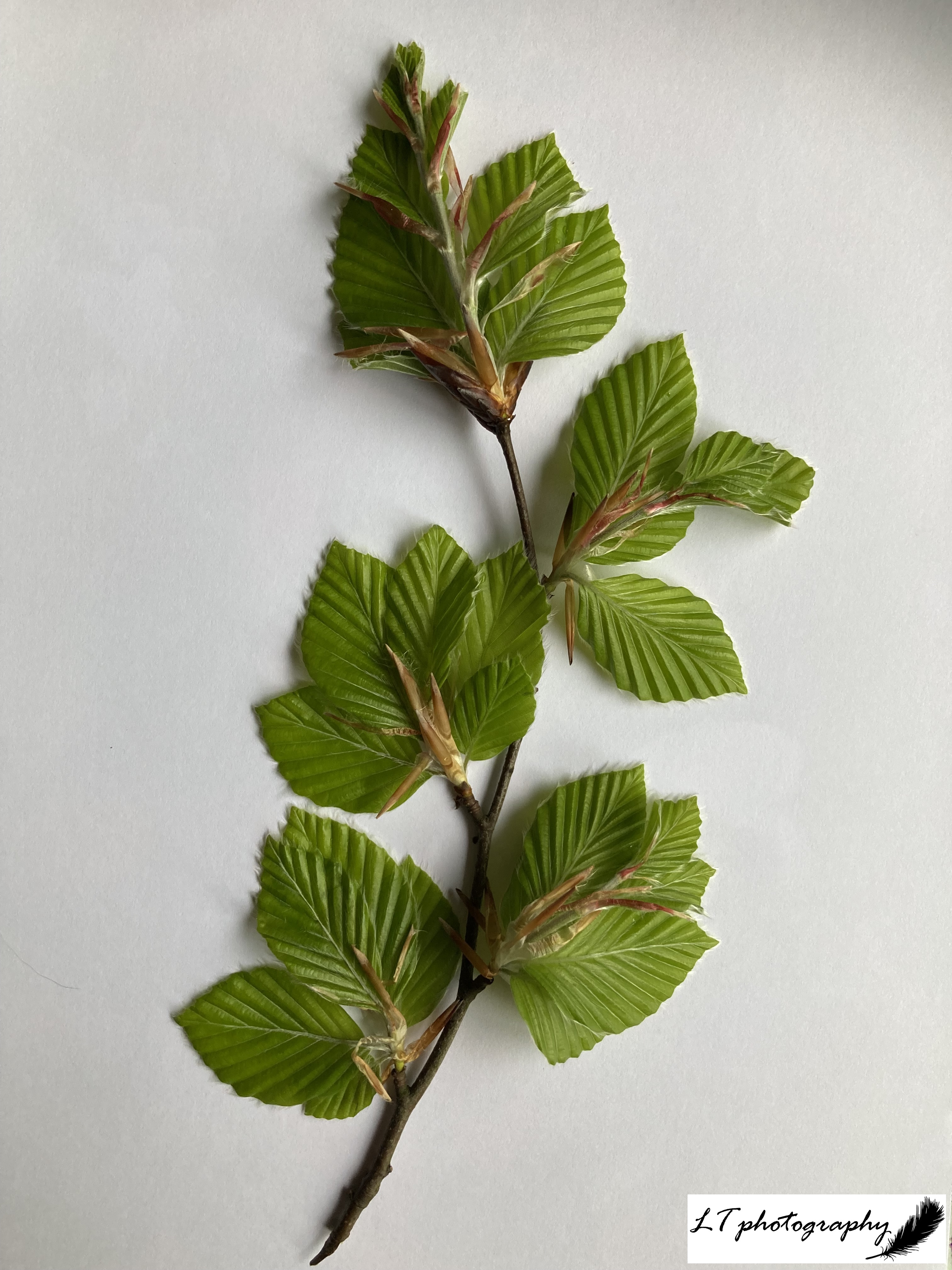
Day 30

My Highlights

This June has been a wild rollercoaster which I have absolutely loved! Spending time focussing on nature each and every day has enriched my days, relaxed me, and allowed me to connect further with the wild world around me. If I had to pick some highlights, these would include my wild alphabet becoming popular on Twitter, making wild cupcakes with my mum, expanding my knowledge of plants, ringing my first Kestrel and Barn Owl chicks, and sharing my 30 Days Wild on social media.

I have learnt and experienced so much this past month, and I am now inspired to continue making the natural world an important part of each and every day, and to share my passion with as many people as I possibly can. I hope that if you participated in this year’s challenge, that you also had a great month. Otherwise here’s to next year’s 30 Days Wild!

19_04_19_Farm_Cows_Milk_Blackthorn_3