How to… Identify All Year Round Garden Birds

Photographs will be updated in the future

In the UK, 633 wild bird species have been recorded up to 2024, from eagles and owls to kingfishers and thrushes. Between 2015 and 2020 though, almost half of all bird species in the UK were seen to have experienced a decline in number, adding to a steady decline over 50 years. Some of the biggest factors have been increased development, agricultural intensification, habitat loss, lack of woodland management, disease, and climate change, amongst others.

As bird species continue to lose access to habitat and food sources across the UK, our gardens, however big or small, are becoming an important lifeline for populations. ‘Garden birds’ refer to any species that visit and utilise a garden, and species will depend on what food, water, and habitat is available, and also the habitats that can be found around a garden. This often leads to variation in what people may see from garden-to-garden.

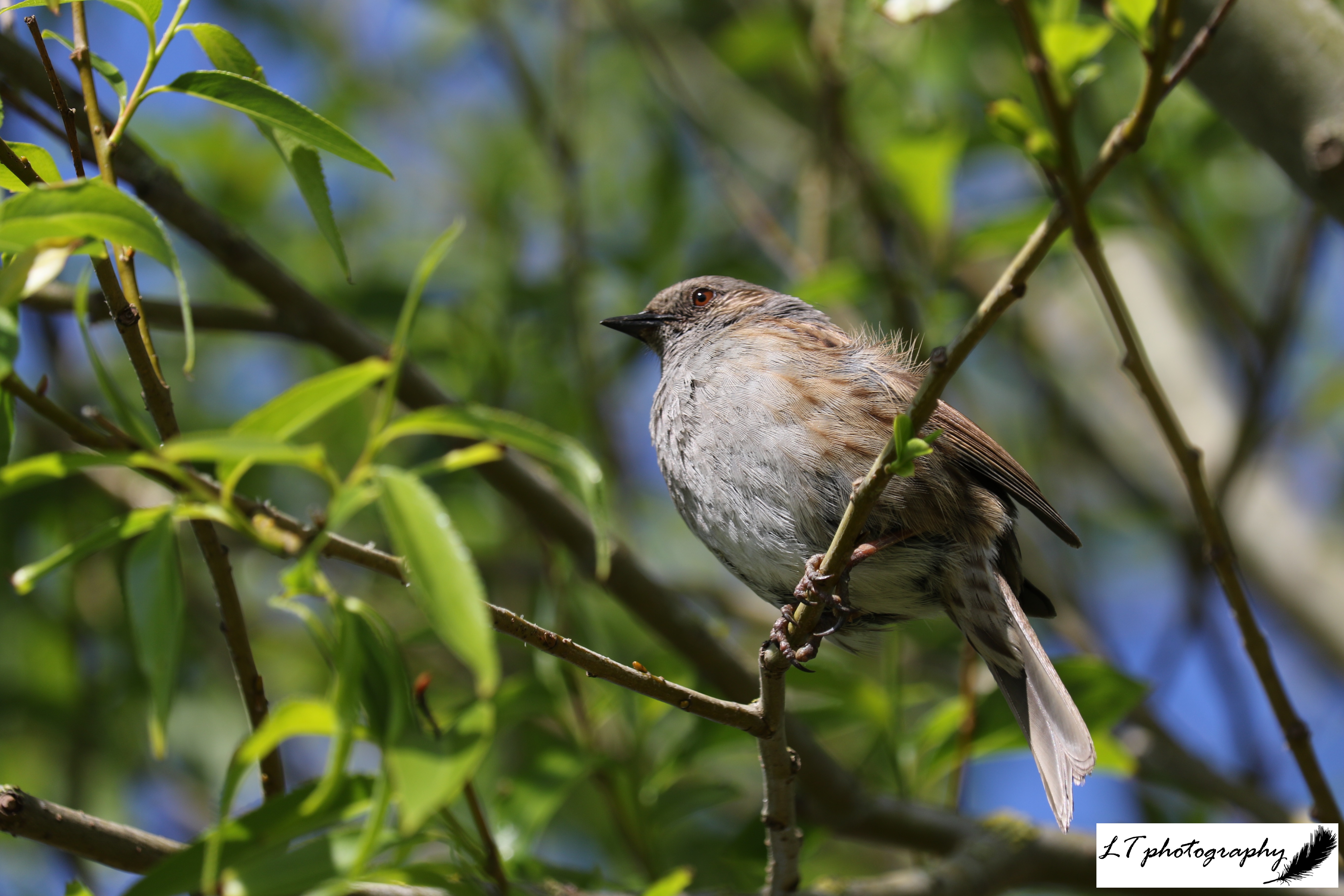
Despite differences, there are a number of birds that are more likely to be seen in gardens, and it is great to know what you may be seeing to help easily tailor your garden for their use, such as what bird food to offer. To help identify species, here you can find a helpful guide to 10 birds that can often be seen in gardens across the UK, even when their populations are decreasing in number. Take a look below!

Species:

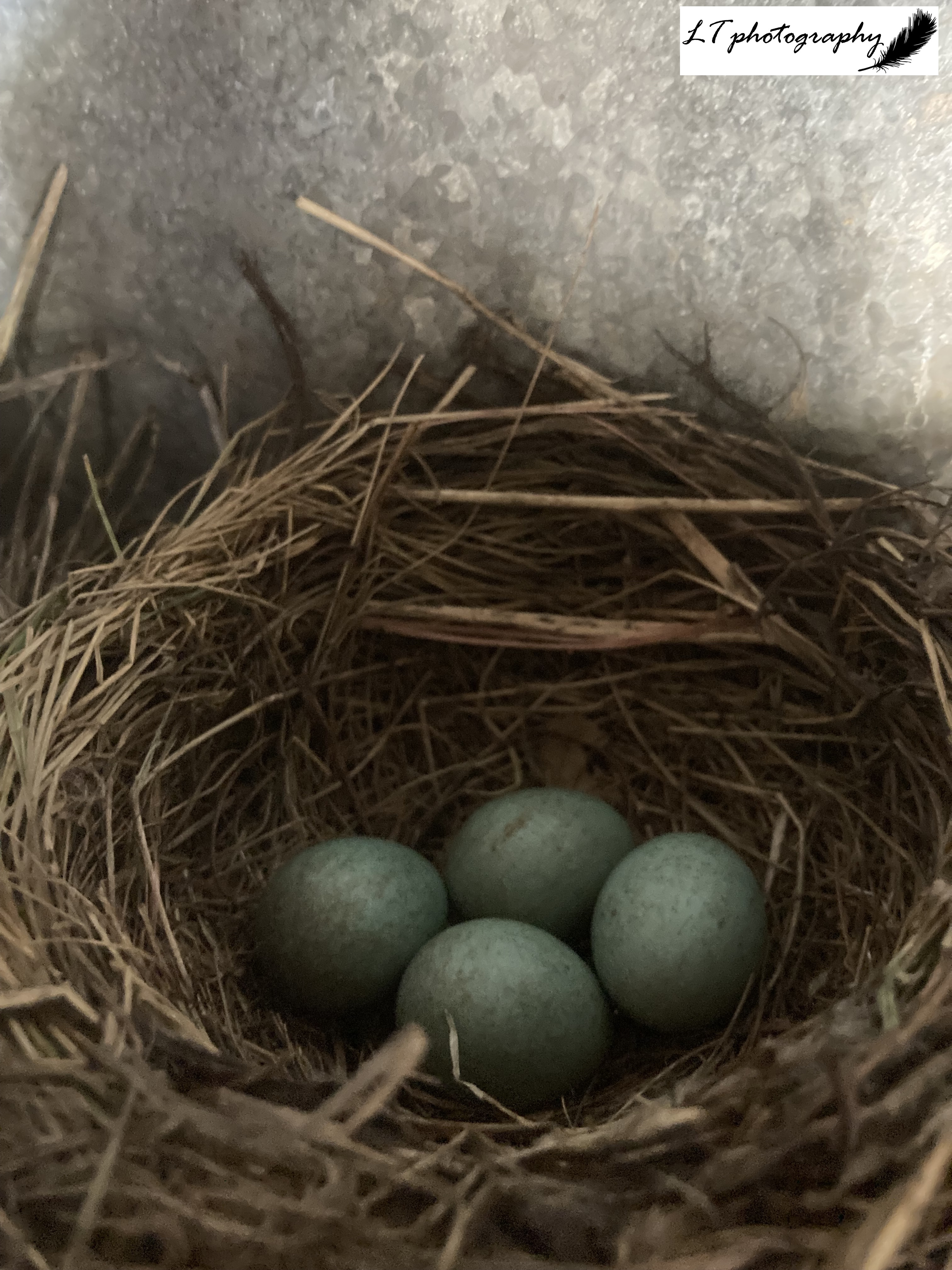
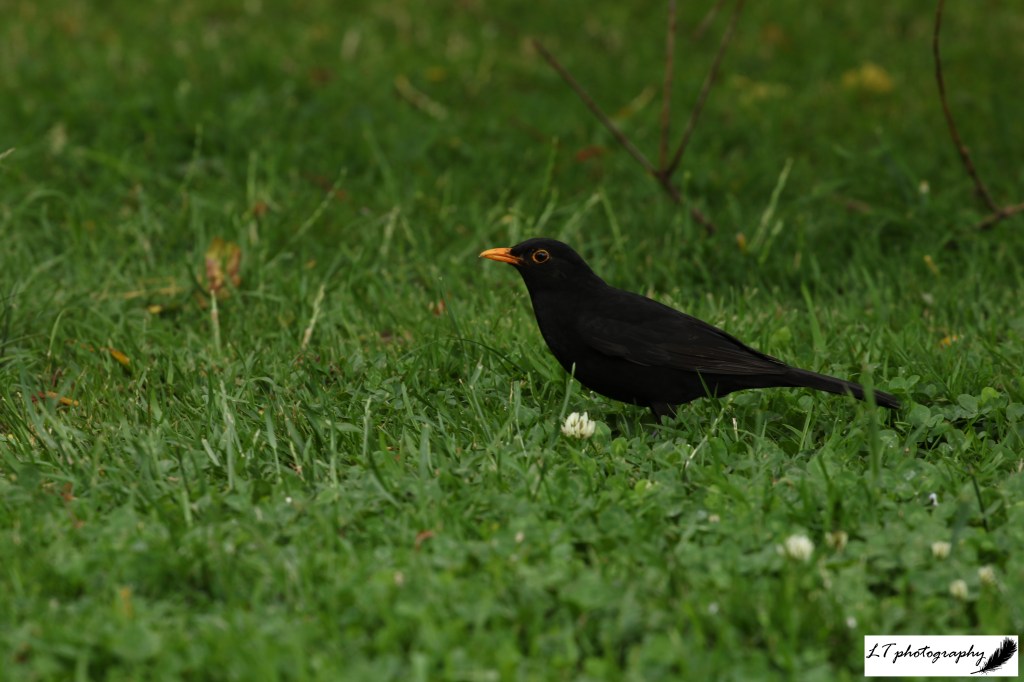
Common Blackbird (Turdus merula)

  • Length: 23.5 – 29cm
  • Weight: 80 – 125g
  • Colour: Adult males are all black with a yellow beak, whilst adult females are dark brown with a more dull beak. Young start as a speckled version of the female and change to adult feathers through moulting their feathers
  • What To Feed: Mealworms, fat balls, or sunflower hearts on the floor or in a ground feeder
  • Breeding Season: March to Late July
  • Nest: A round cup made of twigs, grass and other plant materials, close to the ground in adequate cover
  • UK Conservation status: Green

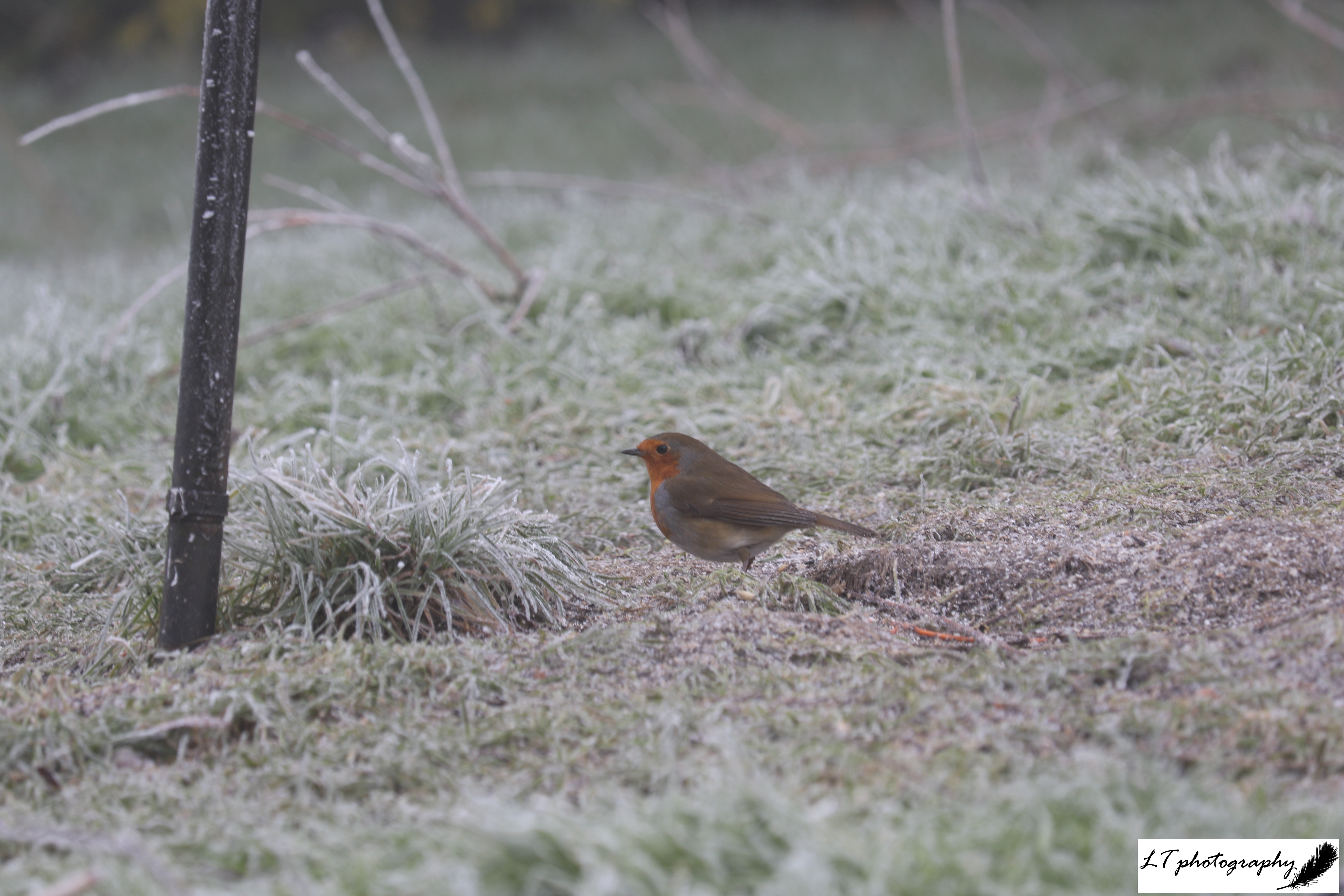
European Robin (Erithacus rubecula)

  • Length: 12.5 – 14cm
  • Weight: 13 – 21g
  • Colour: Adult males and females look the same, both brown with an orange-red breast and white underside. The young start a speckled brown
  • What To Feed: Mealworms, suet, or seeds on a ground feeder, bird table or bird feeder with platform
  • Breeding Season: March to mid-August
  • Nest: A round cup made of grass, moss and leaves and lined with hair and maybe feathers, usually tucked in a hole, crevice or behind something
  • UK Conservation Status: Green

House Sparrow (Passer domesticus)

  • Length: 14 – 16cm
  • Weight: 23 – 35g
  • Colour: Adult males have a grey crown and cheeks, chestnut sides to head, black bib, grey underparts, rufous-brown back, and white wing-bar. Adult females and young (until body moult) have buff-brown upperparts, underparts grey, brown cap and cream supercilium behind eye
  • What To Feed: Will eat a range food, including seeds and grains from feeders
  • Breeding Season: March to August
  • Nest: In cavities, where dried plant material is stuffed in to make an untidy sphere which is then lined with softer materials, such as feathers
  • UK Conservation Status: Red

Blue Tit (Cyanistes caeruleus)

  • Length: 13.5 – 15cm
  • Weight: 9 – 13.5g
  • Colour: Blue crown, wings and tail, white cheeks, black eye-stripe, underparts yellow, and greyish-black central belly stripe. Their young begin with more dull feathers and yellowish cheeks
  • What To Feed: Fat balls, suet, peanuts, or sunflower seeds from hanging feeders
  • Breeding Season: March to June
  • Nest: Built inside cavities and formed of a cup of plant material, such as moss, lined with soft materials, such as feathers, wool and fur
  • UK Conservation Status: Green

Great Tit (Parus major)

  • Length: 13.5 – 15cm
  • Weight: 14 – 22g
  • Colour: Black head with white cheeks, moss-green back, blue-grey wings and tails, yellow underparts and black central belly-band. Males have wider, more defined belly-band. Young begin more dull and with yellowish cheeks
  • What To Feed: Suet, fat balls, peanuts, or sunflower seeds in hanging feeders
  • Breeding Season: March to July
  • Nest: Built inside cavities, formed of a cup of twigs, roots, moss, lichen and/or grasses, and lined with soft materials, such as hair or plant material
  • UK Conservation Status: Green

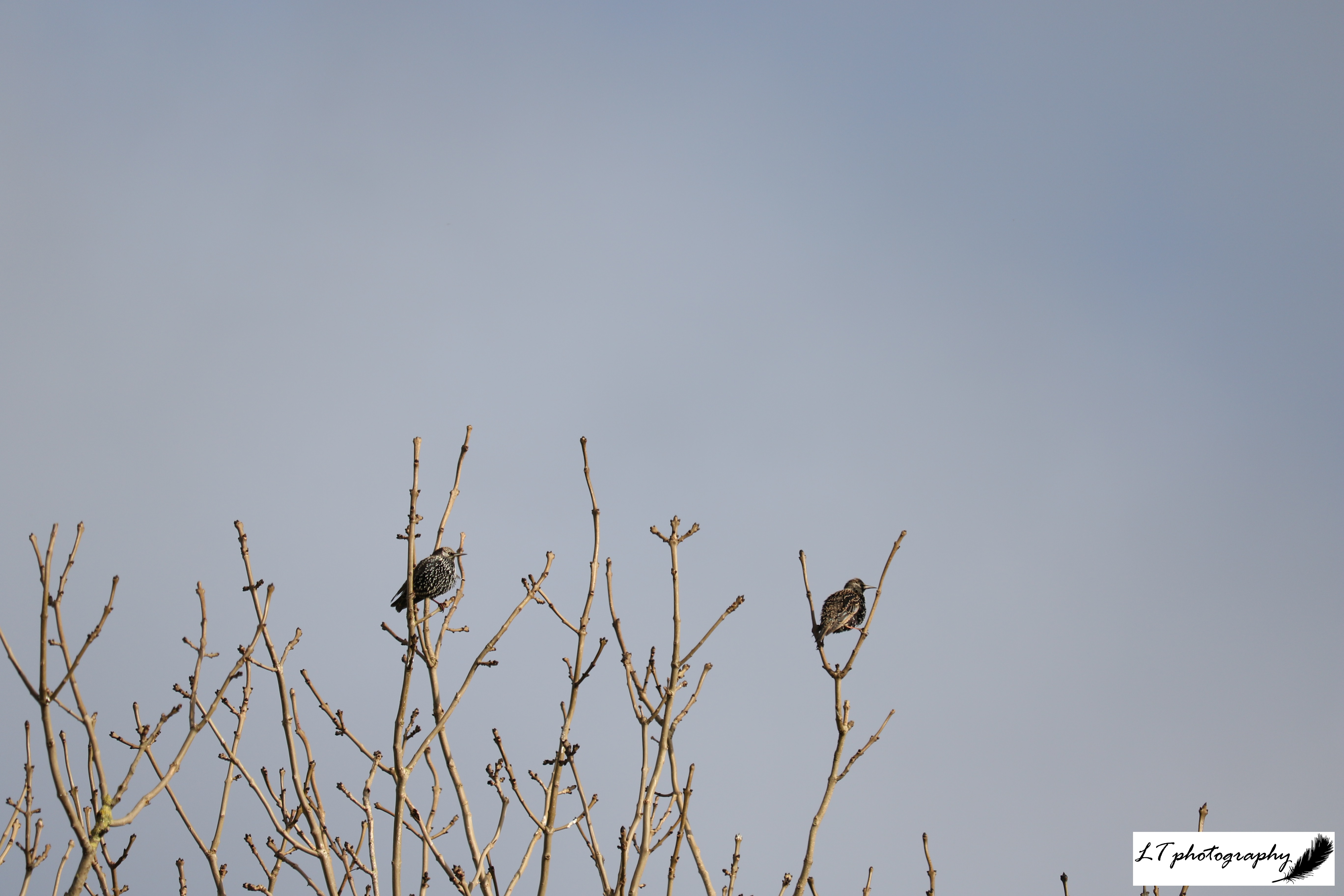
Starling (Sturnus vulgaris)

  • Length: 19 – 22cm
  • Weight: 60 – 97g
  • Colour: Black bird with long-pointed yellow bill, white spots dotted through plumage, a green-purple sheen to the feathers and pale pink legs. The young start with grey-brown feathers and change with body moult
  • What To Feed: Suet, peanuts or sunflower hearts in hanging and ground feeders
  • Breeding Season: March-July
  • Nest: In holes and cavities in trees and buildings, made up of a messy depression of plant stems, grass, and moss, and often lined with feathers or wool
  • UK Conservation Status: Red

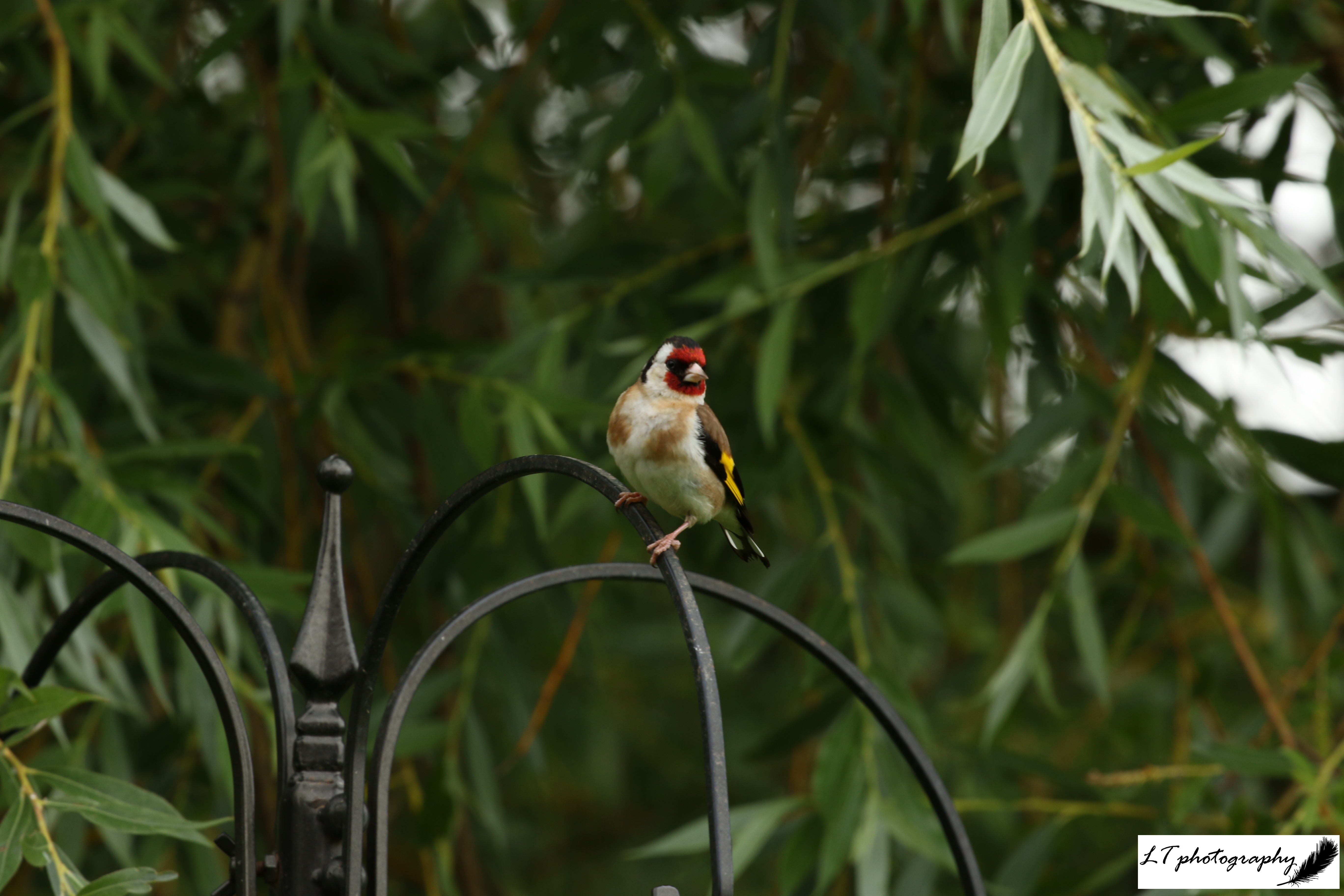
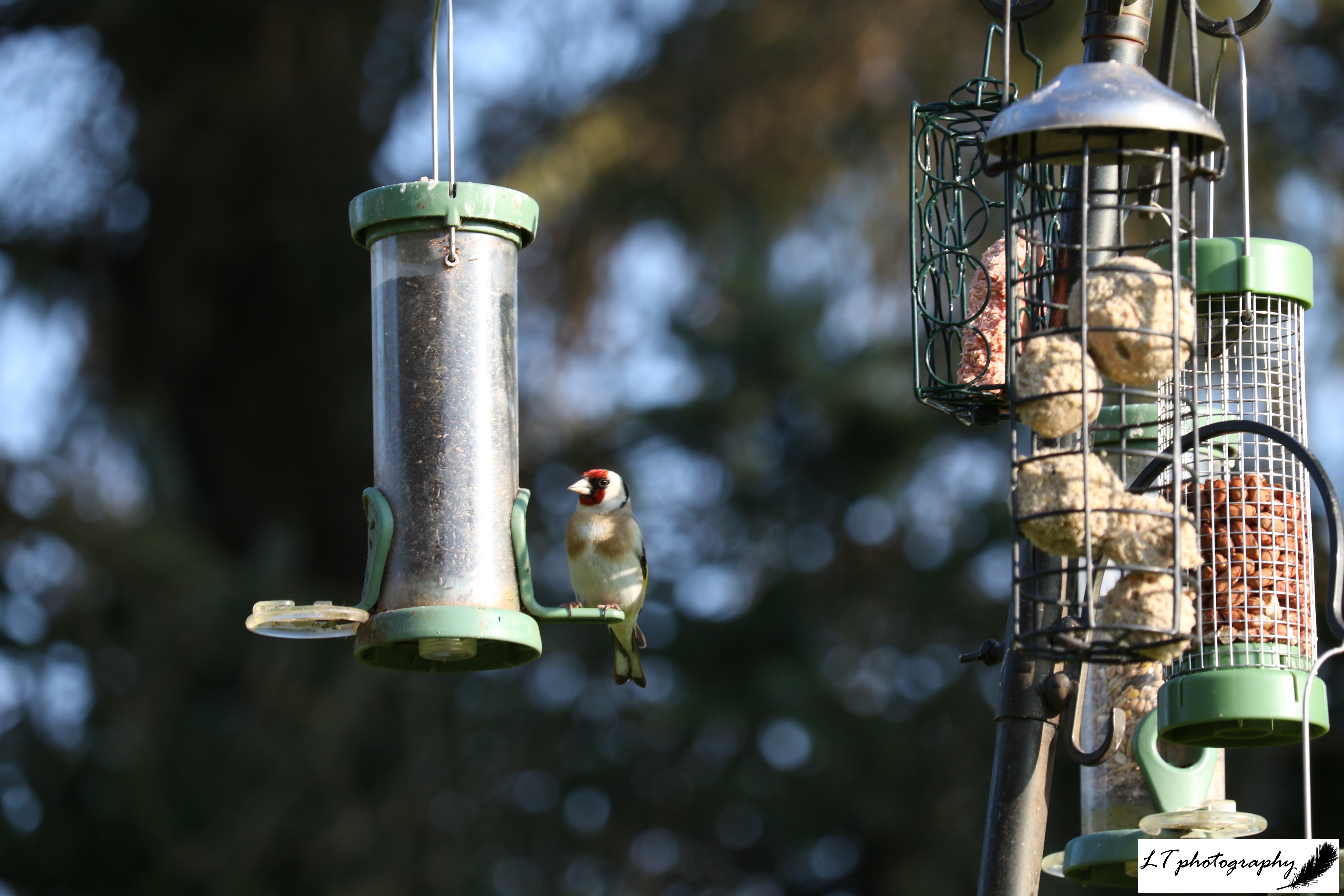
Goldfinch (Carduelis carduelis)

  • Length: 12 – 13.5cm
  • Weight: 13 – 20g
  • Colour: Adults have a black and white head with red face, brown back, black wings with yellow bar, and black tail with white spots. Young lack colourful head until body moult
  • What To Feed: Sunflower hearts, niger seeds or mixed seed in hanging feeders
  • Breeding Season: April to August
  • Nest: A neat cup made of moss, grass, wool, and hair, relatively far off of the ground in tight tree branches, hedges or shrubs
  • UK Conservation Status: Green

Chaffinch (Fringilla coelebs)

  • Length: 14 – 16cm
  • Weight: 17.5 – 29g
  • Colour: Adult males have pinky-red cheeks and breast, and blue-grey crown and neck, whereas adult females and young lack the colourful head and instead have a grey-green one. All have a distinct pale rump and double white wing bars
  • What To Feed: Peanuts, sunflower seeds, seed mixes, or suet in hanging or ground feeders
  • Breeding Season: April to June
  • Nest: Deep cup of lichens, grass, roots and feathers, lined with plant down, feathers or wool, usually in the fork of a tree, shrub or hedgerow
  • UK Conservation Status: Green

Collared Dove (Streptopelia decaocto)

  • Length: 29 – 33cm
  • Weight: 168 – 249g
  • Colour: Pale pinky-grey-brown feathers, black neck collar, dark eye, grey underparts, and reddish feet
  • What To Feed: Small seeds from ground feeders or bird tables
  • Breeding Season: March to September
  • Nest: Sparse platform of twigs and leaves in trees or high up in buildings
  • UK Conservation Status: Green

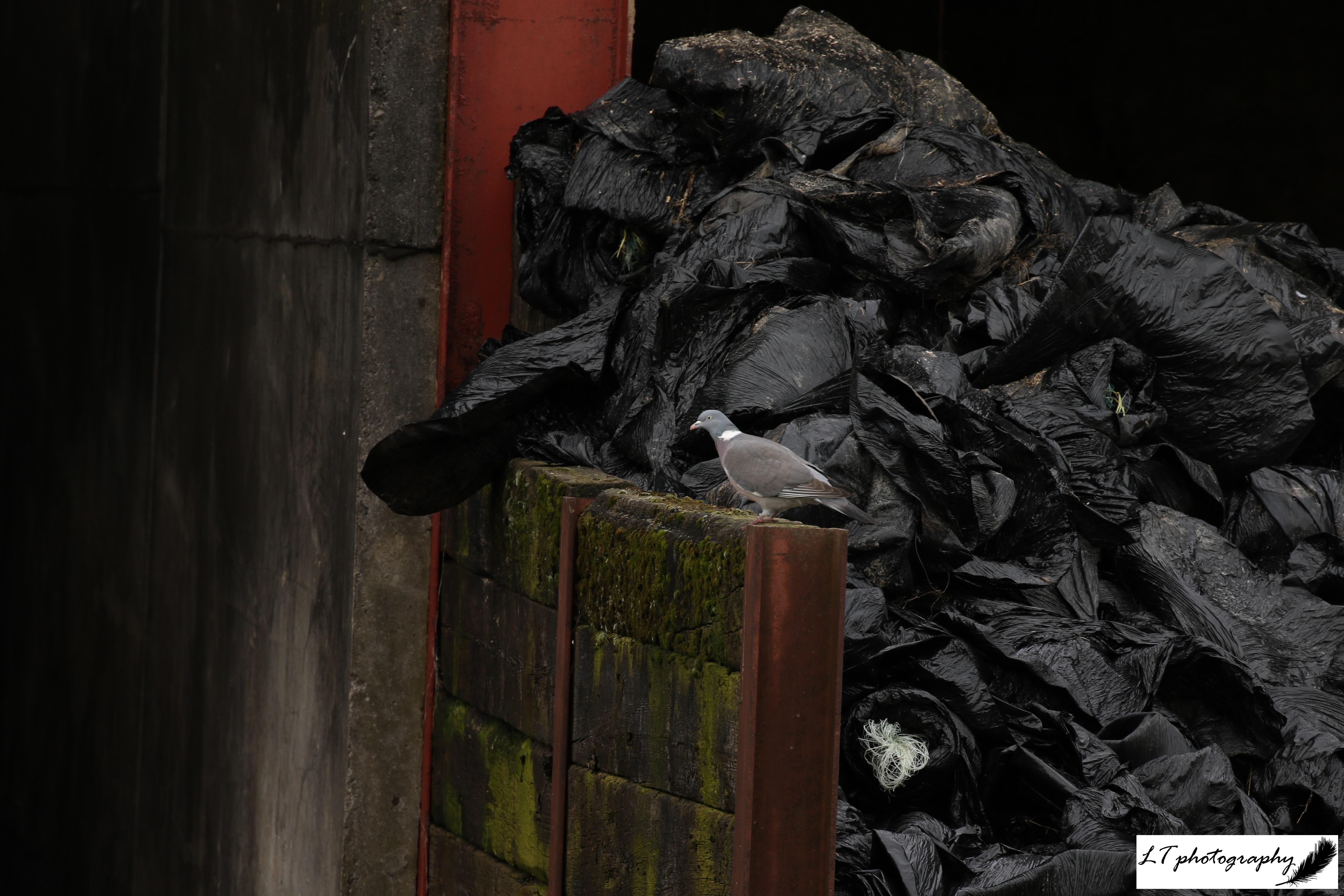
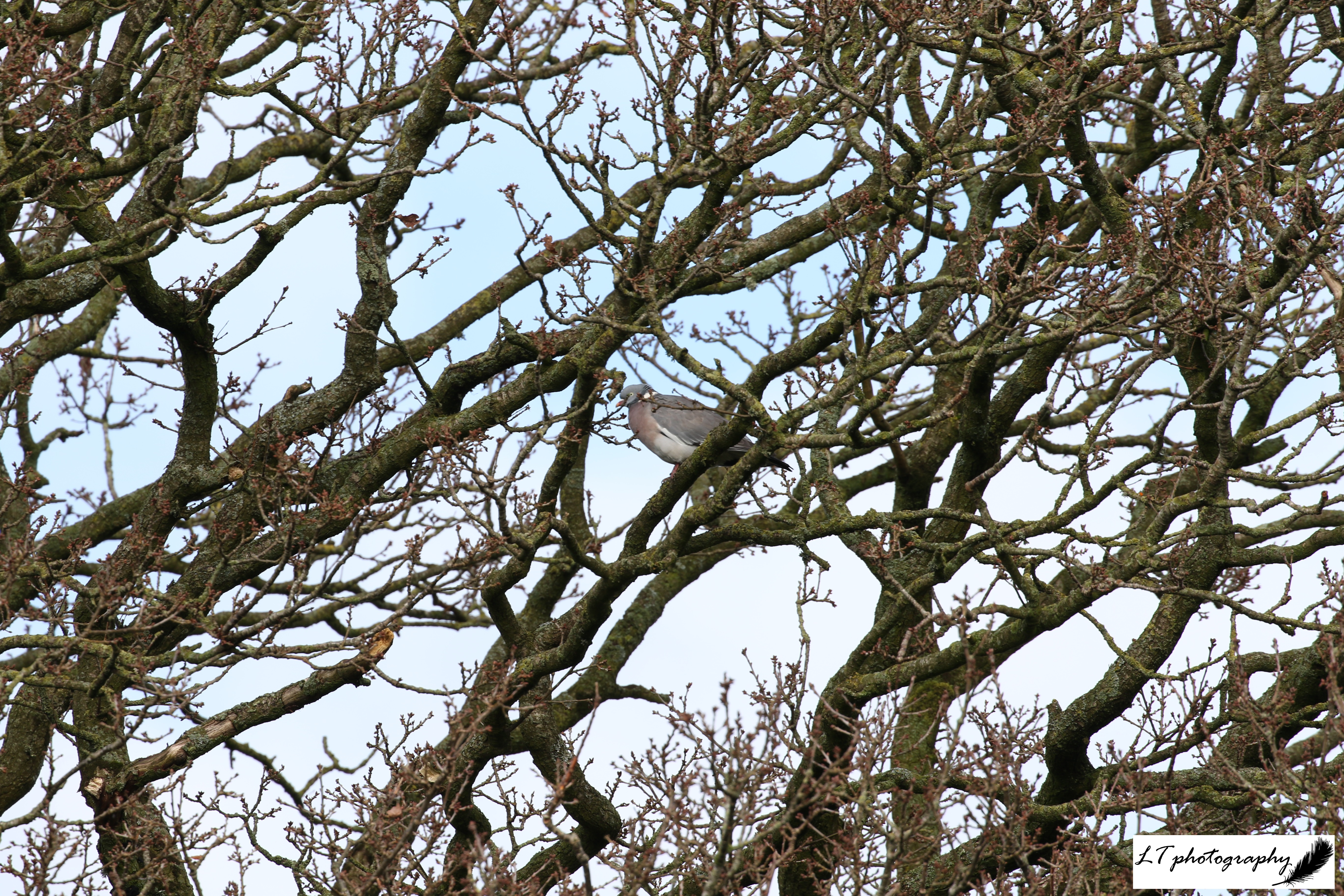
Woodpigeon (Columba palumbus)

  • Length: 38 – 43cm
  • Weight: 325 – 620g
  • Colour: Grey-blue head and back, pinky-red belly, large white patch on neck, sides of neck iridescent purple and green, white wing patches and pink legs. Young are pale with no neck patch.
  • What To Feed: Only British herbivorous bird. Feed seeds on a bird table, ground feeder or the ground
  • Breeding Season: February to November
  • Nest: Simple platform constructed from sticks in trees, shrubs, vegetation or ledges
  • UK Conservation Status: Amber

Spring 2024: How It Happened

Over the last few years, it has been noticeable that weather patterns and average temperatures have been changing and highly unpredictable, leading to the seasons, such as spring, varying from month-to-month and year-to-year, especially here in Dorset. For example, last year spring began a wash out, moving to cold and stormy spells, before ending with heat waves. This year was an equally odd series of spring weather events with a cold start to the season, followed by wet weather with northerly winds, and finishing with drier spells. It was on average warmer and wetter, but cold nights continued for a long time, and had a noticeable effect on plant growth patterns being seen.

Spring 2023 encountered trends for later spring events and a slow start to spring, which helped to create a mismatch between species and spring events. With a warmer, wetter winter before spring this year, and often above average spring temperatures, it is likely the trends this year may differ to those of 2023. It will be interesting to see if this has had an effect though, by looking at trends for some tree, shrub, flower, insect and bird species. How will spring 2024 have shaped up? Read on to see how my favourite season unfurled this year!

Trees

During 2023, spring emergence dates for trees showed a trend for on average later dates, ranging from 1 to 28 days later. In 2024 though, the majority of spring tree dates were earlier, as seen with field maple, horse chestnut, english oak, and wild cherry, ranging from 1 to 22 days earlier from March through to May. Alder dates though were fractionally later, as were ash and sycamore flowering, and silver birch and norway maple budburst, but the other events for these species occurred earlier. The on average warmer and wetter weather will most likely be the reason for these trends, allowing trees to get a head start this year.

Flowers

Plants flowering during spring 2023 occurred on average later, varying from 1 to 16 days. During spring 2024 though, flowering has occurred earlier, as was the trend with tree species. For snowdrops, lesser celandines, primroses, greater stitchwort, wood anemones, early purple orchids, wild garlic, yellow archangel, cuckooflowers, oxeye daisies, and bluebells flowering occurred 1 to 32 days earlier between January and May. The exceptions were found with daffodils, flowering 6 days later during February, and cowslips, 4 days later during April. It would be understandable thus to think that the warmer, wetter weather of the start of spring will have had a heavy influence on these events, just like with trees.

Insects

Of 12 species that had the emergence date recorded during spring 2023, the majority emerged later than the year before, ranging from 2 to 46 days later. This year though, spring 2024 saw the occurrence of a 50:50 split for the 10 species that had their emergence date recorded, with some species from 2023 yet to be seen at all, such as painted lady butterflies.

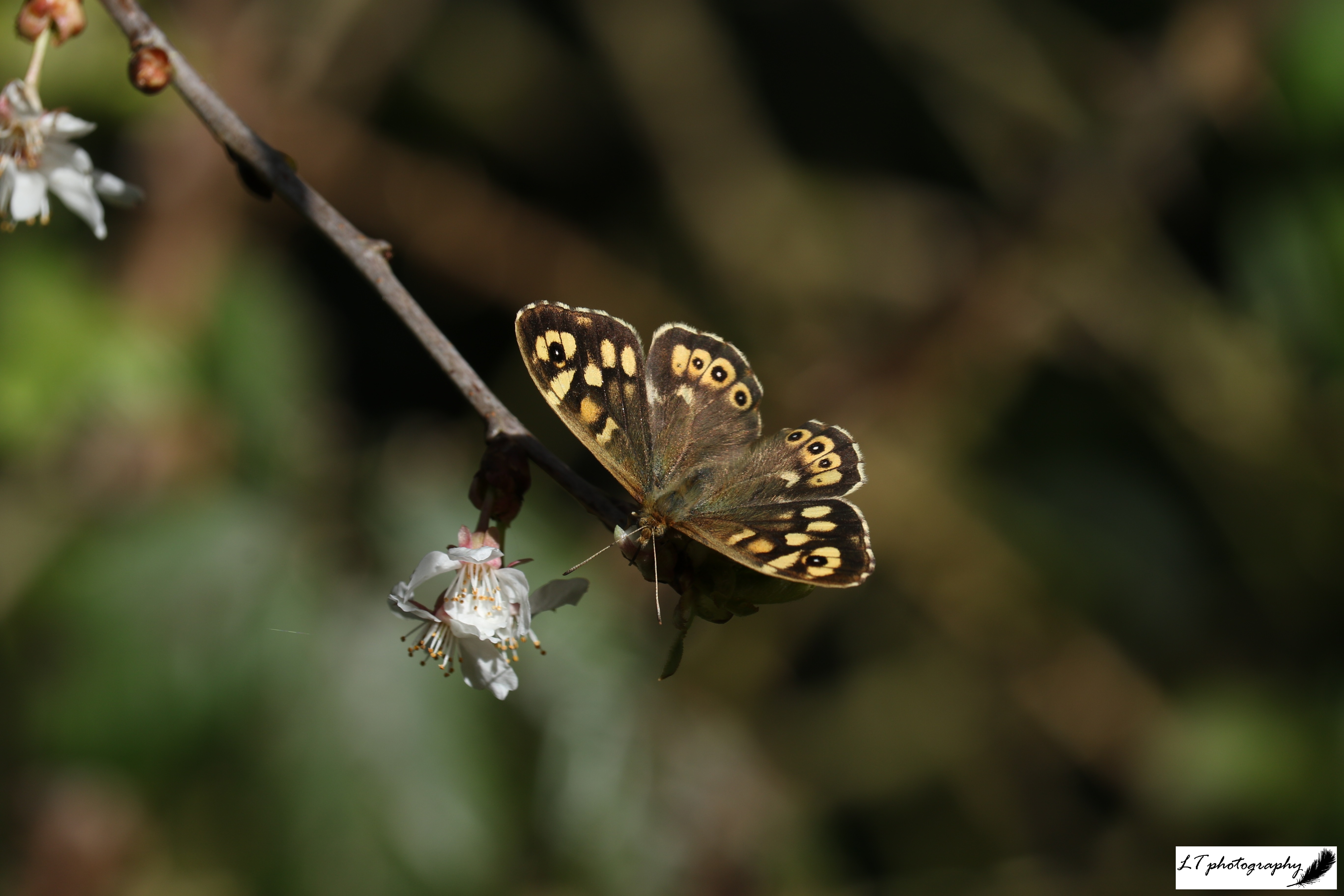
Buff-tailed bumblebees, 7-spotted ladybirds, and orange tip, red admiral, and speckled wood butterflies all emerged earlier this year, ranging from 2 to 46 days earlier. Conversely, queen wasps, and brimstone, peacock, gatekeeper, and small tortoiseshell butterflies all emerged later than 2023, ranging from 8 to 47 days later. Though not complete for all, the split does tend to be due to March to April species emerging earlier this year whereas April to June species emerged later this year. This may be due to April being a cooler, wetter month this year, impacting insect species more greatly than plant species that were already making their advance and were less impacted.

Shrubs

Spring 2023 mainly showed a trend for later shrub budburst, leaf unfurling and flowering, ranging from 3-27 days from March to May. In contrast, for spring 2024, the majority of events for shrubs occurred earlier, ranging from 1 to 53 days earlier from December through to May. These included for blackthorn, dog rose, elder, hawthorn and hazel, with the only later event being for red female hazel flowers being observed. This trend shows similarities to those of trees and spring flowering plants, and would be similarly due to a warmer, wetter winter and start of spring, allowing events to occur earlier and shrubs to get a head start on the season.

Birds

Following on from the last two years (2022 and 2023), the dates of bird events during spring 2024 showed no clear trend, with a split between different species and events. Rooks began building their nests earlier, chiffchaffs and swallows arrived earlier, song thrushes and yellowhammers first sang earlier, and the first wrens fledged earlier. Conversely, blackbirds first sang later, the first blackbirds fledged later, blackcaps, cuckoos and house martins arrived later, and great-spotted woodpeckers drummed later.

Some of these event timing changes will be due to spring temperatures and weather conditions on short term and long term scales. Other reasons are less obvious currently, but the hope is that bird events will still have been timed right with other species to make the most of resources this year.

Conclusion

Spring 2024 was a thoroughly odd season, varying from month-to-month, but feeling like wet weather prevailed more than the normal. In the end it was vibrant and colourful, though missing the traditional spring feeling. This year spring was heavily effected by climatic changes and changes to weather patterns, and this may become typical during the springs to come. It is really hard to predict then how each season will play out, and it will be interesting to see now how all British species cope with such unpredictability as time goes on. Only time will tell!

Species List

  • Alder (Tree) Alnus glutinosa
  • Ash (Tree) Fraxinus excelsior
  • Blackbird (Bird) Turdus merula
  • Blackcap (Bird) Sylvia atricapilla
  • Blackthorn (Shrub) Prunus spinosa
  • Bluebell (Flowering Plant) Hyacinthoides non-scripta
  • Brimstone butterfly (Insect) Gonepteryx rhamni
  • Buff-tailed bumblebee (Insect) Bombus terrestris
  • Chiffchaff (Bird) Phylloscopus collybita
  • Common wasp (Insect) Vespula vulgaris
  • Cowslip (Flowering Plant) Primula veris
  • Cuckoo (Bird) Cuculus canorus
  • Cuckooflower (Flowering Plant) Cardamine pratensis
  • Daffodil (Flowering Plant) Narcissus spp.
  • Dog rose (Shrub) Rosa canina
  • Early purple orchid (Flowering Plant) Orchis mascula
  • Elder (Shrub) Sambucus nigra
  • English oak (Tree) Quercus robur
  • Field maple (Tree) Acer campestre
  • Gatekeeper butterfly (Insect) Pyronia tithonus
  • Greater stitchwort (Flowering Plant) Stellaria holostea
  • Great-spotted woodpecker (Bird) Dendrocopos major
  • Hawthorn (Shrub) Crataegus monogyna
  • Hazel (Shrub) Crataegus monogyna
  • Horse chestnut (Tree) Aesculus hippocastanum
  • House martin (Bird) Delichon urbicum
  • Lesser celandine (Flowering Plant) Ficaria verna
  • Norway maple (Tree) Acer platanoides
  • Orange-tip butterfly (Insect) Anthocharis cardamines
  • Oxeye daisy (Flowering Plant) Leucanthemum vulgare
  • Peacock butterfly (Insect) Aglais io
  • Primrose (Flowering Plant) Primula vulgaris
  • Red admiral butterfly (Insect) Vanessa atalanta
  • Rook (Bird) Corvus frugilegus
  • Seven-spot ladybird (Insect) Coccinella septempunctata)
  • Silver birch (Tree) Betula pendula
  • Small tortoiseshell butterfly (Insect) Aglais urticae
  • Snowdrop (Flowering Plant) Galanthus spp.
  • Song thrush (Bird) Turdus philomelos
  • Speckled wood butterfly (Insect) Pararge aegeria
  • Swallow (Bird) Hirundo rustica
  • Sycamore (Tree) Acer pseudoplatanus
  • Wild cherry (Tree) Prunus avium
  • Wild garlic (Flowering Plant) Allium ursinum
  • Wood anemone (Flowering Plant) Anemone nemorosa
  • Wren (Bird) Troglodytes troglodytes
  • Yellow archangel (Flowering Plant) Lamium galeobdolon
  • Yellowhammer (Bird) Emberiza citrinella

Spring 2023: How It Happened

The last few years spring has been unusual and unpredictable, with the effects of climate change changing from month-to-month, year-to-year in Dorset. This year has fitted into this with months switching back and forth between record breaking dry spells or heat waves to rainfall or low temperatures. This is bound to have had an effect on nature and the wildlife around us, which is interesting to explore.

Last year there were trends towards earlier spring events or a slow start to spring and then a speeding up to events in April. I can already suggest that spring this year was slow to start as it gave me the opportunity to really experience spring as it got under way and unfolded in front of me. It will be interesting to see though, if this was the trend for trees, shrubs, flowers, insects and birds alike, if the trend differs to 2022 and how spring shaped up as a whole. Read on to see how my favourite season went this year in all its vibrancy!

Trees

Though in 2022 spring emergence dates for trees had crept earlier than the year before, in 2023 nearly all tree dates were later than 2022, following a more similar trend to 2021 and the proceeding years. Field maple and silver birch both flowered earlier in April, but otherwise ash, horse chestnut, english oak, wild cherry and Norway maple all budburst, unfurled leaves and flowered between 1 and 28 days later from March through to May. The same could be said for the leaves of field maple and silver birch. It was odd to see trees though, lacking their fineries for so long this year!

Flowers

In 2022, flowering times varied between species, but this could be split into half flowering earlier and half later than the year before. This year primroses, cuckooflowers and bluebells in woodland all flowered earlier (4, 2 and 1 day earlier respectively), but flowering trends generally followed a more similar pattern to to those of tree events, occurring later. For snowdrops, lesser celandines, daffodils, stitchwort, cowslips, wood anemones, early purple orchids, wild garlic, oxeye daisies, and hedgerow bluebells this was 1-16 days later between January and June. Interestingly yellow archangel was noticeably absent during its usual flowering time, and instead flowered 36 days later than in 2022 on 17th May, being greatly affected by climate and a great indicator of spring conditions.

Insects

Of 13 species recorded emerging during spring 2022, only 2 did not emerge earlier than the year before: the buff-tailed bumblebee and orange-tip butterfly. For 2023, spring flipped dates back around for insect emergences, with 10 out of 12 recorded species emerging later than the year before. This ranged from 2 days later with the speckled wood butterfly to 46 days later with the red admiral butterfly. The exceptions were peacock and comma butterflies, being recorded 15 and 36 days earlier respectively. This could be due to the colder spring impacting and delaying emergences, for example the brimstone butterfly, a common sign of spring, delayed its emergence until the 3rd of April 2023.

Shrubs

For shrub species recorded in 2022, spring events occurred both earlier and later than in 2021, with no obvious trends. In comparison, spring 2023 showed an obvious trend, with nearly all recorded budburst, first leaf unfurling and flowering for 6 species, occurring later than 2022. The exceptions were dog rose flowering earlier in May and hazel catkins flowering earlier in January. The other spring events took place 3-27 days later from February to May. It was an odd year to see blackthorn flowering 2 weeks later within March and meeting its peak in April, and hawthorn first flowering in May, later than usual.

Birds

There was a split with spring bird events in 2022, with events closer to the start of the season occurring later, and those towards the second half occurring earlier than 2021. For 2023, it seems that the dates of spring bird events were also split, but this time with less clear a trend. Rooks began building nests later and most birds fledged young later, but swallows arrived on the 11th April once again, and blackbirds began singing earlier in February. Some differences in event occurrence can be explained by spring temperatures and weather conditions, whereas some are less easily explained for 2023. It is expected though that the later spring will have an overall effect on bird species through other spring events occurring later.

Conclusion

Spring 2023 varied from month-to-month with weather, temperatures, natural events and vibrancy. As a whole, a general unsettled and cooler time led to spring events occurring later than the year before for many species. The concern is though, that there may be a mismatch between the occurrence of events for different species, such as trees and birds, which could have had a greater impact than currently known. Time will tell what the impact of spring 2023 may be!

Species List

  • Ash (Tree) Fraxinus excelsior
  • Blackbird (Bird) Turdus merula
  • Blackcap (Bird) Sylvia atricapilla
  • Blackthorn (Shrub) Prunus spinosa
  • Bluebell (Flowering Plant) Hyacinthoides non-scripta
  • Brimstone butterfly (Insect) Gonepteryx rhamni
  • Buff-tailed bumblebee (Insect) Bombus terrestris
  • Chiffchaff (Bird) Phylloscopus collybita
  • Comma butterfly (Insect) Polygonia c-album
  • Cowslip (Flowering Plant) Primula veris
  • Cuckoo (Bird) Cuculus canorus
  • Cuckooflower (Flowering Plant) Cardamine pratensis
  • Daffodil (Flowering Plant) Narcissus spp.
  • Dog rose (Shrub) Rosa canina
  • Early purple orchid (Flowering Plant) Orchis mascula
  • Elder (Shrub) Sambucus nigra
  • English oak (Tree) Quercus robur
  • Field maple (Tree) Acer campestre
  • Goldfinch (Bird) Carduelis carduelis
  • Greater stitchwort (Flowering Plant) Stellaria holostea
  • Great-spotted woodpecker (Bird) Dendrocopos major
  • Hawthorn (Shrub) Crataegus monogyna
  • Hazel (Shrub) Crataegus monogyna
  • Horse chestnut (Tree) Aesculus hippocastanum
  • House martin (Bird) Delichon urbicum
  • House sparrow (Bird) Passer domesticus
  • Lesser celandine (Flowering Plant) Ficaria verna
  • Meadow brown butterfly (Insect) Maniola jurtina
  • Norway maple (Tree) Acer platanoides
  • Orange-tip butterfly (Insect) Anthocharis cardamines
  • Oxeye daisy (Flowering Plant) Leucanthemum vulgare
  • Painted lady butterfly (Insect) Vanessa cardui
  • Peacock butterfly (Insect) Aglais io
  • Primrose (Flowering Plant) Primula vulgaris
  • Red admiral butterfly (Insect) Vanessa atalanta
  • Red-tailed bumblebee (Insect) Bombus lapidarius
  • Rook (Bird) Corvus frugilegus
  • Seven-spot ladybird (Insect) Coccinella septempunctata)
  • Silver birch (Tree) Betula pendula
  • Small tortoiseshell butterfly (Insect) Aglais urticae
  • Snowdrop (Flowering Plant) Galanthus spp.
  • Song thrush (Bird) Turdus philomelos
  • Speckled wood butterfly (Insect) Pararge aegeria
  • Starling (Bird) Sturnus vulgaris
  • Swallow (Bird) Hirundo rustica
  • Swift (Bird) Apus apus
  • Wild cherry (Tree) Prunus avium
  • Wild garlic (Flowering Plant) Allium ursinum
  • Wood anemone (Flowering Plant) Anemone nemorosa
  • Wren (Bird) Troglodytes troglodytes
  • Yellow archangel (Flowering Plant) Lamium galeobdolon
  • Yellowhammer (Bird) Emberiza citrinella

How to… Identify British Tree Species

A majestic oak standing tall in the landscape, watching as centuries pass it by. A silver birch with drooping branches, embellished with leaves, slowly blowing in the breeze. An alder leaning over the edge of a river, spreading its branches to shade the bank beneath it. From capturing the imaginations of children to symbolising strength and life for adults, trees in all their forms are an important part of the landscape and culture within Britain.

With over 70 species in the UK alone, trees come in all shapes and sizes, and can be found anywhere from our highlands to our cities. Trees colonised Britain following the last glaciation, and have since become intertwined with our very own history. They provide us with so much, including resources, such as medicines and building materials, improved air quality, homes for wildlife, and even cultural services, such as therapy through forest bathing. Thus, they are a very important part of our environment!

Now, as our reliance on trees grows and the threats to them increase, it is surprising how little people know about trees in general. For example, the average Brit is unable to name more than five tree species, and a third even believe a money tree is a real species! With two thirds of the public now wanting to learn a little more about the trees in their area, here’s my handy guide to help you identify 10 common tree species that can be found in the UK.

Tree Species

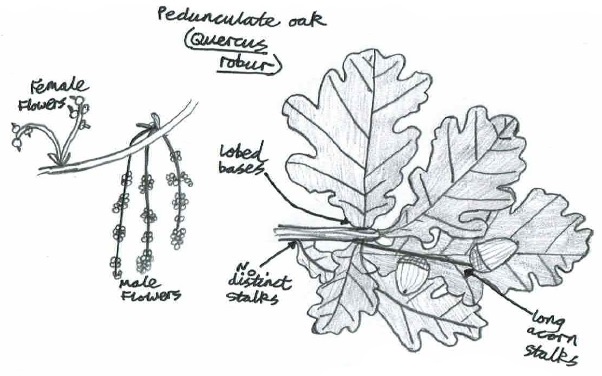
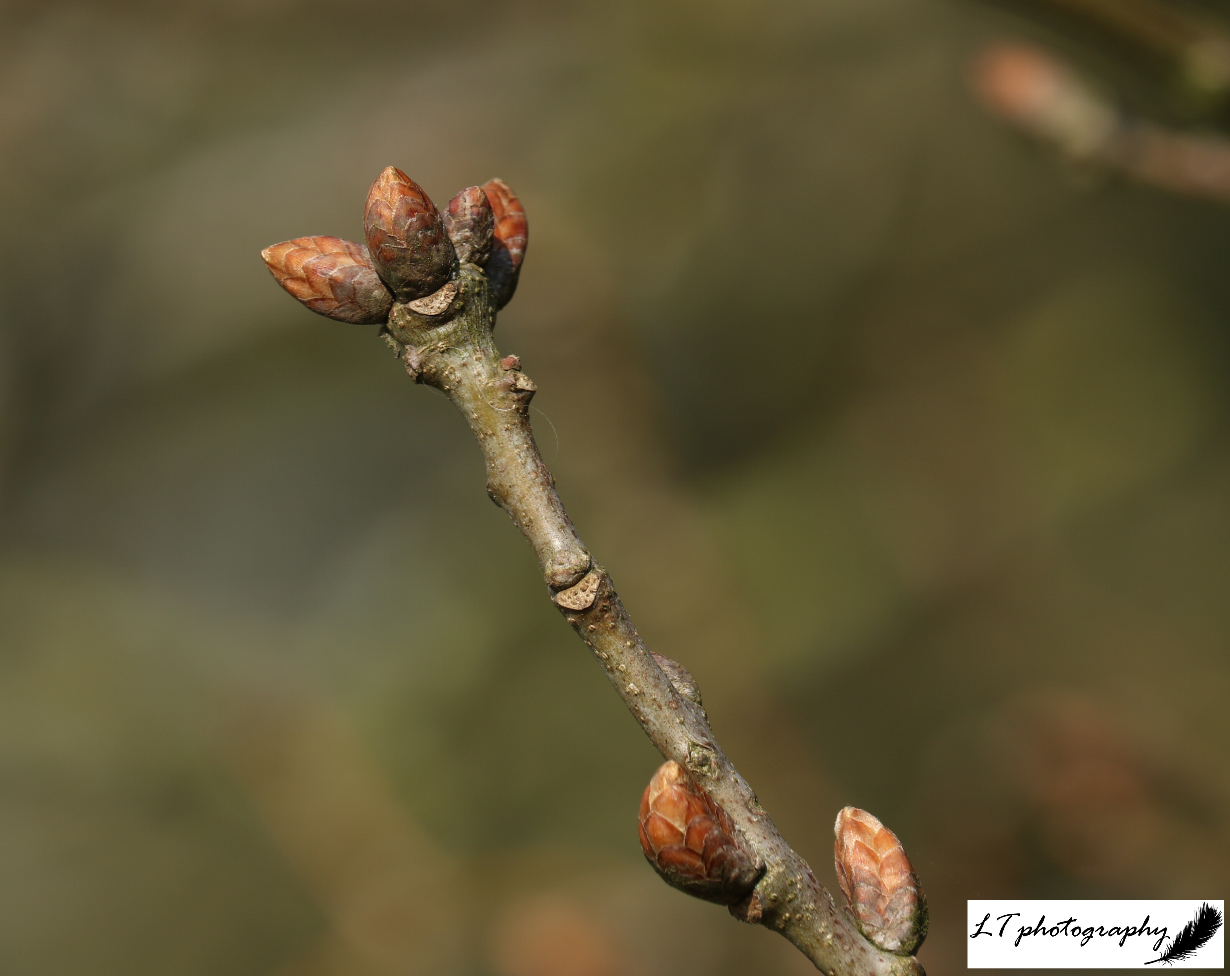
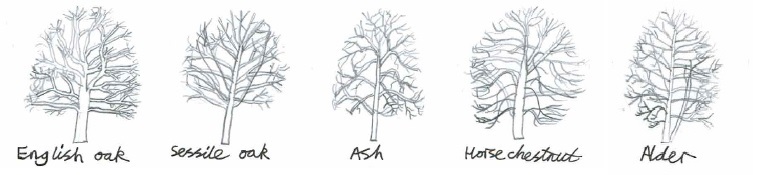
1. Pedunculate or English Oak (Quercus robur)

  • Family: Fagaceae – related to species such as beech and sweet chestnut
  • Origin: Native
  • Shape and size: Up to 40m tall, upward-reaching and broad crown
  • Stems and twigs: Massive rugged grey-brown trunk
  • Leaves: 10-12cm long, oblong, and lobed, turning brown in autumn
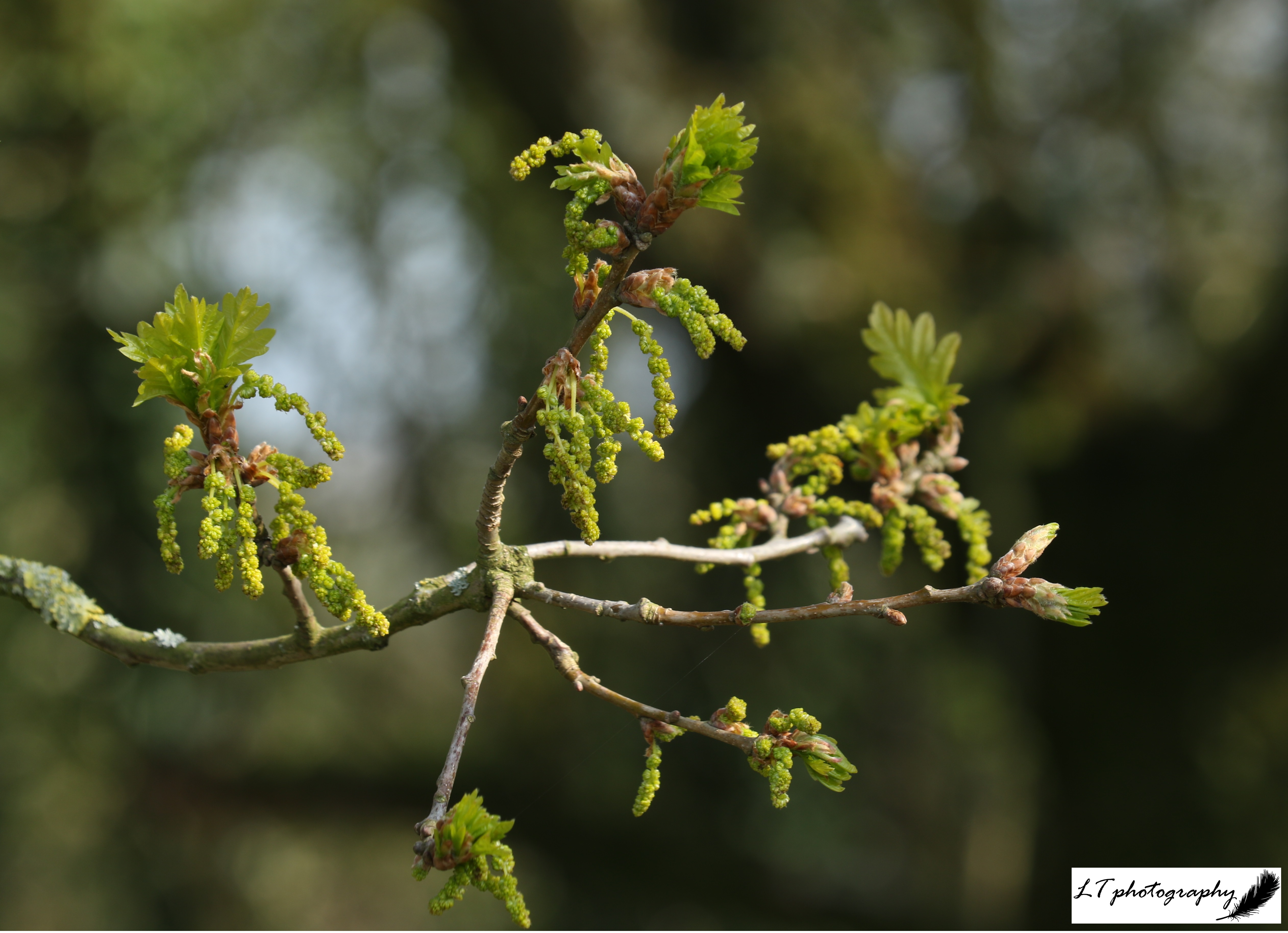
  • Flowers: On the same tree and flowering April-June. Male flowers= yellow-green catkins; female flowers= pinkish and on short stalks
  • Seeds: Produces the familiar acorn, with scaly cups and clusters carried on long stalks
  • Range & habitat: Widespread and common throughout Britain, found in habitats ranging from deciduous and mixed woodlands to open grassland and hedgerows

In Winter: Look for rounded buds that have overlapping scales and are found in clusters at the end of each shoot

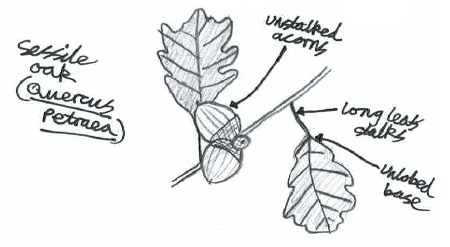
2. Sessile oak (Quercus petraea)

  • Differs to Pedunculate Oak in that the leaves taper to an unlobed base and have long stalks.
  • Buds in winter have more scales (more than 20).
  • Also, the clustered acorns are almost stalk-less with downy cups.
  • Narrower in shape, prefers more acid soils, and is more common in the West of Britain.

3. Common Ash (Fraxinus excelsior)

  • Family: Oleaceae – related to olive trees and lilac
  • Origin: Native
  • Shape and size: Tall and domed with widely spaced branches, growing up to 35m
  • Stems and twigs: Bark is pale brown to grey, becoming rugged with age
  • Leaves: Opposite and toothed, with 9-13 stalked leaflets that have long tips
  • Flowers: Male and female flowers typically grow on different trees, but both have purple flowers growing in clusters before the leaves
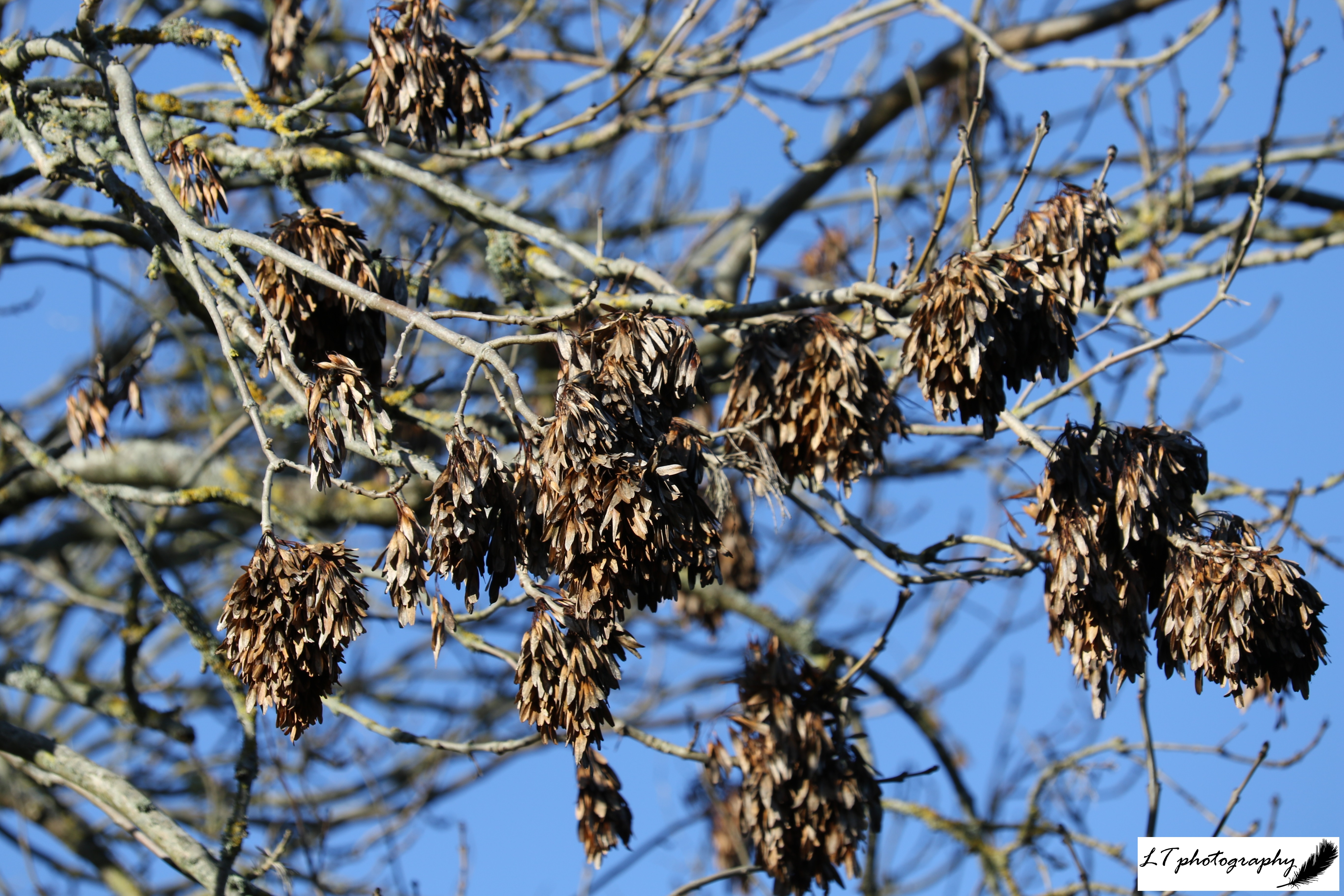
  • Seeds: Single seeds with a long wing (known as keys)
  • Range & habitat: Woods and hedges, in particular flourishing on a lime-rich/well-drained soil

In Winter: Smooth twigs with distinctive hairless black buds, and ridged bark on adult trees that resembles a diamond pattern

4. Horse Chestnut (Aesculus hippocastanum)

  • Family: Sapindaceae – related to lychee and maples
  • Origin: Non-native (introduced in the 1500s from the Balkan peninsula in southeastern Europe)
  • Shape and size: Arching branches, usually turned up at the ends, growing up to 35m tall
  • Stems and twigs: Bark is scaly and red-brown or dark grey-brown
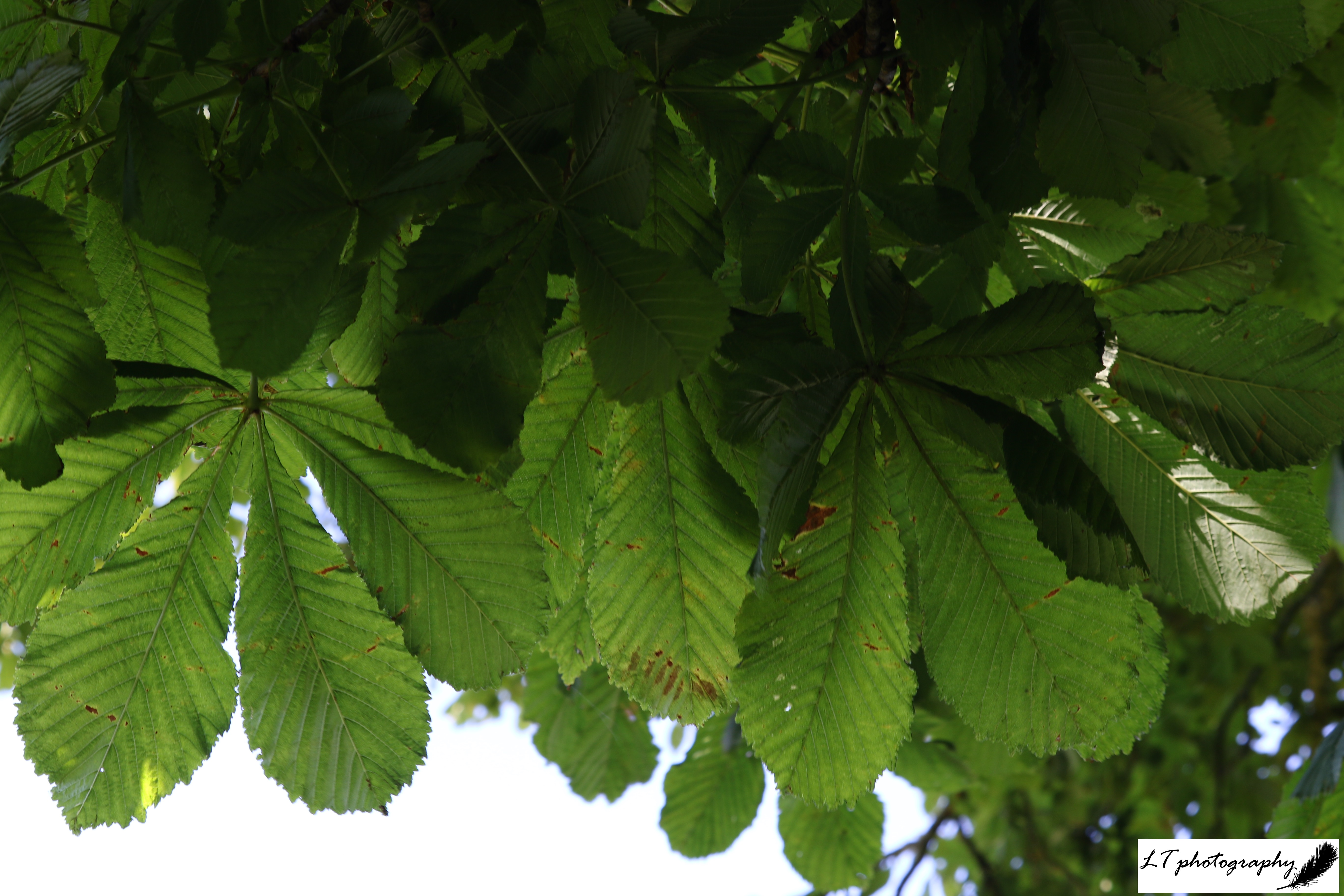
  • Leaves: Five to seven large, thick, stalkless leaflets with pronounced veins and a long, tapering base
  • Flowers: Showy spike (candle) of white flowers with a yellow to pink spot
  • Seeds: Spiny fruit contains one or more shiny conkers
  • Range & habitat: It has now become a widespread and common sight across Britain, tolerating a wide range of soils

In Winter: Smooth bark and sticky buds

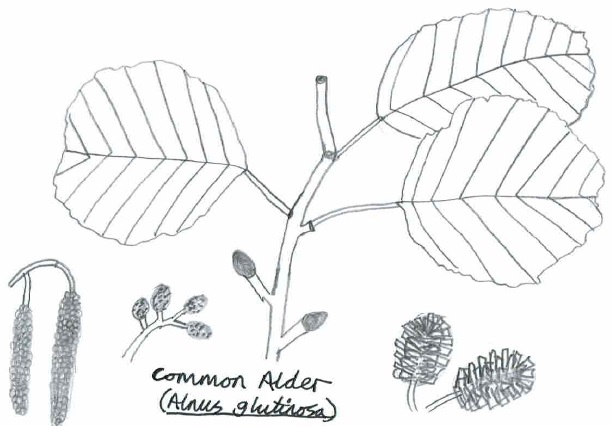
5. Common Alder (Alnus glutinosa)

  • Family: Betulaceae – related to hazel and birches
  • Origin: Native
  • Shape and size: Regular branching and conical shape, growing up to 25m
  • Stems and twigs: Dark brown bark that is often rough and sprouts young shoots
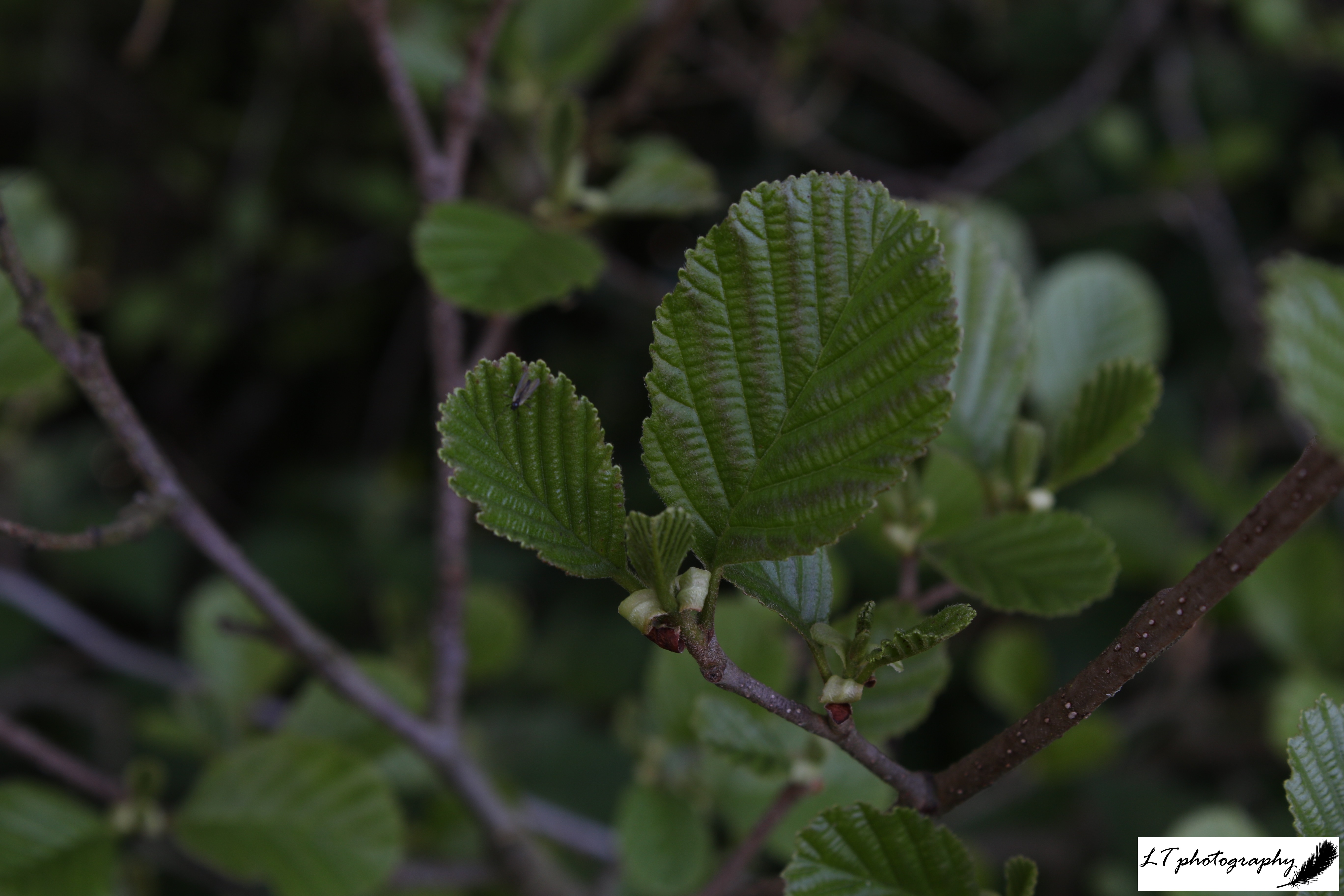
  • Leaves: Alternate, rounded, sometimes notched at the tip, and dark green
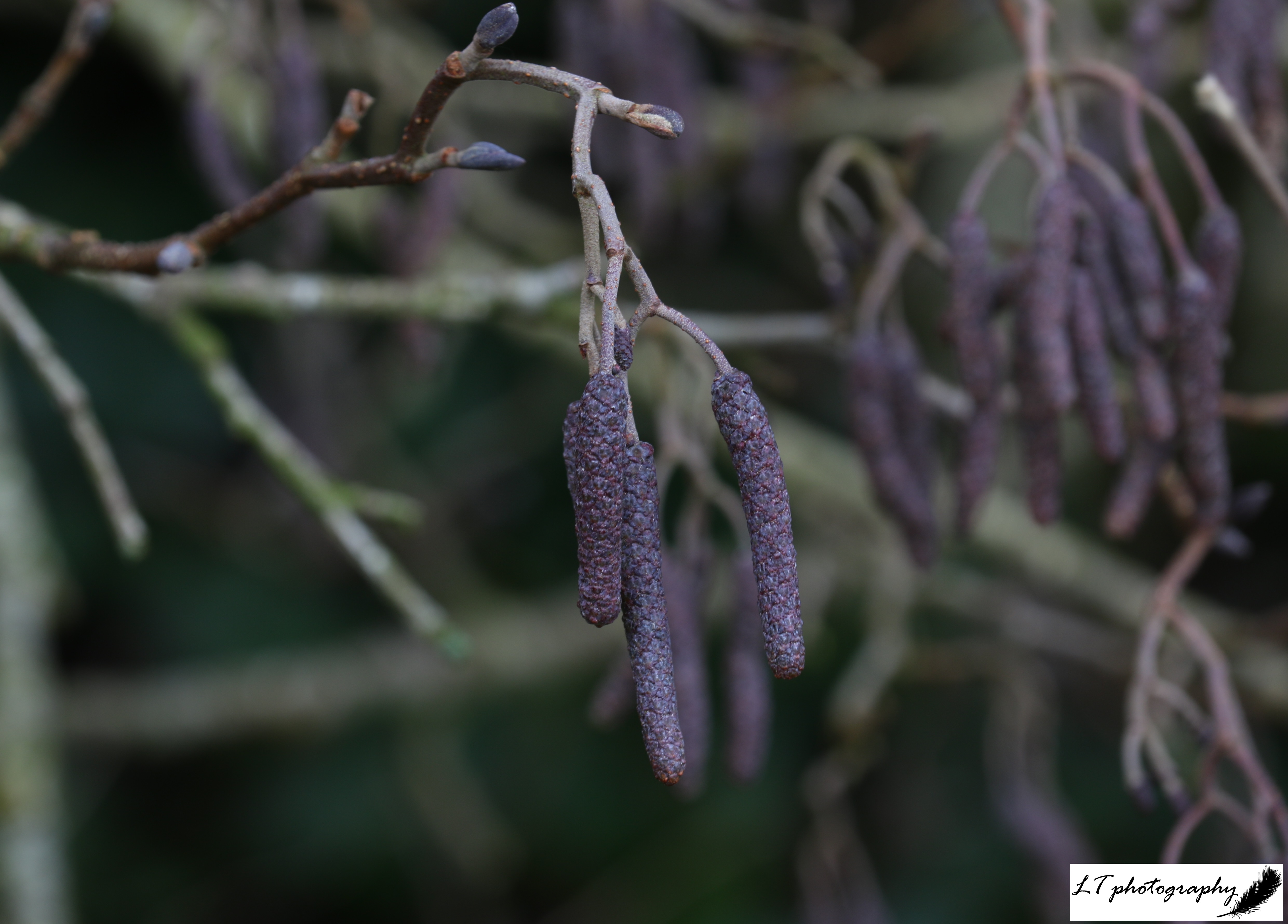
  • Flowers: Male and female catkins grow on the same tree, before the leaves. Male catkins= lambs’ tails; female catkins= small and egg-shaped
  • Seeds: Female catkins turn into a small cone, drying from green to brown, releasing the seeds. The seeds have corky outgrowths that keep them afloat on water
  • Range & habitat: Thrives in wet ground and is often seen lining the banks of rivers and streams across Britain

In Winter: Appears dull purplish due to purplish buds

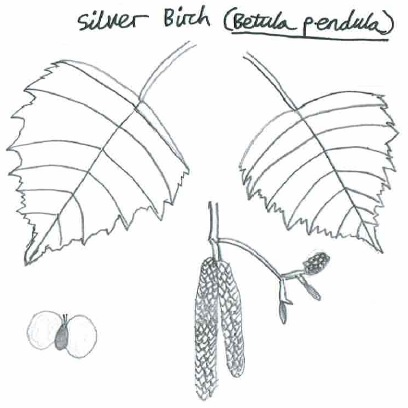
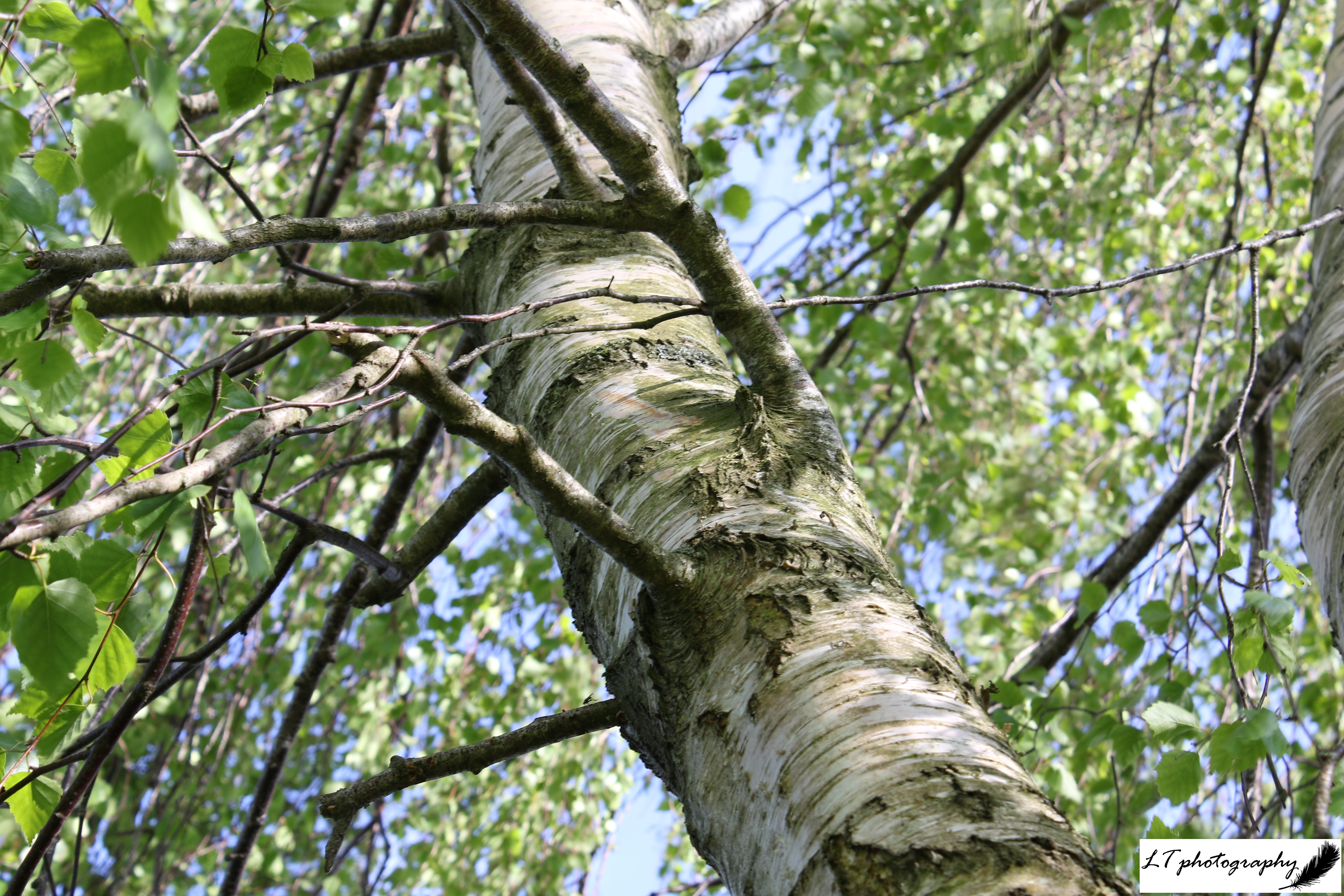
6. Silver Birch (Betula pendula)

  • Family: Betulaceae – related to alders, hazels and hornbeams
  • Origin: Native
  • Shape and size: Erect with pointed crown and drooping branches, reaching up to 30m
  • Stems and twigs: Young bark reddish, maturing to black and papery-white bark. Twigs smooth with small dark bumps
  • Leaves: Alternate, triangular and shiny, on slender stalks. Edges are ragged, with smaller teeth between larger main teeth
  • Flowers: Male catkins= purply-brown; female catkins= smaller and pale green
  • Seeds: Two winged and wind-borne, released in winter
  • Range & habitat: Form natural woodlands on light, dry soils throughout Britain

In Winter: Distinctive shape and bark

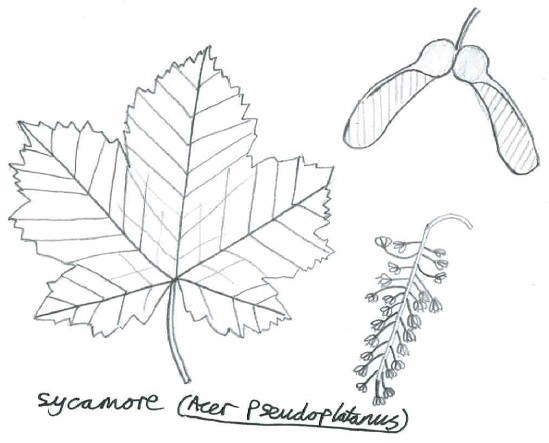
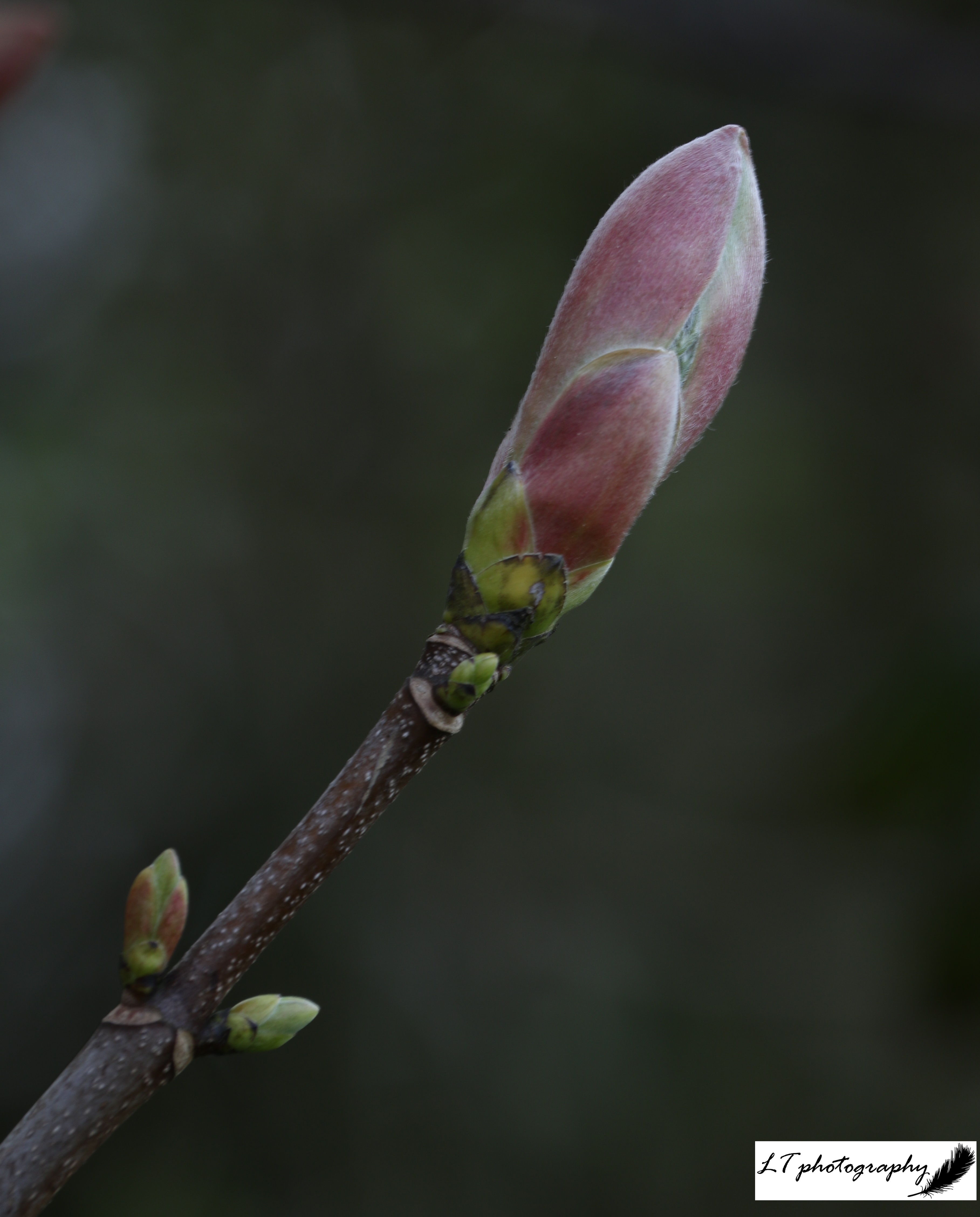
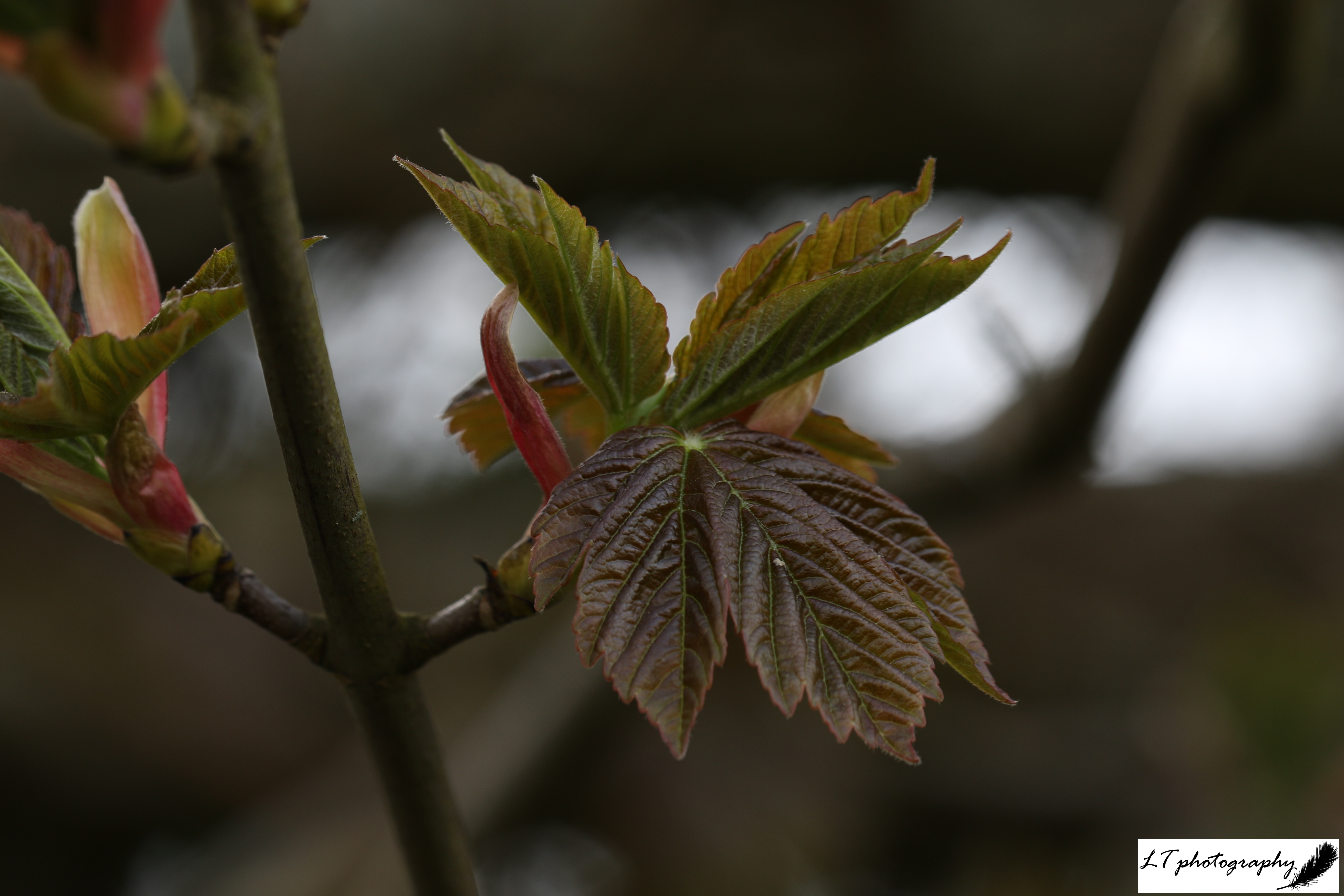
7. Sycamore (Acer pseudoplatanus)

  • Family: Sapindaceae – related to maples and horse chestnut
  • Origin: Non-native (introduced from Europe either in the 1500s or by the Romans)
  • Shape and size: Massive domed outline, with dense foliage and heavy lower branches, growing up to 35m
  • Stems and twigs: Grey fissured bark ages to pinkish-brown
  • Leaves: Opposite, five-lobed, and upper side dark green
  • Flowers: Greeny-yellow flowers in hanging clusters appear with the leaves
  • Seeds: Hairless keys in right-angled pairs
  • Range & habitat: Grow vigorously in all parts of Britain, being widely planted on their own for shelter or in woodlands and hedgerows

In Winter: Distinctive shape and bark

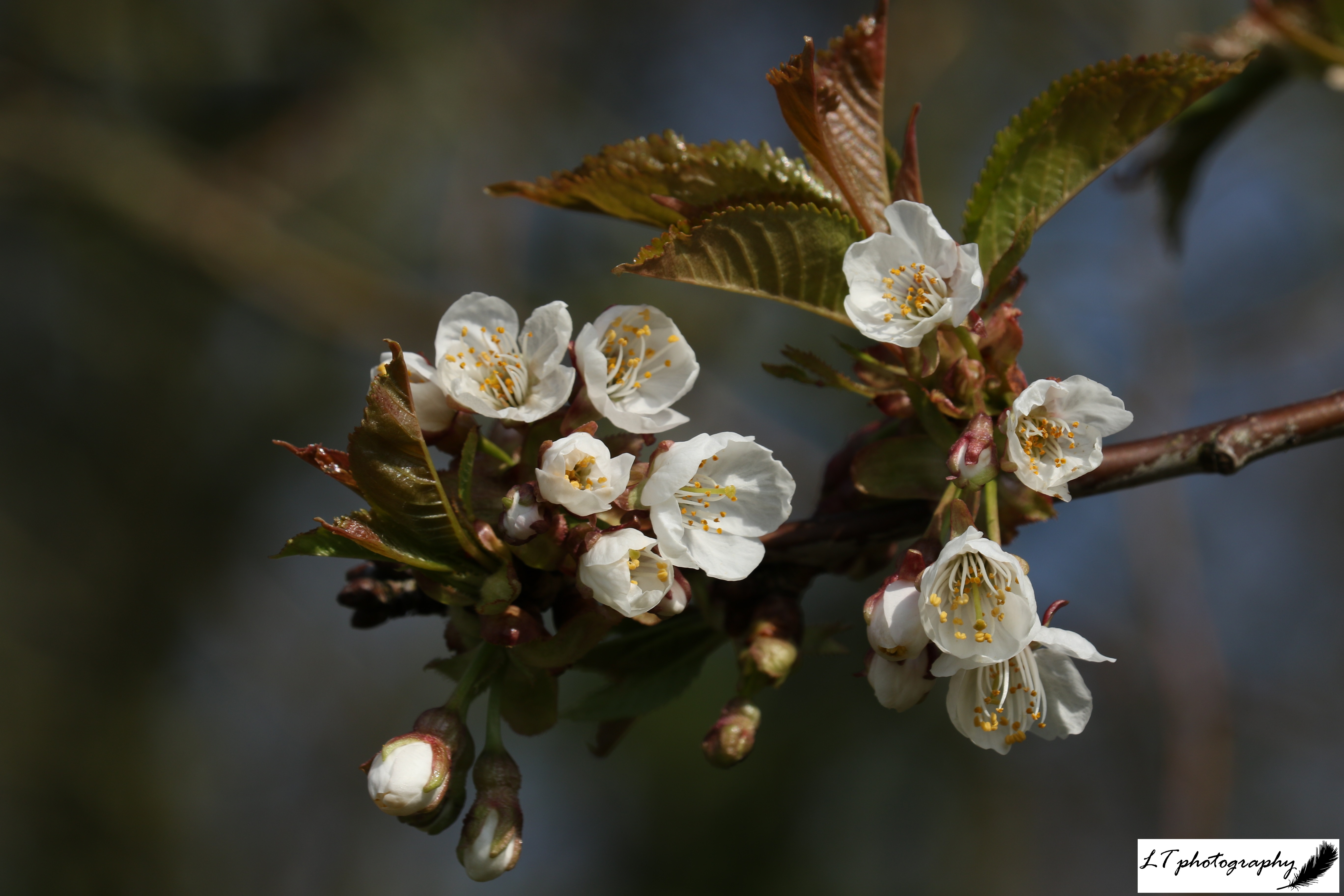
8. Wild Cherry (Prunus avium)

  • Family: Rosaceae – related to roses
  • Origin: Native
  • Shape and size: Pyramidal shape, reaching up to 30m
  • Stems and twigs: Shiny, red-brown bark peels in horizontal strips
  • Leaves: Alternate and oval with long points and regular, forward-pointing teeth, and two conspicuous red glands at the top of the stalk
  • Flowers: White flowers (blossom) appear before the leaves in small, loose clusters
  • Seeds: Produces round, red cherries
  • Range & habitat: Native throughout the UK, being found in woodlands and hedgerows

In Winter: Distinctive bark

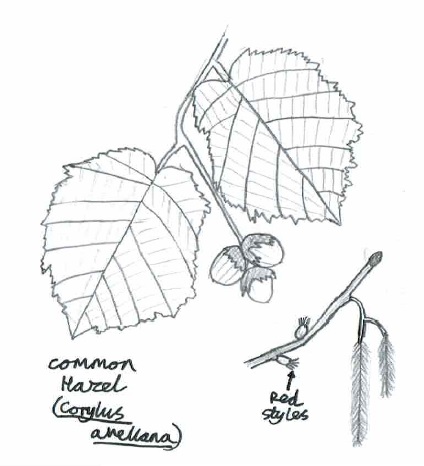
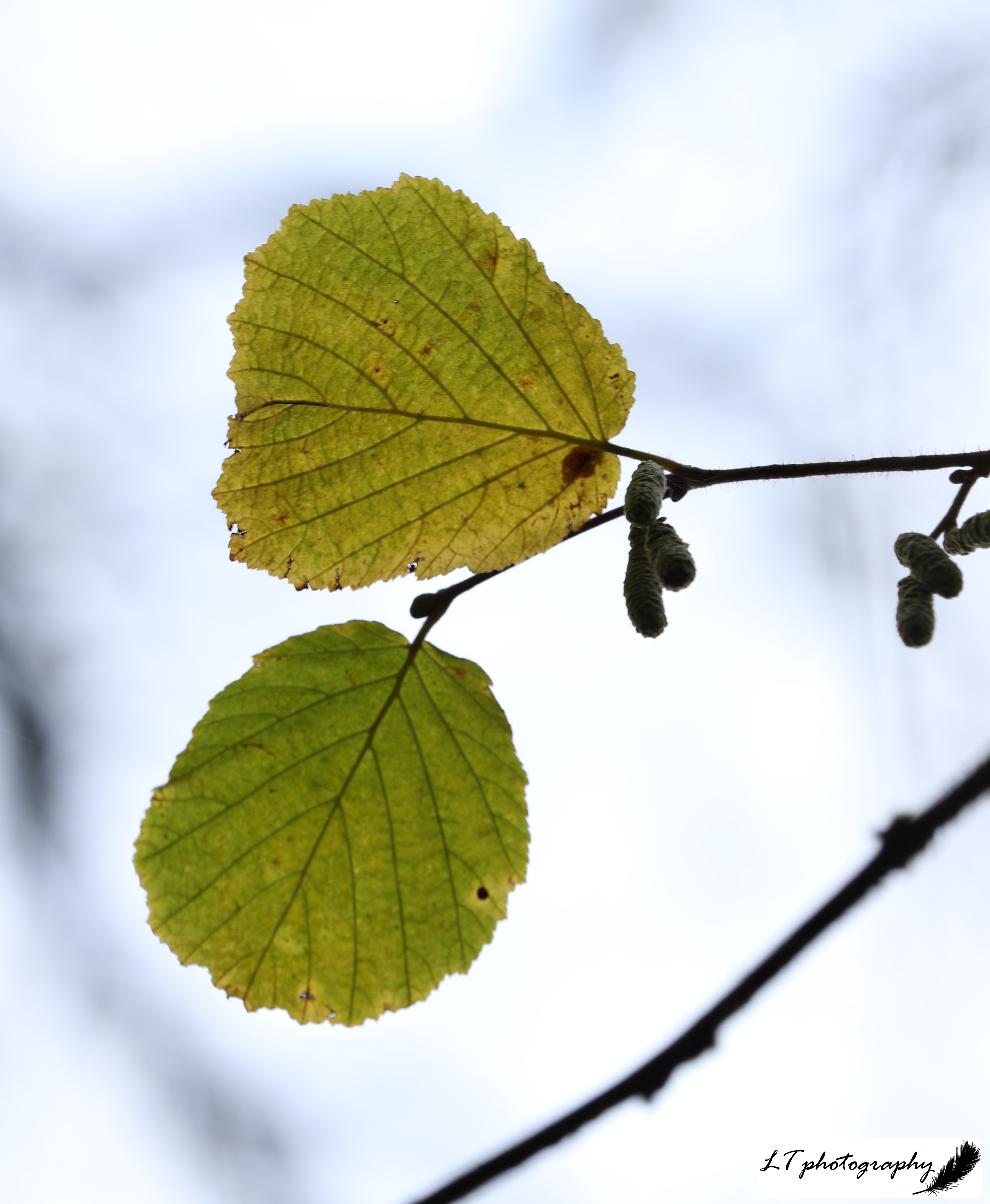
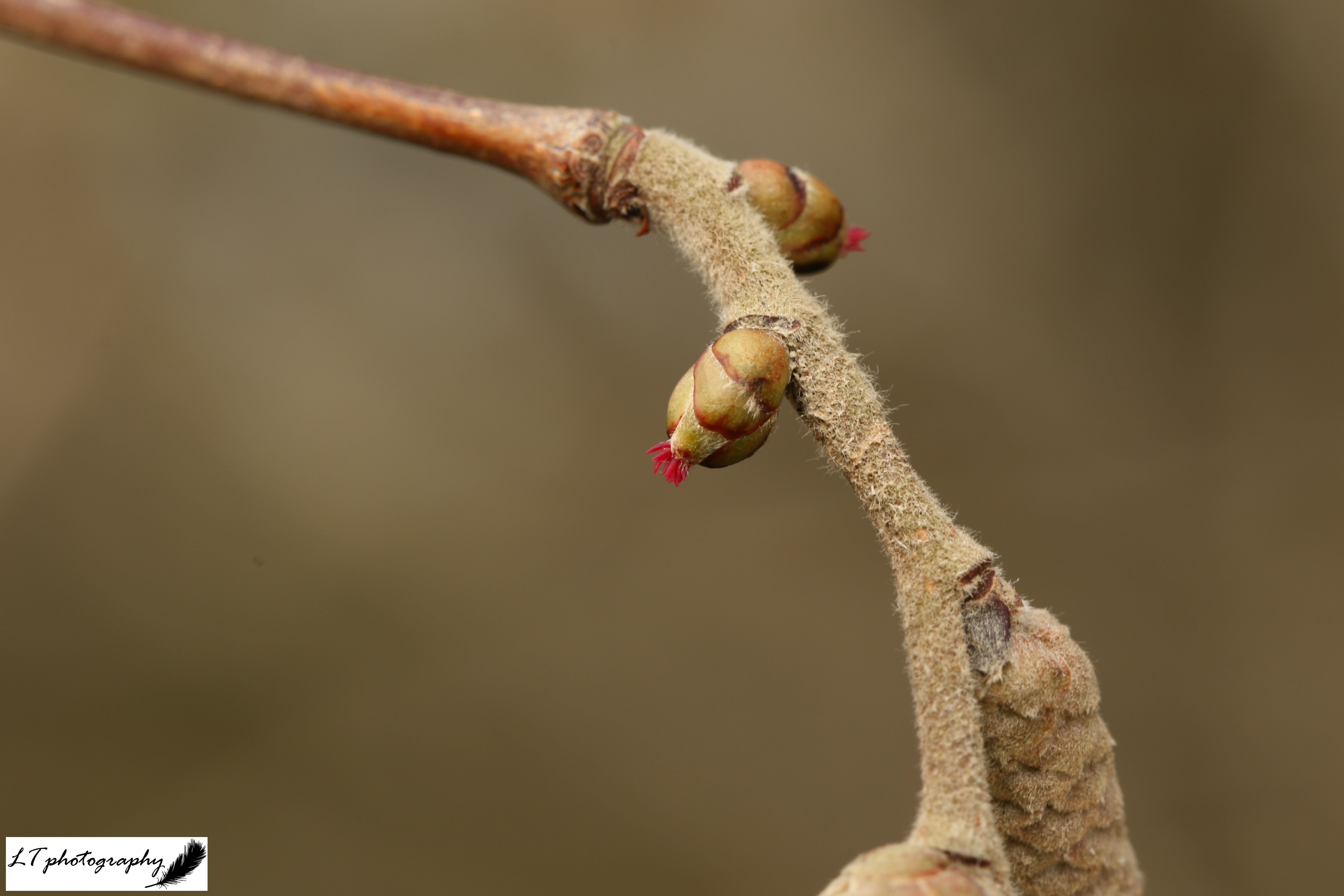
9. Common Hazel (Corylus avellana)

  • Family: Betulaceae – related to birches, alders and hornbeams
  • Origin: Native
  • Shape and size: Many stems rise from the ‘stool’, which if left uncut can reach 9m
  • Stems and twigs: Bark coppery brown, smooth and tending to peel
  • Leaves: Alternate, almost circular with sawtooth edges, hairy, and soft to the touch
  • Flowers: Male and female flowers found on the same tree. Male= lemon-yellow lambstail catkins; Female= tiny buds with red tassels
  • Seeds: An edible nut encased in a thick-green husk, ripening in autumn
  • Range & habitat: Grows throughout Britain, often found in woods, scrub areas, and hedges

In Winter: Distinctive shape and bark, accompanied by the male catkins from December
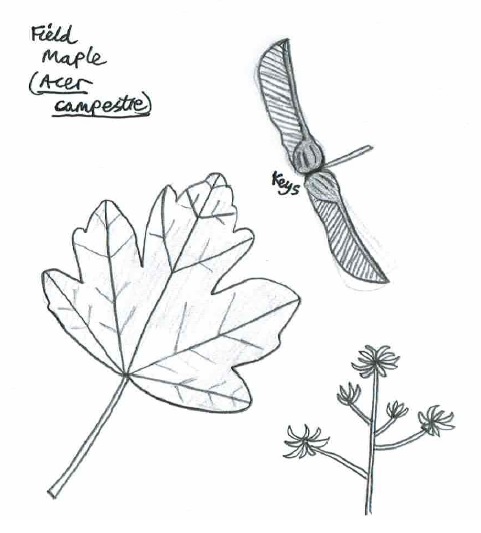
10. Field Maple (Acer campestre)

  • Family: Sapindaceae – related to lychee and horse chestnut
  • Origin: Native
  • Shape and size: Round-shaped tree with branches that droop at the end, growing up to 26m
  • Stems and twigs: Bark is grey or light brown and twigs downy, later corky
  • Leaves: Emerging leaves have a pinkish tinge, turning dull-green, and are opposite and small, with three main, round-tipped lobes and two smaller basal lobes
  • Flowers: Small yellow-green flowers form erect clusters
  • Seeds: Each pair of seed wings lie in an almost straight line, are often tinged with pink
  • Range & habitat: Frequent in England and East Wales in woods and hedgerows

In Winter: Sinuous trunk and distinctive shape

Drawings and photos all my own

How to… Identify Chalkland Wildflowers

Colourful, radiant, buzzing with life, a piece of paradise in the summer sunshine. All words to describe a small piece of chalk habitat nestled within the heart of my family’s farm in Dorset. Amidst a clay-dominated landscape, this small creation aims to emulate the approximately 41,000 hectares of lowland chalk grassland that can still be found across the UK. This super rich habitat contains over 40 species of flowering plants in every one square metre, giving chalk grassland its reputation as the tropical rainforest of Europe! Sadly though, 50% of chalk grassland has already been lost in Dorset alone since the 1950s.

In 2017, my Dad made the decision to transform a small triangular area of land on our farm into our very own chalk paradise. Though we do not live immediately on chalk downland, it can be found to the North and South of us. This makes our location ideal to create stopover habitat or a wildlife corridor, for the myriad of species that rely on these diverse plant communities. Following bringing in 40 tonnes of quarried chalk and lots of wildflower plugs and seeds, we now have a thriving 10m by 3m and 2m in height chalk mound.

Though my family’s chalk habitat is still in its relative infancy, over time it is transforming into a wildlife haven. From Grasshoppers and Marbled White Butterflies to blue Butterflies and Carder Bees, new species are popping up each and every year. This mini habitat has also been a great place for my mum to teach me all about the plant species that call chalkland grassland home. With her inspiration, I have put together a simple guide to identifying just some of the many wildflower species that are appearing on our mound.

Chalkland Wildflowers

Wild Marjoram (Origanum vulgare)Wild Marjoram

  • Family: Mint
  • Lifespan: Perennial (lives for several years)
  • Size: Short to medium height (30-60cm)
  • Stems: Erect, dark-red, downy and either round or square
  • Leaves: Oval, often slightly toothed, stalked, and 1.5-4.5cm in length
  • Flowers: Dark purple buds in loose clustered heads, opening to pale purple 6-8mm long flowers. Strongly aromatic. Flowers July-September
  • Range: Found throughout the UK (particularly in the South), but scarcer in Scotland
  • Fun Facts: This culinary herb is a symbol of happiness descended from Roman legend, with Origanum meaning ‘mountain joy’

Kidney Vetch (Anthyllis vulneraria)Kidney Vetch

  • Family: Legume
  • Lifespan: Annual (lives for one year) or perennial
  • Size: Sprawling and medium in height (up to 60cm), but very variable
  • Stems: Silkily hairy, round, and often greyish
  • Leaves: In pairs, they are silky white below and green above, and are 30-60mm in length
  • Flowers: Yellow, orange or a fiery red, and downy-white below. They are found in single heads (12-15mm across) or sometimes pairs. Flowers April-September
  • Range: Found throughout the UK, especially around the coast
  • Fun Facts: In the Middle Ages, it was known for speeding up wound healing, with vulneraria meaning ‘wound healer’. It was also once used to commonly treat kidney disorders

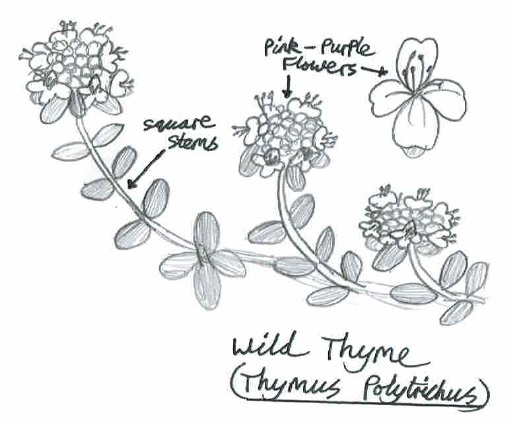
Wild Thyme (Thymus polytrichus) Wild Thyme

  • Family: Mint
  • Lifespan: Perennial
  • Size: Low to the ground, forming a mat of non-flowering rooting stems (up to 10cm in height)
  • Stems: Square with erect flowering stems
  • Leaves: Evergreen, short stalked, very small oval 4-8mm leaves in opposite pairs
  • Flowers: Faintly aromatic with pink-purple flowers in round and dense heads. Flowers May-September
  • Range: Widespread in South East England, but scattered distribution elsewhere
  • Fun Facts: Long regarded as the favourite flower of fairies, and associated with love. The Greek thumon though means ‘that which is included in a sacrifice’
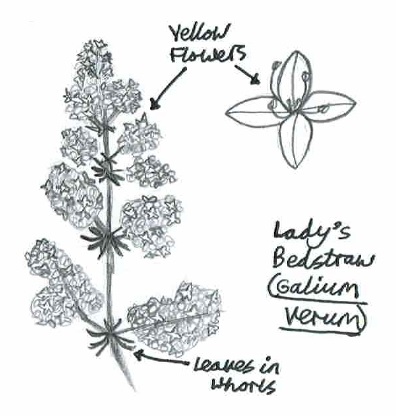
Lady’s Bedstraw (Galium verum)Lady's Bedstraw

  • Family: Madder/Bedstraw
  • Lifespan: Perennial
  • Size: Short to medium in height, often sprawling (up to 100cm)
  • Stems: Four-angled, almost hairless stems
  • Leaves: Dark green, long, narrow, shiny leaves in whorls of 8-12. Said to smell of new-mown hay
  • Flowers: Bright golden yellow, 2-4mm wide, in clusters, with a sweet honey-like scent. Only Bedstraw species in the UK with yellow flowers. Flowers June-September
  • Range: Widespread
  • Fun Facts: Associated with the story of the Virgin Mary giving birth to the baby Jesus, leading to the belief that a woman lying on a mattress of Lady’s Bedstraw would have a safe and easy childbirth

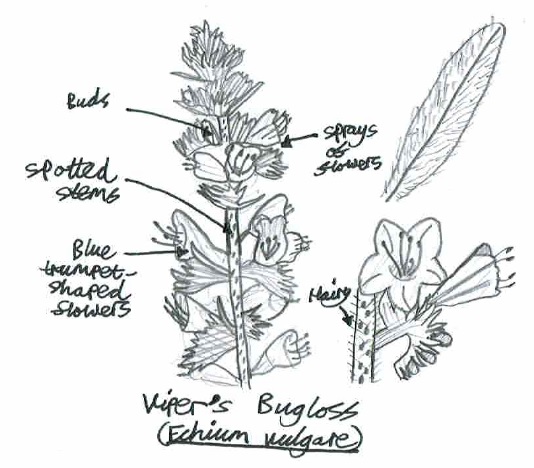
Viper’s Bugloss (Echium vulgare)Viper's Bugloss

  • Family: Borage/Forget-Me-Not
  • Lifespan: Biennial (flowers in its second year before dying) or perennial
  • Size: Medium to tall in height (up to 100cm)
  • Stems: Roughly hairy and spotted (red-based bristles)
  • Leaves: Narrow, oval-shaped lower leaves
  • Flowers: Flowers in drooping clusters of pink buds that open to become erect, blue, trumpet-shaped, open-mouthed flowers, 10-20mm long, in branched spikes. Flowers May-September
  • Range: Scattered distribution across the UK, being most common in the South
  • Fun Facts: The plant’s name comes from a time when it was believed to be a cure for snake-bites, reinforced by the dead flower-heads resembling a viper’s head

Rough Hawkbit (Leontodon hispidus)Rough Hawkbit

  • Family: Daisy
  • Lifespan: Perennial
  • Size: Short to medium in height (up to 60cm)
  • Stems: Very hairy, unbranched, leafless, and slightly swollen at the top
  • Leaves: Form a rosette of bluntly lobed leaves at the base of the flowering stem
  • Flowers: Golden-yellow, though often orange or reddish beneath, solitary and 20-40mm wide. Forms seed heads that look like dandelion clocks. Flowers late May-October
  • Range: Widespread and fairly abundant across the UK, apart from in the far North
  • Fun Facts: In Greek, Leontodon means ‘Lion’s tooth’, referring to the toothed leaves. The flowers are also rich in nectar and smell sweetly of honey

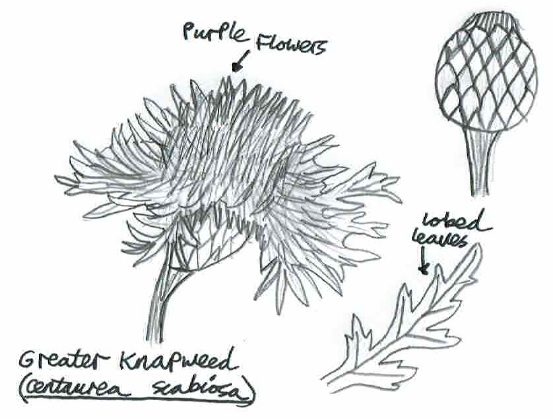
Greater Knapweed (Centaurea scabiosa)Greater Knapweed

  • Family: Daisy
  • Lifespan: Perennial
  • Size: Medium to tall in height (30-120cm)
  • Stems: Erect and grooved
  • Leaves: Lobed, where the lobes are positioned in pairs either side of the leaf centre. The leaves are 100-250mm long
  • Flowers: Purple, solitary and 30-60mm across. Flowers July-September
  • Range: Scattered across the UK, but predominantly grows in England
  • Fun Facts: Commonly used to treat wounds, bruises, sores and similar conditions

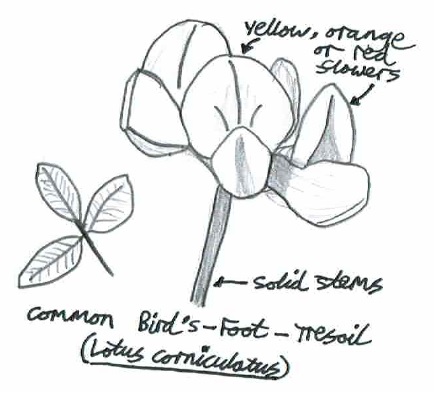
Common Bird’s-Foot-Trefoil (Lotus corniculatus)Common Bird's Foot Trefoil

  • Family: Legume
  • Lifespan: Perennial
  • Size: Short or medium in height and sprawling (up to 50cm)
  • Stems: Solid not hollow, and trailing
  • Leaves: Greyish-green, downy or hairless, and oval-shaped tapering to a point
  • Flowers: Deep yellow or orange, often partly red, and 10-16mm long, often 2-7 per flower head. Flowers May-September
  • Range: Widespread
  • Fun Facts: It has more than 70 common folk names including Eggs and Bacon. The name Bird’s-Foot-Trefoil reflects the resemblance to a bird’s foot, and is a larval food plant of Green Hairstreak and Dingy Skipper Butterflies

Ox-eye Daisy (Leucanthemum vulgare)Ox Eye Daisy

  • Family: Daisy
  • Lifespan: Perennial
  • Size: Medium in height (20-75cm)
  • Stems: Round, angled or square, erect, and slightly hairy
  • Leaves: Long-stalked, dark green, spoon-shaped, toothed and in a rosette around the base of the flowering stem
  • Flowers:  White, 20-60mm across, solitary and on sparsely leafy stalks. Flowers May-September
  • Range: Widespread
  • Fun Facts: In past times, an extract was obtained by boiling the plant down, that  was used in salves and medicines to cure a variety of ailments from liver disease to runny eyes. Largest native daisy species

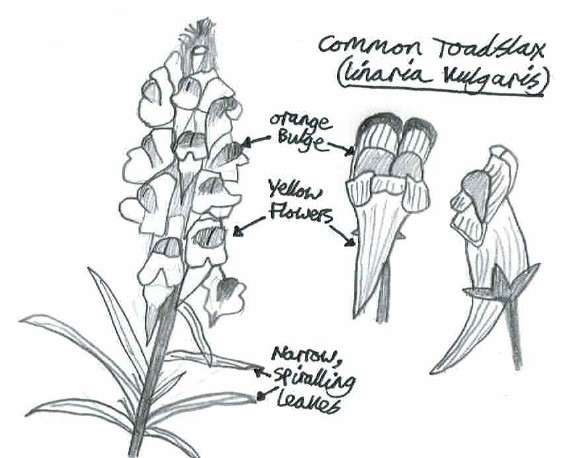
Common Toadflax (Linaria vulgaris)Common Toadflax

  • Family: Plantain
  • Lifespan: Perennial
  • Size: Short to medium in height (30-80cm)
  • Stems: Erect, grey-green, and hairless
  • Leaves: 30-80mm long, very narrow, untoothed, and spirally arranged up the stems
  • Flowers: 15-35mm long, yellow with an orange bulge and long straight spur, forming stalked spikes. Flowers June-October
  • Range: Widespread
  • Fun Facts: Most common Toadflax species in the UK, getting its name from previously being considered as useless, fit only for toads

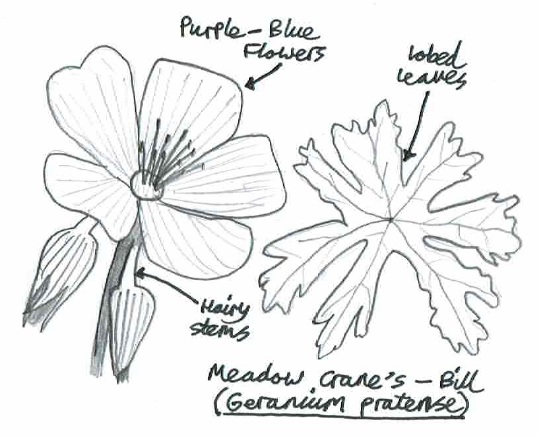
Meadow Crane’s-Bill (Geranium pratense)Meadow Cranesbill

  • Family: Geranium
  • Lifespan: Perennial
  • Size: Medium to tall in height (30-100cm)
  • Stems: Hairy, erect, and often reddish
  • Leaves: Have 5-9 lobes, cut nearly to the base
  • Flowers: Soft violet blue, petals not notched, 15-30mm wide. Flowers June-September
  • Range: Found throughout the UK, but rarer in South West England and East Anglia
  • Fact: With lesser known names such as ‘Jingling Johnny’ or Loving Andrews, it is a horticultural favourite dating back to before the Elizabethan times

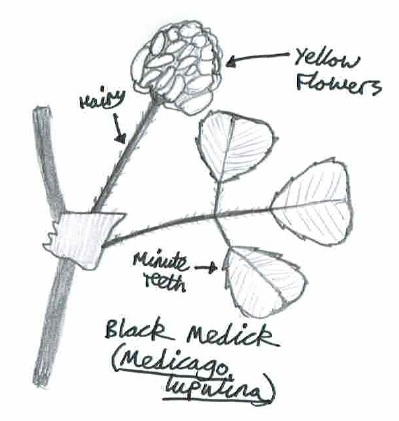
Black Medick (Medicago lupulina)Black Medick

  • Family: Legume
  • Lifespan: Annual or short-lived perennial
  • Size: Low in height (up to 60cm), and sprawling or erect
  • Stem: Round or square and hairy
  • Leaves: Trefoil, downy, and 5-20mm in length, with minute teeth
  • Flowers: Bright yellow and small, with 10-50 to one short-stalked rounded head (3-8mm wide). Flowers April-October
  • Range: Widespread across the UK, but sparser in Scotland
  • Facts: Name means ‘plant of the Medes’, referring to an ancient Middle Eastern people, whilst lupulina means ‘hop-like’, due to similarities with Hop Trefoil


Now get out there and see what you can find!


Drawings and photos all my own

How to…Use and Make the Most of a Camera Trap

There is nothing like the exhilaration of camera trapping. Setting up the camera trap/trail camera in a golden location, waiting with anticipation for the camera check day, and riding a rollercoaster when capturing something totally unexpected. Camera trapping is one highly addictive activity!

M2E31L53-53R392B293

So why is camera trapping so popular? Well, camera traps allow us to non-invasively open up a normally unseen world. This is a thrilling thing to be able to do, giving us the addictive ability to observe wildlife up close and personal without disturbance. In this way, camera traps can be used as an important tool to identify the presence or absence of species, monitor animal populations and record interesting behaviour.

M2E1L0-13R350B300

At home on my family’s farm, I use my camera trap to carry out surveys across our land, to find out what wildlife is present, how abundant these species are, and to experience new life in spring in all its glory. However you choose to use your camera trap, I can only say for you to have lots of fun and adventures whilst doing it!

M2E45L145-145R394B315

Buying a camera trap

So where do you start if you do not already own a camera trap? Well all off-the-shelf camera traps have similar components and operate on the same principles: a digital camera connected to an infrared sensor that “sees” warm moving objects. Camera traps typically range from £30 to £1000, meaning there is a lot of choice out there. To find the camera trap that is right for you though, you should consider these key questions:

  • How much are you willing to spend?
  • What are you going to be wanting to use it for?
  • Where are you going to be using it?
  • Do you want to use it during the daytime, night-time (black and white or colour) or both?
  • Do you want to take photos, videos or both?
  • Will you want increased capabilities, such as wireless, geo-tagging or higher detection capabilities?

The camera trap I use is a simple Bushnell model that I bought many years ago now for about £120.

How to use a camera trap to get the best from it

Camera traps have a lot of potential as they can remain operational 24/7 and can be left in the field for long periods of time. To increase your chance of camera trap success though, you need to set it up properly to maximise animal detection. Here are some handy tips to get you started:

  1. Visit your chosen site before setting up your camera trap to make sure it is the best site possible.16_04_20_Farm_Badger_Alley_5
  2. Do not forget to make sure your camera has another battery life and SD card room each time you set it up.
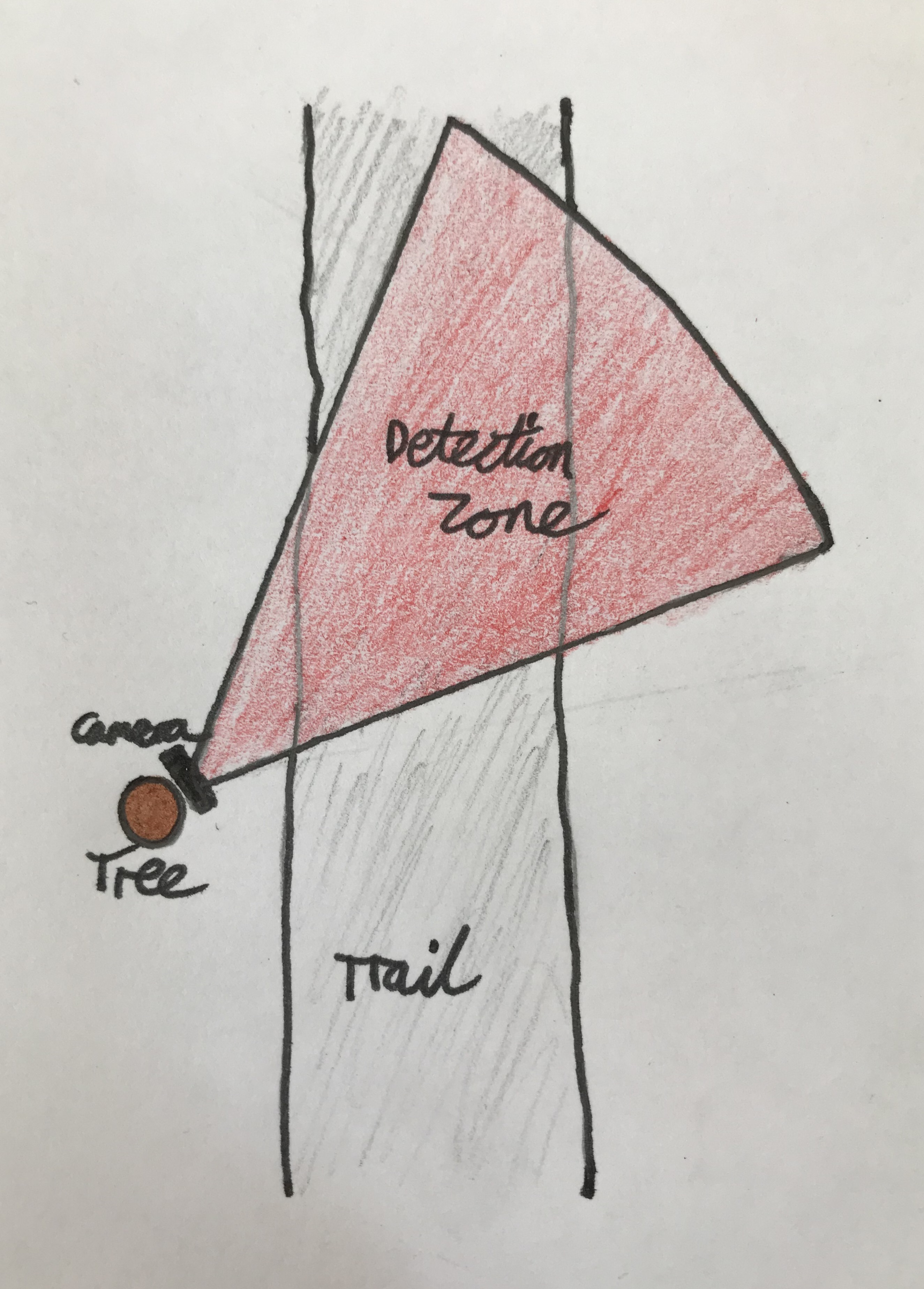
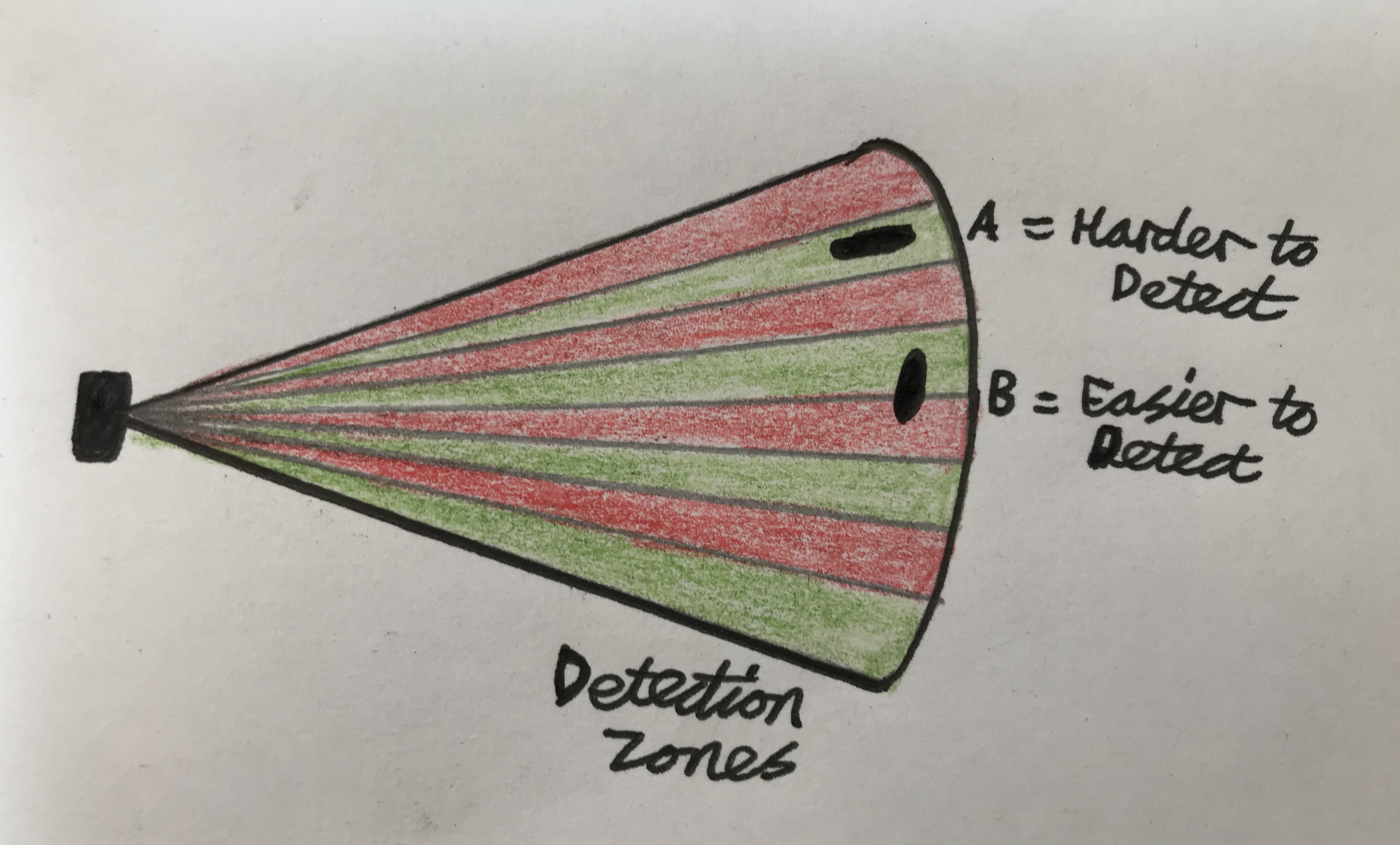
  3. Carefully select where to mount your camera trap, such as a sturdy tree or post, to make sure your camera will be supported and  positioned to take in your chosen field of view.Detection zone
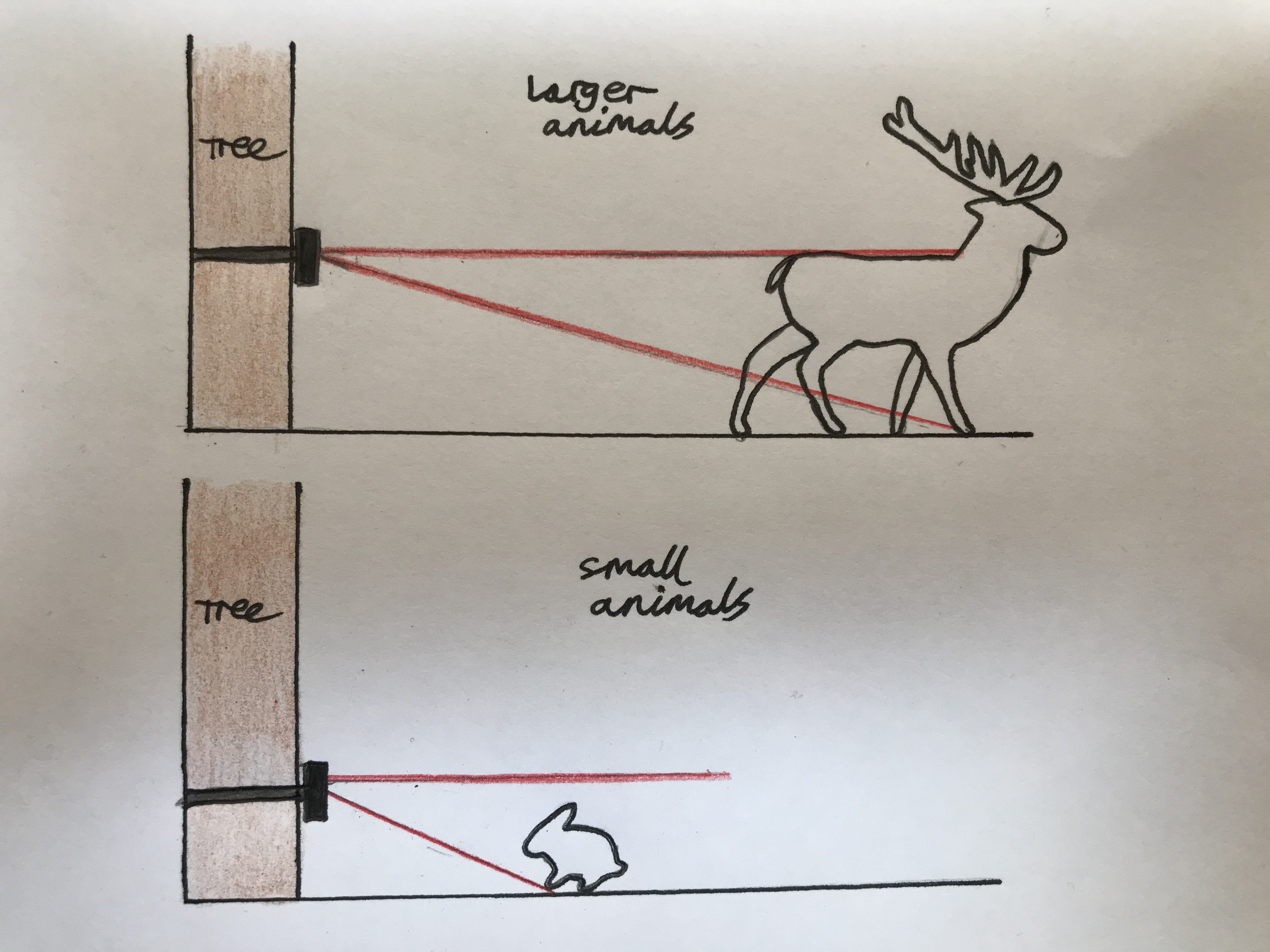
  4. Consider the height of the animal(s) you are trying to capture to increase detection and inclusion in the frame. For the best result, position your camera trap so it sits just below the target’s shoulder height.Camera Height
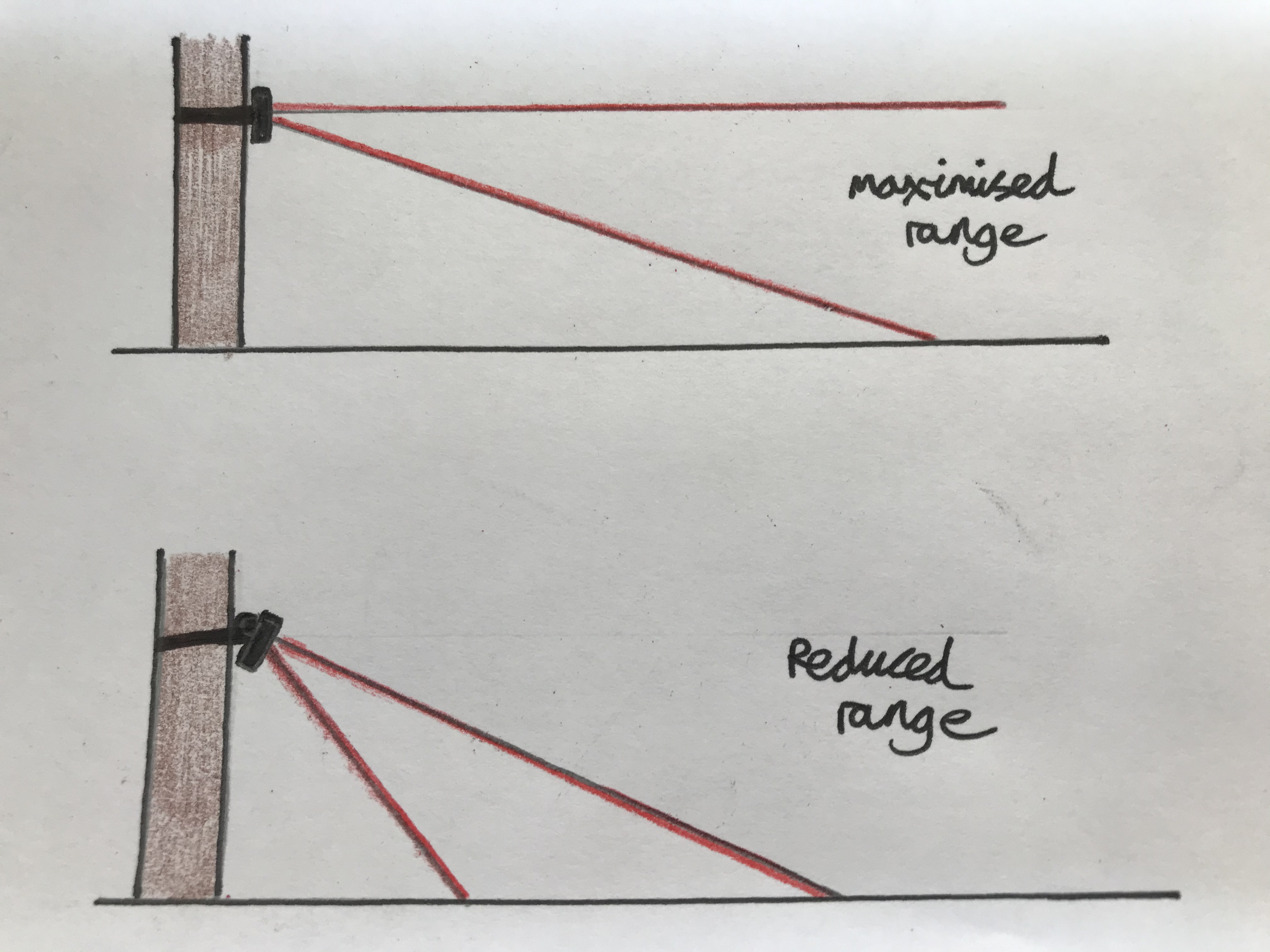
  5. Camera angle is as important as height when positioning the camera trap. For best result and to increase the detection range, you want the camera trap to aim horizontally at the subject. A stick is a great way to get a better angle for your camera. Camera angle
  6. Think about where you want the animal to be positioned in the frame. Larger animals are easier to detect so will be detected at longer ranges compared to smaller ones, and animals walking across the camera trap’s field of view will be more easily detected compared to walking towards it.Animal Position
  7. Try to reduce the number of false triggers by trimming back vegetation that could trigger the camera if moving in the wind. Do not remove enough to disturb your intended subjects though!
  8. And always do your research! The more you know about a site or species, the more likely you will get results.

Inspiration for camera trap sites and uses

Over the few years I have owned my own camera trap, I have used it for a number of different purposes and in a variety of locations. Here are some examples of my own work to help inspire you:

  • Abroad – In 2017, I was lucky enough to spend 2 weeks in Costa Rica on a field course for my Bachelor’s degree, and so I decided to take my camera trap along with me. This allowed me to get some cool sightings of some interesting wildlife

M2E43L24-32R350B300

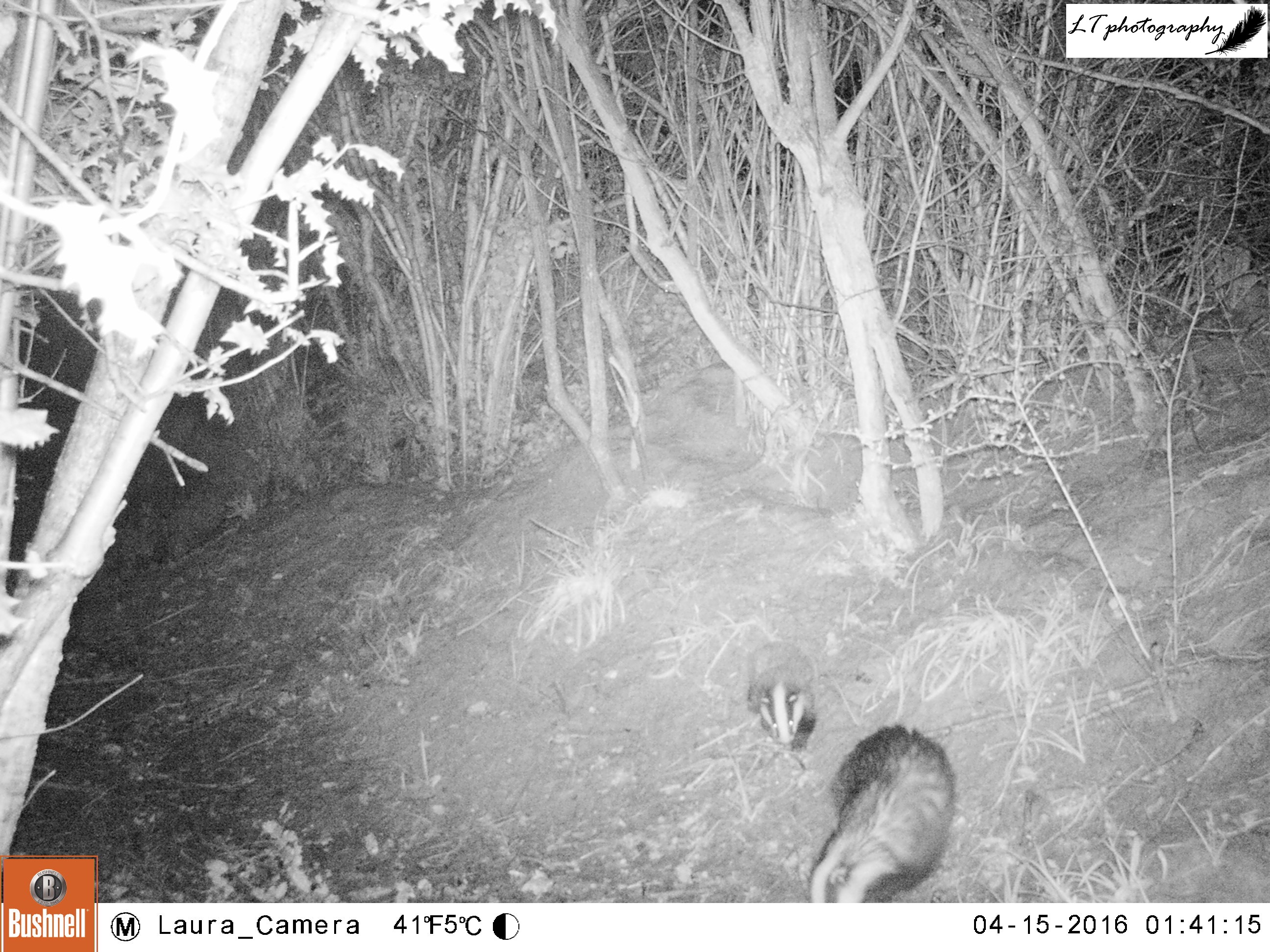
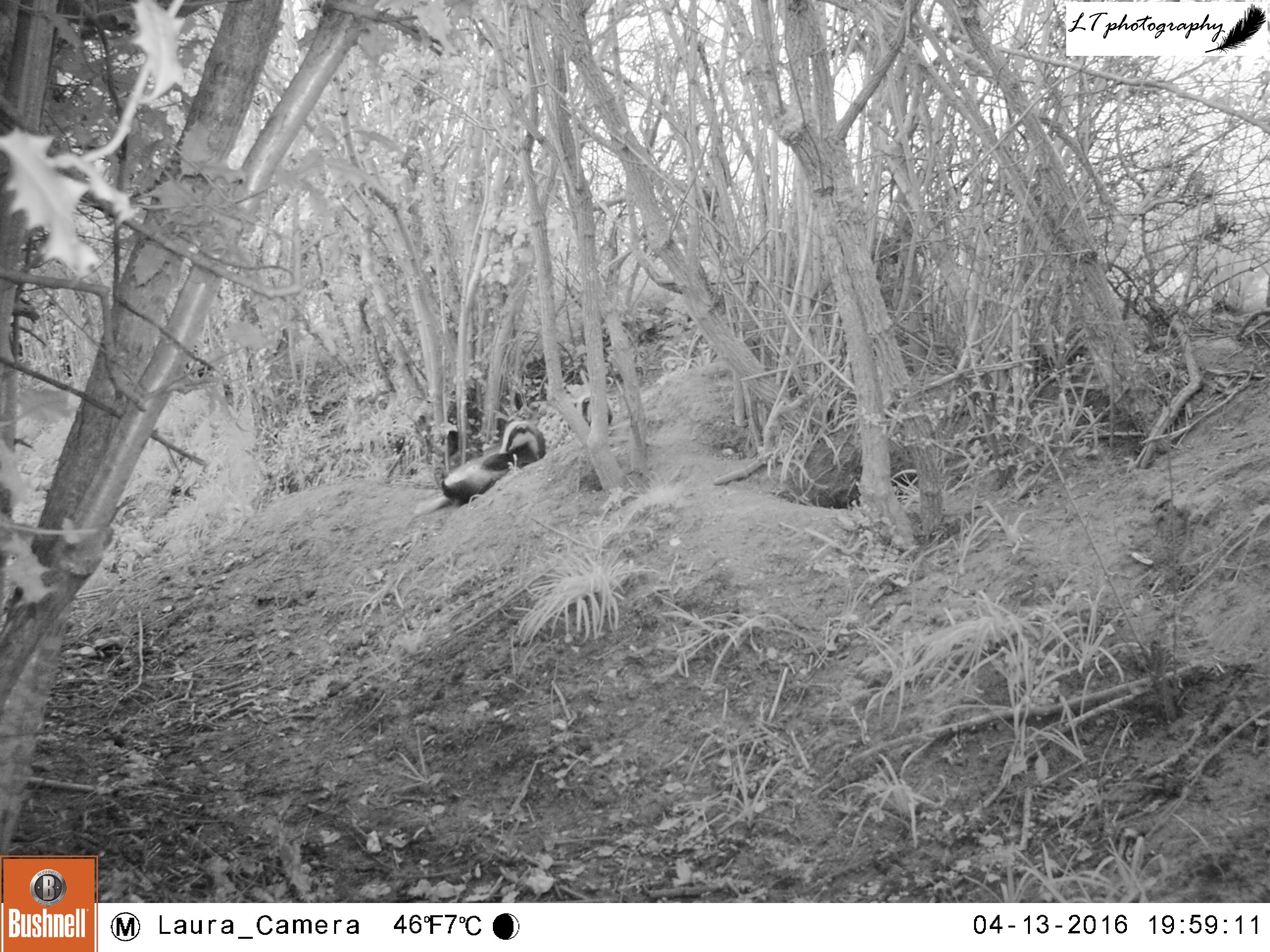
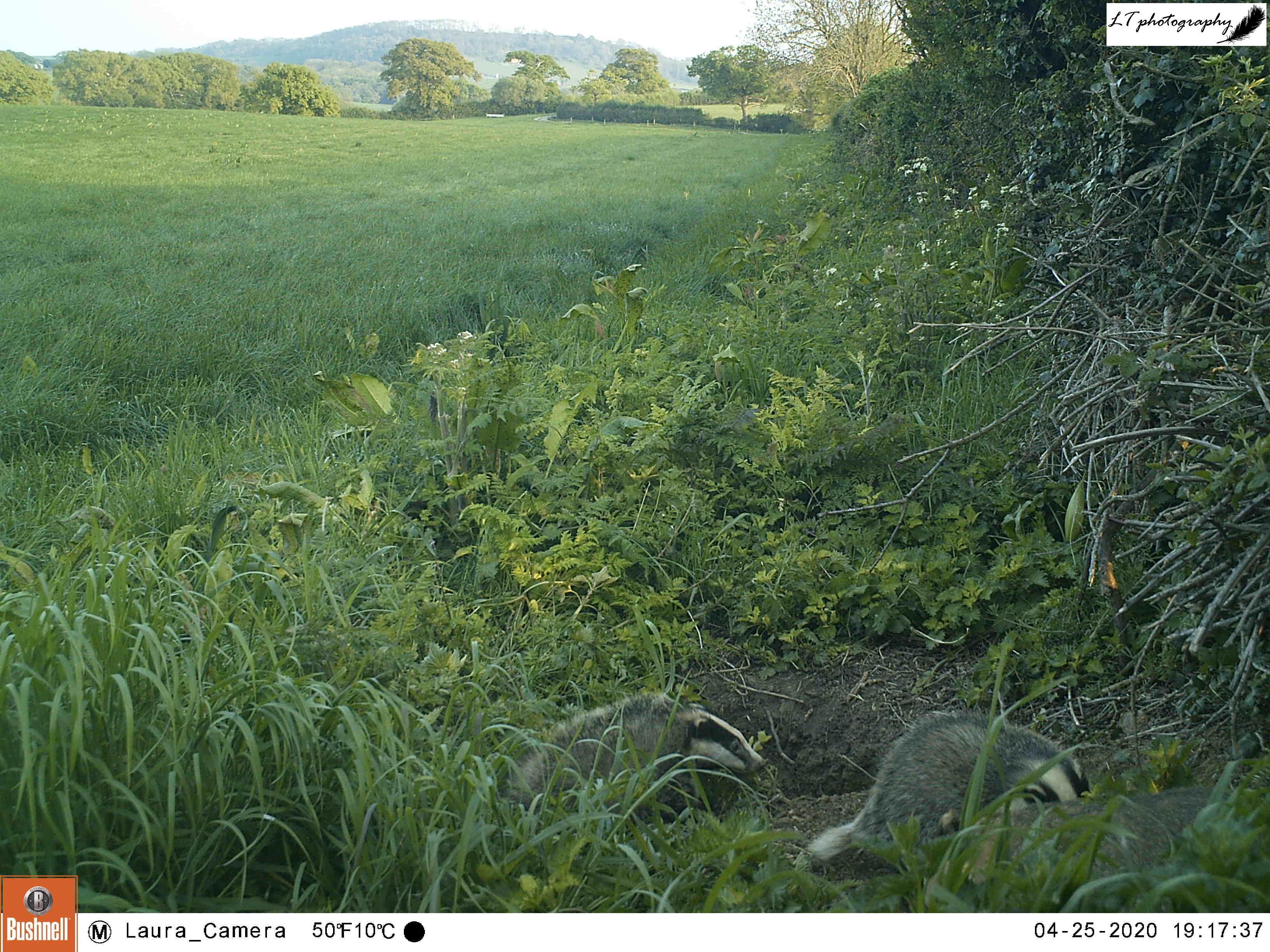
  • Badger setts – A popular choice for a camera trap site is at a badger sett. With 3 established badger setts on my family’s land, I have previously had all sorts of interesting results by observing setts in this way. In particular, it has always been great to see how different species cohabit such locations.

M2E40L17-25R350B300

M2E54L167-167R388B312

M2E54L172-172R388B317

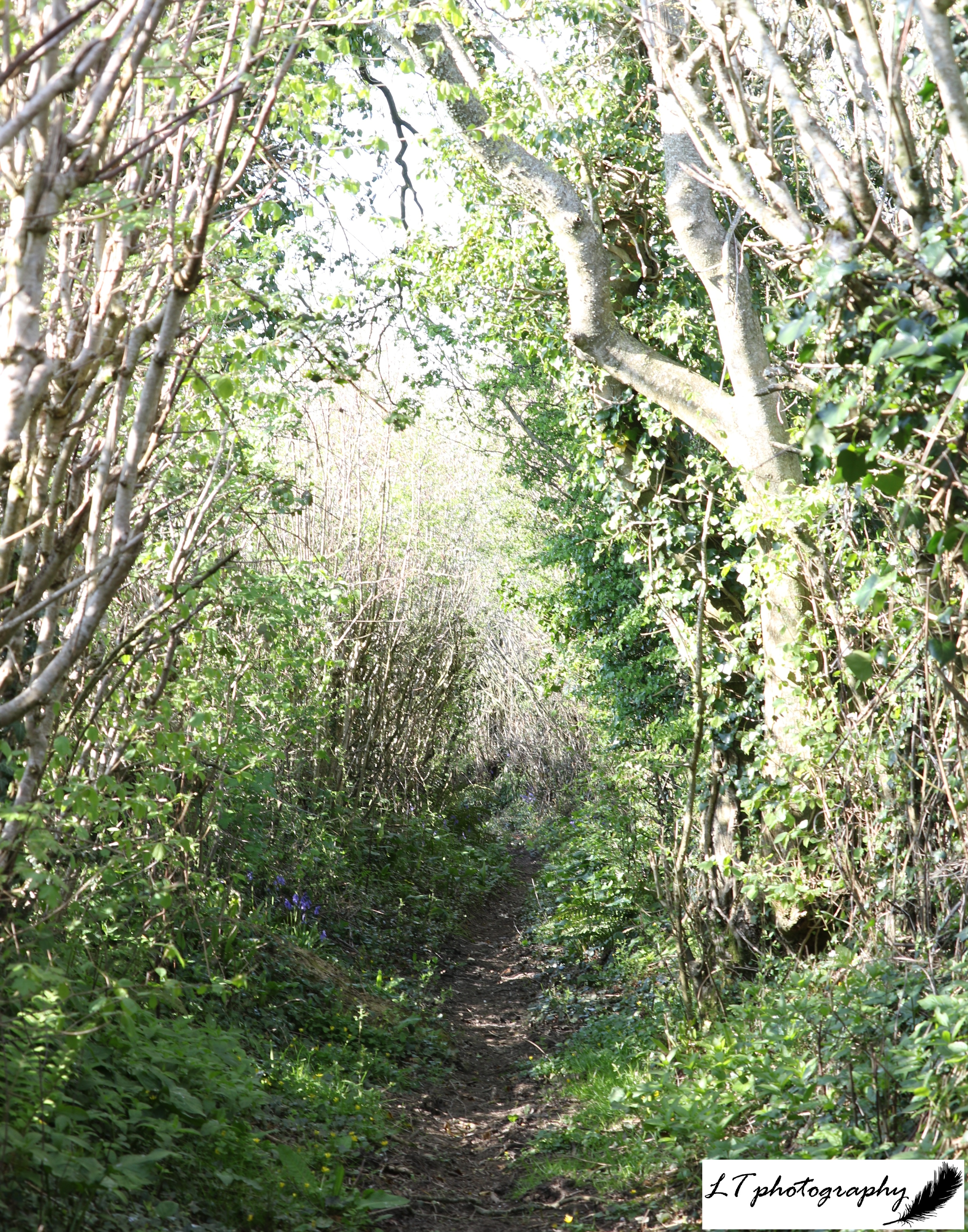
  • Paths – A great place I have found to put my camera trap is on an enclosed footpath on our land. This is because the path, fondly known as Badger Alley, is bordered either side by hedges, is in the vicinity of used and disused badger setts, and is frequently used by wildlife but infrequently by humans. Always be aware of how safe a camera trap may be on footpaths though!

M2E43L126-126R396B311

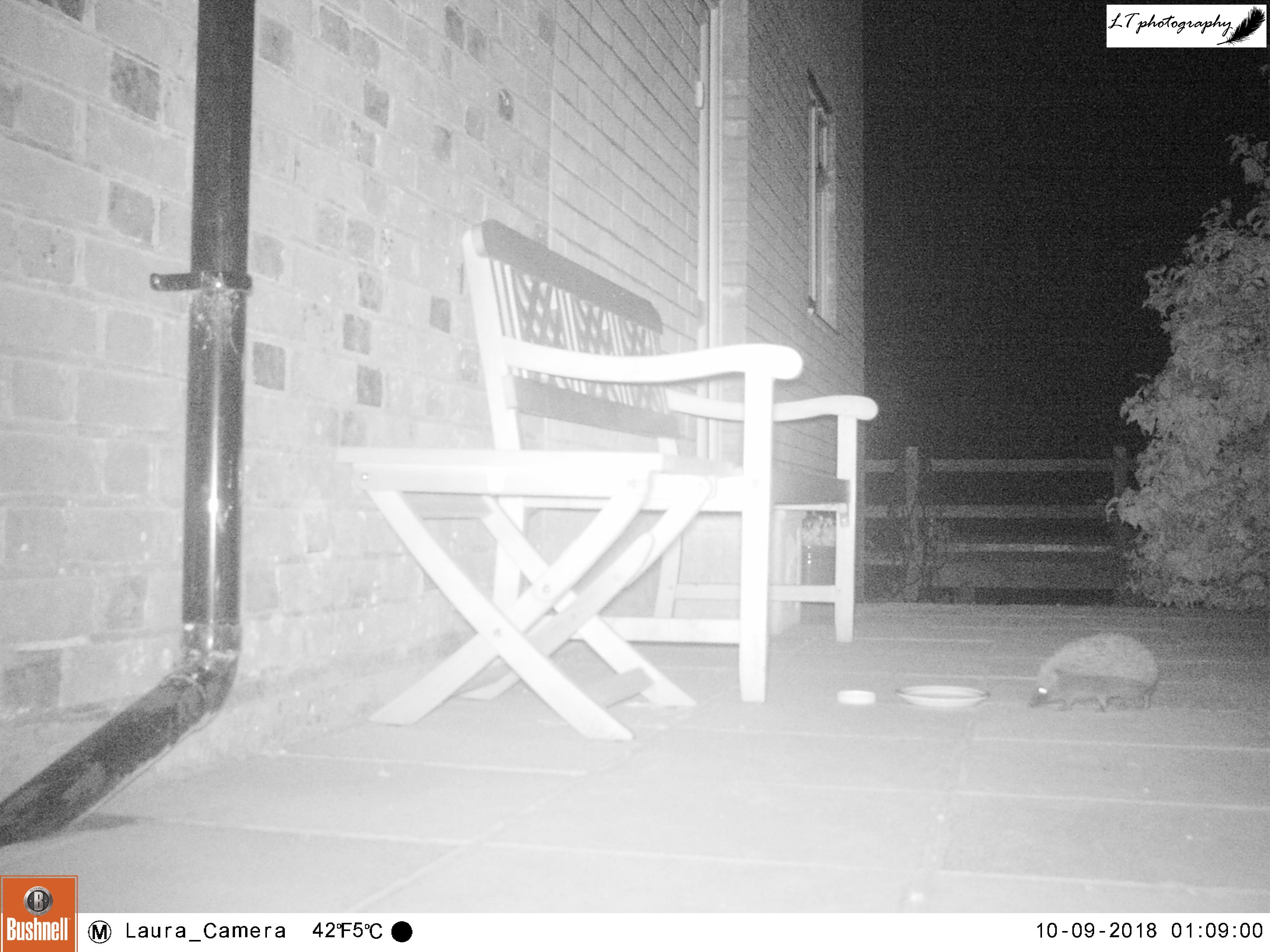
Garden – One of my all time favourite projects I used my camera trap for, was to get photos of our own special garden visitor in October 2018. I love getting to see the wildlife that is truly on our doorstep!

M2E1L0-8R350B300

  • Woodland – I have previously found that a woodland can be an interesting place to capture wildlife. The result can often be unexpected or interesting, with less of an idea of what might turn up.

M2E51L160-159R390B314

Animal trail – Another great way to try and capture the wildlife that is in your local area is to find and set up your camera trap on a well used animal trail. It is interesting to find out what animals are actually making those tracks!

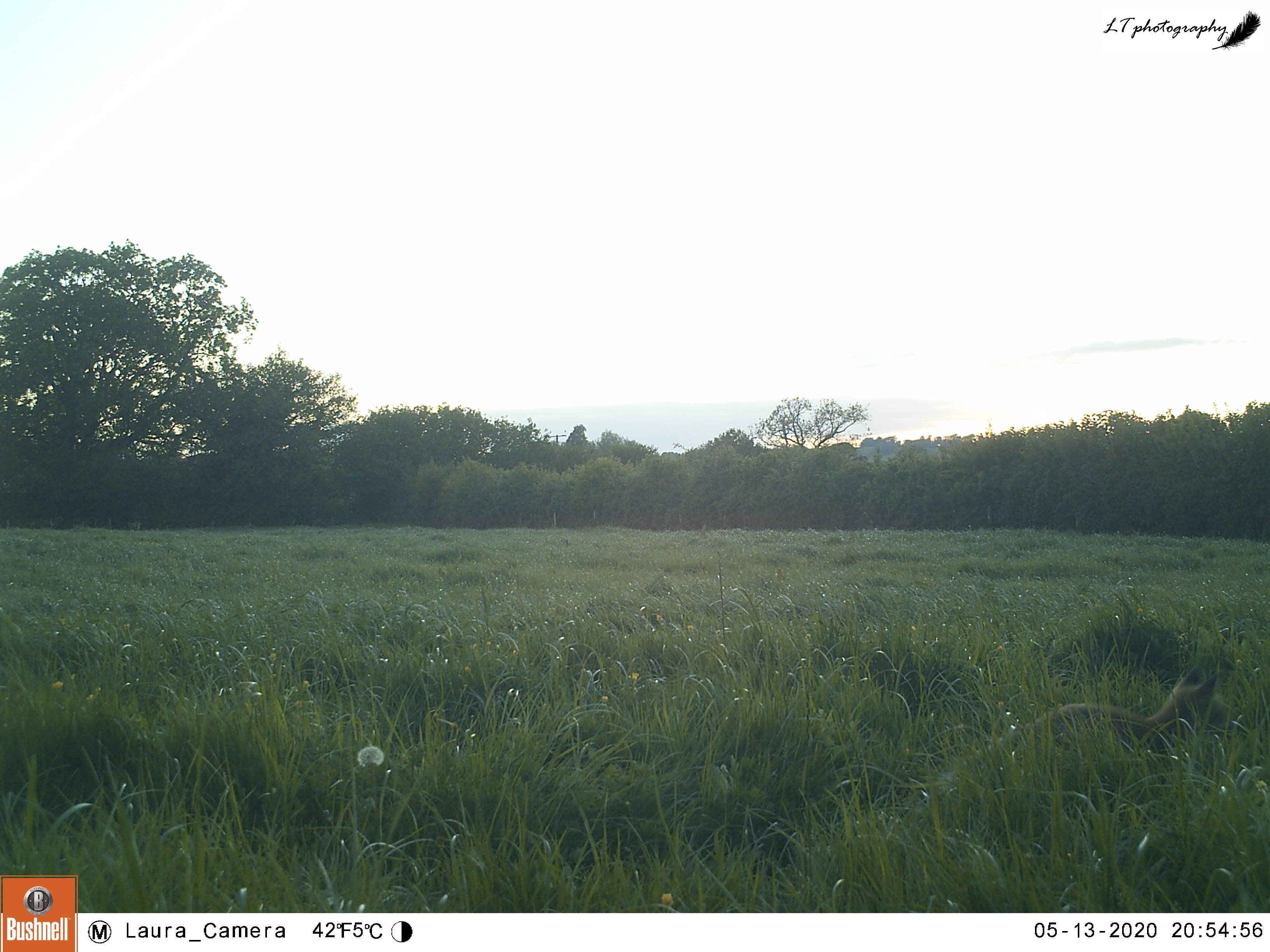
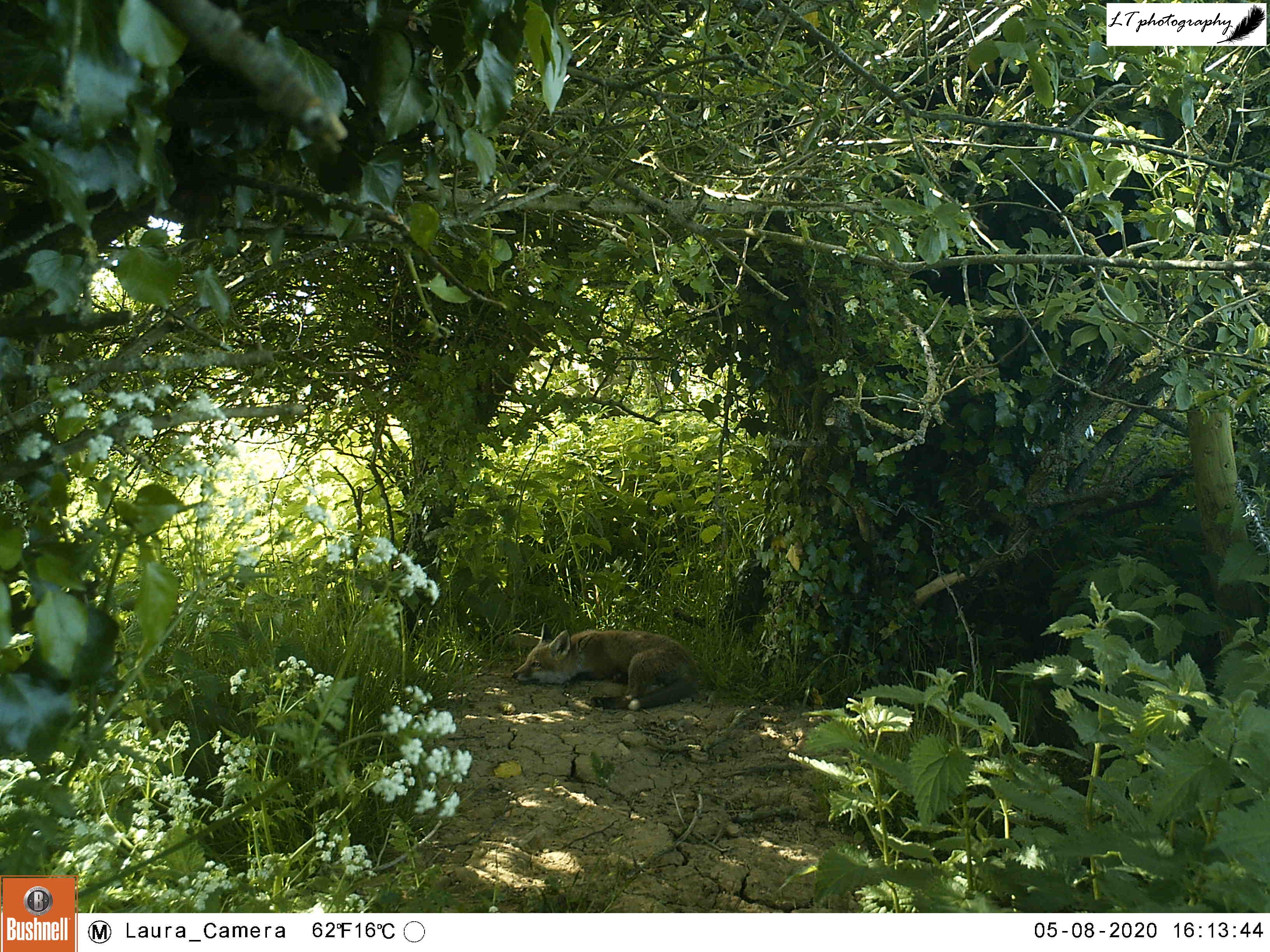
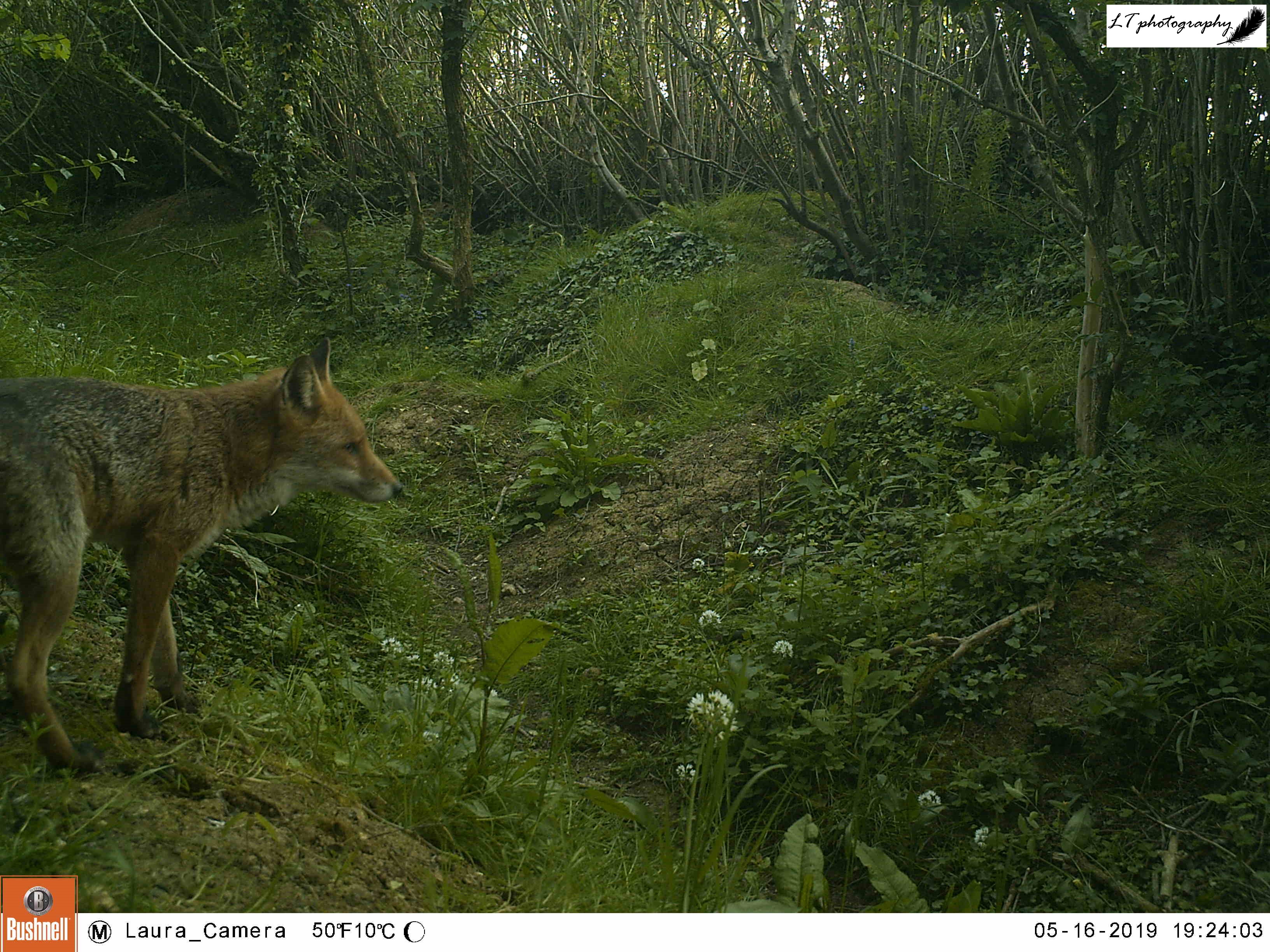
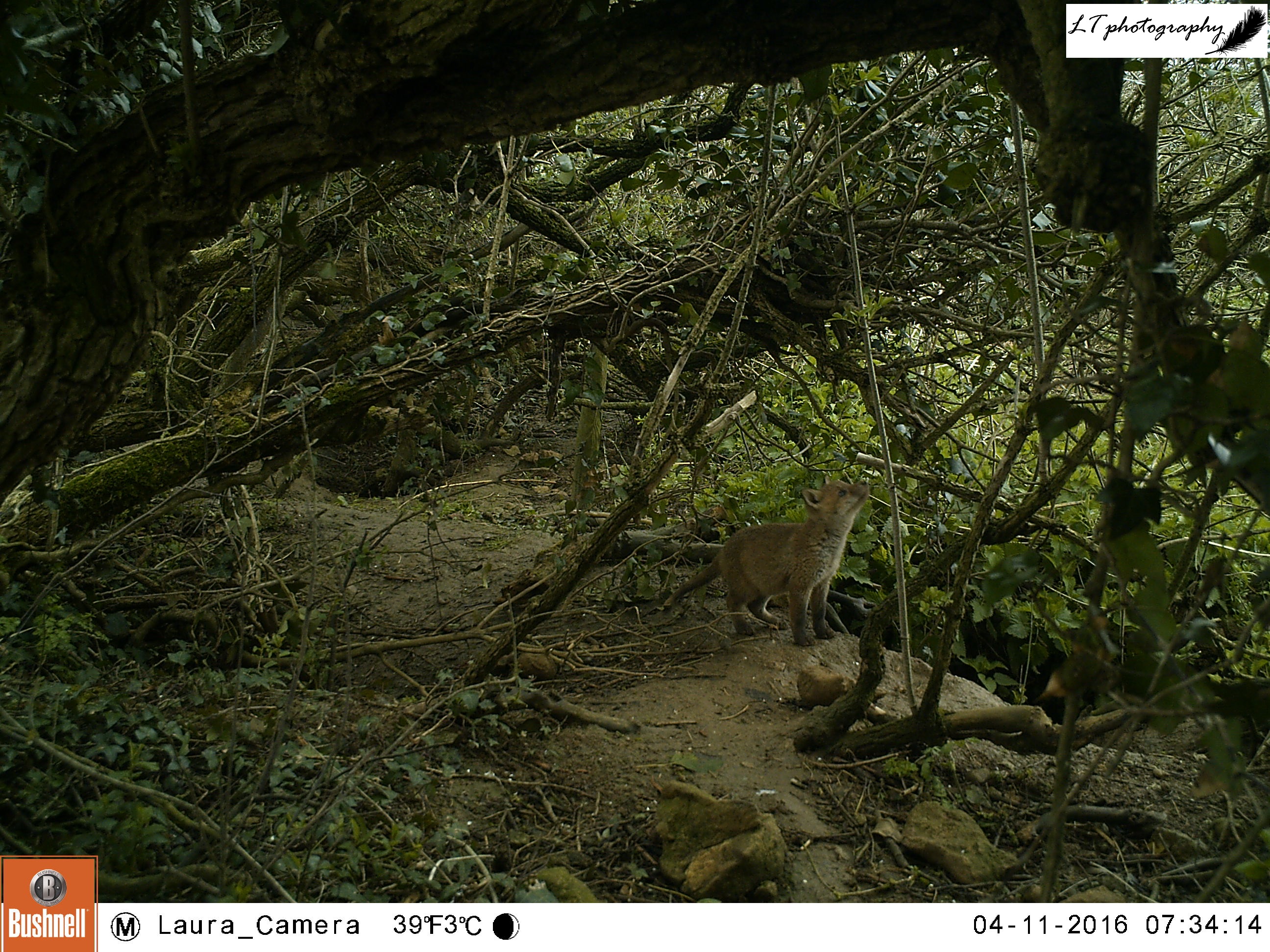
Specific animals – Often when camera trapping, you want to capture a specific animal, which leads to research and setting up the camera trap in a position where this animal has been sighted. Relating to this, my other favourite camera trap project has been to capture fox cubs above ground and to observe their behaviour. This has resulted in many cute photos over the years!

M2E31L60-60R392B300

Now it’s your turn! Even if you do not own/want to own a camera trap, there are always ways around it, for example why don’t you see if you can borrow one from somewhere or someone.

Though camera trapping does not always go to plan, the results can be truly satisfying. Time to see what you can find!

For more camera trap action, check out my blog post from last year called: Spring Countryside Camera Trap Surveys

Guide to Sable Island’s habitats and plants

Look deep into nature, and then you will understand everything better – Albert Einstein

Sable Island, 250km from Halifax, Nova Scotia, Canada, is an island made entirely of sand. For approximately two thirds of the island runs a series of high dunes, flanked by two long sandy beaches, and are considered one of the largest dune systems in Eastern Canada. With the island experiencing a maritime temperate climate, the island sustains a range of habitat types, which include grassland, heath, sandwort, freshwater ponds, brackish ponds, and non-vegetated terrain.

Due to strong winds and a lack of soil, the island is treeless (apart from one) and is dominated by low-growing plant species. When on the island myself, one thing i loved, other than the vast variety of plant species, was the strong smell of lush green vegetation that would bombard my sense of smell everytime i was out and about walking.

Plant Species

In 2016, 183 vascular plant species were recorded on Sable Island, in which 34% were considered alien species.

Here’s a selection of different, more notable species that can be found on Sable Island:

Common species

Marram grasslandAmerican marram grass (Ammophila breviligulata)= Most common species

Beach peaBeach pea (Lathyrus japonicas var. maritimus)

Common yarrowCommon yarrow (Achillea millefolium var. occidentalis)

SandwortSea sandwort (Honckenya peploides sp. robusta)

Common wild roseCommon wild rose (Rosa virginiana)
Edible fruit and fragrant flowers

Lowbush blueberryLowbush blueberry (Vaccinium angustifolium)
Edible fruit

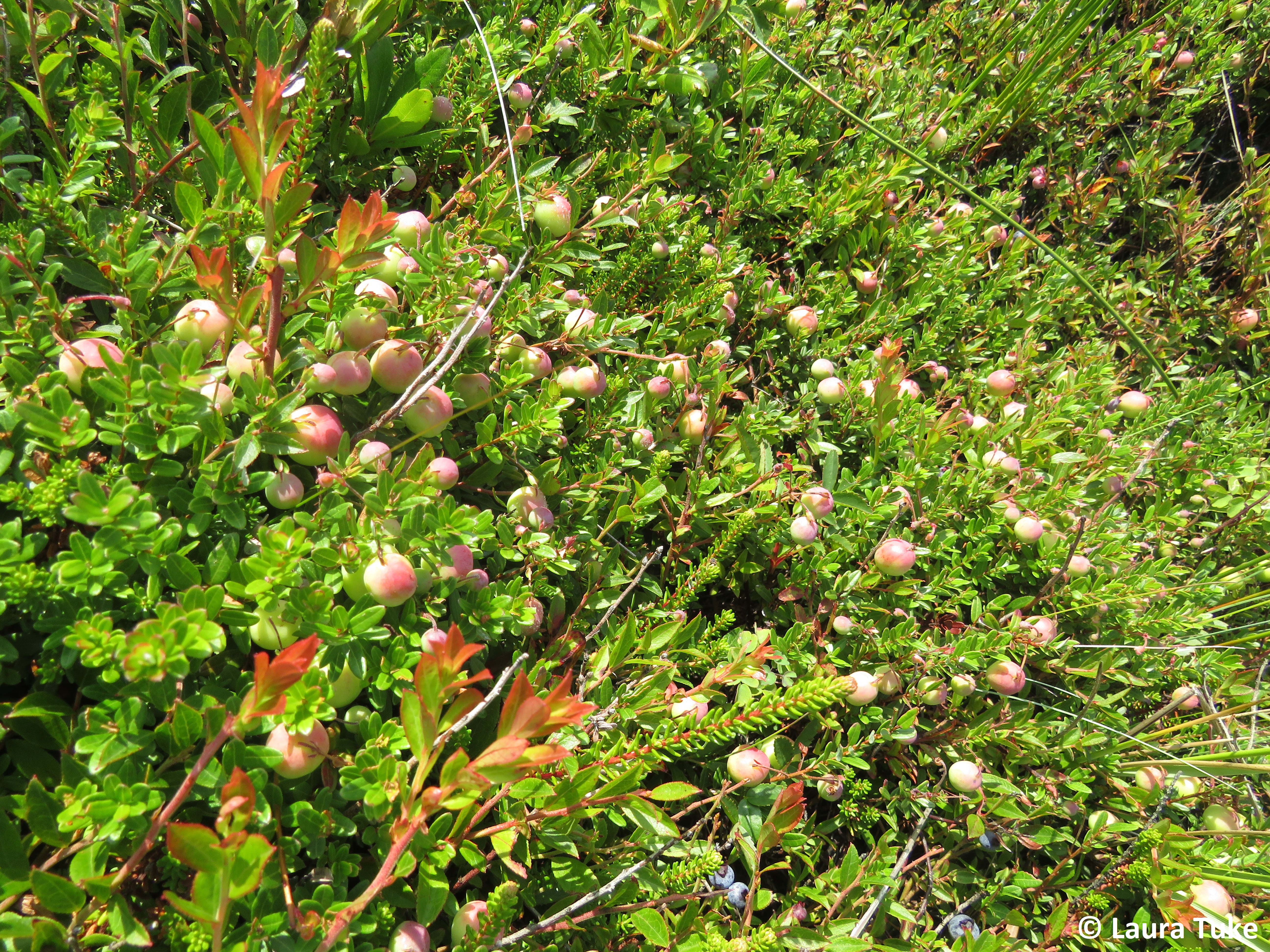
Large cranberryLarge cranberry (Vaccinium macrocarpon)
Edible fruit

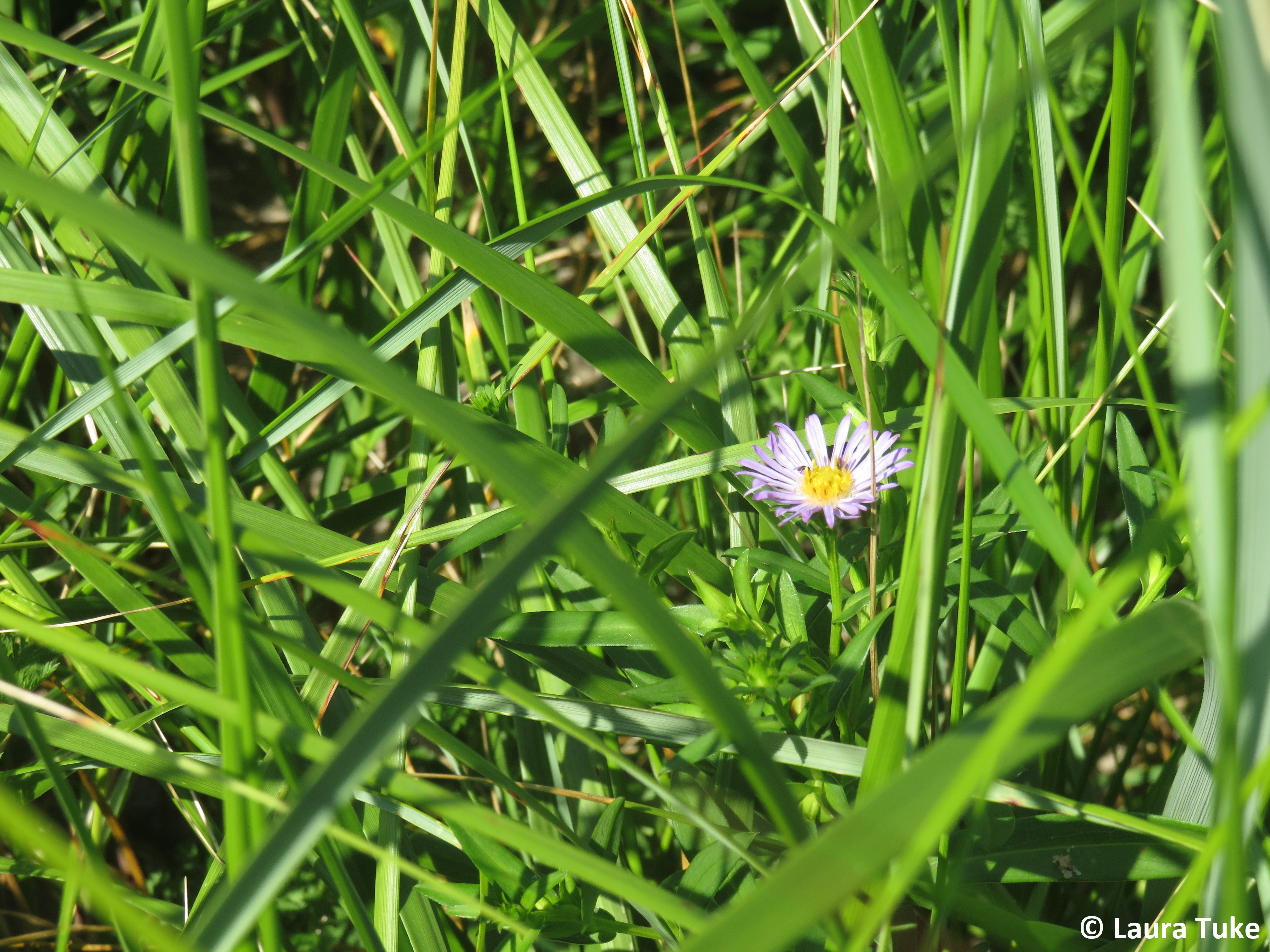
New york asterNew York aster (Symphyotrichum novi-belgii)
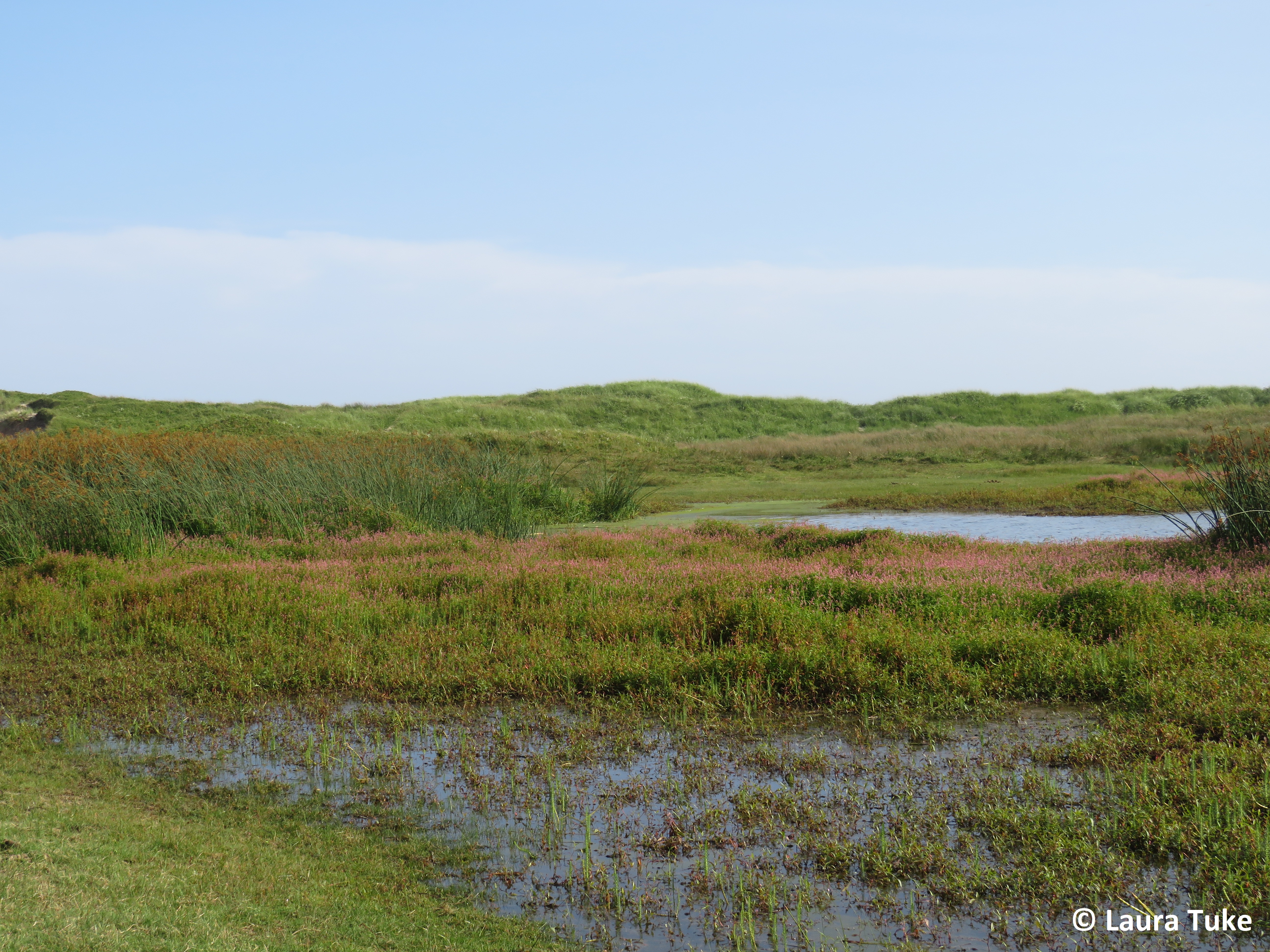
Swamp smartweed

Stretch of swamp smartweedSwamp smartweed (Polygonum hydropiperoides)

Wild strawberryWild strawberry (Fragaria virginiana sp. glauca)
Edible fruit

Small flowered evening primroseSmall flowered evening primrose (Oenothera parviflora)

Blue flag irisBlue flag iris (Iris versicolor)

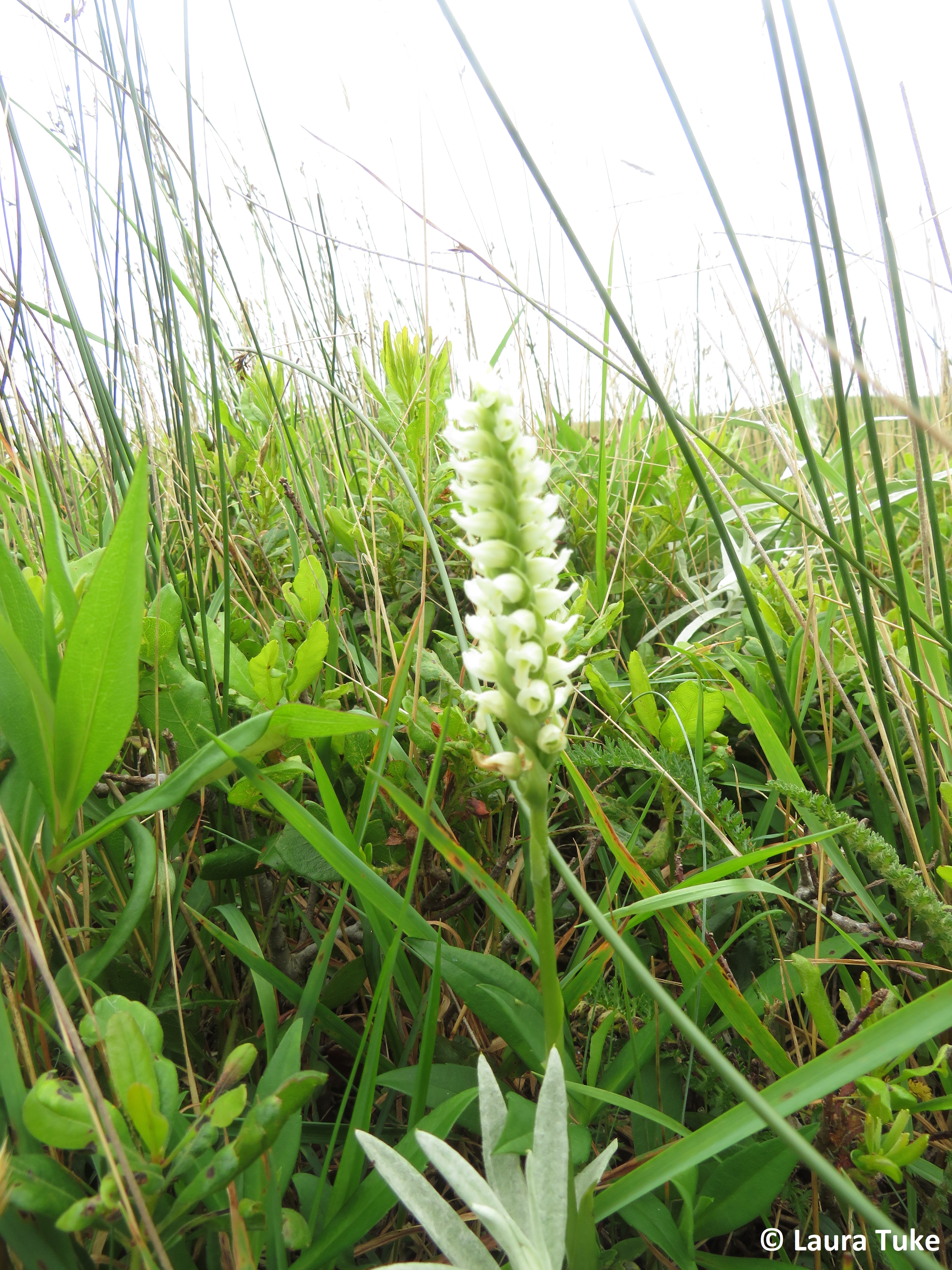
Hooded Ladies' tressesHooded ladies’ tresses (Spiranthes romanzoffiana)

Blue eyed grassBlue-eyed grass (Sisyrinchium angustifolium)
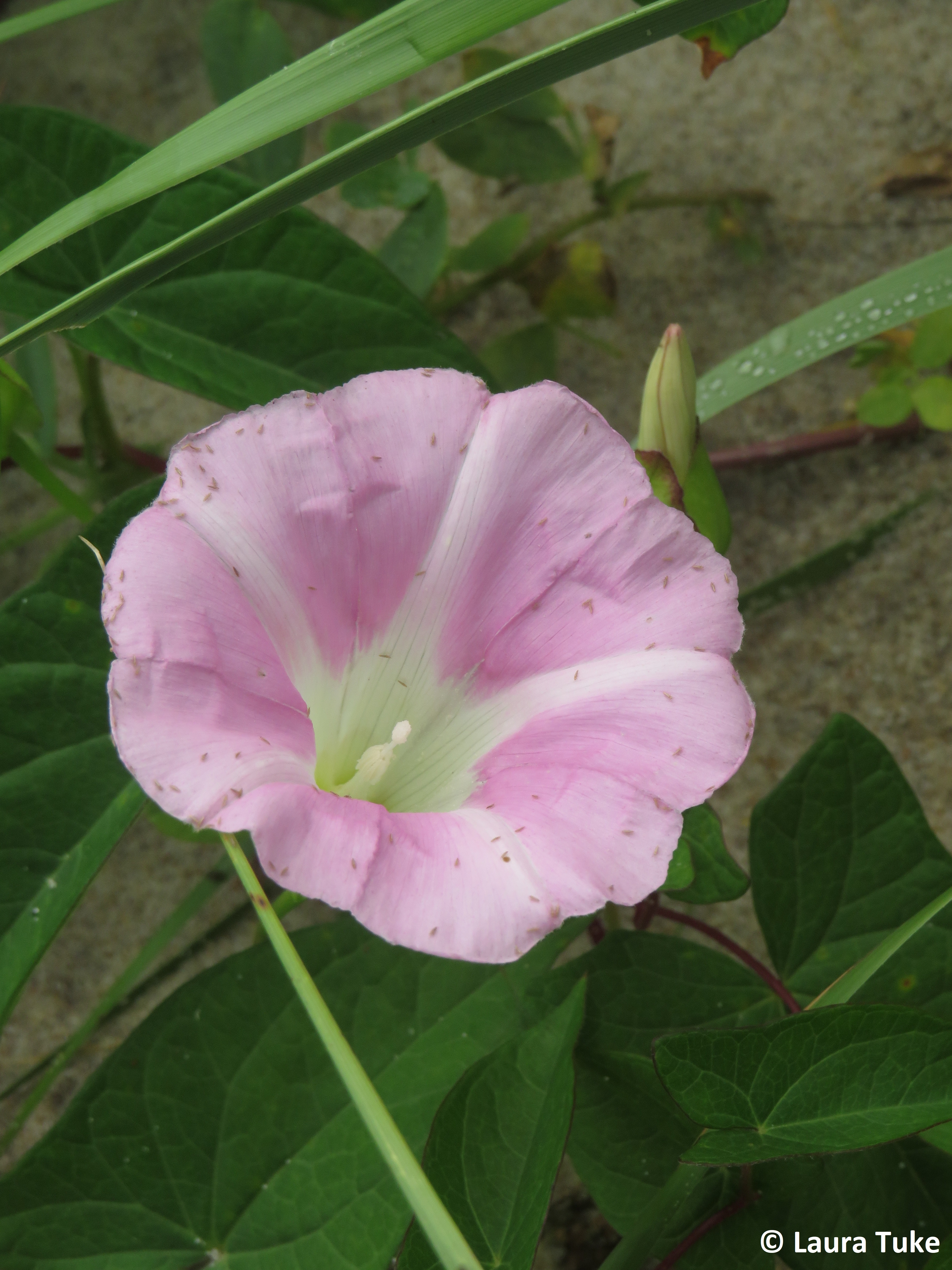
Hedge bindweedHedge bindweed (Calystegia sepium)

Seaside goldenrodSeaside goldenrod (Solidago sempervirens)
Also:
Pearly everlasting (Anaphalis margaritacea)
Creeping juniper (Juniperus horizontalis)
Common juniper (Juniperus communis var. megistocarpa)
Star-flowered false solomon’s seal (Maianthemum stellatum)
Black crowberry (Empetrum nigrum)= Edible fruit
Bayberry (Morella pensylvanica)= Edible fruit and aromatic leaves
Wand dewberry (Rubus arcuans)= Edible fruit
Threepetal bedstraw (Galium trifidum)

Juncus


Rushes and sedges

Baltic rush (Juncus balticus var. littoralis)
Canada rush (Juncus canadensis)
Slender rush (Juncus tenuis)
Jointleaf rush (Juncus articulatus)

Star sedge (Carex echinata)
Soft-stemmed bulrush (Schoenoplectus tabernaemontani)


Other grass species (Poa and fescue)

Red fescue (Festuca rubra)
Annual meadow grass (Poa annua)
Kentucky bluegrass (Poa pratensis)
Bentgrass (Agrostis scabra)

Introduced species

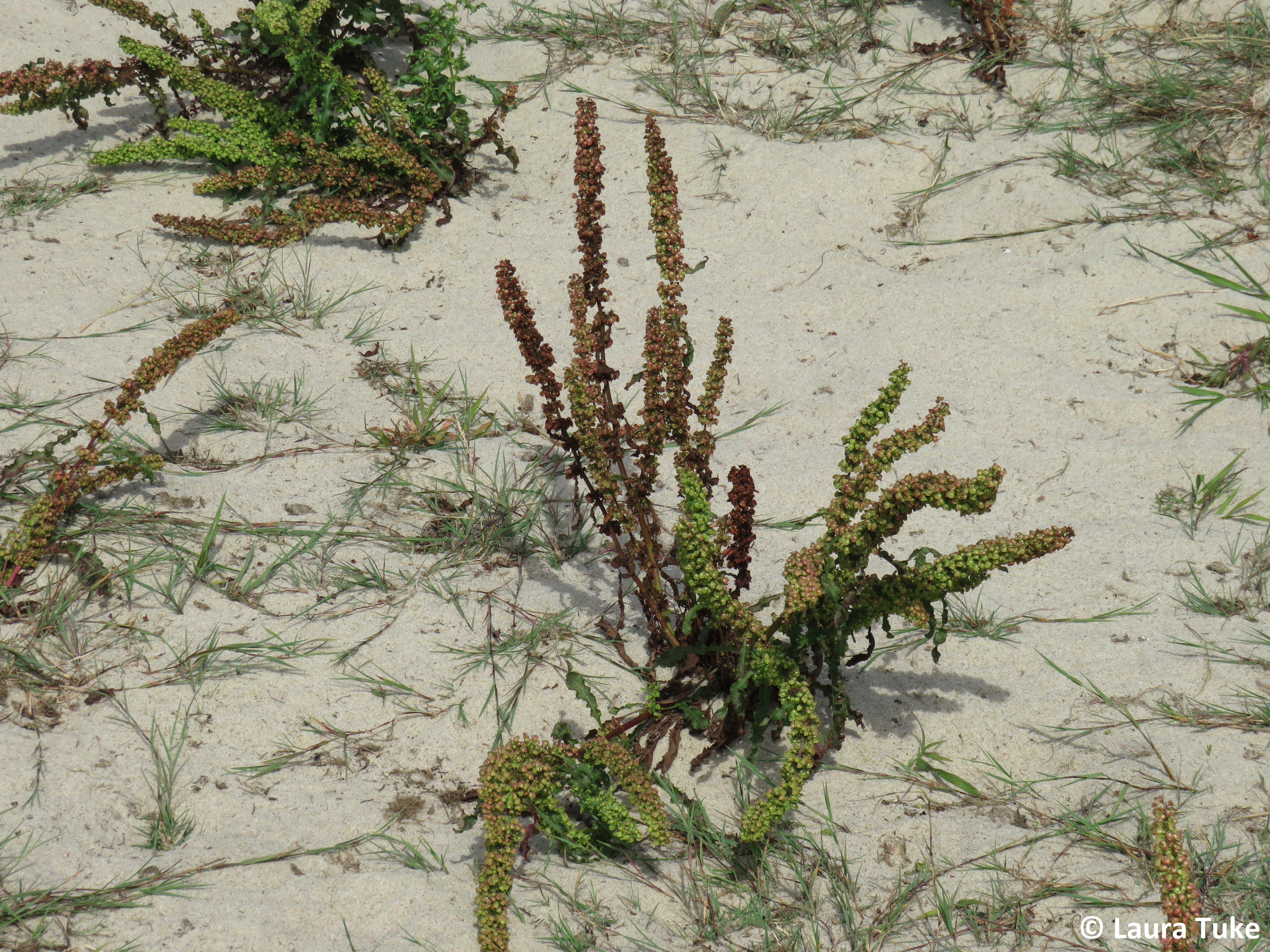
Curled dockCurled dock (Rumex crispus)

Black knapweedBlack knapweed (Centaurea nigra)

Also:
White clover (Trifolium repens)
Common heather (Calluna vulgaris)
Red clover (Trifolium pratense)
Common plantain (Plantago major)
English plantain (Plantago lanceolata)

Sable Island’s Only Tree

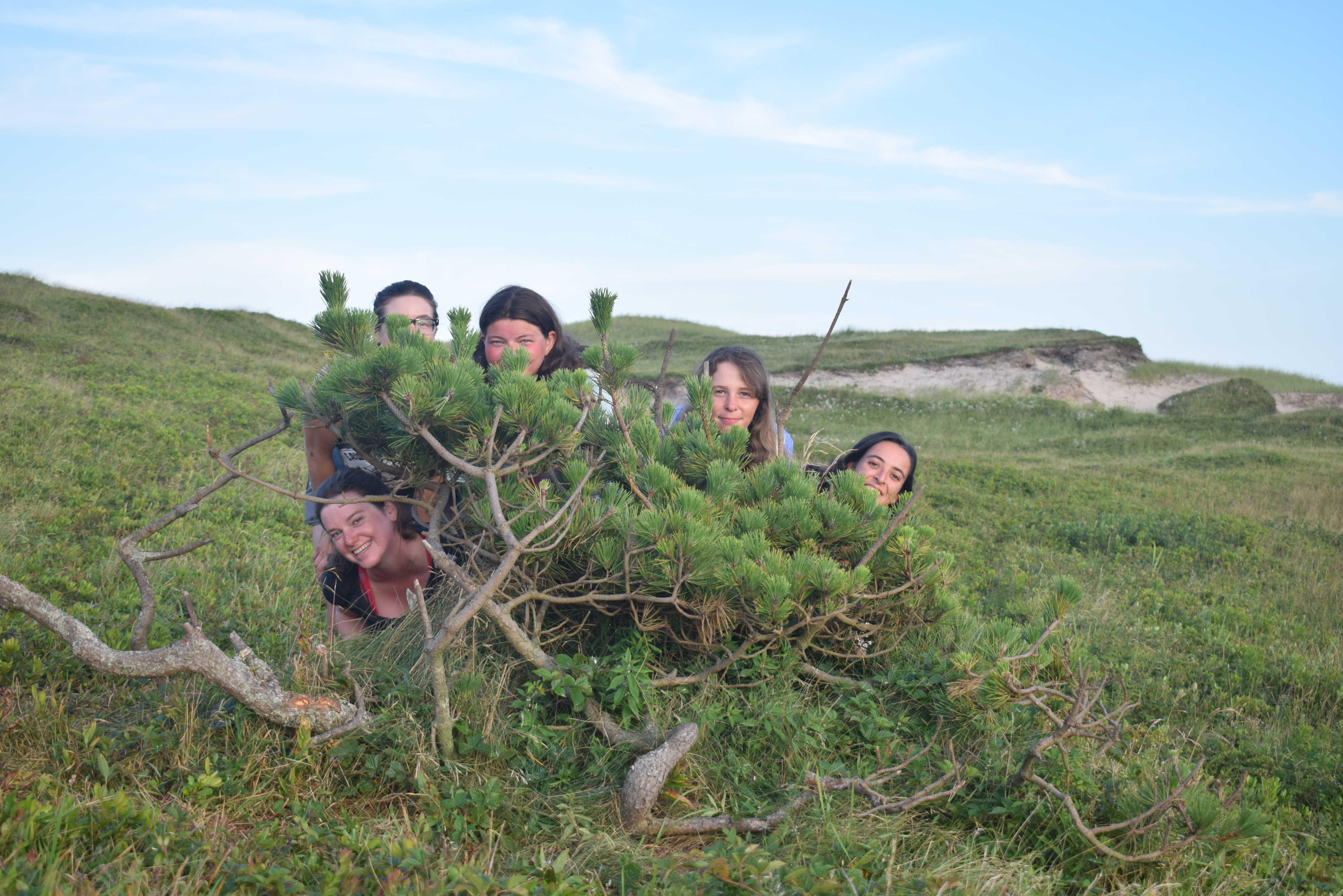
On Sable Island, due to the extreme conditions, there is only one living tree. This tree is a Scot’s pine, standing at a few feet tall. It was planted 50 years ago and can be found at the ‘Pine Tree Pond’ near Main Station on the island.

Here’s a couple of photos of the tree with the Sable Island Horse Project’s crew for the second half of this year’s summer field season:

DSC_0419DSC_0424