Life of a Sable Island field researcher

Some people may be wondering what scientific research field work may entail or even what it is like to live on an island. Well for 4 weeks this summer I got to experience both, joining the second half of the Sable Island Horse Project field season. I had a really great time and so here’s a little taste of Sable life and my experience this summer.

A day in the life on the project

  1. Two people would complete morning lab work before breakfast, processing samples ready to be analysed in university labs back on the main land.
  2. After breakfast, the field crew (5 of us) would often gather for a session of morning yoga. This was followed by a run down of the plan for that day’s surveying.
  3. Each day we would spend approximately 6 hours in the field in a range of weather conditions, such as thick fog, light rain, or bright sunshine.Fog
    • Field work involved travelling out to one of the 7 sections on the island in the buggy or on ATVs (if a certified user) and surveying that whole section on foot, which often involved hiking on bare sand and through thick vegetation.
    • When a horse or band of horses were encountered, photos were taken of each individual from all sides and data was collected, including information on markings, sex, and location.IMG_4174
  4. Following return from field work each day, field equipment would be put away before lab work was completed. Lab work involved processing faecal samples to enable a range of analyses to be conducted, such as parasite egg counts in the lab or more complex analyses back on the main land.
  5. During lab work or following completion, we would enjoy a well earned dinner cooked by one of us on rotation. As one of the field crew were vegan, we spent the majority of our time eating a vegan diet. Food we ate during my time on the island included:
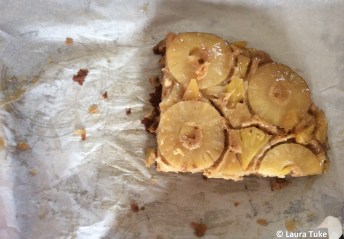
    • Taco pastaPineapple Upside Down Cake
    • Homemade pizza
    • Lentil curry
    • Veggie burgers
    • Pineapple upside-down cake
    • Fajitas
    • Thanksgiving-style cauliflower roast
    • Veggie chow mein
    • Breakfast for dinner= scrambled eggs, bacon, fried potatoes and vegan pancakes
  6. Field work, lab work and dinner were followed by organising photos taken of horses that day and bands lists being updated.
  7. End=bedtime!

Base camp 

Of the buildings that currently remain of the old lifesaving stations on the island, a cluster in the west half make up what is known as main station. Main station is the base for Parks Canada who manage the island and for researchers and visitors who come to the island.
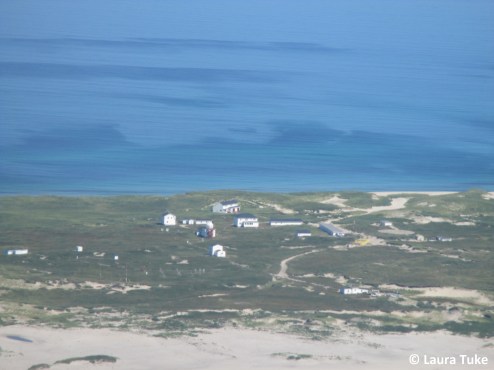
Bird's eye view of main station

View of main station from a plane

It was here I got to stay during my time on the island, specifically in a large white house that held a lab, storage space, living areas, and other facilities and could sleep approximately 15 people. It was only occupied by the Sable Island Horse Project field crew, a Parks Canada staff member and short-term building consultants during my stay.

Main station house

Rain days on Sable Island

The weather can be highly unpredictable on Sable Island, changing from fog to hot sun to rain very quickly. Though we could tackle some bad weather during field work, heavy rain and the spectacular thunderstorms of Sable Island were a no go. Such weather resulted in celebrated rain days, allowing us to have a well earned rest for one day.

Rain day activities with the girls ranged from organising the house, completing project work and catching up with jobs, to watching back to back episodes of TV programmes, such as ‘Say Yes to the Dress’, and baking sessions, which included making pretzels.

The sunsets

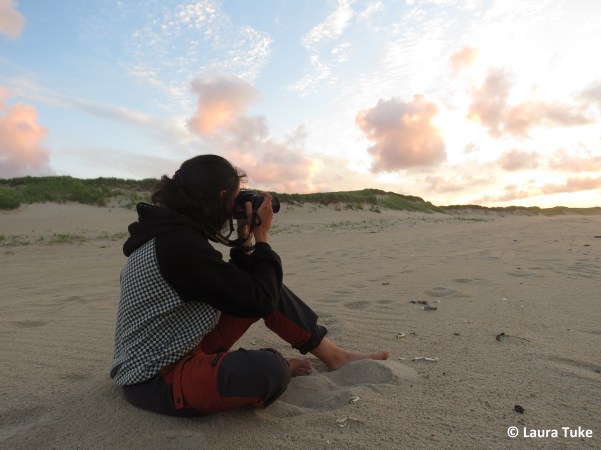
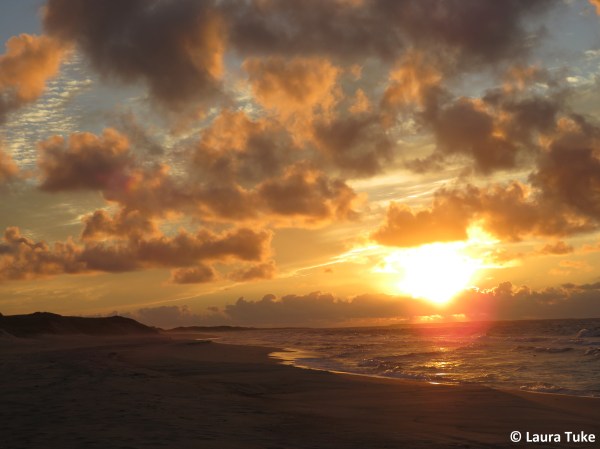
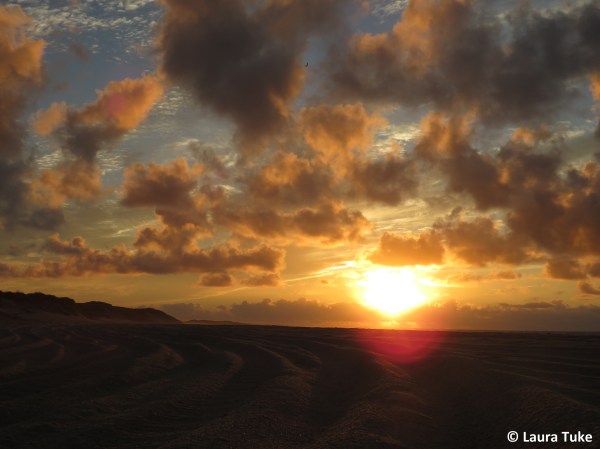
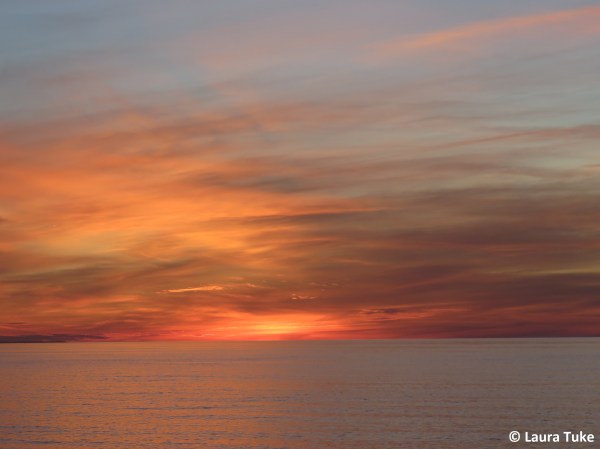
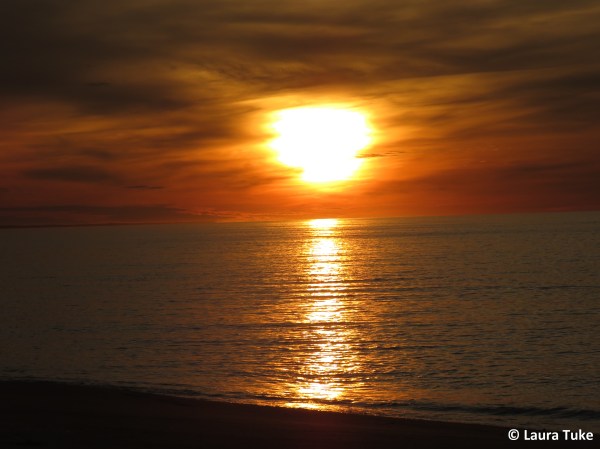
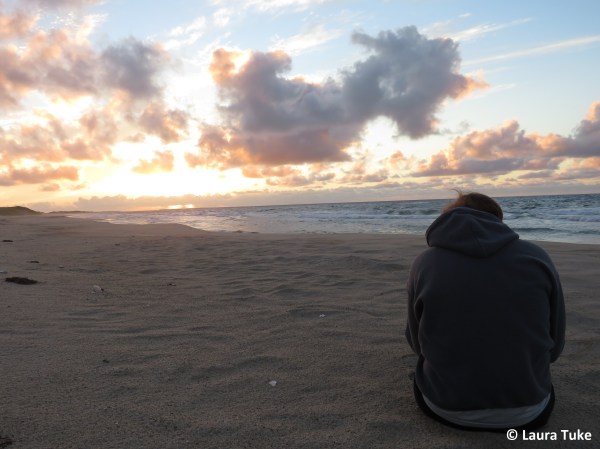
Though there is much more I could say about life on Sable Island, I have to admit that my most favourite part of my time had to be the sunsets. Following a long day of field and lab work, there was nothing that could quite compare to walking out onto North beach and watching one of the spectacular sunsets on offer. It has to be said that my visits to Canada have always delivered in the sunset department, and Sable Island was no different. Here’s an assortment of photos of these celebrated events!
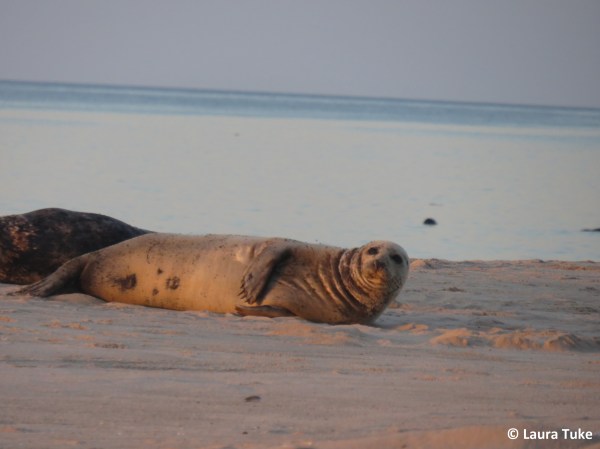
Sunset seal

Julie

Ruth

Chiara

Beach sunset

Tracks in the sand

Sunset with seal

Sunset sky

Sunset

Red sky at night

Ruth and Julie

11 things you need to know about the Sable Island Horse


IMG_8130

In all things of nature there is something of the marvelous – Aristotle

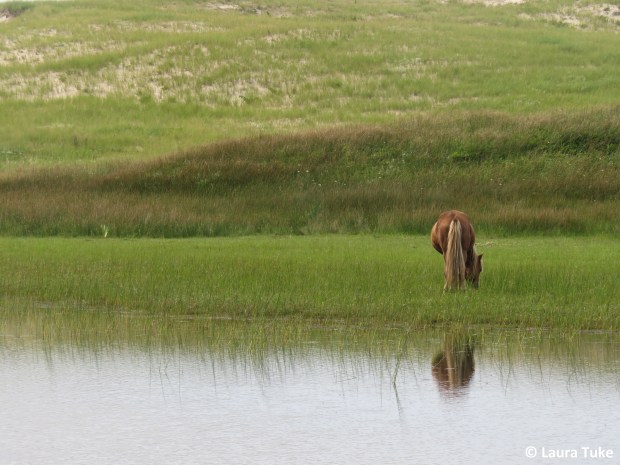
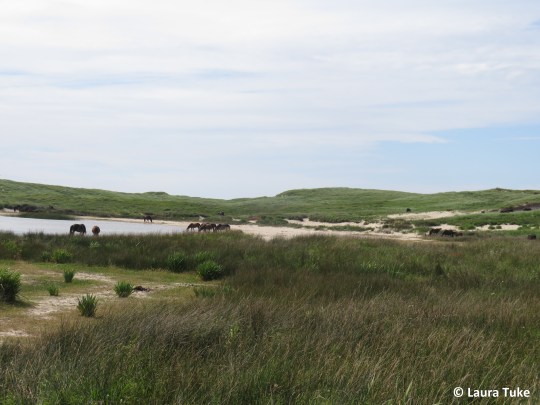
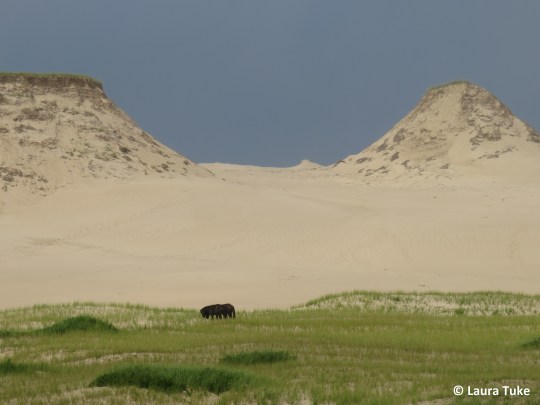
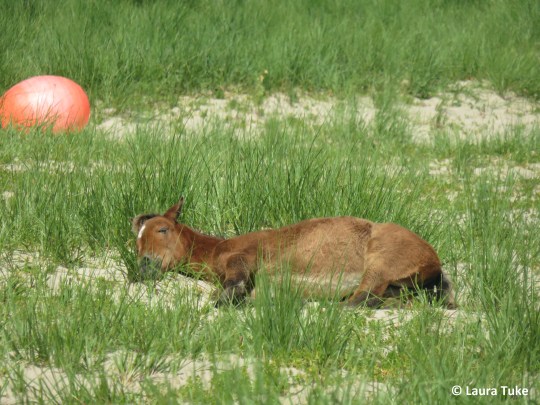
As part of my Master’s degree, from the other side of the North Atlantic, I have had the pleasure of studying a renowned animal population situated on Sable Island, Canada. Though this species is not the first that comes to mind when you think of an island made of sand, within the last few centuries Sable Island has become home to a population of feral horses (Equus ferus ssp. caballus). These horses vary in shape, colour and size, and have now captured the minds of the public and scientists alike, as well as my own.

IMG_4444

For those of you who have never heard of the Sable Island horse, or even for those who have, I have put together a helpful ’11 interesting facts’, so you can learn everything you need to know about these compelling creatures:

  1. Today’s population of Sable Island horses originate from horses first released on the island by European travellers during the mid-1700s, and though genetically distinct as a subspecies, are most closely related to Nordic breeds.

IMG_9271

2. Previously, the horses have been used for a range of purposes on the island, including use as breeding stock for sale on the mainland, hauling lifeboats for the past lifesaving crews, and exportation for the meat trade (mainly dog food).

IMG_9589

3. During the 1950s, scientists said the horses were damaging the sensitive ecology of the island, and proposed their removal. Following a strong public campaign, the Canadian government gave the Sable Island horses legal protection in the 1961 Canadian Shipping Act, protecting them from all human use and interference in the future.

IMG_7413

4. Due to their protected status, the horses are now treated as a wild and naturalised population. As a result, all people visiting and living on the island have to maintain a distance of at least 20m away from the horses at all time.

5. Currently, there are approximately 550 horses living on Sable Island.

IMG_3587

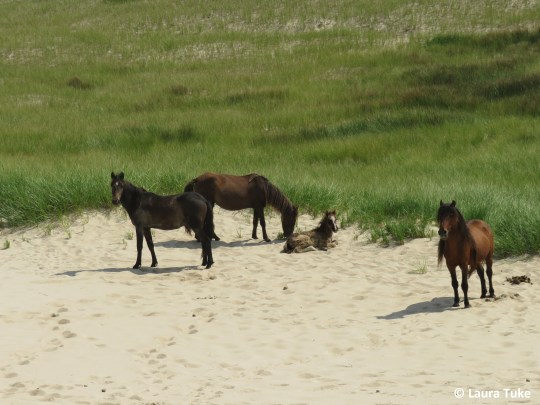
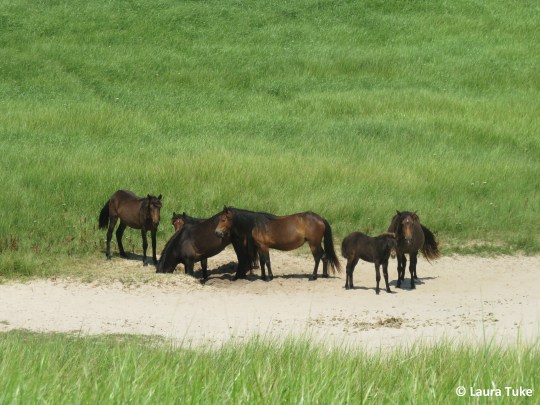
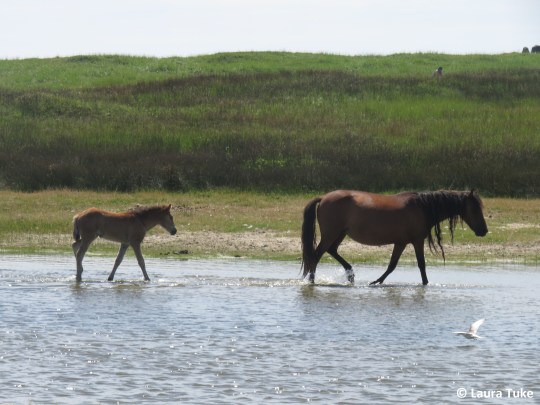
6. Sable Island horses live in all year-round social groups, called bands, which either contain bachelor, unmated males or typically consist of anywhere up to 15 individuals, with 1-3 dominant males (stallions), adult females (mares) and young offspring (typically foals and yearlings).

7. In the Sable Island population, the sex ratio is heavily male-biased. This is because a lower number of females are surviving on the island, due to the different, more extreme conditions they experience in comparison to males, such as with breeding.

IMG_7005

8. The Sable Island horse’s diet is composed mainly of tough American marram grass, other grass species and beach pea, though they will feed opportunistically on a range of other species.

9. The horses are found in a range of colours, but there are none that are spotted, grey, white, or coloured on Sable Island. It is suspected that this is because these colours were kept out of the population previously.

IMG_9103

10. The Sable Island horses have been part of an ongoing long-term individual-based study since 2007, meaning every individual is surveyed between July to early-September each year. As a result, every individual is followed from birth to death, can be individually identified, and have their very own name, such as Orbit, Ripley or Maria.

Orbit and house

Orbit

11. Alongside the Sable Island Horse Project (a collaboration between the University of Saskatchewan and University of Calgary), my research has focused on investigating the genetic basis of foal body size and the potential for it to evolve in the Sable Island horse. Data collection for this research involved a special piece of equipment consisting of two lasers and a camera attached to a frame. This allows for photos to be taken from a distance that were then used to calculate reliable body size measurements.

Laser standard

IMG_7872

Disclaimer: All horse photos (from wide shots to zoomed in) were taken from at least the minimum of 20m away from the subject(s)

Sable Island’s Birds vs. Invertebrates

The wonders of nature are endless – Walt Disney

When people think of Sable Island, they may think of a windswept island of sand, the island’s famous feral horses, or its involvement in maritime stories. More overlooked is Sable’s vibrant collection of fauna and flora, the latter having previously been touched upon in my ‘Guide to Sable Island’s habitats and plants’. When considering Sable’s fauna though, the most abundant can be split into its birds and its invertebrates.

Birds

Juvenile gull

Over Sable’s recorded history, at least 340 bird species have been observed on the island. These species span from American kestrel (Falco sparverius) to ruby-throated hummingbird (Archilochus colubris) to red-breasted nuthatch (Sitta canadensis), the last being one species I got to see myself this summer on Sable.

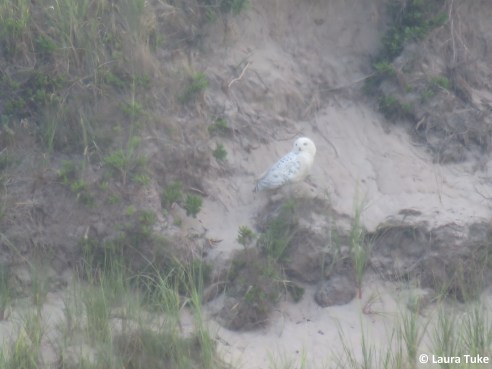
More than 45% of bird species that have been observed on Sable though, are termed as vagrants. This means that they have strayed from their usual range, for example arriving on the island due to being blown off course by strong winds during migration. As a result, I had the pleasure of seeing one iconic species during my stay this summer; a snowy owl (Nyctea scandiaca), floating like a ghost between the island’s dunes.

Snowy owl 3

Snowy Owl

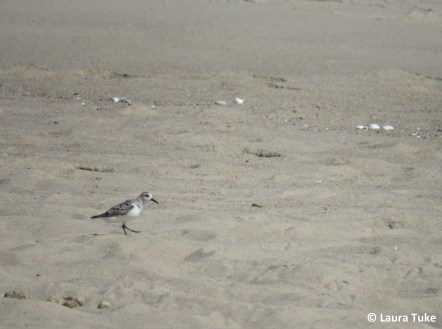
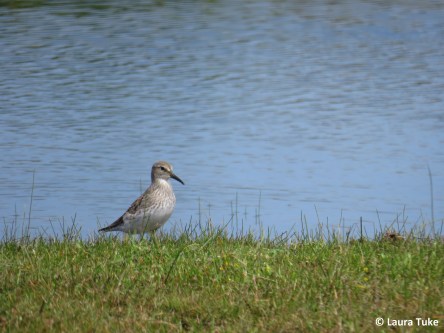
Many species also use the island as a stopover site during their migration, for example waders, raptors and warblers. Regular migrant species include willet (Catoptrophorus semipalmatus), sooty shearwater (Puffinus griseus), grey-cheeked thrush (Catharus minimus) and:

Yellowlegs

Yellowlegs

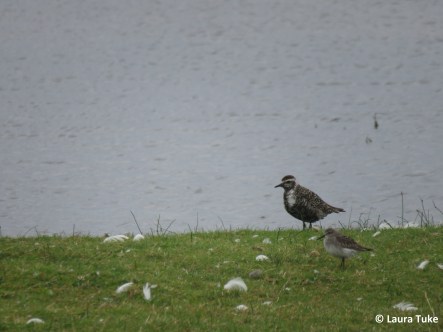
Female American Golden Plover and sandpiper

Female American golden plover (Pluvialis dominica) (sandpiper in foreground)

Ruddy turnstone

Ruddy turnstone (Arenaria interpres)

Sanderling

Sanderling (Calidris alba)

Whimbrel

Whimbrel (Numenius phaeopus)

White-rumped sandpiper

White-rumped sandpiper (Calidris fuscicollis)

Of the 340+ species seen on Sable though, more than 30 have been recorded as breeding on the island. Regular breeders include:

  • Arctic tern (Sterna paradisaea)
  • Common tern (Sterna hirundo)
  • Roseate tern (Sterna dougallii)
  • Herring gull (Larus argentatus)
  • Great black-backed gull (Larus marinus)
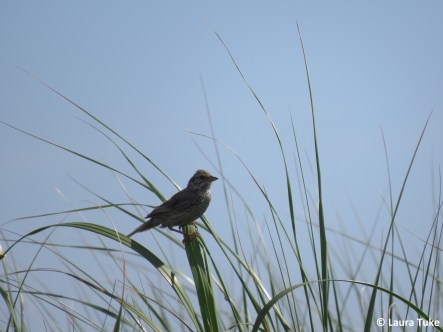
  • Ipswich sparrow (Passerculus sandwichensis princeps)= endemic
    • Subspecies of Savannah sparrow and of conservation concern

Ipswich sparrow

  • Leach’s storm-petrel (Oceanodroma leucorhoa)
  • American black duck (Anas rubripes)
  • Mallard (Anas platyrhynchos)
  • Red-breasted merganser (Mergus serrator)
  • Northern pintail (Anas acuta)
  • Least sandpiper (Calidris minutilla)
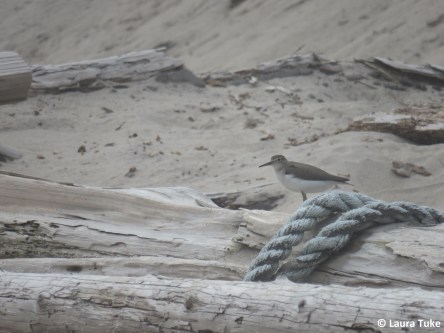
  • Spotted sandpiper (Actitis macularia)

Juvenile spotted sandpiper

Invertebrates

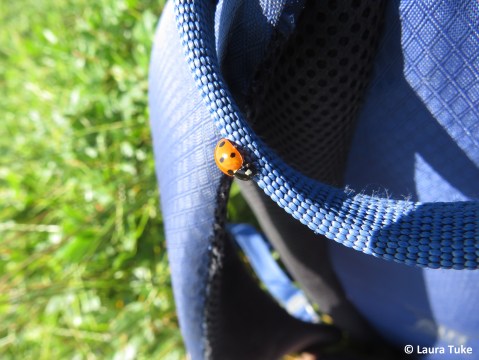
In comparison to the 340+ bird species that have been recorded on Sable Island, 875+ invertebrate species have been identified on and in its marine proximity. Species include the monarch butterfly (Danaus plexippus), painted lady (Vanessa cardui), seven-spot ladybird (Coccinella septempunctata), and round-tipped cone-headed grasshopper (Neoconocephalus retusus).

Six spot ladybird

Seven-spot ladybird (Coccinella septempunctata)

Six spot ladybird larvae

Seven-spot ladybird larvae

Sable Island also has some endemic invertebrate species. These include the Sable Island leaf beetle (Pyrrhalta sablensis), the Sable Island sweat bee (Lasioglossum sablense)and three moth species (Agrotis arenariusOrgyia leucostigma sablensis and a Papaipema species).

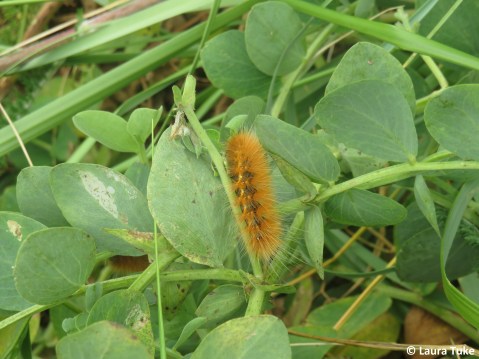
Though I did not get enough time on Sable Island to delve too deeply into the world of the invertebrates, I did enjoy seeing new species and identifying the many caterpillars I saw, such as:

Apple sphinx moth caterpillar

Apple sphinx moth caterpillar (Sphinx gordius)

Virginian tiger moth caterpillar

Virginian tiger moth caterpillar 2

Two variants of Virginian tiger moth caterpillars (Spilosoma virginica)

Guide to Sable Island’s habitats and plants

Look deep into nature, and then you will understand everything better – Albert Einstein

Sable Island, 250km from Halifax, Nova Scotia, Canada, is an island made entirely of sand. For approximately two thirds of the island runs a series of high dunes, flanked by two long sandy beaches, and are considered one of the largest dune systems in Eastern Canada. With the island experiencing a maritime temperate climate, the island sustains a range of habitat types, which include grassland, heath, sandwort, freshwater ponds, brackish ponds, and non-vegetated terrain.

Due to strong winds and a lack of soil, the island is treeless (apart from one) and is dominated by low-growing plant species. When on the island myself, one thing i loved, other than the vast variety of plant species, was the strong smell of lush green vegetation that would bombard my sense of smell everytime i was out and about walking.

Plant Species

In 2016, 183 vascular plant species were recorded on Sable Island, in which 34% were considered alien species.

Here’s a selection of different, more notable species that can be found on Sable Island:

Common species

Marram grasslandAmerican marram grass (Ammophila breviligulata)= Most common species

Beach peaBeach pea (Lathyrus japonicas var. maritimus)

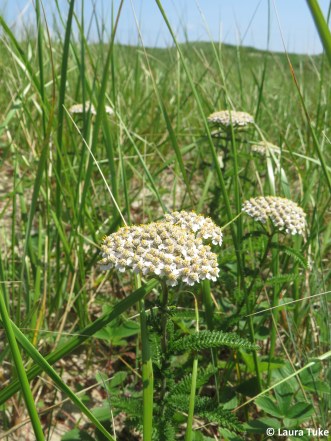
Common yarrowCommon yarrow (Achillea millefolium var. occidentalis)

SandwortSea sandwort (Honckenya peploides sp. robusta)

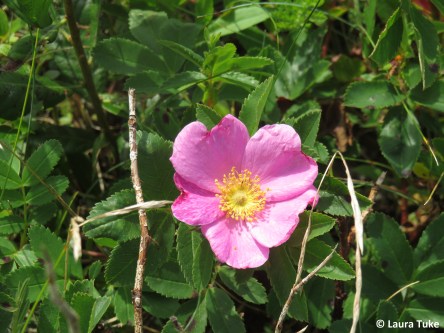
Common wild roseCommon wild rose (Rosa virginiana)
Edible fruit and fragrant flowers

Lowbush blueberryLowbush blueberry (Vaccinium angustifolium)
Edible fruit

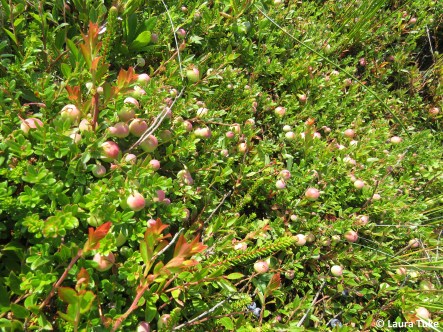
Large cranberryLarge cranberry (Vaccinium macrocarpon)
Edible fruit

New york asterNew York aster (Symphyotrichum novi-belgii)

Swamp smartweed

Stretch of swamp smartweedSwamp smartweed (Polygonum hydropiperoides)

Wild strawberryWild strawberry (Fragaria virginiana sp. glauca)
Edible fruit

Small flowered evening primroseSmall flowered evening primrose (Oenothera parviflora)

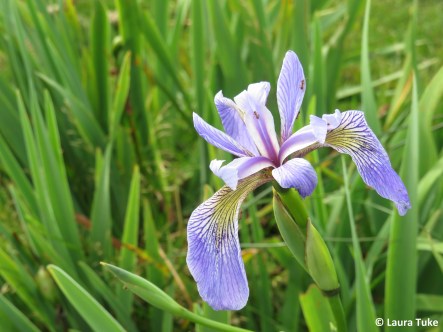
Blue flag irisBlue flag iris (Iris versicolor)

Hooded Ladies' tressesHooded ladies’ tresses (Spiranthes romanzoffiana)

Blue eyed grassBlue-eyed grass (Sisyrinchium angustifolium)

Hedge bindweedHedge bindweed (Calystegia sepium)

Seaside goldenrodSeaside goldenrod (Solidago sempervirens)

Also:
Pearly everlasting (Anaphalis margaritacea)
Creeping juniper (Juniperus horizontalis)
Common juniper (Juniperus communis var. megistocarpa)
Star-flowered false solomon’s seal (Maianthemum stellatum)
Black crowberry (Empetrum nigrum)= Edible fruit
Bayberry (Morella pensylvanica)= Edible fruit and aromatic leaves
Wand dewberry (Rubus arcuans)= Edible fruit
Threepetal bedstraw (Galium trifidum)

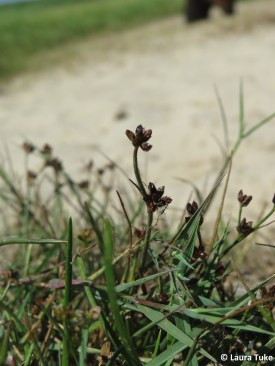
Juncus


Rushes and sedges

Baltic rush (Juncus balticus var. littoralis)
Canada rush (Juncus canadensis)
Slender rush (Juncus tenuis)
Jointleaf rush (Juncus articulatus)

Star sedge (Carex echinata)
Soft-stemmed bulrush (Schoenoplectus tabernaemontani)


Other grass species (Poa and fescue)

Red fescue (Festuca rubra)
Annual meadow grass (Poa annua)
Kentucky bluegrass (Poa pratensis)
Bentgrass (Agrostis scabra)

Introduced species

Curled dockCurled dock (Rumex crispus)

Black knapweedBlack knapweed (Centaurea nigra)

Also:
White clover (Trifolium repens)
Common heather (Calluna vulgaris)
Red clover (Trifolium pratense)
Common plantain (Plantago major)
English plantain (Plantago lanceolata)

Sable Island’s Only Tree

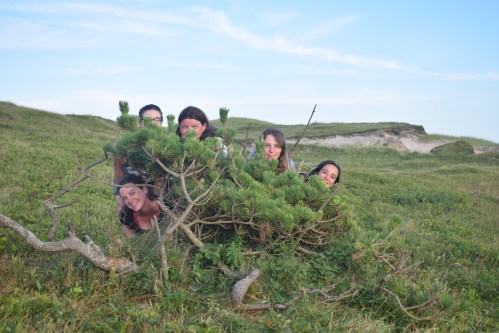
On Sable Island, due to the extreme conditions, there is only one living tree. This tree is a Scot’s pine, standing at a few feet tall. It was planted 50 years ago and can be found at the ‘Pine Tree Pond’ near Main Station on the island.

Here’s a couple of photos of the tree with the Sable Island Horse Project’s crew for the second half of this year’s summer field season:

DSC_0419DSC_0424

Introducing Sable

We had been flying nearly an hour when a smudge first appeared on the horizon of the ocean stretching before us. Though shrouded in fog, it was clear that we were finally nearing  our destination, the remote island that would be my home for the next 4 weeks, Sable Island.


Flying

First recorded by European explorers during the early 1500s, Sable Island is a large crescent-shaped sandbar situated approximately 156km from the nearest landmass (Nova Scotia, Canada). Sitting on the edge of the eastern North American continental shelf, the island was probably formed from deposits left by retreating glaciers at the end of the last ice age. Currently at about 49km in length, 1.25km in width and up to 30m in height above sea level, the island is experiencing decreases in size over time and shifting eastwards.

Sable Island

Map images from Google Maps

Though fabled by many, Sable Island is known for its abundance of wildlife and colourful history. In particular, the island is famous for being the ‘Graveyard of the Atlantic’, with 350+ shipwrecks resting off its shores, the latest originating from 1999 (the Merrimac). Despite people living on Sable from time to time since its discovery, during the 19th century it was these shipwrecks and the establishment of lighthouses and lifesaving stations that led to the start of continuous human presence on the island. The lifesaving stations persisted till they were decommissioned in 1958, but a meteorological station was set up at the start of the 20th century that is still functioning on the island today.

Sable shipwreck map

Map from the NS Department of Education

Today Sable Island is now under the management of Parks Canada, following its designation as a National Park Reserve in 2013. This designation recognises Sable for its impressive dune system and rich biodiversity, including endemic species and the world’s largest grey seal breeding colony. Despite this and the island’s many bird, invertebrate and plant species, you will find that the island’s population of feral horses is what captures most the public’s imagination. These horses were what I first saw when the green strip of Sable flanked by sandy beaches first came fully into view from the plane and its these horses that I was here to visit.

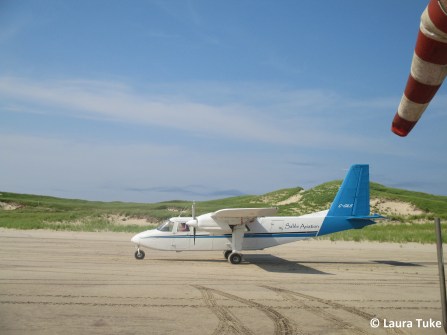
Following my first sight of the island, we were soon bumping down on to the landing strip on the island’s sandy south beach. After months of planning and much hard work, I had finally arrived!

Sable Aviation Plane


For Further Reading:

  • Sable Island: Explorations in Ecology and Biodiversity – Edited by Bill Freedman

Barmy about barn owls: Owl pellets

Currently we have at least one pair of resident barn owls on our 250 acre Dairy Farm, with one notable pair being seen amongst our farm buildings and fields closest to the centre of the farm.

On 26/05/16, I found a barn owl pellet within our straw barn, which was at least 1 month old. Through my interest in barn owls and the other species living on our farm, I then soaked the pellet and teased it apart to find the small mammal bones within.

The pellet was filled with lots of bones, such as shoulder blades, hipbones, femurs and humeri.

From the skulls and jaw bones found in the pellet, I was able to identify the four skulls to species level. Two skulls were from common shrews…

…and two skulls were from field voles.

It was really interesting to be able to get closer to the small mammals that can be found on our farm, whatever the level of species abundance. It also gave me the opportunity to brush up on my skull and bone identification skills with the help of an RSPB owl pellet identification guide, which can highly recommend to others

(https://www.rspb.org.uk/Images/Owlpellets_tcm9-133500.pdf). 

I also recommend to others to get out at this time of year and to find your own owl pellets to learn more about the owls and prey species in your local area.

Winter into spring: April on the farm

April is one of my favourite months of the year on the farm. During April, the Dorset countryside begins to burst into new life. Newborn lambs bounce in the fields, newborn calves snooze in the fields in the spring sunshine, birds begin to nest and raise a new generation, and flowers carpet the woodlands.

Plants this April still followed a trend of being late, with some woodlands not becoming decked out in their full splendour during this month like in past years. Still Bluebells, wild garlic, early purple orchids and late wood anemones began to coat the woodland floor. Also, the woodland ferns began to unfurl in the woods later than usual.

During this April, trees were very much still late, with sycamore and silver birch finally bursting into leaf. Oaks were noticeably asynchronous in their bud burst, with some trees on there way to being in full leaf and others yet to start.

April saw the main crop of migrants arriving on warm winds. This year our barn swallows returned on April 6th, exactly the same date as in 2015! By the time we were fully into April, bird breeding pairs had been firmly established, and the nesting season for many bird species was fully under way. During April, more birds can be heard singing at dawn than any other time of year, which is quite magical to hear.

This year the tawny owls are breeding later than last year, but by the end of April the first hissing calls of tawny owl fledglings could be heard resonating through Dorset woodlands.

Life could be seen blooming everywhere throughout April. Dog violets and cowslips, among other species, were seen flowering along roadside banks.

WP_20160427_002

27/04/16

Brimstone butterflies, orange tip butterflies, and peacock butterflies all began to emerge during the first half of April.

Throughout April, I made myself busy amongst the mounds university revision, by setting up my camera trap at different popular sites around our farmland. It was amazing to see the first badger cubs emerge from their den, and even more special to me, was being able to watch fox cubs beginning to explore above ground with their siblings, during the second half of the month. Fox cubs have to be my highlight of beautiful April!


Winter into spring: March on the farm

With the month of March comes the arrival of spring, symbolising the start of another year’s new growth and a transition following the bleaker winter months. March has often been associated with the saying ‘comes in like a lion, goes out like a lion’, referring to the weather. This was true about this March, with wild weather and strong winds featuring at the beginning of March, before the weather becoming more calm as the month progressed.

As traditional, during March, wildfowl made a sudden departure, fox cubs were born, buzzards established breeding orders, hawthorn and elder broke into leaf, small tortoiseshells emerged, nest building began, small warblers such as chiffchaffs returned from Africa, crocuses flowered, summer visitors began to return, and winter migrants began to migrate to their summer territories.

Though primroses, daffodils, celandines and blackthorn first flowered during February, it was nice to see all these flowers still blooming throughout March. Song birds during March could be heard singing, and the first woodland flowers began to come out at the end of March. The traditional ‘Mad’ March hares also made an appearance, with females resisting the advances of amorous males.

The beginning of Spring is symbolised by lengthening days and increasing temperatures. At the end of March, with the clocks going forward an hour, lengthening days were fulfilled, but this year the increasing temperatures did not make an appearance during March. After the stormier weather at the beginning of March, a cold spell set in, halting the advancement of Spring. This was symbolised with sycamore and silver birch being late coming into leaf, wood anemones and ferns being late to come out in the woods, and Blackbirds nesting late.

On the farm, new lives began during March. Aberdeen Angus suckler cows gave birth to their calves and three of our four mules gave birth to lambs, highlighting one of my favourite parts of the farming calendar.

My highlight of March was beginning to use my new Bushnell camera trap to photograph and video the wildlife on the farm, including the local badgers.

Winter into spring: February on the farm

February is often described as the bleakest month, with the land still gripped in winter and the coldest temperatures often being reached. It cannot be ignored though, that February also brings the promise of coming spring, with the feeling in the air beginning to change, as the month progresses.

Some mornings a light frost can be woken up to, but still frosts are less frequent this winter, than they used to be.

Plants are beginning to stir in February, with catkins (male flowers) hanging from hazel trees, celandines appearing, pussy willow flowering, primroses flowering, and gorse flowering in the hedgerows.

This year on our farm though, blackthorn is flowering early in February, along with horse chestnut trees already coming into bud and the buds beginning to burst.

Animals are beginning to become more active in February, with brown hares becoming easier to see in the fields, rabbits becoming ‘frisky’, female foxes being pregnant, and grey squirrels giving birth in their drays. Also, badgers are beginning to give birth to cubs too, with the most obvious sign of this being remains of grass seen around the entrance tunnels to setts, left from where badgers have dragged grass down into their setts to make nests.

As well at this time of year, starling flocks begin to disperse, as individuals head back to their breeding ranges and rooks begin to build their nests in preparation for breeding. The drumming sound of great spotted woodpeckers can now be heard more frequently, as males defend their territories against other males and attempt to attract a female. This is the same with the dawn chorus, as in February it begins to pick up, due to males defending their territories and advertising themselves to available females.

Conditions were mild towards the end of February this year, leading to insects, such as honeybees and butterflies beginning to become active.

In relation to the farm side of life, in February our four sheep were brought inside in preparation for iconic spring lambing at the end of March.

My highlight of February, was beginning to hear blackbirds singing at dawn and dusk as the month came to an end, which is a traditional sign that winter is over.

Winter into spring: January on the farm

January is often a cold and bare month, no leaves on the trees and an atmosphere of dormancy. But I say, if you just look closely enough, beauty is still there to be found.

January is the month when snowdrops begin to spring from the earth, hinting at the new life that is to come with spring.

Trees stand bare and leafless, showing off their magnificent skeletal shapes.

The last of the autumn’s berries still laden the hedgerows throughout January this year, in particular bright red rose hips.

As well, windfalls still lie beneath the apple trees from last years crop, ready for the taking. Badgers make frequent trips to the orchard to take advantage of the food source, and all that can be seen as evidence of these raids, are the discarded left overs of apples out in the nearby fields.

IMG_1226

Many gulls feed on the farmland fields during the daytime, with the flocks being mainly made up of herring gulls and great-black backed gulls. Usually also during the winter, flocks of starlings feed around the farm, but they only appeared for the first time this winter, near the beginning of January. Currently they can be seen flocking on the fields to feed or chattering away in the trees around our farm buildings. As well, iconic of this time of year, fieldfares and redwings can be seen feeding in the fields.

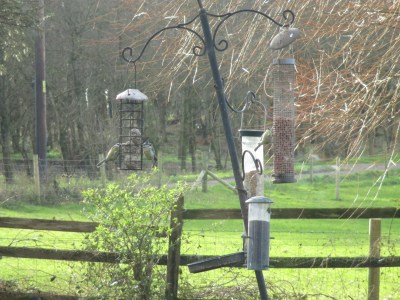
During the daytime, lots and lots of birds visit the bird feeders in the garden, to feed on peanuts and mixed seed. These bird species include, blue tits, chaffinches, great tits, goldfinches, house sparrows, dunnocks and great spotted woodpeckers.

IMG_1239

During the night at this time of year, tawny owls can be heard calling, as they attempt to rekindle pair bonds before the breeding season begins from February onwards. Also, female foxes can be heard calling to males, as they become receptive for mating.

Some mornings are woken up to a frost covered landscape. It makes things look particularly magical with the ground sparkling in the morning sunshine. With changes in winter weather though, these mornings have become rare in Dorset during this winter.

This January, change is in the air. Not the change of tradition, but change that feels wrong. Daffodils began to shoot from the beginning of January and primroses appeared in the hedgerows.

My highlight of January 2016 has to be, seeing a lone kestrel hunting close to our house everyday. A magnificent sight to see a bird hovering, still in mid air, before swooping down to catch a vole.