Beautiful Barn Owls Breeding In 2021

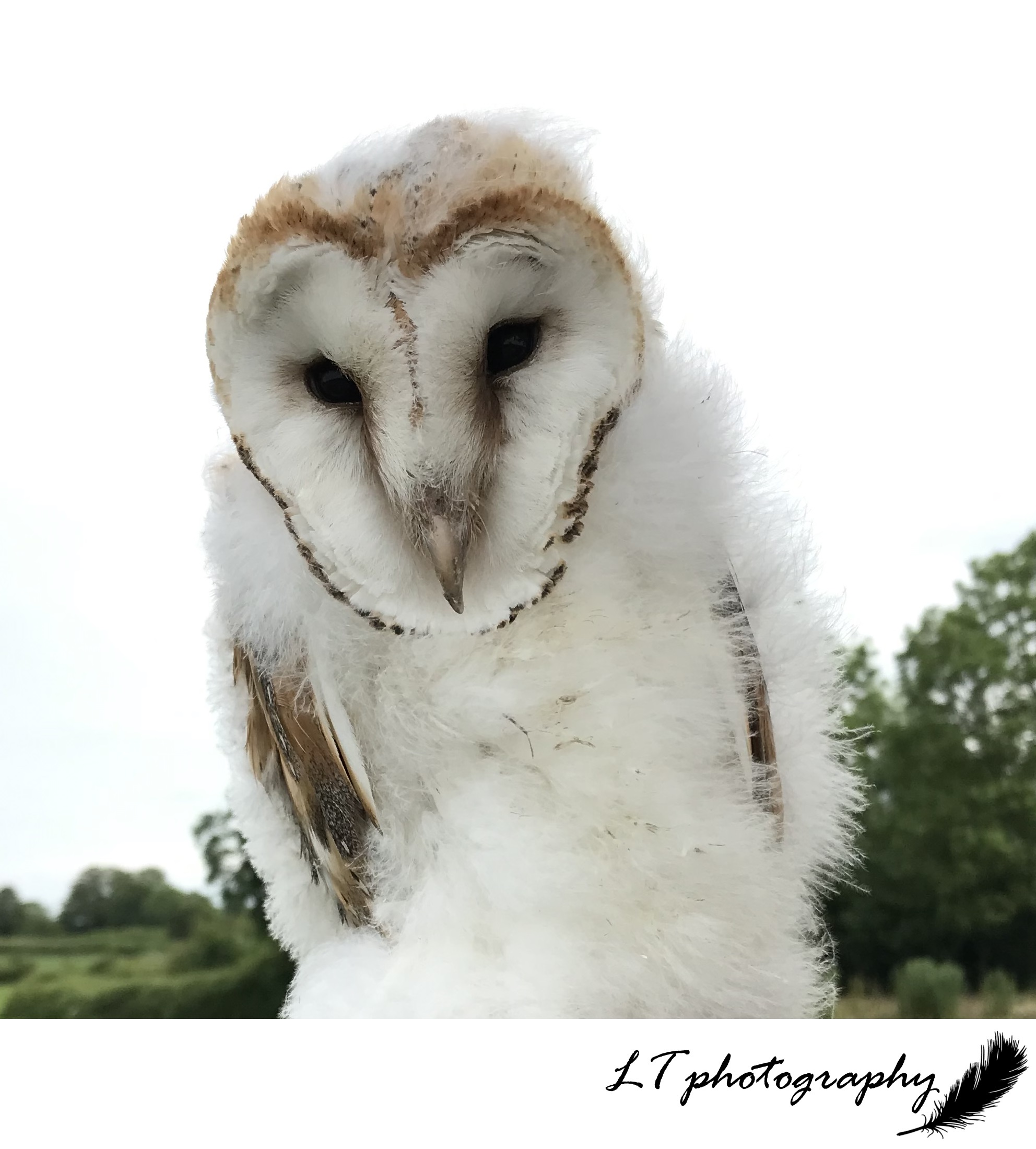
Heart racing with excitement as I take that first step on to the ladder. One step, two step, and the next and the next, until I reach the box high in the rafters of the empty barn. Tap, tap on the side of the box to double check that the adult has left, before reaching quietly for the latch. As I carefully open the little door to the box, I then get my first peak of what may lay inside. There, at the back of the box, balls of downy feathers topped each with a pair of inquisitive eyes outlined by a heart of new feathers. Hope, elation, and pure joy – Original Piece

Iconic, distinct, and delightful, Barn Owls are a much-loved species of the British countryside. This protected species is often less commonly seen though, emerging on silent wings to hunt mainly at dawn and dusk. They are a particularly special species for my family, being an important indicator of the health of British farmland, such as our own, whilst also being a charismatic species to live alongside.
My family’s relationship with Barn Owls began in 2015, with the putting up of a nest box in one of our farm barns. Though Barn Owls have always been in our area, previously in very low numbers, our nest box finally allowed us to draw a pair of Barn Owls right into the heart of our farmland. This box has led to 7 years, so far, of regular Barn Owl sightings, the annual ringing of chicks, and a growing Barn Owl population. To find out more about the last 7 years, check out my previous Barn Owl blog posts.
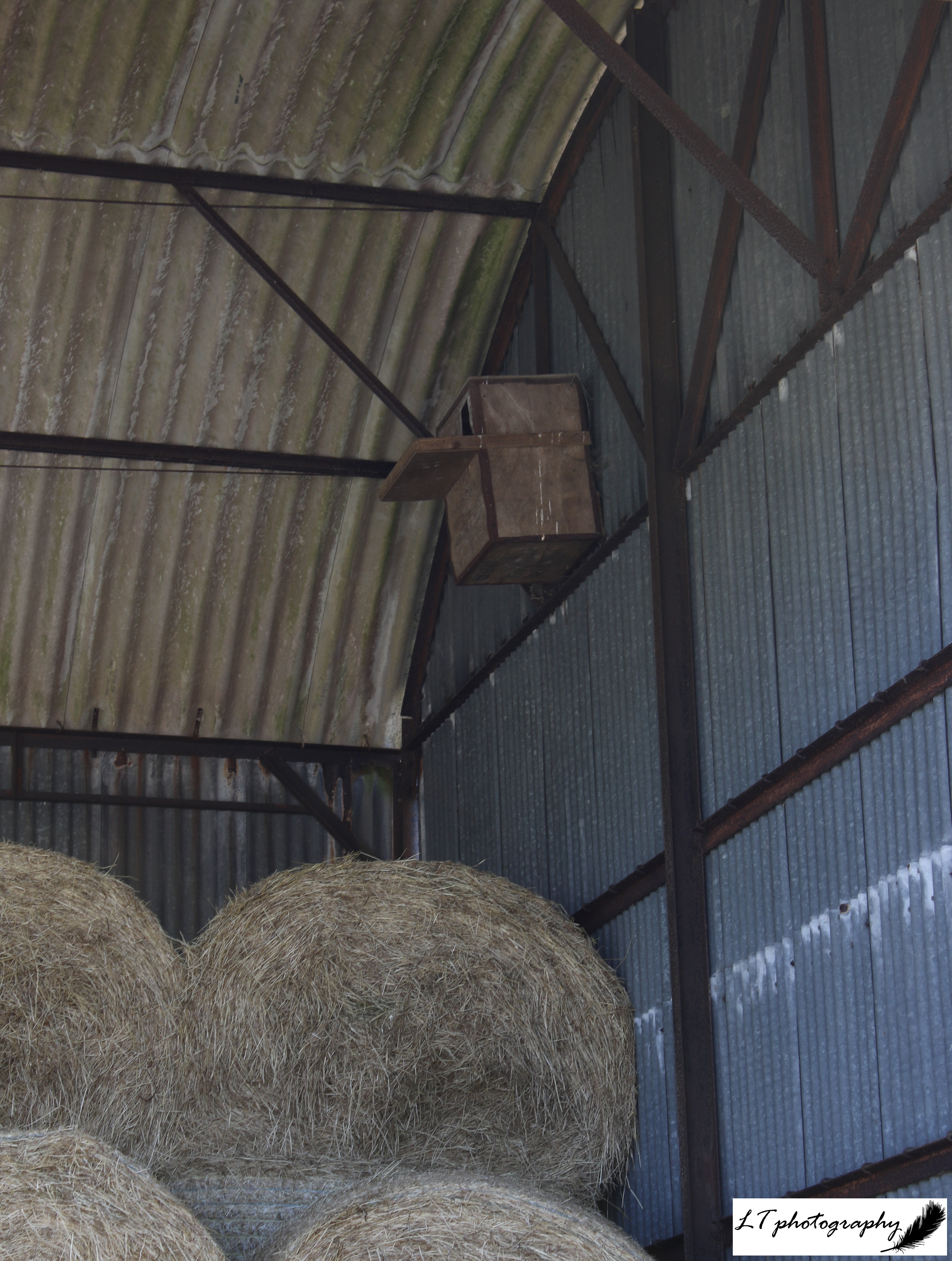
The year of 2020 was a tough one for humans, but a more productive one for Barn Owls. Though we did not end up discovering any wild nesting pairs on the farm that year, we once again had Barn Owls in our barn nest box. The pair hatched 4 chicks from 4 eggs, and raised 2 successfully to fledging in August. This was a special moment as these were the very first Barn Owl chicks that I got to ring myself. Following this success, we had a super winter of seeing Barn Owls hunting every day the weather was settled.

For 2021, I had the privilege of getting more involved in Barn Owl nest box checks across Dorset with Conservation Action (CA). This project aims to preserve and conserve nature, to promote wildlife conservation, and to undertake research and monitoring of wildlife populations. As part of CA’s work, the last few years Barn Owl boxes have been checked on Dorset County Council farms (in which my family’s farm originally came under). From being involved in some of these nest box checks and from a few private Barn Owl boxes (not including my family’s own), I got to check 6 boxes and ring 10 chicks. It was a great experience, not to be missed!
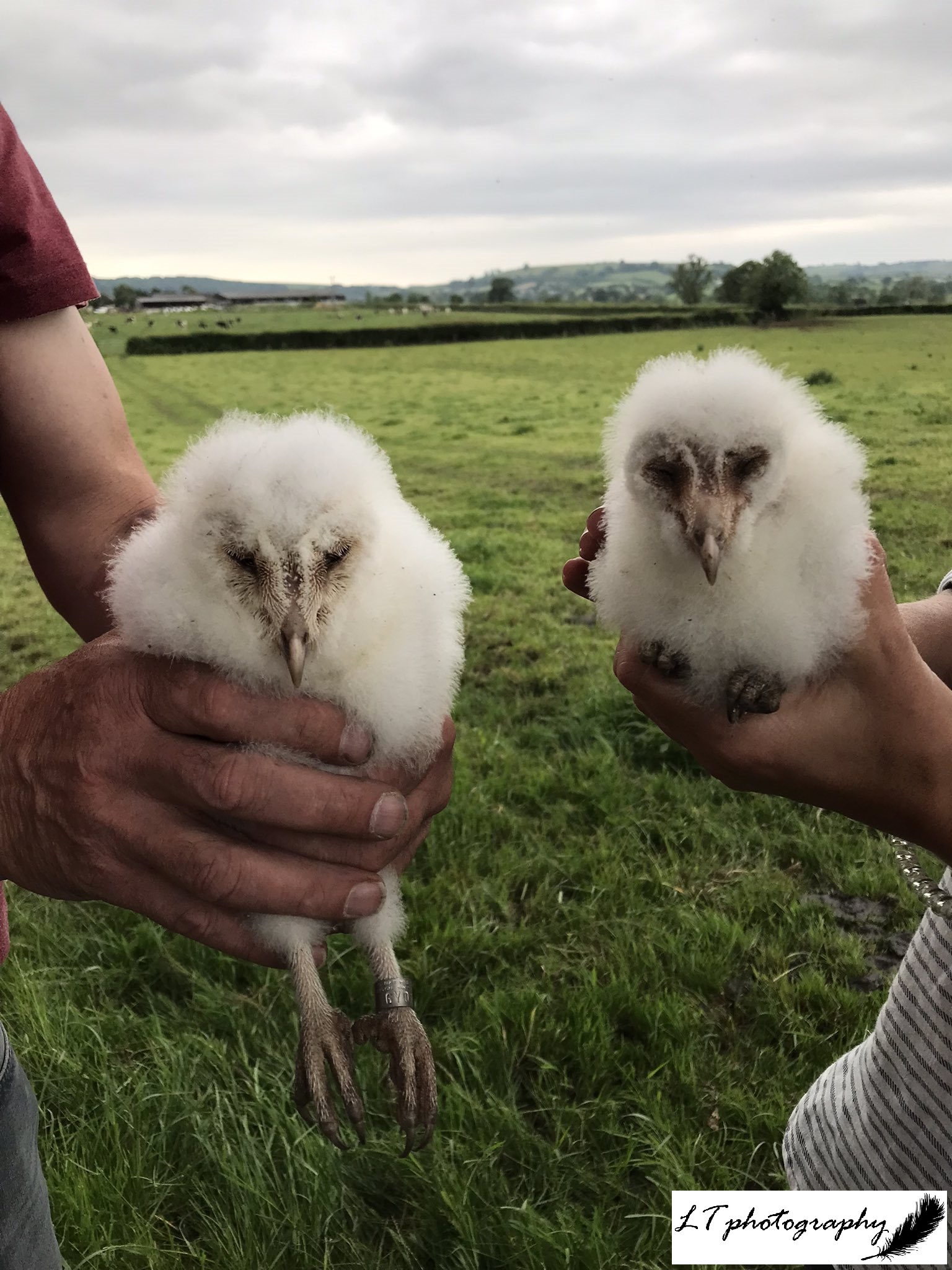
My own Barn Owl nest box was first checked last year on the 15th June. On this day we found that the resident pair had hatched 4 chicks from 4 eggs in the box, all 4 being under 7 days old. We were also able to catch and ring the adult female, allowing us to identify her as a first time breeder at 2 years old. We then made sure the Barn Owls were not further disturbed for a month, before excitingly checking the box once again. Unfortunately the 2 smallest chicks and 1 of the larger chicks did not make it, probably due to the weather, leaving 1 strong healthy chick to survive to fledging.
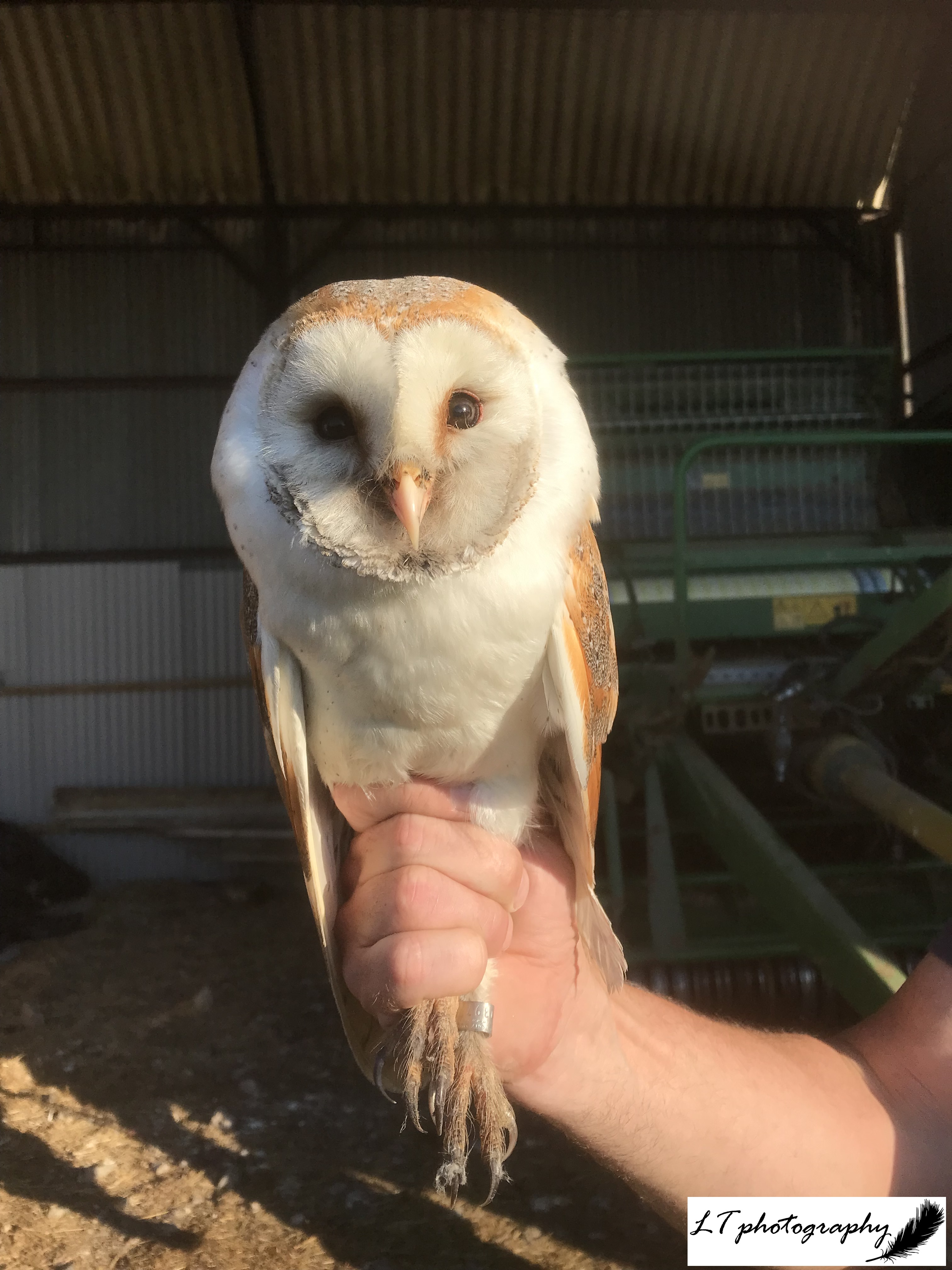
What happened with our Barn Owls fitted in with the trend for 2021. Out of 81 boxes checked, only 21 boxes (26%) were being used by a pair, down from 39% in 2020. This reflects that Barn Owls were having a more difficult year, following a cold, then wet spring. Despite this, on average 2 owlets survived per box, a better statistic, reflecting the similar brood size average for 2020. With such turbulent weather, we were still very happy to have one Barn Owl chick fledge from the box in 2021.
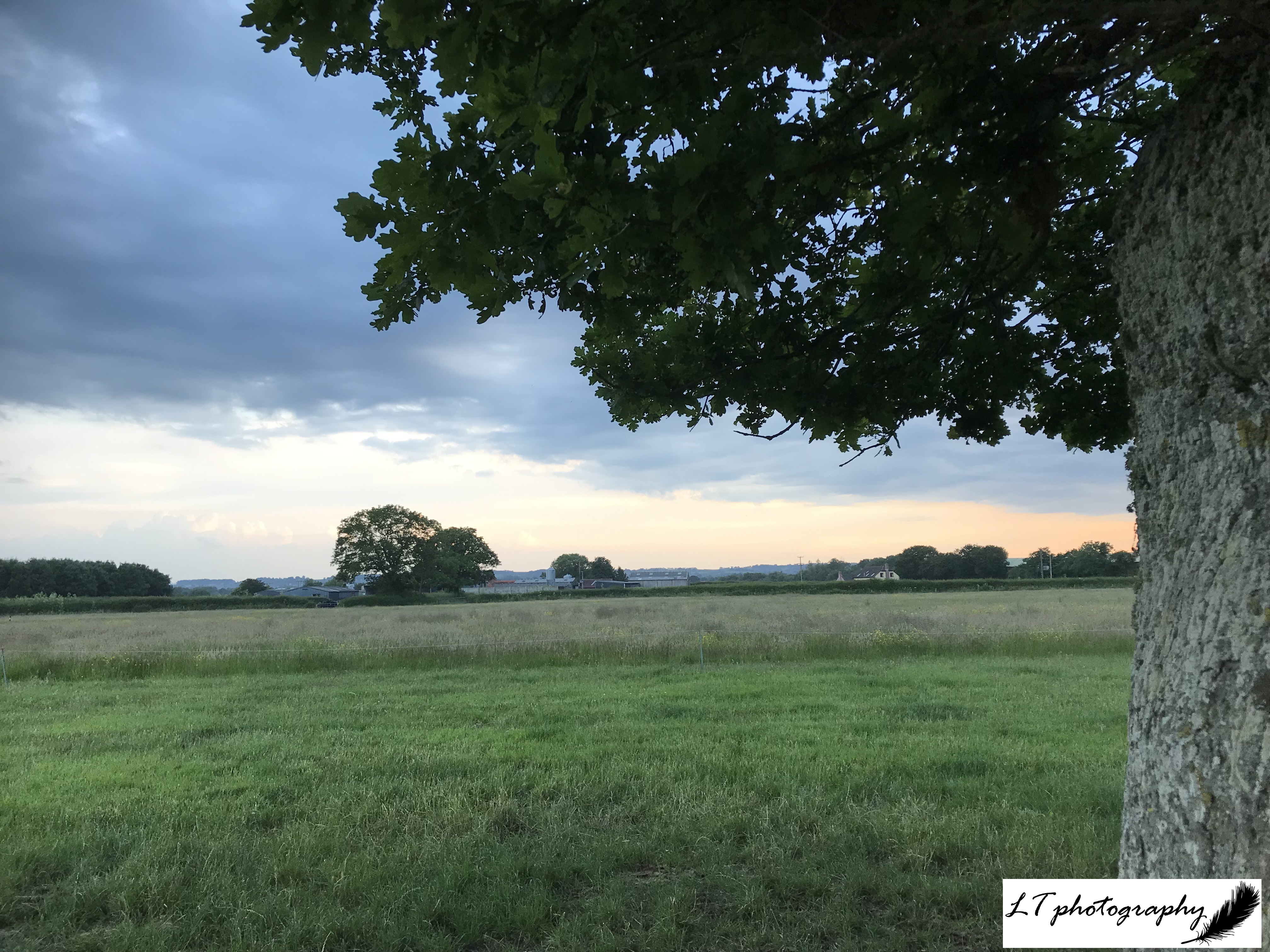
After another winter (2021-2022) seeing Barn Owls hunting most days, we are looking forward to this year’s Barn Owl breeding season. By now we have seen a pair regularly around our nest box and have made a first licensed check of the box. Things are looking positive, so stay tuned to see how breeding goes on my family’s farm this year. Each year habitat changes and improves on our land, so we will also be interested to see how a new year and hopefully more stable weather will affect our Barn Owls. Here’s to a hopefully more successful 2022!
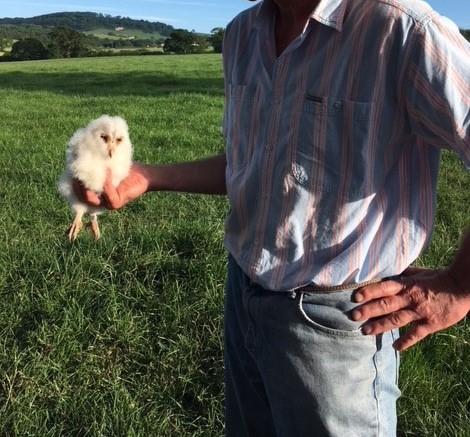
Barn Owls are a protected species, so all nest boxes were checked under full license, with all Barn Owls being ringed under license and special supervision. All birds handed were always put first in all situations, with minimum disturbance being made to the nesting birds and sites. Barn Owls are ringed to allow us to gain greater knowledge of this species to help better conserve this species and their preferred habitats.

26 Years of the BTO’s Garden BirdWatch: Getting Involved During Lockdown

As winter creeps into the landscape and a second lockdown keeps us close to home, our gardens are once again coming alive. Wrens creep through the undergrowth catching insects, Robins sing to defend small territories, and Long-Tailed Tits flit between hedgerows foraging in family groups. It’s not just the birds though, other species are settling down to see out the winter in our gardens too, from butterflies and toads to hedgehogs and ladybirds.

With this year being a bit different, I have found it a great time to take part in the BTO’s Garden BirdWatch, to further connect with nature, boost my mental health, and do my bit. Gardens are very important homes for wildlife, not just at this time of year, so now is an important time for us to understand how we can better help the wildlife that share our gardens with us. If you have a bit of time on your hands, want to do something a bit different, or are interested in the wildlife on your doorstep, then this survey could be just what you need!

The BTO and the Garden BirdWatch

So, what is the BTO? Well, the BTO stands for the British Trust for Ornithology, where ornithology refers to the study of birds. Started in Oxford in 1933, this now Norfolk-based charity aims to engage people with science whilst advancing the understanding of birds and now other wildlife species. With over 60,000 dedicated volunteers, and projects ranging from bird ringing and Cuckoo tracking to urban gull and bat surveys, the BTO has gone from strength-to-strength.

Set up in 1995, one popular BTO project has been the Garden Birdwatch, a project aiming to understand the relationship between wildlife species and our gardens, and how and why some of these species populations may be undergoing change. In a nutshell, the Garden BirdWatch is about participants recording the birds they see in their garden, along with mammals, amphibians, reptiles, butterflies, bumblebees, and dragonflies. As vital habitat for wildlife continues to decrease, whilst the importance of gardens as substitute habitat increases, the information we can provide now can be used to better tailor help to support wildlife in the future.

So why should you take part? Well, the Garden BirdWatch is a great way to enjoy the wildlife in your garden, improve your knowledge, and allow you to follow the annual cycle of life. Taking part is also easy! All you need is a garden, a minimum of 20 minutes a week, and a way to identify the species you see. You do not need to have a big or elaborate garden, put food out, or be an expert. With the Garden BirdWatch currently being free for a year, signing up is easy. Provide a few details about your garden, and get started recording the garden birds and other wildlife that visit you.

Why not join thousands of other volunteers today, and do something new from the comfort of your own home!

Examples of Results

Last year marked the 25th year of the Garden BirdWatch, and so the BTO have now been able to use 25 years of weekly garden observations to begin analysing the relationship between our gardens and wildlife. For example:

  • Goldfinches, Woodpigeons, Nuthatches, and Jackdaws have become an increasingly common sight in our gardens, relying on our gardens for vital foraging habitat
  • Song Thrushes, Greenfinches, Starlings, and House Sparrows have become a less common sight in our gardens since 1995, due to a range of factors from disease to loss of habitat

I have now been taking part in the BTO’s Garden BirdWatch for the last 21 weeks. This time has gone past so fast, but has opened my mind to the diversity and abundance of species that visit my garden through the seasons. To sum up my time so far, here are some of my results:

  • I have observed 26 different bird species in my garden, with the most abundant species being Starlings (50 on 28th July) and House Sparrows (40 on 28th July), followed by Goldfinches (30 on 1st October)
  • Every week Blue Tits, Great Tits, Collared Doves, Pheasants, Goldfinches, and House Sparrows have been consistently recorded
  • As summer has moved into autumn and winter, Coal Tits, Jackdaws, and flocks of Goldfinches have become newly reliant on my garden, whereas Great-Spotted Woodpeckers, flocks of House Sparrows, Pheasants, flocks of Starlings, and Sparrowhawks have decreased their visits
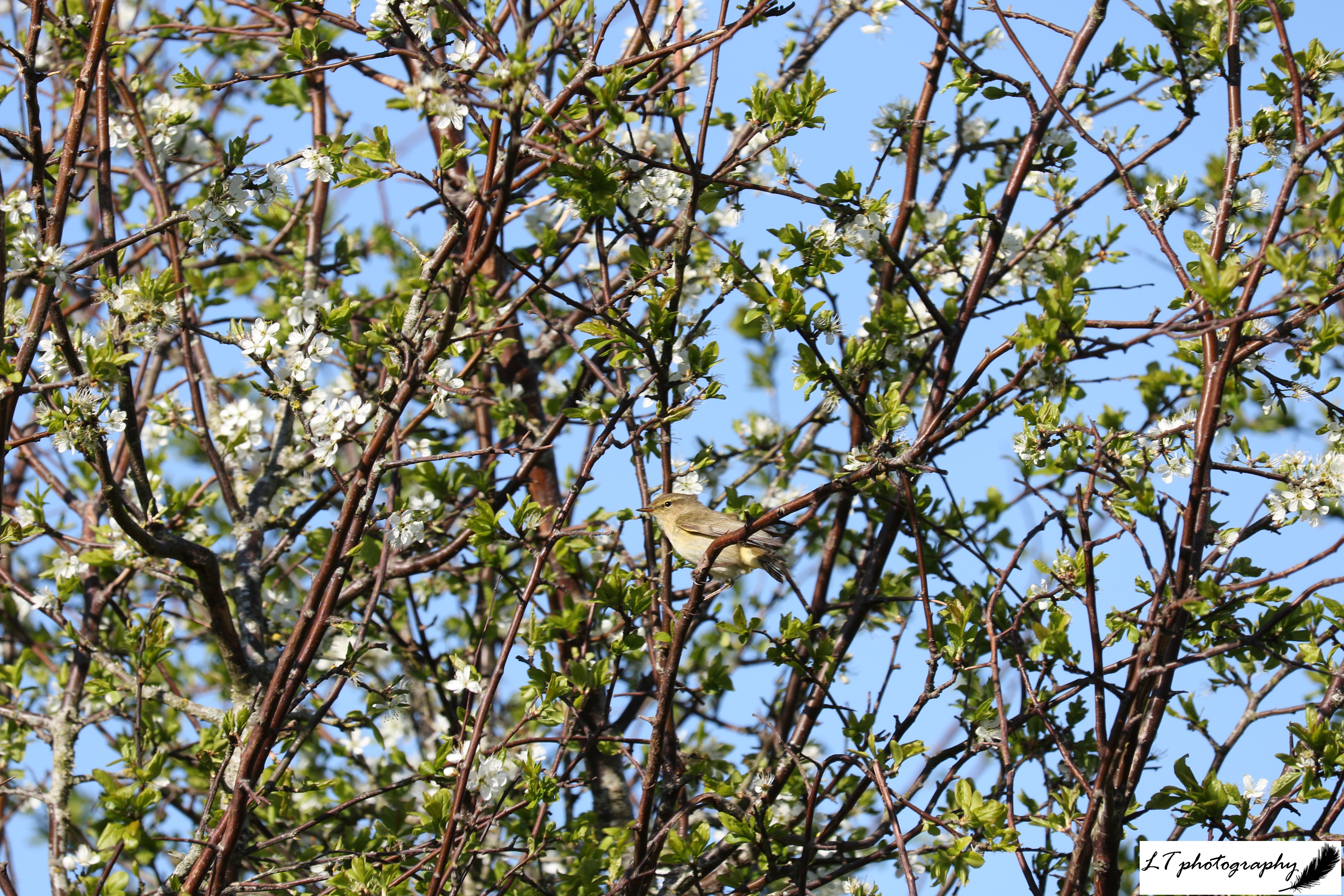
  • No week or month has been the same, with summer highlights including Greenfinches, Siskins, Chiffchaffs, and Garden Warblers!

So, why not see what wildlife you can encounter this winter?

Sable Island Horse Project field crew 2018

It was a pleasure to join this year’s Sable Island Horse Project crew out on the island itself to census the whole feral horse population. The project would not be the same without the dedicated crew and my experience on Sable island would not have been the same without the girls I spent my four weeks with. To the seven of us that made up the field crew this year, here’s a series of fact files to introduce and celebrate each of us:

Julie Colpitts

Julie Colpitts

Photo Credit: Sable Island Horse Project

Role: Team leader
Time on the island: Full field season (July-August)
Course and university: PhD at University of Saskatchewan (Canada)
Sable Island research: Population genetics structure in Sable Island feral horses
Twitter: @julie_colpitts

Chiara Fraticelli 

Chiara Fraticelli

Photo Credit: Diana Jeong

Heya! I’m Chiara Fraticelli and I came onto the project from the University of Exeter, Cornwall campus within my Conservation and Biodiversity Master’s course. I’m originally from Italy but did my university degree in the UK.

My main wildlife interest is African mammals, which begs the question, what was I doing on Sable Island studying horse behaviour? 😀 Well, horses have always been one of my favourite animals, and the possibility to study feral horses in such an exceptional environment was very tempting. Sable Island is a place where it’s unlikely for a person to go as a tourist, and even if you do, you can’t understand the challenges and problems involved in horse adaptation and reserve management by only staying a few hours. For my project I studied risk aversion and island tameness of the Sable Island horses. This is interesting because these horses evolved for generations without predators, such as humans. But is it because this is a learned behaviour or because the genetics changed? This was my question.

I really enjoyed my time on Sable Island, the place is amazing, the horses were interesting to study and the crew was very friendly. My favourite horses this season was a fearless foal in one of the big bands living near the centre of the island. I had to move away from him almost everytime I saw him because he wanted to come close and discover what I was!

Chiara's Favourite Foal

Photo Chiara took of her favourite foal

Coming soon I have an internship in Africa, where I will spend 6 months learning and working on park management. This is the direction I want my career to take, but we will see where life will take me.

Twitter: @Chiara_Frati
Instagram: _kiaraspace_
Blog: http://www.kiaraspace.com

Check out Chiara’s social media pages and blog to follow her on her next adventure coming soon!

Kirsten Johnsen

Kirsten Johnsen

Photo Credit: Sable Island Horse Project

Time on the island: Full field season (July-August)
University and course: MSc at University of Saskatchewan
Main research interests: Population ecology, behavioural ecology, wildlife conservation and environmental impact management.
Main wildlife interests: Large mammals and birds (especially owls), but also snakes.
Sable Island research: Looking at whether drinking from a pond or well influences energy intake and energy loss in Sable Island Horses through observational behaviour surveys and taking samples of available vegetation communities. Also looking at those factors in relation to parasite counts.

What did I enjoy most about Sable Island: 
I really liked the ecosystem in general since it is so unique. The views were amazing, especially when I could see the ocean on both sides of the island at once. One of my favourite spots on the island is Bald Dune, since looking at it is like looking at a desert and it’s so unlike any other area that I have visited before.

Funniest moment:
When group pictures were taken at the end of the field season. Specifically when trying to take either an awkward 70’s pose or a soccer-style picture, where Ruth and I kept cracking up because there was such a delay on the camera timer and we could not keep a straight face for that long.

Favourite horses: 
While I think Lil’ Thing was my favourite overall, I also quite liked watching Rolex and Golds (a cute pair of siblings). Ripley and Orbit stand out as well because they were both pretty mischievous.

What’s next: I hope to have the data from this summer processed and analyzed within the next year. Eventually after school, I’d probably like to work in wildlife conservation/ecology. Ideally I’d like to work at one of the parks since I enjoy public engagement and studying lots of different facets of the same ecosystem to see how it all works together. Otherwise I would be happy working in environmental consultancy since I enjoyed the process of creating management plan suggestions in previous projects.

Alice Liboiron

Alice Liboiron

Photo Credit: Sable Island Horse Project

Time on the island: First half of the field season (July)
Course and university: Doctor of Veterinary Medicine at University of Saskatchewan Western College of Veterinary Medicine (Canada)
Sable Island research: Parasitology study of the feral horse population

Diana Jeong

Diana Jeong

Photo Credit: Sable Island Horse Project

Time on the island: First half of the field season (July)
Course and university: MSc student of Jocelyn Poissant at the Faculty of Veterinary Medicine, University of Calgary
Home: (London, ON) Canada
Main research interests: Genetic research for wildlife conservation/management
Sable Island research: Inbreeding depression and juvenile traits in the feral horse population

What did you enjoy most about this year’s field season: I loved getting to know my study system, the unique personalities of some of the horses, and the team of researchers that I would be working with in the future. Being out in the field would not have been as fun for Diana if I did not have the group of women I got to work with on the first half of the season.
Favourite memory of the field season: Getting the field team hooked onto old school throwback songs whilst working in the lab.
Funniest moment: During the first half of the field season, Alice taught us how to do the floss dance in the middle of the beach.
Favourite horse(s) on Sable Island: Any horse with unique facial markings for easy identification!

What’s coming up for you next? I am just starting my Master’s at UofC, so right now I’m just focussing on my courses and literature review. I hope to be able to get all the lab work done in time to potentially join the 2019 field season next year on Sable.
Career plans: I am unsure which career path to pursue currently, but I hope to be able to contribute to the field of wildlife health and ecology in some way, in whichever profession I choose.

Twitter: @chanwoorijeong and please follow @SI_horses (the Sable Island Horse project official twitter page)

Ruth Greuel

Ruth Greuel

Photo Credit: Ruth Greuel

Role: Plant guru
Time on the island: Second half of the field season (August)
Course and university: 
PhD at University of Saskatchewan
Home country: Canada
Main research/wildlife interests: Herbivory and grazing (large herbivores, primarily), rangeland management, nutrient cycling and dynamics. Grassland ecology in general. I also enjoy lichenology and plant ID.
Sable Island research:
Just beginning a PhD studying sea-to-land nutrient transfer, nutrient cycling through the system and how that may affect the horses.

What did you enjoy most about this year’s field season overall?
I love field work in general! Being outside and getting so much fresh air, exercise and time to think is such a treat after being cooped up with the computer during the rest of the year. I also really like meeting up with the rest of the field crew at the end of every day, winding down and talking about the things we each saw.
Highlight(s) of the field season:
Seeing a brand new foal just starting to walk around on wobbly legs! Or getting to see the blue flag irises in bloom (Iris versicolor).

Blue flag iris
Funniest moment: Taking our group photo out by the only tree on the island!
Favourite horse(s) on Sable: There are a few I get excited to see, but I don’t know all of their names or histories as well as other crew members do. There’s a yearling on the west end of the island that I call Bruno and I am especially fond of him.
What’s coming up next?
Continuing to work on this! More Sable Island field seasons, hopefully.
Career plans: Would love to continue to do research on wild places!

Twitter:
 @ruthjgee

Laura Tuke

Me

Photo Credit: Chiara Fraticelli

As people will already know from this blog and its Sable Island Stories series, I joined the second half of the field season on Sable in August this year, and had the best time. To recap on myself, I am based in my home country England, and I have just completed a Master’s in Conservation and Biodiversity at the University of Exeter. As part of my degree, I got the opportunity to complete a research project looking at the quantitative genetics of foal body size in the Sable Island feral horse population. So in summary, I investigated if foal body size is due to genes and if foals are under selection for larger or smaller body size.

What I enjoyed most about my time on Sable Island, was getting to experience field work abroad first hand, and from it I got the opportunity to meet some great people, experience a different and unique ecosystem, and to learn more about myself as a person. My favourite moment of the field season, following my previous blog post, was spending evenings watching the spectacular Sable Island sunsets with the rest of the field crew.

IMG_4478

Photo Credit: Kirsten Johnsen

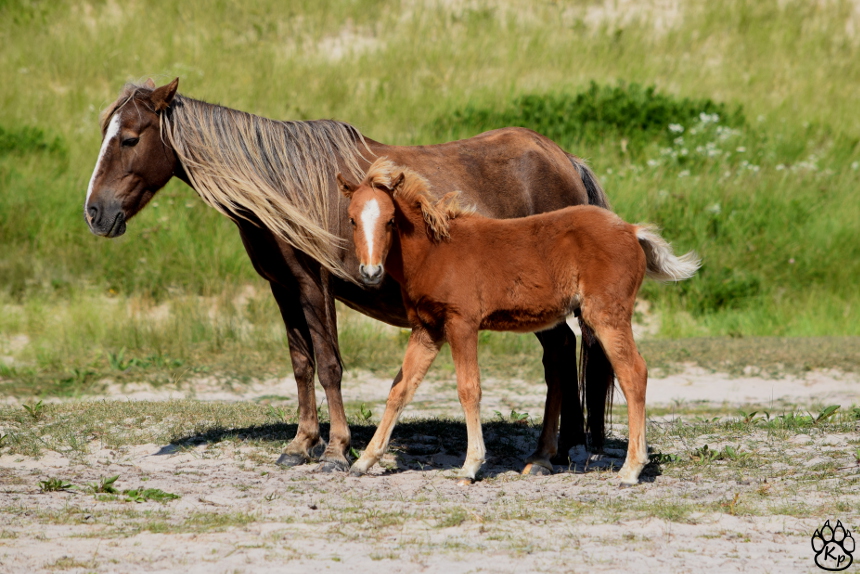
Watching the horses day in and out, I grew a soft spot for a few foals that I ended up suggesting potential names for. My favourites were Hardy a foal I saw for the first time at only a couple of days old, Missy a very cheeky little foal, and Tilly who I named after my baby niece.

Hardy

Hardy and his mum at a couple of weeks old

What’s next? I am currently taking a break to adjust to post-university life, before working towards my next goals. I am passionate about wildlife and its conservation, research and educating the public on wildlife issues, among other things, and so my ambition now is to get into the wildlife film industry to combine my greatest interests.

Twitter: @laura_tuke
Blog:
Laura’s Wild World (this blog)

Thank you to Chiara, Diana, Ruth and Kirsten for providing me with the fact files for this blog post! 

Life of a Sable Island field researcher

Some people may be wondering what scientific research field work may entail or even what it is like to live on an island. Well for 4 weeks this summer I got to experience both, joining the second half of the Sable Island Horse Project field season. I had a really great time and so here’s a little taste of Sable life and my experience this summer.

A day in the life on the project

  1. Two people would complete morning lab work before breakfast, processing samples ready to be analysed in university labs back on the main land.
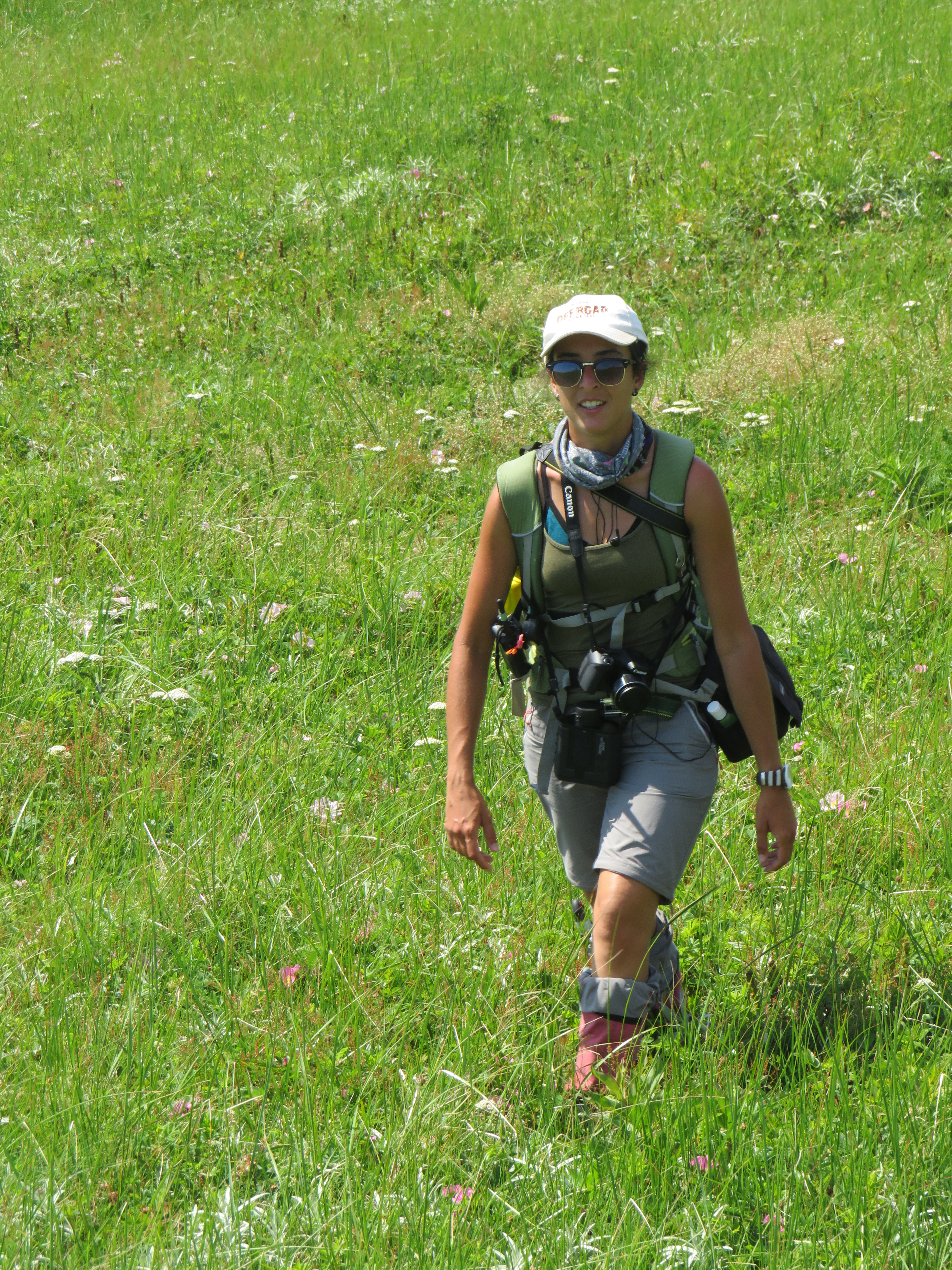
  2. After breakfast, the field crew (5 of us) would often gather for a session of morning yoga. This was followed by a run down of the plan for that day’s surveying.
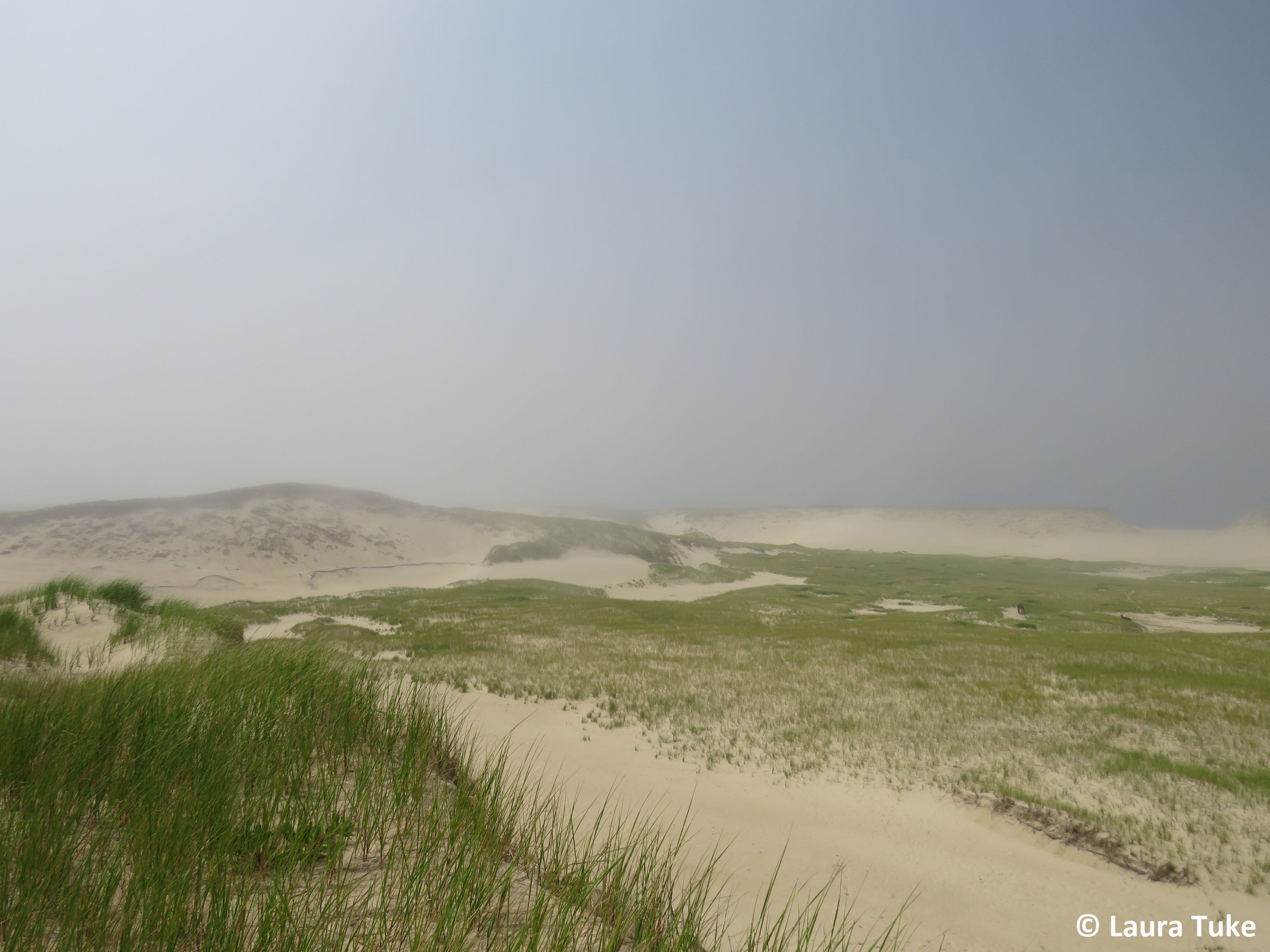
  3. Each day we would spend approximately 6 hours in the field in a range of weather conditions, such as thick fog, light rain, or bright sunshine.Fog
    • Field work involved travelling out to one of the 7 sections on the island in the buggy or on ATVs (if a certified user) and surveying that whole section on foot, which often involved hiking on bare sand and through thick vegetation.
    • When a horse or band of horses were encountered, photos were taken of each individual from all sides and data was collected, including information on markings, sex, and location.IMG_4174
  4. Following return from field work each day, field equipment would be put away before lab work was completed. Lab work involved processing faecal samples to enable a range of analyses to be conducted, such as parasite egg counts in the lab or more complex analyses back on the main land.
  5. During lab work or following completion, we would enjoy a well earned dinner cooked by one of us on rotation. As one of the field crew were vegan, we spent the majority of our time eating a vegan diet. Food we ate during my time on the island included:
    • Taco pastaPineapple Upside Down Cake
    • Homemade pizza
    • Lentil curry
    • Veggie burgers
    • Pineapple upside-down cake
    • Fajitas
    • Thanksgiving-style cauliflower roast
    • Veggie chow mein
    • Breakfast for dinner= scrambled eggs, bacon, fried potatoes and vegan pancakes
  6. Field work, lab work and dinner were followed by organising photos taken of horses that day and bands lists being updated.
  7. End=bedtime!

Base camp 

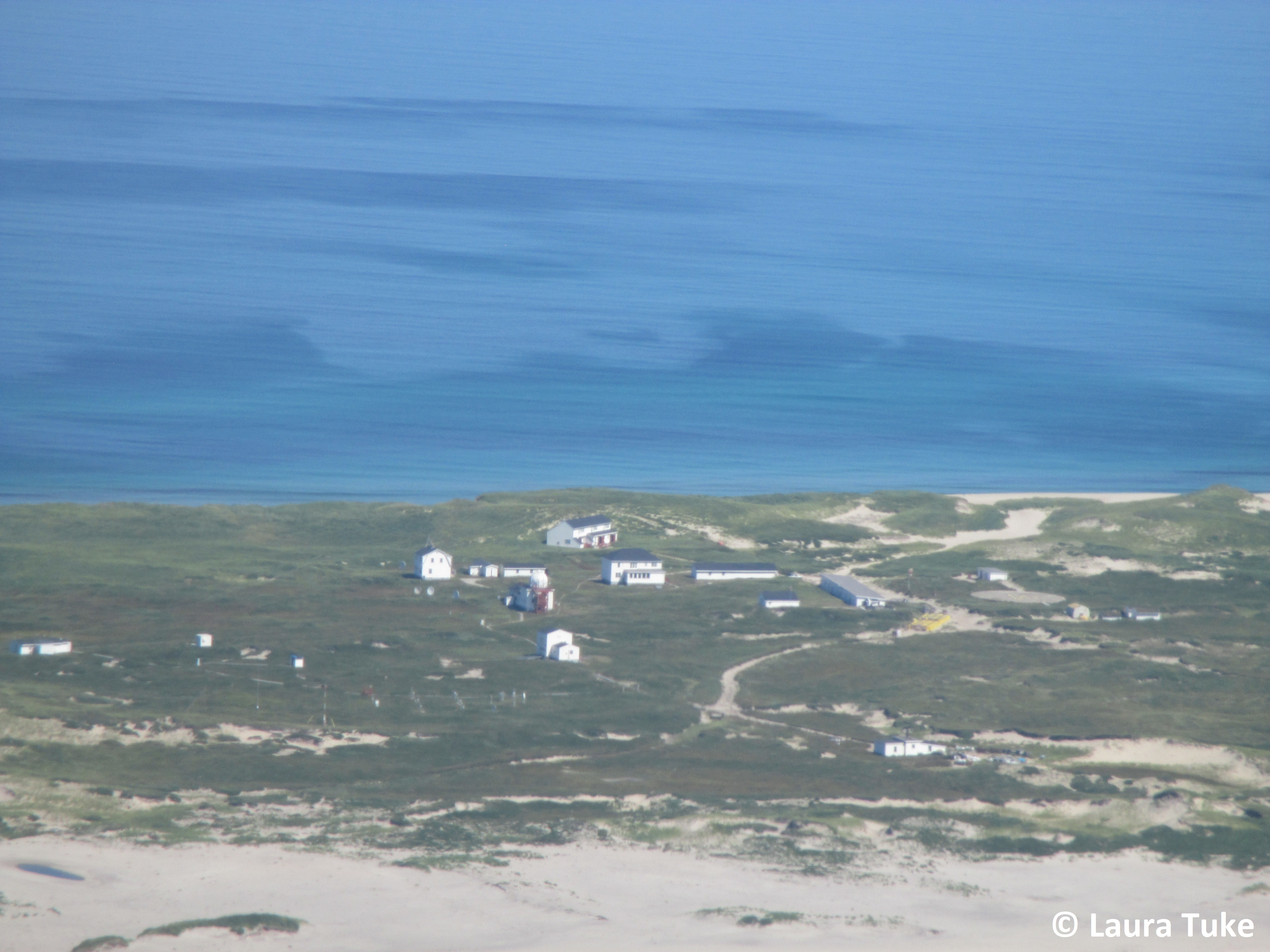
Of the buildings that currently remain of the old lifesaving stations on the island, a cluster in the west half make up what is known as main station. Main station is the base for Parks Canada who manage the island and for researchers and visitors who come to the island.

Bird's eye view of main station

View of main station from a plane

It was here I got to stay during my time on the island, specifically in a large white house that held a lab, storage space, living areas, and other facilities and could sleep approximately 15 people. It was only occupied by the Sable Island Horse Project field crew, a Parks Canada staff member and short-term building consultants during my stay.

Main station house

Rain days on Sable Island

The weather can be highly unpredictable on Sable Island, changing from fog to hot sun to rain very quickly. Though we could tackle some bad weather during field work, heavy rain and the spectacular thunderstorms of Sable Island were a no go. Such weather resulted in celebrated rain days, allowing us to have a well earned rest for one day.

Rain day activities with the girls ranged from organising the house, completing project work and catching up with jobs, to watching back to back episodes of TV programmes, such as ‘Say Yes to the Dress’, and baking sessions, which included making pretzels.

The sunsets

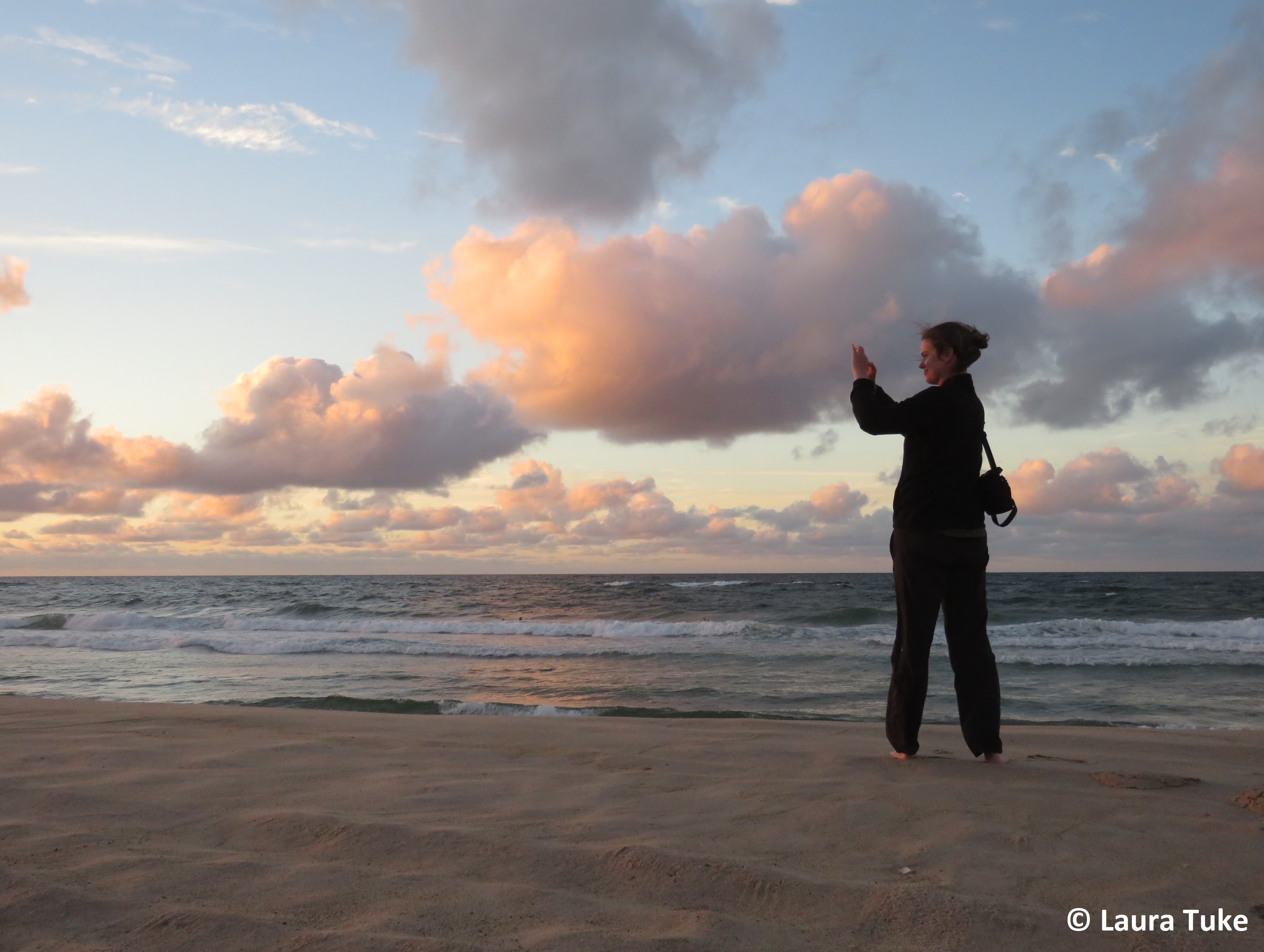
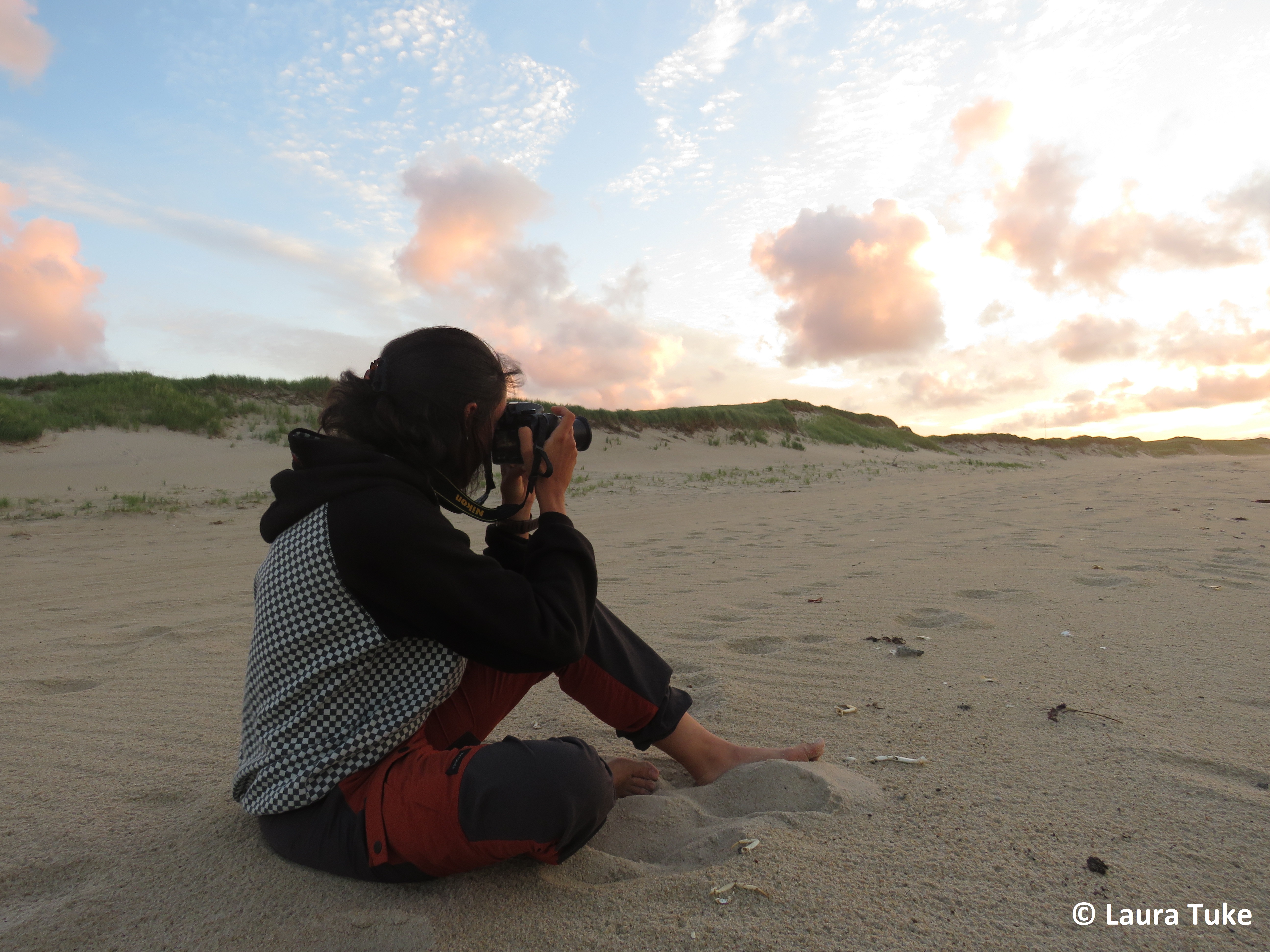
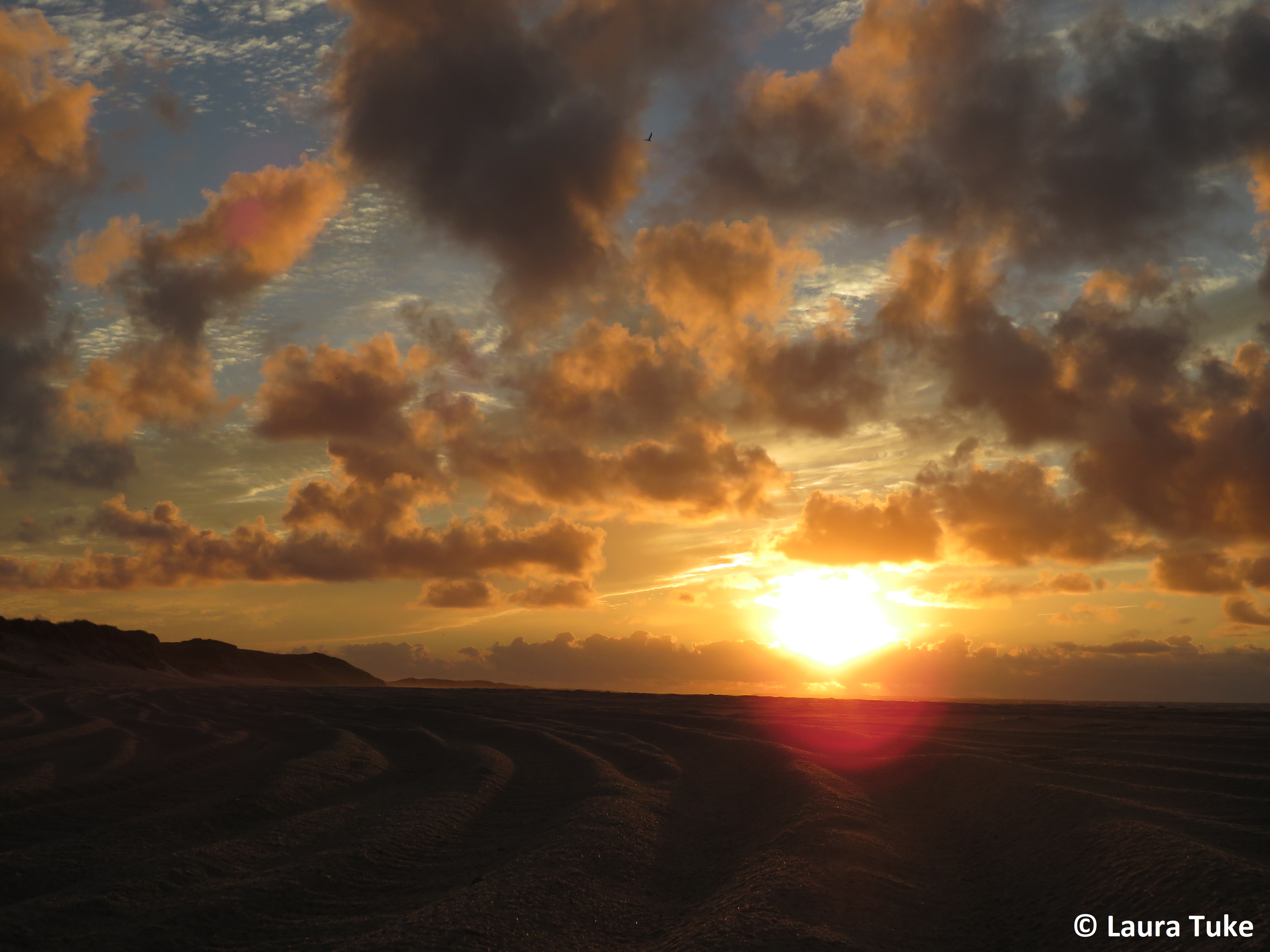
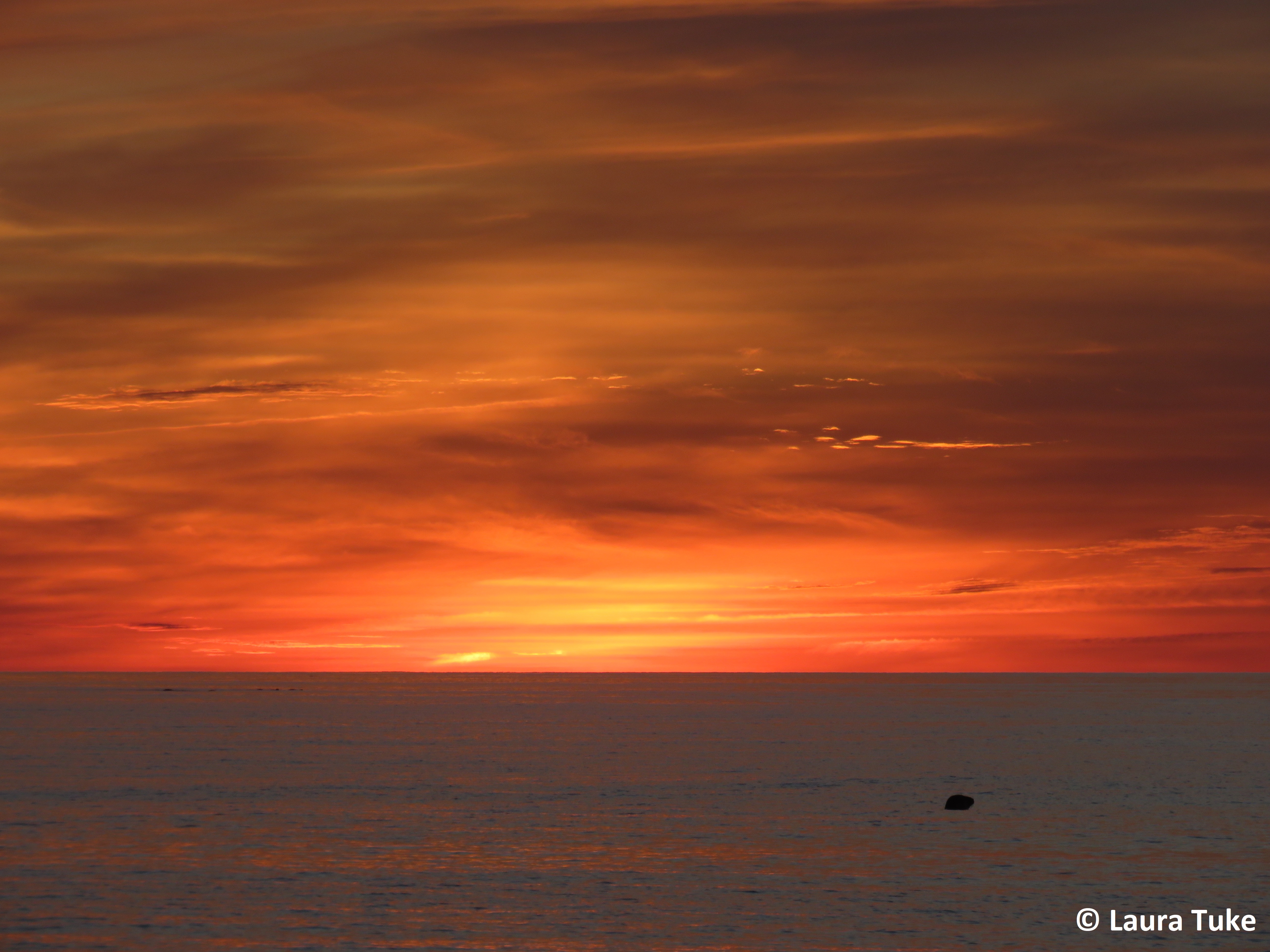
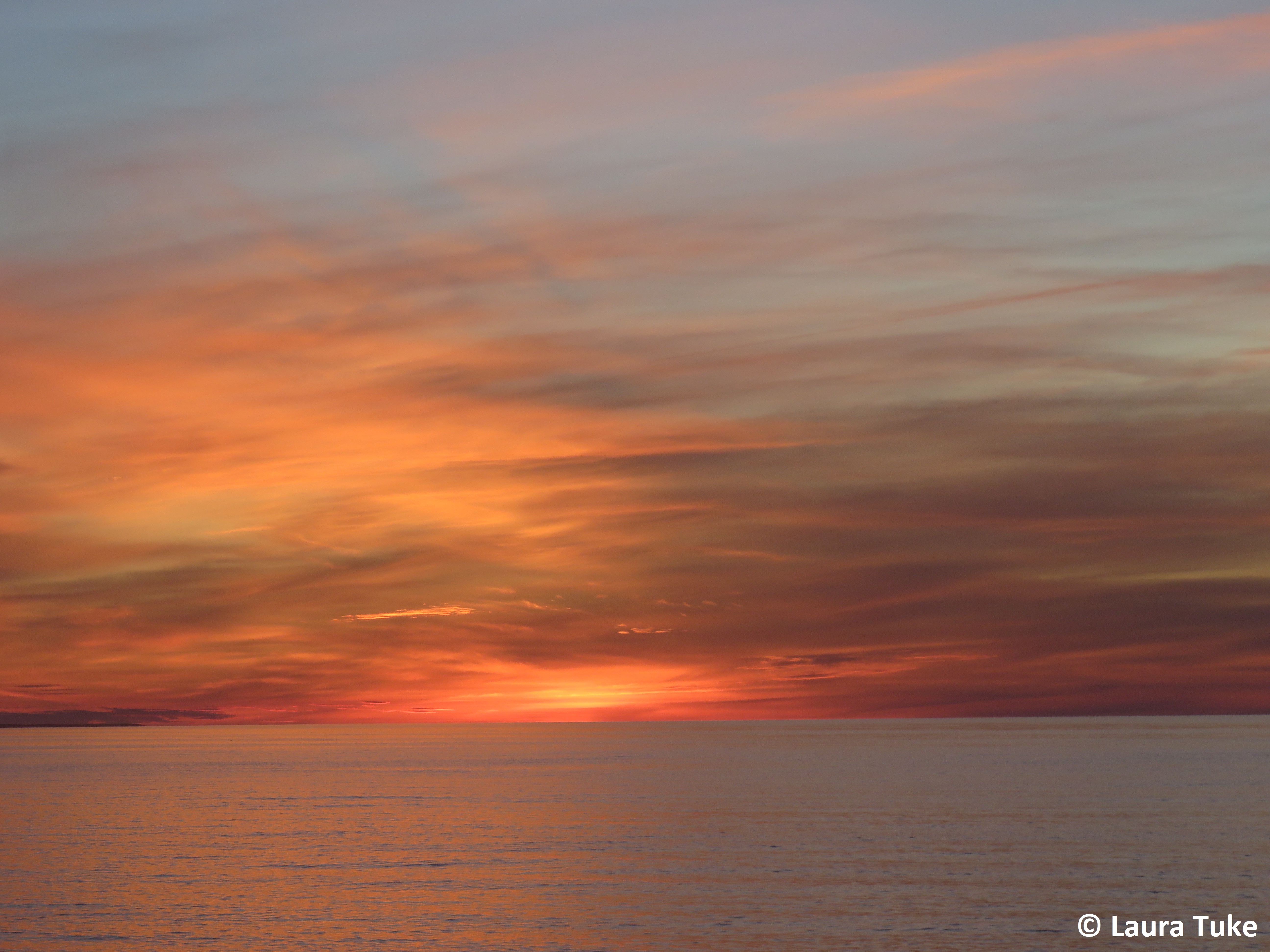
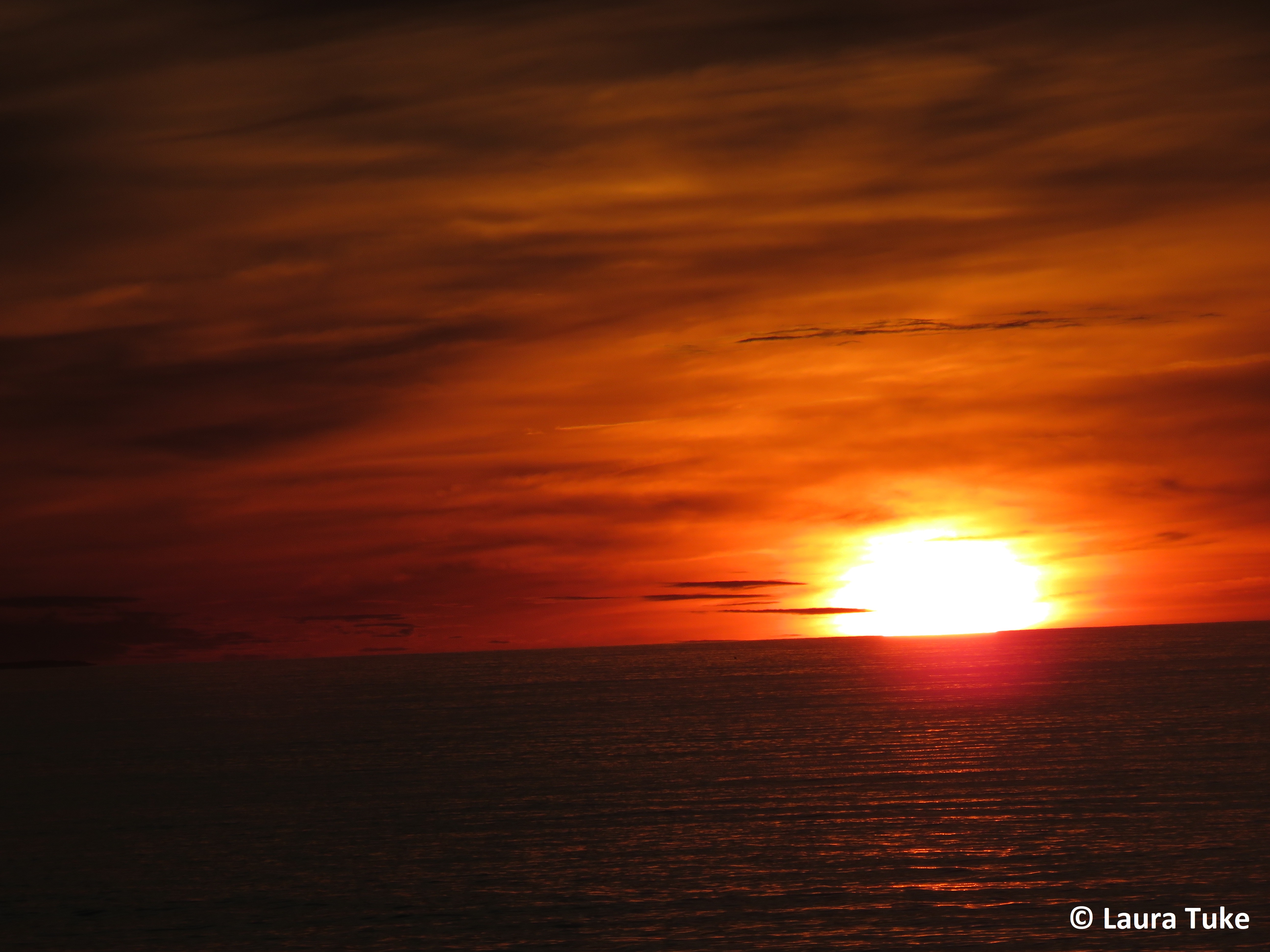
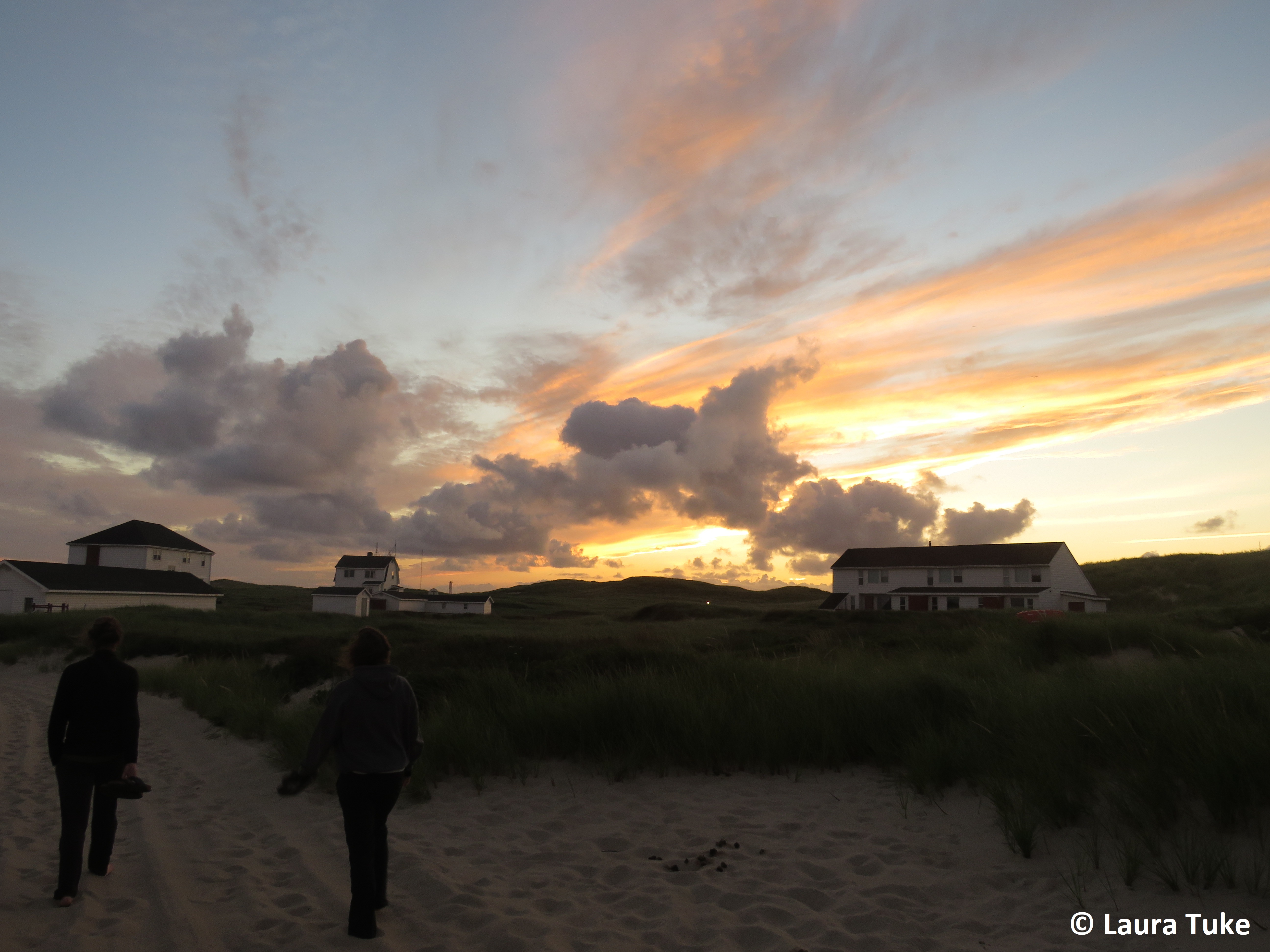
Though there is much more I could say about life on Sable Island, I have to admit that my most favourite part of my time had to be the sunsets. Following a long day of field and lab work, there was nothing that could quite compare to walking out onto North beach and watching one of the spectacular sunsets on offer. It has to be said that my visits to Canada have always delivered in the sunset department, and Sable Island was no different. Here’s an assortment of photos of these celebrated events!

Sunset seal

Julie

Ruth

Chiara

Beach sunset

Tracks in the sand

Sunset with seal

Sunset sky

Sunset

Red sky at night

Ruth and Julie

11 things you need to know about the Sable Island Horse


IMG_8130

In all things of nature there is something of the marvelous – Aristotle

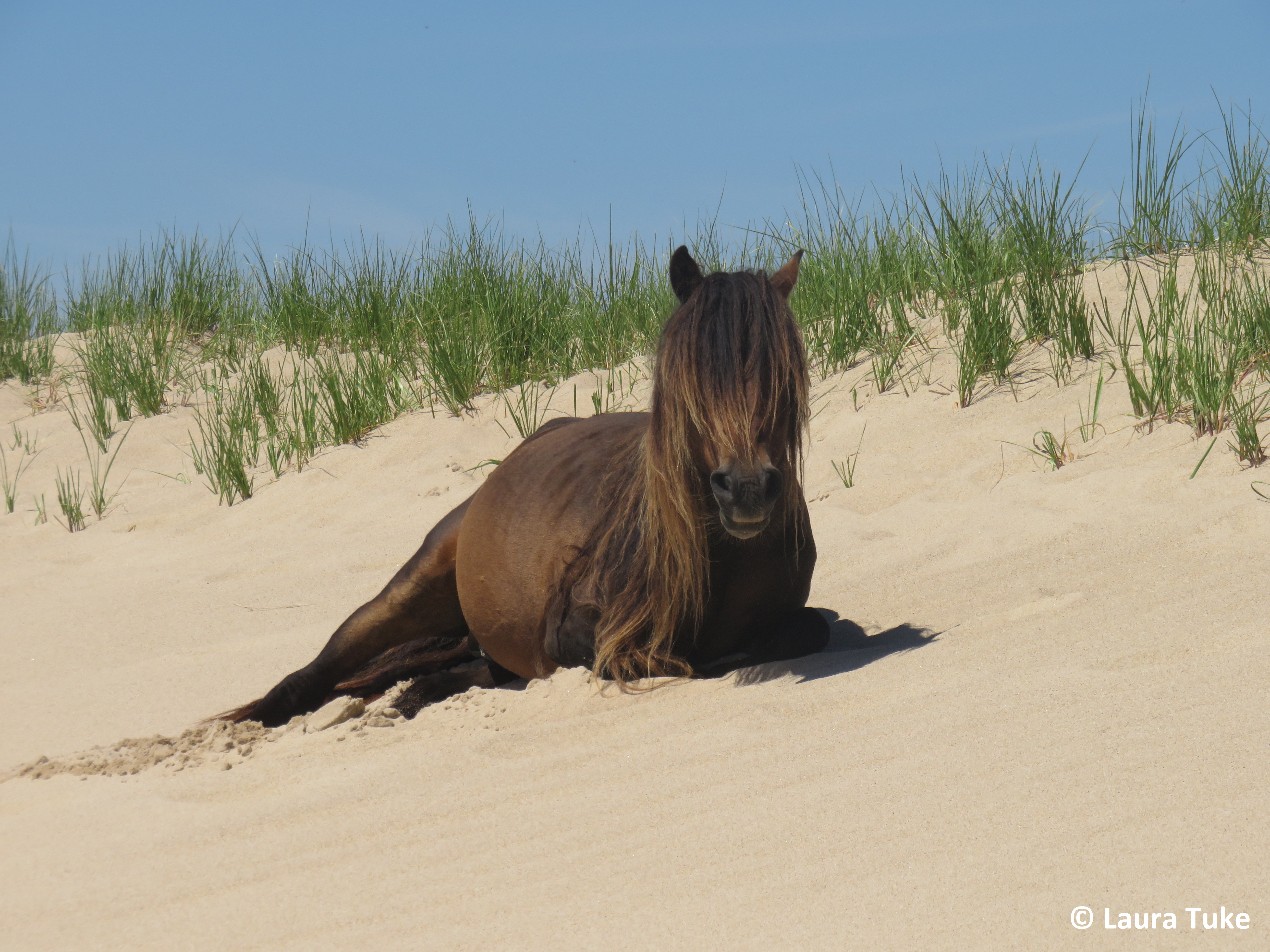
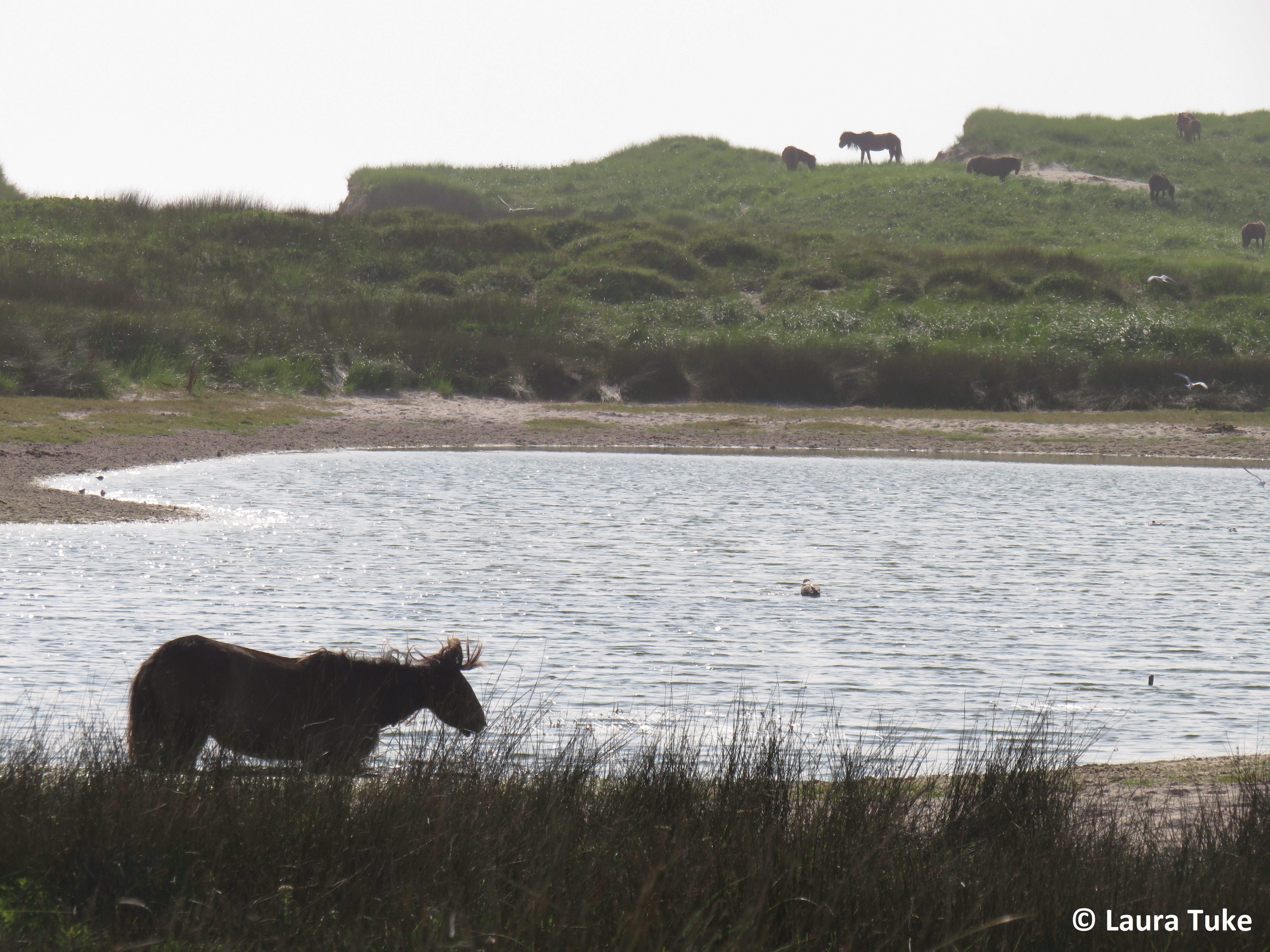
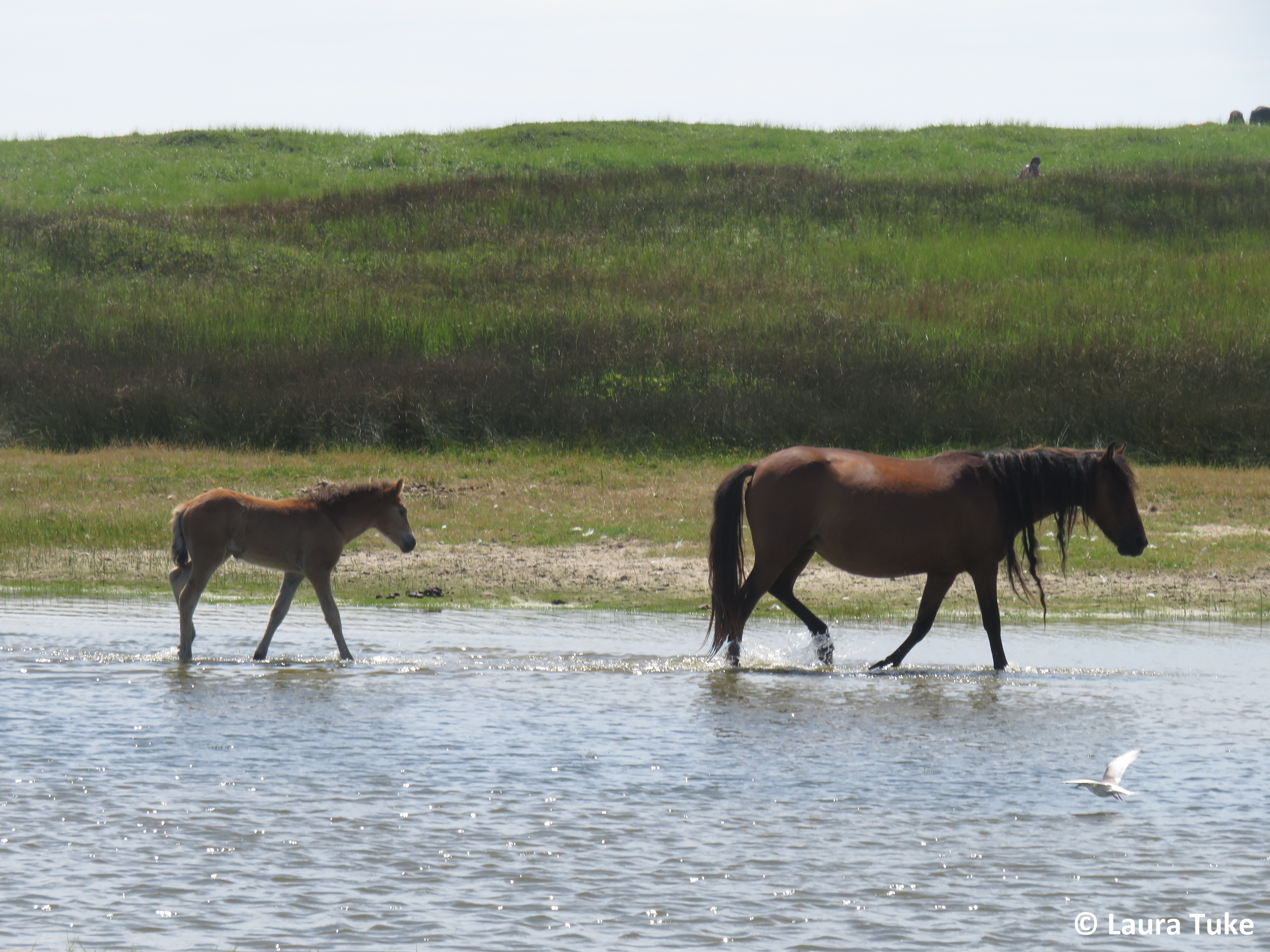
As part of my Master’s degree, from the other side of the North Atlantic, I have had the pleasure of studying a renowned animal population situated on Sable Island, Canada. Though this species is not the first that comes to mind when you think of an island made of sand, within the last few centuries Sable Island has become home to a population of feral horses (Equus ferus ssp. caballus). These horses vary in shape, colour and size, and have now captured the minds of the public and scientists alike, as well as my own.

IMG_4444

For those of you who have never heard of the Sable Island horse, or even for those who have, I have put together a helpful ’11 interesting facts’, so you can learn everything you need to know about these compelling creatures:

  1. Today’s population of Sable Island horses originate from horses first released on the island by European travellers during the mid-1700s, and though genetically distinct as a subspecies, are most closely related to Nordic breeds.

IMG_9271

2. Previously, the horses have been used for a range of purposes on the island, including use as breeding stock for sale on the mainland, hauling lifeboats for the past lifesaving crews, and exportation for the meat trade (mainly dog food).

IMG_9589

3. During the 1950s, scientists said the horses were damaging the sensitive ecology of the island, and proposed their removal. Following a strong public campaign, the Canadian government gave the Sable Island horses legal protection in the 1961 Canadian Shipping Act, protecting them from all human use and interference in the future.

IMG_7413

4. Due to their protected status, the horses are now treated as a wild and naturalised population. As a result, all people visiting and living on the island have to maintain a distance of at least 20m away from the horses at all time.

5. Currently, there are approximately 550 horses living on Sable Island.

IMG_3587

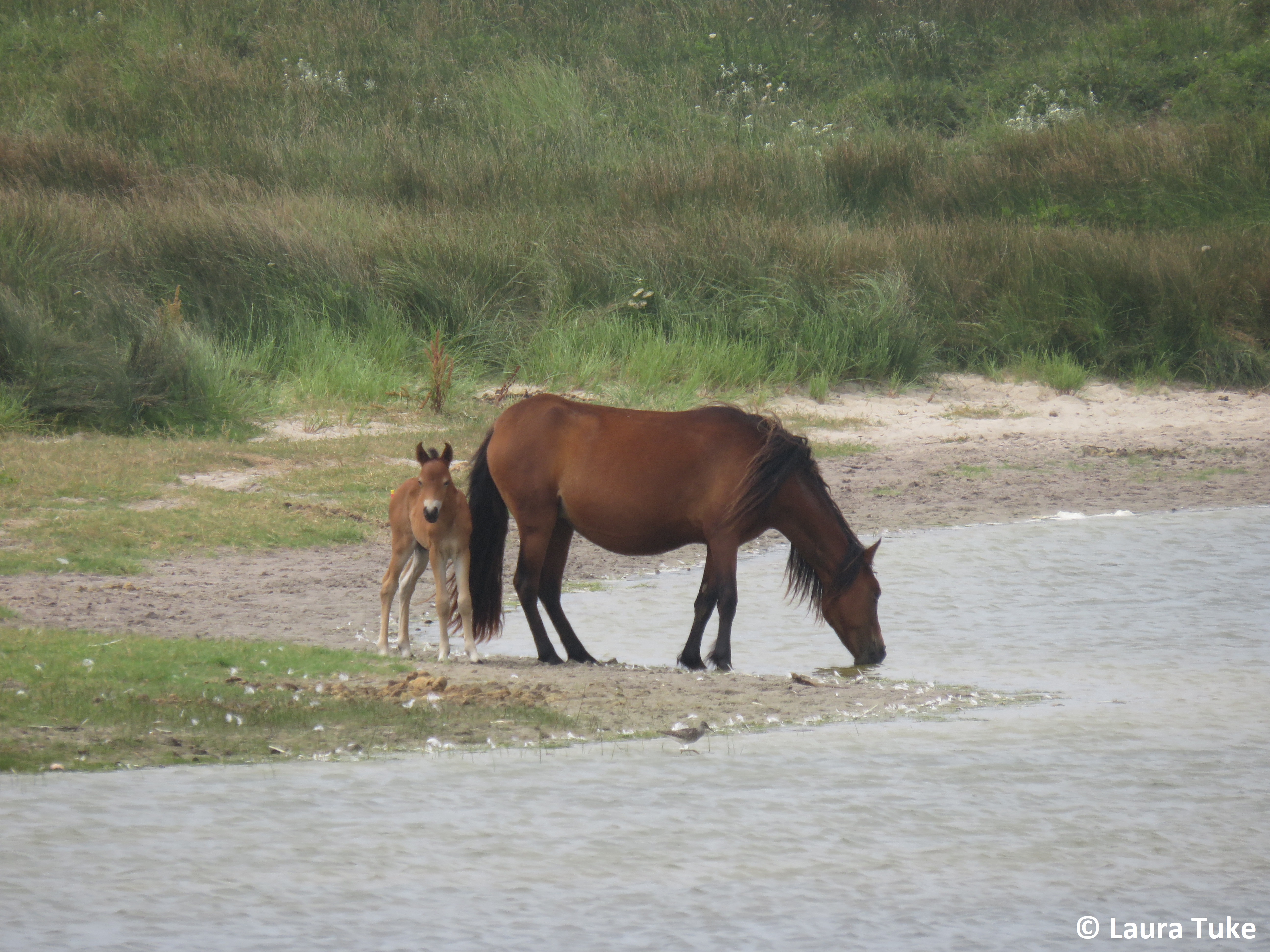
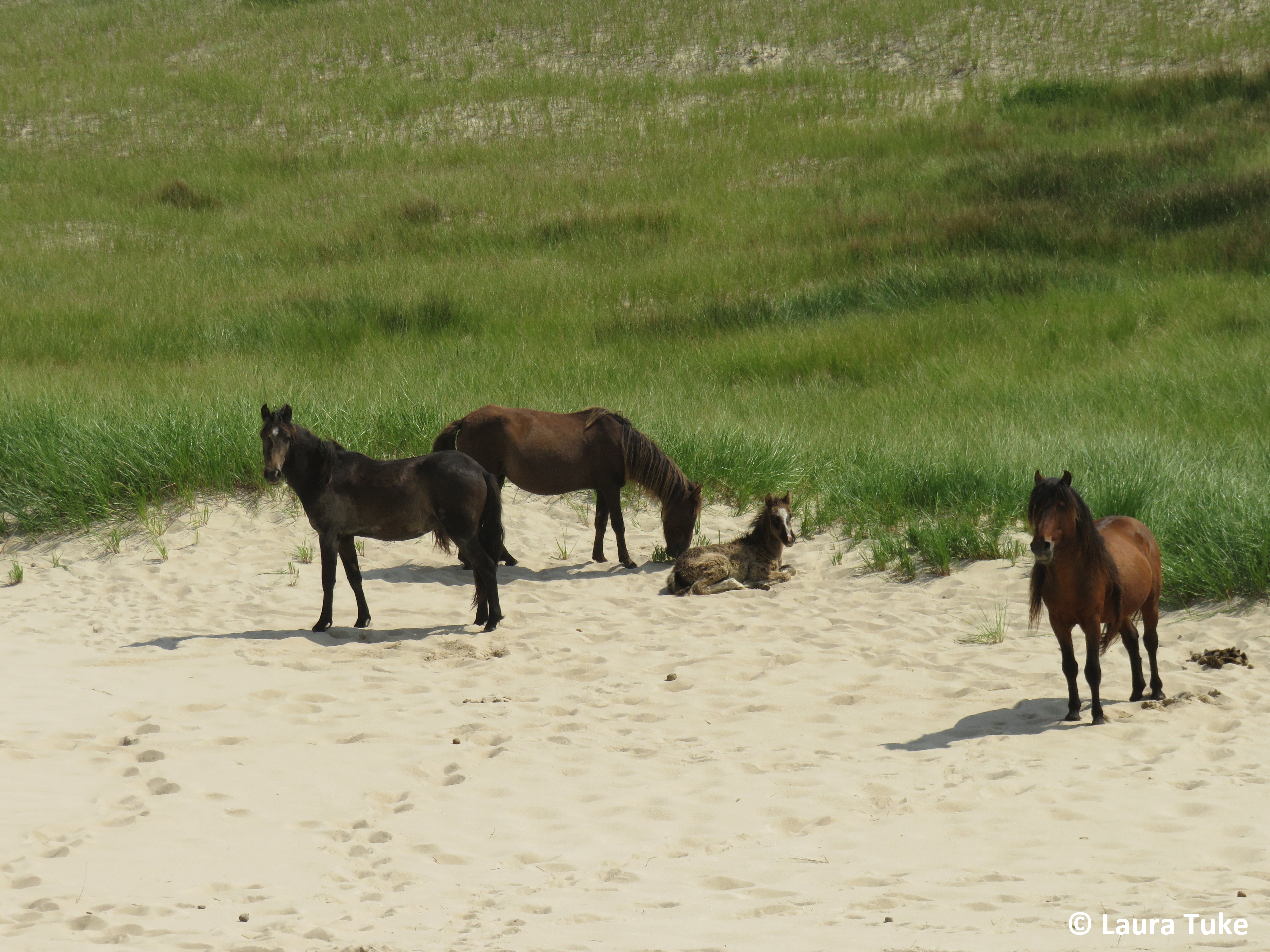
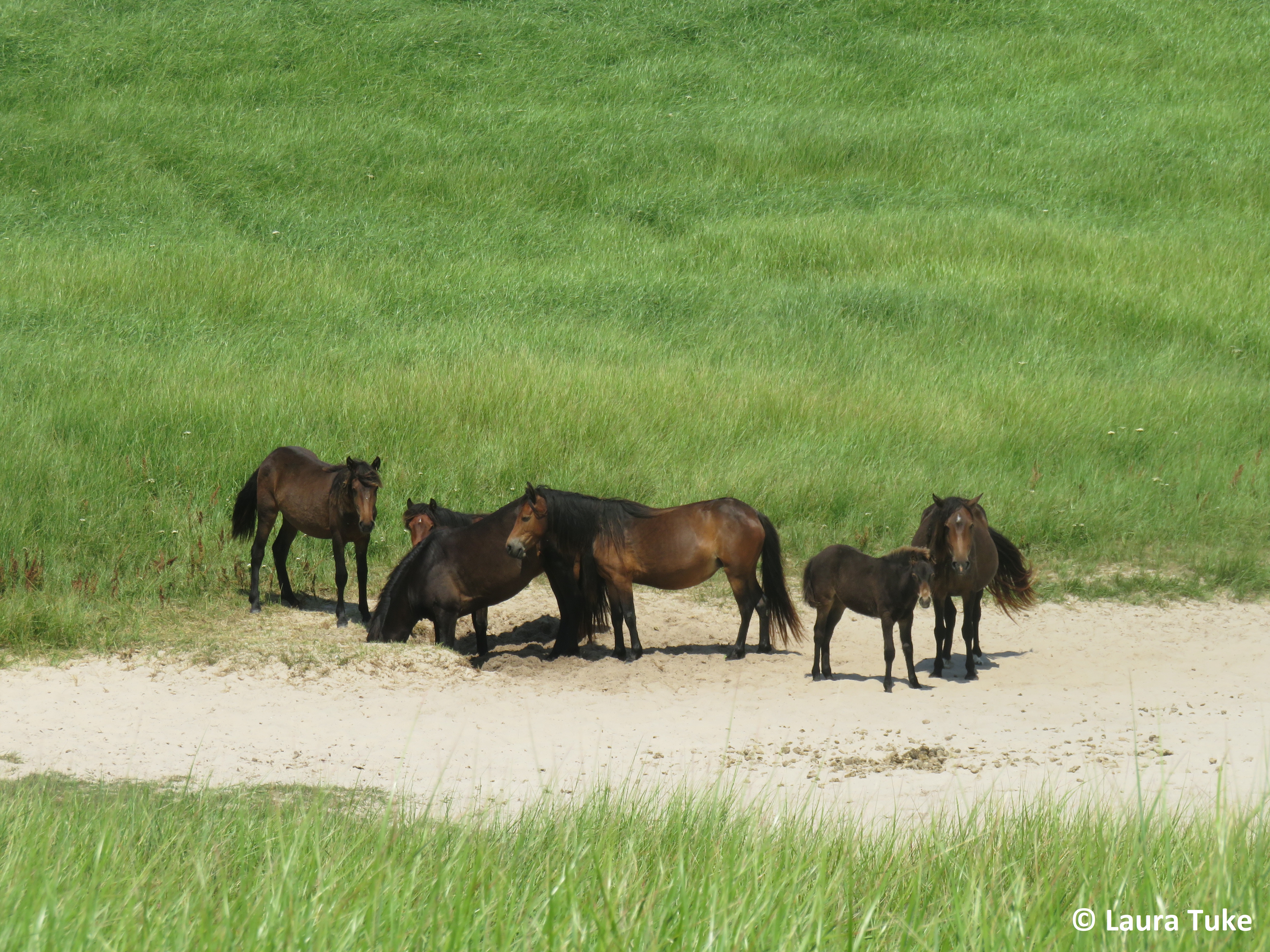
6. Sable Island horses live in all year-round social groups, called bands, which either contain bachelor, unmated males or typically consist of anywhere up to 15 individuals, with 1-3 dominant males (stallions), adult females (mares) and young offspring (typically foals and yearlings).

7. In the Sable Island population, the sex ratio is heavily male-biased. This is because a lower number of females are surviving on the island, due to the different, more extreme conditions they experience in comparison to males, such as with breeding.

IMG_7005

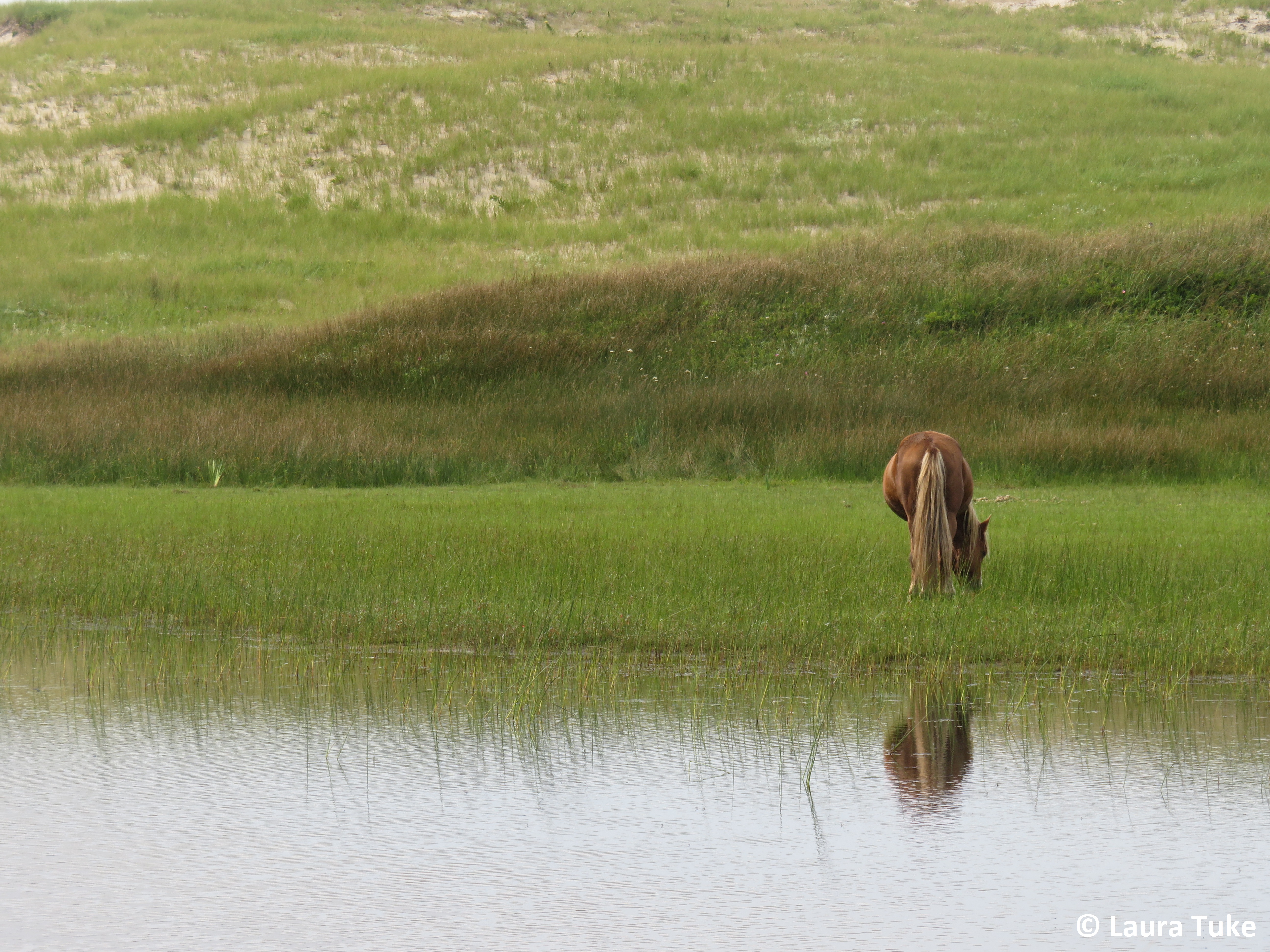
8. The Sable Island horse’s diet is composed mainly of tough American marram grass, other grass species and beach pea, though they will feed opportunistically on a range of other species.

9. The horses are found in a range of colours, but there are none that are spotted, grey, white, or coloured on Sable Island. It is suspected that this is because these colours were kept out of the population previously.

IMG_9103

10. The Sable Island horses have been part of an ongoing long-term individual-based study since 2007, meaning every individual is surveyed between July to early-September each year. As a result, every individual is followed from birth to death, can be individually identified, and have their very own name, such as Orbit, Ripley or Maria.

Orbit and house

Orbit

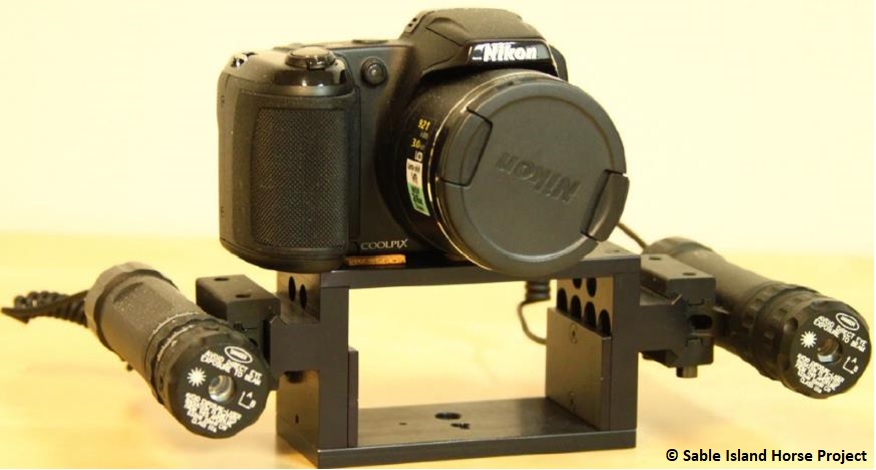
11. Alongside the Sable Island Horse Project (a collaboration between the University of Saskatchewan and University of Calgary), my research has focused on investigating the genetic basis of foal body size and the potential for it to evolve in the Sable Island horse. Data collection for this research involved a special piece of equipment consisting of two lasers and a camera attached to a frame. This allows for photos to be taken from a distance that were then used to calculate reliable body size measurements.

Laser standard

IMG_7872

Disclaimer: All horse photos (from wide shots to zoomed in) were taken from at least the minimum of 20m away from the subject(s)

Sable Island’s Birds vs. Invertebrates

The wonders of nature are endless – Walt Disney

When people think of Sable Island, they may think of a windswept island of sand, the island’s famous feral horses, or its involvement in maritime stories. More overlooked is Sable’s vibrant collection of fauna and flora, the latter having previously been touched upon in my ‘Guide to Sable Island’s habitats and plants’. When considering Sable’s fauna though, the most abundant can be split into its birds and its invertebrates.

Birds

Juvenile gull

Over Sable’s recorded history, at least 340 bird species have been observed on the island. These species span from American kestrel (Falco sparverius) to ruby-throated hummingbird (Archilochus colubris) to red-breasted nuthatch (Sitta canadensis), the last being one species I got to see myself this summer on Sable.

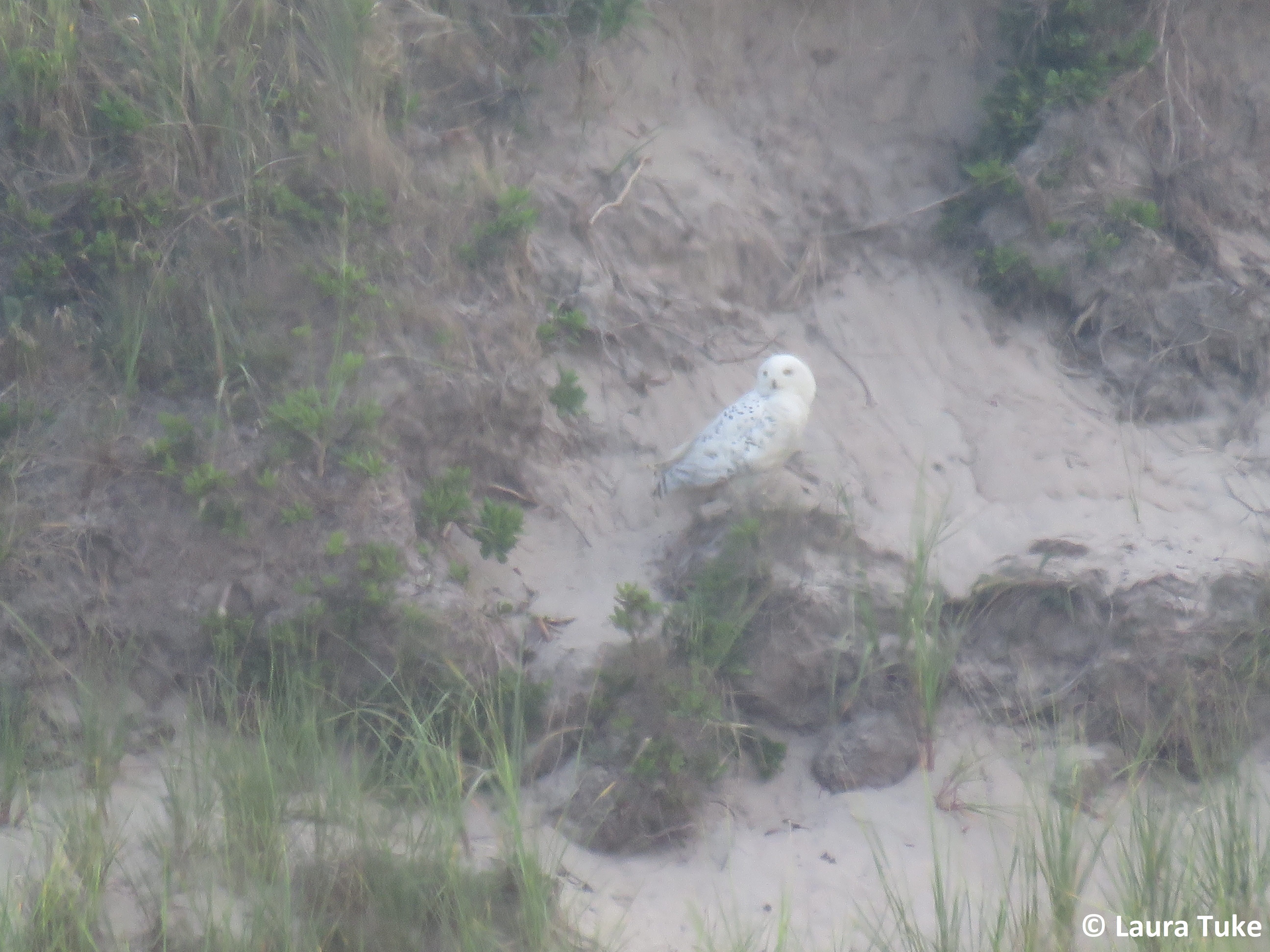
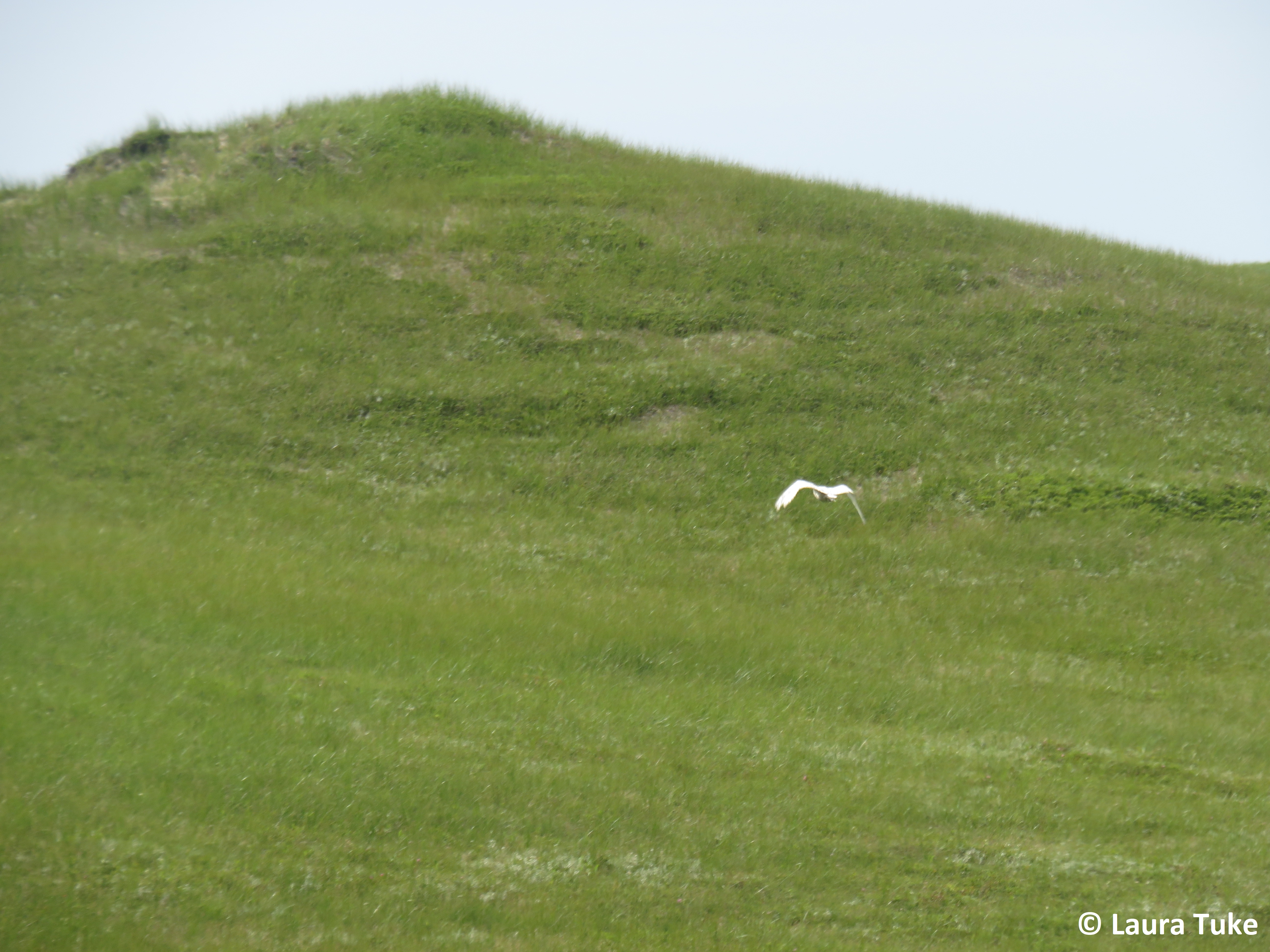
More than 45% of bird species that have been observed on Sable though, are termed as vagrants. This means that they have strayed from their usual range, for example arriving on the island due to being blown off course by strong winds during migration. As a result, I had the pleasure of seeing one iconic species during my stay this summer; a snowy owl (Nyctea scandiaca), floating like a ghost between the island’s dunes.

Snowy owl 3

Snowy Owl

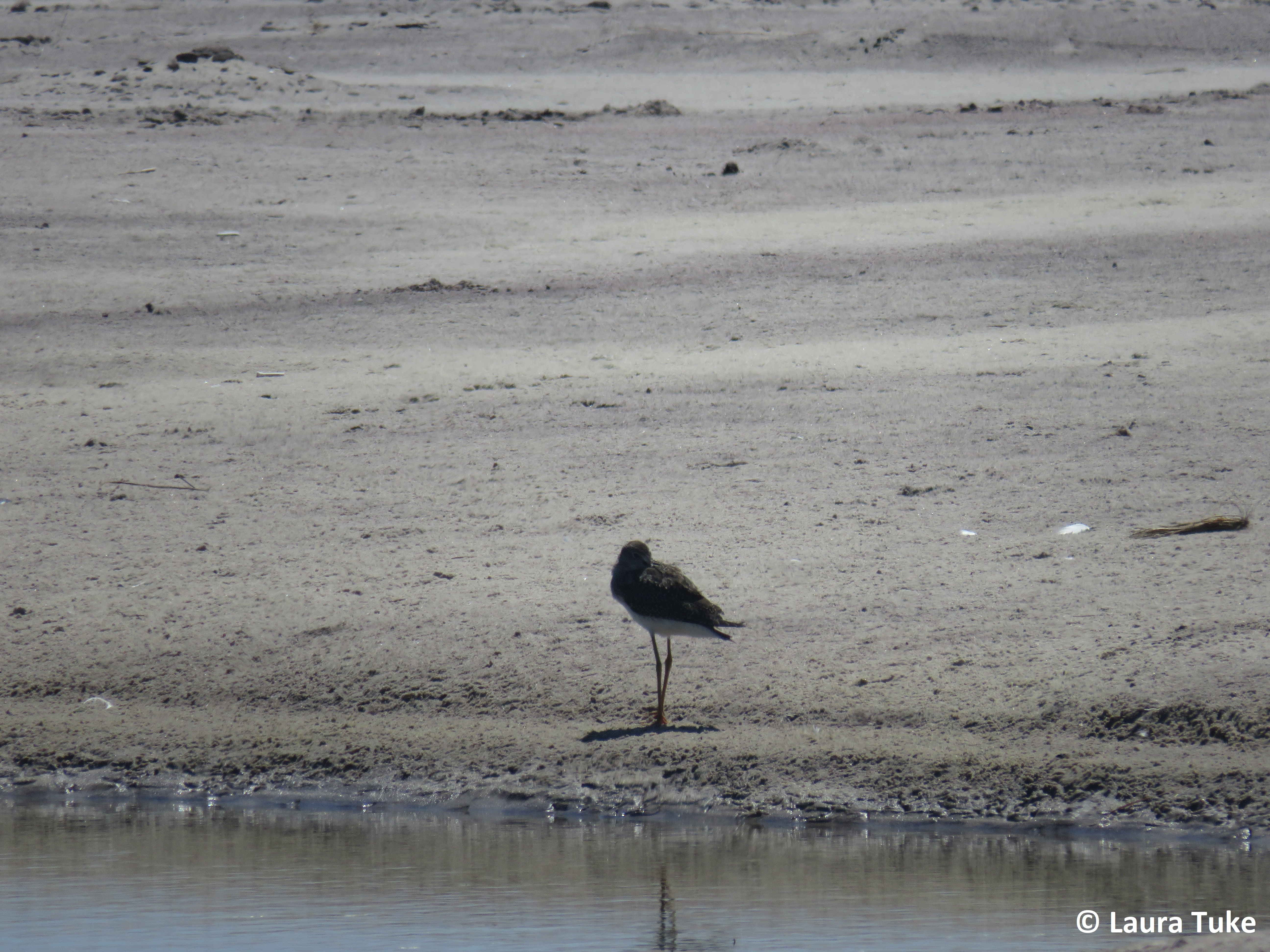
Many species also use the island as a stopover site during their migration, for example waders, raptors and warblers. Regular migrant species include willet (Catoptrophorus semipalmatus), sooty shearwater (Puffinus griseus), grey-cheeked thrush (Catharus minimus) and:

Yellowlegs

Yellowlegs

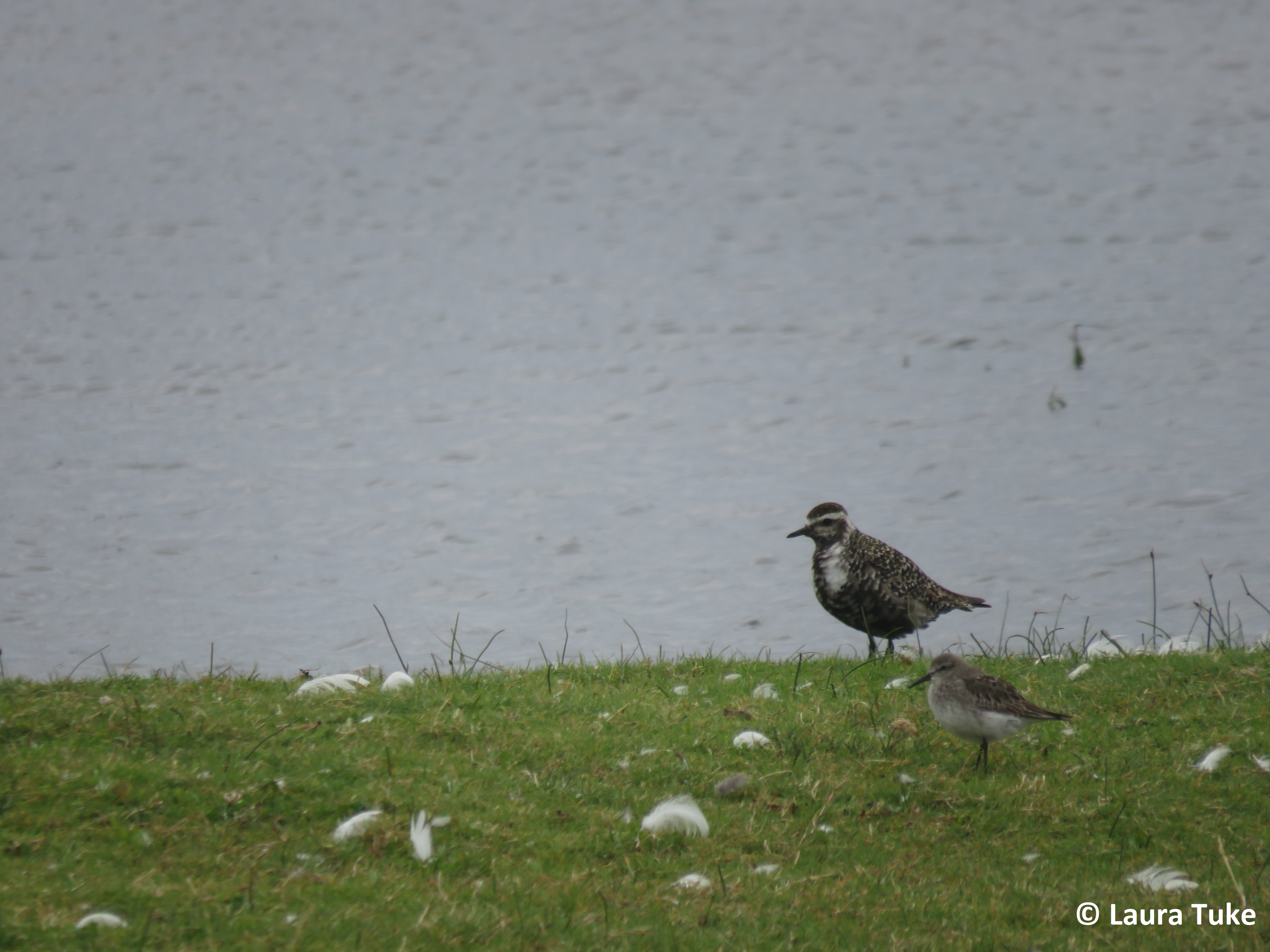
Female American Golden Plover and sandpiper

Female American golden plover (Pluvialis dominica) (sandpiper in foreground)

Ruddy turnstone

Ruddy turnstone (Arenaria interpres)

Sanderling

Sanderling (Calidris alba)

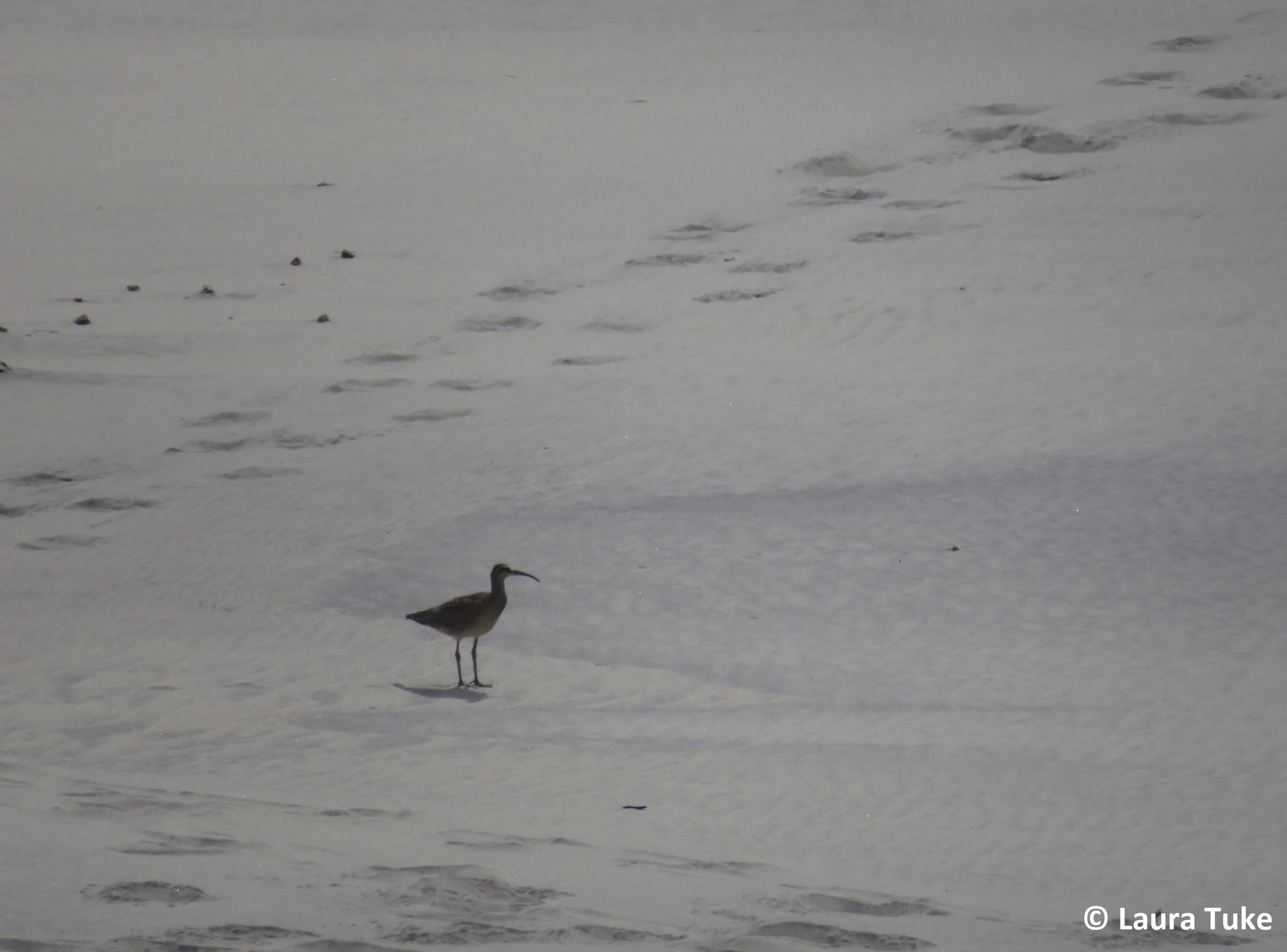
Whimbrel

Whimbrel (Numenius phaeopus)

White-rumped sandpiper

White-rumped sandpiper (Calidris fuscicollis)

Of the 340+ species seen on Sable though, more than 30 have been recorded as breeding on the island. Regular breeders include:

  • Arctic tern (Sterna paradisaea)
  • Common tern (Sterna hirundo)
  • Roseate tern (Sterna dougallii)
  • Herring gull (Larus argentatus)
  • Great black-backed gull (Larus marinus)
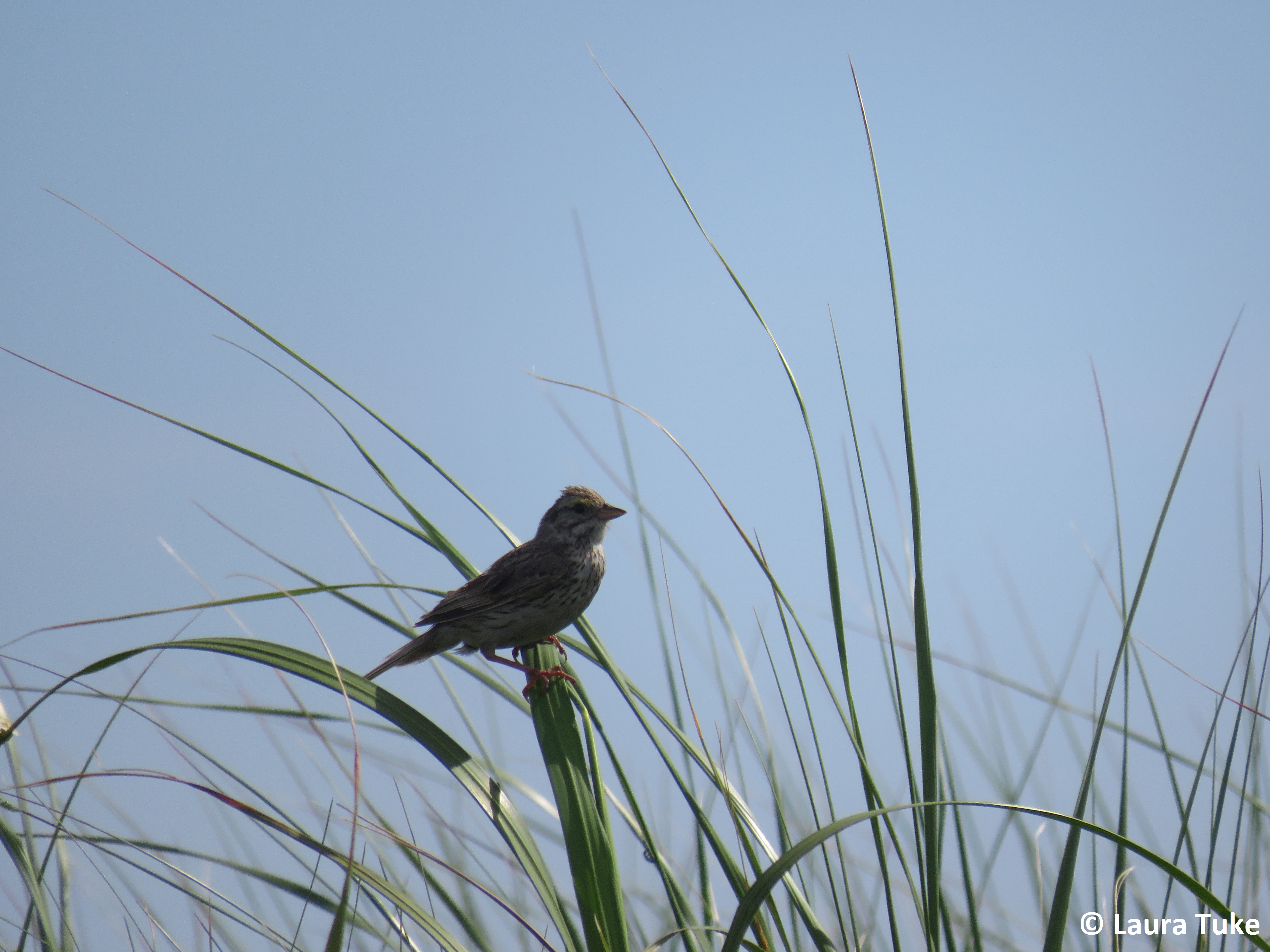
  • Ipswich sparrow (Passerculus sandwichensis princeps)= endemic
    • Subspecies of Savannah sparrow and of conservation concern

Ipswich sparrow

  • Leach’s storm-petrel (Oceanodroma leucorhoa)
  • American black duck (Anas rubripes)
  • Mallard (Anas platyrhynchos)
  • Red-breasted merganser (Mergus serrator)
  • Northern pintail (Anas acuta)
  • Least sandpiper (Calidris minutilla)
  • Spotted sandpiper (Actitis macularia)

Juvenile spotted sandpiper

Invertebrates

In comparison to the 340+ bird species that have been recorded on Sable Island, 875+ invertebrate species have been identified on and in its marine proximity. Species include the monarch butterfly (Danaus plexippus), painted lady (Vanessa cardui), seven-spot ladybird (Coccinella septempunctata), and round-tipped cone-headed grasshopper (Neoconocephalus retusus).

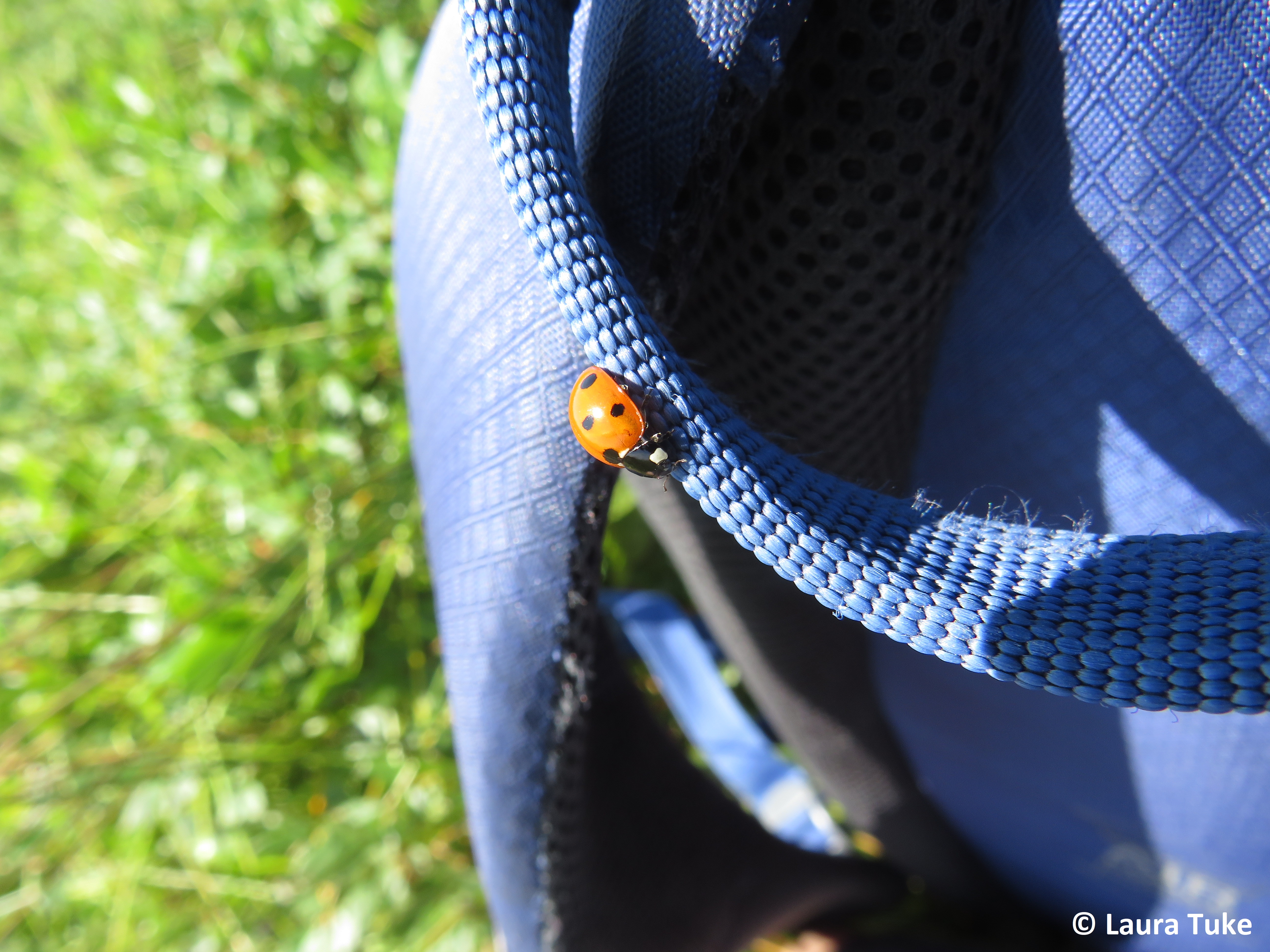
Six spot ladybird

Seven-spot ladybird (Coccinella septempunctata)

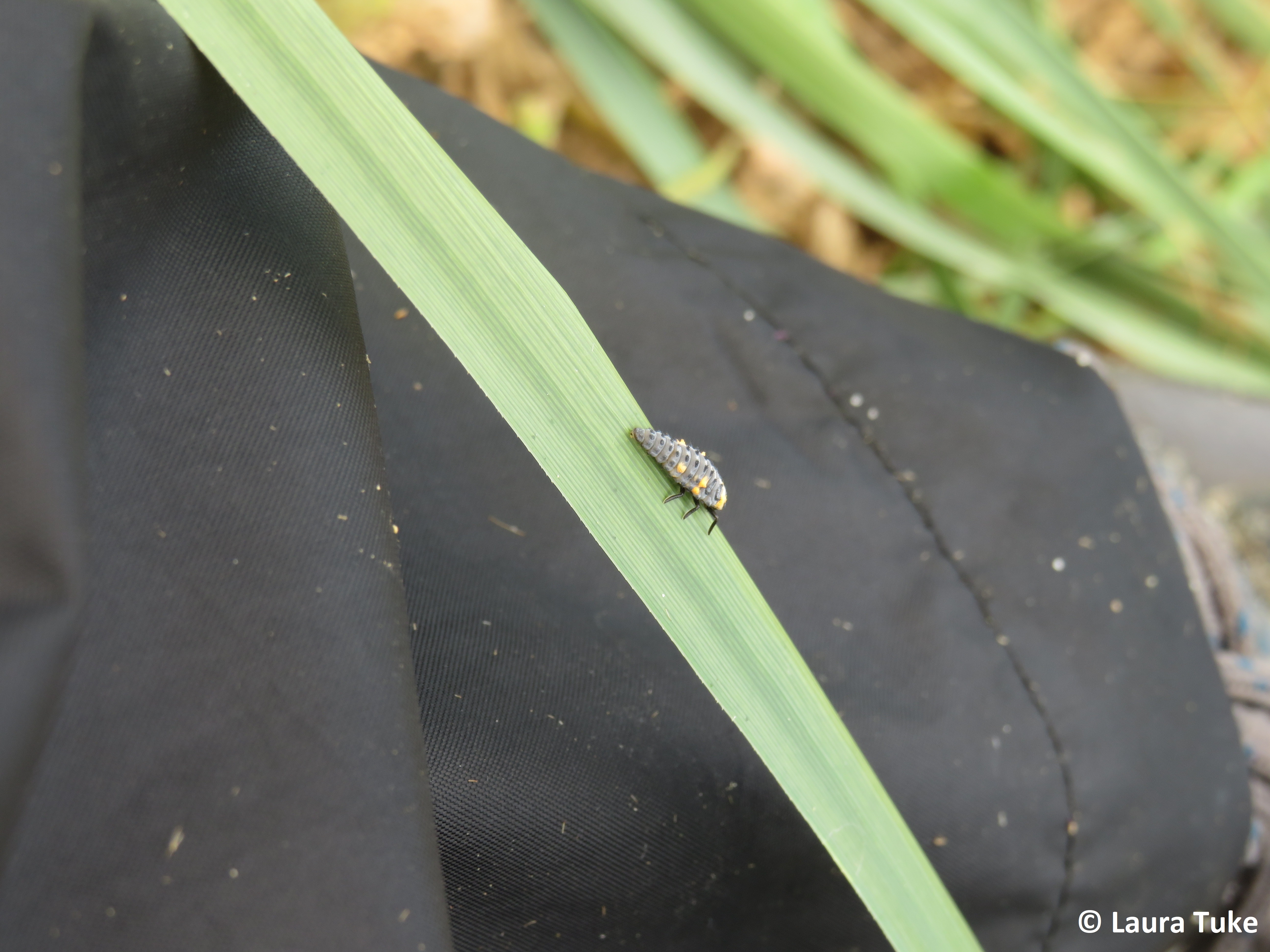
Six spot ladybird larvae

Seven-spot ladybird larvae

Sable Island also has some endemic invertebrate species. These include the Sable Island leaf beetle (Pyrrhalta sablensis), the Sable Island sweat bee (Lasioglossum sablense)and three moth species (Agrotis arenariusOrgyia leucostigma sablensis and a Papaipema species).

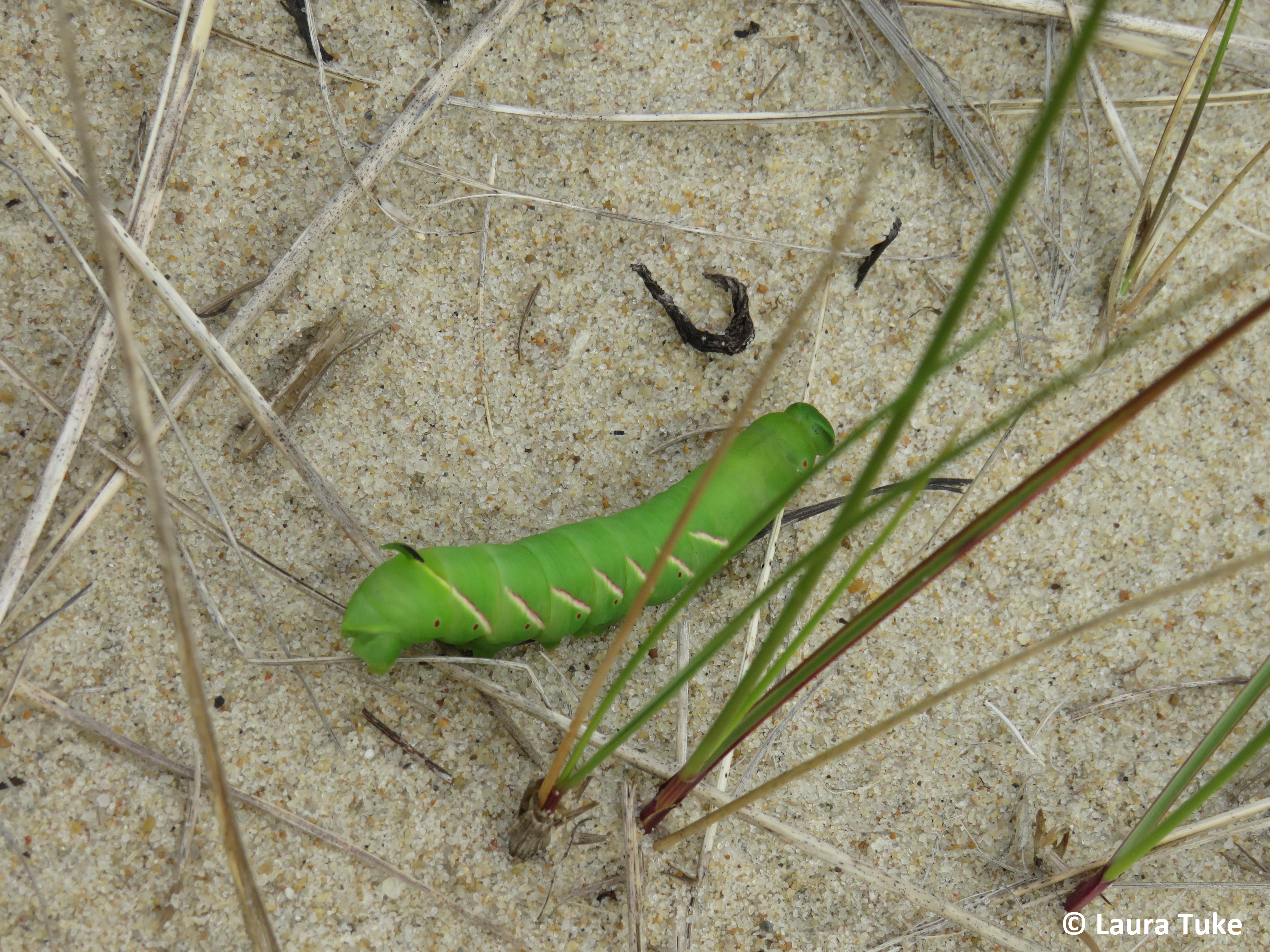
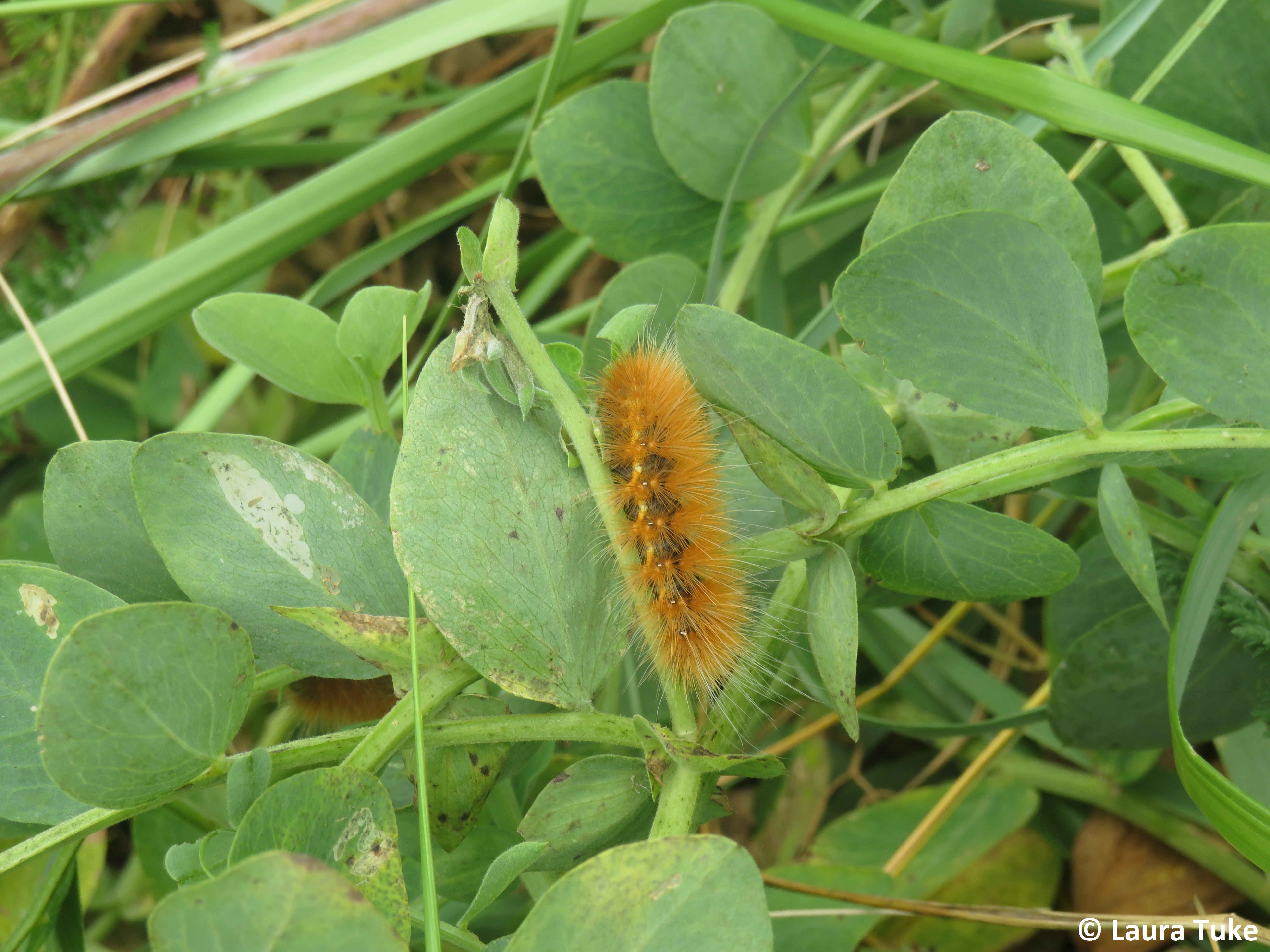
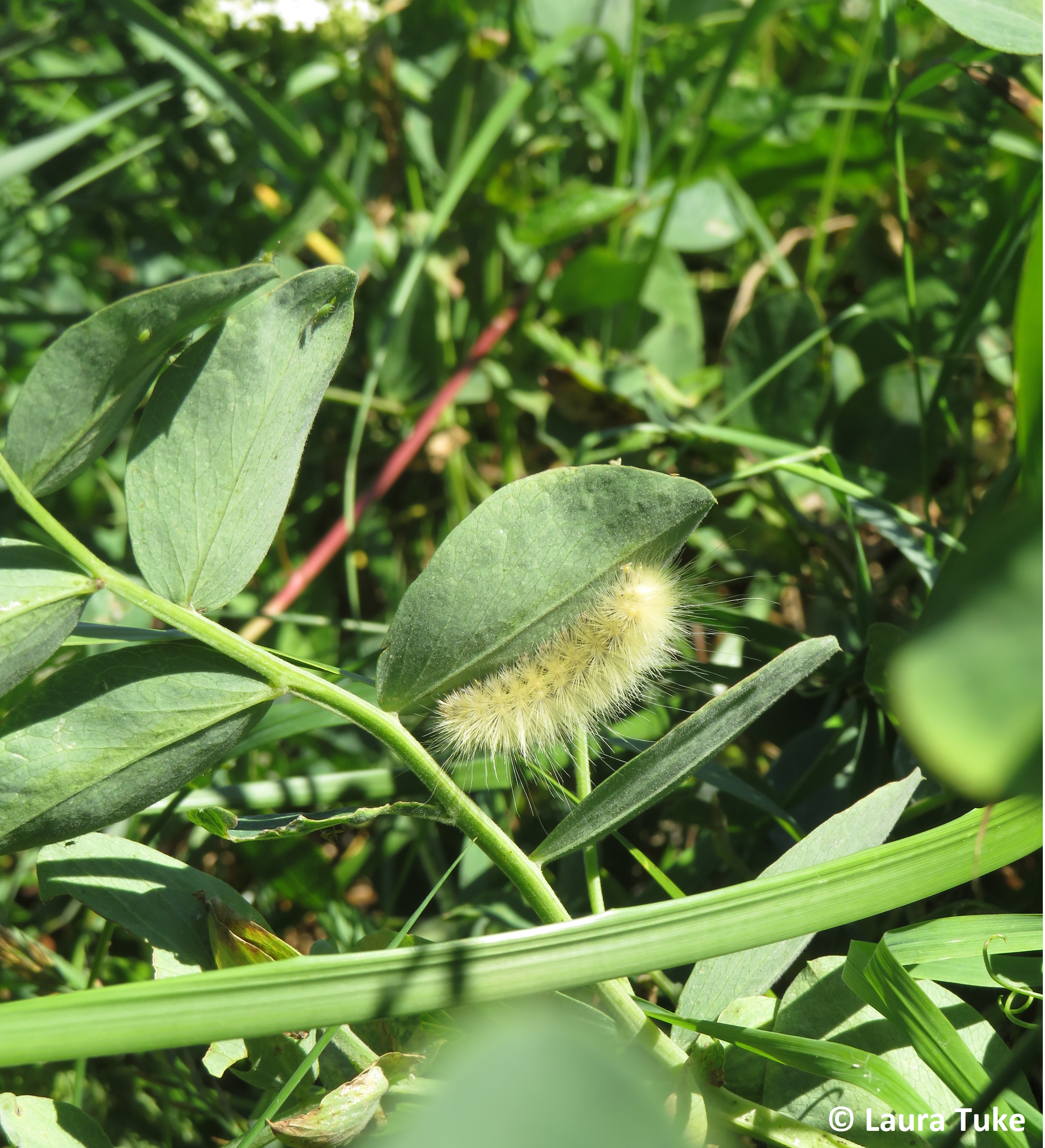
Though I did not get enough time on Sable Island to delve too deeply into the world of the invertebrates, I did enjoy seeing new species and identifying the many caterpillars I saw, such as:

Apple sphinx moth caterpillar

Apple sphinx moth caterpillar (Sphinx gordius)

Virginian tiger moth caterpillar

Virginian tiger moth caterpillar 2

Two variants of Virginian tiger moth caterpillars (Spilosoma virginica)

Guide to Sable Island’s habitats and plants

Look deep into nature, and then you will understand everything better – Albert Einstein

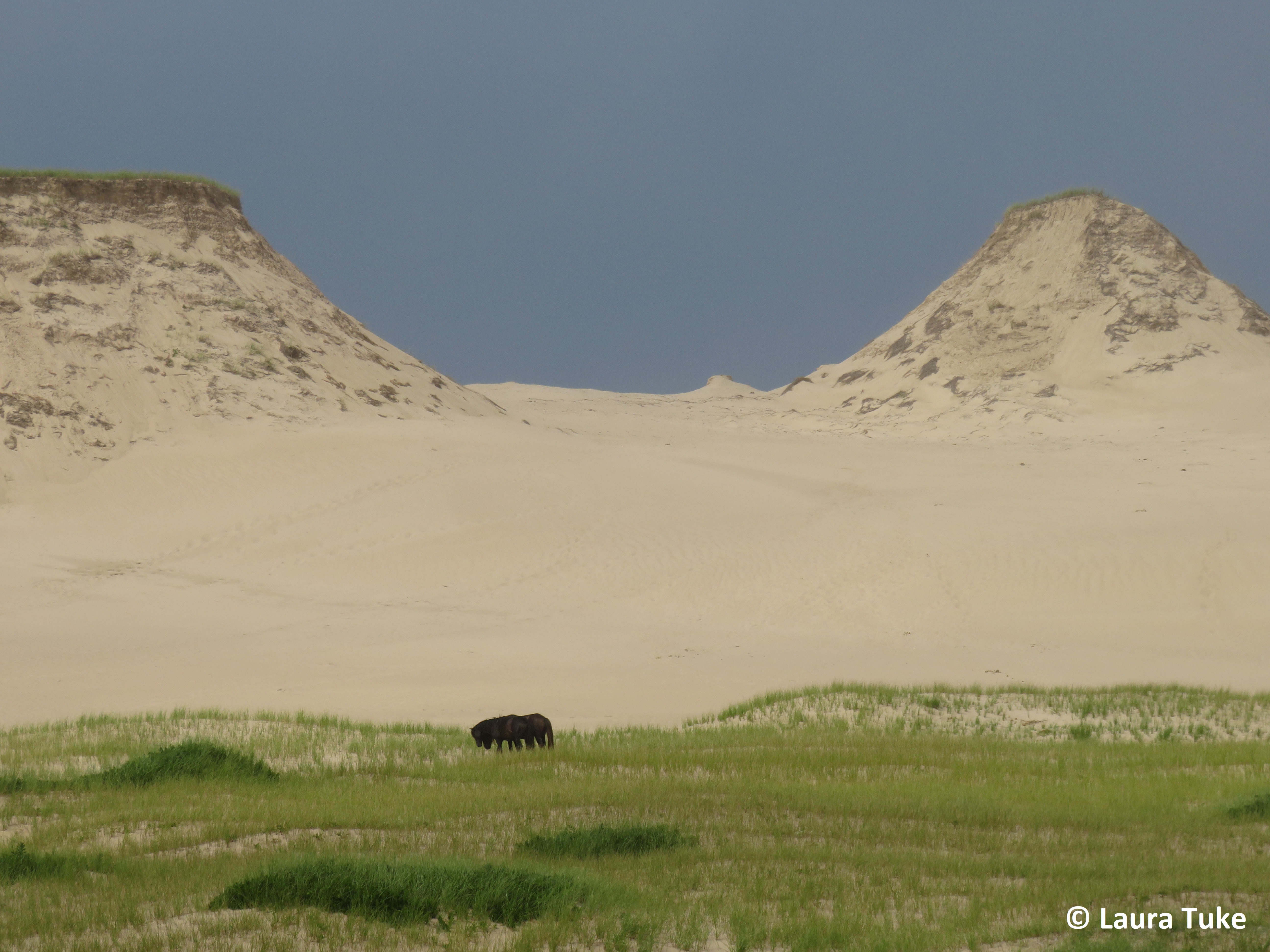
Sable Island, 250km from Halifax, Nova Scotia, Canada, is an island made entirely of sand. For approximately two thirds of the island runs a series of high dunes, flanked by two long sandy beaches, and are considered one of the largest dune systems in Eastern Canada. With the island experiencing a maritime temperate climate, the island sustains a range of habitat types, which include grassland, heath, sandwort, freshwater ponds, brackish ponds, and non-vegetated terrain.

Due to strong winds and a lack of soil, the island is treeless (apart from one) and is dominated by low-growing plant species. When on the island myself, one thing i loved, other than the vast variety of plant species, was the strong smell of lush green vegetation that would bombard my sense of smell everytime i was out and about walking.

Plant Species

In 2016, 183 vascular plant species were recorded on Sable Island, in which 34% were considered alien species.

Here’s a selection of different, more notable species that can be found on Sable Island:

Common species

Marram grasslandAmerican marram grass (Ammophila breviligulata)= Most common species

Beach peaBeach pea (Lathyrus japonicas var. maritimus)

Common yarrowCommon yarrow (Achillea millefolium var. occidentalis)

SandwortSea sandwort (Honckenya peploides sp. robusta)

Common wild roseCommon wild rose (Rosa virginiana)
Edible fruit and fragrant flowers

Lowbush blueberryLowbush blueberry (Vaccinium angustifolium)
Edible fruit

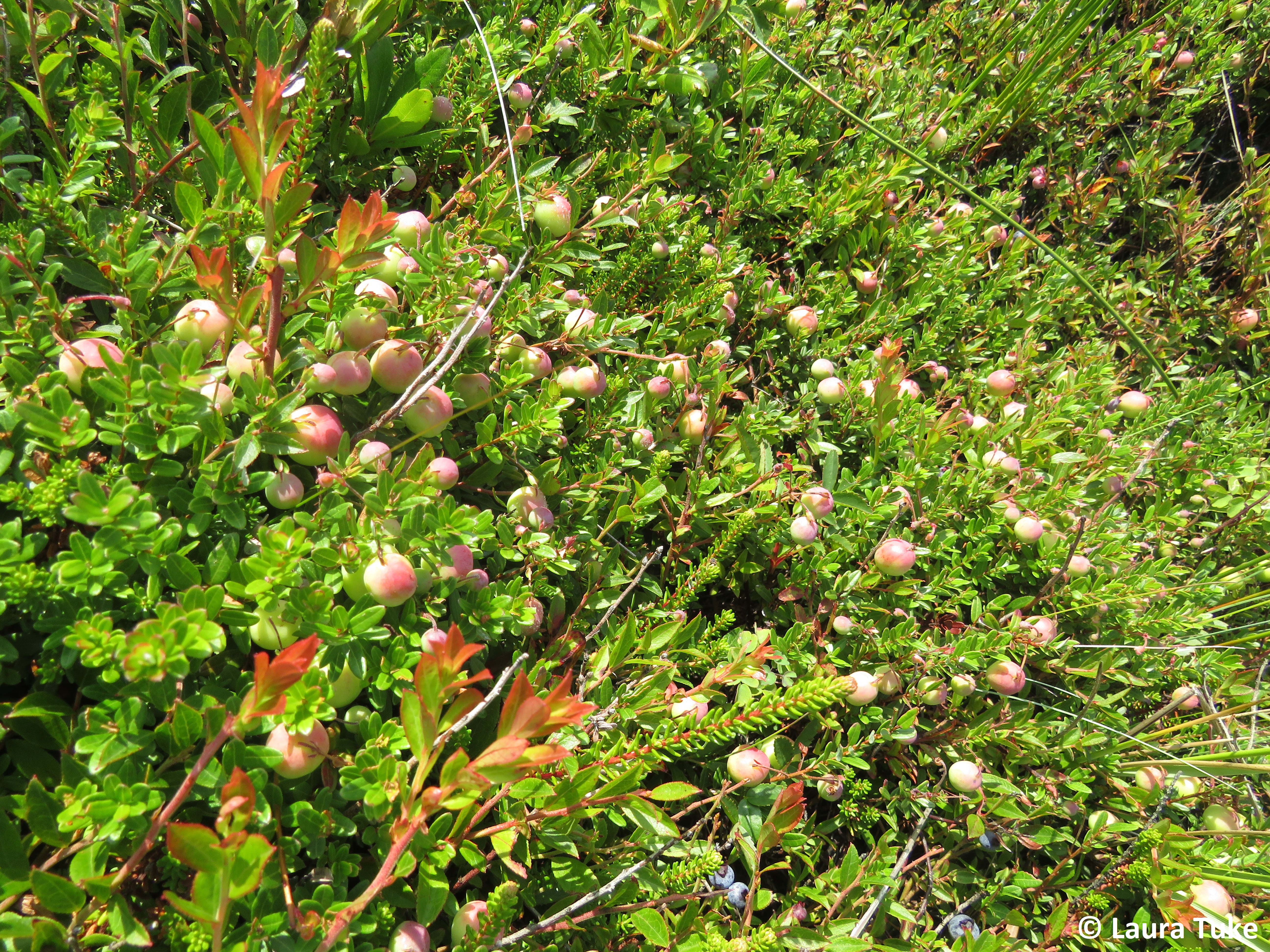
Large cranberryLarge cranberry (Vaccinium macrocarpon)
Edible fruit

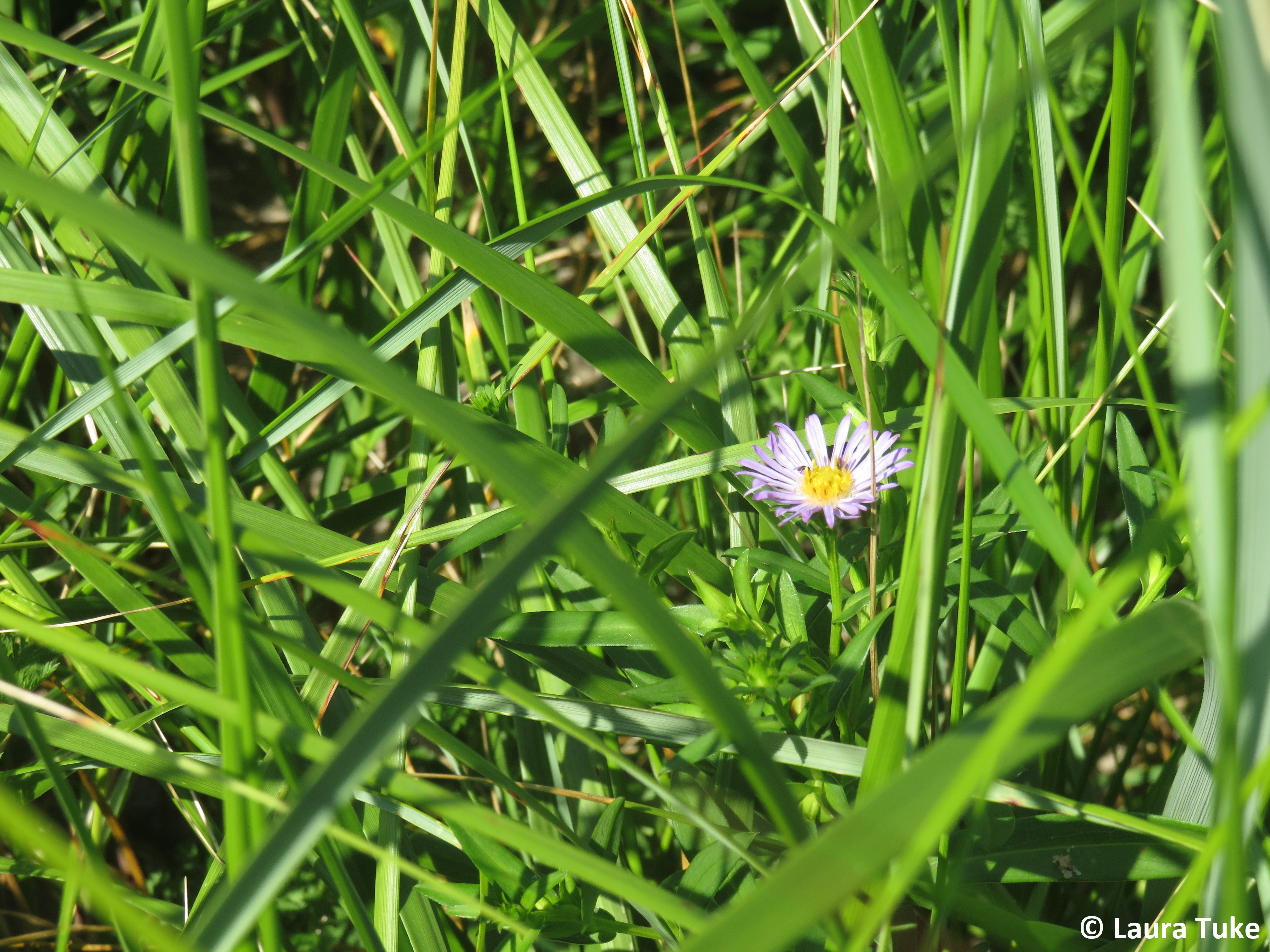
New york asterNew York aster (Symphyotrichum novi-belgii)
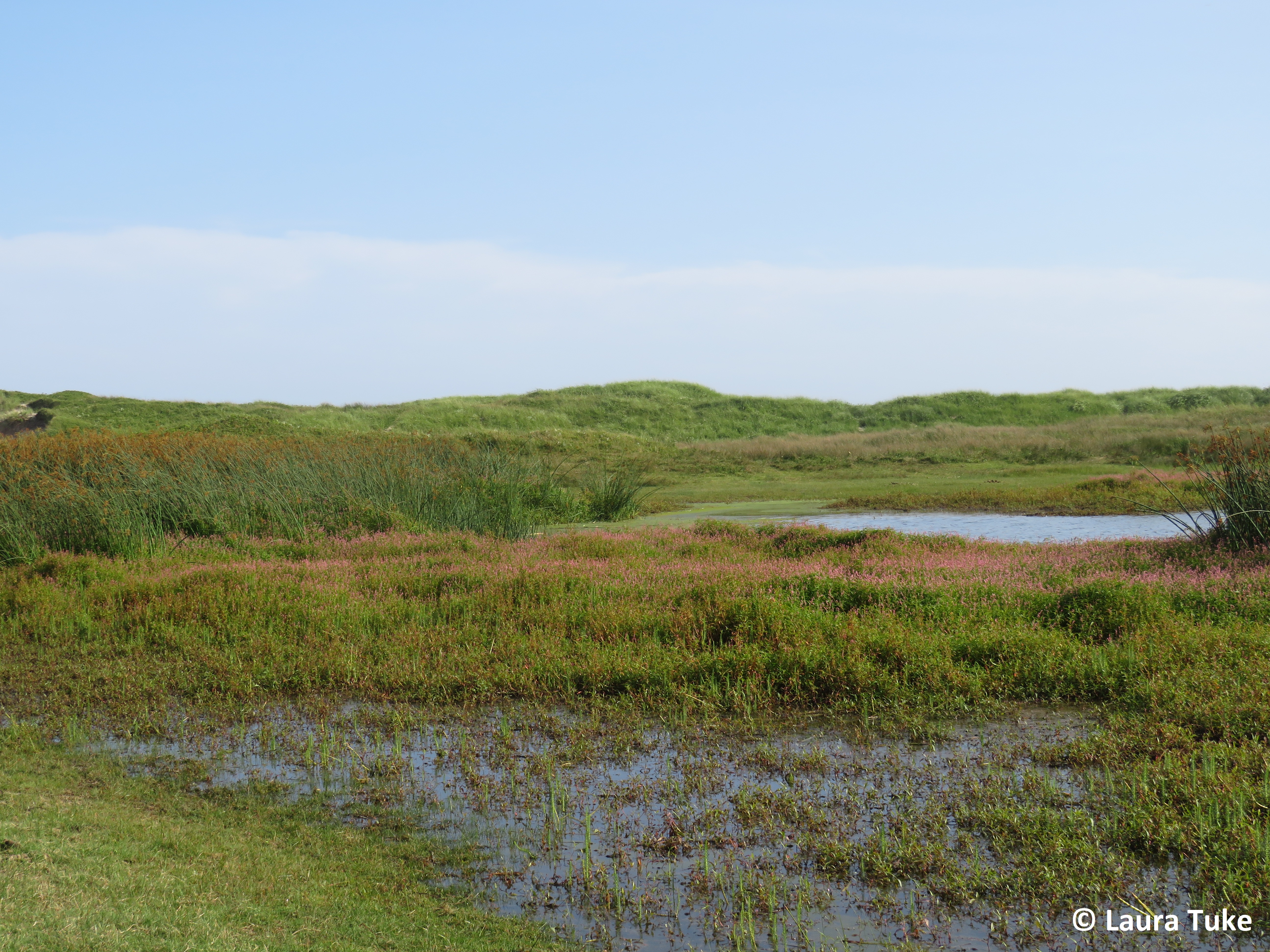
Swamp smartweed

Stretch of swamp smartweedSwamp smartweed (Polygonum hydropiperoides)

Wild strawberryWild strawberry (Fragaria virginiana sp. glauca)
Edible fruit

Small flowered evening primroseSmall flowered evening primrose (Oenothera parviflora)
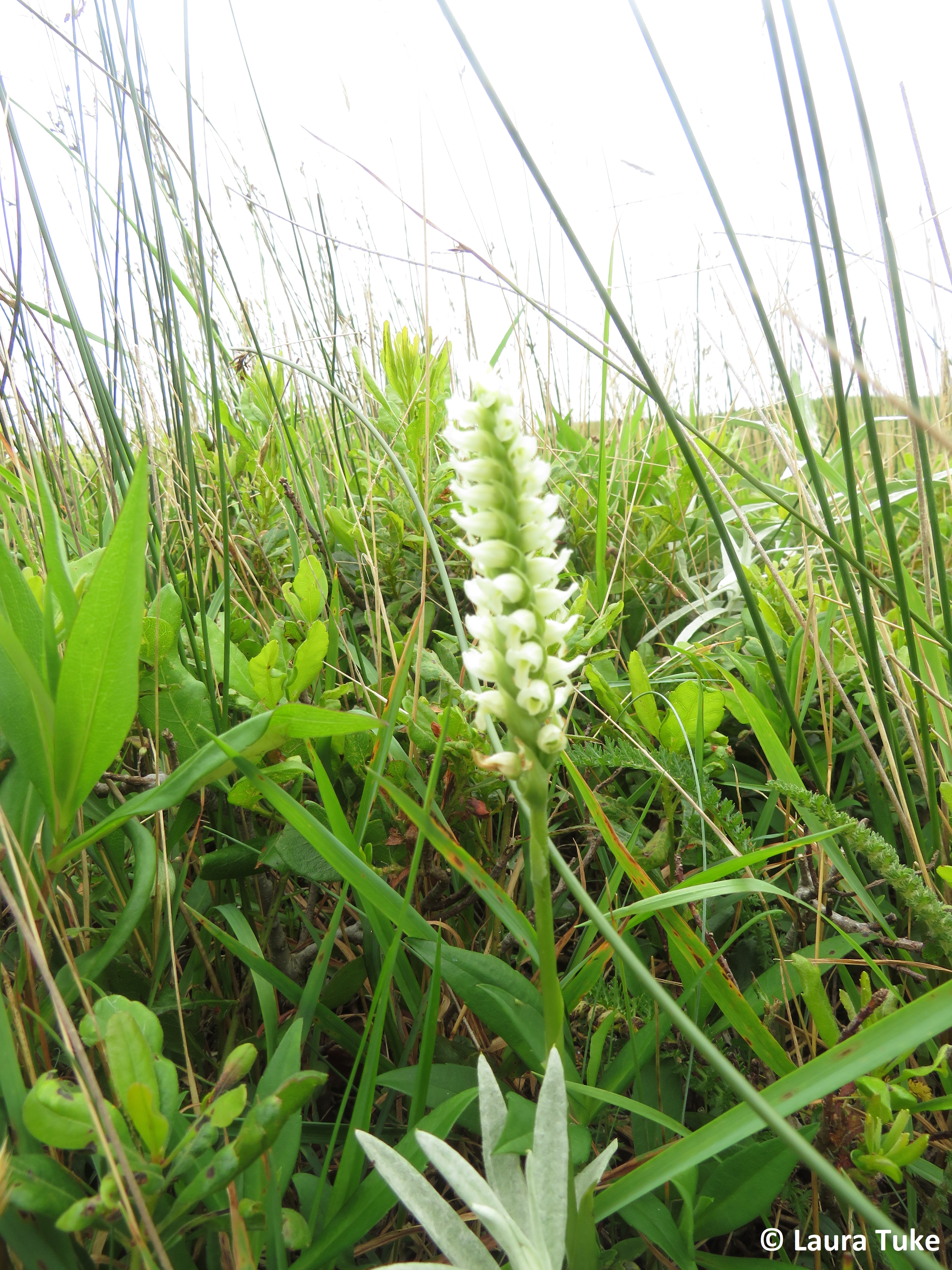
Blue flag irisBlue flag iris (Iris versicolor)

Hooded Ladies' tressesHooded ladies’ tresses (Spiranthes romanzoffiana)

Blue eyed grassBlue-eyed grass (Sisyrinchium angustifolium)
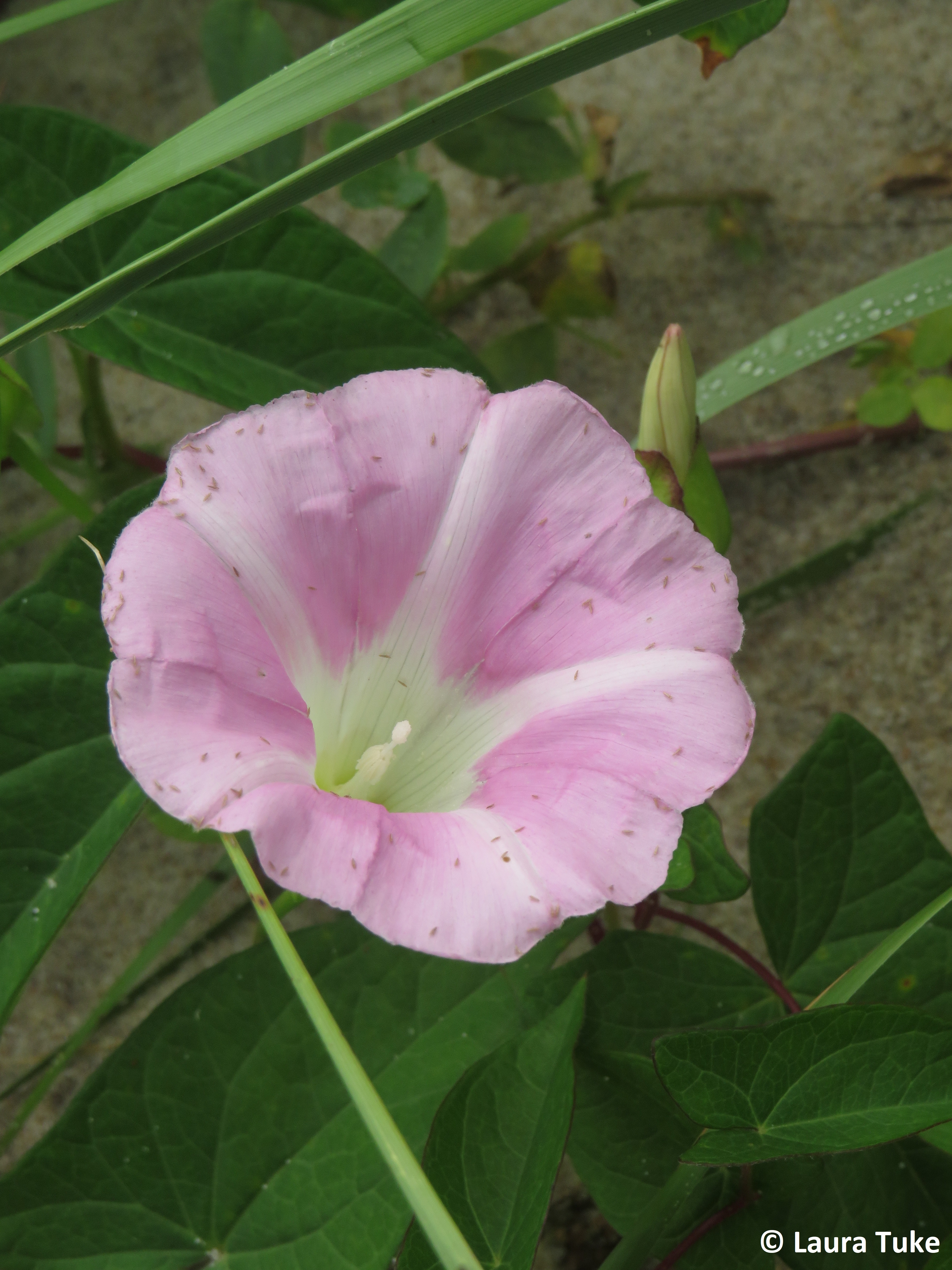
Hedge bindweedHedge bindweed (Calystegia sepium)

Seaside goldenrodSeaside goldenrod (Solidago sempervirens)
Also:
Pearly everlasting (Anaphalis margaritacea)
Creeping juniper (Juniperus horizontalis)
Common juniper (Juniperus communis var. megistocarpa)
Star-flowered false solomon’s seal (Maianthemum stellatum)
Black crowberry (Empetrum nigrum)= Edible fruit
Bayberry (Morella pensylvanica)= Edible fruit and aromatic leaves
Wand dewberry (Rubus arcuans)= Edible fruit
Threepetal bedstraw (Galium trifidum)

Juncus


Rushes and sedges

Baltic rush (Juncus balticus var. littoralis)
Canada rush (Juncus canadensis)
Slender rush (Juncus tenuis)
Jointleaf rush (Juncus articulatus)

Star sedge (Carex echinata)
Soft-stemmed bulrush (Schoenoplectus tabernaemontani)


Other grass species (Poa and fescue)

Red fescue (Festuca rubra)
Annual meadow grass (Poa annua)
Kentucky bluegrass (Poa pratensis)
Bentgrass (Agrostis scabra)

Introduced species

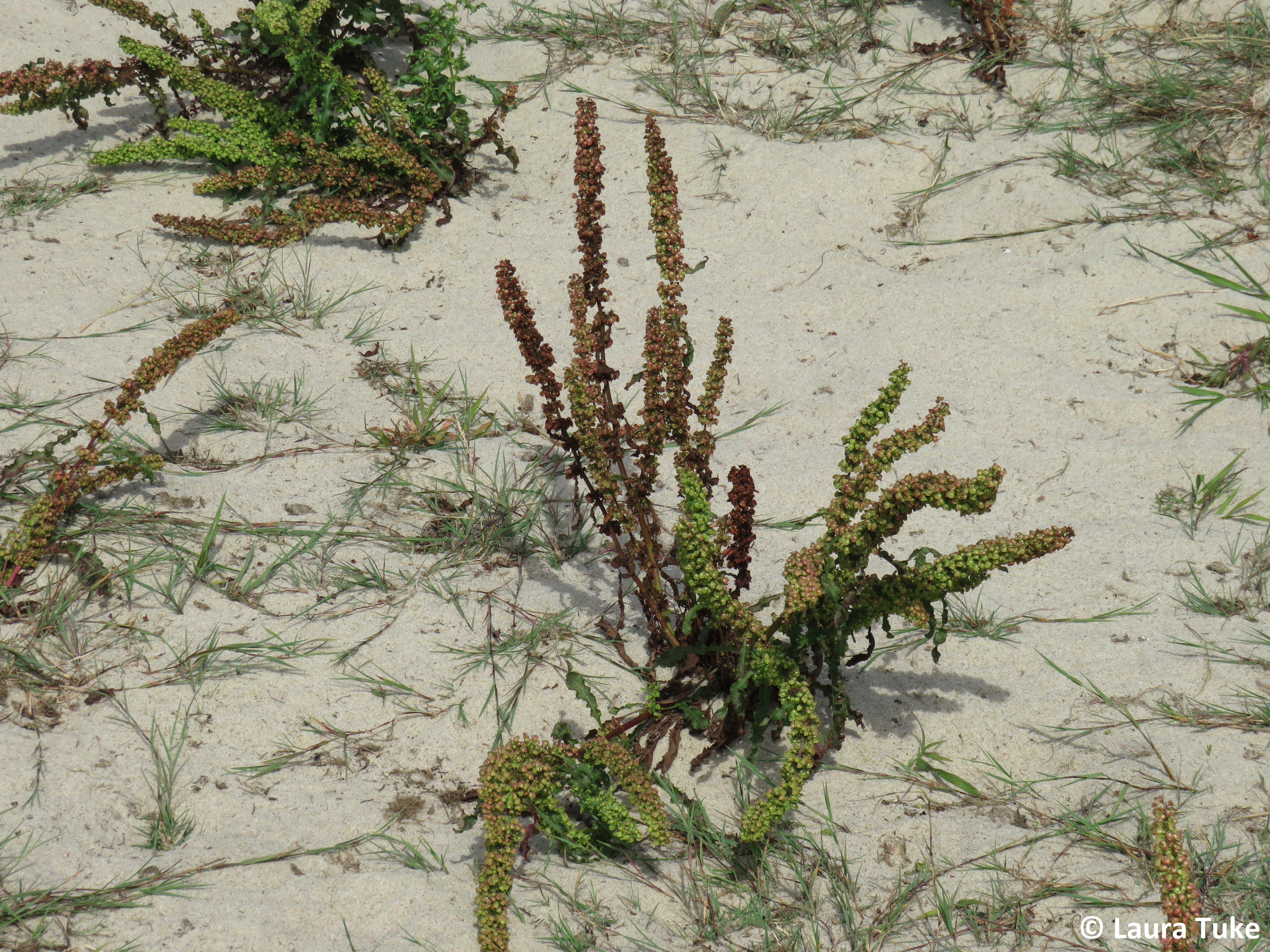
Curled dockCurled dock (Rumex crispus)

Black knapweedBlack knapweed (Centaurea nigra)

Also:
White clover (Trifolium repens)
Common heather (Calluna vulgaris)
Red clover (Trifolium pratense)
Common plantain (Plantago major)
English plantain (Plantago lanceolata)

Sable Island’s Only Tree

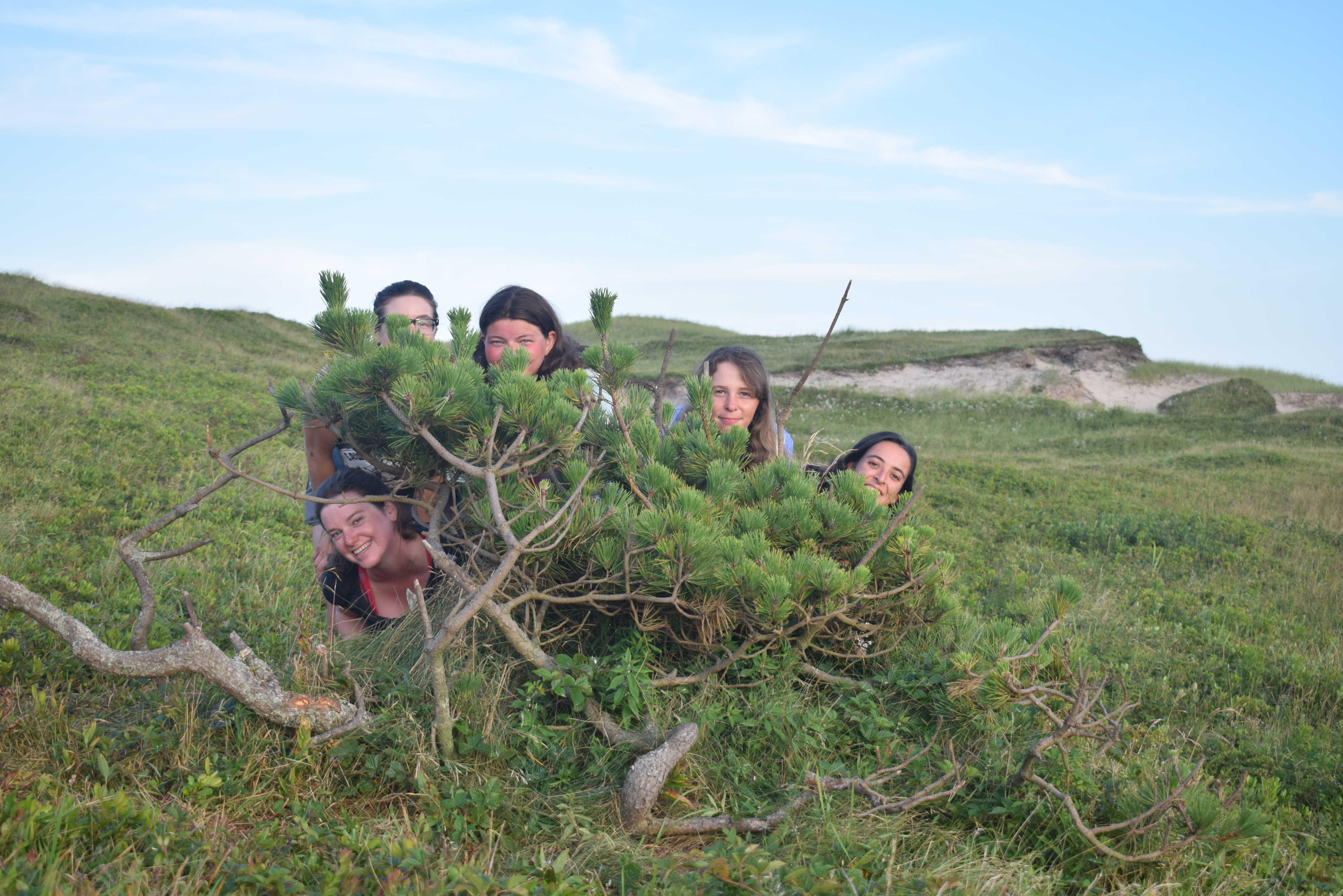
On Sable Island, due to the extreme conditions, there is only one living tree. This tree is a Scot’s pine, standing at a few feet tall. It was planted 50 years ago and can be found at the ‘Pine Tree Pond’ near Main Station on the island.

Here’s a couple of photos of the tree with the Sable Island Horse Project’s crew for the second half of this year’s summer field season:

DSC_0419DSC_0424

Introducing Sable

We had been flying nearly an hour when a smudge first appeared on the horizon of the ocean stretching before us. Though shrouded in fog, it was clear that we were finally nearing  our destination, the remote island that would be my home for the next 4 weeks, Sable Island.


Flying

First recorded by European explorers during the early 1500s, Sable Island is a large crescent-shaped sandbar situated approximately 156km from the nearest landmass (Nova Scotia, Canada). Sitting on the edge of the eastern North American continental shelf, the island was probably formed from deposits left by retreating glaciers at the end of the last ice age. Currently at about 49km in length, 1.25km in width and up to 30m in height above sea level, the island is experiencing decreases in size over time and shifting eastwards.

Sable Island

Map images from Google Maps

Though fabled by many, Sable Island is known for its abundance of wildlife and colourful history. In particular, the island is famous for being the ‘Graveyard of the Atlantic’, with 350+ shipwrecks resting off its shores, the latest originating from 1999 (the Merrimac). Despite people living on Sable from time to time since its discovery, during the 19th century it was these shipwrecks and the establishment of lighthouses and lifesaving stations that led to the start of continuous human presence on the island. The lifesaving stations persisted till they were decommissioned in 1958, but a meteorological station was set up at the start of the 20th century that is still functioning on the island today.

Sable shipwreck map

Map from the NS Department of Education

Today Sable Island is now under the management of Parks Canada, following its designation as a National Park Reserve in 2013. This designation recognises Sable for its impressive dune system and rich biodiversity, including endemic species and the world’s largest grey seal breeding colony. Despite this and the island’s many bird, invertebrate and plant species, you will find that the island’s population of feral horses is what captures most the public’s imagination. These horses were what I first saw when the green strip of Sable flanked by sandy beaches first came fully into view from the plane and its these horses that I was here to visit.

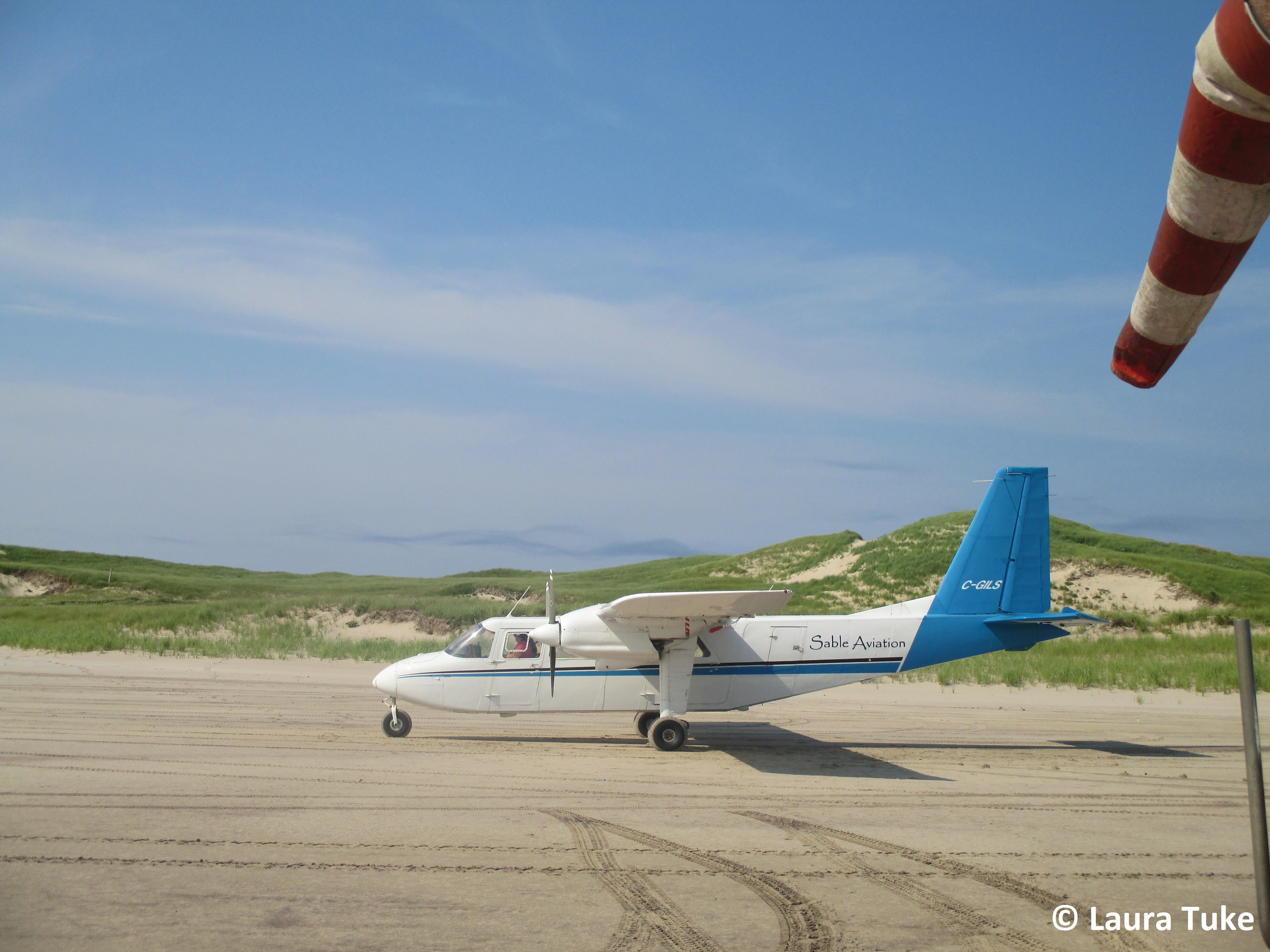
Following my first sight of the island, we were soon bumping down on to the landing strip on the island’s sandy south beach. After months of planning and much hard work, I had finally arrived!

Sable Aviation Plane


For Further Reading:

  • Sable Island: Explorations in Ecology and Biodiversity – Edited by Bill Freedman