Over the last few years, I have taken part in recording how spring has unfurled at my home in Dorset, for a citizen science scheme. As at the end of each spring I upload my results to an online site, in 2017 I decided that I should be writing my observations down for myself in my wildlife journal, making it easy to look back on them in the future.
Now I have recorded dates for many different wildlife spring events, from trees coming into leaf to the return of migrants, for 2017, 2018, and 2019. So here, I want to take a moment to look back at these and reflect on what they may show about spring and its current emergence, and if there is anything interesting we can take from this.

Trees
In my local area, you can find a large variety of native and non-native tree species. Over the last 3 years, I have consistently made observations for 5 tree species: ash, sycamore, horse chestnut, pedunculate oak and silver birch.
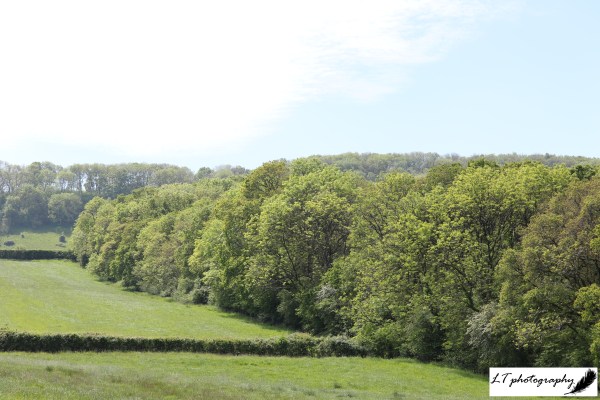
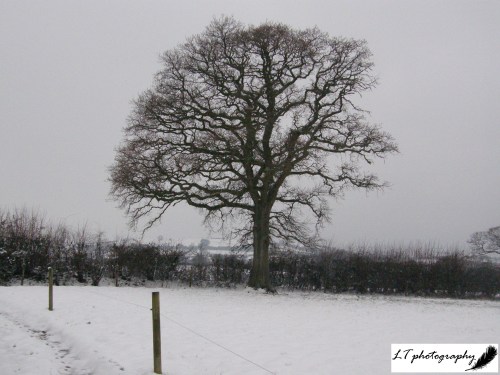
For the 5 tree species, some similar patterns can be observed from my recorded spring dates for the last 3 years. In 2018, a colder winter was experienced, with heavy snowfalls taking place in January, February and March. Evidently this had an effect on the timing of budburst, first leaf and first flowering for tree species, in comparison to the year before.
Budburst was 36 days later for ash trees (27/04/18), 10 days later for sycamore trees (08/04/18), 19 days later for horse chestnut trees (20/03/18), 21 days later for oak trees (18/04/18), and 26 days later for silver birch trees (12/04/18). The same amount of lateness was also seen with the first leaf and first flowering for these tree species in 2018.

Due to the weather of spring 2018, this meant that when looking at how this year’s spring unfurled (2019) in comparison to last year, predictably budburst, first leaf and first flowering took place 4-53 days earlier than 2018. When comparing 2019 with 2017 though, I am able to get an idea of the average trend for the three years. For example, ash and silver birch events are getting later, as are horse chestnut flowering and sycamore first leaf. Sycamore, horse chestnut and oak generally show a trend though of spring events getting earlier, from a couple of days to a month.

Shrubs


For shrubs, the selection I have been observing during spring each year are: blackthorn, dog rose, elder, hawthorn and lilac. From 2017-2019, a similar trend was predominantly observed in these species as with tree species.


In comparison to 2017, blackthorn first flowering was 14 days later in 2018 (30/03/18), elder budburst was 9 days later (13/03/18), elder first leaf was 23 days later (30/03/18) , hawthorn budburst was 33 days later (02/04/18), hawthorn first leaf was 6 days later (08/04/18), and lilac first flowering was 27 days later (07/05/18).


Then when looking at 2019, spring dates were earlier in comparison to 2018, with blackthorn budburst, first leaf and first flowering being 20, 9 and 29 days earlier, dog rose budburst, first leaf and first flowering being 22 and 29 days earlier, elder budburst, first leaf and first flowering being 9, 24 and 8 days earlier, hawthorn budburst and first flowering being 36 and 13 days earlier, and lilac first flowering being 14 days earlier.


Also, similarly to tree species, blackthorn and elder both showed that from 2017 to 2019 spring events have become earlier on average. Hawthorn and lilac showed the opposite trend though, with hawthorn first leaf and first flowering becoming later over the 3 years on average, if only by 7-13 days.

Flowers
In comparing spring between 2017, 2018 and 2019, it is evident that for many plant species the same trends have been shown from year to year. This is not true for all though, as between bluebells, cuckooflowers, lesser celandines, oxeye daisies, snowdrops and wood anemones, flowering times varied from being later in 2018 and earlier in 2019, to being earlier overall, or being similar overall.

- Bluebells flowered 17 days later in 2018 (13/04/18) than 2017, and then 10 days earlier in 2019 compared to 2018. From 2017 to 2019, this was 7 days later overall.


- Cuckooflowers flowered 16 days later in 2018 (20/04/18) than 2017, and then 12 days earlier in 2019 compared to 2018. From 2017 to 2019, this was 4 days later overall.
- Lesser celandines flowered 5 days earlier from 2017 to 2018 (24/02/18), followed by another 13 days earlier in 2019.


- Snowdrops flowered 10 days earlier from 2017 to 2018 (10/01/18), followed by another 7 days earlier in 2019.
- Wood anemones flowered around a similar date at the beginning of March each year.

- Oxeye daisies flowered around a similar date at the end of May each year.


Grasses
Grass species also showed a differing trend to tree and shrub species for 2017-2019, with a united pattern of flowering later each year. When observing spring events with grasses, I observe from year to year 4 species: cocksfoot, meadow foxtail, timothy, and yorkshire fog.

Only timothy had observations made for 2017, and so in comparing with 2018, it was found to have flowered 18 days later (18/05/18). This is in line with comparisons between 2018 and 2019, where it was found that cocksfoot flowered 4 days later (30/05/19), meadow foxtail flowered 14 days later (15/05/19), timothy flowered 23 days later (10/06/19), and yorkshire fog flowered 14 days later (12/06/19).


Birds
Though I have started increasing my recordings of different bird species during spring, I only have records for 2+ years for rooks, blackcaps, chiffchaffs, house martins, song thrushes, cuckoos, and swallows.
- Following the first snowfall of the year, rooks were first seen to be nest building 16 days earlier in 2018 (04/02/18) than 2017, but with no snow, this was 11 days later in 2019.
- Blackcaps returned to my local area 12 days later in 2018 (11/04/18) than 2017.
- Chiffchaffs returned 13 days later in 2018 (26/03/18) than 2017, following the last of the snow and cold weather. Consequently, in 2019 they returned 8 days earlier than 2019 (15/02/19), closer to the 2017 date.
- House martins returned 12 days later in 2018 (25/05/18) than 2017, whilst being 31 days earlier in 2019 than 2018.
- Male song thrushes were first heard singing in 2018 on 28/01/18, 8 days earlier than 2017. In 2019, this occurred a lot earlier though, 30 days earlier, falling on 29/12/18.
- Male cuckoo heard calling at a similar time at the end of May in 2018 and 2019.
- Swallows returned to my local area at a similar time at the end of March/beginning of April in 2017, 2018 and 2019.
Insects

In line with tree and shrub species, the first sightings recorded each spring of insects followed a general pattern of emerging later in 2018 than 2017, and earlier in 2019 than 2018. This was true for:
- Brimstone butterflies – 13 days later on 14th April 2018 and 47 days earlier on 26th February 2019
- Peacock butterflies – 14 days later on 20th April 2018 and 26 days earlier on 25th March 2019
- Small tortoiseshell butterflies – 31 days later on 26th April 2018 and 25 days earlier on 1st April 2019
- Speckled wood butterflies – 20 days later on 26th April 2018 and 4 days earlier on 22nd April 2019
- Orange tip butterflies – 28 days later on 4th May 2018 and 33 days earlier on 1st April 2019
- Red admiral butterflies – 27 days earlier on 22nd April 2019
- 7-spot ladybirds – 19 days later on 25th April 2018
- Queen wasps – 47 days earlier on 31st March 2019
- Red-tailed bumblebees – 13 days earlier on 21st April 2019

Summary
With my love of spring, each year I have enjoyed recording the dates of when things happen during spring, such as the first swallow, first leaf or first elder flower. It has been satisfying now to be able to take a moment to put a few of my records together and take a look at how spring has unfurled over the last few years and what this could mean.
For some species, events are getting earlier, probably due to warmer temperatures earlier on in the year and during the winter before. For others, they are in fact getting later, which will be related to other weather and environmental factors here and further afield. Either way, the ‘norm’ is changing and it will be interesting to see how this could progress over the next few years to come.

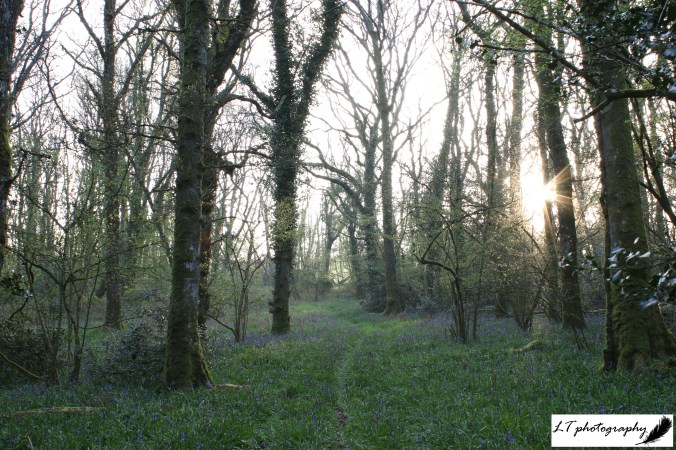 As the weather gets warmer and drier during spring and the countryside begins to bloom, I always like to set myself the goal of getting out into it as much as possible. I like to use these countryside walks as a way to calm my own mind and escape the stresses of modern day-to-day life. In particular, I am always drawn back to the woodlands and forests, with the tranquillity they breath to me. Growing up in Dorset I have always been able to disappear into the trees and appreciate such a habitat at any time of year.
 In celebration of my love of the woods, especially during springtime, over April and May this year, I made 4 visits to one of my local ones to observe it as the season changed. On these trips I sat and wrote down my experience on my favourite log (see photo above), and took lots of photos with my new DSLR camera whilst walking through the woods. Check out below to see my diary entries and the photos that accompany them:


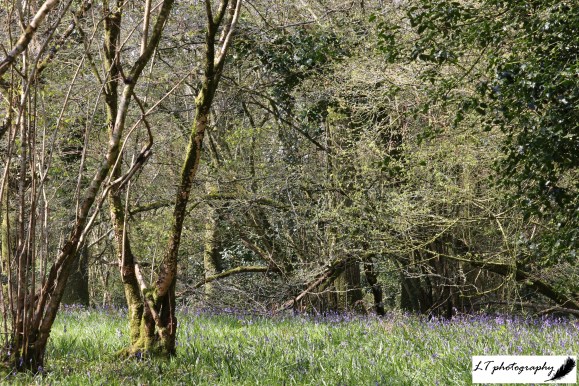


 Spring bird calls and song provides the soundtrack to my trip, including everything from groups of foraging long-tailed tits to angry blue tits and charismatic chiff chaffs. I also hear the reminiscent winter squabbling of jays, and on a stop to my favourite log in the middle of the wood, I can hear the coarser call of a raven and the calls of male pheasants.


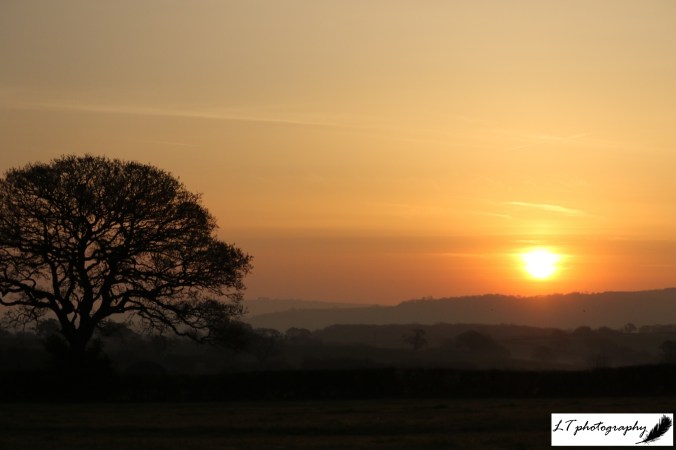
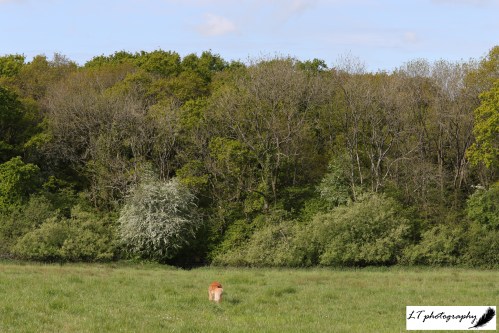
 This morning I chose to get up at 5am to meet a 6.08am sunrise, and to make the most of the dawn light. At this time of day, on my walk to the woods, I had great sightings of roe deer and brown hare, and got to see a beautiful pink sunrise. The dewy grass added to my photos in this glorious light.


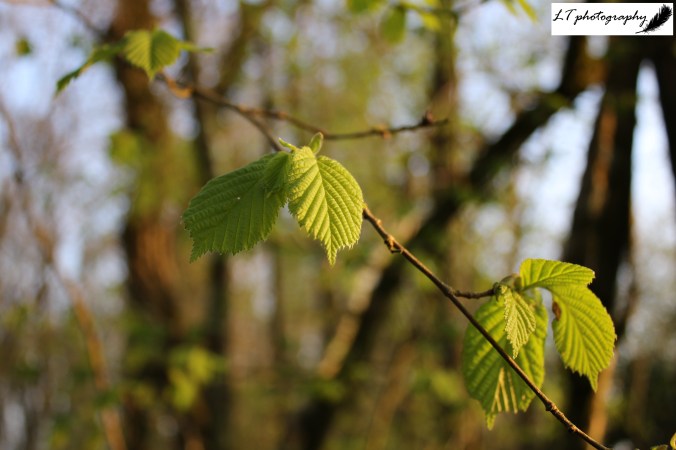
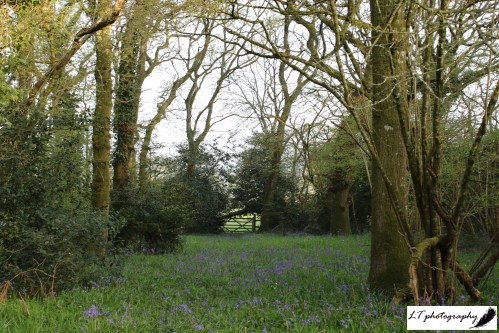
 Snow white garlic flowers are now emerging in the wood, whilst early purple orchids are also beginning to sprout here and there. The bluebells are now starting to create a sea of blue, with their white counterparts dotted here and there amongst them. Soon the woods will be fully awash with purply-blue and patches of white.


 You can definitely forget yourself among these trees, flowers and wildlife, which this morning included the bark of grey squirrels up in the tree canopy. Today, I have stayed awhile sat in the morning light of the woods, but I now know to make my way home from here, as the sun begins to burn through the trees a little too hot, and the midges begin to bite my neck more noticeably. This signals ‘the best part of the day has thus moved on’, as i must.
 On my trip this time to the woods, I took my four-legged friend Cassie. At the ripe old age of 13, she is becoming weary on her legs, but is still up for an adventure. This is great as there is nothing better than sharing the wonder of the outdoors with another being, even if they are no more than 3 feet tall.


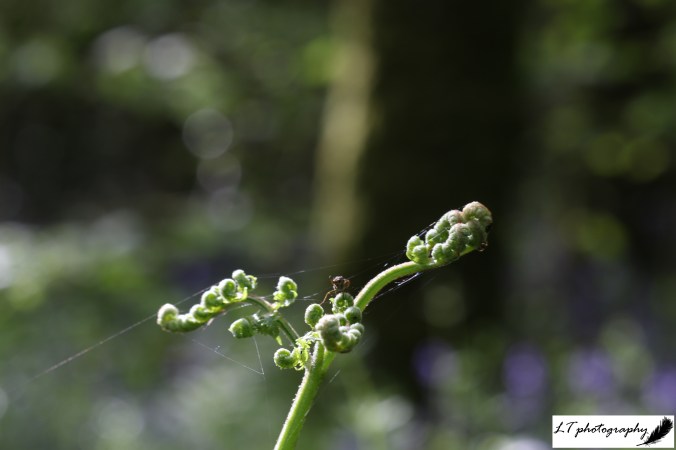
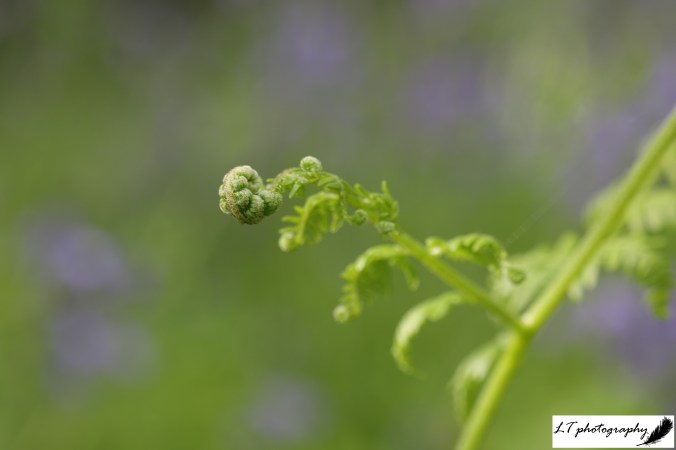


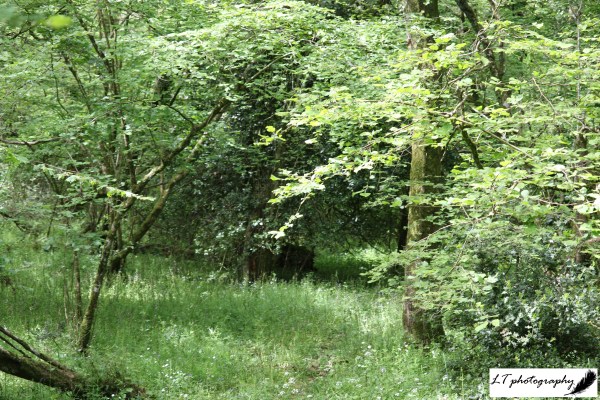
 The days are getting hotter and the sun higher in the May sky. In the depths of the wood though, the canopy keeps me cool. The woodland floor is now a tangle of unruly vegetation. The dying bluebells, orchids, and spring flowers jostle with unfurling ferns, sticky goose grass and flowers that persist. These include stitchwort, herb Robert, and red campion, which are gems of colour in a sea of green.


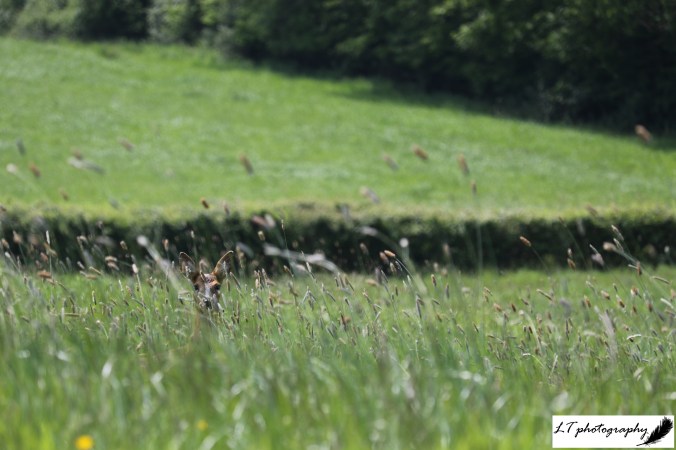
 Ash trees are finally fully in leaf and roe deer ramble lazily between the trees around me. Though this transition period may be more subtle than others, it truly signifies the changing of the seasons, as the important time for some species is replaced by the next. Thus, summer has now crept up on us!




























 Laura's Wild World